
Passo 1 de 7
Localizar a questão que organiza a fala
Identifique a pergunta central de um trecho oral em inglês e reconheça como definição, evidência e explicação contribuem para desenvolvê-la.

Trilha de aprendizado · Nível 23 · Tutorial 14
Acompanhar uma exposição acadêmica em inglês de oito a dez minutos, reconstruindo sua organização e distinguindo o desenvolvimento central de exemplos e digressões.

 Localizar a questão que organiza a fala
Identifique a pergunta central de um trecho oral em inglês e reconheça como definição, evidência e explicação contribuem para desenvolvê-la. 2 min
Localizar a questão que organiza a fala
Identifique a pergunta central de um trecho oral em inglês e reconheça como definição, evidência e explicação contribuem para desenvolvê-la. 2 min
 Reconhecer o que ainda será desenvolvido
Reconheça anúncios de percurso em uma exposição em inglês e diferencie o que já está sendo explicado do que foi reservado para mais adiante. 2 min
Reconhecer o que ainda será desenvolvido
Reconheça anúncios de percurso em uma exposição em inglês e diferencie o que já está sendo explicado do que foi reservado para mais adiante. 2 min
 Separar o desenvolvimento central dos desvios
Reconheça o que desenvolve uma questão acadêmica e o que a ilustra, esclarece ou interrompe temporariamente. 3 min
Separar o desenvolvimento central dos desvios
Reconheça o que desenvolve uma questão acadêmica e o que a ilustra, esclarece ou interrompe temporariamente. 3 min
 Perceber quando a ideia muda e quando só muda a formulação
Distinguir reformulação de avanço do raciocínio pela relação de sentido entre passagens ouvidas. 2 min
Perceber quando a ideia muda e quando só muda a formulação
Distinguir reformulação de avanço do raciocínio pela relação de sentido entre passagens ouvidas. 2 min
 Conectar retomadas a pontos anteriores
Reconheça como retomadas e referências prospectivas conectam pontos distantes de uma exposição acadêmica. 2 min
Conectar retomadas a pontos anteriores
Reconheça como retomadas e referências prospectivas conectam pontos distantes de uma exposição acadêmica. 2 min
 Recuperar o percurso sem entender cada palavra
Recupere sua posição em uma exposição após uma lacuna, usando a pergunta central, a função do bloco atual e uma conferência seletiva. 2 min
Recuperar o percurso sem entender cada palavra
Recupere sua posição em uma exposição após uma lacuna, usando a pergunta central, a função do bloco atual e uma conferência seletiva. 2 min
 Reconstruir uma exposição completa
Acompanhar uma exposição acadêmica em inglês de oito a dez minutos, reconstruindo sua organização e distinguindo o desenvolvimento central de exemplos e digressões. 13 min
Reconstruir uma exposição completa
Acompanhar uma exposição acadêmica em inglês de oito a dez minutos, reconstruindo sua organização e distinguindo o desenvolvimento central de exemplos e digressões. 13 min
Passo 1 de 7
Identifique a pergunta central de um trecho oral em inglês e reconheça como definição, evidência e explicação contribuem para desenvolvê-la.
Uma exposição acadêmica não é apenas uma lista de assuntos próximos. Ela desenvolve uma questão central: uma pergunta específica cuja resposta vai sendo construída ao longo da fala.
O tema geral nomeia o território — por exemplo, study spaces on campus. A questão central delimita o que o expositor quer investigar nesse território — por exemplo, Why do students choose a crowded café over a quiet library?
Para localizar a questão, procure uma formulação que peça uma explicação, comparação, avaliação ou resposta. Em seguida, pergunte: “Como cada parte ajuda a responder isso?”

Definição, evidência e explicação têm funções diferentes, mas podem contribuir para a mesma questão.
Dica
Reconheça o bloco pelo que ele faz, não por sua posição.
Esses blocos não obedecem a uma ordem fixa. O importante é a contribuição para a pergunta central.
Ouça o trecho uma vez. Identifique mentalmente o tema amplo, a pergunta mais específica e a função de cada passagem.
Today I want to consider how students choose places to study on campus. More specifically, I will ask why students sometimes choose a crowded café over a quiet library. By study space, I mean any campus location where students spend time on individual academic work. In a survey of four hundred students, sixty-two percent reported using busy shared spaces at least once a week. That figure does not show that noise improves concentration. Instead, it points to a possible distinction: a place that supports concentration is not always the place that makes it easier to begin working. The remainder of this talk examines how social visibility may help students get started.
Qual é a pergunta central do trecho ouvido?
No final, o expositor diferencia concentração de facilidade para começar a trabalhar e propõe o papel da visibilidade social. Qual é a função principal desse bloco?

Passo 2 de 7
Reconheça anúncios de percurso em uma exposição em inglês e diferencie o que já está sendo explicado do que foi reservado para mais adiante.
Em uma exposição, o apresentador pode anunciar um caminho antes de percorrê-lo. Expressões como we will return to this e as we shall see apontam para uma relação que ainda será desenvolvida.
Trate esse anúncio como uma expectativa: ele informa que um assunto será importante mais adiante, mas não é ainda a explicação. Continue acompanhando o bloco que está sendo desenvolvido agora.

A seta para a frente representa uma relação anunciada, ainda pendente de explicação.
Ouça este trecho de uma exposição sobre hábitos de estudo. Depois, compare o que é explicado agora com o que fica reservado para depois.
Before comparing the study spaces, we need to define what we mean by productive use. For this project, it refers to time spent on activities that students themselves identify as advancing their coursework. We will return to the differences between individual and group spaces after looking at this definition.
No trecho, a definição de productive use está sendo dada no presente: ela sustenta o bloco atual. Já as diferenças entre individual and group spaces são apenas anunciadas para depois.
Um anúncio pode vir no início, no meio ou perto do fim da fala. Ele orienta a expectativa, mas não obriga o expositor a seguir uma ordem universal ou perfeitamente linear.
Use esta comparação ao ouvir.
| Formulação ouvida | O que ela sinaliza | Situação no trecho |
|---|---|---|
| For this project, it refers to... | Definição em curso | Desenvolvida agora |
| We will return to... | Assunto reservado | Ainda não desenvolvido |
| As we shall see... | Relação antecipada | Ainda pendente |
Relacione cada passagem à descrição que melhor identifica sua função na exposição.
Associe as passagens às suas funções.
Toque em um item e depois no par correspondente.

Passo 3 de 7
Reconheça o que desenvolve uma questão acadêmica e o que a ilustra, esclarece ou interrompe temporariamente.
Em uma exposição, o ponto principal é a passagem que faz o raciocínio avançar em direção à questão central. Outras passagens podem ser úteis sem ocupar essa posição: elas podem ilustrar, esclarecer ou interromper temporariamente o percurso.
Não use duração, riqueza de detalhes ou tom envolvente como critério. Pergunte: esta passagem responde diretamente à questão central, apoia uma resposta ou se afasta dela por um momento?

A rota central representa o desenvolvimento da questão. Ramificações podem apoiar o percurso; um desvio pode afastar-se dele temporariamente.
Ouça uma fala curta. Primeiro, acompanhe a questão e o ponto que a responde; depois, observe como o caso concreto e a explicação de apoio se ligam a esse ponto.
Our question is whether staggered opening hours can reduce crowding in the university library. The evidence suggests that they can, because they redistribute demand across the day. At North Hall, for example, opening one hour earlier led to a marked fall in the midday queue, although the total number of visitors barely changed. To put this in context, by crowding we mean the period when students cannot reasonably find a seat. The building was originally designed as a museum, which explains its narrow entrance, but that history is not central to today's analysis. So the relevant effect is redistribution, not fewer library users.
Classifique cada função pela relação que mantém com a questão central. A mesma fala pode alternar entre elas rapidamente.
Use esta comparação depois da escuta.
| Função | Relação com a questão | No trecho ouvido |
|---|---|---|
| Ponto principal | Responde diretamente | Redistribuir a demanda pode reduzir a lotação. |
| Exemplo prolongado | Ilustra ou testa um ponto | O caso de North Hall torna o efeito concreto. |
| Explicação lateral | Esclarece um termo ou condição de apoio | O sentido de crowding delimita o problema. |
| Digressão | Afasta-se temporariamente do percurso | A história do prédio não sustenta a análise atual. |
No trecho ouvido, qual ponto o exemplo de North Hall apoia diretamente?
Ouça e escolha uma opção.
Ouça e identifique a passagem que se afasta temporariamente da questão central.
We asked whether peer mentoring improved first-year retention. The figures indicate a small improvement among students who met mentors regularly. To put this in context, mentoring here meant scheduled meetings about study routines and campus support. The cafeteria was renovated in the same year, and its new seating became very popular with staff. Returning to retention, the improvement was not the same across all departments.

Passo 4 de 7
Distinguir reformulação de avanço do raciocínio pela relação de sentido entre passagens ouvidas.
Em uma exposição, o expositor pode dizer a mesma ideia de outra maneira para torná-la mais clara. Isso é uma reformulação: ela mantém o ponto em desenvolvimento, mesmo que use palavras mais precisas ou uma imagem diferente.
Marcadores frequentes incluem in other words, that is e put differently. Eles são pistas úteis, mas não decidem sozinhos a função da passagem. Compare o que a segunda formulação afirma com o que a primeira já permitia entender.
Pergunte: a segunda passagem muda a resposta dada à questão central ou apenas esclarece como entender a resposta atual?
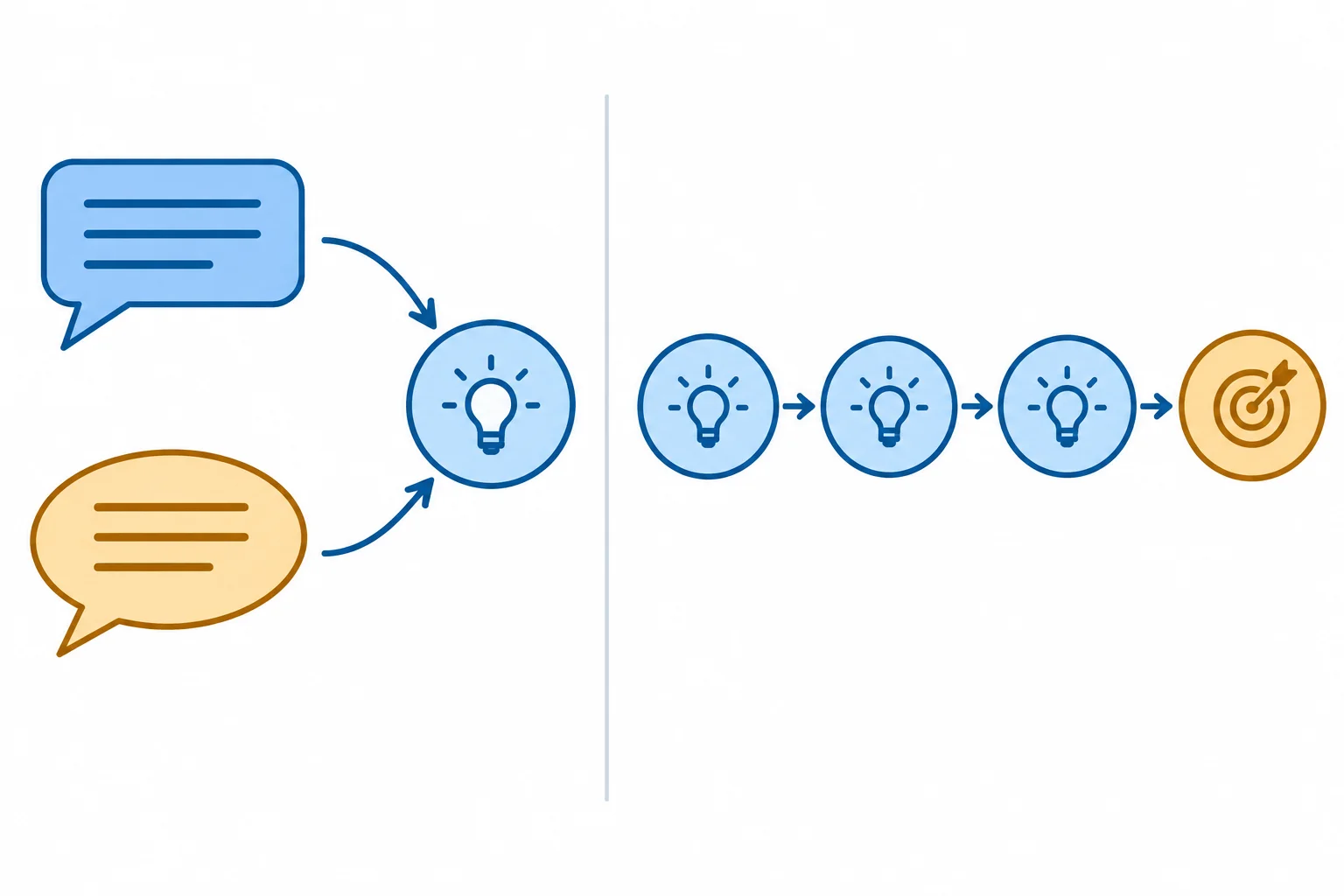
Duas frases podem apontar para o mesmo ponto; há avanço quando a fala acrescenta uma contribuição que o ponto anterior não continha.
Ouça as duas passagens. A segunda não abre uma nova parte da exposição: ela explicita a consequência já presente na primeira.
Passagem 1
The survey shows that students value silent floors chiefly because they reduce interruptions.
Passagem 2
Put differently, students are not simply choosing quietness; they are choosing a setting where sustained attention is easier.
A segunda passagem troca reduce interruptions por uma explicação mais interpretativa: um ambiente que facilita atenção sustentada. Ela acrescenta precisão local, mas preserva o mesmo ponto: os estudantes valorizam o silêncio por seu efeito na concentração.
| Passagem | O que ela faz | Novo bloco? |
|---|---|---|
| 1 | Apresenta a relação entre silêncio e menos interrupções. | Não se aplica: é o ponto inicial. |
| 2 | Reapresenta essa relação como condição para atenção sustentada. | Não: esclarece o ponto anterior. |
| Possível continuação | “Therefore, allocation should be assessed beyond seat occupancy.” | Sim: tira uma implicação para avaliar espaços. |
Considere esta continuação da passagem anterior:
“This matters because space allocation should be evaluated not only by seat occupancy but also by its effect on concentration.”
Ela é apenas uma reformulação do ponto sobre silêncio e interrupções.
A afirmação é verdadeira ou falsa?

Passo 5 de 7
Reconheça como retomadas e referências prospectivas conectam pontos distantes de uma exposição acadêmica.
Uma retomada liga o trecho atual a uma ideia anterior do percurso. Ela pode aparecer depois de definições, exemplos ou explicações laterais; por isso, o referente correto nem sempre é a última coisa mencionada.
Ao ouvir as I suggested earlier ou this brings us back to, procure a ideia anterior que seja compatível com o conteúdo que vem depois da expressão. Pergunte: qual ponto anterior torna esta frase coerente?
| Momento da fala | Função no percurso |
|---|---|
| Pergunta: “How do access rules shape study-space use?” | Questão central |
| Definição de study space | Bloco de apoio |
| Exemplo sobre uma biblioteca | Ilustração |
| “As I suggested earlier, access rules affect where students work.” | Retomada da questão central |
O diagrama mostra duas conexões distantes. A retomada sobre regras de acesso se liga à pergunta inicial, embora uma definição e um exemplo tenham aparecido no meio. Já a pergunta sobre horários foi anunciada antes e só recebe desenvolvimento no último bloco.
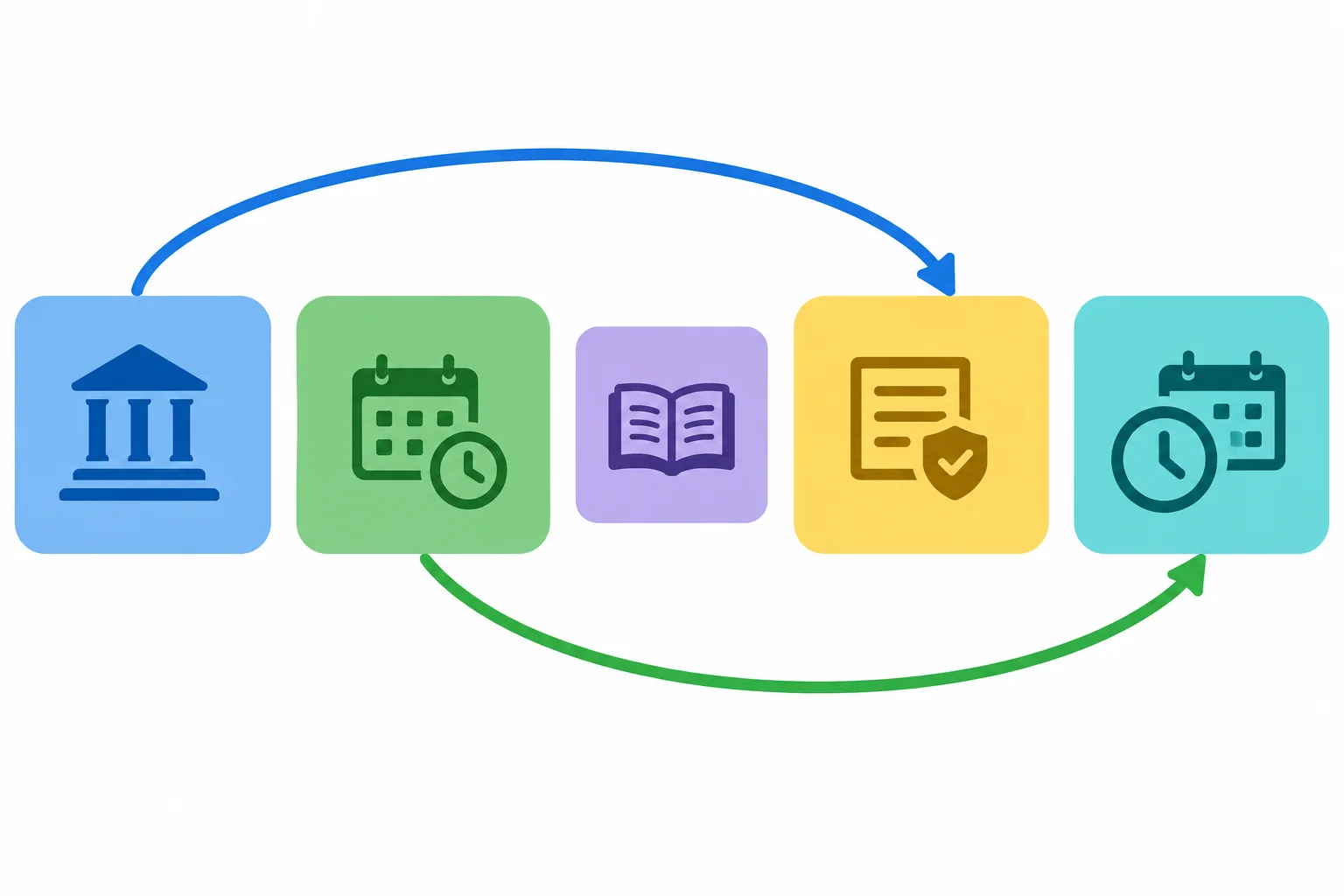
Uma seta pode cruzar blocos intermediários: a relação depende do sentido recuperado.
Ouça uma sequência curta de uma exposição sobre espaços de estudo universitários. Primeiro, acompanhe as relações; não tente registrar cada detalhe.
Our central question is how access rules shape students' use of study spaces. I will return later to whether longer opening hours would change that pattern. First, let me clarify what I mean by study space: this includes libraries, shared workrooms, and quiet areas in campus buildings. For example, one library remained open until midnight, yet its group rooms could only be booked by students in certain programmes. As I suggested earlier, access rules affect not only whether a space is available, but also which students can use it. We can now return to the question of longer opening hours. In our survey, students who already lacked booking access said that later closing times alone would not solve the problem.
Relacione cada passagem de retomada ao ponto que ela recupera ou desenvolve. Baseie-se na compatibilidade de sentido entre os trechos, não no bloco ouvido imediatamente antes.
Faça as correspondências.
Toque em um item e depois no par correspondente.

Passo 6 de 7
Recupere sua posição em uma exposição após uma lacuna, usando a pergunta central, a função do bloco atual e uma conferência seletiva.
Em uma exposição longa, uma lacuna de compreensão não obriga você a abandonar o percurso. Mantenha como referência a pergunta central e procure três coisas no trecho que volta a entender:
Recuperar a posição no raciocínio não é o mesmo que recuperar todas as palavras perdidas. Você pode saber que o expositor passou a apresentar evidência para uma hipótese sem saber, ainda, todos os detalhes do trecho anterior.
| O que você reconhece | O que isso permite concluir | O que não permite concluir |
|---|---|---|
| Pergunta central | O critério para avaliar a função dos blocos | O conteúdo exato da lacuna |
| Bloco após a lacuna | A posição atual no raciocínio | Que a lacuna disse exatamente o mesmo |
| Ligação explícita com a pergunta | A contribuição provável do bloco | Uma relação causal não declarada |
Dica
Um bom diagnóstico tem duas partes: “Estou no bloco de evidência sobre X” e “Ainda não sei como o expositor definiu ou relacionou X antes disso.” A segunda parte impede que uma hipótese vire falsa certeza.

A lacuna interrompe o acesso ao conteúdo, não necessariamente a identificação do bloco atual.
Ouça o trecho. Uma passagem central foi retirada de propósito. Não tente inventá-la: identifique a pergunta, observe o que vem depois da lacuna e registre mentalmente apenas o que as pistas permitem sustentar.
Trecho de uma apresentação sobre espaços de estudo universitários.
Our question is not simply where students study, but why they remain in the main library when quieter rooms are available. We first need to separate proximity from visibility. [A passage is missing here.] Now, the diary entries let us examine visibility more directly. Students described choosing seats where they could see others working, even when the room was noisier. This does not show that visibility matters more than proximity, but it does show that the two should not be treated as the same factor.
Dica
Mesmo sem a passagem ausente, é possível localizar o trecho final: ele introduz evidência — os diary entries — para examinar visibility. Também é possível preservar uma incerteza: ainda não sabemos como a distinção entre proximity e visibility foi formulada na lacuna.
Observe a ressalva final: a evidência não prova que visibility seja mais importante. Não acrescente essa conclusão ao percurso.
Você quer conferir se a passagem ausente definiu a diferença entre proximity e visibility, em vez de já apresentar resultados. Qual trecho deve ouvir primeiro?
Agora ouça somente o excerto escolhido para conferência. Compare-o com o que você já tinha localizado; ele esclarece a função da lacuna, mas não autoriza conclusões além do que foi dito.
Excerto imediatamente anterior ao retorno aos diary entries.
Before turning to the diaries, however, let me be precise about that distinction. Proximity means reducing travel or transition time. Visibility means placing oneself among visibly active peers. The two may coincide, but neither entails the other.
Com base no trecho inicial e no excerto de conferência, descreva em 2 a 4 frases:
Não tente preencher o que não foi apresentado.
Escreva pelo menos 80 caracteres (0/80).
Passo 7 de 7
Acompanhar uma exposição acadêmica em inglês de oito a dez minutos, reconstruindo sua organização e distinguindo o desenvolvimento central de exemplos e digressões.
Você ouvirá uma única exposição inédita em inglês, dividida em oito trechos consecutivos. Ela apresenta uma investigação fictícia sobre como estudantes escolhem espaços de estudo na universidade.
Na primeira escuta, acompanhe o percurso geral. Não tente registrar cada detalhe nem responder durante a fala. Procure manter em mente: qual pergunta organiza a exposição, que contribuições parecem respondê-la e quais passagens apenas apoiam ou desviam momentaneamente desse percurso.
Trecho 1 de 8
Today I want to ask a fairly ordinary question that turned out to be more complicated than we expected: how do university students decide where to study during a typical day? Universities often discuss study spaces in terms of capacity. How many desks are available? How long is the library open? But capacity does not tell us why two students with similar schedules may make very different choices. One may work in a crowded café, another in a nearly empty departmental corridor, and a third may move repeatedly between spaces. Our project therefore did not begin by asking which space was best. It asked how students connected a particular space to the task, the time available, and the people around them. I will first clarify what we mean by a study-space choice, then consider two recurring patterns in the material, and finally return to the role of time, which proved more important than we had initially assumed.
Trecho 2 de 8
By a study-space choice, we do not mean a simple preference for one building over another. We mean a situated decision: a decision made in relation to a task that is underway, resources that are accessible, and constraints that may change within the next hour. This distinction matters because participants often named a favourite place and then immediately described reasons for not using it. A quiet room might be ideal for reading but unavailable when a group meeting ends. A home desk might be comfortable but unsuitable before a seminar on the other side of campus. To examine these decisions, we asked twenty-four undergraduate volunteers to keep short location diaries for five weekdays. They recorded where they studied, what they were trying to do, and why they had selected or left a space. We also discussed their diary entries with them in follow-up interviews. The aim was not to measure a universal ranking of rooms, but to understand the reasoning visible in changes of location.
Trecho 3 de 8
The first recurring pattern concerned immediate access. Students frequently selected the space that allowed them to begin without losing more time. That may sound obvious, but access involved more than an empty chair. Participants considered whether a power socket was free, whether they could spread out printed material, whether food was permitted, and whether they would have to explain their presence to staff. A place could be physically close yet practically inaccessible. For instance, several students avoided a computer lab between classes because they expected to wait for a machine or to pack up quickly for the next session. In this sense, availability was interpreted through anticipated interruption. The relevant question was not simply, “Can I sit there now?” It was, “Can I start the work I need to do there, and can I continue long enough for starting to be worthwhile?” This is our first contribution: access was evaluated as usable time, rather than as location alone.
Trecho 4 de 8
Consider Maya, a second-year engineering student, on one Wednesday afternoon. Her diary first placed her in the library, where she intended to revise a problem set. After fifteen minutes, she moved to the atrium. The library had been quiet, but the table available to her was too small for her laptop, calculator, and handwritten notes. In the atrium, she found a larger table near a socket, although the surrounding conversation was louder. Forty minutes later, she left again, this time for an empty classroom. She had received a message that two classmates were nearby and wanted to compare answers before a lab. Maya described the sequence not as failed concentration, but as a series of adjustments to what the task required. Her case is unusually detailed because her diary was especially complete, yet it illustrates the access pattern just described: a space became usable when its material conditions matched the immediate form of work.
Trecho 5 de 8
A second pattern concerned the relation between social atmosphere and task type. Students did not divide spaces neatly into quiet places for serious work and noisy places for everything else. Instead, they often sought a level of visibility or background activity that fitted a particular stage of work. Some used a busy café to begin an assignment because the presence of other people made postponement less likely. Others moved to a silent floor only after they had decided what to write. This is not evidence that noise improves learning in general. It shows that participants gave different functions to surrounding activity. Briefly, to put this in context, the campus has recently invested heavily in flexible open-plan areas. That institutional history helps explain why such spaces were available, but it is not itself the focus of our analysis. What matters here is that students treated other people as part of the working environment: sometimes as distraction, sometimes as accountability, and sometimes as a resource for immediate help.
Trecho 6 de 8
Put differently, students were not choosing between fixed categories of good and bad places. They were coordinating a task with changing conditions. This reformulation adds precision, but it does not introduce a third pattern. It helps us see why the same participant could praise a café in one interview and avoid it in another. The apparent inconsistency often disappeared once we considered what had to happen next. A student preparing alone for a tutorial, for example, might choose a visible table near classmates; a student editing a final draft might seek separation from those same classmates. As I suggested earlier, we will return to time here, because the next obligation shaped both choices. For now, notice the link between the two patterns. Immediate access concerns whether work can begin and continue. Social atmosphere concerns what kind of work can be sustained once it has begun. Neither pattern is simply a personal preference detached from the day’s schedule.
Trecho 7 de 8
We can now return to time. In the diaries, choices were often made not for the present hour alone but for the transition that would follow it. Students selected a place because it was near their next class, because they expected a friend to join them, or because they needed to leave books somewhere while collecting equipment. Time, then, was not merely the duration spent studying. It organized the sequence of possible spaces. One participant called the library her “default,” but used it mainly on days when she had no fixed commitment afterward. On days with scattered appointments, she chose less ideal locations that reduced movement and uncertainty. This helps explain a result that initially seemed contradictory: participants sometimes abandoned highly valued spaces even when seats were available. They were not rejecting the space itself. They were responding to the costs of the next transition. The question is therefore not only where students work effectively, but how a space supports the movement between one academic activity and another.
Trecho 8 de 8
Let me conclude by returning to the question with which I began: how do students decide where to study during a typical day? Our material suggests that they make situated choices by coordinating usable access, the social conditions of a task, and the transitions imposed by their schedules. The detailed cases are useful not because they stand for every student, but because they show that a change of location can be reasoned rather than random. For universities, this means that adding seats may help without solving the whole problem. Students also need spaces that support different forms of work and allow manageable movement across the day. There are limits to this study: it took place on one campus and relied partly on participants’ own diary accounts. Even so, the findings direct attention away from a single ideal study space and toward the changing relationship among task, environment, and time. That relationship, rather than a stable preference, is the answer our analysis develops.
Agora reconstrua o percurso antes de conferir qualquer trecho. Qual pergunta organizou a exposição?
Qual foi a pergunta central da exposição?
Ordene os blocos do desenvolvimento central, do primeiro ao último.
Relacione cada passagem à função que ela exerce na exposição.
Toque em um item e depois no par correspondente.
Dica
Escolha uma relação da sua reconstrução sobre a qual você ainda tem dúvida. Em seguida, confira dois excertos curtos: primeiro apenas ouvindo; depois, a transcrição será liberada.
Excerto para conferência 1 — ouça antes de ler.
As I suggested earlier, we will return to time here, because the next obligation shaped both choices. For now, notice the link between the two patterns. Immediate access concerns whether work can begin and continue. Social atmosphere concerns what kind of work can be sustained once it has begun.
Excerto para conferência 2 — ouça antes de ler.
We can now return to time. In the diaries, choices were often made not for the present hour alone but for the transition that would follow it. Students selected a place because it was near their next class, because they expected a friend to join them, or because they needed to leave books somewhere while collecting equipment.
Transcrições para conferência seletiva
A segunda passagem resolve a questão que a primeira deixou pendente: mostra que o tempo organiza as transições entre atividades e, por isso, ajuda a explicar as escolhas de espaço.
Que relação a nova escuta confirma?
Compare sua reconstrução com este percurso de referência. Ele não exige que você tenha retido cada formulação: o essencial é preservar as relações funcionais entre os blocos.
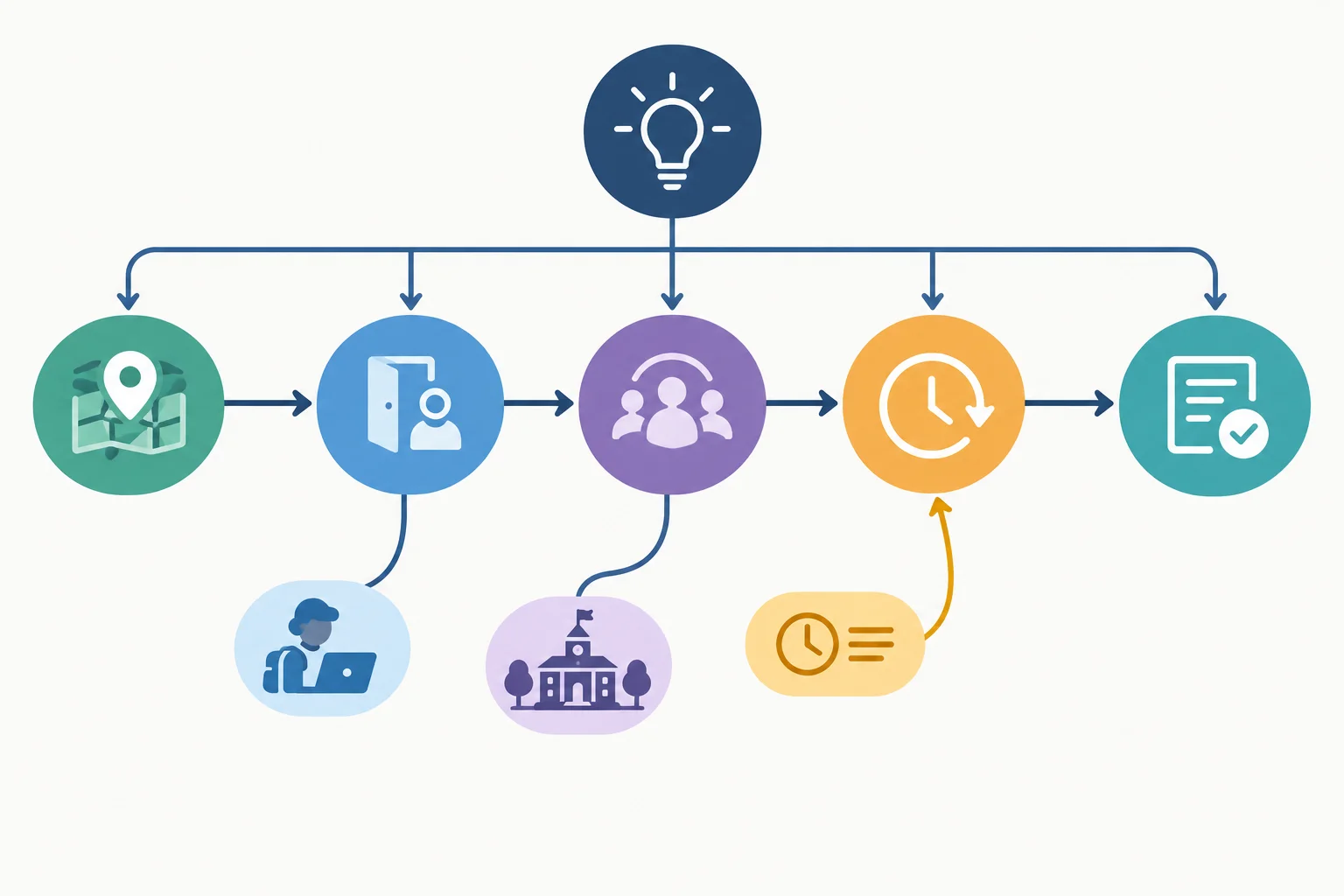
O percurso central responde à pergunta sobre escolhas de espaço; o caso individual e o contexto institucional apoiam, mas não substituem, esse desenvolvimento.
Resumo
Em uma ou duas frases, indique uma parte da sua reconstrução que você manteve e uma relação que a conferência seletiva confirmou ou corrigiu.
Escreva pelo menos 40 caracteres (0/40).
Parabéns! Você concluiu: Acompanhar a organização de uma exposição acadêmica
Milhares de cursos online em vídeo, ebooks e áudiobooks.
Para testar seus conhecimentos no decorrer dos cursos online
Gerado diretamente na galeria de fotos do seu celular e enviado ao seu e-mail

Baixe nosso aplicativo pelo QR Code ou pelos links abaixo:.



Leve o conhecimento no seu bolso.
Baixe o aplicativo Cursa.
São centenas de Cursos gratuitos a disposição, com Certificado de conclusão gratuito que é salvo em sua galeria de imagens do celular.
Baixe o app para ter acesso ao Certificado de conclusão de Curso Gratuitamente.


+ de 10 milhões
de alunos

Certificado grátis e
válido em todo o Brasil

60 mil exercícios
gratuitos

4,8/5 classificação
nas lojas de apps

Cursos gratuitos em
vídeo, ebooks e audiobooks