
Step 1 of 8

Learning path · Level 11 · Tutorial 3
Turn a short written brief and a recorded stakeholder update into a practical proposal for improving a shared study or work space. Use audio-choice tasks and brief dictation to identify requirements. Draft a guided proposal that connects evidence, action, feasibility, and limitations, then give a concise spoken recommendation.

 Identify the Problem and the Requirements
3 min
 Organise the Proposal Around a Decision
Arrange a concise proposal so that a busy Hub manager can find the requested decision, its supporting information, practical arrangements, and limitations. 2 min
 Choose an Action You Can Justify
Select a feasible response for Riverside Learning Hub by linking documented need, a specific proposed action, and practical constraints. 3 min
 Make the Recommendation Grammatically Precise
3 min
 Specify Implementation and Review
Turn a recommendation into a feasible pilot scheme with clear arrangements and a measurable review point. 3 min
 State Benefits Without Overpromising
Express likely benefits without treating a proposed trial as a guaranteed solution, then make limitations relevant to the approval decision. 2 min
 Make the Spoken Recommendation Easy to Follow
Rehearse a concise spoken recommendation whose action, justification, operating conditions, limitation, and review point are easy for a listener to follow. 2 min
 Write, Review, and Deliver Your Proposal
Produce, check, and deliver a concise proposal that turns the Riverside Learning Hub evidence and constraints into a feasible recommendation. 7 min
Step 1 of 8
Before you suggest any change, separate three kinds of statement:
This distinction protects your credibility. A source can report interruptions without proving what caused every interruption. Likewise, a proposed response is not already a fact.
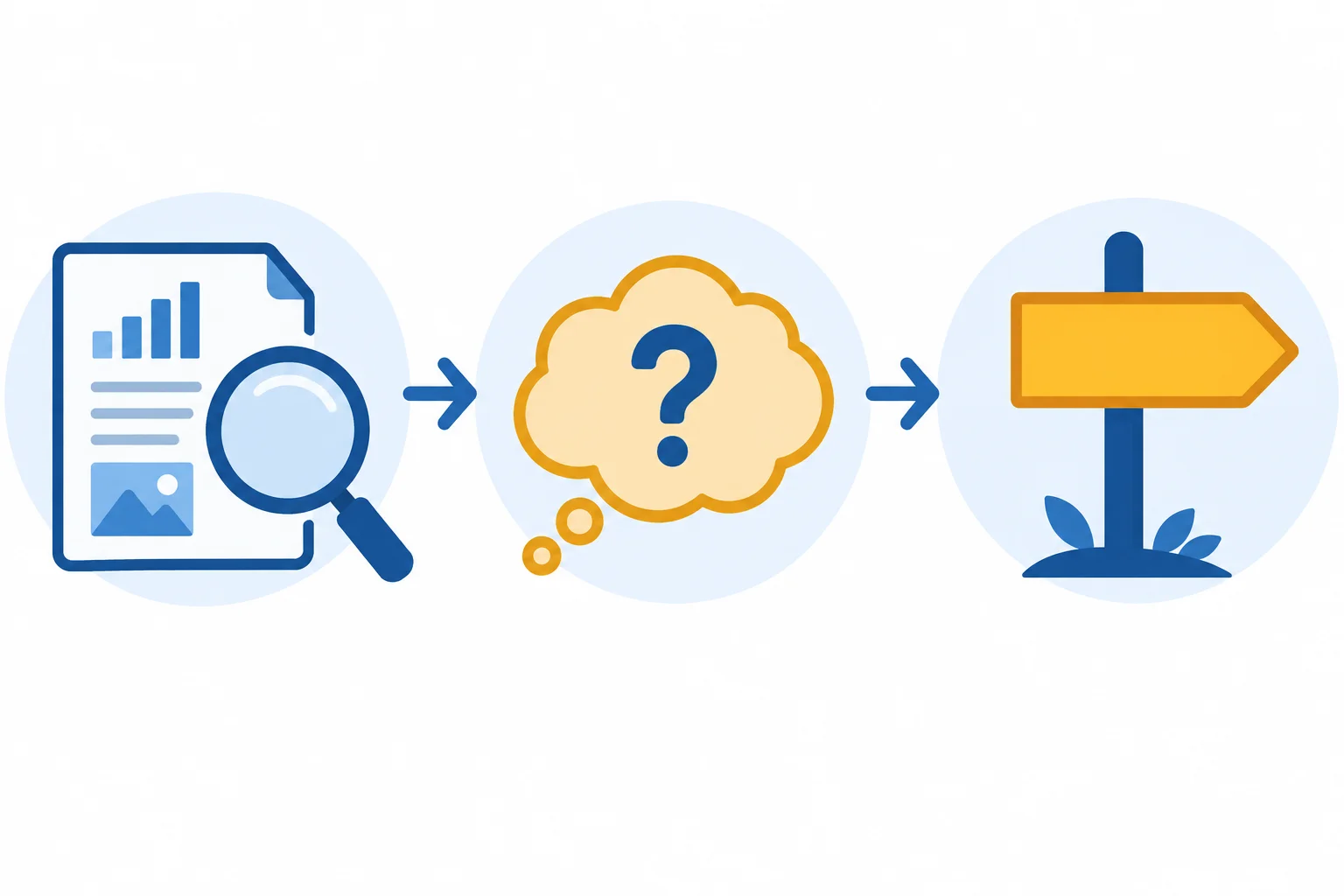
Keep observed evidence, assumed causes, and possible responses in separate mental categories.
Hub brief
According to the Hub brief, during one baseline week, 12 of 20 respondents reported that noise interrupted concentration on weekday afternoons. The brief also says that users value opportunities for group study.
These are observations from the source. The feedback does not establish the cause of every interruption. For example, it does not show that group discussion caused all of them.
Tip
When you take notes, attach each claim to its source:
This makes it easier to avoid presenting an inference or a suggested solution as established information.
A stakeholder requirement says what must be protected or respected. A constraint is a practical limit on the available action. A resource requirement identifies what an action would need.
In the coordinator update, Alex explains the limits and the support already available. Listen for these details rather than inventing extra capacity or treating a later suggestion as a confirmed solution. They will help you judge feasibility later.
Listen and choose an option.
Listen to Alex. Then choose the correct classification.
A. “During one baseline week, 12 of 20 respondents reported that noise interrupted concentration on weekday afternoons.”
B. “Any trial must last no more than 4 weeks.”
C. “Group study caused every interruption.”
Hello, this is Alex Morgan, Hub coordinator. Any trial must last no more than 4 weeks. All 24 seats and our current opening hours must remain available. There is no budget for purchases or additional staff. I can display notices and collect short feedback within my existing duties.

Step 2 of 8
Arrange a concise proposal so that a busy Hub manager can find the requested decision, its supporting information, practical arrangements, and limitations.
A proposal is a decision document. It helps a busy manager decide whether to approve an action; it is not simply a description of a situation.
At Riverside Learning Hub, the manager should be able to locate four things quickly: the documented need, the requested action, the practical arrangements, and the limitations. Keep their status clear: source information supports the need, while the proposal asks the manager to make a decision about a future action.
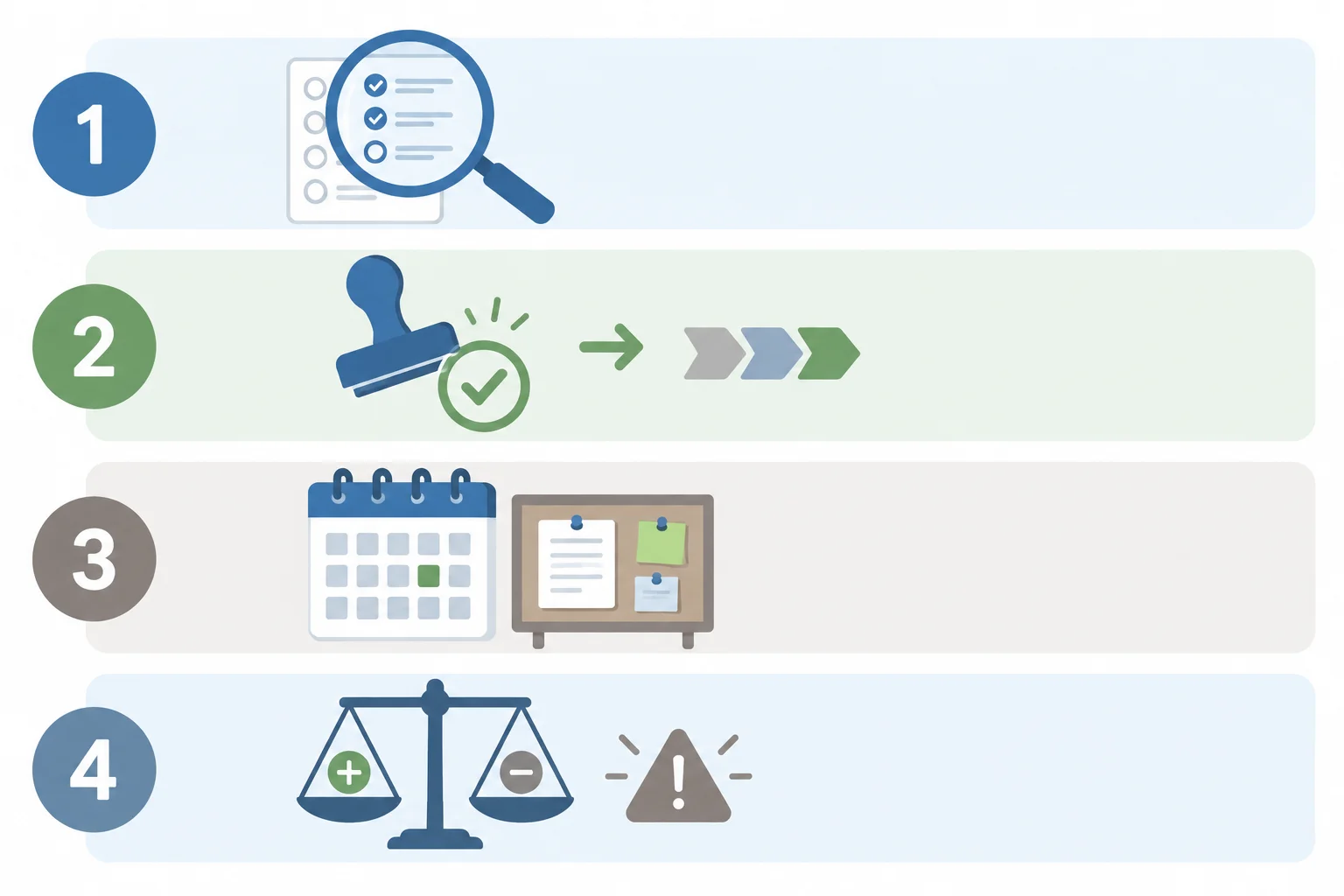
The headings create a predictable scan path: why action is needed, what decision is requested, how it could work, and what should be considered.
Use these four headings in this order. Each heading performs a different job for the decision-maker. A heading is not decoration: it signals where the reader can find a particular kind of information.
Do not place every source detail at the beginning and leave the requested decision unclear. Equally, do not present a proposed action as if it were already an established finding.
Each heading helps the Hub manager locate a different part of the approval decision.
| Heading | Function for the reader |
|---|---|
| Purpose and evidence | The purpose of the proposal and source-supported information about the documented need |
| Recommendation | The action requested for approval and its connection to the purpose |
| Implementation and review | The proposed practical arrangements, responsibilities, resource limits, and later check |
| Benefits and limitations | The likely value of the action, plus relevant uncertainty or drawback |
Example
Decision-focused opening
“This proposal seeks approval to test a practical response to weekday-afternoon noise at Riverside Learning Hub. According to the Hub brief, 12 of 20 respondents reported that noise interrupted concentration during one baseline week.”
The first sentence identifies the decision and its purpose. The second supplies relevant support. It does more than introduce the setting.
Match each proposal function to the heading where a manager would expect to find it.
Tap an item and then its matching pair.
Which opening makes the intended decision and its purpose clear, rather than supplying background alone?

Step 3 of 8
Select a feasible response for Riverside Learning Hub by linking documented need, a specific proposed action, and practical constraints.
A recommendation is justified when a reader can follow a clear chain:
The first two points are source information. The action is a proposal, not a finding. The information does not establish the cause of every interruption, so the proposal should be presented as something worth testing—not as a guaranteed solution.
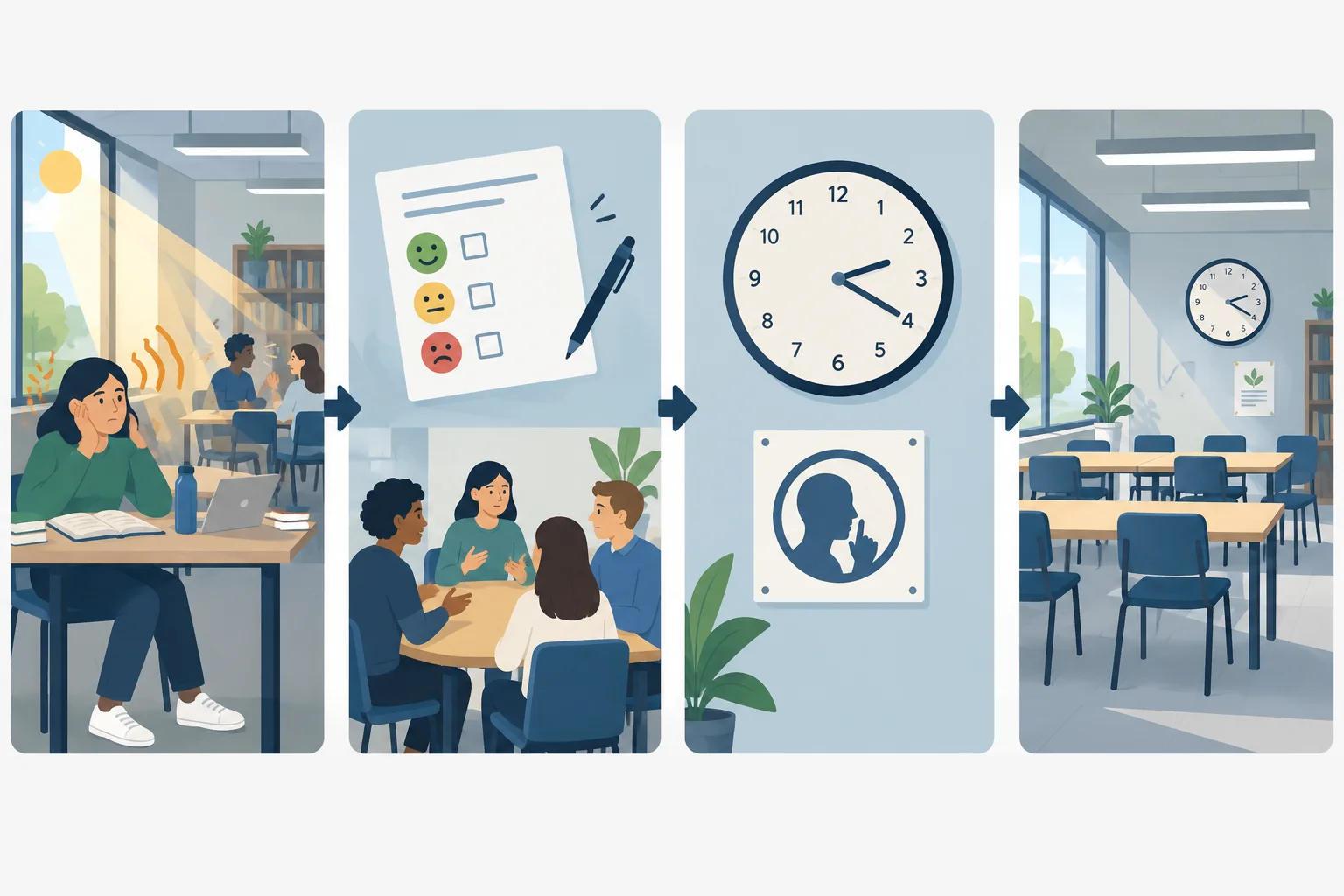
Use the chain to separate evidence from the action proposed in response to it.
Tip
Feasibility asks whether an action can work within a stated constraint. Here, the key constraints concern access, time, and resources.
A resource requirement is what an action needs in order to happen. Notices made from existing materials fit the available resources; new equipment or extra staffing does not. Keep the action choice separate from later implementation detail: first decide whether the proposal is feasible.
Compare responses against the same criteria: do they address the documented afternoon need, preserve access for users, and fit the available resources? This avoids choosing an action merely because it sounds attractive.
Each option is assessed against the Hub’s stated constraints, rather than against personal preference.
| Possible response | Addresses the need? | Access and time | Resource requirement | Decision |
|---|---|---|---|---|
| Four-week quiet-hours pilot scheme, weekdays 2–4 p.m. | Targets the reported afternoon issue | Keeps 24 seats and current hours available | Existing-material notices; no purchase or staff | Feasible to test |
| Install acoustic panels | May reduce sound | Could keep access unchanged | Requires a purchase | Not feasible |
| Add an afternoon staff member | May supervise noise | Could keep access unchanged | Requires additional staff | Not feasible |
Example
Concise proposal reasoning
According to the Hub brief, 12 of 20 respondents reported noise-related interruptions on weekday afternoons, while users also value group study. We therefore propose a four-week quiet-hours pilot scheme from 2–4 p.m., with group discussion permitted outside that period. Its feasibility is stronger than alternatives requiring purchases or additional staff, although the feedback does not prove that the pilot scheme will remove every interruption.
Match each possible response to its best feasibility judgement.
Tap an item and then its matching pair.
Select the feasible response and write 2 concise sentences for the Hub manager. In sentence 1, connect the action to information from the Hub brief. In sentence 2, explain why it is feasible under one practical constraint from the coordinator update. Do not claim that the action will definitely solve the problem.
Write at least 120 characters (0/120).

Step 4 of 8
A mandative recommendation asks an institution to take action; it does not report an arrangement as already happening.
After recommend or propose, use:
recommend/propose that + subject + base form
The verb remains in the base form even when the subject is singular: the team introduce, not the team introduces; Alex display, not Alex displays; and seats be, not seats are.
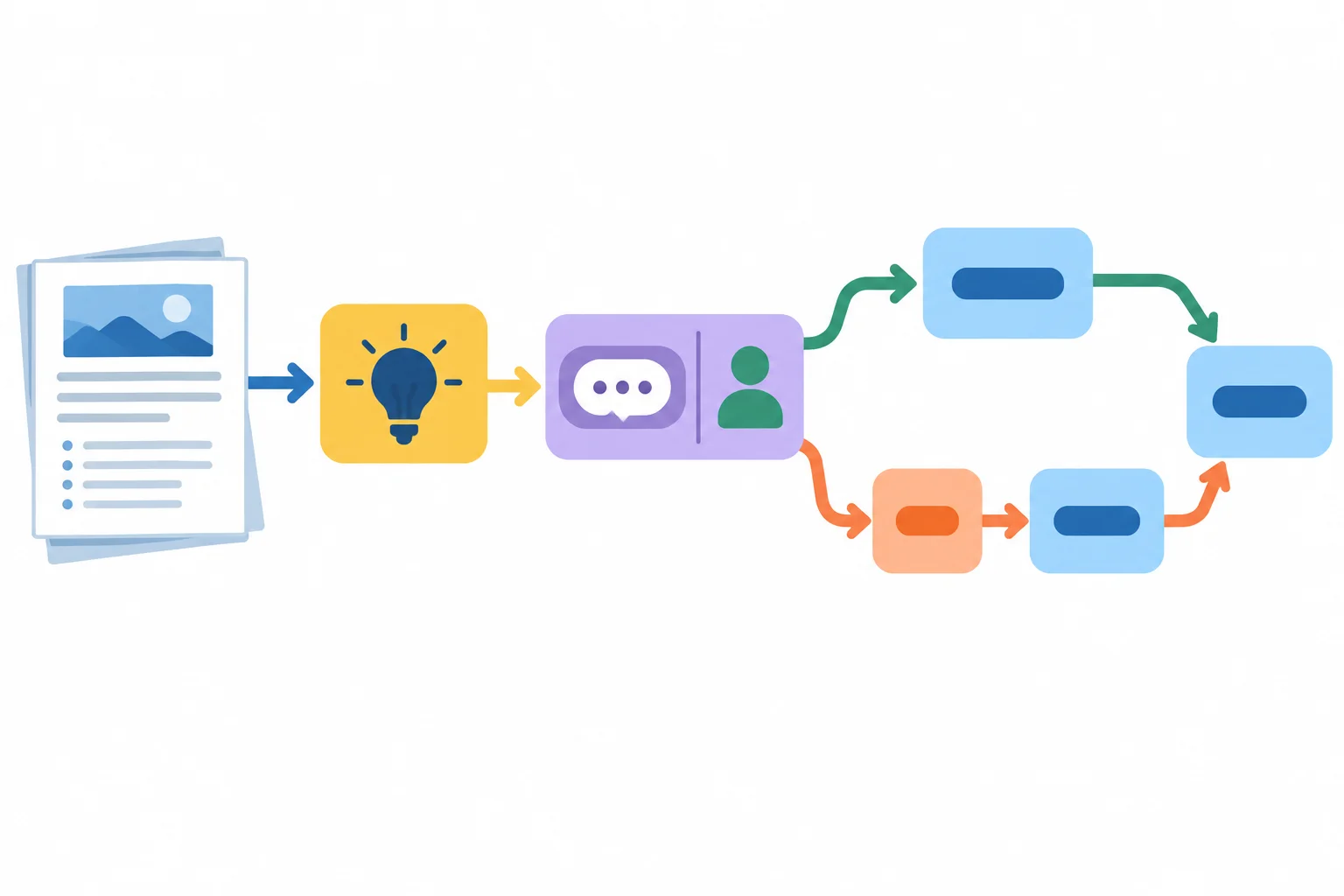
After recommend or propose that + subject, use either a base form or should + base form.
The should pattern is an equally clear alternative:
recommend/propose that + subject + should + base form
Base-form mandatives occur in both American and British English. In British English, should + base form is especially common, but it is not exclusively British. Both patterns present an action for approval; neither says that the action already happens.
Compare a recommendation with a present-tense statement about an existing arrangement.
| Form | Model | Meaning |
|---|---|---|
| Base-form mandative | We recommend that the team introduce a pilot scheme. | A proposed action |
| Should alternative | We propose that the team should introduce a pilot scheme. | A proposed action |
| Present-tense statement | The team introduces a pilot scheme. | An action presented as current |
Build the recommendation that requests a proposed action from Alex.
Your sentence
Available words
Complete the recommendation with one verb.
We recommend that the team ___ a four-week quiet-hours pilot scheme.
Which sentence uses the should alternative correctly?
Listen and write what you heard.
Listen and type the recommendation exactly. Include the full stop.

Step 5 of 8
Turn a recommendation into a feasible pilot scheme with clear arrangements and a measurable review point.
A pilot scheme is a bounded trial, not a permanent change. Its implementation should make clear what will happen, when it will happen, who will act, and what resources are needed.
In the coordinator update, Alex explains that a trial can last no more than 4 weeks, while all 24 seats and current opening hours must remain available. Alex can display notices and collect short feedback within existing duties. These are constraints on a proposed action, not results from the Hub brief.
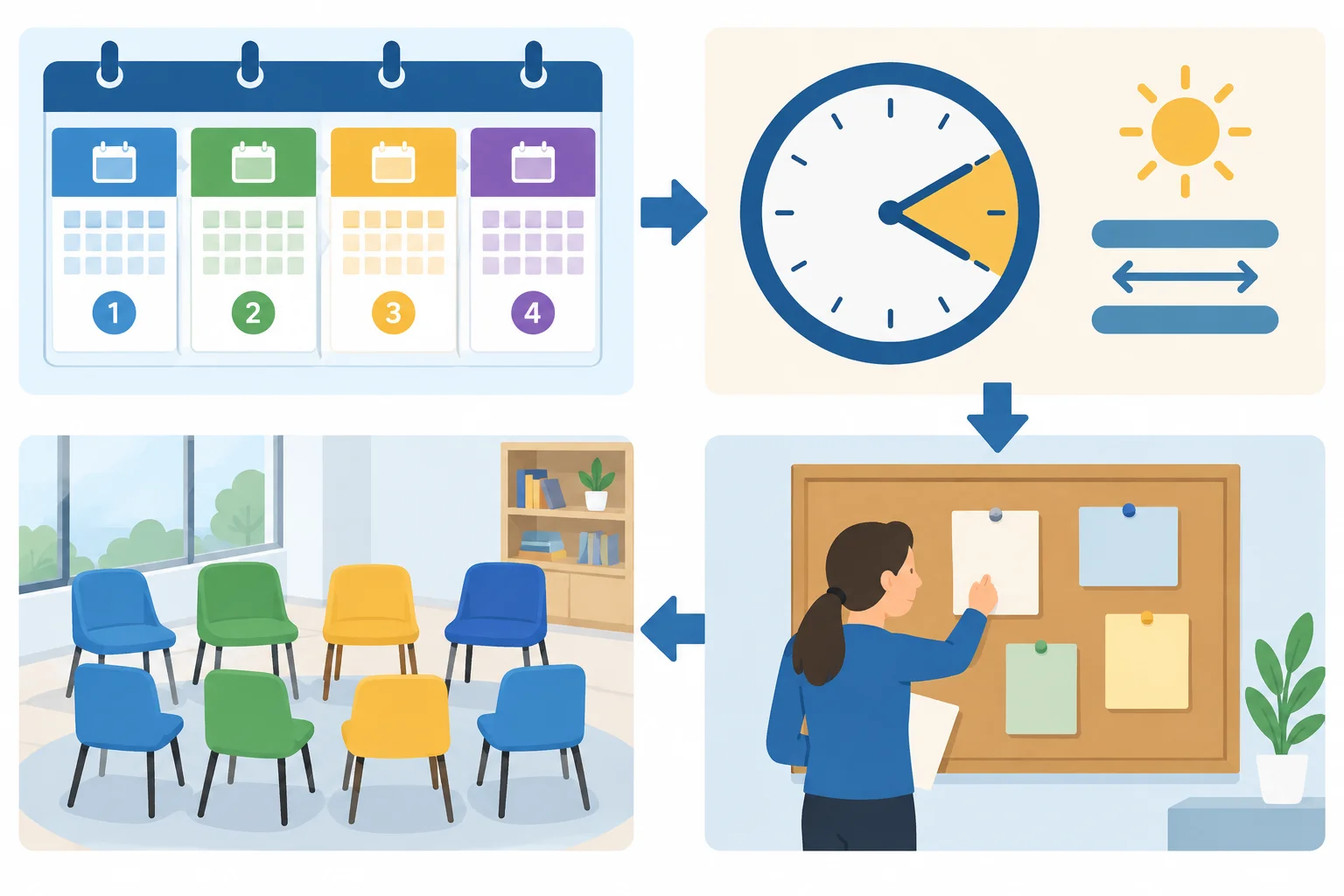
A feasible implementation connects a bounded time frame, a coordinator, existing resources, and preserved access.
The following arrangements are proposed for the quiet-hours pilot scheme.
| Implementation element | Proposed arrangement | Feasibility check |
|---|---|---|
| Duration | A four-week pilot scheme | Within the 4-week constraint |
| Operating times | Weekdays, 2–4 p.m. | Group discussion remains permitted outside this period |
| Responsibility | Alex Morgan coordinates the trial | Within existing duties |
| Resource requirement | Notices made from existing materials | No purchases or additional staff |
| Access | All 24 seats and current opening hours remain available | Required throughout the trial |
Implementation alone does not show whether a trial has met its purpose. Add a review point and a success criterion.
A useful criterion states: what you will measure, the proposed target, and when you will review it. In week 4, use the same feedback question as the baseline week. This allows a descriptive comparison of reported noise-related interruptions. At the same review, check that all 24 seats and current opening hours have remained available.
A target guides a decision after the pilot; it is not a prediction that the pilot will succeed.
Example
Proposed review statement
In week 4, using the same feedback question, the proposed success criterion is that 40% or fewer of at least 20 respondents report noise-related interruptions. The review will also confirm that all 24 seats and current opening hours remain available.
This statement gives an observable measure, a target, a review point, and an access check. It does not claim that this result will definitely occur.
Match each plan detail to its role.
Tap an item and then its matching pair.
Write 2 concise sentences for the proposal.
Write at least 180 characters (0/180).

Step 6 of 8
Express likely benefits without treating a proposed trial as a guaranteed solution, then make limitations relevant to the approval decision.
A benefit should be a reasoned possibility, not a promise. According to the Hub brief, 12 of 20 respondents reported that noise interrupted concentration on weekday afternoons. This supports a proposal to test a response, but it does not establish the cause of every interruption or guarantee a result.
Keep the recommendation direct, then qualify the expected benefit: the proposed quiet-hours pilot scheme may help users concentrate during the period when interruptions were reported. This is appropriately cautious because the scheme still needs review.
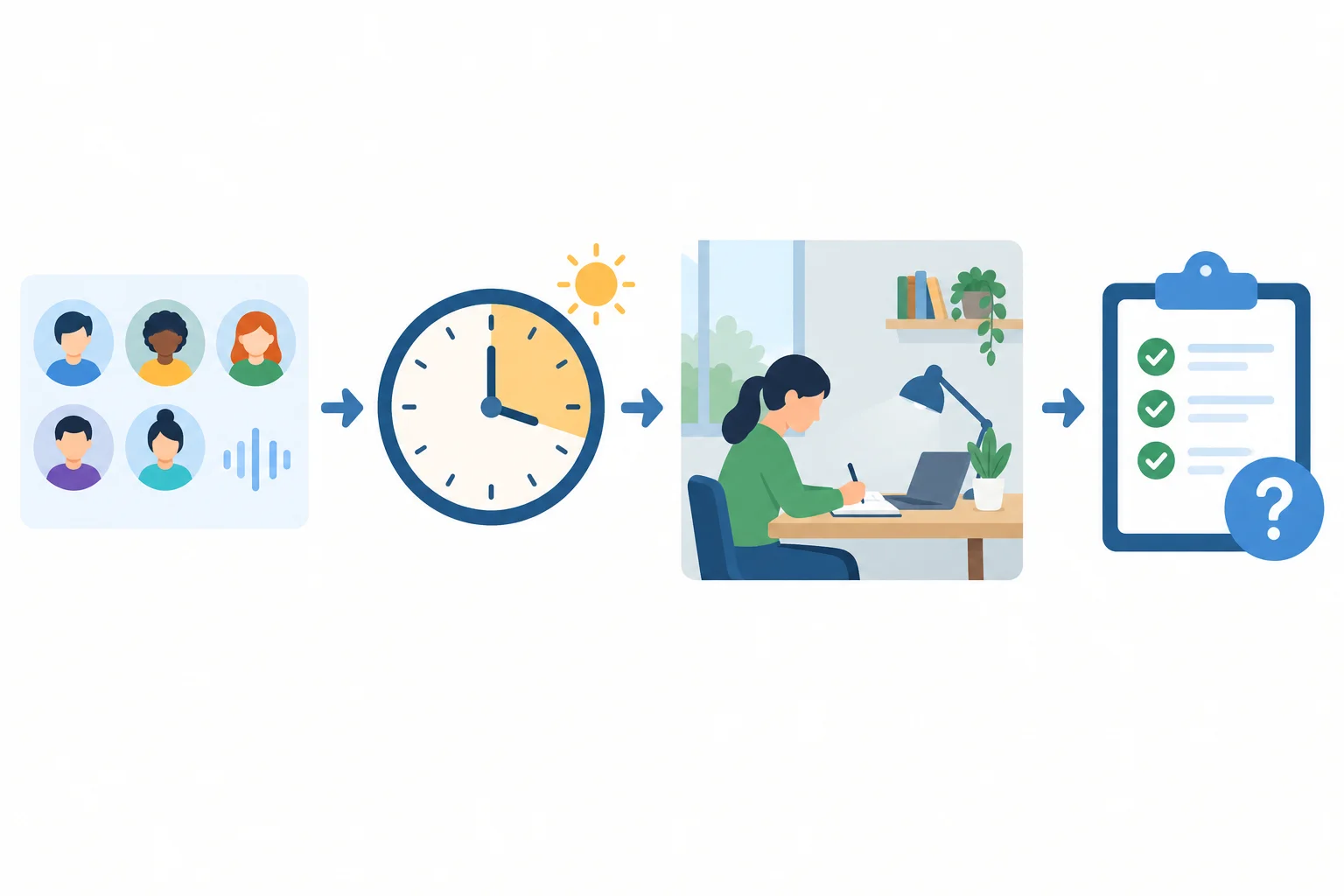
The chain is evidence → proposed action → possible benefit → review. The final review means the benefit is not presented as certain.
Example
Reasoned: “The pilot scheme may improve concentration for some users on weekday afternoons.”
Overpromising: “The pilot scheme will eliminate all noise-related interruptions.”
The first sentence links the action to the reported issue while leaving room for the review evidence. The second claims an outcome that the Hub brief cannot prove.
A useful limitation affects whether or how the manager should approve the proposal. Do not add a vague disclaimer. Name the issue, explain why it matters, and connect it to an arrangement or review point.
In the coordinator update, Alex explains that the trial must keep all 24 seats and current opening hours available, with no purchases or additional staff. These are constraints, not benefits of the scheme.
Use a limitation to make the proposal more decision-ready, not less decisive.
| Limitation | Why it matters | Proposal response |
|---|---|---|
| Small voluntary feedback sample | It may not represent every user. | Use the same question at the week 4 review; describe the target as proposed. |
| Some users need group discussion at 2–4 p.m. | Quiet hours could inconvenience them. | Permit group discussion outside the quiet-hours period. |
| The brief does not establish every cause of interruption. | The scheme cannot be claimed to solve every problem. | Test the pilot scheme rather than promise an outcome. |
True or false: “The pilot scheme will eliminate afternoon noise for all users” is an appropriately qualified expected benefit.
Revise this passage in 55–85 words:
“We recommend that the team introduce a four-week quiet-hours pilot scheme. The scheme will solve the noise problem, and the feedback proves that nobody will be inconvenienced.”
Write a revised passage that keeps the action explicit, states a reasoned expected benefit rather than a guarantee, and includes one concrete limitation. Link that limitation to either a practical safeguard or the week 4 review.
Write at least 55 characters (0/55).

Step 7 of 8
Rehearse a concise spoken recommendation whose action, justification, operating conditions, limitation, and review point are easy for a listener to follow.
A one-minute recommendation does not need a presentation structure. It needs a listener-friendly sequence: action / evidence / operating conditions // limitation and review.
Use / to separate connected information in short units. Use // before the limitation so that uncertainty is audible rather than hidden inside the justification. Then state the review point clearly. Keep every detail consistent with the proposed written recommendation: do not turn a target into a result or an unproven cause into a fact.
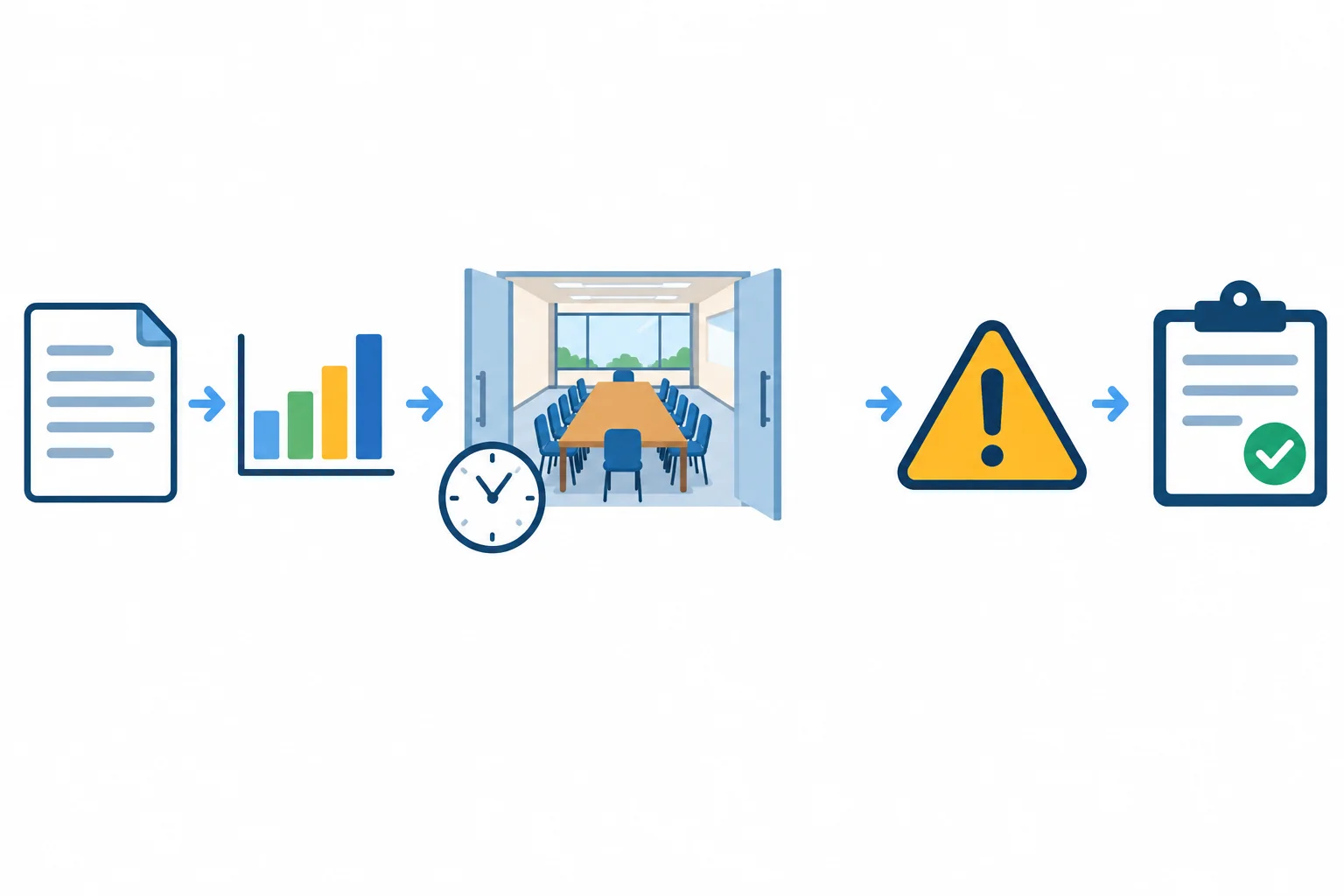
Use short boundaries between connected units and a stronger boundary before the limitation.
Example
We recommend that the team introduce a four-week quiet-hours pilot scheme on weekdays from 2–4 p.m. / According to the Hub brief, 12 of 20 respondents reported noise interrupting concentration on weekday afternoons, although users value group study. / Group discussion would remain permitted outside this period. In the coordinator update, Alex explains that all 24 seats and current opening hours must remain available, with no purchases or additional staff. Alex Morgan would display existing-material notices and collect feedback within existing duties. // However, the Hub brief does not establish the cause of every interruption, and group users may find the restricted period inconvenient. In week 4, the proposed target is 40% or fewer of at least 20 respondents reporting noise-related interruptions using the same feedback question; access is also checked.
Listen once for the overall meaning, then again for the short and strong boundaries.
We recommend that the team introduce a four-week quiet-hours pilot scheme on weekdays from 2–4 p.m. / According to the Hub brief, 12 of 20 respondents reported noise interrupting concentration on weekday afternoons, although users value group study. / Group discussion would remain permitted outside this period. In the coordinator update, Alex explains that all 24 seats and current opening hours must remain available, with no purchases or additional staff. Alex Morgan would display existing-material notices and collect feedback within existing duties. // However, the Hub brief does not establish the cause of every interruption, and group users may find the restricted period inconvenient. In week 4, the proposed target is 40% or fewer of at least 20 respondents reporting noise-related interruptions using the same feedback question; access is also checked.
Listen and choose an option.
Which summary identifies both the recommendation and the limitation?
We recommend that the team introduce a four-week quiet-hours pilot scheme on weekdays from 2–4 p.m. / Group discussion would remain permitted outside that period. // However, the Hub brief does not establish the cause of every interruption.
Now rehearse the model below aloud twice. It is about 128 words, so it can last approximately one minute when you speak at a measured pace and make the marked pauses audible. Keep the limitation separate; do not rush it to reach the review point.
We recommend that the team introduce a four-week quiet-hours pilot scheme on weekdays from 2–4 p.m. / According to the Hub brief, 12 of 20 respondents reported noise interrupting concentration on weekday afternoons, although users value group study. / Group discussion would remain permitted outside this period. In the coordinator update, Alex explains that all 24 seats and current opening hours must remain available, with no purchases or additional staff. Alex Morgan would display existing-material notices and collect feedback within existing duties. // However, the Hub brief does not establish the cause of every interruption, and group users may find the restricted period inconvenient. In week 4, the proposed target is 40% or fewer of at least 20 respondents reporting noise-related interruptions using the same feedback question; access is also checked.
Tip
Before you begin, locate four anchors: the requested action, the source-based reason, the operating conditions, and the limitation. At //, slow slightly before continuing to the review point. This makes the qualification sound deliberate and keeps the proposal decision-ready.
Rehearse the version from the previous screen aloud once more; no recording or upload is required. Then write a brief delivery report. State your approximate duration, whether the action and operating conditions remained clear, and one adjustment you made or would make to improve the boundaries or timing.
Write at least 80 characters (0/80).

Step 8 of 8
Produce, check, and deliver a concise proposal that turns the Riverside Learning Hub evidence and constraints into a feasible recommendation.
A decision-ready proposal lets the Hub manager find four things quickly: why action is needed, what action is requested, how it can be carried out, and what may limit it.
Keep established information separate from your proposal. Attribute evidence with According to the Hub brief, ... and constraints with In the coordinator update, Alex explains that .... Label the action, review target, and expected benefit as proposals rather than facts or promises.
Write 160–200 words excluding the four headings. Before submitting, check that every number, time, responsibility, and condition is consistent.
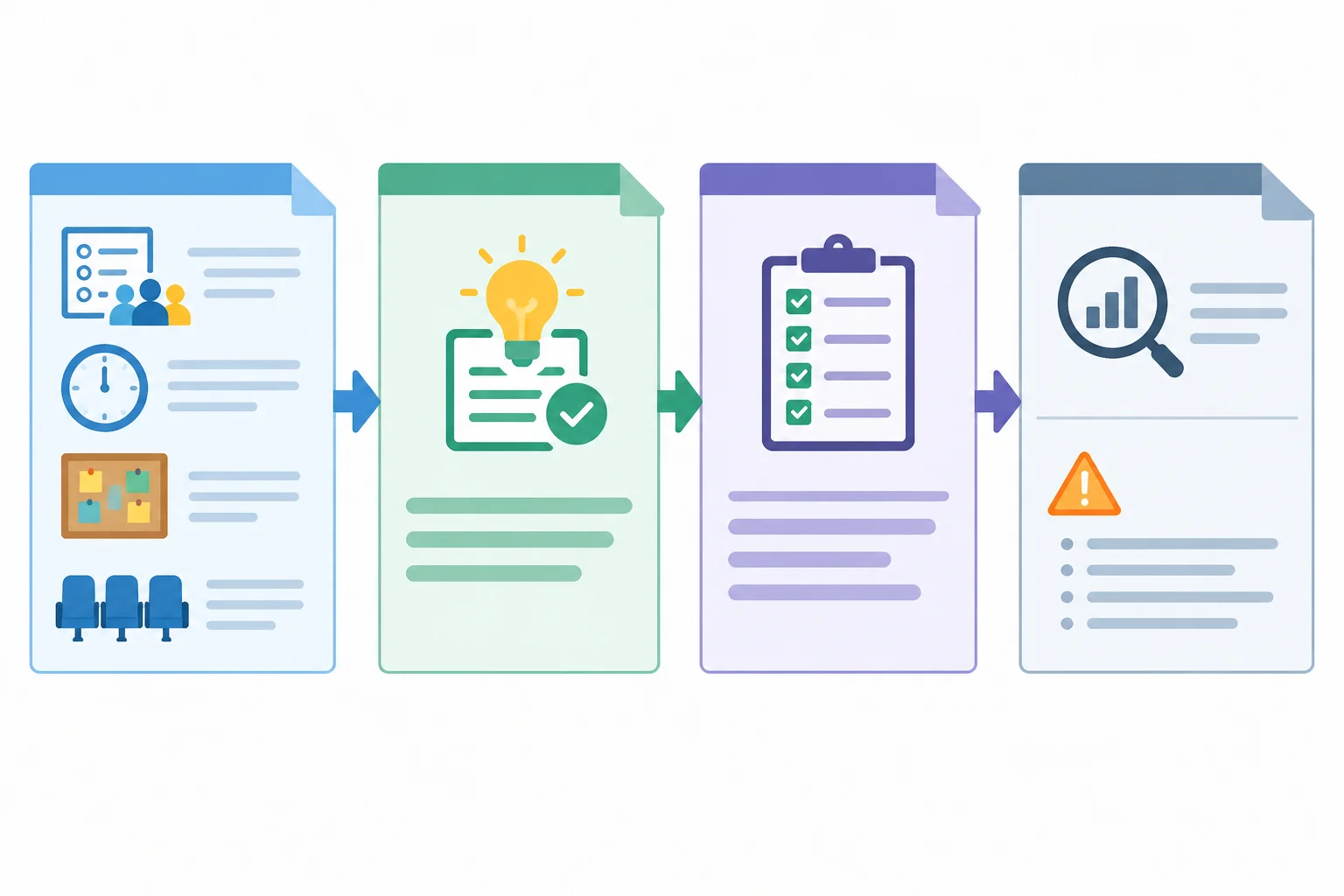
Use the four headings to make the route from evidence to a reviewable decision visible.
Tip
For the spoken version, do not read every sentence. Keep the same logic in four short moves: requested action / reason and operating conditions // limitation and review. The stronger boundary makes the limitation easy to hear.
This reference is 193 words excluding headings. It is one effective version, not wording that you must copy. Notice that it attributes the sources, makes the recommendation specific, and calls the review measure a proposed success criterion.
Example
This proposal recommends a response to weekday-afternoon noise at Riverside Learning Hub. According to the Hub brief, 12 of 20 respondents reported that noise interrupted concentration during one baseline week. Users also value opportunities for group study. The feedback does not establish the cause of every interruption.
We recommend that the team introduce a four-week quiet-hours pilot scheme on weekdays from 2–4 p.m. Group discussion would remain permitted outside this period.
In the coordinator update, Alex explains that the trial must not exceed 4 weeks, all 24 seats and current opening hours must remain available, and no purchases or additional staff are possible. Alex Morgan would display notices made from existing materials and collect short feedback within existing duties. In week 4, the proposed success criterion is that 40% or fewer of at least 20 respondents report noise-related interruptions using the same feedback question. The review should also check that all 24 seats and current opening hours remain available.
The scheme may support concentration while preserving group-study opportunities. However, some users may find the restricted period inconvenient, and voluntary feedback is limited. The week-4 review can indicate whether adjustment is warranted.
Summary
Tip
A final consistency check is more than proofreading. If you write four-week before a noun, make sure the implementation section does not imply a longer trial. If you say access is preserved, check that the review also checks all 24 seats and current opening hours. If a result has not happened yet, present it as a target, not an established improvement.
Complete the final task.
/ for short boundaries and // before the limitation in your speaking notes.In the box, paste your proposal. Under it, add Delivery report: followed by one feature that worked well and one revision you made after checking your draft or practising aloud.
Write at least 900 characters (0/900).
Congratulations! You completed: Write a Proposal with Clear Recommendations
Thousands of online courses in video, ebooks and audiobooks.
To test your knowledge during online courses
Generated directly from your cell phone's photo gallery and sent to your email

Download our app via QR Code or the links below:.



Carry knowledge in your pocket.
Download the Cursa app.
There are hundreds of free courses available, with a free certificate of completion that is saved in your mobile image gallery.
Download the app to access the Course Completion Certificate for Free.


+ 10 million
students

Free and Valid
Certificate

60 thousand free
exercises

4.8/5 rating in
app stores

Free courses in
video and ebooks