 Violin Bowing
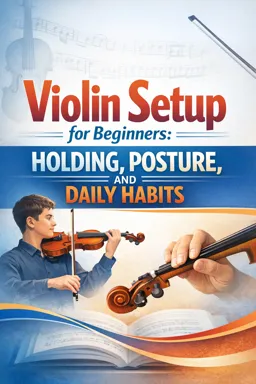
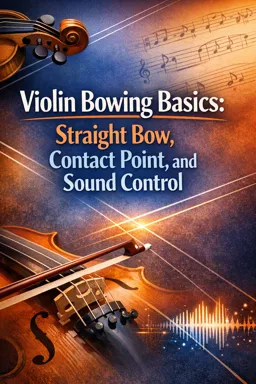




A beginner violin course should cover holding the violin, posture, bow grip, basic notes, rhythm, and simple songs.

8

2


Build confident violin technique with a free online course: choose the right instrument, tune, bow smoothly, read basics, and play real melodies.
4.9

(10)

2h03m

49 exercises
Build violin skills from day one: posture, bow control and first notes in a free online course with exercises and a certificate option to showcase progress.
4.9
(15)
1h35m
10 exercises
Free CourseViolin complete course
5
(1)
8h21m
9 exercises
Free CourseViolin from basics to advanced
New
5h39m
26 exercises
Free CourseLearn To Play The Violin
New
1h14m
17 exercises
Free CourseViolin Bowing Fundamentals
New
5h19m
12 exercises
Free CourseBasic Violin exercises
New
48m
6 exercises
Free CourseViolin Course for Beginners
New
1h00m
6 exercises
Exercises
Test your knowledge of orchestral violin notation, section etiquette, conductor cues, page turns, divisi passages, and rehearsal practices.
Start exercisesTest your knowledge of violin sound production, acoustics, dynamics, parts, bowing, strings, rosin, and tone in this educational quiz.
Start exercisesTest your violin performance and expression mastery with questions on bowing, dynamics, articulation, harmonics, and essential technique.
Start exercisesTest your violin maintenance and care knowledge, from cleaning strings and bow rosin to humidity control, storage, and proper setup.
Start exercisesTest your intermediate violin techniques and skills, including vibrato, double stops, bowing, pizzicato, mutes, bow care, and orchestra basics.
Start exercisesTest your knowledge of violin anatomy and sound production, from strings, bridge and soundpost to bow parts, woods and tuning.
Start exercises
Essential Violin Bowing Patterns: Building a Strong Foundation
Master bowing patterns like detache, legato, and martelé to build a strong violin foundation and enhance your tone, rhythm, and expression.

Exploring Unique Violin Bowing Techniques: Spiccato, Col Legno, and More
Discover unique violin bowing techniques like spiccato, col legno, sul ponticello, and ricochet to expand your musical expression and tone palette.

Mastering Violin Bowing: Techniques for Expressive Playing
Explore violin bowing techniques like detache, legato, and spiccato to enhance expressiveness and control in your performance.

Understanding the Fundamentals of Violin Bowing: Tips for Beginners
Master the basics of violin bowing with clear tips on grip, placement, and exercises to build control, tone, and confidence.

Mastering the Violin: A Journey into the World of Strings
Master the violin with our free course, suitable for all levels. Enhance coordination, creativity, and confidence while exploring the instrument’s beauty.

The Evolution of Violin Technology and Its Future
The violin’s evolution spans from its 16th-century origins to modern innovations like electric violins, 3D printing, AR/VR, and sustainability, enhancing use and access.

Exploring Different Violin Styles: Classical, Jazz, and Folk Music
The violin is a versatile instrument that can adapt to a wide range of musical styles. Whether you are a beginner or an advanced player, exploring different violin styles can enhance your skills and broaden your musical horizons. This article delves into the characteristics of classical, jazz, and folk music on the violin, offering insights and tips for playing each style.
Develop practical musicianship through free online courses designed for beginners, progressing learners, and instrumentalists seeking structured study. These lessons introduce essential technique, posture, instrument care, tuning, note reading, rhythm, intonation, scales, bow control, and musical interpretation. The courses are free, include free certification, and feature exercises that help reinforce motor coordination, listening skills, pitch accuracy, and performance confidence.
Follow an educational pathway that supports independent learning and regular practice. Course content covers left-hand positioning, fingering patterns, bow grip, sound production, articulation, dynamics, phrasing, sight-reading, and repertoire preparation. Learners can review demonstrations, repeat technical exercises, and organize lessons into a personalized practice routine.
For focused instruction on stroke mechanics and tone production, explore the free Violin Bowing courses. This related topic can complement technical study and help learners develop smoother bow changes, consistent contact, balanced pressure, and expressive articulation.
To access the courses, exercises, and free certification, install the Cursa app on your mobile device. Get it from Google Play using Download for Android, or install it from the App Store using Download for iOS / iPhone. Study at your own pace and revisit lessons whenever you want to refine your technique.
What is the best online violin course for beginners?
A beginner violin course should cover holding the violin, posture, bow grip, basic notes, rhythm, and simple songs.
Can I learn violin online without a teacher?
Yes. Online violin lessons can teach core techniques through videos, exercises, and guided practice routines.
How long does it take to learn basic violin?
With regular practice, many beginners can play simple melodies in a few months.
What should I learn first on the violin?
Start with violin setup, relaxed posture, proper bow hold, open-string bowing, and basic finger placement.
Why is violin bowing important?
Bowing controls tone, volume, rhythm, and expression, making it one of the most important violin skills.
What are basic violin bowing exercises?
Common exercises include straight bows on open strings, long bows, bow distribution practice, and contact-point control.
How often should a beginner practice violin?
Practice for 15 to 30 minutes most days, focusing on consistent technique and slow, accurate repetition.

Complete any course and issue your certificate via the app — at no cost.

Download the app! to have access to more than 4,000 Online Courses + Certificate, all free!
Download the app! 100% free courses.


Carry knowledge in your pocket.
Download the Cursa app.
There are hundreds of free courses available, with a free certificate of completion that is saved in your mobile image gallery.
Download the app to access the Course Completion Certificate for Free.


+ 10 million
students

Free and Valid
Certificate

60 thousand free
exercises

4.8/5 rating in
app stores

Free courses in
video and ebooks
What are people saying about free online courses of Violin
Ginako
this was a lot of help! thanks!
CourseViolin