
Step 1 of 8
Say What You Can Do
Learn five action words and use can to say what people are able to do.

Learning path · Level 2 · Tutorial 4
Say what you can and can't do. Ask other people what they can do. Ask for help or ask to use something. Listen to and read short talks at home or school. Write your own answers and say them aloud.

 Say What You Can Do
Learn five action words and use can to say what people are able to do. 3 min
 Say What You Can't Do
Say what a person is not able to do with can't. 2 min
 Ask About Abilities
Ask another person about an ability and give a matching short answer. 3 min
 Hear and Say Can and Can't
Listen for can and can't, then repeat short ability statements and short answers clearly. 3 min
 Ask Someone to Help
Ask a classmate for help or to open a door, and choose a polite reply. 3 min
 Ask to Use Something
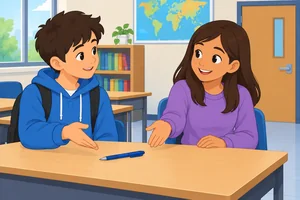
Ask permission to use a pen and tell the difference between Can I and Can you requests. 2 min
 Understand Short Conversations
Read a short classroom talk, listen for a request, and write a request you hear. 3 min
 Use Can in Your Own Conversation
Write and say personal ability statements, then complete a short polite classroom exchange. 3 min
Step 1 of 8
Learn five action words and use can to say what people are able to do.
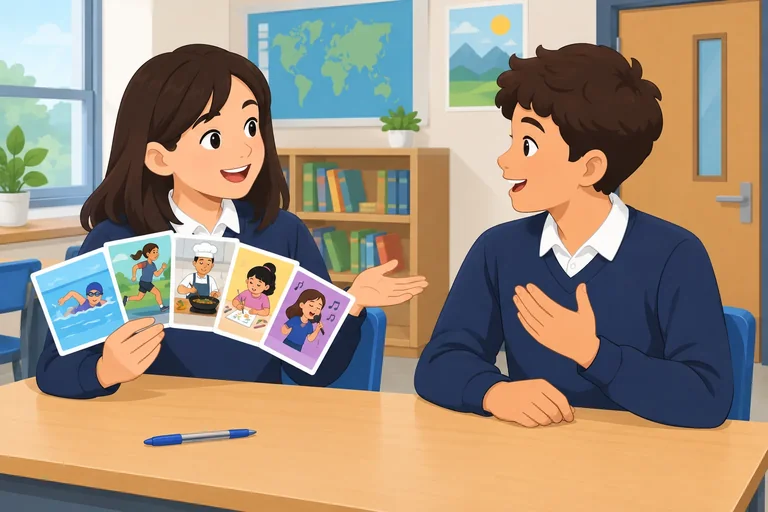
Learn five everyday action words:
Look at the pictures. Listen and repeat the action words.

Each picture shows one action word.
Listen and repeat each action word.
Swim. Run. Cook. Draw. Sing.
Swim. Run. Cook. Draw. Sing.
Use can to say that a person is able to do an action.
person + can + action word
The word can stays the same with every person:
The action word also stays the same after can. Do not add -s. Do not put to before the action word.
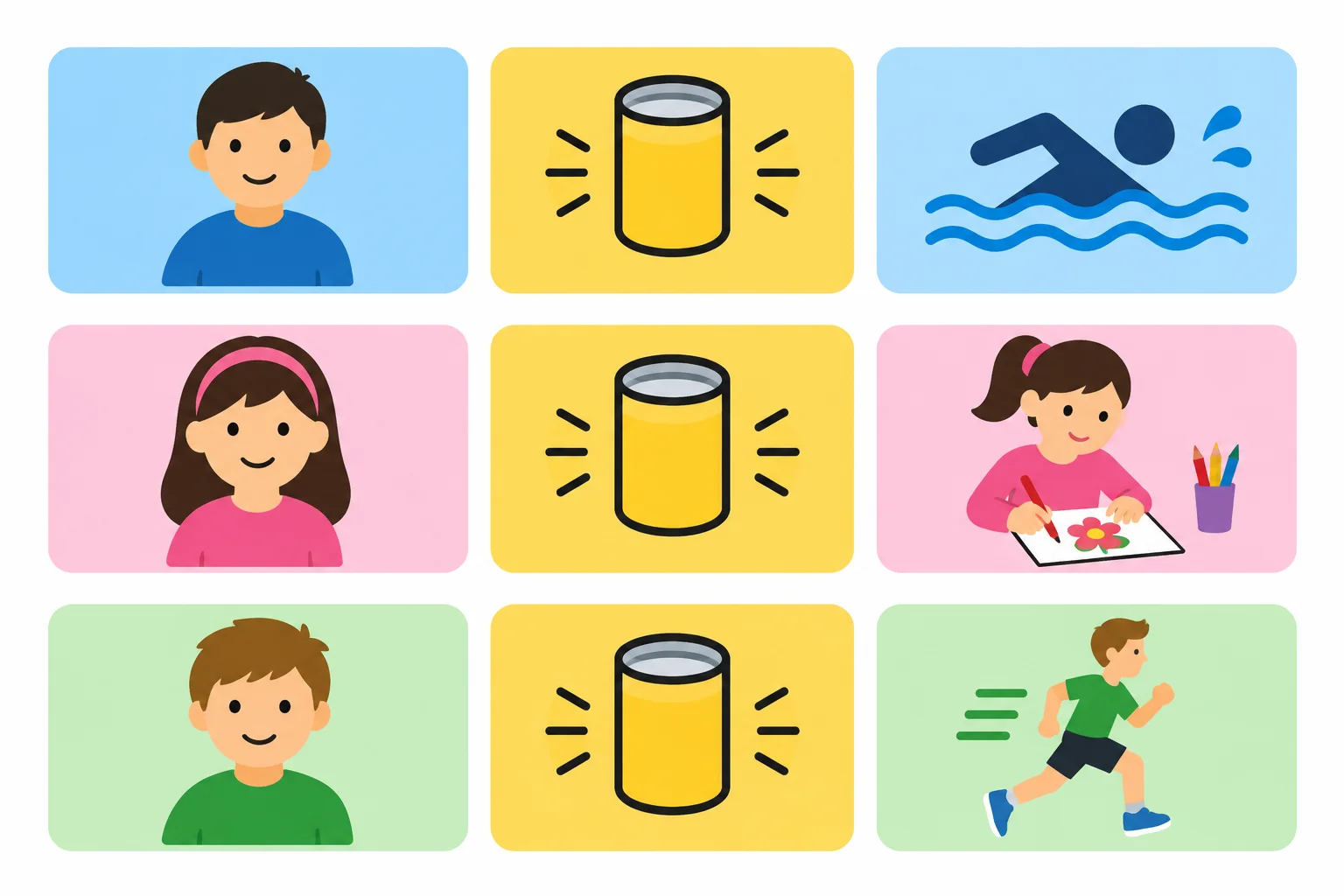
Put a person first, then can, then one action word.
Example
Mia can draw.
Sam can run.
Mia and Sam use the same word: can.
Tip
After can, use the simple action word:
✅ She can draw.
❌ She can draws.
✅ He can run.
❌ He can to run.
Match each action word to its meaning.
Tap an item and then its matching pair.
Put the words in the correct order.
Your sentence
Available words
Put the words in the correct order.
Your sentence
Available words
Write one true sentence about yourself with I can and an action word. Then say your sentence aloud.
Write at least 8 characters (0/8).
Step 2 of 8
Say what a person is not able to do with can't.
Use can't when a person is not able to do an action.
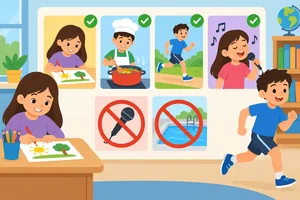
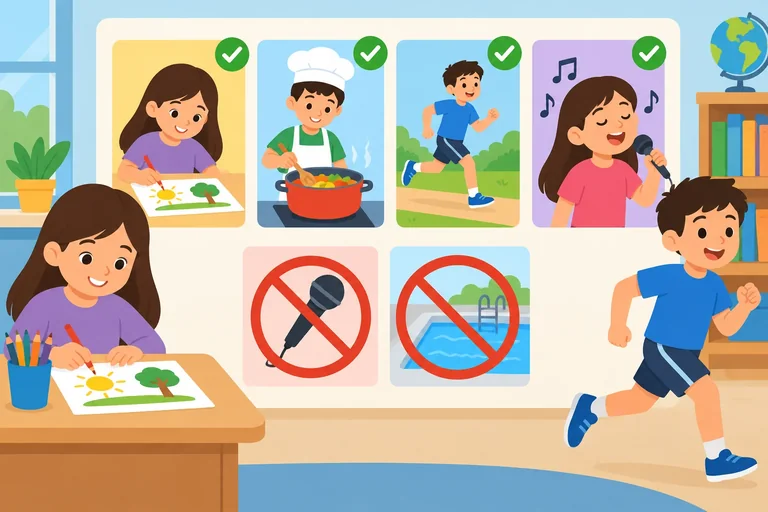
Mia can draw and cook, but she can't sing. Sam can run and sing, but he can't swim.
The action word stays the same after can't.
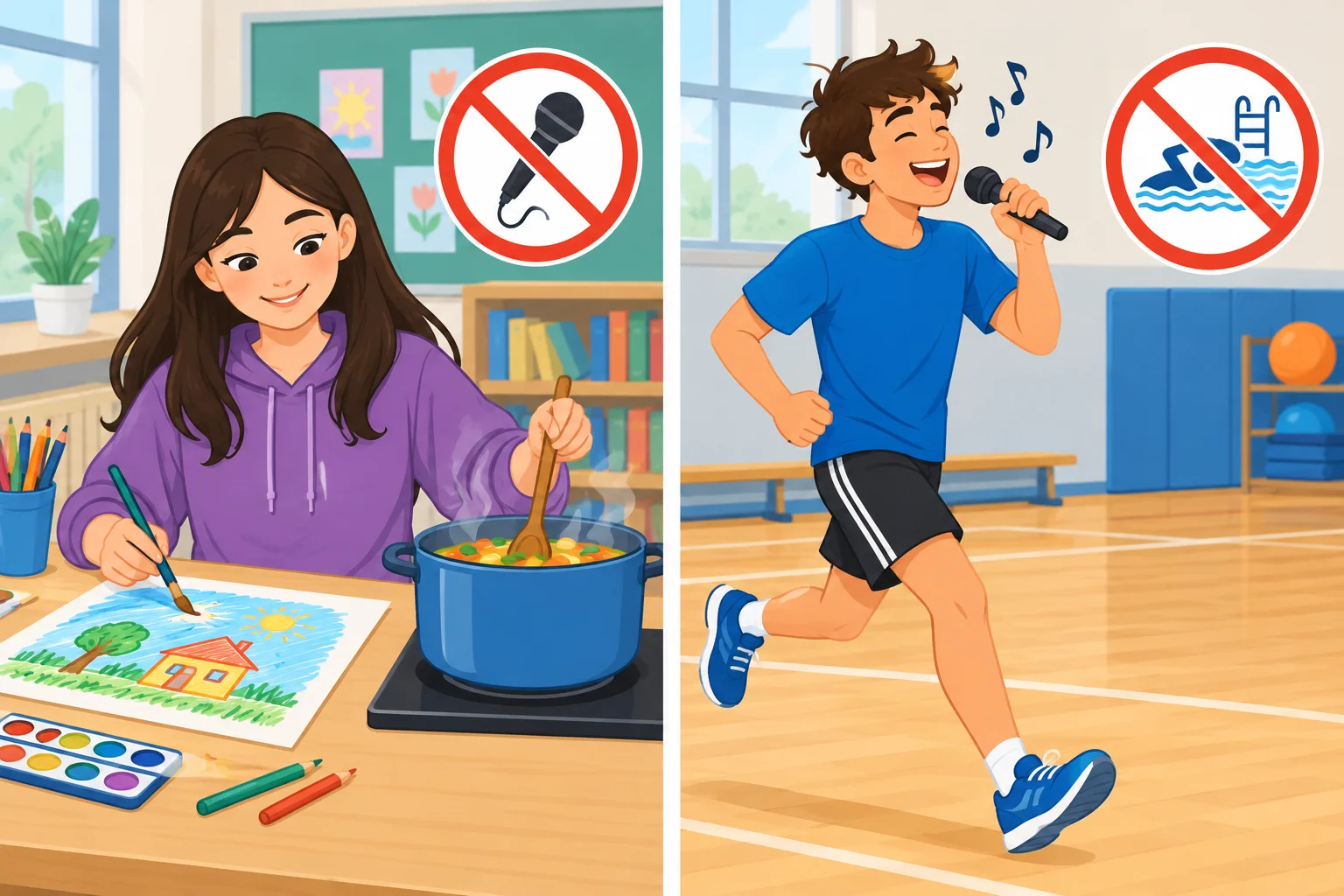
The red no-symbol shows an action the person can't do.
Compare the two meanings. Use one of these words before the action word.
| Person | Can | Can't |
|---|---|---|
| Mia | draw; cook | sing |
| Sam | run; sing | swim |
Example
Mia can draw.
Mia can't sing.
Sam can run.
Sam can't swim.
Tip
Use can't, not don't or doesn't. Keep the action word unchanged: He can't swim. Not “He can't swims.”
Look at each picture. A red no-symbol means the person can't do that action. Remember Mia is on the left and Sam is on the right.
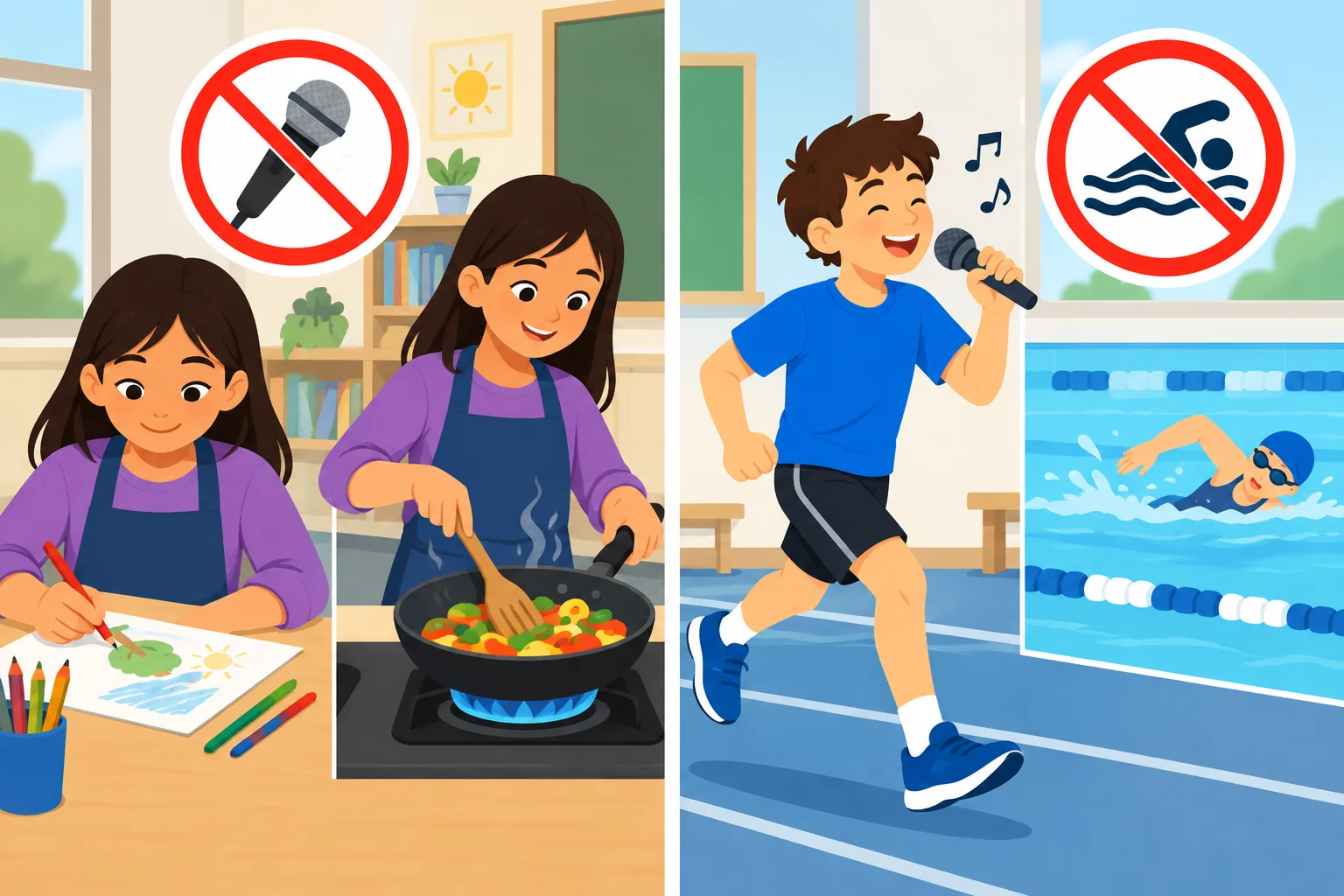
Use the pictures to check what each classmate can and can't do.
True or false? Sam can't swim.
Build the statement for Mia's missing ability.
Your sentence
Available words
Step 3 of 8
Ask another person about an ability and give a matching short answer.
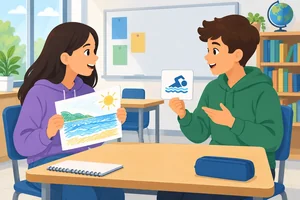
Ask about an ability with this pattern:
Can you + action word?
Start with Can. Then use you and one action word.
Can you swim?
Can you cook?
Do not add do or does.
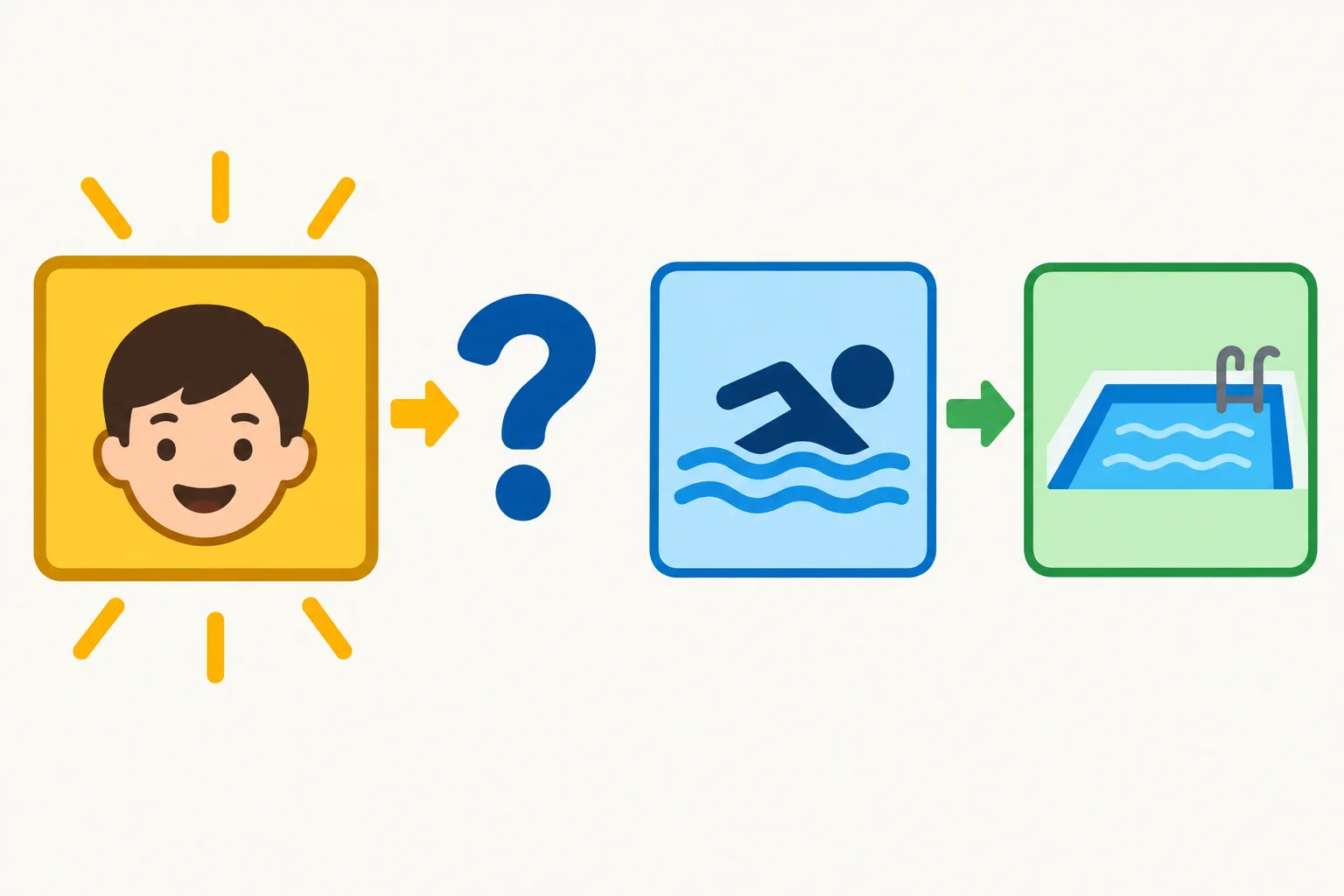
Start with Can. Then say you and an action word.
When someone asks you a question, answer with I.
Use a short answer:
Yes, I can.
No, I can't.
You do not need to say the action word again.
Mia can draw and cook, but she can't sing. Sam can run and sing, but he can't swim.
| Person | Ability question | Short answer |
|---|---|---|
| Mia | Can you draw? | Yes, I can. |
| Mia | Can you sing? | No, I can't. |
| Sam | Can you run? | Yes, I can. |
| Sam | Can you swim? | No, I can't. |
Listen to the question and its short answer. Then repeat both parts.
Can you draw? Yes, I can. Can you swim? No, I can't.
Can you draw? Yes, I can. Can you swim? No, I can't.
Build the ability question.
Your sentence
Available words
Match each ability question to the correct short answer. Then choose one complete exchange and say both parts aloud.
Tap an item and then its matching pair.
Step 4 of 8
Listen for can and can't, then repeat short ability statements and short answers clearly.
Listen to the whole sentence.
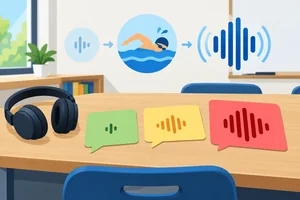
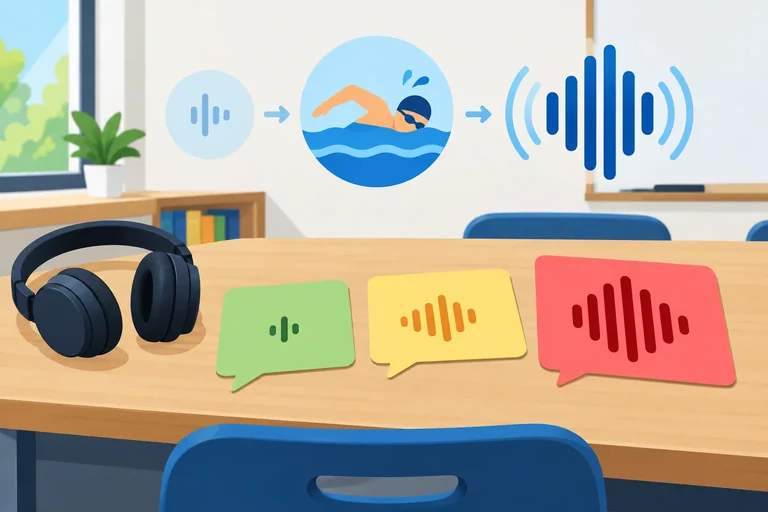
In a positive sentence, can is often short and quiet: I **can** swim.
In a negative sentence, can't is usually strong and clear: I **can't** swim. Sometimes the final t is difficult to hear. Do not listen for only that sound.
In the short answer Yes, I **can**., can is strong and clear.

Say these three lines: I can swim. I can't swim. Yes, I can.
Listen to two common models. In American English and British English, can't may have a different vowel sound. Both models have the same meaning. Listen for the strong word and the whole sentence.
Listen, then repeat each line.
I can swim.
I can't swim.
Yes, I can.
I can swim.
I can't swim.
Yes, I can.
Listen, then repeat each line.
I can swim.
I can't swim.
Yes, I can.
I can swim.
I can't swim.
Yes, I can.
Tip
Say each line after the audio. Make can't clear. For meaning, listen to the whole sentence—not only the final sound.
Listen and choose an option.
Listen to two sentences. Choose the meaning.
I can cook. I can't sing.
Listen and choose an option.
Listen to two sentences. Choose the meaning.
I can't run. I can swim.
Play the American English model again. Pause after each line and say the positive statement, the negative statement, and the short answer aloud. Then do the same with the British English model.
Compare your voice with both models. Notice the quiet can in the positive statement and the strong word in the other two lines.
After you speak, write one short sentence about what you noticed when you compared your voice with the American English and British English models.
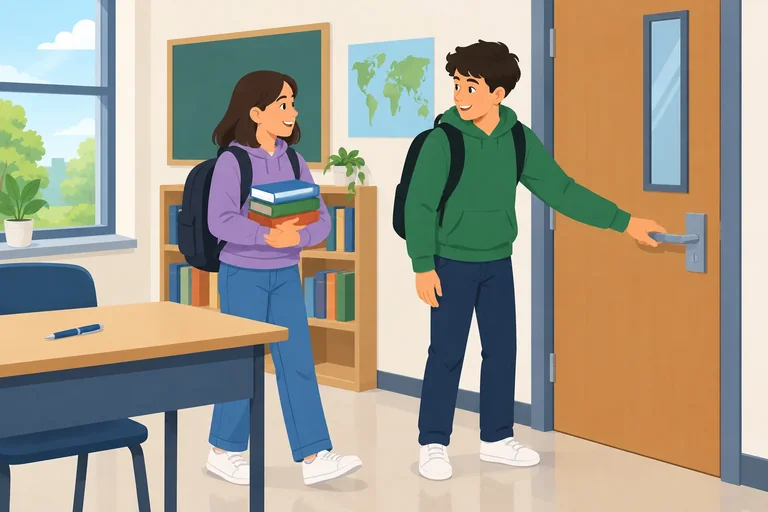
Step 5 of 8
Ask a classmate for help or to open a door, and choose a polite reply.
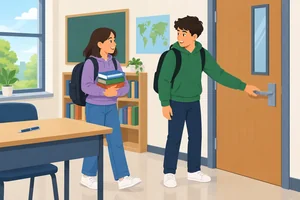
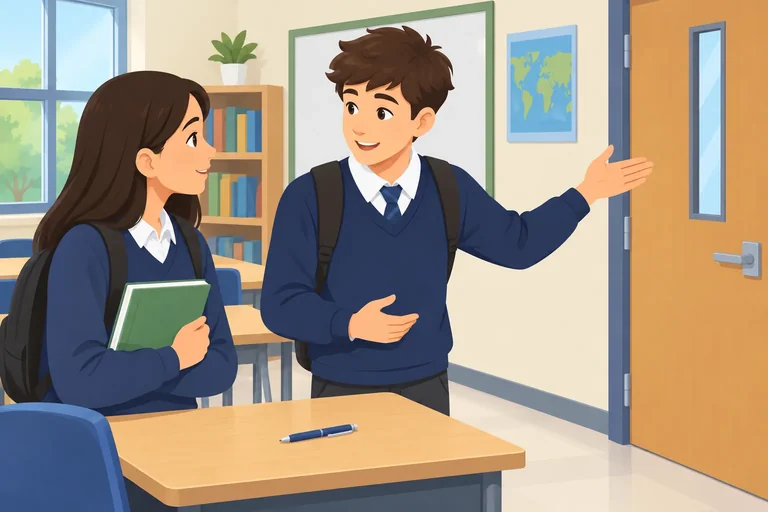
When you want another person to do something, use Can you + an action phrase. This is a request.
Put please at the end, after a comma. It makes your request polite.
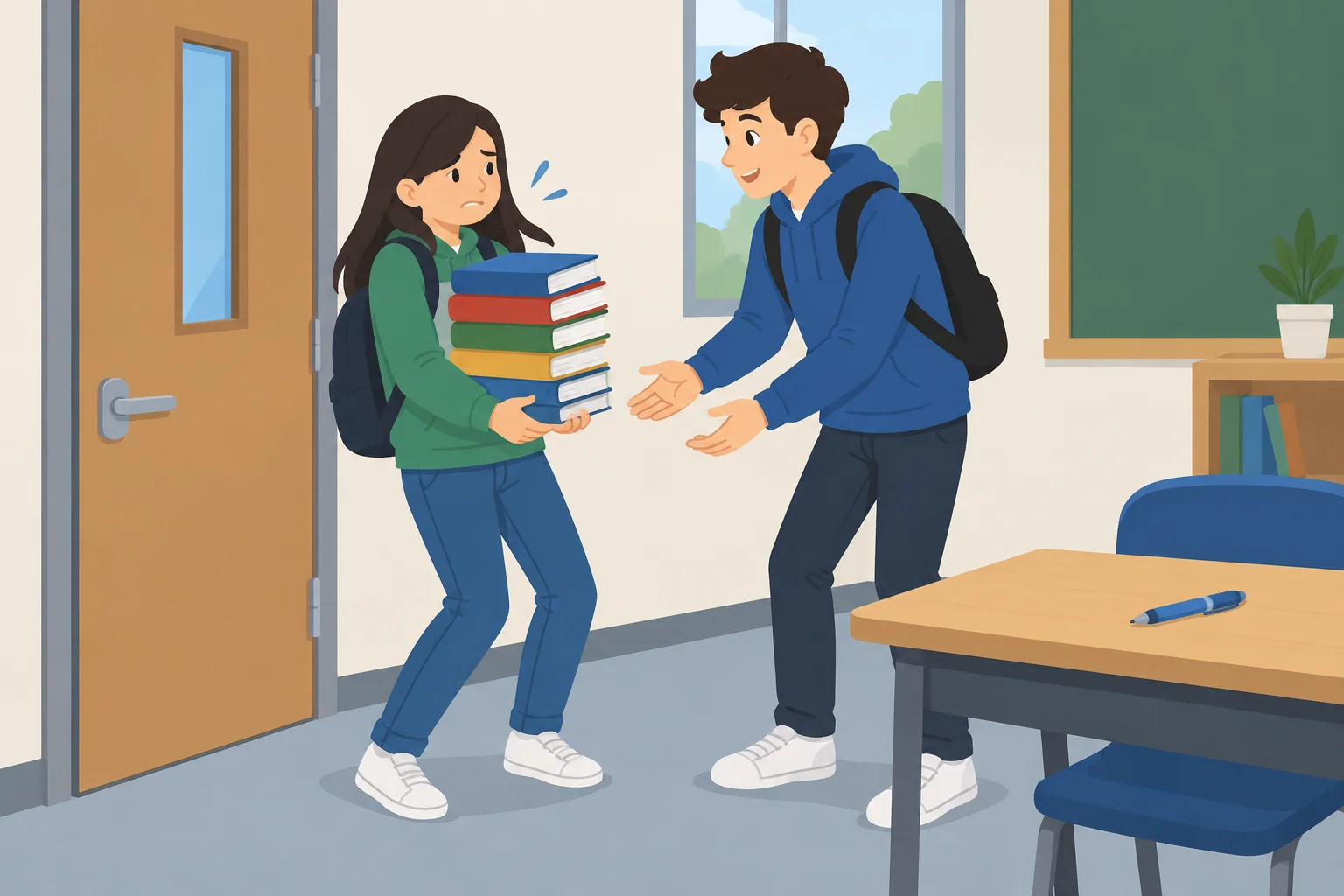
Use a request when another person can help with an action.
A request asks someone to act now. It is different from an ability question such as “Can you swim?”
After a request, choose a reply that fits the situation.
Use these short replies.
| Reply | Use it when |
|---|---|
| Sure. | You can do the action now. |
| Sorry, I can't. | You can't do the action. |
| Sorry, not now. | It is not a good time to do the action. |
Listen, then say both parts aloud.
Can you open the door, please? Sure.
Can you open the door, please? Sure.
Example
Mia: Can you help me, please?
Sam: Sorry, I can't.
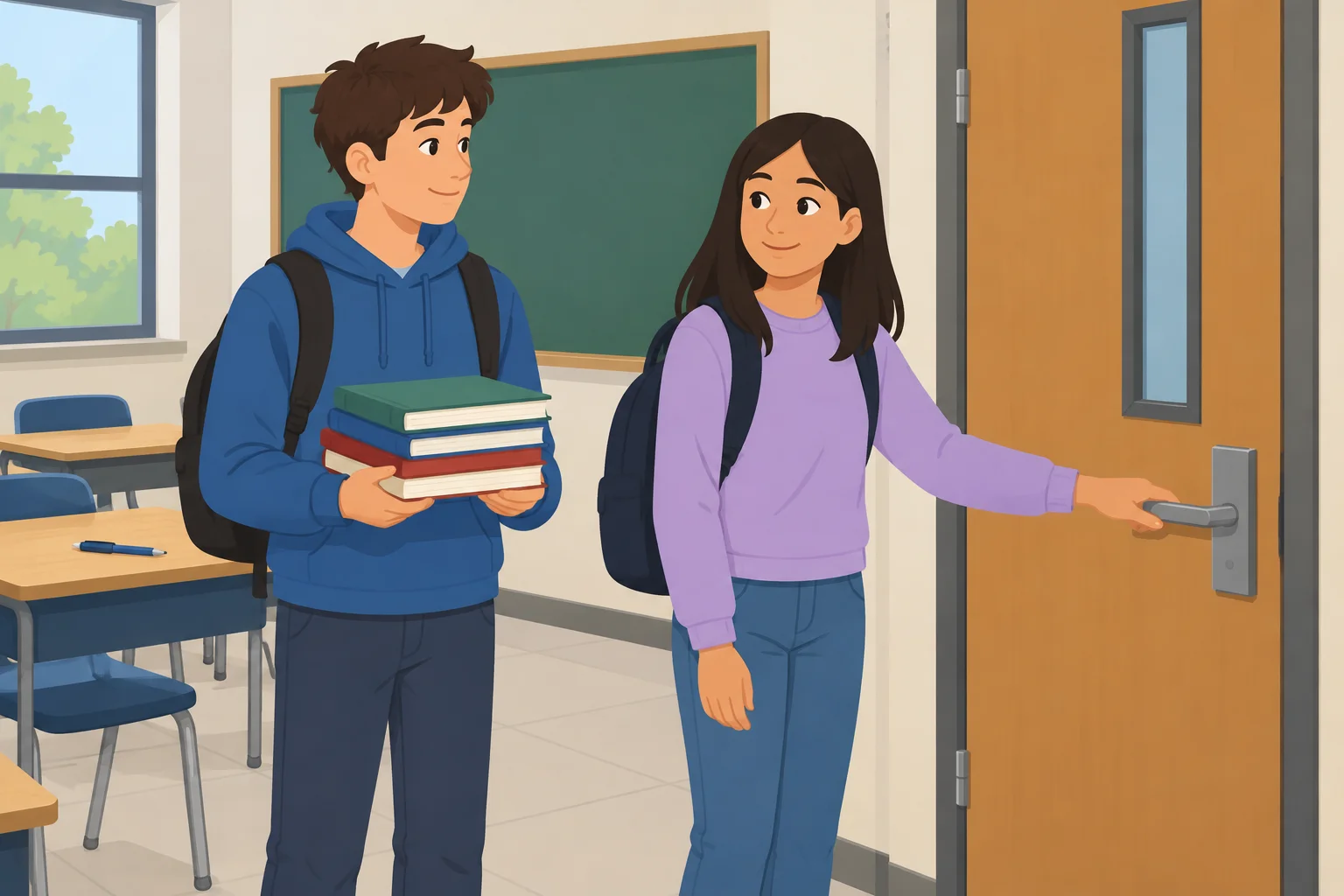
Look at the classroom need.
Build the polite request for the picture.
Your sentence
Available words
A classmate wants to help, but it is not a good time. Choose the polite reply.
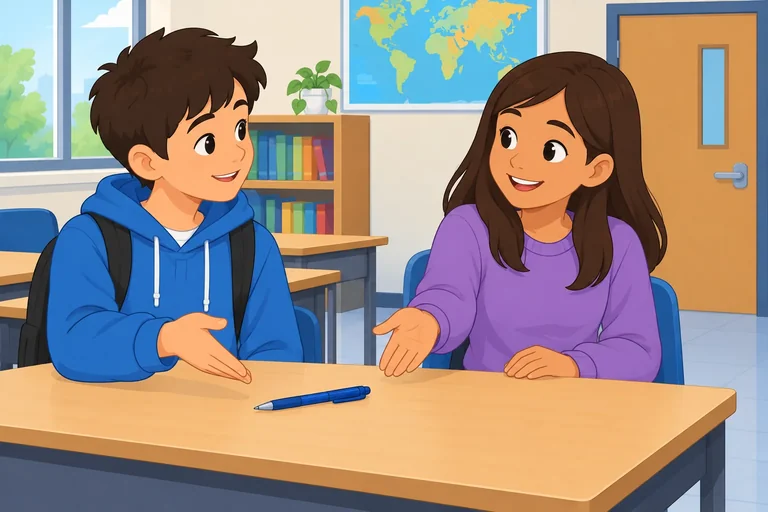
Step 6 of 8
Ask permission to use a pen and tell the difference between Can I and Can you requests.
Look at the pen on the desk. You want to use it. Ask:
Can I use your pen, please?
Here, I will use the pen.
Compare this request: Can you open the door, please? Here, the other person opens the door.
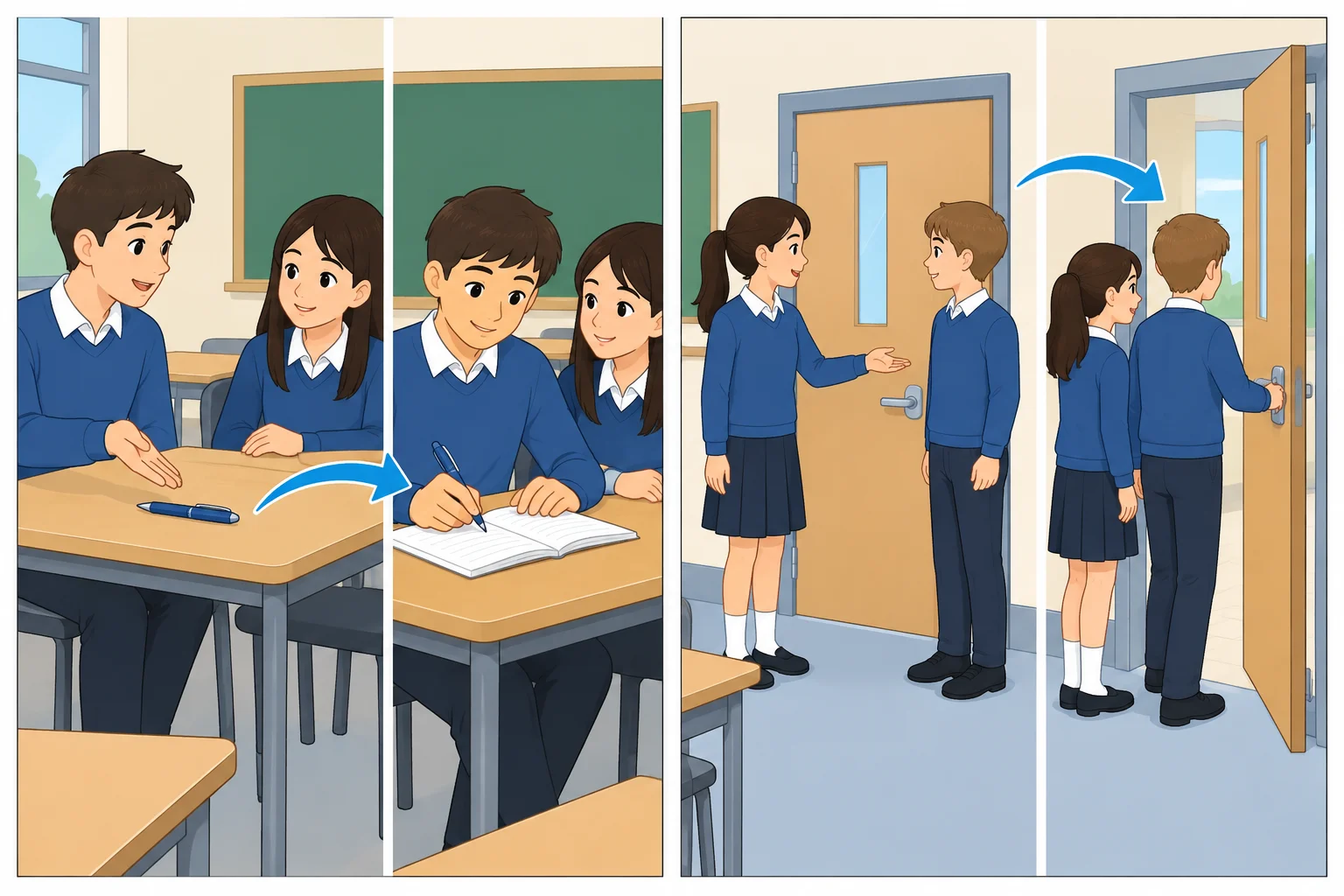
Ask with Can I when you will do the action. Ask with Can you when the other person will do the action.
Use Can I when you ask to do something yourself. Use Can you when you ask another person to do something.
Both forms make a request. The important question is: who does the action?
| Start | Who does the action? | Request |
|---|---|---|
| Can I | I | Can I use your pen, please? |
| Can you | The other person | Can you help me, please? |
| Can you | The other person | Can you open the door, please? |
Listen and repeat the two requests and replies.
Can I use your pen, please? Sure. Can you open the door, please? Sorry, I can't.
Can I use your pen, please? Sure. Can you open the door, please? Sorry, I can't.
Tip
For a request to use a pen, say Sure. or Sorry, not now.
Match each situation with the right request.
Tap an item and then its matching pair.
Mia has a pen on her desk. You want to use it.
Write two lines:
Then say both lines aloud.
Write at least 20 characters (0/20).
Step 7 of 8
Read a short classroom talk, listen for a request, and write a request you hear.
Read this classroom talk. Use the words and the situation.
Mia: Can you sing?
Sam: Yes, I can.
Mia: Can you help me, please?
Sam: Sure.
The first Can you asks about Sam's ability. The second Can you is a request: Mia needs Sam to act. The short answer tells us about an ability. Sure. answers a request.
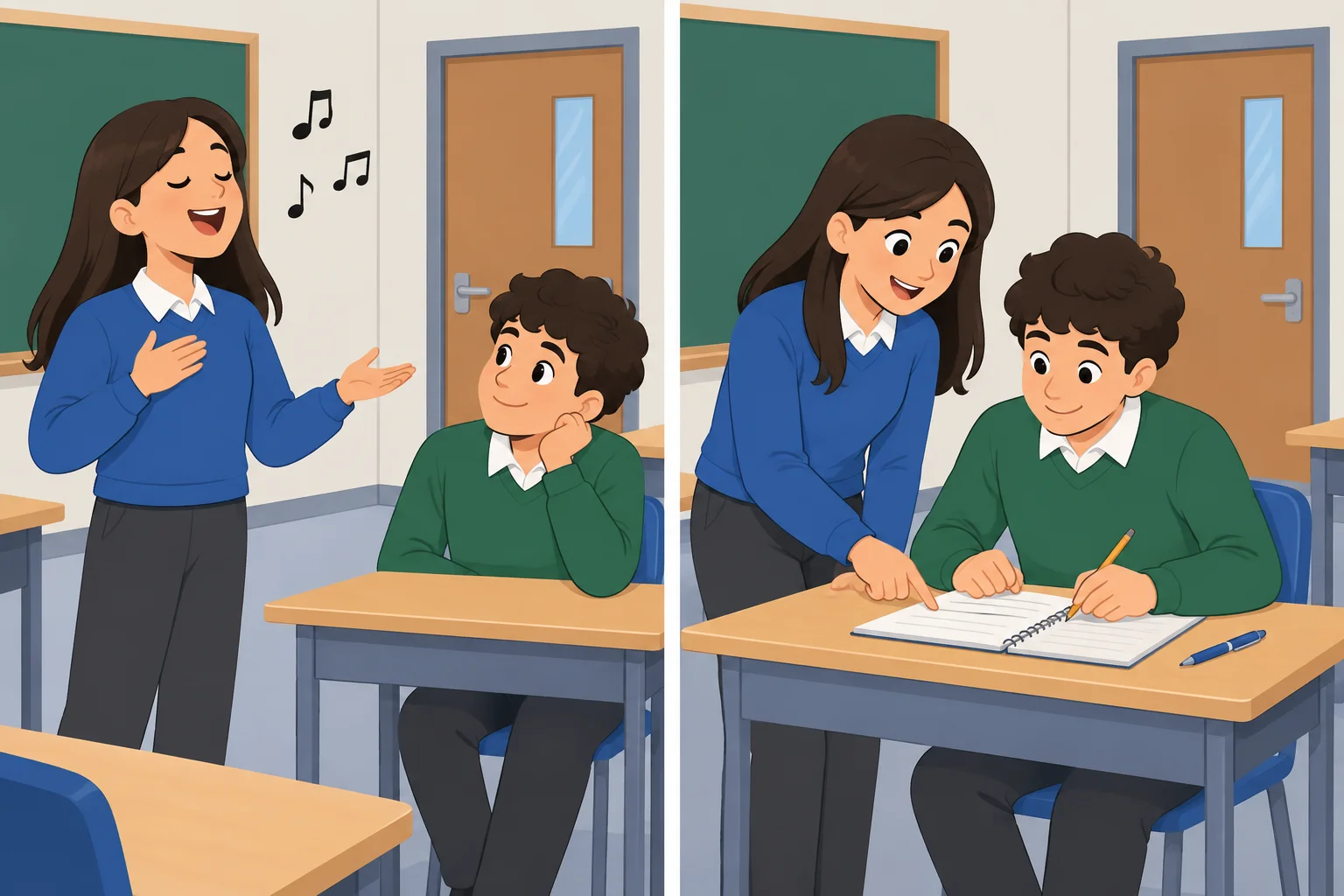
Use the situation to decide: is Can you about an ability, or is it a request?
Match each line to its job.
Tap an item and then its matching pair.
Think about the written talk on the first screen. What ability does Sam say yes to?
Listen and choose an option.
Listen. What does the speaker want the other person to do?
Can you open the door, please?
Listen and write what you heard.
Listen and write the request. Include the beginning words and please.
Step 8 of 8
Write and say personal ability statements, then complete a short polite classroom exchange.
Now put the language together. You will write about your abilities, ask a classmate one ability question, and make one polite classroom request.
Use true information about yourself. Keep each line short. Then say every line aloud.
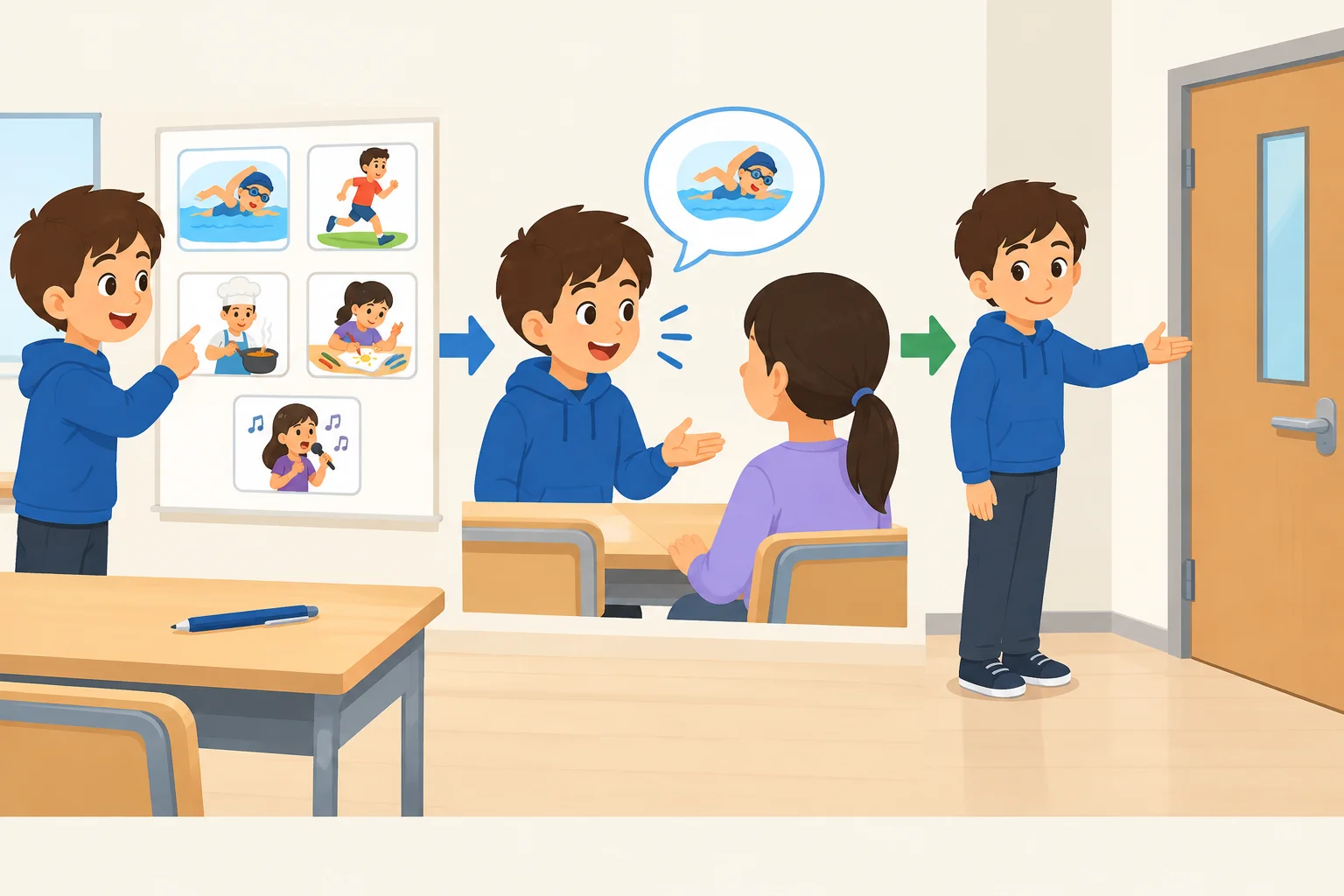
In ability statements, talk about yourself. In a question, talk to the other person. In a request, check who will do the action.
Example
Mia: I can draw. I can cook. I can't sing.
Mia: Can you run?
Sam: Yes, I can.
Mia: Can you open the door, please?
Sam: Sure.
Mia's and Sam's facts match the conversation: Mia can draw and cook but can't sing. Sam can run.
Use this checklist after you write.
| Part | Quick check |
|---|---|
| Ability statement | Use I + can or can't + an unchanged action word. |
| Ability question | Begin with Can you + an action word? |
| Short answer | Answer a question to you with I. |
| Request | Use a familiar classroom request and put , please at the end. |
| Help or door request | Sure., Sorry, I can't., or Sorry, not now. can fit. |
| Pen request | Sure. or Sorry, not now. can fit. |
Write your own final conversation.
Write the complete conversation below, with one line for each part.
Write at least 110 characters (0/110).
Summary
You can now communicate about abilities and simple classroom needs. Keep using short, clear sentences—and say them aloud.
Congratulations! You completed: Use Can to Talk and Ask for Help
You completed this level!
Up next: A2: Now and Before
 Talk About What Is Happening NowSay what you and other people are doing now. Ask questions and say what is not happening. Read and listen to short messages. Choose between an everyday routine and an action now, then say and write your own short update.
Thousands of online courses in video, ebooks and audiobooks.
To test your knowledge during online courses
Generated directly from your cell phone's photo gallery and sent to your email

Download our app via QR Code or the links below:.



Carry knowledge in your pocket.
Download the Cursa app.
There are hundreds of free courses available, with a free certificate of completion that is saved in your mobile image gallery.
Download the app to access the Course Completion Certificate for Free.


+ 10 million
students

Free and Valid
Certificate

60 thousand free
exercises

4.8/5 rating in
app stores

Free courses in
video and ebooks