 Discrete Mathematics
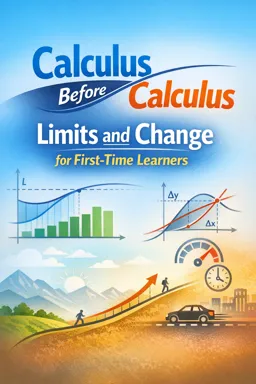
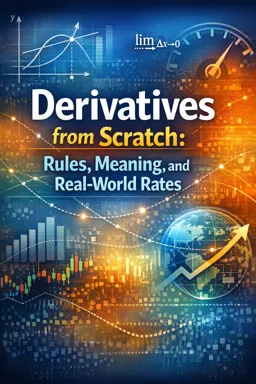
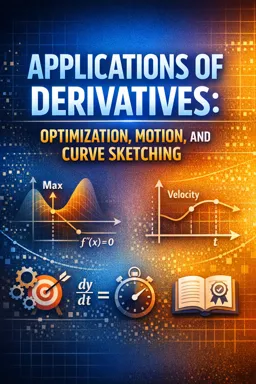


Calculus is the study of change and accumulation using limits, derivatives, and integrals.

14

3


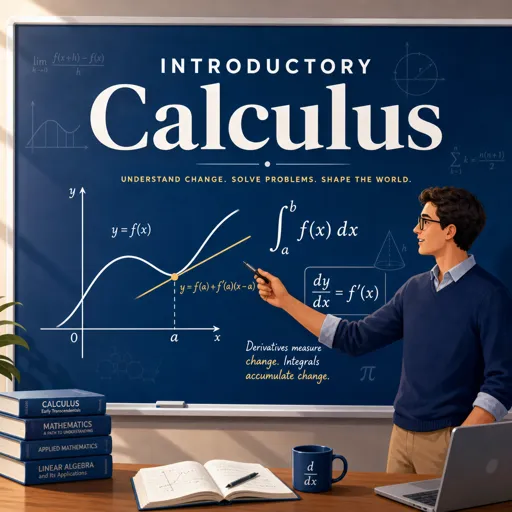
Master core calculus skills fast with a free online course—limits, derivatives and differential equations explained clearly, plus practice to boost your confidence.
5

(4)

58m

5 exercises
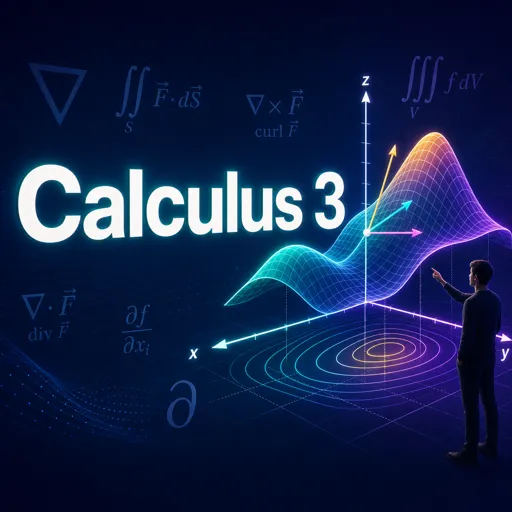
Build confidence in vectors and multivariable calculus with this free online course—master gradients, multiple integrals, and vector fields for STEM success.
4.8
(15)
75h24m
17 exercises
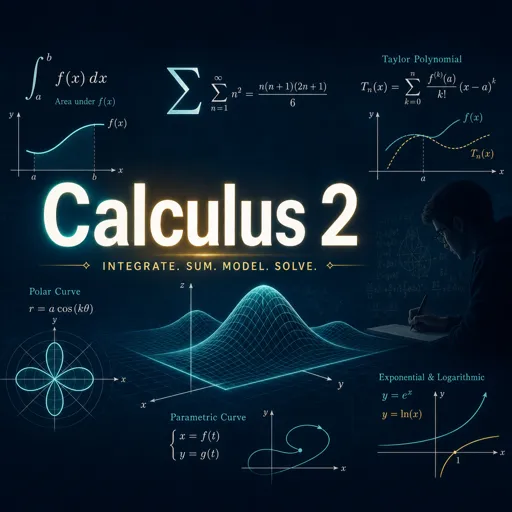
Boost your calculus skills with a free online course on integrals, series, and differential equations—practice problems included to learn faster.
4.8
(9)
50h03m
24 exercises
Free CourseCalculus I entire course
5
(1)
14h52m
45 exercises
Free CourseCalculus 1 for beginners
5
(1)
10h40m
6 exercises
Free CourseCalculus 1 lectures
5
(1)
22h27m
22 exercises
Free CourseCalculus 1
4.6

(61)
44h56m
30 exercises
Free CourseDiscrete Math
4.6
(5)
9h38m
43 exercises
Free CourseIntroductory Calculus
3.7
(3)
40h09m
49 exercises
Free CourseCalculus 1
New
7h37m
28 exercises
Free CourseCalculus basics
New
2h42m
17 exercises
Free CourseCalculus
New
33h57m
50 exercises
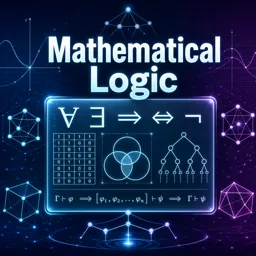
Free CourseMathematical Logic
New
12h19m
46 exercises
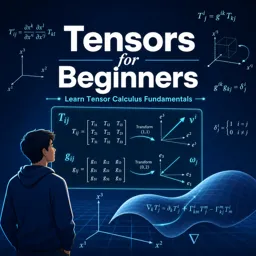
Free CourseTensors for Beginners: Learn Tensor Calculus Fundamentals
New
3h06m
16 exercises
Exercises
Test your ability to construct, interpret, and apply Taylor and Maclaurin polynomials, including errors and convergence intervals.
Start exercisesTest your calculus knowledge of derivatives, rules, critical points, inflection points, and real-life rate-of-change applications.
Start exercisesTest calculus fundamentals with mixed-variable techniques, derivatives, limits, integrals, gradients, series, continuity, and differential equations.
Start exercisesTest your calculus limits knowledge with questions on limit laws, infinity, rational expressions, and key trigonometric and exponential limits.
Start exercisesTest your knowledge of calculus applications in economics, including marginal cost, elasticity, derivatives, integrals, optimization, and profit maximization.
Start exercisesTest your introductory calculus skills with limits, derivatives, integrals, tangent slopes, and logarithmic differentiation.
Start exercises
Continuity and Change: How Calculus Builds Intuition for Real-World Rates
Understand continuity, rates, and accumulation in calculus and learn how to apply them to real-world problem-solving.

Calculus Problem-Solving Toolkit: Limits, Derivatives, Integrals, and the Art of Modeling
Learn how to use limits, derivatives, integrals, and modeling as a practical calculus toolkit for real problem-solving.

Exploring the Diverse Applications of Calculus
Calculus provides tools for analyzing change in physics, economics, and data science, crucial for dynamic systems, optimization, and machine learning.

The Fundamental Theorem of Calculus and Its Applications
The Fundamental Theorem of Calculus links differentiation and integration, enabling solutions in physics, engineering, economics, and more. It’s crucial for analysis.

Advanced Topics in Calculus: A Glimpse Beyond the Basics
Calculus is a vast and fascinating field of mathematics that extends far beyond the basics of derivatives and integrals. For students interested in exploring deeper into this subject, advanced topics in calculus offer a rich landscape of concepts and applications that challenge the mind and open up new areas of understanding. This article introduces some advanced topics in calculus, providing a glimpse into the complexities and beauties of higher-level mathematical analysis.

Financial mathematics: how to calculate simple and compound interest, discounts, interest rates and installments
Financial mathematics is an area of mathematics dedicated to the study of financial operations, such as loans, investments, financing, among others.
Develop a strong understanding of differential and integral methods through free online courses designed for beginners, university students, and independent learners. Study essential mathematical concepts such as functions, limits, continuity, derivatives, integrals, sequences, series, vectors, and multivariable analysis. Every course is free, includes free certification, and features exercises that help reinforce theoretical knowledge through practical problem-solving.
Start with Calculus basics or an Introductory Calculus course to review algebraic manipulation, graphs, rates of change, and fundamental limit techniques. Learners seeking a structured first-semester curriculum can explore Calculus 1, Calculus I entire course, or Calculus 1 for beginners.
Progress to Calculus 2 for integration techniques, improper integrals, parametric equations, polar coordinates, and infinite series. Continue with Calculus 3 to study partial derivatives, multiple integrals, vector fields, gradients, line integrals, and applications in three-dimensional space.
Broaden your analytical background with Discrete Math, covering combinatorics, relations, proofs, and graph theory, or study formal propositions and inference in Mathematical Logic. Learners interested in advanced applications can explore Tensor Calculus Fundamentals, a useful introduction for physics, engineering, geometry, and data science.
To access the courses, exercises, and free certification, users must install the Cursa app. Get it from Google Play with Download for Android or from the App Store with Download for iOS / iPhone. Learn at your own pace, review lectures whenever needed, and strengthen the quantitative skills required in mathematics, science, economics, computer science, and engineering.
What is calculus?
Calculus is the study of change and accumulation using limits, derivatives, and integrals.
What is covered in Calculus 1?
Calculus 1 usually covers limits, continuity, derivatives, and basic applications of derivatives.
What is the difference between Calculus 1, 2, and 3?
Calculus 1 focuses on derivatives, Calculus 2 emphasizes integration and series, and Calculus 3 extends calculus to multiple variables.
Do I need algebra before learning calculus?
Yes. A solid understanding of algebra, functions, graphs, and basic trigonometry is highly recommended.
What are derivatives used for?
Derivatives measure rates of change and are used in motion, optimization, graphing, science, and economics.
What are integrals used for?
Integrals calculate accumulated quantities, such as area, volume, distance, and total change.
Can beginners learn calculus online?
Yes. Beginner calculus courses can introduce limits, derivatives, and integrals step by step with lectures and practice problems.

Complete any course and issue your certificate via the app — at no cost.

Download the app! to have access to more than 4,000 Online Courses + Certificate, all free!
Download the app! 100% free courses.


Carry knowledge in your pocket.
Download the Cursa app.
There are hundreds of free courses available, with a free certificate of completion that is saved in your mobile image gallery.
Download the app to access the Course Completion Certificate for Free.


+ 10 million
students

Free and Valid
Certificate

60 thousand free
exercises

4.8/5 rating in
app stores

Free courses in
video and ebooks