
Step 1 of 9
Find the Head Noun
Identify the central noun in course-notice phrases and distinguish it from the details that describe it.

Learning path · Level 10 · Tutorial 3
Read and build compact descriptions without losing track of who or what they describe. Unpack noun phrases in a short course notice and recording, then write and say a clear description with accurate modifiers, agreement, and reference.

 Find the Head Noun
Identify the central noun in course-notice phrases and distinguish it from the details that describe it. 2 min
 Build Compact Premodifiers
Build concise noun phrases with adjective and noun premodifiers while keeping the head noun clear. 2 min
 Make Relationships Explicit
Use prepositional postmodifiers to make the relationship between a head noun and its purpose, content, or connection explicit. 3 min
 Add Actions with Participial Modifiers
Use active and passive participial postmodifiers to add identifying action details, then verify their meaning with relative-clause expansions. 4 min
 Keep Agreement with the Head
Locate the head noun in a complex subject and link it to the correct finite verb. 2 min
 Name What This or These Refers To
Connect earlier ideas to clear singular or plural summary phrases in the Community Research Training Programme notice. 2 min
 Unpack Overloaded Phrases
Revise dense noun phrases so that every modifier has a clear attachment and the notice preserves its original facts. 3 min
 Hear and Say the Structure
Use listening and speaking strategies to identify complex noun phrases, hear key grammatical details, and make dense descriptions easier to follow aloud. 3 min
 Write, Revise, and Explain Clearly
Write, revise, and explain a clear 60–90-word description for new applicants. 4 min
Step 1 of 9
Identify the central noun in course-notice phrases and distinguish it from the details that describe it.
Applicants must now submit a short project outline and proof of eligibility. Both are supporting documents due by 15 September.
The review panel begins reviewing complete applications on 20 September. Documents submitted after the deadline are excluded from the first review. Applicants waiting for a decision should keep their confirmation email.
As you read, first identify the main people, things, and ideas. Do not assume that the first or last noun in a long phrase is its central noun.
A head noun is the central person, thing, or idea in a noun phrase. The other words or groups of words are modifiers: they add detail about that central referent.
Use this check: if you had to name the main thing very briefly, which noun would remain? A phrase can contain several nouns, so the head noun is not automatically the first or last noun.
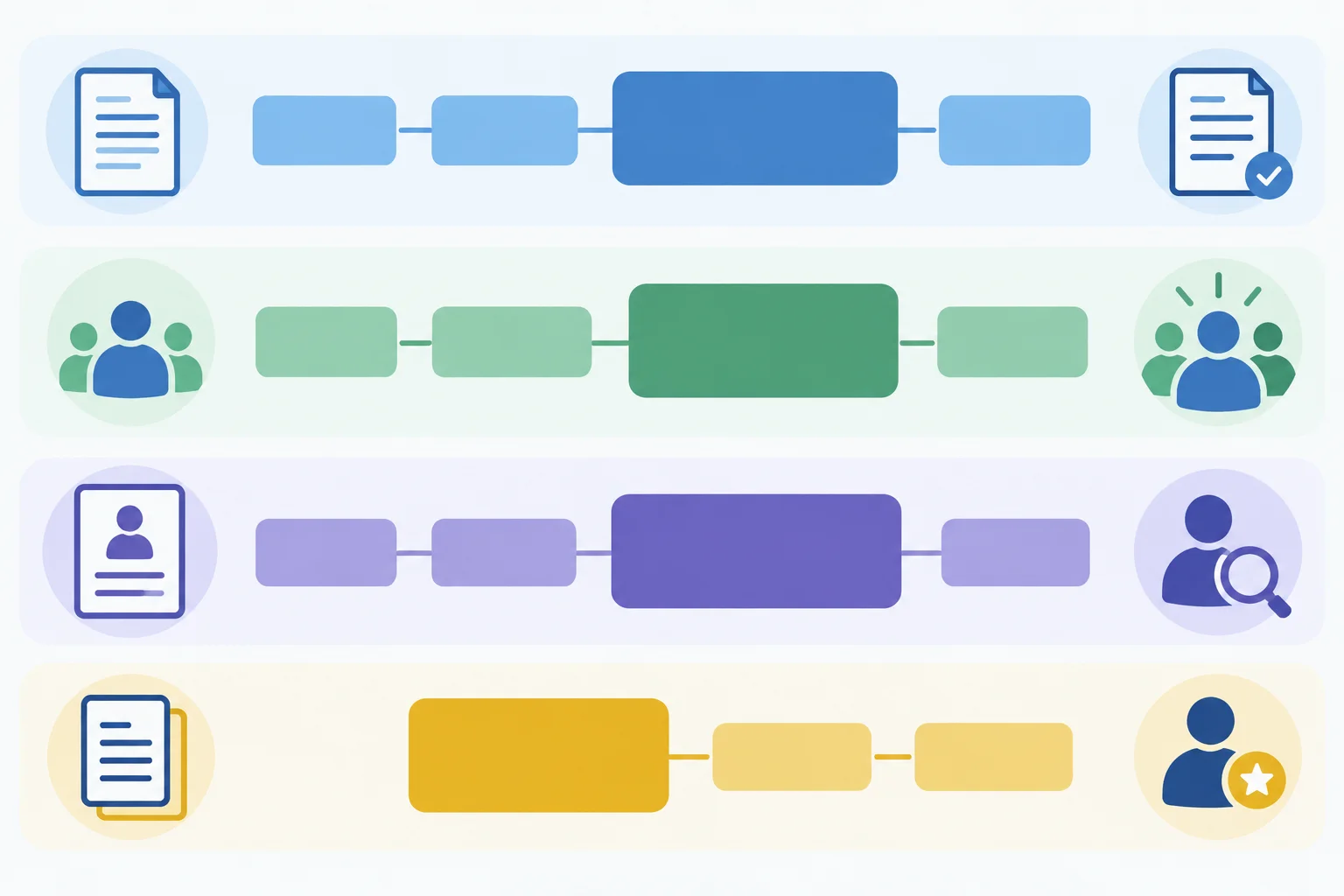
Locate the central referent first; then connect each remaining detail to it.
Example
Read these phrase maps from the notice:
In each phrase, the bold head noun names the main referent. The bracketed modifiers narrow its meaning. For example, eligibility is a noun, but in proof [of eligibility], the phrase is mainly about proof—not eligibility.
The head noun can occur at different points in a phrase:
Start with the head noun when you read a dense notice. Then ask what each added detail tells you about that person, thing, or idea. This lets you organise the notice around its main referents before examining the details.
Tip
Do not choose a noun only because it is closest to the end. In proof [of eligibility], eligibility tells you what the proof concerns. It does not replace proof as the central thing.
Match each noun phrase to the analysis that identifies its head noun and explains what the remaining detail adds.
Match each noun phrase to its head-noun analysis.
Tap an item and then its matching pair.

Step 2 of 9
Build concise noun phrases with adjective and noun premodifiers while keeping the head noun clear.
A premodifier comes before the head noun and adds compact information. It does not replace the central thing.
In [updated] [admission] requirements:
Ask two questions: “What is the main thing?” and “What does each word before it add?”
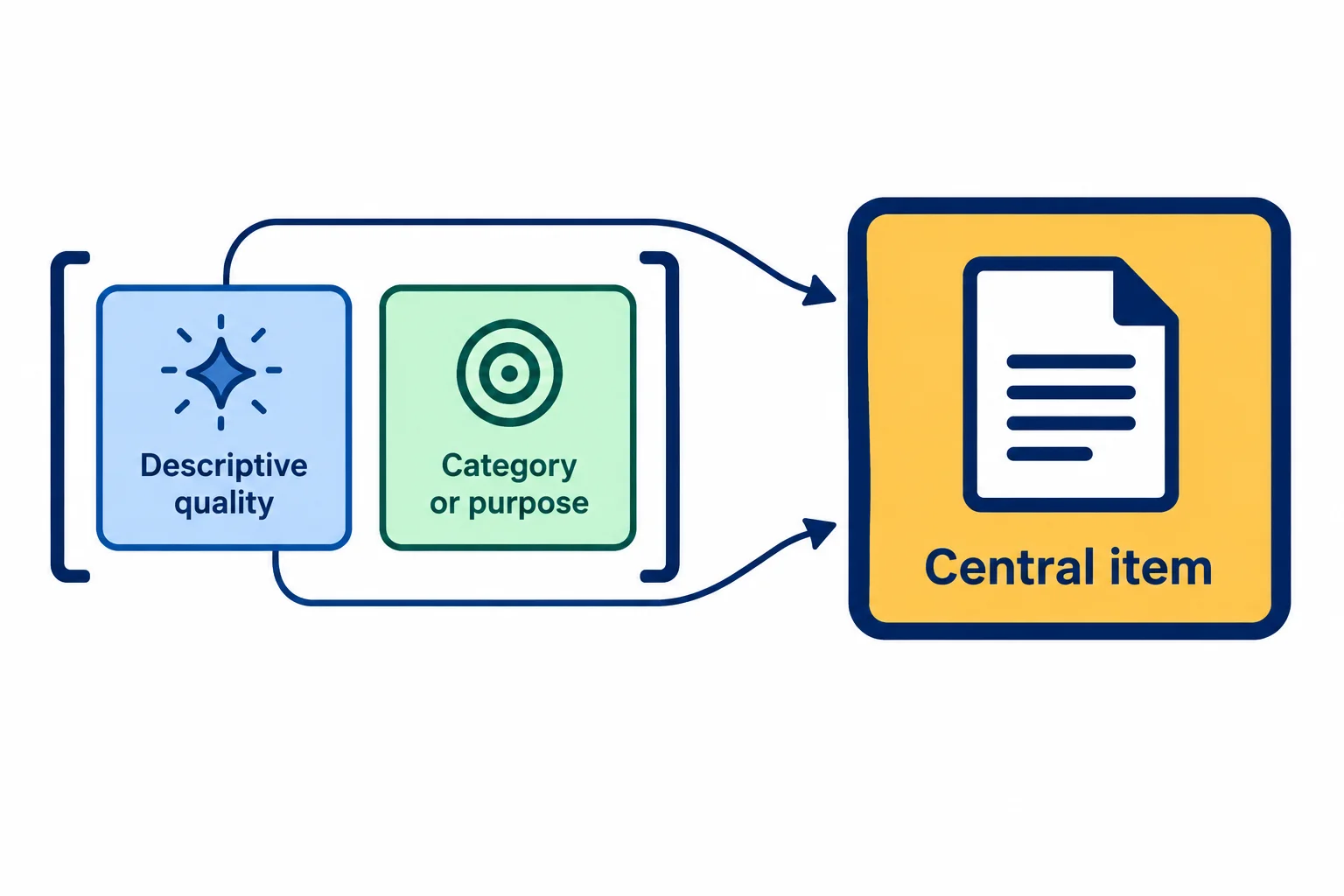
Read the structure as [updated] [admission] requirements: the adjective adds a quality, the noun modifier names a category, and the head noun names the central item.
A noun modifier is a noun used before another noun. It usually identifies type, purpose, or area. An adjectival premodifier usually gives a descriptive quality.
Compare [short] [project] outline. [short] describes the outline; [project] tells you what kind of outline it is. The head noun is outline.
These compact combinations are useful in a course notice.
| Phrase | Premodifier type | What the head names |
|---|---|---|
| [application] **process** | noun modifier | a process for applications |
| [review] **panel** | noun modifier | a panel that reviews |
| [training] **programme** | noun modifier | a programme for training |
| [short] [project] **outline** | adjective + noun modifier | an outline connected with a project |
Example
For an educational course, write programme (British English) or program (American English). This notice uses programme: the Community Research Training Programme.
The notice asks applicants to submit a short project outline and proof of eligibility. In [short] [project] outline, [short] is descriptive, [project] identifies the category, and outline is the head noun.
The notice needs a phrase for requirements that have recently changed and concern admission. Arrange the blocks. Then, before checking, say which word is the head noun, which block is the adjective premodifier, and which block is the noun modifier.
Your sentence
Available words

Step 3 of 9
Use prepositional postmodifiers to make the relationship between a head noun and its purpose, content, or connection explicit.
A prepositional phrase can work as a postmodifier when it follows a noun. It specifies the noun’s purpose, content, or connection.
In the notice, applicants must submit a short project outline and proof of eligibility. Both are supporting documents due by 15 September. Here, eligibility means meeting the stated conditions for participation.
First locate the head noun. Then ask what the phrase beginning with the preposition adds to that noun.
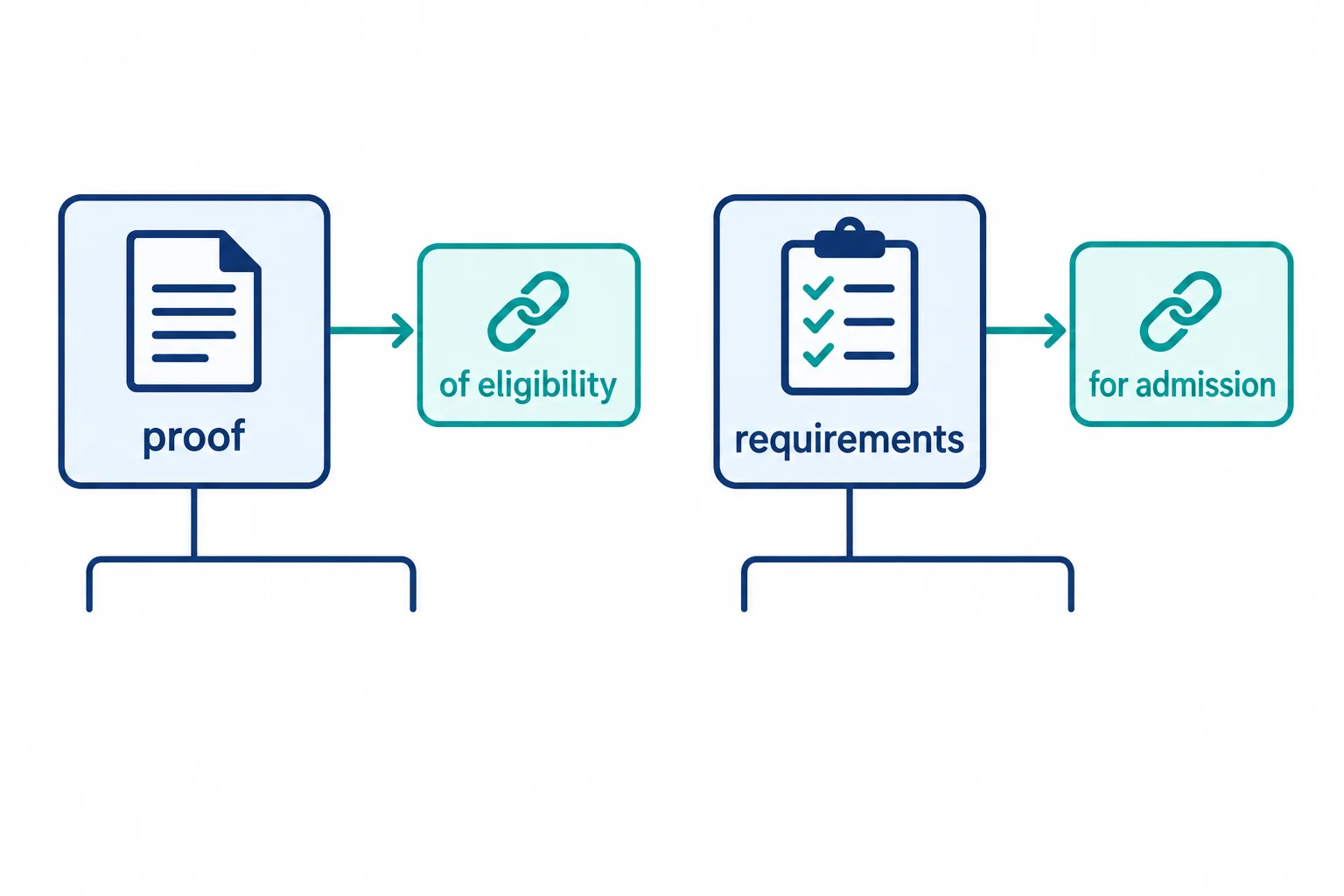
The linked phrase after each head noun makes its relationship more precise.
A compact noun modifier can often be restated with a more explicit prepositional postmodifier:
admission **requirements** → the **requirements** [for admission]
Both expressions identify the same broad relationship, but the prepositional phrase makes the link overt. Choose the preposition for its meaning; prepositions are not interchangeable.
For example, the **proof** [of eligibility] names what the proof concerns. Changing of to for would suggest a different relationship.
Use the question in the first column to test what the postmodifier contributes.
| Question | Phrase | Relationship |
|---|---|---|
| Requirements for what? | the **requirements** [for admission] | purpose |
| Proof of what? | the **proof** [of eligibility] | content or connection |
| Notice about what? | the **notice** [about the application process] | topic or content |
Example
Postmodifiers can occur inside a larger phrase:
the **notice** [about the **supporting documents** [for the application]]
Ask one question at a time. What is the notice about? The supporting documents. What are those documents for? The application. The second postmodifier narrows supporting documents, rather than directly describing notice.
Match each head noun to the postmodifier that completes its intended relationship.
Tap an item and then its matching pair.
Complete the phrase with one preposition:
the notice ___ the supporting documents
Complete the phrase with one preposition:
the application ___ its supporting documents

Step 4 of 9
Use active and passive participial postmodifiers to add identifying action details, then verify their meaning with relative-clause expansions.
A participial modifier is a postmodifier: it comes after the head noun and identifies it through an action.
The head noun remains the central referent. The participial modifier adds identifying detail; it does not become the sentence’s main clause.

The left head performs an action; the right head receives an action.
Expand a participial modifier into a defining relative clause to check its meaning.
The expansion shows whether the head performs or receives the action. It also helps you check attachment: in the second phrase, submitted describes documents, not the deadline.
Example
A participle does not establish time by itself. Let the notice context supply the appropriate time in the expansion.
The notice gives a general deadline rule, so documents [submitted after the deadline] means documents that are submitted after the deadline. In a report about an already completed period, a past form could be appropriate only if that past context were made clear.
The review panel [reviewing complete applications on 20 September] identifies the panel by its planned work: review panel that will review complete applications on 20 September.
A participial modifier provides identifying detail. In this sentence, the finite verb is the main predicate:
The documents [submitted after the deadline] are excluded from the first review.
Compare the action relationship and its relative-clause check.
| Action relationship | Compact noun phrase | Relative-clause check |
|---|---|---|
| Head performs action | applicants waiting for a decision | applicants who are waiting for a decision |
| Head receives action | documents submitted after the deadline | documents that are submitted after the deadline |
| Context supplies future time | panel reviewing applications on 20 September | panel that will review applications on 20 September |
Match each participial phrase to its meaning-equivalent relative-clause expansion.
Tap an item and then its matching pair.
Build the notice sentence. Use every block once.
Your sentence
Available words

Step 5 of 9
Locate the head noun in a complex subject and link it to the correct finite verb.
When a complete noun phrase is the subject, its head noun controls agreement. Do not let a nearby noun inside a modifier choose the verb.
The list [of revised requirements] is ready.
The head noun is singular: list. Although requirements is plural, it is inside the postmodifier [of revised requirements]. The head-to-verb link is list → is.
First locate the head noun; then find the main finite verb.
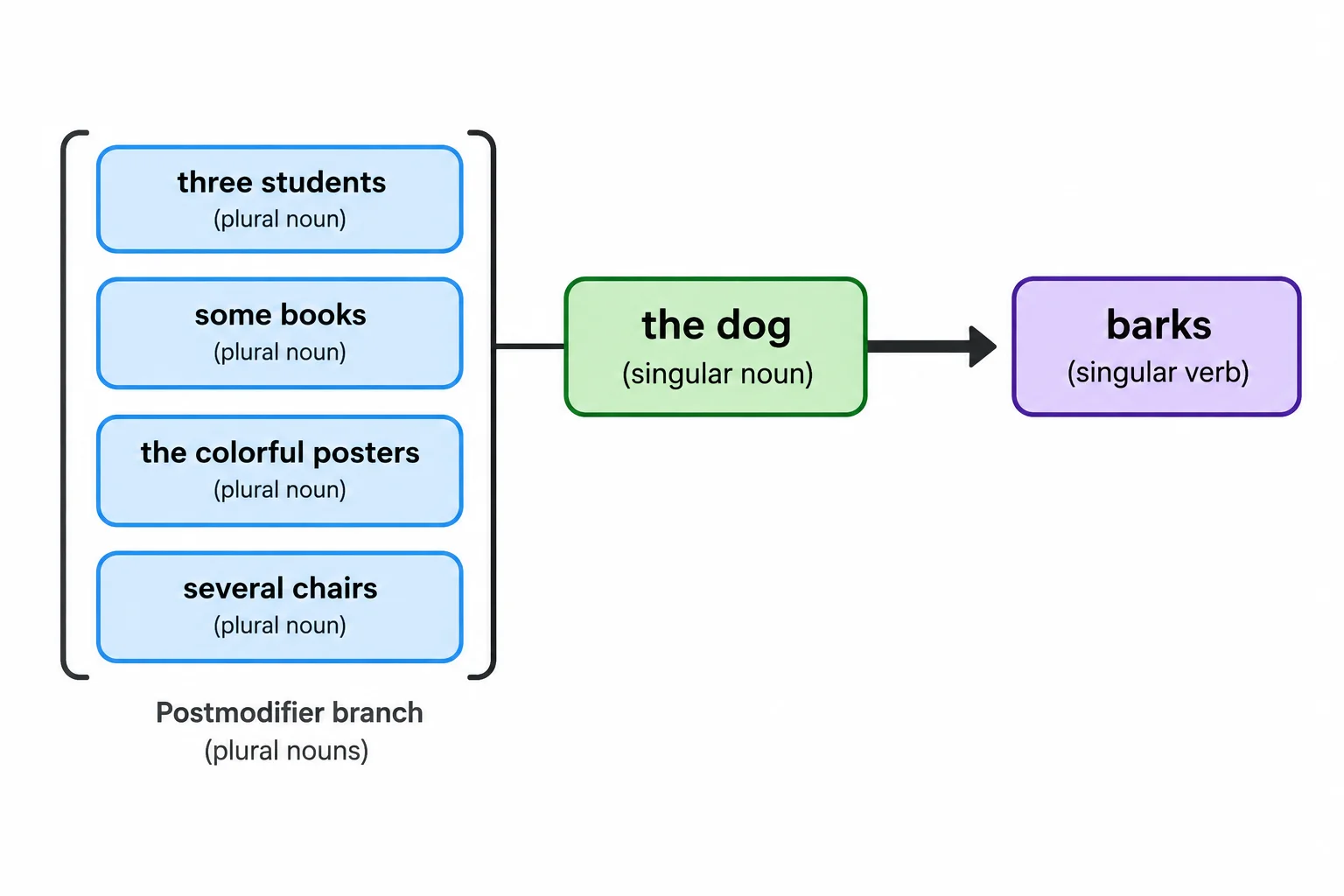
Trace the link from the head noun to the finite verb—not from the nearest noun.
A participial modifier can contain a verb form, but that form is not automatically the sentence's main finite verb.
The documents [submitted after the deadline] are excluded from the first review.
Here, [submitted after the deadline] is a participial modifier describing documents. The finite verb is are; together, are excluded forms the predicate. The head-to-verb link is documents → are.
Use the same check with is/are and has/have. The number of the head noun remains decisive even when a modifier contains a noun of the opposite number.
| Subject noun phrase | Head-to-verb link | Correct form |
|---|---|---|
| the **list** [of revised requirements] | list, singular → verb | is; has |
| the **supporting documents** [for the application] | documents, plural → verb | are; have |
| the **confirmation email** [for applicants waiting for a decision] | email, singular → verb | is; has |
Tip
A quick check: cover the modifier mentally. If the remaining head noun is singular, choose is or has; if it is plural, choose are or have.
Complete both sentences. For each one, write the controlling head noun first, then the correct verb form, and finally the completed sentence.
Write at least 80 characters (0/80).

Step 6 of 9
Connect earlier ideas to clear singular or plural summary phrases in the Community Research Training Programme notice.
A demonstrative can point back to an earlier statement, but a summarizing noun tells the reader exactly what kind of idea it names.
In the notice: Applicants must now submit a short project outline and proof of eligibility.
[This] **requirement** applies to every applicant.
Here, requirement names one obligation: submitting both documents. The closest noun, eligibility, does not control the choice. Choose singular or plural according to the whole idea you are summarizing.
Use this for one idea and these for several ideas. The noun after it should preserve the meaning without adding a new interpretation.
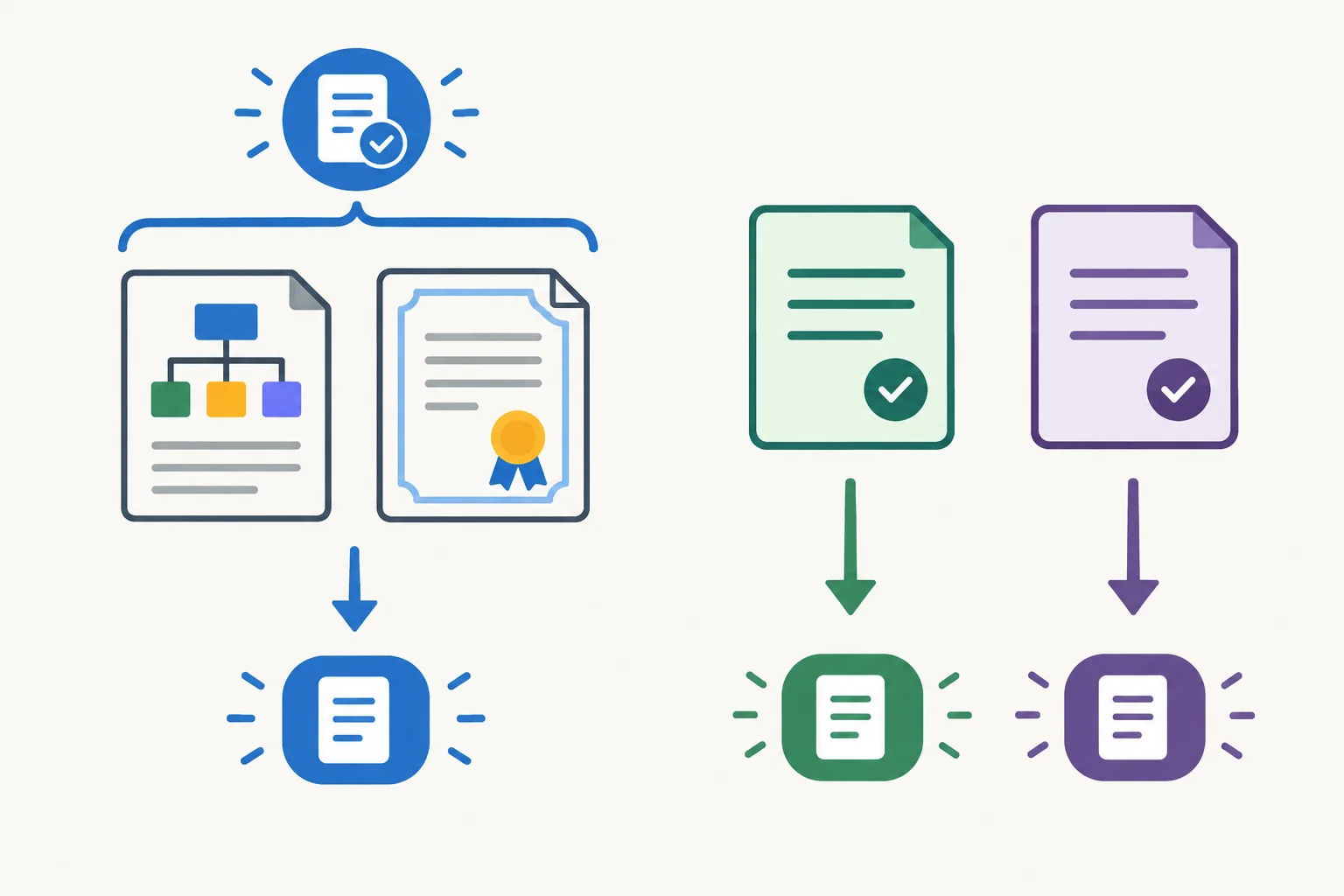
Choose the number from the idea being summarized, not from the nearest noun.
Example
Compare these clear links:
Applicants must now submit a short project outline and proof of eligibility. [This] **requirement** applies to every applicant.
The head noun requirement labels one obligation, even though the obligation includes two documents.
When several parts of a notice have been revised, you can write: [These] **changes** should be read carefully. Here changes labels multiple revisions.
A bare this or these can make the reader ask “What exactly?” A suitable summarizing noun answers that question.
Match each summary phrase to the idea it identifies.
Tap an item and then its matching pair.
Complete the notice.
Applicants must now submit a short project outline and proof of eligibility. _ applies to every applicant.
Complete the notice.
Applicants must now submit a short project outline and proof of eligibility. _ are due by 15 September.

Step 7 of 9
Revise dense noun phrases so that every modifier has a clear attachment and the notice preserves its original facts.
A long noun phrase is not automatically unclear. It becomes overloaded when you have to reconstruct which detail belongs to which head noun.
First locate the head noun. Then ask what each modifier adds and whether its position makes that link immediate. If a modifier could briefly be connected to the wrong noun, revise the structure.
Useful compression keeps related information together. Unhelpful compression makes the reader search for an action, condition, or consequence.
Use the structure as a diagnostic. Tangled links suggest that a reader may have to guess the attachment. Direct links show which detail belongs to which idea.
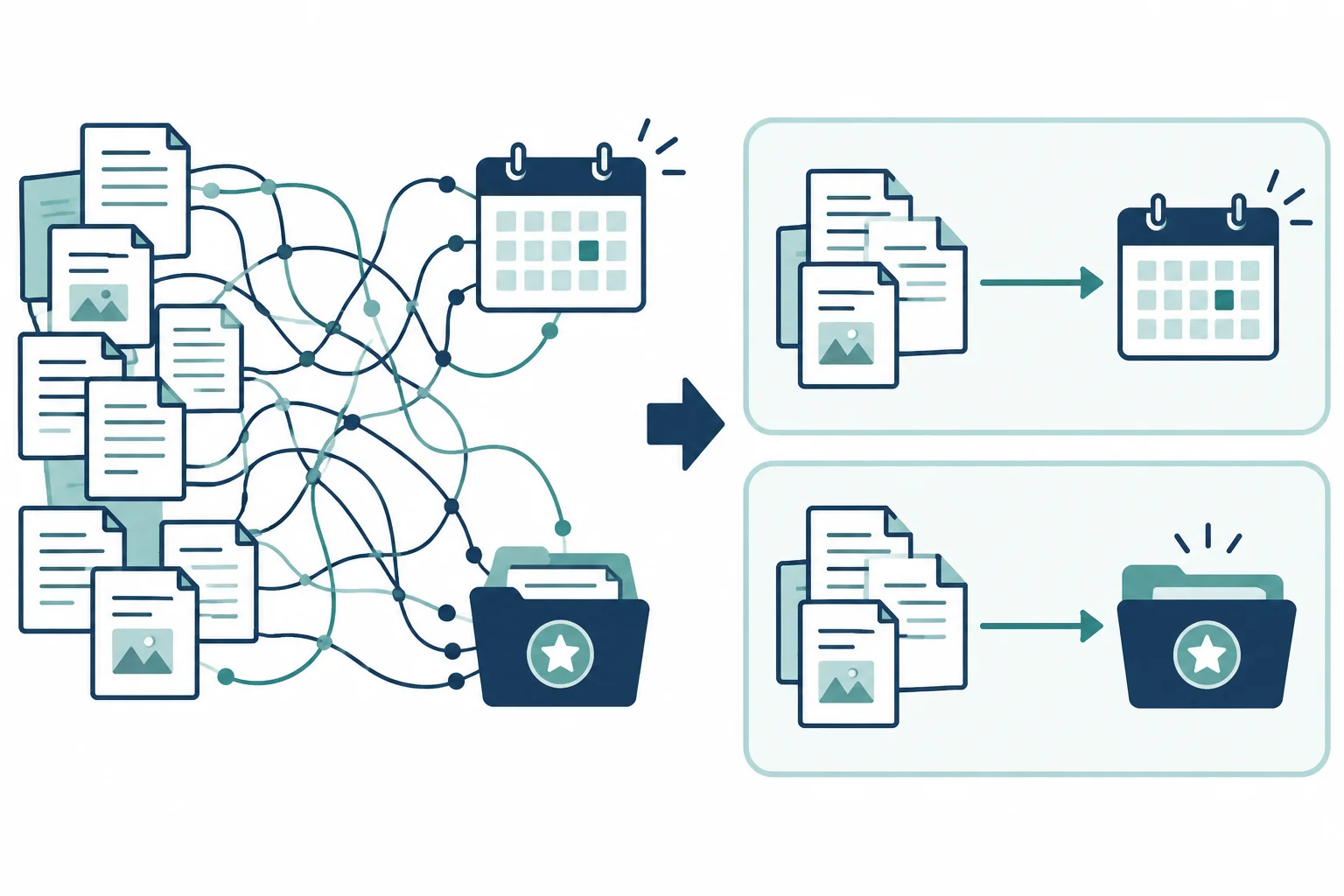
When details compete for attachment, a clause or a separate sentence can make the intended relationship visible.
Example
Original
the **exclusion** [of [supporting] **documents] [from the first review] [submitted after the deadline]
The writer intends [submitted after the deadline] to describe documents, but its late position makes the reader work backwards to establish that link.
Clearer version
the **exclusion** [from the first review] [of [supporting] **documents [submitted after the deadline]]
The facts are unchanged: supporting documents submitted after the deadline are excluded from the first review. The participial modifier now sits beside the head noun it describes.
You do not need to expand every noun phrase. Choose the clearest route for the amount of information involved:
Before revising, list the facts that must remain: people, things, actions, dates, conditions, and consequences. A clearer version must preserve all of them.
Example
Original
The review panel begins reviewing complete applications on 20 September, with supporting documents submitted after the deadline excluded from the first review.
The final section contains a condition and consequence that compete with the main review information.
Clearer version
The review panel begins reviewing complete applications on 20 September. Supporting documents submitted after the deadline are excluded from the first review.
Both versions contain the same panel, action, date, condition, and consequence. The clearer version gives the exclusion its own main clause.
Tip
A good revision is not necessarily the shortest one. Prefer the version that lets a reader identify the head noun, follow every modifier, and understand the condition or consequence on the first reading.
The writer means that the exclusion applies to documents, not people. Arrange the blocks to make that meaning clear.
Your sentence
Available words
Complete both revisions in your own words.
the exclusion of supporting documents from the first review submitted after the deadline
Applicants must submit a short project outline and proof of eligibility, both supporting documents due by 15 September; the review panel begins reviewing complete applications on 20 September, with documents submitted after the deadline excluded from the first review and applicants waiting for a decision should keep their confirmation email.
After writing, compare your revisions with the Model on the next screen. More than one clear revision is possible.
Write at least 180 characters (0/180).
Example
Model
the **exclusion** [from the first review] [of [supporting] **documents [that are submitted after the deadline]]This is one possible clear revision. Your wording may differ if it preserves the same information and makes each attachment clear.
Tip
Check your revision:
If one sentence carries too many relationships at once, divide it.

Step 8 of 9
Use listening and speaking strategies to identify complex noun phrases, hear key grammatical details, and make dense descriptions easier to follow aloud.
In a spoken notice, do not try to give every word equal attention. First identify the central referent: the head noun. Then connect the details around it.
For example: the [supporting] documents [submitted after the deadline]. The head is documents. The premodifier says what kind of documents they are; the participial modifier identifies which documents.
This prevents a common listening error: treating the last noun you hear as the main referent.

Read the phrase as one unit: the [supporting] documents [submitted after the deadline]. The details connect to documents, not to each other.
Tip
A slash marks an optional light thought-group boundary in a speaking script. It is not written punctuation. Keep closely connected words together: do not separate a preposition from its complement, as in after the deadline.
Listen and choose an option.
Listen to the announcement. Who is described in the final sentence?
Good morning. The review panel begins reviewing complete applications on 20 September. Applicants waiting for a decision should keep their confirmation email.
Listen and write what you heard.
Listen and type the complete sentence. Check the noun number, the participial form, and the words after the preposition.
Listen to the model once. Then read the marked transcript aloud yourself. Use the slashes as light thought-group boundaries; do not pause after every modifier.
The supporting documents submitted after the deadline are excluded from the first review. Applicants waiting for a decision should keep their confirmation email.
The supporting documents submitted after the deadline / are excluded from the first review. Applicants waiting for a decision / should keep their confirmation email.
Read the marked transcript aloud. Then explain the dense phrase the supporting documents submitted after the deadline in a clearer spoken sentence. In your response, report one grouping choice: say where you used a / and name words you kept together. No recording is needed.
Write at least 80 characters (0/80).

Step 9 of 9
Write, revise, and explain a clear 60–90-word description for new applicants.
Before you share your description, move through it in this order:
The aim is not maximum compression. It is a description that a new applicant can follow on the first reading.
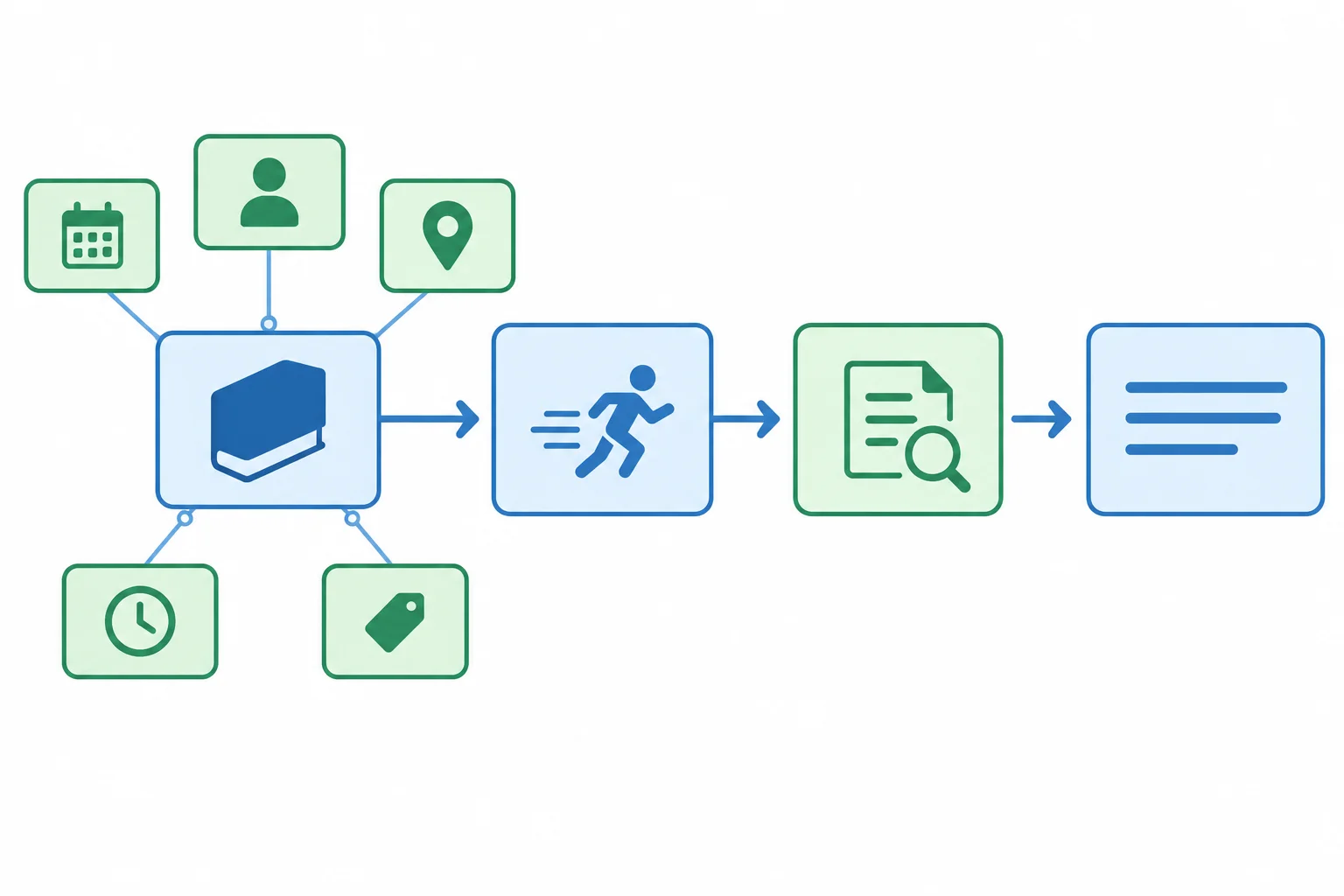
Follow the connections: head noun → modifiers → verb agreement → clear reference → revision.
Tip
Read your finished description aloud once. Keep a head noun and its closely connected modifiers together. If you need to restart or add an explanation halfway through a phrase, consider revising the written version first.
Use the following response to compare coverage and clarity. It is a Model, not wording to reproduce. A successful description can organise the same facts differently.
Notice that the information is distributed across sentences. The writer does not force every detail into one noun phrase.
Example
Model
New applicants to the Community Research Training Programme must submit a short project outline and proof of eligibility. These supporting documents are due by 15 September. This requirement applies to every applicant. The review panel begins reviewing complete applications on 20 September. Documents submitted after the deadline are excluded from the first review. Applicants waiting for a decision should keep their confirmation email.
In the Model, compact phrases remain traceable:
The last two can be checked through expansion:
documents [submitted after the deadline] → documents that are submitted after the deadline
applicants [waiting for a decision] → applicants who are waiting for a decision
Create your final response for new applicants.
Summary
Use this brief self-check before you finish:
Core principle: make the head easy to find and every modifier relationship easy to follow.
Congratulations! You completed: Make Complex Noun Phrases Clear
Thousands of online courses in video, ebooks and audiobooks.
To test your knowledge during online courses
Generated directly from your cell phone's photo gallery and sent to your email

Download our app via QR Code or the links below:.



Carry knowledge in your pocket.
Download the Cursa app.
There are hundreds of free courses available, with a free certificate of completion that is saved in your mobile image gallery.
Download the app to access the Course Completion Certificate for Free.


+ 10 million
students

Free and Valid
Certificate

60 thousand free
exercises

4.8/5 rating in
app stores

Free courses in
video and ebooks