Step 1 of 9
I, You, and Other People
Choose I, you, he, she, it, we, or they by following who speaks and who is being discussed.

Learning path · Level 1 · Tutorial 3
Say where people are from and how they are. Use am, is, and are. Use not, and ask short questions. Read and listen to short conversations. Practise saying short forms clearly. Say and write a few lines about yourself or another person.

 I, You, and Other People
Choose I, you, he, she, it, we, or they by following who speaks and who is being discussed. 3 min
 Choose Am, Is, or Are
Choose the correct full form of be and use it to say how people are. 3 min
 Say Where People Are From
2 min
 Use Short Forms
Recognize, write, and say affirmative short forms in familiar statements. 3 min
 Use Not
Use not to make simple negative statements with I'm not, isn't, and aren't. 3 min
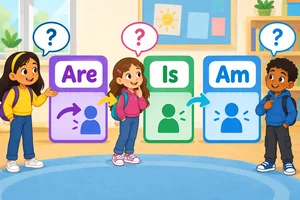 Ask a Short Question
Turn familiar statements into short yes/no questions with am, is, and are. 3 min
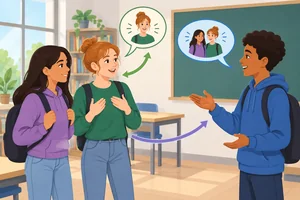 Give a Short Answer
Give affirmative and negative short answers from the correct responder's viewpoint. 3 min
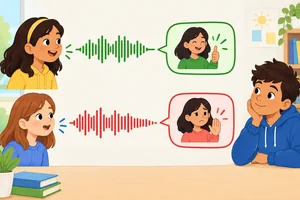 Listen: Is or Isn't? Are or Aren't?
Hear the difference between positive and negative statements, say the endings clearly, and write a short sentence from audio. 3 min
 Talk About Yourself and Other People
Understand a short conversation, then write and say a few connected lines and a question-and-answer exchange using the tutorial's forms. 4 min
Step 1 of 9
Choose I, you, he, she, it, we, or they by following who speaks and who is being discussed.
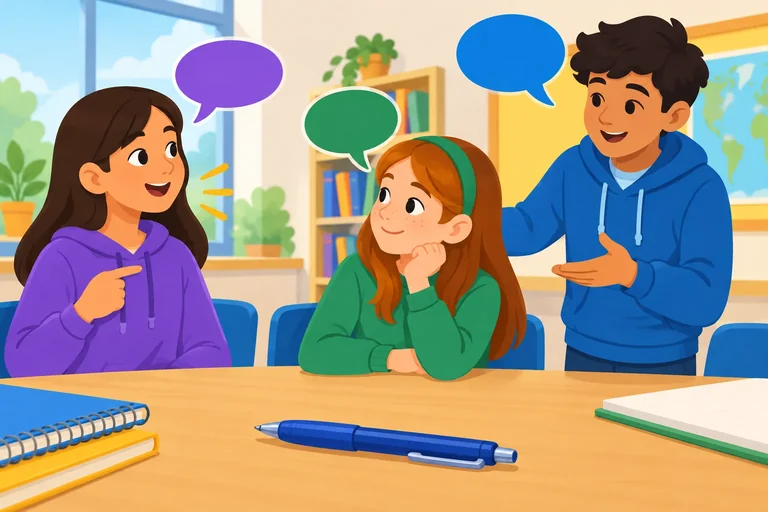
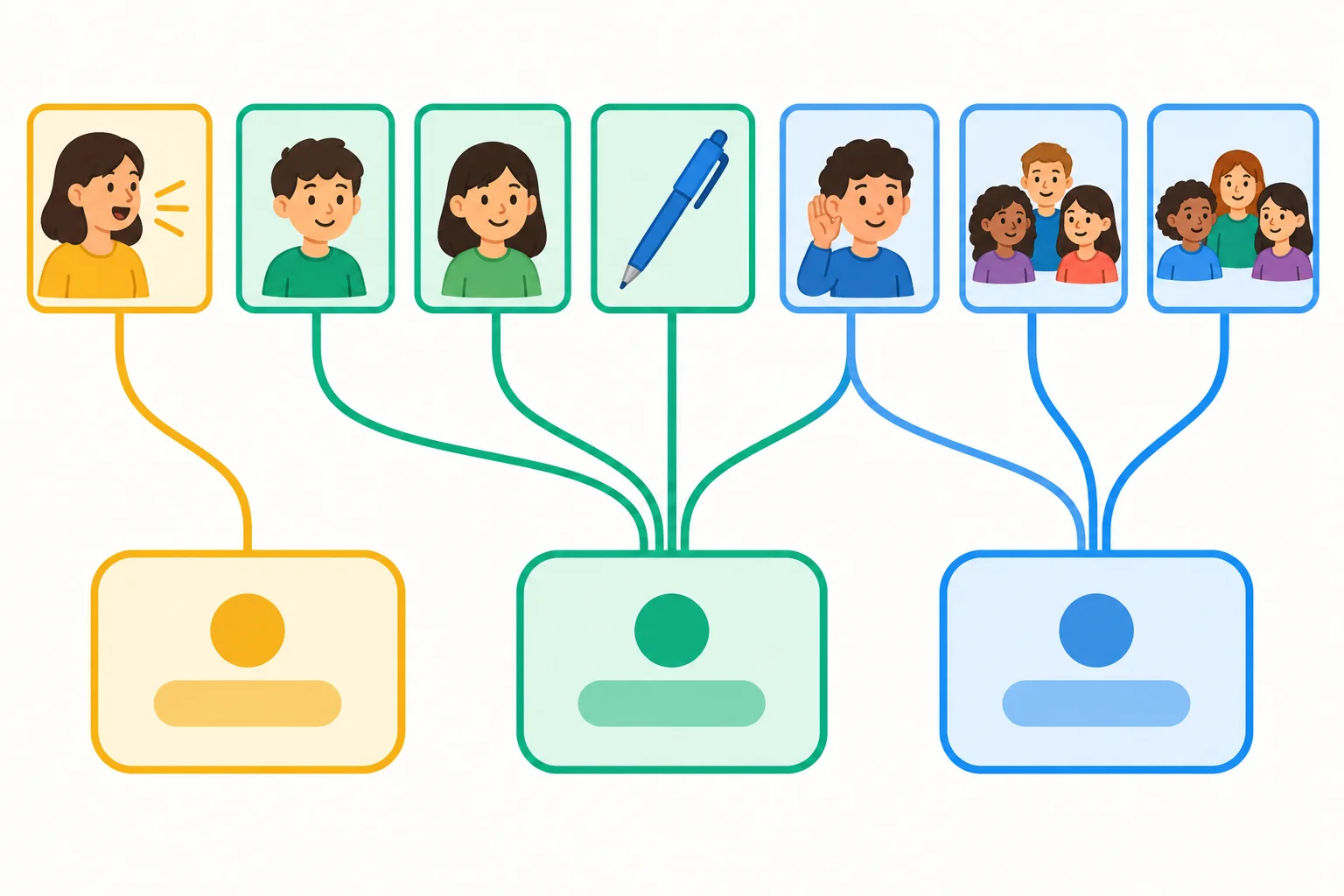
A person word can stand for a name, people, or a thing. First, look at the scene: Who speaks? Who listens? Who or what does the speaker talk about?
In these lesson scenes, Maya and Sara use she. Leo uses he. Use it for the familiar pen.
Use this reference when you look at a scene.
| Person word | Use it for |
|---|---|
| I | the speaker |
| you | the listener or listeners |
| he | Leo |
| she | Maya or Sara |
| it | my pen |
| we | the speaker and other people |
| they | other people, not the speaker |
The speaker changes the word for a group.
Maya belongs to the pair. Leo is outside the pair.
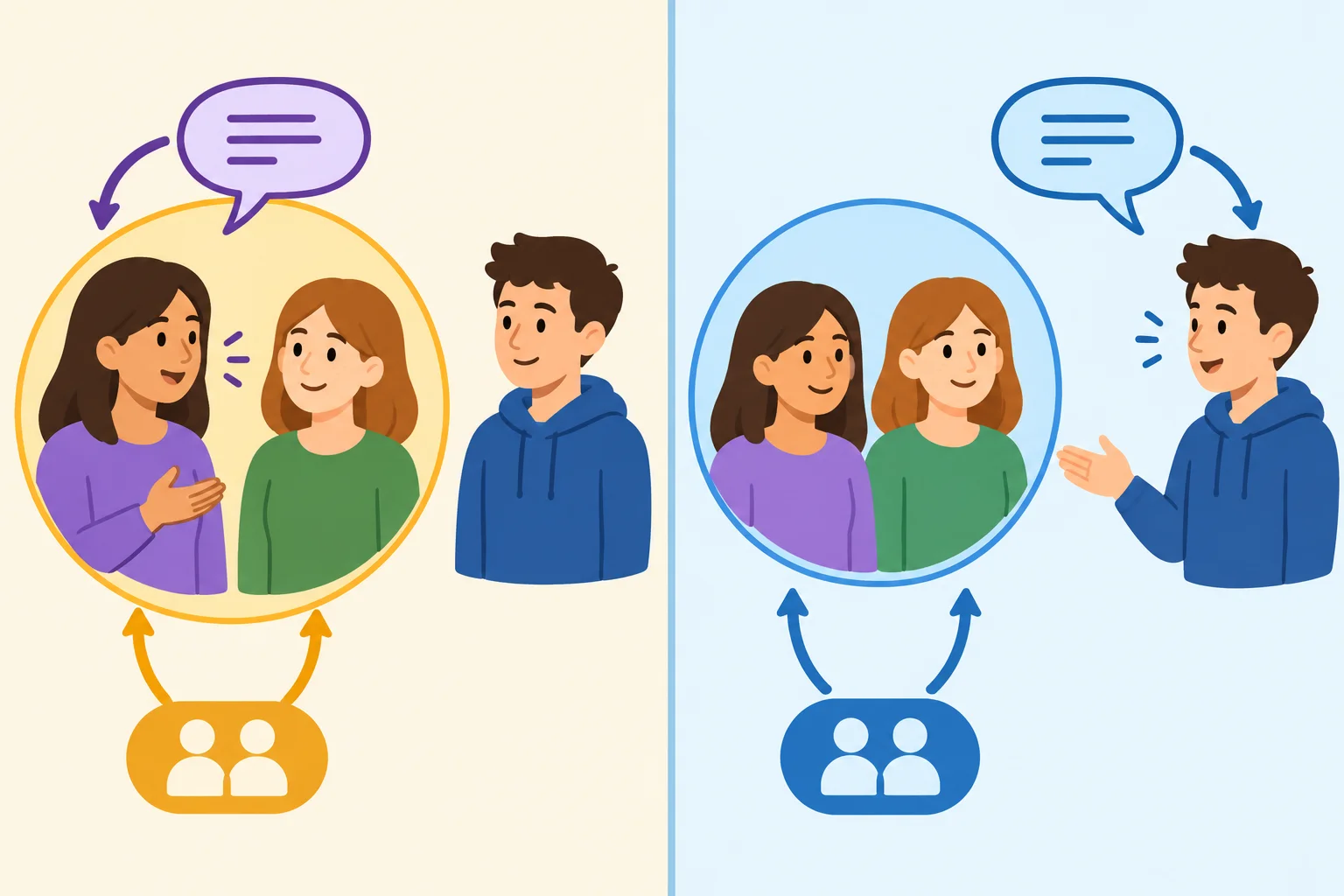
Maya + Sara with Maya as speaker: we. Maya + Sara with Leo as speaker: they.
Example
You can name one listener or more than one listener.
One listener:
Maya → Sara: you
More than one listener:
Leo → Maya and Sara: you
Match each scene to the correct person word.
Tap an item and then its matching pair.

Step 2 of 9
Choose the correct full form of be and use it to say how people are.
A simple full-form statement has this order:
person word + am, is, or are + how someone is
Choose the form that matches the person word.
The colors show that different person words use different forms.
Read down the table. The person word comes first in a full-form statement.
| Person word | Full form |
|---|---|
| I | I am |
| you | you are |
| he | he is |
| she | she is |
| it | it is |
| we | we are |
| they | they are |
Tip
Remember the three groups: I am; he/she/it is; you/we/they are.
Happy, tired, and ready tell us how a person is. A name can also come first, and a name takes is.
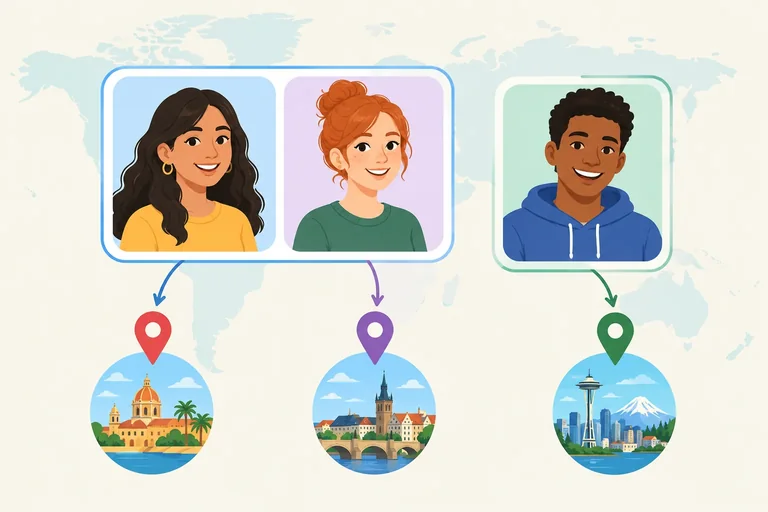
Each picture below shows information for this scene.

Use happy, tired, and ready to describe how people are in a scene.
Example
Maya is happy.
Sara is tired.
Leo is ready.
It is my pen.
Tip
The word after am, is, or are can tell how someone is. With the familiar pen, use: It is my pen.
Listen. Then say the full-form statement aloud two times.
Leo is ready.
Tip
Say each word clearly: Leo / is / ready. Keep is as a full word.
Match every person word with the correct form.
Tap an item and then its matching pair.
In each scene, match the person with the word that describes how the person is.
Tap an item and then its matching pair.
Build the full-form statement.
Your sentence
Available words
Step 3 of 9
Use from before a place name to say a person’s place of origin.
A full-form statement follows this pattern:
person word or name + am/is/are + from + place name
Start the place name with a capital letter.
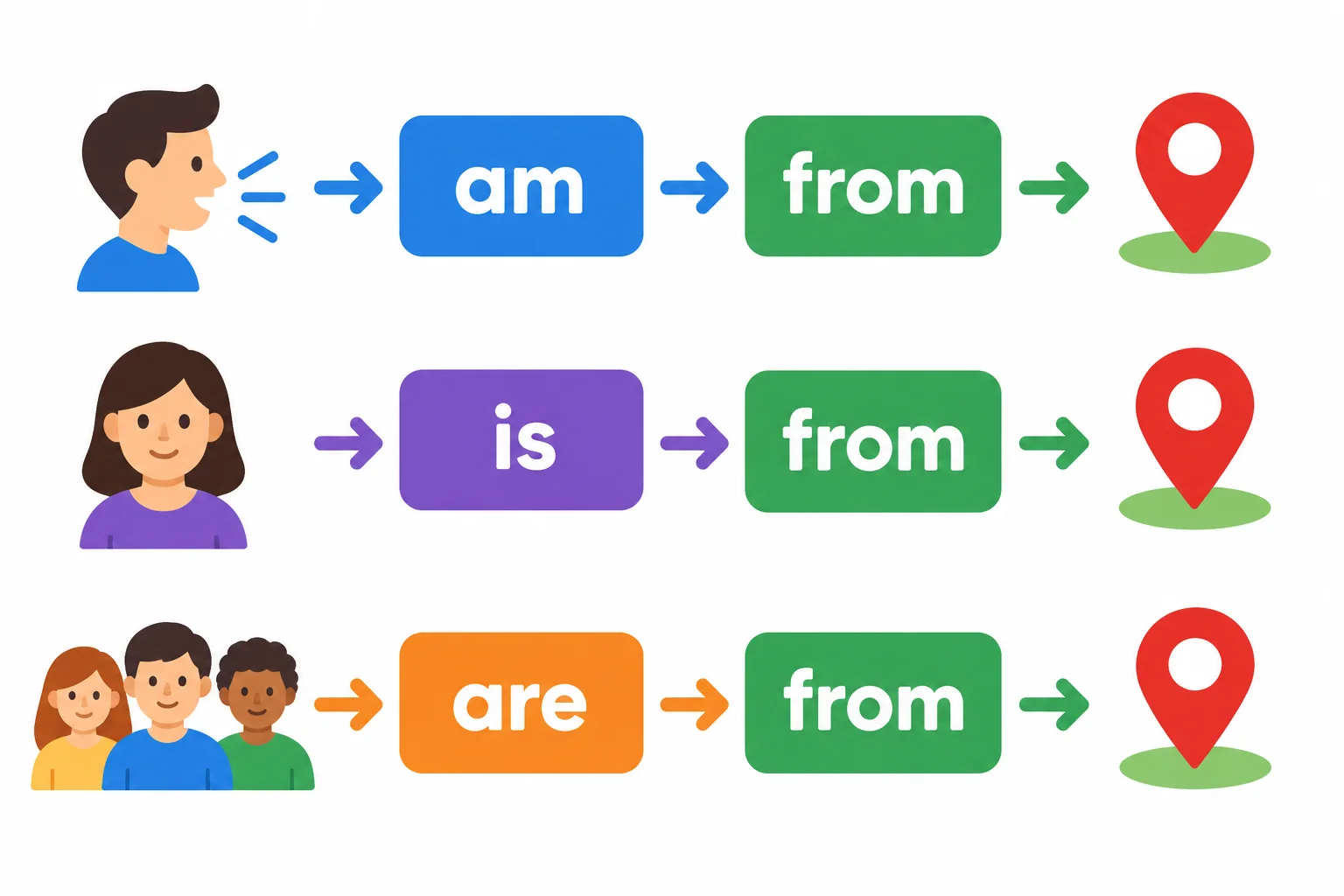
Read from left to right: person or group → am, is, or are → from → place.
A profile gives you the information for an origin statement. You do not need to know anything about the place. Use the place written in the profile.
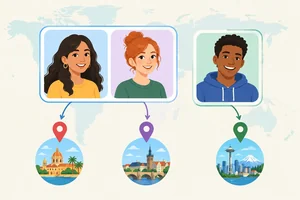
Use these supplied profiles.
| Name | Place |
|---|---|
| Maya | Kenya |
| Sara | Kenya |
| Leo | Brazil |
Example
One person:
Maya is from Kenya.
Leo is from Brazil.
The pair:
Maya and Sara are from Kenya.
Maya speaks for the pair:
Maya: We are from Kenya.
Leo speaks about the pair:
Leo: They are from Kenya.
Listen and repeat the full-form statements.
Maya is from Kenya. Leo is from Brazil. Maya and Sara are from Kenya.
Leo: Brazil
Build one full-form statement.
Your sentence
Available words
Use the labeled profiles below. Write three full-form statements, then say them aloud.
Write one statement about Leo, one about Maya and Sara together, and one about you or the fictional person. Use a capital letter for each name and place. End each statement with a period.
Write at least 45 characters (0/45).
Step 4 of 9
Recognize, write, and say affirmative short forms in familiar statements.
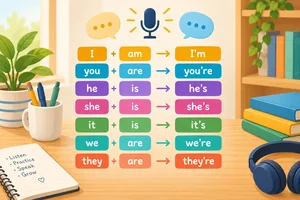
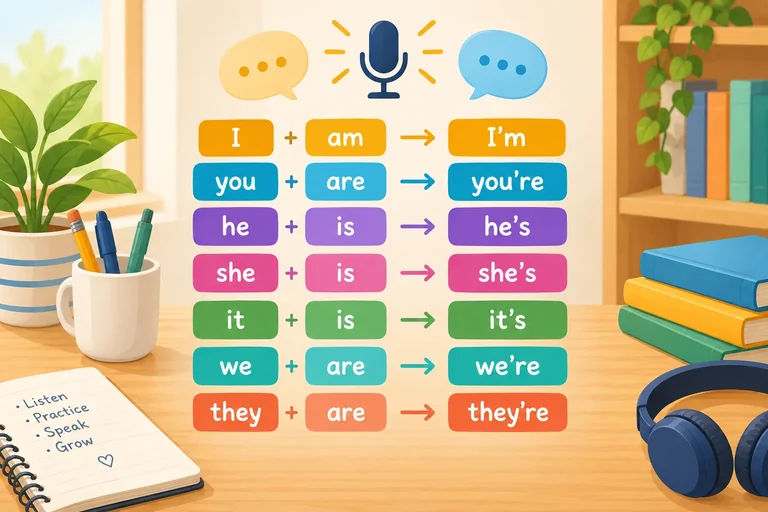
A full form has two words: I am. A short form has one joined form: I'm. The meaning stays the same.
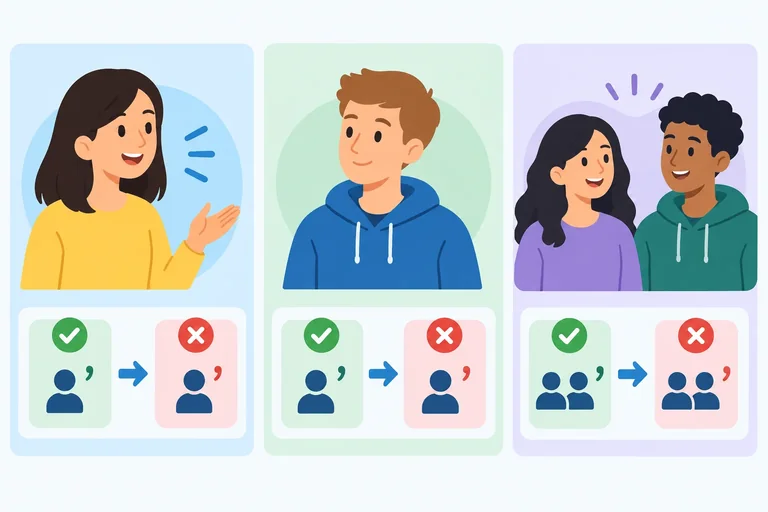
An apostrophe (') marks letters that are not written.
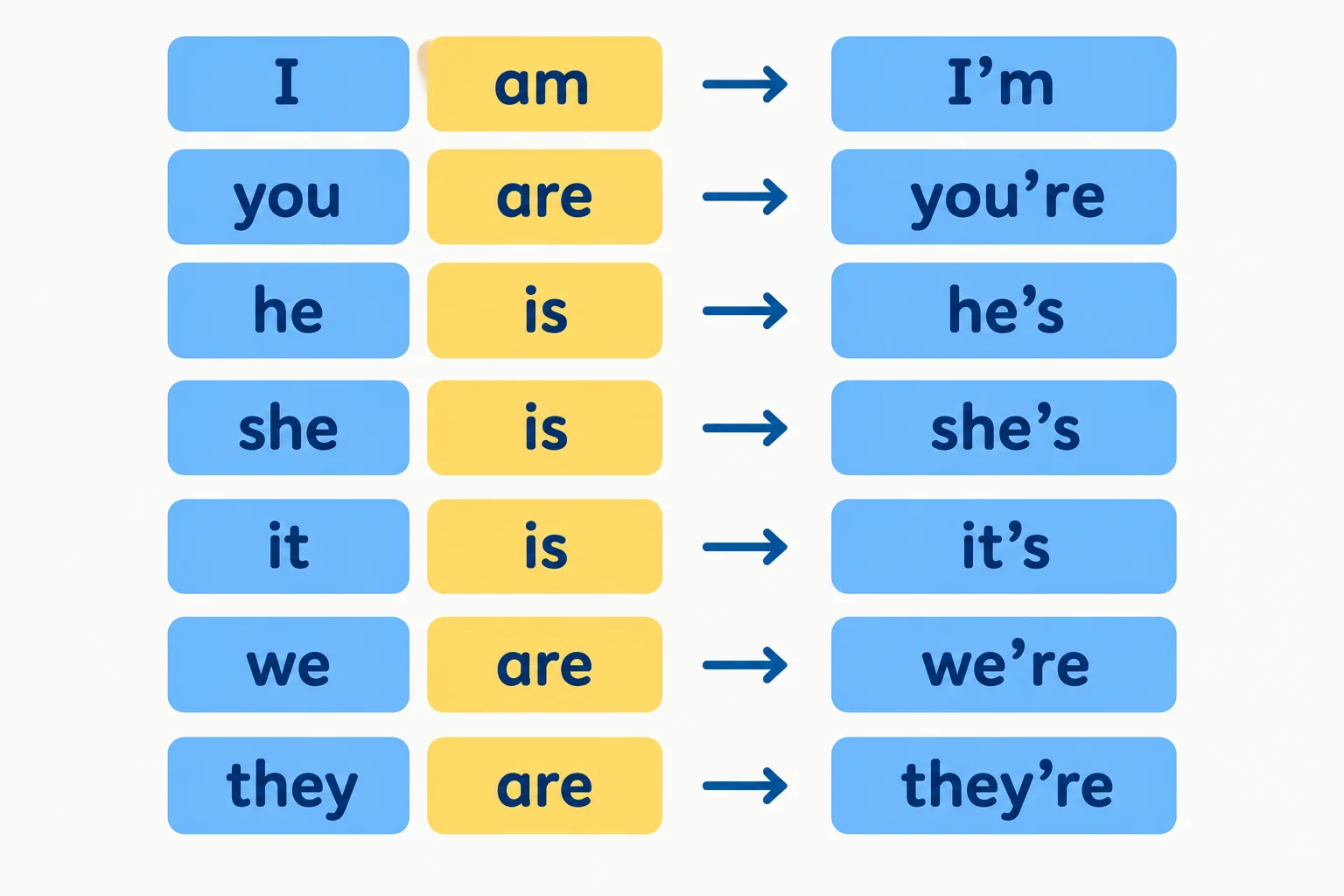
The apostrophe shows that some letters are missing.
Read the full form, then the short form.
| Full form | Short form |
|---|---|
| I am | I'm |
| you are | you're |
| he is | he's |
| she is | she's |
| it is | it's |
| we are | we're |
| they are | they're |
I'm happy. You're ready. She's from Kenya. He's tired. It's my pen. We're ready. They're from Kenya.
I'm happy. You're ready. She's from Kenya. He's tired. It's my pen. We're ready. They're from Kenya.
Tip
Say each short form as one joined unit. Listen again, pause after each sentence, and repeat it aloud. Keep the person word and the verb together.
Match every full form to its short form.
Tap an item and then its matching pair.
Maya is speaking about herself. Complete the statement: ___ happy.
Leo is speaking to Sara. Complete the statement: ___ ready.
Leo is talking about Maya and Sara. Complete the statement: ___ from Kenya.
Step 5 of 9
Use not to make simple negative statements with I'm not, isn't, and aren't.
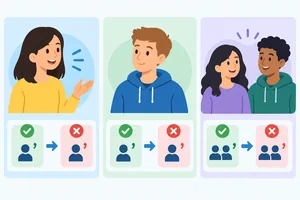
Use not when a statement says something is not true. In the full form, put not after am, is, or are. Then use these negative short forms: I'm not, isn't, and aren't.
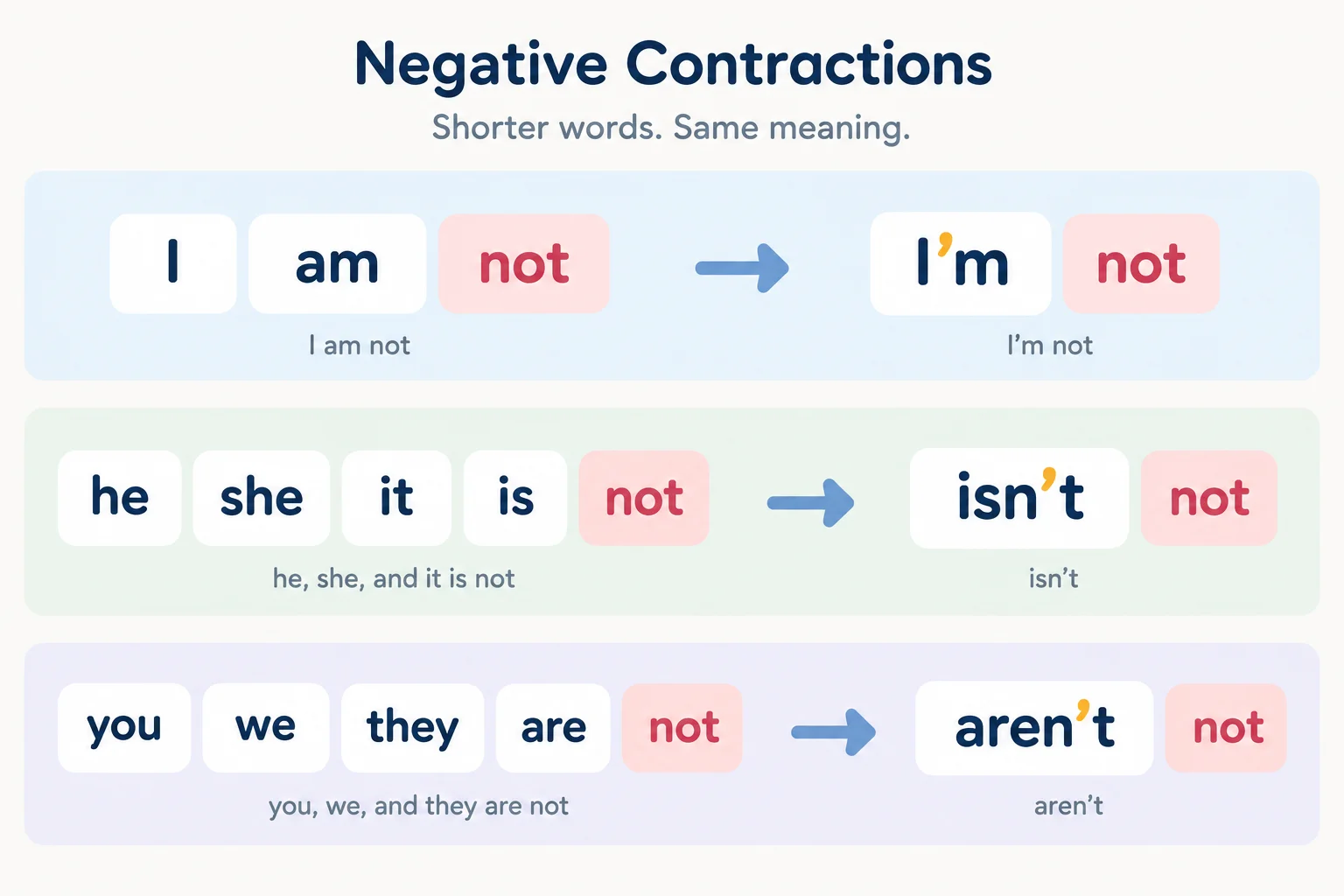
The meaning stays negative in the full form and the short form.
Use the person word first, then the matching negative form.
| Person word | Full form | Short form |
|---|---|---|
| I | I am not | I'm not |
| you | You are not | You aren't |
| he | He is not | He isn't |
| she | She is not | She isn't |
| it | It is not | It isn't |
| we | We are not | We aren't |
| they | They are not | They aren't |
Use a negative statement to correct information that does not match the scene. Read the scene facts carefully, then use the negative short form that matches the person word.
Example
Scene information: Maya is happy. Maya is not tired.
Wrong statement: Maya is tired.
Correction: Maya isn't tired.
Happy and tired are separate descriptions. A scene can also say that a person is both happy and tired.
Example
Scene information: Maya and Sara are from Kenya.
Wrong statement: They are from Brazil.
Correction: They aren't from Brazil.
Read these facts for the next screen. Maya is speaking about herself. Maya and Sara are the pair.
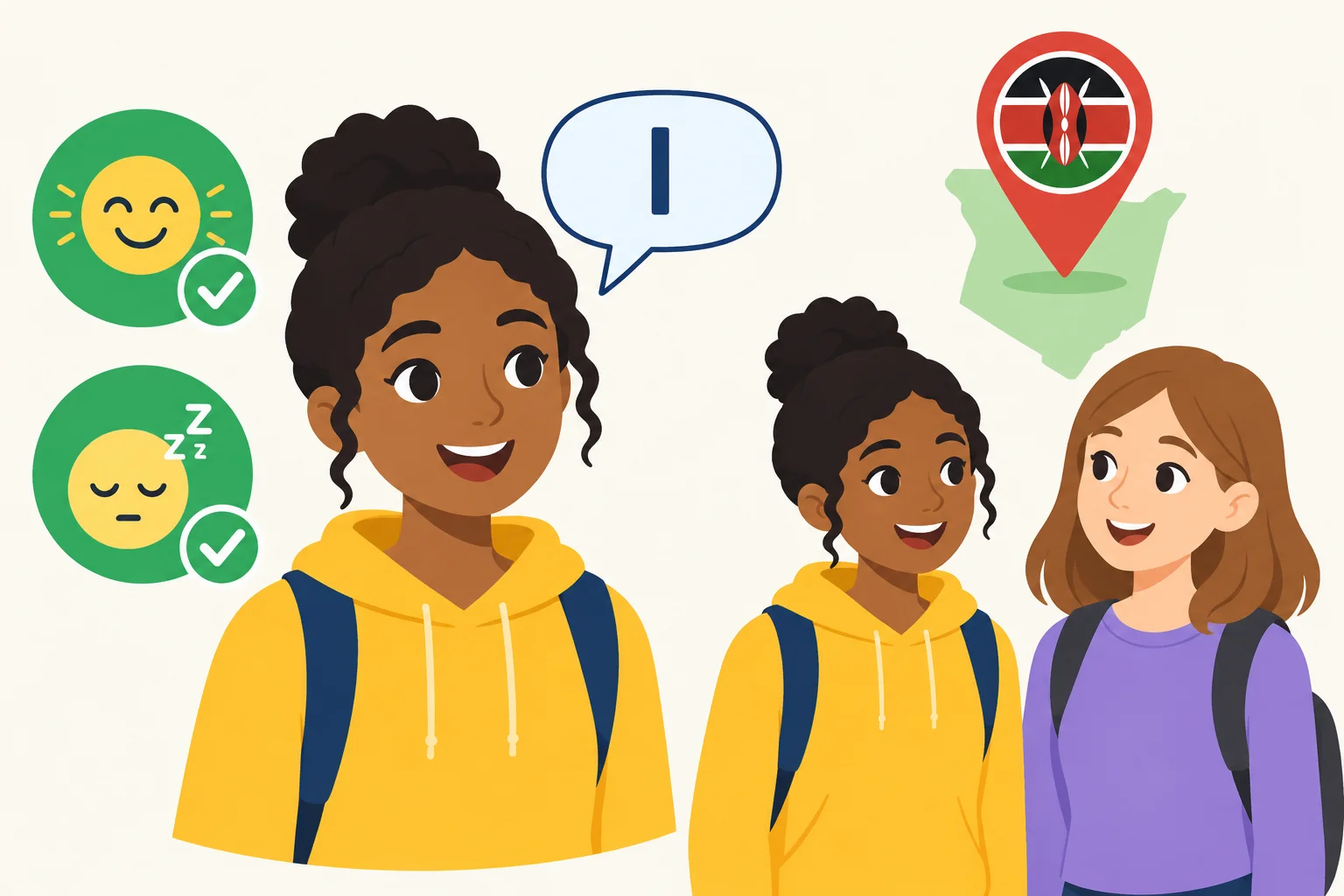
In this scene, Maya is happy and tired. Maya and Sara are from Kenya.
Tip
Both descriptions are true in this scene: Maya is happy, and Maya is tired. One description does not cancel the other.
Does this statement match the scene?
Maya isn't tired.
Change this full-form statement to a negative short-form statement:
I am ready.
Your sentence
Available words
Change this full-form statement to a negative short-form statement:
Maya is ready.
Your sentence
Available words
Change this full-form statement to a negative short-form statement:
They are from Kenya.
Your sentence
Available words
Step 6 of 9
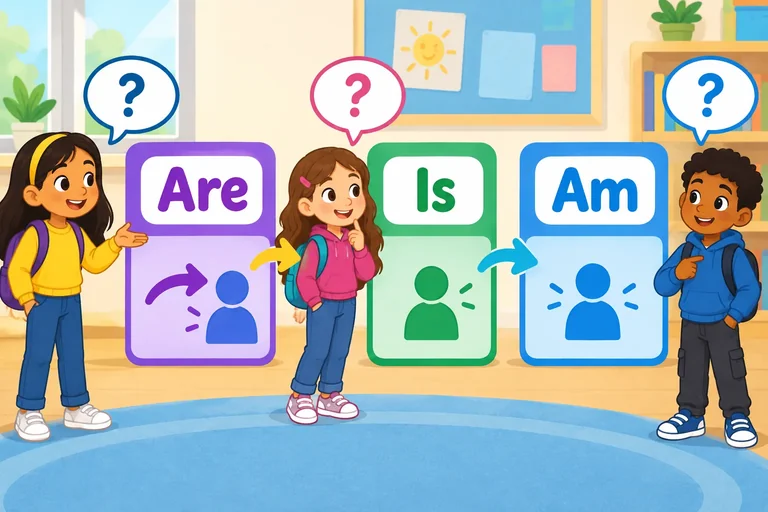
Turn familiar statements into short yes/no questions with am, is, and are.
A yes/no question starts with am, is, or are. The person word or name comes next. Keep the other words after it.
A statement ends with a period. A question ends with a question mark.
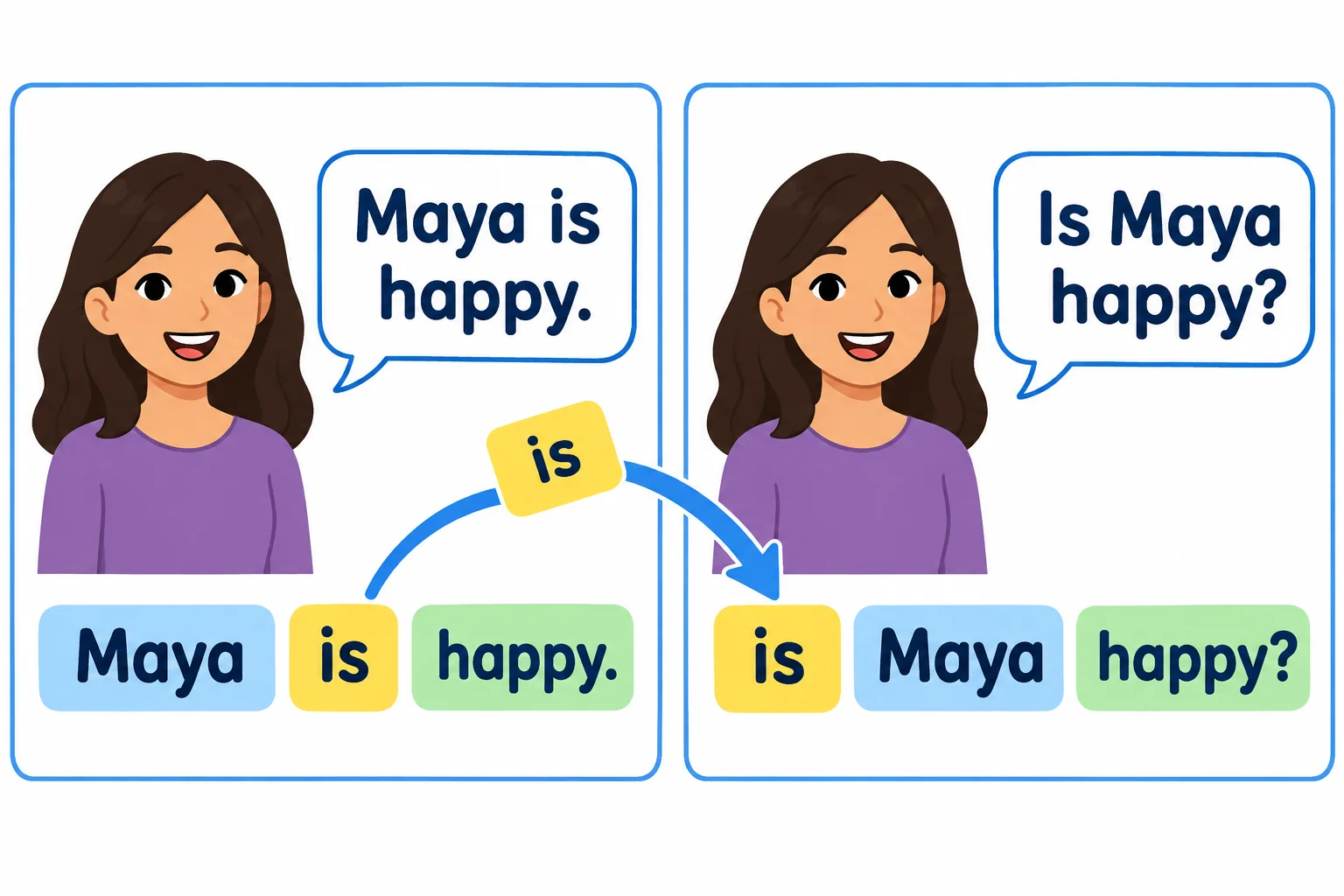
To make a yes/no question, move am, is, or are to the front. Put a question mark at the end.
Example
Statement: She is happy.
Question: Is she happy?
Statement: Maya is from Kenya.
Question: Is Maya from Kenya?
Choose the opening word for the person word or name. Then keep the remaining information in the same order.
Read the statements and questions aloud. Notice that am, is, or are is the first word in every question.
| Statement | Question |
|---|---|
| I am ready. | Am I ready? |
| You are ready. | Are you ready? |
| Leo is happy. | Is Leo happy? |
| We are tired. | Are we tired? |
| Maya is from Kenya. | Is Maya from Kenya? |
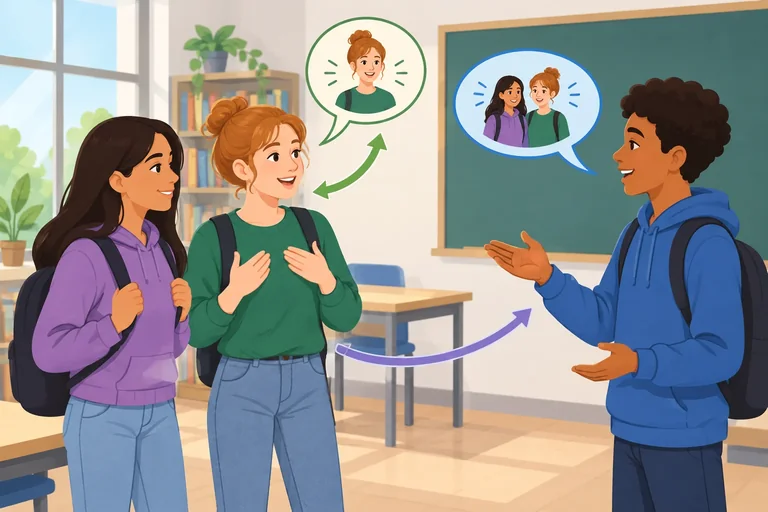
Listen and repeat. In line 1, Maya speaks to Sara. In line 2, Leo speaks about Maya. In line 3, Maya speaks about Maya and Sara.
Maya: Are you ready? Leo: Is Maya from Kenya? Maya: Are we tired?
Maya: Are you ready? Leo: Is Maya from Kenya? Maya: Are we tired?
Put the words in order to make a question to Sara.
Put the words in order to make a question about Leo.
Step 7 of 9
Give affirmative and negative short answers from the correct responder's viewpoint.
A short answer is about the person or people in the question. Choose the person word from the responder's viewpoint.
The person word in the answer does not always name the speaker.
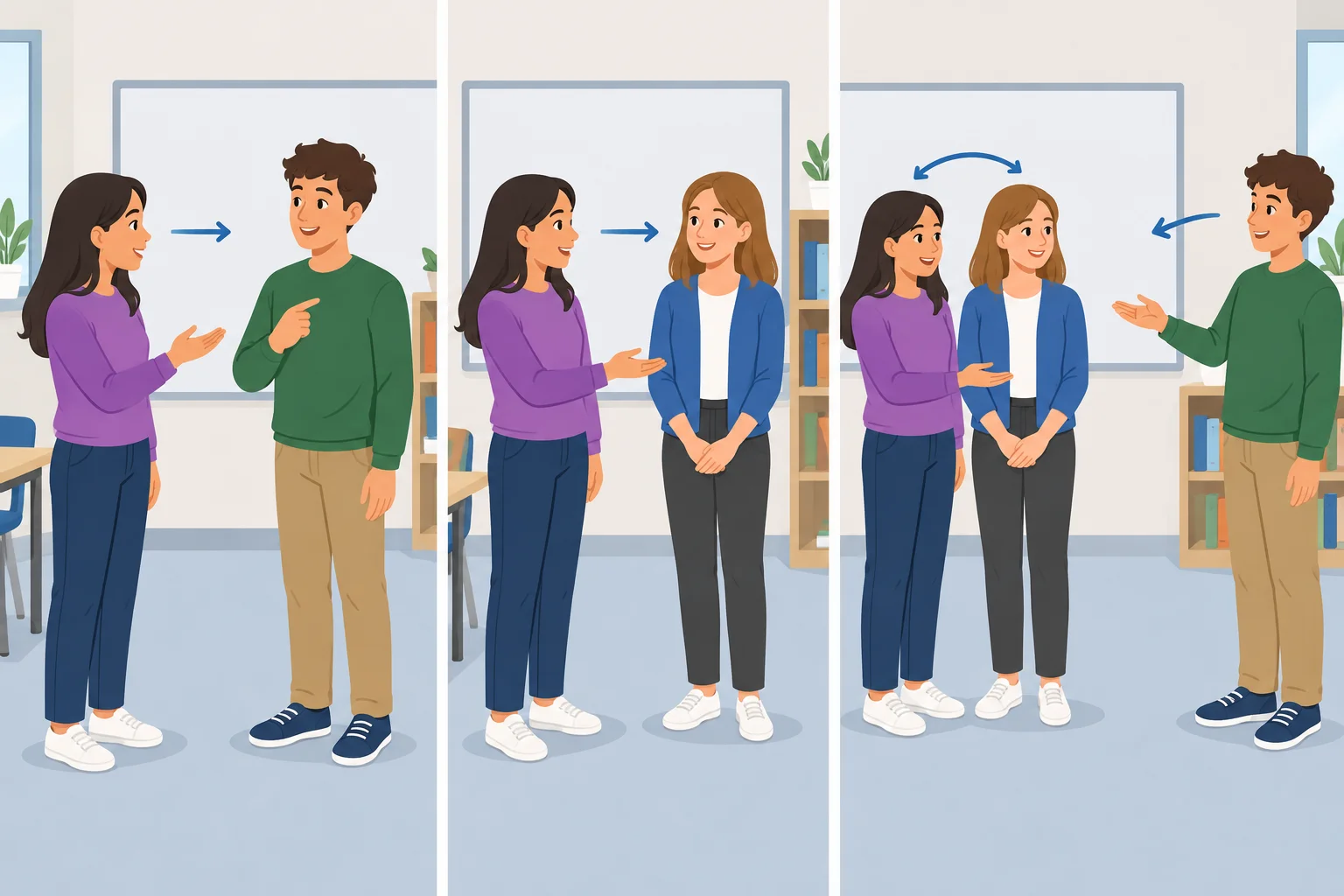
Choose the person word for the person or group asked about, from the responder's viewpoint.
Use a complete short answer.
For an affirmative short answer, say Yes and then a full form: Yes, I am. Do not use an affirmative short form here.
For a negative short answer, say No and use a negative short form: No, I'm not. Listen for and say the final form clearly.
Each model below is a complete answer. Do not add another person word before the form.
| Answer type | Complete pattern | Model |
|---|---|---|
| Affirmative | Yes, + full form | Yes, I am. |
| Affirmative | Yes, + full form | Yes, she is. |
| Affirmative | Yes, + full form | Yes, we are. |
| Negative | No, + negative short form | No, I'm not. |
| Negative | No, + negative short form | No, she isn't. |
| Negative | No, + negative short form | No, they aren't. |
Example
Read the question first. Then notice who the answer is about.
Maya: Are you happy, Leo?
Leo: Yes, I am.
Leo: Is Sara tired?
Maya: No, she isn't.
Maya: Are we ready, Sara?
Sara: Yes, we are.
Listen again. Then say each short answer aloud.
Maya: Are you happy, Leo? Leo: Yes, I am. Leo: Is Sara tired? Maya: No, she isn't. Maya: Are we ready, Sara? Sara: Yes, we are.
Match each question and supplied fact to the short answer the responder should give.
Tap an item and then its matching pair.
Step 8 of 9
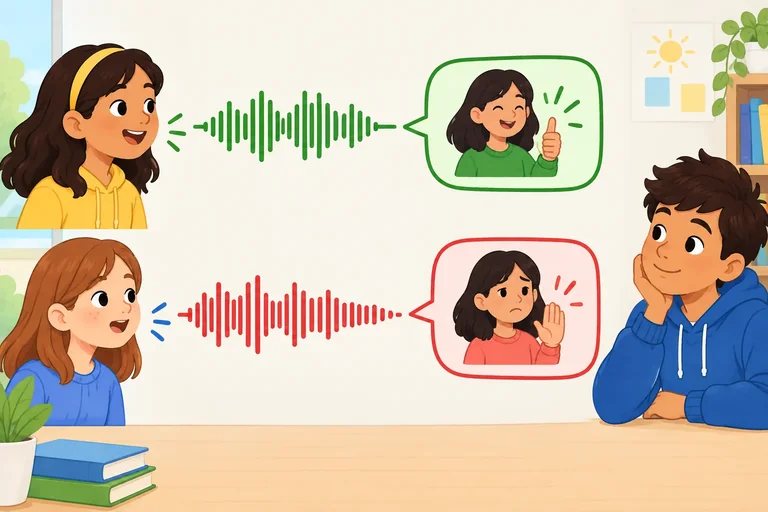
Hear the difference between positive and negative statements, say the endings clearly, and write a short sentence from audio.
Listen for the ending of the verb.
is and are tell you the statement is positive. isn't and aren't tell you the statement is negative.
Listen to the whole sentence, not only one word. Then repeat the lines. Make the ending in isn't and aren't clear.
Listen, read, and repeat each sentence.
Maya is happy. Maya isn't tired. Maya and Sara are ready. Maya and Sara aren't tired.
Maya is happy.
Maya isn't tired.
Maya and Sara are ready.
Maya and Sara aren't tired.
Listen and choose an option.
Listen. Which sentence do you hear?
They are ready.
Listen and choose an option.
Listen. Which sentence do you hear?
Leo isn't tired.
First, listen and repeat. Say the negative ending clearly.
Then listen to the next recording and write the sentence you hear.
Listen and repeat aloud.
Sara is happy. She isn't tired. Maya and Sara are ready. They aren't tired.
Sara is happy.
She isn't tired.
Maya and Sara are ready.
They aren't tired.
Listen and write what you heard.
Listen and write the sentence.
Step 9 of 9
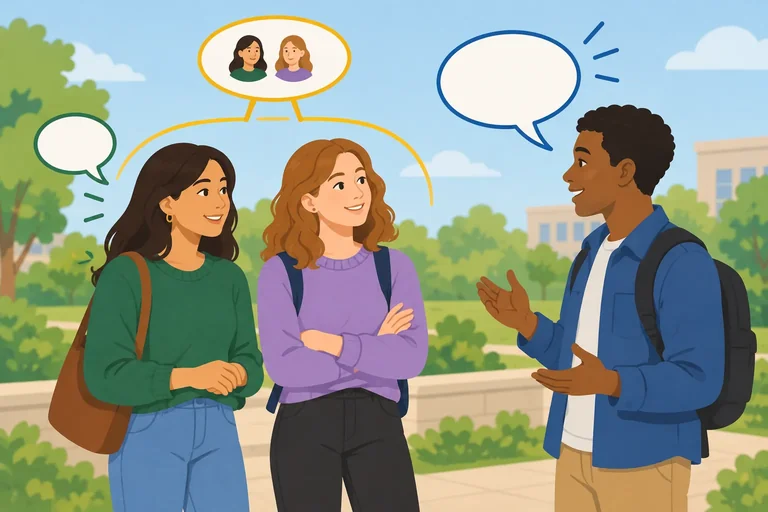
Understand a short conversation, then write and say a few connected lines and a question-and-answer exchange using the tutorial's forms.
Listen to Maya and Leo. Maya is the speaker first; Leo is the listener. Later, Maya speaks about herself and Sara together, and Leo speaks about Maya and Sara.

Use the speakers in the scene to follow I, you, we, and they.
Listen once. Then read the transcript and listen again.
Maya: Hi, Leo. I'm from Kenya. I'm happy. Leo: Hi, Maya. I'm from Brazil. I'm not tired. Maya: Are you ready? Leo: Yes, I am. Maya: Sara and I are from Kenya. We're ready. Leo: They aren't tired.
Maya: Hi, Leo. I'm from Kenya. I'm happy.
Leo: Hi, Maya. I'm from Brazil. I'm not tired.
Maya: Are you ready?
Leo: Yes, I am.
Maya: Sara and I are from Kenya. We're ready.
Leo: They aren't tired.
Match each line from the conversation to the person or people it is about.
Tap an item and then its matching pair.
Example
Now prepare your own mini conversation. You can use information about yourself, or use Maya, Sara, and Leo from the earlier scene.
Read this four-line model. It has an origin, a state, a negative, a question, and a short answer.
Maya: I'm from Kenya. I'm happy.
Maya: I'm not tired.
Leo: Is Maya ready?
Maya: Yes, I am.
Listen and repeat the model. Join the short forms clearly.
Maya: I'm from Kenya. I'm happy. Maya: I'm not tired. Leo: Is Maya ready? Maya: Yes, I am.
Maya: I'm from Kenya. I'm happy.
Maya: I'm not tired.
Leo: Is Maya ready?
Maya: Yes, I am.
Summary
Check your lines before you say them.
Create and say your mini conversation.
Write four short lines:
Use personal information or details from the earlier scene. Then say all four lines aloud. Use the model and self-check on the previous screen before you submit.
Write at least 60 characters (0/60).
Congratulations! You completed: Talk About People with Am, Is, and Are
Thousands of online courses in video, ebooks and audiobooks.
To test your knowledge during online courses
Generated directly from your cell phone's photo gallery and sent to your email

Download our app via QR Code or the links below:.



Carry knowledge in your pocket.
Download the Cursa app.
There are hundreds of free courses available, with a free certificate of completion that is saved in your mobile image gallery.
Download the app to access the Course Completion Certificate for Free.


+ 10 million
students

Free and Valid
Certificate

60 thousand free
exercises

4.8/5 rating in
app stores

Free courses in
video and ebooks