
Step 1 of 8
Find Evidence That Matters
Read and listen for source-supported facts that matter to a practical workshop-location choice.

Learning path · Level 9 · Tutorial 5
Support a practical recommendation in a short meeting and respond to another view. Read a brief options note and listen to a discussion, then choose which points are supported and complete a short dictation. Use contrast clauses and familiar conditionals to explain your choice. Rehearse contributions and clarification questions aloud, then write a guided follow-up stating the decision, responsibilities, and next steps.

 Find Evidence That Matters
Read and listen for source-supported facts that matter to a practical workshop-location choice. 3 min
 Build a Supported Recommendation
Organize a concise recommendation by linking a practical proposal to verified evidence and a clear benefit for the team. 3 min
 Acknowledge the Other Option
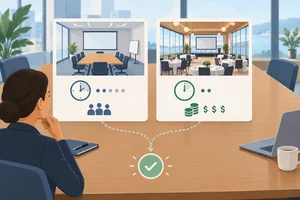
Recognize an alternative's genuine value and use although or however to express a clear contrast. 3 min
 Respond to a Reasonable Objection
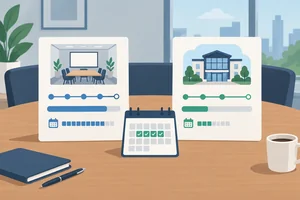
Address a setup-time objection with relevant evidence and a factual conditional consequence. 3 min
 Take a Turn and Clarify a Detail
Enter a discussion politely, retain a turn when needed, and clarify a disputed capacity using the Options note. 3 min
 Confirm What Has Been Agreed
Identify an explicitly agreed meeting decision, separate it from an open backup suggestion, and record responsibilities with deadlines. 3 min
 Write an Action-Focused Follow-Up
Write a concise follow-up that accurately records the decision, named responsibilities, deadlines, and the remaining open suggestion. 3 min
 Put It Together: Recommend, Respond, and Follow Up
Integrate evidence, contrast, clarification, and an action-focused follow-up in a short team workshop meeting simulation. 5 min
Step 1 of 8
Read and listen for source-supported facts that matter to a practical workshop-location choice.
Choose a practical option for a team workshop for 12 participants on 20 May. The maximum budget is $300 USD.
Check the available resources before you choose: enough seats, a projector, the correct date, and enough setup time. A fact matters when it helps with one of these needs. A positive-sounding statement is not evidence unless a source supports it.
Options note
| Option | Cost | Capacity | Equipment and date | Setup time |
|---|---|---|---|---|
| in-house room | $0 | 12 seats | Projector; available on 20 May | 60 minutes |
| external venue | $240 | 20 seats | Projector; available on 20 May | 15 minutes |
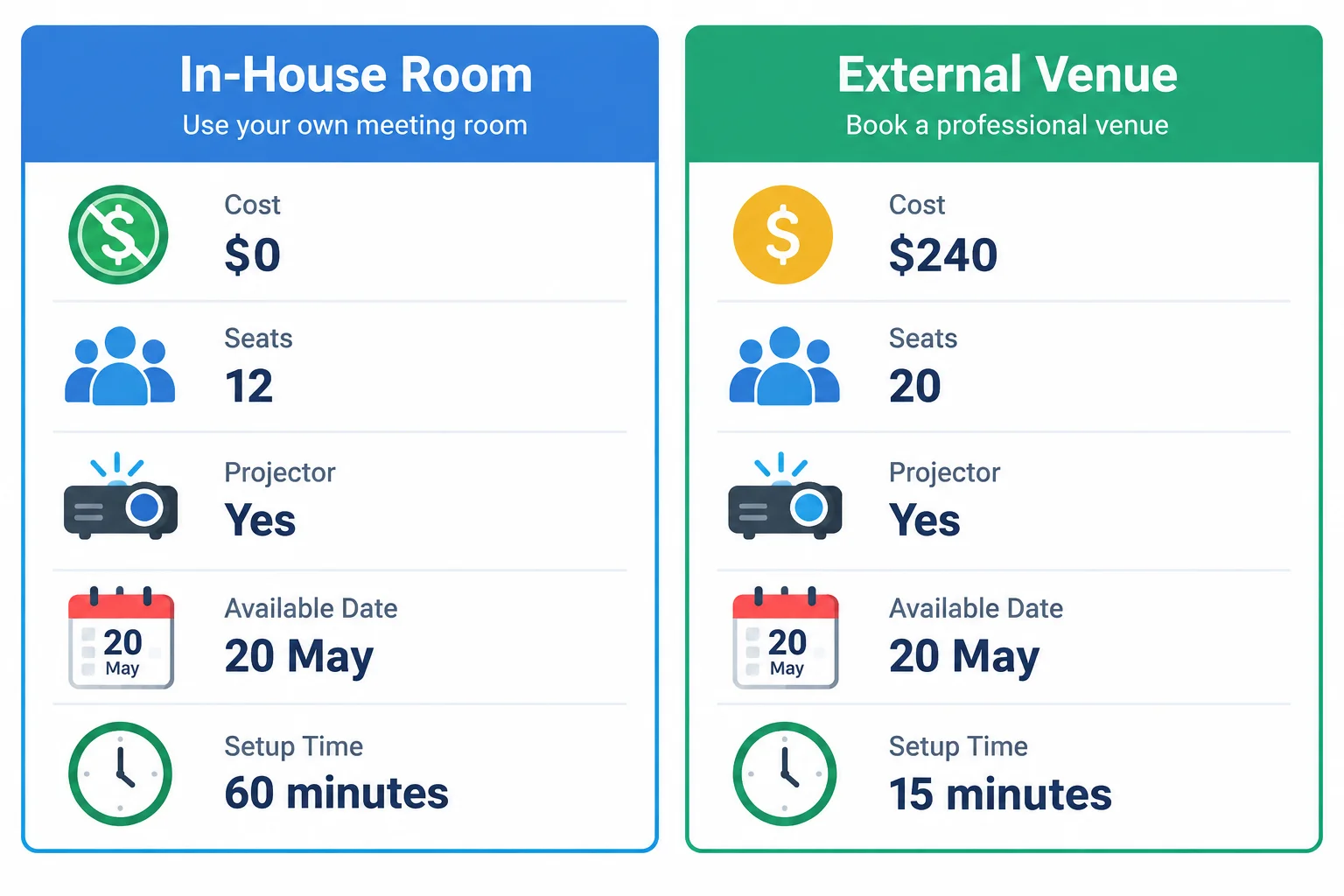
Both options meet the date and projector requirements; inspect the differences in cost, capacity, and setup time.
Meeting discussion
Listen for the concern Sam raises and the resource Ben confirms. Focus on facts, not on which option you prefer.
Ava: We need a practical option for the team workshop on 20 May. The external venue is within our budget, but I would like us to check the details. Sam: My concern is setup time. The external venue needs 15 minutes, while the in-house room needs 60 minutes. Ben: I checked our available resources. A team member has 60 minutes available for setup.
What concern does Sam raise?
Match each statement to the meeting need it can support. Choose Not supported by either source for a claim that the Options note and Meeting discussion do not confirm.
Tap an item and then its matching pair.

Step 2 of 8
Organize a concise recommendation by linking a practical proposal to verified evidence and a clear benefit for the team.
A useful meeting contribution has 3 connected parts:
Use these frames:
Do not stop after a fact. Connect the fact to a team need.
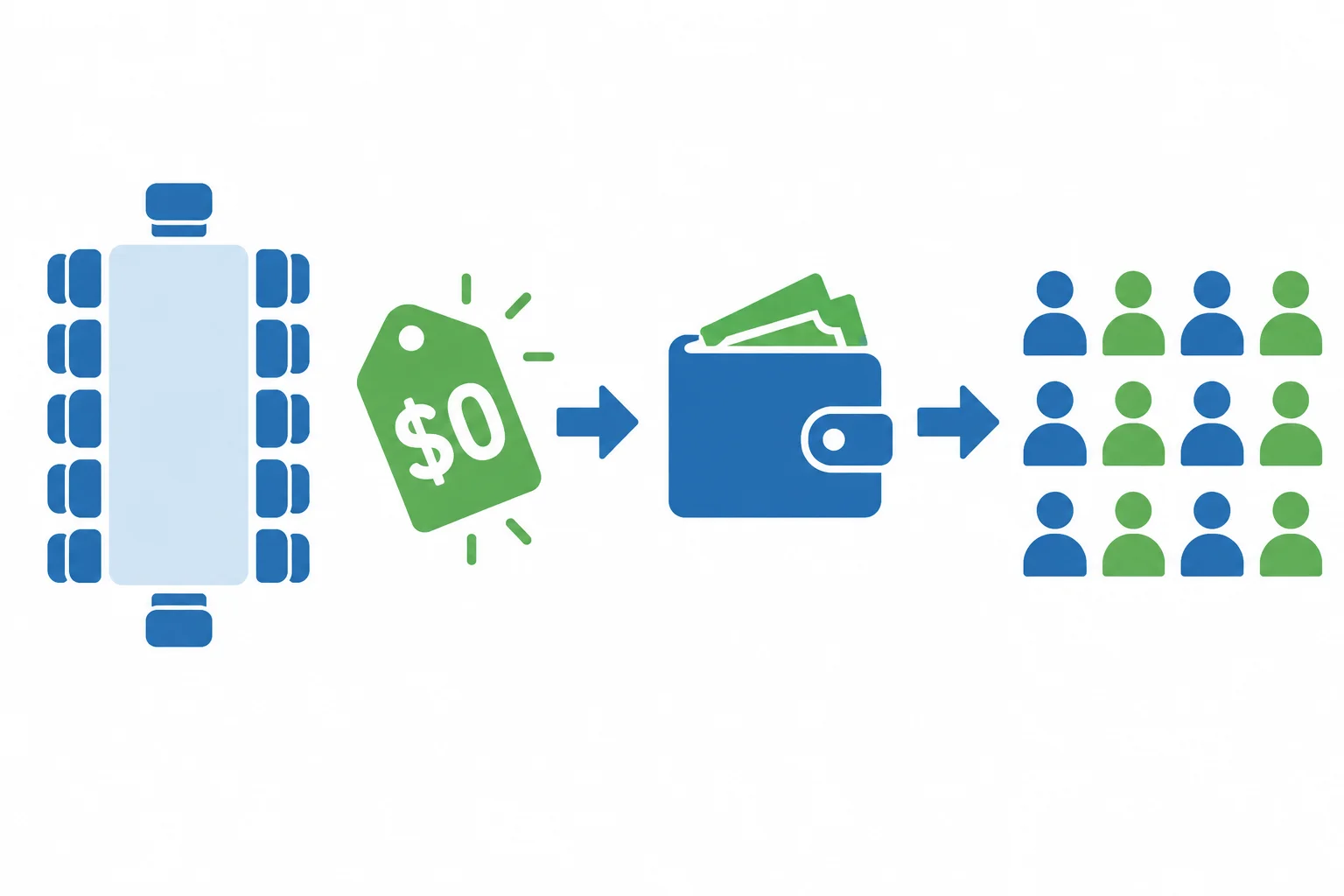
For the in-house room, the verified facts are $0 and 12 seats. The benefit is that the team can meet its budget and accommodate 12 participants.
Choose evidence that helps the team compare the options. Facts shared by both options are usually less useful for making the choice: both have a projector and are available on 20 May.
A list only repeats information: “The in-house room costs $0. It has 12 seats.”
An explanation shows relevance: the cost and capacity meet two priorities—the maximum budget and space for 12 participants.
Keep your contribution focused. One or two strong reasons are clearer than every detail in the Options note.
Example
Less effective:
One option would be to use the in-house room. It costs $0. It has 12 seats. Both options have a projector.
Supported recommendation:
One option would be to use the in-house room. It costs $0 and has 12 seats. This would allow us to stay within the $300 budget and accommodate all 12 participants.
Put these parts of a short recommendation in the most logical order.
Use this Options note information:
Write exactly 3 short sentences:
Choose either option, but make sure your final sentence explains how the facts meet a team need. Then say your 3 sentences aloud as if you were contributing in the meeting.
Write at least 80 characters (0/80).
Step 3 of 8
Recognize an alternative's genuine value and use although or however to express a clear contrast.
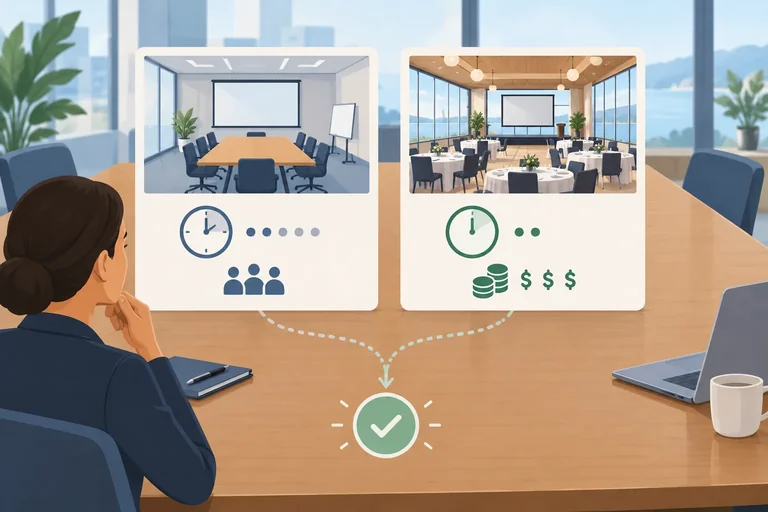
A strong recommendation can recognize the other option's value without changing your position. For the team workshop, the external venue has a genuine benefit: it needs less setup time. If you recommend the in-house room, acknowledge that benefit, then keep your reason clear.
Use main drawback for the most important disadvantage. The external venue's main drawback is its $240 USD cost; the in-house room's main drawback is its 60 minutes of setup.
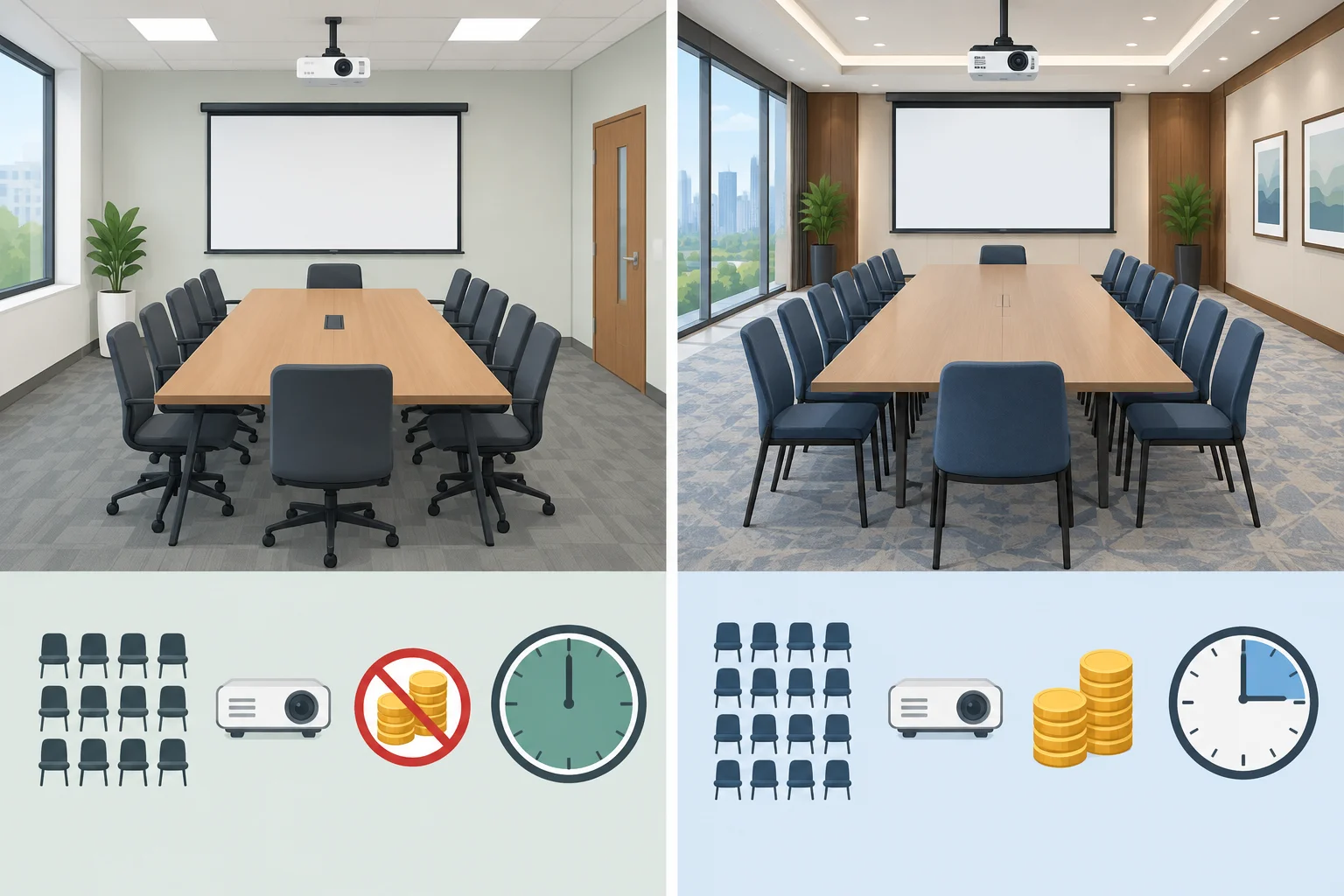
Options note: the external venue costs $240 but needs only 15 minutes of setup. The in-house room costs $0 but needs 60 minutes of setup.
Tip
Acknowledge a point only when it is genuinely relevant. Shorter setup time is a real advantage of the external venue. A claim such as “the external venue will be more successful” is not supported by the options note.
Use one of these patterns to show contrast. In both, each side needs a complete clause: a subject and a verb.
Use the selected punctuation pattern consistently in this meeting contribution.
| Linker | Pattern | Key punctuation |
|---|---|---|
| Although | Although the external venue costs more, it saves setup time. | Comma after the opening clause |
| However | The external venue costs more. However, it saves setup time. | Period before However; comma after it |
| Avoid | Although the external venue costs more, but it saves setup time. | Do not use although and but together |
Listen to the contrast model. Then repeat it aloud.
Although the external venue costs more, it saves setup time.
Although the external venue costs more, it saves setup time.
Tip
Say: Although the external venue costs more, / it saves setup time.
Pause briefly at /. Make Although clear, but keep the rest of the sentence connected. Record yourself if helpful and compare your pause with the audio model.
Build one accurate sentence with although.
Your sentence
Available words
Choose the sentence that uses however in the pattern from this step.
Listen and write what you heard.
Listen and type the 10-word contrast statement exactly, including punctuation.

Step 4 of 8
Address a setup-time objection with relevant evidence and a factual conditional consequence.
Listen for the exact concern and the resource that responds to it.
An objection is a specific concern, not a personal disagreement. A useful response addresses the concern itself.
Ava: We need a practical option for the team workshop.
Sam: The in-house room needs 60 minutes of setup. The external venue needs only 15 minutes, so that is my concern.
Ben: A team member has 60 minutes available for setup.
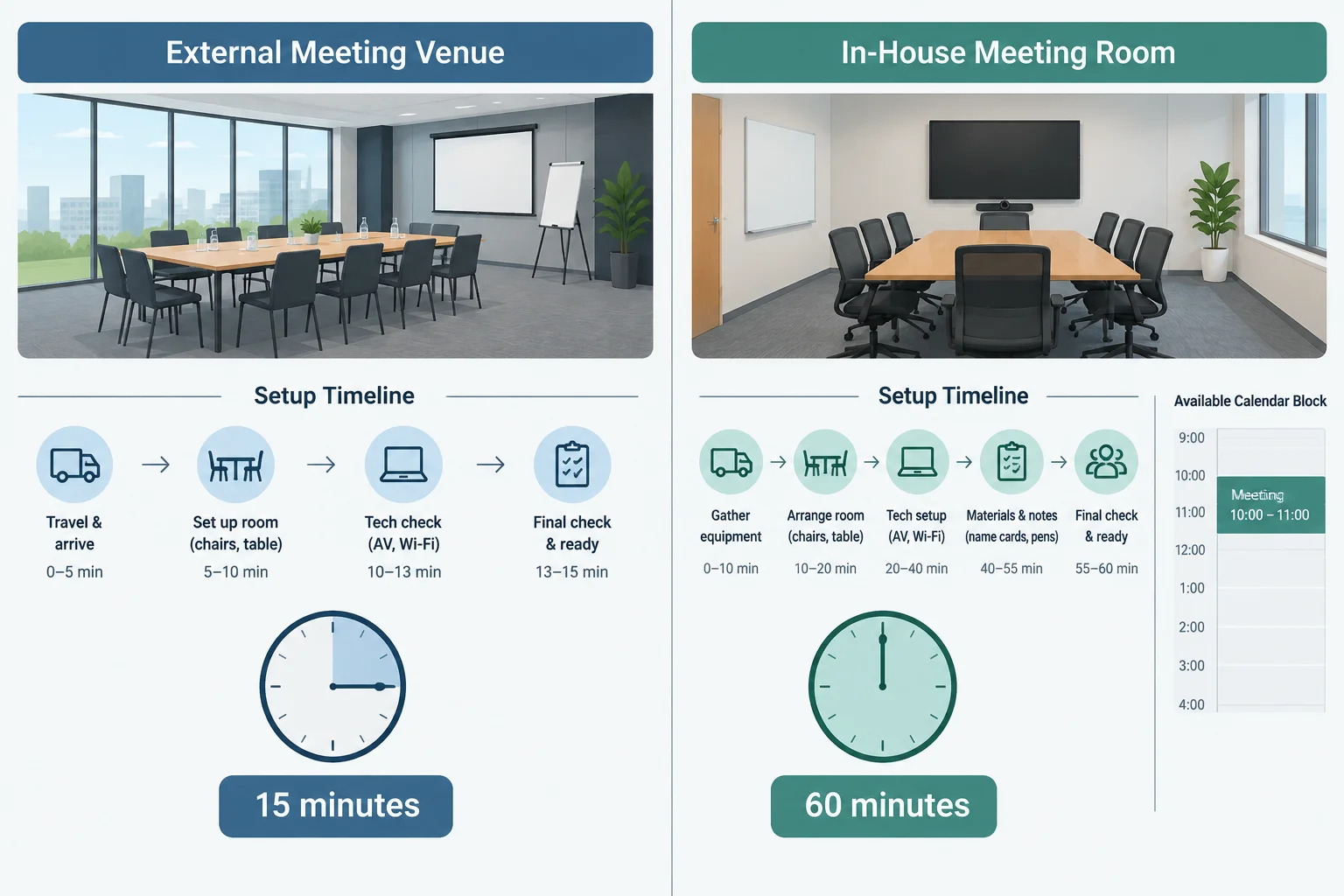
The external venue has a genuine setup-time advantage. Ben’s update shows that the 60 minutes needed for the in-house room are available.
A focused response has 3 parts:
Do not simply repeat your preference. For a setup-time concern, information about available setup time is more relevant than an unrelated fact.
Example
Sam is right that the external venue saves setup time. However, Ben confirmed that a team member has 60 minutes available. If we choose the in-house room, we will need 60 minutes for setup, so the in-house room remains a practical option.
Tip
Use supplied facts for a conditional consequence. Do not invent a result such as “the workshop will be more successful.”
Use the familiar conditional that matches your meaning:
Both consequences come from the meeting information. The conditional should clarify a practical result, not add an unsupported benefit.
Build the sentence about the imagined external-venue choice.
Your sentence
Available words
Sam: The 60 minutes of setup is my concern. The external venue needs only 15 minutes.
Ben: A team member has 60 minutes available for setup.
Say a brief response aloud, then write it. Write 3 sentences:
Write at least 120 characters (0/120).

Step 5 of 8
Enter a discussion politely, retain a turn when needed, and clarify a disputed capacity using the Options note.
In a meeting, use a short polite phrase before you give a relevant fact.
Then make one brief contribution. If a factual detail is uncertain, name the exact detail and check the source. Afterward, restate the verified fact neutrally rather than saying that another speaker was wrong.

A brief turn request creates space for one useful point. A source check keeps a disputed detail factual.
Tip
A turn request is not a long speech. Ask, give one useful point, and let others respond. When a number is disputed, check the Options note before continuing.
The team workshop has 12 participants on 20 May. Check the Options note when the group is uncertain about capacity.
Both options include a projector and are available on 20 May. Dollar amounts are USD.
| Option | Cost | Seats | Setup time |
|---|---|---|---|
| in-house room | $0 | 12 | 60 minutes |
| external venue | $240 | 20 | 15 minutes |
Example
A precise question names the uncertainty and the source: “Can we check the number of seats in the Options note?”
After checking, state the verified fact calmly. Focus on the information, not on who remembered it differently.
Listen for Ben entering the discussion, Sam interrupting after Ben has started his point, and Ava checking the disputed capacity.
Ava: The external venue saves setup time. Ben: Could I add a point? The in-house room costs $0, and it has enough seats for 12 participants. Sam: But I thought it only had 10 seats. Ben: Could I finish this point? Can we check the number of seats in the Options note? Ava: Yes. It lists 12 seats. Ben: Then the in-house room meets the capacity need.
Ava: The external venue saves setup time.
Ben: Could I add a point? The in-house room costs $0, and it has enough seats for 12 participants.
Sam: But I thought it only had 10 seats.
Ben: Could I finish this point? Can we check the number of seats in the Options note?
Ava: Yes. It lists 12 seats.
Ben: Then the in-house room meets the capacity need.
Listen to 3 short moments. Then match each moment to Ben’s or Ava’s communicative purpose.
Ava: Is there another point before we compare the options? Ben: Could I add a point? Ben: The in-house room costs $0, and it meets the capacity need because— Sam: The external venue needs only 15 minutes for setup. Ben: Could I finish this point? Sam: I remember the in-house room having 10 seats. Ava: Can we check the number of seats in the Options note?
Match each audio moment to its purpose.
Tap an item and then its matching pair.
Build the neutral restatement of the verified capacity.
Your sentence
Available words
Rehearse your 3 lines aloud first. Then type them on separate lines.
Use the source accurately. Do not state that the group has made a decision.
Write at least 80 characters (0/80).

Step 6 of 8
Identify an explicitly agreed meeting decision, separate it from an open backup suggestion, and record responsibilities with deadlines.
Do not treat silence, a useful comment, or one person’s agreement as a group decision.
Before the meeting closes, check that the group has reached a decision and assigned each task. Ask for the decision, the person responsible, the action, and the deadline.
A concise check is: “Can we confirm the decision, the assigned tasks, and the deadlines?”
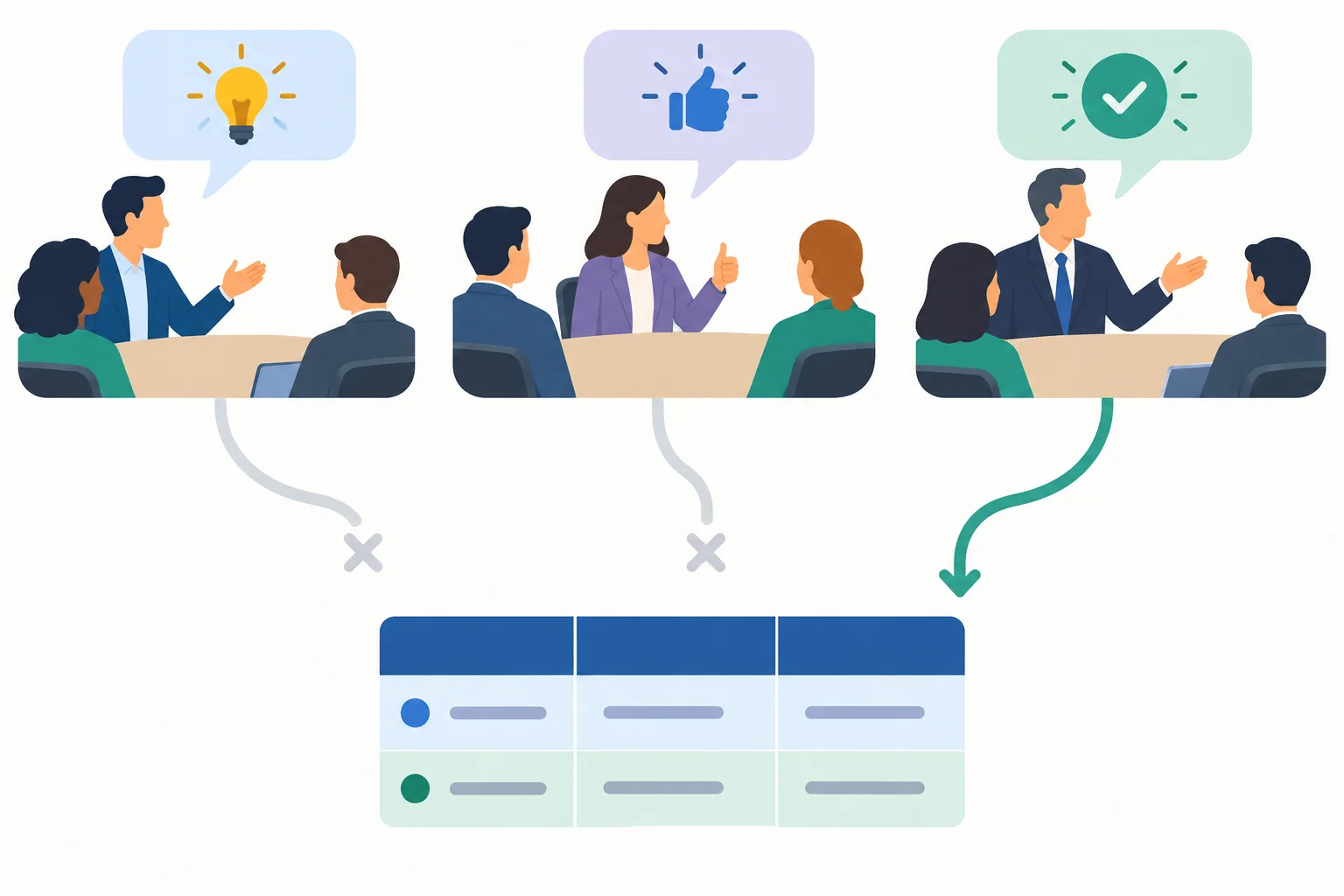
Record an outcome as Agreed only after clear confirmation. Then capture who will do what, and by when.
Tip
Use Still under discussion for an idea that has not been accepted as an action. This prevents a backup suggestion from sounding like an authorized booking.
Listen to the closing of the Meeting discussion. Identify the confirmed choice, the two assigned tasks, and the idea that remains open.
Ava: We have considered both options. Are we agreed to use the in-house room for the team workshop?
Ben: Yes. The room has 12 seats, and I can confirm the reservation by 14 May.
Sam: I agree. I will test the projector by 16 May. One option would be to keep the external venue as a backup.
Ava: That is still under discussion. We are not booking it today.
Tip
Listen for decisive language such as “Are we agreed?”, “Yes,” and “I will ... by [date].” In contrast, “One option would be ...” introduces a possibility, not a confirmed task.
Classify each outcome from the Meeting discussion.
Tap an item and then its matching pair.
Complete this compact Meeting recap from the closing exchange.
Decision: Use the  for the team workshop.

| Person | Action | Deadline |
| --- | --- | --- |
| Ben |  |  |
| Sam |  |  |

Still under discussion: Use the external venue as a backup.After completing the record, repeat this question aloud in a calm, checking tone.
Can we confirm that we have reached a decision, assigned the tasks, and agreed the deadlines?

Step 7 of 8
Write a concise follow-up that accurately records the decision, named responsibilities, deadlines, and the remaining open suggestion.
A useful follow-up is an action record, not a full transcript. Make 4 things easy to find:
This structure helps colleagues see what to do without confusing an open suggestion with a decision.

Separate the confirmed decision, action lines, and unresolved point so their status is clear.
Use the Meeting recap as your source. Do not add a booking or task that the group did not agree.
Agreed: Use the in-house room for the team workshop on 20 May.
Still under discussion: Use the external venue as a backup. No booking has been agreed.
Keep the responsible person, action, and deadline in the same line.
| Person | Action | Deadline |
|---|---|---|
| Ben | Confirm the room reservation | 14 May |
| Sam | Test the projector | 16 May |
Example
Agreed: [decision for the team workshop].
[Person] will [action] by [deadline].
[Person] will [action] by [deadline].
Still under discussion: [backup idea]. No booking has been agreed.
This short pattern records outcomes without retelling every point from the discussion.
Complete the status line.
External venue backup: ____
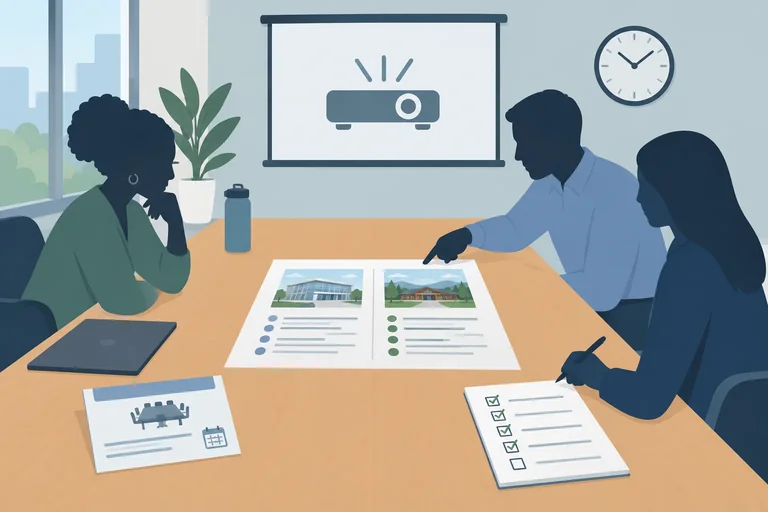
Using the Meeting recap from the previous screen, write a 60–80-word follow-up for the team. State the agreed location, include Ben’s and Sam’s actions with their deadlines, and describe the backup idea as still under discussion. Do not add an authorized external-venue booking.
Step 8 of 8
Integrate evidence, contrast, clarification, and an action-focused follow-up in a short team workshop meeting simulation.
The team is choosing a location for a team workshop for 12 participants on 20 May. The maximum budget is $300 USD. Both options include a projector and are available on 20 May.
Use these facts to support a recommendation, but remember: an options note does not record the group’s final decision.
Compare the practical facts before you listen to the Meeting discussion.
| Option | Cost | Seats | Equipment | Setup time | Availability |
|---|---|---|---|---|---|
| in-house room | $0 | 12 | Projector | 60 minutes | 20 May |
| external venue | $240 | 20 | Projector | 15 minutes | 20 May |
Use the visual to compare the trade-off: the in-house room saves money, while the external venue offers more seats and less setup time.
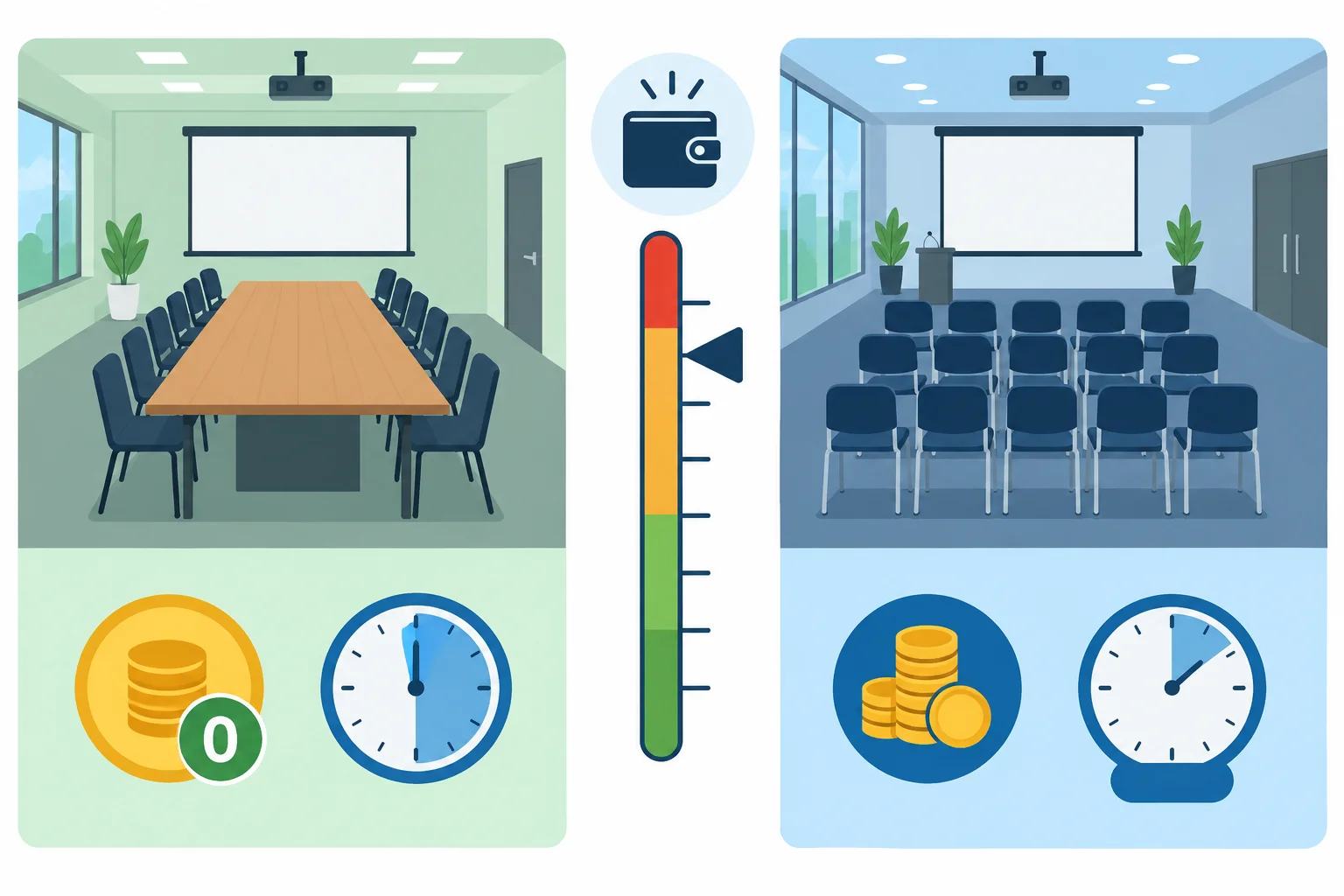
A practical choice compares relevant resources, not just one attractive fact.
Listen for Sam’s concern, Ben’s supporting evidence, and the clarification of the disputed capacity. Then use the transcript to check what you heard.
Ava: We need a practical option for the team workshop. Sam, what is your concern?
Sam: The external venue needs only 15 minutes of setup. The in-house room needs 60 minutes, so that is its main drawback.
Ben: Could I add a point? A team member has 60 minutes available for setup. The in-house room costs $0, so it remains a practical option.
Sam: I had remembered that the in-house room had only 10 seats. Can we check that detail?
Ava: Ben, can you check the Options note?
Ben: Yes. The Options note confirms 12 seats. That is enough for the 12 participants.
Prepare a 45–60-second contribution, followed by 2 short lines: one response to Sam’s concern and one clarification question about the seats.
Your contribution must include:
You may recommend either option if you support it with the sources. Speak with a brief pause after an opening although-clause, and make the contrast word clear. Your recommendation is your contribution; it is not necessarily the group’s final decision.
Write at least 450 characters (0/450).
Listen for the confirmed outcome. Notice the difference between an Agreed action and a point that is Still under discussion.
Ava: Are we agreed to use the in-house room for the team workshop?
Ben: Yes. I will confirm the room reservation by 14 May.
Sam: I will test the projector by 16 May.
Ben: One option would be to use the external venue as a backup.
Ava: That backup idea is still under discussion. No booking has been agreed.
Agreed: Use the in-house room for the team workshop.
Still under discussion: Use the external venue as a backup. No booking has been agreed.
Keep these statuses separate in the written record, even if your own earlier recommendation was different.
Record each agreed task with its owner and deadline.
| Person | Action | Deadline |
|---|---|---|
| Ben | Confirm the room reservation | 14 May |
| Sam | Test the projector | 16 May |
Write a 60–80-word follow-up for the meeting participants. Include:
Write only the essential outcome. Do not retell the full discussion. Make it clear that an agreed action is different from a suggestion still under discussion.
Write at least 300 characters (0/300).
Summary
Before you finish, check your work. Say “Yes” or “Not yet” for each point. A strong meeting contribution uses evidence, explains why it matters, and treats the alternative fairly. A reliable follow-up records what the group actually agreed, including responsibilities, deadlines, and any open point.
Congratulations! You completed: Support a Recommendation in a Meeting
You completed this level!
Up next: C1: Emphasis, Nuance, and Register
 Emphasize Key Points with Clefts and InversionMake the main point of a short work or study update unmistakable. Read and hear contrasting versions, practise clefts, fronting, and inversion, then write and say a focused update without making every sentence sound unusually emphatic.
Thousands of online courses in video, ebooks and audiobooks.
To test your knowledge during online courses
Generated directly from your cell phone's photo gallery and sent to your email

Download our app via QR Code or the links below:.



Carry knowledge in your pocket.
Download the Cursa app.
There are hundreds of free courses available, with a free certificate of completion that is saved in your mobile image gallery.
Download the app to access the Course Completion Certificate for Free.


+ 10 million
students

Free and Valid
Certificate

60 thousand free
exercises

4.8/5 rating in
app stores

Free courses in
video and ebooks