
Step 1 of 9
Move from Sources to Themes
Learn to plan a synthesis around shared themes rather than around a sequence of sources.

Learning path · Level 11 · Tutorial 1
Read two short texts and listen to a recording about a shared study or workplace issue. Bring their ideas together without losing track of who claims what. Use audio-choice tasks and brief dictation to notice attribution, then prepare a guided written synthesis and explain it aloud.
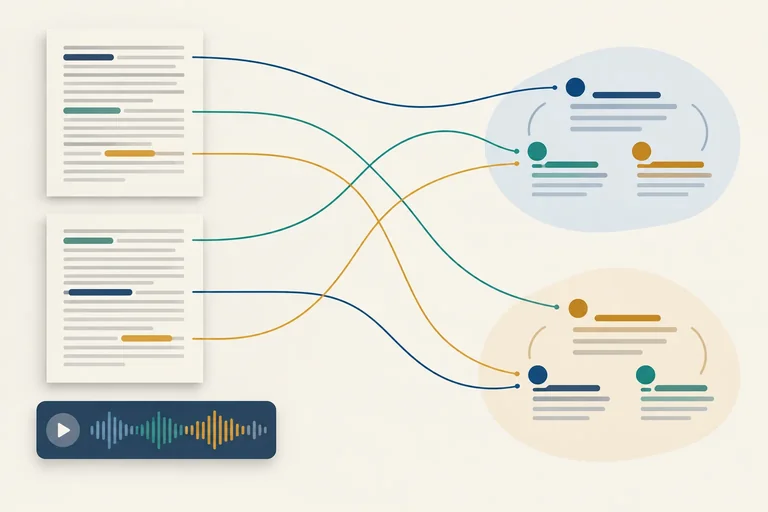
 Move from Sources to Themes
Learn to plan a synthesis around shared themes rather than around a sequence of sources. 2 min
 Map the Written Sources
Read and classify two written source accounts about Harbor Studio’s protected focus-time trial using a source-and-theme grid. 4 min
 Track Attribution in a Recording
Listen to Maya Chen’s contribution, distinguish it from the written sources she mentions, and add it accurately to a source-and-theme grid. 3 min
 Paraphrase Without Changing the Claim
Restructure source contributions while preserving agency, scope, time reference, and qualification. 3 min
 Choose Accurate Attribution Patterns
Choose reporting-verb patterns that accurately represent a source’s position, explanation, or warning. 2 min
 Connect Sources Without Inventing Agreement
Classify relationships among source contributions and keep attribution precise when sources share a theme but not a conclusion. 3 min
 Build a Theme-Led Synthesis
Plan and draft a concise synthesis organized by the shared themes Focus and Coordination. 2 min
 Prepare the Spoken Synthesis
Rehearse a theme-led spoken synthesis with clear source attribution and accurate stress in interpret and interpretation. 2 min
 Write, Explain, and Check Your Synthesis
Produce and self-review a complete written and spoken synthesis that integrates all three Harbor Studio sources by theme without distorting their positions. 5 min
Step 1 of 9
Learn to plan a synthesis around shared themes rather than around a sequence of sources.
A synthesis does not simply summarize Source 1, then Source 2, then Source 3. Instead, it brings source contributions together around a shared theme: a question or issue that more than one source addresses.
In this tutorial, the shared case is Harbor Studio’s four-week trial of protected focus time from 09:00–11:00 each working day. We will keep returning to one question:
What do the sources suggest about the focus and coordination effects of protected focus time?
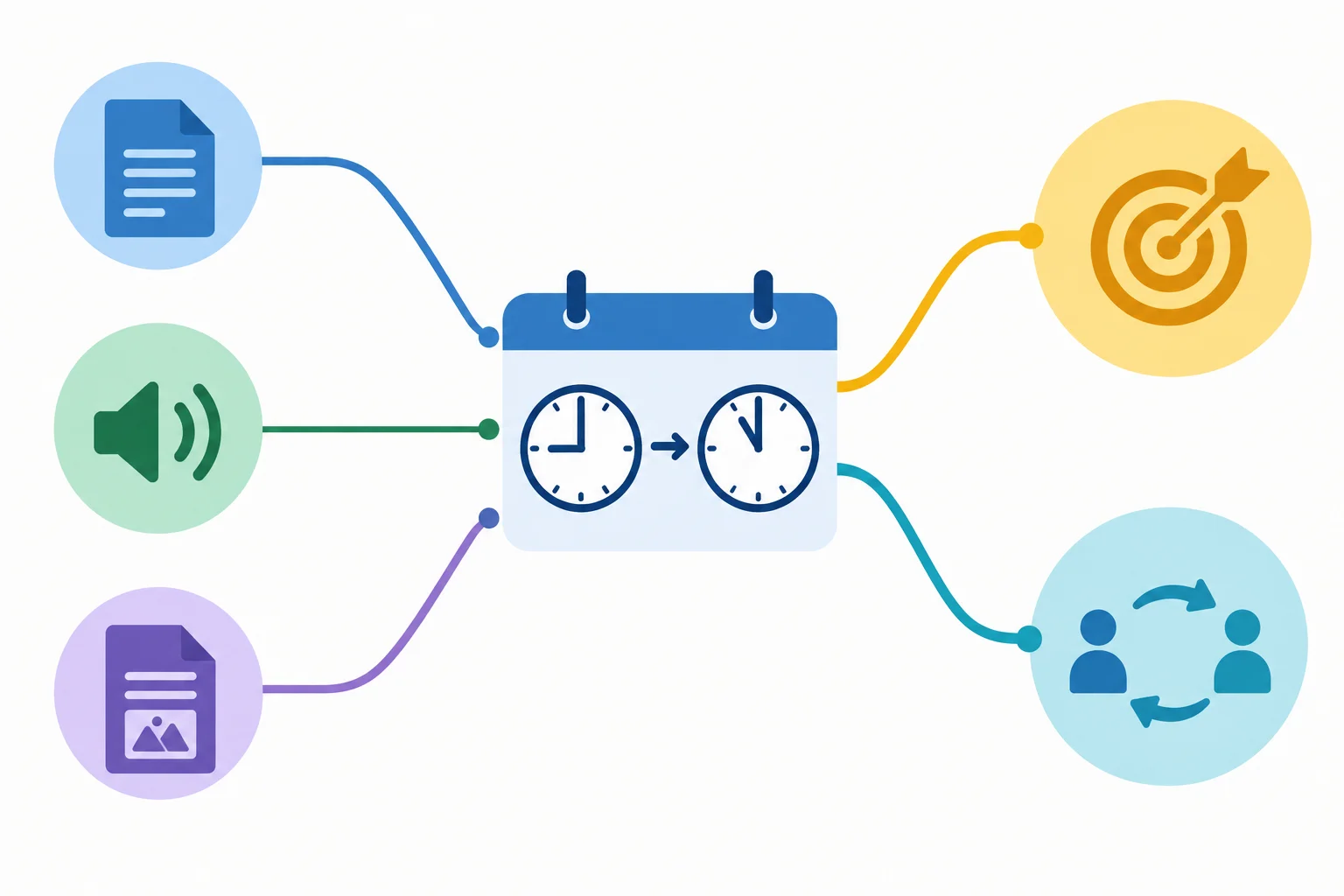
A synthesis reorganizes several source contributions around issues they share.
A source-led outline follows the order of the sources. It is useful for separate summaries, but it makes the reader wait to see connections.
A theme-led outline groups relevant contributions under the same issue. The source names still matter, but they support the theme rather than control the structure.
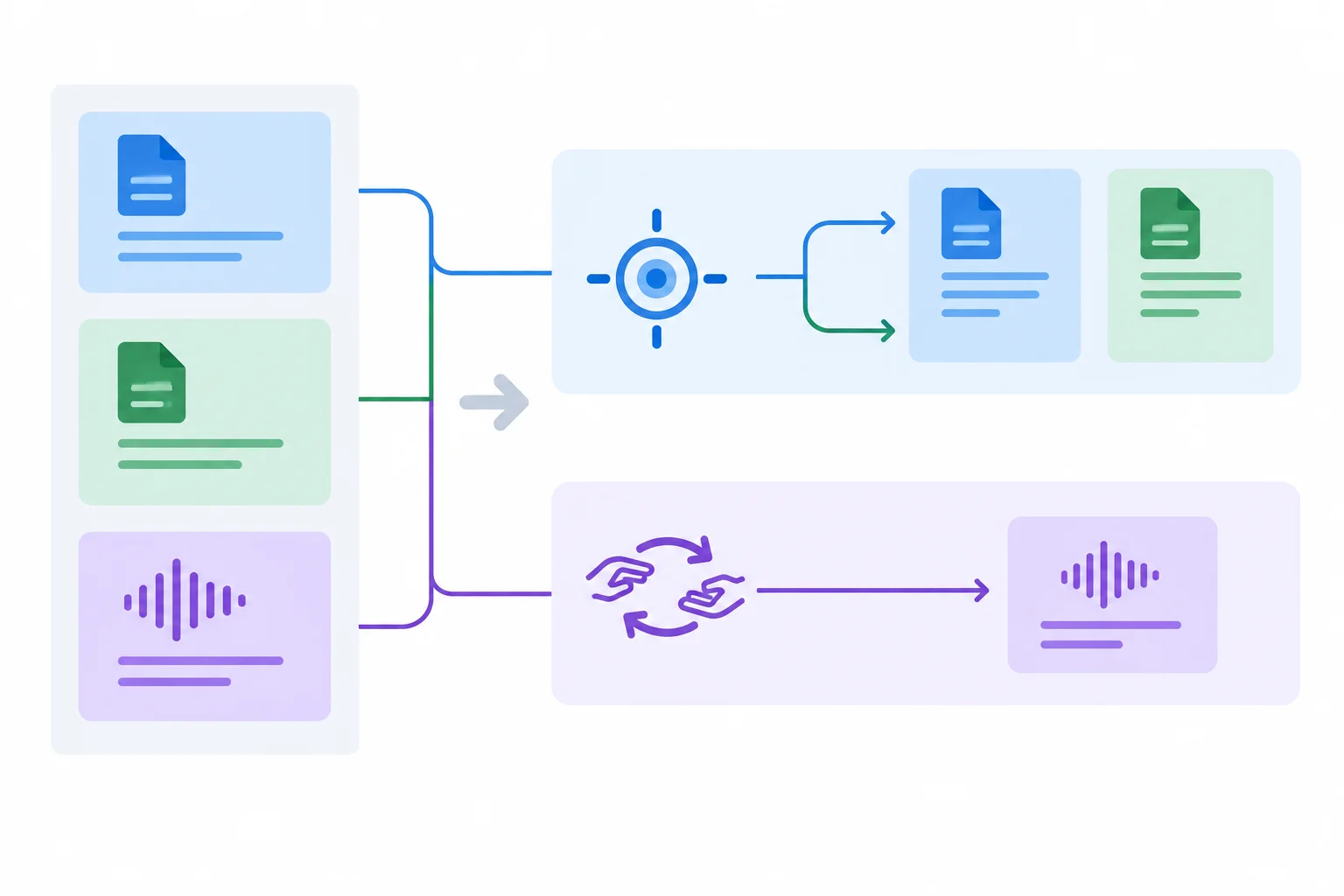
The contributions remain identifiable, but a theme-led plan makes the shared issues the main structure.
Example
Source-led outline
This plan answers: What does each source say?
Example
Theme-led outline
This plan answers: What do the sources suggest about each shared theme?
Select the outline that is organized as a synthesis by shared themes.
When you synthesize, use a shared question to decide where each contribution belongs. At Harbor Studio, the two working themes are Focus and Coordination.
Later, you will map exactly what each source claims and how strongly it supports an interpretation. For now, make one key choice: organize by the issue being explored, not by the order in which you encountered the sources.
Tip

Step 2 of 9
Read and classify two written source accounts about Harbor Studio’s protected focus-time trial using a source-and-theme grid.
The shared case at Harbor Studio is a four-week trial of protected focus time from 09:00–11:00 each working day. Read each account as a separate source. As you read, ask: What is the source’s central point? What information supports it? What does the source think that information may mean?
During Harbor Studio’s four-week trial of protected focus time from 09:00–11:00 each working day, I surveyed 24 participants about concentration. Eighteen said concentrating had become easier, while 6 reported no change. These responses describe participants’ experiences during the trial; they do not measure completed work or compare productivity before and after it. For this group, the pattern suggests a possible focus benefit. However, the survey cannot establish that the protected period increased productivity, nor can it explain every participant’s experience. I recommend treating the findings as a useful indication for further review rather than as proof of a broader result.
During the same four-week trial, the operations log recorded 6 delayed handovers. The log identifies the timing of each delay, but it contains no before-trial comparison. It therefore shows that delays occurred during the trial, not that the new arrangement caused them. Ortega considers the 09:00–11:00 block’s length a possible contributor: when colleagues could not reach one another for two hours, some urgent coordination may have been slower. He favors a shorter protected block while the team gathers more information. His interpretation is a proposed explanation, not a demonstrated cause of every delay.
Use the grid to organize contributions by shared theme, not by the order in which you read them.
A logged event or a reported experience does not automatically establish its cause. If a source says nothing about a theme, write Not addressed rather than supplying a position for it.

The grid keeps source statements inside their cells and places any synthesizer’s inference outside them.
Record only what each source contributes. The labels in each theme cell show the status of the information.
| Source | Focus | Coordination |
|---|---|---|
| Text A — Amina Shah, project analyst | Claim: Participants reported easier concentration. Support: Survey of 24 participants; 18 reported easier concentration and 6 reported no change. Interpretation: A possible focus benefit for this group, not proof of higher productivity. | Not addressed |
| Text B — Luis Ortega, operations lead | Not addressed | Claim: Delayed handovers occurred during the trial. Support: Log of 6 delayed handovers; no before-trial comparison. Interpretation: The block’s length may be a contributor; Ortega favors a shorter block. |
Warning
A conclusion that combines, extends, or evaluates source contributions belongs outside the source cells under Synthesizer's inference. Do not treat source silence as evidence of agreement, disagreement, or causation.
Match each statement to its correct grid location or status.
Tap an item and then its matching pair.

Step 3 of 9
Listen to Maya Chen’s contribution, distinguish it from the written sources she mentions, and add it accurately to a source-and-theme grid.
Recording C adds Maya Chen’s voice to the Harbor Studio case. On your first listen, track ownership rather than trying to write every detail. When Chen refers to her team, she is giving her own observation. When she names Shah or Ortega, she is reporting another source’s contribution.
Listen for what Chen says about Focus, Coordination, and the preferred next step.

Use the source named by the speaker to decide who owns each contribution.
Listen once for the overall position. You will work with a short extract next.
At Harbor Studio, my team experienced fewer interruptions during the four-week trial of protected focus time from 09:00–11:00. This is an observation from my own team, not a formal productivity measure. Shah reports that 18 of 24 participants found concentration easier; 6 reported no change. Shah interprets those survey results as suggesting a possible focus benefit for this group, not proof of higher productivity. In coordination, the log shows 6 delayed handovers. Ortega suggests that the block's length may have contributed. I think unclear urgent-contact procedures may also explain those delays. Therefore, I favor retaining the full block with a clear urgent-contact route, rather than shortening it. We need to keep easier concentration separate from higher productivity when we interpret the trial.
Listen and choose an option.
After listening to the extract, select Chen’s preferred response.
I favor retaining the full block with a clear urgent-contact route, rather than shortening it.
Listen and write what you heard.
Listen and type the complete attribution clause you hear.
Now check the transcript. Notice the ownership cues: “my team” introduces Chen’s observation; “Shah reports” and “Ortega suggests” identify embedded contributions from the written sources. Chen’s interpretation about urgent-contact procedures is her own.
Example
At Harbor Studio, my team experienced fewer interruptions during the four-week trial of protected focus time from 09:00–11:00. This is an observation from my own team, not a formal productivity measure. Shah reports that 18 of 24 participants found concentration easier; 6 reported no change. Shah interprets those survey results as suggesting a possible focus benefit for this group, not proof of higher productivity. In coordination, the log shows 6 delayed handovers. Ortega suggests that the block's length may have contributed. I think unclear urgent-contact procedures may also explain those delays. Therefore, I favor retaining the full block with a clear urgent-contact route, rather than shortening it. We need to keep easier concentration separate from higher productivity when we interpret the trial.
Tip
Keep a source’s silence as Not addressed. If you draw your own conclusion from several sources, place it separately under Synthesizer's inference, not in a source cell.
Your working grid; complete the Recording C row in the next task.
| Source | Focus | Coordination |
|---|---|---|
| Text A — Amina Shah, project analyst | Support: 18 of 24 participants reported easier concentration; 6 reported no change. Interpretation: possible focus benefit for this group, not proof of higher productivity. | Not addressed |
| Text B — Luis Ortega, operations lead | Not addressed | Support: 6 delayed handovers during the same trial; no before-trial comparison. Interpretation: the block's length may be a contributor; favors a shorter block. |
| Recording C — Maya Chen, team coordinator | Complete after the final task. | Complete after the final task. |
Use the transcript to place each contribution in the correct source-and-theme grid destination.
Tap an item and then its matching pair.

Step 4 of 9
Restructure source contributions while preserving agency, scope, time reference, and qualification.
A faithful paraphrase does more than replace individual words. It reorganizes a source contribution while preserving four controls:
Treat these controls as part of the meaning. If one changes, your synthesis can give a source a stronger, broader, or different claim than it made.

A paraphrase may change its sentence shape, but these four meaning controls must remain connected.
Example
Source contribution
During the four-week trial, 18 of 24 participants reported easier concentration. Shah interprets this as suggesting a possible focus benefit for this group, not proof of higher productivity.
Faithful paraphrase
In the survey conducted during the four-week trial, 18 of 24 participants said concentration was easier. Shah treats these self-reports as suggesting a possible focus benefit for this group rather than proof of higher productivity.
The wording and clause structure change, but Shah remains the interpreter, the survey group remains limited, the trial remains in view, and the conclusion stays qualified.
Before accepting a paraphrase, compare it with the source contribution. Ask:
Changing active to passive voice, moving an opening phrase, or combining two clauses can help you restructure. Do not add a cause, remove a limit, or turn an interpretation into a result.
Example
Source contribution
During the same trial, Ortega logged 6 delayed handovers. With no before-trial comparison, he interprets the block's length as a possible contributor.
Unfaithful paraphrase
The trial showed that the long block caused 6 delays.
This version changes agency from Ortega to the trial, removes the missing comparison, and upgrades a possible contributor into a proven cause. It also replaces delayed handovers with a less precise outcome.
Build one structurally changed sentence that preserves every control.
During the same four-week trial, Ortega logged 6 delayed handovers. With no before-trial comparison, he interprets the block's length as a possible contributor and favors a shorter block.
Your sentence
Available words
Complete both parts on separate lines.
A. Construct: Write a structurally changed paraphrase of this source contribution:
During the four-week trial, Chen observed fewer interruptions in her own team. She suggests that unclear urgent-contact procedures may explain the delayed handovers.
B. Revise: Rewrite this inaccurate paraphrase so that it represents the same contribution faithfully:
The trial proved that poor urgent-contact procedures caused handover delays throughout Harbor Studio.
Check agency, scope, time reference, and qualification in both responses.
Write at least 160 characters (0/160).

Step 5 of 9
Choose reporting-verb patterns that accurately represent a source’s position, explanation, or warning.
Attribution does more than name a source: it identifies the kind of contribution the source makes. Use argue for a position, attribute for an explanation of an outcome, and caution for a warning. The reporting verb must represent the source’s communicative act, not merely add variety.
For Harbor Studio, Ortega advances a position about the block’s length. He also offers a limited explanation for the handover delays. Chen gives a warning about how to interpret easier concentration. These are three different acts, so they need three different patterns.
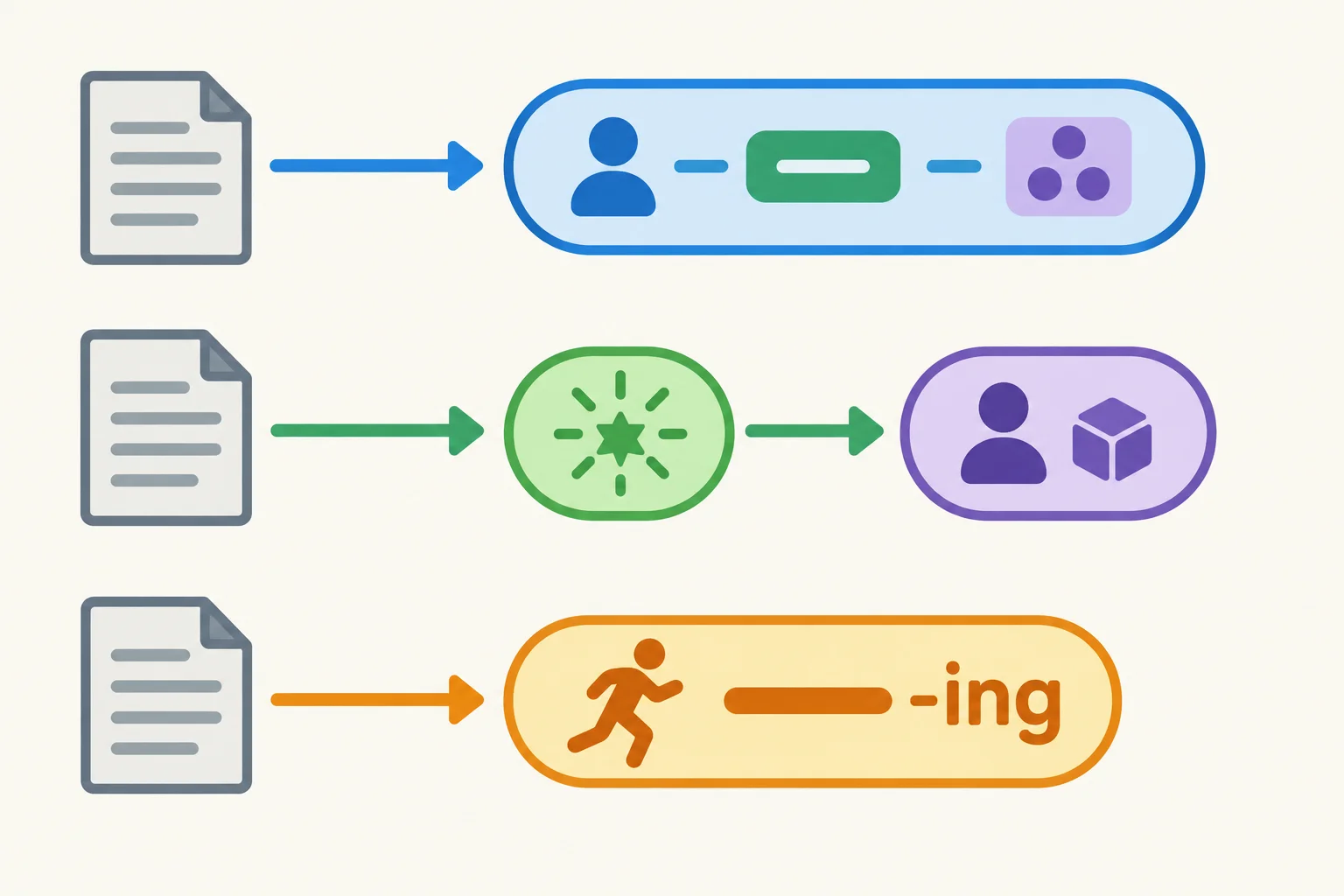
Choose a reporting pattern according to whether the source advances a position, offers an explanation, or gives a warning.
These patterns preserve both the source’s communicative act and the limits of its claim.
| Source act | Pattern | Source-based model | Meaning check |
|---|---|---|---|
| Position | argue that + clause | Ortega argues that the block should be shorter. | A position follows. |
| Explanation | attribute + outcome + to + noun phrase | Ortega attributes the delays partly to the block’s length. | The explanation remains partial. |
| Warning | caution against + -ing | Chen cautions against treating easier concentration as proof of higher productivity. | The warning is followed by an action. |
Example
Keep ownership explicit when it changes
Ortega attributes the delays partly to the block’s length. Chen cautions against treating easier concentration as proof of higher productivity.
The second sentence does not continue Ortega’s explanation. Naming Chen again makes the change in source ownership clear.
Tip
Protect the qualification. Ortega’s log has no before-trial comparison, so his explanation is not an established cause. Keep limiting language such as partly or possible contributor when reporting his interpretation.
Ortega favors a shorter protected block. Which sentence reports that contribution accurately?
Complete the three attributions. Choose the reporting verb that matches each source act, then supply its required complement pattern.
Ortega  that the block should be shorter.
Ortega  the delays partly  the block’s length.
Chen    easier concentration as proof of higher productivity.
Step 6 of 9
Classify relationships among source contributions and keep attribution precise when sources share a theme but not a conclusion.
A synthesis does not treat sources as a vote. Within a shared theme, first identify the relationship between contributions.
A source that is silent about a theme is Not addressed, not agreement or disagreement.

Contributions may support a limited shared point, add different kinds of information, or lead to different positions.
Tip
Group attribution only around the exact point the sources genuinely share. Separate the sources again as soon as their qualification, explanation, or preferred response changes.
Use the relationship label that fits the contribution type and the strength of the connection.
| Relationship | What it means | Careful Harbor Studio wording |
|---|---|---|
| Shared emphasis | Sources make the same limited point. | Shah and Chen converge on the point that easier concentration is not proof of higher productivity. |
| Complementary evidence | Separate observations or support illuminate a shared theme without proving one conclusion. | Shah’s survey result and Chen’s observation of fewer interruptions offer complementary evidence about Focus. |
| Complementary information | Contributions illuminate different aspects, such as an event and a possible explanation. | Ortega’s handover log and Chen’s interpretation about urgent-contact procedures provide complementary information about Coordination. |
| Difference in position | Sources favor different explanations or responses. | Ortega and Chen diverge on the response to the handover delays. |
| Not addressed | A source does not comment on the theme. | Shah does not address Coordination. |
Warning
Ortega’s log is supporting information: it records 6 delayed handovers and has no before-trial comparison. Chen’s view that unclear urgent-contact procedures may explain the delays is an interpretation. Together, they are complementary information, not a shared causal conclusion.
Match each source relationship to its most accurate label.
Tap an item and then its matching pair.
Repair this inaccurate sentence in 2–3 sentences:
“Shah, Ortega, and Chen converge on retaining the full 09:00–11:00 block because the trial proved both higher productivity and the cause of the delays.”
Your repair must group attribution only around a genuine shared point, then keep the Coordination responses separate. Preserve the sources’ qualifications; do not turn observations or interpretations into proof.
Write at least 180 characters (0/180).

Step 7 of 9
Plan and draft a concise synthesis organized by the shared themes Focus and Coordination.
A theme-led synthesis organizes Harbor Studio’s case around Focus and Coordination, not around a sequence of source summaries. Each section opens with the shared theme, then places relevant contributions beside one another.
For a 120–150-word synthesis, identify a source again whenever ownership changes. Under Focus, use Shah and Chen: Ortega does Not addressed Focus. Under Coordination, connect Ortega’s log and interpretation with Chen’s different interpretation and response.
End with a bounded statement of what the sources collectively suggest and what remains uncertain. Your purpose is to synthesize the source contributions, not to make a recommendation of your own.
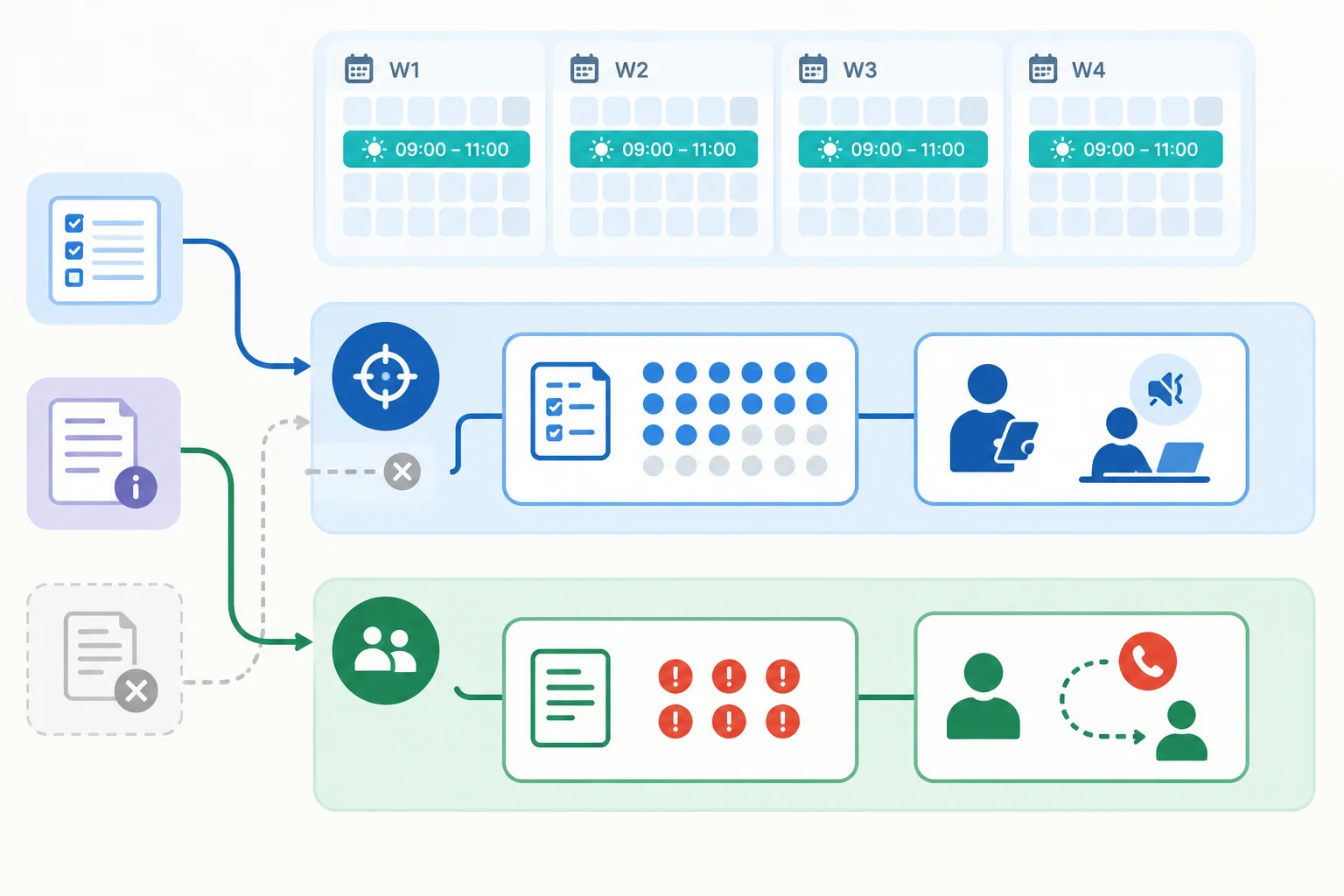
Collect only relevant contributions under each shared theme before you begin writing.
Use these ranges as a flexible planning guide. They help you make room for both themes and for a careful close.
| Section | Target length | Purpose |
|---|---|---|
| Opening | 20–25 words | Name the trial and its two themes |
| Focus | 35–45 words | Integrate Shah and Chen with clear attribution |
| Coordination | 40–50 words | Connect different interpretations or responses |
| Bounded close | 25–30 words | State what the sources suggest and what remains uncertain |
A theme-first section has a clear internal sequence:
Use converge on only for a point genuinely shared. Use complementary evidence when contributions illuminate the same theme without claiming identical conclusions. A relationship expression connects ideas; it does not erase source ownership.
Example
Model Focus section
On focus, Shah reports that 18 of 24 participants found concentration easier during the four-week trial. Chen’s observation of fewer interruptions in her own team provides complementary evidence, but Chen cautions against treating easier concentration as proof of higher productivity.
Tip
Notice the ownership across the two sentences: Shah reports the survey finding; Chen provides the team observation and the caution. The qualification keeps easier concentration separate from higher productivity.
Put the sentences in the best order to form a theme-led Coordination section.
Draft a 35–45-word Focus section. Begin with the theme rather than a source name. Connect Shah and Chen, use surnames for attribution, and retain at least one relevant qualification. Do not add a recommendation.
Before submitting, check that Shah owns the survey finding and Chen owns her observation or caution.

Step 8 of 9
Rehearse a theme-led spoken synthesis with clear source attribution and accurate stress in interpret and interpretation.
A 45–60-second synthesis is a theme-led selection, not a spoken version of every grid cell. Use two clear moves:
For this case, select one bounded point about Focus, then one difference about Coordination. Include only details that make the relationship clear: Shah’s survey result, Chen’s observation and caution, Ortega’s delayed handovers and proposed response, and Chen’s alternative explanation.
Use surnames in spoken attribution: Shah reports..., Ortega interprets..., and Chen cautions.... A listener should always be able to tell whose view is being heard.
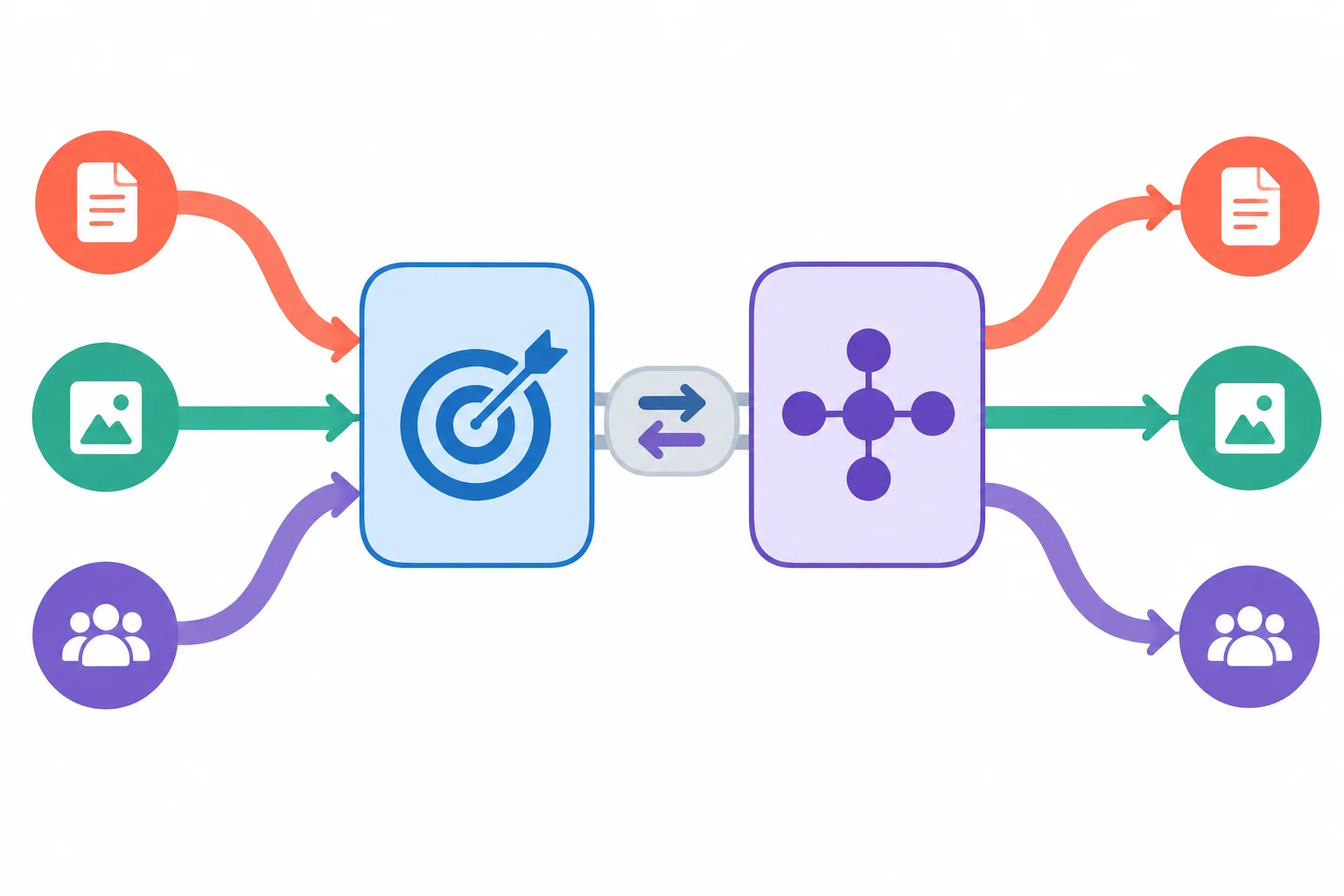
Organize the spoken synthesis by theme, then make source ownership audible.
Tip
Do not try to sound comprehensive by listing everything. In a short synthesis, accuracy matters more: preserve qualifications, distinguish source positions, and make the key relationship between them clear.
Listen and choose an option.
Listen to the sentence. Which stress pattern do you hear?
I interpret the survey carefully; my interpretation remains limited.
Use the stress pattern in meaningful attribution—not as an isolated pronunciation drill.
Keep the stressed syllable slightly longer and more prominent. The other syllables stay lighter. This contrast can help your listener follow whether you are reporting an action or naming an idea.
Listen, then repeat each sentence aloud twice. Make the capitalized syllable in the pronunciation note prominent.
Ortega's interpretation is that the block may be too long. I interpret Chen's comments as a call for a clear urgent-contact route.
Ortega's interpretation is that the block may be too long. I interpret Chen's comments as a call for a clear urgent-contact route.
Tip
Before you speak, mark two things mentally: the source surname and the stressed syllable. For example, let the listener hear both Chen cautions and the key word in in-ter-pre-TA-tion.
Read this passage aloud at a measured pace. It is about 45–60 seconds long. Keep Focus and Coordination separate, pause briefly when the theme changes, and make each surname clear.
“Across the shared theme of focus, Shah reports that 18 of 24 participants found concentration easier during the four-week trial, and Chen observed fewer interruptions in her own team. However, Chen cautions against treating easier concentration as proof of higher productivity. On coordination, Ortega reports 6 delayed handovers with no before-trial comparison and interprets the block's length as a possible contributor. Chen offers a different interpretation: unclear urgent-contact procedures may explain the delays. The sources diverge on the response: Ortega favors a shorter block, whereas Chen favors retaining 09:00–11:00 with an urgent-contact route. I interpret these contributions as a focused but limited picture.”
After speaking the passage aloud, write a brief self-check. In 2–3 sentences, state whether you used the stress patterns in-TER-pret and in-ter-pre-TA-tion, and identify one place where your spoken attribution made a source position clear.
Write at least 80 characters (0/80).

Step 9 of 9
Produce and self-review a complete written and spoken synthesis that integrates all three Harbor Studio sources by theme without distorting their positions.
Use this evidence bank to protect source ownership while you write. Organize the synthesis under the shared themes Focus and Coordination, not in source order. Keep a conclusion of your own bounded: this is a synthesis, not an argumentative thesis or a recommendation.
A detail that Chen attributes to Shah remains Shah’s supporting information. Do not move Shah’s survey result into Chen’s source cell simply because Chen mentions it.
Each theme cell separates Claim, Support, and Interpretation. Use Not addressed where a source is silent.
| Source | Focus | Coordination |
|---|---|---|
| Text A — Amina Shah, project analyst | Claim: Participants reported easier concentration. Support: 18 of 24 participants reported easier concentration; 6 reported no change. Interpretation: A possible focus benefit for this group, not proof of higher productivity. | Not addressed |
| Text B — Luis Ortega, operations lead | Not addressed | Claim: Delayed handovers occurred during the trial. Support: Log of 6 delayed handovers; no before-trial comparison. Interpretation: The block’s length may be a contributor; Ortega favors a shorter block. |
| Recording C — Maya Chen, team coordinator | Claim: Chen observed fewer interruptions in her own team. Support: Not addressed. Interpretation: Chen cautions against treating easier concentration as proof of higher productivity. | Claim: Chen favors retaining the full block with an urgent-contact route. Support: Not addressed. Interpretation: Unclear urgent-contact procedures may explain the delays. |
Use the grid before making connections. A source can contribute a claim, supporting information, or an interpretation; these categories should not be exchanged.
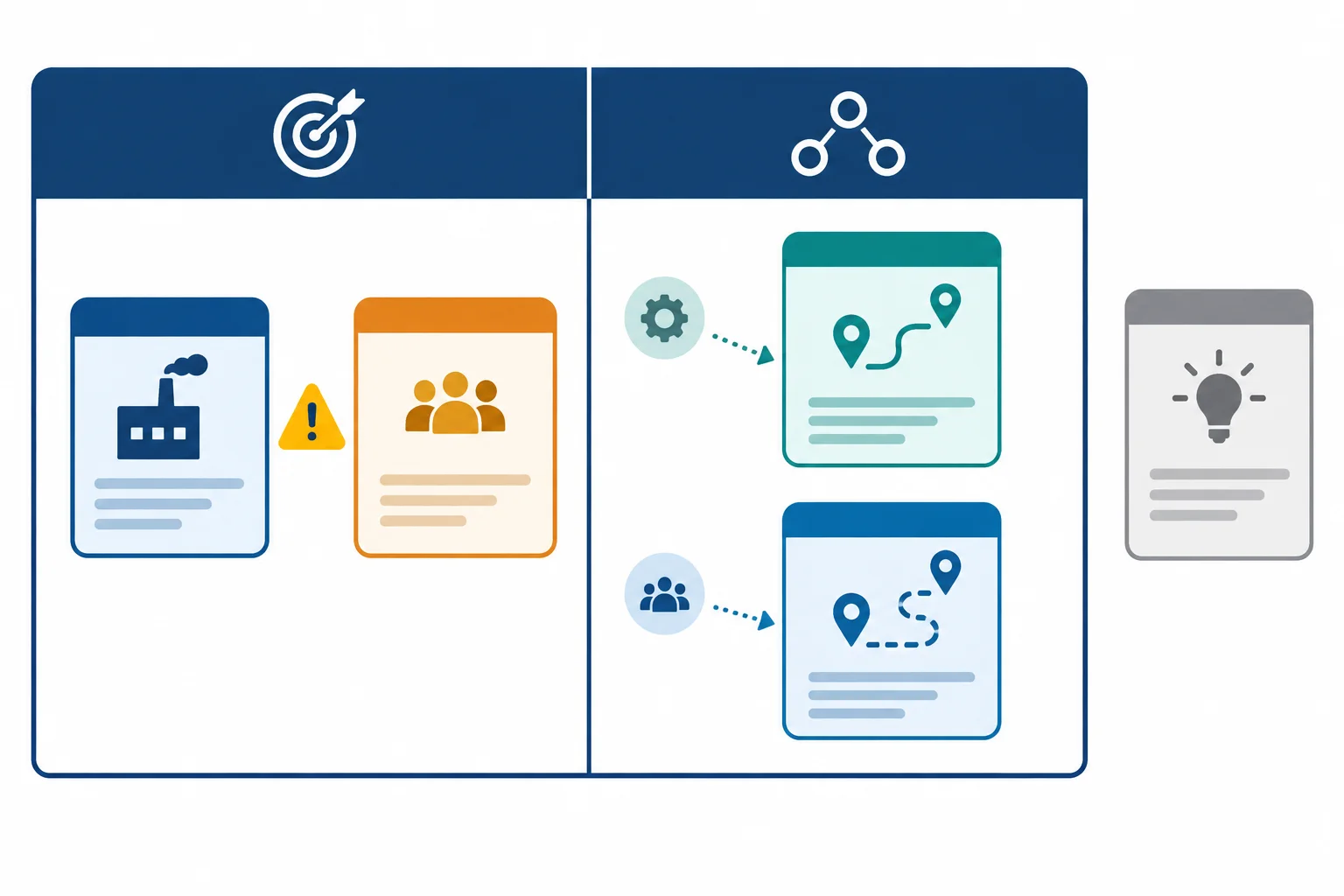
Source ownership stays visible even when several contributions appear under the same theme.
Your final synthesis has two jobs: make the relationship among contributions visible and preserve their limits.
Focus: connect Shah’s survey with Chen’s own-team observation. The genuine shared point is limited: Shah and Chen both keep easier concentration separate from proof of higher productivity.
Coordination: report Ortega’s logged delays and limited explanation alongside Chen’s possible procedural explanation. Their explanations may be complementary. Keep the difference precise: they favor different responses.
Use surnames whenever ownership changes. A 120–150-word synthesis should leave room for a bounded close that states what remains uncertain.
The upper lane represents a limited shared point. The lower lane represents potentially complementary explanations and different preferred responses.
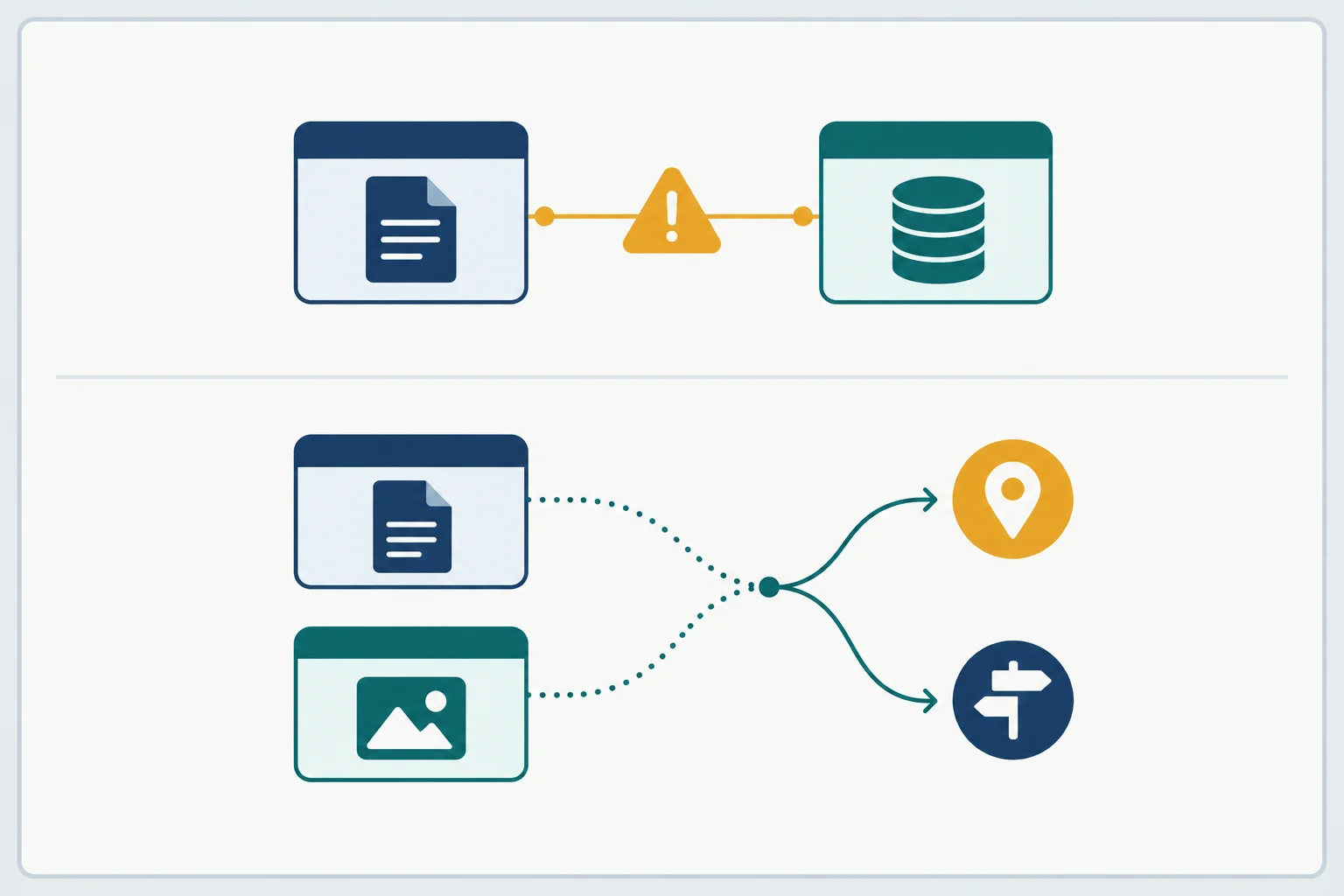
Converge on only the exact point that is shared; diverge on the response that actually differs.
Read the model as a check on organization and accuracy, not as wording to copy. It uses both themes, all 3 sources, a limited shared point, and one clear difference.
Example
Across Harbor Studio’s four-week trial of protected focus time from 09:00–11:00, the sources address Focus and Coordination. On Focus, Shah reports that 18 of 24 participants found concentration easier, while 6 reported no change. She interprets this as a possible benefit for this group, not proof of higher productivity. Chen’s observation of fewer interruptions in her own team offers complementary evidence. Shah and Chen converge on the point that easier concentration is not proof of higher productivity. On Coordination, Ortega reports 6 delayed handovers without a before-trial comparison and considers the block’s length a possible contributor. Chen suggests that unclear urgent-contact procedures may also explain the delays. These tentative explanations are complementary, but the sources diverge on the response: Ortega favors a shorter block, whereas Chen favors retaining the full block with an urgent-contact route. Overall, the trial suggests limited focus benefits while coordination causes remain uncertain.
Summary
Complete the final performance in this order:
Submit your final synthesis followed by your accuracy check.
Write at least 650 characters (0/650).
Congratulations! You completed: Synthesize Sources by Theme
50 XP
Thousands of online courses in video, ebooks and audiobooks.
To test your knowledge during online courses
Generated directly from your cell phone's photo gallery and sent to your email

Download our app via QR Code or the links below:.



Carry knowledge in your pocket.
Download the Cursa app.
There are hundreds of free courses available, with a free certificate of completion that is saved in your mobile image gallery.
Download the app to access the Course Completion Certificate for Free.


+ 10 million
students

Free and Valid
Certificate

60 thousand free
exercises

4.8/5 rating in
app stores

Free courses in
video and ebooks