
Step 1 of 8
Ask for and Share a View
Ask for an opinion and share a clear view about study spaces with useful everyday adjectives.

Learning path · Level 6 · Tutorial 5
Share a clear opinion about everyday choices, such as group activities or study spaces. Read and listen to a short discussion, choose audio that matches a speaker's view, and complete a short dictation. Rehearse a polite response aloud and write a short opinion with a reason and an example.

 Ask for and Share a View
Ask for an opinion and share a clear view about study spaces with useful everyday adjectives. 2 min
 Support Your Opinion
Develop a clear opinion by connecting a view to a direct reason and a concrete example. 2 min
 Agree Fully or Partly
Choose between full agreement and partial agreement, then respond clearly to one point in another person’s view. 2 min
 Disagree Respectfully
Learn to disagree politely by acknowledging another person’s point, giving a different view, and supporting it with a relevant reason. 2 min
 Follow Both Sides
Follow each speaker’s view and reason in short written and spoken exchanges. Then choose the audio reply that matches a stated opinion. 2 min
 Make Your Tone Match Your Words
Use a short pause, calm friendly intonation, and clear stress on the main reason in a polite reply. Listen for a contraction and write a short disagreement phrase from audio. 2 min
 Build a Connected Spoken Response
Plan and rehearse a connected 30–45-second opinion that responds politely to another speaker. 2 min
 Put It Together
Write and deliver a clear, polite opinion about a weekly English study-group choice. 5 min
Step 1 of 8
Ask for an opinion and share a clear view about study spaces with useful everyday adjectives.
Use What do you think about ...? to ask for someone’s view.
Alex: What do you think about the library meeting room?
Sam: In my opinion, it’s useful.
Use In my opinion, ... to introduce your view. Keep the comma after In my opinion.
Use I don’t think ... for a negative view.
Alex: I don’t think the café is practical.
These frames state a clear position. You will add reasons and examples later.
Alex and Sam are choosing a place for their weekly English study group. Look at the details before choosing an opinion word.

The library meeting room is quiet and allows group discussion. The café is near the bus stop, but it can be noisy when busy.
Tip
A place can have both a positive and a negative feature. For example, the café may be convenient because of its location, but it may also be noisy for a group discussion.
Use these adjectives to judge a place or an everyday choice.
| Adjective | Meaning | Helpful detail |
|---|---|---|
| practical | works well in real life | a choice that is easy to use |
| fair | reasonable and equal for everyone | everyone gets a similar chance |
| useful | helps you do something | supports a study goal |
| convenient | easy to reach or use | near a bus stop |
| noisy | full of unwanted sound | busy voices and cups |
Match each adjective to its contextual meaning.
Tap an item and then its matching pair.
Put the words in order to ask Alex for a view about a study space.
Your sentence
Available words
Put the words in order to state a clear negative view about the café.
Your sentence
Available words

Step 2 of 8
Develop a clear opinion by connecting a view to a direct reason and a concrete example.
A supported opinion has three connected parts:
Choose a reason that directly explains your view. Then use For example, to show the reason in action.
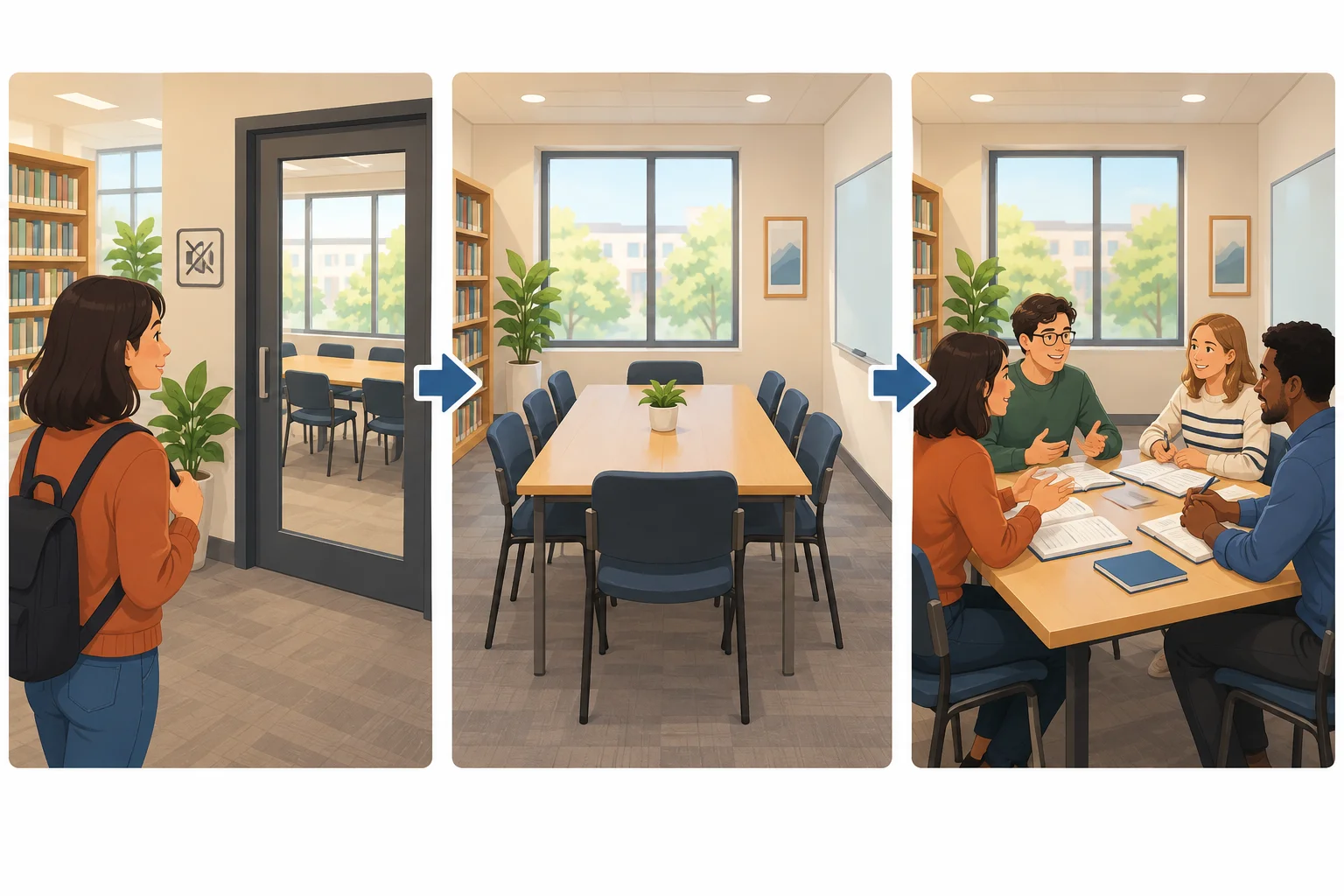
The view is the choice. The reason explains why the choice is useful. The example shows that reason in a familiar situation.
Tip
Do not repeat the view in different words. Add new information at each step: your choice, the reason for it, and a situation that makes the reason clear.
Example
view: In my opinion, the library meeting room is useful.
reason: It is quiet and allows group discussion.
example: For example, we can discuss a difficult grammar point without loud music.
The reason is general: it describes a helpful quality of the place.
The example is specific: it shows what the group can do because of that quality. The example supports the reason; it does not simply say that the room is useful again.
Put the three parts in the best order to make one connected opinion.
Add one specific example to support this view and reason:
“In my opinion, the café is convenient because it is near the bus stop.”
Begin with For example,. After writing, check that your sentence shows how the nearby bus stop helps the group. Do not only repeat that the café is convenient.
Write at least 25 characters (0/25).

Step 3 of 8
Choose between full agreement and partial agreement, then respond clearly to one point in another person’s view.
When you have the same overall view, use agreement: I agree with you.
When one point is correct but your overall view is different, use partial agreement: That’s true, but ... Say the point you accept first. Then add your concern or different choice.
Alex: I think the café is convenient because it’s near the bus stop.
Sam: That’s true, but the library meeting room is better because the café can be noisy when busy.
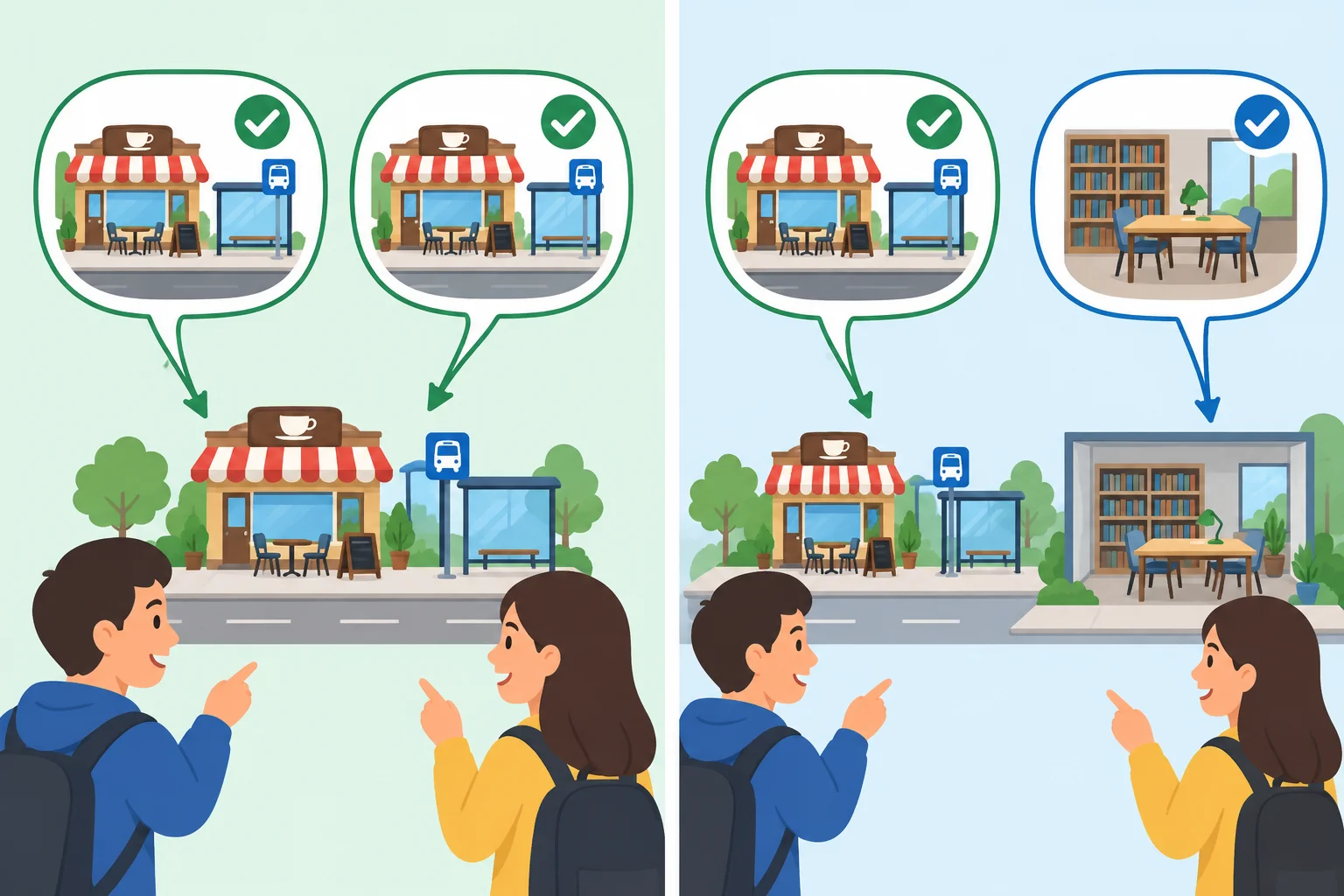
Agreement means the same overall view. Partial agreement accepts one point before adding a different concern or choice.
Use the reply that matches what you really think.
| Your view | Response type | Useful start |
|---|---|---|
| You share the same overall view. | agreement | I agree with you. |
| One detail is true, but you prefer something different. | partial agreement | That’s true, but ... |
Match each reply to its response type.
Tap an item and then its matching pair.
Complete Sam’s reply.
Alex: I think the café is convenient because it’s near the bus stop.
Sam: _ the library meeting room is better because the café can be noisy when busy.

Step 4 of 8
Learn to disagree politely by acknowledging another person’s point, giving a different view, and supporting it with a relevant reason.
A polite disagreement has two parts:
Use I see your point, but ... when you want to recognize a point before giving another view. Use I’m not sure I agree. when you want to disagree gently.
An acknowledgment does not mean full agreement. Respond to the idea or choice—not to the person.

A respectful reply recognizes a point first, then gives a different view and a reason.
Example
Alex: I think the café is convenient because it’s near the bus stop.
Sam: I see your point, but I don’t think the café is useful for our group because it can be noisy when busy.
Sam recognizes Alex’s point about the bus stop. Then Sam gives a different view and a reason. Sam criticizes the café choice, not Alex.
Example
Alex: The library meeting room is quiet, so it is best.
Sam: I’m not sure I agree. The café is convenient because it’s near the bus stop.
“I’m not sure I agree.” is polite, but it still clearly shows disagreement. Follow it with your own view and a relevant reason.
Alex says, “The café is convenient because it’s near the bus stop.” Which reply disagrees politely without criticizing Alex?
Alex says, “The café is convenient because it’s near the bus stop.” Build a polite reply that acknowledges the point, gives a different view, and explains the reason.
Your sentence
Available words

Step 5 of 8
Follow each speaker’s view and reason in short written and spoken exchanges. Then choose the audio reply that matches a stated opinion.
When you follow a discussion, track who says each idea. For each speaker, notice:
Match the whole meaning, not one familiar word. A speaker can say that one feature is good and still choose a different place overall.
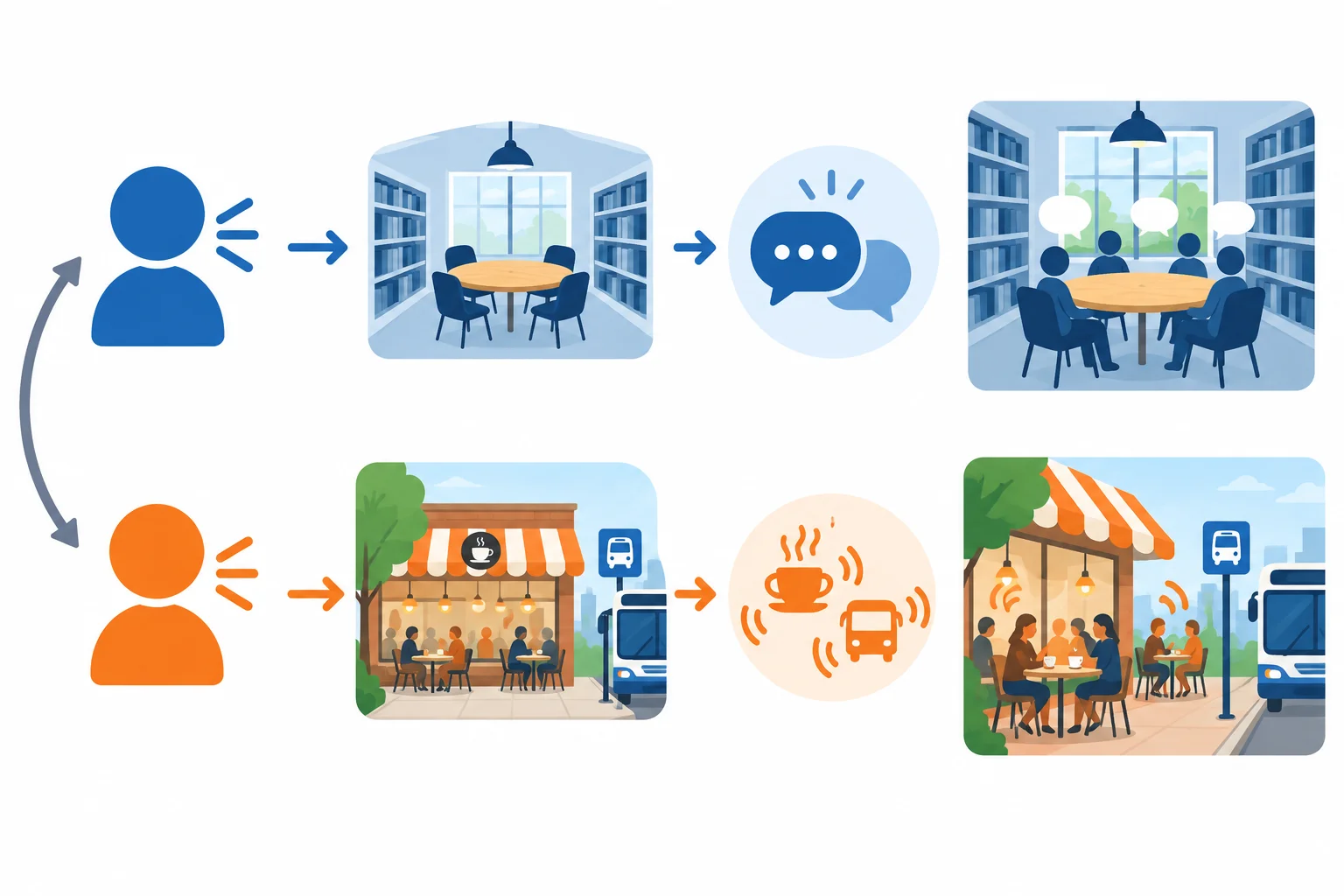
First connect a speaker to a view and reason. Then identify how the other speaker responds.
Use these familiar signals as quick reading and listening notes.
| Signal | What to track |
|---|---|
| In my opinion, ... | a view |
| because ... | a supporting reason |
| I agree with you. | agreement |
| That’s true, but ... | partial agreement |
| I see your point, but ... | polite disagreement |
| I’m not sure I agree. | polite disagreement |
Read the exchange. Then match each note to the correct view, reason, or response.
Alex: What do you think about the library meeting room?
Sam: In my opinion, it’s useful because it’s quiet and allows group discussion.
Alex: I agree with you. The café is convenient because it’s near the bus stop.
Sam: That’s true, but it can be noisy when busy.
Tap an item and then its matching pair.
Listen once without a transcript. Notice Sam’s view, Sam’s reason, and the type of reply.
Alex: What do you think about meeting at the café for our weekly English study group?
Sam: I see your point, but I don't think it's practical when it's busy because it gets noisy. I prefer the library meeting room.
What does Sam say about the café?
Listen to all three replies. They have no transcripts. Focus on each speaker’s complete meaning: the point they accept or reject, their choice, and their reason.
I agree with you. The café is convenient because it is near the bus stop, so it is easy for people to reach.
That's true, but I prefer the library meeting room because it is quiet and allows group discussion.
I'm not sure I agree. I don't think the café is useful for our group because it can be noisy when busy.
Alex says: “The café is convenient because it’s near the bus stop.”
Sam agrees that this is a good point, but Sam prefers the library meeting room because it is quiet and allows group discussion. Which audio reply matches Sam’s view?

Step 6 of 8
Use a short pause, calm friendly intonation, and clear stress on the main reason in a polite reply. Listen for a contraction and write a short disagreement phrase from audio.
A polite disagreement sounds clearer when the listener can hear its parts. First, acknowledge the other view. Take a short pause. Then give your different view and make the main reason stand out.
Say: “I see your point, but | I don't think the café is practical because it's too noisy.”
The line | means a brief pause; do not say it. Keep a comfortable pace. Stress the key reason, rather than making every word equally strong.

A brief pause separates the acknowledgment from the different view. One clear stressed word helps the listener notice the reason.
Tip
Stress does not mean shouting. Make the important word a little clearer and longer, while keeping your voice calm and friendly.
Contractions are normal in everyday speech. For example, I'm is the short form of “I am.” Listen for the complete phrase, not only one familiar word.
This reply shows partial agreement. Listen once for the calm acknowledgment. Then replay it, pause briefly after “but,” and repeat it aloud. Put your clearest stress on the main reason.
Practice cue: “That's true, but | the library meeting room is better because it's quiet.”
Listen, then repeat aloud twice at a comfortable pace.
That's true, but the library meeting room is better because it's quiet.
That's true, but the library meeting room is better because it's quiet.
Listen and write what you heard.
Listen and type the complete phrase.
Listen to the modeled reply. Do not copy an accent; aim for a calm, clear voice.
I see your point, but I don't think the café is practical because it's too noisy.
Replay the model, then say the complete reply aloud twice. Keep a short pause after the acknowledgment, a comfortable pace, and calm, friendly intonation. Compare your second try with the model. Which one word did you stress most clearly?
Write at least 3 characters (0/3).

Step 7 of 8
Plan and rehearse a connected 30–45-second opinion that responds politely to another speaker.
A connected 30–45-second reply follows this path: view → reason → example → response to another view.
When you answer someone directly, you may begin with the response to another view. Then give your view, connect it to a reason with because, and add a specific detail with For example,.
Use a possible or imagined result only when it makes your reason clearer. Keep the four parts connected rather than giving separate short answers.
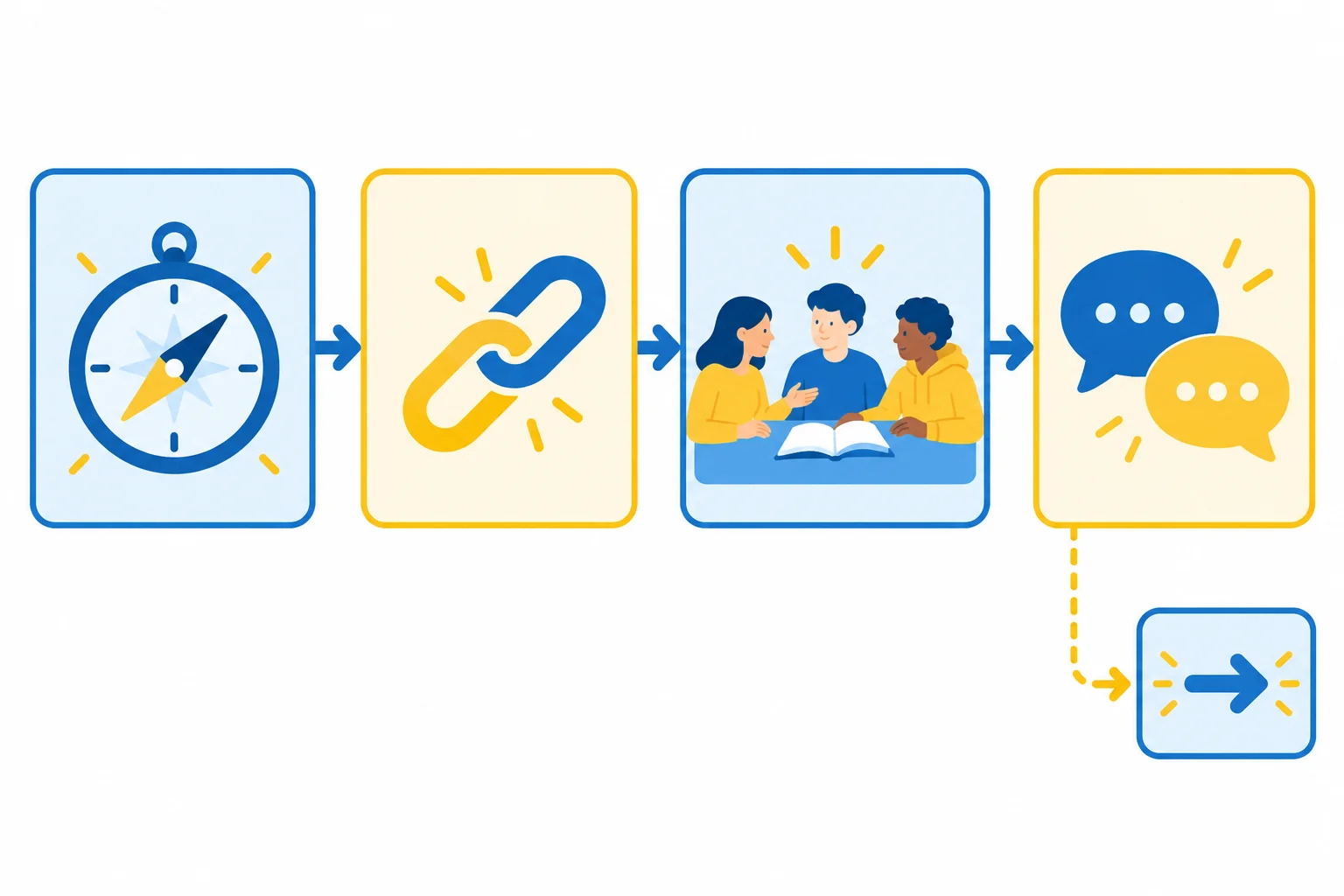
Use the four connected parts as a visual plan. In a direct reply, you can start with your response to the other person.
Write only brief keyword notes before you speak. Notes help you sound natural instead of reading a complete script.
Make one note for each part:
Add a possible or imagined result only if it helps explain your choice. Say the main word in your reason clearly.
Example
65-word spoken model
Sam: I think the café is more convenient because it’s near the bus stop.
Alex: I see your point, but in my opinion, the library meeting room is more useful because it is quiet and allows group discussion. For example, after class, we can practice difficult grammar and hear every person clearly. This gives new members time to ask questions and join the discussion. If the café is busy, we'll miss important ideas, but the library will help everyone take part.
Alex responds politely, then gives a view, reason, example, and a useful possible result.
Listen to the model at a calm, comfortable pace. Then say it aloud once, making quiet clear.
I see your point, but in my opinion, the library meeting room is more useful because it is quiet and allows group discussion. For example, after class, we can practice difficult grammar and hear every person clearly. This gives new members time to ask questions and join the discussion. If the café is busy, we'll miss important ideas, but the library will help everyone take part.
Put these parts in a natural order for a direct reply to someone who prefers the café.
Listen to Sam’s view. Prepare your own polite spoken reply.
I think the café is more convenient because it’s near the bus stop. What do you think?
Answer Sam aloud for 30–45 seconds. Use the visual response path and four brief keyword notes—not a full script. Include an appropriate response to another view, your view, a reason with because, and an example with For example,. Add a possible or imagined result only if it makes your reason clearer. Stress the most important word in your reason.
Self-check against the earlier model: Are the four parts connected? Is your tone polite? After you speak, type your four keyword notes in order and name the word you stressed.
Write at least 25 characters (0/25).

Step 8 of 8
Write and deliver a clear, polite opinion about a weekly English study-group choice.
Read Alex’s view about the weekly English study group.
Alex: What do you think about starting each weekly English study group with 10 minutes of pronunciation practice?
Alex: In my opinion, we should start that way because members can use new words more clearly. For example, new members can practice a difficult word before the discussion.

The group must choose how to begin each weekly meeting.
Listen to Sam’s view. Replay it if you need to catch both the opinion and the reason.
Sam: I see your point, but I don't think we should start with pronunciation practice every week because some members need more time for conversation. For example, new members can learn useful phrases by joining a short conversation.
Use the model to check organization, not to copy its viewpoint. It has 81 words and follows this order:
view → reason → example → response to another view
After the response, it adds one practical detail. Your own paragraph can support Alex, support Sam, or offer a balanced choice.
Example
In my opinion, our weekly English study group should meet for 60 minutes because everyone needs enough time to speak. For example, last week we spent 15 minutes choosing topics, so only a few people could practice a full answer. I see your point, but a shorter meeting may not give new members time to join the conversation. We could keep the meeting practical by using one activity and a short break. This plan is convenient for members with busy schedules.
Before you revise, check these points:
Write your revised opinion about how the group should begin its weekly meeting. Use the views you read and heard as ideas to respond to.
Your paragraph must be 80–100 words. Include a clear view, a reason with because, a concrete example with For example,, and a polite response to Alex’s or Sam’s view. First compare your draft with the model and checklist. Then improve one weak point before you submit.
After the paragraph, add a separate line beginning with Revision: and name the one improvement you made. The revision line does not count as part of the 80–100 words.
Write at least 400 characters (0/400).
Now give a 30–45-second spoken reply based on your revised paragraph. Use four short keyword notes instead of reading every word:
view → reason → example → response to another view
Keep your tone calm and friendly. Pause briefly after a response phrase such as “I see your point, but ...” Stress the main word in your reason—for example, because it’s useful or because it’s practical.
After you speak, write four short keywords in this order: view | reason | example | response to another view. Then state the important word you stressed in your reason.
Write at least 20 characters (0/20).
Summary
Congratulations! You completed: Share Opinions and Respond Politely
30 XP
You completed this level!
Up next: B1: Clear Explanations
 Identify People, Things, and PlacesMake it clear which person, thing, or place you mean at a study center or workplace. Read short descriptions, listen and choose the matching person or object, and complete a short dictation. Use pronunciation tips to say descriptions aloud, then write a short note with help from a model.
Thousands of online courses in video, ebooks and audiobooks.
To test your knowledge during online courses
Generated directly from your cell phone's photo gallery and sent to your email

Download our app via QR Code or the links below:.



Carry knowledge in your pocket.
Download the Cursa app.
There are hundreds of free courses available, with a free certificate of completion that is saved in your mobile image gallery.
Download the app to access the Course Completion Certificate for Free.


+ 10 million
students

Free and Valid
Certificate

60 thousand free
exercises

4.8/5 rating in
app stores

Free courses in
video and ebooks