Step 1 of 9
Food We Can Count
Learn seven food words and identify which foods we can count and which we do not usually count.

Learning path · Level 4 · Tutorial 3
Say what food you have and what you need. Ask about amounts and make a simple shopping list. Read and listen to messages about food, then explain the amounts aloud and write your own message.
 Food We Can Count
Learn seven food words and identify which foods we can count and which we do not usually count. 3 min
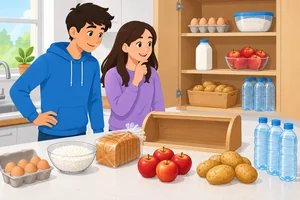 Say What You Have
Use some and any to say what food is available, ask about availability, and say when there is none. 3 min
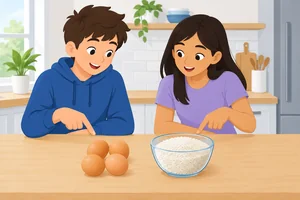 Ask About Amounts
Ask how much or how many food items are needed, and describe limited supplies with much and many. 3 min
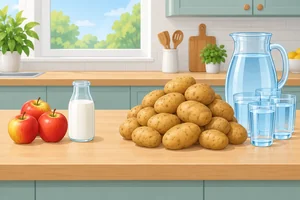 Describe Small and Large Amounts
Choose a few, a little, and a lot of to describe food supplies naturally. 3 min
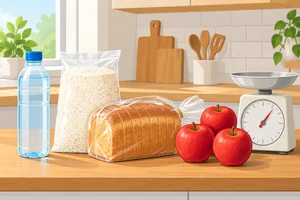 Use Bottles, Bags, Loaves, and Kilos
Use containers and a weight measure to give clear food amounts. 3 min
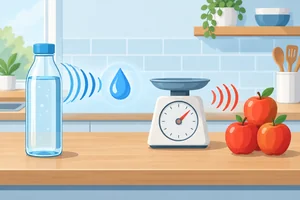 Say Amount Phrases Smoothly
Hear and say amount phrases as smooth word groups, especially with bottle of and kilo of. 2 min
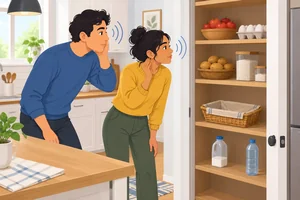 Listen to a Food Check
Listen to Alex and Sam check their food supplies, identify each amount, and write a short sentence you hear. 3 min
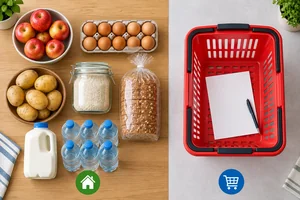 Read and Make a Shopping List
3 min
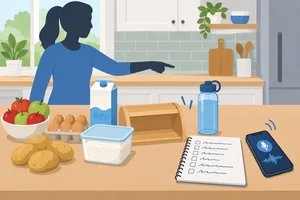 Put It Together: Plan Lunch
Create, check, and say a complete lunch plan using an inventory, a purchase reminder, and clear food-and-amount language. 3 min
Step 1 of 9
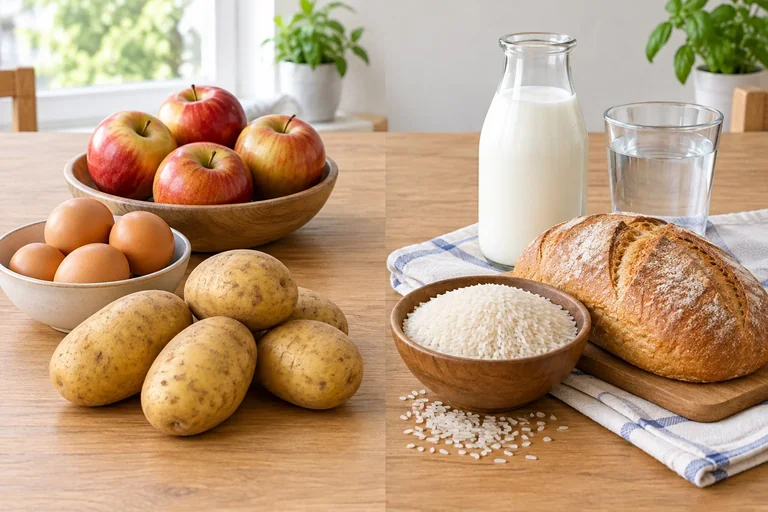
Learn seven food words and identify which foods we can count and which we do not usually count.
These are common food words for Alex and Sam’s lunch:
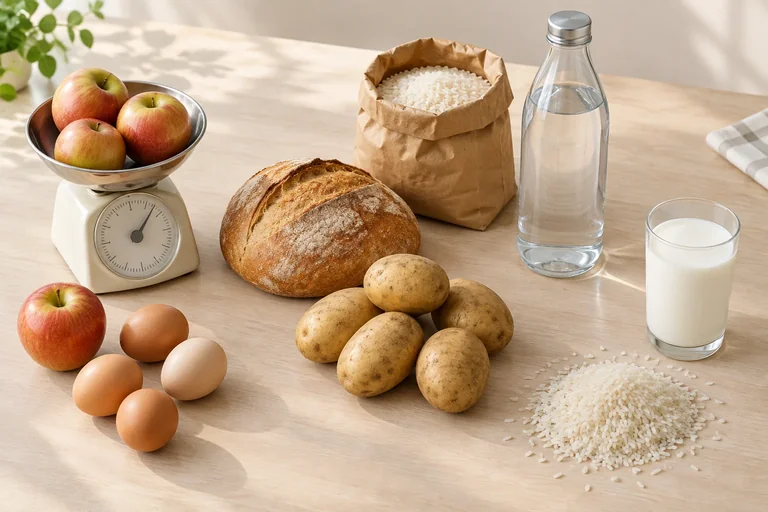
apples, eggs, potatoes, rice, bread, milk, water
Look at the foods, then listen and repeat each word.
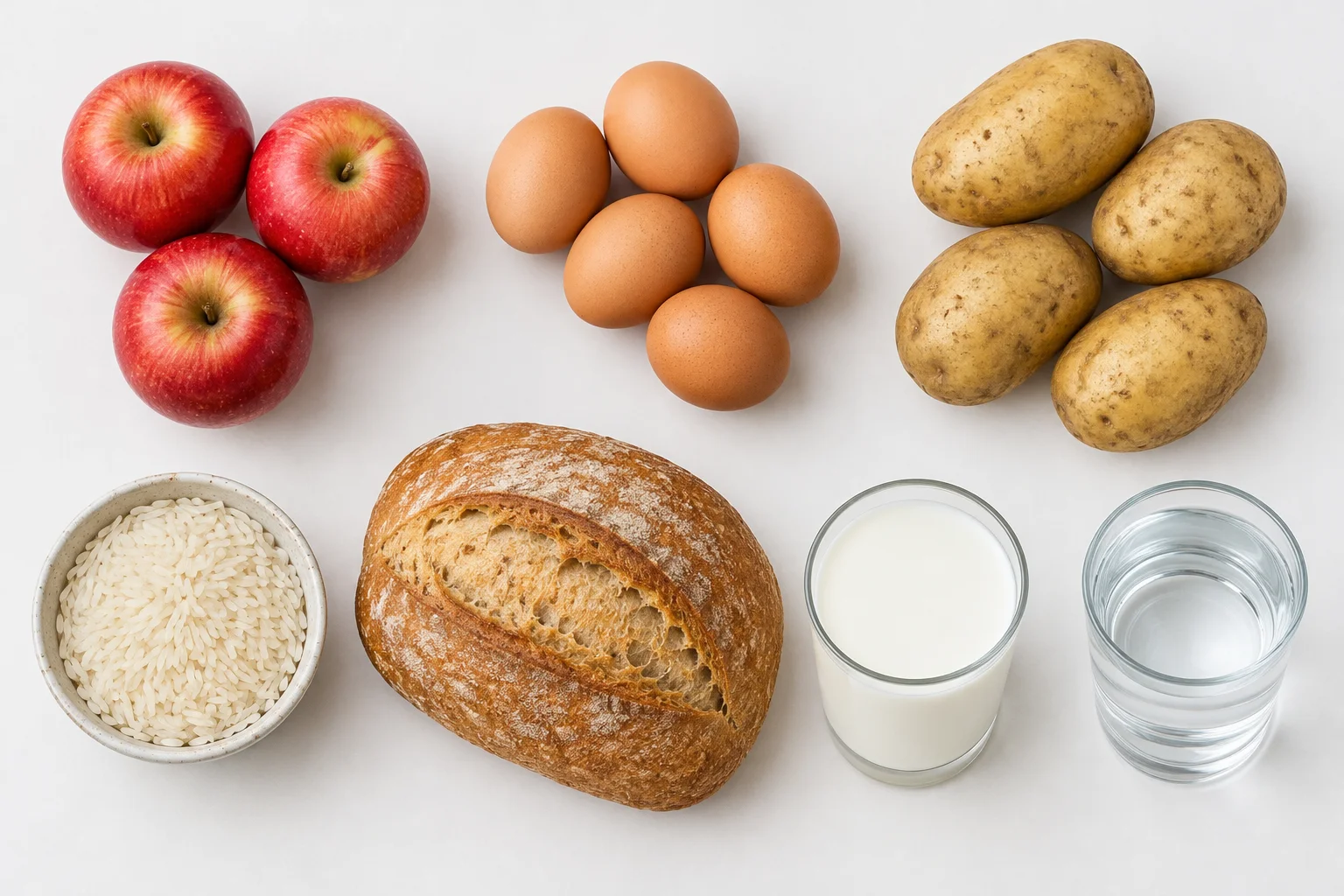
Say the food names as you look at each picture.
Listen and repeat.
Apples. Eggs. Potatoes. Rice. Bread. Milk. Water.
Apples. Eggs. Potatoes. Rice. Bread. Milk. Water.
Food nouns can be countable or uncountable in their usual food meanings.
Countable means we can count these as separate things. We can say one apple or three apples.
Uncountable means we do not usually count this as separate things. We say rice, bread, milk, and water.
Use a number and a plural form with countable foods. In this tutorial, do not normally add -s to rice, bread, milk, or water.
| Group | Examples | Pattern |
|---|---|---|
| countable | apple, egg, potato | an apple; three apples |
| countable | egg, potato | two eggs; four potatoes |
| uncountable | rice, bread | rice; bread |
| uncountable | milk, water | milk; water |
Which picture shows potatoes?
Match each food word to its group.
Tap an item and then its matching pair.
Step 2 of 9
Use some and any to say what food is available, ask about availability, and say when there is none.
Use some in a positive statement when food is available.
Some tells us that an amount is present. It does not give an exact amount, and it does not always mean a small amount.
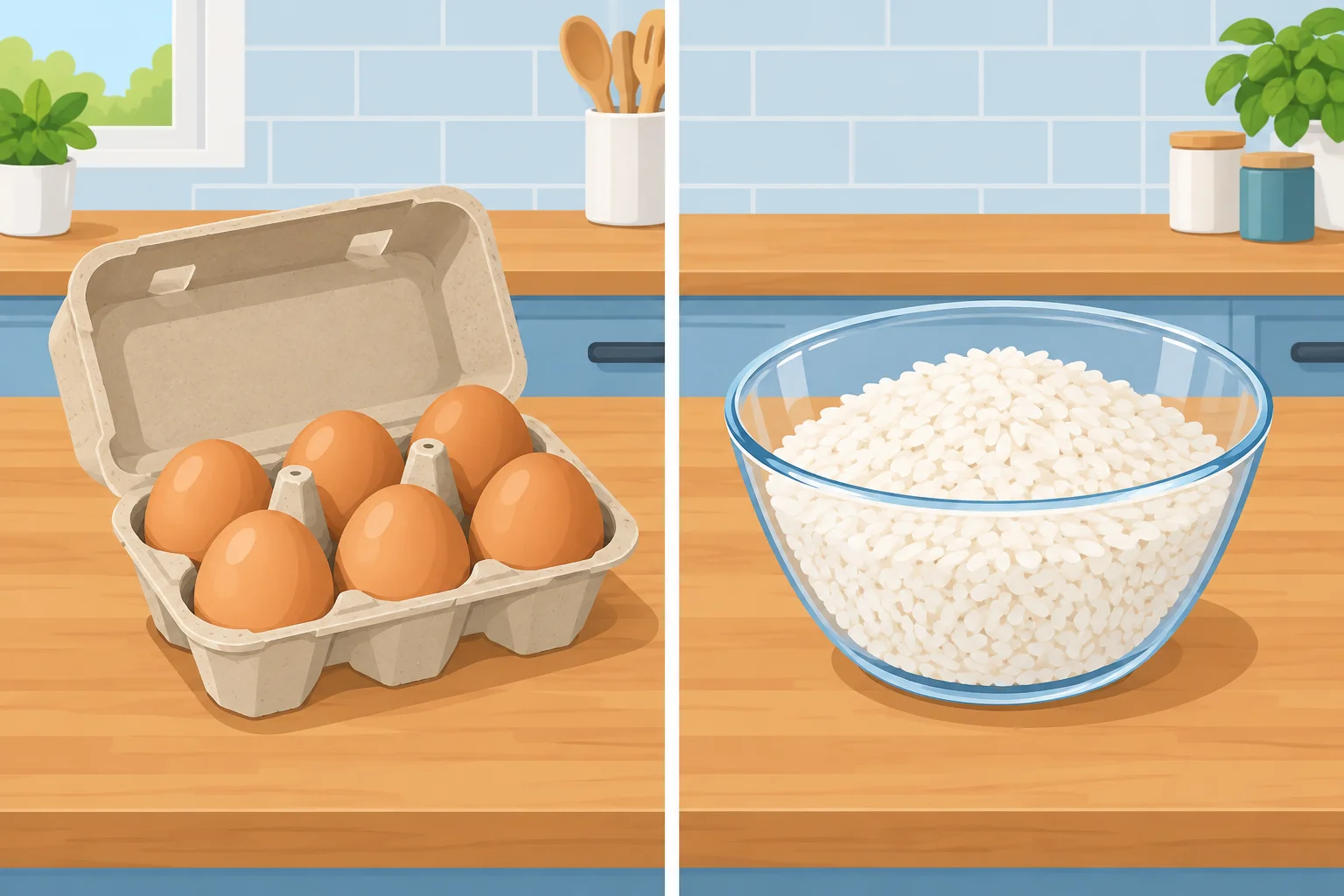
Use some to say that food is available.
Example
Alex: “We have some eggs and some rice.”
Sam: “Great. We can make lunch.”
Use any when you check whether food is available. Also use any in a negative statement when there is no food.
A neutral question only checks for availability. It does not show that you expect “yes” or “no.”
Choose the pattern by the situation.
| Situation | Plural food | Uncountable food |
|---|---|---|
| Positive statement | There are some eggs. | There is some milk. |
| Availability question | Are there any eggs? | Is there any milk? |
| Negative statement | There aren't any eggs. | There isn't any milk. |
Tip
Notice the contrast:
There are ___ potatoes.
Is there ___ water?
There isn't ___ bread.
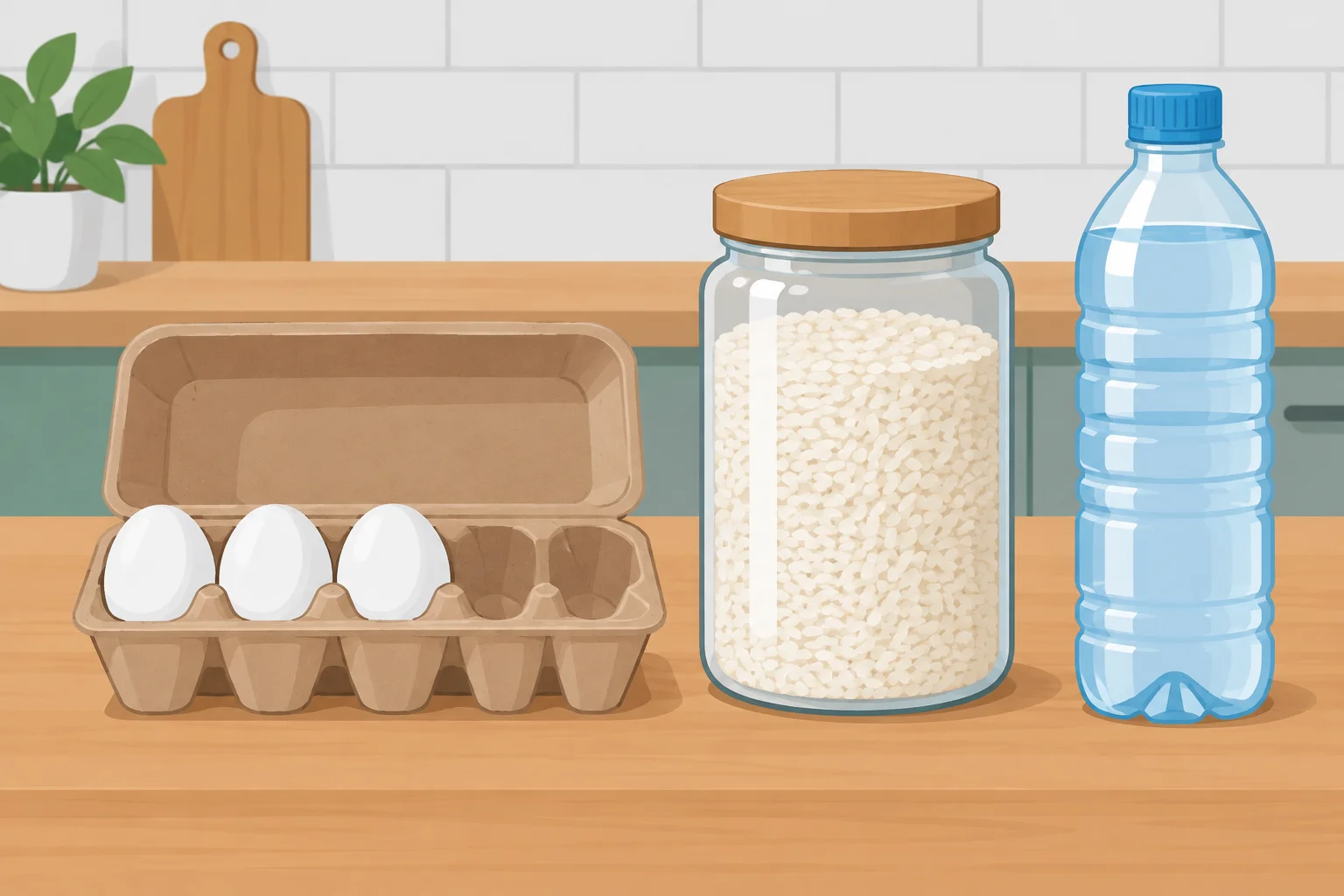
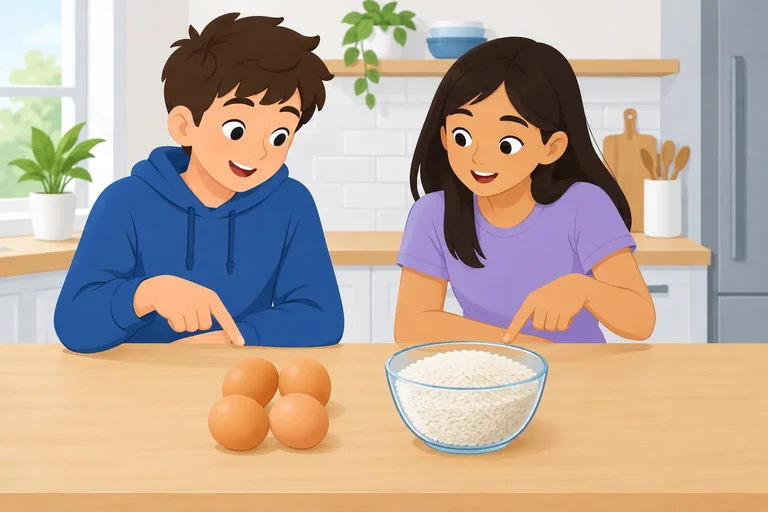
Look at the kitchen inventory. Build a neutral question to check whether eggs are available.
Your sentence
Available words
Step 3 of 9
Ask how much or how many food items are needed, and describe limited supplies with much and many.
Use how many with plural countable food nouns. Use how much with uncountable food nouns.
You can ask about food at home or food for a meal. The food noun helps you choose the question pattern.
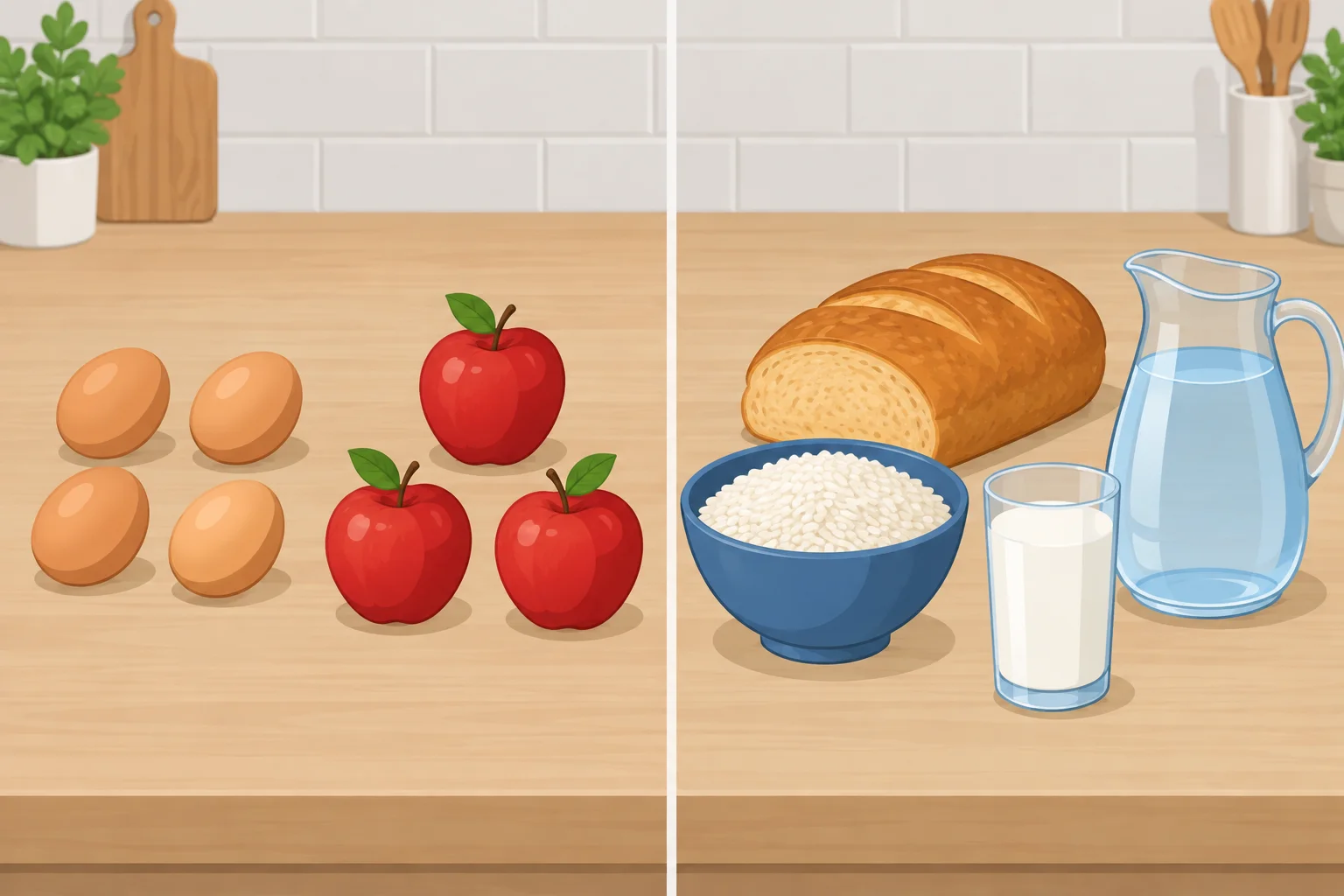
Count separate items with how many. Ask about rice, bread, milk, and water with how much.
Use the food noun to select the form.
| Food group | At home | For the meal |
|---|---|---|
| Plural countable | How many eggs do we have? | How many potatoes do we need? |
| Uncountable | How much milk do we have? | How much water do we need? |
Example
Alex: How many eggs do we need?
Sam: We need two eggs.
Alex: How much rice do we need?
Sam: We need some rice.
Use many with plural countable nouns and much with uncountable nouns, especially in negative sentences.
These sentences mean the supply is limited. They do not mean there is no food. There are still some eggs and some rice.
Tip
After many, use a plural noun: many eggs. After much, use an uncountable noun: much rice. Keep rice, bread, milk, and water without a plural -s here.
Build Alex's question to ask for the number of eggs needed.
Your sentence
Available words
Build Sam's question to ask about the amount of rice needed.
Your sentence
Available words
Complete the natural negative answer:
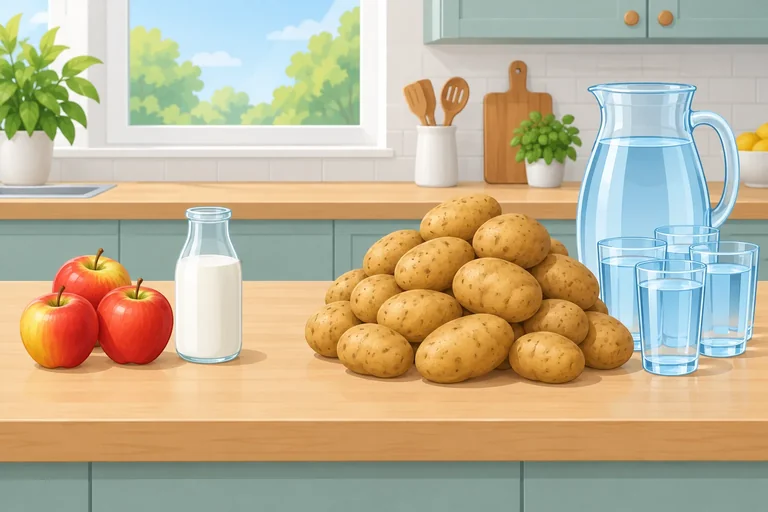
We don't have ___ eggs.
Complete the natural negative answer:
We don't have ___ rice.
Step 4 of 9
Choose a few, a little, and a lot of to describe food supplies naturally.
Food supplies are not always exact. Use a few with plural countable food: a few apples. Use a little with uncountable food: a little milk.
Both phrases mean a small amount is present. They do not say exactly how many apples or how much milk.
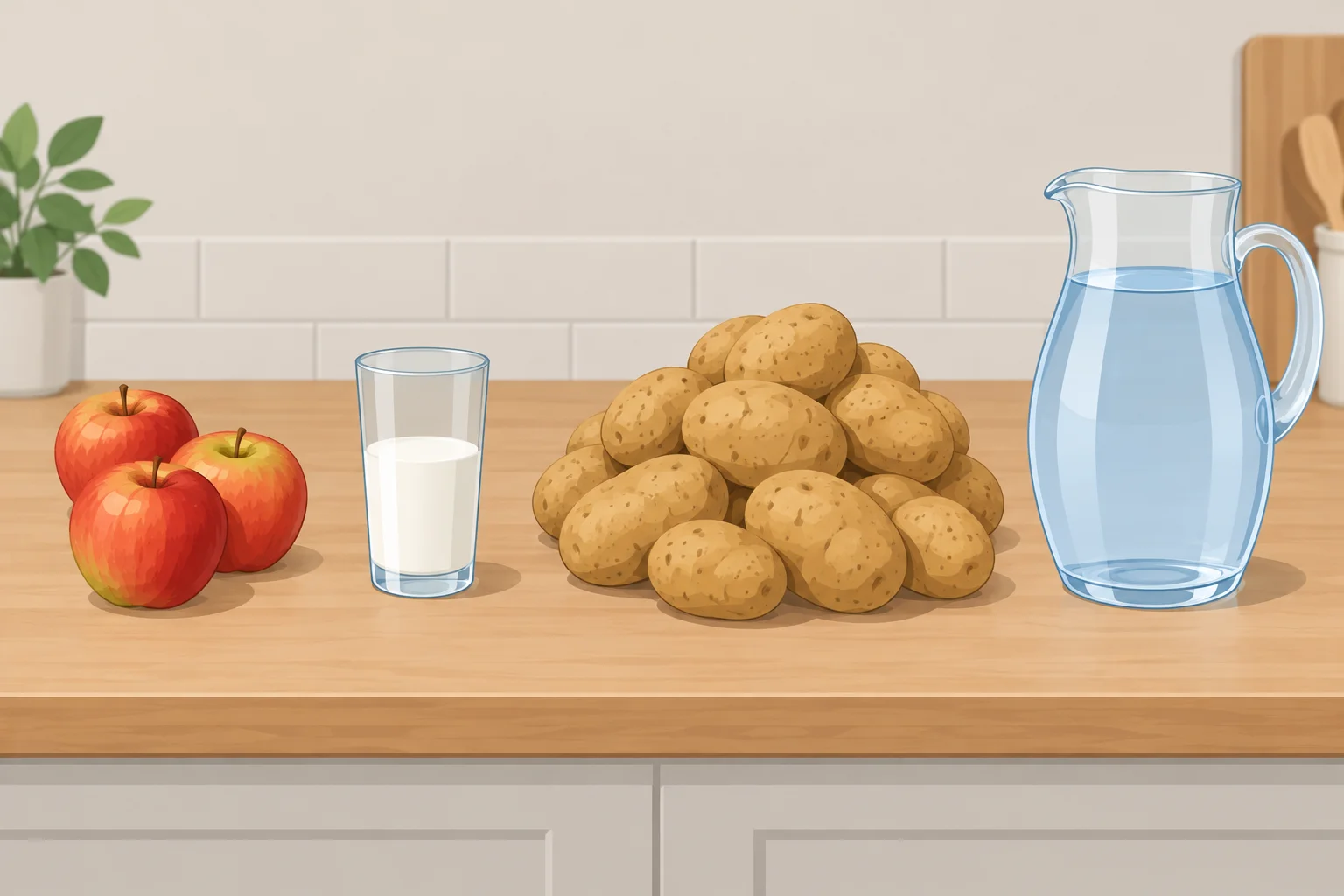
The amount words describe whether the supply is small or large, not an exact quantity.
Use a lot of for a large supply. It works with both countable and uncountable food.
Choose the phrase by looking at the food noun and the size of the supply.
| Phrase | Use with | Meaning | Example |
|---|---|---|---|
| a few | plural countable food | a small amount is present | a few apples |
| a little | uncountable food | a small amount is present | a little milk |
| a lot of | both groups | a large amount is present | a lot of potatoes |
| a lot of | both groups | a large amount is present | a lot of water |
Example
Alex: Do we have apples?
Sam: Yes, we have a few apples.
Alex: What about potatoes?
Sam: We have a lot of potatoes.
Alex: And milk?
Sam: We have a little milk.
Which picture shows a little milk?
Match each food supply to its natural description.
Tap an item and then its matching pair.
Step 5 of 9
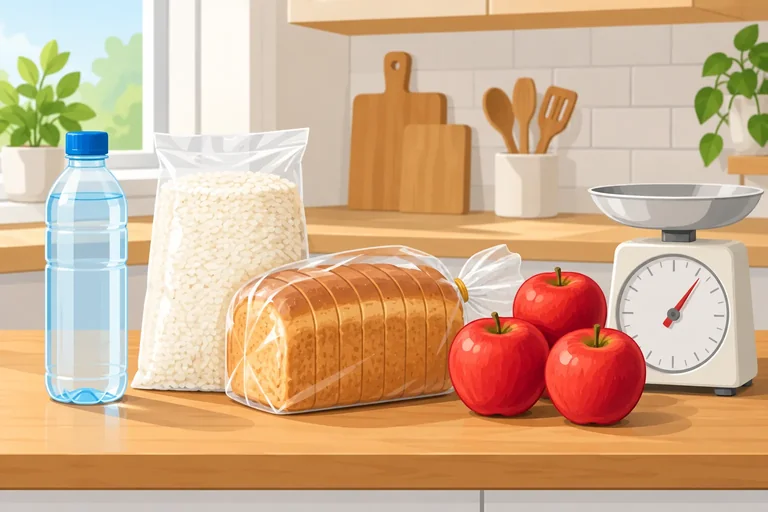
Use containers and a weight measure to give clear food amounts.
A container or measure can make a food amount clearer.
Pattern: container or measure + of + food
We count the container or measure: bottles, bags, and loaves. The food keeps its usual form: water, rice, and bread do not become plural here.
A kilo tells us weight, not a fixed number of apples. A bottle, bag, or loaf does not always have one standard size.
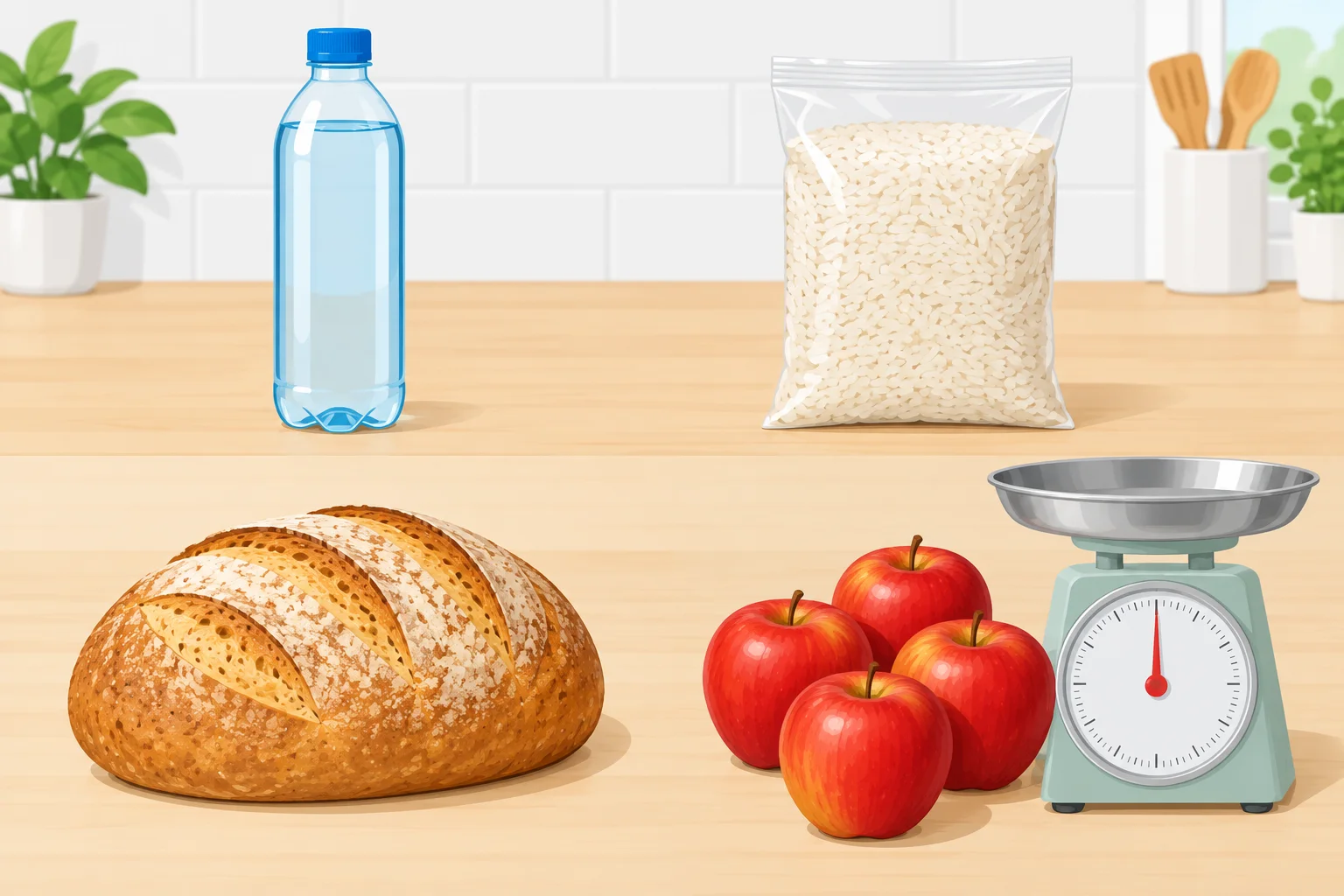
Use a container or measure before the food to give a clearer amount.
The plural ending goes on the unit that you count. The food noun stays in its natural form.
| Food | One unit | More than one |
|---|---|---|
| water | a bottle of water | two bottles of water |
| rice | a bag of rice | two bags of rice |
| bread | a loaf of bread | two loaves of bread |
| apples | a kilo of apples | two kilos of apples |
Example
Alex: How many bottles of water do we need?
Sam: We need two bottles of water.
Alex: How many bags of rice do we need?
Sam: We need one bag of rice.
Build the complete amount phrase.
Your sentence
Available words
Choose the picture for a bottle of water.
Choose the picture for a bag of rice.
Choose the picture for a loaf of bread.
Choose the picture for a kilo of apples.
Build Sam's complete statement about water for lunch.
Your sentence
Available words
Step 6 of 9
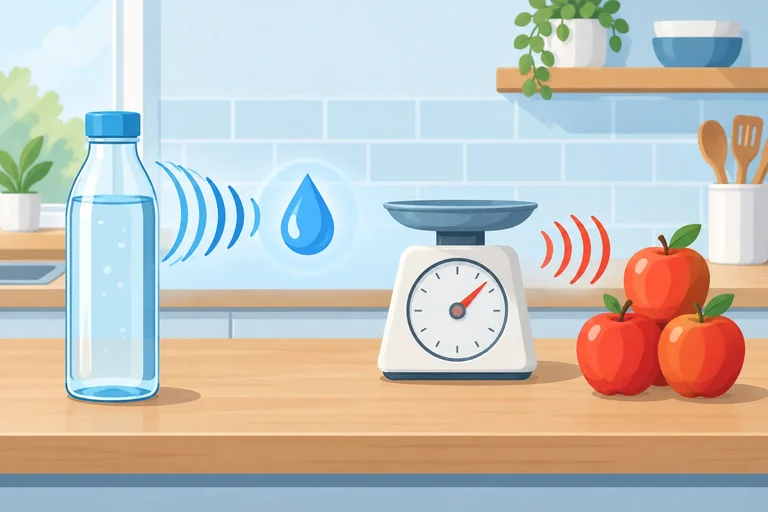
Hear and say amount phrases as smooth word groups, especially with bottle of and kilo of.
An amount phrase is one small group. Keep the important words clear, and say a and of lightly.
In the pronunciation display below, ‿ means “connect smoothly”: a bottle‿of water.
Do not stop between bottle and of. Let the phrase flow into water.
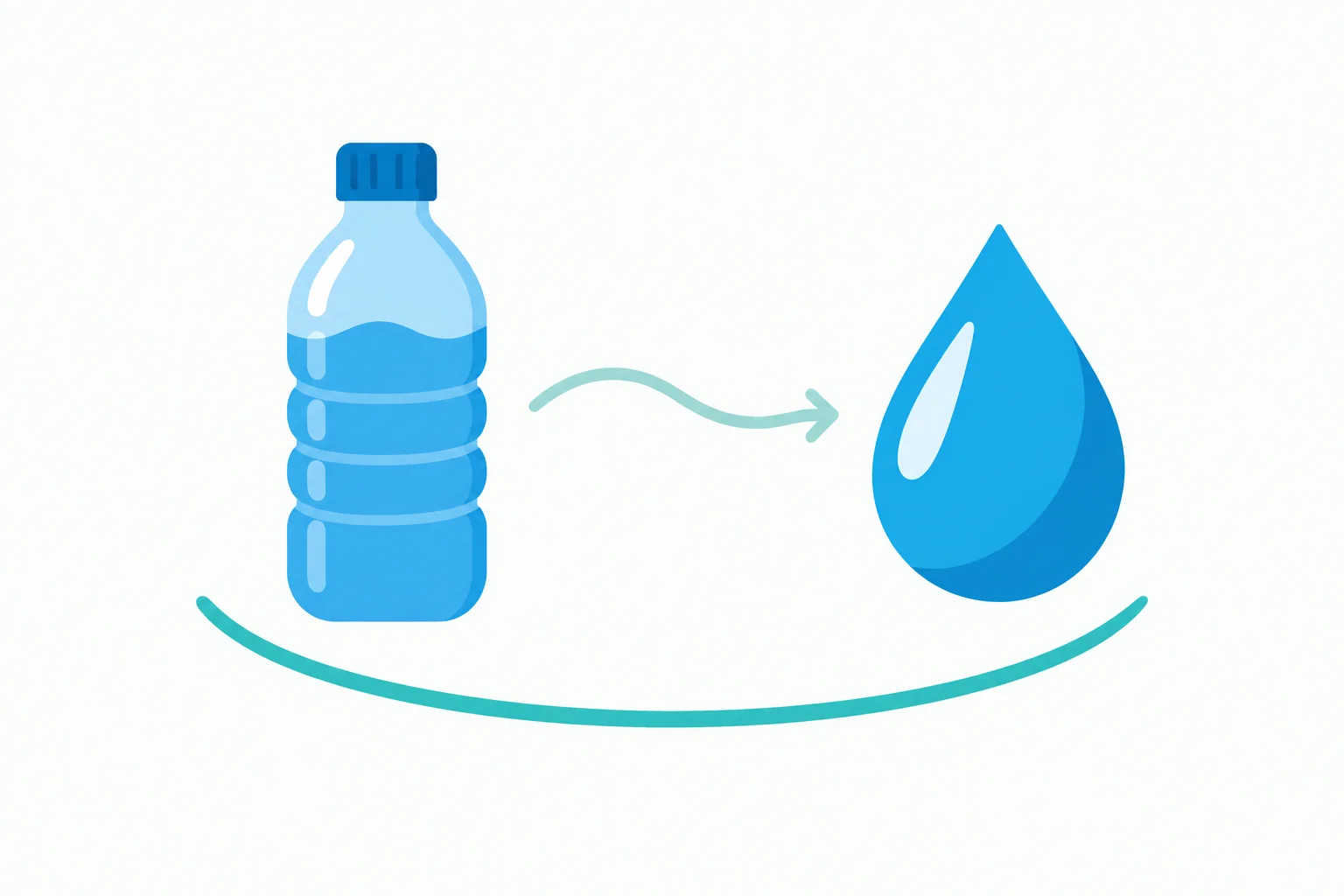
Say this four-word phrase as one group: a bottle‿of water.
Listen to the model. Notice the smooth connection before of.
A bottle of water.
First, say each phrase slowly. Then say it again as one smooth group:
Keep bottle, kilo, water, and apples clear. Make a and of quick and light.
Listen, then repeat aloud twice: once slowly and once smoothly.
A bottle of water. A kilo of apples.
Use the same smooth group in a sentence:
We need a kilo‿of apples.
Say the whole sentence without a long pause before of.
Tip
A smooth connection does not mean speaking too fast. Make the container word and the food word easy to hear.
Listen and choose an option.
Listen. Which written amount do you hear?
A kilo of apples.
Before you play the next audio, say aloud the two amount phrases from this step. Then make one short sentence with We need ... and one of the phrases.
Listen to the model on the next screen. Compare your speech: connect the word before of smoothly, but keep the container and food words clear.
Use this audio model after you speak. Repeat it once more if you want extra practice.
A bottle of water. A kilo of apples. We need a bottle of water.
Step 7 of 9
Listen to Alex and Sam check their food supplies, identify each amount, and write a short sentence you hear.
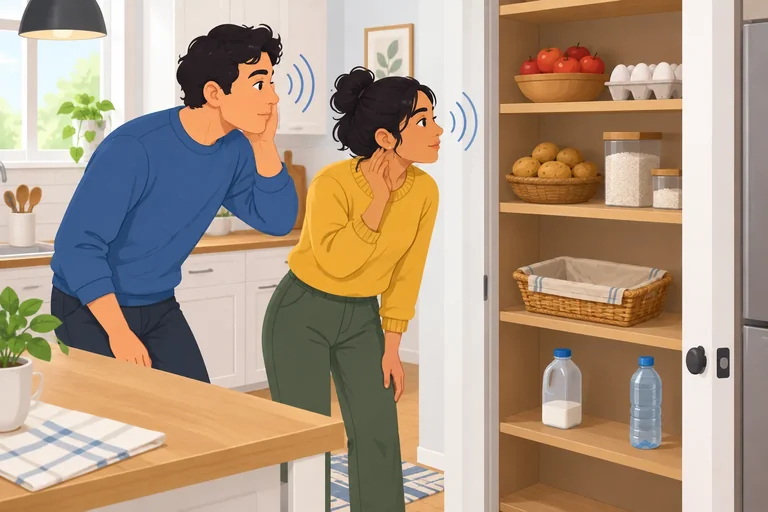
Listen to Alex and Sam checking the food at home. Notice each food-and-amount pair. Do not try to write every word yet.
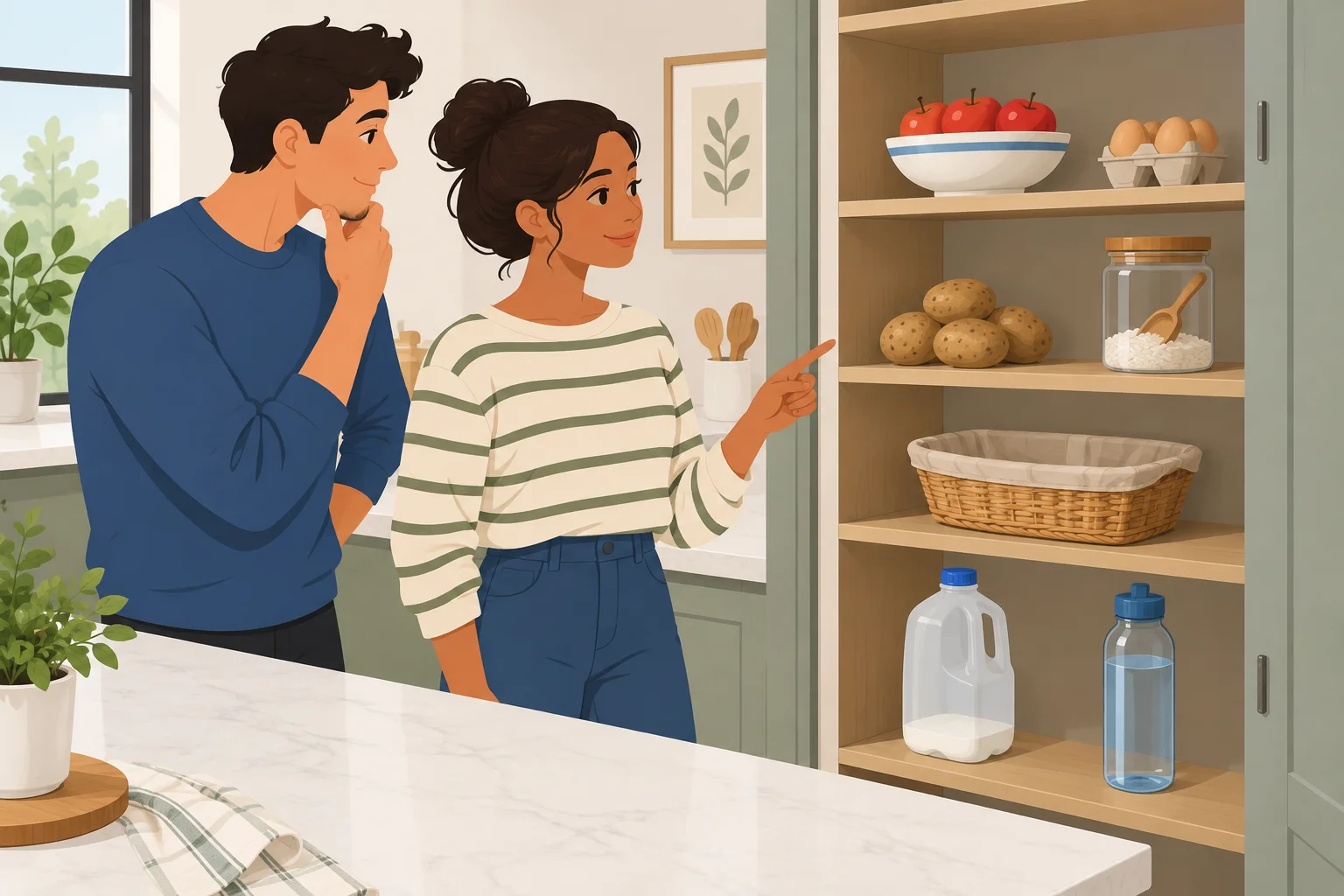
Listen for the amount that goes with each food item.
Play the conversation once or twice.
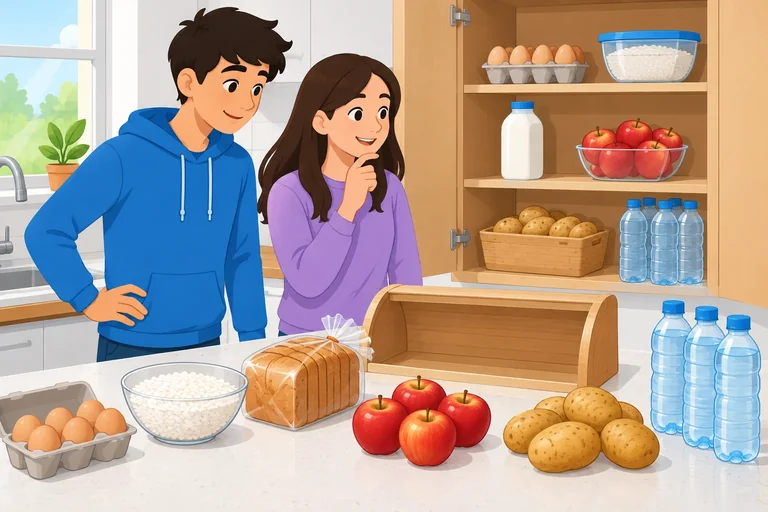
Alex: Let's check the food for lunch. We have three apples and two eggs.
Sam: Yes. We also have a few potatoes and a little rice.
Alex: Do we have any bread?
Sam: No, we don't have any bread.
Alex: What about milk?
Sam: We have a little milk.
Alex: And water?
Sam: We have one bottle of water.
Listen again, then match every food with its amount.
Three apples. Two eggs. A few potatoes. A little rice. No bread. A little milk. One bottle of water.
Match each food with the amount you hear.
Tap an item and then its matching pair.
Listen, then choose the picture that matches.
There isn't any bread, but there's a little milk.
Which picture matches what you hear?
Listen and write what you heard.
Listen and type the full sentence.
Now check the conversation transcript.
Alex: Let's check the food for lunch. We have three apples and two eggs.
Sam: Yes. We also have a few potatoes and a little rice.
Alex: Do we have any bread?
Sam: No, we don't have any bread.
Alex: What about milk?
Sam: We have a little milk.
Alex: And water?
Sam: We have one bottle of water.
Tip
For dictation, check the complete sentence, including small words and punctuation. Then say this phrase smoothly: a bottle‿of water.
Step 8 of 9
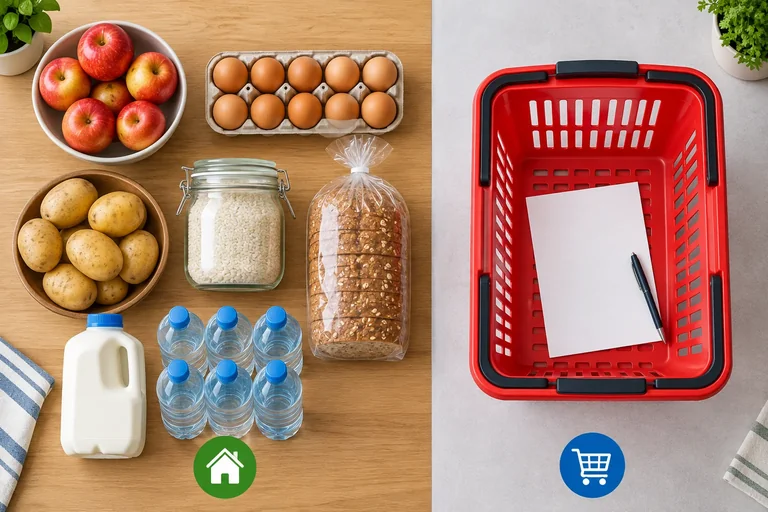
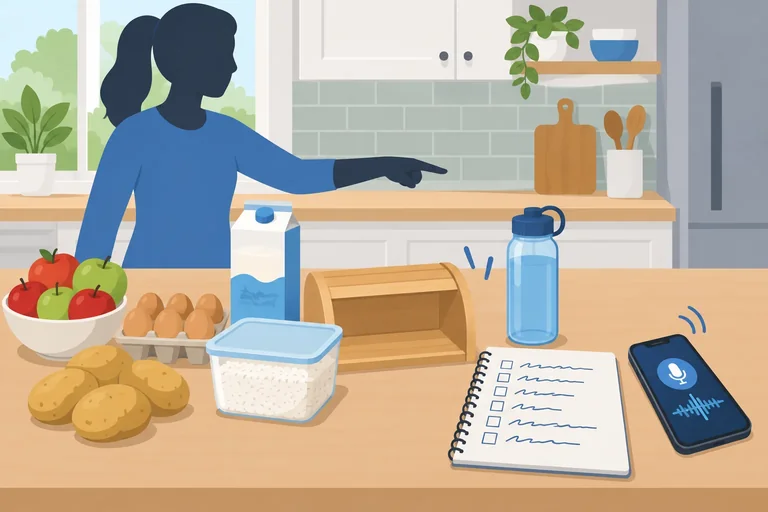
An inventory tells you what Alex and Sam have at home. A shopping list tells you what they need to buy.
Keep the information separate. Do not change a purchase amount because you see food in the inventory. For example, a few and a little show that some food is available, but they do not give an exact number to buy.
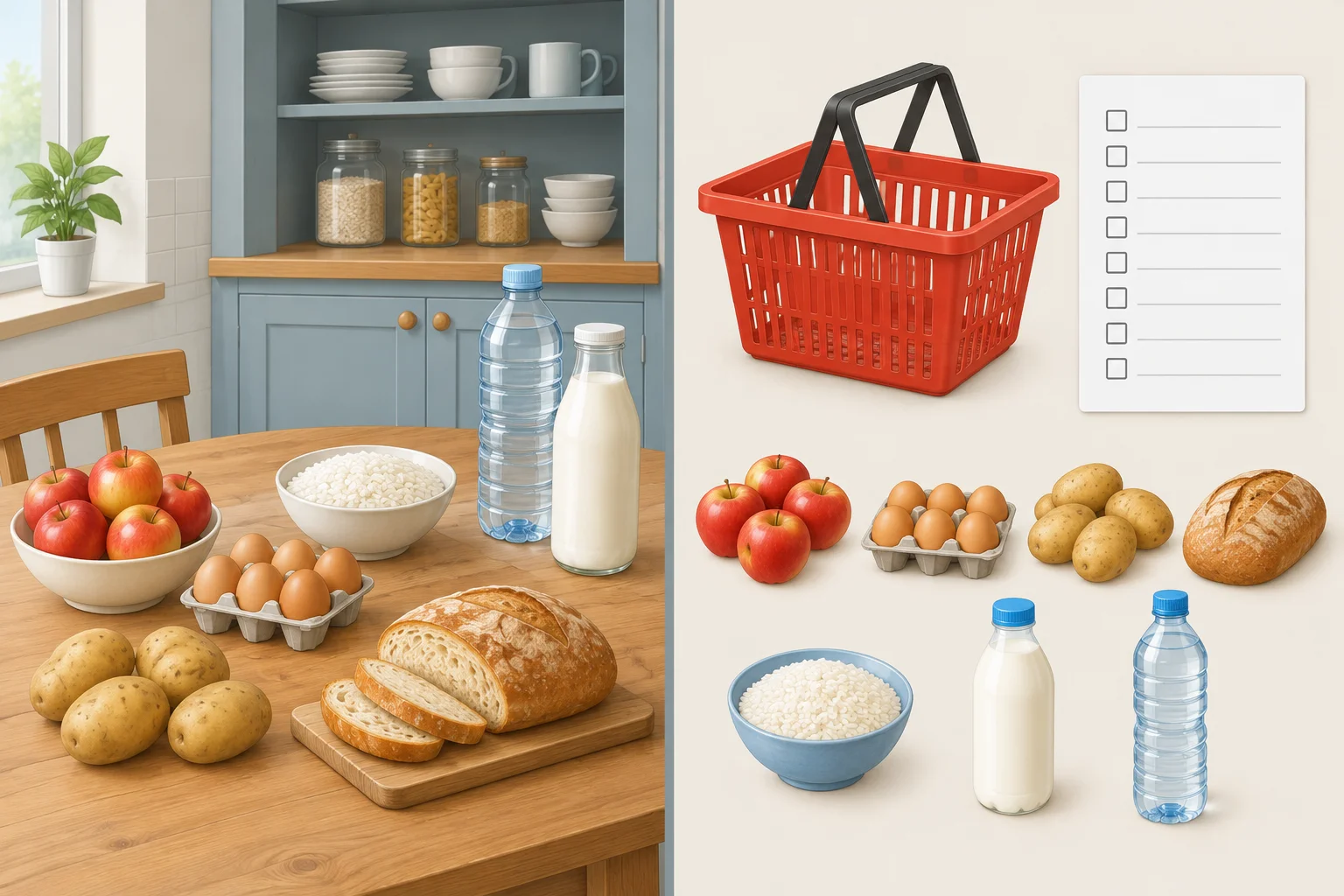
Food at home and food to buy belong on different lists.
Alex and Sam begin with this inventory. It records what is available now.
| Amount | Food |
|---|---|
| 3 | apples |
| 2 | eggs |
| a few | potatoes |
| a little | rice |
| no | bread |
| a little | milk |
| 1 bottle of | water |
Example
For lunch, please buy 4 eggs, a bag of rice, a loaf of bread, a kilo of apples, and 2 bottles of water.
Match each line to the correct list.
Tap an item and then its matching pair.
Complete the Buy list from Sam's message on the previous screen.
Buy
Step 9 of 9
Create, check, and say a complete lunch plan using an inventory, a purchase reminder, and clear food-and-amount language.
Alex and Sam are planning lunch. First, read what they have at home. Then listen to Alex’s purchase reminder. Keep the two sources separate: Have shows food at home; the reminder tells Sam what to buy.
Have
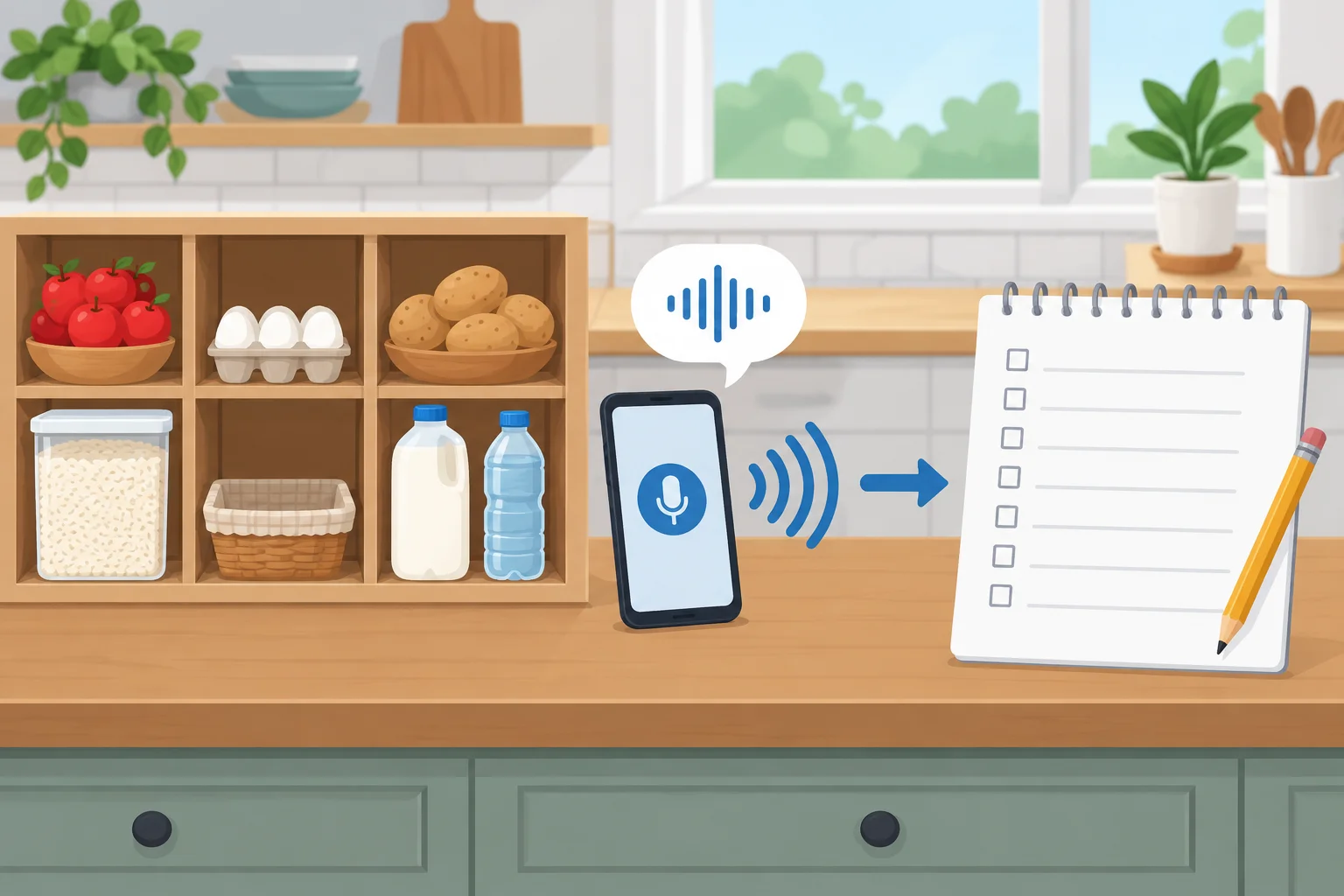
Read the inventory, listen for purchase amounts, and then make the Buy list.
Listen twice. Write down the food and amount that Alex says to buy.
Sam, for lunch, please buy four eggs, a bag of rice, a loaf of bread, a kilo of apples, and two bottles of water.
Now make a working lunch plan from the inventory and the reminder. Your Buy list must have five entries. Then write a message to Sam in four or five sentences.
In the message, include:
Use digits in the Buy list and complete sentences in the message.
Write your five-entry Buy list and your four- to five-sentence message to Sam.
Write at least 140 characters (0/140).
Compare your draft with this model. The purchase amounts are stated in Alex’s reminder, so do not try to calculate them from small amounts at home.
Example
Buy
Hi Sam. We have 3 apples, 2 eggs, a few potatoes, a little rice, a little milk, and 1 bottle of water. We don’t have any bread, and we don’t have many eggs. We need a bag of rice and a loaf of bread. How many bottles of water do we need? Please buy 4 eggs, a kilo of apples, and 2 bottles of water.
Use this checklist as you revise your work.
| Check | What to look for |
|---|---|
| List format | Five entries under Buy |
| Noun forms | Plural forms for counted items and containers |
| Unit phrases | Container or measure + of + food |
| Message | Four or five complete sentences |
| Question | A complete amount question with a question mark |
| Consistency | The list and message give the same purchases |
Listen and repeat aloud. Connect the words smoothly: a kilo‿of apples; two bottles‿of water.
We have a little rice, but we need a kilo of apples and two bottles of water.
We have a little rice, but we need a kilo of apples and two bottles of water.
You can now make a complete lunch plan. Use the inventory and reminder, then use the model and checklist to improve your own writing. Finally, say a short summary aloud; connect the words in two unit phrases smoothly.
Summary
Remember these final checks before you submit.
Write your final five-entry Buy list and a four- to five-sentence message to Sam. Include available food, a missing or small amount, a needed unit phrase, and one complete amount question. Then read your message aloud and smoothly link two unit phrases.
Write at least 140 characters (0/140).
Congratulations! You completed: Talk About Food and Amounts
Thousands of online courses in video, ebooks and audiobooks.
To test your knowledge during online courses
Generated directly from your cell phone's photo gallery and sent to your email

Download our app via QR Code or the links below:.



Carry knowledge in your pocket.
Download the Cursa app.
There are hundreds of free courses available, with a free certificate of completion that is saved in your mobile image gallery.
Download the app to access the Course Completion Certificate for Free.


+ 10 million
students

Free and Valid
Certificate

60 thousand free
exercises

4.8/5 rating in
app stores

Free courses in
video and ebooks