Step 1 of 8
Picture an Action in Progress
Use affirmative past continuous sentences to describe actions already in progress at a particular past time.

Learning path · Level 6 · Tutorial 1
Describe what was happening when something else happened. Listen to and read short accounts of everyday interruptions, choose matching audio, and write a short sentence you hear. Then explain a scene aloud and write connected sentences, using a model to check your work.

 Picture an Action in Progress
Use affirmative past continuous sentences to describe actions already in progress at a particular past time. 2 min
 Say What Was Not Happening
Correct inaccurate descriptions of a past scene with wasn't or weren't and a verb-ing form. 2 min
 Ask About a Past Scene
Ask yes/no and what questions about actions in progress, then give short answers or action descriptions. 2 min
 Add an Event to the Background
3 min
 Connect Actions with When and While
Use when and while to connect overlapping actions and background-event combinations. 3 min
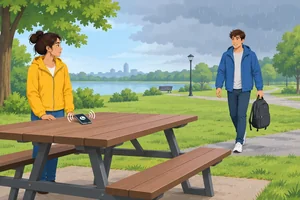 Read the Scene Behind the Event
Read a short account, track its background actions and main events, and match it to a visual timeline. 2 min
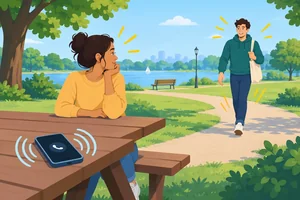 Hear the Background and the Event
Listen for the background action and main event, then match, repeat, and write a short past-scene description. 3 min
 Describe a Scene in Your Own Words
Create a short spoken and written description of a past scene, then check and improve it with a model. 3 min
Step 1 of 8
Use affirmative past continuous sentences to describe actions already in progress at a particular past time.
A past-time snapshot shows an action already in progress at one moment in the past. It does not say when the action began or ended.
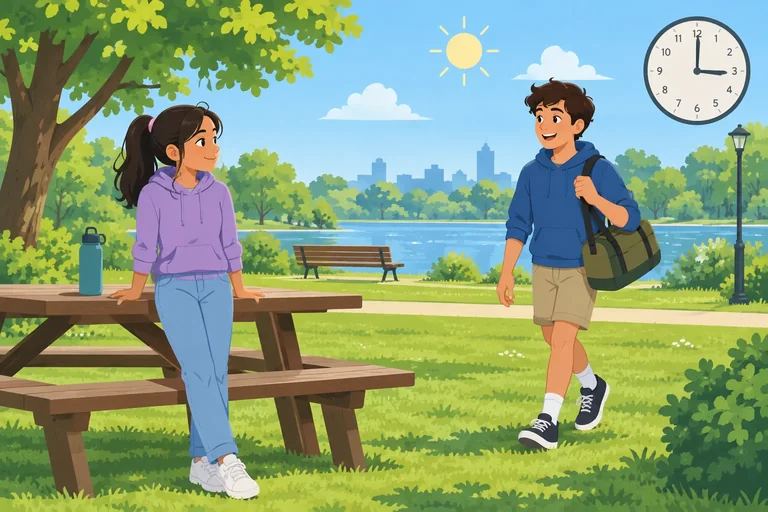
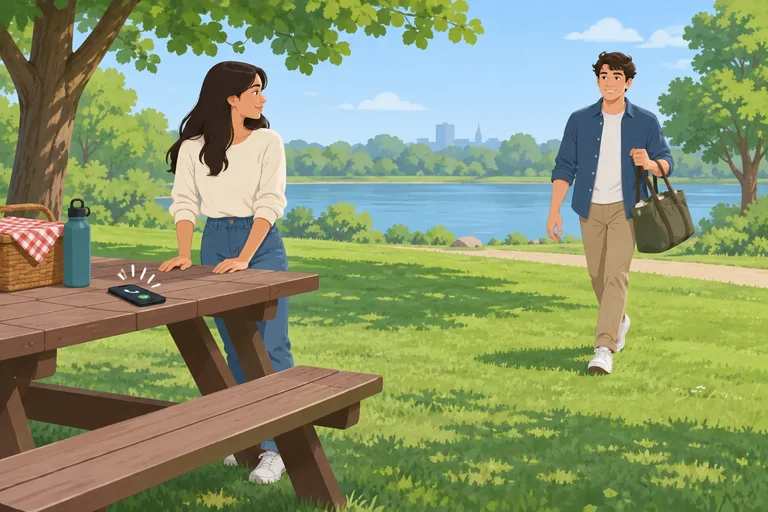
Imagine the park scene from last Saturday at 3 p.m. Maya was waiting for Leo beside a picnic table. Leo was walking toward her and carrying a bag.
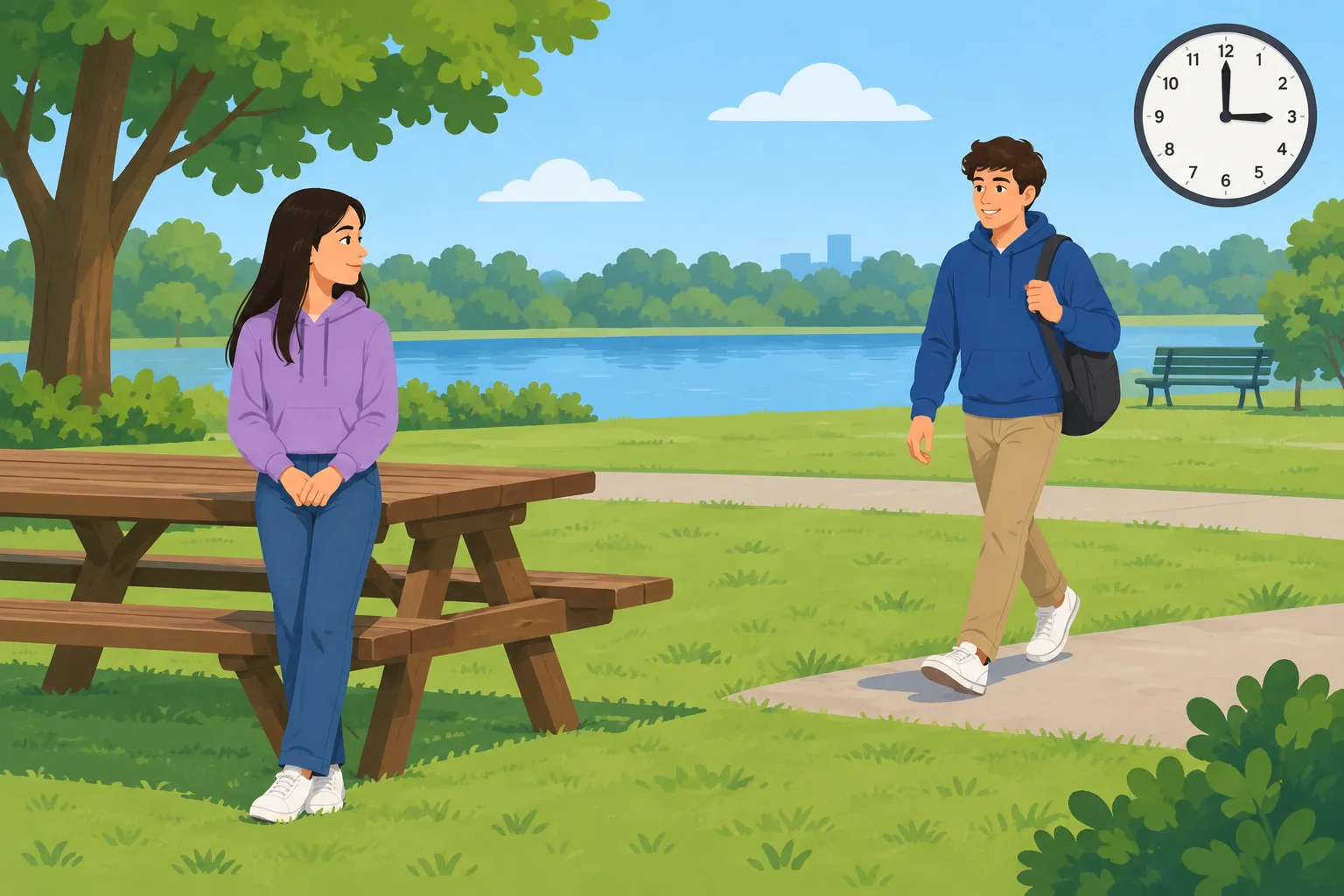
In this snapshot from last Saturday at 3 p.m., both actions were already happening.
Use the past continuous to describe an action in progress at a particular past time.
subject + was/were + verb-ing
Use was with I, he, she, and it. Use were with you, we, and they. The verb stays in the verb-ing form. An affirmative sentence tells us what was happening in the snapshot.
Example
Last Saturday at 3 p.m., Maya was waiting for Leo beside a picnic table.
Leo was walking toward her and carrying a bag.
These sentences show actions in progress at that past moment.
Last Saturday at 3 p.m., Leo was walking toward Maya and carrying a bag. Choose the matching scene.
Build one affirmative sentence describing Maya's action last Saturday at 3 p.m. Then say the sentence aloud.
Your sentence
Available words
Step 2 of 8
Correct inaccurate descriptions of a past scene with wasn't or weren't and a verb-ing form.
At a past-time snapshot, use a negative to correct an inaccurate description.
The full negative has was not or were not before the verb-ing form. In everyday descriptions, use the shorter forms:
subject + wasn't/weren't + verb-ing
The action verb stays the same. Only was/were changes to wasn't/weren't.
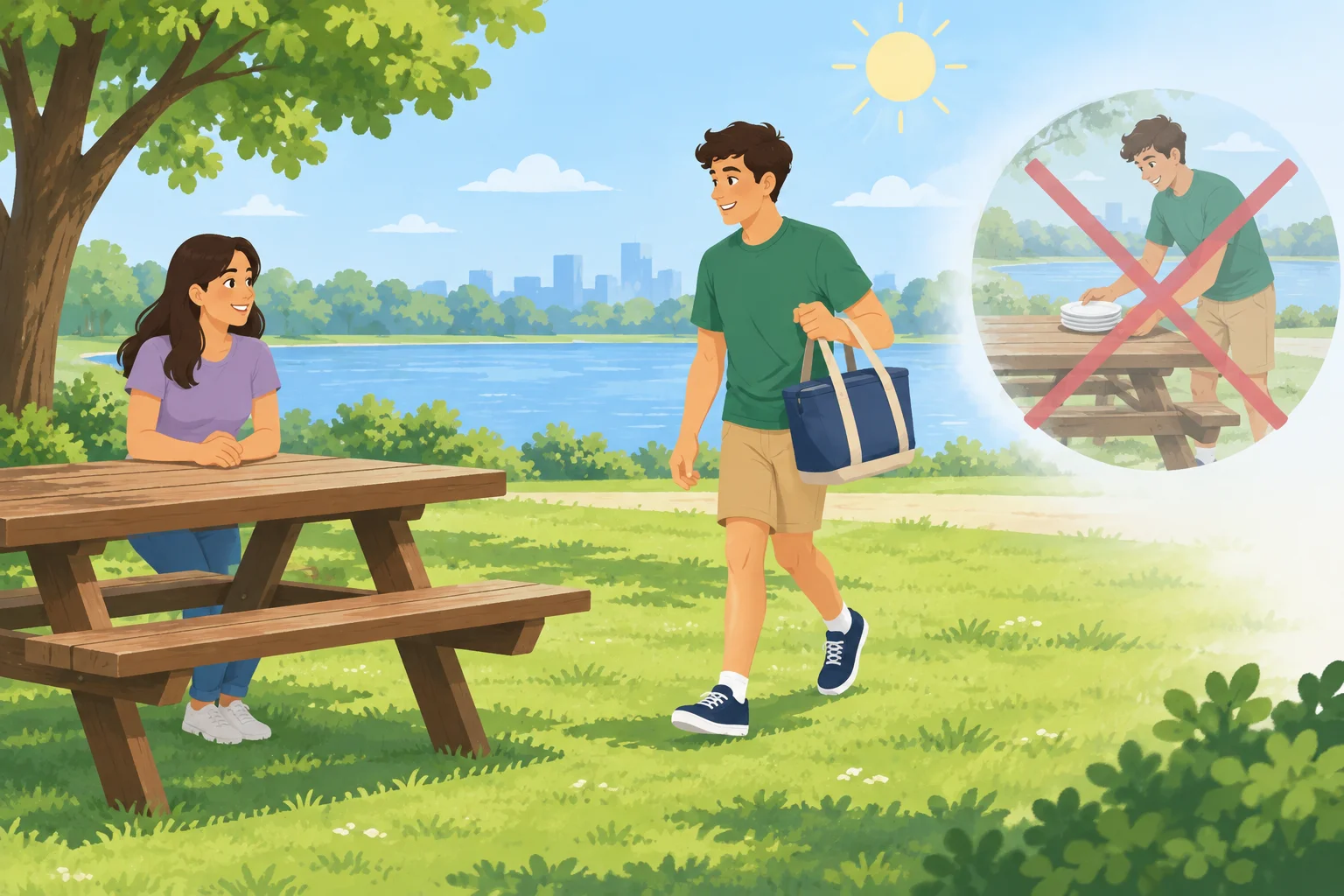
Use a negative sentence when an action does not match the scene.
Example
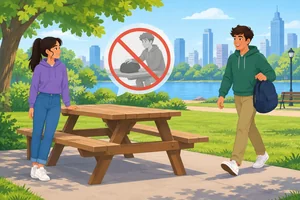
Maya wasn't walking toward the table. She was waiting for Leo beside a picnic table.
Leo wasn't waiting for a friend. He was walking toward Maya and carrying a bag.
Keep the verb-ing form after the negative. Do not change it back to the base verb.
Compare the affirmative and negative forms. The action word stays in the -ing form.
| Subject | Affirmative | Negative |
|---|---|---|
| Maya | was waiting | wasn't waiting |
| Leo | was carrying a bag | wasn't carrying a bag |
| They | were cooking | weren't cooking |
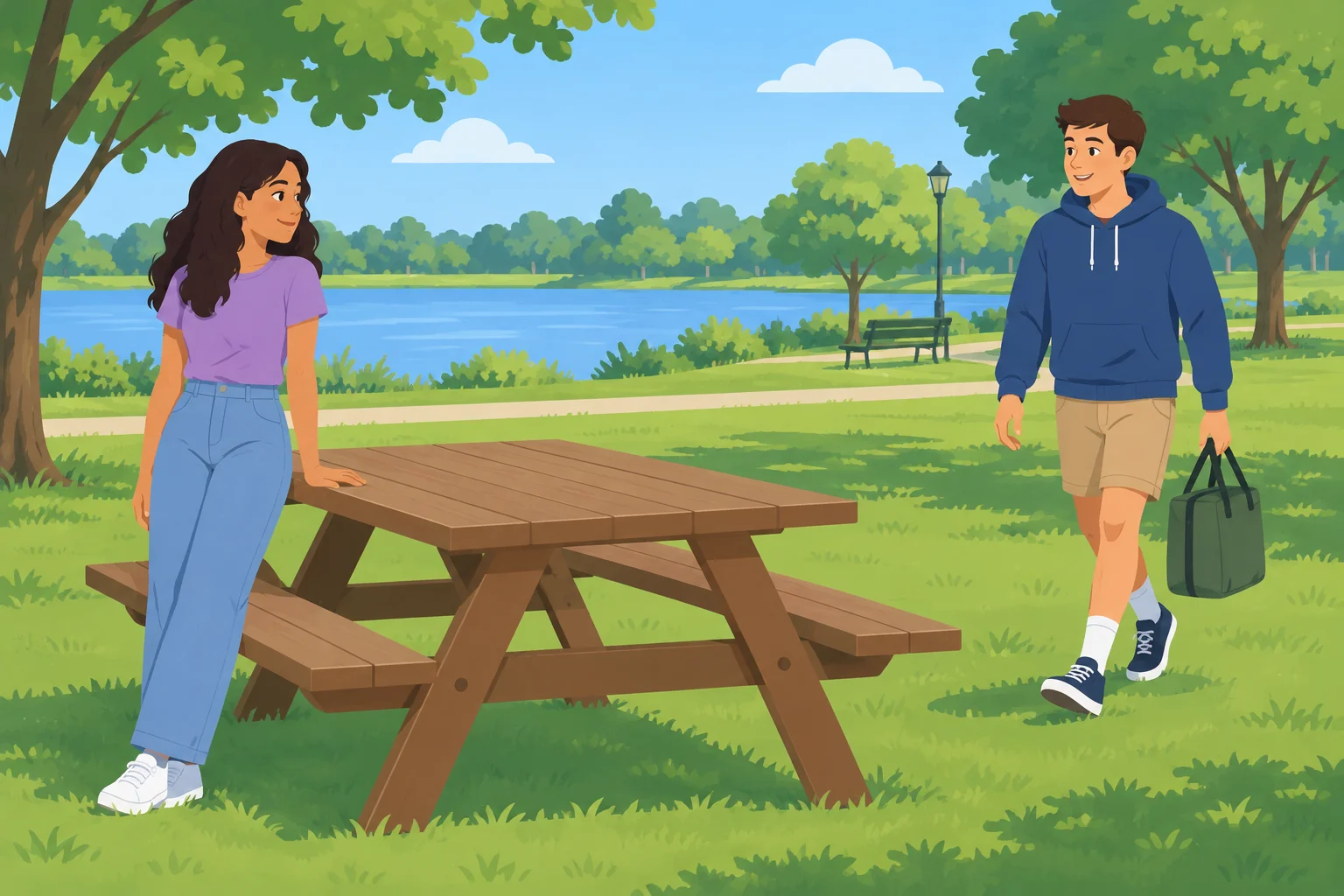
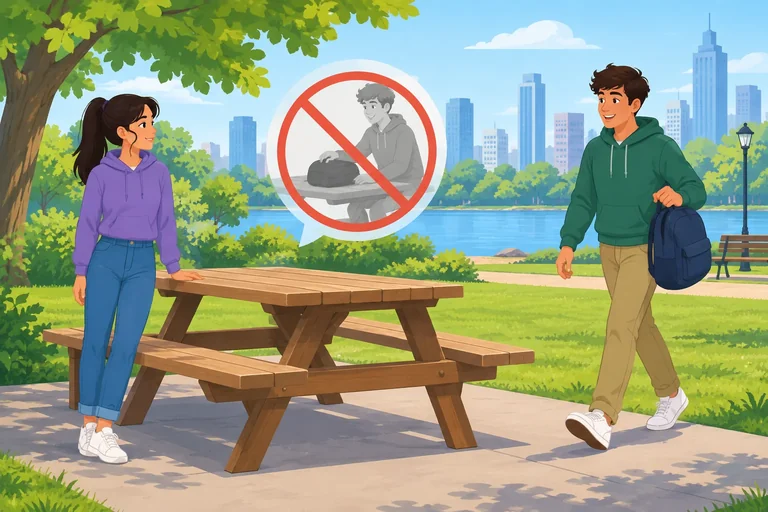
Look closely at what Leo is doing.
Last Saturday at 3 p.m., an inaccurate description says: “Leo was setting the table.”
Complete the correction: “No, he ___ setting the table.”
Step 3 of 8
Ask yes/no and what questions about actions in progress, then give short answers or action descriptions.
To ask a yes/no question about an action in progress, put was or were before the subject.
Was/Were + subject + verb-ing?
Use was with I, he, she, and it. Use were with you, we, and they. Keep the action in the verb-ing form.
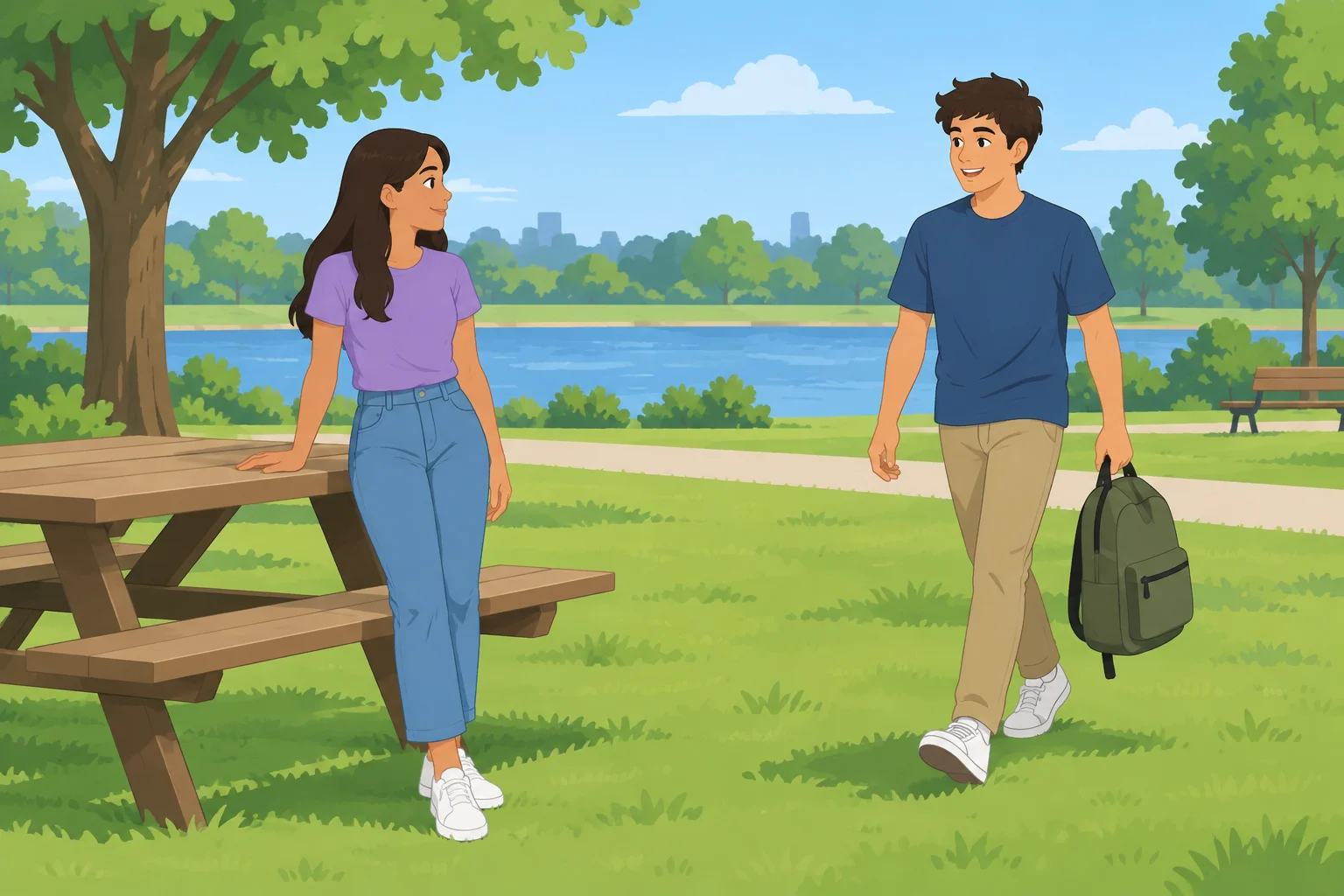
A snapshot from last Saturday at 3 p.m.: Maya was waiting for Leo beside a picnic table, and Leo was walking toward her with a bag.
Match the auxiliary to the subject in both the question and the short answer.
| Pattern | Question | Short answer |
|---|---|---|
| Was + singular subject + verb-ing? | Was Leo carrying a bag? | Yes, he was. |
| Was + singular subject + verb-ing? | Was Maya carrying a bag? | No, she wasn't. |
| Were + you + verb-ing? | Were you waiting for a friend? | No, I wasn't. |
Use what when you want the action, not just yes or no.
What + was/were + subject + verb-ing?
Use was or were in a past continuous question—not did. The verb remains in the verb-ing form.
Example
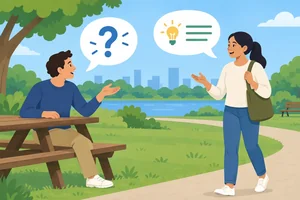
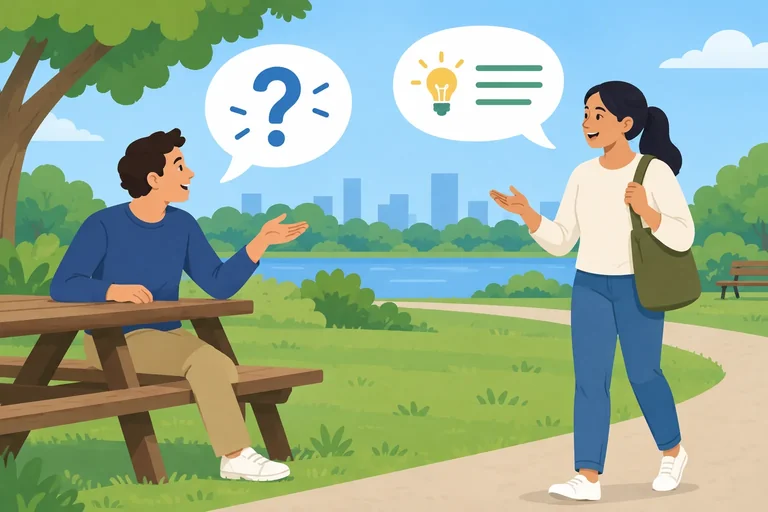
A: What was Maya doing?
B: She was waiting for Leo.
A: What was Leo doing?
B: He was walking toward her and carrying a bag.
Tip
When someone asks Were you ...?, answer from your point of view with I or we.
A: Were you waiting for a friend?
B: Yes, I was.
The question uses you, but the speaker answering says I.
Arrange the words to make a question you can ask another person about a past scene.
Your sentence
Available words
Match each question to the answer that fits the subject and the park scene.
Tap an item and then its matching pair.
Step 4 of 8
A background action was already in progress. Use the past continuous for it. A main event happens as a complete event during that action. Use the past simple for it.
Connect the parts with when:
subject + was/were + verb-ing + when + main event
Maya was waiting for Leo when her phone rang.
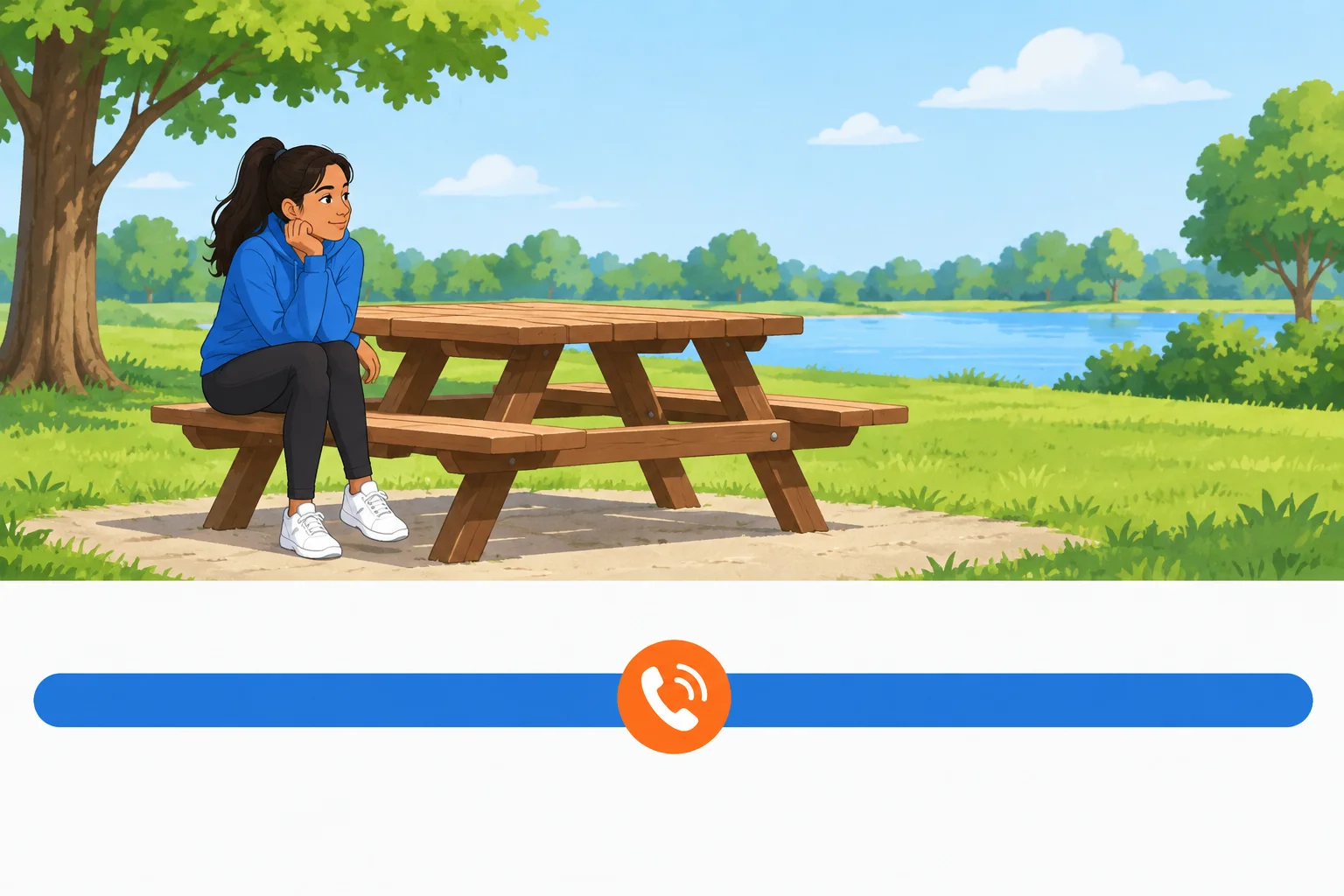
Last Saturday at 3 p.m., Maya was already waiting when her phone rang.
Tip
The event happened during the action, but this does not tell us that Maya stopped waiting. The tenses show the meaning: an action in progress and an event presented as a whole.
Choose the tense for the meaning, not only for the length of an action. A short action can be a background action if it was already in progress. A main event is presented as one complete happening.
Each sentence has an action in progress and a completed event.
| Background action | Main event | Full sentence |
|---|---|---|
| Maya was waiting for Leo | her phone rang | Maya was waiting for Leo when her phone rang. |
| Leo was carrying a bag | the bag fell | Leo was carrying a bag when the bag fell. |
| They were having a picnic | it started to rain | They were having a picnic when it started to rain. |
Example
Last Saturday at 3 p.m., Maya was waiting for Leo beside a picnic table. Leo was walking toward her and carrying a bag. Maya's phone rang.
To connect Maya's action and the event, say: Maya was waiting when her phone rang.
Read this sentence: “Leo was walking toward the table when his bag fell.” What role does Leo's walking have in the scene?
Last Saturday at 3 p.m., Maya was waiting for Leo beside a picnic table. Her phone rang during that action. Choose the sentence that shows the background action and the main event accurately.

Step 5 of 8
Use when and while to connect overlapping actions and background-event combinations.
Use while to highlight a period when two actions were happening at the same time. Both actions can be in the past continuous.
Last Saturday at 3 p.m., Maya was waiting for Leo beside a picnic table. Leo was walking toward her and carrying a bag.
While Maya was waiting for Leo, Leo was walking toward her.
The actions overlap: neither one is presented as the main event.
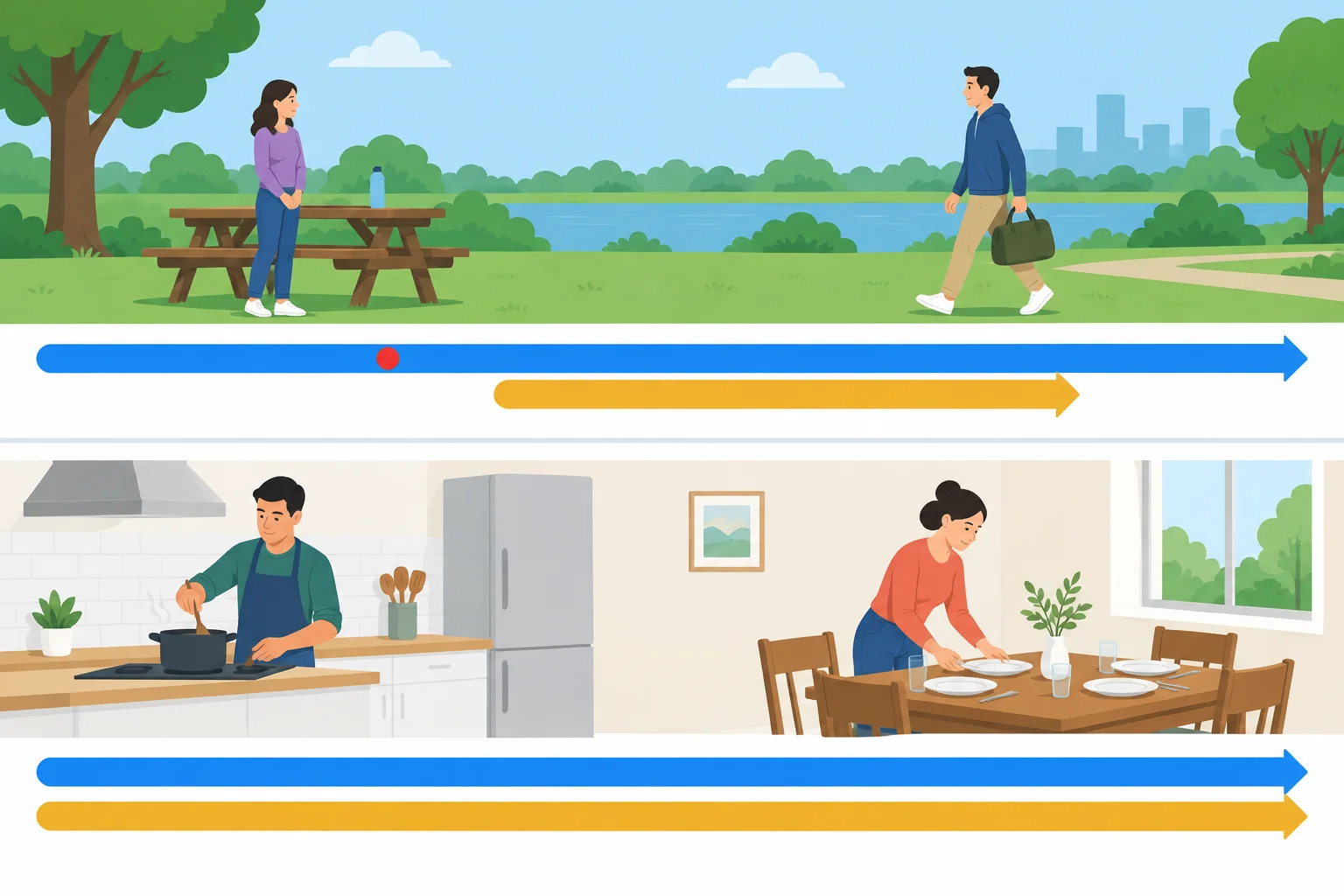
Overlapping bands show simultaneous actions. A brief point inside a long band shows a main event during a background action.
A time clause can come first or second. Put a comma after an opening time clause.
Do not choose a tense only because you see when or while. First decide what was ongoing and what happened as a complete main event.
These sentences describe different timing relationships.
| Intended timing | Time link | Example |
|---|---|---|
| Two actions overlap | while | While Sam was cooking, Priya was setting the table. |
| A main event happens during a background action | while | While Maya was waiting for Leo, her phone rang. |
| A main event happens during a background action | when | Maya was waiting for Leo when her phone rang. |
| An ongoing situation comes first | when | When Maya was waiting for Leo, her phone rang. |
Tip
While often emphasizes an overlapping period. When locates one action or event in time. Either word can be used with a past continuous clause when the meaning fits.
Match each sentence to the timeline description that fits its meaning.
Tap an item and then its matching pair.
Build one sentence about two actions in progress at the same time. Start with the time clause and use correct punctuation.
Your sentence
Available words
Step 6 of 8
Read a short account, track its background actions and main events, and match it to a visual timeline.
A short account can contain several actions at once. To understand it, build a scene map as you read:
The linking words when and while help, but they do not decide everything alone. Tense, timing, and the subject all matter.
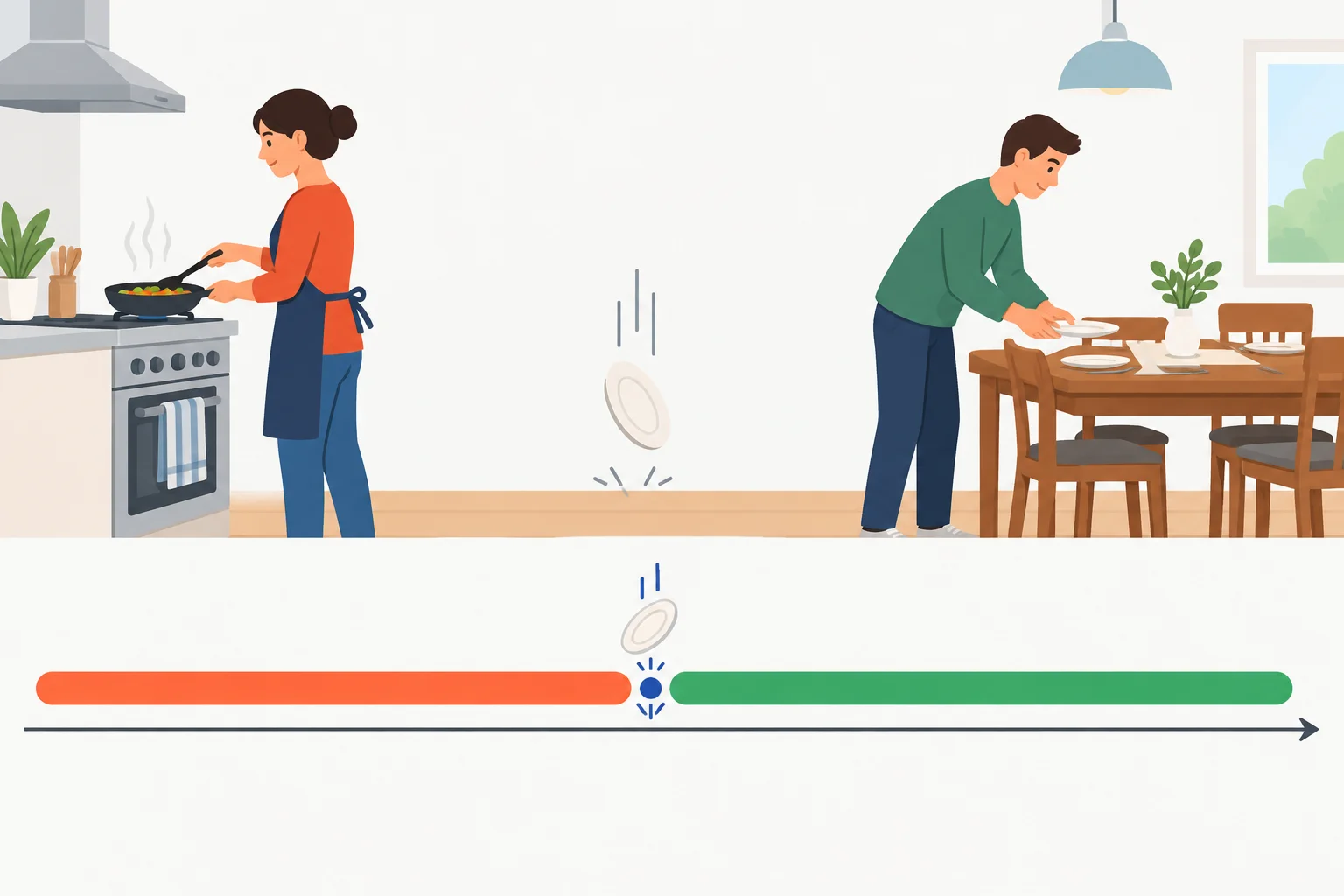
The long bands show overlapping background actions. The single point marks a completed main event.
Read this separate kitchen scene twice. On the first reading, picture it. On the second reading, connect every action to its subject. Notice that Aisha continues cooking after the plate falls.
Example
In a separate kitchen scene: At noon, Aisha was cooking. Ben was setting the table while Aisha was checking the soup. A plate fell near Ben. Aisha was still cooking when Ben picked it up.
A scene map keeps the actions connected to the right people and objects.
| Part of the account | Who or what | Role |
|---|---|---|
| was cooking / was checking | Aisha | background actions |
| was setting the table | Ben | background action |
| fell | a plate | main event |
| picked it up | Ben | main event |
Read this new account carefully. Keep each subject connected to its action and notice what was already happening before each completed event.
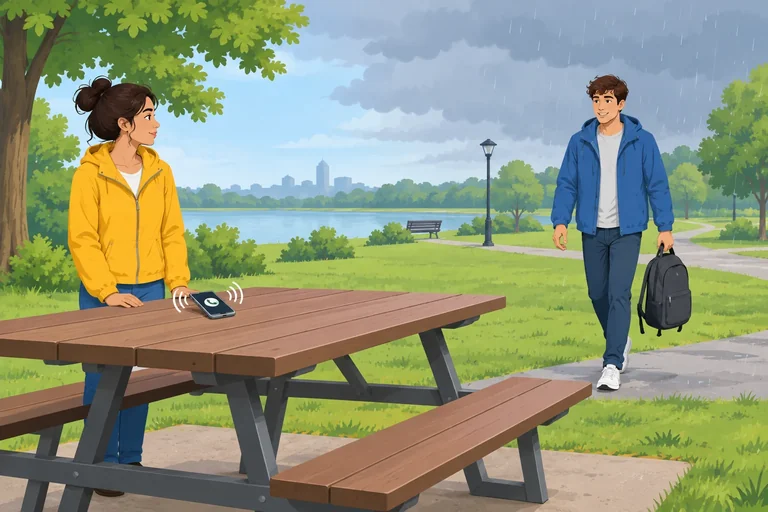
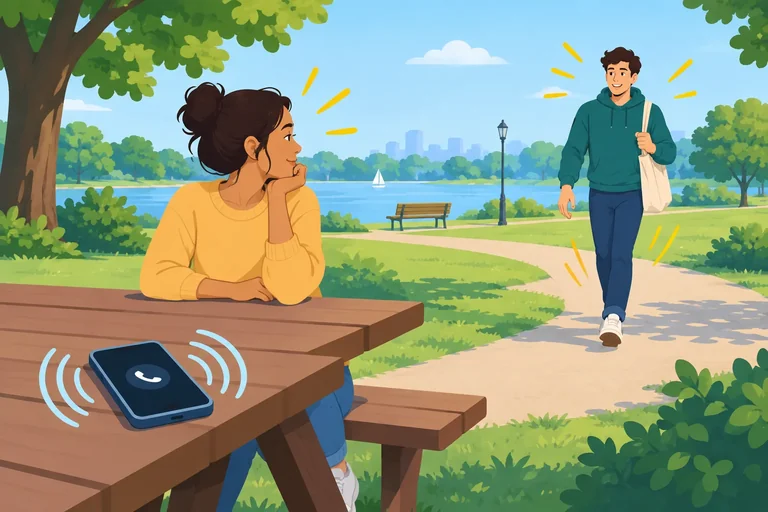
Last Saturday at 3 p.m., Maya was waiting for Leo beside a picnic table. Leo was walking toward her and carrying a bag. Other people were sitting on the grass and talking quietly. While Maya was looking at her phone, a ball fell near the table. Her phone rang a moment later. Leo was still walking toward Maya when it started to rain.
Using the account on the previous screen, match each part to its role and actor.
Tap an item and then its matching pair.
Now choose the visual timeline that matches the account.
Step 7 of 8
Listen for the background action and main event, then match, repeat, and write a short past-scene description.
When you listen to a past scene, was and were are often quiet. Listen for the subject and the action first. Then listen for the main event.
Last Saturday at 3 p.m., Maya was waiting for Leo beside a picnic table. Her phone rang during that background action. The action and the event are usually easier to hear than the auxiliary.
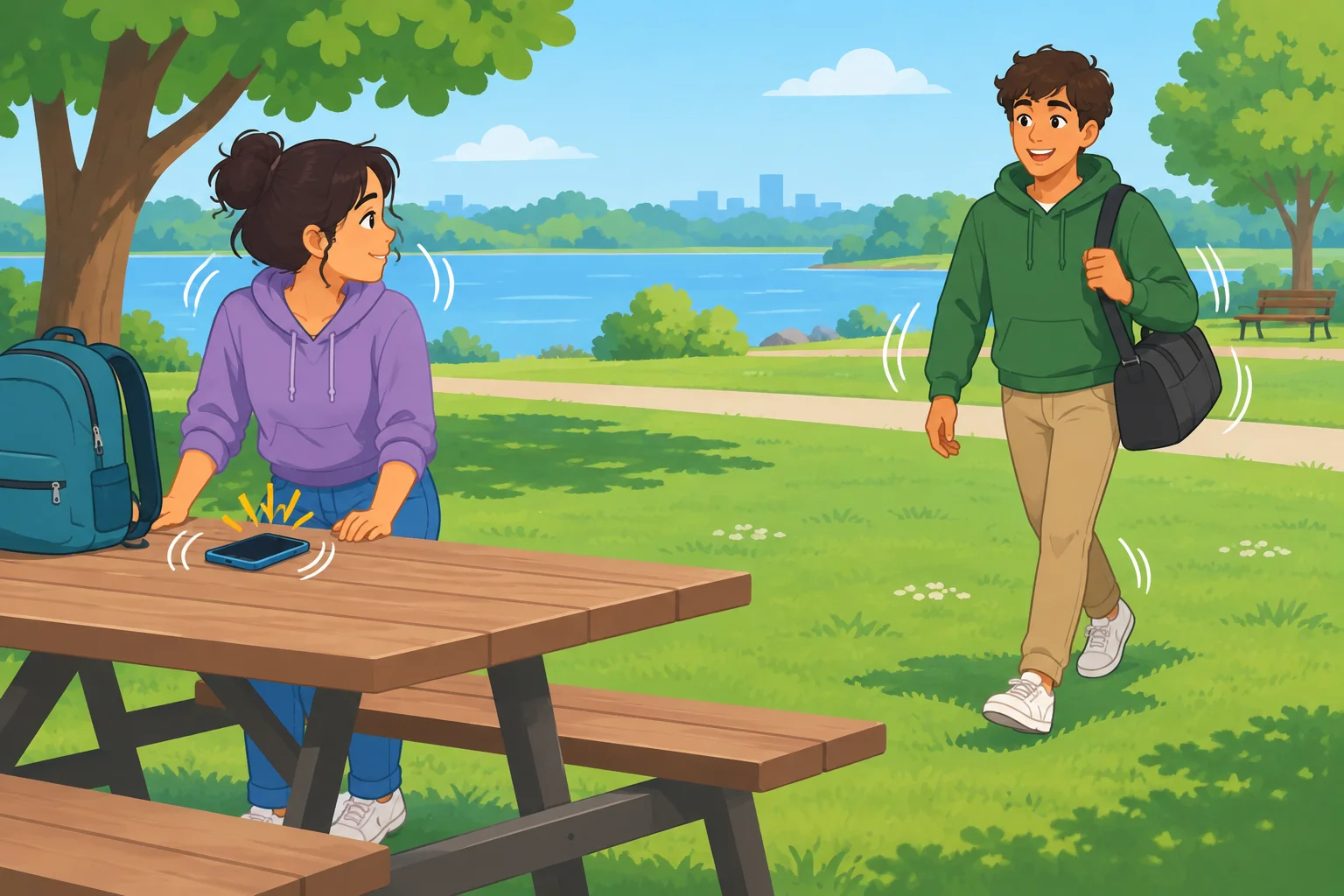
The phone event happens while the park actions are already in progress.
Listen once for the key action and event words.
Maya was waiting when her phone rang.
Maya was waiting when her phone rang.
In affirmative statements and information questions, was and were often have less stress.
Say this question aloud: What were Maya and Leo doing?
Now repeat the model. Keep was light, but make the action and main event clear.
Repeat aloud. Make the bold words clearer.
Maya was waiting when her phone rang.
Maya was waiting when her phone rang.
Tip
An auxiliary can be clearer when it carries the answer or corrects someone: Yes, I was. / No, they weren't. In these short answers, the auxiliary is important.
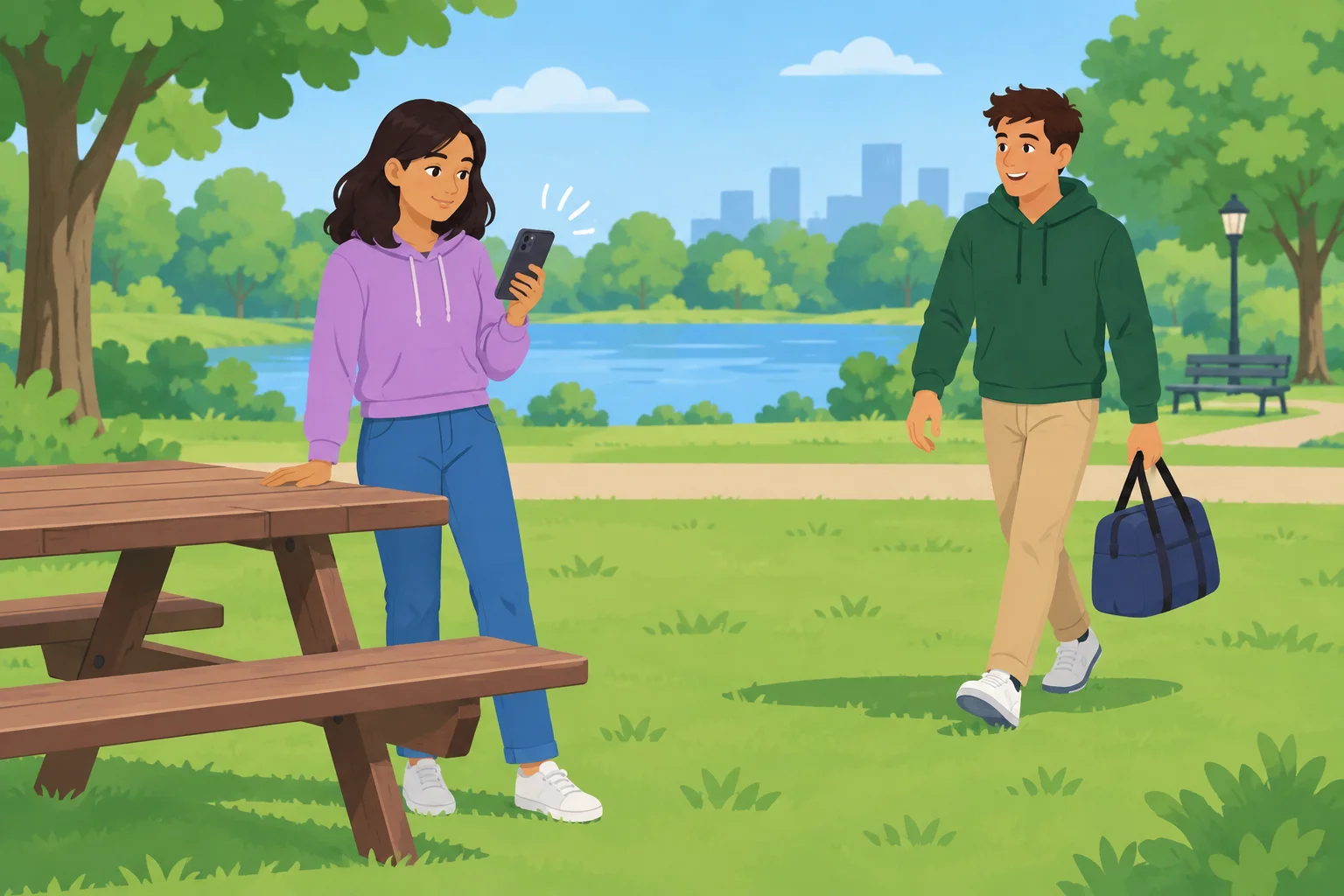
Look at the people, objects, and event before you listen.
Leo was waiting beside a picnic table when a bag fell.
Maya was waiting beside a picnic table when her phone rang.
Maya was cooking while Leo was setting the table.
Which recording matches the picture?
Listen and write what you heard.
Listen as often as you need. First, repeat the sentence aloud with clear stress on the action and event. Then type exactly what you hear.

Step 8 of 8
Create a short spoken and written description of a past scene, then check and improve it with a model.
Use the park scene to create a short description. Write 4–5 connected sentences about last Saturday at 3 p.m.
Include:
Then say your description aloud for 20–30 seconds. Finally, ask and answer one past continuous yes/no question about the scene. No recording is needed.
Look closely at who is doing each action and what changes in the scene.

Last Saturday at 3 p.m.: Maya was beside the picnic table, and Leo was approaching with a bag.
Listen, then repeat the question and short answer. In a correction or short answer, the auxiliary can be clear and stressed: “Was Maya carrying a bag? No, she wasn't.”
Was Maya carrying a bag? No, she wasn't.
Was Maya carrying a bag? No, she wasn't.
Write your first draft about the park scene. Use the image, the audio, and the written plan from the previous screen.
After writing, say your description aloud. Then ask and answer one yes/no question about a detail in the scene.
Write at least 120 characters (0/120).
Here is one possible description. Your wording does not need to be identical. Check that your version communicates the same scene clearly.
Example
Last Saturday at 3 p.m., Maya was waiting for Leo beside a picnic table.
While Maya was waiting, Leo was walking toward her and carrying a bag.
Maya wasn't carrying a bag.
Maya was waiting when her phone rang.
Spoken detail check: Was Leo carrying a bag? Yes, he was.
Use this checklist before you revise.
| Check | Question to ask yourself |
|---|---|
| People | Did I show who was doing each action? |
| Background actions | Did I use subject + was/were + verb-ing? |
| Main event | Did I use the past simple for the completed event? |
| Time links | Did I use while and when with the intended meaning? |
| Negative | Did I use wasn't or weren't + verb-ing accurately? |
| Speech | Did I stress the important actions and the main event? |
Compare your first draft with the model and checklist. Revise at least one issue if needed.
Now say your revised 20–30 second description aloud. Ask and answer one past continuous yes/no question about the scene. Then write your revised 4–5 sentences below.
Write at least 120 characters (0/120).
Summary
You can now describe a past scene by combining actions in progress with a completed event.
Congratulations! You completed: Describe What Was Happening
Thousands of online courses in video, ebooks and audiobooks.
To test your knowledge during online courses
Generated directly from your cell phone's photo gallery and sent to your email

Download our app via QR Code or the links below:.



Carry knowledge in your pocket.
Download the Cursa app.
There are hundreds of free courses available, with a free certificate of completion that is saved in your mobile image gallery.
Download the app to access the Course Completion Certificate for Free.


+ 10 million
students

Free and Valid
Certificate

60 thousand free
exercises

4.8/5 rating in
app stores

Free courses in
video and ebooks