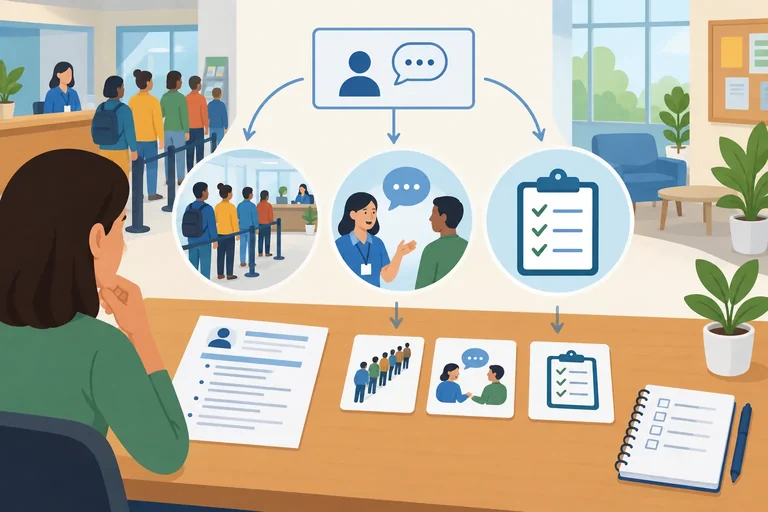
Step 1 of 8
Find the Skill Behind the Question
Identify the job requirement an interview question is testing by reading a short job description and matching meaning across different wording.

Learning path · Level 9 · Tutorial 4
Build a job-interview answer around a specific example rather than a list of qualities. Read a short job description and listen to an interview exchange, choosing relevant evidence and completing a brief dictation. Use familiar past and present-perfect forms to connect experience with current skills. Rehearse a 60–90-second answer aloud, respond to a follow-up prompt, and write a short guided follow-up email.

 Find the Skill Behind the Question
Identify the job requirement an interview question is testing by reading a short job description and matching meaning across different wording. 2 min
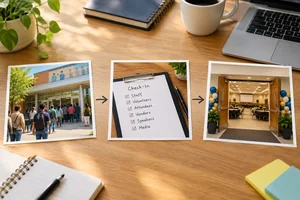 Choose Evidence, Not Just Adjectives
Turn a skill claim into credible support by selecting a truthful episode with a clear need, action, and outcome. 3 min
 Build a Clear Answer Map
Organize a relevant example with the answer map and recognize its key evidence in a spoken interview model. 4 min
 Show What You Did and What Changed
Make interview evidence accurate by separating personal actions from team results and linking a finished example to current experience. 3 min
 Make Your Evidence Easy to Follow
Connect a specific example to the role, then use pauses and stress to make the evidence easy to follow. 3 min
 Answer the Follow-Up Directly
Respond to an interview follow-up by identifying the missing detail, answering it briefly, and keeping every statement supported by your example. 2 min
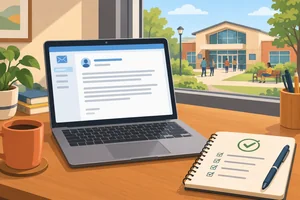 Write a Brief Follow-Up Email
Write a concise post-interview email that confirms interest and recalls one supported strength. 2 min
 Rehearse, Respond, and Review
Complete a short interview simulation, check your performance against a model, and make one focused improvement. 4 min
Step 1 of 8
Identify the job requirement an interview question is testing by reading a short job description and matching meaning across different wording.
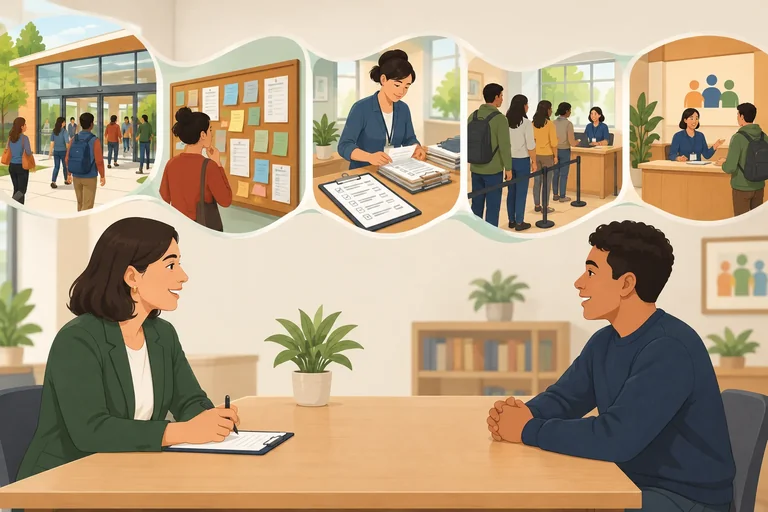
A job description contains two kinds of information:
For an interview question, focus first on the requirements. They tell you what skill the interviewer may ask you to demonstrate.
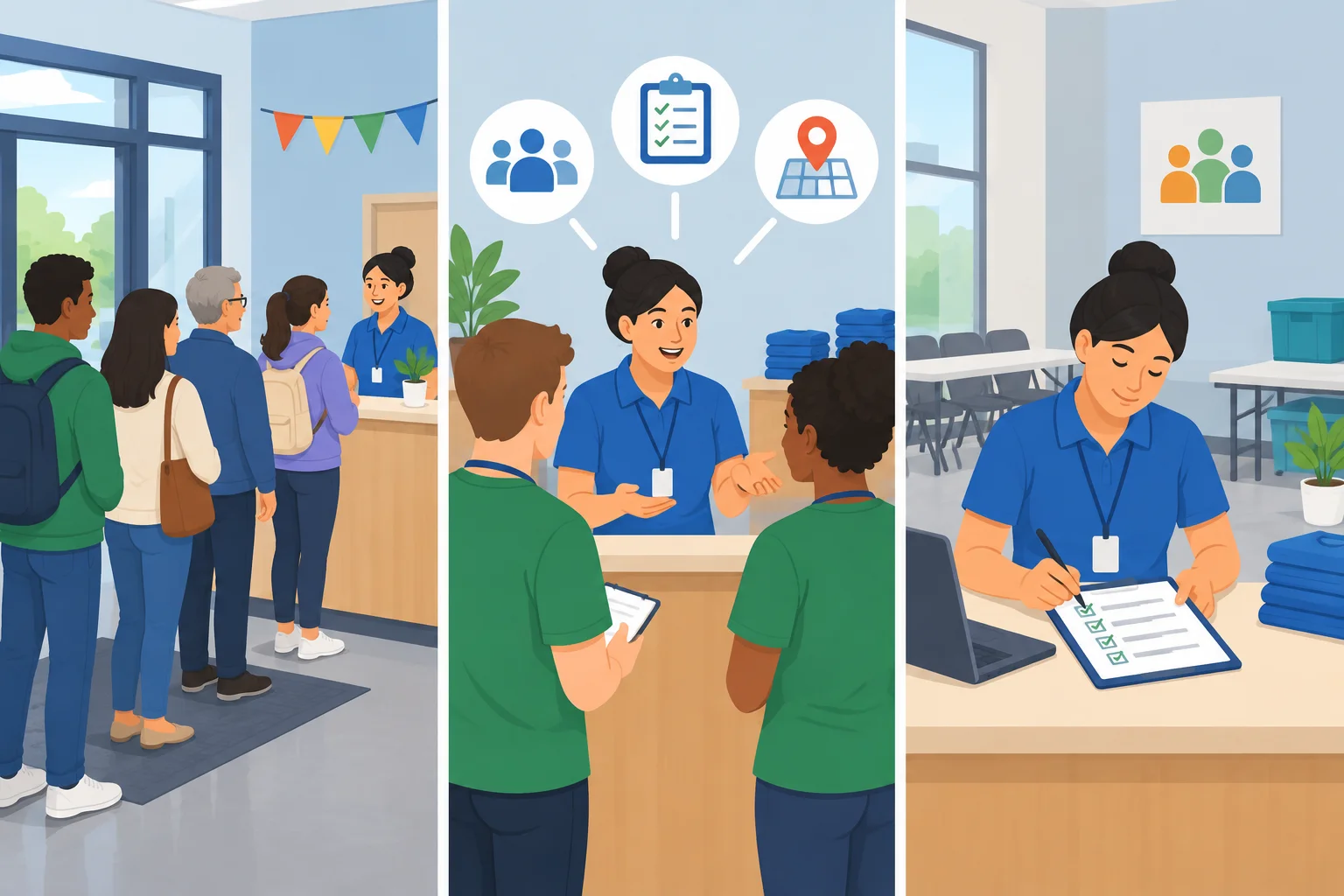
The role needs someone who can respond to each of these workplace situations.
Example
Community Center Assistant
Riverside Community Center needs an assistant to welcome visitors and support community events. The successful candidate will be able to:
The location and job title give context. The three bullet points are the skills to look for in interview questions.
Interviewers often use different words from the job description. Match the meaning, not only the exact words.
When an interviewer says “Give me an example” or “Tell me about a time,” prepare to refer to one specific experience—not just a quality such as “I am organized.”
Example
Interviewer: Can you tell me about a time you had to deal with several visitors at once?
This question is assessing whether the candidate can handle a busy period. It is not mainly asking about the name of the workplace or the candidate's general personality.
Tip
In US job applications, résumé is common. In the UK, CV is common. In the US, an academic CV is usually a different, longer document. Here, focus on the skills named in the job description—not on writing either document.
Using the Riverside Community Center job description, match each interview question to the skill it assesses.
Tap an item and then its matching pair.
Step 2 of 8
Turn a skill claim into credible support by selecting a truthful episode with a clear need, action, and outcome.
When an interviewer asks for an example, a positive adjective is not enough. A claim such as “I’m organized” does not show what you did.
Choose relevant experience: a true episode from work, study, volunteering, or a group activity. It should give the listener three things:
This lets the interviewer see how you can solve a problem, rather than only hear a description of your personality.
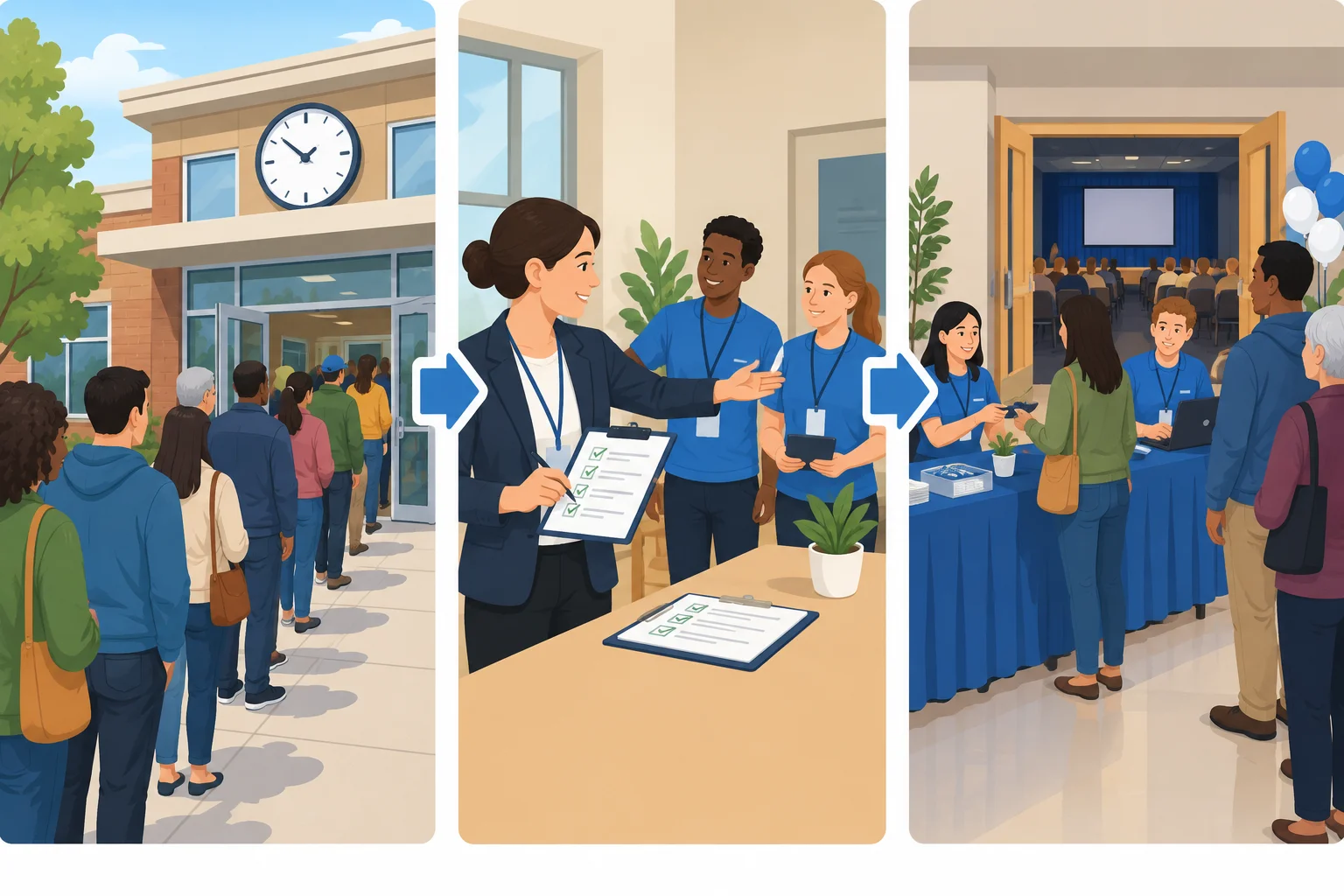
A useful example makes the need, the action, and the outcome visible.
Check that the episode fits the exact requirement. An impressive story is not automatically useful evidence. For example, a story about working late may not show that you can communicate clearly.
Do not force one example to prove every skill. If the facts do not support the requirement, select a different true episode.
Use these questions before choosing an example.
| Requirement | Question to ask | Useful evidence |
|---|---|---|
| Handle a busy period | Was there real time pressure or high demand? | Many visitors arrived shortly before an event. |
| Communicate clearly | Did someone understand what to do because of your communication? | Tasks were explained to volunteers. |
| Work independently | Do the facts show that you made a decision and acted without waiting for direction? | If not, choose another episode. |
Example
Question: “Tell me about a time you had to handle a busy period.”
Adjective only: “I’m calm and organized.”
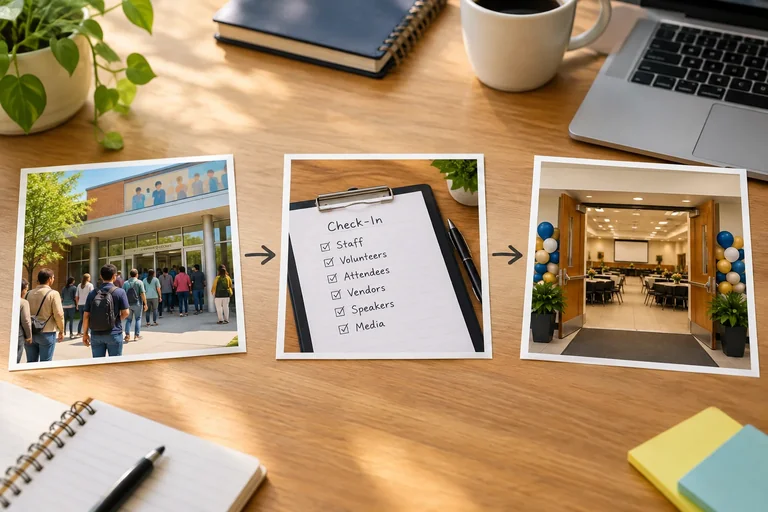
Evidence-based episode: “Last month, 40 visitors arrived shortly before a community event began, and 3 volunteers had no clear division of tasks. I took responsibility for check-in, created a check-in list, and explained tasks to the other 2 volunteers. We checked in all 40 visitors before the event began. The coordinator confirmed that no registrations were missed.”
The second response gives a real need, observable actions, and a supported outcome. It does not invent an award, a percentage, or an achievement.
The interviewer asks: “Can you give an example of when you worked independently?” Which response gives the strongest evidence?
Requirement: Handle a busy period.
In 3–5 sentences, choose the strongest kind of support: an adjective-only claim, a statement of interest, or a true episode with a problem or need, an action, and an outcome. Explain the action or result that makes your choice useful.
Then identify one truthful personal episode from work, study, volunteering, or a group activity that you could use for this requirement. Include its problem or need, your action, and its outcome. If you do not have a personal episode ready, clearly label your response Role-play: Alex and use the community-event case from this lesson.
Write at least 180 characters (0/180).
Step 3 of 8
Organize a relevant example with the answer map and recognize its key evidence in a spoken interview model.
A developed interview answer is a short story with a purpose. Use this answer map:
Situation → Responsibility → Action → Result → Relevance
This is a guide, not a rigid script. Keep the first 2 parts brief, so the interviewer can clearly hear your action, the result, and the connection to the job.
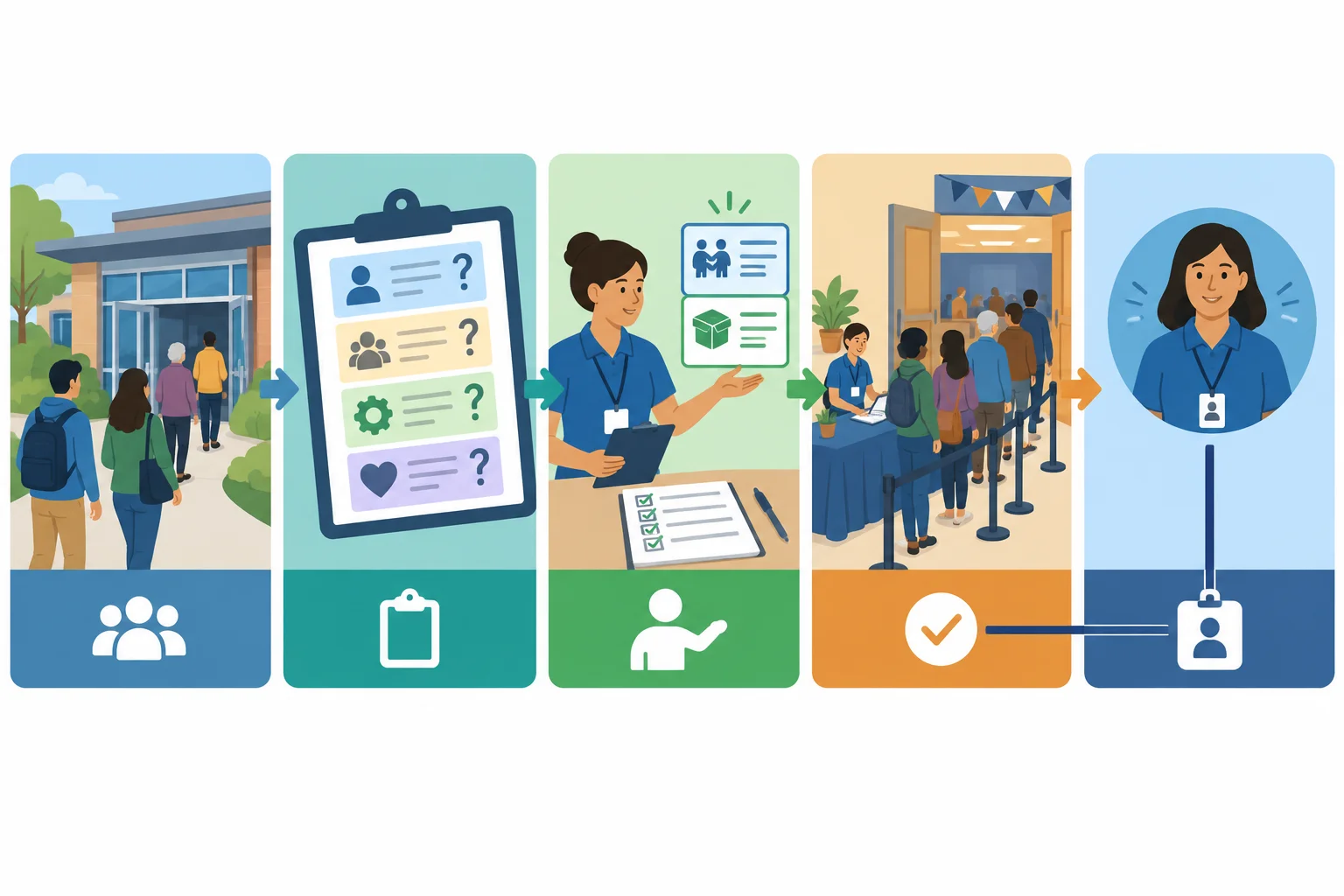
Move from context to evidence, then make the relevance to the role explicit.
Example
Situation: Last month, 40 visitors arrived shortly before a community event began.
Responsibility: Check-in needed attention because 3 volunteers had no clear division of tasks.
Action: I took responsibility for check-in, created a check-in list, and explained tasks to the other 2 volunteers.
Result: We checked in all 40 visitors before the event began. The coordinator confirmed that no registrations were missed.
Relevance: This experience is relevant because it shows I can handle a busy period and communicate clearly.
Listen and choose an option.
Listen to the interview exchange. Which option identifies Alex’s main action and the outcome?
Morgan: Can you give an example of a time you handled a busy period?
Alex: Last month, shortly before a community event began, 40 visitors arrived. Three volunteers had no clear division of tasks, so I took responsibility for check-in. I created a check-in list and explained tasks to the other 2 volunteers. We checked in all 40 visitors before the event began. The coordinator confirmed that no registrations were missed. This experience is relevant because it shows I can handle a busy period and communicate clearly.
Tip
Notice the balance in Alex’s response. The situation and responsibility set up the problem quickly. The action gives concrete evidence, the result shows what changed, and the final sentence connects the example to the requirements for a Community Center Assistant.
You can adapt the wording to your own experience. Keep the same clear movement from a real event to its relevance.
These sections form one interview answer. Put them in the most logical order.

Step 4 of 8
Make interview evidence accurate by separating personal actions from team results and linking a finished example to current experience.
A strong answer separates your contribution from the result the group achieved together.
Use I for Alex’s own actions: taking responsibility, creating the check-in list, and explaining tasks. Use we for the team’s completed check-in. This is accurate, specific, and fair.
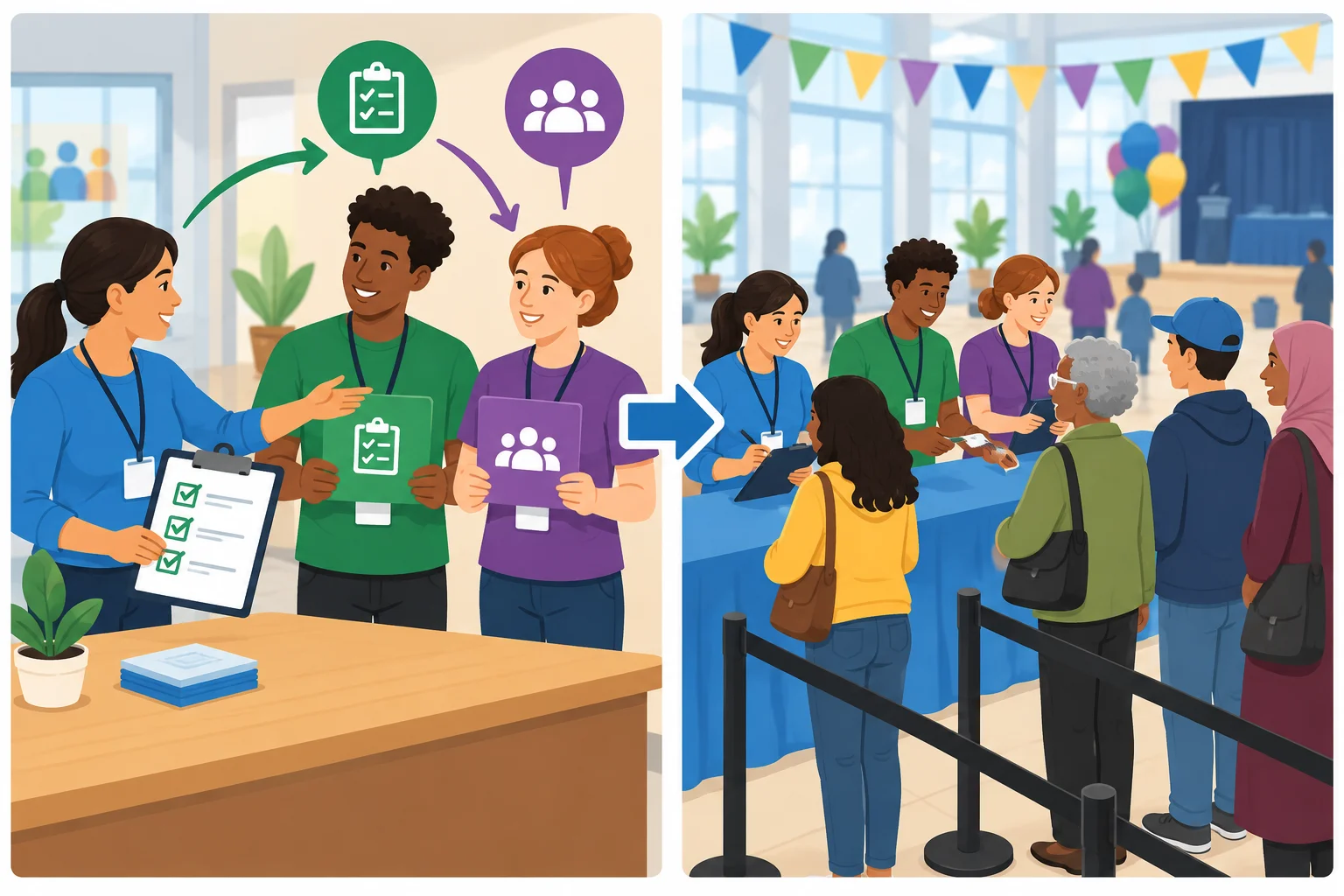
Alex’s individual steps belong with I; the completed check-in is a shared result with we.
Replace a general adjective with an observable action. Specific verbs let the interviewer see what you did.
| Vague claim | Specific evidence |
|---|---|
| I was helpful. | I created a check-in list. |
| I was successful. | We checked in all 40 visitors before the event began. |
| I am organized. | I took responsibility for check-in and explained tasks. |
Use the familiar past simple for actions and results in the finished episode last month. Use the present perfect for experience that continues to matter now.
Do not attach a finished-time expression such as last month to the present perfect. The current experience must grow naturally from the facts of the example.
Choose the tense according to the meaning, not because one tense sounds more formal.
| Meaning | Form | Accurate wording |
|---|---|---|
| Alex’s completed action | Past simple | I took responsibility for check-in. |
| Action in the finished event | Past simple | I created a check-in list last month. |
| Team’s completed result | Past simple | We checked in all 40 visitors before the event began. |
| Experience up to now | Present perfect | I've gained experience welcoming visitors. |
Example
Accurate short section
Last month, I took responsibility for check-in when visitors arrived shortly before a community event. I created a check-in list and explained tasks to the other 2 volunteers. We checked in all 40 visitors before the event began. I've gained experience handling busy periods and communicating clearly.
The wording reports only the supplied facts. It does not claim that Alex completed the team result alone.
Complete Alex’s sentence about the event last month:
“I ___ responsibility for check-in.”
Build the short answer section in the clearest order. Keep Alex’s individual actions with I, the shared result with we, and the current skill with the present perfect.
Your sentence
Available words

Step 5 of 8
Connect a specific example to the role, then use pauses and stress to make the evidence easy to follow.
Finish an example by explaining its connection to the role. Use This experience is relevant because ... and name a requirement that your example supports.
Do not end with “I’m a good candidate.” That is a general claim. A relevance sentence tells the interviewer why your action and result matter for this job. For Alex’s event, the supported links are handling a busy period and communicating clearly.

Your final sentence should connect what happened in the example to a requirement that the evidence actually supports.
Example
I created a check-in list / and explained tasks to the other 2 volunteers. / We checked in all 40 visitors before the event began. / This experience is relevant because it shows I can handle a busy period and communicate clearly.
Use short thought groups: each group should keep a meaningful idea together. Pause briefly between groups, not in the middle of an important phrase.
Put clear stress on the action and result that prove your point:
I created a check-in list / and we checked in all 40 visitors.
This experience is relevant / because I can handle a busy period.
Listen for the short pauses between ideas and the stronger action, result, and relevance words.
I created a check-in list, and we checked in all 40 visitors. This experience is relevant because I can handle a busy period.
Tip
Stress helps the listener notice evidence. It does not mean speaking loudly all the time. Keep busy period together as one meaningful phrase.
Build a role-specific closing sentence.
Your sentence
Available words
Listen and write what you heard.
Listen and type the 9-word sentence exactly as you hear it. After submitting, compare your answer with the transcript.
Create and rehearse a short action–result–relevance section for the Community Center Assistant role.
Pause between the 3 ideas and stress key action or result words. Then type the 3 lines you rehearsed and name 2 words you stressed. If you use Alex’s case, use only the established facts: keep Alex’s contributions with I and the team result with we.

Step 6 of 8
Respond to an interview follow-up by identifying the missing detail, answering it briefly, and keeping every statement supported by your example.
A follow-up question asks for one missing detail. First, listen for its focus:
Answer that detail directly. Usually, 1 or 2 developed sentences are enough. Do not restart your whole answer map or add unrelated information.
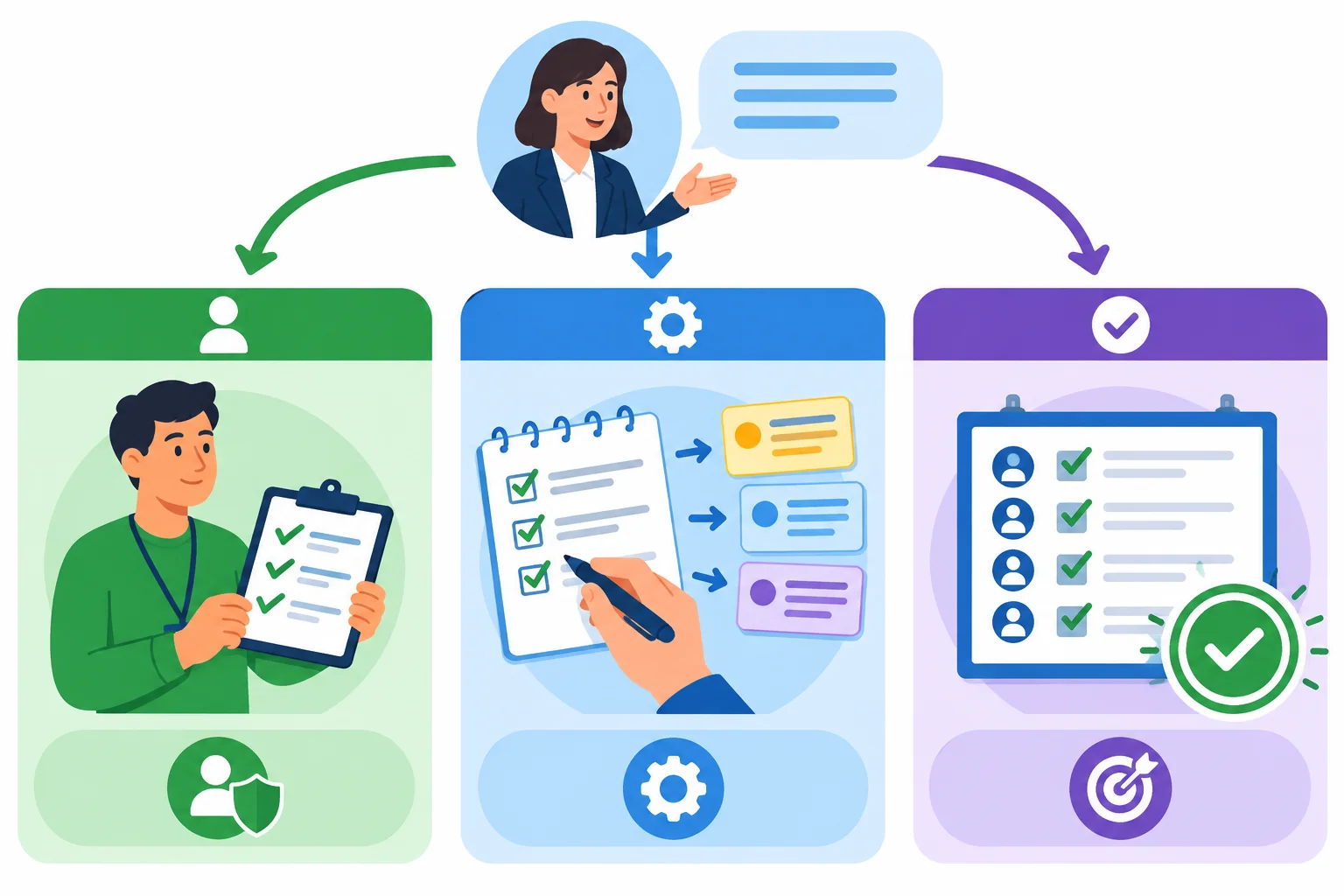
Identify the one detail the interviewer wants, then answer only that part.
Example
Responsibility
Morgan: “What were you responsible for?”
Alex: “I took responsibility for check-in.”
Action
Morgan: “What did you do?”
Alex: “I created a check-in list and explained tasks to the other 2 volunteers.”
Result
Morgan: “What shows that it was successful?”
Alex: “The coordinator confirmed that no registrations were missed.”
Listen and choose an option.
Listen to Morgan’s follow-up question. What kind of detail does Morgan want?
What did you personally do when the visitors arrived?
If the follow-up question is unclear, ask a brief clarification question before you answer. This is better than guessing or adding unsupported details.
Use a question that names the two possible meanings. Then listen and give the requested detail.
Example
Morgan: “Can you say more about that?”
Alex: “Could you clarify whether you mean what I did or what the team did?”
Morgan: “What you did.”
Alex can now answer with a specific personal action, without repeating the whole interview answer.
Tip
Keep your follow-up response factual. Use only details from your example; do not invent extra achievements to make the answer sound stronger.
Listen to Morgan. Say a direct 1- or 2-sentence response aloud. Then type the key point of your response below.
Alex, how do you know that the check-in process was successful?
Type the key point that answers Morgan’s question after you have said your response aloud.
Write at least 20 characters (0/20).

Step 7 of 8
Write a concise post-interview email that confirms interest and recalls one supported strength.
A follow-up email is a brief reminder after an interview. Use the professional email organization you already know, but focus on 3 points:
Do not retell your whole interview example. Select 1 or 2 accurate details that help Morgan remember why you fit the Community Center Assistant role.

Keep the message brief: the body should remind the interviewer of one relevant, supported strength.
A useful reminder is consistent with your interview answer. Keep the facts accurate: Alex created the check-in list and explained tasks; the team checked in the visitors. These facts support handling a busy period and communicating clearly. They do not prove that Alex worked independently.
The model's message body has 45 words. Do not count the subject line, greeting, or closing. It names the role, selects a small piece of evidence, and explains why that evidence matters.
Example
Subject: Thank you for the interview
Dear Morgan,
Thank you for the interview. I remain very interested in the Community Center Assistant role at Riverside Community Center. My experience organizing check-in during a busy period shows that I can handle a busy period and communicate clearly. I would welcome the opportunity to contribute.
Best regards,
Alex
Tip
Use the model as a pattern, not a script. Your email needs only the evidence that supports the strength you want the interviewer to remember. Keep its facts consistent with your spoken example.
Write a follow-up email with a 40–60-word message body. Do not count the subject line, greeting, or closing.
Thank Morgan, confirm your interest in the Community Center Assistant role, and link 1 supported strength to a requirement. Use only facts from Alex’s interview example. After writing, compare it with the model on the previous screen: Is it relevant, factually consistent, and professionally concise?
Write your follow-up email.
Write at least 200 characters (0/200).
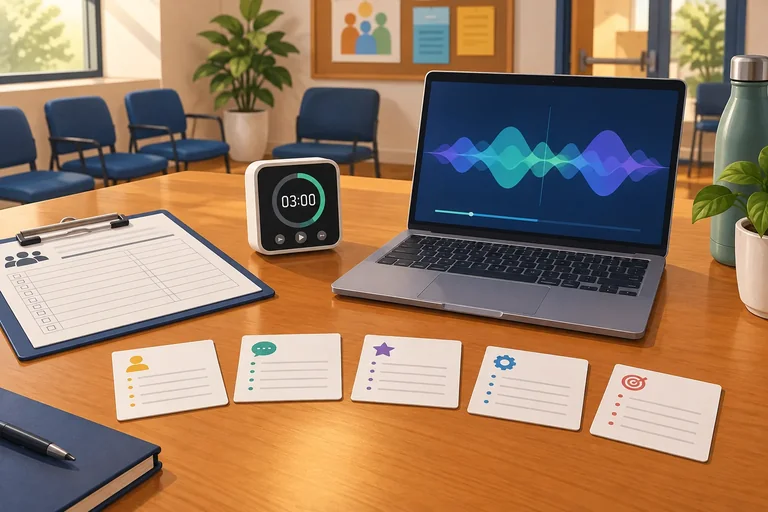
Step 8 of 8
Complete a short interview simulation, check your performance against a model, and make one focused improvement.
You will now complete a short interview simulation for the Community Center Assistant role at Riverside Community Center.
Re-read the requirements: the role needs someone who can handle busy periods, communicate clearly, and work independently.
Use brief notes—not full sentences and not a memorized script. Choose a true example from your work, study, volunteering, or a group activity. You may also clearly role-play Alex using the supplied facts. Alex’s event supports handling a busy period and communicating clearly; do not claim that it proves independent work.
Aim to speak for 60–90 seconds.
Keep one cue for each stage of the answer map. The cues should remind you what to say, but your spoken answer should sound natural.
| Answer-map stage | Alex’s brief cue | Your brief cue |
|---|---|---|
| Situation | Last month; community event; 40 visitors arrived shortly before it began | Time, place, and immediate need |
| Responsibility | 3 volunteers; no clear division of tasks; I took responsibility for check-in | Your responsibility |
| Action | I created a check-in list; I explained tasks to the other 2 volunteers | Your specific actions |
| Result | We checked in all 40 visitors; no registrations were missed | Observable result |
| Relevance | Handle a busy period; communicate clearly | Job skill shown |

One short cue for each part of the answer map helps you speak flexibly instead of reading a script.
Listen to the interviewer’s question. Then use your notes and answer aloud. Do not read a full script.
Tell me about a time when you handled a busy period and solved a problem.
Speak for 60–90 seconds. Include all 5 stages of the answer map, but spend most of your time on what you did and what changed.
After speaking, type the 5 short cues you used and the approximate number of seconds you spoke. Do not write a complete script.
Write at least 30 characters (0/30).
Example
Compare your rehearsal with this model. It is a guide, not a script to memorize. Notice how Alex uses I for personal actions, we for the team result, past simple for the finished event, and present perfect for experience up to now.
At a calm pace, use the marked thought groups to make the evidence easy to follow.
I can give an example from last month. / Shortly before a community event began, / 40 visitors arrived. / There were 3 volunteers, / but there was no clear division of tasks. / Check-in needed attention, / so I took responsibility for check-in. / I created a check-in list / and explained tasks to the other 2 volunteers. / We checked in all 40 visitors before the event began, / and the coordinator confirmed that no registrations were missed. / I've gained experience welcoming visitors. / This experience is relevant because / it shows I can handle a busy period / and communicate clearly. / Those are important requirements / for a Community Center Assistant at Riverside Community Center.
Use this checklist after your rehearsal and again after the follow-up tasks.
| Check | What to look for in the model |
|---|---|
| Relevance | The final sentence connects the example to supported role requirements. |
| Factual support | Details stay within the event facts; no extra achievements are claimed. |
| Personal contribution | I created the list and explained tasks; we checked in all 40 visitors. |
| Tense accuracy | Past simple describes last month; present perfect describes experience gained up to now. |
| Clear pronunciation | Pauses follow /; key actions and results receive stress. |
| Consistency | The email recalls the same supported strength without changing the event. |
Example
Subject: Thank you for the interview
Dear Morgan,
Thank you for the interview. I remain very interested in the Community Center Assistant role at Riverside Community Center. My experience organizing check-in during a busy period shows that I can handle a busy period and communicate clearly. I would welcome the opportunity to contribute.
Best regards,
Alex
Listen to the follow-up question. Answer aloud in 1–2 developed sentences. Give the missing personal detail directly; do not restart your whole prepared answer.
What did you personally do to solve the problem?
Type the focused follow-up response you gave aloud. Use only details supported by your chosen example. If you role-play Alex, include only details supported by the supplied event facts.
Write at least 20 characters (0/20).
Write or revise your 40–60-word follow-up email now. Do not count the subject line, greeting, or closing in the message-body word count.
Thank Morgan, confirm your interest in the Community Center Assistant role, and remind them of one supported strength. Keep it consistent with your spoken example. If you role-play Alex, do not add facts beyond the supplied event.
Write at least 180 characters (0/180).
Complete your final review. Re-read the role requirements, use your brief notes to deliver your 60–90-second answer aloud, and answer Morgan’s follow-up directly. Then check that your final email has a 40–60-word message body and is consistent with the same example.
Report one targeted improvement you made after using the model and checklist. It may concern relevance, factual support, I/we attribution, past simple versus present perfect, thought-group pauses, stress, or consistency with your email. State what you changed and why it makes your communication clearer or more accurate.
Write at least 30 characters (0/30).
Summary
Congratulations! You completed: Support Job-Interview Answers with Examples
Thousands of online courses in video, ebooks and audiobooks.
To test your knowledge during online courses
Generated directly from your cell phone's photo gallery and sent to your email

Download our app via QR Code or the links below:.



Carry knowledge in your pocket.
Download the Cursa app.
There are hundreds of free courses available, with a free certificate of completion that is saved in your mobile image gallery.
Download the app to access the Course Completion Certificate for Free.


+ 10 million
students

Free and Valid
Certificate

60 thousand free
exercises

4.8/5 rating in
app stores

Free courses in
video and ebooks