
Step 1 of 8
Find the Priorities Behind the Positions
Identify the interests, non-negotiable requirements, and flexible preferences behind Maya’s and Leo’s initial positions for the Riverside Learning Hub workshop.

Learning path · Level 11 · Tutorial 5
Negotiate a practical arrangement in a work, study, or community setting. Read short role briefs and listen to an exchange, using audio choices and brief dictation to identify conditions and commitments. Rehearse both sides of a guided negotiation aloud and write a follow-up that records the terms without overstating agreement.

 Find the Priorities Behind the Positions
Identify the interests, non-negotiable requirements, and flexible preferences behind Maya’s and Leo’s initial positions for the Riverside Learning Hub workshop. 3 min
 Trade Across Priorities
Create a linked package of reciprocal concessions for the Riverside Learning Hub workshop. 3 min
 Make the Conditions Audible
Attach practical conditions clearly to spoken offers, then practise hearing, building, and transcribing linked terms. 4 min
 Test the Whole Package
Check whether a complete set of linked terms is workable before treating any individual concession as settled. 3 min
 Refuse a Condition, Keep the Discussion Open
Respond constructively when a proposed condition does not work, while protecting essential access requirements and offering a feasible alternative. 3 min
 Check What Has Actually Been Agreed
3 min
 Record the Terms Without Overstating Agreement
Record a provisional negotiation package accurately, including linked concessions, outstanding conditions, and named follow-up actions. 3 min
 Negotiate and Follow Up
Complete a guided workshop negotiation aloud and write a precise follow-up that preserves linked terms, pending conditions, and next actions. 6 min
Step 1 of 8
Identify the interests, non-negotiable requirements, and flexible preferences behind Maya’s and Leo’s initial positions for the Riverside Learning Hub workshop.
Before you negotiate, separate what a person says from why it matters.
A position can include a preference, but it does not prove that every detail is essential. Look for explicit evidence before deciding what may move.
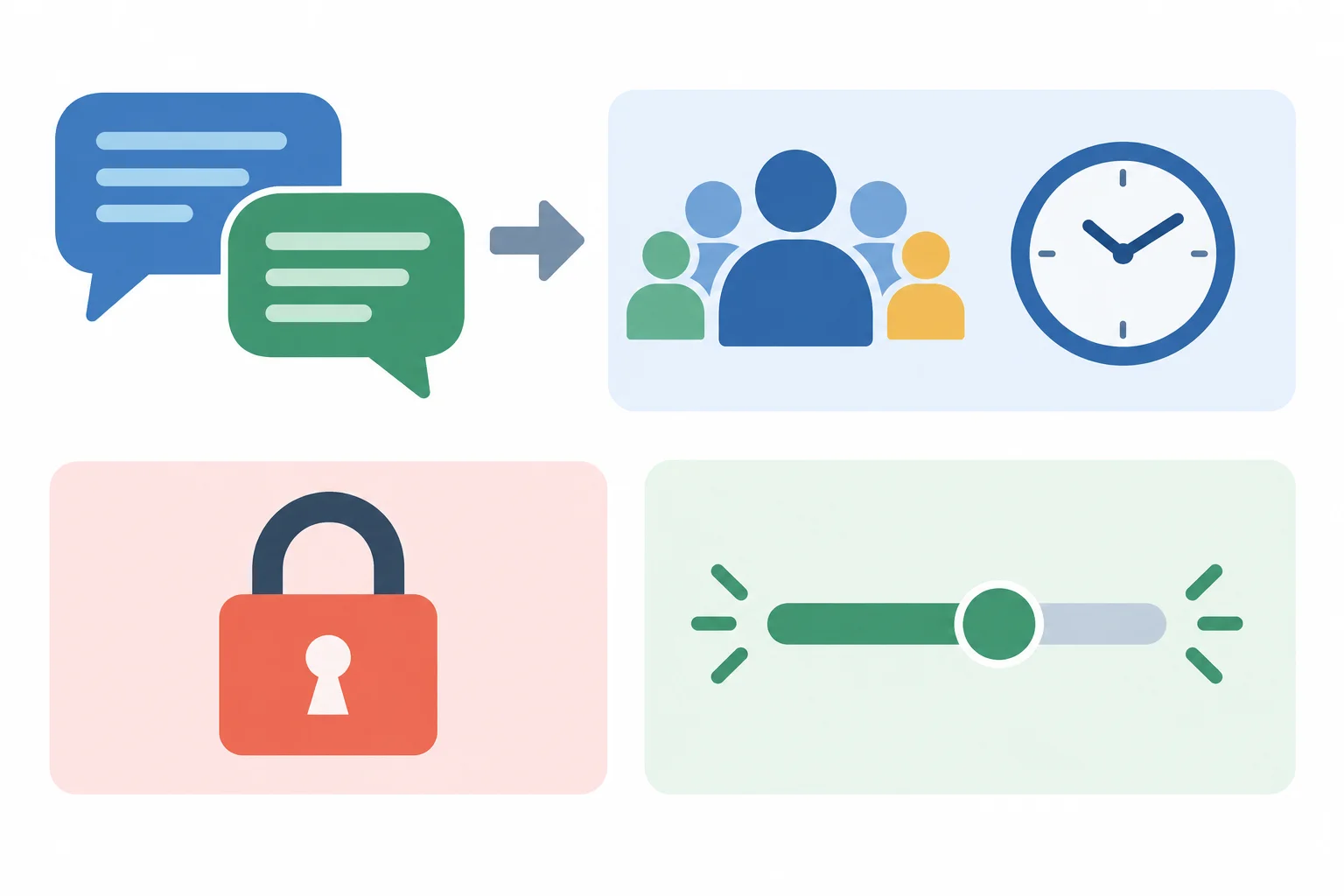
Use the evidence in a brief to move from a stated position to its interest, then identify what is fixed and what is flexible.
The career-skills workshop at Riverside Learning Hub is on 18 October and lasts 90 minutes. Read the two briefs as preparation, not as a list of promises. Maya and Leo begin from different positions; their limits explain why.
The table separates the information already known. An interest is expressed as the practical concern that explains the stated details; it is not an extra agreement.
| Participant | Initial position | Non-negotiable requirements | Flexible preferences | Underlying interest |
|---|---|---|---|---|
| Maya, workshop organiser | 18:00; 30 participants | Start at 17:30 or later; at least 24 participants | 18:00; 30 participants | Participant access to the workshop |
| Leo, venue coordinator | 17:00; 24 participants | No venue staff for registration after 17:00; maximum 24 participants; room clear by 20:00 | None stated | A workable venue within staffing and closing limits |
Tip
Do not invent flexibility. Leo’s lack of venue staff after 17:00 means that he cannot provide that staffing; it does not by itself tell you that every later-start arrangement is impossible. Similarly, Maya’s request for 30 participants does not make 30 her minimum: her stated minimum is 24 participants.
Use the wording in the brief as your evidence.
Position: “Maya initially requests 18:00 and 30 participants.” This tells you what she is asking for now.
Interest: She needs participants to be able to attend. That purpose explains her timing and capacity request.
Requirement: “17:30 or later” and “at least 24 participants” set Maya’s minimum acceptable access.
Preference: 18:00 and 30 participants are better outcomes for Maya, but the brief explicitly separates them from her minimum.
Example
A useful preparation note is: Maya’s position is 18:00 and 30 participants; her non-negotiable requirement is access from 17:30 for at least 24 participants.
This preserves the distinction between an ideal result and an essential one. Make the same distinction for Leo’s staffing, capacity, and closing-time constraints before you discuss possible terms.
Match each piece of information or practical concern to its role in the two briefs.
Match the information to the correct category.
Tap an item and then its matching pair.
Step 2 of 8
Create a linked package of reciprocal concessions for the Riverside Learning Hub workshop.
A trade-off exchanges value across different priorities; it is not simply a compromise in the middle. A 17:30 start, for example, would meet Maya’s minimum time requirement but would not solve Leo’s registration constraint after 17:00.
Look for a package in which each person makes a reciprocal concession: Maya moves from her preferred 30 participants, while Leo moves from his proposed 17:00 start. The linked exchange must still respect every non-negotiable requirement.

The later slot, lower participant number, and registration support form one linked package. Do not detach one benefit from what makes it workable.
The limits show why this package is feasible.
| Participant | Priority | Non-negotiable requirement | Flexible preference or room for manoeuvre |
|---|---|---|---|
| Maya | Start time | 17:30 or later | 18:00 |
| Maya | Attendance | At least 24 participants | 30 participants |
| Leo | Evening attendance | No more than 24 participants | — |
| Leo | Registration | No venue staff after 17:00 | Organiser-provided support can address this |
| Leo | Closing time | Room cleared by 20:00 | An 18:00–19:30 workshop fits |
Use would be willing to + base verb to show a possible concession without presenting it as settled.
Use in return for + noun phrase or in return for + -ing form to name what makes that concession worthwhile.
A reciprocal concession keeps both sides visible:
The participant limit and registration support protect Leo’s constraints. The later start addresses Maya’s interest in access for attendees.
Example
Maya: We would be willing to limit the workshop to 24 participants in return for a later start.
Leo: I would be willing to offer 18:00–19:30 in return for registration support from 2 organiser-provided volunteers.
Each turn states both the concession and its reciprocal benefit. Neither speaker treats an isolated element as a complete deal.
Build the willingness statement.
Your sentence
Available words
Using the working package from the previous screens, write 2 linked sentences. State Maya’s concession and what Leo would be willing to offer in return. Include the time range, participant number, and registration support. Use both would be willing to and in return for.
Write at least 140 characters (0/140).

Step 3 of 8
Attach practical conditions clearly to spoken offers, then practise hearing, building, and transcribing linked terms.
A conditional offer keeps two ideas together: what you can offer and the practical requirement that makes it possible.
Use provided that or as long as to attach the requirement clearly. Both linkers introduce a condition; neither one guarantees that the arrangement will happen.
For a future arrangement, use a present form in the condition clause—not will. Keep the offer and its condition in the same sentence so that the trade-off remains clear.
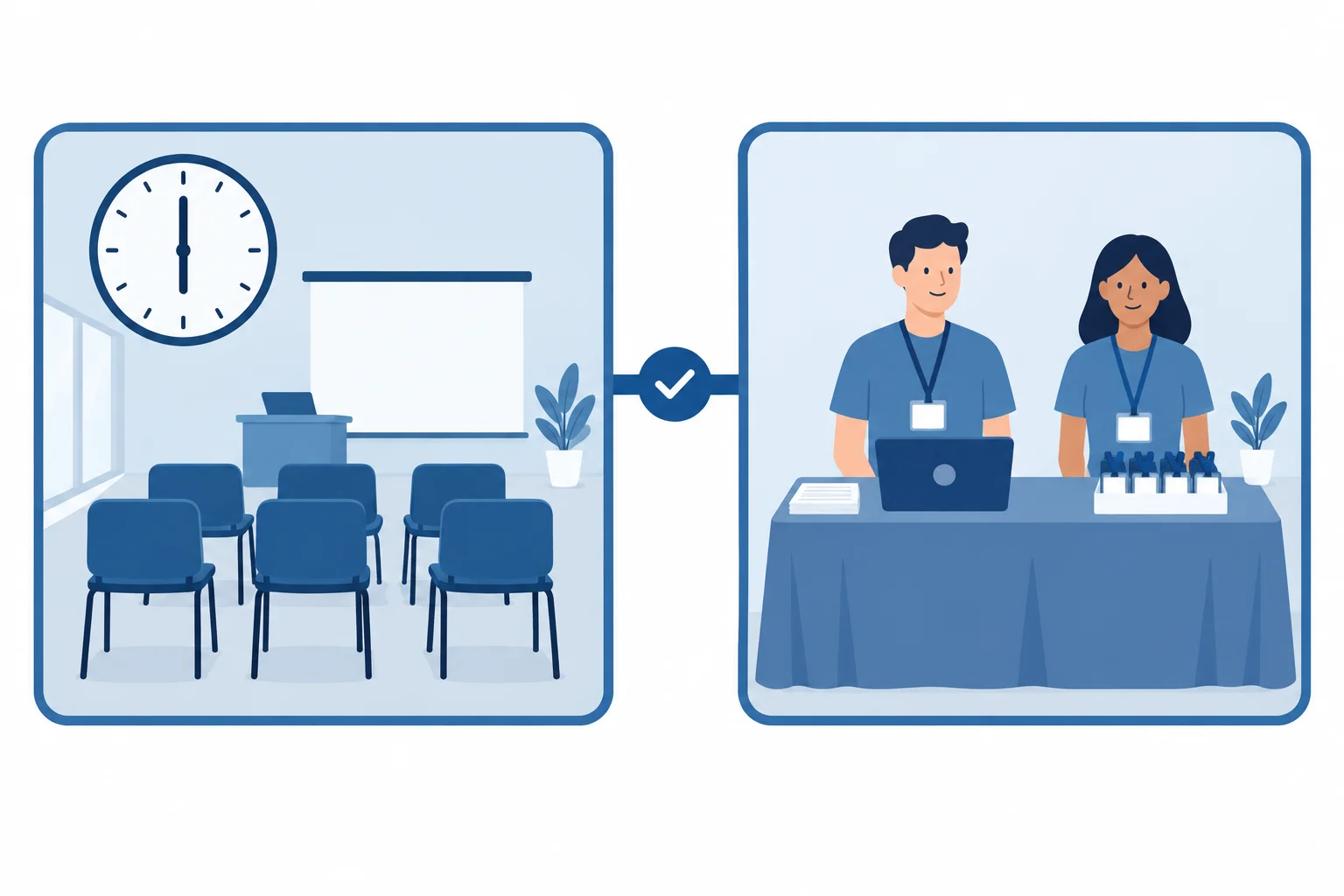
The later start and registration support form one linked offer; neither term should be presented as an independent promise.
Use a present form after each linker when the condition concerns the future arrangement.
| Linker | Offer | Condition clause |
|---|---|---|
| provided that | We can offer an 18:00 start | 2 organiser-provided volunteers handle registration |
| as long as | The 18:00 start works | registration is covered by 2 volunteers |
Complete the offer: “We can offer an 18:00 start provided that …”
Make the decisive requirement easy to hear. Put a short thought-group boundary before the condition and give prominence to the practical point—not to the linker itself.
Maya: We would be willing to start at 18:00 | provided that we have 2 volunteers.
Leo: We can offer an 18:00 start | as long as 2 organiser-provided volunteers handle registration.
Say both offers aloud. Aim for a calm, level delivery: the condition is clear, but it does not sound like an ultimatum.
Listen once, then repeat Maya’s offer aloud with a short boundary before the condition.
We would be willing to start at 18:00, provided that we have 2 volunteers.
We would be willing to start at 18:00, provided that we have 2 volunteers.
Tip
A short pause helps the listener process the offer first. Prominence on the practical requirement helps them hear exactly what must be in place.
Build Maya’s conditional offer.
Your sentence
Available words
Build Leo’s conditional offer.
Your sentence
Available words
Listen and write what you heard.
Listen and transcribe the conditional offer exactly.

Step 4 of 8
Check whether a complete set of linked terms is workable before treating any individual concession as settled.
A package is not a list of separate wishes. It is a set of linked terms: each concession depends on what the other person provides.
For the Riverside Learning Hub workshop, a later start is only workable together with the participant limit and registration support. Test the complete package before treating any single part as settled. A positive reaction to 18:00 does not, by itself, settle the rest.

The later start, 24-participant limit, and registration support must be considered together.
Tip
Room for manoeuvre means a term may be discussed; it does not mean that its linked requirements disappear. When one person mentions an attractive element, bring the conversation back to the whole trade-off.
Use a simple spoken flow:
Exploratory questions keep the exchange open: “Would that address your staffing concern?” They test feasibility. They do not announce that an agreement has been reached.
Listen for the proposal, the practical check, and the response.
Maya: Would 18:00–19:30 for 24 participants work, provided that we have 2 organiser-provided volunteers for registration?
Leo: The later start would help. Could the 2 volunteers be available by 17:00, so that registration is covered?
Maya: I would need to check. If they can be available, would the complete arrangement address your staffing concern?
Example
Notice that Leo does not simply accept 18:00. He checks the staffing condition. Maya then checks whether the full arrangement—not just the later start—would meet Leo’s needs.
Put the three turns in the order that creates a proposal–check–response exchange.
First, rehearse the ordered exchange aloud twice: speak Maya’s turns, then speak Leo’s turn. Keep the condition audible rather than rushing past it.
Now imagine Leo replies only: “18:00 would help.” Write one Maya sentence that reconnects the later start to the missing registration condition. Include the participant number as part of the complete package.
Write at least 60 characters (0/60).

Step 5 of 8
Respond constructively when a proposed condition does not work, while protecting essential access requirements and offering a feasible alternative.
Leo’s proposed 17:00 start is one way to address a real interest: registration cannot depend on venue staff after 17:00. Maya can recognise that staffing concern without accepting that solution.
Maya’s non-negotiable requirement is participant access: the workshop must start at 17:30 or later. A constructive refusal keeps this boundary clear, then looks for room for manoeuvre elsewhere. Do not let politeness hide a concession: saying “We will try 17:00” would weaken Maya’s position.
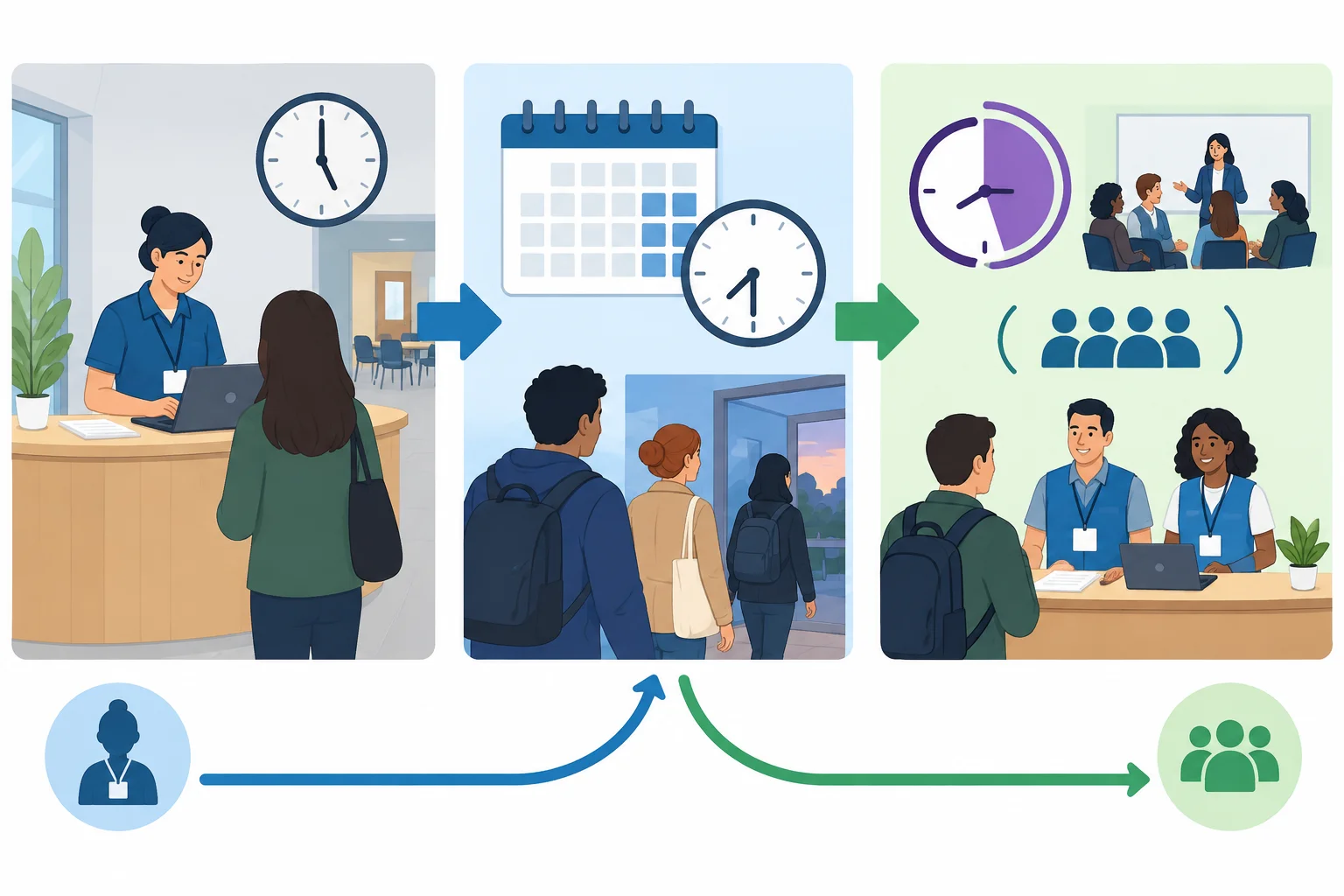
The proposed alternative keeps the terms linked: an 18:00–19:30 workshop for 24 participants, with 2 organiser-provided volunteers for registration. It is a proposal, not an agreement or a confirmation that volunteers are available.
Use a three-part response:
The reason explains the limit; it is not an excessive apology. Keep the alternative as one package, so that registration support is not detached from the later start and participant limit.
Example
Maya: I understand that registration after 17:00 is difficult without venue staff. However, a 17:00 start would not work for our participants, because many cannot arrive before 17:30. Could we explore 18:00–19:30 for 24 participants, with 2 organiser-provided volunteers handling registration?
Tip
Avoid vague accommodation such as “We will try to make 17:00 work.” It sounds cooperative, but it accidentally concedes Maya’s non-negotiable requirement. Be direct about the boundary, then be constructive about the alternative.
Put Maya’s response in the most constructive order.
Your sentence
Available words
Leo says: “We need the workshop to start at 17:00 because we have no venue staff for registration after 17:00.”
Speak as Maya. First rehearse your response aloud, then write 3–4 sentences. Recognise Leo’s staffing concern, clearly preserve Maya’s access requirement, and offer a complete feasible alternative for the 18 October workshop. Keep the 90-minute duration, the limit of 24 participants, and the need for registration support in view. Do not claim that a final agreement has been reached or that volunteer availability is confirmed.
Write at least 220 characters (0/220).

Step 6 of 8
A spoken arrangement has two separate questions: What is the package’s status? and What has each person committed to do?
Use subject to + noun phrase to qualify acceptance: subject to Priya's approval. It means the acceptance is real but not final.
A promise to take an action is different from a promise of an outcome. I will request approval by 13 October is a firm commitment. It does not mean Priya will approve.

The package cannot move from Provisional to Confirmed until its outstanding dependencies are resolved. The follow-up actions can still be firm commitments now.
Use this status check for the Riverside Learning Hub package.
| Status | Meaning | Useful wording |
|---|---|---|
| Proposed | Terms are being offered or tested. | We could hold the workshop... |
| Provisional | Acceptance depends on something outstanding. | subject to Priya's approval |
| Confirmed | Dependencies are resolved and terms are settled. | Approval and availability are confirmed |
Listen and choose an option.
Listen to Leo. Which account correctly separates what he does in this turn?
Leo: We could hold the workshop from 18:00 to 19:30 for 24 participants, provided that we have 2 organiser-provided volunteers for registration. I will request Priya's approval and report its status by 13 October.
Listen and choose an option.
Listen to both speakers. Which classification connects each piece of spoken evidence to the interest behind it?
Maya: We cannot start at 17:00 because many participants will still be travelling from work. We need a start at 17:30 or later.
Leo: I understand. After 17:00, venue staff are unavailable for registration, and the room must be cleared by 20:00.
Listen and choose an option.
Listen to the full exchange. Which status record is accurate?
Maya: In return for a later start, we would be willing to limit the workshop to 24 participants and provide 2 organiser-provided volunteers for registration, provided that they are available. I will check their availability by 12 October.
Leo: I can accept 18:00–19:30 on those terms, provided that the room is clear by 20:00, subject to Priya's approval. I will request her approval and report its status by 13 October.

Step 7 of 8
Record a provisional negotiation package accurately, including linked concessions, outstanding conditions, and named follow-up actions.
A written follow-up must preserve both what is provisional and what someone has firmly agreed to do next.
Do not turn a provisional agreement into a confirmed booking. Equally, do not weaken a clear follow-up commitment: Maya can commit to checking volunteer availability, and Leo can commit to requesting approval and reporting back. Neither commitment guarantees the result.
Keep the reciprocal concessions connected. Leo’s later slot is offered in return for two linked concessions from Maya: limiting attendance to 24 participants and arranging 2 organiser-provided volunteers for registration. These are one package, not separate promises.

The package remains provisional while approval and volunteer availability are unresolved. The actions to check availability and request approval can still be firm commitments.
Use a record map before drafting. It prevents a reader from mistaking an outstanding dependency for a confirmed result.
| Element | Accurate record | Status |
|---|---|---|
| Later slot | 18:00–19:30; room cleared by 20:00 | Provisional package |
| Maya’s attendance concession | Limit the workshop to 24 participants | Part of the reciprocal package |
| Maya’s registration concession | Arrange 2 organiser-provided volunteers | Part of the reciprocal package; availability unconfirmed |
| Priya’s decision | Approval of the evening booking | Outstanding |
| Maya’s action | Check volunteer availability by 12 October | Committed action |
| Leo’s action | Request approval and report its status by 13 October | Committed action |
Example
Overstated record
The room is booked from 18:00–19:30, and Maya will provide 2 volunteers.
Accurate record
Leo would be willing to offer the 18:00–19:30 slot for the 90-minute workshop in return for Maya limiting attendance to 24 participants and arranging 2 organiser-provided volunteers for registration. This is a provisional agreement, subject to Priya's approval and confirmation that the volunteers are available.
The later slot is linked to both of Maya’s concessions. The wording keeps Priya’s approval and volunteer availability open; it does not claim either outcome is confirmed.
Which sentence records the arrangement without overstating it?
Repair this inaccurate record in 2–4 professional sentences:
“Priya has approved the evening booking. The room is confirmed from 18:00–19:30 for 24 participants, and Maya will provide 2 volunteers. Leo will deal with any remaining details.”
Write an accurate replacement. Preserve the reciprocal package: connect Leo’s later slot to Maya’s limit of 24 participants and registration support. State that Priya’s approval and volunteer availability remain outstanding. Assign Maya’s and Leo’s separate next actions to the correct deadlines. Do not present the booking or volunteers as confirmed.
Write at least 220 characters (0/220).

Step 8 of 8
Complete a guided workshop negotiation aloud and write a precise follow-up that preserves linked terms, pending conditions, and next actions.
Your task is to carry the same evidence from preparation to speech and then to writing. Do not treat a later start, participant numbers, registration support, and approval as separate promises.
Maya's position is 18:00 for 30 participants. Her non-negotiable requirements are a start at 17:30 or later and at least 24 participants. Leo initially proposes 17:00 for 24 participants. Priya, the centre manager, approves evening bookings.
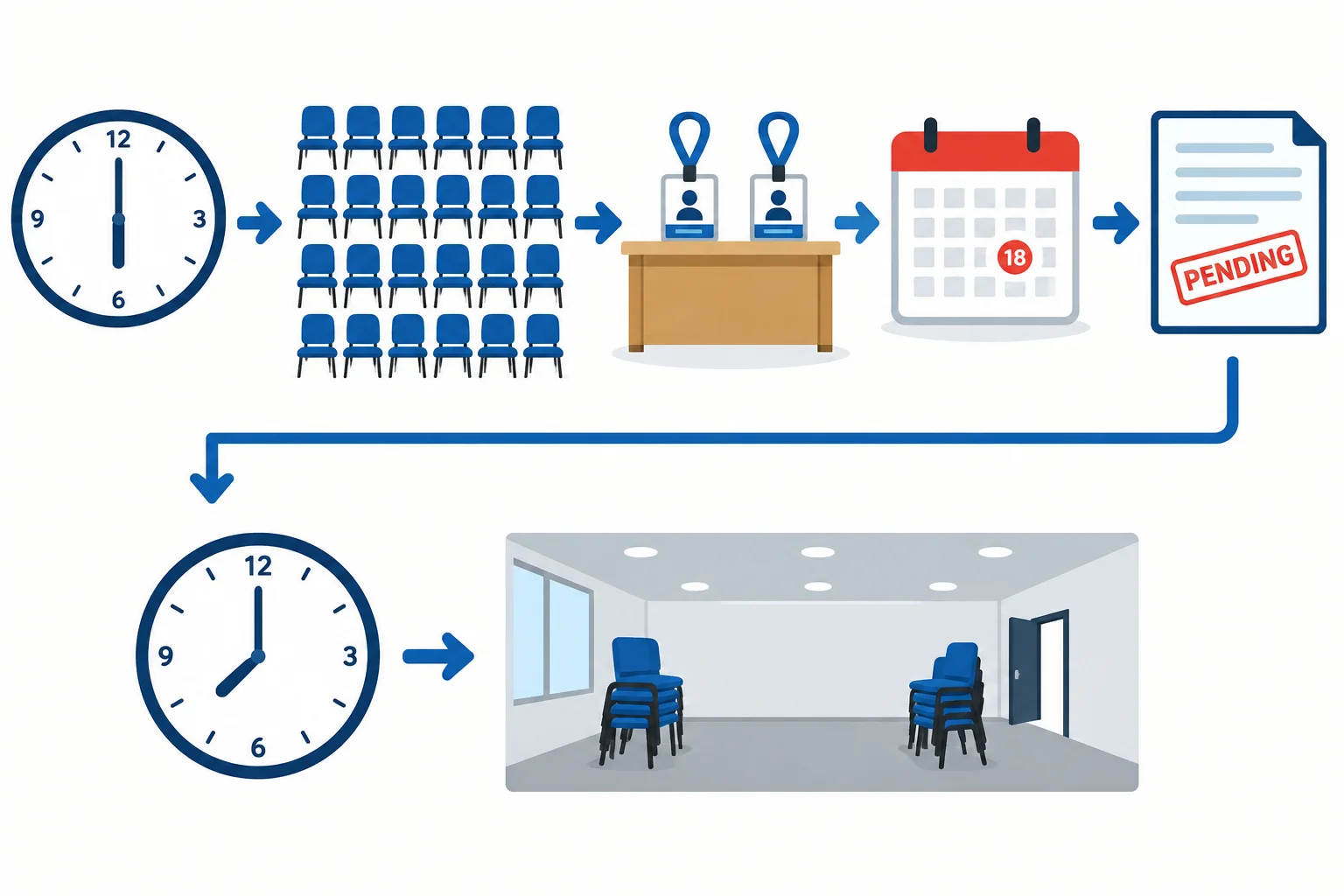
A feasible package works only when its concessions and conditions remain linked.
Use these briefs as evidence during the rehearsal and follow-up.
| Participant | Position and preference | Non-negotiable requirement |
|---|---|---|
| Maya | Requests 18:00 and prefers 30 participants | Start at 17:30 or later; at least 24 participants |
| Leo | Initially proposes 17:00 and 24 participants | No venue registration staff after 17:00; maximum 24 participants; room clear by 20:00 |
| Priya | Approves evening bookings | Approval is required before the booking is confirmed |
Rehearse aloud before reading the model. Take both roles and make 6 turns.
Then listen and compare your wording with the model. You do not need to record or submit your speech.
Listen for the linked concessions, the respectful boundary, and the difference between an action commitment and a confirmed outcome.
Maya: We would be willing to limit the workshop to 24 participants in return for a later start, provided that we have two volunteers for registration.
Leo: I understand the need for a later start. However, venue staff cannot register participants after 17:00. Could your volunteers cover registration?
Maya: I appreciate the staffing limit. A 17:00 start would not meet participant access. Would 18:00–19:30 work as long as the room is cleared by 20:00 and two organiser-provided volunteers handle registration?
Leo: That package would address staffing and closing. I can support it, subject to Priya's approval of the evening booking.
Maya: I will check volunteer availability by 12 October. Will you request approval and report its status by 13 October?
Leo: Yes. This is a provisional agreement only; Priya's approval and volunteer availability are still unconfirmed.
Example
Maya: We would be willing to limit the workshop to 24 participants in return for a later start, provided that we have two volunteers for registration.
Leo: I understand the need for a later start. However, venue staff cannot register participants after 17:00. Could your volunteers cover registration?
Maya: I appreciate the staffing limit. A 17:00 start would not meet participant access. Would 18:00–19:30 work as long as the room is cleared by 20:00 and two organiser-provided volunteers handle registration?
Leo: That package would address staffing and closing. I can support it, subject to Priya's approval of the evening booking.
Maya: I will check volunteer availability by 12 October. Will you request approval and report its status by 13 October?
Leo: Yes. This is a provisional agreement only; Priya's approval and volunteer availability are still unconfirmed.
Listen once more. This reminder gives the current constraints and commitments; it does not confirm the booking or the volunteers.
Leo: To be clear, venue staff cannot register participants after 17:00, the evening workshop can have no more than 24 participants, and the room must be cleared by 20:00. Priya has not yet approved the evening booking. Maya will check whether two organiser-provided volunteers are available by 12 October. I will request Priya's approval and report its status by 13 October. Neither approval nor volunteer availability is confirmed.
Before writing, rehearse a 4–6-turn exchange aloud from both roles. Your exchange must trade across at least two priorities, test the full package, reject 17:00 respectfully, and keep approval conditions visible.
Then write the follow-up. Use the exact subject below. In the body, use this order: linked terms, pending conditions, then named next actions. Do not present a provisional agreement as final.
Write a short professional email with the subject Workshop arrangements — provisional. Write an 80–120-word body, excluding the subject, greeting, and sign-off. Record the linked terms, pending approval and volunteer confirmation, and Maya's and Leo's separate next actions with their deadlines.
Write at least 450 characters (0/450).
Use this evidence-based check after you have written your email. A package can move from Proposed to Provisional, but it is Confirmed only when its outstanding conditions are met. A promise to take a follow-up action is not a guarantee of its result.
| Check | Evidence to find |
|---|---|
| Feasible trade-off | 18:00–19:30, 24 participants, two organiser-provided volunteers, and room clearance by 20:00 |
| Linked conditions | Volunteers enable the later start; Priya's approval qualifies the evening booking |
| Respectful boundary | 17:00 is declined because it does not meet participant access, not because Leo's staffing concern is dismissed |
| Accurate status | Package is Provisional; approval and volunteer availability are not Confirmed |
| Named actions | Maya checks volunteers by 12 October; Leo requests approval and reports status by 13 October |
Summary
Congratulations! You completed: Negotiate Priorities and Trade-offs
You completed this level!
Up next: C2: Precision, Interpretation, and Mediation
 Control Meaning and AmbiguityEdit notices and messages so their wording expresses exactly what you intend. Read competing interpretations, listen to differently stressed versions, choose the supported meaning, and complete a short dictation of scope-bearing phrases. Write an unambiguous revision and explain it aloud. Also explore when a deliberate double meaning serves a clear purpose rather than confusing the reader.
Thousands of online courses in video, ebooks and audiobooks.
To test your knowledge during online courses
Generated directly from your cell phone's photo gallery and sent to your email

Download our app via QR Code or the links below:.



Carry knowledge in your pocket.
Download the Cursa app.
There are hundreds of free courses available, with a free certificate of completion that is saved in your mobile image gallery.
Download the app to access the Course Completion Certificate for Free.


+ 10 million
students

Free and Valid
Certificate

60 thousand free
exercises

4.8/5 rating in
app stores

Free courses in
video and ebooks