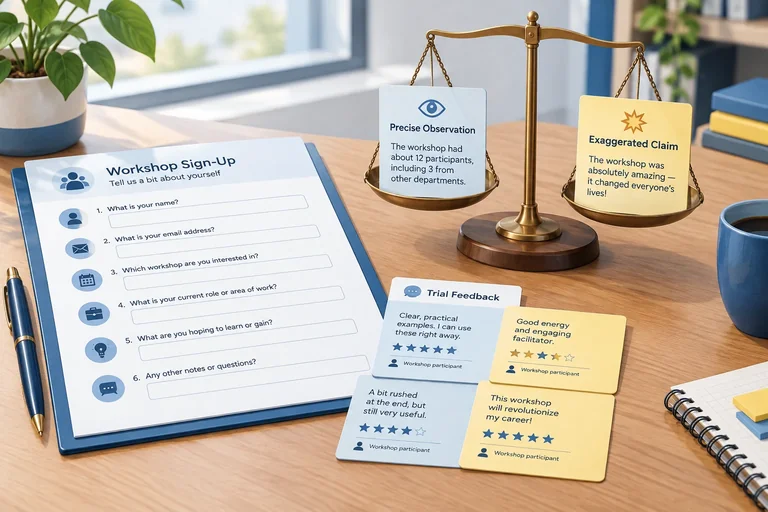
Step 1 of 9
Find the Claim That Needs Qualifying
Identify feedback that exceeds the available evidence or is too vague to guide a response.

Learning path · Level 10 · Tutorial 2
Give feedback that is appropriately cautious, clear, and respectful. Use a short written exchange and contrasting audio to judge certainty and politeness, then qualify a claim and make a tactful request without hiding the main message.

 Find the Claim That Needs Qualifying
Identify feedback that exceeds the available evidence or is too vague to guide a response. 2 min
 Mark Possibility and Impression
Frame possible explanations and initial impressions without treating them as verified facts. 3 min
 Limit the Scope of a Claim
Limit claims to the people, cases, and evidence they actually cover, and reserve tendency language for genuine recurring patterns. 3 min
 Qualify Degree Without Becoming Vague
Use degree qualifiers precisely: show intensity, name comparisons, and retain meaningful exceptions in feedback. 2 min
 Choose a Verb the Evidence Can Support
Select evidence verbs that match the support available, without treating untested causes or predicted benefits as established. 2 min
 Soften the Request, Not the Facts
Separate evidential uncertainty from interpersonal politeness, then make a tactful request that keeps both the concern and the action clear. 3 min
 Hear and Rehearse a Reservation
Interpret contrasting spoken feedback, transcribe a short qualification, and rehearse a clear reservation with a tactful request. 4 min
 Remove Hedges That Hide the Message
Revise feedback so that direct observations remain clear, each qualification has a distinct purpose, and a tactful request is easy to find. 2 min
 Write, Revise, and Deliver Your Feedback
Integrate calibrated claims, purposeful qualifications, and tactful requests in a final written and spoken feedback task. 6 min
Step 1 of 9
Identify feedback that exceeds the available evidence or is too vague to guide a response.
Calibration means matching the strength of a claim to the information available.
For Sam’s feedback on Noor’s revised workshop sign-up form, the evidence is limited:
There are no completion-time data and no trial of the old form. This is limited information: it supports a careful observation, not a guarantee about all future users or a proven comparison with the old form.
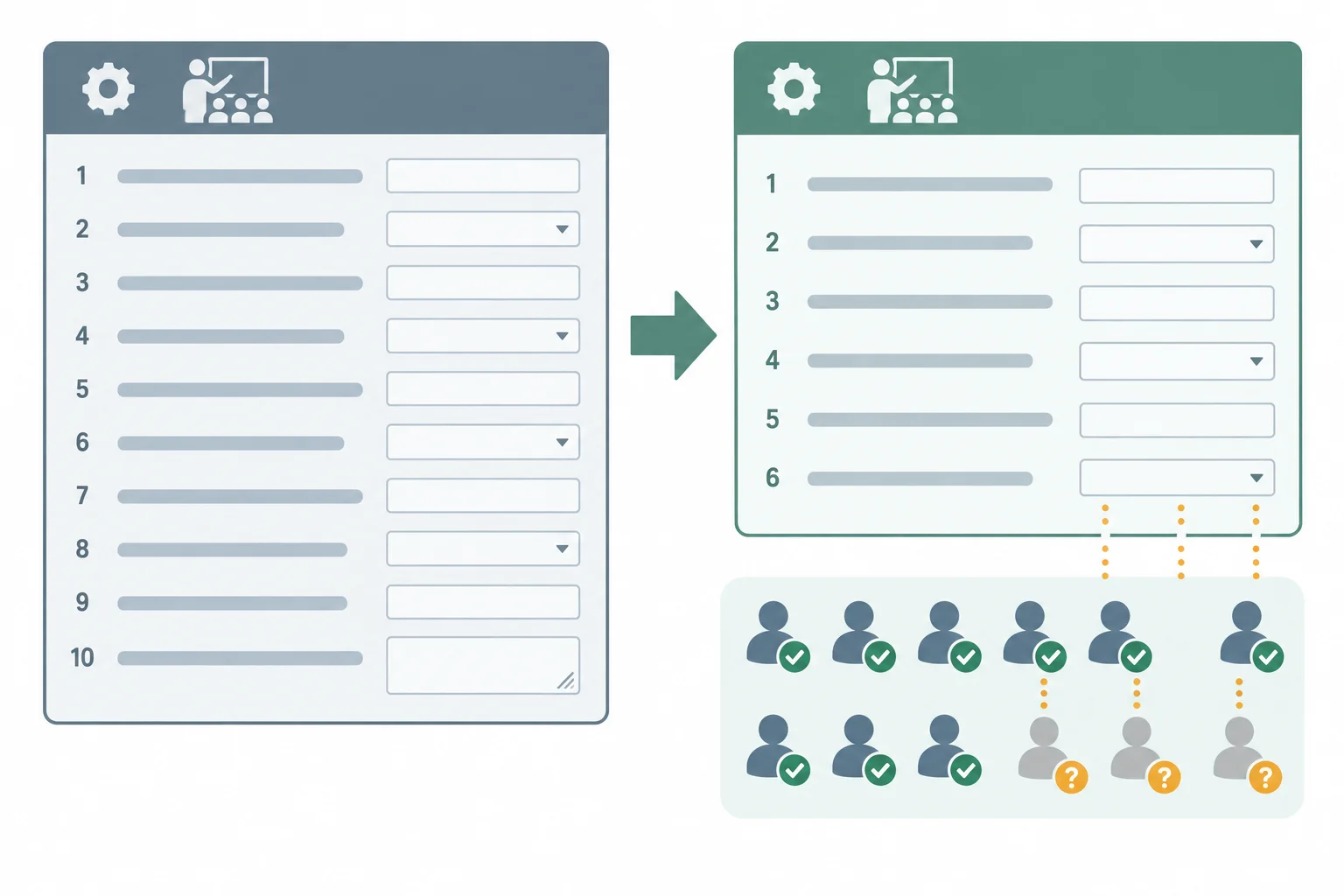
The trial records specific observations. It does not compare completion times or prove how every future user will respond.
An observed result states what happened: “3 volunteers asked what the final question meant.”
A claim interprets an observation or predicts a result. Claims are useful, but they must not go beyond the evidence. A universal word such as everyone or a guarantee such as definitely can make a claim overconfident.
Feedback can also fail by being too vague. If the reader cannot identify the feature, concern, or next focus, the comment is not useful enough to act on.
Example
Noor: “The revised form is definitely easier, and everyone will complete it without help.”
Sam: “Something needs attention.”
Noor’s sentence is a claim, not evidence. The trial did not compare the old and revised forms, and 3 volunteers needed help with the final question. Sam’s sentence signals a concern but does not identify what needs attention.
A clearer starting point is to state the observation directly: “In the trial, 3 volunteers asked what the final question meant.” Sam can then give a focused response rather than an unsupported conclusion.
Tip
Before revising feedback, ask two questions:
Careful feedback avoids both extremes: saying too much and saying too little.
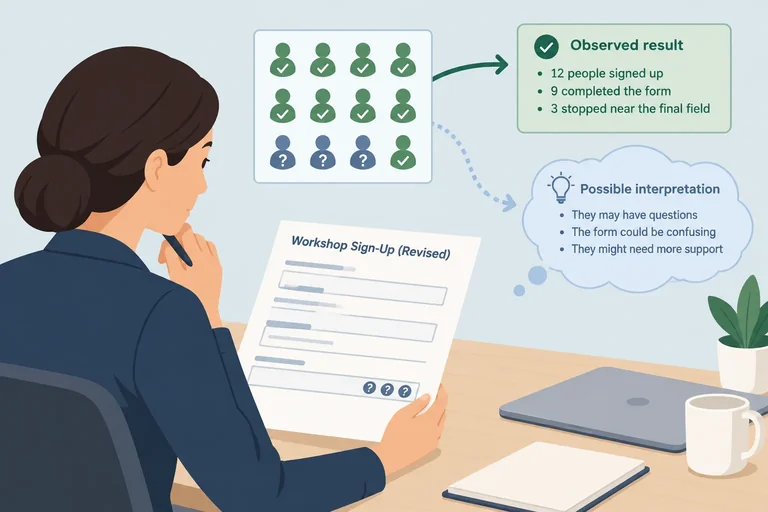
Sam is replying to Noor after the same trial: 12 volunteers used the 6-question revised form; 9 completed it without help, and 3 asked what the final question meant. Match each draft line to the best judgment.
Tap an item and then its matching pair.
Step 2 of 9
Frame possible explanations and initial impressions without treating them as verified facts.
Sam has limited information from 1 trial: the revised form has 6 questions, and 9 of 12 volunteers completed it without help. However, 3 volunteers asked what the final question meant.
That result is an observation, so Sam can report it directly. The reason for it is an interpretation, so it needs cautious wording. A possibility modal marks the interpretation as possible rather than verified.
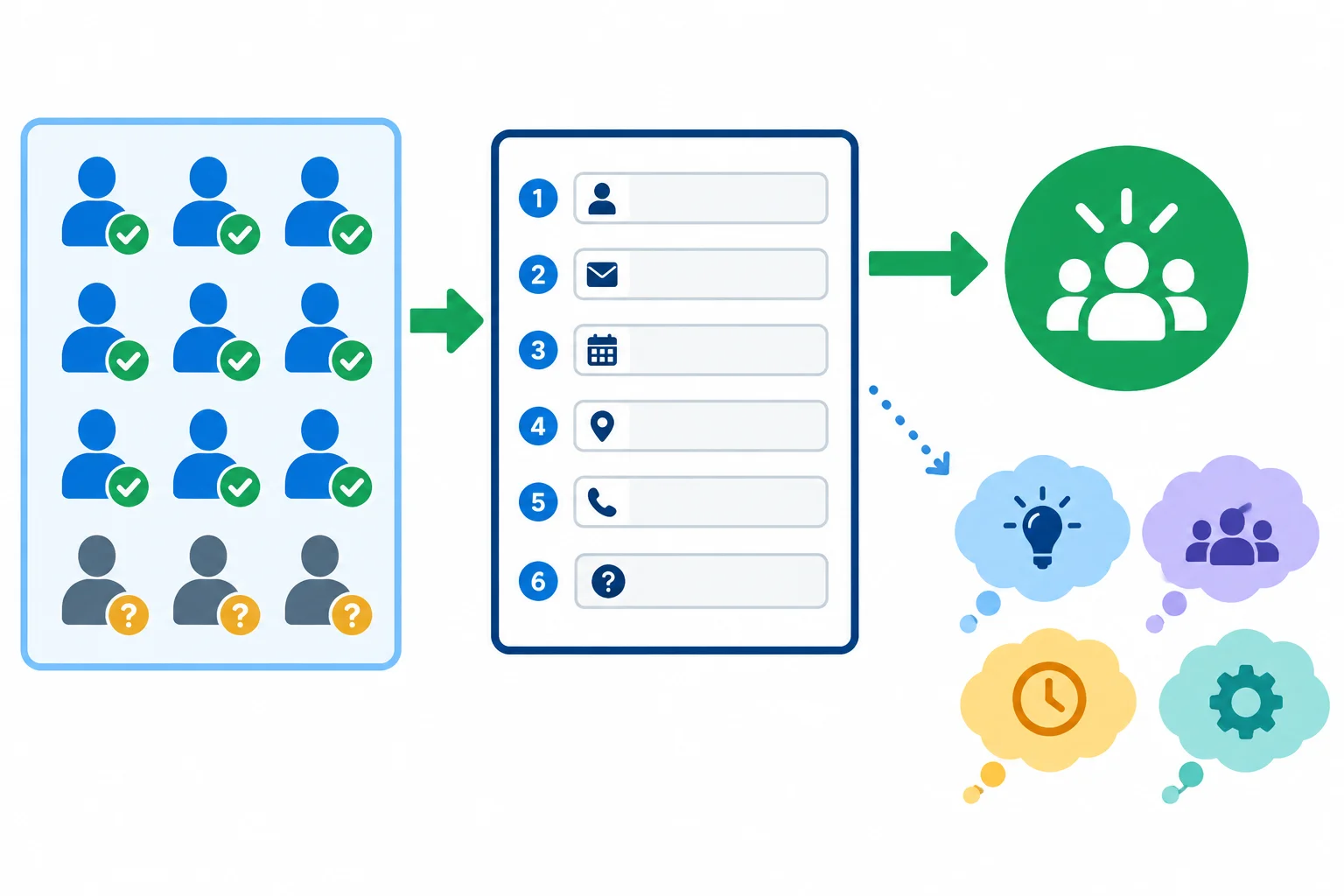
The trial result is known. An explanation for the result remains a possibility.
Example
All 3 patterns can introduce a possible explanation. They do not represent fixed percentages of certainty.
may/might/could + base verbChoose the modal that fits your wording and context; do not pretend that one modal gives an exact numerical probability.
Use seem or appear for an initial impression. They show that Sam is making an assessment from the evidence, not reporting a proven fact.
The observation can stay direct: “3 volunteers asked what the final question meant.” The impression is qualified: it concerns what that observation may mean.
Both structures qualify the assessment, not the reported event.
| Purpose | Pattern | Case example |
|---|---|---|
| Impression about something | seem/appear + to-infinitive | The final question appears to need clarification. |
| Impression in a clause | It seems/appears that + clause | It seems that the final question needs clarification. |
Tip
A plausible explanation is credible, but it is not yet established. “Seem” and “appear” let you present that distinction openly: the volunteers’ questions happened; your conclusion about the form is an impression.
Put the chunks in order to make a cautious possible explanation.
Your sentence
Available words
Complete both short qualifications. Keep the reported observation unchanged. In blank 1, use a possibility modal; in blank 2, use an impression verb.
3 volunteers asked what the final question meant.
This  mean that the final question needs clarification.
The final question  to need clarification.
Step 3 of 9
Limit claims to the people, cases, and evidence they actually cover, and reserve tendency language for genuine recurring patterns.
A scope qualification answers: How far does this claim reach? It can limit a statement to particular people, cases, or evidence without making the observed fact uncertain.
Noor’s revised form was tried once, with 12 volunteers. 9 completed it without help, while 3 asked what the final question meant. That evidence covers this trial and these volunteers—not every future user or every workshop.
Useful scope limits include:
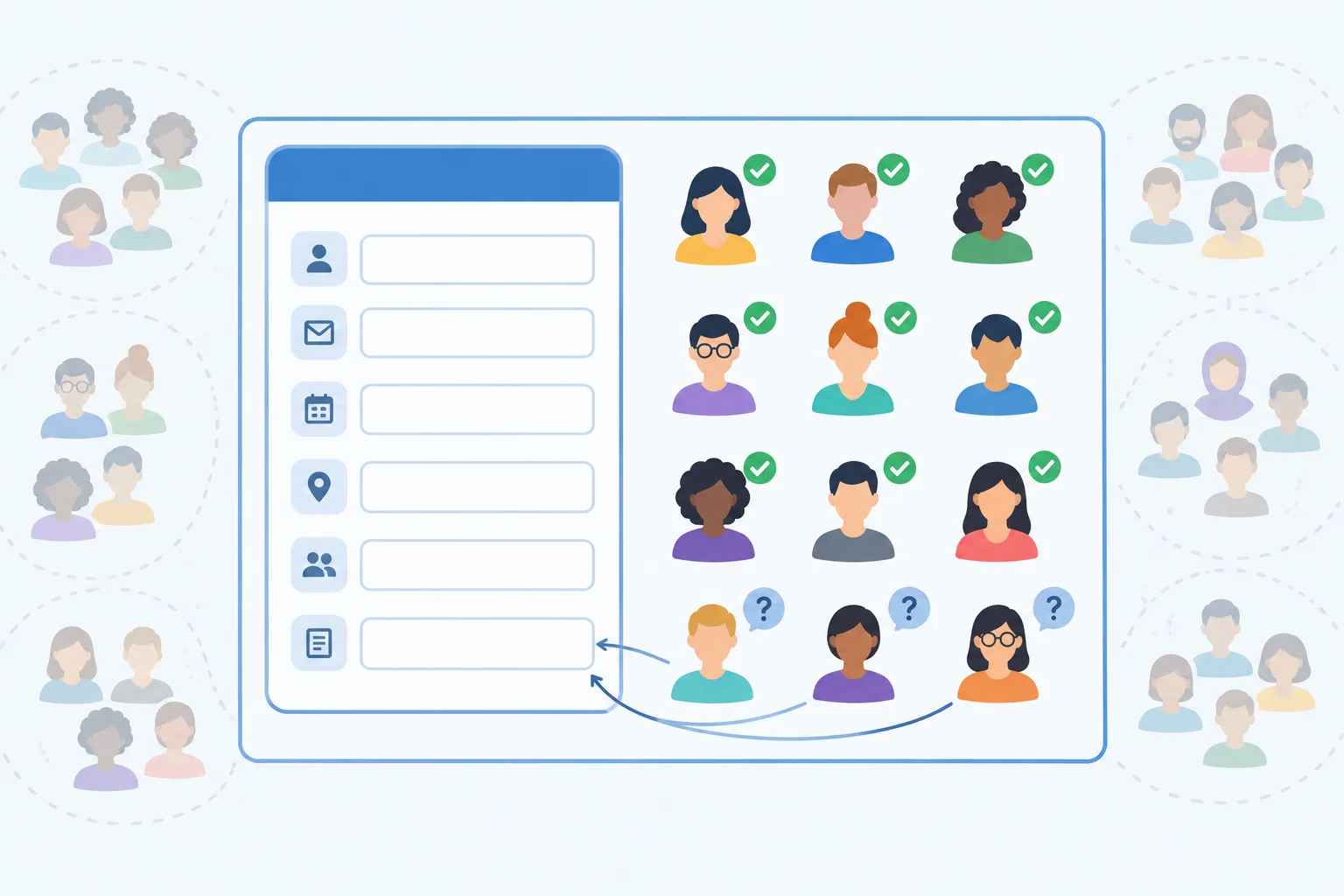
The evidence describes this group in this trial. It does not automatically support a claim about everyone.
Example
claim: The revised form works for everyone.
evidence: In one trial, 9 of 12 volunteers completed it without help; 3 asked what the final question meant.
qualification: For this group, 9 of 12 volunteers completed the revised form without help, but 3 asked what the final question meant.
The qualification does not weaken the count. It prevents the count from being stretched beyond the people and trial observed.
Use tend to + base verb for a recurring pattern, not for one event. A tendency needs repeated, relevant observations before you present it as a pattern.
For Noor’s form, there was only one trial. Do not write that users tend to ask about the final question.
Compare these scope limits:
Neither phrase means “this may be false.” They state where the claim applies or what information supports it.
Example
Separate repeated-observation example — not Noor’s form
Across 6 comparable workshop-form trials, volunteers asked for clarification about an optional final question in 4 trials.
claim: Optional final questions tend to prompt clarification in these trials.
The repeated record supports a recurring-pattern claim. The phrase in these trials still keeps its scope visible: it does not claim that every optional final question will prompt clarification everywhere.
Tip
A scope limit is precise when it identifies the people, cases, or evidence involved. It is not an excuse to make a broad claim sound safer without showing its boundary.
In Noor’s one-off trial, 3 of 12 volunteers asked what the final question meant. Choose the most accurately bounded claim.
Write 2 sentences.
Do not add a cause that the evidence does not establish.
Write at least 140 characters (0/140).

Step 4 of 9
Use degree qualifiers precisely: show intensity, name comparisons, and retain meaningful exceptions in feedback.
Degree qualifiers show how much of an evaluation is true. They do not show how likely it is.
Use the trial facts carefully: the revised form has 6 questions, versus 10 on the old form. This supports a comparison of length, not a claim about faster completion; there are no completion-time data.

Degree can describe intensity, comparison, or a substantial result with an important exception.
A degree word is useful only when its context stays visible. The reader should be able to see the comparison behind relatively or the exception behind largely.
Use the qualifier that matches the job you need it to do.
| Qualifier | What it qualifies | Clear feedback sentence | Visible context |
|---|---|---|---|
| somewhat | Degree of an evaluation | The final question is somewhat unclear. | It limits the degree of “unclear”; it does not mean “possibly.” |
| relatively | A comparison | The revised form is relatively short compared with the old form. | The revised form has 6 questions; the old form has 10. |
| largely | A substantial extent | The trial was largely successful, but 3 volunteers asked what the final question meant. | The success does not remove the remaining concern. |
Example
Compare these meanings:
Degree: “The final question is somewhat unclear.” This evaluates the concern as limited in degree.
Likelihood: “The final question might be unclear.” This presents the concern as possible rather than established.
Do not add somewhat merely to make a problem sound smaller. If 3 volunteers needed clarification, the concern still needs a clear response.
Tip
“Relatively short” describes the revised form compared with the old form’s length. It cannot establish that volunteers completed the revised form faster, because no completion times were collected.
Match each degree qualifier to the function it performs.
Tap an item and then its matching pair.
The revised form has 6 questions, and the old form has 10. Complete the statement:
“The revised form is relatively short ____.”
In the trial, 9 volunteers completed the revised form without help. Complete the statement:
“The trial was largely successful, but ____ volunteers asked what the final question meant.”

Step 5 of 9
Select evidence verbs that match the support available, without treating untested causes or predicted benefits as established.
An evidence verb connects evidence to a claim. Choose it by asking: What does this information directly show, and what is still an interpretation?
A verb is not a fixed numerical scale of certainty. It must fit both the evidence and the precise claim. Direct evidence can support a firm statement about an exact, bounded observation. The same evidence may only support an initial impression about a broader issue.
Here, the form has 6 questions rather than 10. In one trial, 9 of 12 volunteers completed it without help, while 3 asked what the final question meant. This is limited information, so broad conclusions need care.
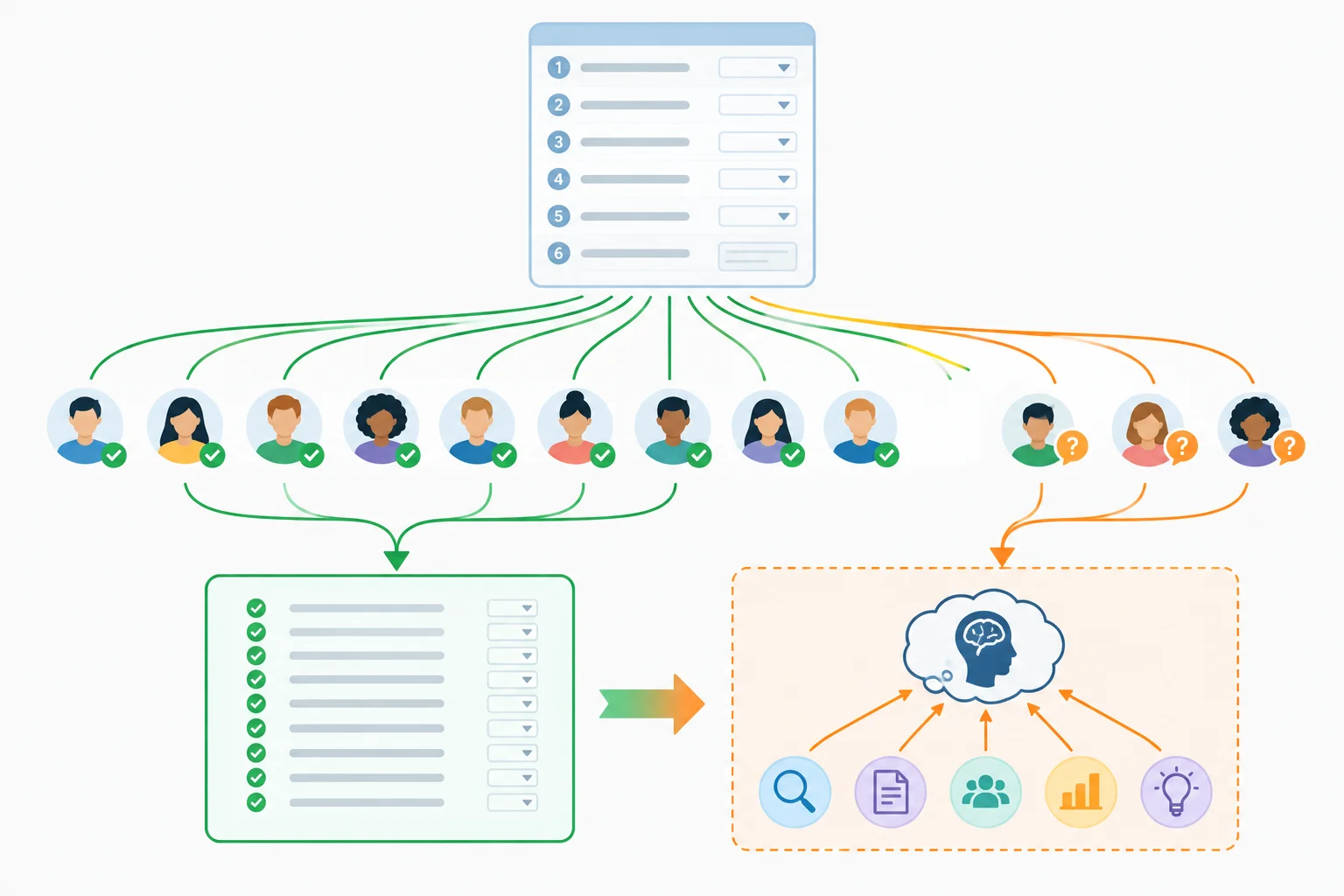
The trial directly records a bounded result. It can also support an inference about the final question, but it does not automatically establish a cause or a future outcome.
Use the verb that matches the relationship between the evidence and the claim.
| Verb | Typical use | Support needed | Example |
|---|---|---|---|
| suggest | A tentative inference | Some relevant evidence | The 3 requests suggest that the final question may need clearer wording. |
| indicate | Evidence points toward a conclusion | Evidence aligns with the conclusion | The results indicate a reasonable concern about the final question. |
| demonstrate | A stated, bounded fact is established | Direct evidence for that exact claim | The trial demonstrates that 9 of 12 volunteers completed the form without help. |
Example
Compare these claims about the same trial:
Evidence: 9 of 12 volunteers completed the revised form without help; 3 asked what the final question meant.
Claim: The trial demonstrates that 9 of 12 volunteers completed the revised form without help.
This is firm, but its scope is explicit: it reports what happened in this trial.
Claim: The results indicate a reasonable concern about the final question.
The evidence points toward a concern without claiming to know its exact cause.
Claim: The 3 requests suggest a plausible explanation: the final question may need clearer wording.
This presents an interpretation as an interpretation.
Warning
Do not make the data prove what it did not test.
The trial cannot demonstrate that unclear wording caused the requests: that cause was not tested. It also cannot demonstrate that the shorter form will save time: there are no completion-time data and no trial of the old form.
Use demonstrate for a conclusion directly established within its stated scope—not for an untested cause, comparison, or prediction.
Which sentence gives a firmly stated but properly bounded conclusion?
Choose the best-supported verb for items 1–3. For items 4–5, write not supported if the use of demonstrate goes beyond the evidence. Then explain one choice.
Explain why one answer fits the evidence, or why one use of demonstrate is not supported.
Write at least 80 characters (0/80).

Step 6 of 9
Separate evidential uncertainty from interpersonal politeness, then make a tactful request that keeps both the concern and the action clear.
Softening has two different functions.
Keep these functions separate. An observed fact can be direct: in one trial, 3 of 12 volunteers asked what the final question meant. The interpretation of that result may need qualification, but the request to Noor can be tactful without making the fact less clear.

Use uncertainty for an interpretation; use politeness for the request to act.
Example
evidence: In one trial, 3 of 12 volunteers asked what the final question meant.
claim: The final question may be unclear to some volunteers.
qualification: may marks the claim as an interpretation, not an established fact.
request: I was wondering if you could clarify this point.
Here, this point has a clear reference: the final question. The request is polite, while the evidence remains direct.
Choose directness by considering the relationship, familiarity, purpose, and urgency. Sam does not know Noor well, so a distancing request is appropriate for a routine review. However, longer wording is not automatically more respectful: a time-sensitive request can be brief, specific, and courteous.
Each version makes the action identifiable: clarify the final question.
| Context | Suitable request | Why it fits |
|---|---|---|
| Sam does not know Noor well; routine review | I was wondering if you could clarify the final question. | Tactful distance with a specific action |
| A familiar colleague; quick check | Could you clarify the final question? | Brief and courteous |
| Publication is due today | Please clarify the final question today, if possible. | Clear urgency without a demand |
Tip
A distancing frame should not hide the action. After I was wondering if you could, use a clear base verb and name what needs attention. The embedded clause stays in statement order: you could clarify, not could you clarify.
Sam writes: “The final question may have seemed unclear to some volunteers. I was wondering if you could clarify this point.”
What does the wording signal?
Build the tactful present request.
Your sentence
Available words
Write 2 sentences to Noor in 20–40 words. State the supported concern directly, then make a tactful request using I was wondering if you could.
Use only these facts: the revised form has 6 questions; in one trial with 12 volunteers, 3 asked what the final question meant. Sam does not know Noor well. Make the requested action specific.
Write at least 60 characters (0/60).

Step 7 of 9
Interpret contrasting spoken feedback, transcribe a short qualification, and rehearse a clear reservation with a tactful request.
Sam is reviewing Noor’s revised workshop sign-up form. The words in a feedback comment may stay the same, but delivery can change the listener’s sense of certainty and respect.
Listen to the identical sentence twice. A pause, rhythm, prominent word, and intonation work together. No single cue has one fixed meaning: a fall-rise can signal reservation or incompleteness in context, but it is not a code by itself.
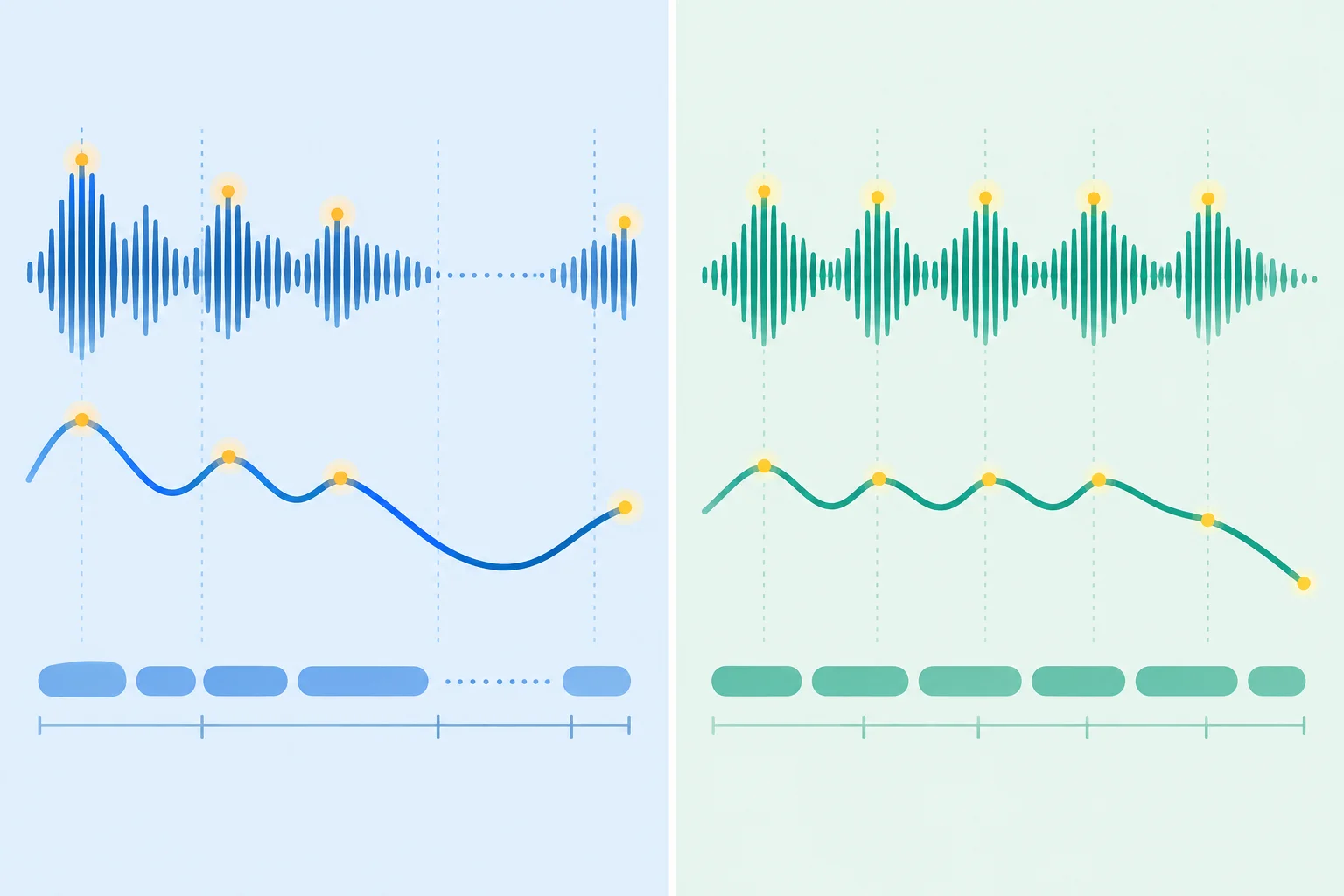
The left pattern leaves more room for reservation. The right pattern sounds more settled, but calm firmness is not the same as dismissiveness.
Listen for the measured pause and the reserved ending.
The final question seems unclear.
The final question seems unclear.
Listen for steady rhythm and clear prominence on the concern.
The final question seems unclear.
The final question seems unclear.
Listen and choose an option.
Context: In a trial with 12 volunteers, 3 asked what the final question meant. Sam does not know Noor well. Listen to this version and choose the best-supported interpretation.
The final question seems unclear.
Listen and write what you heard.
Write the short qualification you hear. Include the scope phrase and the impression verb.
Rehearse this brief feedback response aloud twice:
“For this group, the final question seems unclear. I was wondering if you could clarify this point.”
Keep the limitation audible, then make the requested action clear. Do not add exaggerated pauses or hesitation: the response should sound considered and useful.
Tip
One possible rehearsal map is:
For this GROUP, / the final QUESTION seems UNCLEAR ↘↗. / I was WONDERING if you could CLARIFY this POINT.
Use this as a guide, not a rule. The fall-rise can keep the concern open to discussion; prominence on GROUP, UNCLEAR, and CLARIFY helps the listener hear the limitation, concern, and action.
After rehearsing twice, write 1–2 sentences: Could a listener hear both the limitation and the requested action? Which word or phrase did you make prominent?
Write at least 35 characters (0/35).

Step 8 of 9
Revise feedback so that direct observations remain clear, each qualification has a distinct purpose, and a tactful request is easy to find.
A qualification is useful when it adds a distinct function. It becomes a problem when several expressions all signal the same uncertainty and bury the message.
In Sam’s feedback, a direct observation is available: 3 of 12 volunteers asked what the final question meant. State that result directly. Then qualify the interpretation—not every word around it.
Compare:
Overhedged interpretation: “It may perhaps seem that the final question could possibly be unclear.”
Here, may, perhaps, seem, could, and possibly mostly perform the same job: they all weaken commitment. The reader has to work through five caution signals before reaching the concern.
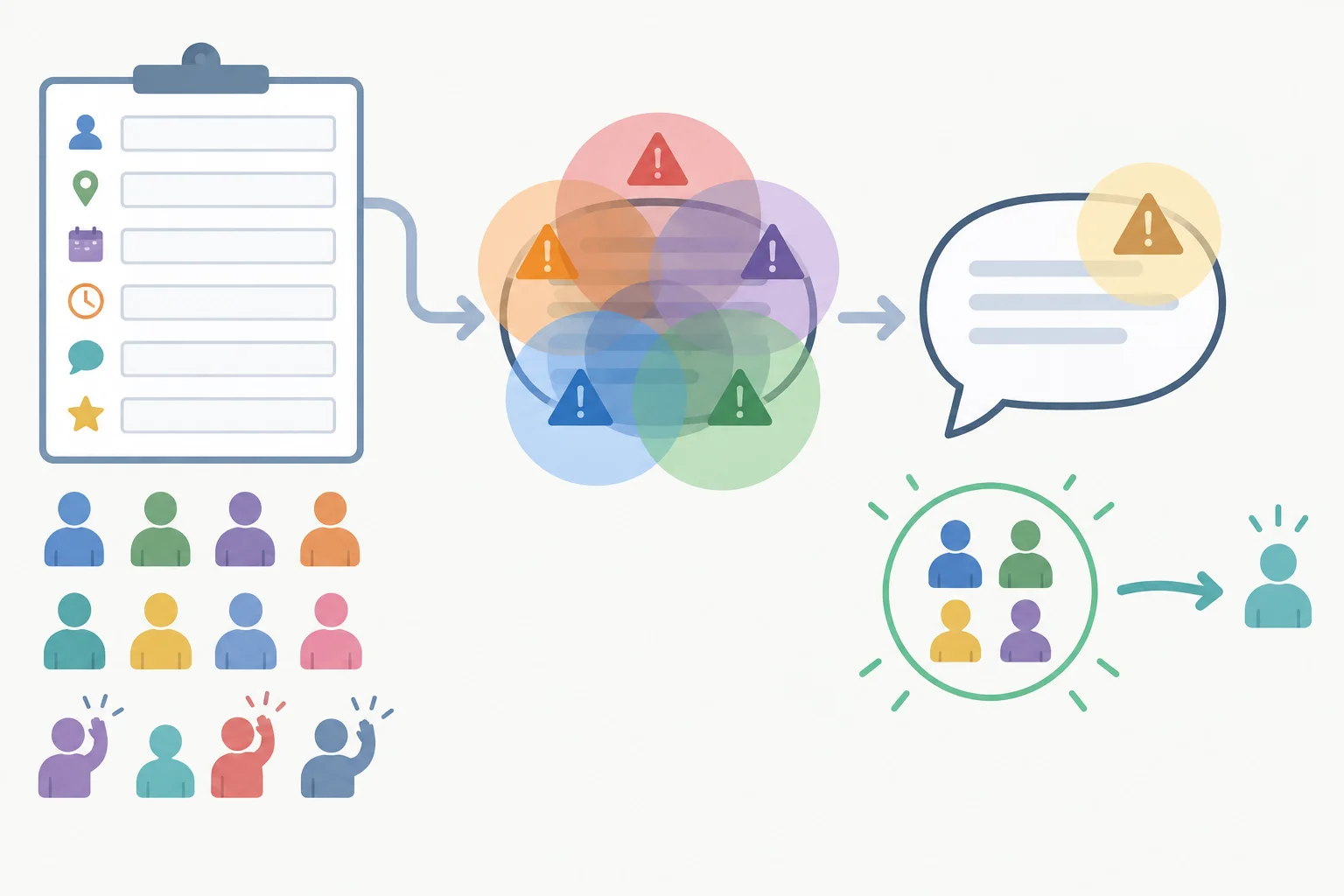
Keep direct evidence visible. Retain only the qualifications that add a different, necessary limit.
Tip
Do not treat revision as a contest to remove every hedge. A useful check is: What function does this expression perform?
If two expressions perform the same function, usually keep the clearer one. If they perform different functions, they may both belong in the revision.
Example
A concise response can contain direct facts, a qualified interpretation, and a tactful request at the same time:
“Three of the 12 volunteers asked what the final question meant. This may indicate that the question is unclear for this group. I was wondering if you could clarify this point.”
The first sentence reports an observed result. It does not need hedging. The second sentence interprets that result, so it uses a possibility marker. For this group limits the claim to the people represented in the trial. The final sentence is polite, but its requested action remains identifiable.
Use this distinction while revising feedback.
| Element | Function | Why it is useful here |
|---|---|---|
| “3 of the 12 volunteers asked ...” | evidence | It reports the observed result directly. |
| “may indicate” | uncertainty | It avoids presenting an interpretation as a verified fact. |
| “for this group” | scope | It avoids claiming that every future user will have the same problem. |
| “I was wondering if you could ...” | politeness | It makes the request tactful without concealing the action. |
The revision below is shorter, but it does not become more confident than the evidence allows.
Example
Before
“It may perhaps seem that, for this group, the final question could possibly be unclear. I was wondering if you could perhaps clarify this point.”
After
“Three of the 12 volunteers asked what the final question meant. This may indicate that the question is unclear for this group. I was wondering if you could clarify this point.”
The revised version removes perhaps, seem, could, and possibly because they duplicate the uncertainty already conveyed by may indicate. It also removes perhaps from the request because the distancing frame already supplies politeness.
The revision keeps two different protections: may indicate marks uncertainty, while for this group marks scope. It adds the direct observation so the interpretation has a visible basis.
Tip
A shorter message is not automatically better. Check both risks:
Aim for a plausible explanation based on limited information—not an unsupported certainty and not an unreadable initial impression.
Edit Sam’s response below. Write 3 sentences:
“It may perhaps seem that, for this group, the final question could possibly be unclear. I was wondering if you could perhaps clarify this point.”
Use the concise model on the previous screen to compare your choices.
Write at least 180 characters (0/180).
Step 9 of 9
Integrate calibrated claims, purposeful qualifications, and tactful requests in a final written and spoken feedback task.
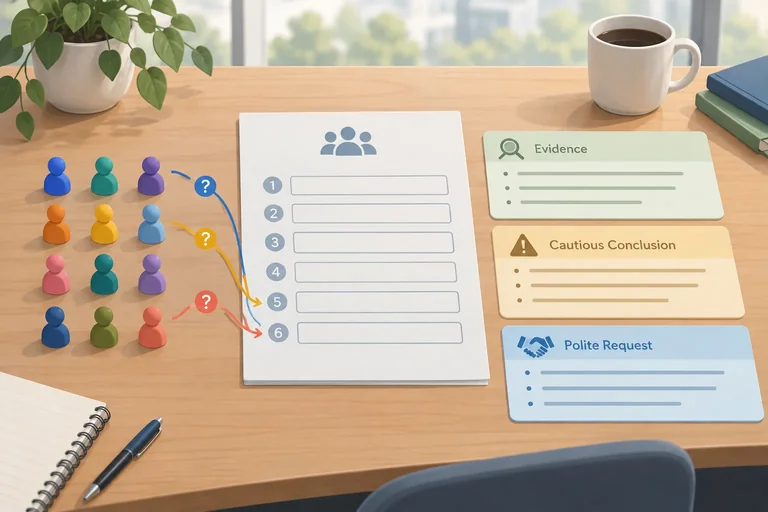
Your final feedback to Noor should connect evidence, a calibrated claim, a useful qualification, and a clear request. Do not add every hedge you know. Choose only the wording that the information needs.
Case recap
6 questions; the old form had 10 questions.12 volunteers, 9 completed the revised form without help.3 volunteers asked what the final question meant.A shorter form is an observed fact. It is not proof that the form is faster, clearer for everyone, or better than the old form.
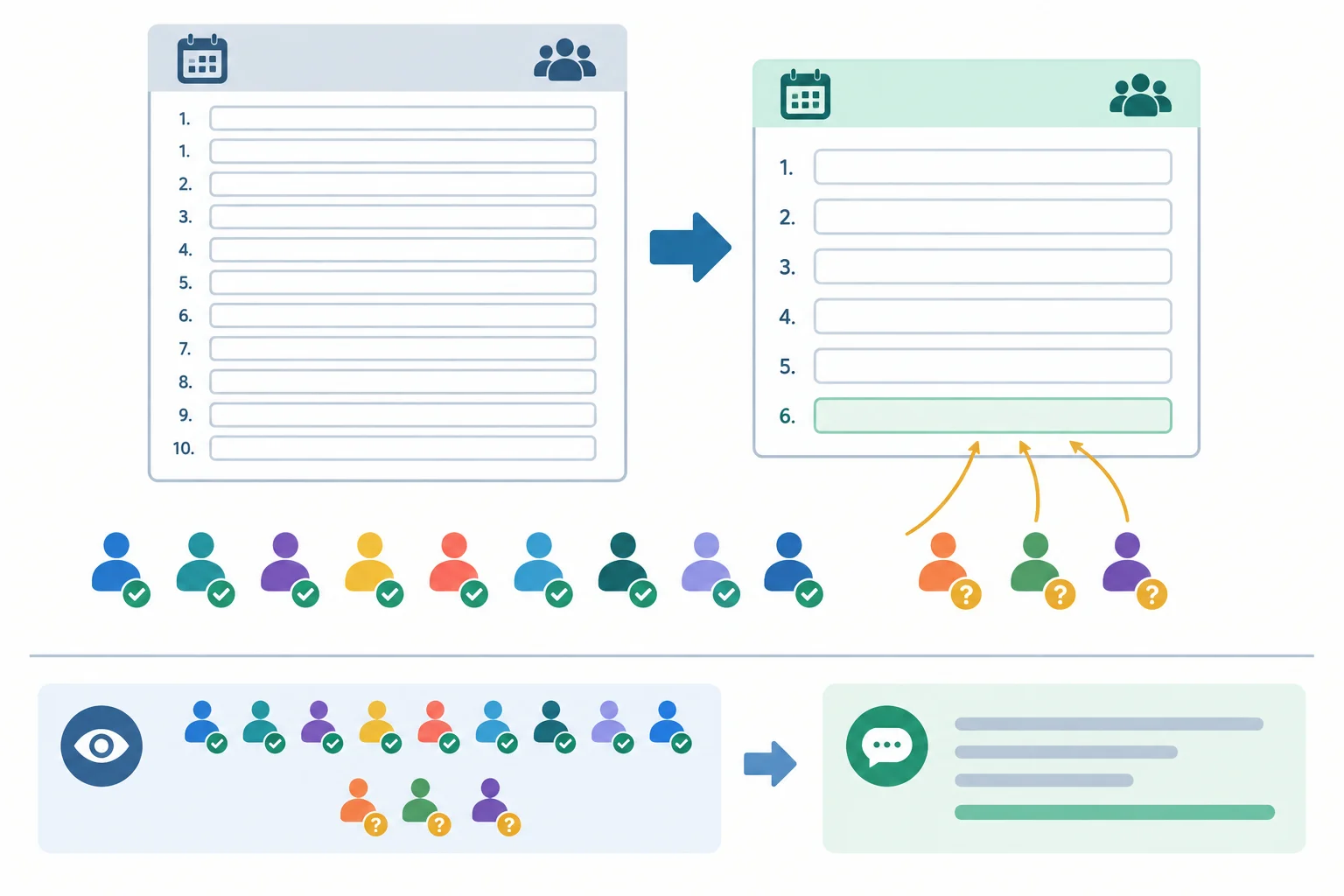
Use the visible results as evidence. Keep conclusions within what this one trial can support.
The evidence has limits as well as value. Use those limits to decide what to qualify.
| Evidence | Can support | Does not support |
|---|---|---|
| 6 questions, not 10 | The revised form is shorter | It is faster to complete |
| 9 of 12 needed no help | A positive result in this trial | It will work for everyone |
| 3 asked about the final question | A practical concern about that question | The whole form is unclear |
| No old-form trial | No direct comparison | The revised form is better than the old form |
Listen and choose an option.
Listen to Sam’s short follow-up. What practical concern is Sam raising?
Thanks, Noor. Nine of the twelve volunteers completed the revised form without help. Three asked what the final question meant. I was wondering if you could clarify this point before the next trial.
Example
Overconfident
“The trial demonstrates that the revised form is clear and will work for everyone. Please approve it.”
This turns one small trial into a universal conclusion.
Overhedged
“It may perhaps seem somewhat possible that, in some cases, the final question could maybe be a little unclear. Could you perhaps possibly look at it?”
The repeated uncertainty hides the concern and weakens the action.
Calibrated
“Hi Noor, the revised form has 6 questions rather than 10. In one trial, 9 of 12 volunteers completed it without help, while 3 asked what the final question meant. This suggests a reasonable concern about that question for this group, although we have limited information. I was wondering if you could clarify this point before the next trial begins.”
This version is 60 words. Its claim is useful, its qualification has a purpose, and its request is courteous and clear.
Use this check while revising your own message.
| Check | Revise if needed |
|---|---|
| Unsupported certainty | Replace a guaranteed or universal conclusion with an evidence-led claim. |
| Missing limit | Name the group, trial, or information boundary when it matters. |
| Redundant hedges | Keep one useful qualification; remove duplicates that do the same job. |
| Obscured request | Make the requested action identifiable after the polite frame. |
| Direct facts | Report the observed numbers without hedging them. |
Write a 60–90-word feedback message to Noor about the revised workshop sign-up form.
Evidence: The revised form has 6 questions, compared with 10 on the old form. In one trial with 12 volunteers, 9 completed it without help, and 3 asked what the final question meant. There are no completion-time data and no trial of the old form.
Draft claim to revise: “The revised form is successful and will work for everyone.”
Your message must preserve the observed facts, qualify the unsupported interpretation or generalization, identify the practical concern, and make one clear, tactful request.
Tip
Before you submit, check that each qualification does a different job. Then rehearse your message aloud in 20–30 seconds.
Keep the observed facts steady. Let the practical concern and the request carry the main stress. Sound reserved where the evidence is limited, but do not let hesitation make the message hard to follow.
Submit only your final 60–90-word message to Noor. After drafting, revise it against the checks on the previous screen and rehearse the same message aloud before you submit.
Summary
You can now turn limited evidence into feedback that is careful without being vague.
Congratulations! You completed: Qualify Claims and Soften Feedback
Thousands of online courses in video, ebooks and audiobooks.
To test your knowledge during online courses
Generated directly from your cell phone's photo gallery and sent to your email

Download our app via QR Code or the links below:.



Carry knowledge in your pocket.
Download the Cursa app.
There are hundreds of free courses available, with a free certificate of completion that is saved in your mobile image gallery.
Download the app to access the Course Completion Certificate for Free.


+ 10 million
students

Free and Valid
Certificate

60 thousand free
exercises

4.8/5 rating in
app stores

Free courses in
video and ebooks