Step 1 of 8
Read the Relationship First
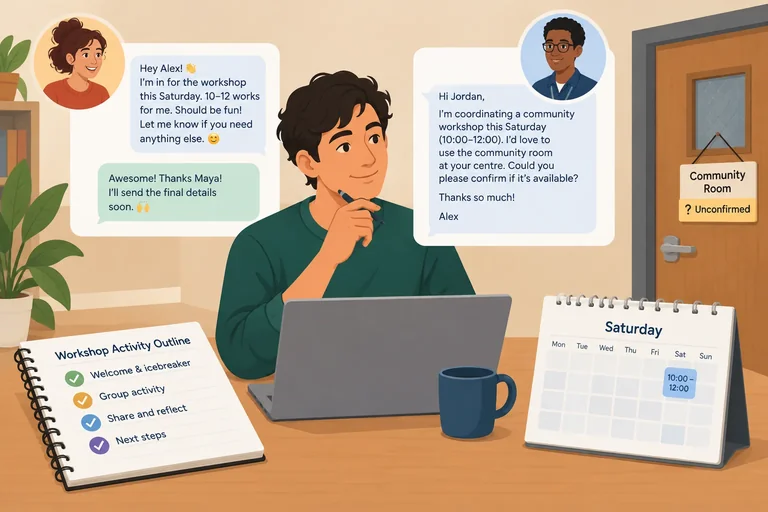
Choose wording by checking the actual relationship, shared knowledge, immediate purpose, and expected familiarity.

Learning path · Level 10 · Tutorial 4
Choose idioms and collocations that sound natural in short exchanges with peers or coordinators. Compare written and spoken examples, then revise a brief response so its grammar, vocabulary, and delivery fit the relationship without becoming stiff or overly familiar.

 Read the Relationship First
Choose wording by checking the actual relationship, shared knowledge, immediate purpose, and expected familiarity. 2 min
 Understand Three Useful Idioms
Interpret three useful Idioms in short workshop-planning exchanges and notice how each can update, align, or name an obstacle without blame. 3 min
 Change the Grammar, Keep the Frame
Adapt the three target idioms to time, people, and topic while preserving their fixed wording and prepositions. 3 min
 Choose an Idiom—or Say It Directly
Select idiomatic or direct wording that preserves the intended meaning and suits a specified relationship and purpose. 3 min
 Make the Degree of Support Clear
Distinguish three register-sensitive collocations and use each one only when its meaning accurately fits Alex’s workshop response. 3 min
 Keep the Whole Message in Register
Revise short workshop messages so their vocabulary, directness, and grammatical packaging fit a newly established coordinator relationship without becoming stiff or overly familiar. 3 min
 Hear the Tone, Then Rehearse It
Listen for how chunking, pace, prominence, and context shape the tone of familiar idioms. Identify an appropriate delivery, transcribe a short idiomatic line, and rehearse a constructive response to a coordinator. 4 min
 Write, Compare, and Refine Your Response
Produce and refine a short workshop response whose vocabulary, qualification, register, and spoken delivery fit either a familiar peer or a recently met coordinator. 5 min
Step 1 of 8
Choose wording by checking the actual relationship, shared knowledge, immediate purpose, and expected familiarity.
Before writing, check four conditions:
A role is only one clue. Jordan is a coordinator, but Alex has only recently met Jordan. Maya is a peer Alex knows well. Those relationship facts matter more than a simple “coordinator versus peer” rule.

Before choosing words, map who will read the message, what they know, and what the reply needs to accomplish.
The same basic facts can need different wording. A familiar reader usually needs less background; a newer contact may benefit from a clear, neutral summary.
If a coordinator were already a familiar collaborator, conversational wording could be appropriate. If a peer were unfamiliar, explicit wording could be the better choice. Familiarity is not fixed by a job title.
Also match the length to shared knowledge. Do not repeat the whole history when the reader already knows it—but do include enough detail to make the immediate purpose clear.
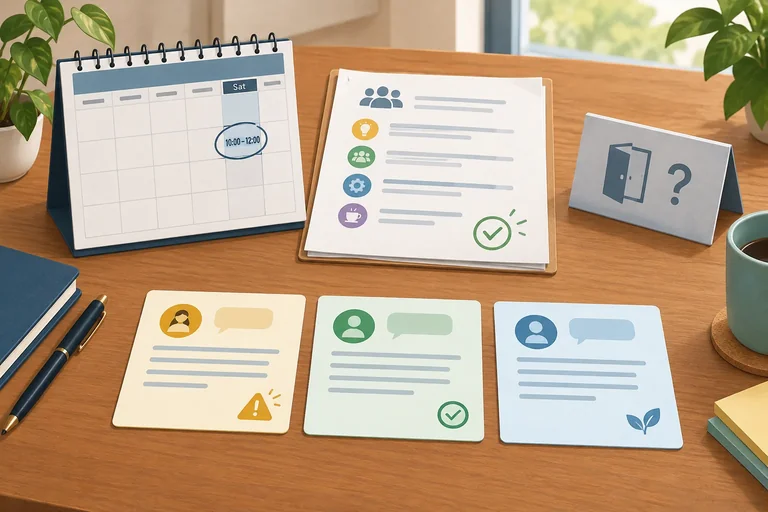
Both exchanges concern the Saturday workshop. Notice how relationship, purpose, and shared knowledge shape the wording.
| Relationship | Purpose | Wording | Likely effect |
|---|---|---|---|
| Maya is Alex’s familiar peer and knows the outline. | Give a quick status update. | The outline is agreed. We’re still waiting for the room confirmation for Saturday, 10:00–12:00. | Efficient and natural because Maya has the background. |
| Jordan is a coordinator Alex has recently met. | Respond clearly by Thursday. | Thanks for checking. The activity outline is agreed, but the room is not confirmed yet. I’ll send a clear update by Thursday. | Clear and neutral without sounding distant. |
Match each profile to its main communication need.
Tap an item and then its matching pair.

Step 2 of 8
Interpret three useful Idioms in short workshop-planning exchanges and notice how each can update, align, or name an obstacle without blame.
Alex and Maya are familiar peers. Jordan is the coordinator Alex has only recently met. The shared facts are clear: the workshop is proposed for Saturday from 10:00–12:00, the activity outline is agreed, the room is not yet confirmed, and Jordan needs a response by Thursday.
An Idiom has a meaning that is more specific than its individual words. bring someone up to speed on something means give a person the background or latest information they need. It is useful when an update will help someone take part or decide what to do next.

The update gives Jordan the information needed to respond or make a decision.
Example
Maya: Jordan has not seen our planning notes. Can you bring Jordan up to speed on the workshop?
Alex: Yes. The activity outline is agreed, the workshop is proposed for Saturday from 10:00–12:00, and the room is not confirmed yet. Jordan needs our response by Thursday.
be on the same page about something means share an understanding of a particular matter. It can check whether people understand a detail in the same way or signal that they do.
This does not mean every part of a proposal has been endorsed. Alex and Jordan can share an understanding about the agreed activity outline while the room remains unresolved.
a sticking point is a difficulty that remains unresolved and may prevent progress. Naming a sticking point focuses attention on the issue, so it can sound less blaming than naming a person as the problem.
Each expression has a different communicative job. All three are Idioms, but their likely effects differ.
| Idiom | Relationship | Purpose | Wording | Likely effect |
|---|---|---|---|---|
| bring someone up to speed on something | Alex to Jordan | Give needed context | I'll bring you up to speed on the workshop. | Helpful and inclusive |
| be on the same page about something | Alex and Jordan | Check shared understanding | Are we on the same page about the activity outline? | Cooperative and clarifying |
| a sticking point | Alex to Jordan | Name an unresolved issue | The room is still a sticking point. | Neutral focus on the obstacle |
Example
Jordan: I need a response by Thursday.
Alex: I think we're on the same page about the activity outline, but the room is still a sticking point.
Alex signals alignment on one matter while calmly identifying what still prevents confirmation.
Match each Idiom to its communicative function.
Tap an item and then its matching pair.
Jordan: I need a response by Thursday.
Alex: I think we're on the same page about the activity outline and Saturday from 10:00–12:00, but the room is still a sticking point.
What does Alex most plausibly communicate, and what is the likely effect?

Step 3 of 8
Adapt the three target idioms to time, people, and topic while preserving their fixed wording and prepositions.
Each target expression has a recognizable lexical frame. Change the grammar the situation requires, but keep the central wording together.
The speaker, recipient, time, and topic can change. The frame should remain recognizable.
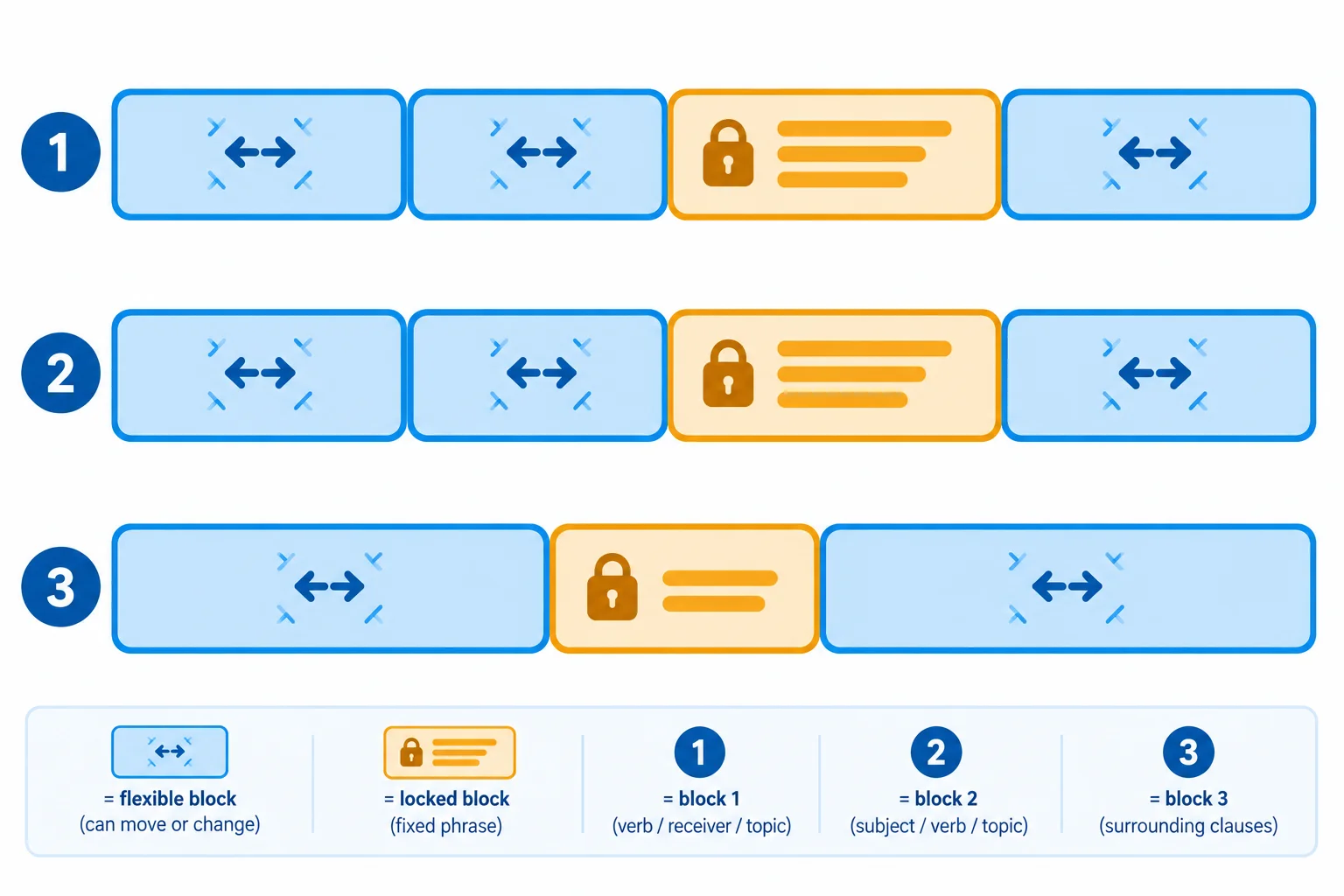
Locked blocks represent fixed wording. The surrounding blocks carry the speaker, receiver, time, and topic.
Tip
Check two things after adapting a sentence: who needs the information, and which preposition belongs to the frame. The update frame contains up to speed on; the shared-understanding frame contains on the same page about.
In an update, the person immediately after bring is the person who needs information. Use a name when it is clearest, or use an object pronoun that refers to that receiver.
For this practice, Jordan has told Alex to use they/them pronouns: I brought them up to speed on the activity outline. The pronoun refers to Jordan, not to Alex.
With be on the same page about something, the subject controls the form of be, while about introduces the matter understood. With a sticking point, change the surrounding verb without separating the noun phrase.
Example
Alex: Jordan asked for the planning details yesterday, so I brought them up to speed on the activity outline.
Maya: Are we ready to proceed?
Alex: Maya and I are on the same page about Saturday from 10:00–12:00, but the room is still a sticking point.
The fixed wording stays in place while tense, subject, receiver, and reference change around it.
| Context | Natural result | Fixed wording |
|---|---|---|
| Completed update | Alex brought them up to speed on the activity outline. | up to speed on |
| Current shared understanding | Maya and I are on the same page about Saturday from 10:00–12:00. | on the same page about |
| Past and current obstacle | The room was a sticking point yesterday and remains one now. | a sticking point |
Jordan asked Alex for the activity-outline details yesterday. In this practice, Jordan uses they/them pronouns. Which sentence is correct?
Write exactly three connected sentences as Alex.
Use each target expression once. In this practice, Jordan uses they/them pronouns. Preserve the required preposition in each of the first two expressions.
Write at least 120 characters (0/120).

Step 4 of 8
Select idiomatic or direct wording that preserves the intended meaning and suits a specified relationship and purpose.
Choose an expression because it helps the exchange—not because it sounds advanced. An Idiom can be compact and collaborative when the recipient shares the context. A Direct alternative can be clearer when the reader needs explicit facts or may not expect idiomatic wording.
Alex knows Maya as a familiar peer. Jordan is a coordinator Alex has only recently met. For this workshop, the activity outline is agreed. Saturday from 10:00–12:00 is the proposed schedule, not a final confirmation; the room is still unconfirmed. Jordan needs Alex’s response by Thursday.
A job title is only one clue. Let the relationship, shared understanding, and immediate purpose determine whether an idiom adds value.
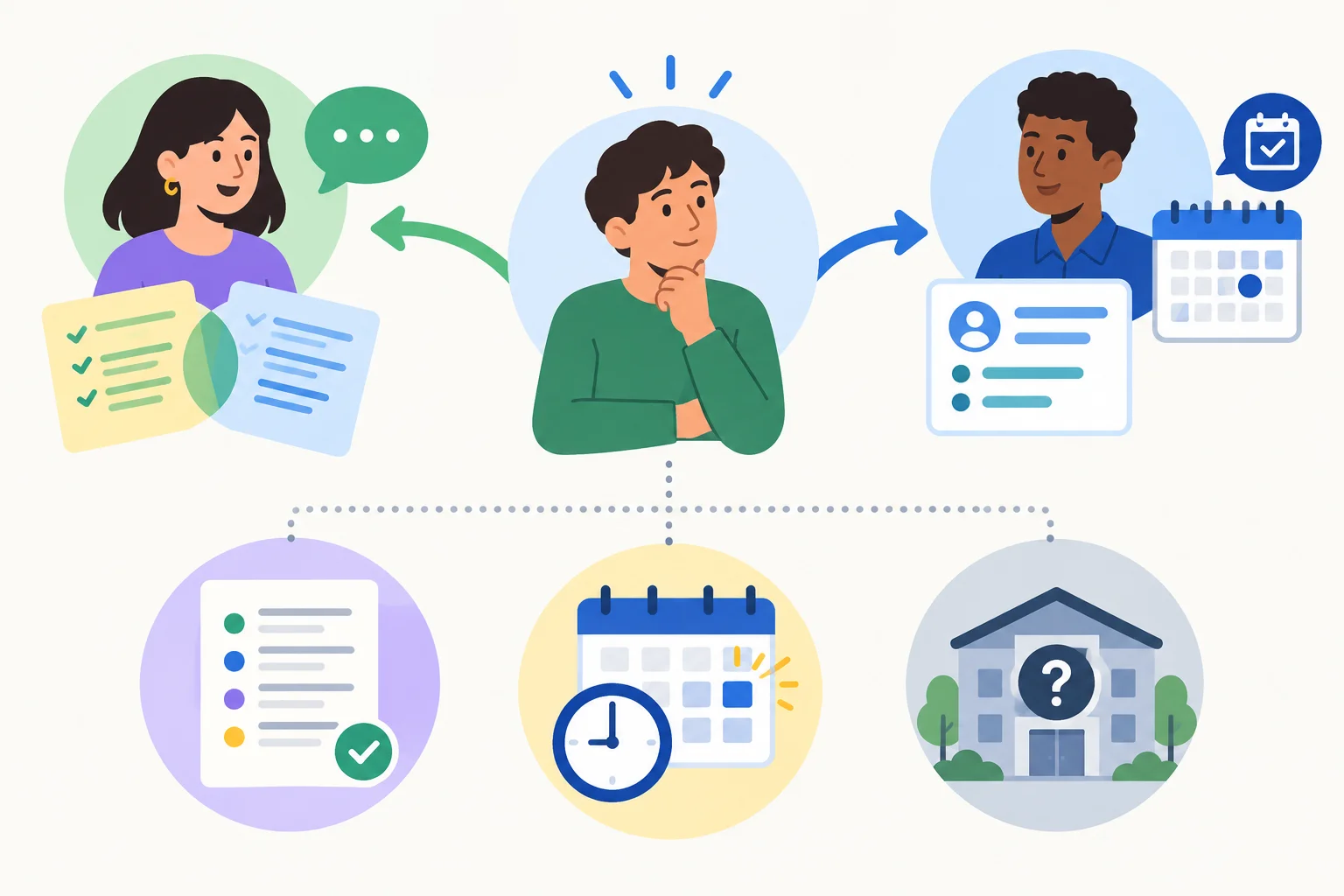
The same workshop facts can be packaged differently without changing their meaning.
Tip
Direct wording is not an inferior fallback. It is often the precise choice when a reader needs a quick factual update, has limited shared context, or may not know the idiom. An idiom is useful only when its interpersonal effect helps the purpose.
Each target idiom has a direct alternative that preserves its communicative job. The direct version may be longer, but it can make the intended meaning more explicit.
Use bring someone up to speed on something or “provide the latest information” to give needed background. Use be on the same page about something or “share the same understanding” to show alignment on a specific matter. Use a sticking point or “an unresolved issue” to identify what is still preventing progress.
Sharing an understanding about the proposed Saturday time does not mean that Alex and Maya have finally approved it.
Choose the wording that best serves the reader and the purpose. Both forms can be natural when they preserve the same message.
| Relationship | Purpose | Wording | Likely effect |
|---|---|---|---|
| A recipient needs workshop background | Give the latest information | Idiom: I’ll bring you up to speed on the workshop. Direct alternative: I’ll provide the latest information about the workshop. | The idiom is compact; the direct version foregrounds the factual update. |
| Alex and Maya, familiar peers | Check understanding of the proposed time | Idiom: We’re on the same page about the proposed Saturday 10:00–12:00 schedule. Direct alternative: We share the same understanding of the proposed Saturday 10:00–12:00 schedule. | Both signal alignment, not final approval of every detail. |
| Any recipient needs the remaining problem named | Identify an unresolved issue | Idiom: The room is still a sticking point. Direct alternative: The room is still an unresolved issue. | Both focus attention on the obstacle rather than blaming a person. |
Example
Maya: Do we understand the proposed Saturday 10:00–12:00 time in the same way?
Alex: We’re on the same page about the proposed Saturday 10:00–12:00 schedule.
Jordan: Please send me a clear status by Thursday.
Alex: The activity outline is agreed. The Saturday 10:00–12:00 schedule is still proposed, and the room is not yet confirmed. I’ll send my response by Thursday.
The first reply is efficient because Maya and Alex share the planning context. The second makes every current fact visible for Jordan. Neither choice is automatically more formal or more friendly; each fits its purpose.
Jordan, a coordinator Alex has only recently met, asks Alex to avoid idioms in a short written update: “Do you and Maya understand the proposed Saturday 10:00–12:00 schedule in the same way?” Which reply best fits Jordan’s request?
Write two short replies as Alex, then justify one wording choice.
A. Maya is Alex’s familiar peer and already knows the activity outline is agreed. In a chat, she asks whether Alex understands the proposed Saturday 10:00–12:00 schedule in the same way. Write a suitable reply. You may choose an Idiom or a Direct alternative.
B. Jordan is a coordinator Alex has only recently met. Jordan needs a clear written status by Thursday. State that the activity outline is agreed, the Saturday 10:00–12:00 schedule is proposed, and the room is not yet confirmed. Write a suitable reply. Choose an Idiom or a Direct alternative deliberately.
Then give one brief reason for either A or B. Base it on familiarity, shared understanding, or purpose—not only on a formal–informal rule.
Write at least 100 characters (0/100).
Step 5 of 8
Distinguish three register-sensitive collocations and use each one only when its meaning accurately fits Alex’s workshop response.
Collocations are conventional word combinations that speakers recognize as natural. Unlike the figurative idiom frames you have practiced, these expressions are compact ways to state a stance or describe a reply.
Alex knows Maya as a familiar peer, but has only recently met Jordan, the coordinator. The workshop is proposed for Saturday, 10:00–12:00; the activity outline is agreed; the room is not yet confirmed; and Jordan needs Alex’s response by Thursday.
Choose a collocation for its precise meaning—not because it sounds formal. Qualified support states support with a reservation. Tentative agreement states that a decision is provisional. A measured response describes a calm, considered manner of responding.

The three expressions describe different dimensions: reservations, commitment, and manner.
Do not put these three collocations on one certainty scale. They answer different questions: Is there a limit on the support? Is the agreement final? How was the reply delivered?
Each model below suits a concise, considered update to Jordan. The wording column shows the usual grammatical surroundings of each collocation.
| Relationship | Purpose | Wording | Likely effect |
|---|---|---|---|
| Jordan, recently met coordinator | Support a proposal while naming a limit | I can give qualified support to the proposal, but the room is not confirmed. | Support is clear; the reservation is visible. |
| Jordan, recently met coordinator | Record a decision that may change | We reached tentative agreement on a Saturday date, 10:00–12:00, pending room confirmation. | There is a workable decision, not a final commitment. |
| Jordan, recently met coordinator | Reply calmly to feedback | Alex offered a measured response to feedback about the room. | The reply sounds controlled and considered; it does not state a level of agreement. |
Qualified support can be positive and still include an important condition; it does not mean unenthusiastic support. Tentative agreement concerns the status of the decision itself. A measured response can accompany agreement, disagreement, or a request for more information, because it describes manner.
These compact phrases can help in a considered update or summary for Jordan. With Maya, inserting one when a plain sentence would do can sound stiff. Relationship matters more than job title alone.
Example
To Jordan
Alex: I can give qualified support to the proposal. The outline is agreed, and Saturday 10:00–12:00 works for me, but we still need the room confirmed. I’ll send my response by Thursday.
To Maya
Alex: Saturday 10:00–12:00 works for me. The outline is settled; we just need the room confirmed.
Tip
A direct alternative is not an inferior choice. Use it when it is clearer for the relationship and purpose. Reserve a collocation for the distinction it adds.
Match each short exchange with the phrase that completes it naturally.
Tap an item and then its matching pair.

Step 6 of 8
Revise short workshop messages so their vocabulary, directness, and grammatical packaging fit a newly established coordinator relationship without becoming stiff or overly familiar.
A message is in register when its parts point in the same direction: the relationship, the purpose, the vocabulary, and the level of directness.
Alex has only recently met Jordan, the coordinator. A short, warm, professional message can still use contractions: I'm, we're, and I'll are concise standard forms, not signs of disrespect.
Use an Idiom only when it helps the message do its job. A Collocation should express a real stance or manner. A Direct alternative is often the clearest choice when Alex needs to be precise with Jordan. One useful expression is usually enough; a stack of bring someone up to speed on something, be on the same page about something, and a sticking point can sound performative rather than helpful.

A coherent message does not need to sound cold. It matches Alex's new-but-professional relationship with Jordan and makes the next action easy to find.
Tip
Before revising, ask three quick questions:
A contraction can sit naturally beside a clear request to a coordinator. The problem is not friendliness; it is an abrupt shift from conversational wording to inflated, ceremonial packaging.
Both versions below communicate the same facts. The revision does not become less respectful; it removes wording that competes with the message's purpose.
Compare how the wording affects the relationship and the next step.
| Relationship | Purpose | Wording | Likely effect |
|---|---|---|---|
| Jordan: coordinator Alex has recently met | State support with a limit; ask about the room | Hi Jordan, we're on the same page about the activity outline. I hereby give qualified support to the proposal for Saturday from 10:00–12:00; nevertheless, room confirmation remains a sticking point. Kindly let me know when it is resolved. | The contraction and idiom are conversational, but hereby, nevertheless, and kindly make the rest sound unexpectedly ceremonial. |
| Jordan: coordinator Alex has recently met | State support with a limit; ask about the room | Hi Jordan, the activity outline is agreed, and I support the Saturday 10:00–12:00 workshop if the room is confirmed. Could you let me know when the room is confirmed? I'll respond by Thursday. | Clear, warm, and professional. The condition expresses the reservation, and the request identifies the next action. |
Example
The first version is not wrong grammatically. It simply asks the reader to move between too many signals. In the revision, a direct conditional carries the meaning that qualified support would carry, so extra labeled language is unnecessary. The message also keeps the agreed outline, the unconfirmed room, the Saturday time, and Alex's Thursday response.
Alex writes to Jordan:
Alex: Hi Jordan, we're on the same page about the activity outline, and the room is a sticking point. I offer a measured response to this issue: I give qualified support to the Saturday time. Please respond.
Which revision principle would help most?
Revise Alex's message into 2–3 sentences for Jordan. Preserve the agreed activity outline, the proposed Saturday 10:00–12:00 workshop, the unconfirmed room, Alex's conditional support, the request for an update, and Alex's Thursday response. Remove register clashes and excessive idiomatic wording.
Alex: Hi Jordan, we're on the same page about the activity outline, and the room is still a sticking point. I hereby give qualified support to the proposal for Saturday from 10:00–12:00, subject to room confirmation. Could you kindly let me know when the room has been confirmed? I'll respond by Thursday.
Write at least 120 characters (0/120).

Step 7 of 8
Listen for how chunking, pace, prominence, and context shape the tone of familiar idioms. Identify an appropriate delivery, transcribe a short idiomatic line, and rehearse a constructive response to a coordinator.
A familiar expression should stay in one spoken chunk. Keep be on the same page about something connected, and keep a sticking point connected. A pause inside either expression can make the message harder to follow.
Stress should guide the listener to the information that matters now. Here, the activity outline is already agreed; the unconfirmed room is the detail that needs attention. Delivery also depends on context. A relaxed pace can sound warm; rushing can sound impatient; a clipped, flat delivery can sound dismissive. These tones are not fixed in the words alone—listen to pace, rhythm, prominence, and the situation together.
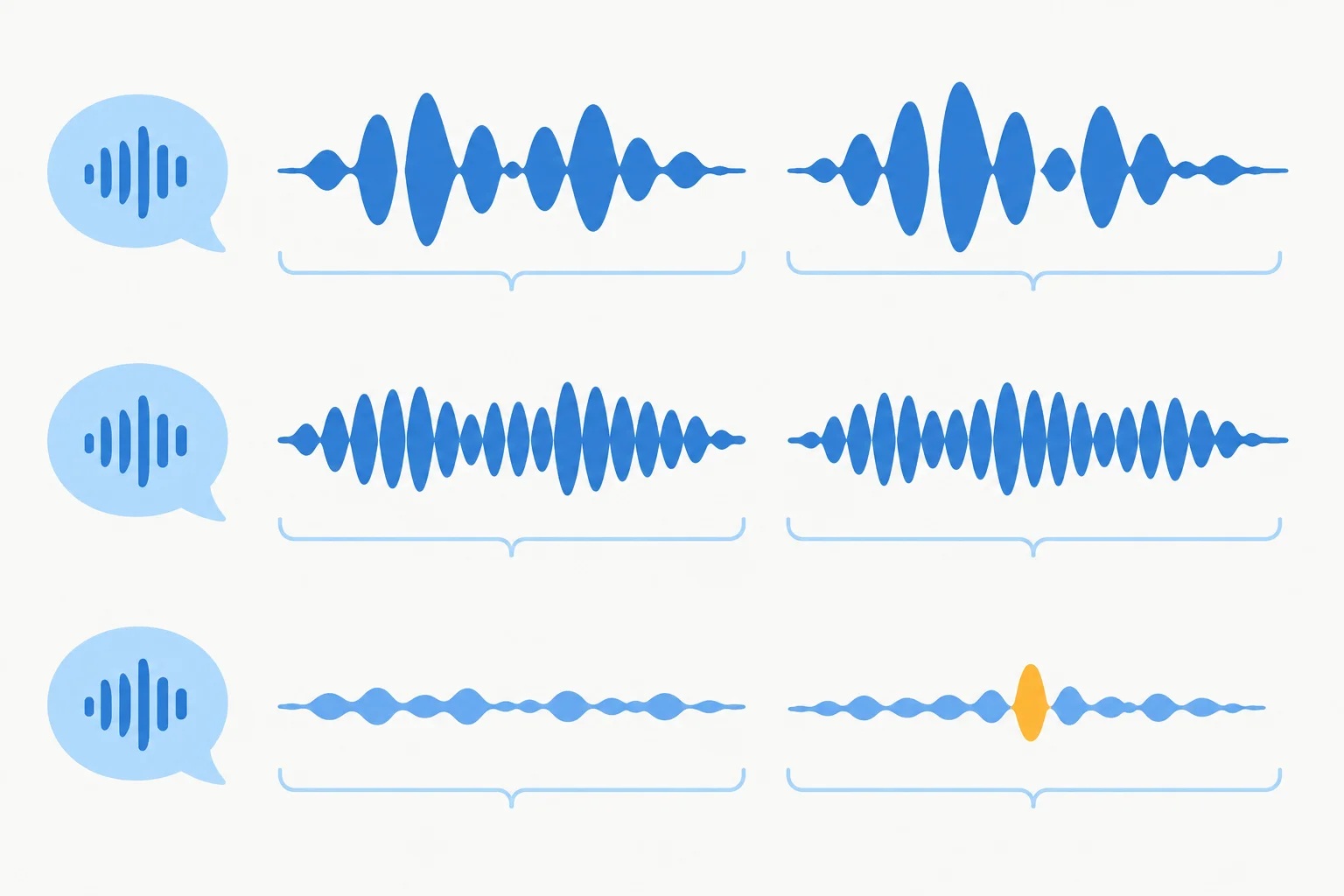
The wording can stay the same while pace, rhythm, and prominence change the likely tone.
Listen to the same workshop update in three deliveries. Alex is speaking to Jordan, a coordinator Alex has only recently met.
We're on the same page about the activity outline, but the room is still a sticking point.
We're on the same page about the activity outline, but the room is still a sticking point.
Listen again. The words are unchanged; focus on the pace and pressure in the delivery.
We're on the same page about the activity outline, but the room is still a sticking point.
We're on the same page about the activity outline, but the room is still a sticking point.
Listen once more. The words are still unchanged; focus on energy and engagement.
We're on the same page about the activity outline, but the room is still a sticking point.
We're on the same page about the activity outline, but the room is still a sticking point.
Tip
The warm model leaves space for the listener and treats the obstacle as a shared problem. The impatient model compresses the message and makes the room sound like a demand. The dismissive model gives little vocal attention to either agreement or collaboration.
For a constructive update, keep the idiom intact and let the unresolved detail carry the clearest prominence:
We're on the same page about the activity outline / but the ROOM is still a sticking point.
Listen and choose an option.
Jordan needs Alex’s response by Thursday. Alex wants to sound cooperative while making the unresolved room issue clear. Listen to the delivery. Which tone does it most likely convey?
We're on the same page about the activity outline, but the room is still a sticking point.
Listen and write what you heard.
Listen twice and type the complete line exactly as you hear it.
Listen to this calm model for Jordan. Then say it aloud twice: first for clear chunks, then as a constructive response.
We're on the same page about the activity outline, but the room is still a sticking point.
We're on the same page about the activity outline, but the room is still a sticking point.
Tip
Use the slash for one meaningful boundary. Do not pause inside either idiom. The activity outline is settled, so let the room carry the main prominence:
We're on the same page about the activity outline / but the ROOM is still a sticking point.
Aim for a measured pace. A pause before the second group can clarify the contrast; a pause inside same page or sticking point breaks the expression.
After listening and speaking the line twice, report one specific adjustment you made to your delivery. You do not need to record or upload your voice.
Write at least 20 characters (0/20).

Step 8 of 8
Produce and refine a short workshop response whose vocabulary, qualification, register, and spoken delivery fit either a familiar peer or a recently met coordinator.
You will draft, compare, and revise one short workshop response. Choose one route.
Route A — Maya
Route B — Jordan
In either route, preserve these facts: the workshop is Saturday from 10:00–12:00; the outline is agreed; the room is not yet confirmed; Jordan needs a response by Thursday.
Choose vocabulary because it fits. An Idiom, a Collocation, or a Direct alternative can work. Use no more than one figurative idiom.

The facts stay constant. Relationship and purpose determine how directly and formally Alex packages them.
Write your first draft before looking at the models.
Choose Route A or Route B from the previous screen. Write a 60–90-word message from Alex. Include the workshop facts required for your route and make the stance clear.
Use at most one figurative idiom. Keep the tone suitable for the relationship: warm with Maya, or considered and clear with Jordan.
These are models, not the only correct answers. Notice how each message keeps the facts concise, chooses wording for its recipient, and avoids stacking figurative expressions.
Model for Maya — warm peer message
Alex: I’m happy with Saturday from 10:00–12:00, and the activity outline looks settled. The room is still a sticking point, though. Have you heard anything from the venue? I’d like us to be ready when Jordan needs our response by Thursday, so let me know if I can help follow up or compare another room option. I don’t want that question to delay a plan that otherwise works well for everyone.
Model for Jordan — recently met coordinator
Alex: Thanks for outlining the proposal. I can give qualified support to the proposal for Saturday from 10:00–12:00: the activity outline is agreed, and the time works. However, the room has not been confirmed, so I would prefer not to treat the plan as final yet. I’m replying by Thursday as requested and would welcome an update once the room is settled.
Listen to the Maya model. Then say it aloud once.
I’m happy with Saturday from 10:00–12:00, and the activity outline looks settled. The room is still a sticking point, though. Have you heard anything from the venue? I’d like us to be ready when Jordan needs our response by Thursday, so let me know if I can help follow up or compare another room option. I don’t want that question to delay a plan that otherwise works well for everyone.
Listen to the Jordan model. Then say it aloud once.
Thanks for outlining the proposal. I can give qualified support to the proposal for Saturday from 10:00–12:00: the activity outline is agreed, and the time works. However, the room has not been confirmed, so I would prefer not to treat the plan as final yet. I’m replying by Thursday as requested and would welcome an update once the room is settled.
Tip
Keep a useful expression together as one spoken unit. For Maya, a natural chunk is: “The room is still a sticking point.” For Jordan, do not make qualified support sound like a dramatic announcement.
Use prominence for the information that matters now:
“We’re ready for Saturday / but the ROOM is still a sticking point.”
“I can give qualified support to the proposal / but the ROOM has not been confirmed.”
A rushed delivery can sound impatient. A flat, clipped delivery can sound dismissive. Aim for a warm or measured delivery that matches your recipient.
Now revise your own draft after comparing it with the models.
Submit all four parts in one response:
Keep the workshop facts accurate. Do not add new facts. Use no more than one figurative idiom.
Summary
Congratulations! You completed: Choose Idioms That Fit the Relationship
30 XP
You completed this level!
Up next: C1: Academic and Professional Communication
 Synthesize Sources by ThemeRead two short texts and listen to a recording about a shared study or workplace issue. Bring their ideas together without losing track of who claims what. Use audio-choice tasks and brief dictation to notice attribution, then prepare a guided written synthesis and explain it aloud.
Thousands of online courses in video, ebooks and audiobooks.
To test your knowledge during online courses
Generated directly from your cell phone's photo gallery and sent to your email

Download our app via QR Code or the links below:.



Carry knowledge in your pocket.
Download the Cursa app.
There are hundreds of free courses available, with a free certificate of completion that is saved in your mobile image gallery.
Download the app to access the Course Completion Certificate for Free.


+ 10 million
students

Free and Valid
Certificate

60 thousand free
exercises

4.8/5 rating in
app stores

Free courses in
video and ebooks