 MySQL
MySQL
 PostgreSQL
 SQL Server
 MongoDB
 Google BigQuery
A database is an organized collection of data that can be stored, searched, updated, and managed efficiently.

23

2

6

Build job-ready MongoDB skills fast with a free online course—install, create collections, query, update, and aggregate data confidently for real projects.
5

(4)

1h27m

10 exercises
Build job-ready database skills with this free online course—learn DBMS fundamentals, ER modeling, relational concepts, and architecture with practice quizzes.
5
(11)
5h21m
27 exercises
Build job-ready SQL skills with a free MySQL course: query data fast, write safer updates, and master joins, DISTINCT, and keys to earn a certificate.
5
(4)
1h11m
10 exercises
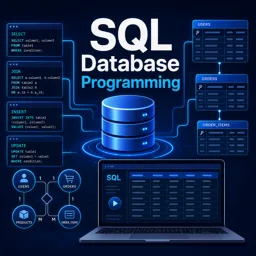
Free CourseSQL Database Programming
5
(2)
4h28m
24 exercises
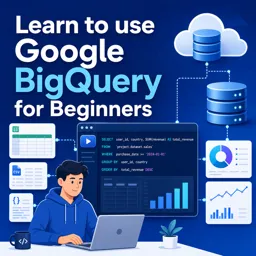
Free CourseLearn to use Google BigQuery for Beginners
5
(2)
1h17m
14 exercises
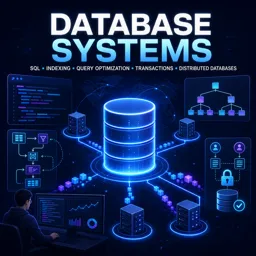
Free CourseDatabase Systems: SQL, Indexing, Query Optimization, Transactions and Distributed Databases
5
(1)
33h54m
23 exercises
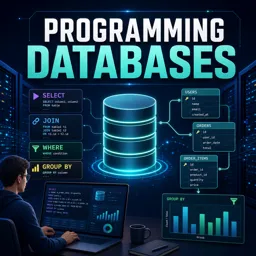
Free CourseProgramming Databases
5
(3)
1h14m
7 exercises
Free CourseDatabase Systems
5
(2)
4h32m
44 exercises
Free CourseMongoDB Tutorial for Beginners
5
(1)
1h39m
14 exercises
Free CourseMongoDB
5
(2)
36m
5 exercises
Free Course PosgresSQL
4.8

(12)
4h14m
37 exercises
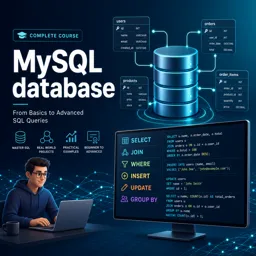
Free CourseMySQL database
4.7
(136)
3h40m
33 exercises
Free CourseDatabase
4.7
(42)
17h34m
36 exercises
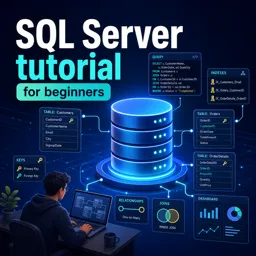
Free CourseSQL Server tutorial for beginners
4.6
(52)
26h59m
44 exercises
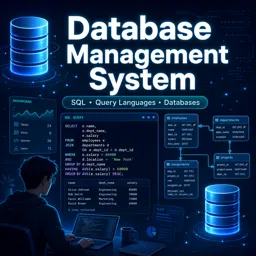
Free CourseDatabase Management System
4
(2)
9h50m
9 exercises
Free CourseComplete MongoDB Tutorial
4
(1)
2h53m
25 exercises
Free CourseMongoDB Tutorial For Beginners
4
(4)
3h06m
28 exercises
Free CourseDatabases
4
(1)
11h08m
8 exercises
Free CourseMongoDB full course
3.2
(6)
7h50m
1 exercises
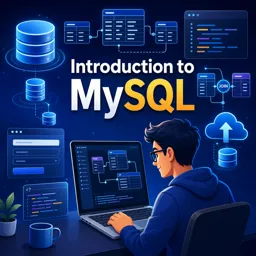
Free CourseIntroduction to MySQL
3
(2)
12h51m
28 exercises
Exercises
Test your knowledge of ACID properties, isolation anomalies, locking, MVCC, deadlocks, recovery, and concurrent transaction schedules.
Start exercisesTest your MySQL advanced features knowledge, including indexes, transactions, ACID compliance, foreign keys, collations, and user privileges.
Start exercisesTest advanced SQL management skills with questions on keys, constraints, normalization, JOINs, indexes, filtering, and data retrieval.
Start exercisesTest your PostgreSQL knowledge with questions on SQL commands, primary keys, pgAdmin, data types, transactions, and query optimization.
Start exercisesTest advanced SQL query optimization skills: execution plans, joins, indexes, filtering, GROUP BY, HAVING, subqueries, DISTINCT, and UNION.
Start exercisesTest your MySQL basics with questions on SELECT, primary and foreign keys, JOINs, CRUD commands, LIMIT, aliases, and COUNT().
Start exercises
SQL JOINs Explained: How to Combine Data from Multiple Tables
Learn how SQL JOINs work and when to use INNER, LEFT, RIGHT and FULL joins to combine data from related database tables.

SQL JOINs Explained: INNER, LEFT, RIGHT and FULL, Without the Confusion
A clear, practical guide to SQL JOINs: what INNER, LEFT, RIGHT and FULL actually return, and the mistakes that quietly break queries.

SQL vs NoSQL: Choosing the Right Database (and Learning Paths for MySQL, SQL Server, PostgreSQL, Oracle, and MongoDB)
Understand SQL vs NoSQL, compare databases, and learn how to choose the right solution for scalability, consistency, and performance.

Database Transactions Explained: ACID, Isolation Levels, and Concurrency Control Across SQL and NoSQL
Learn database transactions, ACID, isolation levels, locks, MVCC, and concurrency control across SQL and NoSQL systems.

Database Schema Design for Real Projects: From Requirements to Reliable Models
Practical guide to database schema design: requirements, keys, relationships, constraints, migrations, and reliable models for real projects.

Database Normalization, Denormalization, and When to Break the Rules
Learn database normalization and denormalization with practical rules for designing cleaner schemas, avoiding anomalies, and improving performance.

Database Indexing for Backend Developers: Make Queries Fast Without Guesswork
Learn practical database indexing for backend developers to speed up queries, improve joins, optimize pagination, and reduce API latency.

AI in the Real World: Building Reliable Systems from Data to Decisions
Learn how real-world AI systems go from data to decisions with reliable modeling, deployment, monitoring, and responsible AI practices.
Web Development

Programming Languages ( Python, Ruby, Java, C )

Office Productivity (Excel, Word and More)

Artificial Intelligence and Machine Learning

App Development

Software testing

Cyber Security

Cloud Computing and Web Servers

Robotics and Drones

Data Science and Business Intelligence
Backend development
Programming Fundamentals

Developer and IT Tools

Hardware, Operating Systems and IT Support

Computer Basics

Game development
Develop essential data management skills through free online courses designed for beginners, students, developers, data analysts, and IT professionals. Study relational and non-relational database concepts, database architecture, data modeling, entity relationships, normalization, schemas, tables, keys, and query languages. Every course is free, includes free certification, and features exercises that help reinforce theoretical knowledge through active learning and practical application.
Explore structured learning materials covering SQL syntax, CRUD operations, joins, subqueries, stored procedures, indexing, transactions, concurrency, query optimization, and distributed databases. You can also examine NoSQL principles, document-oriented data structures, MongoDB collections, aggregation pipelines, and scalable information storage. These educational resources support preparation for programming, backend development, data engineering, database administration, analytics, and computer science studies.
Course lessons and exercises can help you understand how database management systems store, retrieve, organize, secure, and process information. Progress from introductory terminology to advanced subjects such as execution plans, ACID properties, performance tuning, replication, consistency, and cloud data warehousing. Learners interested in analytics can also study Google BigQuery for Beginners.
Continue exploring specialized collections about MySQL, MongoDB, and PostgreSQL. These free learning paths provide opportunities to expand technical vocabulary, practice database programming, and strengthen problem-solving abilities.
To access the courses, install the Cursa app on your mobile device. Use Download for Android through Google Play or Download for iOS / iPhone through the App Store. Start learning at your own pace with free content, exercises, and free certification.
What is a database?
A database is an organized collection of data that can be stored, searched, updated, and managed efficiently.
Which database course is best for beginners?
A beginner course covering database fundamentals, SQL, tables, queries, relationships, and basic database design is a strong starting point.
Should I learn SQL before MySQL or PostgreSQL?
Yes. SQL is the common language used to query relational databases such as MySQL, PostgreSQL, and SQL Server.
What is the difference between SQL and NoSQL databases?
SQL databases use structured tables and relationships, while NoSQL databases such as MongoDB commonly store flexible document-based data.
What will I learn in a MySQL course?
You can learn to create databases and tables, write SQL queries, use joins, create indexes, and manage data in MySQL.
Is MongoDB good for beginners?
MongoDB can be beginner-friendly because it uses document-based data, but learning core database concepts and querying is still important.
Why are database indexes important?
Indexes help databases find records faster, improving query performance, especially when working with large tables or collections.

Complete any course and issue your certificate via the app — at no cost.

Download the app! to have access to more than 4,000 Online Courses + Certificate, all free!
Download the app! 100% free courses.


Carry knowledge in your pocket.
Download the Cursa app.
There are hundreds of free courses available, with a free certificate of completion that is saved in your mobile image gallery.
Download the app to access the Course Completion Certificate for Free.


+ 10 million
students

Free and Valid
Certificate

60 thousand free
exercises

4.8/5 rating in
app stores

Free courses in
video and ebooks
What are people saying about free online courses of Databases
Akash Palvalsa
Fast and Excellent course. Bucky was great in explaining every concept without creating any confusion . Overall it's a quick and easy course for everyone to learn SQL database.
CourseMySQL database
ALPHA MANS CONTEH
it nice and I enjoyed every part of the lectures
CourseDatabase Management Systems
mebankmen khongmalai
it is a great help for me i learnt new things from this course
CourseMySQL database