
Step 1 of 7
Find the Topic and Purpose
Identify the topic and purpose of a short study notice, and see how a summary gives the main information in fewer words.

Learning path · Level 7 · Tutorial 4
Give someone the main information from a short work or study notice, message, or conversation. Read and listen to examples, choose the essential points, and complete a short dictation of a key detail. Use a model to write a factual summary, give a short spoken version, and check both against the original information.
 Find the Topic and Purpose
Identify the topic and purpose of a short study notice, and see how a summary gives the main information in fewer words. 2 min
 Choose the Essential Information
Select the information an absent classmate needs from a study notice, including changes, required actions, timing, location, and quantity. 3 min
 Listen for Facts, Not Guesses
Listen to a study update in two passes. Identify confirmed actions and exact details, write a key instruction from dictation, and reject a claim that the source does not support. 3 min
 Build a Clear Written Summary
Use a short model and a three-part plan to write a factual 50–70-word summary with a clear opening and unambiguous references. 4 min
 Say the Main Points Clearly
Use a key-point plan, pauses, and stress to give a clear 30–45-second spoken summary of a study update. 3 min
 Check and Repair Your Summary
Check a written or spoken summary against its source, repair factual problems, and make sure no essential information is missing or unclear. 3 min
 Summarize a Work Update
Independently produce and check written and spoken summaries of a new workplace update for an absent colleague. 4 min
Step 1 of 7
Identify the topic and purpose of a short study notice, and see how a summary gives the main information in fewer words.
Study notice
The research workshop at Riverside Study Center is for 12 students. On Friday, the workshop is delayed from 10:00 a.m. to 11:00 a.m. It is also moved from Room 4 to Room 6. The workshop is not canceled.
Students must confirm attendance by Thursday at 4:00 p.m. and collect 1 worksheet from reception before the workshop.
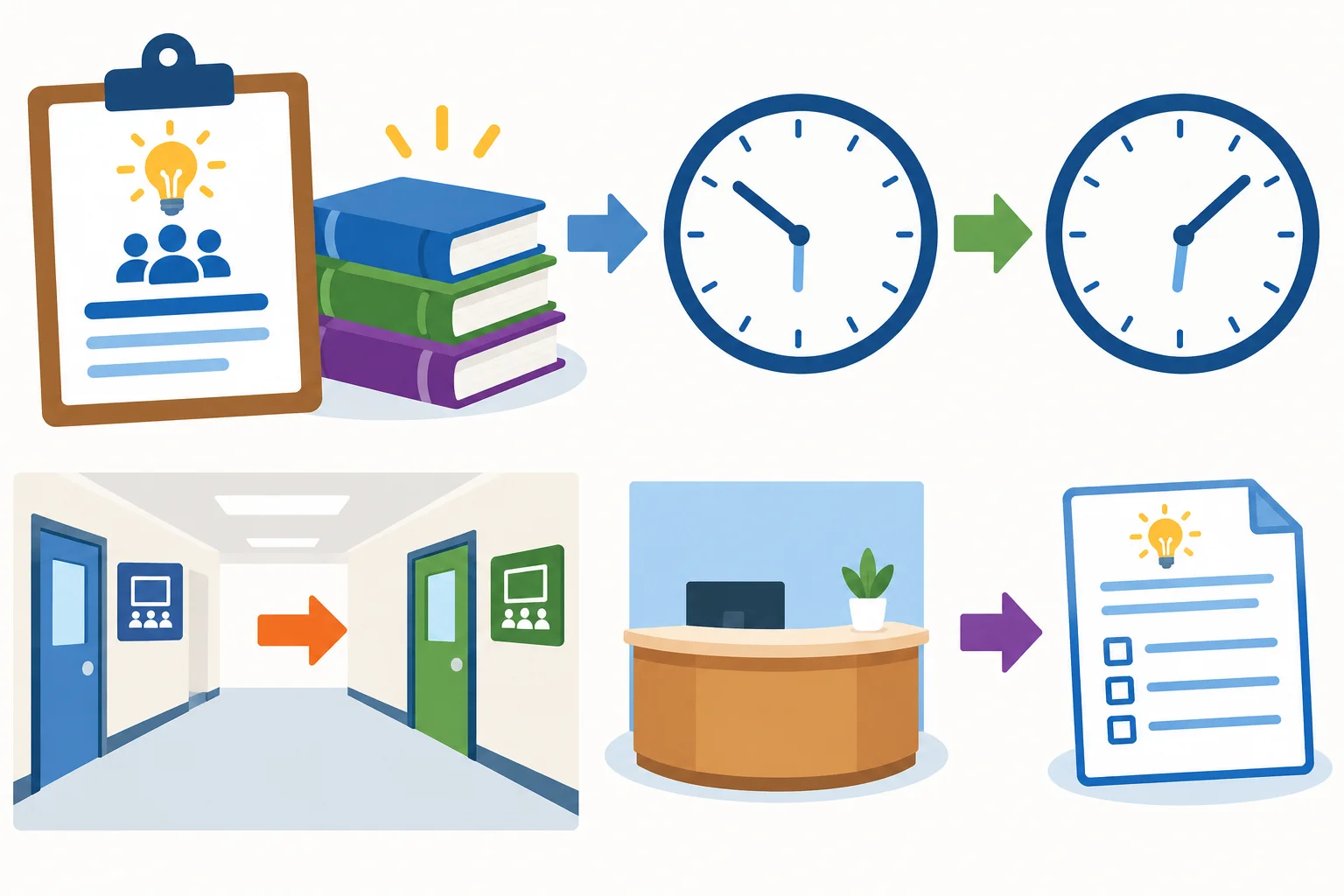
The notice gives a workshop update: the time and room change, and students have actions to complete.
A source is the original notice, message, or conversation. A summary is a shorter account of the important information in that source.
First, identify two things:
Here, the topic is the research workshop at Riverside Study Center. The purpose is to announce changes and request action from students.
A change makes information different. A delay means something starts later than planned.
Example
Compare the full source with a shorter account. The shorter account gives the main information; it does not copy every sentence from the source.
| Version | Information |
|---|---|
| Source | All notice details, including the original and new time, room change, confirmation time, and worksheet instruction. |
| Summary | The notice is about a research workshop at Riverside Study Center. The main change is that it starts later on Friday. Students also need to take action before it begins. |
Match each word to its meaning.
Tap an item and then its matching pair.
Which choice correctly identifies the topic and purpose of the Study notice and describes a summary?
Step 2 of 7
Select the information an absent classmate needs from a study notice, including changes, required actions, timing, location, and quantity.
An absent classmate needs details that explain the update and help them act correctly. Keep the main change, who it affects, and any exact time, place, quantity, or instruction they need. Leave out a repeated sentence, an optional example, or a reason that the source does not give.

Ask: Does this detail tell the classmate what changed or what they need to do?
Example
Study notice
Research workshop update
The research workshop for 12 students at Riverside Study Center is not canceled. On Friday, it will start at 11:00 a.m., not 10:00 a.m., and it will meet in Room 6, not Room 4. Please confirm your attendance by Thursday at 4:00 p.m. Before the workshop, collect 1 worksheet from reception. For example, students may bring a pen to take personal notes. Again, the workshop starts at 11:00 a.m. No reason for the changes is supplied.
Three useful update words help you find actions and deadlines:
Here, students confirm attendance, collect a worksheet, and have a confirmation that is due by Thursday at 4:00 p.m.
Use the absent classmate's needs to decide. Notice the difference between a repeated fact, an optional example, and a claim with no source evidence.
| Source detail | Keep or leave out? | Reason |
|---|---|---|
| The workshop is for 12 students. | Keep | It identifies who the update affects. |
| The workshop is not canceled. | Keep | This negative changes what students should expect. |
| Friday starts at 11:00 a.m., not 10:00 a.m. | Keep | Students need the changed start time. |
| The location is Room 6, not Room 4. | Keep | Students need the correct place. |
| Confirm attendance by Thursday at 4:00 p.m. | Keep | This action has an exact deadline. |
| Collect 1 worksheet from reception before the workshop. | Keep | Students need the instruction, quantity, and timing. |
| Again, the workshop starts at 11:00 a.m. | Leave out | It repeats a fact already kept. |
| Students may bring a pen to take personal notes. | Leave out | This optional example does not affect the update or required actions. |
| The changes happened because of equipment repairs. | Leave out | The source supplies no reason for the changes. |
Match each update word to its meaning.
Tap an item and then its matching pair.
An absent classmate needs a factual set of notes. Which choice keeps all essential details and leaves out the repeated sentence, the optional example, and the unsupported reason?

Step 3 of 7
Listen to a study update in two passes. Identify confirmed actions and exact details, write a key instruction from dictation, and reject a claim that the source does not support.
A spoken update can feel fast, so listen in two passes.
First pass: catch the main update. Ask: What changed, or what must people do?
Second pass: check details that can change the meaning: a negative such as not canceled, an amount, a room, a weekday, or a time. Record these exactly.
A fact is stated in the source. A guess or opinion adds information that the source does not state. If a detail is unclear, replay the recording instead of filling the gap with a likely explanation.
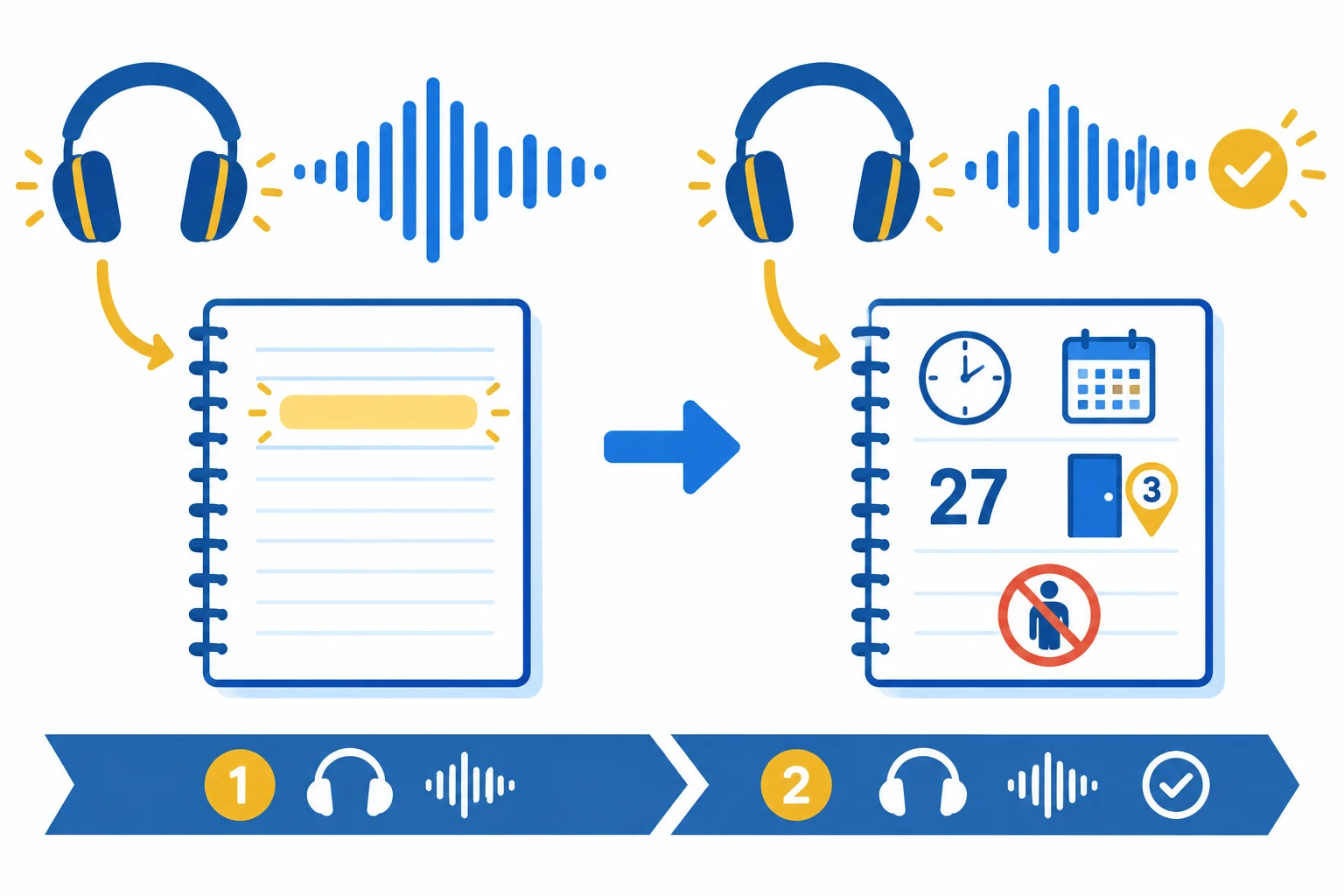
First hear the main point; then verify details that must stay accurate.
Use this test when you make notes from a source.
| Source detail | Keep or leave out? | Reason |
|---|---|---|
| The workshop is not canceled. | Keep | It changes what students should do. |
| The change will be easy for everyone. | Leave out | This is an opinion. |
| The schedule changed because someone made an error. | Leave out | The source gives no reason. |
Listen and choose an option.
Listen once for the main update. Which instruction must students follow? Replay only if you need to verify a detail.
Attention, students. This is a Study notice about the research workshop at Riverside Study Center for 12 students. The workshop is not canceled. On Friday, it starts at 11:00 a.m., not 10:00 a.m., and it is now in Room 6, not Room 4. Please confirm attendance by Thursday at 4:00 p.m. Before the workshop, collect 1 worksheet from reception. This message gives the schedule and action updates. No reason for these changes is provided.
Listen and write what you heard.
Listen and type the sentence exactly.
A student says: “The workshop changed because of room repairs.” This claim is supported by the spoken update.
Study notice — transcript
Attention, students. This is a Study notice about the research workshop at Riverside Study Center for 12 students. The workshop is not canceled. On Friday, it starts at 11:00 a.m., not 10:00 a.m., and it is now in Room 6, not Room 4. Please confirm attendance by Thursday at 4:00 p.m. Before the workshop, collect 1 worksheet from reception. This message gives the schedule and action updates. No reason for these changes is provided.
Now compare this source with your notes. Check the negative, room, time, action, deadline, and quantity. A factual summary reports what the source confirms; it does not supply a missing reason.
Tip
When one detail is uncertain, replay the source and check only that detail. Do not replace an uncertain fact with a guess that sounds reasonable.
Step 4 of 7
Use a short model and a three-part plan to write a factual 50–70-word summary with a clear opening and unambiguous references.
A summary is not a sentence-by-sentence copy of a source. Put the topic first, then group related essential details into two or three key points.
Keep exact names, numbers, places, and times. You can use familiar words to connect the facts, but do not add information that the source does not give.
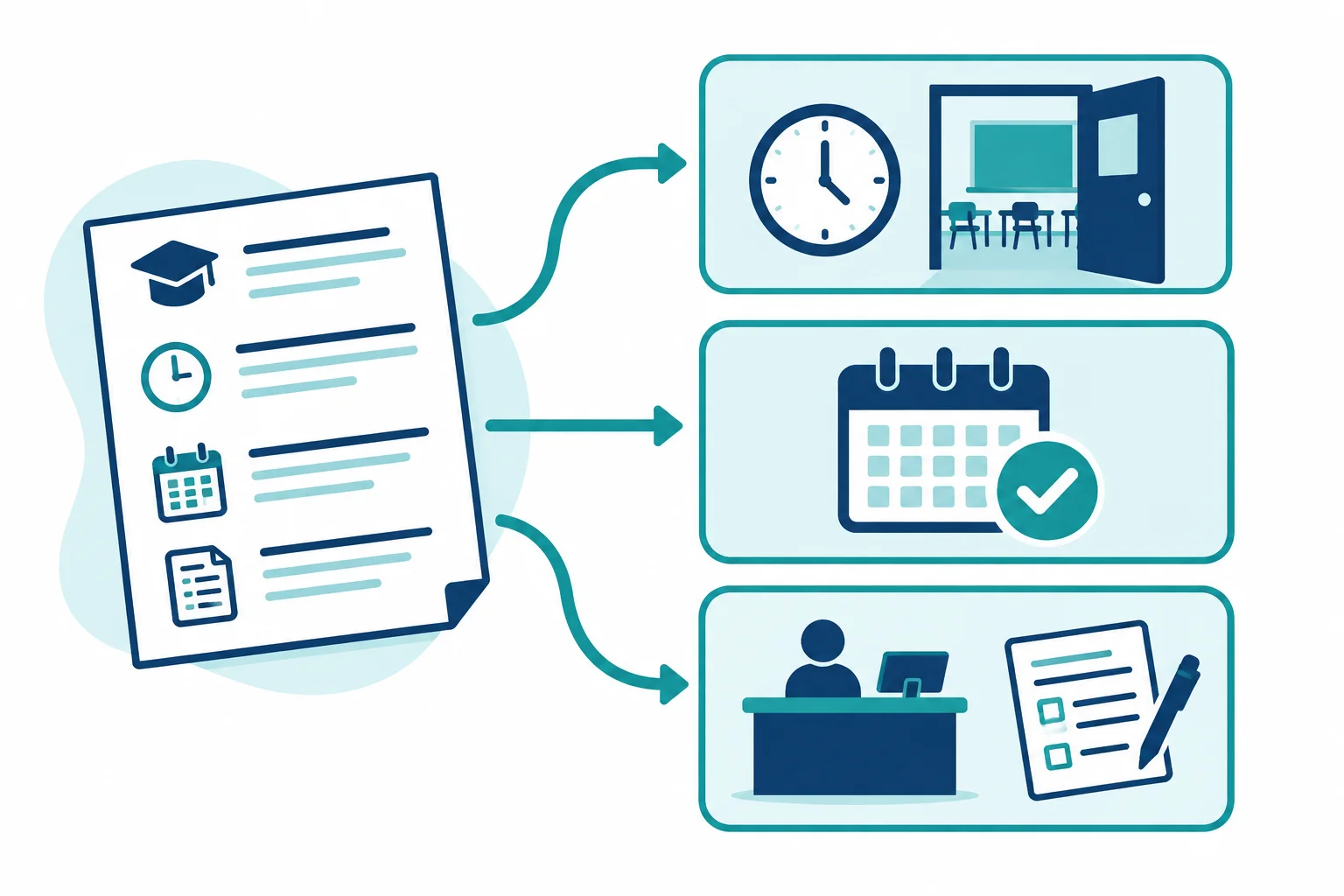
A strong summary groups related facts instead of following the source line by line.
Example
Study notice
Research workshop update for 12 students at Riverside Study Center.
Friday’s workshop begins at 11:00 a.m., not 10:00 a.m., and is now in Room 6, not Room 4. The workshop is not canceled.
Please confirm attendance by Thursday at 4:00 p.m. Collect 1 worksheet from reception before the workshop.
Summary
The notice is about an update to a research workshop at Riverside Study Center for twelve students. The main change is that Friday’s workshop now begins at 11:00 a.m. in Room 6, not at 10:00 a.m. in Room 4. It is not canceled. Students must confirm attendance by Thursday at 4:00 p.m. and collect one worksheet from reception before the workshop.
Make a short plan before you write. The topic tells the reader what the Summary is about. Then combine facts that belong together.
Use a clear noun when a pronoun could confuse the reader. For example, repeat the workshop or students instead of using it or they when the reference is not clear.
Use the plan below to organize the Study notice.
| Plan label | Notes |
|---|---|
| Topic | Research workshop update at Riverside Study Center |
| Key point 1 | Friday: 11:00 a.m.; Room 6 |
| Key point 2 | Workshop not canceled; 12 students |
| Key point 3 | Confirm by Thursday at 4:00 p.m.; collect 1 worksheet from reception |
Tip
Use and to join related facts and also to add another fact. Use but only for a real contrast that the source supports. Keep times, quantities, and names exactly accurate.
Put these plan parts in the best order for a clear Summary.
Build one clear key-point sentence.
Your sentence
Available words
Study notice
Research workshop update for 12 students at Riverside Study Center.
Friday’s workshop begins at 11:00 a.m., not 10:00 a.m., and is now in Room 6, not Room 4. The workshop is not canceled.
Please confirm attendance by Thursday at 4:00 p.m. Collect 1 worksheet from reception before the workshop.
Write a 50–70-word Summary for an absent student. Start with The notice is about ... or The main change is .... Put the topic first, group related details, and use clear nouns or pronouns. Keep the exact information from the Study notice; do not invent a reason for the changes.
Write at least 250 characters (0/250).
Step 5 of 7
Use a key-point plan, pauses, and stress to give a clear 30–45-second spoken summary of a study update.
A spoken summary is not the full source read aloud. Use a brief plan: say the topic first, then give the main points in groups. This helps you speak slowly enough for a listener to follow.
For this update, use this key-point plan:
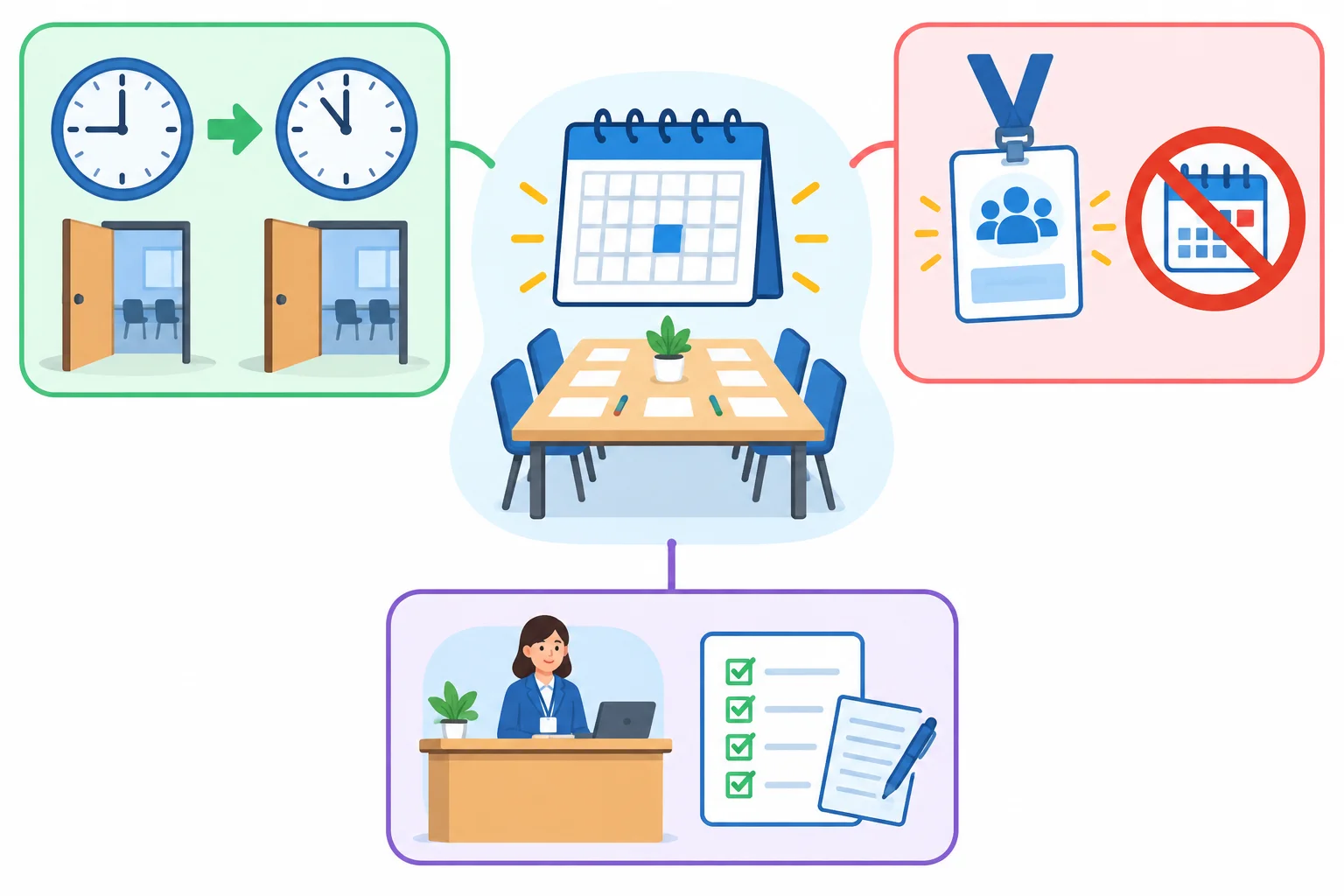
Group related facts into three main points before you speak.
Tip
Aim for 30–45 seconds. Do not rush to include every sentence. Give each key point a little space, then move on.
Listen to the model. Notice the pause after each complete key point and the stronger voice on actions, the negative, and times.
The notice is about a research workshop for twelve students at Riverside Study Center. The main change is that Friday's start is delayed from ten a.m. to eleven a.m., and the workshop will be in Room 6, not Room 4. It is not canceled. Students need to confirm attendance by four p.m. on Thursday and collect one worksheet from reception before the workshop.
The notice is about a research workshop for twelve students at Riverside Study Center. The main change is that Friday's start is delayed from ten a.m. to eleven a.m., and the workshop will be in Room 6, not Room 4. It is not canceled. Students need to confirm attendance by four p.m. on Thursday and collect one worksheet from reception before the workshop.
Example
The notice is about a research workshop for 12 students at Riverside Study Center. / The main change is that Friday’s start is delayed from 10:00 a.m. to 11:00 a.m., and the workshop will be in Room 6, not Room 4. / It is not canceled. Students need to confirm attendance by Thursday at 4:00 p.m. and collect 1 worksheet from reception before the workshop.
Tip
The / marks a short pause between key points. The bold words are important for the listener. In your own spoken summary, use your voice—not the symbols.
Listen and choose an option.
Which speaking choice would help a listener understand this update most clearly?
The workshop is not canceled. Students confirm attendance by Thursday at four p.m.
Now give the spoken summary aloud. Use this plan, pause between the three key points, and stress the important action, negative, amount, and times.
Use a personal timer if available. Aim for 30–45 seconds without rushing. Then type a short report: which details did you emphasize, and was your summary within the target length?
Write at least 35 characters (0/35).

Step 6 of 7
Check a written or spoken summary against its source, repair factual problems, and make sure no essential information is missing or unclear.
A factual Summary must work in two directions.
Check actions, negatives, amounts, times, and noun references. A reference is unclear when it or they could mean more than one thing. Repair the problem by naming the person, item, or event clearly. Delete a claim when the source does not support it.
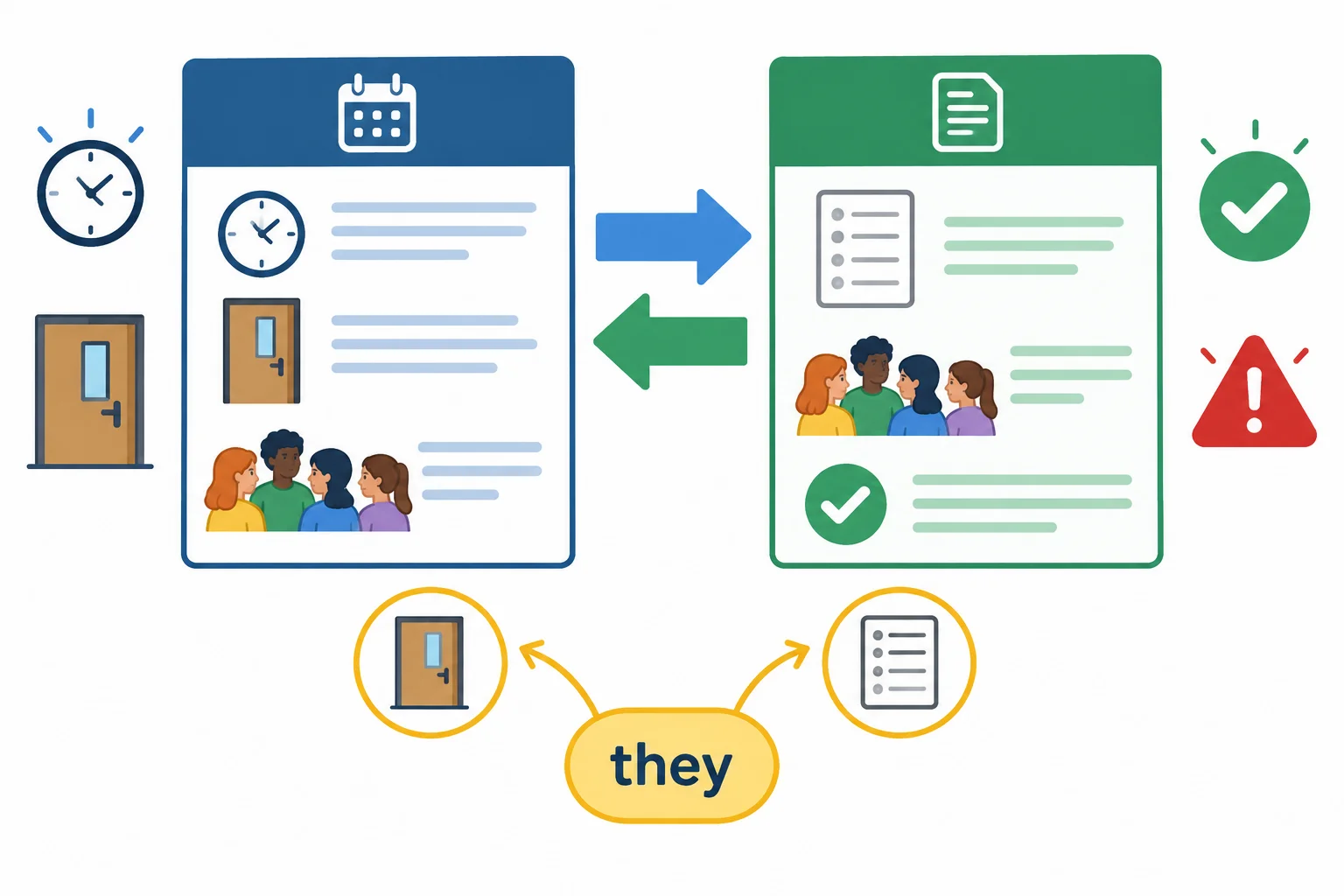
Match every Summary point to evidence, then look for missing details and unclear references.
Tip
Use the same routine for speaking. Compare your spoken plan—Topic, Key point 1, Key point 2, and Key point 3—with the source before you speak. After speaking, check whether you said a wrong time, amount, negative, or unclear it or they.
Study notice
The research workshop at Riverside Study Center is for 12 students. On Friday, the workshop is delayed from 10:00 a.m. to 11:00 a.m. It is also moved from Room 4 to Room 6. The workshop is not canceled. Students must confirm attendance by Thursday at 4:00 p.m. and collect 1 worksheet from reception before the workshop.
Example
Summary draft
The notice is about the research workshop at Riverside Study Center. It is canceled, and it begins at 10:00 a.m. in Room 4 on Friday. The workshop and the attendance confirmation are important, but it must be completed by Friday. Students collect 2 worksheets because of a building problem.
Compare each point in the Summary draft with evidence in the Study notice. A repair can correct a fact, add a missing essential detail, clarify a reference, or delete a claim with no source evidence.
| Summary point | Source evidence | Change needed |
|---|---|---|
| It is canceled. | The workshop is not canceled. | Correct the negative. |
| 10:00 a.m. in Room 4 | 11:00 a.m. in Room 6 | Correct the time and location. |
| It must be completed by Friday. | Students must confirm attendance by Thursday at 4:00 p.m. | Name students and attendance; correct the deadline. |
| 2 worksheets | 1 worksheet | Correct the amount. |
| No number of students | The workshop is for 12 students. | Add the essential detail. |
| Because of a building problem | No reason is supplied. | Delete the unsupported claim. |
Match each draft claim to the repair it needs.
Tap an item and then its matching pair.
Use the Study notice from the earlier screen as your evidence.
First, list the problems in this flawed draft, including any inaccurate facts, missing essential details, unsupported claims, and unclear references.
Summary draft: The notice is about a canceled research workshop at Riverside Study Center. It starts at 10:00 a.m. in Room 4 on Friday because of a building problem. They must confirm it by Friday and collect 2 worksheets.
Then write a corrected factual Summary of about 50–70 words. Finally, check the written Summary and spoken key-point plan you made earlier. Write one short check note for each: state one fact or noun reference you verified and any correction you made.
Write at least 300 characters (0/300).

Step 7 of 7
Independently produce and check written and spoken summaries of a new workplace update for an absent colleague.
Listen once for the overall update. Replay to verify details when you need to. Then read the matching Work message below.
Hello team. This Work message is for the 6 assistants preparing 1 team report at Harbor Office. Please note that the report deadline has changed. The deadline is now Thursday at 4:00 p.m.; Wednesday was the earlier deadline. Before then, each assistant needs to collect 2 forms from reception on Tuesday. The forms will be available from 9:00 a.m. on Tuesday. After collecting the forms, each assistant must confirm collection with the team leader by 12:00 p.m. on Tuesday. To repeat the schedule, collection takes place on Tuesday, forms are available from 9:00 a.m., and confirmation is due by 12:00 p.m. The team report deadline is Thursday at 4:00 p.m. Thank you for your attention.
Work message
Hello team. This Work message is for the 6 assistants preparing 1 team report at Harbor Office. Please note that the report deadline has changed. The deadline is now Thursday at 4:00 p.m.; Wednesday was the earlier deadline. Before then, each assistant needs to collect 2 forms from reception on Tuesday. The forms will be available from 9:00 a.m. on Tuesday. After collecting the forms, each assistant must confirm collection with the team leader by 12:00 p.m. on Tuesday. To repeat the schedule, collection takes place on Tuesday, forms are available from 9:00 a.m., and confirmation is due by 12:00 p.m. The team report deadline is Thursday at 4:00 p.m. Thank you for your attention.
The audio and this Work message are two versions of the same source, not separate sources to combine.
Use the complete routine independently:
Your written and spoken versions should use one set of confirmed facts. Keep quantities, weekdays, and times accurate. Do not add a reason, opinion, or other claim that the source does not state.
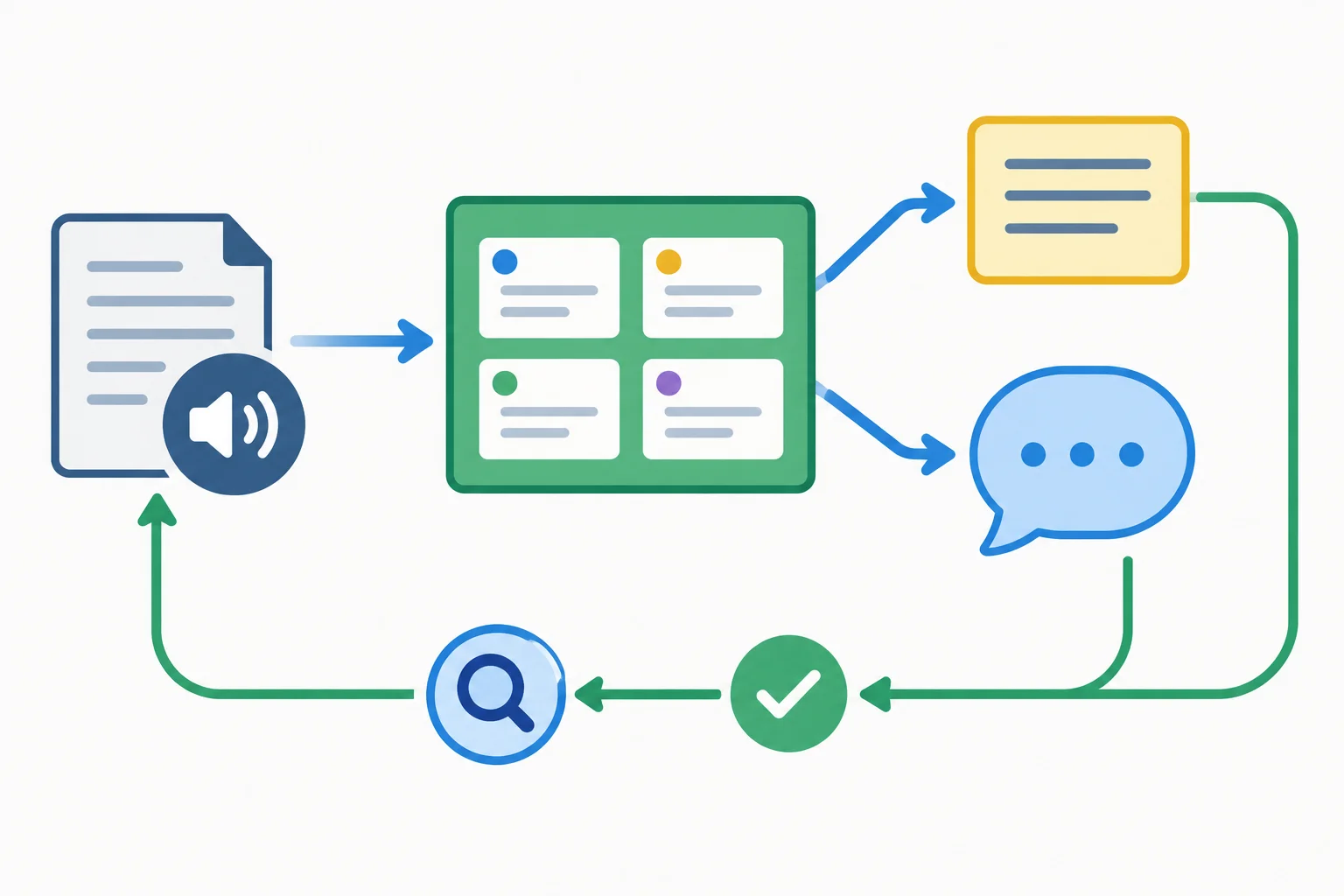
Use the same confirmed facts in both versions, then check both against the original source.
Return to the Work message on the first screen. First make brief notes under these labels:
Then decide how to group the information for an absent colleague. Start the written Summary with The message is about ... or The main change is .... Use clear nouns when a pronoun could be unclear. Your spoken version will use the same facts, but your voice will make the key points easy to follow.
Tip
Before the final task, check your plan against the source in both directions:
This quick check helps you avoid an inaccurate time, quantity, action, or unsupported claim before you write and speak.
Complete the final application using the Work message on the first screen.
Use only claims supported by the source.
Write at least 300 characters (0/300).
Summary
Congratulations! You completed: Summarize Work and Study Information
You completed this level!
Up next: B2: Time, Hypotheses, and Reports
 Describe Progress with the Present Perfect ContinuousGive a clear update on what you have completed and what you have been doing. Compare short written and spoken progress reports, choose the meaning you hear, and complete a brief dictation. Use a model to guide your own spoken and written update about preparing an activity or completing a study task.
Thousands of online courses in video, ebooks and audiobooks.
To test your knowledge during online courses
Generated directly from your cell phone's photo gallery and sent to your email

Download our app via QR Code or the links below:.



Carry knowledge in your pocket.
Download the Cursa app.
There are hundreds of free courses available, with a free certificate of completion that is saved in your mobile image gallery.
Download the app to access the Course Completion Certificate for Free.


+ 10 million
students

Free and Valid
Certificate

60 thousand free
exercises

4.8/5 rating in
app stores

Free courses in
video and ebooks