 Engineering Mechanics
 Robotics and Mechatronics
 Fluid Mechanics
Mechanical engineering basics include mechanics, materials, thermodynamics, fluid mechanics, machine design, manufacturing, and engineering mathematics.

17


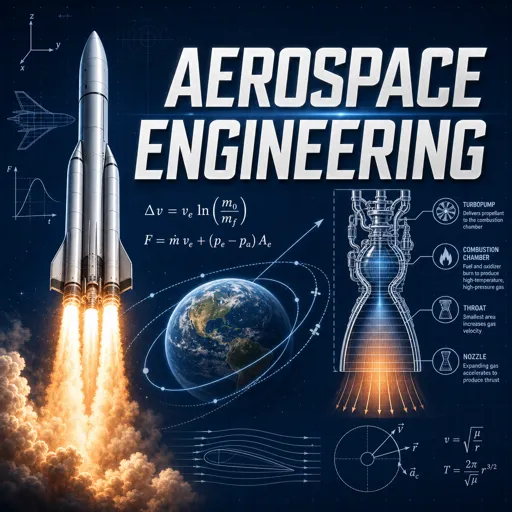
Build in-demand aerospace skills with a free online course on rocket dynamics, orbits, nozzles, and propulsion—learn fast and earn a certificate-ready foundation.
5

(4)

17h32m

20 exercises
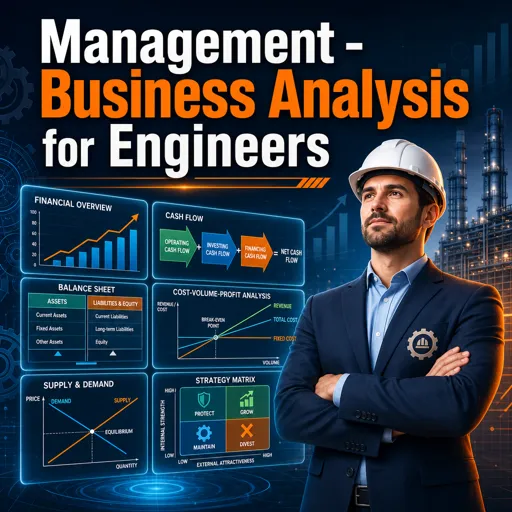
Strengthen your business analysis skills for engineering roles with a free online course on finance, strategy and economics—learn to make smarter decisions.
4.8
(84)
31h13m
29 exercises
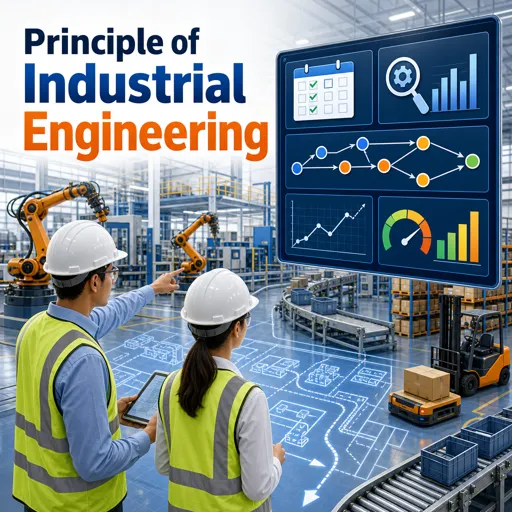
Build industrial engineering skills to improve productivity, layout and plant location decisions. Join this free online course and learn with practical exercises.
4.8

(8)
32h27m
33 exercises
Free CourseFluid Mechanics
5
(3)
23h09m
16 exercises
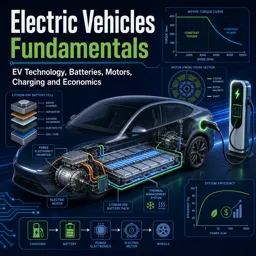
Free CourseElectric Vehicles Fundamentals: EV Technology, Batteries, Motors, Charging and Economics
4.8
(4)
33h11m
39 exercises
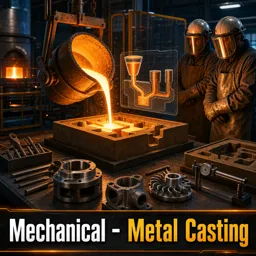
Free CourseMechanical - Metal Casting
4.7
(93)
30h34m
30 exercises
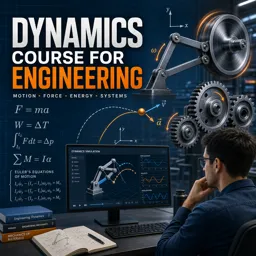
Free CourseDynamics course for Engineering
4.7
(3)
28h05m
30 exercises
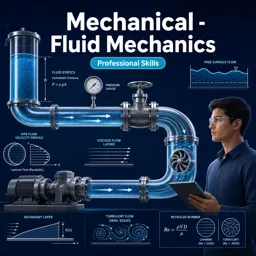
Free CourseMechanical - Fluid Mechanics
4.6
(63)
41h57m
32 exercises
Free CourseEngineering Mechanics
4.6
(7)
40h32m
5 exercises
Free CourseRobotics and control
4.5
(4)
21h37m
31 exercises
Free CourseEngineering Dynamics
4.5
(4)
39h59m
20 exercises
Free CourseMechatronics
4.4
(7)
23h01m
30 exercises
Free CourseRenewable Energy Engineering
4.2
(5)
29h51m
37 exercises
Free CourseStatistics Engineering Mechanics
4
(1)
2h38m
31 exercises
Free CourseEngineering Mechanics
3.8
(5)
23h51m
21 exercises
Free CourseClassical Mechanics
3.8
(4)
18h22m
42 exercises
Free CourseEngineering Mathematics
3.7
(3)
25h19m
17 exercises
Exercises
Test your knowledge of precision instruments, calibration, gauges, measurement errors, uncertainty, and dimensional inspection.
Start exercisesTest your material science and engineering knowledge on metals, ceramics, polymers, bonding, crystal structures, strength, and industrial uses.
Start exercisesTest your machine design fundamentals knowledge, including gears, shafts, stresses, materials, bearings, flywheels, and belt drives.
Start exercisesTest your engineering knowledge of control systems, feedback, PID controllers, stability, damping, sensors, and system analysis.
Start exercisesTest your advanced dynamics knowledge with questions on kinetic energy, motion, angular velocity, inertia, work-energy, and restitution.
Start exercisesTest your introduction to robotics and mechatronics knowledge, including sensors, actuators, control systems, path planning, and simulation.
Start exercises
Applications of Robotics and Mechatronics in Modern Industry
Discover how robotics and mechatronics revolutionize modern industry with applications in automation, quality control, and collaborative robotics.

Fundamentals of Actuators and Sensors in Robotics and Mechatronics
Learn the fundamentals of actuators and sensors in robotics and mechatronics, from types and functions to their integration in intelligent systems.

Introduction to Robotics and Mechatronics: Exploring the Future of Engineering
Discover how robotics and mechatronics are driving innovation in engineering and learn the skills needed for a successful career in these fields.

Robotic Control Systems: Integrating Intelligence in Mechatronic Design
Discover how robotic control systems integrate intelligence into mechatronic design, driving automation and innovation in engineering.

Understanding the Basics of Fluid Mechanics: Principles and Applications
Learn the core principles and real-world applications of fluid mechanics—essential knowledge for engineers across civil, mechanical, chemical, and aerospace fields.

The Role of Fluid Mechanics in Modern Engineering Systems
Discover how fluid mechanics powers modern engineering—from aircraft and HVAC to water systems—bridging theory, design, and real-world impact.

Essential Equations and Laws in Fluid Mechanics: A Practical Guide
Explore the core fluid mechanics equations—continuity, Bernoulli, Pascal, and Reynolds—and their essential role in modern engineering applications.

Advanced Fluid Flow Analysis: Exploring Laminar and Turbulent Flows
Explore the differences between laminar and turbulent flows, and how mastering them helps engineers design efficient systems across industries.

Customer Service

Electrician

Construction

Logistics and Supply chain

Culinary

Automotive Repair

Cashier and Banking Services

Refrigeration and air conditioning

Property and Private Security

Mobile Device Repair

Fashion and Sewing

Woodworking

Welding

Realtor

Crafts

Farming

Journalism

Other Professions
Explore free online courses designed to develop foundational knowledge in mechanics, manufacturing, industrial systems, engineering analysis, and modern technology. These learning resources support students, technicians, engineering professionals, and curious beginners seeking flexible technical education. Every course is free, includes free certification, and features exercises that help reinforce important concepts through active learning and self-assessment.
Study force, motion, energy, materials, production processes, mathematical modeling, and system behavior. Courses such as Classical Mechanics, Engineering Dynamics, and Engineering Mechanics introduce analytical methods used to solve technical problems. Learners can also strengthen quantitative skills with Engineering Mathematics and explore the behavior of liquids and gases through Mechanical Fluid Mechanics.
Develop practical understanding of production environments, process improvement, automation, and engineering management. Mechanical Metal Casting examines manufacturing fundamentals, while Principles of Industrial Engineering covers productivity, operational planning, and efficient resource utilization. Business Analysis for Engineers connects technical decision-making with organizational objectives.
Continue learning with related collections in Robotics and Mechatronics or Engineering Mechanics. These subjects complement studies in machine design, control theory, statics, dynamics, and industrial automation.
To access the courses, exercises, and free certification, users must install the Cursa app. Get it from Google Play using Download for Android or from the App Store using Download for iOS / iPhone. Learn at your own pace and build valuable mechanical, industrial, and engineering competencies from anywhere.
What are the basics of mechanical engineering?
Mechanical engineering basics include mechanics, materials, thermodynamics, fluid mechanics, machine design, manufacturing, and engineering mathematics.
What will I learn in a fluid mechanics course?
You will learn fluid properties, pressure, flow behavior, continuity, Bernoulli’s principle, pipe flow, and practical fluid-system applications.
What is industrial engineering and why is it important?
Industrial engineering improves systems, processes, productivity, quality, safety, and resource use in manufacturing and service operations.
What is the difference between statics and dynamics?
Statics studies forces on bodies at rest, while dynamics studies forces and motion, including velocity, acceleration, and vibration.
What is mechatronics?
Mechatronics combines mechanical engineering, electronics, sensors, control systems, and computing to create intelligent machines and products.
What topics are covered in robotics and control courses?
Robotics and control courses cover robot motion, sensors, actuators, kinematics, feedback control, automation, and industrial robot applications.
Are mechanical and industrial basics useful for renewable energy and electric vehicles?
Yes. They provide core knowledge of mechanics, energy systems, materials, motors, fluid flow, manufacturing, and engineering analysis used in renewable energy and EVs.

Complete any course and issue your certificate via the app — at no cost.

Download the app! to have access to more than 4,000 Online Courses + Certificate, all free!
Download the app! 100% free courses.


Carry knowledge in your pocket.
Download the Cursa app.
There are hundreds of free courses available, with a free certificate of completion that is saved in your mobile image gallery.
Download the app to access the Course Completion Certificate for Free.


+ 10 million
students

Free and Valid
Certificate

60 thousand free
exercises

4.8/5 rating in
app stores

Free courses in
video and ebooks
What are people saying about free online courses of Mechanical and Industrial Basics
Durairaju
The course content was clear, practical,
CoursePrinciple of industrial engineering
Brayden Darnell
im 13 and as im not complete with this course I have still found it very useful and it is great for notes and studies so far.
CourseMechatronics
Roben J. Panlilio
I like it and improve my knowledge about auto vihicles
CourseMechanical - Fluid Mechanics
Subhajit Roy
I have learnt many useful things from this lecture.....
CourseMechanical - Fluid Mechanics
Viola dlomo
it was easy to learn, everything is explained thoroughly and you can always go back for a refresher.
CoursePrinciple of industrial engineering
Pragasan Govender
very good explanation and excellent teacher. I highly recommend this course
CourseManagement - Business Analysis for Engineers
yashaswini
Good explanation of concepts can be made more interactive to learn
CourseMechatronics