Step 1 of 8
Read a Menu and a Shop Sign
Learn to read a short café menu and a simple shop sign so you can find a product, its size or amount, and its price.

Learning path · Level 4 · Tutorial 4
Order food and ask for things in a shop. Choose an amount or size, ask the price, and correct an order politely. Read and listen to short exchanges, then practise a conversation and write your own.
 Read a Menu and a Shop Sign
Learn to read a short café menu and a simple shop sign so you can find a product, its size or amount, and its price. 2 min
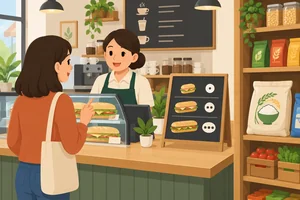 Make a Polite Request
Use I’d like and Could I have to make friendly requests for food or products. 3 min
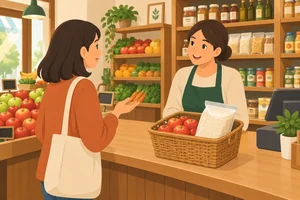 Ask What the Shop Has
Ask whether a product is available at Corner Shop, understand a short reply, and follow it with a polite request using a familiar amount. 2 min
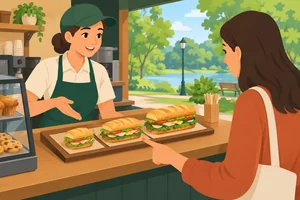 Choose a Size and Answer an Offer
Accept or decline offers politely, and give a clear size when staff ask you to choose. 2 min
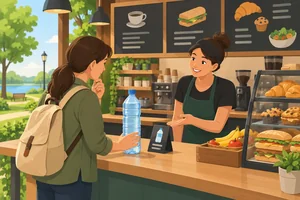 Check the Price
Ask the price of one item or a plural order, and understand the staff member's answer. 2 min
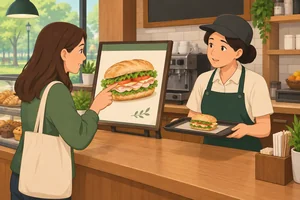 Correct an Order Politely
Notice a mistake in an order and correct the item, amount, or size briefly and politely. 2 min
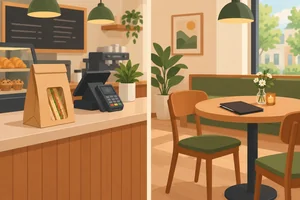 Take Food Away and Ask to Pay
Learn how to say food is to go or take away, and how to ask for the check or bill after a seated meal. 2 min
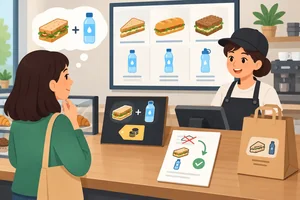 Complete Your Own Customer Conversation
Use a menu or shop sign, listening, writing, and speaking to complete a polite customer conversation. 5 min
Step 1 of 8
Learn to read a short café menu and a simple shop sign so you can find a product, its size or amount, and its price.
A menu is a list of food or drinks and their prices. A sandwich is one food on the Park Café menu.
Your order is the food or drink you choose. The size tells you whether it is small, medium, or large.
To read a menu, find:
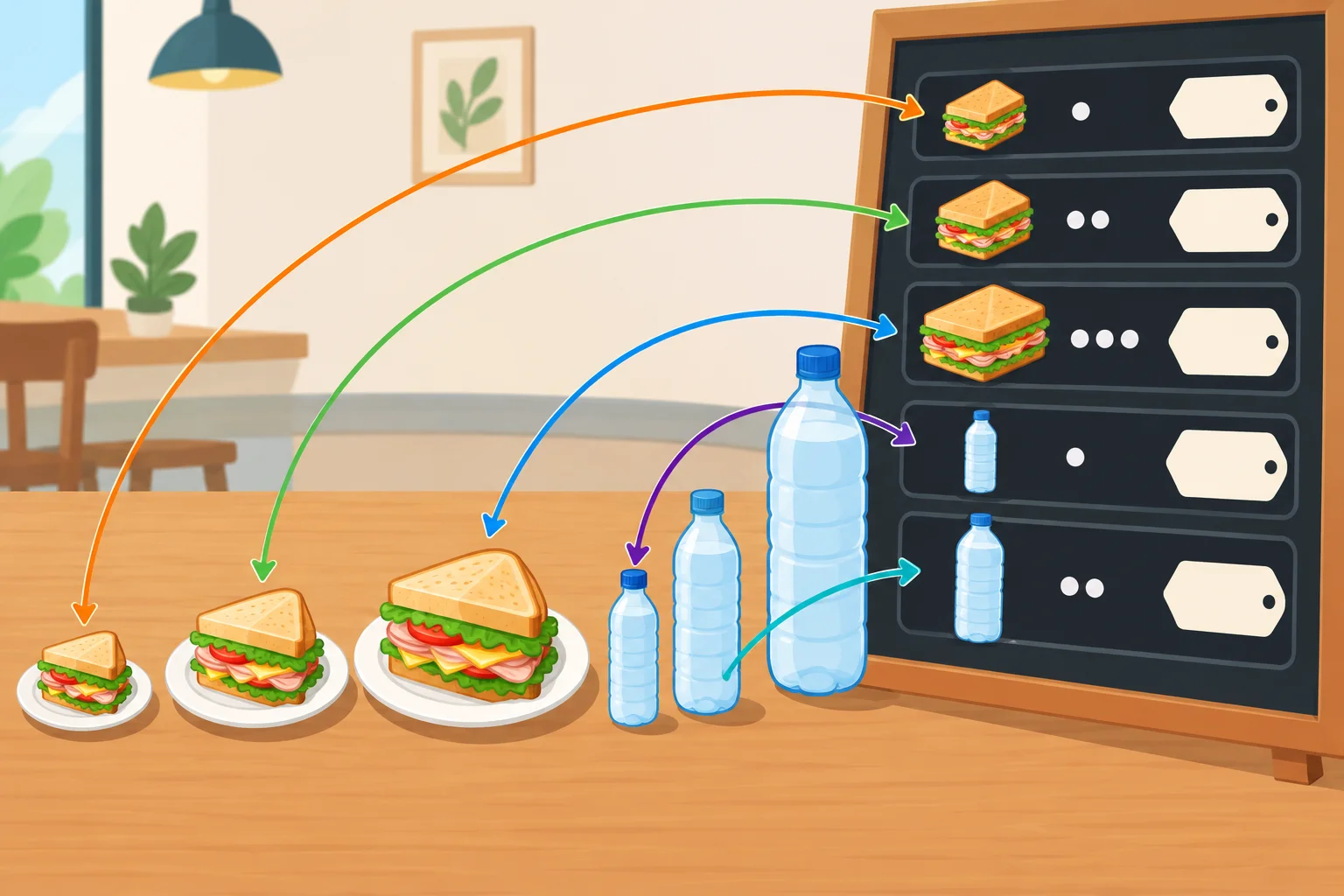
First find the product, then its size, then the price.
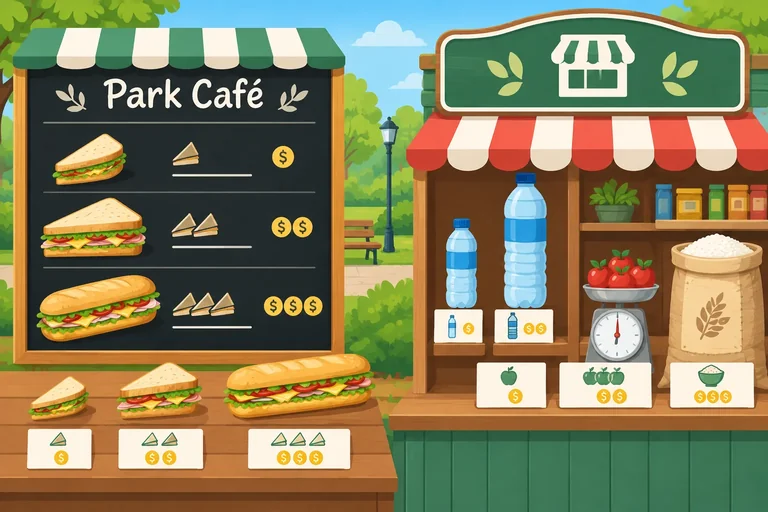
Read this Park Café menu. A sandwich has three size choices. A bottle of water has two size choices.
| Product | Size | Price |
|---|---|---|
| Sandwich | small | $4.00 |
| Sandwich | medium | $5.00 |
| Sandwich | large | $6.00 |
| Bottle of water | small | $1.50 |
| Bottle of water | large | $2.00 |
A shop sign can show a product and its price. At Corner Shop, look carefully at the words after the product.
For apples, the sign gives a price for a kilo. For rice, the sign gives a price for a bag. These details help you choose the correct product and amount.
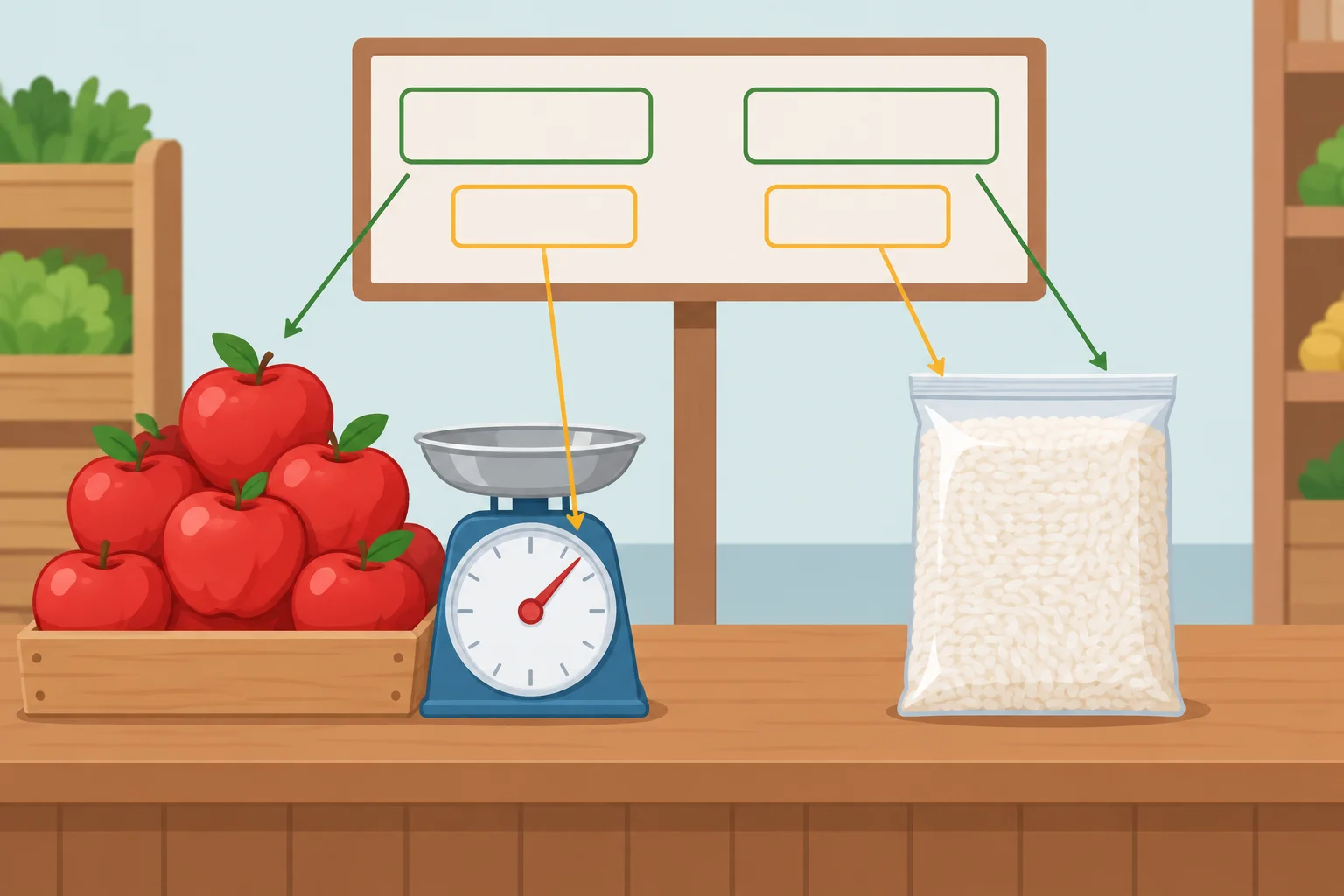
A sign can give a price for an amount, such as a kilo or a bag.
Here is the fixed sign at Corner Shop.
| Product | Price |
|---|---|
| Apples | $2.00 a kilo |
| A bag of rice | $3.00 |
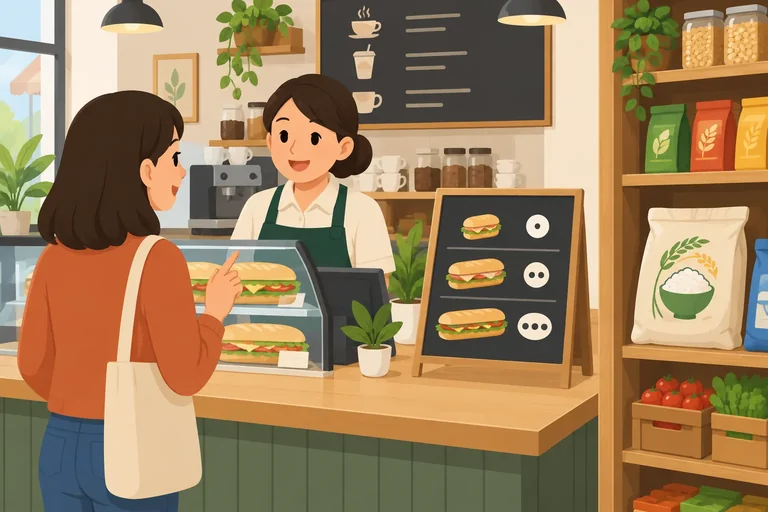
Which picture matches this menu label: medium sandwich?
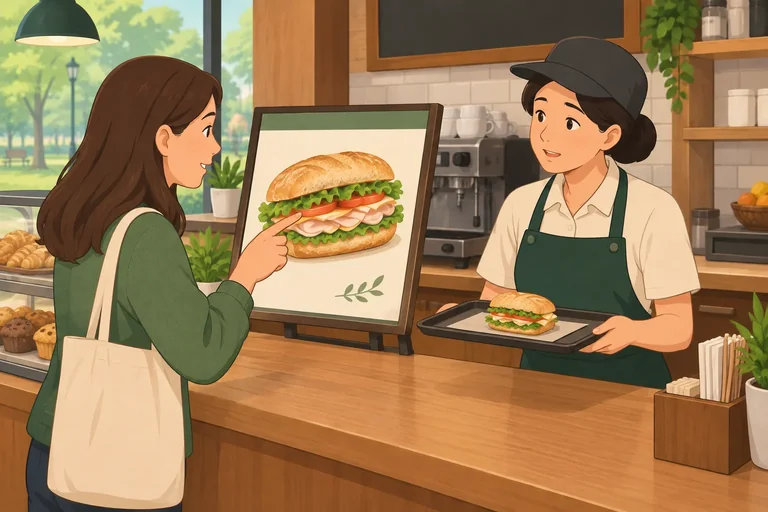
You want a kilo of apples at Corner Shop. Which price do you find on the sign?
Step 2 of 8
Use I’d like and Could I have to make friendly requests for food or products.
At Park Café or Corner Shop, use a polite request to ask for something.
I’d like + a thing, please.
Could I have + a thing, please?
Both forms are polite. I’d is the short form of I would in the fixed phrase I’d like.
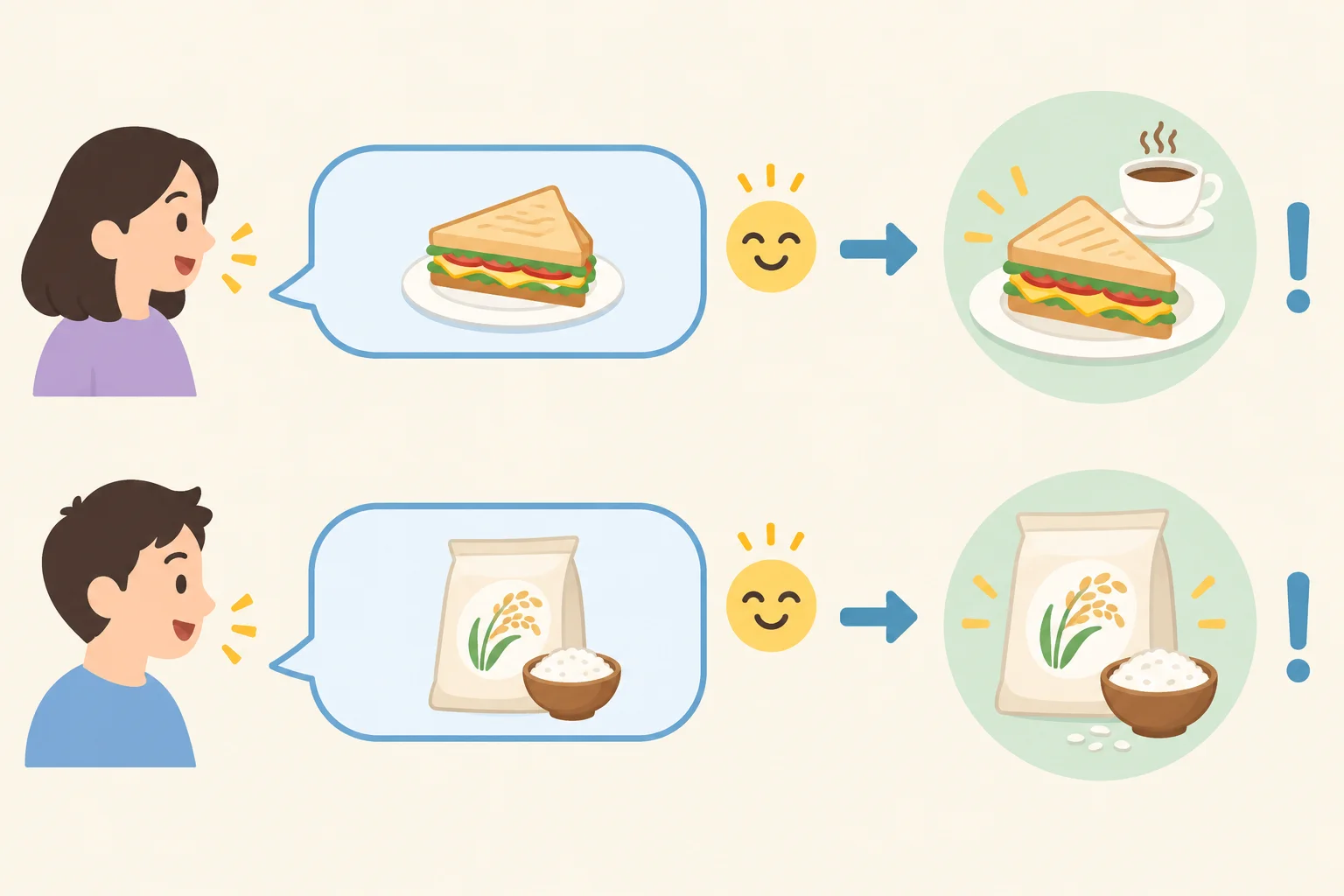
Start with a polite phrase, name the item clearly, and add please at the end.
Example
Customer: I’d like a medium sandwich, please.
Customer: Could I have a bag of rice, please?
Listen to each model. Then say it aloud at an unhurried pace.
Model 1
I'd like a medium sandwich, please.
I'd like a medium sandwich, please.
Model 2
Could I have a bag of rice, please?
Could I have a bag of rice, please?
Tip
Make the item words clear: a medium sandwich; a bag of rice. Keep your voice friendly and do not rush. Say please clearly at the end.
Put the blocks in order to make the statement request. Then play the matching model again and say your sentence aloud.
Your sentence
Available words
Put the blocks in order to make the question request. Then play the matching model again and say your sentence aloud.
Your sentence
Available words
Step 3 of 8
Ask whether a product is available at Corner Shop, understand a short reply, and follow it with a polite request using a familiar amount.
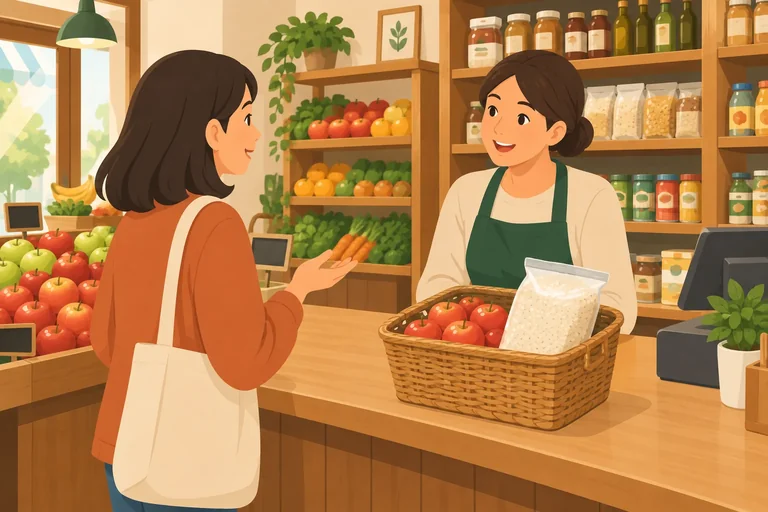
At Corner Shop, use Do you have any ...? to ask if a product is available.
Customer: Do you have any apples?
Staff: Yes, we do. / Sorry, we don't.
This checks what the shop has. It is not an order. After a yes answer, make a polite request with an amount:
Customer: I'd like a kilo of apples, please.
Customer: Could I have a bag of rice, please?
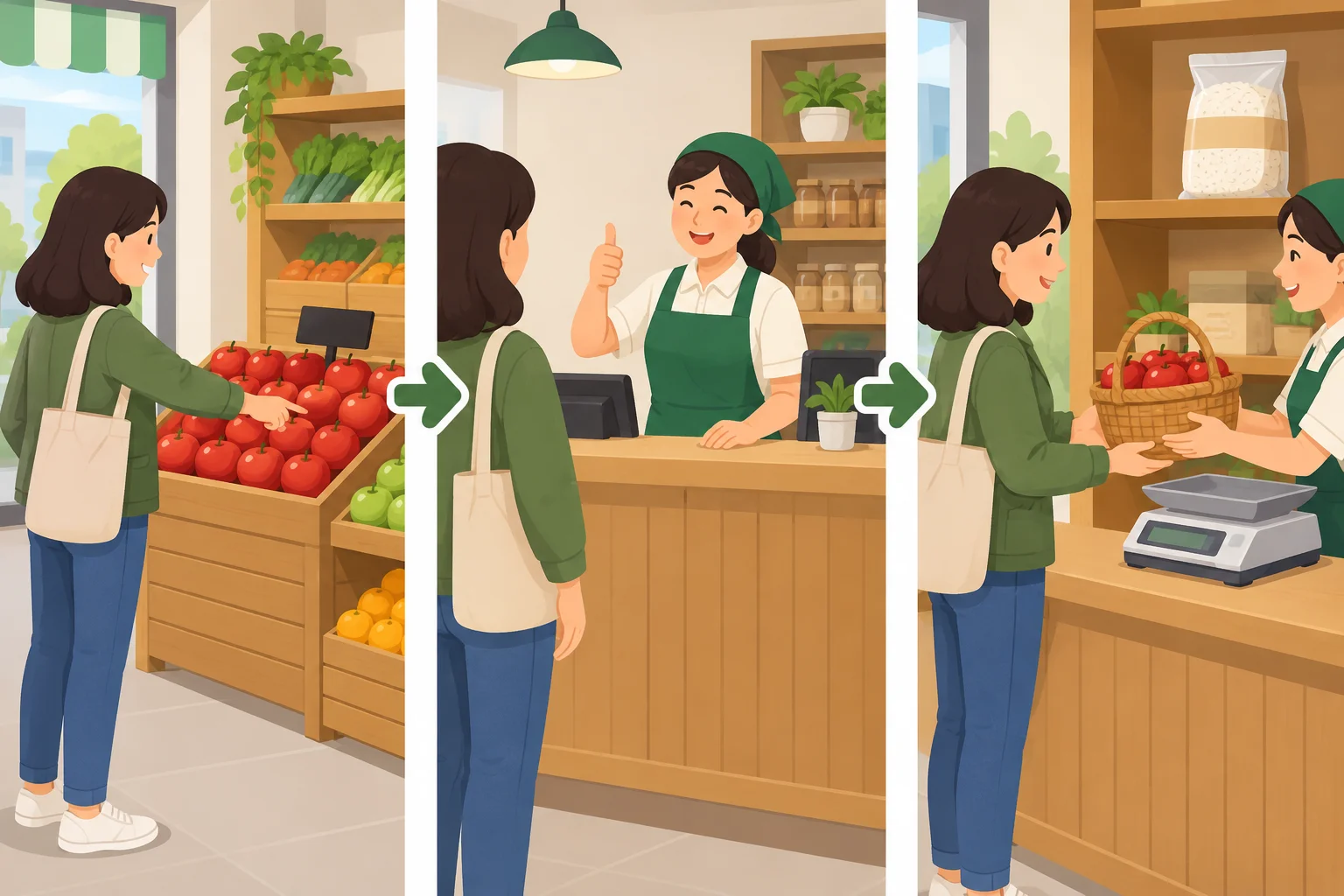
First ask whether the product is available. Then make your order with the amount you need.
Here is a short exchange. Notice that the customer asks about availability before making an order.
Example
Customer: Do you have any apples?
Staff: Sorry, we don't.
Customer: Do you have any rice?
Staff: Yes, we do.
Customer: I'd like a bag of rice, please.
Listen for the question, the short reply, and the polite order.
Do you have any apples? Yes, we do. Could I have a kilo of apples, please? Yes.
Customer: Do you have any apples?
Staff: Yes, we do.
Customer: Could I have a kilo of apples, please?
Staff: Yes.
Tip
Speak clearly and give the important amount a little stress: kilo. Keep your voice friendly and unhurried.
Complete the two customer lines. First, check whether Corner Shop has apples. After the staff says yes, make a polite request for a kilo of apples.
Customer:
Staff: Yes, we do.
Customer: 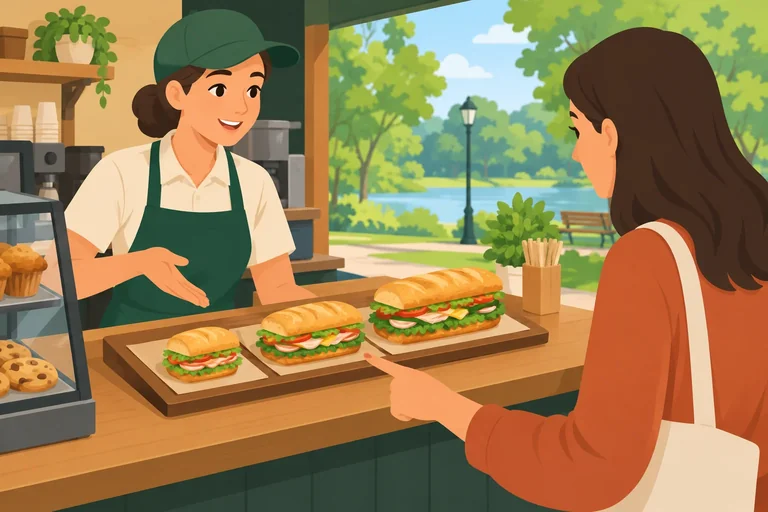
Step 4 of 8
Accept or decline offers politely, and give a clear size when staff ask you to choose.
A staff member can offer you something with Would you like ...?
Staff: Would you like a sandwich?
To accept, say Yes, please. To decline, say No, thank you. Both answers are polite.
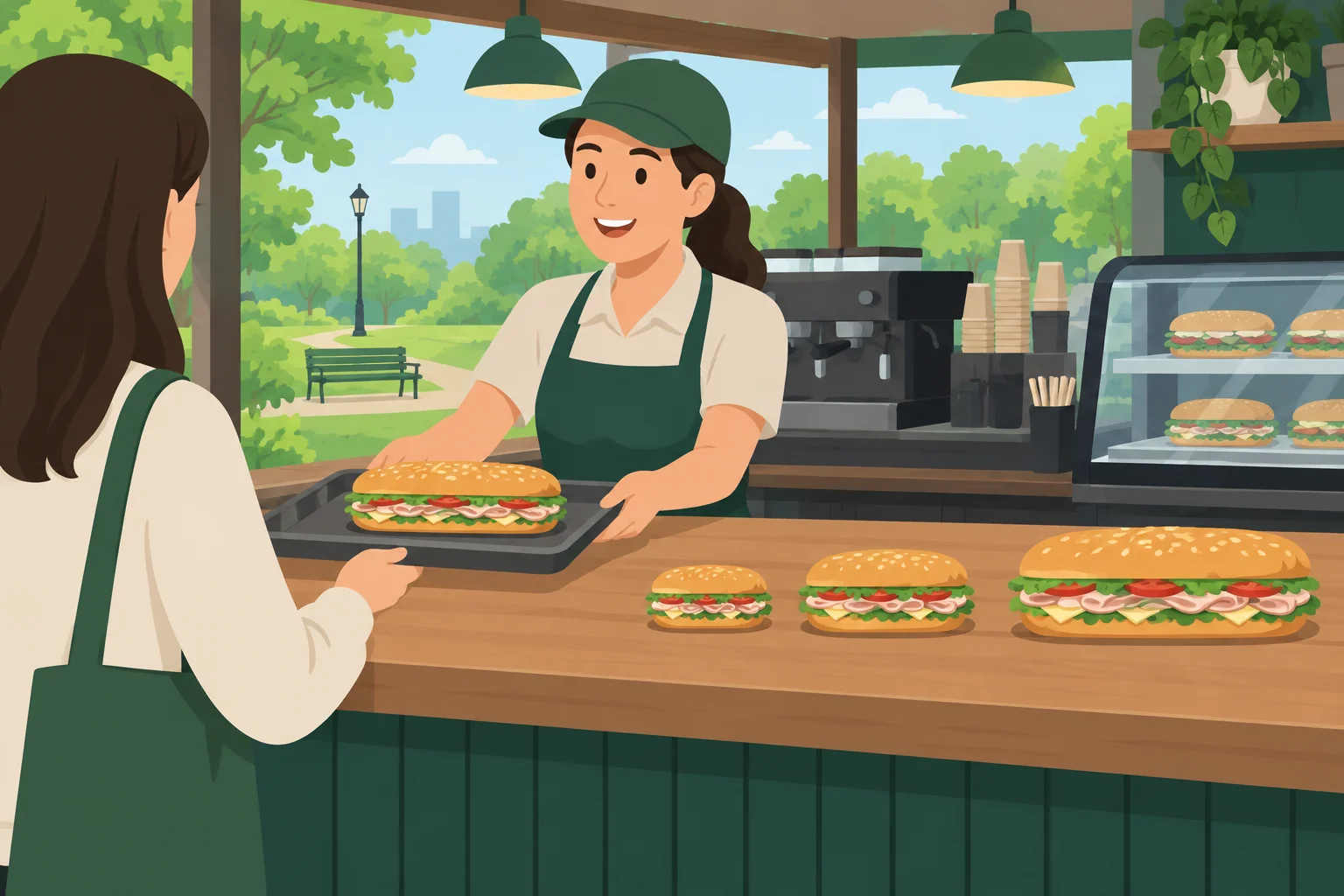
Staff can offer an item; the customer can accept or decline politely.
Tip
Use a friendly voice. Make the important response word clear: Yes, please. / No, thank you.
When staff give size choices, name the size you want. Do not answer only Yes.
Staff: Would you like a small, medium, or large sandwich?
Customer: A medium sandwich, please.
The customer says the size and the item clearly.
Example
Staff: Would you like a small, medium, or large sandwich?
Customer: A large sandwich, please.
Listen for the product and the size. You will choose the matching order later.
Staff: Would you like a small, medium, or large sandwich?
Customer: A large sandwich, please.
Staff: Would you like a small, medium, or large sandwich?
Customer: A large sandwich, please.
Tip
Stress the size when you speak: a large sandwich, please.
Match each staff question to the best customer response.
Tap an item and then its matching pair.
Which order did you hear in the café exchange?
Now say the customer’s response from the recording aloud. Speak slowly and make the size clear: large.
Step 5 of 8
Ask the price of one item or a plural order, and understand the staff member's answer.
After you choose an order, you can check its price.
Use How much is it? for one item or one order:
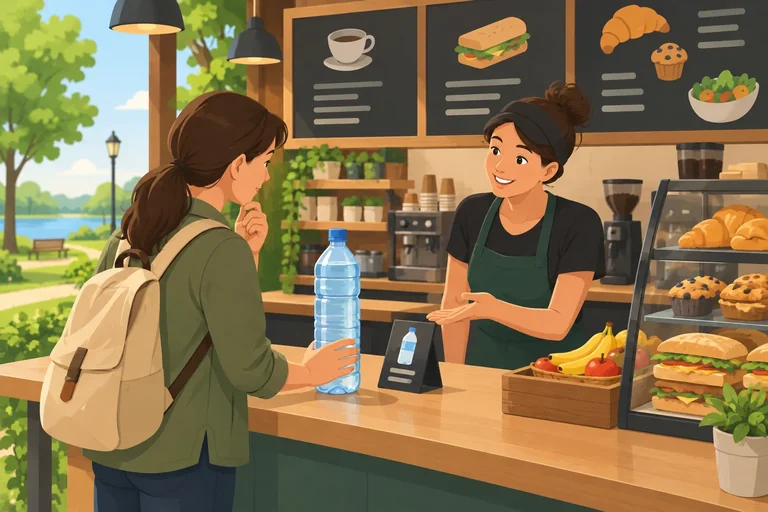
Customer: I'd like a large bottle of water, please.
Customer: How much is it?
Use How much are they? for more than one item:
Customer: I'd like two medium sandwiches, please.
Customer: How much are they?
It means one thing. They means more than one thing.
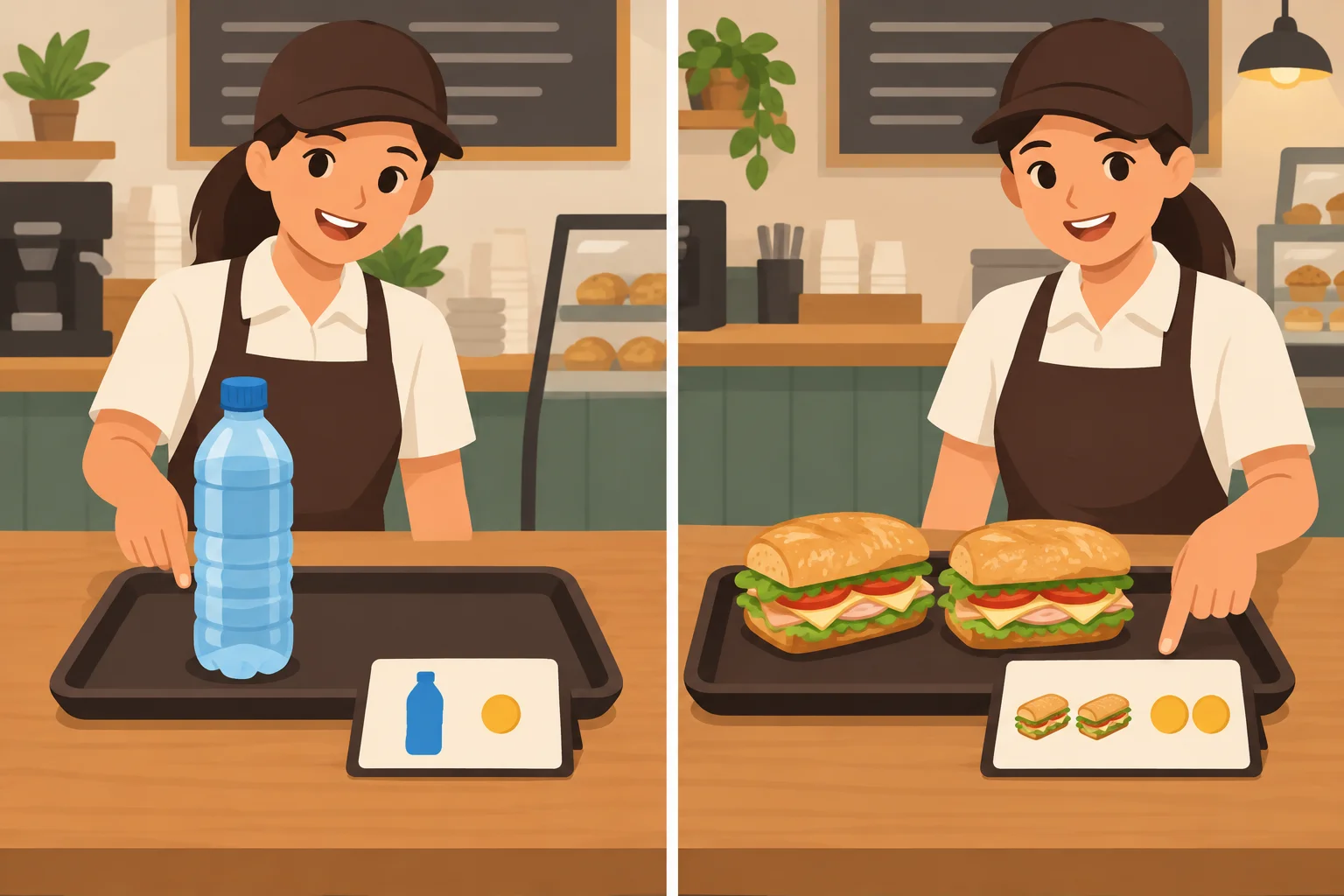
Use it for one item and they for more than one item.
The staff answer tells you the price of the item or order you have just chosen.
| Chosen order | Price question | Staff reply |
|---|---|---|
| a large bottle of water | How much is it? | It's $2.00. |
| a medium sandwich | How much is it? | It's $5.00. |
| two medium sandwiches | How much are they? | They're $10.00. |
| a kilo of apples | How much is it? | It's $2.00. |
Example
Customer: Could I have a bag of rice, please?
Staff: Certainly.
Customer: How much is it?
Staff: It's $3.00.
Tip
Say the complete question with a clear main word: How much is it? / How much are they?
Listen and choose an option.
Listen to the exchange. Which order has this price?
Customer: I'd like a large bottle of water, please. How much is it? Staff: It's $2.00.
Complete the price-checking exchange.
Customer: I'd like two medium sandwiches, please.
Staff: Certainly.
Customer: How much ___?
Staff: They're $10.00.
Step 6 of 8
Notice a mistake in an order and correct the item, amount, or size briefly and politely.
When staff repeat an order, compare it with what you asked for. Listen for the item, amount, and size.
If one detail is different, correct it briefly and politely.
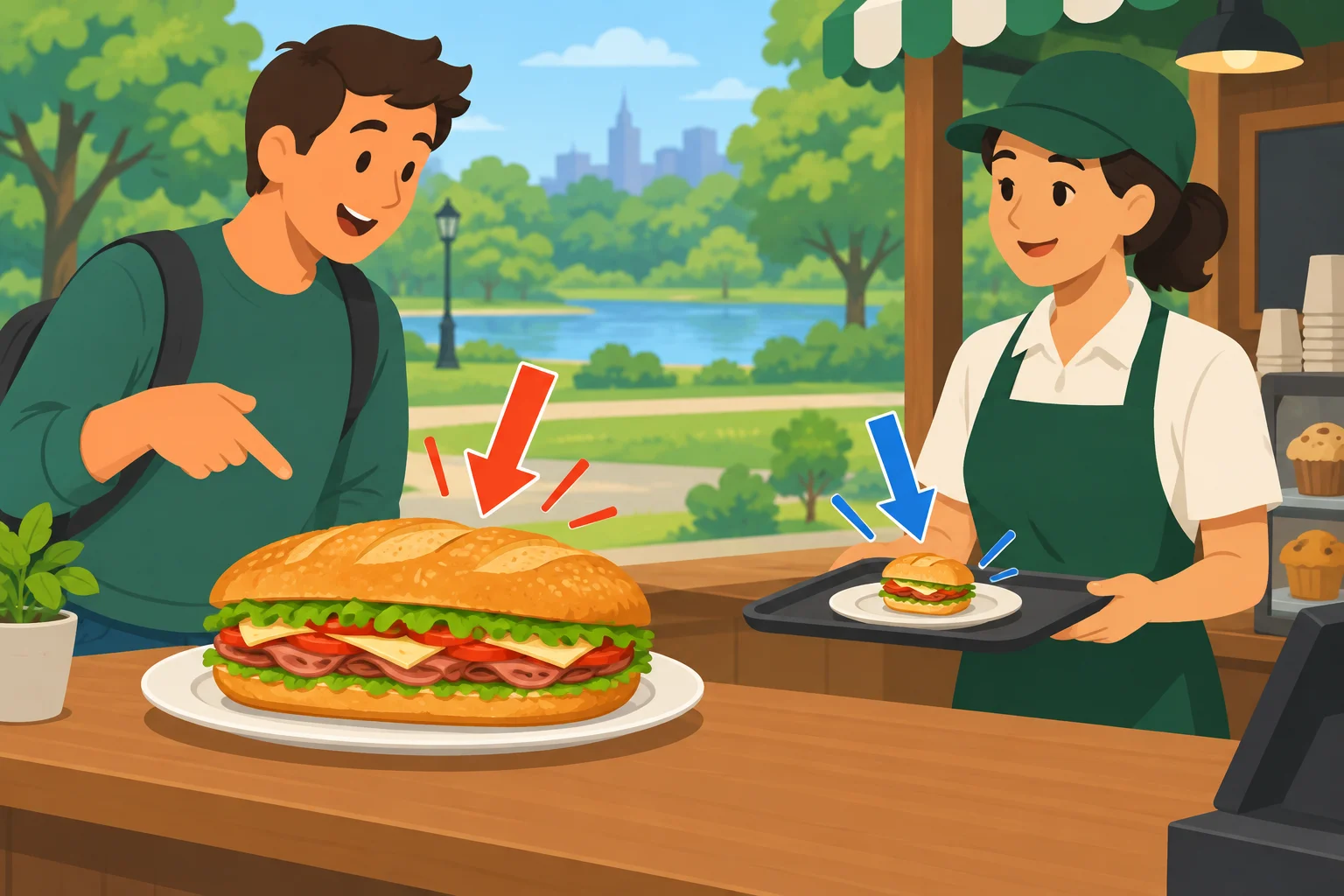
The sandwich size is different, so the customer needs to make a polite correction.
Example
Customer: I'd like a large sandwich, please.
Staff: A small sandwich?
Customer: Sorry, a large sandwich, please.
Use this short pattern:
Sorry, + the correct detail + please.
Say the changed word clearly. You do not need a long explanation.
Example
If the amount is wrong, say the correct amount.
Customer: I'd like two sandwiches, please.
Staff: One sandwich?
Customer: Sorry, two sandwiches, please.
Listen and repeat the correction.
Sorry, a small bottle, please.
Tip
Start with a calm “Sorry,” then make the changed word clear: “Sorry, a small bottle, please.”
Listen to the staff member's confirmation.
A small sandwich?
You asked for a medium sandwich. Listen to the confirmation and choose the best correction.
Listen and write what you heard.
Listen and type the request you hear. You can replay the audio.
Now say the correction you chose on the previous screen aloud. Keep your voice friendly and make medium clear.
Step 7 of 8
Learn how to say food is to go or take away, and how to ask for the check or bill after a seated meal.
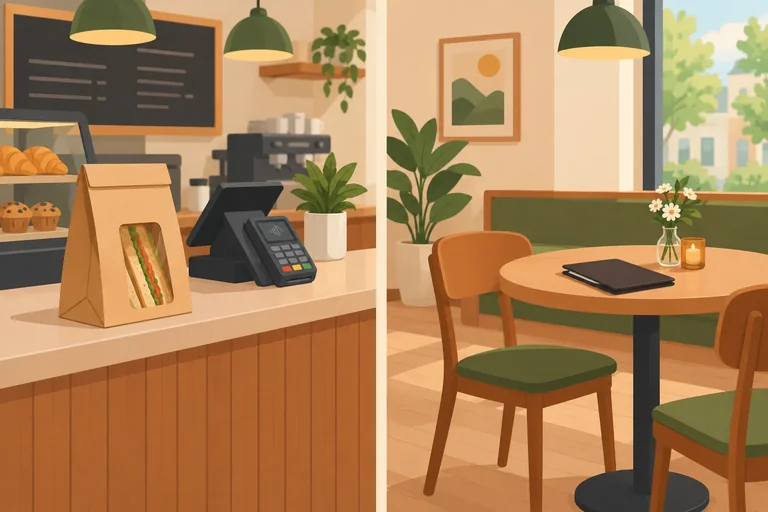
At Park Café, you can finish an order in two different ways.
These are common choices, not exclusive national rules.
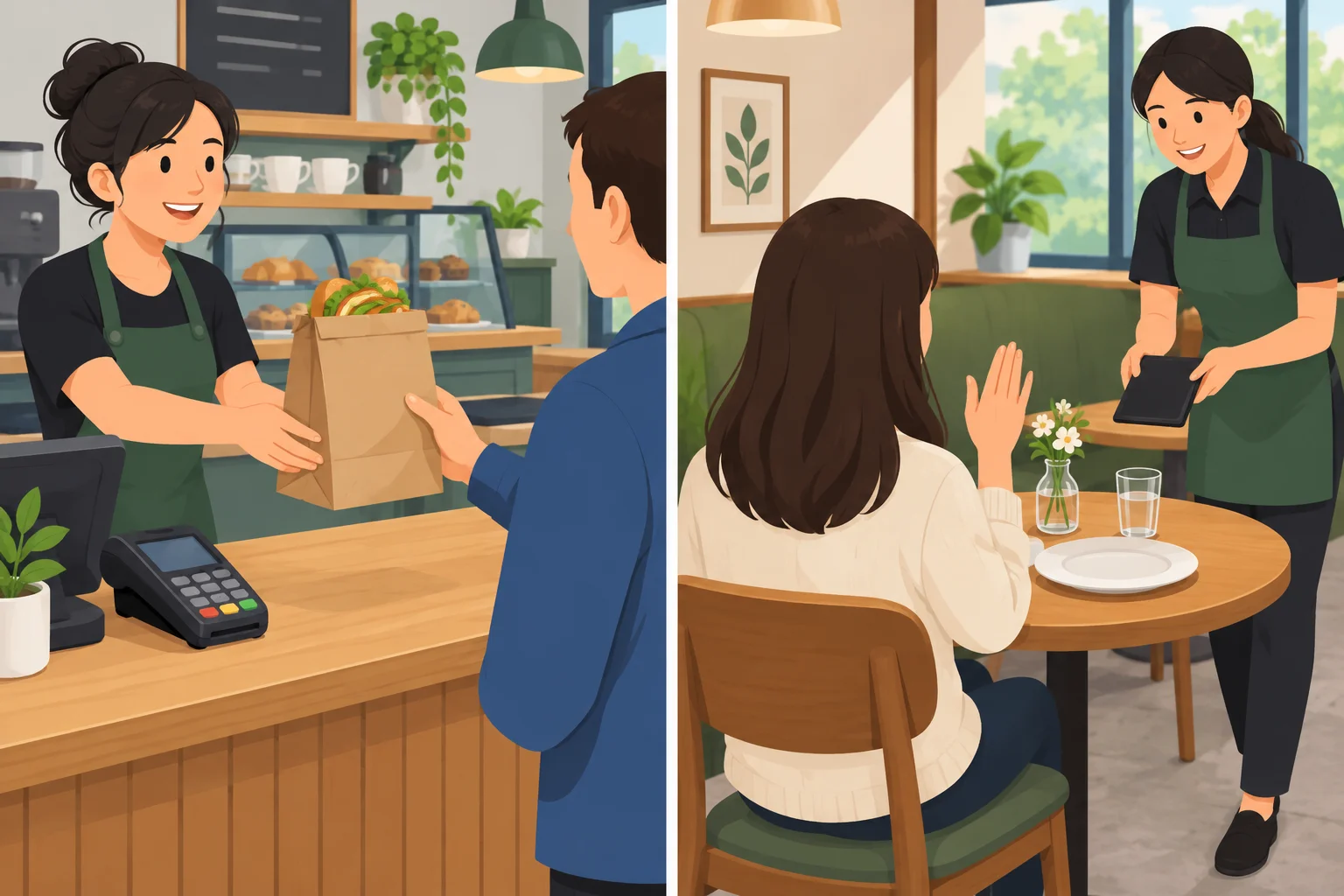
Food eaten elsewhere is collected and paid for at the counter. After a seated meal, ask for the check or bill.
Use these common choices for the situation.
| Situation | American English | British English |
|---|---|---|
| Food eaten elsewhere | To go, please. | Take away, please. |
| After a seated meal | Could I have the check, please? | Could I have the bill, please? |
| At a café counter | Pay at the counter. | Pay at the counter. |
Example
Customer: Could I have a medium sandwich, please?
Staff: Would you like it to go or to eat here?
Customer: To go, please.
Staff: That’s $5.00.
Listen once. Then say both turns aloud in a friendly, unhurried voice.
Customer: Could I have the check, please?
Staff: Of course.
Customer: Could I have the check, please?
Staff: Of course.
Tip
Make the important word clear: Could I have the check, please?
Match each phrase or situation with its equivalent or suitable ending.
Tap an item and then its matching pair.
Step 8 of 8
Use a menu or shop sign, listening, writing, and speaking to complete a polite customer conversation.
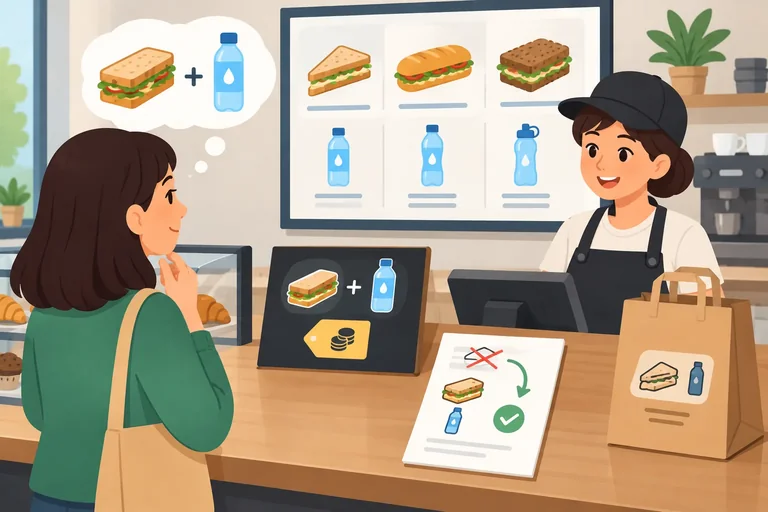
A complete customer exchange has a clear path: ask what is available, make an order, answer an offer, check the price, and correct a staff mistake if needed. Use the menu or sign so every product, amount, size, and price is clear.
Use these fixed details when you plan your own conversation.
| Setting | Product and size or amount | Price |
|---|---|---|
| Park Café | Small sandwich | $4.00 |
| Park Café | Medium sandwich | $5.00 |
| Park Café | Large sandwich | $6.00 |
| Park Café | Small bottle of water | $1.50 |
| Park Café | Large bottle of water | $2.00 |
| Corner Shop | A kilo of apples | $2.00 |
| Corner Shop | A bag of rice | $3.00 |
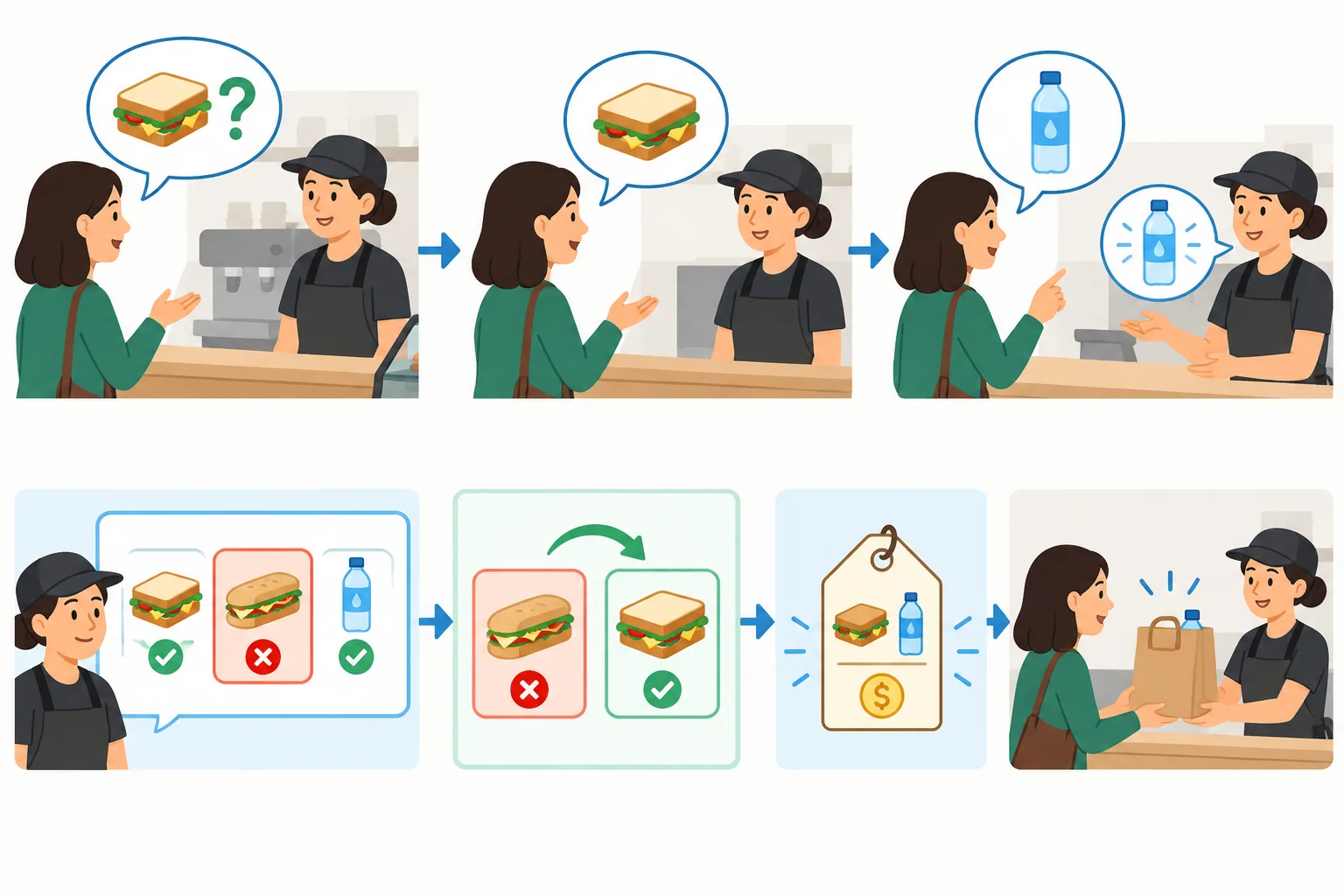
When staff repeat the order, listen for a wrong item, amount, or size before you check the price.
Example
Customer: Do you have any sandwiches?
Staff: Yes, we do.
Customer: Could I have a medium sandwich, please?
Staff: Would you like a small bottle of water?
Customer: Yes, please.
Staff: A small sandwich and a small bottle of water?
Customer: Sorry, a medium sandwich, please.
Customer: How much is it?
Staff: It’s $6.50.
Customer: To go, please.
The staff say the wrong sandwich size. The customer corrects that detail before asking for the price. Read both roles aloud in a friendly, unhurried voice. Make the corrected word clear: a medium sandwich.
Listen for the customer’s final correction. The staff member repeats one detail incorrectly, and the customer changes it politely. Listen again before you choose the final order.
Customer: Do you have any sandwiches?
Staff: Yes, we do.
Customer: Could I have a medium sandwich, please?
Staff: Would you like a large bottle of water?
Customer: Yes, please.
Staff: A medium sandwich and a small bottle?
Customer: Sorry, a large bottle, please.
Staff: Certainly. The medium sandwich and large bottle are $7.00.
Which final order do you hear?
Write an 8–10-turn conversation for either Park Café or Corner Shop. Use a different order detail from the model.
Check that your conversation has:
Customer: and Staff: labelsDo you have any ...?Sorry, ... please.To go, please. for food eaten elsewhere, or ask for the check or bill after a seated meal; at Corner Shop, finish politely after the total.Then say both roles aloud. Use a friendly voice and make the corrected detail clear.
Write your 8–10-turn conversation. Then read both roles aloud.
Write at least 250 characters (0/250).
Summary
You can now read a menu or sign, ask what is available, make a polite request, choose an amount or size, answer an offer, check a price, and correct an order clearly. You can also choose an appropriate café ending.
Congratulations! You completed: Order Food and Shop Politely
Thousands of online courses in video, ebooks and audiobooks.
To test your knowledge during online courses
Generated directly from your cell phone's photo gallery and sent to your email

Download our app via QR Code or the links below:.



Carry knowledge in your pocket.
Download the Cursa app.
There are hundreds of free courses available, with a free certificate of completion that is saved in your mobile image gallery.
Download the app to access the Course Completion Certificate for Free.


+ 10 million
students

Free and Valid
Certificate

60 thousand free
exercises

4.8/5 rating in
app stores

Free courses in
video and ebooks