
Learning path

Learn English: From Beginner to Advanced (A1 to C2)

Learn English from beginner to advanced with an English course for teens and adults from any country. Start with simple words and build up to clear, careful English for daily life, study, and work.

Follow 12 stages that cover every CEFR level, from A1 to C2: grammar, vocabulary, listening, pronunciation, reading, and writing. Learn with English only: no translation or comparison with another language. Explanations use English at your stage. Examples, pictures, and audio help you understand.

Every tutorial brings grammar and useful words into a real communication task. Practise all four skills: listening, speaking, reading, and writing. Listen to audio, choose what you hear, and write what you hear in short dictations. Use pronunciation tips and say your answers aloud. Read short texts and conversations. Write with clear guidance and check your work against examples.

Use natural English in situations from many countries. Notice important American and British differences in spelling, vocabulary, and pronunciation. Later, explore other varieties of English and more complex communication.

Finish with a task that brings together careful listening, reading, writing, and speaking for different audiences. This compact path covers essential CEFR goals; completing it does not certify a CEFR level. Reaching full proficiency also takes sustained practice beyond the path.

  • 12 levels
  • 54 tutorials
  • Total duration: 20h 5min
Start Spell a Name in English
Learn English: From Beginner to Advanced (A1 to C2)

Path contents

  1. Level 1 4 tutorials 1h 33min

    A1: Hello and Welcome

    Start here. You do not need to know English. In four short tutorials, learn letters, common sounds, greetings, and numbers. Use am, is, and are to talk about yourself and other people. These words help you start simple conversations.

    What you will learn

    • Say the alphabet. Spell a name. Hear and say common sounds in short words.
    • Say hello and goodbye. Ask someone's name and say your name.
    • Use am, is, and are to talk about people. Make simple sentences and questions. Use not.
    • Use I, you, he, she, it, we, and they. Use my and your with names and things.
    • Read, hear, and say numbers from zero to 100. Use numbers for ages and simple prices.
    • Read and listen to a very short introduction. Say and write your own introduction.
    1. Tutorial 1: Spell a Name in English Learn the letters. Listen to their names and say them aloud. Hear sounds in short words. Read a name card and spell the name. Write letters you hear, then write a name with help from an example. Beginner 25 min
    2. Tutorial 2: Say Hello and Share Names Say hello and goodbye. Ask someone's name and give your name. Use my and your with names and things. Listen to and read a short conversation. Say both parts aloud. Write a short conversation with help from an example. Beginner 18 min
    3. Tutorial 3: Talk About People with Am, Is, and Are Say where people are from and how they are. Use am, is, and are. Use not, and ask short questions. Read and listen to short conversations. Practise saying short forms clearly. Say and write a few lines about yourself or another person. Beginner 25 min
    4. Tutorial 4: Use Numbers for Ages and Prices Read, hear, and say numbers from zero to 100. Ask about ages and simple prices. Read short price cards and listen to short conversations. Write numbers you hear. Finish by saying and writing your name, age, and where you are from. You can use a different name and age. Beginner 25 min

  2. Level 2 4 tutorials 1h 30min

    A1: My Day and My World

    You can say who you are. Now talk about your day, your home, and things you can do. In four short tutorials, use the present simple, there is and there are, and can. Learn words for time, everyday objects, and places.

    What you will learn

    • Talk about daily routines with the present simple. Say the time and how often you do things.
    • Ask and answer simple questions about routines. Use don't and doesn't to say what people do not do.
    • Name everyday objects and places. Use a and an, and talk about one thing or more than one.
    • Use there is and there are. Say where things are with in, on, under, and next to.
    • Use can and can't to talk about what you can do. Make simple requests.
    • Read and listen to a short daily routine or room description. Say and write simple sentences about your own day or home.

    Prerequisites

    • Say and write a very short introduction.
    • Use am, is, and are in simple sentences and questions.
    • Read common short words and use numbers up to 100.
    1. Tutorial 1: Talk About Your Day Talk about your day. Say what you do and when you do it. Use always, sometimes, and never. Read and listen to short texts about other people's days. Say and write simple sentences about your day. Beginner 25 min
    2. Tutorial 2: Ask About Daily Routines Ask people about their day. Give short answers. Use don't and doesn't to say what people do not do. Read and listen to a short talk. Use an example to write questions and answers, then say them aloud. Beginner 20 min
    3. Tutorial 3: Say What Is in a Room Name things in a home or classroom. Talk about one thing or more than one. Use there is and there are. Say where things are. Read and listen to a room description. Say and write about your room. Beginner 25 min
    4. Tutorial 4: Use Can to Talk and Ask for Help Say what you can and can't do. Ask other people what they can do. Ask for help or ask to use something. Listen to and read short talks at home or school. Write your own answers and say them aloud. Beginner 20 min
  3. Level 3 4 tutorials 1h 25min

    A2: Now and Before

    You can talk about everyday life. In four short tutorials, learn to say what is happening now and what happened before. Use the present continuous and past simple to talk about activities, visits, and trips. This helps you share simple news and experiences.

    What you will learn

    • Use the present continuous to describe actions happening now. Choose between actions now and regular routines.
    • Use was and were to describe people, places, and situations in the past.
    • Use common regular and irregular past forms to talk about finished events.
    • Ask and answer past simple questions. Use didn't to say what did not happen.
    • Put simple past events in order with time words such as first, then, and after that.
    • Understand short messages and conversations about activities or trips. Give a short spoken and written account of a past day.

    Prerequisites

    • Talk about routines with the present simple.
    • Use am, is, and are, and ask simple questions.
    • Use common words for people, activities, times, and places.
    1. Tutorial 1: Talk About What Is Happening Now Say what you and other people are doing now. Ask questions and say what is not happening. Read and listen to short messages. Choose between an everyday routine and an action now, then say and write your own short update. Beginner 20 min
    2. Tutorial 2: Describe a Visit with Was and Were Describe people and places during a past visit. Use was and were to say where people were and how things were. Read and listen to a short conversation, ask questions aloud, and write a few sentences about a real or imagined visit. Beginner 18 min
    3. Tutorial 3: Tell Someone About Yesterday Tell someone what happened yesterday. Use common past action words and put events in order. Read and listen to a short account of a day out. Practise the sounds of -ed, then say and write a short account of your own. Beginner 24 min
    4. Tutorial 4: Ask and Answer Questions About a Past Trip Find out about someone's past trip. Ask questions with did, give short answers, and use didn't for things that did not happen. Read and listen to a travel conversation. Practise both parts aloud, then write a short account with events in order. Beginner 23 min
  4. Level 4 5 tutorials 1h 55min

    A2: Plans and Choices

    You can talk about now and the past. In five short tutorials, learn to make plans, compare choices, and get things you need. Use future forms and words for amounts in food, shopping, and travel situations. Ask for and follow simple directions.

    What you will learn

    • Use going to for plans and predictions based on what you can see. Use will for offers, decisions made now, and simple predictions.
    • Compare people, places, and products with comparative and superlative forms.
    • Use countable and uncountable nouns with some, any, much, many, a few, and a little.
    • Order food and ask about products, amounts, and prices using polite requests.
    • Ask for and give directions using short instructions and words for movement and location.
    • Read and listen to simple travel or shopping information. Explain a choice and write a short plan or message.

    Prerequisites

    • Talk about routines, actions now, and simple past events.
    • Ask simple questions and understand numbers, prices, and times.
    • Describe familiar objects and places with simple words.
    1. Tutorial 1: Plan a Day Out with Going to and Will Talk with someone about a day out. Say what you are going to do, offer help, and make a decision. Talk about what you think will happen. Read and listen to short conversations, then say and write your own plans. Beginner 25 min
    2. Tutorial 2: Compare People, Places, and Products Compare people, places, and things to buy. Read and listen to information about different choices. Say which one is cheaper, better, or more comfortable. Write a short message explaining your choice. Beginner 24 min
    3. Tutorial 3: Talk About Food and Amounts Say what food you have and what you need. Ask about amounts and make a simple shopping list. Read and listen to messages about food, then explain the amounts aloud and write your own message. Beginner 24 min
    4. Tutorial 4: Order Food and Shop Politely Order food and ask for things in a shop. Choose an amount or size, ask the price, and correct an order politely. Read and listen to short exchanges, then practise a conversation and write your own. Beginner 20 min
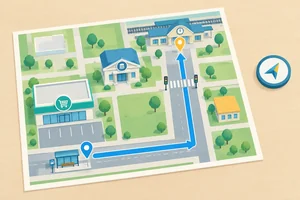
    5. Tutorial 5: Ask for and Give Directions Ask how to get to a place and understand a short answer. Follow a route on a simple map shown on screen. Give clear directions aloud and write a short message to help someone find a place. Beginner 22 min

  5. Level 5 4 tutorials 1h 26min

    B1: Experience and Advice

    In four short tutorials, connect past experiences to life now and respond to everyday problems. Learn the present perfect before moving to more complex time relationships. Use advice and obligation language in work, study, health, and daily-life situations.

    What you will learn

    • Use the present perfect to discuss experiences and recent results with ever, never, just, already, and yet.
    • Choose between the present perfect and past simple when the time is unfinished, unspecified, or finished.
    • Describe situations continuing until now with for and since.
    • Explain rules and responsibilities with must and have to, distinguishing mustn't from don't have to.
    • Give and respond to advice with should and other common polite expressions.
    • Understand short accounts of experiences or problems, then discuss them and write a clear message giving relevant advice.

    Prerequisites

    • Use the present simple, present continuous, and past simple.
    • Talk about future plans and make polite requests.
    • Describe everyday problems in familiar situations.
    1. Tutorial 1: Share Experiences and Recent News Ask about experiences and share recent news with the present perfect. Read and listen to short conversations, say your own answers aloud, and write a short update about something you have done. Intermediate 25 min
    2. Tutorial 2: Choose the Present Perfect or Past Simple Choose the present perfect or past simple to make time clear. Explain what happened at a finished time and what continues now. Read and hear short accounts, then give a spoken and written update about your life, work, or study. Intermediate 23 min
    3. Tutorial 3: Explain Rules and Responsibilities Explain what people need to do, what is not allowed, and what is optional. Read and listen to rules for a class, library, or cycling club. Ask about responsibilities and write a clear message for someone new. Intermediate 18 min
    4. Tutorial 4: Give and Respond to Everyday Advice Understand an everyday problem and offer useful, polite advice. Read and listen to messages about study, work, or feeling unwell. Practise a conversation aloud and write a reply that fits the problem, with safe limits for health advice. Intermediate 20 min
  6. Level 6 5 tutorials 1h 36min

    B1: Stories and Possibilities

    In five short tutorials, build connected stories and discuss possible situations. Use the past continuous to add background to past events. Then use first and second conditionals to discuss real possibilities and imagined situations. Give opinions with clear reasons.

    What you will learn

    • Combine the past continuous and past simple to describe background actions, interruptions, and events happening together.
    • Tell an understandable story with a clear order, useful detail, and connectors for time, cause, and result.
    • Use the first conditional to discuss realistic future situations and their likely results.
    • Use the second conditional to discuss imagined present or future situations and possible choices.
    • Give opinions, support them with reasons, and agree or disagree politely.
    • Follow short spoken and written stories or discussions, then give a connected spoken response and write a short narrative or opinion.

    Prerequisites

    • Describe finished events with the past simple.
    • Discuss experiences with the present perfect.
    • Use will for future ideas and common modals for advice.
    • Connect simple events with basic time words.
    1. Tutorial 1: Describe What Was Happening Describe what was happening when something else happened. Listen to and read short accounts of everyday interruptions, choose matching audio, and write a short sentence you hear. Then explain a scene aloud and write connected sentences, using a model to check your work. Intermediate 20 min
    2. Tutorial 2: Tell a Story with a Clear Ending Turn a series of past events into a clear story with a problem and an ending. Read and listen to short stories about everyday surprises. Choose audio, complete a short dictation, and use a simple plan to tell and write your own story with time, cause, and result connections. Intermediate 20 min
    3. Tutorial 3: Make Backup Plans with If and Will Make a practical backup plan for a day out or a group activity. Read and listen to plans, choose the audio that matches a condition and its result, and complete a short dictation. Answer planning questions aloud and write a short message explaining what you will do if plans change. Intermediate 18 min
    4. Tutorial 4: Discuss Imagined Choices with If and Would Explore choices that are imagined rather than current plans. Read and listen to people discussing extra time, space, or opportunities. Choose matching audio and write a short sentence you hear. Then answer imagined questions aloud and write a guided response explaining your choice. Intermediate 20 min
    5. Tutorial 5: Share Opinions and Respond Politely Share a clear opinion about everyday choices, such as group activities or study spaces. Read and listen to a short discussion, choose audio that matches a speaker's view, and complete a short dictation. Rehearse a polite response aloud and write a short opinion with a reason and an example. Intermediate 18 min
  7. Level 7 4 tutorials 1h 19min

    B1: Clear Explanations

    In four short tutorials, move from sharing experiences to explaining information clearly. Use defining relative clauses to identify people and things, and basic passive forms to describe processes and events. Apply these skills to work and study information, including clarification and simple summaries.

    What you will learn

    • Use defining relative clauses with who, which, that, and where to identify people, things, and places.
    • Use present and past simple passive forms when an action or result matters more than the person responsible.
    • Explain a familiar process in a clear sequence and choose between basic active and passive forms.
    • Identify the main points in straightforward work or study texts and conversations, then summarize them without adding unsupported details.
    • Ask for clarification, check understanding, and restate an explanation in simpler words.
    • Give a short spoken explanation and write an organized description using relevant detail and clear connections.

    Prerequisites

    • Use present and past forms to describe events and situations.
    • Recognize common past participles from present perfect forms.
    • Connect ideas, explain reasons, and give simple opinions.
    • Use everyday language for work and study.
    1. Tutorial 1: Identify People, Things, and Places Make it clear which person, thing, or place you mean at a study center or workplace. Read short descriptions, listen and choose the matching person or object, and complete a short dictation. Use pronunciation tips to say descriptions aloud, then write a short note with help from a model. Intermediate 18 min
    2. Tutorial 2: Explain a Process with the Passive Explain how a simple process works, such as checking and returning a form. Use present and past passive forms to describe usual steps and a completed example. Read a process description, listen and choose the correct details, and complete a short dictation. Practise pronunciation, explain the steps aloud, and write your own description using a model. Intermediate 23 min
    3. Tutorial 3: Ask for Clarification and Check Meaning Find out what an unclear instruction means and check that you have understood it. Read short exchanges, listen and choose the meaning that the speakers agree on, and complete a short dictation. Use pronunciation tips to practise both parts aloud. Write a short exchange and restate an explanation in simpler words. Intermediate 18 min
    4. Tutorial 4: Summarize Work and Study Information Give someone the main information from a short work or study notice, message, or conversation. Read and listen to examples, choose the essential points, and complete a short dictation of a key detail. Use a model to write a factual summary, give a short spoken version, and check both against the original information. Intermediate 20 min
  8. Level 8 5 tutorials 1h 45min

    B2: Time, Hypotheses, and Reports

    In five short tutorials, develop more precise control of time, hypothetical situations, and other people's messages. Establish essential perfect-tense contrasts before using past perfect forms in third and mixed conditionals. Extend connected accounts through reported statements and questions.

    What you will learn

    • Choose between present perfect simple and continuous forms to emphasize results, duration, or ongoing activity.
    • Use past perfect simple and continuous forms to establish what happened or continued before another past event.
    • Use third conditionals to discuss unreal past situations and their imagined outcomes.
    • Use common mixed conditional patterns to connect past circumstances with present results, or present conditions with past outcomes.
    • Report statements and questions, adjusting tense, pronouns, and time references when the context requires it.
    • Interpret timelines and viewpoints in spoken and written accounts, then produce a clear account distinguishing events, reports, and hypothetical alternatives.

    Prerequisites

    • Distinguish the present perfect from the past simple.
    • Use simple and continuous forms to organize past events.
    • Use first and second conditionals.
    • Form statements and questions with common auxiliaries and modals.
    • Give connected accounts of events and opinions.
    1. Tutorial 1: Describe Progress with the Present Perfect Continuous Give a clear update on what you have completed and what you have been doing. Compare short written and spoken progress reports, choose the meaning you hear, and complete a brief dictation. Use a model to guide your own spoken and written update about preparing an activity or completing a study task. Intermediate 20 min
    2. Tutorial 2: Explain Earlier Events with the Past Perfect Explain what had happened, or had been happening, before another past event. Read and hear short accounts of a delayed activity, reconstruct their timelines, and complete audio-choice and dictation tasks. Then use a model to explain the cause of a problem in a short spoken and written account. Intermediate 21 min
    3. Tutorial 3: Imagine a Different Past with Third Conditionals Discuss how a finished event might have been different. Read a short account, listen to alternative outcomes, and identify what really happened and what is imagined. Practise a brief dictation, then use guided prompts to say and write a past alternative without confusing it with the facts. Intermediate 19 min
    4. Tutorial 4: Connect Past and Present with Mixed Conditionals Connect earlier choices with life now, and continuing situations with past outcomes. Read short accounts and compare spoken alternatives with different time meanings. Complete an audio-choice task and a brief dictation, then use a model to explain one connection in speech and writing. Intermediate 20 min
    5. Tutorial 5: Report What People Said and Asked Pass on statements and questions while preserving the speaker's meaning. Read a message and listen to a related exchange, using audio-choice and brief dictation tasks to check details. Then give an oral report and write a guided account that clearly separates events, other people's messages, and an imagined alternative. Intermediate 25 min
  9. Level 9 5 tutorials 1h 52min

    B2: Effective Work Communication

    In five short tutorials, apply more flexible grammar and vocabulary to purposeful work communication. Extend passive forms and introduce causatives while handling reports, arrangements, and requests. Develop arguments and adjust formal or informal language in emails, job interviews, and meetings.

    What you will learn

    • Use modal and perfect passive forms to communicate requirements, decisions, and completed work.
    • Use have or get something done to describe services and arrangements, distinguishing these meanings from doing an action yourself.
    • Use common phrasal verbs and collocations naturally, choosing alternatives that fit formal or informal situations.
    • Develop and respond to arguments using relevant evidence, clear linking, and consideration of another viewpoint.
    • Write formal and informal emails that make requests, explain problems, or propose solutions with an appropriate tone.
    • Rehearse developed job-interview answers and meeting contributions, including turn-taking, clarification, and agreement on next steps.
    • Use written and spoken workplace information to prepare a clear spoken response and a concise written follow-up.

    Prerequisites

    • Use basic passive forms and perfect-tense contrasts.
    • Report other people's statements and questions.
    • Support opinions with reasons and respond politely.
    • Summarize straightforward work and study information.
    1. Tutorial 1: Give Work Updates with Modal and Perfect Passives Give clear updates about what must happen and what has already been done. Read a short project update and listen to a team message, then choose the meaning you hear and complete a brief dictation. Practise hearing and saying passive verb phrases. Give an update aloud and write a guided status note, checking both against models. Intermediate 22 min
    2. Tutorial 2: Arrange Services with Have or Get Something Done Explain which services you will arrange and which tasks you will do yourself. Read a service conversation and listen to an arrangement being confirmed. Choose what the speaker means and write a short dictation. Practise saying causative phrases, rehearse a service request aloud, and write a guided confirmation note with the service and agreed date. Intermediate 18 min
    3. Tutorial 3: Write Work Emails with the Right Tone Write a work email that explains a problem and makes the next action clear. Read contrasting emails and listen to a spoken request. Choose the intended action and complete a short dictation. Practise polite requests aloud, then write a guided email of about 80–120 words. Adapt its key lines for a familiar colleague or a less familiar contact and check them against examples. Intermediate 25 min
    4. Tutorial 4: Support Job-Interview Answers with Examples Build a job-interview answer around a specific example rather than a list of qualities. Read a short job description and listen to an interview exchange, choosing relevant evidence and completing a brief dictation. Use familiar past and present-perfect forms to connect experience with current skills. Rehearse a 60–90-second answer aloud, respond to a follow-up prompt, and write a short guided follow-up email. Intermediate 22 min
    5. Tutorial 5: Support a Recommendation in a Meeting Support a practical recommendation in a short meeting and respond to another view. Read a brief options note and listen to a discussion, then choose which points are supported and complete a short dictation. Use contrast clauses and familiar conditionals to explain your choice. Rehearse contributions and clarification questions aloud, then write a guided follow-up stating the decision, responsibilities, and next steps. Intermediate 25 min
  10. Level 10 4 tutorials 1h 39min

    C1: Emphasis, Nuance, and Register

    In four short tutorials, refine how language directs attention, expresses commitment, and signals relationships. Learn emphasis and inversion, calibrated hedging, complex noun phrases, and context-sensitive idiomatic language. These resources prepare you for sustained academic and professional communication.

    What you will learn

    • Use cleft sentences, fronting, and appropriate inversion to emphasize or contrast information without making the message unnecessarily elaborate.
    • Express degrees of certainty, reservation, and politeness through hedging, qualification, and carefully chosen vocabulary.
    • Interpret and construct complex noun phrases with clear modification and reference.
    • Select idiomatic expressions and collocations according to audience, relationship, purpose, and register.
    • Interpret how stress, rhythm, and intonation influence stance, and use these features deliberately in spoken responses.
    • Revise spoken and written messages to improve emphasis, nuance, concision, and consistency of register.

    Prerequisites

    • Control major tense contrasts, conditionals, reported speech, and extended passive forms.
    • Build connected arguments and adjust basic formal and informal tone.
    • Use common collocations and phrasal verbs in context.
    • Recognize how sentence stress affects emphasis.
    1. Tutorial 1: Emphasize Key Points with Clefts and Inversion Make the main point of a short work or study update unmistakable. Read and hear contrasting versions, practise clefts, fronting, and inversion, then write and say a focused update without making every sentence sound unusually emphatic. Advanced 25 min
    2. Tutorial 2: Qualify Claims and Soften Feedback Give feedback that is appropriately cautious, clear, and respectful. Use a short written exchange and contrasting audio to judge certainty and politeness, then qualify a claim and make a tactful request without hiding the main message. Advanced 25 min
    3. Tutorial 3: Make Complex Noun Phrases Clear Read and build compact descriptions without losing track of who or what they describe. Unpack noun phrases in a short course notice and recording, then write and say a clear description with accurate modifiers, agreement, and reference. Advanced 25 min
    4. Tutorial 4: Choose Idioms That Fit the Relationship Choose idioms and collocations that sound natural in short exchanges with peers or coordinators. Compare written and spoken examples, then revise a brief response so its grammar, vocabulary, and delivery fit the relationship without becoming stiff or overly familiar. Advanced 24 min
  11. Level 11 5 tutorials 2h 5min

    C1: Academic and Professional Communication

    In five short tutorials, move from sentence-level flexibility to sustained communication across sources and competing viewpoints. Develop synthesis, academic argument, professional proposals, presentations, and negotiation. Practise maintaining coherence and responding constructively when questions or objections change the direction of an exchange.

    What you will learn

    • Synthesize several short texts and recordings, distinguishing evidence, interpretation, and the positions of different speakers or writers.
    • Develop a coherent academic argument with appropriate qualification, clear attribution, and accurate paraphrasing.
    • Write a professional proposal or report that connects a problem, supporting information, recommendations, and limitations.
    • Deliver a structured presentation with effective signposting, pacing, and explanations of complex ideas.
    • Respond to challenging presentation questions by clarifying assumptions, reformulating explanations, and acknowledging uncertainty.
    • Negotiate priorities, conditions, and trade-offs through prepared spoken exchanges and written follow-up, preserving a constructive relationship.

    Prerequisites

    • Use emphasis, hedging, and complex noun phrases with control.
    • Adjust register and idiomatic language to context.
    • Develop arguments, report viewpoints, and summarize information.
    • Participate in structured professional exchanges and write purposeful emails.
    1. Tutorial 1: Synthesize Sources by Theme Read two short texts and listen to a recording about a shared study or workplace issue. Bring their ideas together without losing track of who claims what. Use audio-choice tasks and brief dictation to notice attribution, then prepare a guided written synthesis and explain it aloud. Advanced 25 min
    2. Tutorial 2: Build an Academic Argument Develop a short academic argument from a clear question and a small set of sources. Read a model discussion and listen to an academic exchange, using audio choices and brief dictation to track concessions. Write a guided argument with accurate attribution, then rehearse a spoken response to a counterargument. Advanced 25 min
    3. Tutorial 3: Write a Proposal with Clear Recommendations Turn a short written brief and a recorded stakeholder update into a practical proposal for improving a shared study or work space. Use audio-choice tasks and brief dictation to identify requirements. Draft a guided proposal that connects evidence, action, feasibility, and limitations, then give a concise spoken recommendation. Advanced 25 min
    4. Tutorial 4: Present a Complex Idea and Handle Questions Prepare and rehearse a two-minute presentation from a short briefing text and recording. Use audio choices and brief dictation to examine signposting and question handling. Write a structured speaking outline, explain a complex point clearly, and respond aloud to challenging question prompts without inventing certainty. Advanced 25 min
    5. Tutorial 5: Negotiate Priorities and Trade-offs Negotiate a practical arrangement in a work, study, or community setting. Read short role briefs and listen to an exchange, using audio choices and brief dictation to identify conditions and commitments. Rehearse both sides of a guided negotiation aloud and write a follow-up that records the terms without overstating agreement. Advanced 25 min
  12. Level 12 5 tutorials 2h 0min

    C2: Precision, Interpretation, and Mediation

    In five short tutorials, develop finer control over interpretation, rhetorical effect, and communication between audiences. Examine ambiguity, implication, irony, cultural references, and variation across English-speaking communities without treating any single variety as the universal norm. Finish with a high-complexity project that reconciles conflicting sources and adapts the resulting message for different audiences.

    What you will learn

    • Distinguish fine shades of meaning, diagnose lexical or structural ambiguity, and either resolve it or use it deliberately for a clear communicative purpose.
    • Interpret implied meaning, irony, and cultural references using contextual evidence while acknowledging uncertainty and avoiding cultural stereotypes.
    • Understand selected features of different varieties of English, using context and clarification rather than assuming unfamiliar usage is incorrect.
    • Evaluate and employ rhetorical choices, including framing, rhythm, parallel structure, and strategic understatement, to achieve a controlled stylistic effect.
    • Mediate between audiences with different expertise, priorities, or expectations by explaining assumptions and preserving essential meaning without translating into another language.
    • Create an integrated project from conflicting short texts and audio sources: produce a reasoned written position, adapt it for a second audience, and deliver a spoken briefing with responses to challenging question prompts.
    • Evaluate the project's accuracy, interpretive caution, coherence, register, pronunciation, and audience impact, then revise choices that obscure or distort the intended meaning.

    Prerequisites

    • Synthesize information from multiple written and spoken sources.
    • Control nuanced grammar, vocabulary, register, and prosody.
    • Present and defend complex arguments with appropriate qualification.
    • Adapt explanations during professional or academic exchanges.
    • Recognize that idiomatic meaning and communication conventions depend on context.
    1. Tutorial 1: Control Meaning and Ambiguity Edit notices and messages so their wording expresses exactly what you intend. Read competing interpretations, listen to differently stressed versions, choose the supported meaning, and complete a short dictation of scope-bearing phrases. Write an unambiguous revision and explain it aloud. Also explore when a deliberate double meaning serves a clear purpose rather than confusing the reader. Advanced 22 min
    2. Tutorial 2: Interpret Implication, Irony, and Allusion Interpret indirect remarks, irony, and cultural allusions without treating a plausible inference as a fact. Read short exchanges and background notes, listen to alternative deliveries, choose the best-supported interpretation, and transcribe a brief exchange. Write an evidence-based interpretation with an alternative reading, then rehearse a response that checks the speaker's intent. Advanced 23 min
    3. Tutorial 3: Understand Unfamiliar Varieties of English Understand unfamiliar English usage in short scheduling and everyday exchanges. Read contextualized dialogues, listen to selected variety features, choose the intended meaning, and complete a short dictation. Write an accurate restatement and rehearse a practical clarification aloud. Focus on understanding and intelligibility, not on copying an accent or replacing a speaker's variety. Advanced 22 min
    4. Tutorial 4: Shape an Argument with Rhetorical Choices Shape a short public recommendation through framing, parallel structure, rhythm, and controlled understatement. Compare written versions, listen to contrasting deliveries, choose the effect supported by the recording, and complete a brief dictation. Write and rehearse a revised recommendation, then explain how its stylistic choices influence an audience without changing or overstating the evidence. Advanced 23 min
    5. Tutorial 5: Mediate Conflicting Sources for Different Audiences Complete a compact project about proposed evening access to a community learning centre. Use two short texts and two short recordings presented in the tutorial. Choose supported audio interpretations and complete a brief dictation before reconciling the sources. Write a 160–200-word position for a planning group, adapt it into an 80–100-word public message, and give a 60–90-second briefing with responses to two challenging question prompts. Self-check both versions and revise a misleading or unclear choice. Advanced 30 min

Download the App now to have access to + 5000 free courses, exercises, certificates and lots of content without paying anything!

  • 100% free online courses from start to finish

    Thousands of online courses in video, ebooks and audiobooks.

  • More than 60 thousand free exercises

    To test your knowledge during online courses

  • Valid free Digital Certificate with QR Code

    Generated directly from your cell phone's photo gallery and sent to your email

Cursa app on the ebook screen, the video course screen and the course exercises screen, plus the course completion certificate