
Step 1 of 9
Find the Through-Line
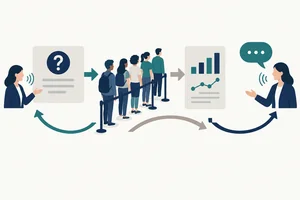
Use the Briefing and the Presentation model to identify a clear through-line: a focused question, connected supporting points, an explanatory example, and a cautious takeaway.

Learning path · Level 11 · Tutorial 4
Prepare and rehearse a two-minute presentation from a short briefing text and recording. Use audio choices and brief dictation to examine signposting and question handling. Write a structured speaking outline, explain a complex point clearly, and respond aloud to challenging question prompts without inventing certainty.

 Find the Through-Line
Use the Briefing and the Presentation model to identify a clear through-line: a focused question, connected supporting points, an explanatory example, and a cautious takeaway. 3 min
 Make the Route Audible
Recognise spoken signposts that preview, recap, and transition within the Presentation model, then transcribe a brief recap extract. 2 min
 Explain the Difficult Point Clearly
Explain the shared-queue mechanism through a definition, an illustrative example, and a careful practical implication. 3 min
 Add Explanations with Which
3 min
 Build a Speaking Outline
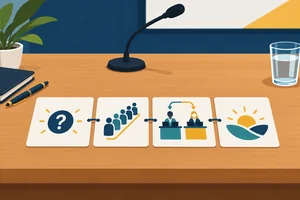
Turn the Northbridge Learning Centre Briefing into concise speaking notes that keep a clear through-line and remain faithful to the available evidence. 3 min
 Pace the Explanation for Listeners
Use thought groups, processing pauses, and selective emphasis to make a complex explanation easier to follow. Then annotate and rehearse a short section of your speaking outline. 3 min
 Unpack and Answer a Challenging Question
Unpack a multi-part audience question, check an unsupported premise, answer its substantive parts, and reformulate the shared-queue mechanism clearly. 3 min
 Handle What the Evidence Cannot Answer
Give a direct, useful answer when the available evidence has a clear limit: state what is known, make the scope explicit, and identify what information would support a stronger conclusion. 3 min
 Present, Respond, and Review
Deliver a two-minute, evidence-faithful presentation on the shared-queue trial, respond aloud to two challenging audience prompts, and review one effective move and one precise revision. 5 min
Step 1 of 9
Use the Briefing and the Presentation model to identify a clear through-line: a focused question, connected supporting points, an explanatory example, and a cautious takeaway.
Northbridge Learning Centre is testing a change to how it handles general enquiries. Two general advisers can handle the same general enquiries. The trial replaces their separate queues with one shared queue; specialist appointments remain separate.
Before the trial, the average waiting time for general enquiries was 8 minutes across 5 sessions. During the trial, it was 6 minutes across 5 sessions. There were 2 general advisers in both periods.
These observations do not establish what caused the difference or guarantee future results. Costs and specialist waiting times were not measured.
For your presentation, the central issue is narrow: could a change in organisation improve access to general enquiries without increasing staffing?
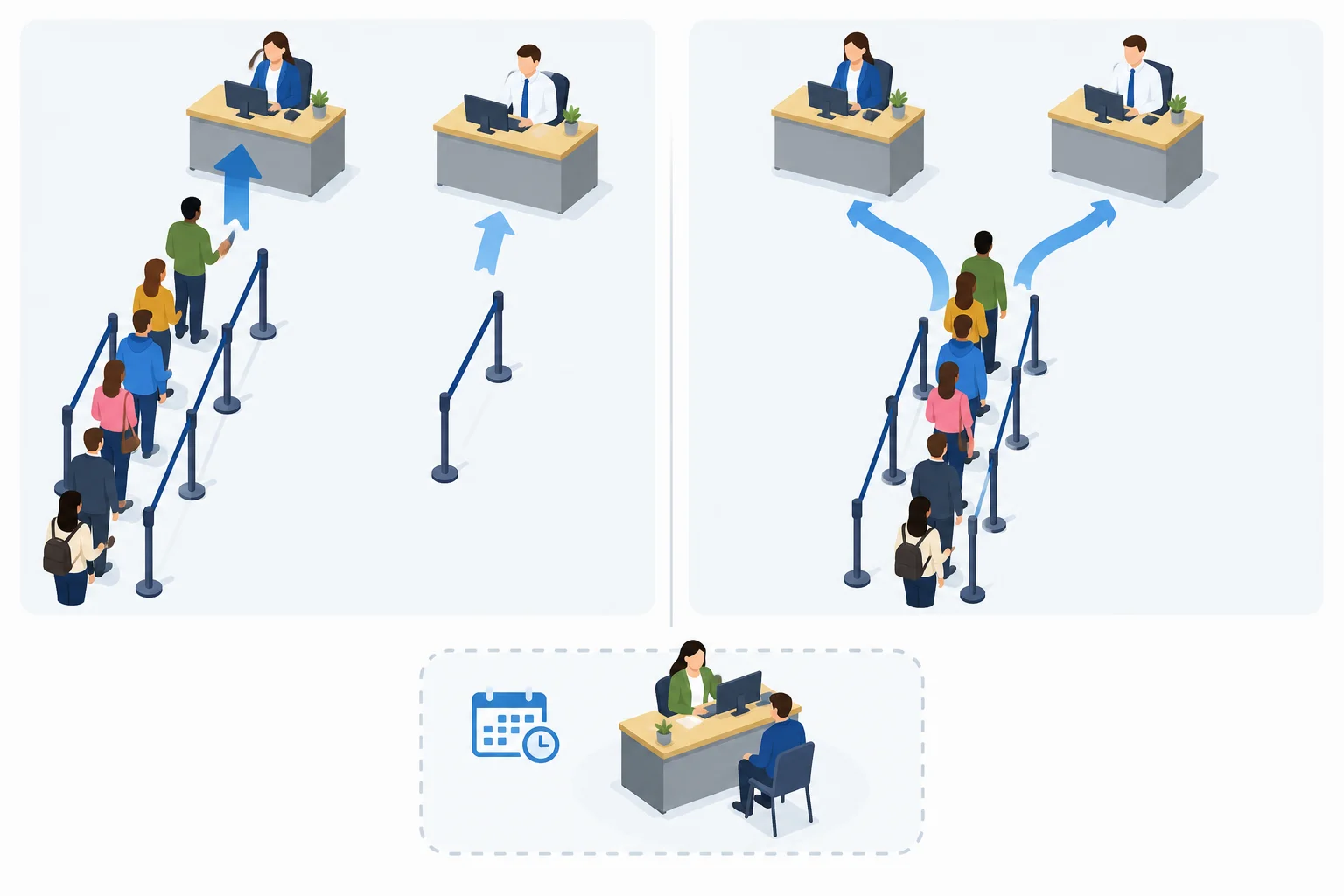
The shared queue changes how visitors reach the next available general adviser. It does not add a general adviser, and specialist appointments remain separate.
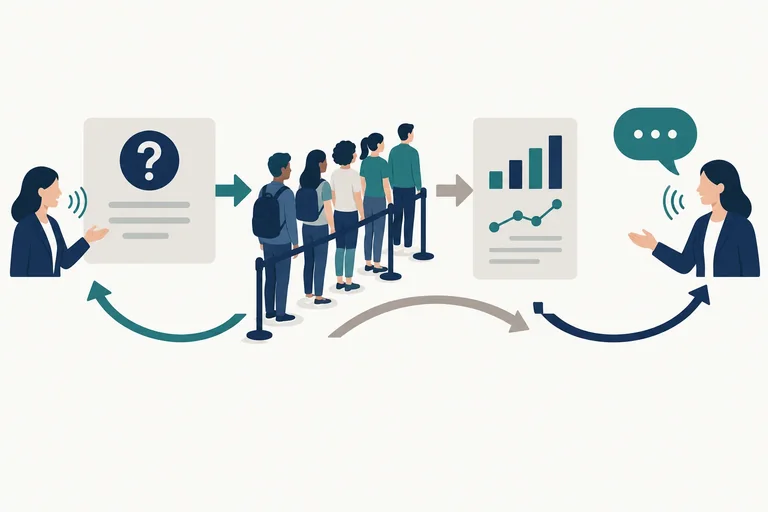
The Presentation model is a short recorded presentation based on the Briefing. Listen for one route through the message: the question being answered, the selected supporting points, an illustrative queue example, and the final takeaway.
Do not try to memorise every sentence. The illustrative example helps explain the arrangement; it is not measured trial evidence.
Listen for the central issue, the selected support, and the careful takeaway.
Could a change in organisation improve access to general enquiries without increasing staffing?
First, I’ll explain the change. Then I’ll consider the observations.
At Northbridge Learning Centre, the shared queue, which serves general enquiries, is being tested. It replaces separate queues for 2 general advisers; specialist appointments remain separate.
In a shared queue, the next visitor can go to whichever general adviser is available. Both advisers can take the next visitor, which reduces the risk of one adviser remaining idle. As an illustrative queue example, imagine one general adviser finishing while visitors are still waiting in the other separate queue. The next visitor can then go to the available adviser. So, the shared queue lets either general adviser take the next visitor.
Now that the mechanism is clear, let’s turn to the observations. The Briefing reports that average waiting time for general enquiries changed from 8 minutes to 6 minutes across 5 sessions in each period. There were 2 general advisers in both periods. Specialist appointments remain separate, which limits the scope of the trial. The queue is shared, but staffing is unchanged.
The takeaway is careful: the shared queue may be worth examining further, but these observations do not prove the cause or guarantee future results.
A through-line connects an opening question, selected supporting points, and a final takeaway around one central issue.
In this presentation, the opening question asks whether organisation can improve access without more staff. One supporting point explains the shared-queue arrangement. The illustrative queue example makes that arrangement easier to picture. Another supporting point reports the Briefing’s observation. The takeaway returns to the opening question carefully.
The presentation does not need every available fact. A supporting detail earns its place when it helps answer the central issue. The explanation of how the next visitor reaches an available general adviser is the detail that most directly connects the organisational change to access.
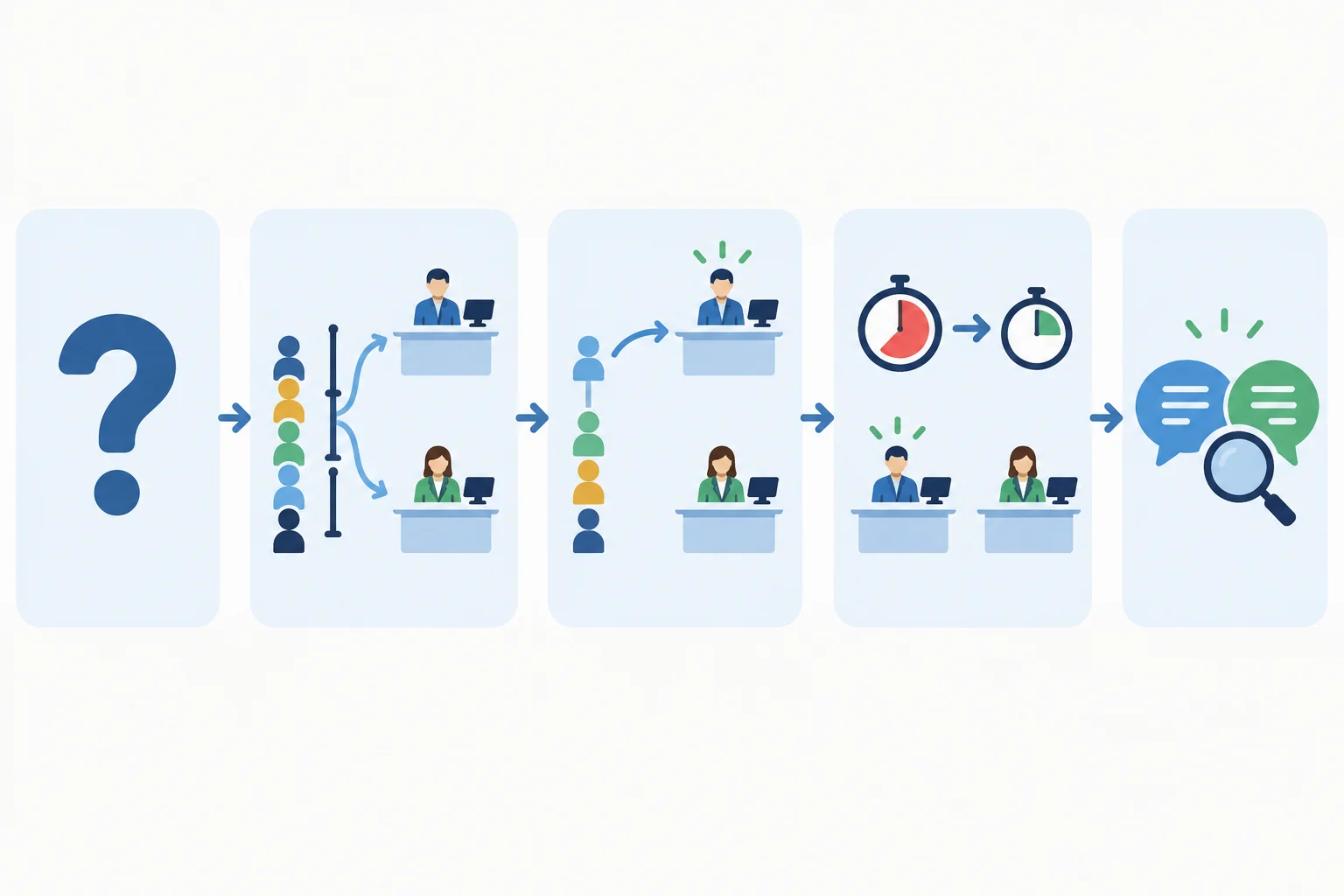
Opening question → shared-queue mechanism → illustrative queue example → Briefing observation → careful takeaway.
Tip
Keep source-based information and illustration distinct. The Briefing supplies the observed change from 8 minutes to 6 minutes and confirms unchanged staffing. The queue scenario is an illustrative example of how a shared queue can work.
Costs and specialist waiting times were not measured. They cannot strengthen the presentation’s conclusion about general enquiries.
Match each extract from the Presentation model to its structural role in the through-line.
Tap an item and then its matching pair.
Step 2 of 9
Recognise spoken signposts that preview, recap, and transition within the Presentation model, then transcribe a brief recap extract.
In a short presentation, signposts make the through-line audible. They tell listeners whether the speaker is mapping the route, gathering a point already made, or moving to a connected point.
Listen for the route rather than every supporting detail. A useful preview gives only the main destinations. It does not list every fact, example, or limitation that will follow.
Presentation model: listen for the brief map of the two main sections.
First, I’ll explain the change. Then I’ll consider the observations.
A signpost has a communicative purpose; the information around it supplies the content. Identify the job it does for the listener.
A preview gives a small map. A recap briefly secures the point just made. A transition makes the connection to the next point audible. In this presentation, the speaker explains the change, gathers its mechanism, and then moves to the Briefing observations.
Use these extracts to notice what each signpost asks listeners to do next.
| Job | Presentation model extract | Listener’s expectation |
|---|---|---|
| Preview | First, I’ll explain the change. Then I’ll consider the observations. | A short map of two main sections |
| Recap | So, the shared queue lets either general adviser take the next visitor. | The mechanism gathered briefly |
| Transition | Now that the mechanism is clear, let’s turn to the observations. | A connected move to source-based information |
The arrows show three listener cues: mapping ahead, briefly gathering the mechanism, and moving to connected evidence.
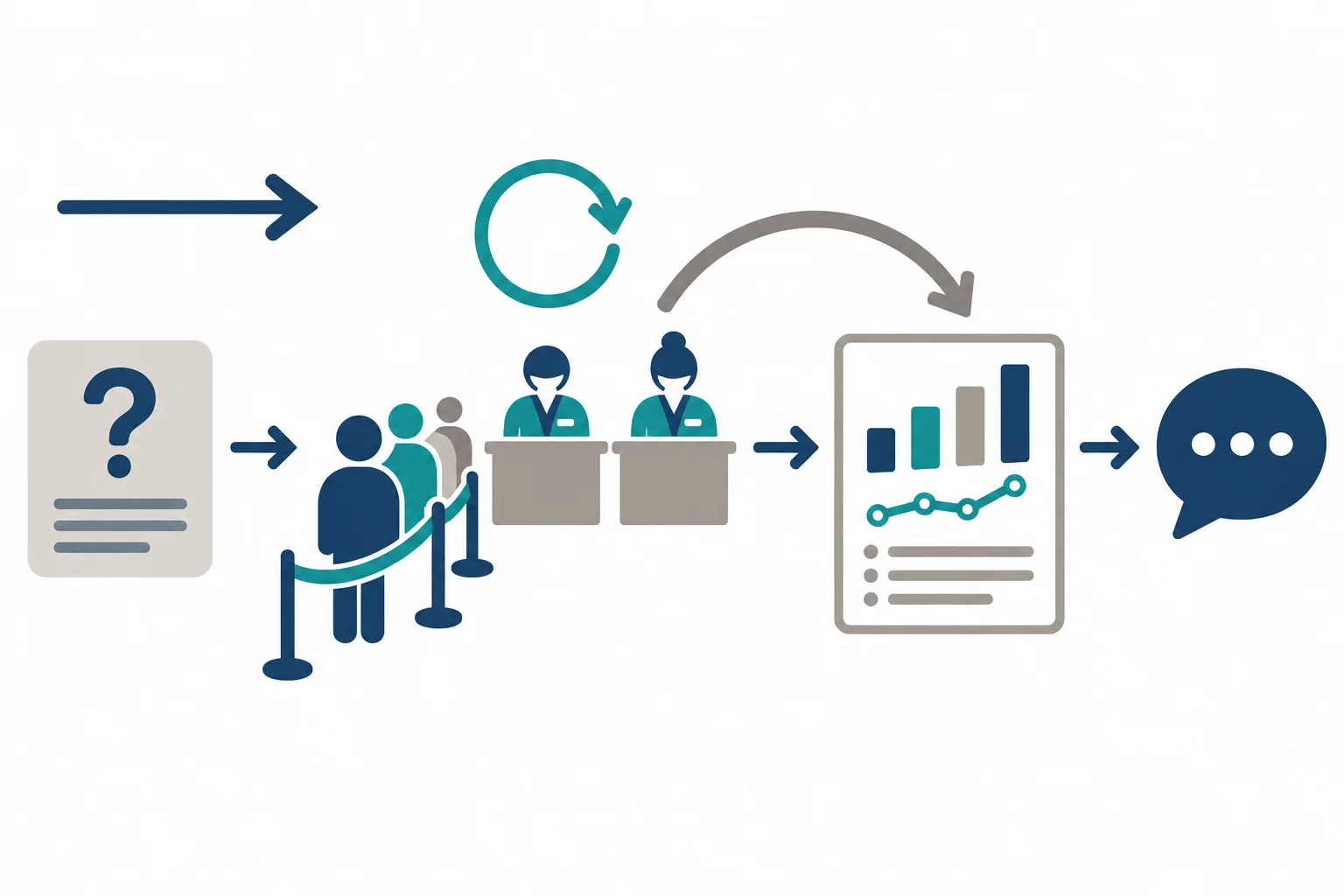
The recap gathers the shared-queue mechanism before the transition to the Briefing observations.
Listen and choose an option.
You will hear three extracts from the Presentation model in presentation order, followed by the start of the Briefing observation. Which sequence identifies the map at the start, the brief sentence after the example, and the move into the Briefing evidence?
First, I’ll explain the change. Then I’ll consider the observations. So, the shared queue lets either general adviser take the next visitor. Now that the mechanism is clear, let’s turn to the observations. The Briefing reports that average waiting time for general enquiries changed from 8 minutes to 6 minutes across 5 sessions.
Listen and write what you heard.
Transcribe the extract exactly. Use standard punctuation.

Step 3 of 9
Explain the shared-queue mechanism through a definition, an illustrative example, and a careful practical implication.
A clear explanation of a difficult idea has three moves:
For the central issue at Northbridge Learning Centre, explain the shared queue before discussing the trial. Reorganising a queue does not add staff or reduce the amount of work: there are still 2 general advisers handling general enquiries.
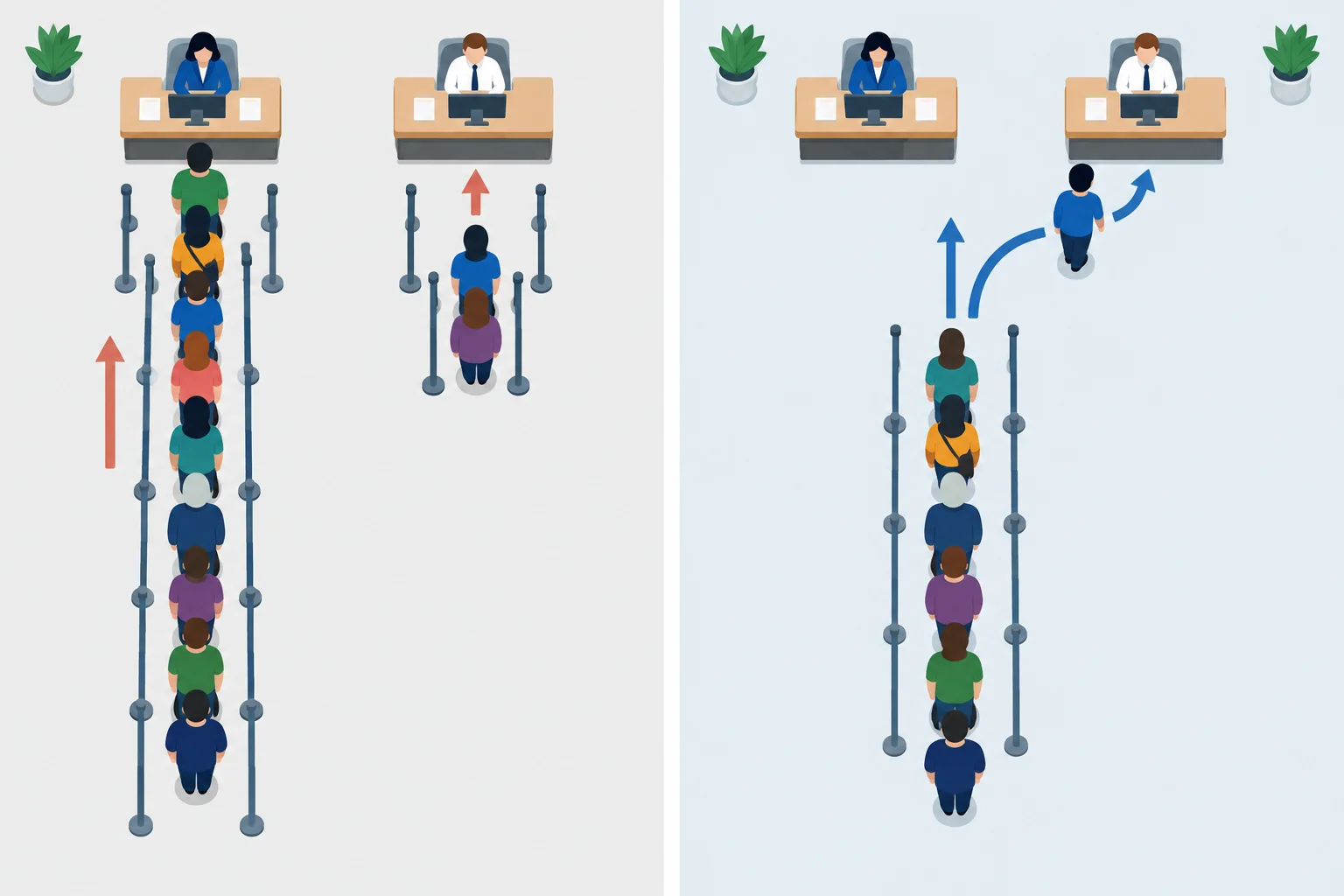
Illustrative queue example: a shared queue lets the next visitor go to either available general adviser.
Example
Definition: A shared queue is one waiting line for general enquiries, served by either general adviser.
Illustrative example: If one general adviser becomes available while visitors are waiting, the next visitor in the shared queue can go to that adviser.
Practical implication: This can reduce the risk of one adviser remaining idle while people wait in uneven separate queues.
The example explains the mechanism. It is not evidence that a particular waiting-time result will occur.
Keep the two kinds of information separate. A supporting detail reports what the Briefing observed. A practical implication explains why the shared-queue mechanism could be useful.
Use careful language for the implication: the arrangement can reduce the risk of uneven use of advisers. Do not claim that it caused the observed change or will guarantee future results.
Use the source label when reporting the trial, and the illustration label when explaining how a queue may work.
| Type | Information | How to use it |
|---|---|---|
| Briefing observation | Average waiting time for general enquiries: from 8 minutes to 6 minutes across 5 sessions | Report the observed change |
| Briefing condition | 2 general advisers in both periods | Avoid implying extra staffing |
| Illustrative queue example | The next visitor can go to an available general adviser | Explain the mechanism |
| Not measured | Costs and specialist waiting times | State the scope of the evidence |
Put these parts of an explanation in the most helpful order.
Look back at the queue diagram. First, say your explanation aloud in three stages: definition, illustrative example, and practical implication. Then type a concise written version of 50–85 words.
Include the Briefing’s observed change from 8 minutes to 6 minutes across 5 sessions, with 2 general advisers in both periods. Keep that observed result separate from your illustrative example, and do not claim that the trial proved the cause or guarantees future results.
Write at least 250 characters (0/250).

Step 4 of 9
A non-defining which-clause adds a supplementary explanation. It gives useful context, but the main message is complete without it.
Compare these Presentation model examples:
Use which, not that, in this supplementary pattern. Keep the referent close and clear so listeners can immediately understand what the explanation adds.
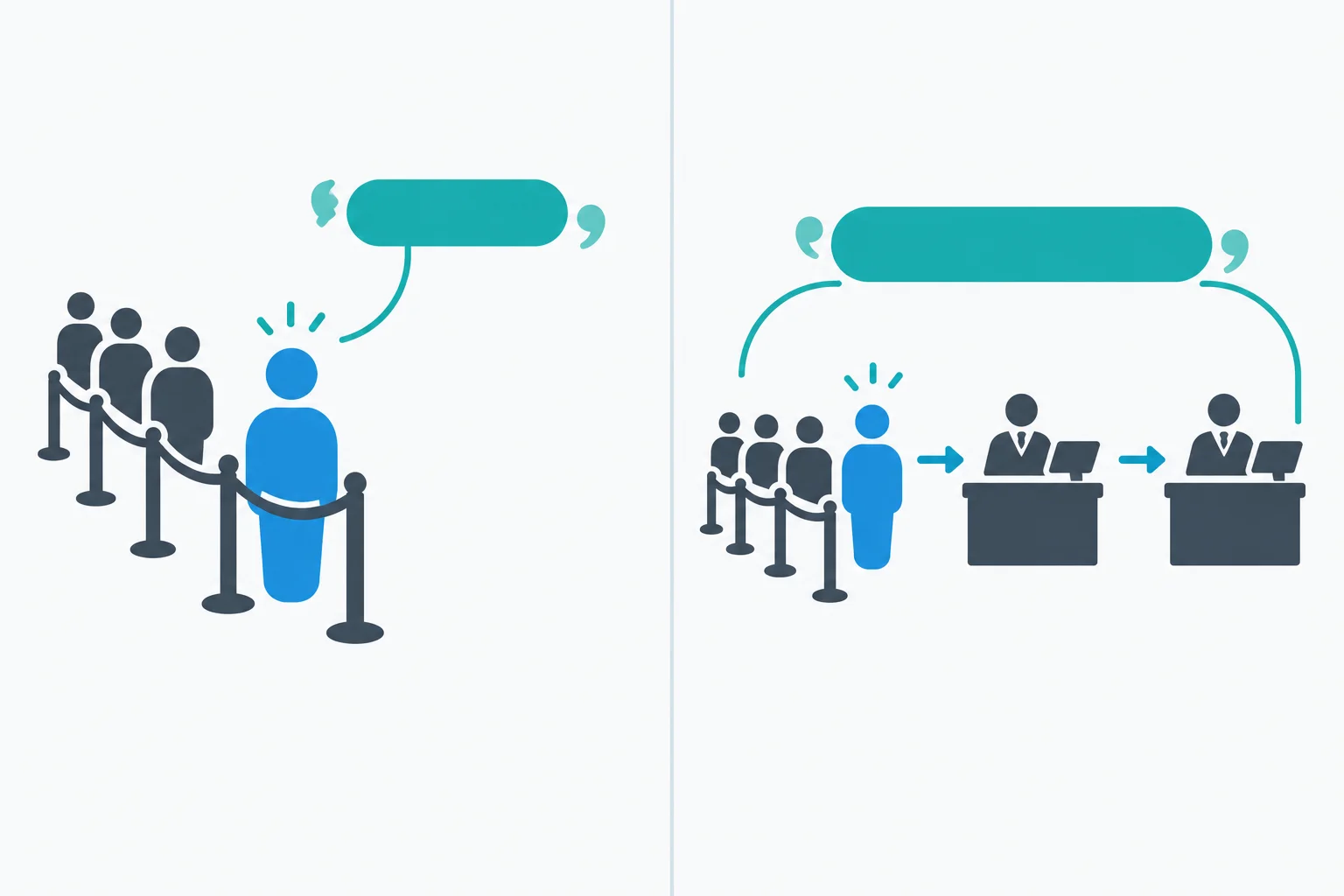
A supplementary which-clause can explain a noun phrase or comment on the whole preceding clause.
Punctuation and delivery make supplementary information easier to follow.
The added explanation should not hide the main line. Return emphasis to the core message.
This is an exact extract from the Presentation model. Listen once for the main message, then again for the boundaries around the supplementary explanations.
The shared queue, which serves general enquiries, is being tested. Both advisers can take the next visitor, which reduces the risk of one adviser remaining idle.
Use / for a thought-group boundary and // for a longer processing pause:
Commas show the grammar. The boundaries help listeners retain the main message while they process the extra explanation.
Match each use of which to what it refers to.
Tap an item and then its matching pair.
Complete the missing material, including any punctuation.
The shared queue [ ] is being tested.
Complete the missing ending, including any punctuation.
Both advisers can take the next visitor [ ]
Now read both completed sentences aloud.
For the noun-reference sentence, use three thought groups: main noun phrase / supplementary explanation / main message.
For the whole-clause sentence, state the complete idea first, then use // before the consequence. Keep the added material lighter than the main message, and return emphasis to the core point.
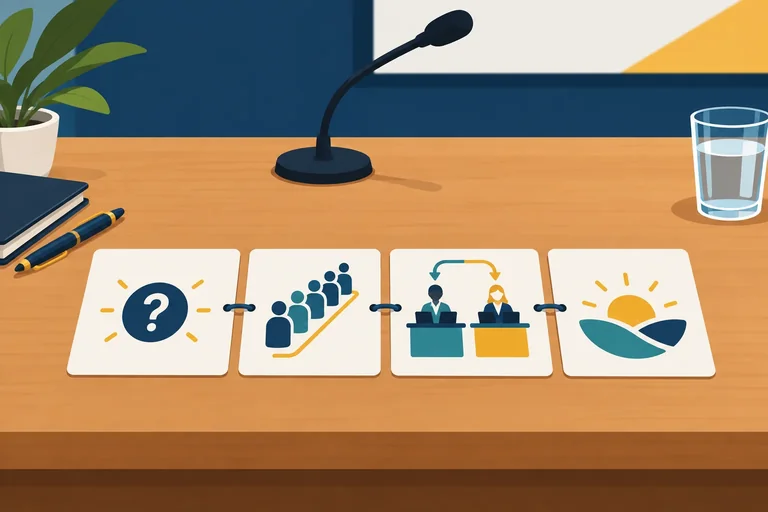
Step 5 of 9
Turn the Northbridge Learning Centre Briefing into concise speaking notes that keep a clear through-line and remain faithful to the available evidence.
A two-minute presentation needs a through-line, not a miniature report. Build speaking notes from short, speakable phrases so you can look at listeners, adapt your wording, and keep the central issue clear.
Start with an opening question that sets a manageable scope. Then choose two supporting points that answer it. End with a takeaway that answers the question; do not introduce a new argument at the end.
For this case, keep the scope on general enquiries. Specialist appointments remain separate.
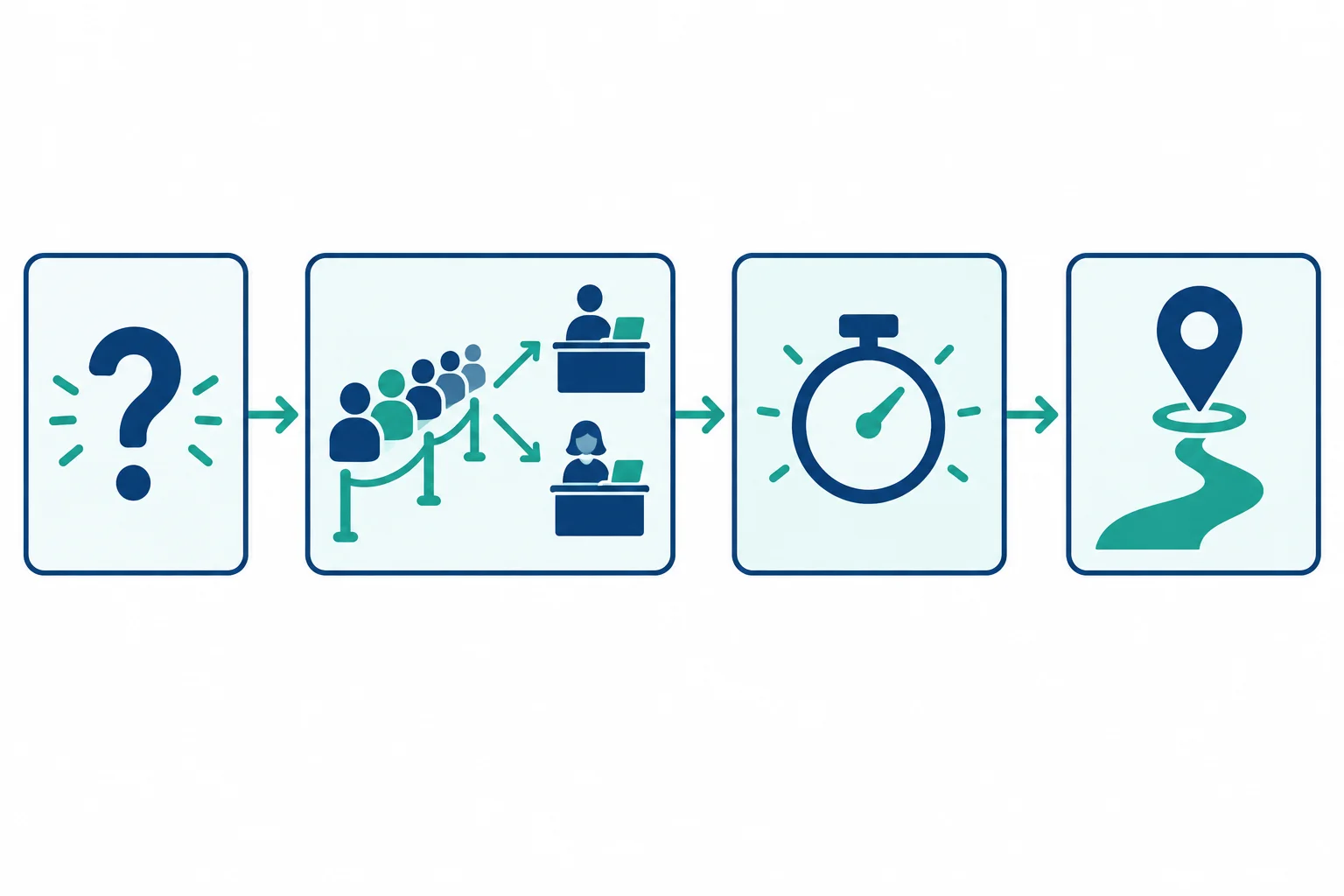
A useful outline moves forward: question → mechanism → evidence and scope → takeaway.
Tip
Use only the details that earn their place in the through-line. A definition explains the idea; an illustrative example makes the mechanism easier to picture; the Briefing supplies the observed evidence and its limits.
Example
This model uses phrases rather than sentences to memorise. Labels distinguish Briefing information from an illustrative queue example.
Opening question
Point 1
Point 2
Takeaway
Notice the jobs done by the notes:
A signpost can be written as a short phrase or a sentence you plan to say. It does not need to be elegant on the page; it needs to make the route audible.
Which detail must be omitted from a source-faithful outline because the Briefing does not provide it?
Create your own concise outline for a two-minute presentation about the Northbridge Learning Centre trial.
Use exactly these headings:
Under each heading, write short bullet-point phrases, not a script. Your outline must include:
Write at least 450 characters (0/450).

Step 6 of 9
Use thought groups, processing pauses, and selective emphasis to make a complex explanation easier to follow. Then annotate and rehearse a short section of your speaking outline.
Pacing follows meaning, not a fixed speed. A thought group is a meaningful unit that a listener can process before receiving the next one.
Use / to separate connected units. Use // after a dense mechanism or before an important practical implication, so the listener can connect the idea. Do not pause inside a key noun phrase or after every few words.
Use bold for only the words that carry a contrast or key relationship. If every content word receives equal emphasis, the listener cannot hear what matters most.
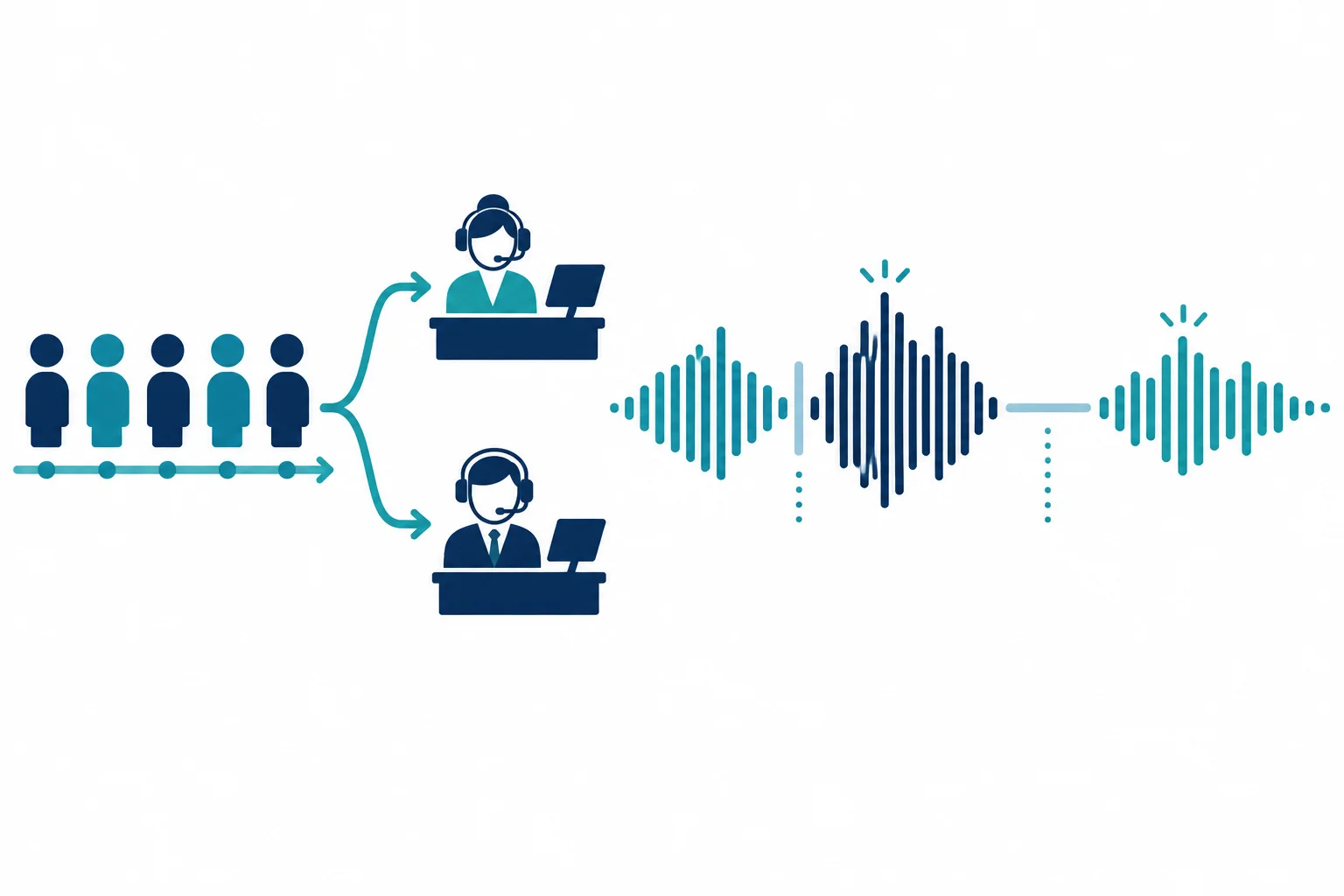
Short gaps organise thought groups; a wider gap gives processing time; one emphasis peak highlights a key relationship.
Example
Two sentences selected from different points in the Presentation model, combined for delivery practice
Both advisers can take the next visitor, / which reduces the risk of one adviser remaining idle. // The queue is shared, / but staffing is unchanged.
The first sentence contains a dense mechanism and a supplementary explanation. The longer pause gives listeners time to process it before the contrast. In the final sentence, emphasise the relationship, not every individual content word. The mechanism is illustrated here; it does not prove what caused the observed change in the Briefing.
The following practice audio combines two verbatim sentences selected from different points in the Presentation model. It is not a continuous extract from that recording.
Listen first for the route: mechanism, explanation, then contrast. Listen again for pace: the speaker groups the dense idea, leaves processing time before the contrast, and gives selective prominence to the relationship that matters.
These delivery cues support the through-line; they do not turn the explanation into a performance.
Listen for meaningful groups, a processing pause, and selective emphasis.
Both advisers can take the next visitor, which reduces the risk of one adviser remaining idle. The queue is shared, but staffing is unchanged.
Both advisers can take the next visitor, which reduces the risk of one adviser remaining idle. The queue is shared, but staffing is unchanged.
Listen and choose an option.
Listen to three deliveries of two sentences selected from different points in the Presentation model and combined for delivery practice. Which delivery would make the complex point easiest for listeners to follow?
Delivery A. Both advisers can take the next visitor, which reduces the risk of one adviser remaining idle. The queue is shared, but staffing is unchanged. Delivery B. Both advisers can take the next visitor, which reduces the risk of one adviser remaining idle. The queue is shared, but staffing is unchanged. Delivery C. Both advisers can take the next visitor, which reduces the risk of one adviser remaining idle. The queue is shared, but staffing is unchanged.
Rehearse from phrase-based notes, not a script. Use Point 1 from your completed outline, or use these short practice notes:
Opening question
Point 1
Keep the through-line in view. Point 1 explains the arrangement that the later Briefing observation relates to. Turn the phrases into one or two speakable sentences in your own words; do not add new facts.
Tip
On your first rehearsal, notice one point where a listener may need more time. For the second rehearsal, change only one feature: add or move a pause, slow a dense link, or shift emphasis to a key contrast. One deliberate change is easier to evaluate than trying to alter everything at once.
/, any longer processing pause with //, and selective emphasis in bold.No recording or upload is required.
Write at least 120 characters (0/120).

Step 7 of 9
Unpack a multi-part audience question, check an unsupported premise, answer its substantive parts, and reformulate the shared-queue mechanism clearly.
An audience question can bundle an underlying assumption with several answerable parts. Do not answer it as one block.
For this case, first separate:
The Briefing observed average waiting time for general enquiries changing from 8 minutes to 6 minutes across 5 sessions before and during the trial. There were 2 general advisers in both periods. That evidence does not establish what caused the difference.
A constructive response has a clear route: briefly check the premise → answer the substantive question directly → give concise reasoning → reformulate the mechanism simply → return to the remaining part.
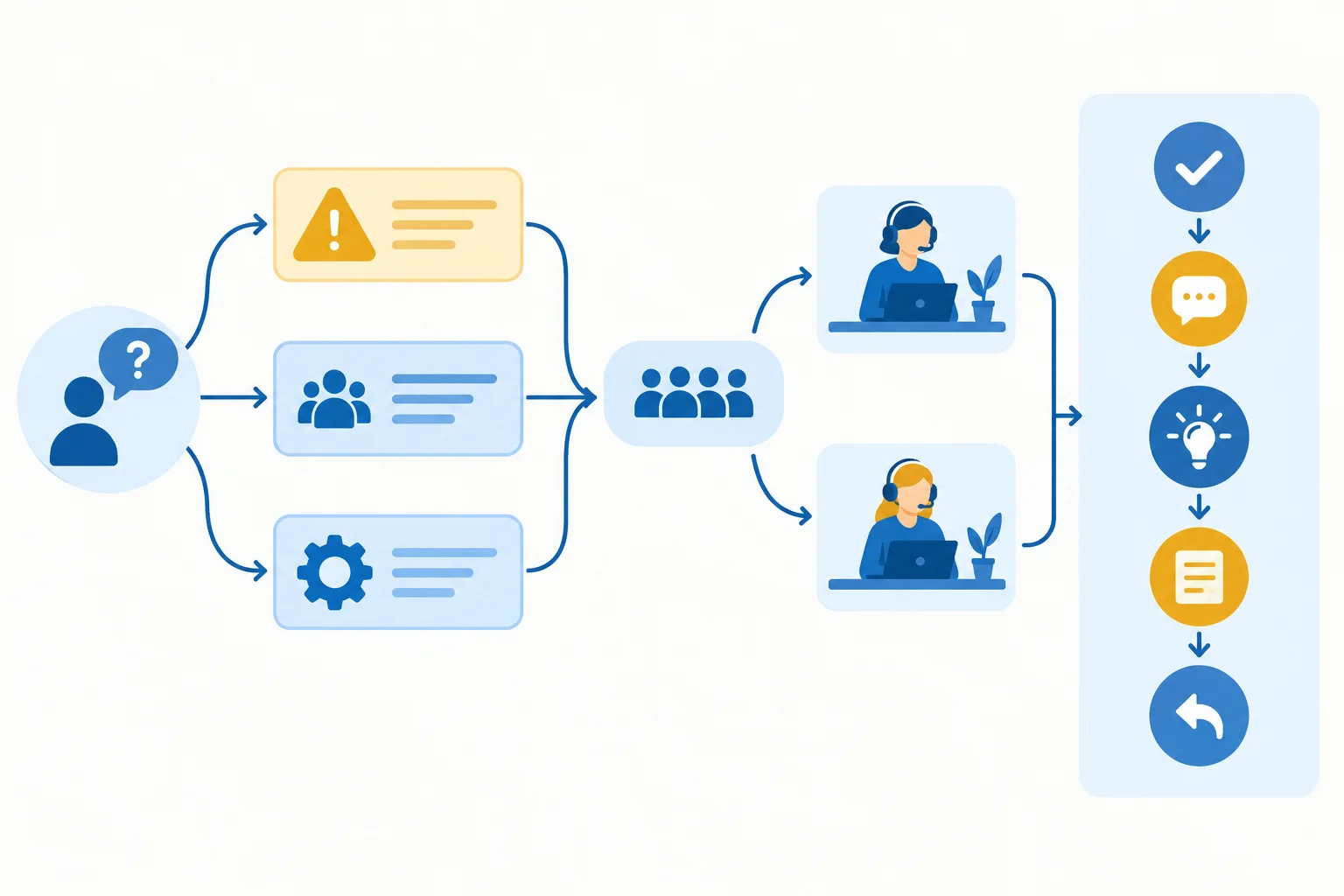
Separate what needs correcting from the questions that deserve a direct answer. The queue drawing is an illustrative mechanism, not trial evidence.
Listen to this audience question. Do not try to prepare a full answer yet. First identify the claimed cause and the two questions hidden inside it.
Because waiting time fell from 8 minutes to 6 minutes, the shared queue caused the improvement, didn’t it? Does that mean the centre can manage with one general adviser? And why would visitors no longer have to choose between advisers?
Match each part of the recorded question to its role.
Tap an item and then its matching pair.
Listen and choose an option.
What is the purpose of this opening response move?
The figures show a change, but they do not establish what caused it.
Put these response moves in the most constructive order.
Listen again. Respond aloud in 45–60 seconds before writing the response you used.
Because waiting time fell from 8 minutes to 6 minutes, the shared queue caused the improvement, didn’t it? Does that mean the centre can manage with one general adviser? And why would visitors no longer have to choose between advisers?
First answer aloud. Then type the brief response you gave.
Begin by checking the causal premise without lingering on it. Address the staffing question directly, support your answer with relevant Briefing information, and then explain the visitor process in simpler terms. Keep the scope on general enquiries and do not invent certainty.
Write at least 180 characters (0/180).

Step 8 of 9
Give a direct, useful answer when the available evidence has a clear limit: state what is known, make the scope explicit, and identify what information would support a stronger conclusion.
When a question goes beyond the Briefing, give a direct answer rather than hiding behind a long disclaimer. Then organise your response in three moves:
For Northbridge Learning Centre, the Briefing observed average waiting time for general enquiries changing from 8 minutes to 6 minutes across 5 sessions in each period. There were 2 general advisers in both periods. This observation does not establish the cause, guarantee a future result, or tell us about costs or specialist appointments.
Useful qualification is specific: “We cannot guarantee that on this evidence.” Vague wording such as “There is not enough information” leaves the listener without a useful answer.
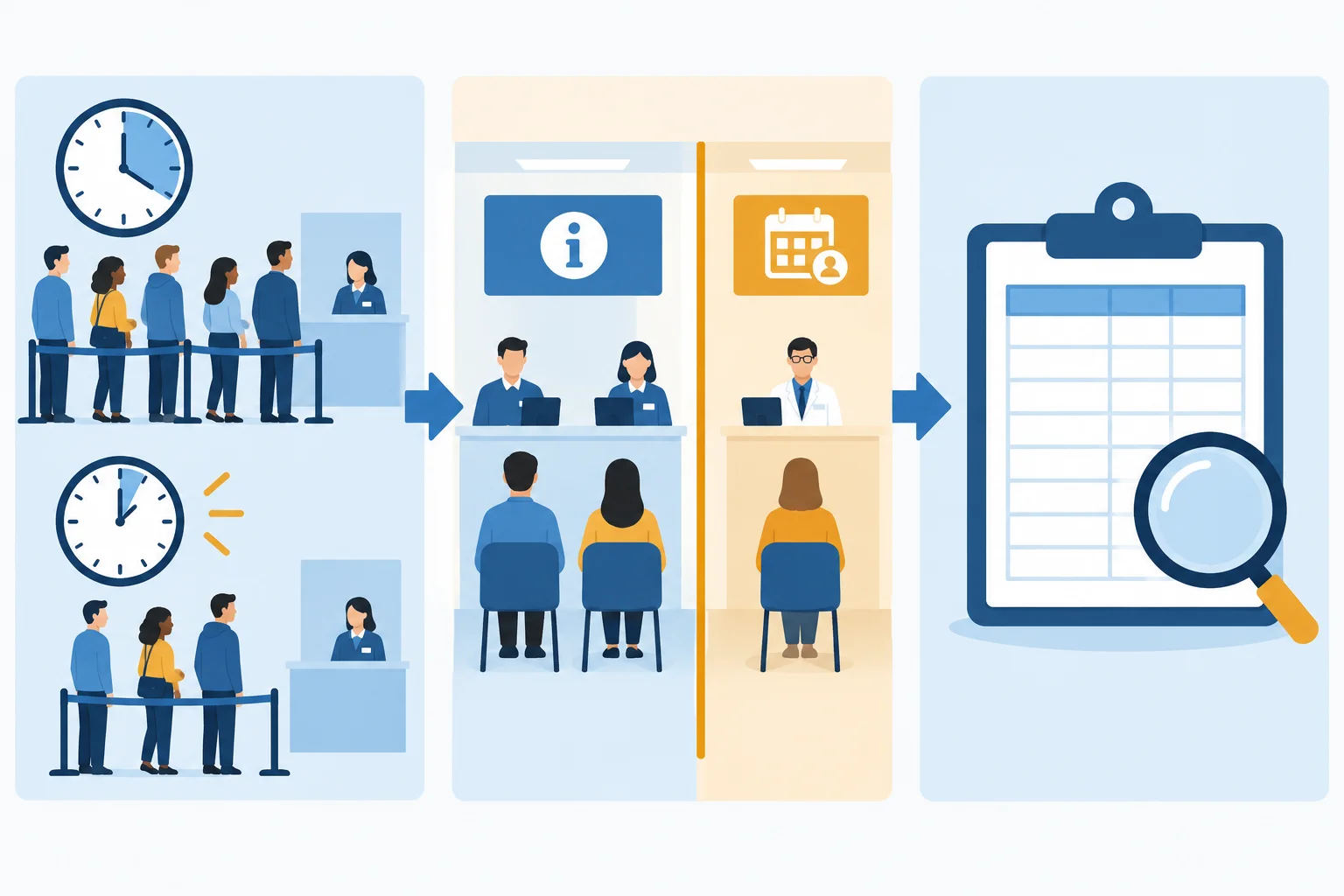
A useful evidence-gap response moves from an observation to its boundary, then to the information needed.
Make each part of the response concrete.
| Part | Useful wording | Avoid |
|---|---|---|
| Known information | The average for general enquiries changed from 8 minutes to 6 minutes. | It worked. |
| Limitation | This does not show what happened to specialist appointments. | There is not enough information. |
| Next step | We would need waiting-time data for specialist appointments. | Someone should investigate it. |
Listen and choose an option.
Listen to the question. Which response is honest and useful?
Can we guarantee that the shared queue will reduce waiting times for both general enquiries and specialist appointments?
Listen to the challenging question once or twice. Prepare a concise spoken answer before you write.
Based on the trial, can we say that the shared queue will reduce waiting times for specialist appointments as well, and should Northbridge Learning Centre keep it permanently?
Say your response aloud first, in about 30 to 45 seconds. Then type the response you used.
Include a direct answer with relevant case evidence, a precise limitation about scope or certainty, and a reasonable information-gathering next step.
Write at least 220 characters (0/220).

Step 9 of 9
Deliver a two-minute, evidence-faithful presentation on the shared-queue trial, respond aloud to two challenging audience prompts, and review one effective move and one precise revision.
Use your completed phrase-based outline, the Briefing, and the Presentation model. Set a timer for 2 minutes and speak from notes rather than reading a script.
Your route should remain easy to follow: an opening question, two connected points, and a takeaway. Include one illustrative queue example, but make clear that it illustrates the mechanism rather than reports a trial result. Add one concise non-defining which-clause.
Aim for confident accuracy: explain the observed change clearly, but do not turn an observation into a cause, a forecast, or a guarantee.

Follow one route: present the through-line, respond to questions, then review evidence and delivery.
Use this as an accuracy check before you begin. The first two columns are source-based information from the Briefing. The final column keeps an illustrative queue example separate from the evidence.
| Element | Briefing: source-based information | Illustrative example or boundary |
|---|---|---|
| Central issue | Can organisation improve access without increasing staffing? | Do not claim that staff were added. |
| Arrangement | 2 general advisers; separate queues replaced by one shared queue for general enquiries. | Next visitor goes to either available general adviser. |
| Observation | Average waiting time changed from 8 minutes to 6 minutes across 5 sessions in each period. | An observation is not proof of cause or a future prediction. |
| Scope | Specialist appointments remain separate. | Costs and specialist waiting times were not measured. |
Start your timer and deliver the full presentation aloud now. Use your notes, not a memorised script.
After speaking, make a short record for your later review. Include:
/, //, or selective bold emphasis.This record supports self-review; it does not automatically assess your voice.
After you have spoken for 2 minutes, record the route you used.
Write at least 80 characters (0/80).
Listen to Prompt 1. Do not read a transcript; respond as you would after a presentation.
Your presentation says waiting times fell because the centre added more advisers. Why not assign those extra advisers to specialist appointments as well? And, in simple terms, how does the shared queue help visitors?
Answer Prompt 1 aloud first. Then write 2–4 key sentences or phrases that you used. Your response should check the premise, answer the mechanism question directly, and keep the scope clear.
Write at least 80 characters (0/80).
Listen to Prompt 2. Answer aloud before writing your response record.
Six minutes sounds promising. Can you guarantee that every visitor will wait no more than six minutes from now on? And can you confirm that the trial has reduced costs and waiting times for specialist appointments?
Answer Prompt 2 aloud first. Then write 2–4 key sentences or phrases that you used. State what is known, acknowledge the relevant uncertainty or limit of scope, and identify a reasonable next step for evidence.
Write at least 80 characters (0/80).
Check your presentation and both spoken answers against these observable criteria. If one item is missing, choose a precise revision rather than trying to improve everything at once.
| Area | Check |
|---|---|
| Through-line | Opening question, connected points, and takeaway answer the same central issue. |
| Explanation | Mechanism is clear; the illustrative queue example is distinct from Briefing evidence. |
| Language | A non-defining which-clause has a clear referent and does not obscure the main message. |
| Delivery | Thought groups, a useful processing pause, and selective emphasis support meaning. |
| Prompt 1 | The unsupported staffing premise is checked; the mechanism and scope are answered directly. |
| Prompt 2 | Known evidence, uncertainty, and an appropriate next evidence step are all stated. |
Complete the self-check, then write 90–130 words.
Your reflection should refer to both your presentation and your responses to the two prompts.
Write at least 90 characters (0/90).
Summary
Congratulations! You completed: Present a Complex Idea and Handle Questions
Thousands of online courses in video, ebooks and audiobooks.
To test your knowledge during online courses
Generated directly from your cell phone's photo gallery and sent to your email

Download our app via QR Code or the links below:.



Carry knowledge in your pocket.
Download the Cursa app.
There are hundreds of free courses available, with a free certificate of completion that is saved in your mobile image gallery.
Download the app to access the Course Completion Certificate for Free.


+ 10 million
students

Free and Valid
Certificate

60 thousand free
exercises

4.8/5 rating in
app stores

Free courses in
video and ebooks