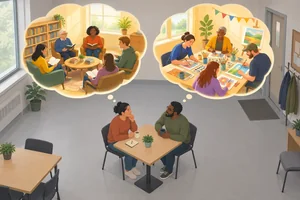
Step 1 of 8
Spot the Condition and the Backup Plan
Identify the possible change and the planned response in short picnic messages.

Learning path · Level 6 · Tutorial 3
Make a practical backup plan for a day out or a group activity. Read and listen to plans, choose the audio that matches a condition and its result, and complete a short dictation. Answer planning questions aloud and write a short message explaining what you will do if plans change.
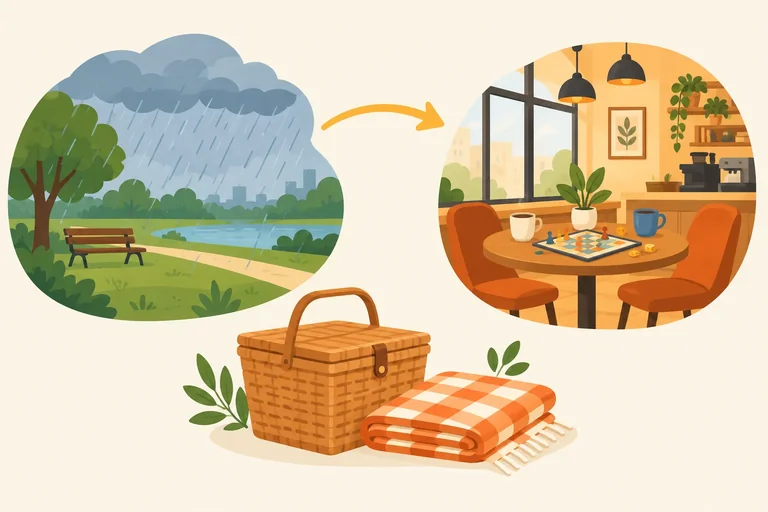
 Spot the Condition and the Backup Plan
Identify the possible change and the planned response in short picnic messages. 2 min
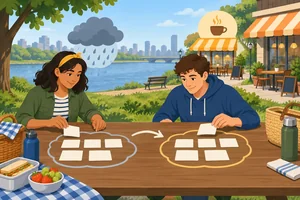 Build a First Conditional Sentence
Construct affirmative first conditional sentences for Maya and Leo’s picnic backup plan. 2 min
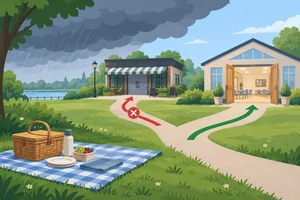 Add Negative Conditions and Results
Use negative conditions and results to make a practical backup plan clear. 2 min
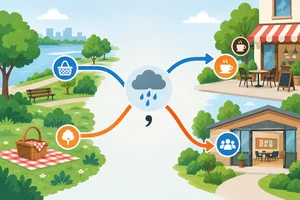 Change the Order, Keep the Meaning
Reorder a first conditional backup plan while keeping its meaning, verb forms, and comma placement correct. 2 min
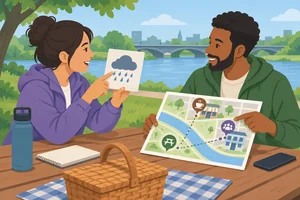 Ask About Possible Changes
Ask clear first conditional planning questions and give a practical backup-plan response. 2 min
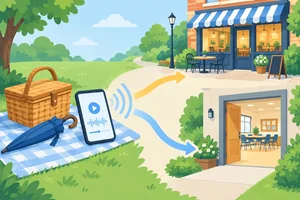 Hear the Plan Clearly
Listen for complete first conditional plans, including the meaning of negative contractions. 3 min
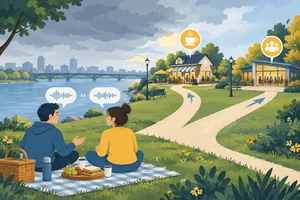 Say Two Backup Plans
Practice saying two first conditional backup plans with clear phrase breaks and understandable contractions. 2 min
 Share Your Finished Backup Plan
Use Maya and Leo’s plan and a weather update to create a clear final backup-plan message. 3 min
Step 1 of 8
Identify the possible change and the planned response in short picnic messages.
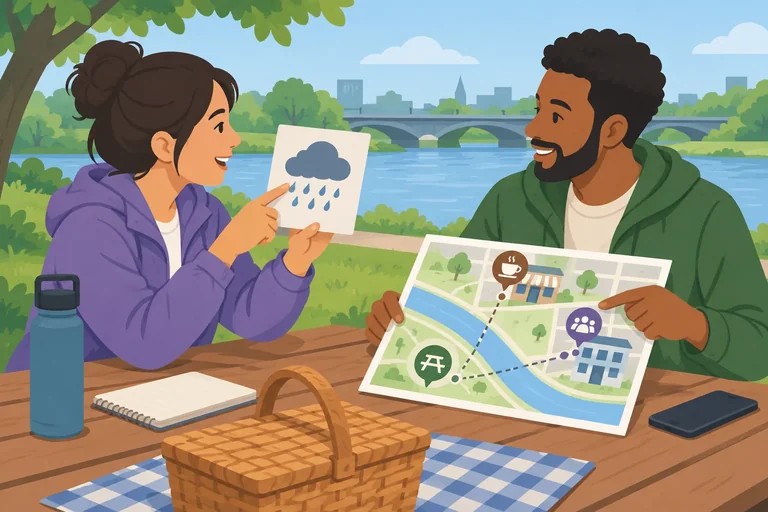
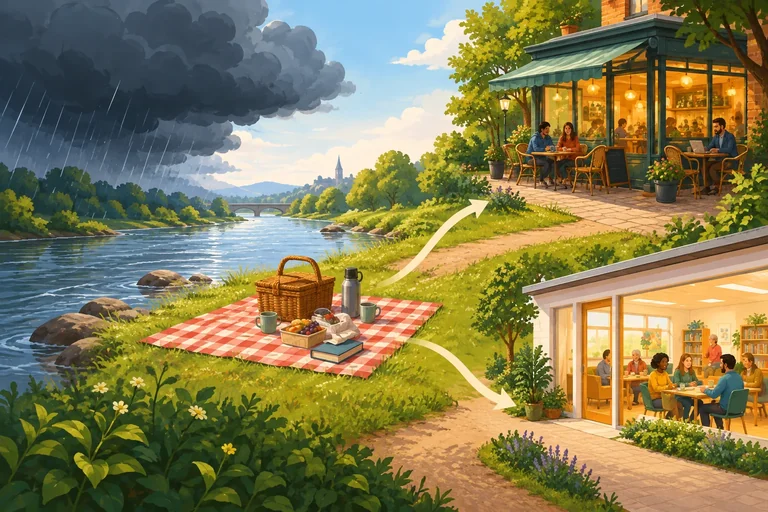
Maya and Leo are planning a picnic at Riverside Park on Saturday at 12:00. The weather forecast shows that rain is possible.
A backup plan is another plan to use if a situation changes. In a first conditional message, the condition is the possible situation. The result is the expected outcome or planned response.
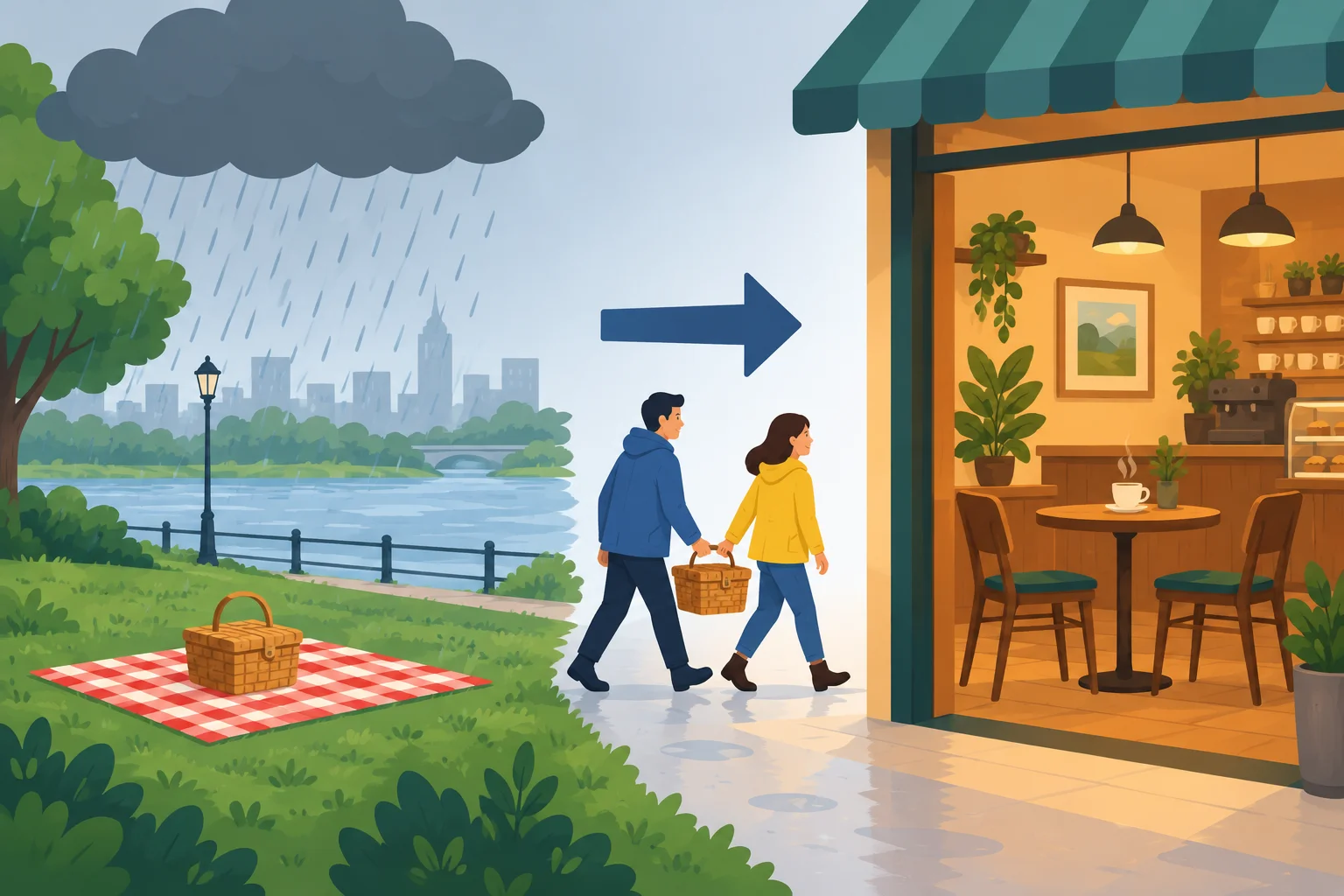
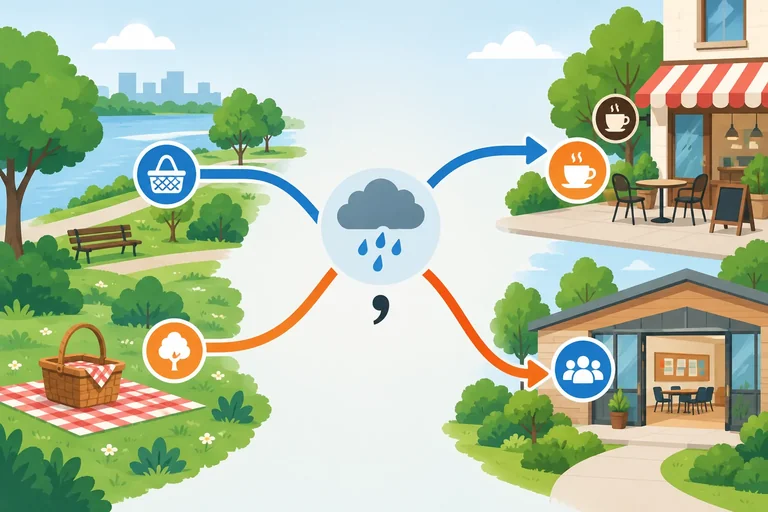
The possible weather change is the condition; going to the café is the planned result.
Read the message as two linked ideas:
The weather forecast helps Maya and Leo prepare before they need to change plans.
Example
If it rains, we will go to the café.
This is a first conditional message. Rain is a realistic future possibility. Going to the café is the planned response.
In Maya and Leo’s plan, the condition is it rains. The result is we will go to the café.
Tip
When you read a short plan, do not focus only on one word such as rain. Look for both parts: the possible change and the action that follows.
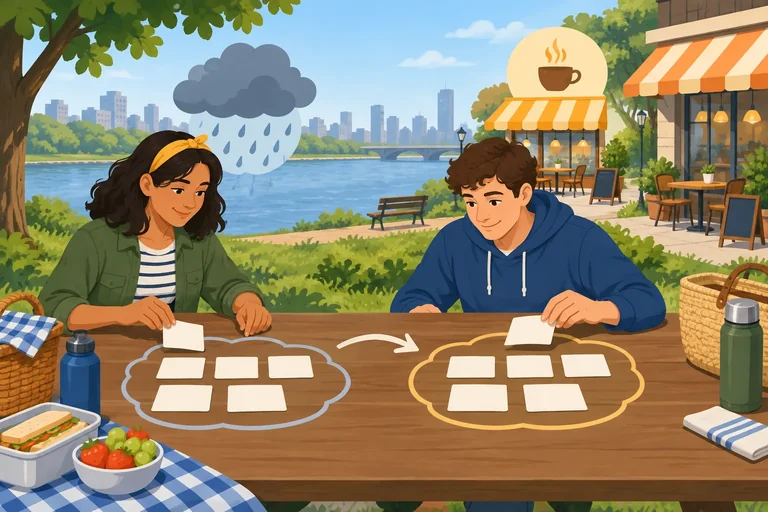
Match each possible situation to its planned response.
Tap an item and then its matching pair.
Step 2 of 8
Construct affirmative first conditional sentences for Maya and Leo’s picnic backup plan.
A first conditional connects a possible future condition to a planned result. For Maya and Leo’s Saturday picnic, rain is possible, so they need a backup plan.
Pattern:
If + subject + present simple verb, subject + will + base verb.
Main example: If it rains, we will go to the café.
The condition can describe the future, but the verb after if is present simple.
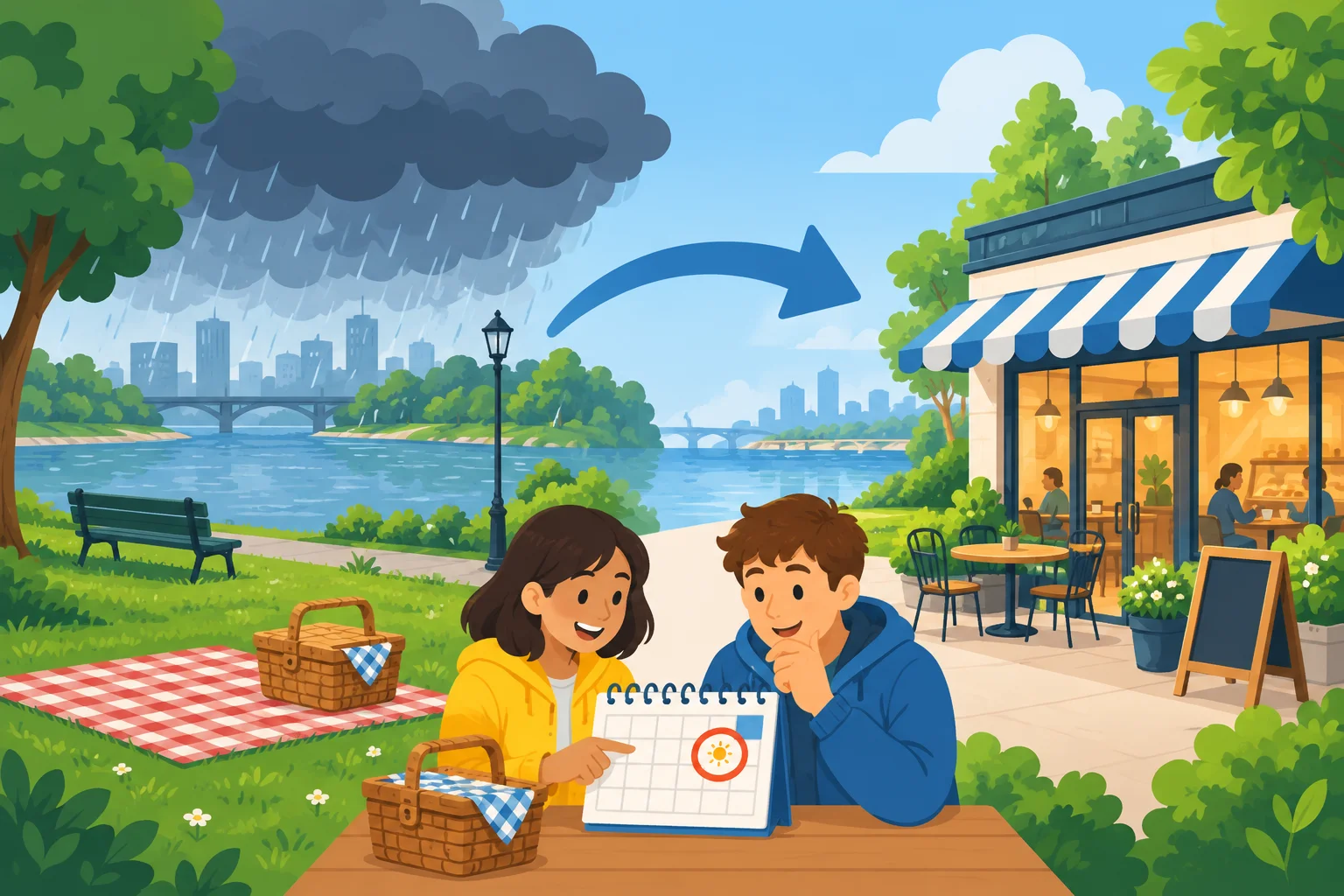
A possible weather change leads to a planned response.
Look at the two parts:
If it rains = the condition. It rains is present simple.
we will go to the café = the result. will go uses will plus the base verb go.
The sentence is about Saturday, not now. After if, present simple can describe that future situation.
Example
Maya’s message: “If it rains, we’ll go to the café.”
We’ll is the natural short form of we will. In the full pattern, use we will; in a message, we’ll is common.
Tip
For these future conditions, put will in the result, not after if. Keep the present simple in the condition.
Put the parts in order to make Maya and Leo’s backup-plan sentence.
Your sentence
Available words
Complete all four gaps to form an affirmative first conditional sentence about the picnic backup plan.
it , we to the café.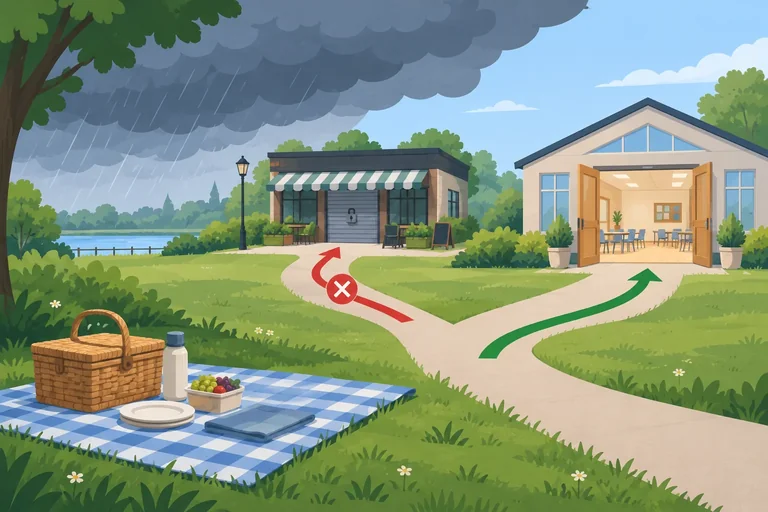
Step 3 of 8
Use negative conditions and results to make a practical backup plan clear.
Negative forms make a backup plan precise.
Use doesn't + base verb: If the weather forecast doesn't improve, ...
Use isn't for a status: If the community room isn't available, ...
In a result, won't means will not and is followed by a base verb. Available means ready to use. Cancel means decide that an event will not happen.
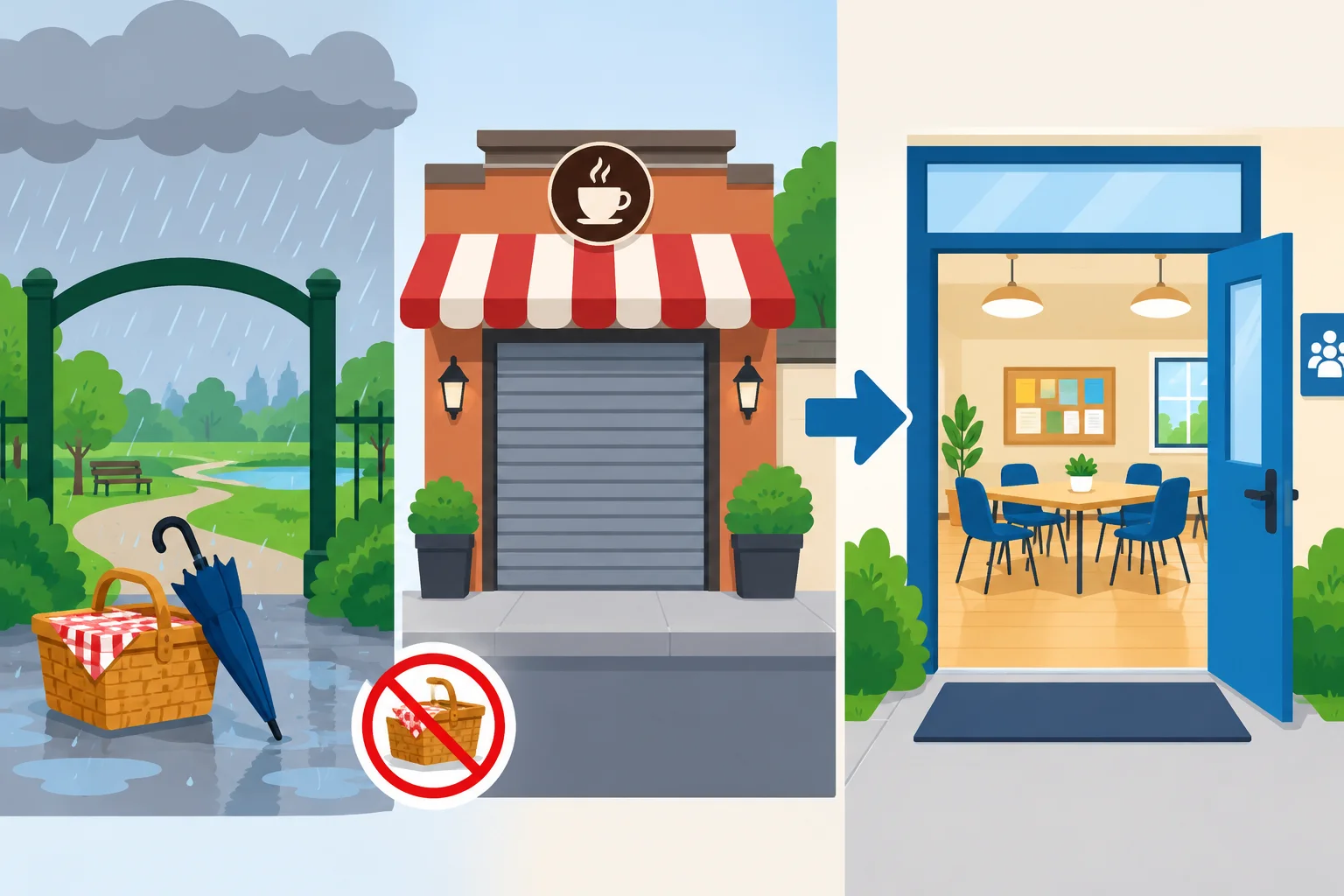
If the café is not available, the community room is the next backup. The group will not cancel the picnic.
A condition and a result can be positive or negative independently. Look for the negative word and ask: does it describe the situation, or the planned action?
Each row keeps the same first conditional relationship, but the negative changes the plan's meaning.
| Condition | Result | Meaning |
|---|---|---|
| If the weather forecast improves, | we'll meet at Riverside Park. | The outdoor plan continues. |
| If the weather forecast doesn't improve, | we'll go to the café. | A negative situation activates the backup. |
| If the café isn't available, | we'll use the community room. | A negative status activates another backup. |
| If it rains, | we won't cancel the picnic. | Rain happens, but canceling does not. |
Example
Read this carefully: If it rains, we won't cancel the picnic.
The condition is positive: rain may happen. The result is negative: canceling will not happen. The picnic can continue with a backup plan.
Complete the message: If the weather forecast _, Maya and Leo will go to the café.
Complete the message: If the community room isn't available, they _ cancel the picnic.
Match each backup plan to the interpretation that preserves its negative meaning.
Tap an item and then its matching pair.
Step 4 of 8
Reorder a first conditional backup plan while keeping its meaning, verb forms, and comma placement correct.
Maya and Leo can put the two parts of a first conditional sentence in either order. The basic relationship stays the same: one part is the condition and the other is the result.
Move the whole clauses; do not change their verb forms. The word if always stays with the condition.
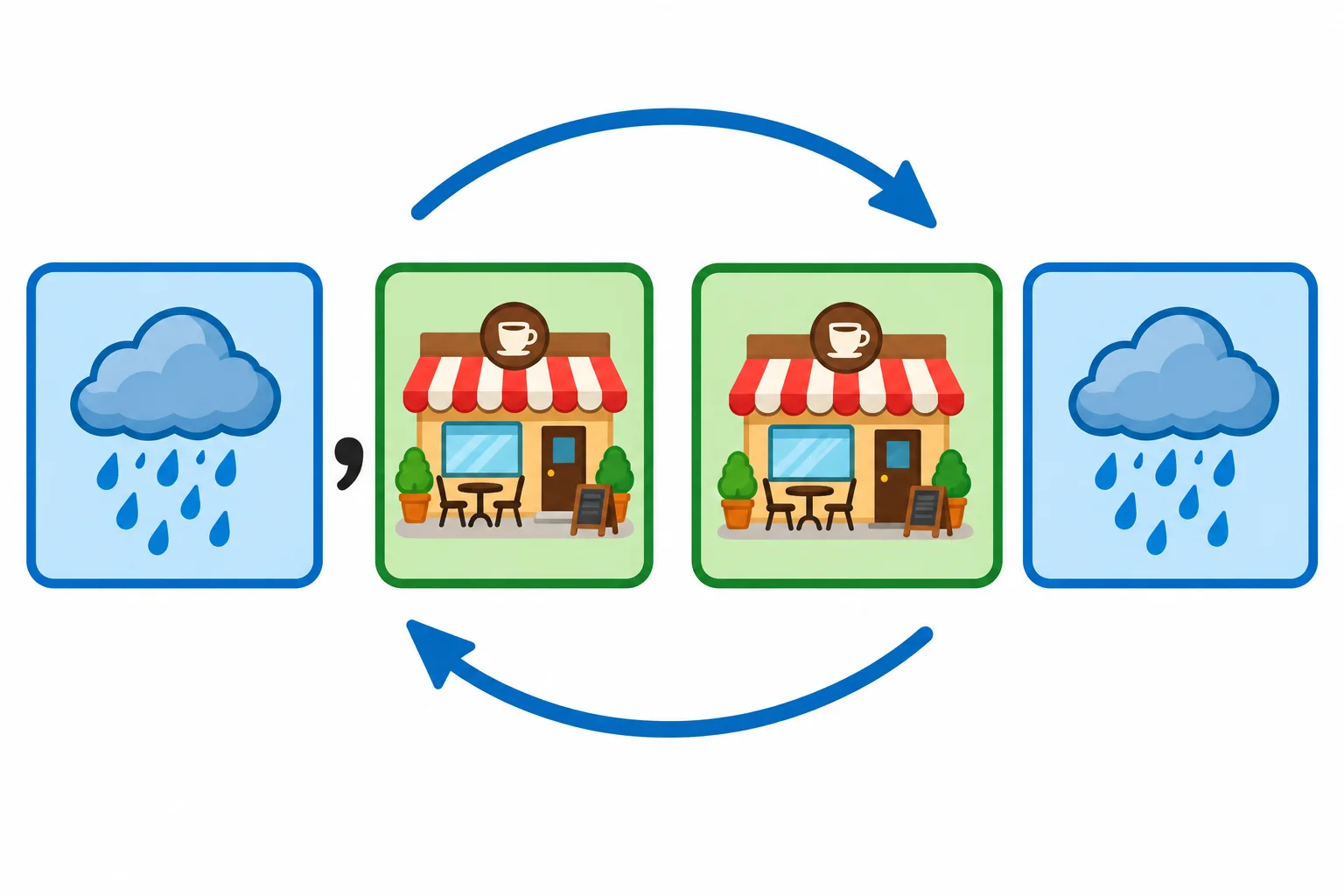
Switching the condition and result does not change the backup plan. Punctuation changes with the order.
Use a comma after an opening if-clause. When the result comes first, normally do not use a comma before if.
Both versions describe the same plan for Saturday at Riverside Park.
| Clause order | Sentence | Comma |
|---|---|---|
| Condition → result | If it rains, we'll go to the café. | After the opening condition |
| Result → condition | We'll go to the café if it rains. | No comma normally |
| Condition → result | If the café is closed, we'll use the community room. | After the opening condition |
| Result → condition | We'll use the community room if the café is closed. | No comma normally |
Tip
Do not move if to the result. The condition is still the possible situation, whether it comes first or second.
True or false: This sentence keeps the same meaning and uses correct punctuation.
We'll use the community room if the café is closed.
Rebuild Maya and Leo’s rain backup plan with the result first. Choose the blocks in the correct order.
Your sentence
Available words
Step 5 of 8
Ask clear first conditional planning questions and give a practical backup-plan response.
Use a planning question to ask about a possible change and its backup plan.
What will you do if ...?
What will we do if ...?
In the main question, will comes before the subject:
What will we do if the café is closed?
After if, keep normal statement order and use the present simple: the café is, not is the café.
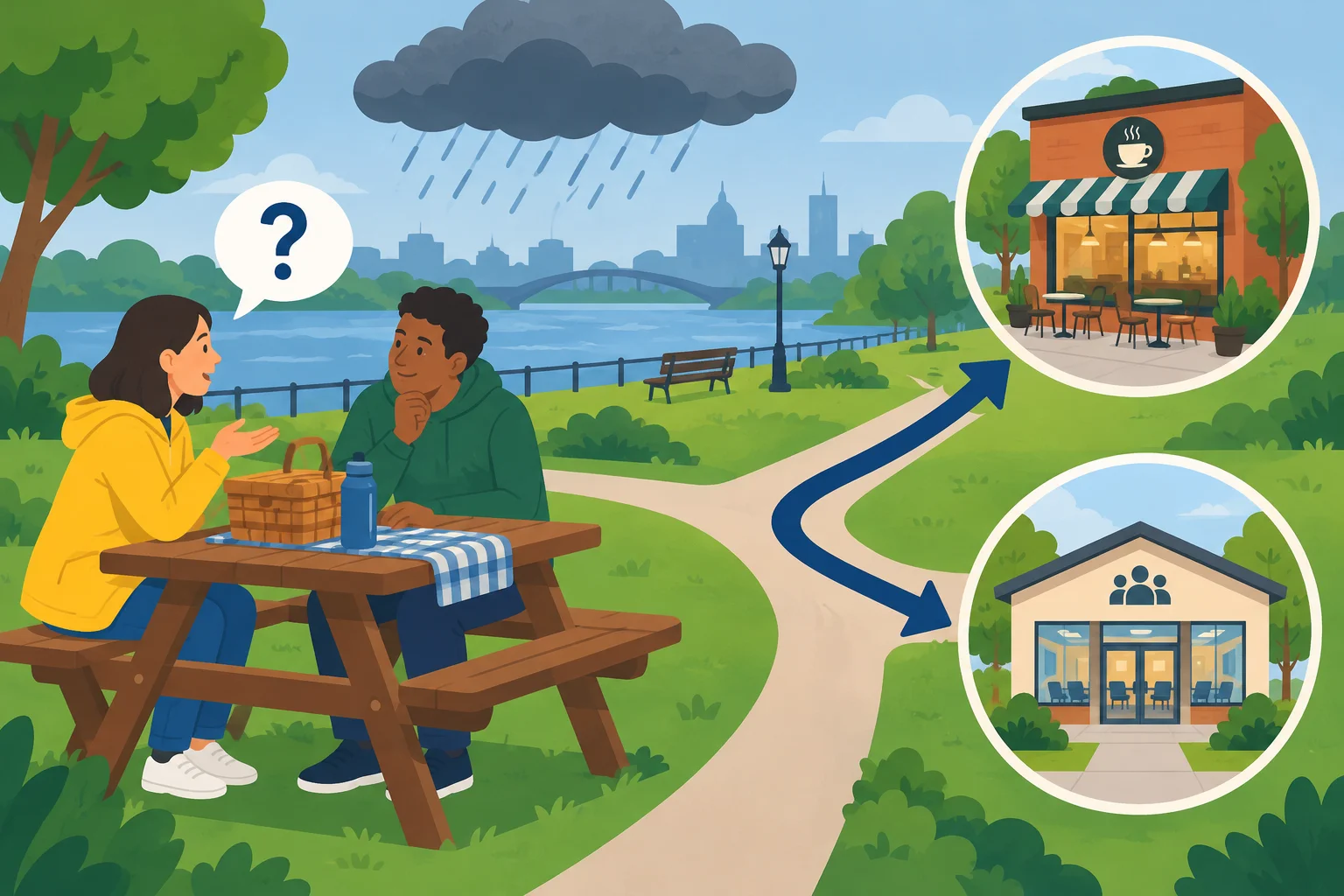
A planning question connects a possible change with the action the group will take.
A useful answer gives a concrete response to the situation. A full conditional answer repeats the condition, so the link to the backup plan is clear.
Example
Maya: What will we do if it rains?
Leo: If it rains, we'll go to the café.
Leo's answer names both the possible situation and the planned response. If the question is already clear, he can also say: We'll go to the café.
Tip
Use What will you do if ...? when asking one person. Use What will we do if ...? when asking about a shared plan.
Build one planning question about the café.
Your sentence
Available words
Listen to the planning question. Do not read a transcript; listen for the possible change.
What will we do if it rains?
First, say your answer aloud. Then write one full conditional sentence with the group's planned response.
Write at least 20 characters (0/20).
Step 6 of 8
Listen for complete first conditional plans, including the meaning of negative contractions.
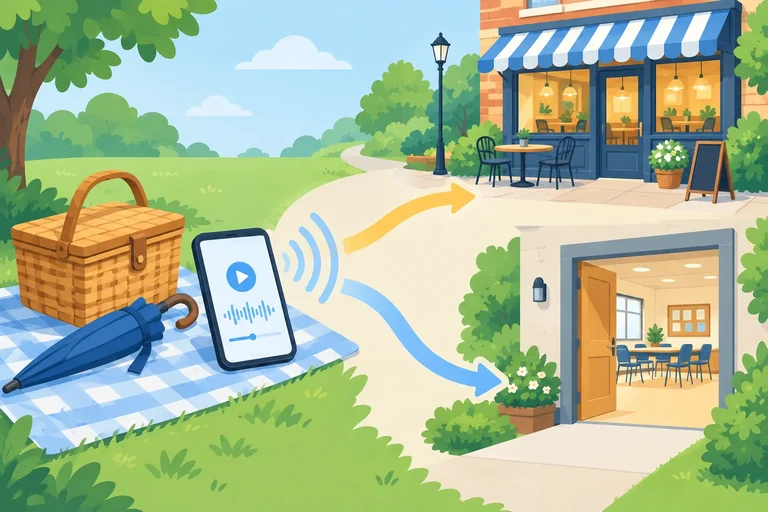
In natural planning conversations, you will often hear we'll instead of we will and won't instead of will not.
Listen for the complete connection:
A negative word can change the whole plan. For example, isn't or doesn't changes the condition; won't changes the result. Do not choose an answer from one familiar word alone.
Listen first. Then read the transcript and notice the two connected parts of the plan.
If it rains, we'll go to the café.
If it rains, we'll go to the café.
Tip
A useful listening routine: hear the if situation, then check whether the response says will / we'll or will not / won't. This helps you catch a change in meaning.
Listen and choose an option.
Listen and choose the message you hear.
If it doesn't rain, we won't cancel the picnic.
Listen and choose an option.
Listen and choose the message you hear.
We'll go to the café if it rains.
Listen and write what you heard.
Listen and type the complete sentence you hear.
Step 7 of 8
Practice saying two first conditional backup plans with clear phrase breaks and understandable contractions.
When you say a first conditional sentence, help the listener hear two parts: the condition and the result.
When the condition comes first, say the complete condition as one short phrase, make a small pause, and then say the result as one phrase. Do not pause after every word. This clear shape makes a backup plan easy to follow.
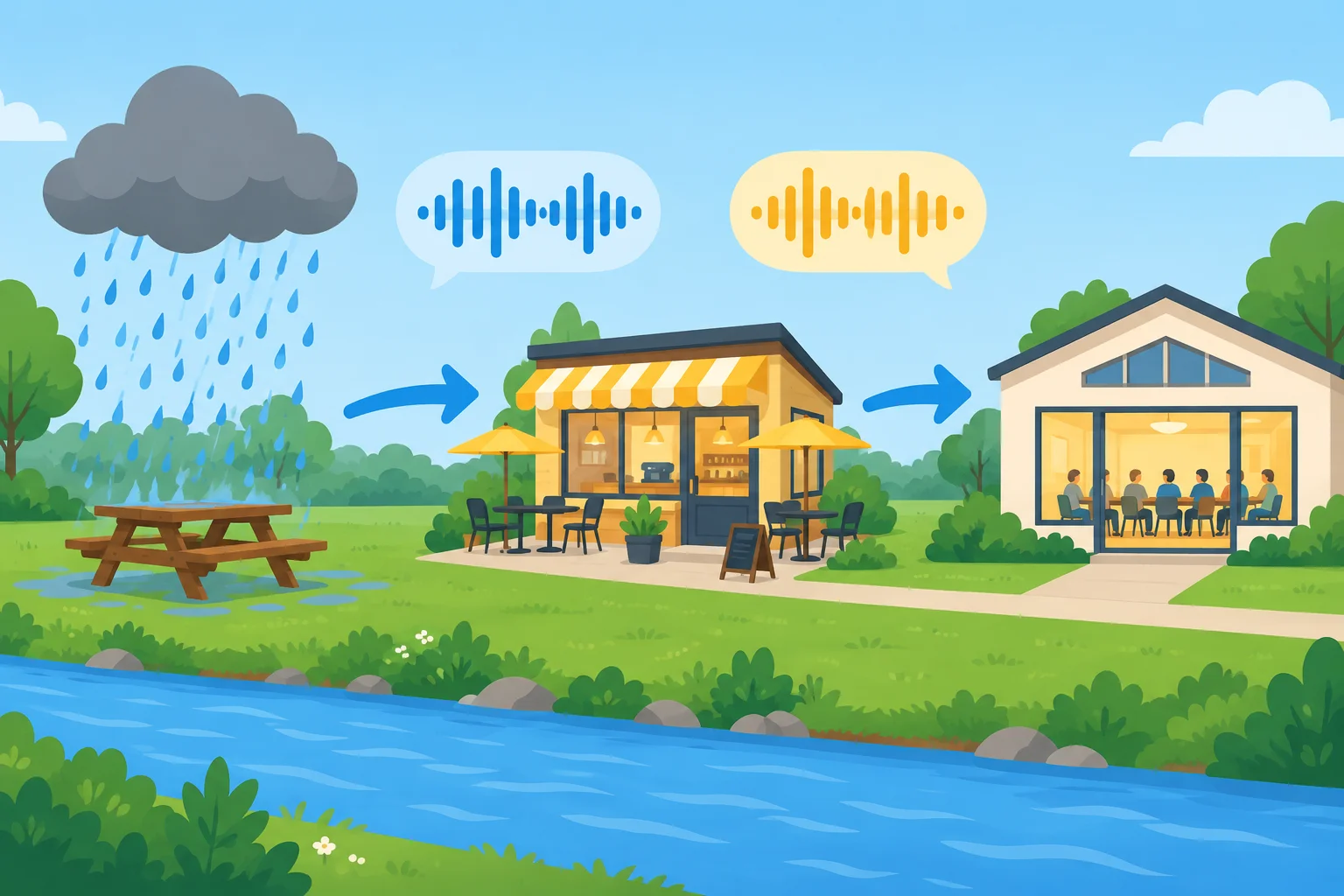
Keep the complete condition together, pause briefly, then say the result together.
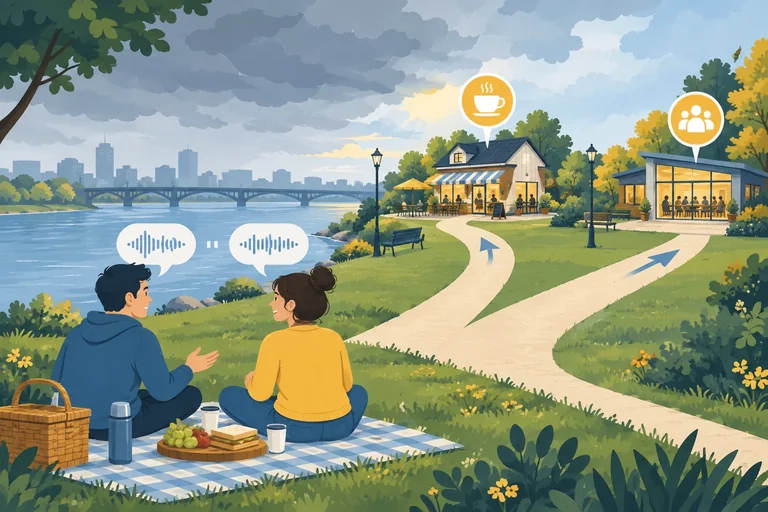
Listen for the brief pause after each complete opening condition. Notice that we'll, won't, and isn't stay connected as short, clear words.
If it rains, we'll go to the café. If the café isn't open, we won't cancel the picnic; we'll use the community room.
If it rains, we'll go to the café. If the café isn't open, we won't cancel the picnic; we'll use the community room.
Example
Pronunciation guide
If it rains, | we'll go to the café.
If the café isn't open, | we won't cancel the picnic; we'll use the community room.
The mark | shows one short pause after the complete opening condition. Keep the words on each side together.
Tip
Say we'll and won't as complete short words. A clear contraction is better than speaking quickly. Your goal is understandable phrasing, not native-like speed.
First, say two connected backup plans aloud for Maya and Leo:
Replay the audio model if helpful. Then type your two sentences and a short self-check. Say whether your conditions, results, pauses, and contractions were clear. No recording or upload is needed.
Write at least 100 characters (0/100).
Step 8 of 8
Use Maya and Leo’s plan and a weather update to create a clear final backup-plan message.
Maya and Leo’s written plan
Read the plan. Then listen for the weather update and connect each possible change to the group’s response.
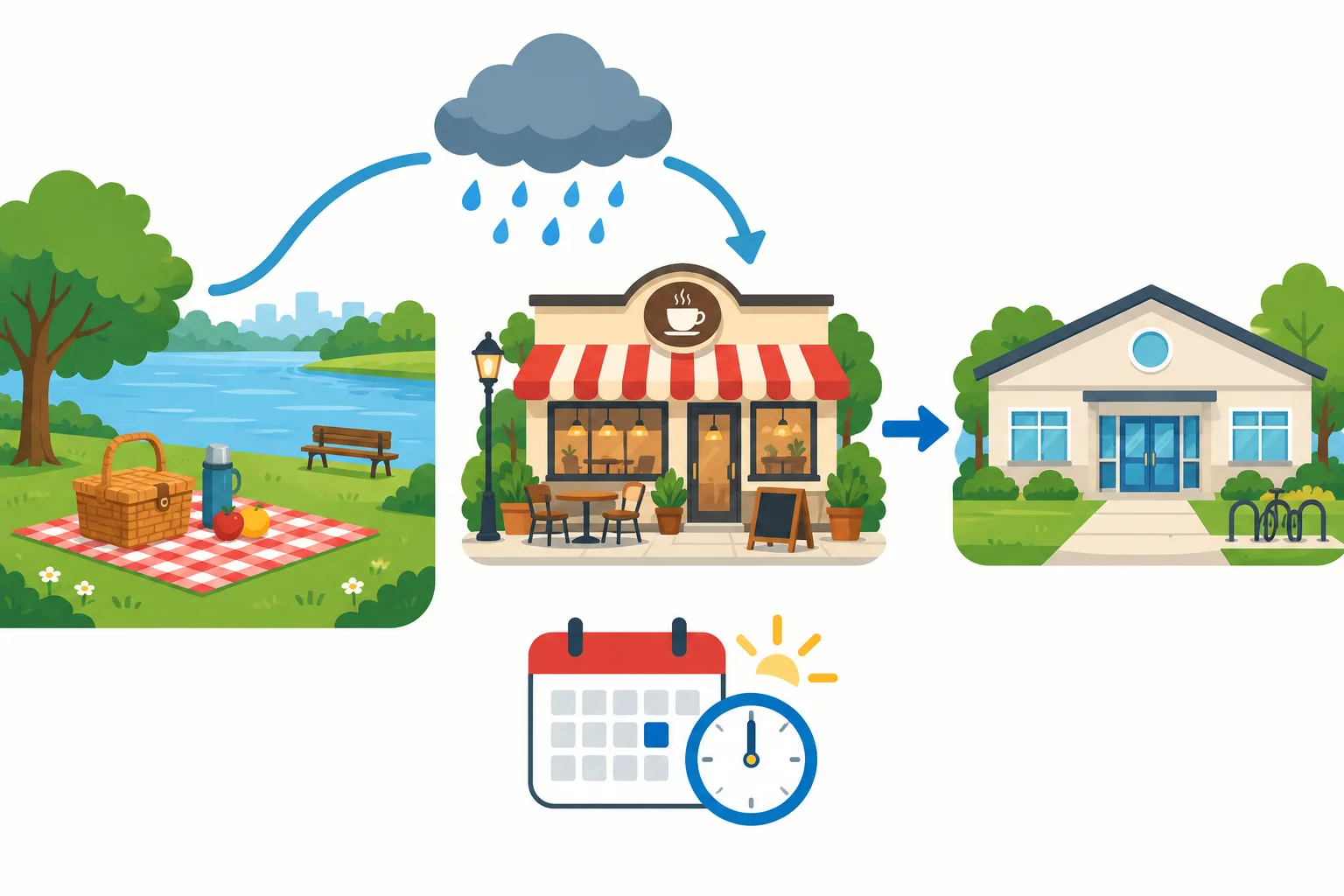
A possible weather change leads to the café; a café availability problem leads to the community room.
Quick update for Saturday: The weather forecast says rain. If it rains, we'll go to the café. If the café isn't available, we'll use the community room.
Listen and choose an option.
Listen to the update. Which option identifies its condition and result?
If the café isn't available, we'll use the community room.
Plan a short message before you write it. Use the written plan and the spoken update from the earlier screens.
Your message needs a main plan, two connected backup plans, and one planning question. Keep each condition next to the response it activates. Aim for 45–65 words.
Use one backup plan with the result first and one with the condition first. This will show that you can control both clause orders.
Use this structure to draft your message. Do not copy a model; choose the details from Maya and Leo’s plan.
| Part | What to include | Form to use |
|---|---|---|
| Main plan | Place, day, and time | A clear future plan |
| Backup plan 1 | A change and response | Result first |
| Backup plan 2 | A different change and response | Opening if-clause; include a negative |
| Planning question | A possible change to discuss | What will ... do if ...? |
Summary
Final submission
Return to the written plan and spoken update.
Congratulations! You completed: Make Backup Plans with If and Will
Thousands of online courses in video, ebooks and audiobooks.
To test your knowledge during online courses
Generated directly from your cell phone's photo gallery and sent to your email

Download our app via QR Code or the links below:.



Carry knowledge in your pocket.
Download the Cursa app.
There are hundreds of free courses available, with a free certificate of completion that is saved in your mobile image gallery.
Download the app to access the Course Completion Certificate for Free.


+ 10 million
students

Free and Valid
Certificate

60 thousand free
exercises

4.8/5 rating in
app stores

Free courses in
video and ebooks