Step 1 of 9
Say What You Don't Do
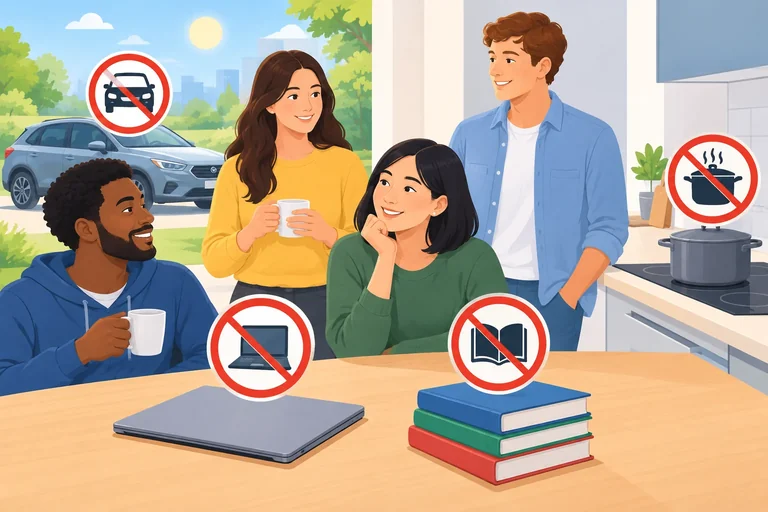
Say what people do not do with don't.

Learning path · Level 2 · Tutorial 2
Ask people about their day. Give short answers. Use don't and doesn't to say what people do not do. Read and listen to a short talk. Use an example to write questions and answers, then say them aloud.

 Say What You Don't Do
Say what people do not do with don't. 2 min
 Say What He or She Doesn't Do
Use doesn't to describe what he or she does not do. 2 min
 Ask with Do
Ask yes-or-no questions about routines with Do and give matching short answers. 2 min
 Ask with Does
Ask about another person's routine with Does. Give matching short answers with does or doesn't. 2 min
 Ask What Time
2 min
 Ask How Often
Ask how regularly a daily action happens with How often, and choose it instead of What time. 2 min
 Hear and Say Don't and Doesn't
Listen for don't and doesn't, hear positive and negative routine sentences, and repeat clear short models. 2 min
 Read and Listen to a Short Talk
Listen to a short routine talk, check it by reading, and write a question you hear. 2 min
 Your Routine Conversation
Write and say a short routine conversation with questions, short answers, time, frequency, and negative statements. 4 min
Step 1 of 9
Say what people do not do with don't.
Use don't when a routine action is not true.
Don't is the short form of do not.
Use this pattern:
I / You / We / They + don't + action word.
The action word stays the same.
I don't work.
They don't drive.
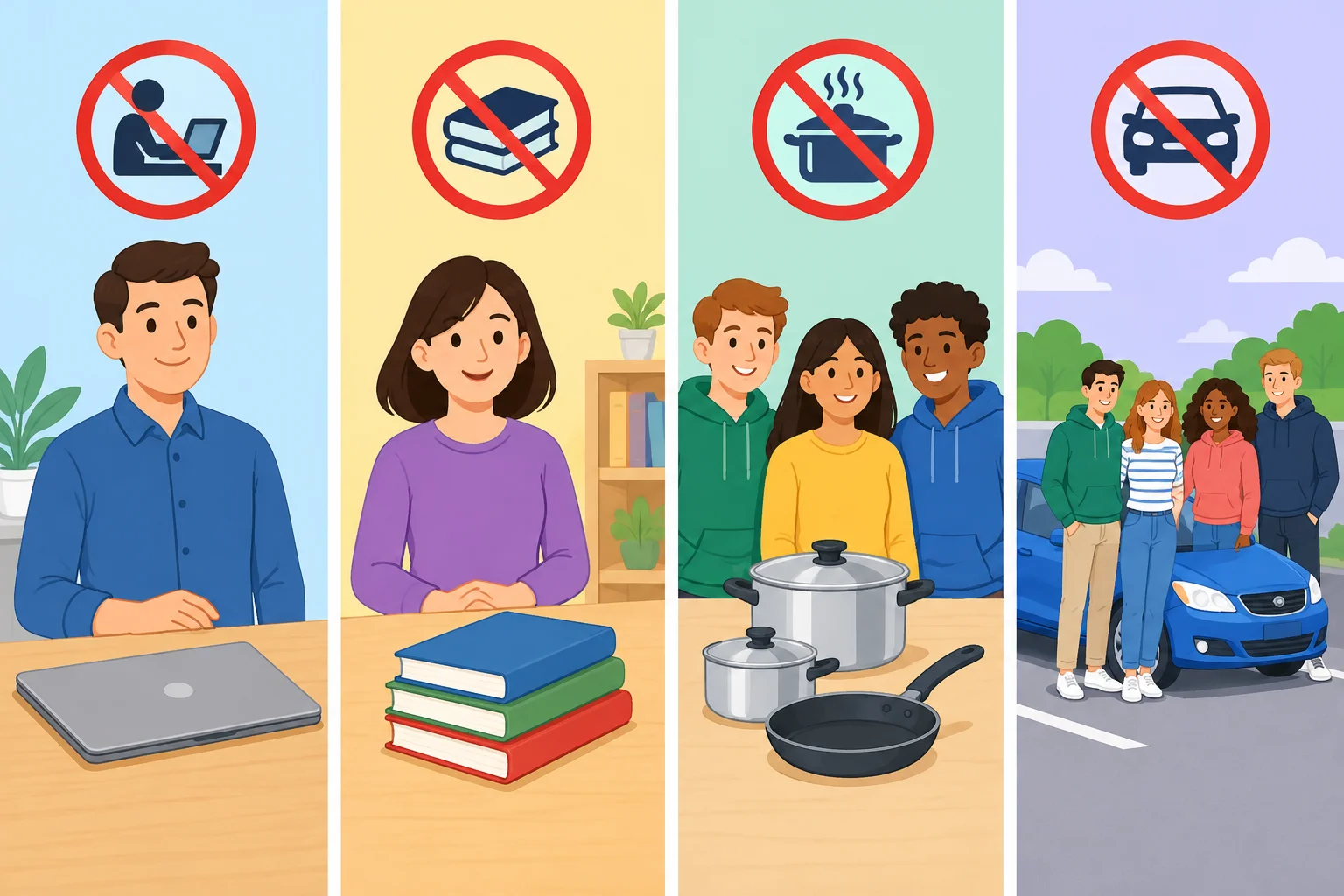
A crossed-out action means the action is not true.
Read the pairs. Put don't before the action word. Do not change the action word.
| Positive | Negative |
|---|---|
| I work. | I don't work. |
| You study. | You don't study. |
| We cook. | We don't cook. |
| They drive. | They don't drive. |
Complete the sentence with one word.
We ___ cook.
Put the parts in order. Say the sentences.
Your sentence
Available words

Step 2 of 9
Use doesn't to describe what he or she does not do.
Use doesn't to say an action is not true for he or she.
Doesn't is the short form of does not.
He/She + doesn't + action word.
Use the action word with no ending after doesn't.
She doesn't drive.
He doesn't cook.
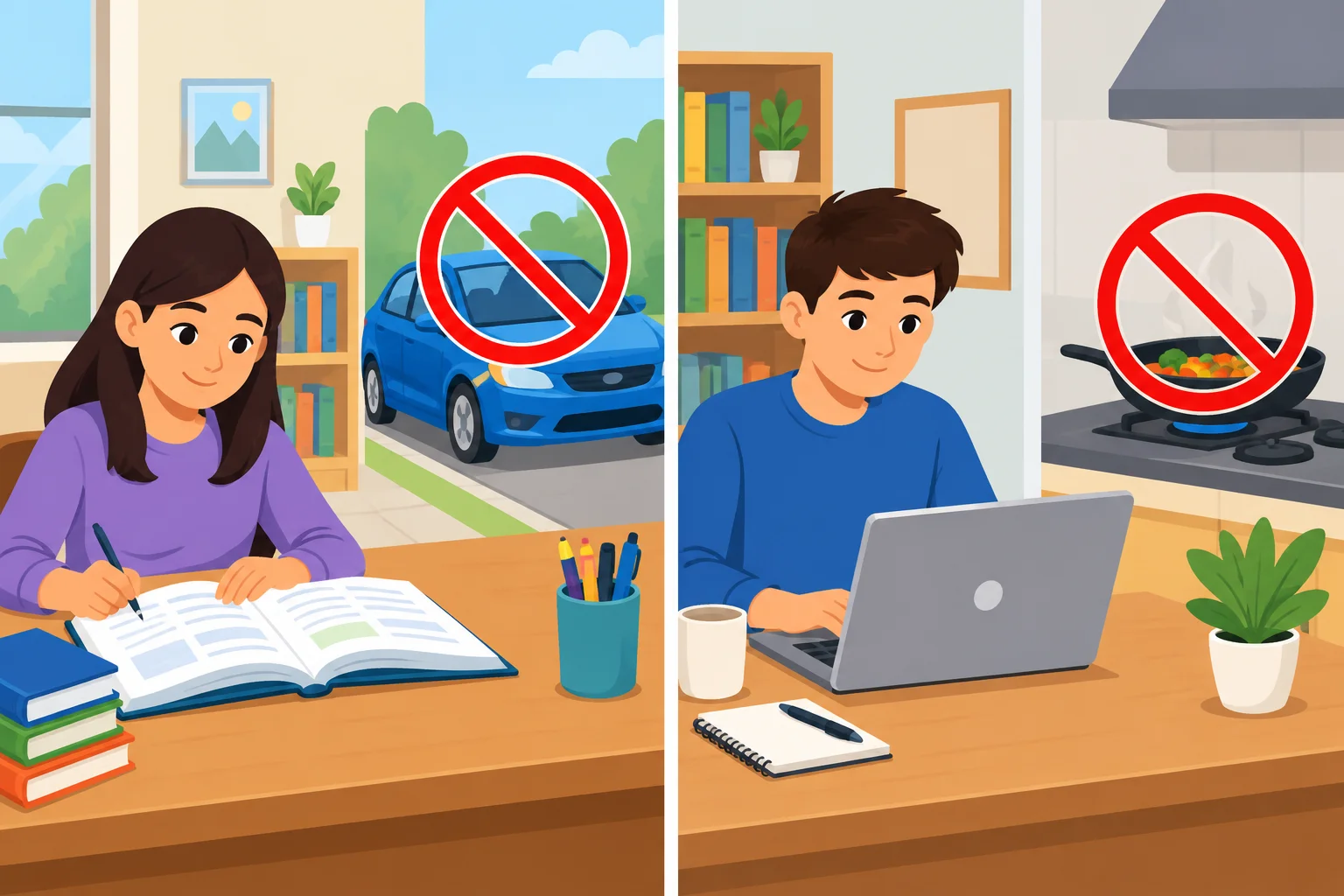
Maya studies every day. She doesn't drive. Leo works every day. He doesn't cook.
Compare the positive and negative forms. After doesn't, the action word has no ending.
Use don't with I, you, we, and they. Use doesn't with he and she.
Read the positive and negative routine sentences.
| Person | Positive | Negative |
|---|---|---|
| Maya (she) | She studies every day. | She doesn't drive. |
| Leo (he) | He works every day. | He doesn't cook. |
| Sam (he) | He works. | He doesn't work. |
| They | They work. | They don't work. |
Example
Say: She doesn't drive. He doesn't cook.
Complete the sentence.
Maya ___ drive.
Change the sentence to a negative sentence.
He works.
Your sentence
Available words

Step 3 of 9
Ask yes-or-no questions about routines with Do and give matching short answers.
A routine statement can start with you: You work every day.
To ask a yes-or-no question, put Do first:
Do + you + action word?
Do you work?
The action word stays the same. Use a question mark.
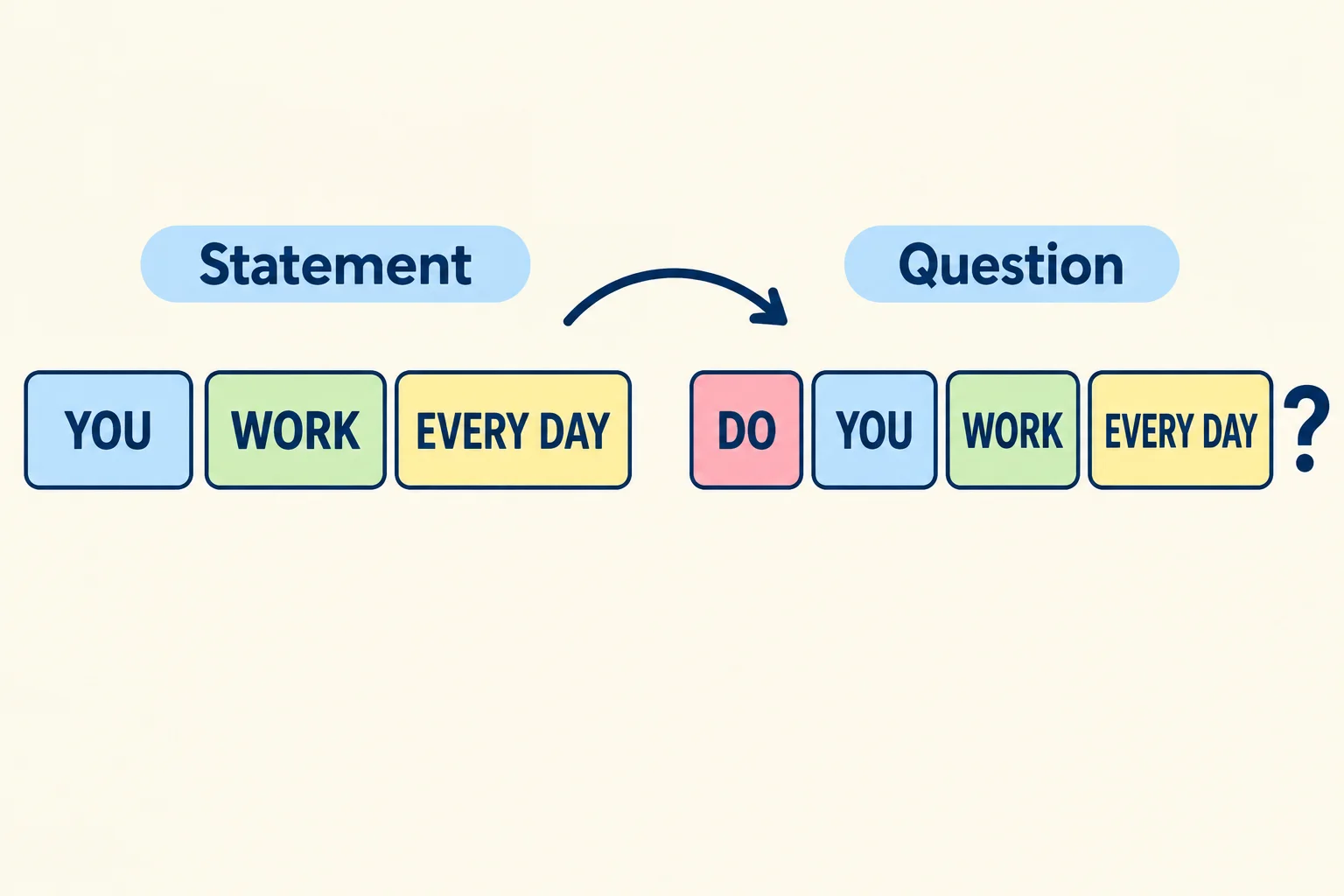
Put Do before the person. Keep the action word unchanged.
Example
Maya asks Leo about his routine.
A: Do you work?
B: Yes, I do.
A: Do you cook?
B: No, I don't.
Use the same order with a group.
Do + we + action word?
Do + they + action word?
In a short answer, use the same person: we or they.
Read the questions and short answers.
| Question | Yes | No |
|---|---|---|
| Do we study? | Yes, we do. | No, we don't. |
| Do they work? | Yes, they do. | No, they don't. |
Put the question in order.
Your sentence
Available words
Build a question. You ask one person about work.
Your sentence
Available words
You do not cook. Write the short answer as the person answering.
Maya and Leo do not drive. Do they drive? Choose the short answer.

Step 4 of 9
Ask about another person's routine with Does. Give matching short answers with does or doesn't.
Use Does to ask about he, she, or one named person, such as Maya or Leo.
Does + person + action word?
Does she study?
Does Leo work?
Use Do with you: Do you study?
After does, use the plain action word:
Does she study? ✓
Does she studies? ✗

Maya studies every day. Leo works every day.
Use a short answer with does or doesn't.
Does Maya study?
Yes, she does.
Does Leo cook?
No, he doesn't.
Doesn't means does not. Keep he or she the same in the question and answer.
Compare the question person and the short answer.
| Question | Short answer |
|---|---|
| Do you study? | Yes, I do. |
| Does she study? | Yes, she does. |
| Does he cook? | No, he doesn't. |
Example
Speakers: Maya and Leo.
A: Does Leo cook?
B: No, he doesn't.
A: Does Maya study?
B: Yes, she does.

Look at Leo's daily activity.
Complete the question with one action word.
Does Leo ___?
Match each routine fact to the correct question and short answer.
Tap an item and then its matching pair.

Step 5 of 9
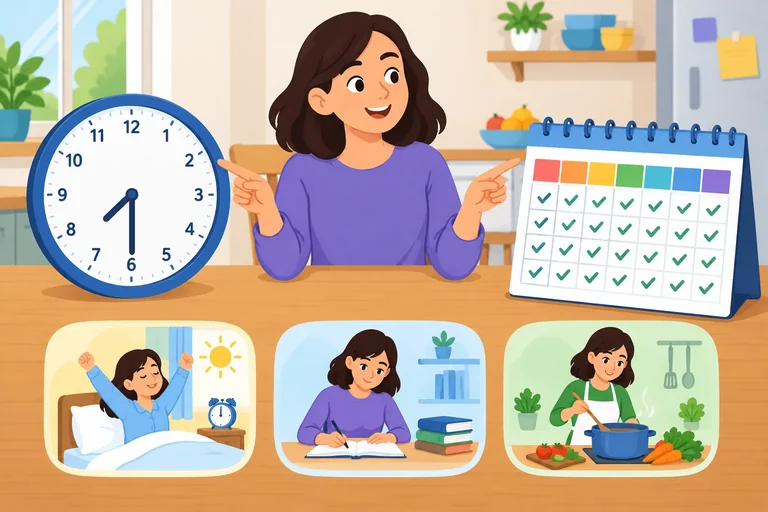
Use What time to ask for a clock time.
What time + do you + action word?
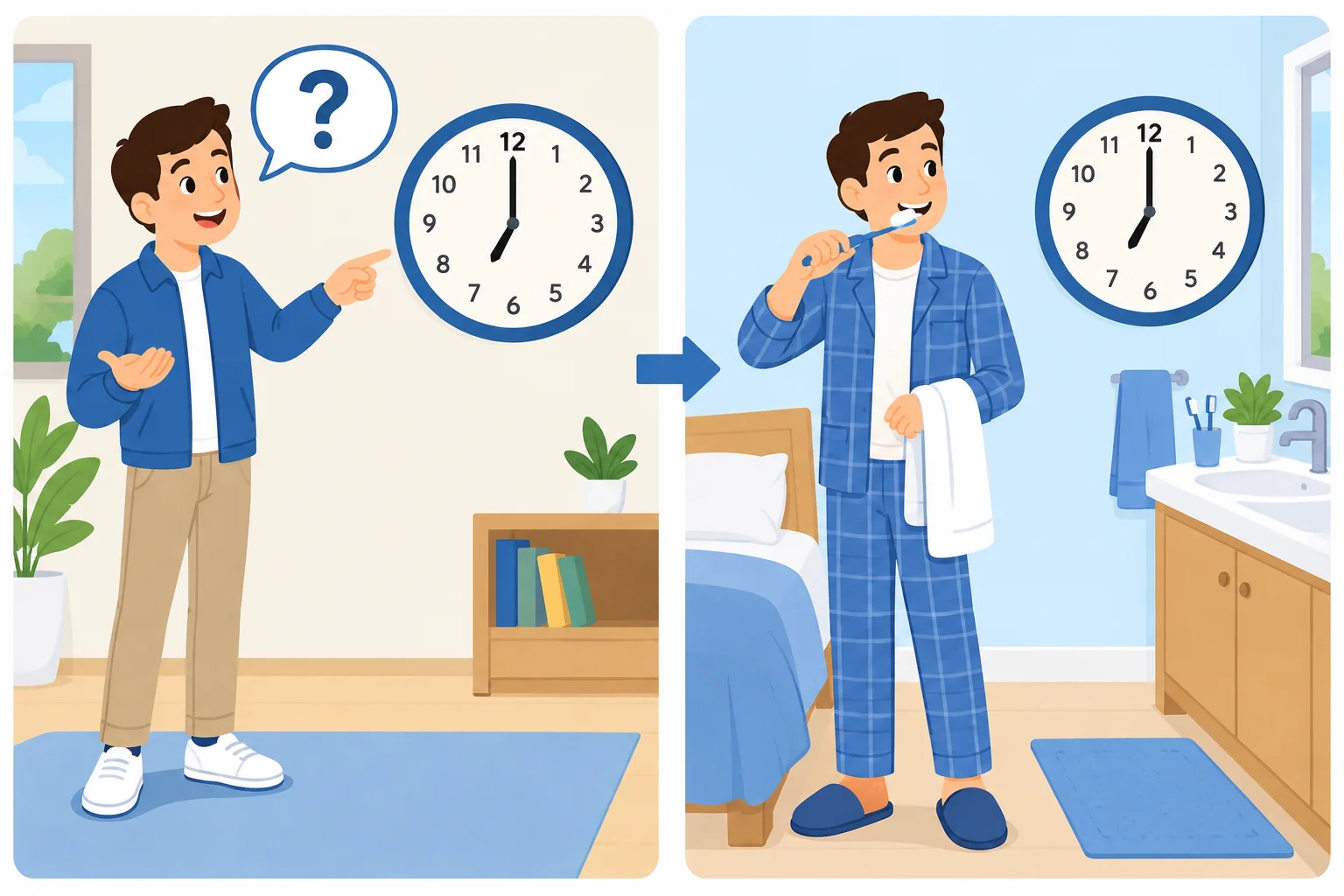
Use What time when you want a clock time.
Example
Read. Maya is A. Leo is B.
A: What time do you get up?
B: I get up at seven thirty.
The answer uses at + a time.
Look at the first words. What time asks for a clock time. Do you asks for Yes or No.
Choose the question for the answer you need.
| Question | Answer type | Example answer |
|---|---|---|
| What time do you study? | A clock time | I study at seven. |
| Do you study every day? | Yes or No | Yes, I do. |
Build the question.
Your sentence
Available words
Match each question to its time answer.
Tap an item and then its matching pair.
Step 6 of 9
Ask how regularly a daily action happens with How often, and choose it instead of What time.
Use How often to ask how regularly an action happens.
How often + do you + action word?
Use What time for a clock time. Use How often for words such as every day, sometimes, and never.
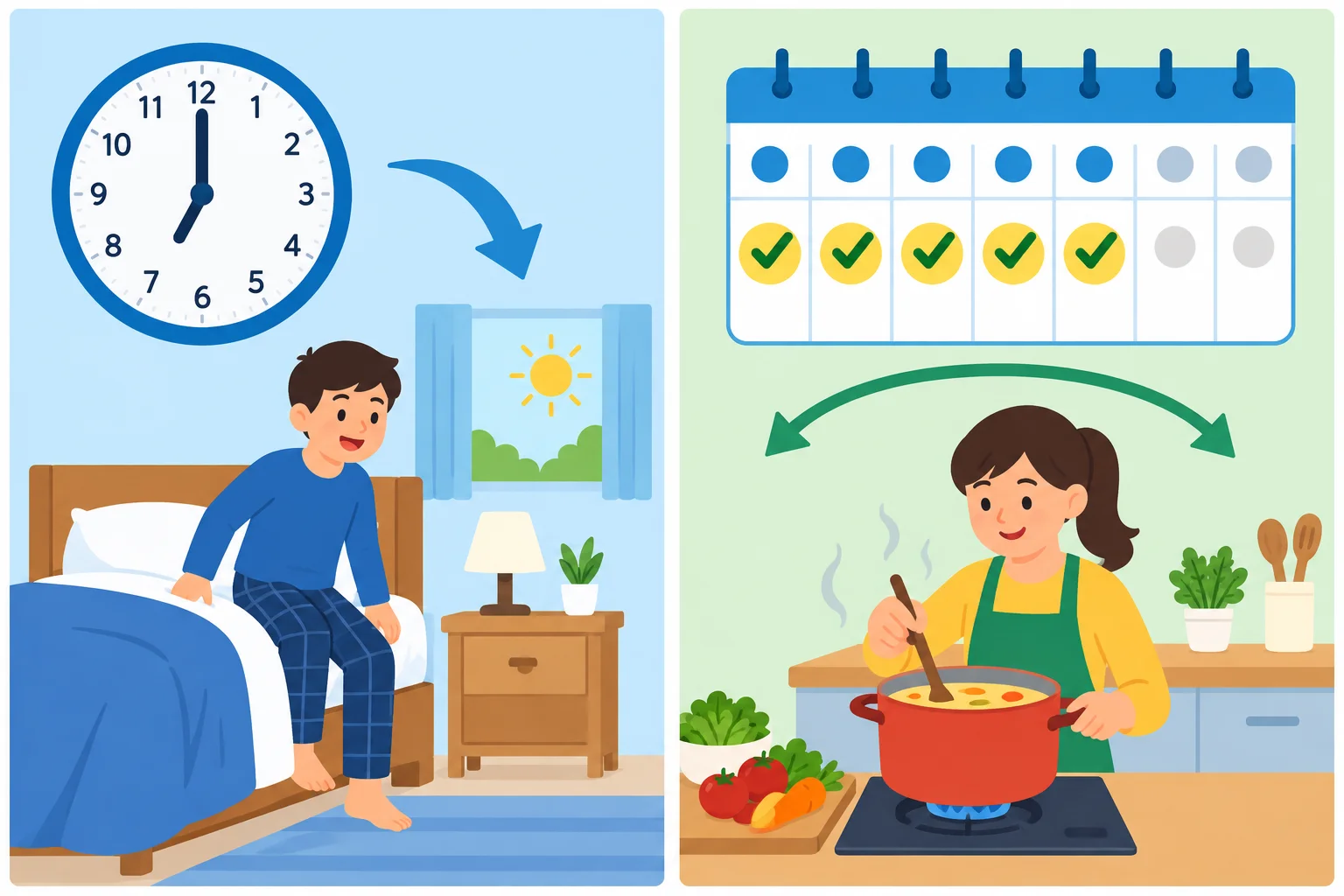
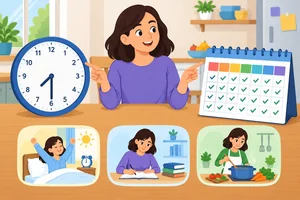
A clock shows when an action happens. A calendar pattern shows how regularly it happens.
Read the routine question chart.
| Question | It asks for | Example answer |
|---|---|---|
| What time do you get up? | a clock time | I get up at seven. |
| How often do you cook? | frequency | I sometimes cook. |
| How often do you study? | frequency | I study every day. |
Read. Leo asks Maya about her routine.
Example
A: How often do you study?
B: I study every day.
A: How often do you cook?
B: I sometimes cook.
Tip
Use What time for an answer such as at seven. Use How often for an answer with every day, sometimes, or never.
Build a question. You want to ask about the regularity of work.
Your sentence
Available words
Match each question to the information it requests.
Tap an item and then its matching pair.
Step 7 of 9
Listen for don't and doesn't, hear positive and negative routine sentences, and repeat clear short models.
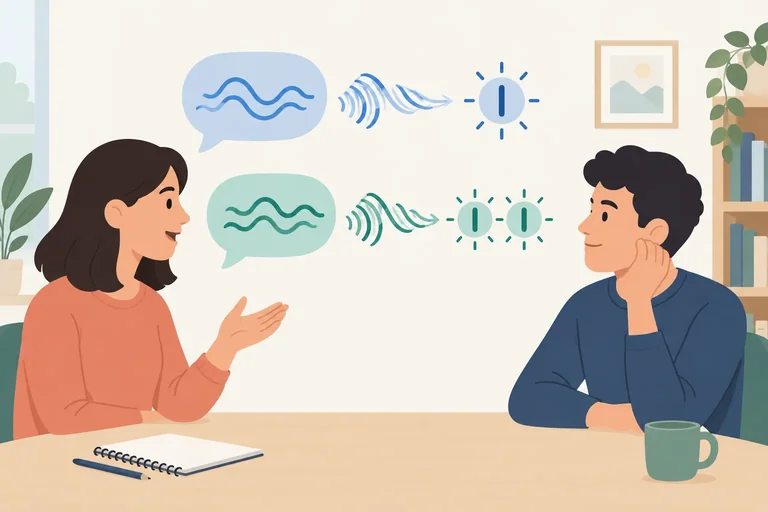
Negative short answers use don't or doesn't. Listen to the four models. Then say them aloud.
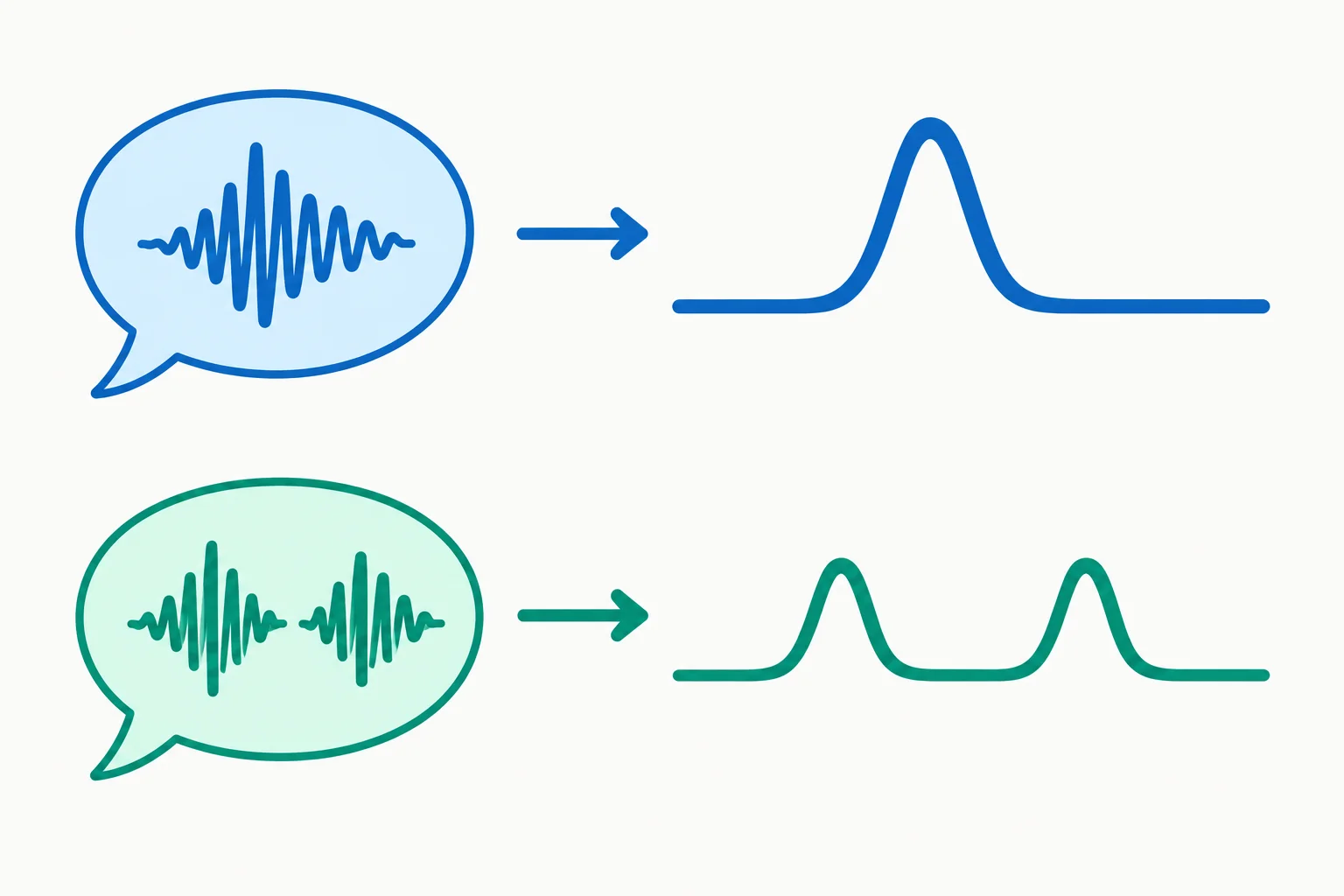
Say don't with one beat. Say doesn't with two short beats.
Listen. Say each short answer after the model.
Yes, I do. No, I don't. Yes, she does. No, she doesn't.
Yes, I do. No, I don't. Yes, she does. No, she doesn't.
Tip
Make the negative word clear: don't — one beat; doesn't — two short beats.
Listen and choose an option.
Listen. Which negative word do you hear?
No, I don't.
Listen and choose an option.
Listen. Is the routine sentence positive or negative?
Maya studies every day.
Listen and choose an option.
Listen. Choose. Then play the audio again and say both models aloud. Compare your voice with the model.
No, she doesn't. Leo doesn't cook.
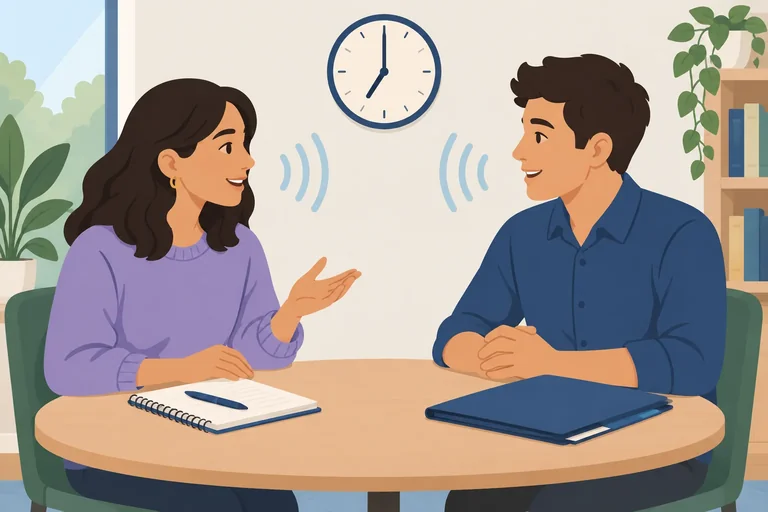
Step 8 of 9
Listen to a short routine talk, check it by reading, and write a question you hear.
Maya and Leo are talking about their routines. Listen for an action, a time, and how often an action happens.
Listen to the short talk.
Do you study every day, Maya? Yes, I do. What time do you get up? I get up at seven. Leo, do you work every day? Yes, I do. How often do you cook? I never cook.
Which routine facts are correct?
Read the same talk to check your answers. A is Leo. B is Maya.
A: Do you study every day, Maya?
B: Yes, I do.
A: What time do you get up?
B: I get up at seven.
B: Leo, do you work every day?
A: Yes, I do.
B: How often do you cook?
A: I never cook.
Maya is she: Yes, she does. Leo is he: No, he doesn't.

The talk connects Maya with she and Leo with he.
Listen and write what you heard.
Listen. Write the question. Use a capital letter and a question mark.

Step 9 of 9
Write and say a short routine conversation with questions, short answers, time, frequency, and negative statements.
Use this five-part conversation as a pattern. Maya is A. Leo is B. Read A, then B.

A routine conversation can ask about actions, time, and frequency.
Example
A: Do you work every day?
B: Yes, I do.
A: Do you drive?
B: No, I don't. I don't drive.
A: Does Maya drive?
B: No, she doesn't. She doesn't drive.
A: What time do you get up?
B: I get up at seven thirty.
A: How often do you cook?
B: I never cook.
Use this fact card for a question about Maya or Leo. For questions about you, use your own routine details. You can invent simple details if you want.
| Person | Gets up | Main routine | Cooks | Drives |
|---|---|---|---|---|
| Maya | 7:00 a.m. | studies every day | sometimes | doesn't drive |
| Leo | 7:30 a.m. | works every day | never | doesn't drive |
Tip
Check before you write:
Listen. Answer aloud about your routine. Then say the whole exchange: the question as A, then your answer as B.
How often do you cook?
Write five exchanges with A's questions and B's answers.
Say every A line and every B line aloud. Then check: Do/Does first, a plain action word after do/does, and matching short answers.
Write the five exchanges here.
Write at least 220 characters (0/220).
Summary
Congratulations! You completed: Ask About Daily Routines
20 XP
Thousands of online courses in video, ebooks and audiobooks.
To test your knowledge during online courses
Generated directly from your cell phone's photo gallery and sent to your email

Download our app via QR Code or the links below:.



Carry knowledge in your pocket.
Download the Cursa app.
There are hundreds of free courses available, with a free certificate of completion that is saved in your mobile image gallery.
Download the app to access the Course Completion Certificate for Free.


+ 10 million
students

Free and Valid
Certificate

60 thousand free
exercises

4.8/5 rating in
app stores

Free courses in
video and ebooks