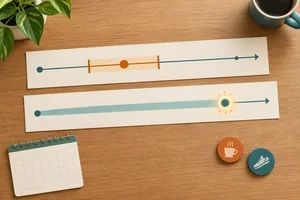
Step 1 of 8
Connect Past Actions to Now
Recognize how the present perfect connects an earlier action to an experience or result now, then build affirmative messages with regular past participles.

Learning path · Level 5 · Tutorial 1
Ask about experiences and share recent news with the present perfect. Read and listen to short conversations, say your own answers aloud, and write a short update about something you have done.

 Connect Past Actions to Now
Recognize how the present perfect connects an earlier action to an experience or result now, then build affirmative messages with regular past participles. 3 min
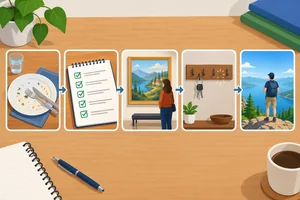 Use Common Participles and Short Forms
Use common irregular past participles and turn full affirmative present perfect forms into natural written short forms. 3 min
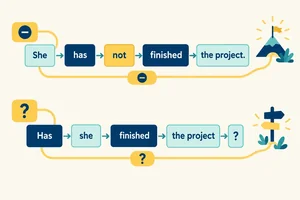 Ask Questions and Say What Hasn't Happened
Form present perfect negatives and yes/no questions, then give accurate short answers. 3 min
 Ask About Experiences with Ever and Never
Ask and answer about experiences with ever, never, and been to. 4 min
 Share Recent News with Just and Already
Use just and already to share completed actions that matter now. 3 min
 Check What Has Happened Yet
3 min
 Listen and Share the News Clearly
4 min
 Share Your Experiences and News
Complete a final reading, listening, speaking, and writing task with present perfect experiences and recent news. 4 min
Step 1 of 8
Recognize how the present perfect connects an earlier action to an experience or result now, then build affirmative messages with regular past participles.
The present perfect connects an action before now with a person’s experience or situation now. You do not give an exact past date.
An experience: Maya has tried climbing.
A completed action with a result now: Maya has finished a course. The course is complete now.
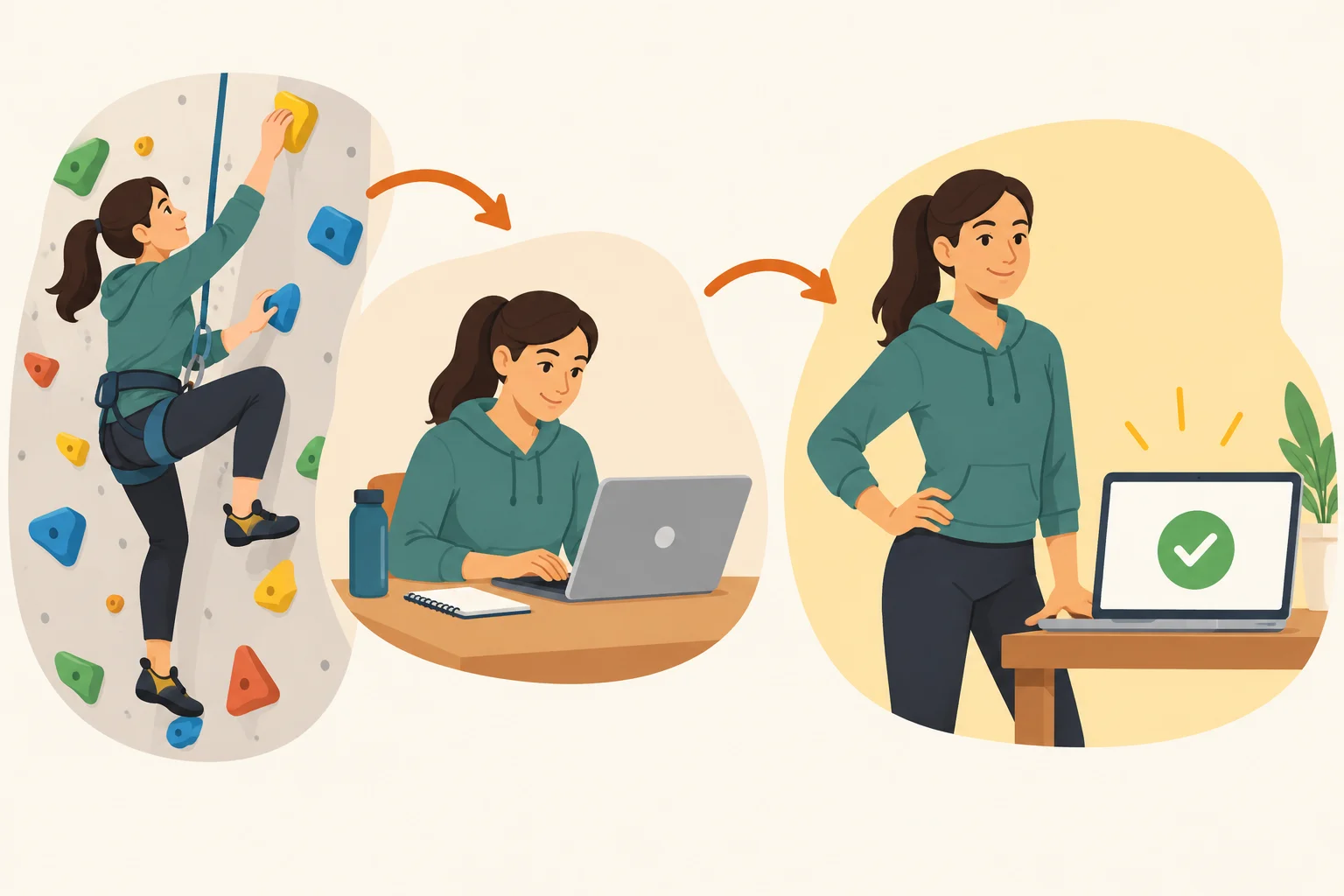
Actions before now can matter as an experience or a completed result now.
Use this affirmative present perfect pattern:
subject + have/has + past participle
Use have with I, you, we, and they. Use has with he, she, and it.
These regular past participles end in -ed:
try → tried
visit → visited
finish → finished
Choose have or has from the subject. The past participle does not change when the subject changes.
| Subject | Auxiliary | Example |
|---|---|---|
| I, you, we, they | have | We have visited a museum. |
| He, she, it | has | She has finished a course. |
Example
Maya has tried a new activity.
Leo has finished a course.
These short messages share an experience or a completed result that matters now.

Match each message to the scene that shows its experience or present result.
Match each affirmative message to its illustrated scene.
Tap an item and then its matching pair.
Complete the affirmative present perfect sentence.
I ___ tried a new activity.
Complete the affirmative present perfect sentence.
She ___ finished a course.
Step 2 of 8
Use common irregular past participles and turn full affirmative present perfect forms into natural written short forms.
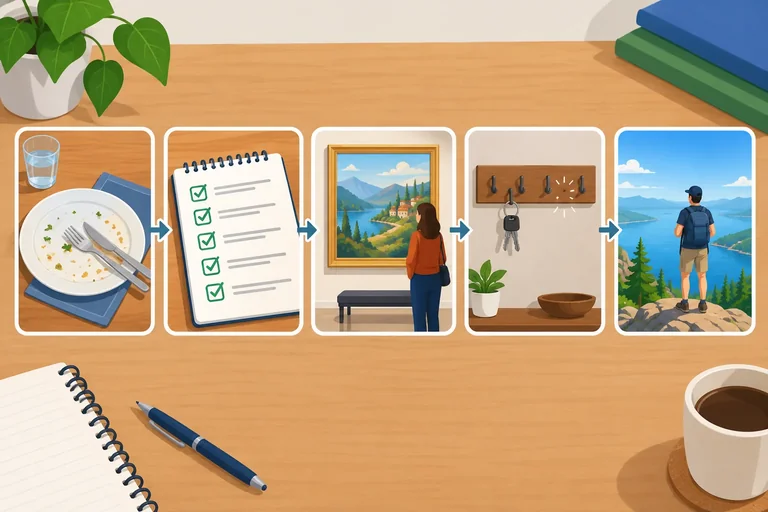
Some present perfect verbs have an irregular past participle. Learn each verb with its past participle:
verb → past participle
The past participle comes after have or has. It connects an action before now with an experience or a result now.
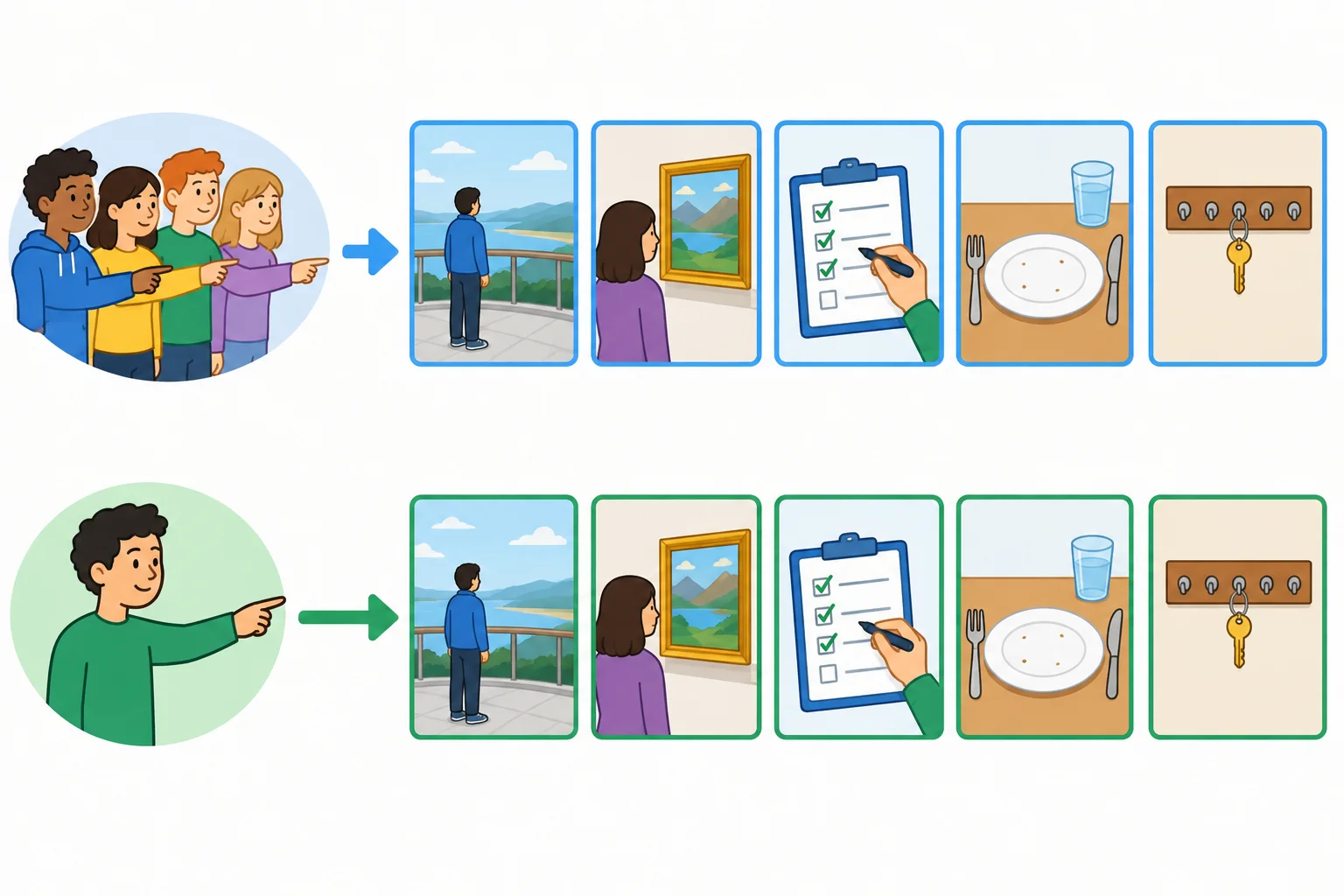
Change have or has for the subject, but keep the same past participle.
Use these participles in affirmative present perfect messages.
| Verb → past participle | Message |
|---|---|
| be → been | They have been very busy. |
| see → seen | Maya has seen the painting. |
| do → done | We have done the project. |
| eat → eaten | I have eaten lunch. |
| lose → lost | Leo has lost a key. |
The past participle does not change with the subject:
Only the helper changes: use have with I, you, we, and they; use has with he, she, and it.
In writing, a full affirmative form and a short form have the same meaning.
These short forms join the subject and have or has.
| Full form | Short form |
|---|---|
| I have | I've |
| You have | you've |
| We have | we've |
| They have | they've |
| He has | he's |
| She has | she's |
Example
Full form: Maya has seen the painting.
Short form: Maya's seen the painting.
Full form: Leo has lost a key.
Short form: Leo's lost a key.
Both versions communicate the same present perfect message. Use a short form for a natural, brief written update.
Match each verb to its past participle.
Tap an item and then its matching pair.
Complete each affirmative message with the correct past participle.
Maya has  the painting.
We have  the project.
Leo has a key.Build the natural written short-form sentence.
Your sentence
Available words
Step 3 of 8
Form present perfect negatives and yes/no questions, then give accurate short answers.
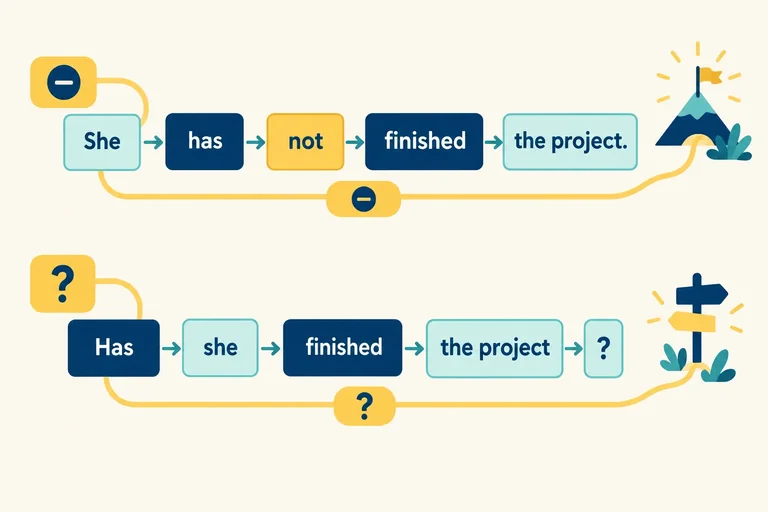
Use a negative to say that something has not happened before now.
Full form: subject + have not/has not + past participle
Short form: subject + haven't/hasn't + past participle
Use haven't with I, you, we, and they. Use hasn't with he, she, and it.
Leo hasn't visited the city museum. The past participle is still visited.
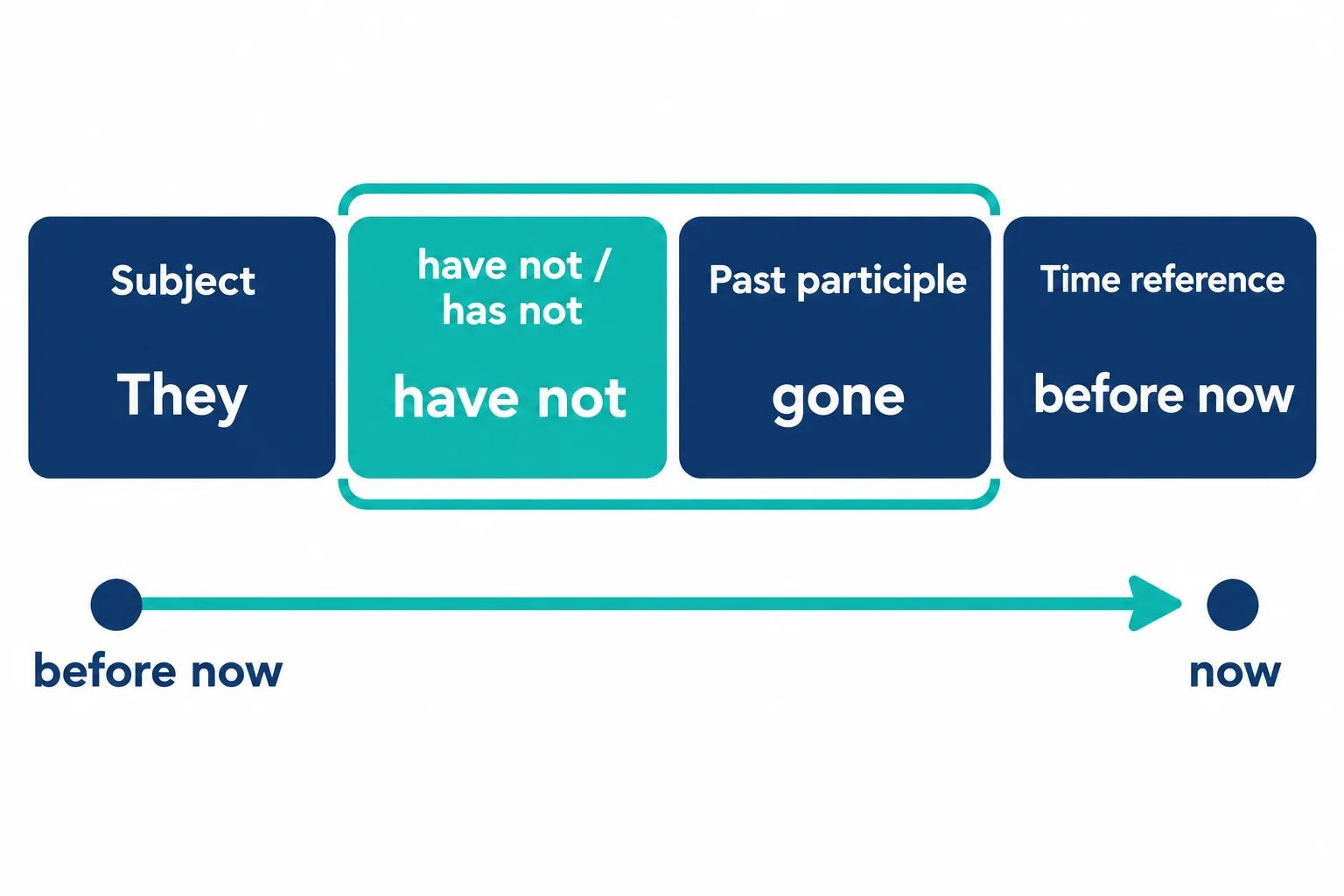
In a negative, haven't or hasn't comes before the past participle. The past participle does not change.
Example
Compare the verb part:
We have tried a new activity.
We haven't tried a new activity.
The negative word changes; tried stays the same.
To ask a yes/no question, move have or has before the subject:
Have/Has + subject + past participle?
Maya has finished a course.
Has Maya finished a course?
Finished stays the same. Only have or has moves.
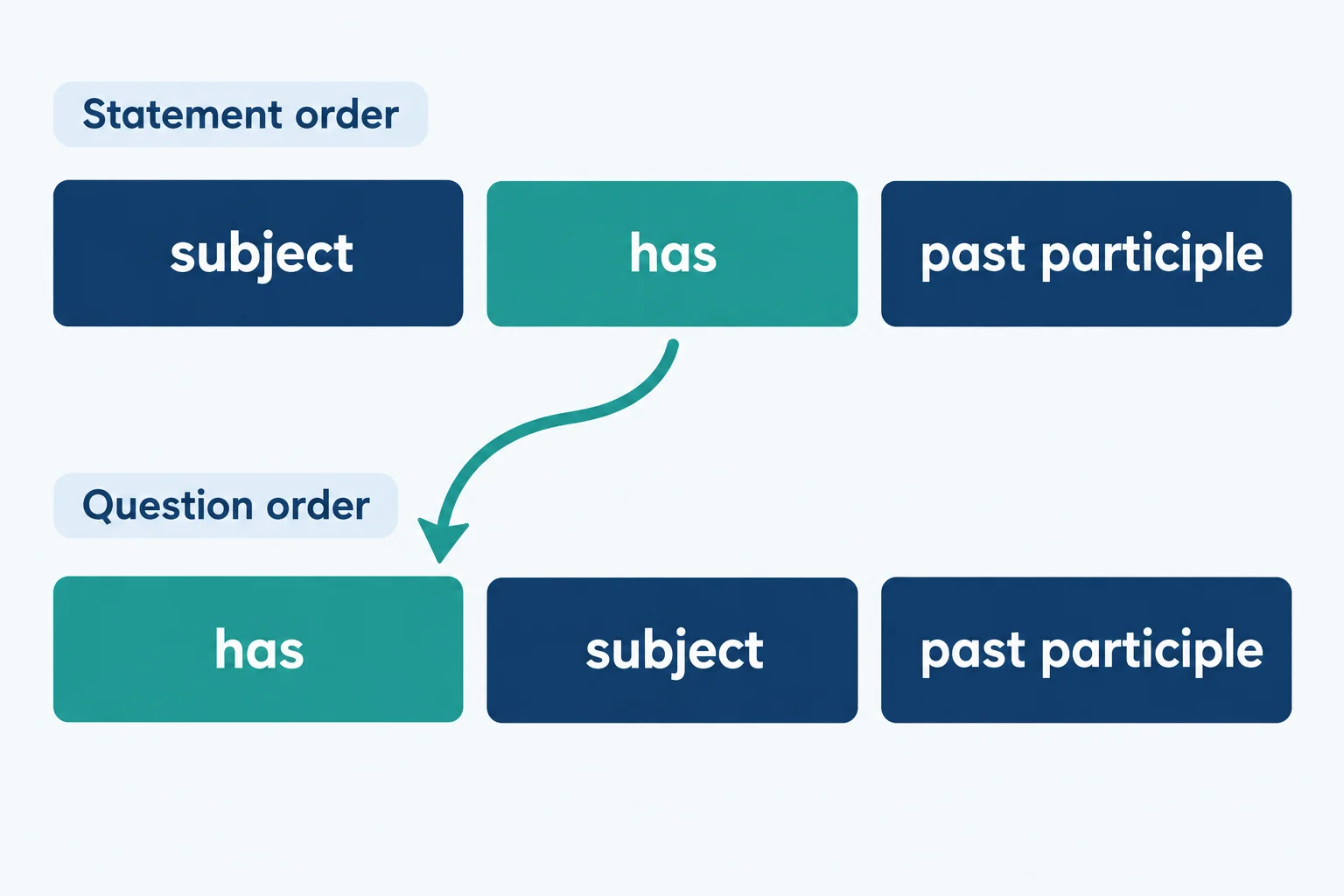
In a present perfect question, have or has moves in front of the subject.
Example
Match the answer to the question's subject and auxiliary.
Maya: Have you lost a key?
Leo: Yes, I have.
Leo answers a question addressed directly to him, so you becomes I in his answer. Use have with I, you, we, and they; use has with he, she, and it.
In an affirmative short answer, write have or has, not an affirmative short form.
Examples: Yes, I have. No, she hasn't.
Arrange the words to ask about Leo's key.
Your sentence
Available words
Complete the negative short form.
Full form: We have not tried a new activity.
Short form: We __ a new activity.
Match each question with its accurate short answer.
Tap an item and then its matching pair.

Step 4 of 8
Ask and answer about experiences with ever, never, and been to.
An experience is something that has happened at any time before now. Use ever to ask whether an experience has happened:
Have you ever tried a new activity?
Ever comes after the subject:
Have/Has + subject + ever + past participle?
Use never to say that an experience has not happened at any time before now:
I've never tried it.
Never goes between have/has and the past participle. Never already has a negative meaning, so do not use haven't or hasn't with never.
Maya has tried climbing. Leo has never tried climbing.
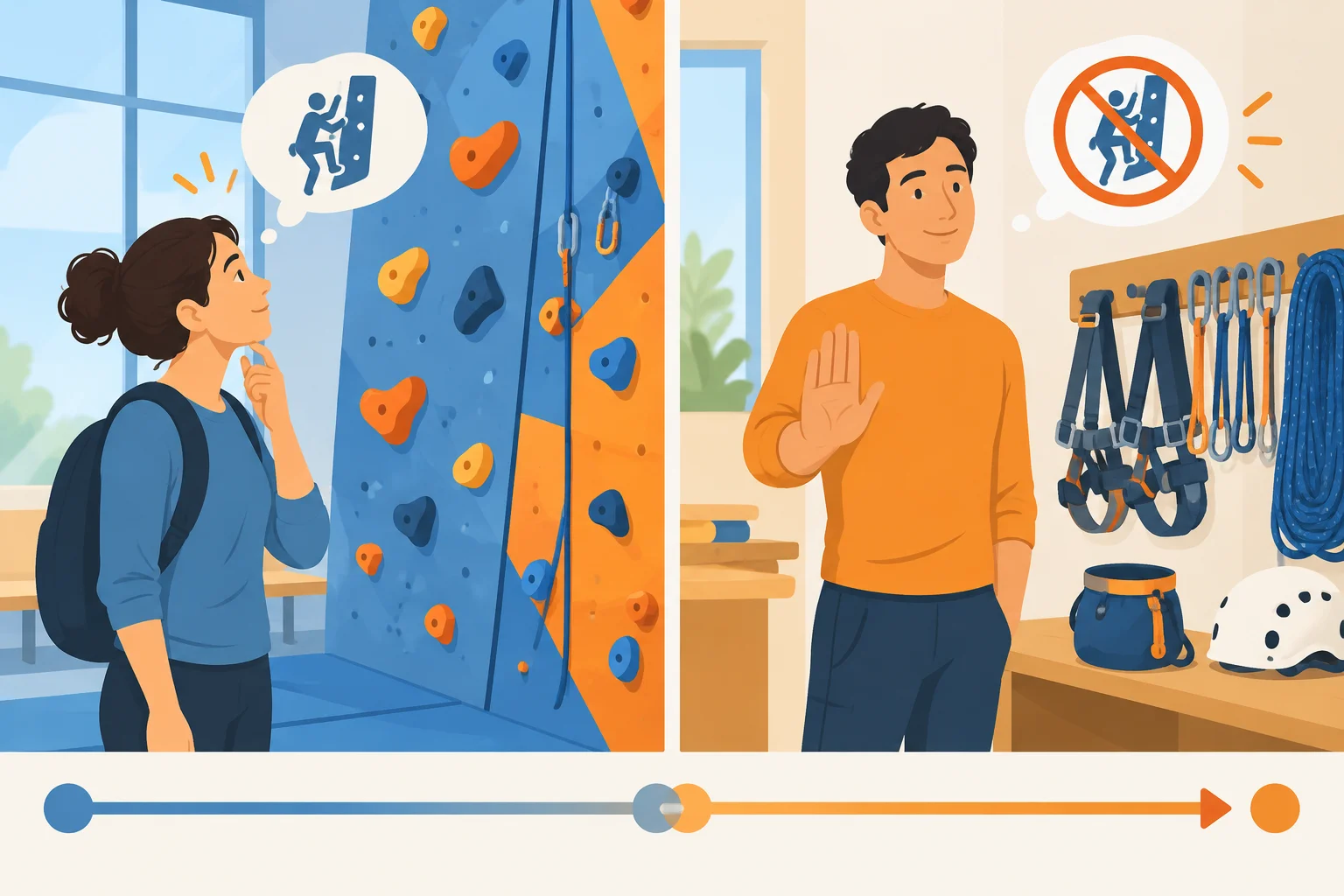
Use an activity or place as a prompt to ask whether an experience has happened before now.
Use been to for a previous visit. Keep been to together:
Maya has been to the city museum.
The past participle is be → been. This sentence tells us that the museum visit is part of Maya's experience.
A useful answer has a short answer first, then one relevant present perfect sentence:
Yes, I have. I've been to the city museum.
Example
Leo: Have you ever been to the city museum?
Maya: Yes, I have. I've been to the city museum.
Tip
Say the short form clearly. Stress the important experience:
I've been to the city museum.
Listen and choose an option.
Listen to Maya and Leo. What experience does Leo say he has never had?
Maya: Have you ever tried climbing?
Leo: No, I haven't. I've never tried climbing.
Build the experience question.
Your sentence
Available words
First, say aloud an ever question and a matching short answer. Then type one personal or invented present perfect answer using never or been to.
Write at least 15 characters (0/15).
Step 5 of 8
Use just and already to share completed actions that matter now.
Present perfect news can show a completed action and its result now.
Use just for an action that finished very recently:
subject + have/has + just + past participle
Maya has just finished an online course.
Use already for an action completed before now, often earlier than someone expected:
subject + have/has + already + past participle
Leo has already finished an online course.

Both actions are complete now. The left timeline supports just; the right timeline supports already.
Put just and already between have/has and the past participle. Both messages report a completed result now; the context tells the listener which meaning matters.
Compare the news messages.
| Word | Position | Message | Meaning |
|---|---|---|---|
| just | has + just + finished | Maya has just finished an online course. | The completion is very recent. |
| already | has + already + finished | Leo has already finished an online course. | The completion was before now, perhaps sooner than expected. |
Tip
Just and already are not rigid opposites. Ask yourself: do I want to emphasize that the result happened moments ago, or that it is complete sooner than expected?
Match each context to the update that communicates its intended meaning.
Tap an item and then its matching pair.
Maya completed an online course moments ago. Build her update.
Your sentence
Available words

Step 6 of 8
Use yet for an expected action in a question or a negative statement.
Question pattern: Have/Has + subject + past participle? Put yet at the end: Have you finished yet?
Negative pattern: subject + haven't/hasn't + past participle. Put yet at the end: I haven't finished yet.
A negative with yet means the expected action has not happened up to now.
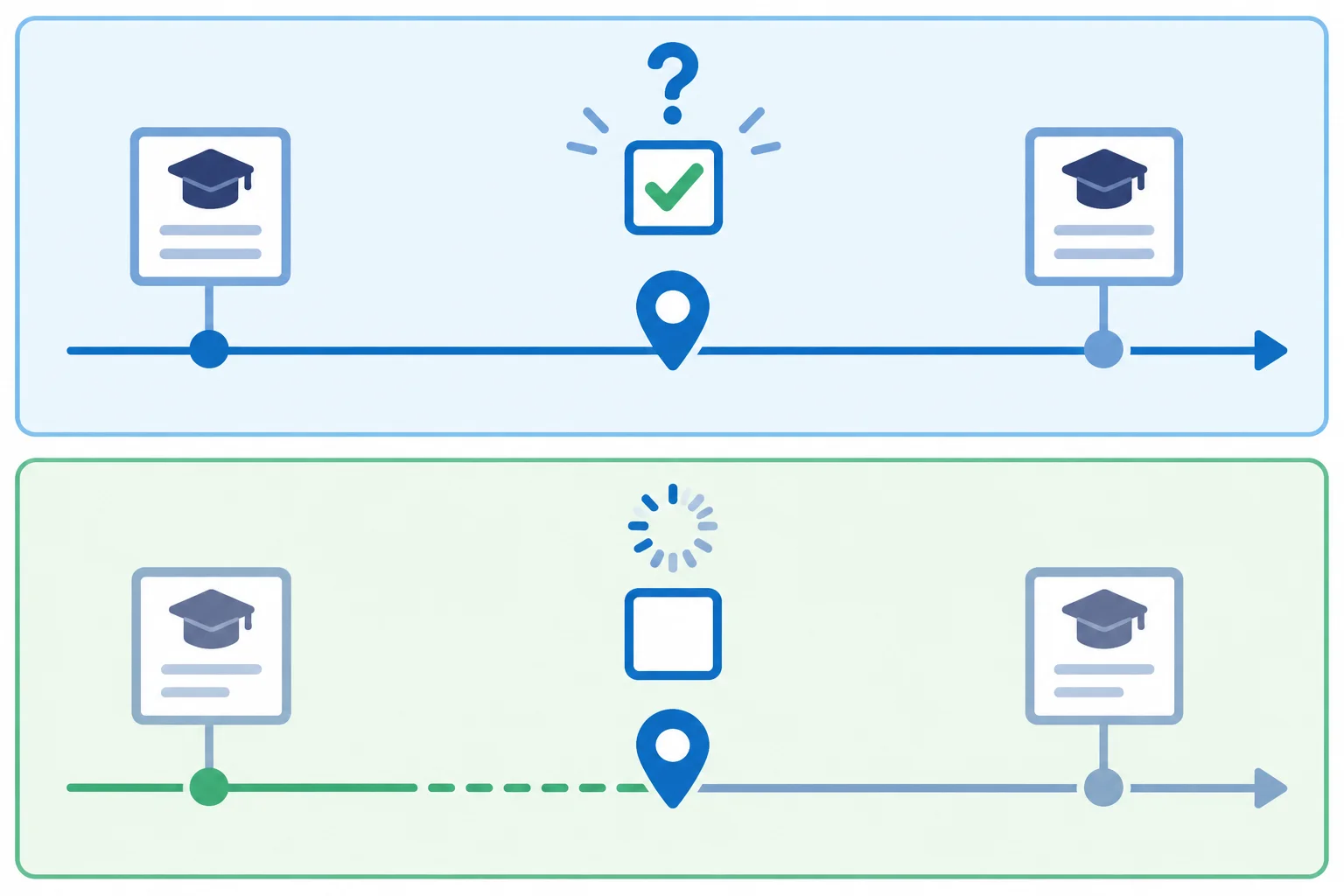
A question with yet asks whether an expected action has happened; a negative with yet says it has not happened up to now.
Example
Maya: Have you visited the city museum yet?
Leo: No, I haven't visited the city museum yet.
Compare the message, not only the verb. Already reports a completed action. Yet shows that an expected action is pending in a negative statement. Never says an experience has not happened at any time before now.
The three words communicate different messages.
| Word | Update | Message |
|---|---|---|
| already | Leo has already finished an online course. | The course is completed. |
| yet | Leo hasn't visited the city museum yet. | The visit is pending. |
| never | Leo has never tried climbing. | There is no climbing experience before now. |
Tip
Use not yet when an expected action is pending: “Have you finished yet?” — “No, not yet.”
Use never for an experience that has not happened at any time before now. Do not use never when the action is simply pending.
Read the updates. Match each one to its status.
Tap an item and then its matching pair.
Build a question and a negative answer about an expected museum visit.
Your sentence
Available words

Step 7 of 8
Short forms can be quick, but they still carry important meaning. In a spoken update, first notice the short form, then listen for the adverb and the past participle. Together, they tell you the experience or recent result.
For example, in “She’s already finished,” the words after she’s show that she’s means she has. Do not try to stress every word equally: make the important news clearer.
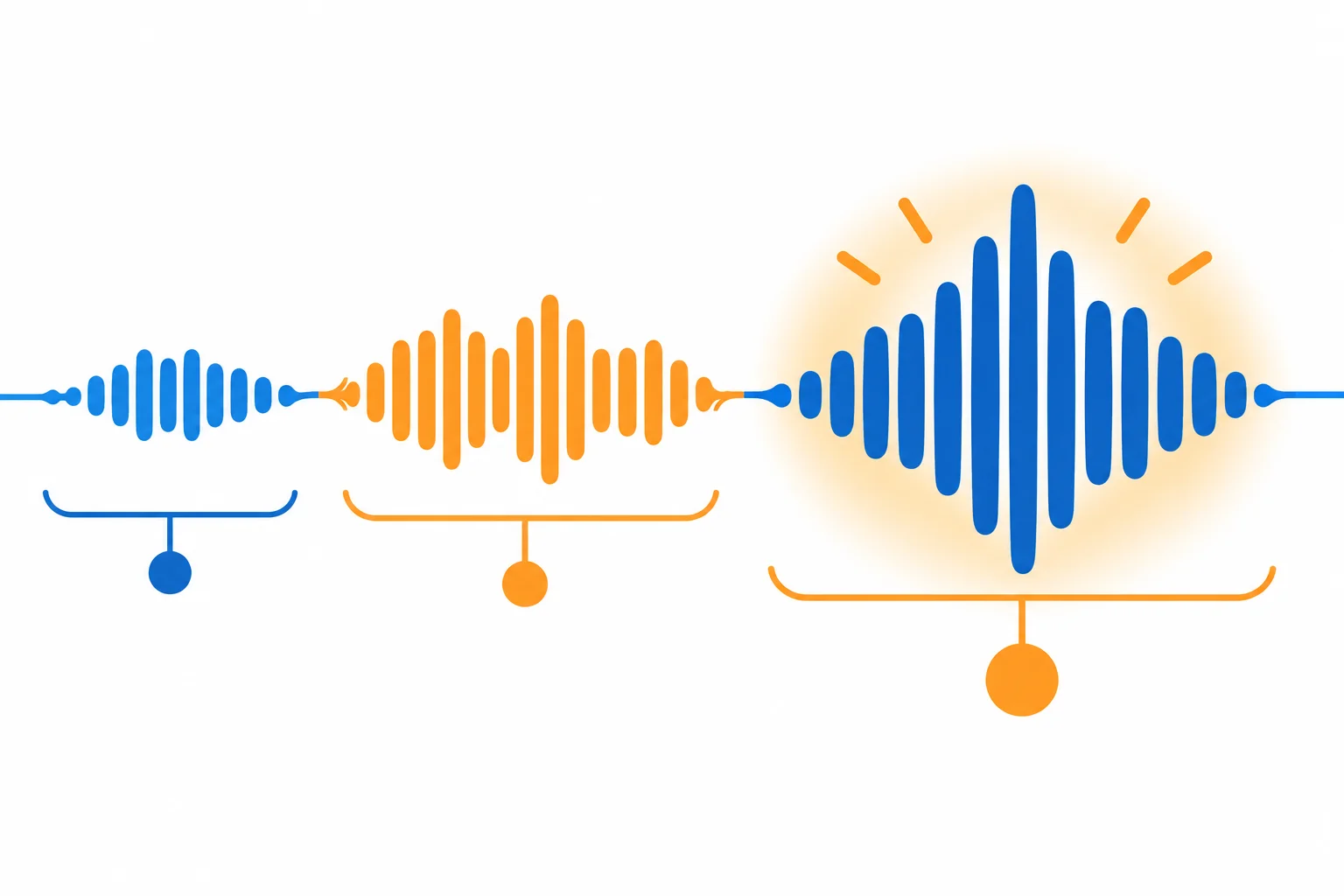
The short form connects smoothly. The adverb and the main action carry the key news.
Tip
Keep the short form audible, then stress the new information:
Maya: I’ve just finished my course.
Say the short form as part of the sentence. Give more energy to the action and the important result.
Listen and choose an option.
What experience does Leo describe?
Maya: Have you ever tried climbing?
Leo: No, I haven't. I've never tried climbing.
Listen and choose an option.
What recent result do Maya and Leo report?
Maya: Leo's already finished the online course.
Leo: Yes, I've finished it.
Listen and write what you heard.
Listen and write the complete sentence you hear.
Transcript:
Leo: I’ve already finished the course.
Compare this with your writing. Check the apostrophe in I’ve, the position of already, and the past participle finished.
Listen once. Then repeat Maya’s question and Leo’s answer aloud twice. Keep the short form clear and make the completed result sound important.
Maya: Have you finished the online course yet?
Leo: Yes, I have. I've already finished it.
Maya: Have you finished the online course yet?
Leo: Yes, I have. I've already finished it.
Repeat the model exchange aloud twice. Then report your self-check: were your short form and your important news clear? Name one part you said clearly or want to practise.
Write at least 20 characters (0/20).

Step 8 of 8
Complete a final reading, listening, speaking, and writing task with present perfect experiences and recent news.
Bring the forms together in one everyday exchange. An experience question can lead to a short answer, then to a recent result or a pending action.
Example
Maya: Have you ever tried climbing?
Leo: No, I haven't. I've never tried climbing.
Leo: Have you just finished an online course?
Maya: Yes, I have. I've just finished an online course.
Maya: Have you visited the city museum yet?
Leo: No, I haven't visited the city museum yet.

One exchange can include an experience, a recent result, and an action that has not happened yet.
Read Leo's update.
I've already finished an online course, but I haven't visited the city museum yet.
Which pair does Leo's update show?
Listen and choose an option.
Listen to Leo. What does he say has happened, and what is still pending?
I've lost a key, but I haven't visited the city museum yet.
Complete the final task.
First, say an experience question aloud, then say a short answer and one relevant present perfect sentence. You can use your own or invented information. For example, ask about whether someone has ever tried a new activity.
Then write a four- or five-sentence update. Include:
Use personal or invented facts. After you submit, compare your writing with the model and revise it if needed.
Write your final revised update: four or five sentences with an experience, a recent result using just or already, and a negative sentence with yet.
Write at least 80 characters (0/80).
Summary
Congratulations! You completed: Share Experiences and Recent News
Thousands of online courses in video, ebooks and audiobooks.
To test your knowledge during online courses
Generated directly from your cell phone's photo gallery and sent to your email

Download our app via QR Code or the links below:.



Carry knowledge in your pocket.
Download the Cursa app.
There are hundreds of free courses available, with a free certificate of completion that is saved in your mobile image gallery.
Download the app to access the Course Completion Certificate for Free.


+ 10 million
students

Free and Valid
Certificate

60 thousand free
exercises

4.8/5 rating in
app stores

Free courses in
video and ebooks