
Step 1 of 8
Ask About a Past Action
Ask a yes/no question about a finished trip action with did and a base-form action word.

Learning path · Level 3 · Tutorial 4
Find out about someone's past trip. Ask questions with did, give short answers, and use didn't for things that did not happen. Read and listen to a travel conversation. Practise both parts aloud, then write a short account with events in order.
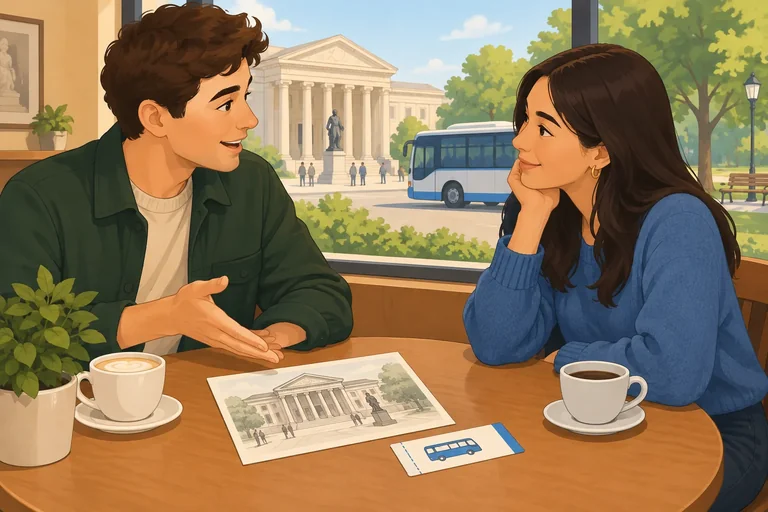
 Ask About a Past Action
Ask a yes/no question about a finished trip action with did and a base-form action word. 3 min
 Give a Short Answer
Use short positive and negative answers to respond to questions about a past trip. 2 min
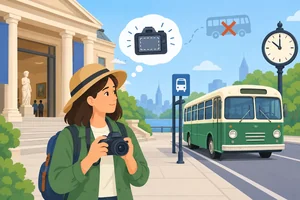 Say What Did Not Happen
Use didn't and a base form to explain one thing that did not happen on a trip. 3 min
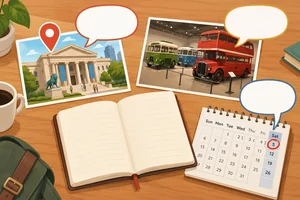 Ask for Trip Details
Ask where, what, and when questions with did, then connect each question to a useful trip detail. 3 min
 Choose Did, Was, or Were
Choose did for past actions and was or were for past descriptions or locations. Use on time, late, and enjoy the trip accurately. 3 min
 Understand a Travel Conversation
Listen to Alex and Maya's travel conversation, then read it and confirm the key trip details. 3 min
 Hear and Say Did You and Didn't
Hear natural “Did you,” say “didn't” clearly, and write a short question and negative answer from audio. 3 min
 Ask, Answer, and Share Your Trip
Bring past-trip questions, answers, and event order together in a short spoken exchange and written account. 5 min
Step 1 of 8
Ask a yes/no question about a finished trip action with did and a base-form action word.
A past simple statement tells us what happened: “Maya visited the museum.”
To ask about a finished action, start with did. The action word returns to its base form: visit, go, or take.
Use this pattern:
Did + person + base form ...?
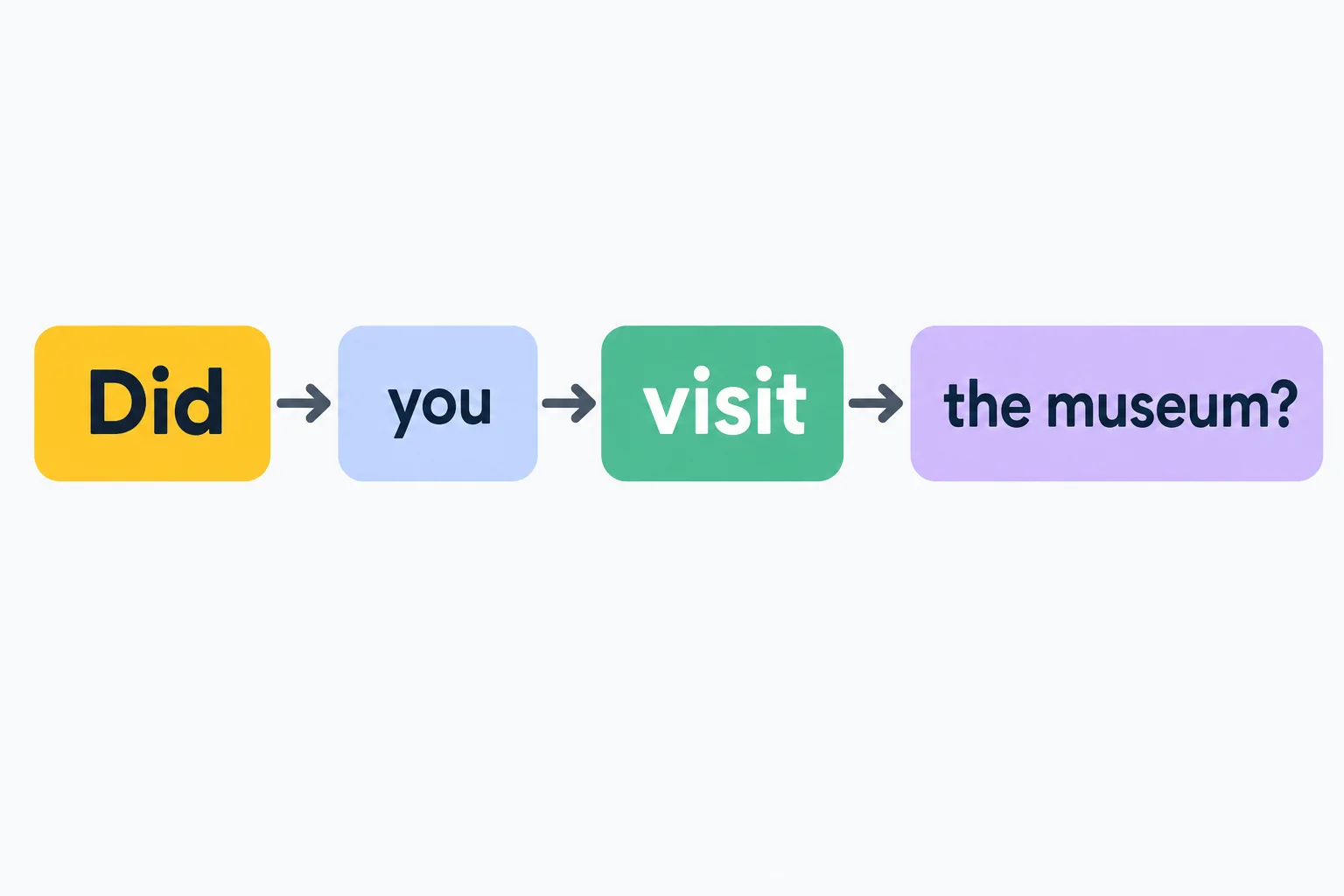
Start with Did, then the person, then the base form of the action.
Example
Statement: Maya went to the city museum last Saturday.
Question: Did Maya go to the city museum last Saturday?
After did, say go, not went. The same rule applies to regular verbs: say visit, not visited.
Put the words in order to make a question about Maya’s trip.
Your sentence
Available words
Choose the correctly formed question about Maya’s past trip.

Step 2 of 8
Use short positive and negative answers to respond to questions about a past trip.
A short answer to a question with did uses did or didn't. Do not repeat the action word.
Alex: “Did you visit the museum?”
Maya: “Yes, I did.”
Didn't is the short form of did not.
Alex asks Maya with you, but Maya answers about herself with I. When Maya answers for herself and Sam, she uses we.
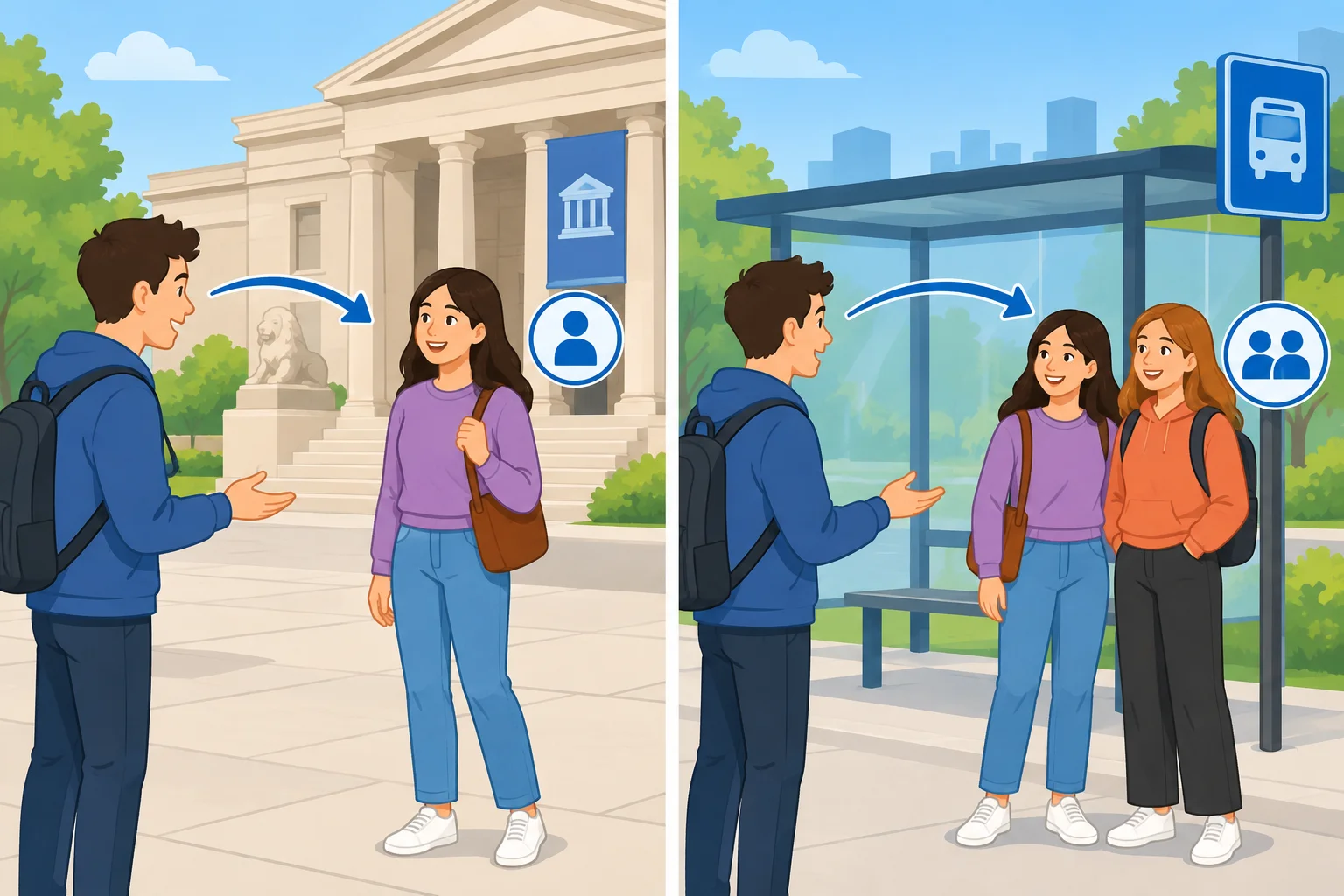
Maya uses I for herself. She uses we when she answers for herself and Sam.
Tip
Keep the punctuation in a short answer: Yes, I did. / No, I didn't.
Listen to Alex’s questions and Maya’s short answers. Then say Maya’s answers aloud.
Alex: Did you visit the museum?
Maya: Yes, I did.
Alex: Did you and Sam take the bus?
Maya: Yes, we did.
Alex: Did you take photos?
Maya: No, I didn't.
Alex: Did you visit the museum?
Maya: Yes, I did.
Alex: Did you and Sam take the bus?
Maya: Yes, we did.
Alex: Did you take photos?
Maya: No, I didn't.
Alex asks Maya: “Did you take photos?”
Maya says: “No, I ____.”
Alex asks Maya: “Did you and Sam take the bus?”
Complete Maya’s answer: “Yes, __ __.”
Listen and choose an option.
Listen to Alex. Choose Maya’s suitable short answer.
Alex: Did you and Sam take photos?
Step 3 of 8
Use didn't and a base form to explain one thing that did not happen on a trip.
Use a full past simple negative sentence to say an action did not happen:
person + didn't + base form
Maya didn't take photos.
After didn't, use the base form: take, visit, or go. Do not use a past form after didn't.
Correct: Maya didn't take photos.
Not correct: Maya didn't took photos.
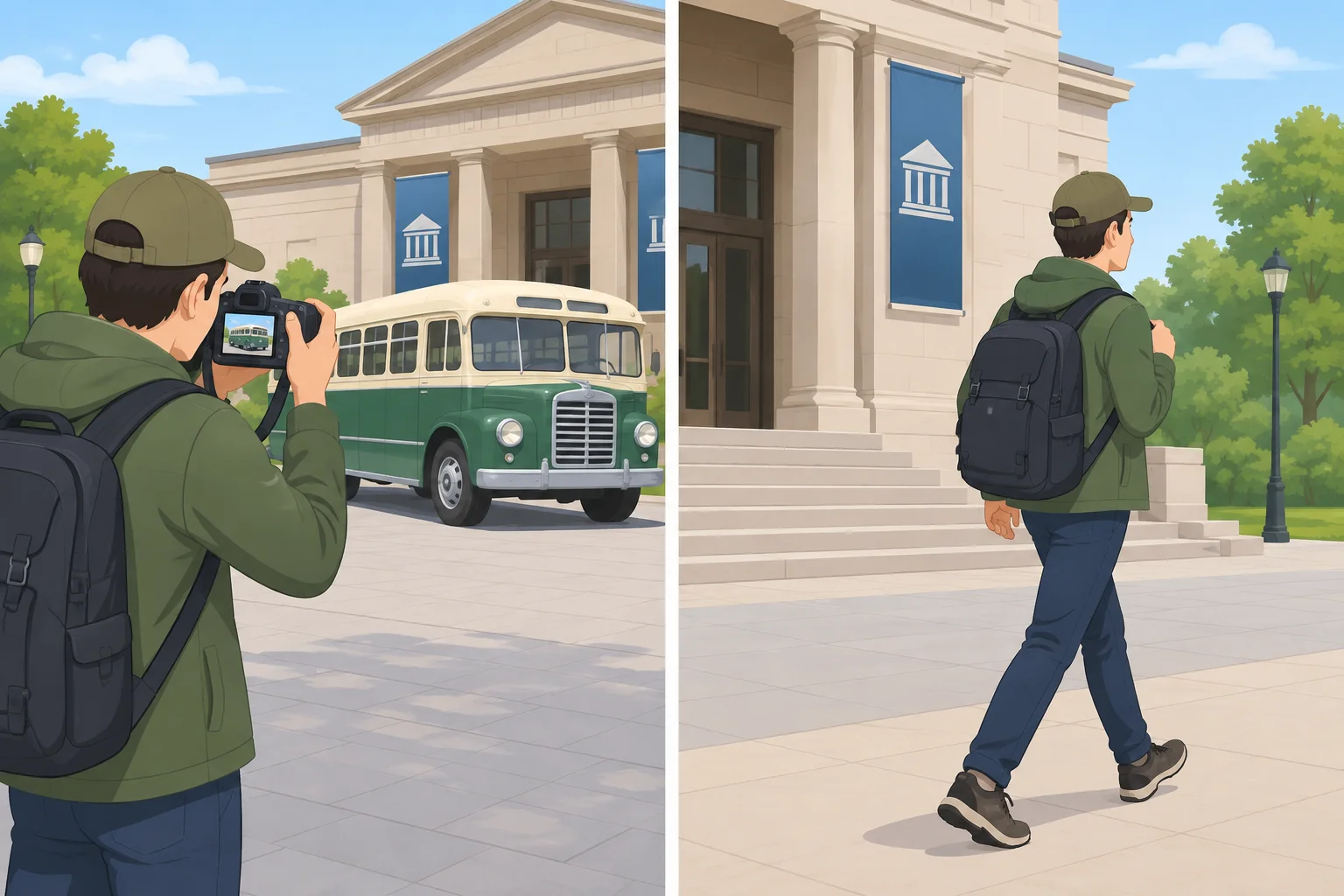
The two sides show the difference between taking photos and not taking photos.
Example
Alex: Did you take photos?
Maya: No, I didn't. I didn't take photos.
A short answer is useful. Add a full sentence when you want to give more information about the trip.
Miss the bus means not catching the bus you wanted to take.
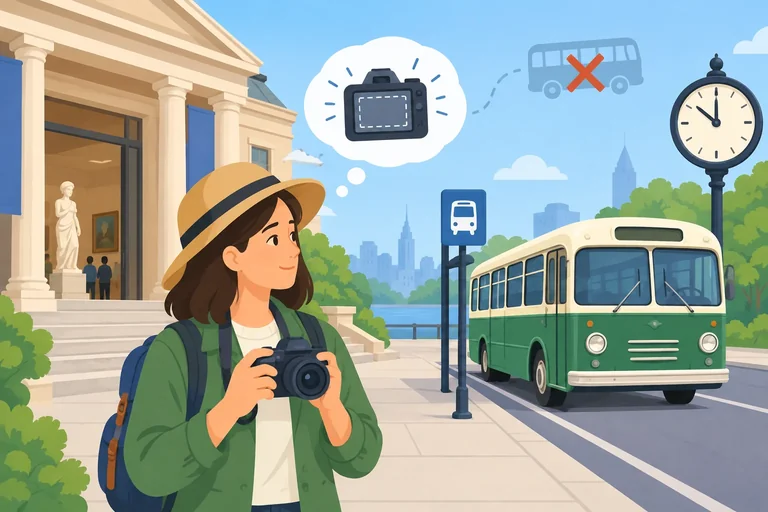
Maya and Sam took the bus last Saturday. The bus was on time, so they didn't miss the bus.
Use the base form miss after didn't—not missed.
Example
Alex: Did you miss the bus?
Maya: No, we didn't. We didn't miss the bus.
Maya speaks for herself and Sam, so she says we.
Maya and Sam caught the bus. Complete the sentence:
They didn't ___ the bus.
Build the full negative sentence.
Cue: Maya had no photos from her trip.
Your sentence
Available words
Step 4 of 8
Ask where, what, and when questions with did, then connect each question to a useful trip detail.
Use a question word before did when you want a trip detail.
Question word + did + person + base form ...?
The action word stays in the base form after did: go, see, travel. Give useful information in your answer, not only yes or no.
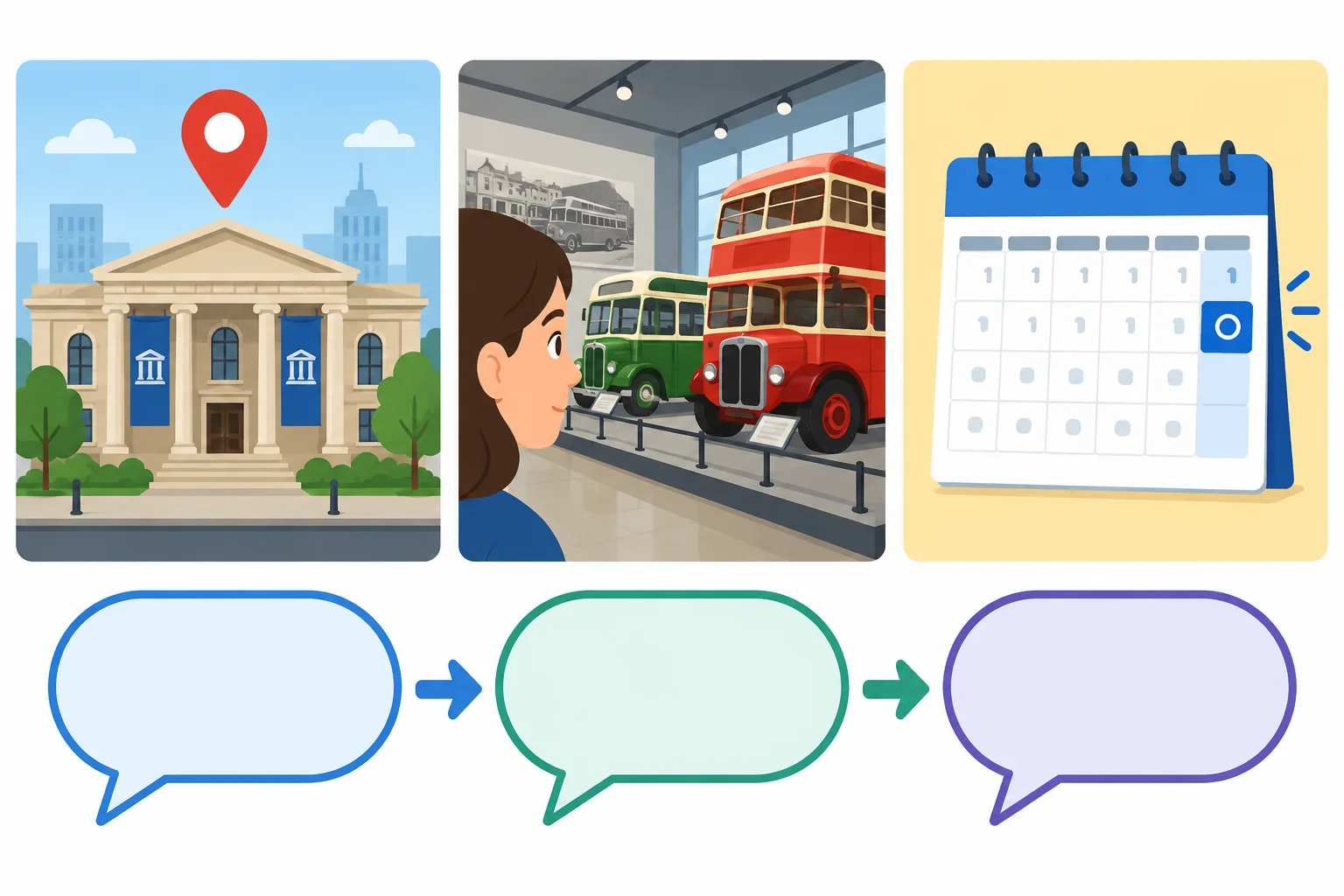
Use where for a place, what for an activity or thing, and when for a time.
Example
Alex: Where did you go?
Maya: We went to the city museum.
Alex: What did you see?
Maya: We saw old buses.
Alex: When did you travel?
Maya: We traveled last Saturday.
Match each trip question to its informative answer.
Tap an item and then its matching pair.
Build a question to ask about the trip destination.
Your sentence
Available words
Step 5 of 8
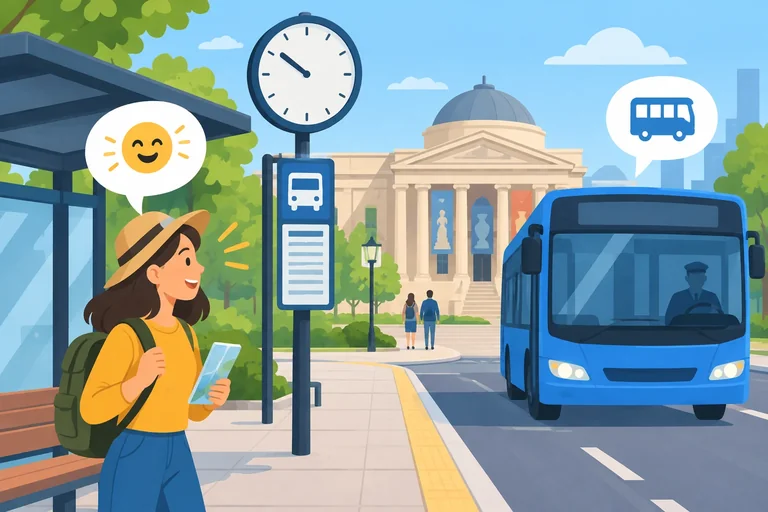
Choose did for past actions and was or were for past descriptions or locations. Use on time, late, and enjoy the trip accurately.
Past questions can ask about an action or a description/location.
The base form is the action word without a past ending: go, visit, take, enjoy.
Choose the question form from the meaning. Then keep the short answer matched to that form.
| Meaning | Question | Matching short answer |
|---|---|---|
| Past description | Was the bus on time? | Yes, it was. |
| Past location | Were Maya and Sam at the museum? | Yes, they were. |
| Past action | Did Maya enjoy the trip? | Yes, she did. |
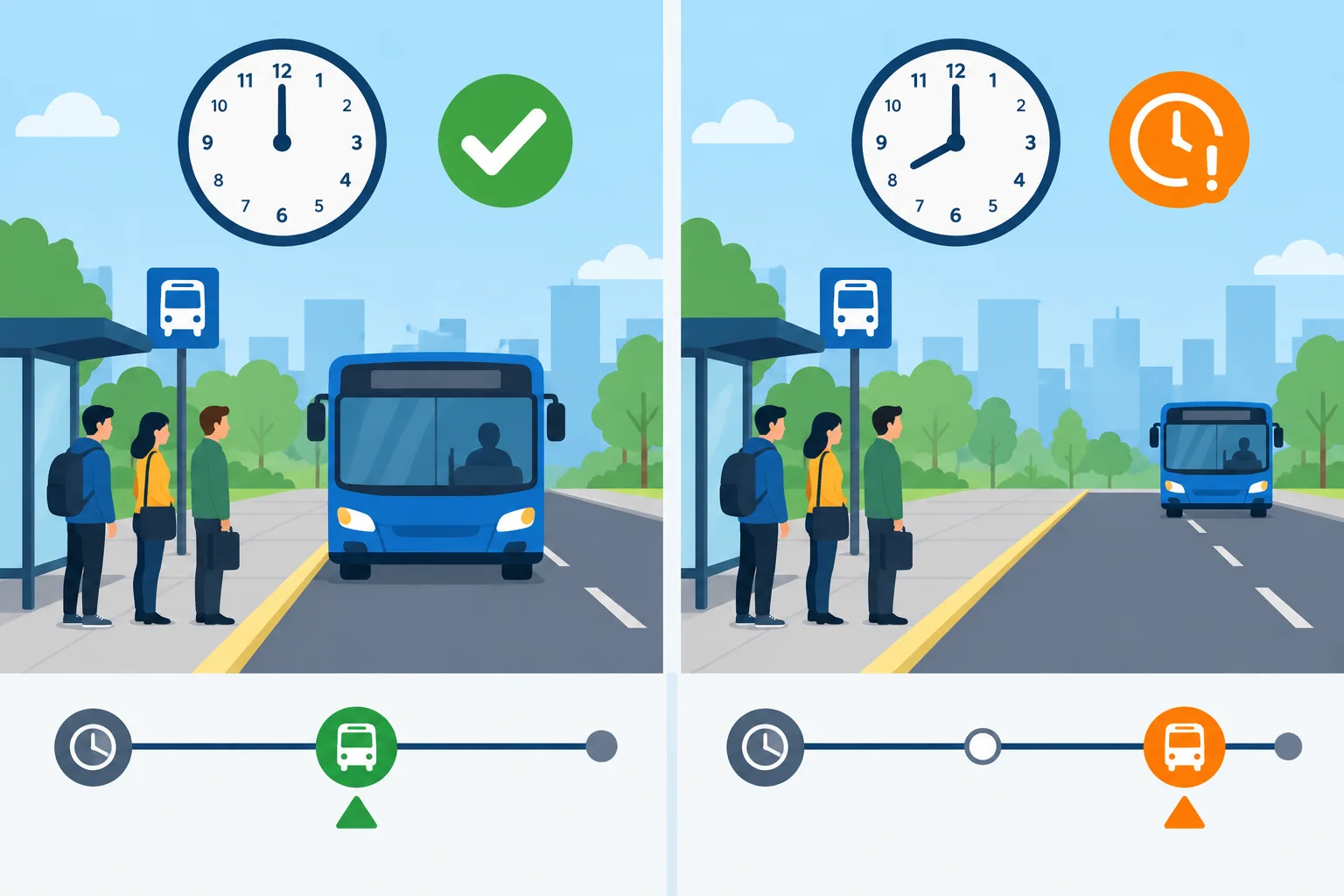
On time means at the expected time. Late means after the expected time.
Enjoy the trip means have a good time on the trip.
Compare these questions:
The answers use the same helping word as the question: was/were answers match was/were questions, and did answers match did questions.
Example
Alex: Was the bus on time?
Maya: Yes, it was.
Alex: Did you enjoy the trip?
Maya: Yes, I did.
Tip
A did question needs a short answer with did or didn't. A was or were question needs an answer with was, wasn't, were, or weren't.
Say the two exchanges aloud. Notice the different final words: was and did.
Complete every question and short answer.
 the bus on time?
Yes, it .

 Maya and Sam at the museum?
Yes, they .

 Maya enjoy the trip?
Yes, she .
Step 6 of 8
Listen to Alex and Maya's travel conversation, then read it and confirm the key trip details.
You will hear Alex ask Maya about a past trip. Listen for four kinds of information: a place, a time, an activity, and something that did not happen. First, listen without reading.

Alex asks Maya about her trip.
Alex: Where did you go last Saturday?
Maya: I went to the city museum with Sam.
Alex: When did you travel?
Maya: Last Saturday.
Alex: Did you take the bus?
Maya: Yes, we did.
Alex: Was the bus on time?
Maya: Yes, it was. We didn't miss the bus.
Alex: What did you see?
Maya: First, we visited the museum and saw old buses. Then, we had a picnic in the park.
Alex: Did you take photos?
Maya: No, we didn't. We didn't take photos.
Alex: Did you enjoy the trip?
Maya: Yes, I did. Finally, we went home.
Which summary is correct?
Now read the conversation. Notice that each question has a reply with the detail Alex needs.
Alex: Where did you go last Saturday?
Maya: I went to the city museum with Sam.
Alex: When did you travel?
Maya: Last Saturday.
Alex: Did you take the bus?
Maya: Yes, we did.
Alex: Was the bus on time?
Maya: Yes, it was. We didn't miss the bus.
Alex: What did you see?
Maya: First, we visited the museum and saw old buses. Then, we had a picnic in the park.
Alex: Did you take photos?
Maya: No, we didn't. We didn't take photos.
Alex: Did you enjoy the trip?
Maya: Yes, I did. Finally, we went home.
Tip
For a detail question, look for the reply that gives a place, time, or activity. For a did question, listen or read carefully for Yes, ... did. or No, ... didn't.
Match each question to Maya's reply from the written conversation.
Tap an item and then its matching pair.

Step 7 of 8
Hear natural “Did you,” say “didn't” clearly, and write a short question and negative answer from audio.
In natural speech, Did you may sound like one quick unit. The written words stay separate: Did you visit the museum?
Listen to the same question twice: first slowly, then at a natural speed. You do not need to copy an exact accent. Your goal is to hear the question clearly.
Clear, slower speech
Did you visit the museum?
Did you visit the museum?
Natural speech
Did you visit the museum?
Did you visit the museum?
In a negative answer, make didn't easy to hear. You do not need to sound exactly like the audio. Speak at a comfortable speed and keep the negative meaning clear.
Listen and repeat each line. Then say both roles aloud once without playing the audio again.
Repeat Alex, then Maya.
Alex: Did you take photos? Maya: No, I didn't. I didn't take photos.
Alex: Did you take photos?
Maya: No, I didn't. I didn't take photos.
Tip
A clear didn't tells the listener that the action did not happen. Say the whole short answer: No, I didn't.
Listen and choose an option.
Choose the question you hear.
Did you visit the museum?
Listen to A and B. Type exactly what you hear. Then say both lines aloud: make the question clear and make the negative meaning clear.
Listen and write what you heard.
A. Write the short past question.
Listen and write what you heard.
B. Write the short negative answer.
Tip
Self-check: Did your first line sound like a question? Did your second line make the negative meaning clear? Repeat both once more aloud.
Step 8 of 8
Bring past-trip questions, answers, and event order together in a short spoken exchange and written account.
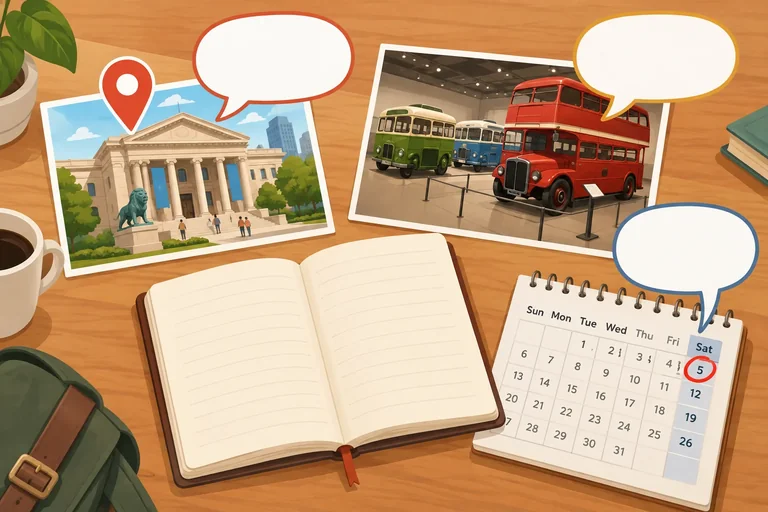
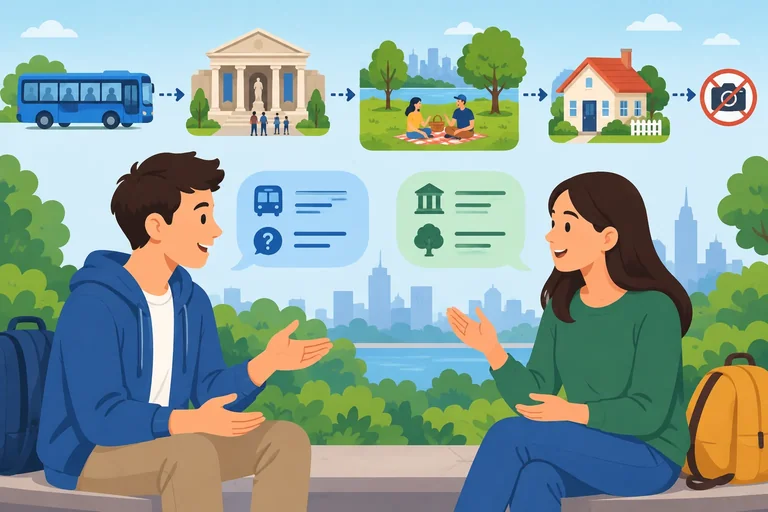
You can complete the final task with a real trip, an invented trip, or Maya’s trip. Use this visual cue to remember the journey in order. First, say the events aloud once. Notice the final symbol: it helps you remember one thing that did not happen.
Use the arrows to support a short spoken account of Maya’s trip.
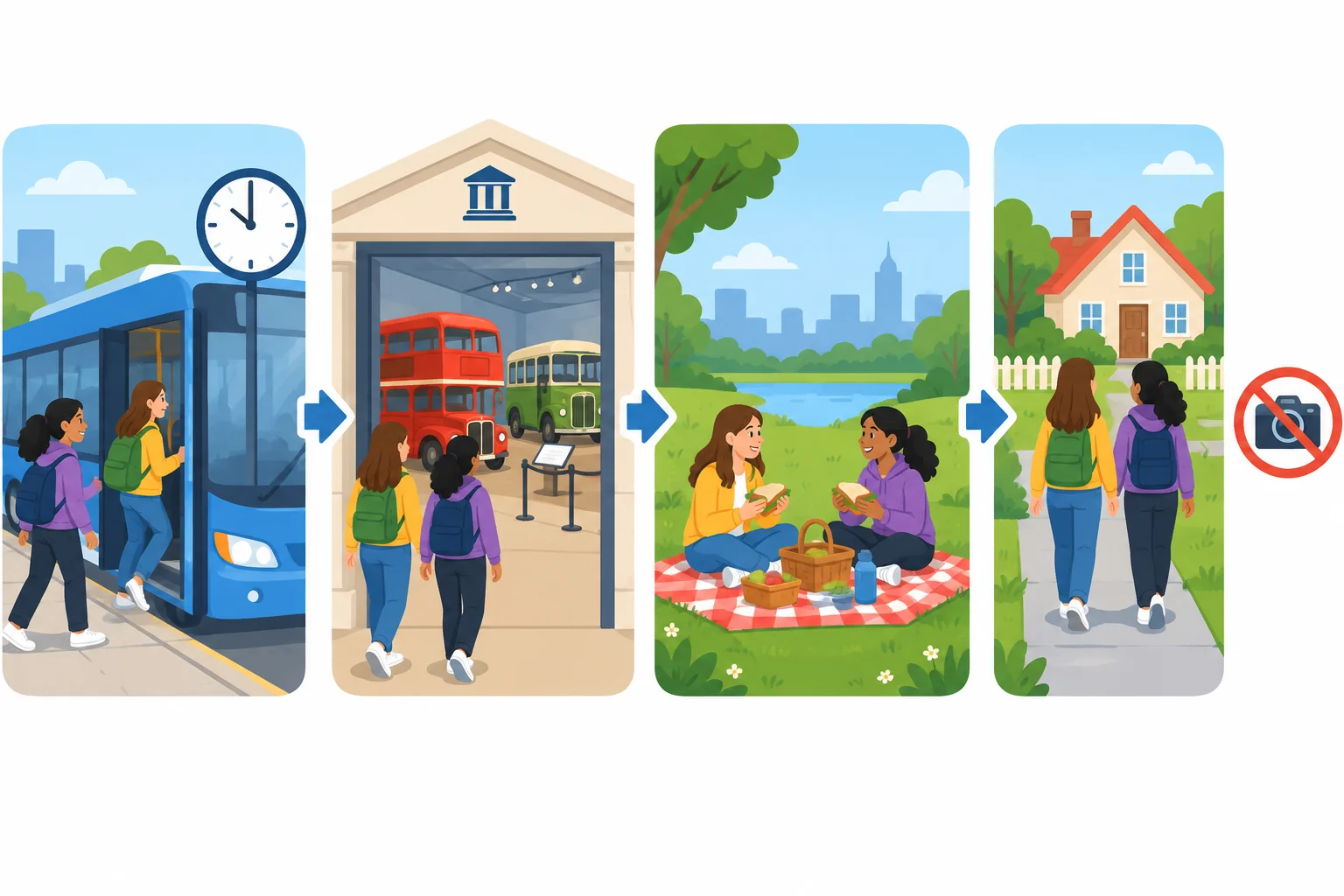
A compact cue for remembering events and one negative fact.
Read the exchange, then say both roles aloud. Alex asks for details; Maya gives information, a short answer, and a negative reply.
Alex: Where did you go with Sam last Saturday?
Maya: We went to the city museum.
Alex: Did you take the bus?
Maya: Yes, we did.
Alex: Was the bus on time?
Maya: Yes, it was.
Alex: Did you enjoy the trip?
Maya: Yes, I did.
Alex: Did you take photos?
Maya: No, we didn’t. We didn’t take photos.
Where did you go with Sam last Saturday?
We went to the city museum.
Did you take the bus?
Yes, we did.
Was the bus on time?
Yes, it was.
Did you enjoy the trip?
Yes, I did.
Did you take photos?
No, we didn't. We didn't take photos.
Alex: Where did you go with Sam last Saturday?
Maya: We went to the city museum.
Alex: Did you take the bus?
Maya: Yes, we did.
Alex: Was the bus on time?
Maya: Yes, it was.
Alex: Did you enjoy the trip?
Maya: Yes, I did.
Alex: Did you take photos?
Maya: No, we didn't. We didn't take photos.
Tip
First, speak as Alex. Then change roles and speak as Maya. Pause after each question and answer without reading when you can.
Work alone with your own trip, an invented trip, or Maya’s trip.
Write your five- or six-sentence trip account after you say it aloud.
Write at least 120 characters (0/120).
Summary
Use this checklist to review your exchange and account before you finish.
Congratulations! You completed: Ask and Answer Questions About a Past Trip
You completed this level!
Up next: A2: Plans and Choices
 Plan a Day Out with Going to and WillTalk with someone about a day out. Say what you are going to do, offer help, and make a decision. Talk about what you think will happen. Read and listen to short conversations, then say and write your own plans.
Thousands of online courses in video, ebooks and audiobooks.
To test your knowledge during online courses
Generated directly from your cell phone's photo gallery and sent to your email

Download our app via QR Code or the links below:.



Carry knowledge in your pocket.
Download the Cursa app.
There are hundreds of free courses available, with a free certificate of completion that is saved in your mobile image gallery.
Download the app to access the Course Completion Certificate for Free.


+ 10 million
students

Free and Valid
Certificate

60 thousand free
exercises

4.8/5 rating in
app stores

Free courses in
video and ebooks