Step 1 of 9
Say What You Are Going to Do
Learn day-out actions and use going to to describe a plan for tonight, tomorrow, or next week.

Learning path · Level 4 · Tutorial 1
Talk with someone about a day out. Say what you are going to do, offer help, and make a decision. Talk about what you think will happen. Read and listen to short conversations, then say and write your own plans.
 Say What You Are Going to Do
Learn day-out actions and use going to to describe a plan for tonight, tomorrow, or next week. 3 min
 Ask About Plans and Say No
Make questions about plans, give short answers, and say what is not in the plan. 3 min
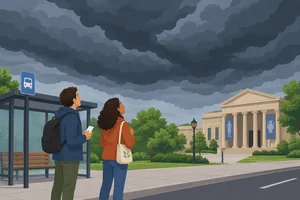 Look and Predict
Use a visible sign to make a simple prediction with going to. 2 min
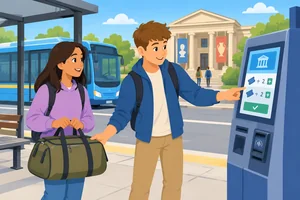 Offer Help and Decide Now
Use will, I'll, and we'll to offer help and make a new decision during a day-out conversation. 3 min
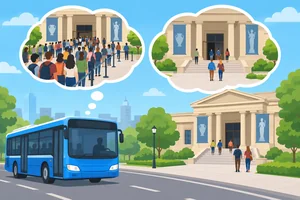 Say What You Think Will Happen
Make positive and negative predictions with will and won't. Ask a prediction question, give a short answer, and listen for the difference. 3 min
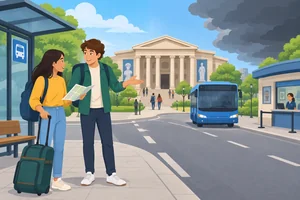 Read the Conversation and Find the Meaning
Read a short day-out conversation and use context clues to identify plans, offers, decisions now, and predictions. 2 min
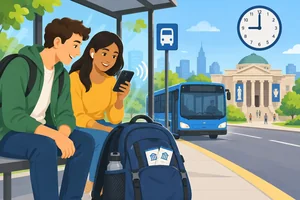 Listen to the Day-Out Plan
Listen for the key details in Maya and Leo’s day-out plan, identify a future meaning, and write a sentence you hear. 3 min
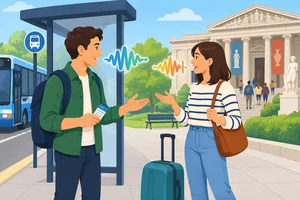 Say I'll and Won't Clearly
Listen for I’ll and won’t, build a short exchange, and say it aloud with one changed detail. 3 min
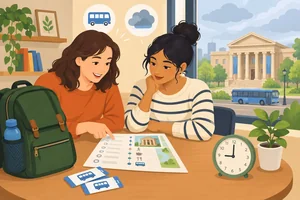 Make and Share Your Day-Out Plan
Read, listen to, write, and say a short day-out plan with a helpful reply. 4 min
Step 1 of 9
Learn day-out actions and use going to to describe a plan for tonight, tomorrow, or next week.
A plan is something you decide before you speak. For a day out, use these action phrases:
Useful future times are tonight, tomorrow, and next week.
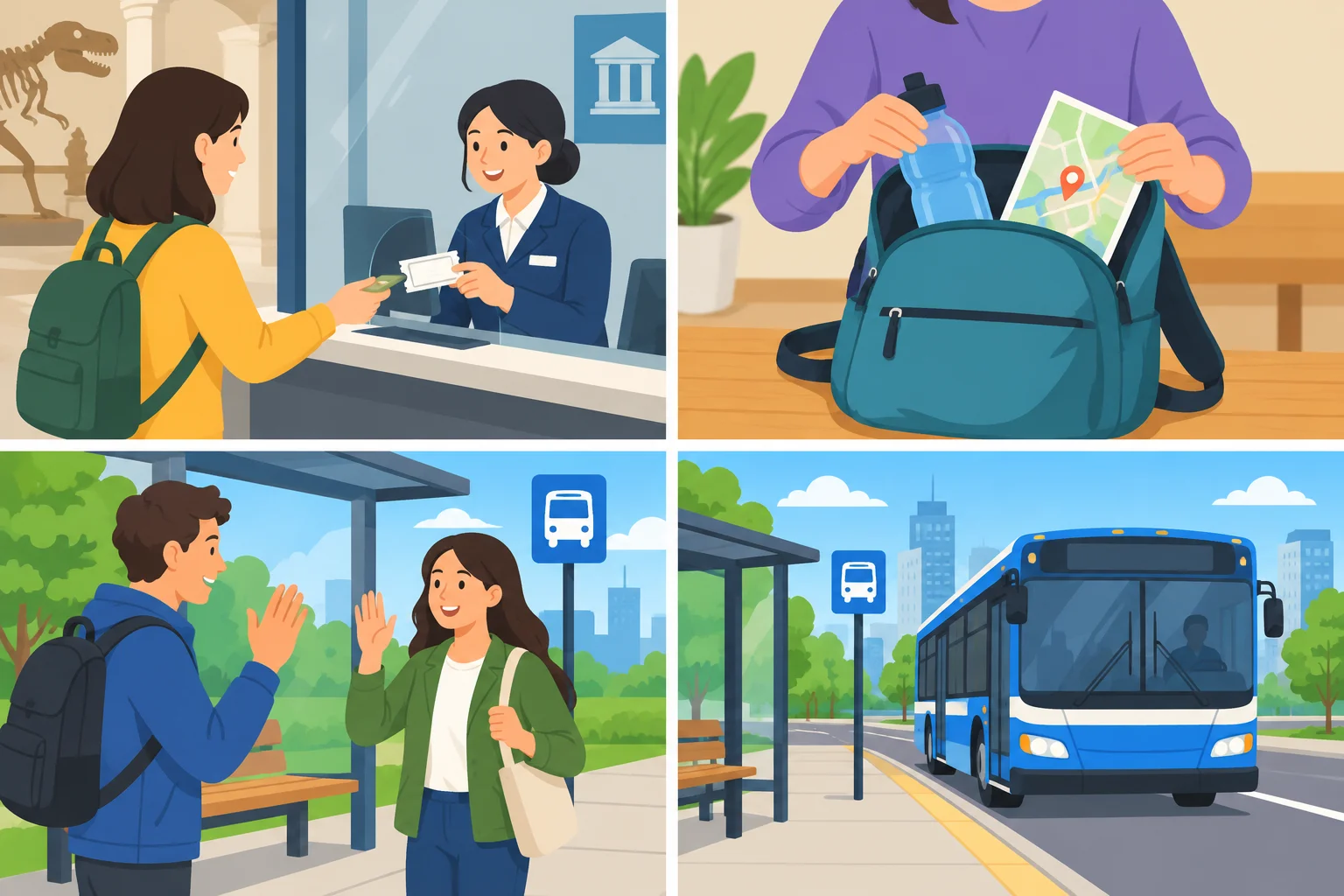
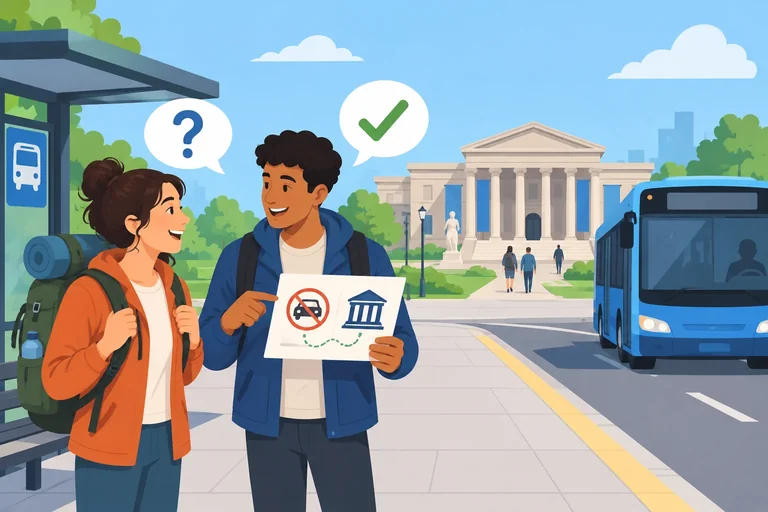
These four pictures show useful actions for a day out.
Use this pattern for a plan:
subject + am/is/are + going to + action word
The action word comes after going to.
Use am with I, is with one person or thing, and are with we, you, or they.
Examples: I'm going to pack a bag. / We're going to visit a museum.
Example
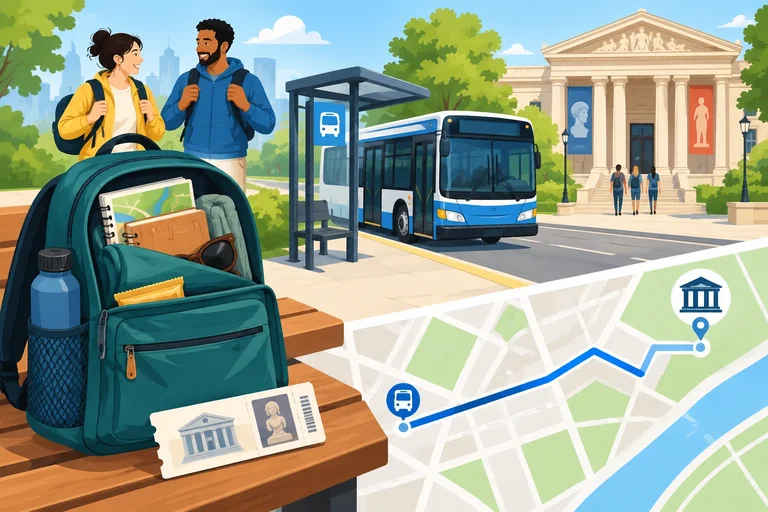
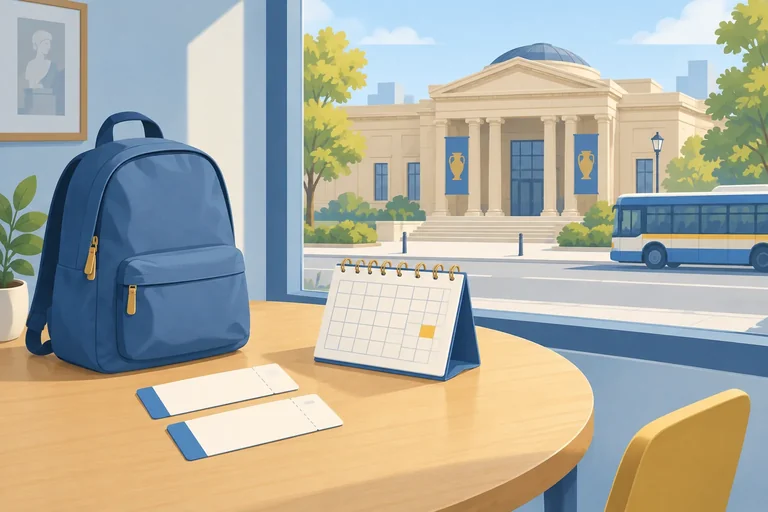
Maya and Leo have a plan. Tonight, Maya is going to pack a bag. Tomorrow, Maya and Leo are going to meet at the bus stop at 9:00 a.m. They are going to take a bus and visit a museum.
Leo is going to buy the tickets tomorrow. In a separate plan, Maya is going to meet a friend next week.
Match the subject to the correct form of be in the plan pattern.
| Subject | Be | Plan |
|---|---|---|
| I | am | I'm going to pack a bag tonight. |
| Maya | is | Maya is going to buy a ticket tomorrow. |
| Maya and Leo | are | Maya and Leo are going to take a bus tomorrow. |
Which picture shows this action: pack a bag?
Build one complete plan.
Your sentence
Available words
Step 2 of 9
Make questions about plans, give short answers, and say what is not in the plan.
A negative plan says an activity is not in the plan.
Use not after am, is, or are:
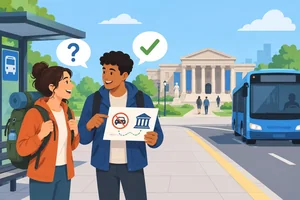
The action word comes after going to. Maya and Leo are going to take a bus tomorrow, so driving and walking are not in their plan.
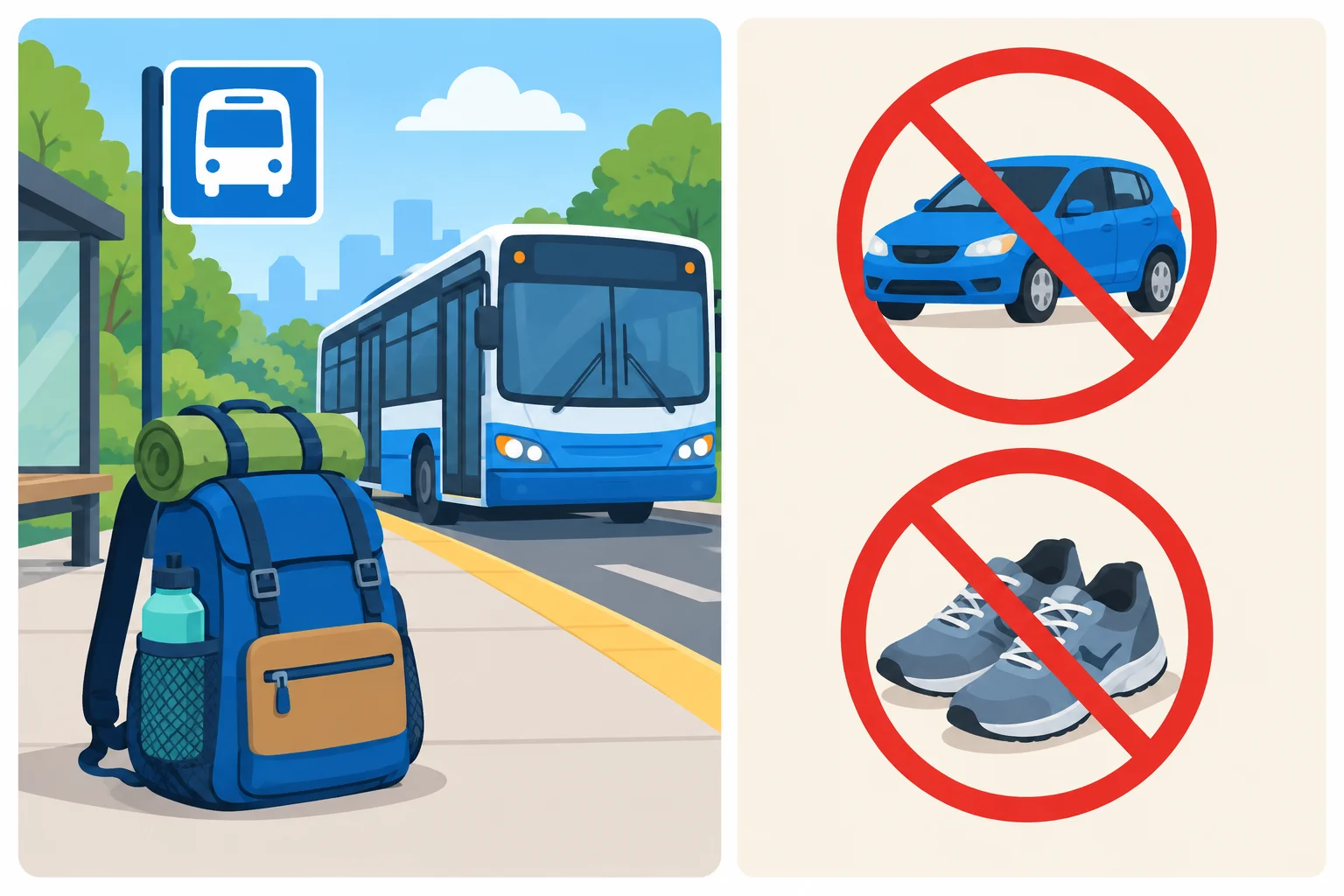
Use not to say an action is not in the plan.
For a yes/no question, put am, is, or are before the subject.
For a question about an activity, use:
What are you going to do?
Use a short answer with be. Do not repeat the whole plan.
Example
Maya: Are you going to pack a bag tonight?
Leo: Yes, I am.
Leo: What are you going to do tomorrow?
Maya: We’re going to meet at the bus stop at 9:00 a.m. We aren’t going to walk.
Build the yes/no plan question from the word blocks.
Your sentence
Available words
Maya plans to take a bus tomorrow, not drive. Complete her sentence: “I ___ going to drive.”
Leo asks Maya, “Are you going to take a bus?” Complete Maya’s short answer: “Yes, I ___.”
Write one question for a friend about a future plan. Use going to, an action word, and a day-out activity or future time.
Write at least 10 characters (0/10).
Step 3 of 9
Use a visible sign to make a simple prediction with going to.
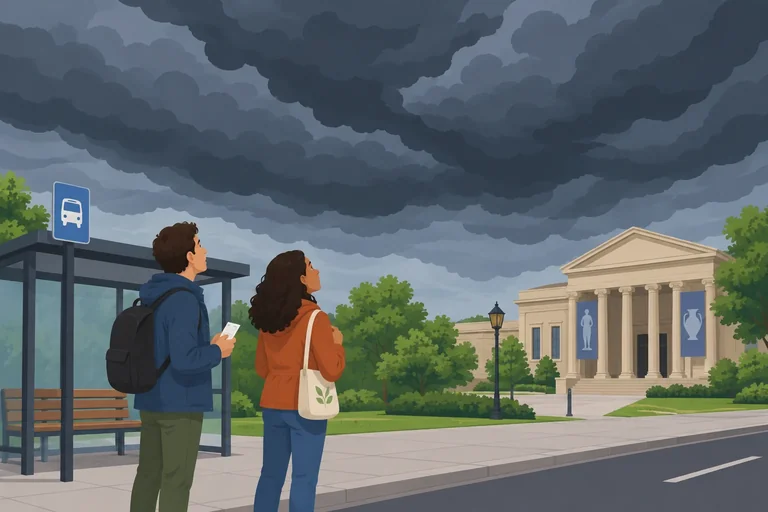
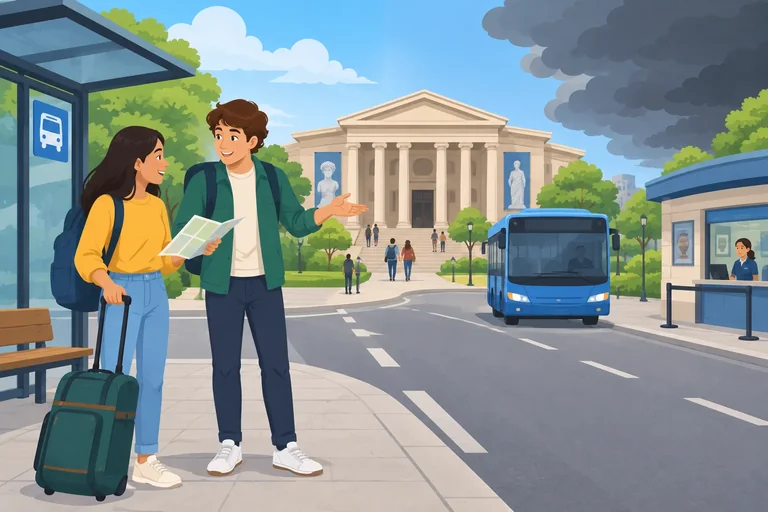
A prediction says what you think will happen. Sometimes you can see a sign now. Maya and Leo can see dark clouds, so they say, "It's going to rain." The clouds are here now; the rain will happen later.
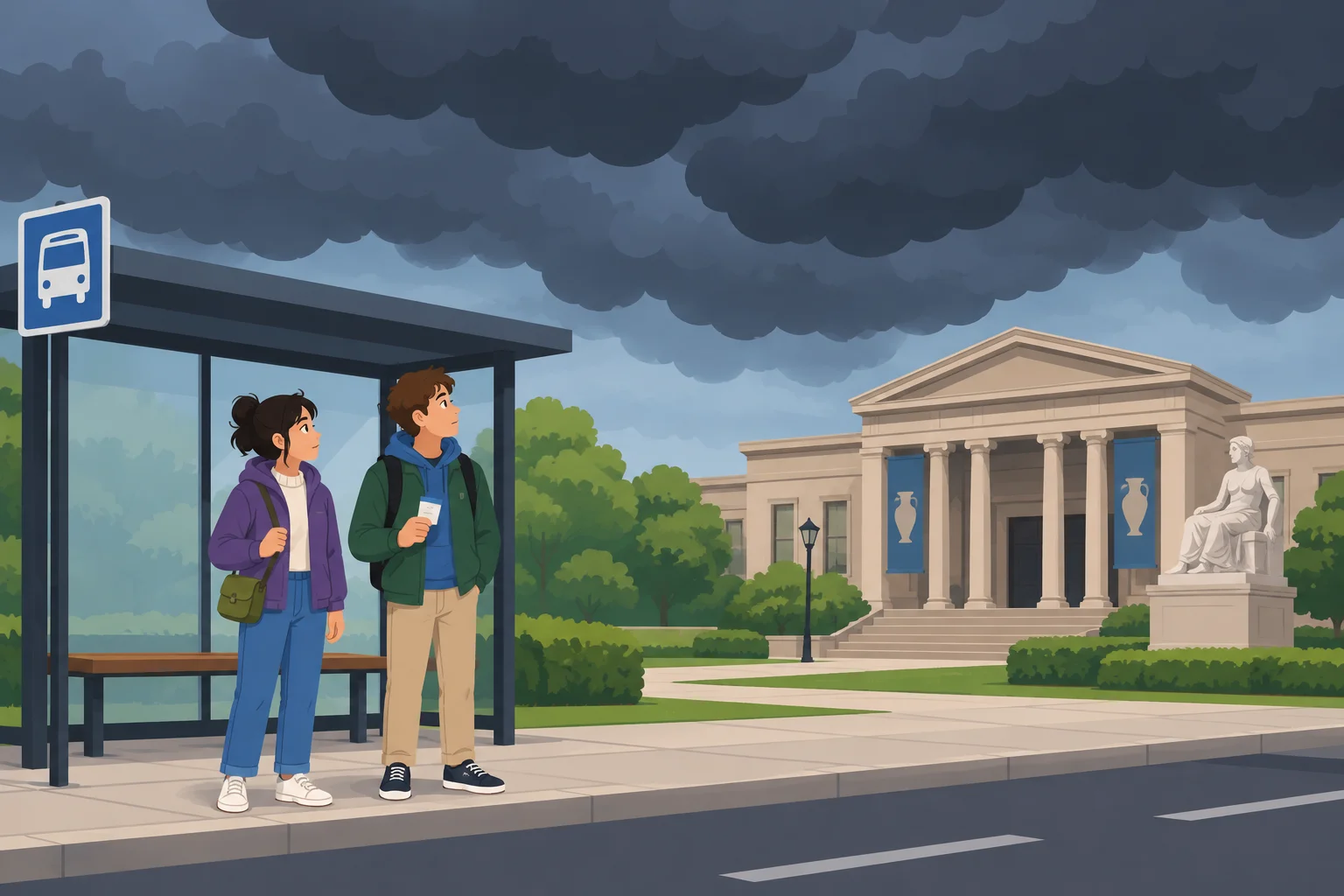
Dark clouds now can support a prediction about rain later.
Example
The familiar form is: subject + am/is/are + going to + action word.
It's going to rain.
The words going to can describe a plan or a prediction. Look at the situation to understand the meaning.
The situation tells you the meaning.
| Situation | Meaning | Sentence |
|---|---|---|
| Maya chose this earlier. | plan | Maya is going to pack a bag tonight. |
| Leo can see dark clouds. | prediction | It's going to rain. |
Choose the picture that gives a visible reason for a prediction about rain.
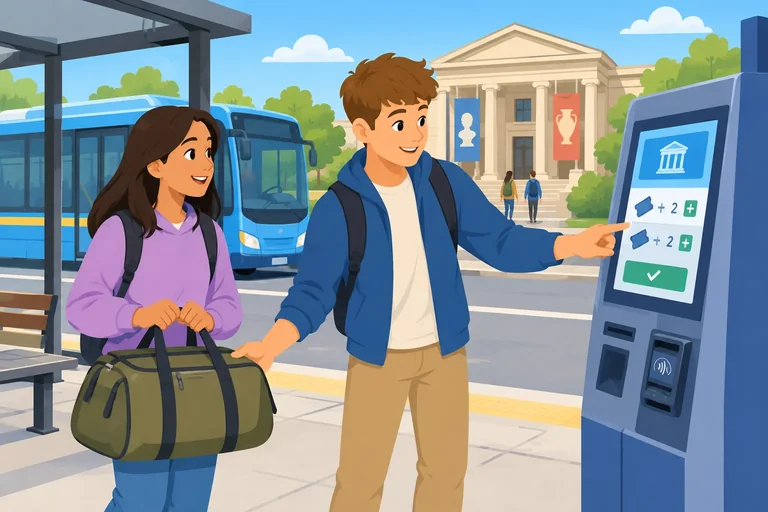
Use the weather scene from the first screen. Write three short parts: name the sign you can see now, write a going to sentence about the weather, and say why it is a prediction rather than a personal plan.
Write at least 45 characters (0/45).
Step 4 of 9
Use will, I'll, and we'll to offer help and make a new decision during a day-out conversation.
A plan with going to is chosen earlier. Use will when you make an offer or a decision now—at the moment of speaking.
Pattern: subject + will + action word
The action word does not change after will: say will help, not will helps; say will buy, not will buys.
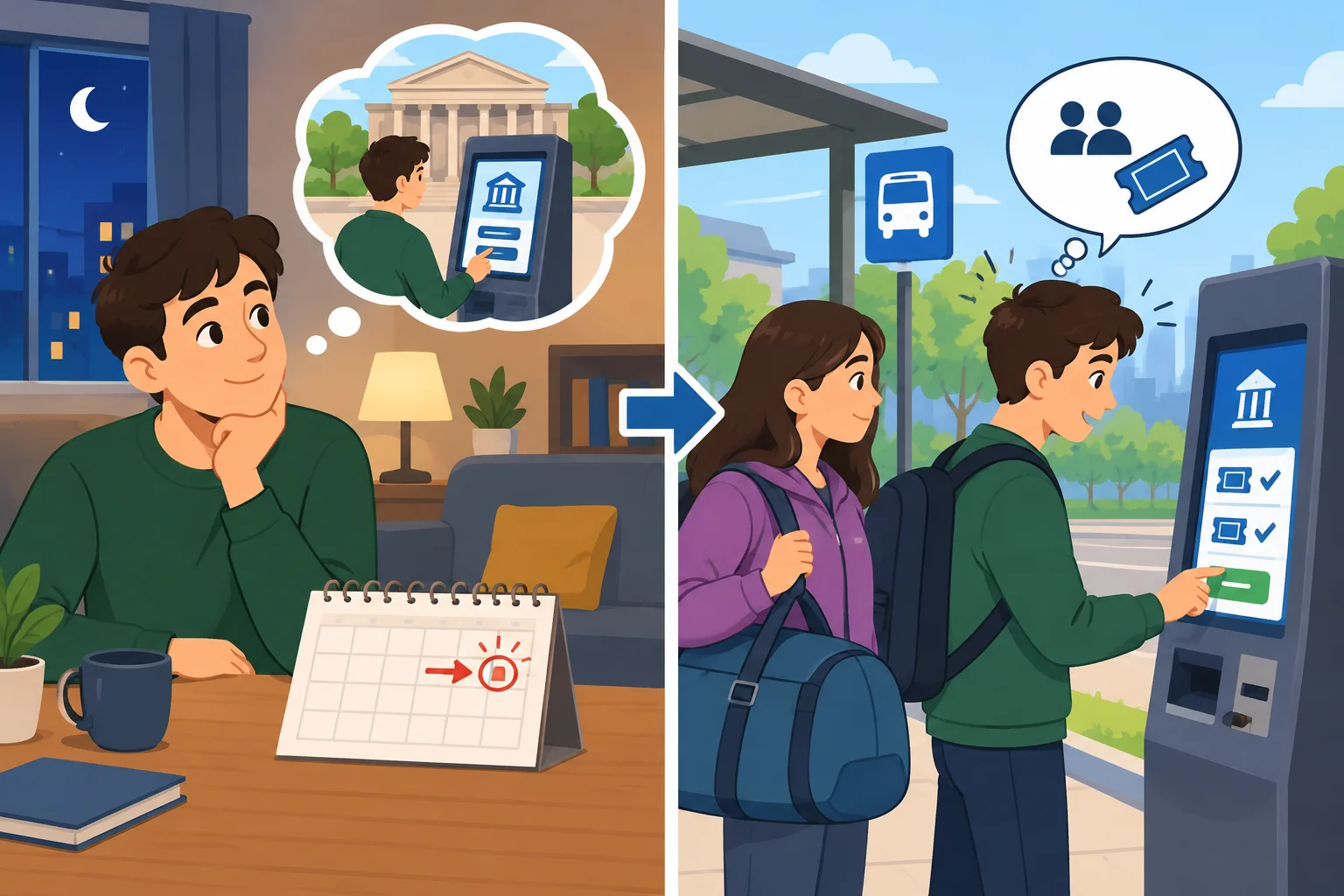
Earlier plan: “Leo is going to buy the tickets tomorrow.” New situation now: “Leo will buy the tickets now.”
Use short forms in friendly conversation.
| Subject | Full form | Friendly form |
|---|---|---|
| I | I will carry your bag. | I'll carry your bag. |
| We | We will buy the tickets now. | We'll buy the tickets now. |
An offer responds to someone’s need: “My bag is heavy.” → “I’ll carry your bag.”
A decision now happens when you learn something or notice a situation: “We need tickets now.” → “I’ll buy the tickets now.”
Both forms use will + action word.
Maya: I need help with this bag. Leo: I'll carry it. Maya: We need tickets now. Leo: We'll buy the tickets now.
Maya: I need help with this bag.
Leo: I'll carry it.
Maya: We need tickets now.
Leo: We'll buy the tickets now.
Match each situation to the best short response.
Tap an item and then its matching pair.
Maya: We need tickets for tomorrow.
Put the words in order to give Leo’s decision now.
Your sentence
Available words
Step 5 of 9
Make positive and negative predictions with will and won't. Ask a prediction question, give a short answer, and listen for the difference.
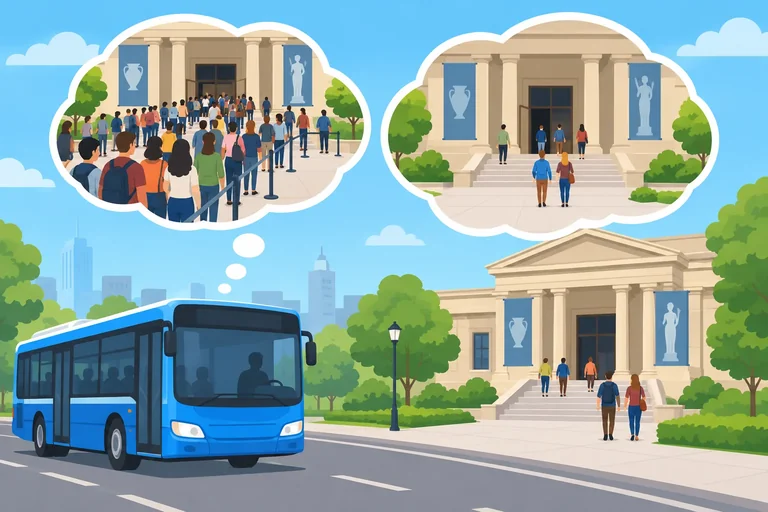
Use will for a simple prediction: what you think will happen in the future. You can begin with I think.
For a description, use will be:
subject + will + be + description
I think the museum will be busy tomorrow.
This is a thought about tomorrow, not a prediction from a sign you can see now.
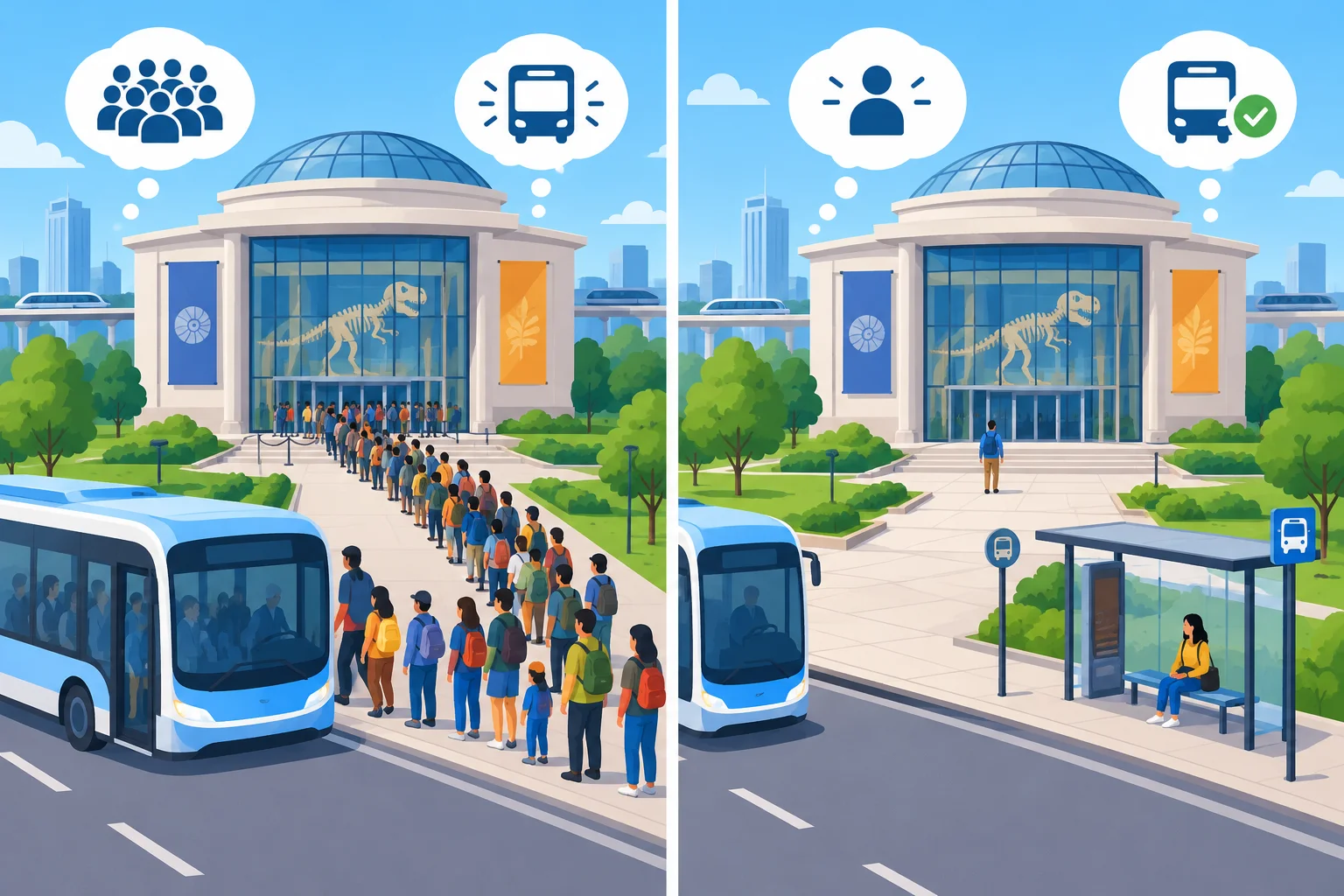
Two possible future scenes. A will prediction says what a speaker thinks will happen.
Won't is the short form of will not. Use it for a negative prediction.
| Meaning | Pattern | Example |
|---|---|---|
| positive prediction | will be | I think the museum will be busy tomorrow. |
| negative prediction | won't be | I think the museum won't be busy next week. |
Ask a prediction question with Will + subject + action word?
With a description, the action word is be:
Will it be busy?
Use will in a short answer. Do not repeat the whole description:
Yes, it will.
No, it won't.
Listen to one positive prediction and one negative prediction. Notice the clear ending in won't.
I think the museum will be busy tomorrow. I think the museum won't be busy next week.
Complete Maya's prediction: I think the museum ___ be busy tomorrow.
Complete Leo's prediction: I think the museum ___ be busy next week. Leo expects a quiet museum.
Put the words in order to ask about tomorrow's bus.
Your sentence
Available words
Maya says, “The ticket will be expensive tomorrow.” Choose Leo's short answer if he agrees.
Listen and choose an option.
Listen. Is the spoken prediction positive or negative?
I think the museum won't be busy next week.
Step 6 of 9
Read a short day-out conversation and use context clues to identify plans, offers, decisions now, and predictions.
When you read future language, read the whole situation—not only going to or will. An earlier choice usually signals a plan. A need can lead to an offer. A new problem can lead to a decision now. A visible sign or a general thought can signal a prediction.
These are useful common choices. Both forms can make predictions; the context helps you choose the best fit.
| Context clue | Meaning | Common form | Example |
|---|---|---|---|
| Earlier choice | plan | going to | We’re going to visit a museum tomorrow. |
| Someone needs help | offer | will | I’ll carry your bag. |
| A problem appears now | decision now | will | I’ll buy the tickets now. |
| You can see dark clouds | prediction | going to | It’s going to rain. |
| It is your general thought | prediction | will | I think the bus will be busy. |
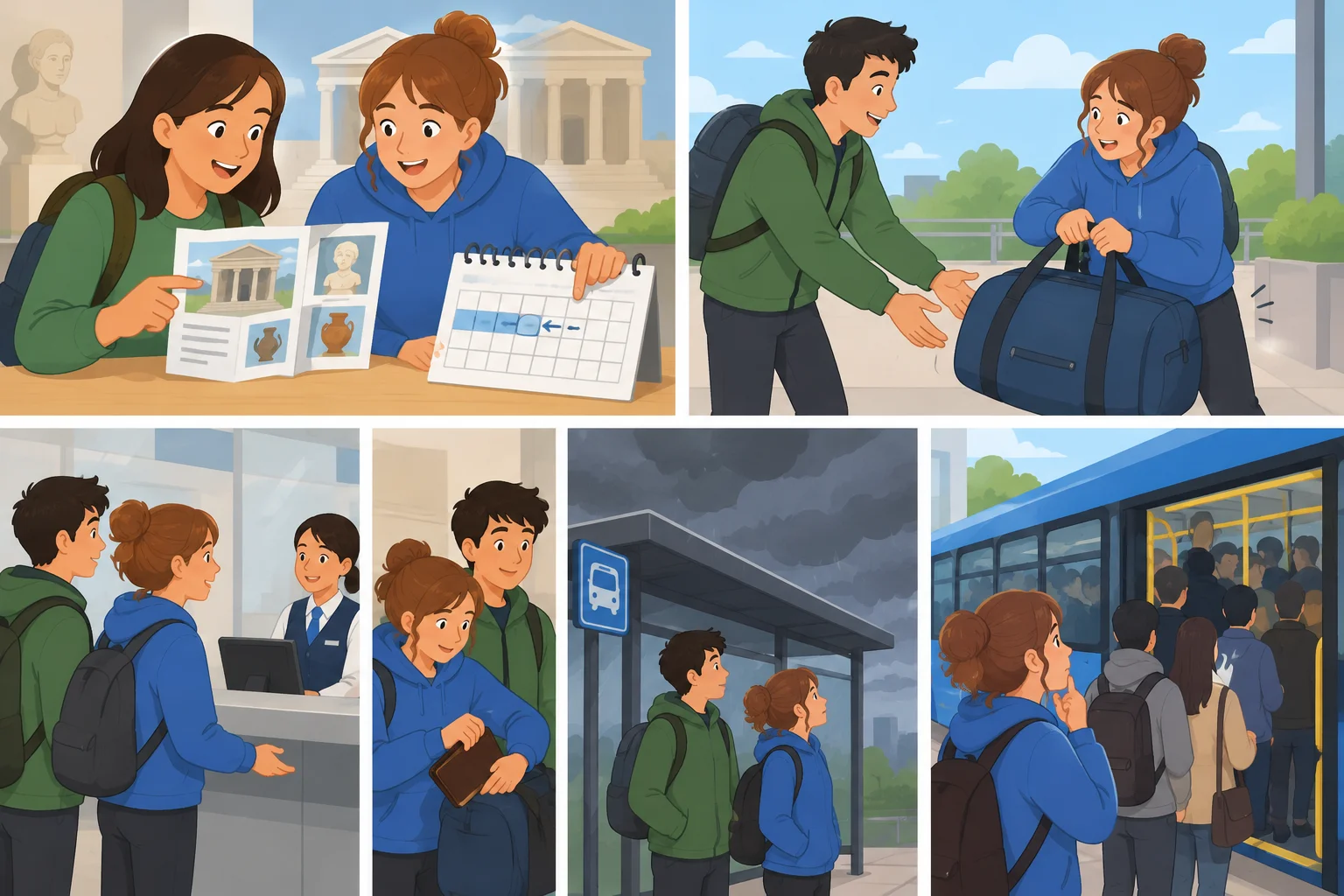
The same future forms become clearer when you notice the clue in the situation.
Read Maya and Leo’s conversation. Notice what happened before each future sentence and what they can see now.
Example
Maya: I’m going to pack a bag tonight.
Leo: Great. We’re going to meet at the bus stop at 9:00 a.m. tomorrow.
Maya: Yes, and we’re going to take a bus to visit a museum.
Leo: Your bag looks heavy. I’ll carry your bag.
Maya: We don’t have tickets.
Leo: I’ll buy the tickets now.
Maya: Look at those dark clouds. It’s going to rain.
Leo: I think the museum will be busy.
At the ticket office, Maya says, “We don’t have tickets.” Leo says, “I’ll buy the tickets now.” What is the best meaning of Leo’s sentence?
Match each situation and sentence to its best meaning.
Tap an item and then its matching pair.
Step 7 of 9
Listen for the key details in Maya and Leo’s day-out plan, identify a future meaning, and write a sentence you hear.
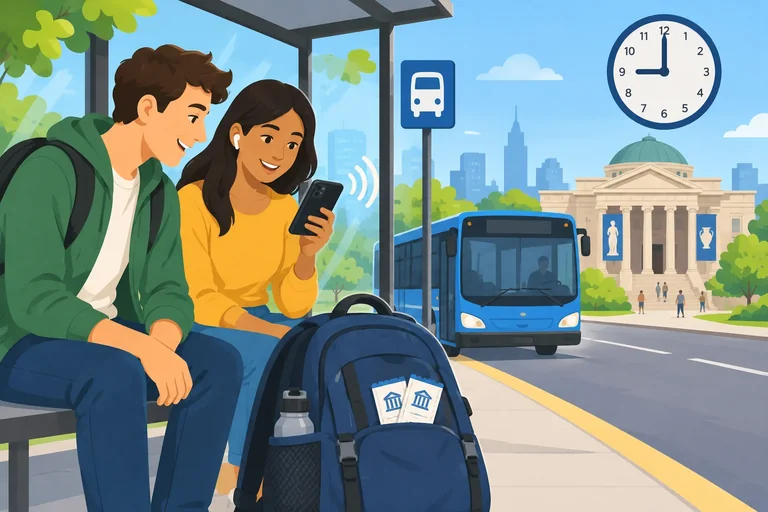
You do not need to hear every word. Listen for four details:
In normal speech, going to may sound like one quick unit, with less stress on some words. Listen for the complete form and write going to in your notes.
A spoken plan often gives the same four details: activity, transport, time, and each person’s role.
Tip
Listen for contractions too: I’ll means I will, we’ll means we will, and won’t means will not. The final sound in I’ll and won’t helps you hear the whole word.
Listen twice. First, catch the big plan. Next, listen for who packs the bag and who buys the tickets.
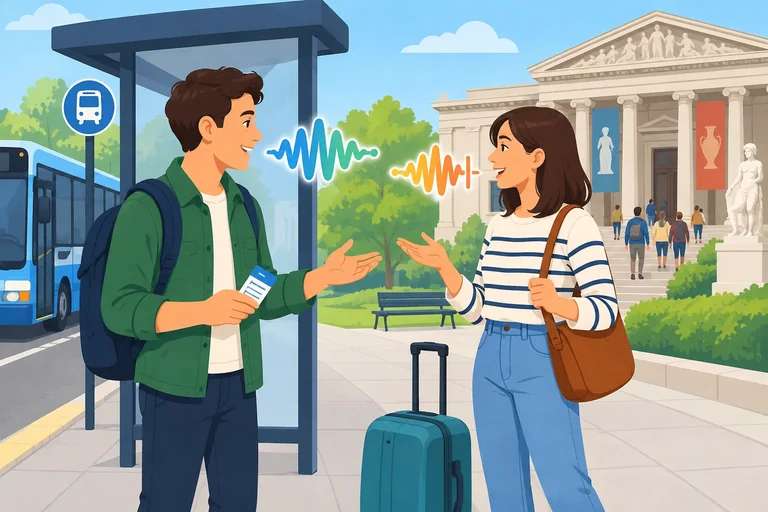
I'm going to pack a bag tonight. Great. We're going to meet at the bus stop at 9:00 a.m. tomorrow. Yes, and we're going to take a bus to the museum. I'll buy the tickets now.
Which picture shows the plan you heard?
Listen and choose an option.
Listen. What is the meaning?
I'll buy the tickets now.
Listen and write what you heard.
Listen and type the sentence you hear.
Step 8 of 9
Listen for I’ll and won’t, build a short exchange, and say it aloud with one changed detail.
Listen to a clear General American model. In I’ll, keep the small -ll ending audible, so it does not sound like only I. In won’t, make the middle sound and the final t clear.
Say each contraction slowly once. Then say it again in the full phrase without stopping after it. Aim for clear meaning, not a perfect accent.
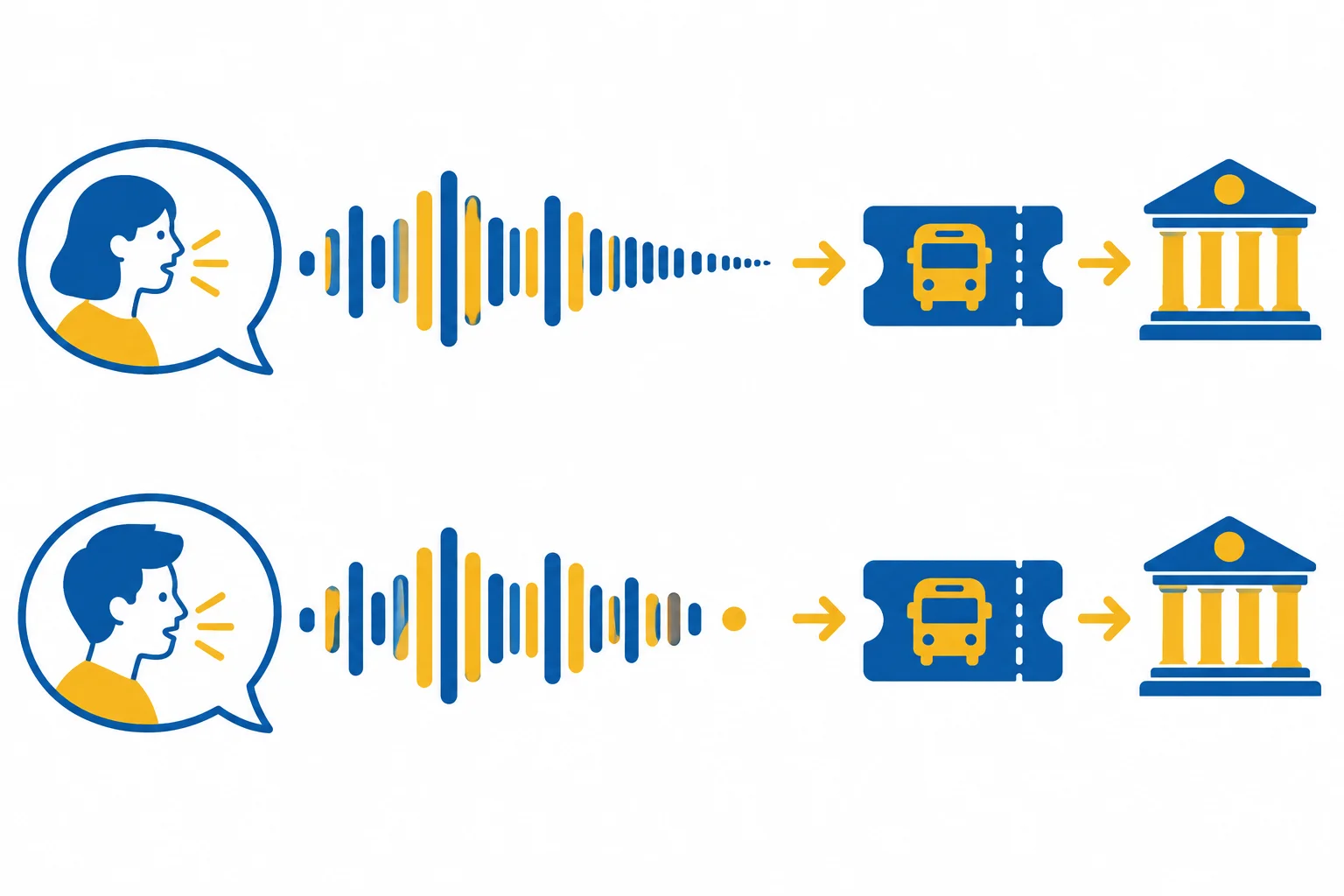
Keep the end of each contraction audible as you continue into the next word.
Listen once. Then repeat each message slowly and again at a natural speed.
Your bag is heavy. I'll carry your bag. I think the museum won't be busy next week.
Your bag is heavy. I'll carry your bag. I think the museum won't be busy next week.
Tip
For I’ll, check that you can hear the ending while you say the whole phrase: I’ll carry. For won’t, finish the word clearly before the next word: won’t be. Do not add a pause between the contraction and the phrase.
Listen and choose an option.
Which complete message do you hear?
Your bag is heavy. I'll carry your bag. I think the museum won't be busy next week.
Put the three blocks in order. First Maya states the need, then Leo responds immediately, and then Maya gives her thought about next week.
Your sentence
Available words
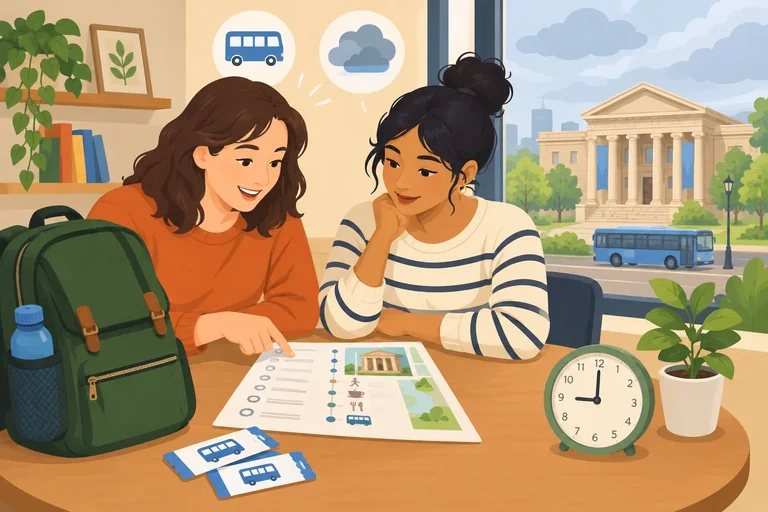
Say the exchange from the last screen aloud. Then say Maya’s last line again, but replace museum with bus. Keep the future form.
In the box, write your changed line. Then add two short self-check notes: Did you hear the ending in I’ll when you said Leo’s line? Was won’t clear in your prediction? No recording is needed.
Write at least 45 characters (0/45).
Step 9 of 9
Read, listen to, write, and say a short day-out plan with a helpful reply.
A useful day-out message tells a friend what you will do, when you will do it, and how you will travel. Read Maya’s five-sentence message. Notice the plan, negative plan, question, and prediction.
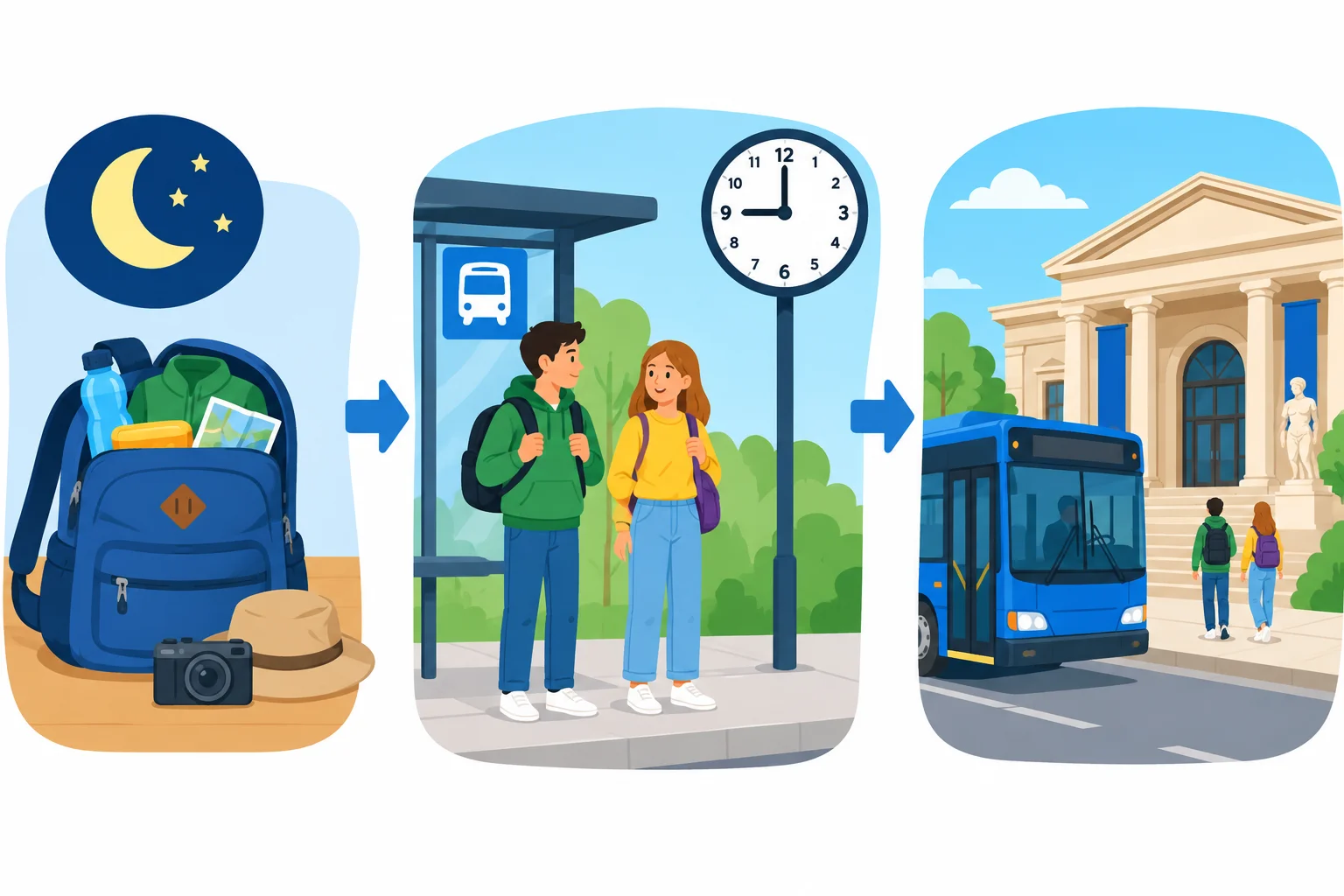
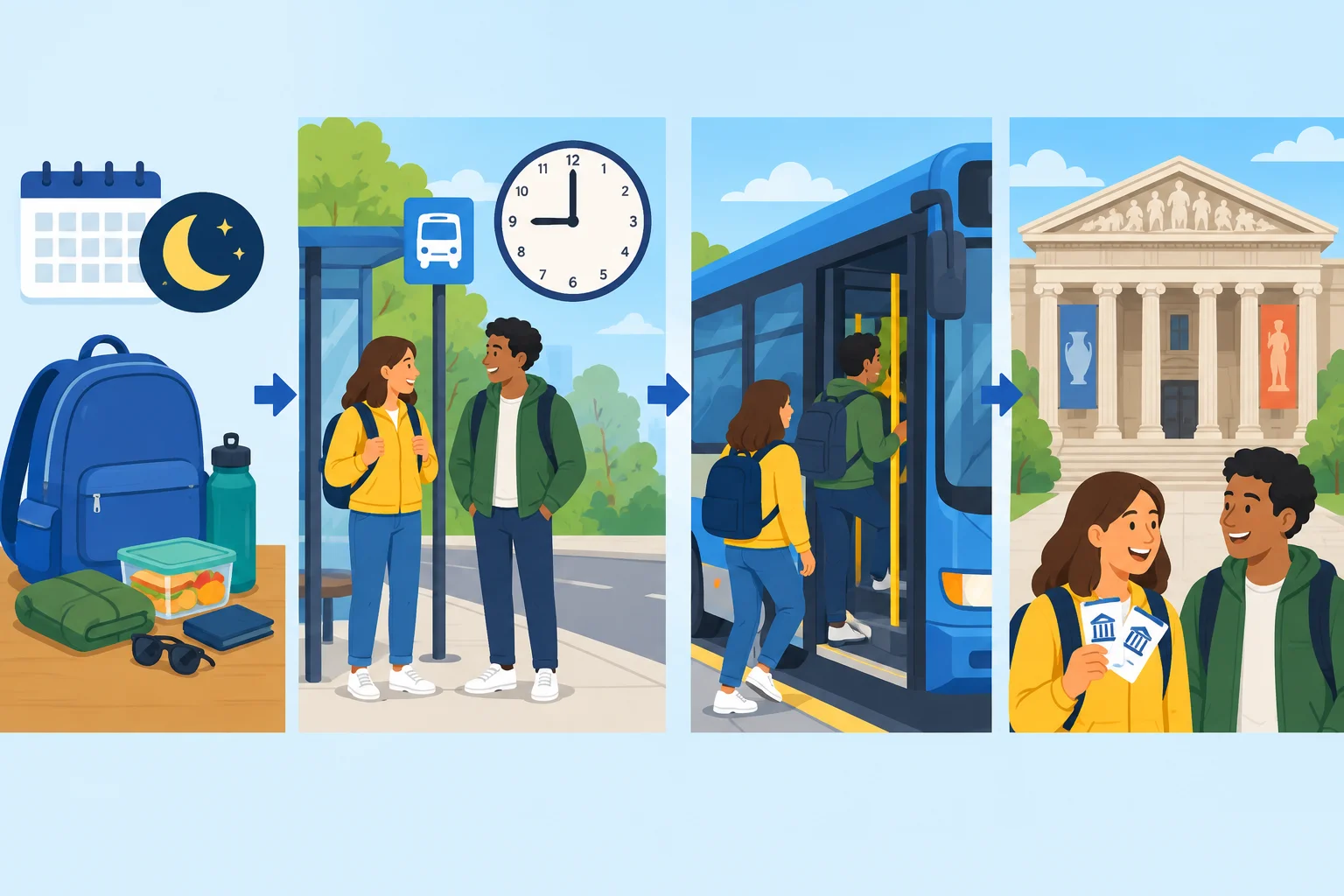
Maya’s message follows this sequence: prepare tonight, then meet, travel, and visit tomorrow.
Example
Maya:
I’m going to pack a bag tonight.
Tomorrow, we’re going to meet at the bus stop at 9:00 a.m., take a bus, and visit a museum.
I’m not going to drive.
Are you going to buy the tickets?
I think the museum will be busy.
Listen once or twice. Remember one detail: what does Leo decide to do now? You will use this detail in your final message.
Maya: I'm going to pack a bag tonight. Are you going to buy the tickets? Leo: Yes. I'll buy the tickets now. I think the museum will be busy tomorrow.
Now prepare your own final exchange. First write a four- or five-sentence plan. Then write a two-sentence reply. Your reply needs one offer and one decision made now. Use the models to check your form and meaning after you write.
Example
Leo:
I’ll carry your bag.
I’ll buy the tickets now.
Summary
Use this checklist after writing and speaking.
Complete your final day-out exchange in one response.
Write at least 180 characters (0/180).
Congratulations! You completed: Plan a Day Out with Going to and Will
Thousands of online courses in video, ebooks and audiobooks.
To test your knowledge during online courses
Generated directly from your cell phone's photo gallery and sent to your email

Download our app via QR Code or the links below:.



Carry knowledge in your pocket.
Download the Cursa app.
There are hundreds of free courses available, with a free certificate of completion that is saved in your mobile image gallery.
Download the app to access the Course Completion Certificate for Free.


+ 10 million
students

Free and Valid
Certificate

60 thousand free
exercises

4.8/5 rating in
app stores

Free courses in
video and ebooks