
Step 1 of 8
Frame the Same Evidence
Compare two accurate openings for the Rivergate Library recommendation and explain how framing changes attention without changing the evidence.

Learning path · Level 12 · Tutorial 4
Shape a short public recommendation through framing, parallel structure, rhythm, and controlled understatement. Compare written versions, listen to contrasting deliveries, choose the effect supported by the recording, and complete a brief dictation. Write and rehearse a revised recommendation, then explain how its stylistic choices influence an audience without changing or overstating the evidence.

 Frame the Same Evidence
Compare two accurate openings for the Rivergate Library recommendation and explain how framing changes attention without changing the evidence. 3 min
 Balance Clauses Without Losing Meaning
Build parallel recommendation clauses, use ellipsis only when the omitted meaning remains recoverable, and protect the scope of essential qualifications. 3 min
 Create Rhythm Through Repetition
Use anaphora and sentence-length variation to organize a conditional public recommendation while preserving its qualifications. 3 min
 Use Understatement Without Minimizing
Choose restrained wording that serves a rhetorical purpose while keeping Rivergate Library’s staffing burden and funding uncertainty explicit. 2 min
 Test the Assumptions in a Question
Examine the assumptions behind rhetorical questions and revise pressure into a defensible public recommendation. 2 min
 Make the Structure Audible
Use cadence, prominence, and pauses to make a parallel recommendation clear while keeping its funding qualification fully audible. 3 min
 Audit Persuasive Force Against the Facts
Audit short public-facing claims against the Rivergate Library Case facts. Repair exaggerated agreement and minimized resource concerns while preserving a purposeful rhetorical effect. 3 min
 Revise and Rehearse a Public Recommendation
Revise, rehearse, and justify a concise Rivergate Library recommendation while preserving every material qualification. 5 min
Step 1 of 8
Compare two accurate openings for the Rivergate Library recommendation and explain how framing changes attention without changing the evidence.
At a public meeting, the Library Committee is considering one fixed proposal: an 8-week pilot that extends Rivergate Library’s hours from 18:00 to 20:00 on Tuesdays and Thursdays.
A voluntary survey received 120 responses, and 78 respondents preferred later opening. This does not establish the preferences of all residents or predict actual attendance.
The pilot requires 8 additional staff-hours per week. Its monetary cost has not been calculated, funding has not been secured, and any recommendation is conditional on funding the additional staffing.

Framing changes the audience’s starting point, not the underlying evidence.
Framing selects which aspect of an unchanged situation an audience notices first. It can use evaluative labels: “additional access” foregrounds a possible benefit, while “extended staffing” foregrounds a resource demand.
Neither label changes the hours, survey result, or funding condition. Their persuasive force comes from wording and organization, not from additional evidence. A likely effect is only a reasoned possibility: residents may attend first to access, while staff may attend first to workload. No frame guarantees a reaction.
Both openings retain the proposal, the survey result, and the funding condition. Compare what each makes prominent first.
| Version | Opening |
|---|---|
| Version A | To test additional access, the Library Committee should consider an 8-week pilot from 18:00 to 20:00 on Tuesdays and Thursdays, if funding is secured for 8 additional staff-hours per week. A voluntary survey found that 78 of 120 respondents preferred later opening. |
| Version B | Before committing extended staffing, the Library Committee should consider an 8-week pilot from 18:00 to 20:00 on Tuesdays and Thursdays, only if funding is secured for 8 additional staff-hours per week. A voluntary survey found that 78 of 120 respondents preferred later opening. |
Tip
A frame is not automatically manipulative. Check whether it keeps the claim’s scope: “78 of 120 respondents” does not become “residents support it,” and a pilot still depends on funding.
Match each label to the emphasis or factual feature it represents.
Tap an item and then its matching pair.
Use the complete Case facts below.
Version A begins, “To test additional access …” Version B begins, “Before committing extended staffing …” Both otherwise recommend the conditional pilot and report that 78 of 120 respondents preferred later opening.
Write 80–140 words. Identify the main emphasis of Version A and Version B. Then justify whether each preserves the survey’s scope and the staffing requirement. Describe a likely audience effect, not a guaranteed reaction.
Write at least 80 characters (0/80).

Step 2 of 8
Build parallel recommendation clauses, use ellipsis only when the omitted meaning remains recoverable, and protect the scope of essential qualifications.
Case facts
Rivergate Library is considering an 8-week pilot that extends hours from 18:00 to 20:00 on Tuesdays and Thursdays. A voluntary survey received 120 responses, and 78 respondents preferred later opening. The survey does not establish the preferences of all residents or predict attendance.
The pilot requires 8 additional staff-hours per week. Its monetary cost has not been calculated, funding has not been secured, and any recommendation must be conditional on funding the additional staffing.
Parallelism places coordinated elements in corresponding grammatical forms. It helps a public audience follow which actions belong together.
Consider this recommendation: “If funding is secured, the Library Committee can authorize an 8-week pilot and require a review of attendance.” Both actions follow the same pattern: can + verb + object.
This balance does not make the actions equally important, equally costly, or equally easy. It simply makes their relationship easier to read. The funding qualification still matters to the whole recommendation.
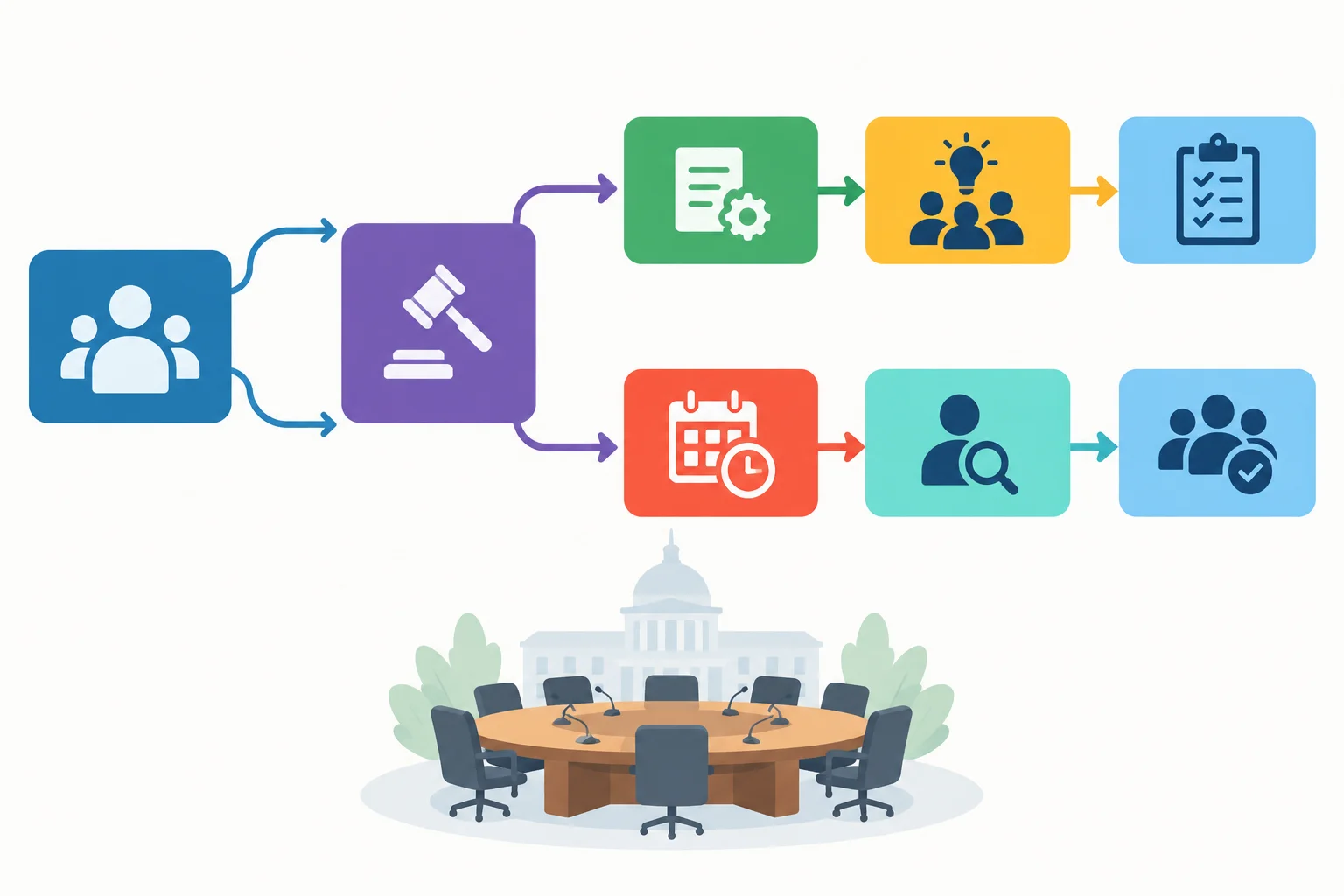
The shared opening supports two coordinated actions with corresponding grammatical positions.
Example
Ellipsis leaves out grammatical material that a reader can readily recover. In analysis, use square brackets to show what has been omitted.
Version A
“If funding is secured, the Library Committee can authorize an 8-week pilot, and it can require a review of attendance.”
Version B
“If funding is secured, the Library Committee can authorize an 8-week pilot and [it can] require a review of attendance.”
Version B is concise because the actor and modal remain clear. The funding qualification comes first, so it governs both coordinated actions.
Do not use ellipsis merely because a sentence looks balanced. Check three things:
For example, “The Library Committee can authorize an 8-week pilot if funding is secured and require a review of attendance” compresses the sentence, but the placement may suggest that the funding qualification applies only to authorization. If the condition governs both actions, place it before the coordinated actions instead.
Tip
A polished parallel structure can strengthen persuasive force by making a recommendation feel organized. It cannot turn a limited survey finding into agreement from all residents, and it cannot remove the unresolved staffing requirement.
Arrange the blocks into one grammatically parallel recommendation.
Your sentence
Available words
Write three numbered lines.
Keep the case facts unchanged.
Write at least 220 characters (0/220).

Step 3 of 8
Use anaphora and sentence-length variation to organize a conditional public recommendation while preserving its qualifications.
The Library Committee is considering an 8-week pilot at Rivergate Library: opening from 18:00 to 20:00 on Tuesdays and Thursdays.
A voluntary survey received 120 responses, and 78 respondents preferred later opening. This does not establish the preferences of all residents or predict actual attendance.
The pilot requires 8 additional staff-hours per week. Its monetary cost has not been calculated, funding has not been secured, and any recommendation must be conditional on funding the additional staffing.
Anaphora is deliberate repetition at the beginning of successive clauses. In writing, it creates a visible beat: readers recognize the repeated start, then notice what changes after it.
A three-part pattern can organize a recommendation as a sequence: proposed action, observation, and review. It can increase persuasive force by making that sequence easy to follow. It does not make the evidence stronger: 78 of 120 respondents is still a voluntary-survey finding, not a forecast of attendance.
Example
Version A
Because a voluntary survey received 120 responses and 78 respondents preferred later opening, the Library Committee could authorize an 8-week pilot from 18:00 to 20:00 on Tuesdays and Thursdays, provided that funding is secured for 8 additional staff-hours per week.
Version B
We can test later access for 8 weeks if funding is secured. We can observe use from 18:00 to 20:00 on Tuesdays and Thursdays. We can review the 8 additional staff-hours per week before a longer decision. The result remains uncertain.
Version A concentrates the information in one long sentence. Version B uses anaphora in its first 3 sentences: each begins with “We can.” The final short sentence changes the pace and leaves the uncertainty prominent.
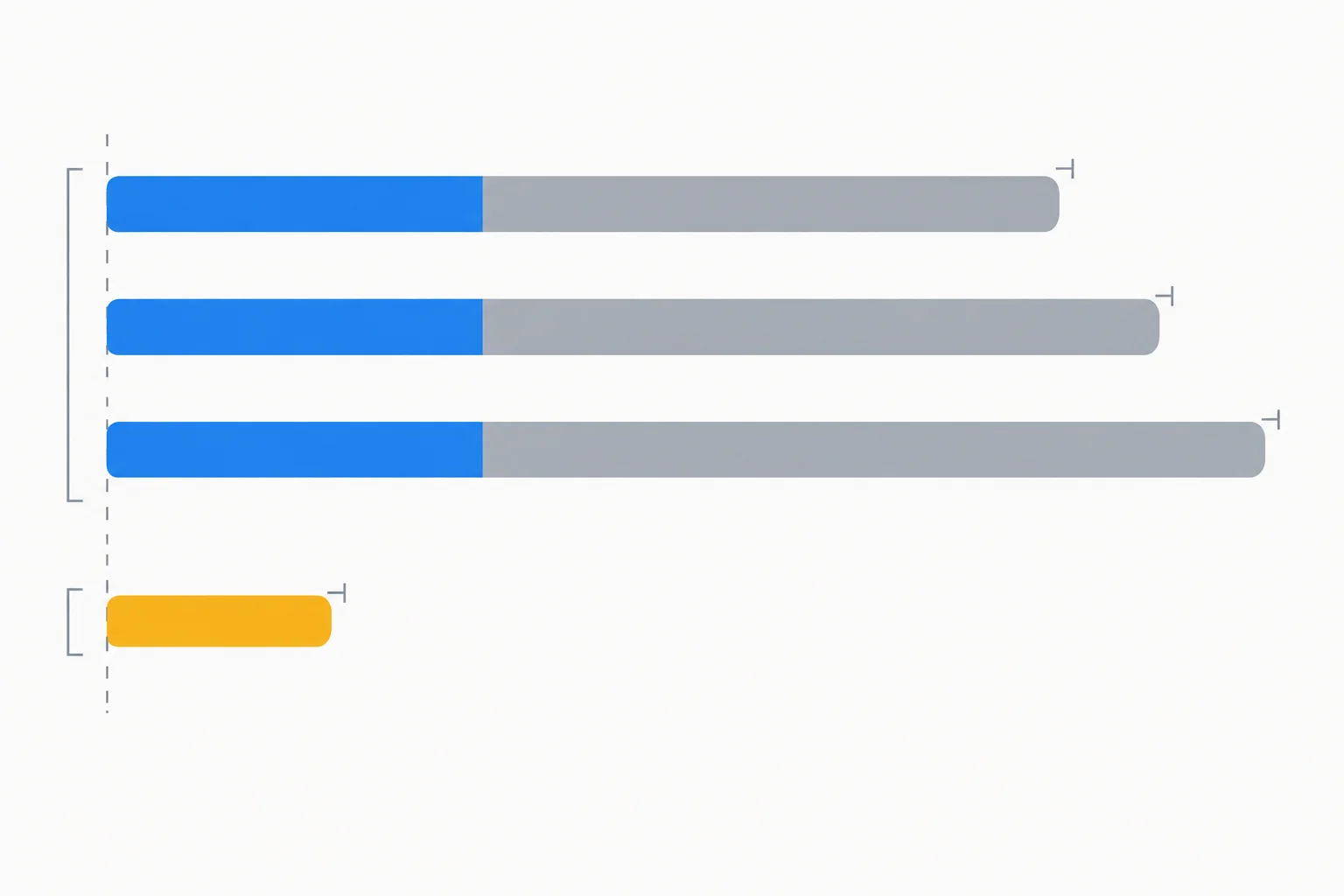
Aligned openings make repetition visible; the short final bar creates a deliberate change in pace.
Arrange the clauses from the proposed conditional trial through observation to review.
Your sentence
Available words
Create a brief recommendation for the Library Committee.
Draft: Write exactly 3 complete action clauses with the same opening. Across the 3 clauses, accurately include:
Revision: Add 1 shorter closing sentence. Make its effect measured and review-oriented, rather than inevitable.
Then explain in 1–2 sentences how the repeated opening and the shorter close improve organization without making the proposal better supported.
Write at least 300 characters (0/300).

Step 4 of 8
Choose restrained wording that serves a rhetorical purpose while keeping Rivergate Library’s staffing burden and funding uncertainty explicit.
At the Rivergate Library meeting, strategic understatement uses restrained wording so that a concern can register without dramatic language. Its persuasive force comes from context and from what listeners reasonably infer—not from adding evidence.
Restraint has a limit. A material concern must remain visible, and qualifications must still be audible in the wording. Calling a requirement “small” or omitting the funding condition would not be careful understatement; it would minimize the case.

The same proposal can be described with different degrees of restraint. The middle approach works only when the staffing burden and funding qualification remain visible.
Case facts
Use these facts unchanged in every version:
Understatement may project measured confidence, express a concern tactfully, or deliver quiet criticism. These are possible audience effects, not guaranteed reactions.
Litotes is one form of understatement: it uses a negated opposite, as in “not insignificant.” The phrase suggests that something deserves attention. It does not provide a numerical measurement or establish a fixed level of importance. When precision matters, state the quantity as well.
Compare the rhetorical treatments below. A direct statement can be effective; understatement is a choice, not an upgrade.
| Treatment | Typical form | What it does | Required boundary |
|---|---|---|---|
| Direct wording | States the concern plainly | Makes the record easy to assess | Keep all relevant facts and qualifications |
| Strategic understatement | Restrained expression | Invites measured attention or tact | Name the material concern and condition |
| Litotes | Negated opposite | Signals more than the literal negative | Does not supply a quantity or fixed degree |
| Misleading minimization | Downplays or hides a concern | Makes a burden seem negligible | Avoid: it weakens factual fidelity |
Example
Version A
An 8-week pilot would require 8 additional staff-hours per week. Funding has not been secured.
Version B
An 8-week pilot would require 8 additional staff-hours per week—a requirement that is not insignificant—and could proceed only if additional staffing is funded.
Version B uses litotes, but it still gives the staffing figure and the qualification. “Not insignificant” signals concern with restraint; it does not calculate cost or prove exactly how important the requirement is.
Match each Rivergate Library statement to its rhetorical treatment.
Tap an item and then its matching pair.
At the Library Committee meeting, compare these statements:
Write 3 numbered parts:
Write at least 250 characters (0/250).

Step 5 of 8
Examine the assumptions behind rhetorical questions and revise pressure into a defensible public recommendation.
A rhetorical question is shaped like a question, but it mainly invites the audience to accept a conclusion. It does not simply request information.
At a public meeting, consider: “Why would we withhold later access from residents?” The wording invites the Library Committee to favor the pilot. For that invitation to work, listeners must accept an unspoken assumption: that describing the proposal as “withholding access” is fair and that the unresolved staffing condition does not change the decision.
A listener may reject that assumption without rejecting later access itself. The question’s persuasive force comes from making one conclusion feel like the obvious starting point.
Use these unchanged facts to test what a question implies.
| Area | Case facts |
|---|---|
| Proposal | 8-week pilot: 18:00–20:00 on Tuesdays and Thursdays |
| Survey | 120 voluntary responses; 78 respondents preferred later opening |
| Resources | 8 additional staff-hours per week required |
| Funding | Monetary cost not calculated; funding not secured |
| Condition | Recommendation is conditional on funding additional staffing |

Trace a rhetorical question in three stages: identify its invited conclusion, uncover the assumption that supports it, then consider a reasonable listener response.
Intended agreement is not the same as agreement that residents or library staff actually share. A rhetorical question can make dissent sound unreasonable before the audience has considered the qualifications.
That is risky here. The survey was voluntary, so 78 of 120 respondents do not establish the preferences of all residents or predict attendance. The pilot also depends on funding 8 additional staff-hours per week. A question that treats approval as already settled can exaggerate consensus or hide a material concern.
Example
Version A
“Who would deny residents additional access?”
This rhetorical question encourages the Committee to see opposition as denial. It can exclude reasonable disagreement about the survey’s limits, staffing, or funding.
Version B
“78 of 120 respondents preferred later opening. The Committee could consider an 8-week pilot, provided that funding secures 8 additional staff-hours per week.”
This assertion still supports consideration, but it states the evidence and its qualification. A genuinely open alternative is: “What information should the Committee review before deciding whether to fund the additional staffing?”
At the Rivergate Library meeting, a speaker asks: “Shouldn’t we give residents the later hours they clearly want?” Which assumption is required by the phrase “residents clearly want”?
Analyze this statement for the Library Committee:
“If later hours matter to residents, why wait to approve the pilot?”
The speaker refers to the survey in which 78 of 120 respondents preferred later opening. Remember that the pilot requires 8 additional staff-hours per week, and funding is not secured.
Create a short Question → Assumption → Response diagram in your answer. Include:
Do not simply answer the rhetorical question.
Write at least 220 characters (0/220).

Step 6 of 8
Use cadence, prominence, and pauses to make a parallel recommendation clear while keeping its funding qualification fully audible.
Rivergate Library is considering an 8-week pilot that would extend opening hours from 18:00 to 20:00 on Tuesdays and Thursdays. A voluntary survey received 120 responses, and 78 of 120 respondents preferred later opening. The survey does not establish the preferences of all residents or predict attendance.
The pilot requires 8 additional staff-hours per week. Its monetary cost has not been calculated, funding has not been secured, and any recommendation is conditional on funding the additional staffing.
Cadence is the perceived rhythmic movement and phrasing of speech. It helps listeners hear which ideas belong together and which idea limits the recommendation.
Use prominence selectively: give related parallel actions comparable weight, then make the qualification audible at a clear boundary. Do not stress every important-sounding word. A recording can support an interpretation of rhetorical effect, but it cannot prove a speaker's intention.
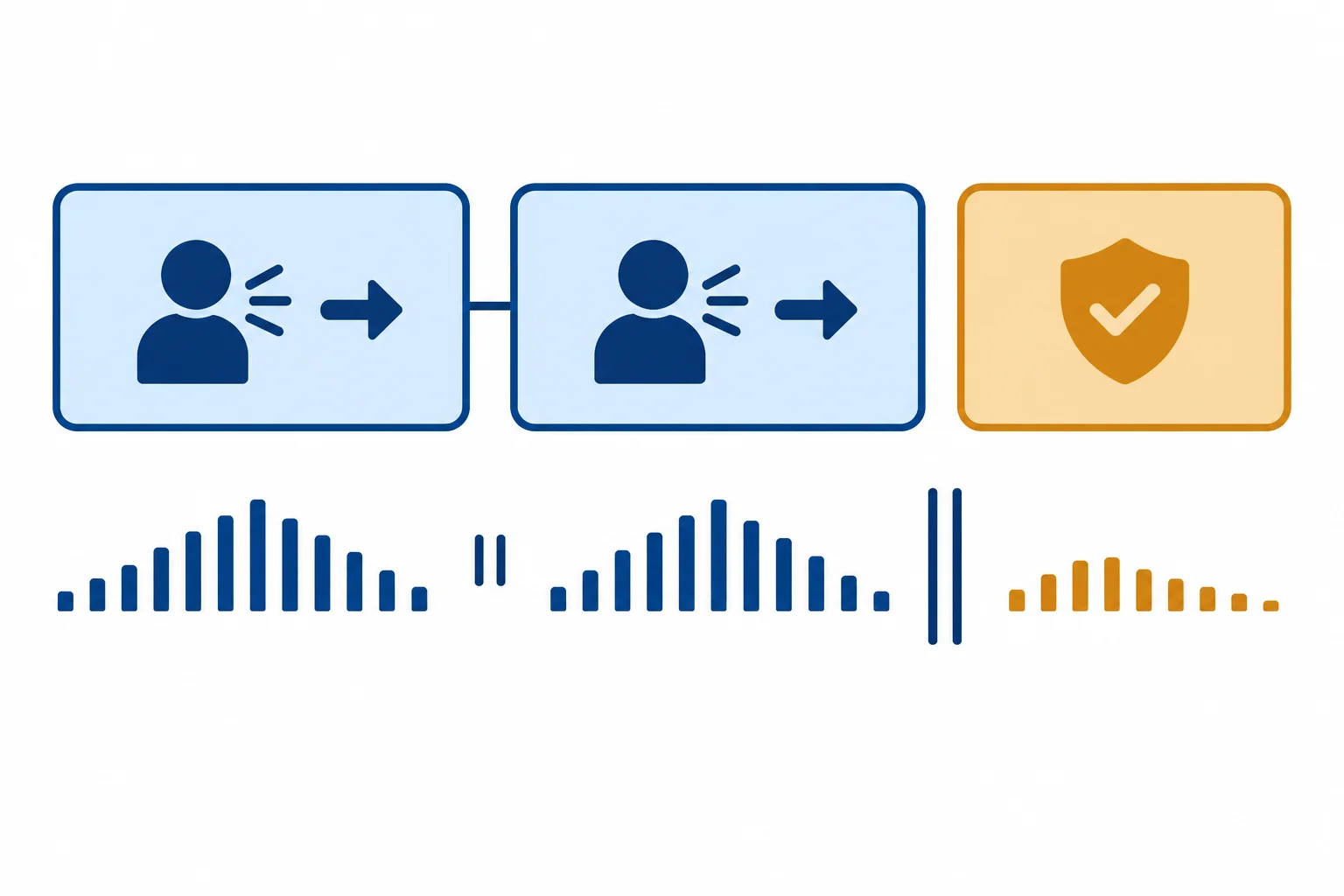
Comparable prominence helps listeners hear parallelism; a longer boundary gives the qualification its own audible space.
Listen to the identical wording in both recordings. Do not read a transcript yet. Notice the pace, the words that receive prominence, and whether the funding condition remains distinct.
For 8 weeks, we can test later access and track attendance, provided that funding covers 8 additional staff-hours per week.
For 8 weeks, we can test later access and track attendance, provided that funding covers 8 additional staff-hours per week.
Which account is best supported by the two deliveries?
Listen and write what you heard.
Listen and type the complete extract. Use normal punctuation.
Now rehearse the extract aloud twice. Let the two actions sound coordinated, but give the qualification a longer boundary and an unhurried pace. CAPITALS mark prominence; / marks a short thought-group pause; // marks a longer boundary.
No recording submission is needed.
Example
For 8 weeks, we can TEST later access / and TRACK attendance // provided that FUNDING covers 8 additional staff-hours per week.
After rehearsing, describe one pause or prominence choice you used and explain how it keeps the funding qualification audible.
Write at least 40 characters (0/40).

Step 7 of 8
Audit short public-facing claims against the Rivergate Library Case facts. Repair exaggerated agreement and minimized resource concerns while preserving a purposeful rhetorical effect.
A focused rhetorical audit compares a passage’s likely implications with the unchanged Case facts. Ask two questions:
A revision need not become flat. It can retain persuasive force by foregrounding a supportable reason to consider a conditional pilot while making its qualifications clear. The goal is not to remove style; it is to prevent style from extending a claim beyond the facts.
Use these fixed facts when you audit a passage.
| Area | Case facts | Audit boundary |
|---|---|---|
| Proposal | An 8-week pilot from 18:00 to 20:00 on Tuesdays and Thursdays | It is a limited trial, not a permanent change. |
| Survey | A voluntary survey received 120 responses; 78 respondents preferred later opening. | It does not establish what all residents prefer or predict attendance. |
| Staffing | The pilot requires 8 additional staff-hours per week. | This is a material resource requirement. |
| Funding | The monetary cost has not been calculated; funding has not been secured. | The recommendation is conditional on funding the additional staffing. |

Style can add persuasive force, but it must not turn a limited fact into a broader conclusion.
Example
Version A: “Rivergate has clearly chosen later hours.”
The certainty turns a preference reported by some survey respondents into a decision by the whole community. Its persuasive force comes from confidence, but that confidence is unsupported.
Version B: “In a voluntary survey, 78 of 120 respondents preferred later opening.”
Version B still foregrounds evidence for considering the pilot. It removes the implication that all residents agree or that a decision has already been made.
Understatement can create a different distortion. A phrase such as “a small staffing matter” may sound calm, yet it can make 8 additional staff-hours per week seem negligible. When funding is not secured, that qualification is not a detail to bury.
A credible recommendation can name the constraint and still support consideration of a conditional pilot. Candid responsibility can itself contribute to persuasive force.
Tip
Parallelism, anaphora, and cadence can make a claim memorable. They cannot establish broad agreement, predict attendance, calculate cost, or secure funding. Preserve the rhetorical effect by organizing only what the Case facts support.
Match each passage to the main distortion it creates.
Match each Rivergate Library passage with its main distortion.
Tap an item and then its matching pair.
Write two sentence-level repairs for the Library Committee.
Draft A: “Residents agree: Rivergate needs later hours.”
Revision A: Distinguish the voluntary survey respondents from all residents.
Draft B: “The 8-week pilot has only a minor staffing detail.”
Revision B: Keep 8 additional staff-hours per week and state that funding for additional staffing has not been secured.
For each revision, add:
Do not write a full recommendation. Write 1 sentence for each revision, followed by its 2 short notes.
Write at least 350 characters (0/350).

Step 8 of 8
Revise, rehearse, and justify a concise Rivergate Library recommendation while preserving every material qualification.
A final revision does not need every device you have learned. It needs choices that work together.
Start with a deliberate framing: decide whether the opening foregrounds access, the bounded trial, or the staffing condition. Then check whether any parallelism, repetition, or sentence-length contrast makes the recommendation easier to follow. Finally, test its persuasive force against the evidence: polished language must not turn a survey preference into universal agreement or a funding condition into an afterthought.

Use all four checks before treating a recommendation as finished.
Keep these facts unchanged while you revise.
| Area | Fixed fact or qualification |
|---|---|
| Proposal | An 8-week pilot extends opening hours from 18:00 to 20:00 on Tuesdays and Thursdays. |
| Survey | A voluntary survey received 120 responses; 78 respondents preferred later opening. |
| Survey limit | The survey does not establish the preferences of all residents or predict actual attendance. |
| Staffing | The pilot requires 8 additional staff-hours per week. |
| Funding | The monetary cost has not been calculated, funding has not been secured, and the recommendation is conditional on funding the additional staffing. |
Example
Library Committee, 78 of 120 respondents preferred later opening. Rivergate Library should open from 18:00 to 20:00 on Tuesdays and Thursdays for 8 weeks. Residents want this change, and attendance will follow. The 8 additional staff-hours per week are not significant. Approve the pilot.
Warning
This Draft uses a neutral opening, but its later wording creates unsupported implications. It treats a voluntary response group as if it represented all residents, predicts attendance without evidence, minimizes a material staffing requirement, and gives an unconditional recommendation despite unsecured funding.
In the Revision, retain a purposeful frame and controlled rhythm, but make the pilot conditional on funding the additional staffing. A qualification can be prominent without becoming the whole message.
Use four short questions:
A device is optional. Accuracy is not optional.
Create your Revision from the Case facts and the Draft.
Write at least 700 characters (0/700).
Summary
Congratulations! You completed: Shape an Argument with Rhetorical Choices
30 XP
Thousands of online courses in video, ebooks and audiobooks.
To test your knowledge during online courses
Generated directly from your cell phone's photo gallery and sent to your email

Download our app via QR Code or the links below:.



Carry knowledge in your pocket.
Download the Cursa app.
There are hundreds of free courses available, with a free certificate of completion that is saved in your mobile image gallery.
Download the app to access the Course Completion Certificate for Free.


+ 10 million
students

Free and Valid
Certificate

60 thousand free
exercises

4.8/5 rating in
app stores

Free courses in
video and ebooks