
Step 1 of 8
Say What Happened Yesterday
Recognize finished actions and make short affirmative past simple sentences with visited, watched, and played.

Learning path · Level 3 · Tutorial 3
Tell someone what happened yesterday. Use common past action words and put events in order. Read and listen to a short account of a day out. Practise the sounds of -ed, then say and write a short account of your own.

 Say What Happened Yesterday
Recognize finished actions and make short affirmative past simple sentences with visited, watched, and played. 2 min
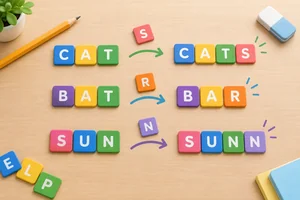 Spell Regular Past Forms
Write regular past forms with common spelling patterns, including both spellings of traveled. 3 min
 Use Common Irregular Past Forms
Learn six common irregular past forms and use them in familiar activity phrases and affirmative sentences. 4 min
 Hear and Say the -ed Endings
Hear and say the three target -ed endings in watched, played, and visited. 3 min
 Put Events in Order
Use first, then, after that, and finally to connect past simple events in a clear order. 3 min
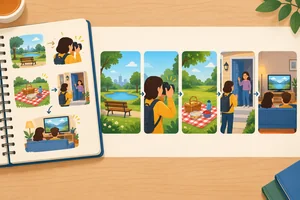 Read About a Day Out
Read a short account of Alex’s day out, identify details that it supports, and connect sequence phrases to the events they introduce. 3 min
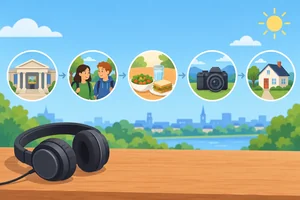 Listen and Rebuild the Day
Listen to Sam’s day out, put the events in order, and write a short past-action sentence. 3 min
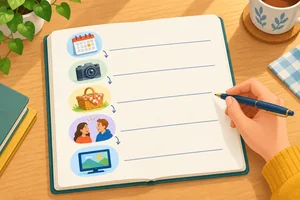 Tell Someone About Your Yesterday
Write and say a clear five-sentence account of a real or imagined past day. 4 min
Step 1 of 8
Recognize finished actions and make short affirmative past simple sentences with visited, watched, and played.
Yesterday tells us that an action happened and finished. Use the past simple to talk about it.
For an affirmative sentence, use:
I + past form
These are regular action words. Notice the changes:
visit → visited
watch → watched
play → played
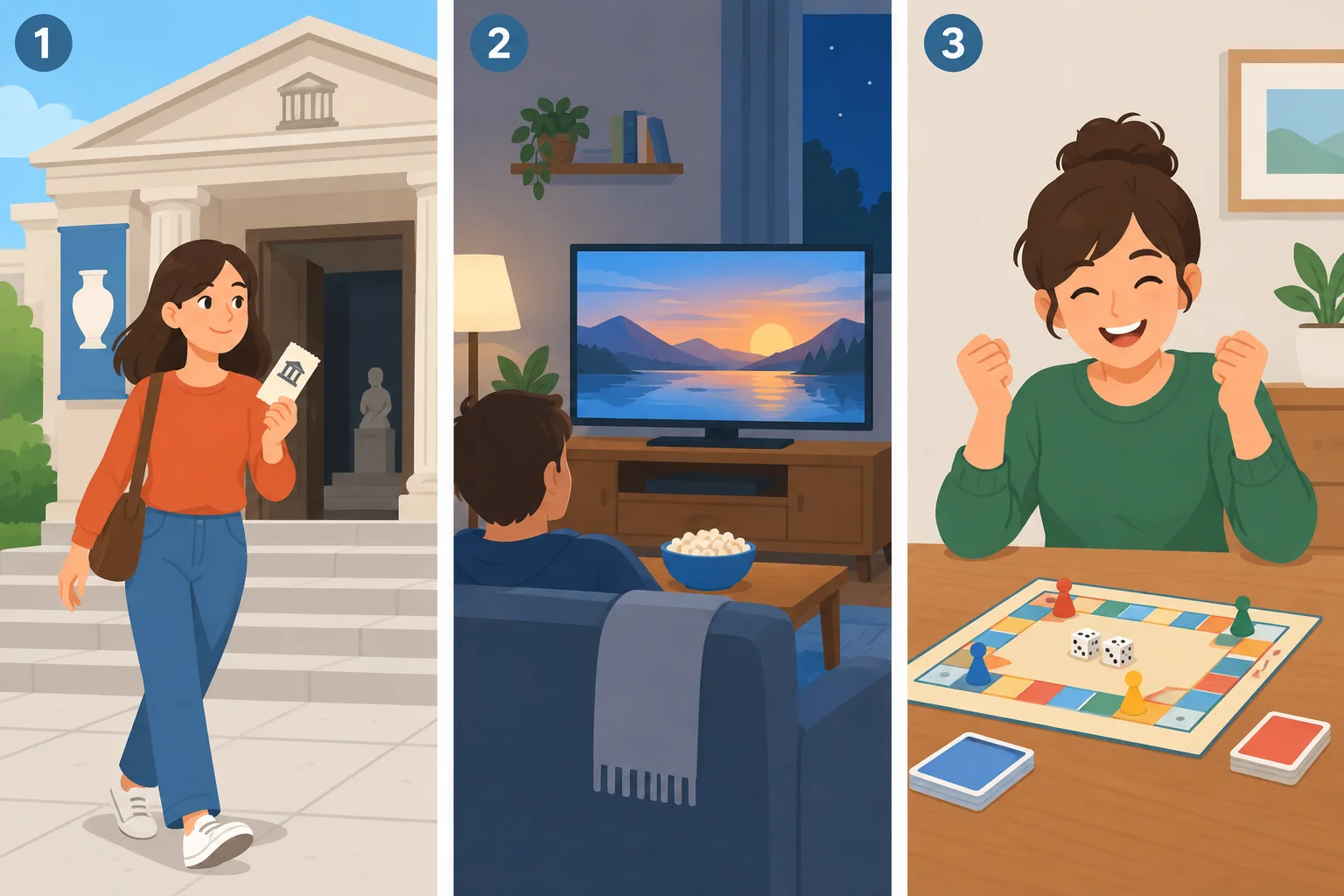
Picture 1: I visited a museum yesterday. Picture 2: I watched TV yesterday. Picture 3: I played a game yesterday.
Use the past form after I.
| Base form | Past form | Sentence |
|---|---|---|
| visit | visited | I visited a museum yesterday. |
| watch | watched | I watched TV yesterday. |
| play | played | I played a game yesterday. |
Match each sentence to the correct activity picture from the previous screen.
Tap an item and then its matching pair.
Put the word blocks in order to make one complete sentence about yesterday.
Your sentence
Available words
Step 2 of 8
Write regular past forms with common spelling patterns, including both spellings of traveled.
These are regular action words: their past form has an ending. To write a past simple sentence, look at the base form first.
visit → visited: add -ed.like → liked: the base form already ends in e, so add only -d.Compare the base form and the past form.
| Base form | Past form | Writing change |
|---|---|---|
| visit | visited | Add -ed |
| like | liked | Add -d |
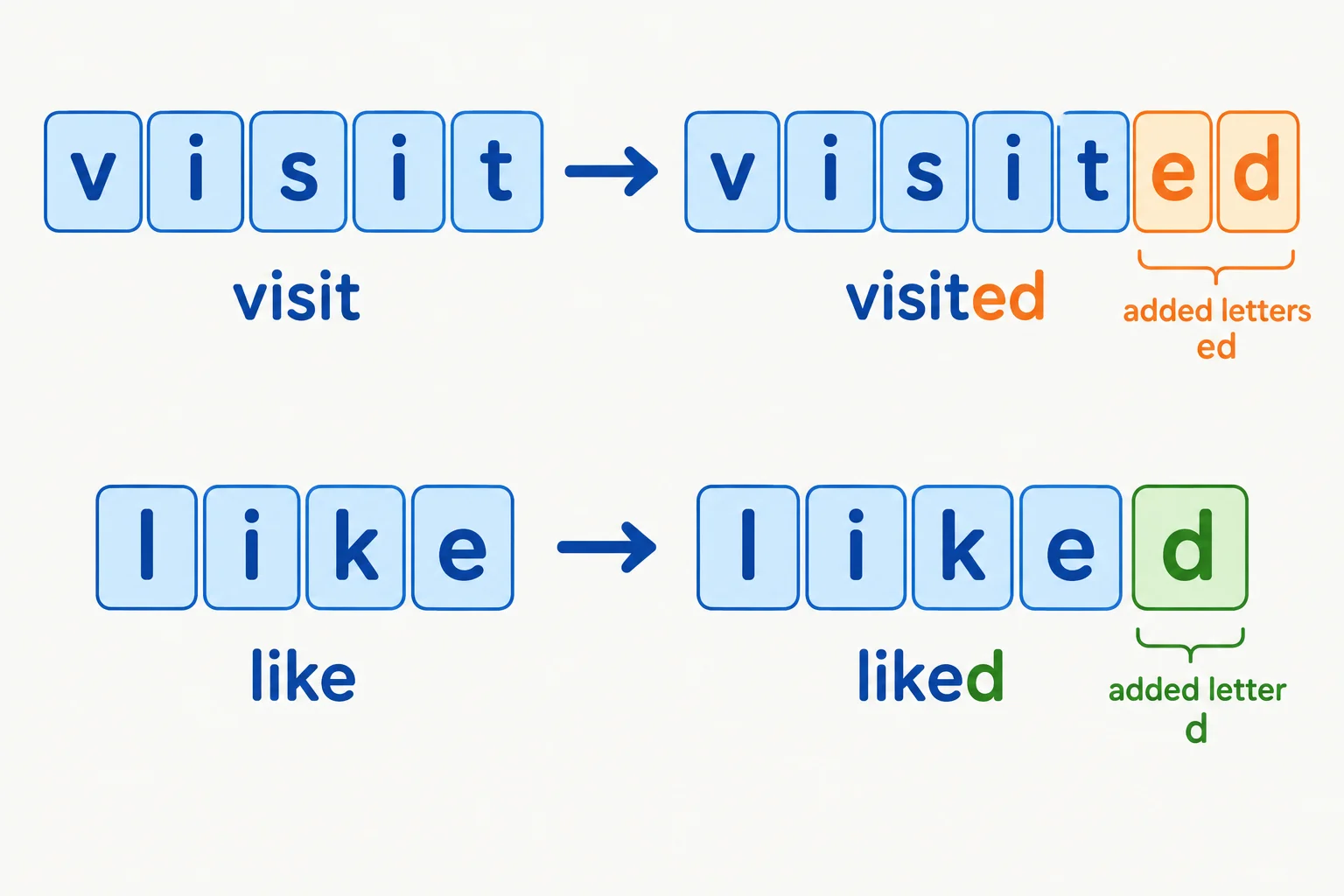
visit → visited: add -ed. like → liked: add only -d because like already ends in e.
Words ending in y need careful spelling.
study, the letter before y is a consonant. Change y to i, then add -ed: study → studied.play, the letter before y is a vowel. Keep y and add -ed: play → played.Also learn this form: stop → stopped. Double the final p, then add -ed. This is a pattern for stop; do not use it for every short action word.
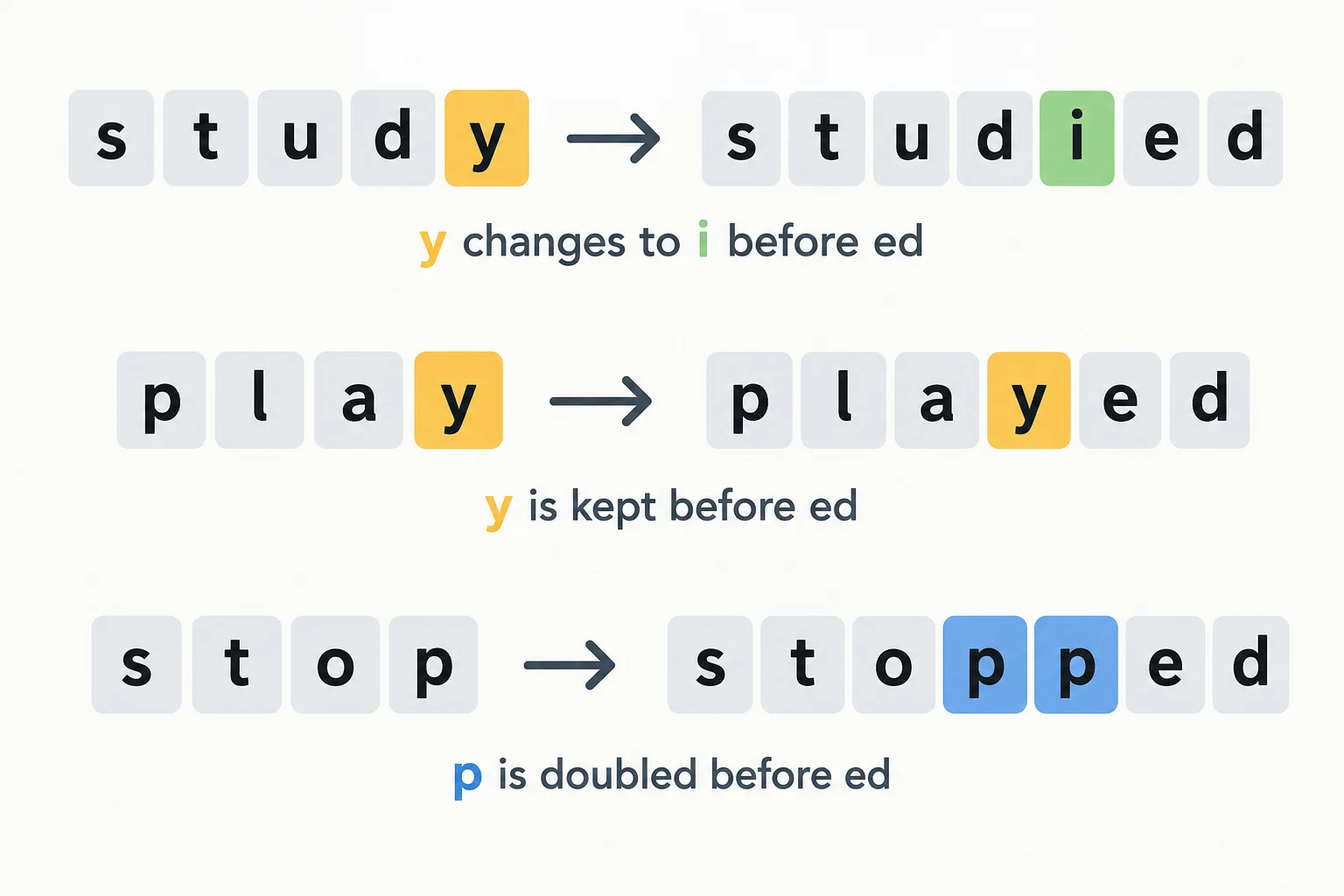
study → studied: change y to i, then add -ed. play → played: keep y, then add -ed. stop → stopped: double p, then add -ed.
Use these forms when you write about finished actions.
| Base form | Past form | Writing change |
|---|---|---|
| study | studied | Change y to i + ed |
| play | played | Keep y + ed |
| stop | stopped | Double p + ed |
| travel | traveled | American English |
| travel | travelled | British English |
Tip
Both traveled and travelled are correct. Use traveled in American English and travelled in British English.
Complete each sentence with the correct past form of the base form in parentheses.
Yesterday, I __ a friend. (visit)
I __ the park. (like)
After school, I __ English. (study)
Then, I __ a game. (play)
The bus __ at the station. (stop)
We __ by bus last week. (travel)
Step 3 of 8
Learn six common irregular past forms and use them in familiar activity phrases and affirmative sentences.
In the past simple, some common action words do not add -ed. Their past form changes.
Learn these six irregular forms. They describe actions that started and finished in the past.
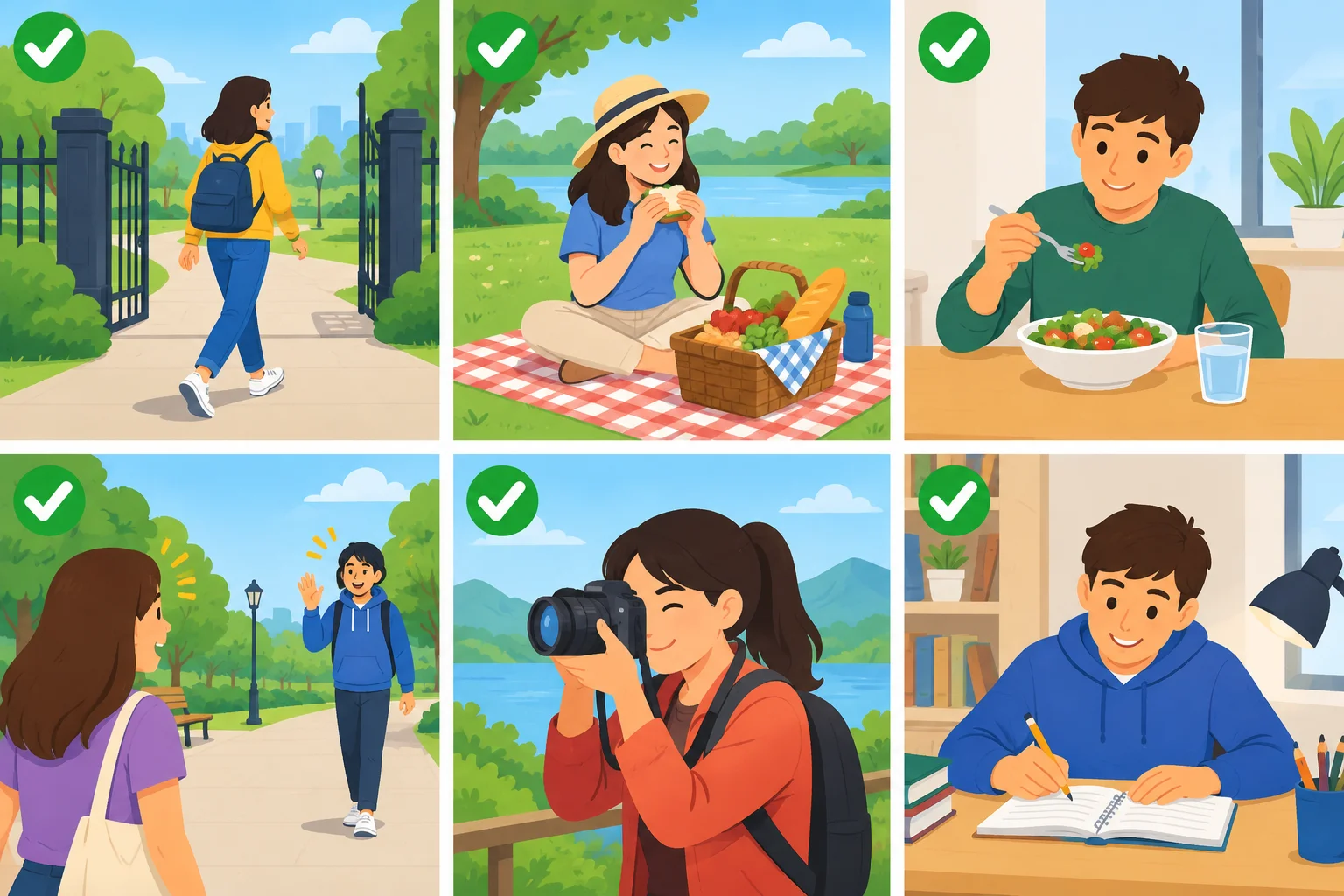
Some past forms change completely instead of adding -ed.
Use the past form after I, she, or they.
| Base form | Past form |
|---|---|
| go | went |
| have | had |
| eat | ate |
| see | saw |
| take | took |
| do | did |
Match each base form to its past form.
Tap an item and then its matching pair.
Use these useful activity phrases for a day out or a day at home:
The first, second, fourth, and fifth phrases use irregular past forms. Visited is a regular past form you already know.

These pictures represent useful completed activities.
Tip
Did is the past form of do in an affirmative statement.
The past form stays the same with different people. Do not add a present-simple -s: She did, not She does.
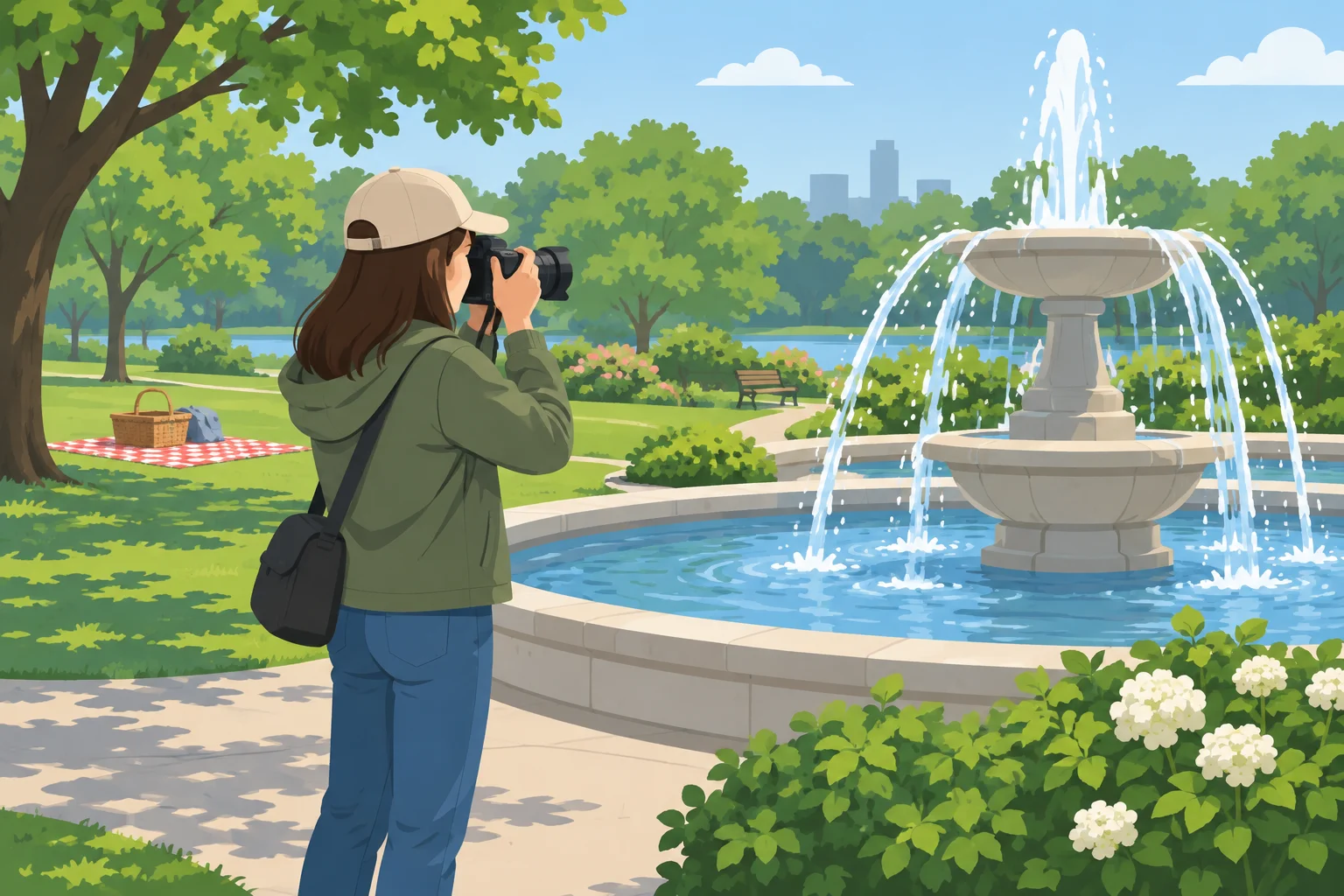
Look at the picture. Yesterday, I ____.
Build the three affirmative sentences. Start each sentence with the given subject.
Your sentence
Available words
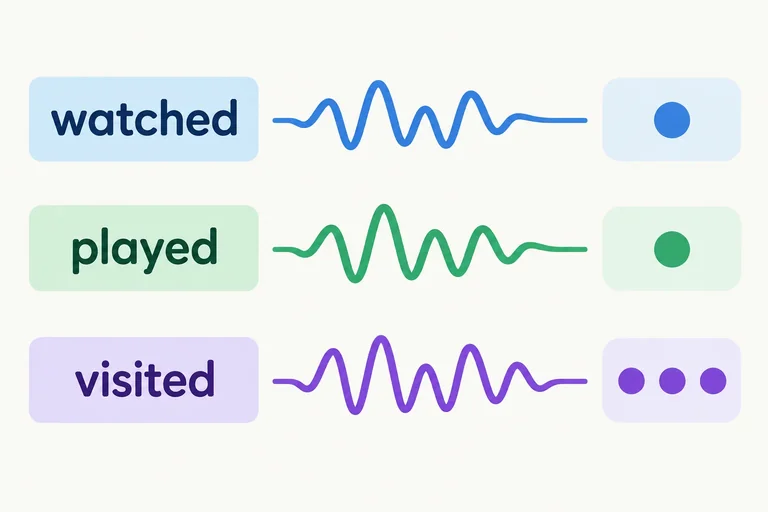
Step 4 of 8
Hear and say the three target -ed endings in watched, played, and visited.
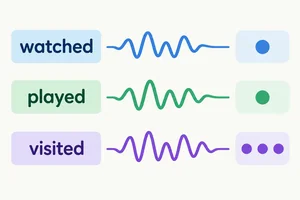
In regular past forms, the written ending -ed can sound different. Listen for the ending sound in these three words:
Say each whole word smoothly. Do not add an extra syllable to watched or played.
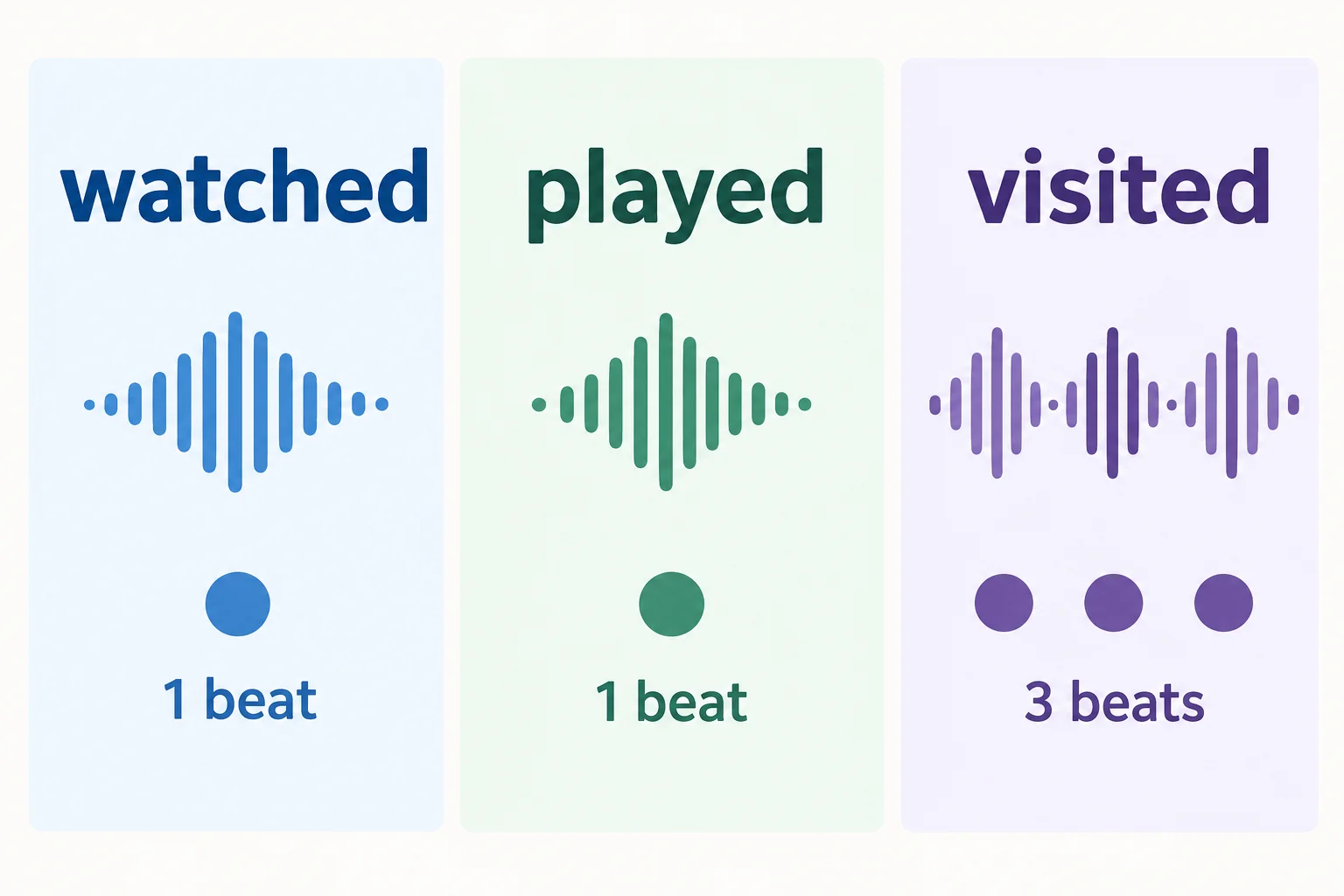
The spelling is -ed in every word, but the ending sound and syllable count can change.
Listen to the words one at a time. Repeat after the audio.
Watched. Played. Visited.
Use the sound labels and syllable counts as a quick speaking guide.
| Word | Ending sound | Syllables |
|---|---|---|
| watched | /t/ | 1 syllable |
| played | /d/ | 1 syllable |
| visited | /ɪd/ | 3 syllables |
Now hear the words in short past simple sentences. Repeat each word first, then repeat the whole sentence.
I watched TV. I played a game. I visited a friend.
Tip
For watched and played, keep one smooth syllable. For visited, make three clear beats: vis-i-ted.
Listen and choose an option.
Listen to the model. Which line matches the ending sounds and syllable counts? Then replay the model and repeat each word and each sentence aloud.
Watched. I watched TV. Played. I played a game. Visited. I visited a friend.
Step 5 of 8
Use first, then, after that, and finally to connect past simple events in a clear order.
To tell a clear story about yesterday, show the order of events.
Use First, for the first activity. Use Then, and After that, for activities in the middle. Use Finally, for the last activity.
Put a comma after each sequence phrase.
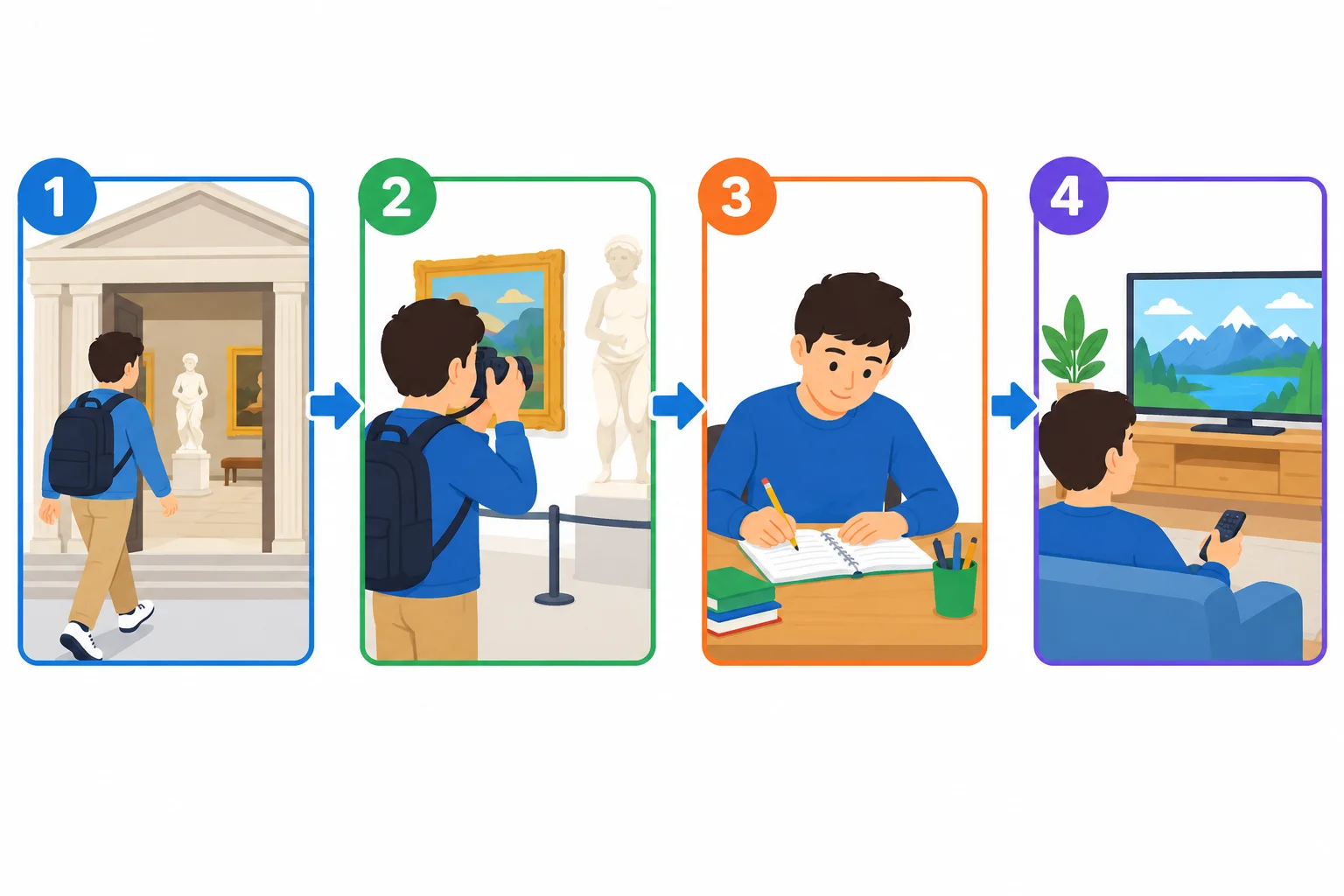
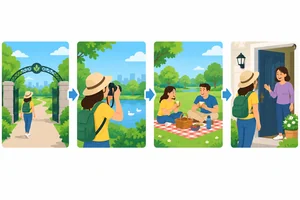
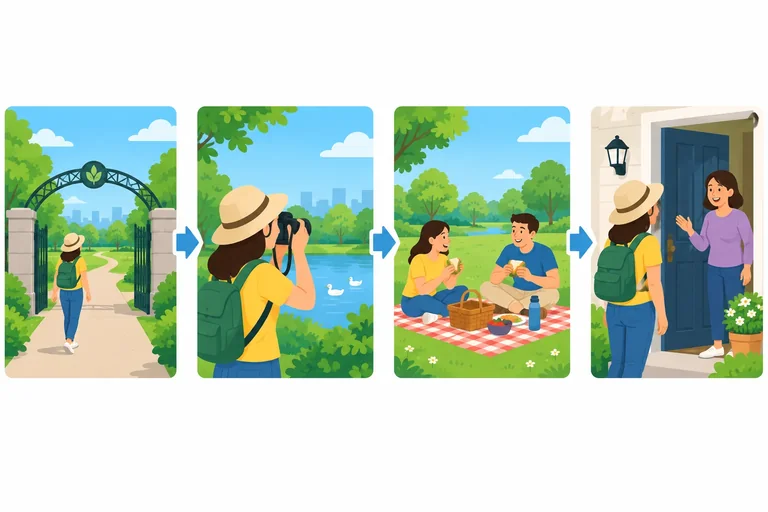
Follow the arrows from event 1 to event 4.
Example
First, I visited a museum.
Then, I took photos.
After that, I did homework.
Finally, I watched TV.
Tip
The sequence phrase comes at the beginning of the sentence. Keep the past form after I: Then, I took photos.
Use the timeline from the previous screen. Put the past-action sentences in the illustrated order.
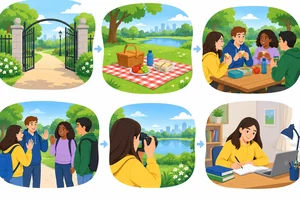
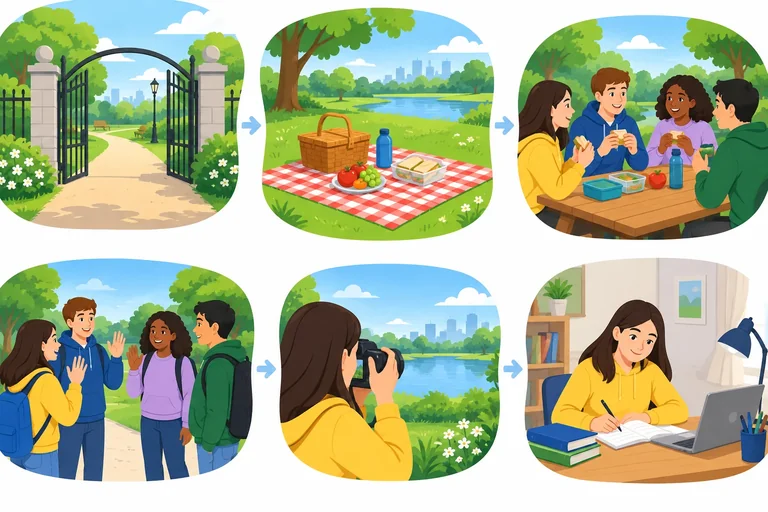
Now study a new timeline. The next activity asks you to build an ordered account from these four pictured events. Read the panels from 1 to 4.
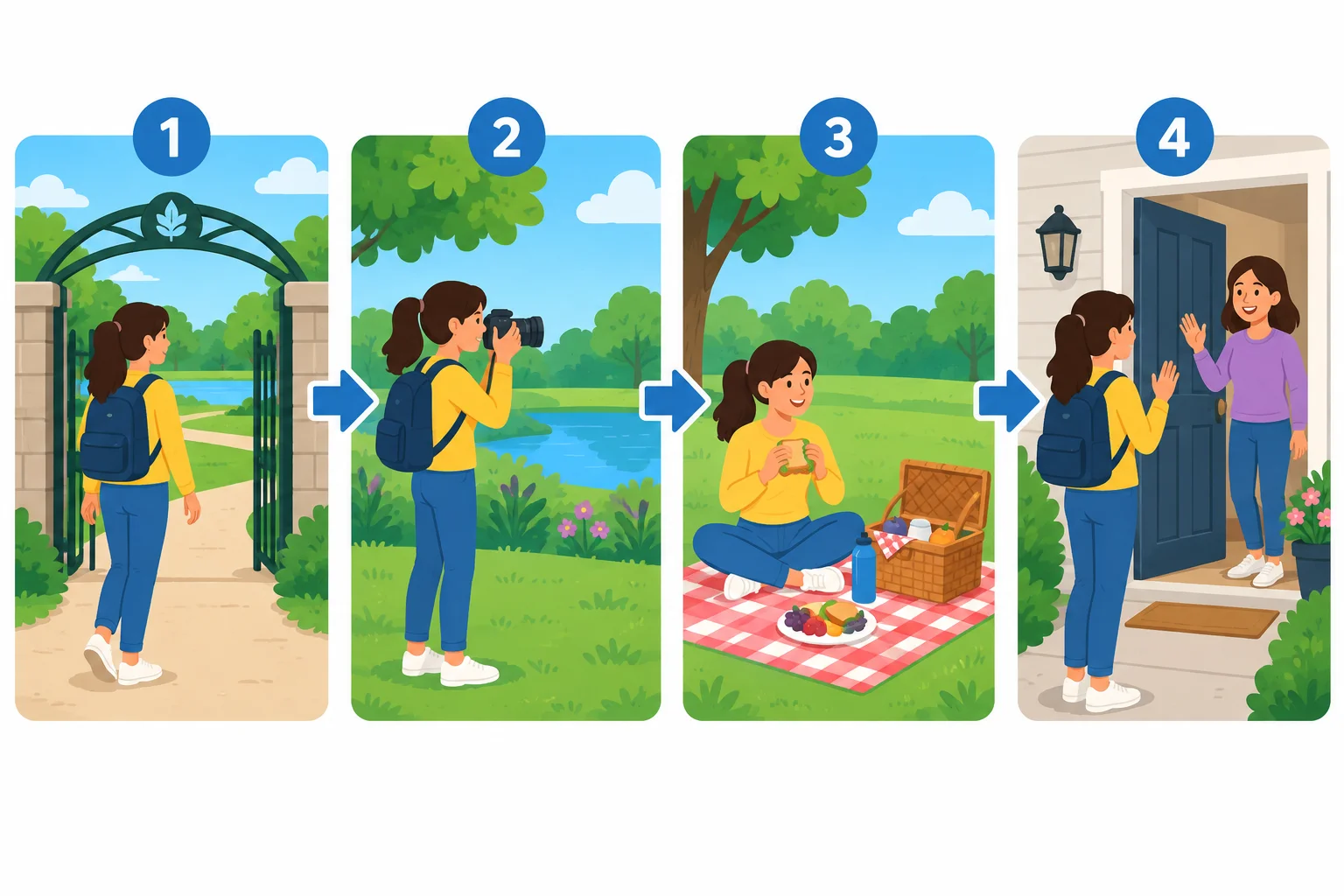
Use the numbered panels and arrows to follow this day out.
Use all the blocks to make four sentences that match the timeline on the previous screen.
Your sentence
Available words
Step 6 of 8
Read a short account of Alex’s day out, identify details that it supports, and connect sequence phrases to the events they introduce.
A short past simple account can tell someone about a finished day. Alex speaks as I. The opening sentence introduces the day. The next four sentences give connected details.
As you read, notice the past action words: went, took, had, visited, and watched. Use the sequence words to follow the events.
Example
Yesterday, I went to the park.
First, I took photos.
Then, I had a picnic.
After that, I visited a friend.
Finally, I watched TV at home.
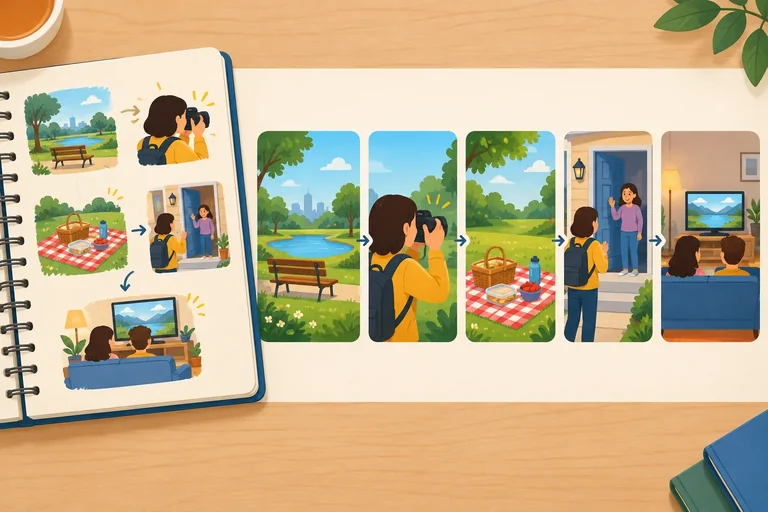
Use the pictures to imagine Alex’s day. Read the account to identify the exact past action words and sequence phrases.
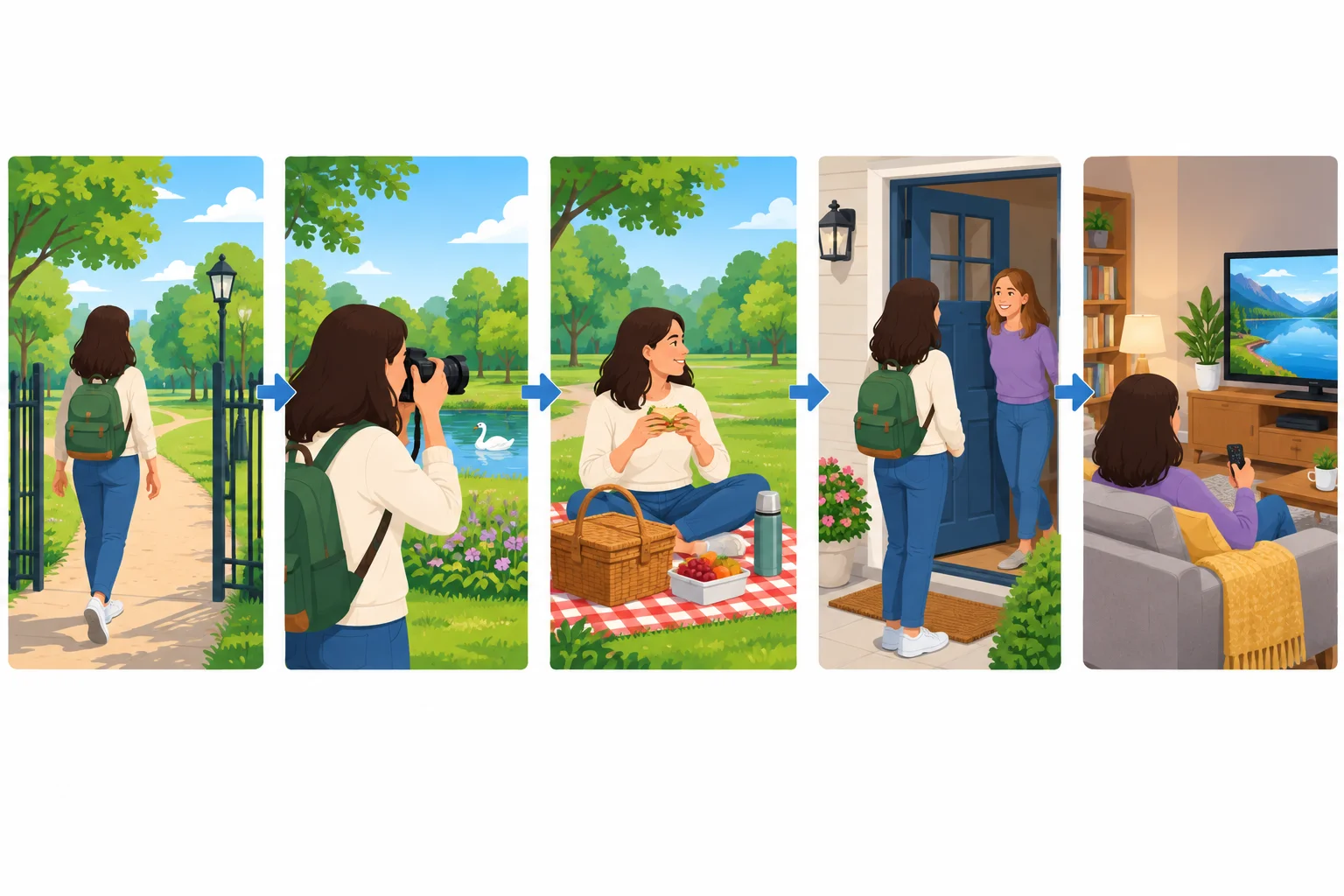
The illustrations support the meaning, while Alex’s sentences show how to tell the events in order.
Tip
For your own short message later, you can use this shape: one opening sentence about yesterday, followed by four connected detail sentences.
Which option has two statements supported by Alex’s account?
Match each sequence phrase to the event it introduces in Alex’s account.
Tap an item and then its matching pair.
Step 7 of 8
Listen to Sam’s day out, put the events in order, and write a short past-action sentence.
Sam has a new account of a day out. It is different from Alex’s written account.
Listen once to understand Sam’s day. Listen a second time to notice each past action word and sequence phrase. You do not need to write every word.
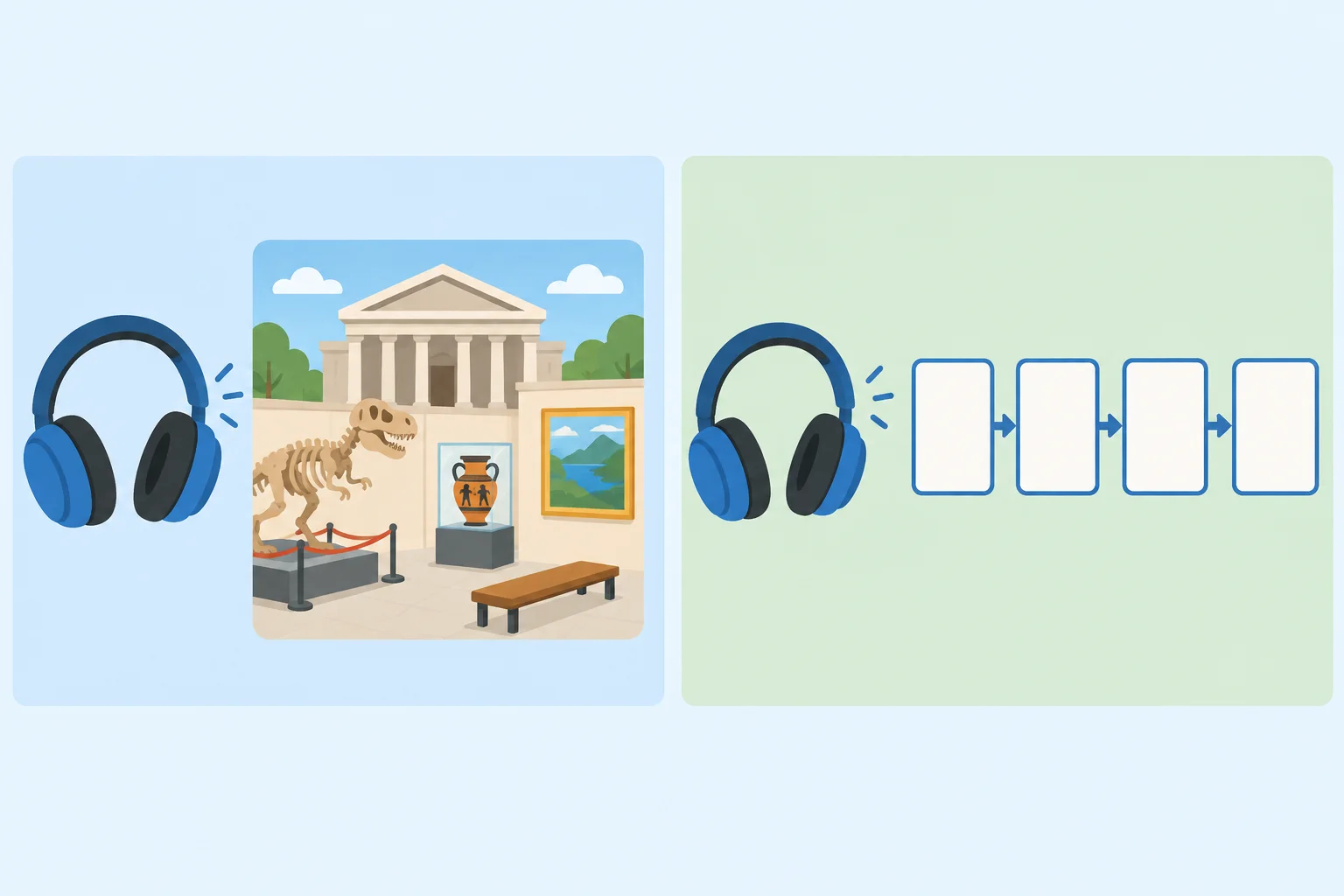
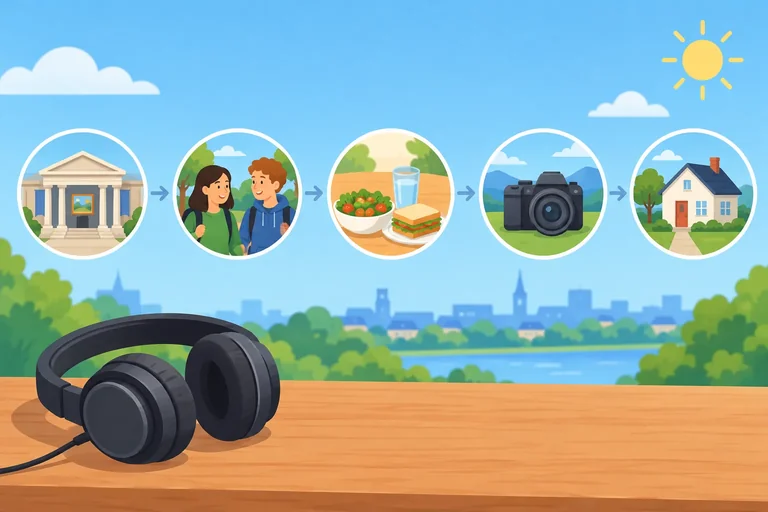
First, understand the day. Then, listen again for the event order.
Tip
Listen for action words such as went, saw, ate, took, and went home. Sequence phrases can help you hear what comes next.
Play Sam’s account twice. Do not look for a transcript yet.
Yesterday, I went to the museum. First, I saw a friend. Then, I ate lunch. After that, I took photos. Finally, I went home.
Put Sam’s five events in the order you hear them.
Now compare your order with the transcript.
Example
Yesterday, I went to the museum. First, I saw a friend. Then, I ate lunch. After that, I took photos. Finally, I went home.
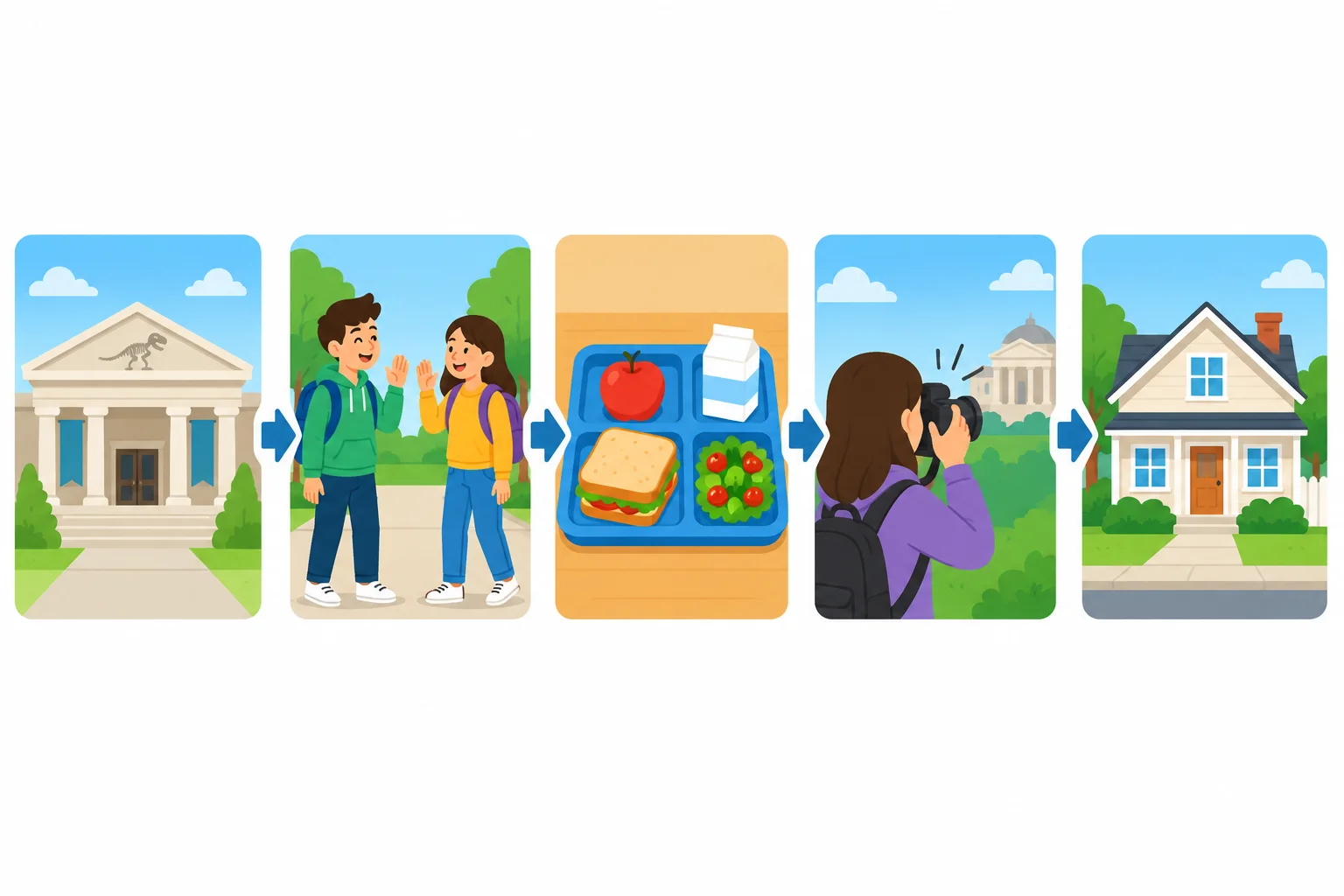
Timeline: museum → friend → lunch → photos → home.
Listen and write what you heard.
Listen and type the sentence. Use a capital letter and final punctuation.
Step 8 of 8
Write and say a clear five-sentence account of a real or imagined past day.
You can now tell someone about a finished day. Choose a real day or invent one. Plan five small finished actions: one action after Yesterday, and one action for each of the four sequence phrases.
Keep your plan simple. Use past forms you know, including at least one regular past form and one irregular past form.

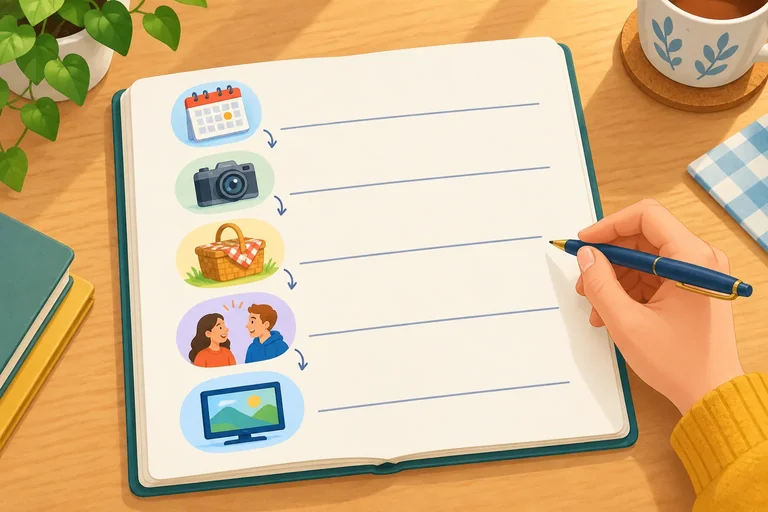
Use the first card for your Yesterday sentence. Use the next four cards for First, Then, After that, and Finally.
Example
Alex's five sentences are a useful shape for your own account. Keep the shape, but change the details to your own real or imagined day.
Yesterday, I went to the park.
First, I took photos.
Then, I had a picnic.
After that, I visited a friend.
Finally, I watched TV at home.
Tip
Before you share, check:
Write your account of a real or imagined past day. Write exactly five connected sentences.
Begin with Yesterday,. Then use First, Then, After that, and Finally, to begin the next four sentences. Include at least one taught regular past form and one taught irregular past form.
When you finish, read all five sentences aloud. Self-check any regular -ed ending you use.
Write at least 80 characters (0/80).
Summary
Congratulations! You completed: Tell Someone About Yesterday
Thousands of online courses in video, ebooks and audiobooks.
To test your knowledge during online courses
Generated directly from your cell phone's photo gallery and sent to your email

Download our app via QR Code or the links below:.



Carry knowledge in your pocket.
Download the Cursa app.
There are hundreds of free courses available, with a free certificate of completion that is saved in your mobile image gallery.
Download the app to access the Course Completion Certificate for Free.


+ 10 million
students

Free and Valid
Certificate

60 thousand free
exercises

4.8/5 rating in
app stores

Free courses in
video and ebooks