Step 1 of 7
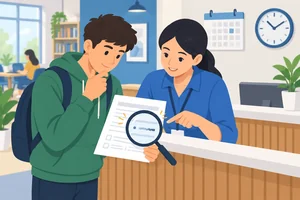
Find the Unclear Part
Identify the specific word or detail that makes a short instruction unclear.

Learning path · Level 7 · Tutorial 3
Find out what an unclear instruction means and check that you have understood it. Read short exchanges, listen and choose the meaning that the speakers agree on, and complete a short dictation. Use pronunciation tips to practise both parts aloud. Write a short exchange and restate an explanation in simpler words.
 Find the Unclear Part
Identify the specific word or detail that makes a short instruction unclear. 2 min
 Ask a Focused Clarification Question
Ask focused clarification questions about an unclear word or request a useful example. 3 min
 Check a Possible Meaning
Test a possible interpretation with a meaning check. Learn when to use “Do you mean ...?” and “Does that mean ...?”, then build a polite question that offers two possible meanings. 3 min
 Confirm or Correct a Meaning Check
Respond to meaning checks with a clear confirmation or a focused correction, then identify what the speakers finally agree on. 3 min
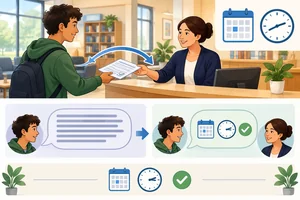 Say the Same Thing More Simply
Restate a clarified instruction in simpler words while keeping every practical detail accurate. 3 min
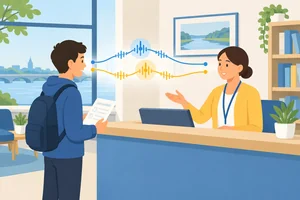 Use a Friendly Questioning Voice
Hear and practise calm stress and intonation in familiar clarification questions. 2 min
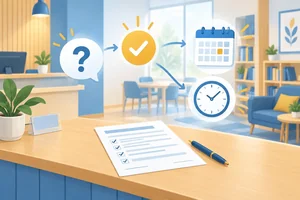 Put It Together: Clarify and Check
Bring together clarification questions, meaning checks, confirmation, and simple restatements in one short work or study exchange. 4 min
Step 1 of 7
Identify the specific word or detail that makes a short instruction unclear.
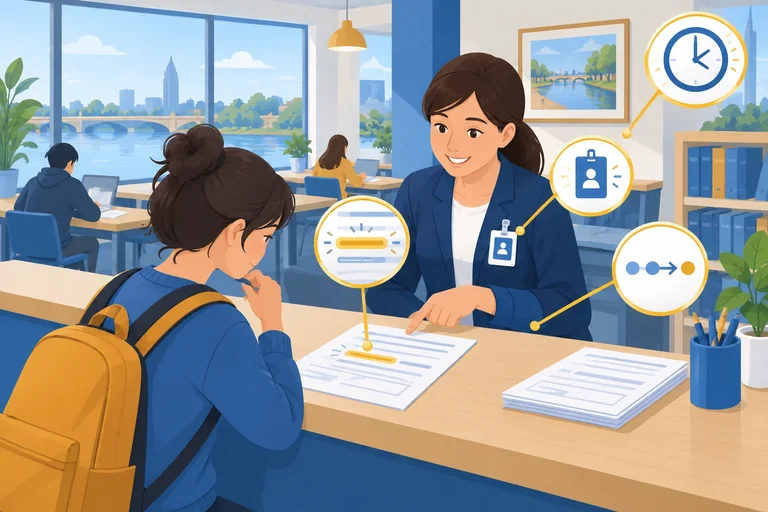
An instruction can be mostly clear, but one small part can stop you from acting confidently. Clarification begins by locating that part. You do not need to ask for the entire instruction again.
Look for a word, a person, a step, or a time that is missing or unclear. Keep two things separate:
Use clear for information you understand. Use step for one action in an instruction.
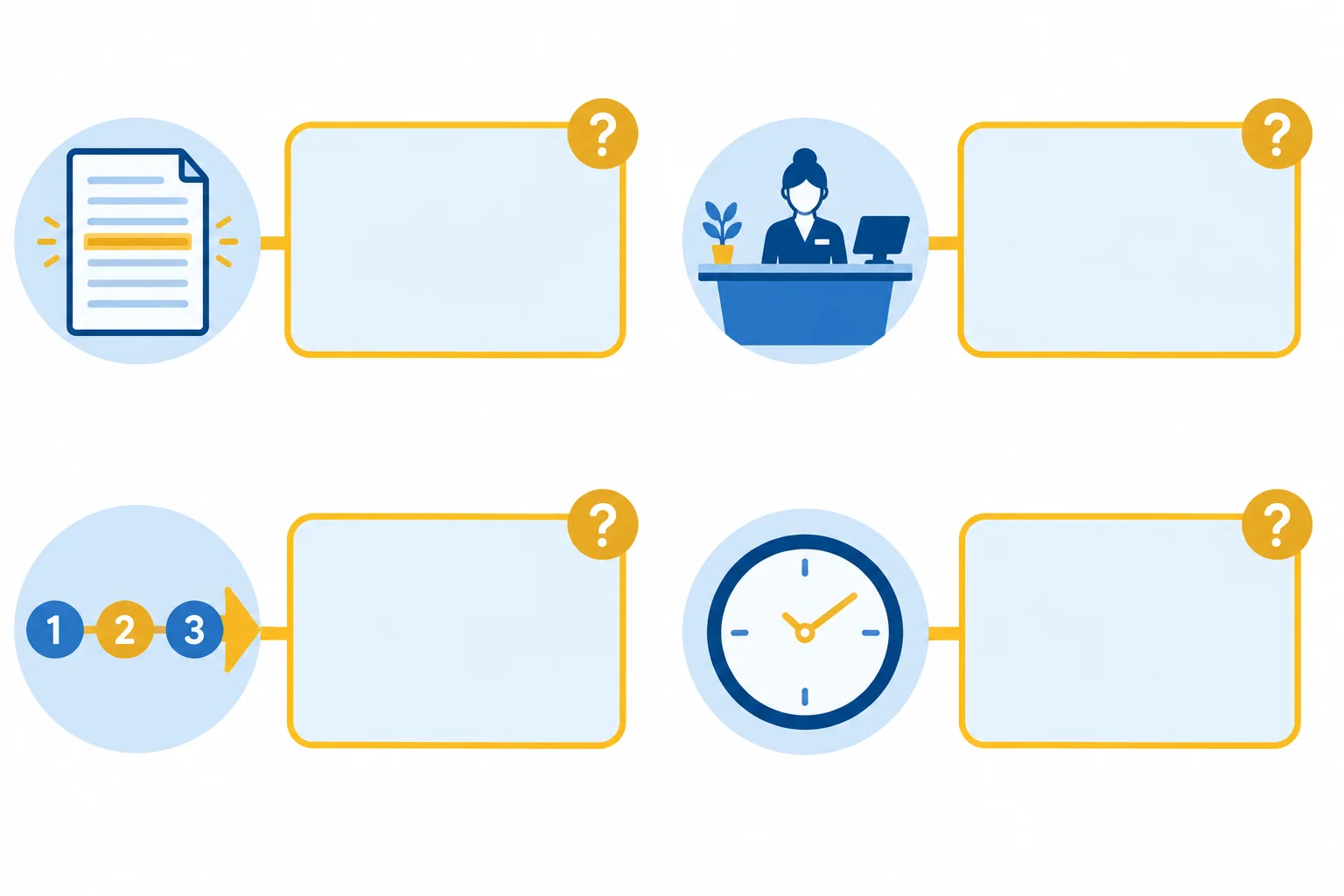
A question mark may belong to one detail, even when the rest of the instruction is clear.
Example
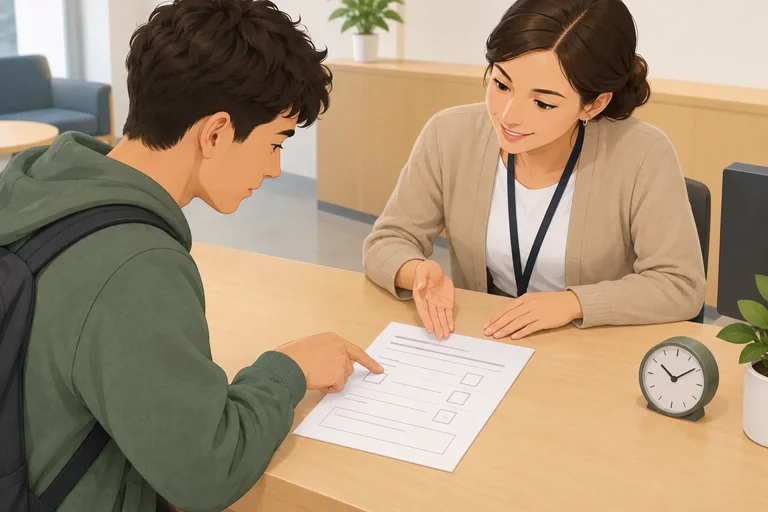
At Riverside Study Center, Nora tells Sam: “Return the completed form to me at reception on Tuesday before 3:00 p.m.”
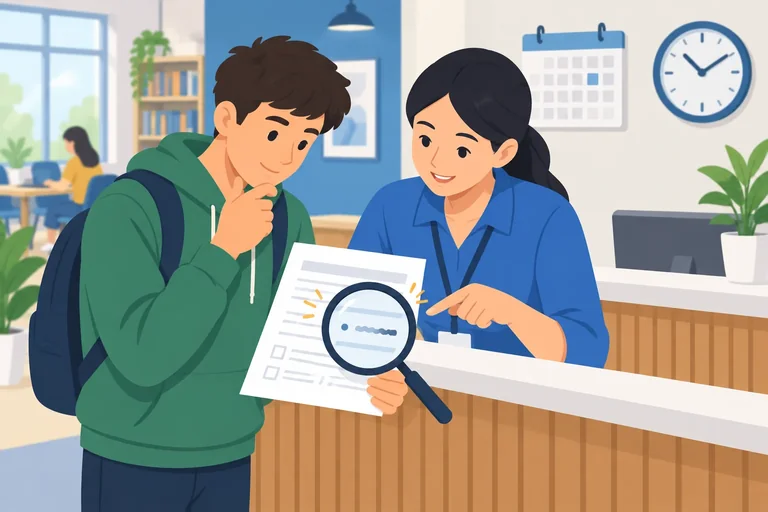
Sam knows the action, person, place, day, and deadline. If Sam does not understand “completed,” the unclear part is the word—not the whole instruction. Sam should not guess what “completed” requires.
Use the detail that is missing or unclear to describe the problem.
| Possible unclear detail | What the listener needs |
|---|---|
| A word | Its meaning |
| A person | Which person |
| A step | What action comes next |
| A time | When the action is due |
Match each listener concern to the unclear part.
Tap an item and then its matching pair.
Step 2 of 7
Ask focused clarification questions about an unclear word or request a useful example.
When one part is unclear, ask about that part—not the whole instruction. A clarification question names the word or detail you need.
Use double quotation marks around a word you are discussing in writing:
Both questions focus on Nora’s word. The first asks for its meaning. The second asks Nora to explain her wording.

A focused question zooms in on the one word or detail that needs explanation.
Choose the question that matches what you need. If a word is unclear, ask about its meaning. If you need to see what the instruction looks like in real life, ask for an example.
Use a question that directly names the unclear word or detail.
| What you need | Question frame |
|---|---|
| The meaning of a word | What does "complete" mean? |
| The speaker’s wording | What do you mean by "complete"? |
| A concrete model | Could you give me an example of a "complete" form? |
Example
Nora: Please complete the form and return it to me at reception on Tuesday before 3:00 p.m.
Sam: I understand this part, but what does "complete" mean?
Nora: It means fill in every section of the form.
Tip
When you ask for an example, say what you need an example of. This helps the other person give a useful answer.
Sam hears: “Put your student number in the correct box.” The words “correct box” are unclear. Which clarification question is most focused?
Nora says, “Please complete the form and return it to me at reception on Tuesday before 3:00 p.m.” Sam understands the return details but needs a concrete model of a completed form. Build Sam’s clarification question.
Your sentence
Available words
Step 3 of 7
Test a possible interpretation with a meaning check. Learn when to use “Do you mean ...?” and “Does that mean ...?”, then build a polite question that offers two possible meanings.
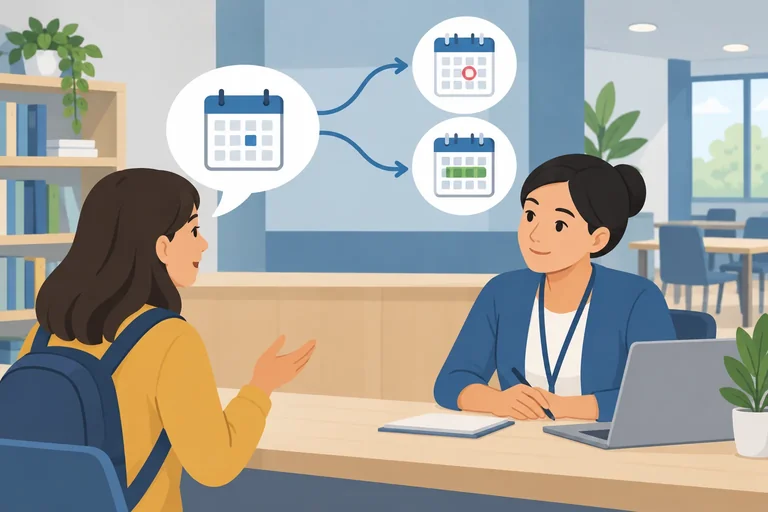
A meaning check does not ask for a full explanation again. It tests an interpretation you think may be correct.
Use Do you mean ...? when you want to check the speaker’s intended choice. Use Does that mean ...? when you want to check what action or result follows from the instruction.
Your idea is only a proposed meaning. It becomes an agreed fact after the speaker responds.

The two branches are possible meanings. Sam can ask which day Nora intends; neither branch is an agreed fact yet.
Choose the frame that matches what you need to check.
| Frame | What you are checking | Example |
|---|---|---|
| Do you mean ...? | Nora’s intended choice | Do you mean **Tuesday** or **Wednesday**? |
| Does that mean ...? | What you should do or what follows | Does that mean I should return the completed form to you at reception before 3:00 p.m. on Tuesday? |
Example
Sam: I understand the form must be returned, but I am not sure which day you mean.
Nora: Please use the earlier available day.
Sam: Do you mean Tuesday or Wednesday?
Sam offers two specific possibilities. Nora can now say which one she intended.
Tip
Keep your proposed meaning separate from the facts. A meaning check is not a final decision: it gives the other person a clear chance to choose or explain.
Nora says, “Please use the earlier available day.” Which sentence is a meaning check, not a clarification question?
Sam wants to check which of two dates Nora intends. Put the blocks in order to make a polite meaning check.
Your sentence
Available words

Step 4 of 7
Respond to meaning checks with a clear confirmation or a focused correction, then identify what the speakers finally agree on.
A meaning check is correct when it matches what the speaker intended. Reply: Yes, that's right.
If one detail is wrong, do not repeat everything. Begin with Not quite. Then give the accurate detail. This keeps the reply clear and helpful.
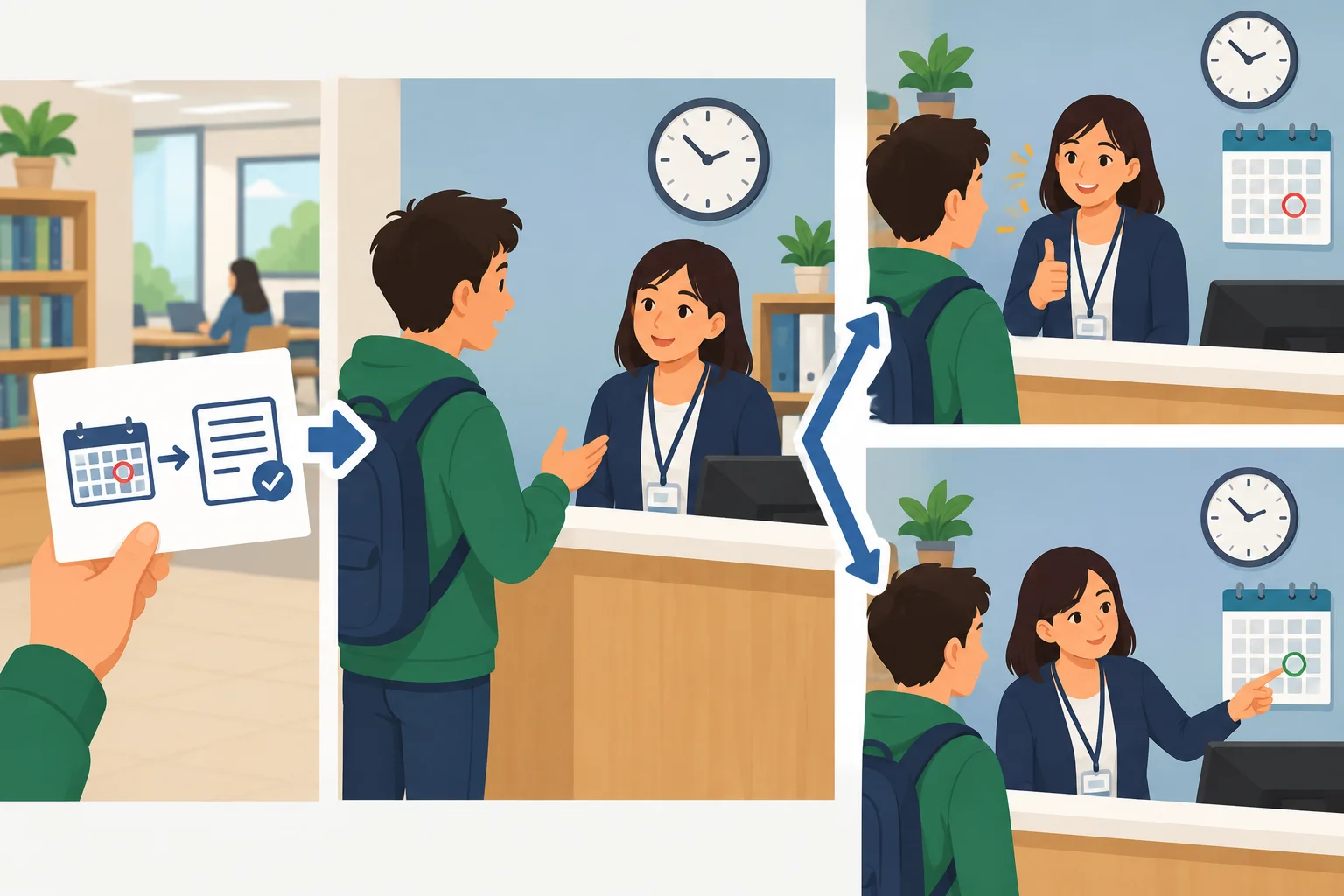
A meaning check has two possible replies: confirm the interpretation, or correct the detail that is mistaken.
Read the exchanges from beginning to final agreement.
Example
Confirmation
Nora: Please return the completed form to me at reception on Tuesday before 3:00 p.m.
Sam: Does that mean I should give the completed form to you at reception on Tuesday before 3:00 p.m.?
Nora: Yes, that's right.
Sam's understanding is correct, so Nora confirms it.
Example
Correction
Nora: Please return the completed form to me at reception before 3:00 p.m.
Sam: Do you mean Wednesday?
Nora: Not quite. Tuesday.
Sam asked about only the day. Nora corrects only that mistaken part. The final agreed day is Tuesday, not Sam's first guess.
Listen and choose an option.
Listen. Which final meaning do Sam and Nora agree on?
Nora: Please return the completed form to me at reception before 3:00 p.m. Sam: Does that mean I should return it on Wednesday? Nora: Not quite. Tuesday.
Complete Nora's reply.
Sam: Does that mean I return the completed form to you at reception on Tuesday before 3:00 p.m.?
Nora: ____
Complete Nora's correction.
Nora: Please return the completed form to me at reception on Tuesday before 3:00 p.m.
Sam: Do you mean Wednesday?
Nora: Not quite. ____
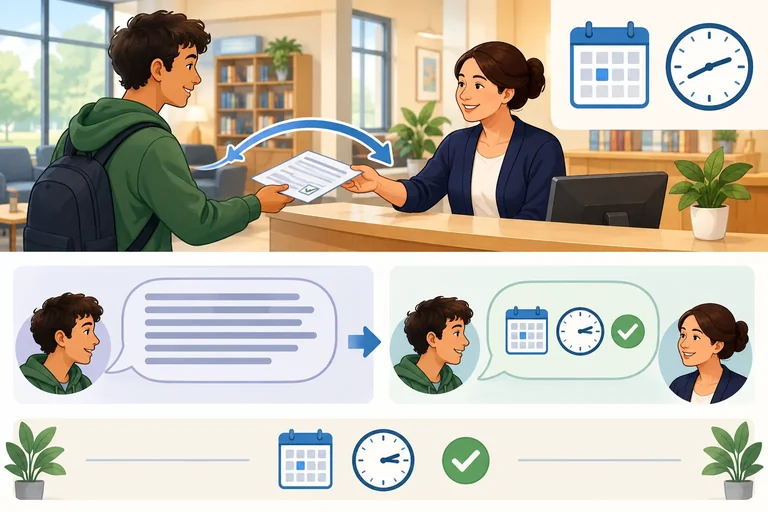
Step 5 of 7
Restate a clarified instruction in simpler words while keeping every practical detail accurate.
A restatement says the same explanation in simpler, more familiar words. It is not a shorter version with missing details.
After clarification, Nora says: “Return the completed form to me at reception on Tuesday before 3:00 p.m.”
Sam can restate this as: “In other words, I need to finish the form and give it to you at reception before 3:00 p.m. on Tuesday.”
“Finish” explains “completed,” but the practical facts stay the same.
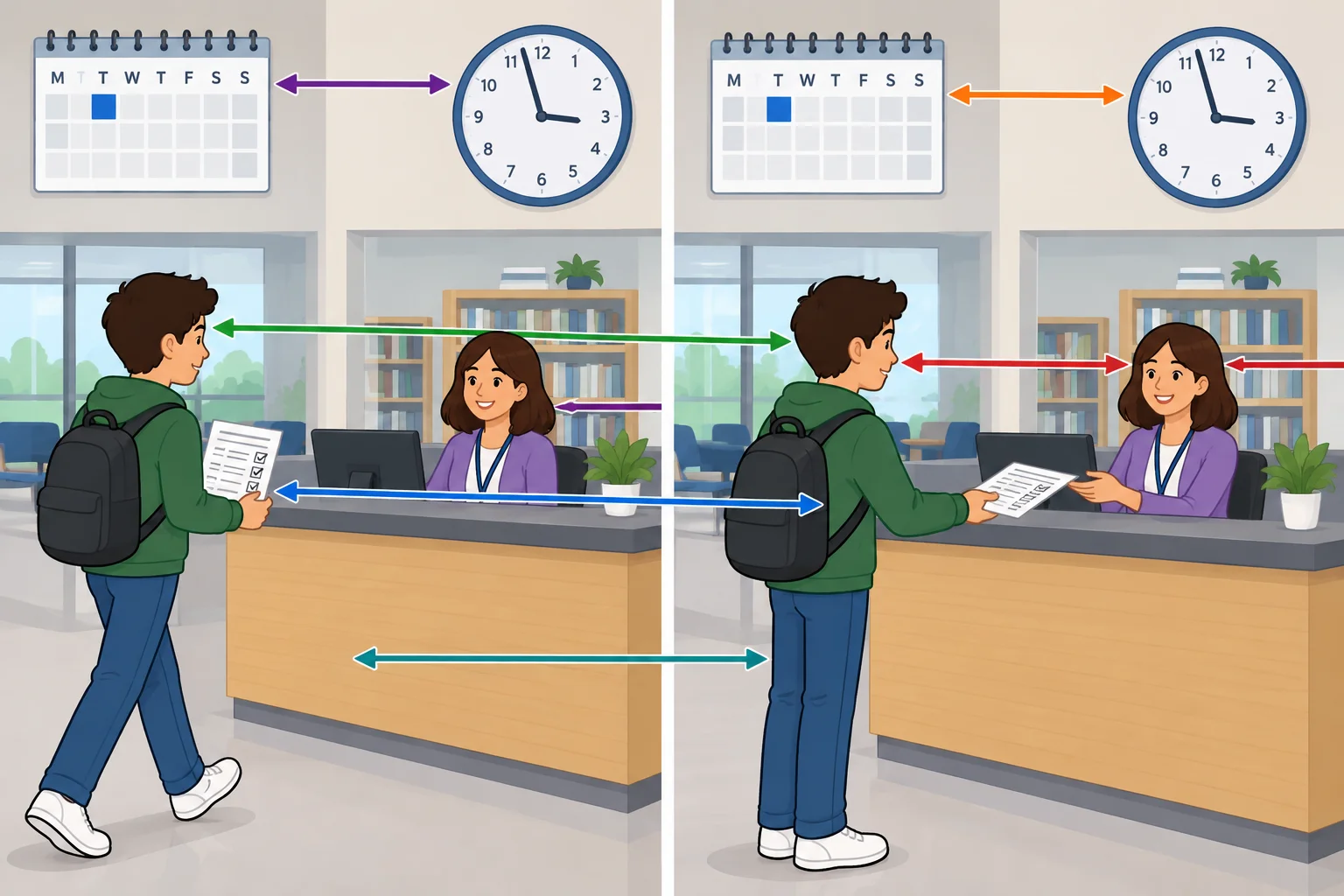
Different wording can describe the same action, person, place, day, and deadline.
Choose the restatement that keeps every important detail.
Nora says: “Please return the completed form to me at reception before 3:00 p.m. on Tuesday.” Which restatement is faithful?
Use In other words, to introduce your simpler explanation.
Before you finish, compare your sentence with the clarified explanation. Keep these details unchanged:
You may replace an unclear expression with its established meaning. Do not add a new guess.
Tip
A negative is an essential detail. If Nora says, “Do not leave the form in the mailbox,” your restatement must still say that the mailbox is not the correct place.
Simple language is useful only when it keeps the same practical meaning.
Nora explains: “Please return the completed form to me at reception on Tuesday before 3:00 p.m. Do not leave it in the mailbox outside.”
Write one sentence beginning with In other words, Restate Nora’s explanation in simpler words. Keep the action, person, place, deadline, and negative unchanged.
Write at least 80 characters (0/80).
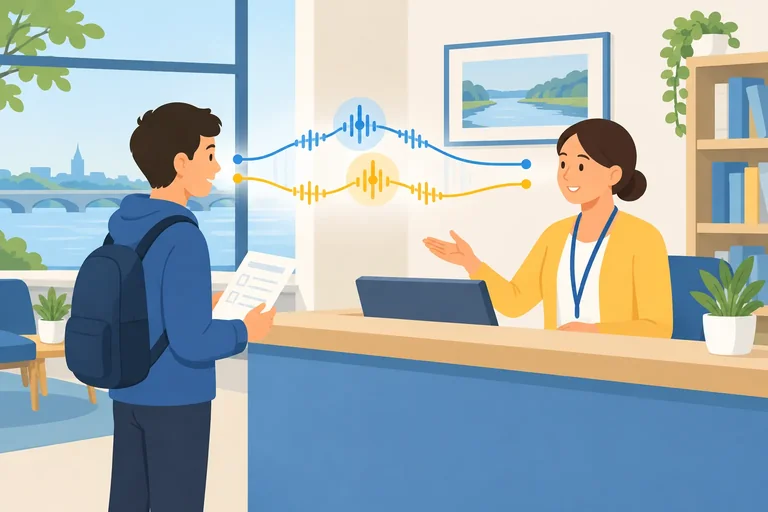
Step 6 of 7
Hear and practise calm stress and intonation in familiar clarification questions.
When one detail is unclear, give that detail a little more energy and time. This is stress. Keep the rest of the question connected, at a calm pace. Stress helps the listener hear exactly what you are checking; it does not mean shouting.
In this model, Sam is unsure about the day:
Sam: I understand this part, but do you mean Tuesday or Wednesday?
A friendly voice makes the question sound cooperative, not accusing.
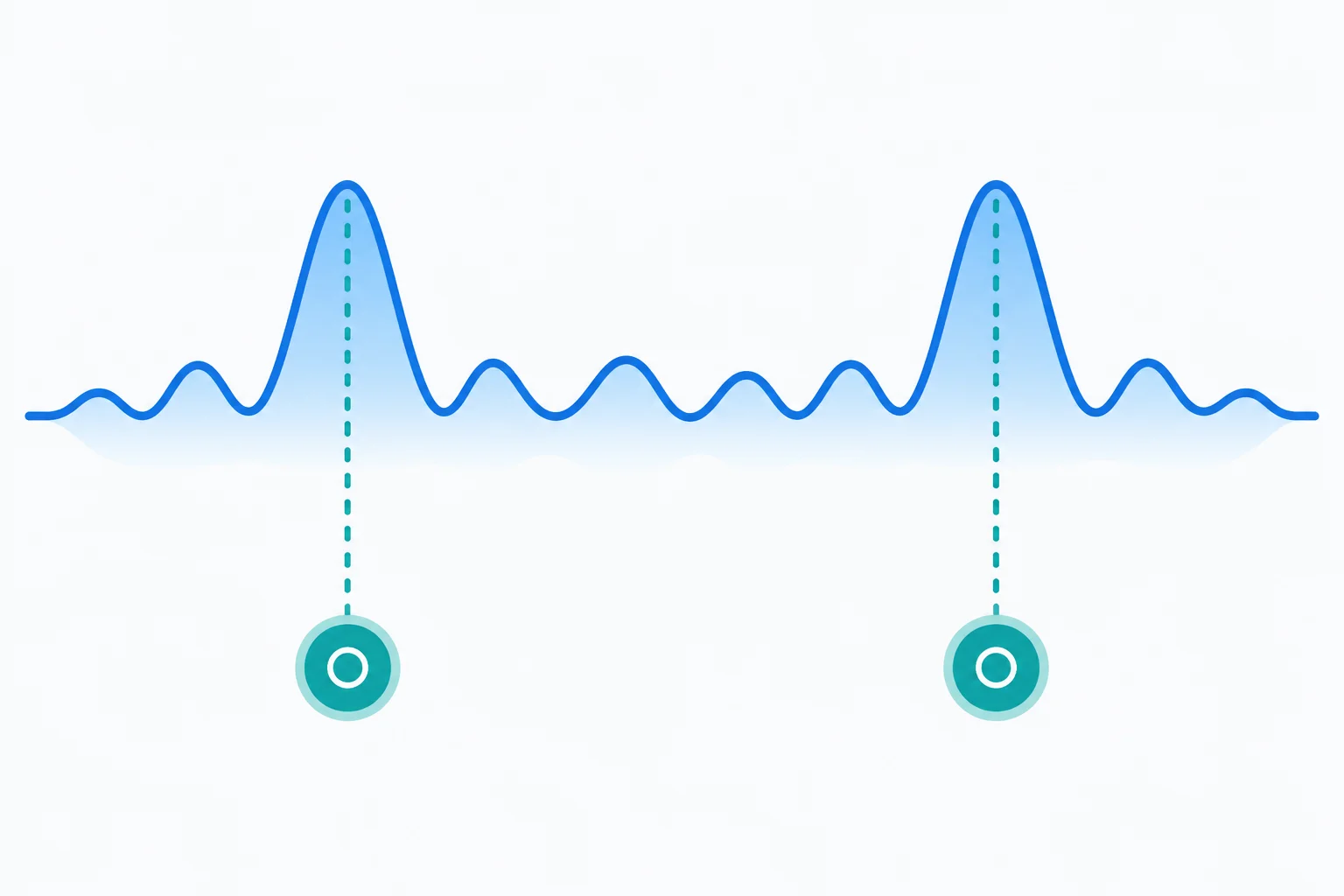
The two higher peaks represent extra stress on the two possible days.
Listen for the two stressed alternatives and the calm pace.
I understand this part, but do you mean Tuesday or Wednesday?
I understand this part, but do you mean Tuesday or Wednesday?
Tip
This model moves slightly up on Tuesday ↗ and settles on Wednesday ↘. That movement helps the listener hear two alternatives. It is one useful model, not a rule that every polite question must rise.
For any clarification question, focus on the detail that needs checking and keep your tone friendly.
Listen to three versions of the same question. Which one makes both possible days clear and still sounds polite?
Do you mean Tuesday or Wednesday?
Do you mean Tuesday or Wednesday?
Do you mean Tuesday or Wednesday?
Which model most clearly and politely checks the two possible days?
Listen and write what you heard.
Listen and type the question you hear.
Tip
After you submit, use your written question as Sam’s line. Say it aloud slowly and stress the detail you are checking. Then say Nora’s line aloud: “Yes, that's right.”
Self-check: Could a listener hear the important detail? Did your voice sound calm and helpful?
Step 7 of 7
Bring together clarification questions, meaning checks, confirmation, and simple restatements in one short work or study exchange.
A complete clarification exchange turns one unclear instruction into a plan you can use. Follow this sequence:
Use only information that the speaker gives. Do not fill gaps with a guess.
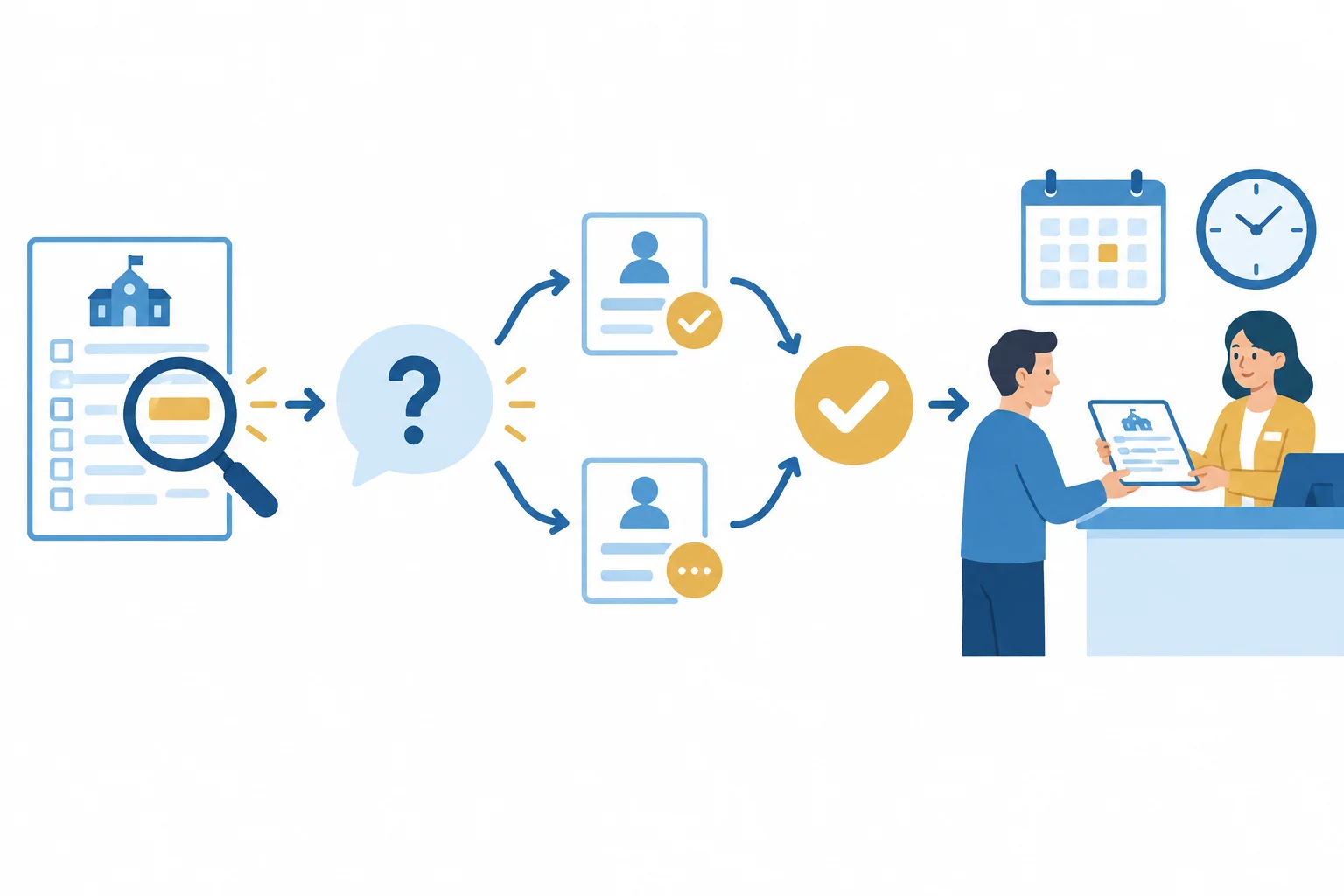
The sequence is: find the uncertain part, ask, check a possible meaning, confirm it, and state the final plan simply.
At Riverside Study Center, Nora gives Sam this instruction:
Nora: Please complete the form and return it before the deadline.
Sam understands the main action, but the word "complete" and the deadline need clarification. Listen for the facts Nora provides; they are the facts Sam can use in the final plan.
Listen and choose an option.
Listen to the exchange. Which plan do Sam and Nora agree on?
Please complete the form and return it before the deadline. I understand this part, but what does "complete" mean? It means fill in every section. Does that mean I return the completed form to you at reception on Tuesday before 3:00 p.m.? Yes, that's right. In other words, I fill in every section and return the completed form to you at reception on Tuesday before 3:00 p.m.
Now write the exchange yourself. Use the instruction and the agreed facts from the recording.
Write 5–6 labeled turns. You may include Nora’s initial instruction as turn 1. If you do not write that instruction, write the five turns after it.
Include:
Keep the tone helpful and use only facts from the instruction and recording.
Write your 5–6-turn exchange. Use Sam: and Nora: for every turn.
Write at least 180 characters (0/180).
After writing, compare your work with this six-turn model. Notice how Sam asks about one unclear word, checks the complete plan, and then restates the same plan in simpler words.
Example
Nora: Please complete the form and return it before the deadline.
Sam: I understand this part, but what does "complete" mean?
Nora: It means fill in every section.
Sam: Does that mean I return the completed form to you at reception on Tuesday before 3:00 p.m.?
Nora: Yes, that's right.
Sam: In other words, I fill in every section and return the completed form to you at reception on Tuesday before 3:00 p.m.
Tip
Read the model aloud twice: first as Sam, then as Nora. Stress "complete", Tuesday, and before 3:00 p.m. Keep Sam’s questions calm and friendly. The goal is to sound interested in understanding, not accusing.
Summary
Use this quick self-check for your exchange.
Congratulations! You completed: Ask for Clarification and Check Meaning
20 XP
Thousands of online courses in video, ebooks and audiobooks.
To test your knowledge during online courses
Generated directly from your cell phone's photo gallery and sent to your email

Download our app via QR Code or the links below:.



Carry knowledge in your pocket.
Download the Cursa app.
There are hundreds of free courses available, with a free certificate of completion that is saved in your mobile image gallery.
Download the app to access the Course Completion Certificate for Free.


+ 10 million
students

Free and Valid
Certificate

60 thousand free
exercises

4.8/5 rating in
app stores

Free courses in
video and ebooks