 World Geography
 Physical Geography
 UK geography
 Geoscience
 Seismology
 Marine Magnetometry
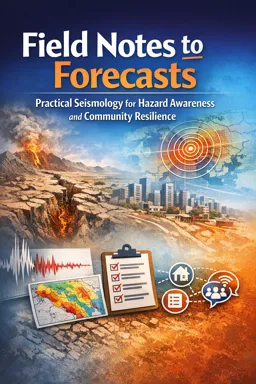
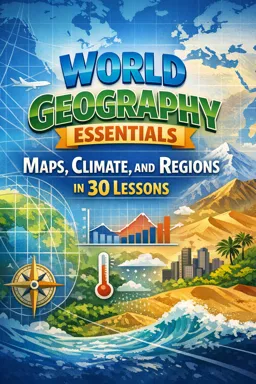
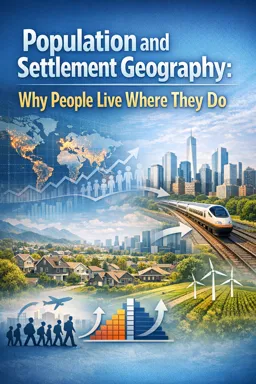


You can study maps, landforms, climate, regions, populations, countries, and human-environment relationships.

13

4


Build real human geography skills with a free online course on populations, migration, resources and energy—videos plus quizzes for exam-ready confidence.
5

(5)

3h34m

34 exercises
Master key Geography concepts with a free online course: Earth systems, climate, oceans and landforms—learn faster with bite-size lessons and practice.
4.8
(31)
6h49m
11 exercises
Build global awareness fast with this free online geography course—maps, climate, population, and culture. Learn smarter and earn a certificate.
4.7

(28)
2h03m
10 exercises
Free CourseGeography Through Maps
5
(1)
20h32m
22 exercises
Free CoursePhysical Geography
5
(2)
11h24m
42 exercises
Free CourseWorld Regional Geography
4.7
(3)
3h42m
10 exercises
Free CourseGeography
4.6
(21)
28h42m
11 exercises
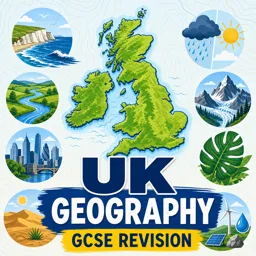
Free CourseUK geography
New
8h58m
17 exercises
Free CourseGeography Course
New
10h34m
9 exercises
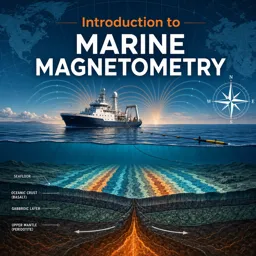
Free CourseIntroduction to Marine Magnetometry
New
46m
6 exercises
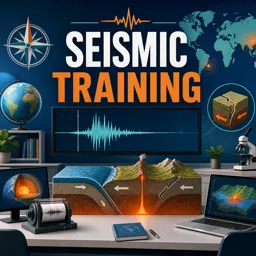
Free CourseSeismic Training
New
58m
7 exercises
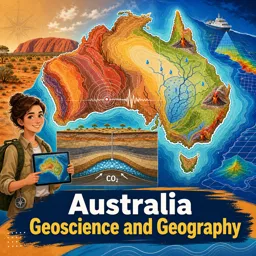
Free CourseAustralia Geoscience and Geography
New
5h34m
14 exercises
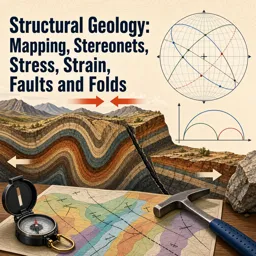
Free CourseStructural Geology: Mapping, Stereonets, Stress, Strain, Faults and Folds
New
5h31m
45 exercises
Exercises
Test your knowledge of electoral maps, district boundaries, voting patterns, representation, and spatial analysis.
Start exercisesTest your knowledge of Middle East geography, including countries, capitals, deserts, rivers, seas, languages, and major oil fields.
Start exercisesTest your knowledge of natural disaster geography, including earthquakes, tsunamis, volcanoes, tornadoes, hurricanes, storms, and weather tools.
Start exercisesTest your knowledge of continental drift theory, Alfred Wegener, Pangaea, seafloor spreading, paleomagnetism, and plate tectonics.
Start exercisesTest your knowledge of global climate patterns, long-term weather averages, climate zones, and the factors shaping Earth’s climate.
Start exercisesTest your knowledge of urban geography, sustainable cities, megacities, urbanization, smart growth, traffic, and environmental challenges.
Start exercises
Why Every World Map Is Wrong: Map Projections Explained
Every flat map distorts the round Earth. Learn what map projections trade away, why Greenland looks huge, and how to read maps critically.

The Water Cycle Explained: A Simple Guide for Students
Understand the four stages of the water cycle — evaporation, condensation, precipitation, and collection — explained simply.

Map Skills for Exam Success: Scale, Coordinates, Contours, and Real-World Interpretation
Master map skills for geography exams with clear practice on scale, coordinates, contours, gradients, and real-world map interpretation.

Human Geography Essentials: Culture, Cities, and Global Connections for Exam Success
Master human geography for exams with key concepts on cities, migration, development, and globalization using place, space, and scale.

Applications of Marine Magnetometry: Mapping and Interpreting the Seafloor
Discover how marine magnetometry maps the seafloor, locates shipwrecks, and aids in resource exploration and environmental monitoring beneath the oceans.

Introduction to Marine Magnetometry: Exploring the Earth’s Magnetic Field Underwater
Explore how marine magnetometry measures Earth’s magnetic field underwater, aiding in mapping, archaeology, resource exploration, and environmental studies.

Marine Magnetometry in Archaeological Exploration: Unveiling Submerged Mysteries
Discover how marine magnetometry uncovers underwater archaeological sites, revealing shipwrecks, structures, and artifacts without disturbing submerged treasures.

The Science Behind Marine Magnetometers: How Subsea Magnetic Measurements Are Made
Explore how marine magnetometers measure subsea magnetic fields, detect anomalies, and reveal seafloor features, supporting research and ocean exploration.
Develop spatial awareness and understand the relationships between people, places, environments, and natural systems through free online courses. These educational resources support introductory study, academic revision, professional development, and independent learning. Topics include physical landscapes, population distribution, urbanization, globalization, climate, ecosystems, regional analysis, cartography, geoscience, and human-environment interaction. Every course is free, features exercises to reinforce learning, and includes free certification after completion.
Begin with the Geography course or expand your understanding of countries, continents, cultures, and spatial patterns with World Geography. Learners interested in demographic processes, migration, economic activity, cultural landscapes, political territories, and settlement patterns can study the Human Geography course.
Specialized options connect geographical education with Earth science and field methodology. Study geophysical data in Introduction to Marine Magnetometry, develop subsurface analysis skills with Seismic Training, or examine mapping, stereonets, tectonic stress, strain, faults, and folds in Structural Geology.
Use the exercises to review terminology, evaluate geographic evidence, interpret maps and datasets, and apply concepts to real-world case studies. Self-paced access makes these free courses suitable for students, teachers, travelers, researchers, and anyone seeking stronger geographic literacy. Free certification is included, allowing learners to document completion while continuing to build analytical and observational skills.
To access and study the courses, users must install the Cursa app. Get it from Google Play using Download for Android, or install it from the App Store using Download for iOS / iPhone. Choose a course, follow the lessons, complete the exercises, and earn free certification directly through the app.
What can I learn in an online geography course?
You can study maps, landforms, climate, regions, populations, countries, and human-environment relationships.
What is the difference between physical and human geography?
Physical geography examines natural systems such as climate and landforms, while human geography studies people, places, and societies.
Can I learn world geography online?
Yes. Online world geography courses cover continents, countries, regions, cultures, climates, and global patterns.
Do geography courses teach map-reading skills?
Yes. Many courses teach map interpretation, scale, coordinates, latitude, longitude, and spatial analysis.
What is regional geography?
Regional geography explores the physical, cultural, economic, and political characteristics of particular world regions.
Are there online geography courses about earthquakes and geology?
Yes. Some geography-related courses cover seismology, structural geology, faulting, mapping, and geoscience.
Why are latitude, longitude, and time zones important in geography?
They help identify locations, calculate global time differences, and understand how Earth is organized spatially.

Complete any course and issue your certificate via the app — at no cost.

Download the app! to have access to more than 4,000 Online Courses + Certificate, all free!
Download the app! 100% free courses.


Carry knowledge in your pocket.
Download the Cursa app.
There are hundreds of free courses available, with a free certificate of completion that is saved in your mobile image gallery.
Download the app to access the Course Completion Certificate for Free.


+ 10 million
students

Free and Valid
Certificate

60 thousand free
exercises

4.8/5 rating in
app stores

Free courses in
video and ebooks
What are people saying about free online courses of Geography
Safia Khalil Rahman
a very good video and use full full of education
CourseWorld Regional Geography
Kagisho Andries Mothobi
I did enjoy the course, and it really makes a huge difference in my life. Thank you so much for bringing such a momentous course.
CoursePhysical Geography