
Step 1 of 8
Past Times and Visit Words
Recognise past-time phrases and useful words for places, weather, and conditions during a visit.

Learning path · Level 3 · Tutorial 2
Describe people and places during a past visit. Use was and were to say where people were and how things were. Read and listen to a short conversation, ask questions aloud, and write a few sentences about a real or imagined visit.

 Past Times and Visit Words
Recognise past-time phrases and useful words for places, weather, and conditions during a visit. 2 min
 Choose Was or Were
Choose was or were for people, places, and weather in positive past descriptions. 2 min
 Say What Was Not True
2 min
 Ask About the Visit
Build simple questions with was and were and answer with a short answer or a place. 3 min
 Read About a Museum Visit
Read a short description of Maya and Leo's museum visit and identify its main details. 2 min
 Hear and Say the Difference
Listen for positive and negative past descriptions, write two short sentences, and practise clear short answers. 2 min
 Listen to a Visit Conversation
Listen to Maya talk with Sam about the station, check a key detail, and practise a question and answer aloud. 2 min
 Describe Your Own Visit
Write and say a short account of a real or imagined past visit. 3 min
Step 1 of 8
Recognise past-time phrases and useful words for places, weather, and conditions during a visit.
A visit can happen at a time before now. These are past-time phrases:
Now means at this moment, not before now.
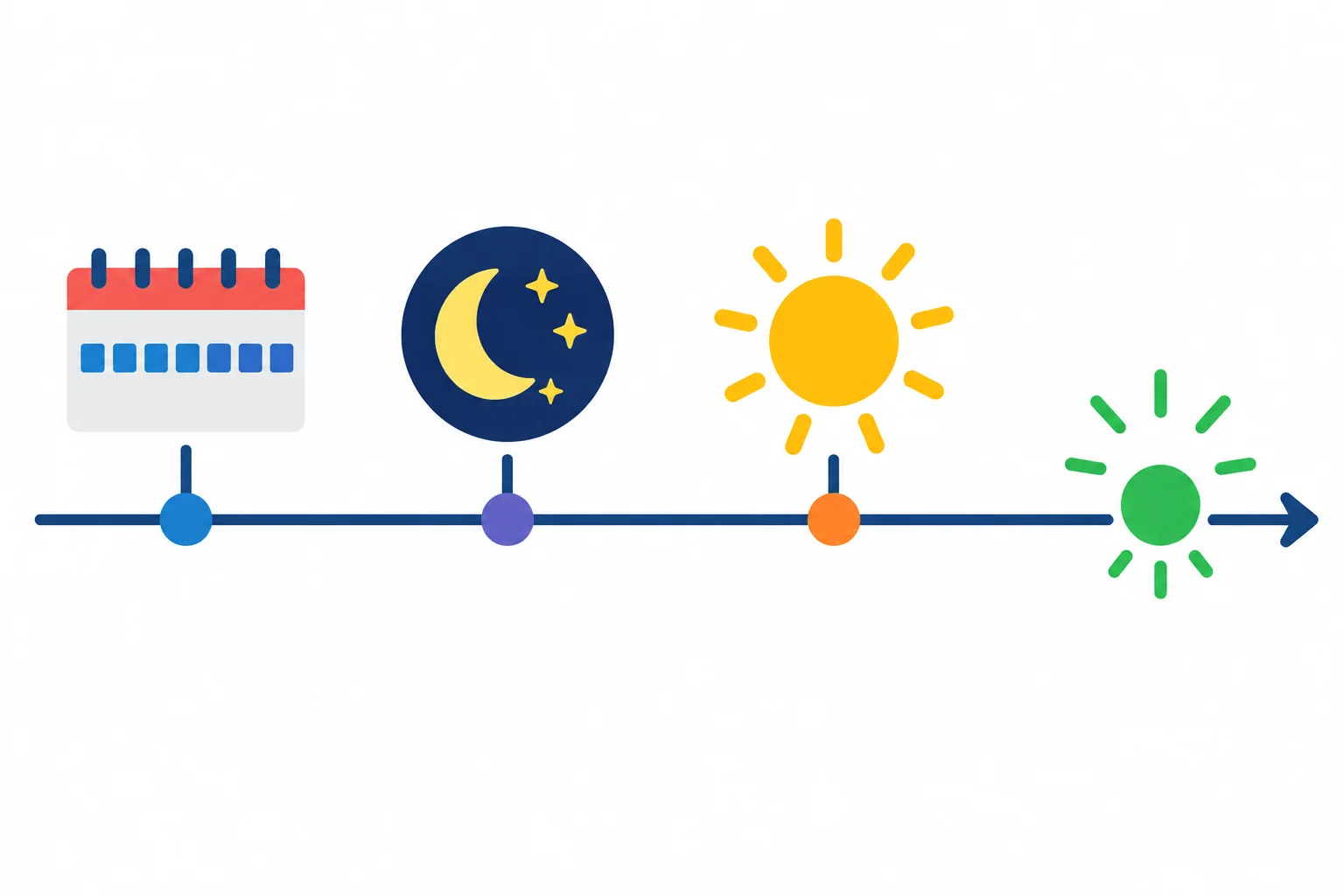
The three pictures on the left represent yesterday, last night, and last week. The marker on the right represents now.
Tip
Use a past-time phrase to help your listener understand when a visit happened. Do not put a preposition before yesterday, last night, or last week.
Here are six useful words for describing a visit:

Use the place words for where you are. Use busy, quiet, sunny, and cloudy to describe what you notice.
Example
A place can be busy or quiet. The weather can be sunny or cloudy. Look at the people, the place, and the sky for clues.
Which picture shows a quiet station?
Match each visit word and time phrase to its correct scene or meaning.
Tap an item and then its matching pair.

Step 2 of 8
Choose was or were for people, places, and weather in positive past descriptions.
Use was and were for a time before now. The time word can be yesterday, last night, or last week.
Choose the form from the subject:
The subject comes first in a positive sentence.
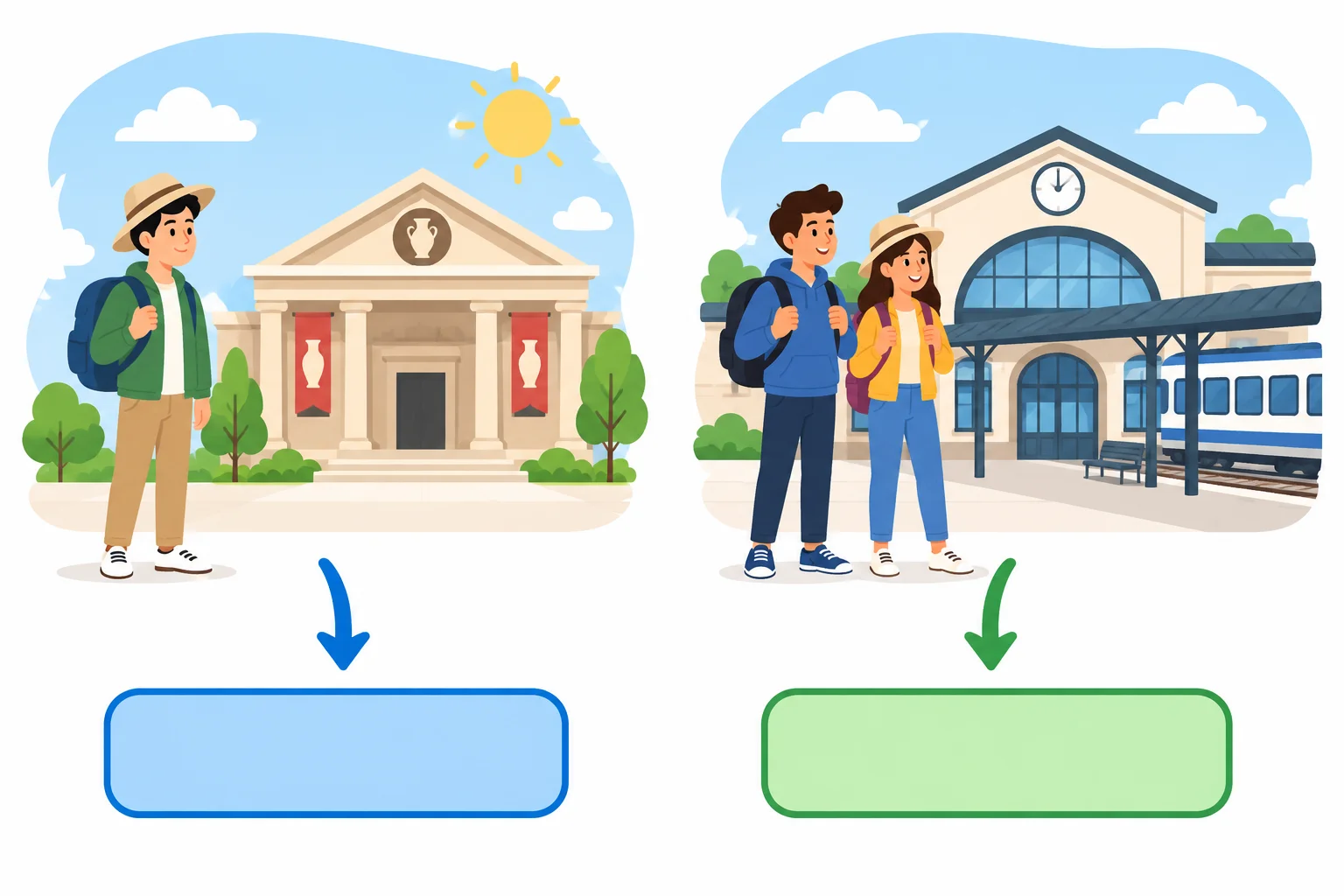
One person or one place uses one past form. Two people use the other past form.
Use this chart to choose the positive past form.
| Subject | Past form | Example ending |
|---|---|---|
| I | was | at the museum |
| he / she / it | was | sunny |
| one name or place | was | busy |
| you / we / they | were | at the station |
| two names | were | at the museum |
Example
subject + was/were + place or description
A person can be at a place. A place or the weather can have a description.
Example
Tip
Read the subject first. Maya is one person, but Maya and Leo are two people.
Complete the sentence: I ___ at the museum yesterday.
Complete the sentence: The station ___ busy last night.
Complete the sentence: Maya and Leo ___ at the station last night.
Put the parts in order to make one positive past description.
Your sentence
Available words

Step 3 of 8
A negative description says what was not true in the past.
At the museum yesterday, the weather was sunny. It wasn't cloudy.
Last night, the station was not quiet. It wasn't quiet.
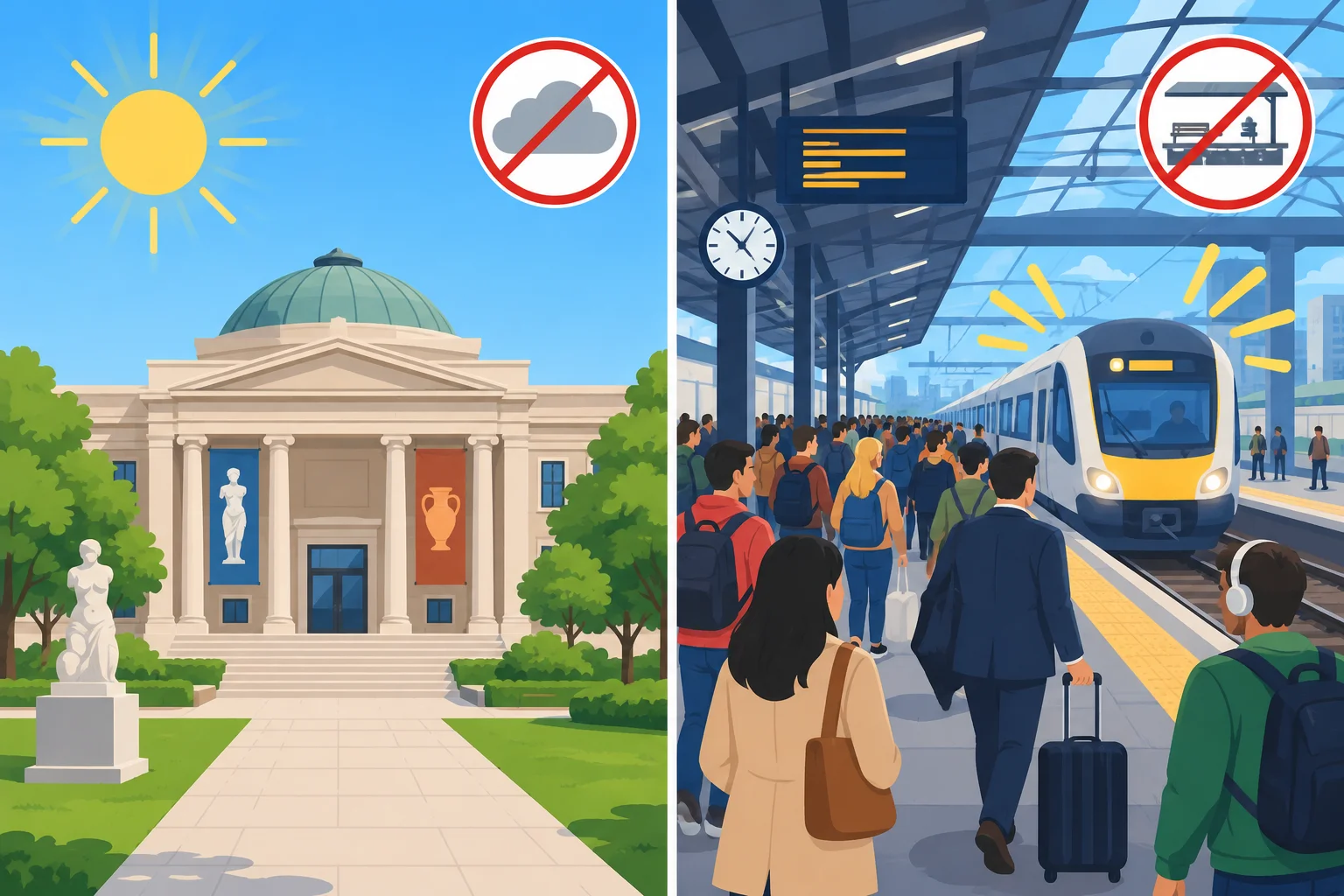
The pictures show what was true and what was not true.
Use the negative form after the subject. The subject still chooses the form:
Choose the form that matches the subject.
| Subject | Full form | Short negative form |
|---|---|---|
| I / he / she / it | was not | wasn't |
| One person or one place | was not | wasn't |
| you / we / they | were not | weren't |
| Two people | were not | weren't |
Example
True: The museum was busy.
Not true: The museum wasn't quiet.
True: Maya and Leo were at the station.
Not true: Maya and Leo weren't at a quiet station.
Complete the sentence.
The weather ___ cloudy yesterday.
Complete the sentence.
Maya and Leo ___ at a quiet station last night.

Look carefully at the people and the station.
Which negative description matches the picture?

Step 4 of 8
Build simple questions with was and were and answer with a short answer or a place.
To ask about a past fact, put was or were before the person or thing.
These questions can have a Yes or No answer.

For a past yes-or-no question, move was or were before the person or thing.
Tip
Use was with one thing: Was it sunny? Use were when Sam asks Maya and Leo together: Were you at the museum?
A short answer uses was or were again.
When Sam asks Maya and Leo, you in Sam's question becomes we in Maya's answer. Use wasn't or weren't to make a negative short answer.
Use Where to ask about a past location. A where question needs a place answer, not only Yes or No.
The answer pronoun changes to match Maya's meaning.
| Question | Positive answer | Negative or location answer |
|---|---|---|
| Was it sunny? | Yes, it was. | No, it wasn't. |
| Were you at the museum? | Yes, we were. | No, we weren't. |
| Where were you yesterday? | We were at the museum. | A place answer is needed. |
Example
Sam: Where were you yesterday?
Maya: We were at the museum.
Sam uses you. Maya speaks for herself and Leo, so she uses we.
Build the yes-or-no question about the weather.
Your sentence
Available words
Build the question that asks Maya and Leo about their past location.
Your sentence
Available words
Match each question to its correct answer.
Tap an item and then its matching pair.

Step 5 of 8
Read a short description of Maya and Leo's museum visit and identify its main details.
On holiday means away from your usual work or study. It is common in British English.
On vacation has the same meaning here. It is common in American English.
Both phrases are correct.

The phrases on holiday and on vacation describe the same idea: time away from usual work or study.
Use either phrase for Maya and Leo's time away.
| Phrase | Common in | Meaning here |
|---|---|---|
| on holiday | British English | time away |
| on vacation | American English | time away |
Read Maya's description. Look for who, when, where, and the details about the museum and weather.
Example
Maya and Leo were on holiday yesterday. They were at the museum. The museum was busy, and the weather was sunny. It wasn't cloudy.

Use the description to find the people, time, place, and conditions.
Tip
A negative sentence can help you check a detail: It wasn't cloudy tells you that cloudy weather was not true.
True or false: The description says that the weather was cloudy.
Match each question to the correct detail from Maya's description.
Tap an item and then its matching pair.

Step 6 of 8
Listen for positive and negative past descriptions, write two short sentences, and practise clear short answers.
In a full sentence, was and were can sound less strong than the main words. Listen for the whole sentence.
A negative sentence has wasn't or weren't. The ending is important: it makes the meaning negative.
In a short answer, was and were are usually clearer: Yes, it was. No, we weren't.
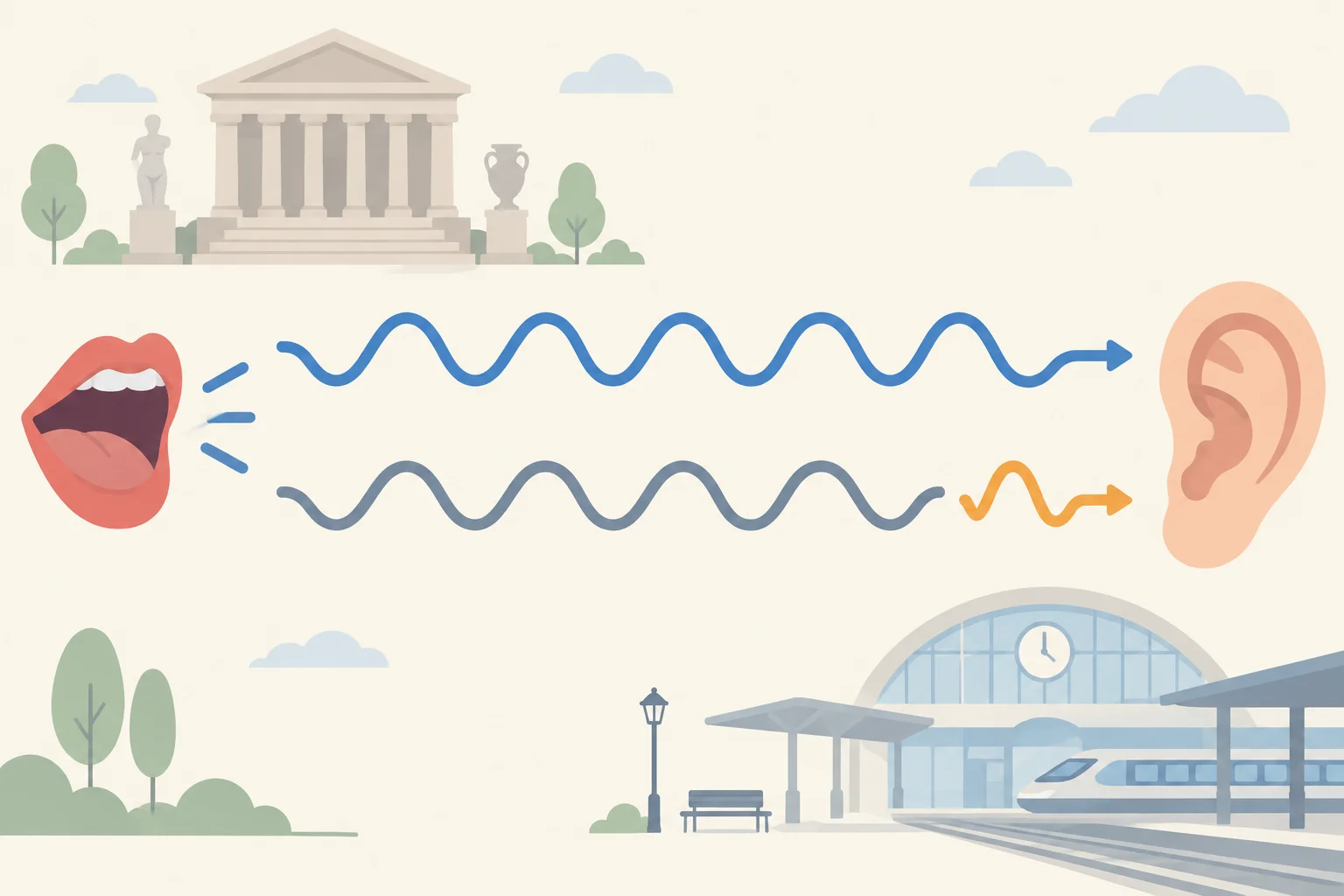
Listen carefully to the end of a negative form: the ending in wasn't or weren't changes the meaning.
Listen once. Then replay it and notice the positive and negative short answers.
Sam: Was it cloudy?
Maya: No, it wasn't.
Sam: Were you at the museum?
Maya: Yes, we were.
Sam: Was it cloudy?
Maya: No, it wasn't.
Sam: Were you at the museum?
Maya: Yes, we were.
Listen and choose an option.
Listen. Is the description positive or negative?
The museum was busy.
Listen and choose an option.
Listen. Is the description positive or negative?
The station wasn't quiet.
Listen and type each sentence. Use a capital letter and a full stop.
Listen and write what you heard.
Dictation 1
Listen and write what you heard.
Dictation 2
Say each answer aloud after the recording. Make the ending clear in the negative answers. Then replay the audio and compare your voice with the model.
Yes, it was.
No, it wasn't.
Yes, we were.
No, we weren't.
Yes, it was.
No, it wasn't.
Yes, we were.
No, we weren't.
Tip
For a negative answer, do not lose the ending: wasn't and weren't must sound different from was and were.

Step 7 of 8
Listen to Maya talk with Sam about the station, check a key detail, and practise a question and answer aloud.
Listen to Sam and Maya. Listen for the place, the time, and Maya's correction.

Imagine the setting, then use the audio for the details.
Sam: Were you and Leo at the station last night?
Maya: Yes, we were.
Sam: Was the station quiet?
Maya: No, it wasn't. It was busy.
What does Maya say about the station?
A negative answer can correct an idea in a question. Read the conversation, then say the last question and answer aloud.
Example
Sam: Were you and Leo at the station last night?
Maya: Yes, we were.
Sam: Was the station quiet?
Maya: No, it wasn't. It was busy.
Listen again and repeat after each speaker. Make the negative word clear.
Sam: Was the station quiet?
Maya: No, it wasn't.
Sam: Was the station quiet?
Maya: No, it wasn't.
Speak aloud before you type. Ask Maya one question about the station conversation with was or were. Then say Maya's answer aloud. Type the question and answer that you said.
Write at least 20 characters (0/20).

Step 8 of 8
Write and say a short account of a real or imagined past visit.
You can now make a short account of a visit. Put the details together: a past time, people, a place, and descriptions.
Plan four short sentences. Your account needs both was and were, and one negative sentence with wasn't or weren't.
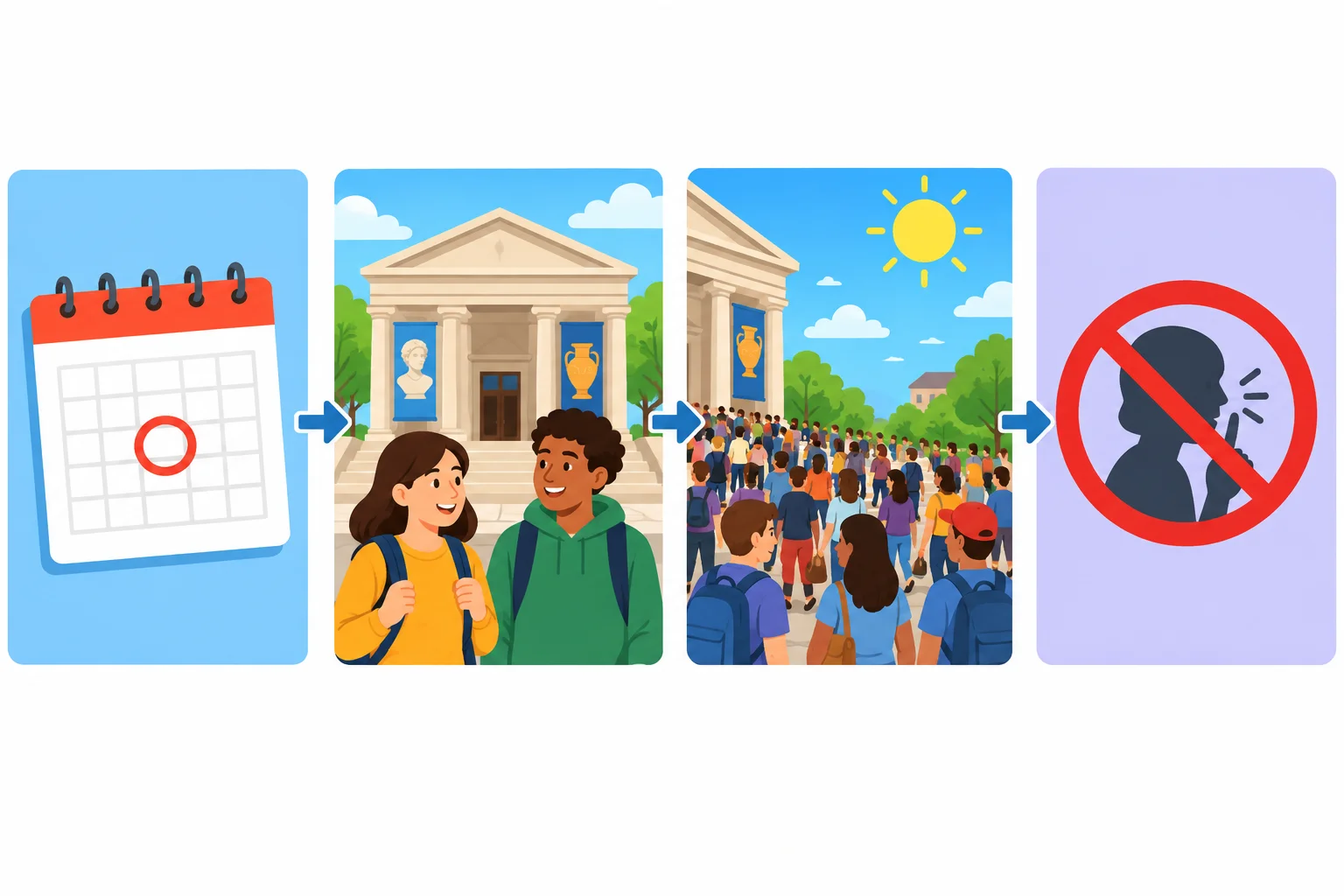
Use this order to organise the details of your visit.
Here is a four-sentence model. Notice how it starts with a past time, uses were for two people, uses was for descriptions, and includes a negative fact.
Example
Yesterday, Maya and Leo were at the museum.
The museum was busy.
The weather was sunny.
The weather wasn't cloudy.
Tip
Before you write, check your plan:
was and were?After writing, read your account aloud. Then ask and answer one relevant question about it. You can use a yes-or-no question or a where question.
Write four short sentences about a real or imagined visit. Include a past-time phrase, people and a place, both was and were, and at least one negative with wasn't or weren't.
Then read your account aloud. Ask one relevant question about your visit and say your answer aloud.
Write at least 80 characters (0/80).
Summary
You can describe a past visit with clear, short sentences.
Congratulations! You completed: Describe a Visit with Was and Were
Thousands of online courses in video, ebooks and audiobooks.
To test your knowledge during online courses
Generated directly from your cell phone's photo gallery and sent to your email

Download our app via QR Code or the links below:.



Carry knowledge in your pocket.
Download the Cursa app.
There are hundreds of free courses available, with a free certificate of completion that is saved in your mobile image gallery.
Download the app to access the Course Completion Certificate for Free.


+ 10 million
students

Free and Valid
Certificate

60 thousand free
exercises

4.8/5 rating in
app stores

Free courses in
video and ebooks