Step 1 of 7
Define the Decisions Your Brief Must Make
Learn to separate the focused decisions in a strategy brief from the execution details that come later.

Learning path · Level 1 · Tutorial 5
Create a concise strategy brief for a real or hypothetical business, choosing a focused direction that fits available resources and responsible marketing principles.
 Define the Decisions Your Brief Must Make
Learn to separate the focused decisions in a strategy brief from the execution details that come later. 2 min
 Connect the Audience, Barrier, and Outcome
Connect DeskNest’s audience, proposed value, priority barrier, objective, and KPIs into a concise strategic core. 3 min
 Make Resources and Assumptions Explicit
Make DeskNest’s resource limits and unresolved assumptions explicit before committing to a direction. 2 min
 Choose Channel Priorities—and What to Defer
Select a small, feasible channel mix for DeskNest and document both channel priorities and non-priorities. 3 min
 Set Boundaries for Claims and Disclosures
Define concise, observable ethical boundaries for DeskNest claims and commercial disclosures. 2 min
 Protect Customer Information and Audience Choice
Add concise ethical boundaries that protect customer information, informed choice, and respectful treatment of audiences. 2 min
 Assemble, Check, and Finish Your Brief
Assemble and revise a concise DeskNest strategy brief that is aligned, feasible, explicit about uncertainty, and bounded by responsible marketing commitments. 5 min
Step 1 of 7
Learn to separate the focused decisions in a strategy brief from the execution details that come later.
A strategy brief is a one-page record of focused direction and its boundaries. It answers: who matters, what value is offered, which barrier comes first, what outcome matters, and where limited resources will be concentrated.
It is not an execution plan. An execution plan turns the direction into activities: dates, formats, creative, settings, and task assignments. Keep those details out so the brief stays useful for making choices.
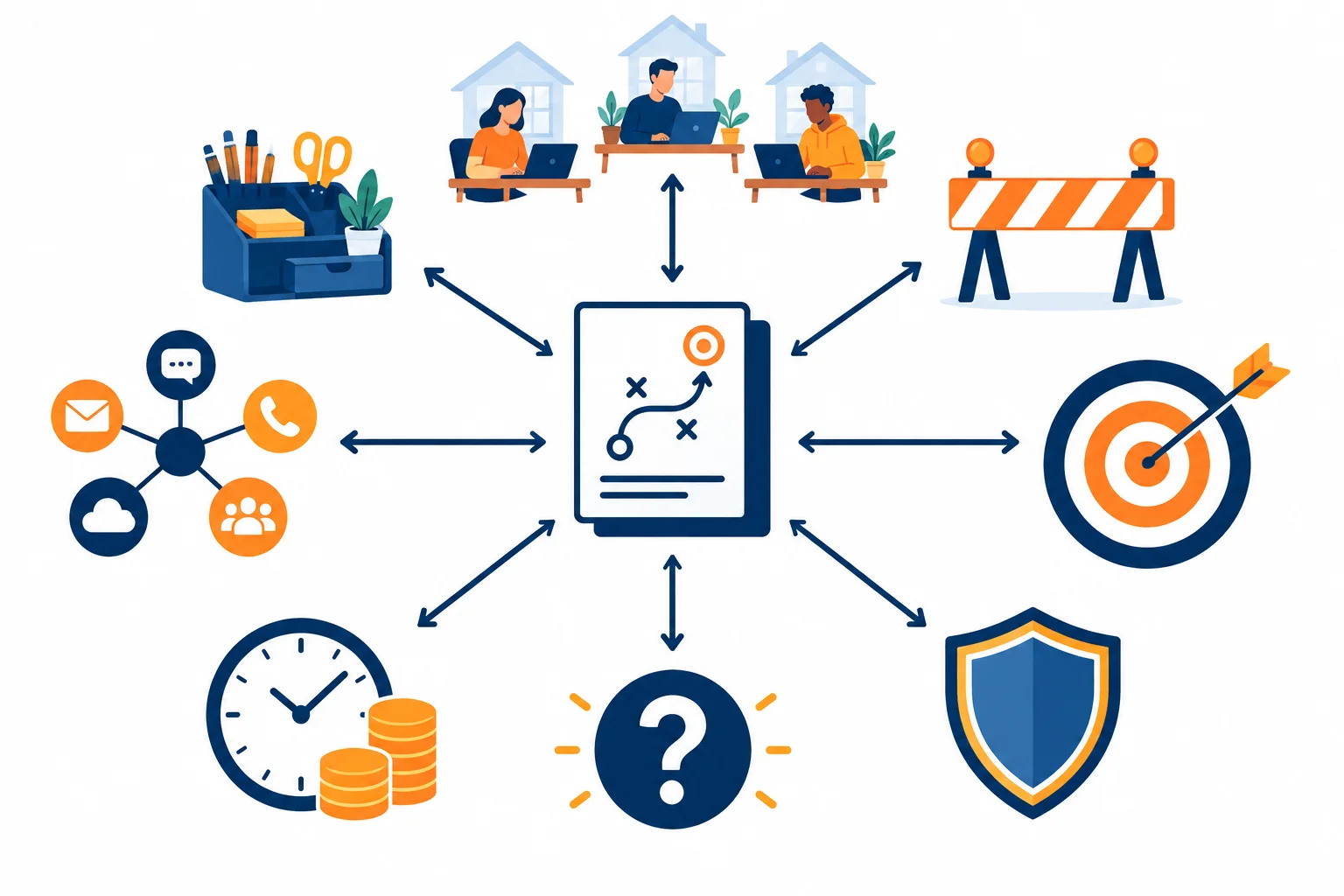
The sections work together: each one supports a single focused direction.
Use these headings in this exact order. Write short bullets beneath each heading.
Together, these sections make the brief a connected set of decisions—not seven unrelated summaries.
Example
Strategy-brief decision
“Priority barrier: reduce uncertainty about whether DeskNest, with a footprint of 20 cm × 12 cm, will fit on a small desk before a first-time order.”
This sets a direction. Later work can use it to judge whether an activity is relevant.
Execution detail — leave it out of the brief
“Publish a three-slide Instagram carousel every Tuesday, using a ruler photo and a drafted caption.”
This specifies a schedule, format, creative, and copy. It may be useful later, but it does not belong in the concise strategy brief.
Tip
A brief may record a channel decision and a resource limit, but it does not need a publishing calendar, finished visual, final caption, audience-targeting settings, or a task-by-task campaign setup. Those are execution choices made after the direction is clear.
Match each planning statement to its proper category.
Tap an item and then its matching pair.

Step 2 of 7
Connect DeskNest’s audience, proposed value, priority barrier, objective, and KPIs into a concise strategic core.
A focused strategy brief is not a set of unrelated summaries. Its strategic core should form one plausible chain:
For DeskNest, people working from home at small desks need confidence that an organizer will fit their limited space. DeskNest’s proposed value—keeping essentials organized within a compact footprint—addresses that need. A useful priority barrier is uncertainty about fit, not an internal task such as publishing more posts.
This chain supports a planning target; it does not guarantee an outcome.

Read the chain from left to right: audience need → proposed value → priority barrier → objective → outcome and supporting KPIs.
Keep the measurement roles distinct:
The objective must retain its original baseline, target, and time frame. A target of 30 first-time orders is a planning target, not a forecast.
Example
Audience and value
Priority barrier
Objective and KPIs
The Instagram observation is evidence to consider later; it does not replace the fit barrier or choose a channel by itself.
Which entry breaks the connection in this sample strategic core?
Complete this short strategic-core check.
Part 1 — diagnose: In the sample below, name the entry that breaks the alignment and explain why in one sentence.
Part 2 — draft: For DeskNest, write short bullets under these three headings:
Use the supplied case facts. Do not choose channels or add execution activities.
Write at least 180 characters (0/180).

Step 3 of 7
Make DeskNest’s resource limits and unresolved assumptions explicit before committing to a direction.
A resource statement makes the brief usable: it turns what DeskNest has into limits the direction must respect. Record facts, not optimistic estimates.
Under Resources, state who owns the work, time available, total cash available, usable skills, and existing assets. A website or Instagram account is an asset, but it does not create extra working hours.
Keep the units visible: time is 4 hours per week; cash is $100 for the next 4 weeks. These are different limits.
DeskNest’s fictional starting resources
| Resource area | Available to DeskNest | Brief implication |
|---|---|---|
| Ownership | One owner | One person must create, respond, and review |
| Time | 4 hours per week | Recurring work must fit this weekly limit |
| Cash | $100 for 4 weeks | Total spending cannot exceed this amount |
| Skills | Basic writing and still-photography skills | Keep work within current capability |
| Assets | Existing website and Instagram account | Useful starting points, not unlimited capacity |
A capacity check includes work that continues after the first item is made. Count preparation, customer responses, and review—not only initial creation.
For example, a direction needing 2 hours of preparation, 1 hour of responses, and 1 hour of review uses all 4 hours per week. It leaves no spare capacity. A direction that needs more than 4 hours per week must be reduced or rejected before it enters the brief.
Cash is checked separately: spending may fit within $100 while the required time does not.
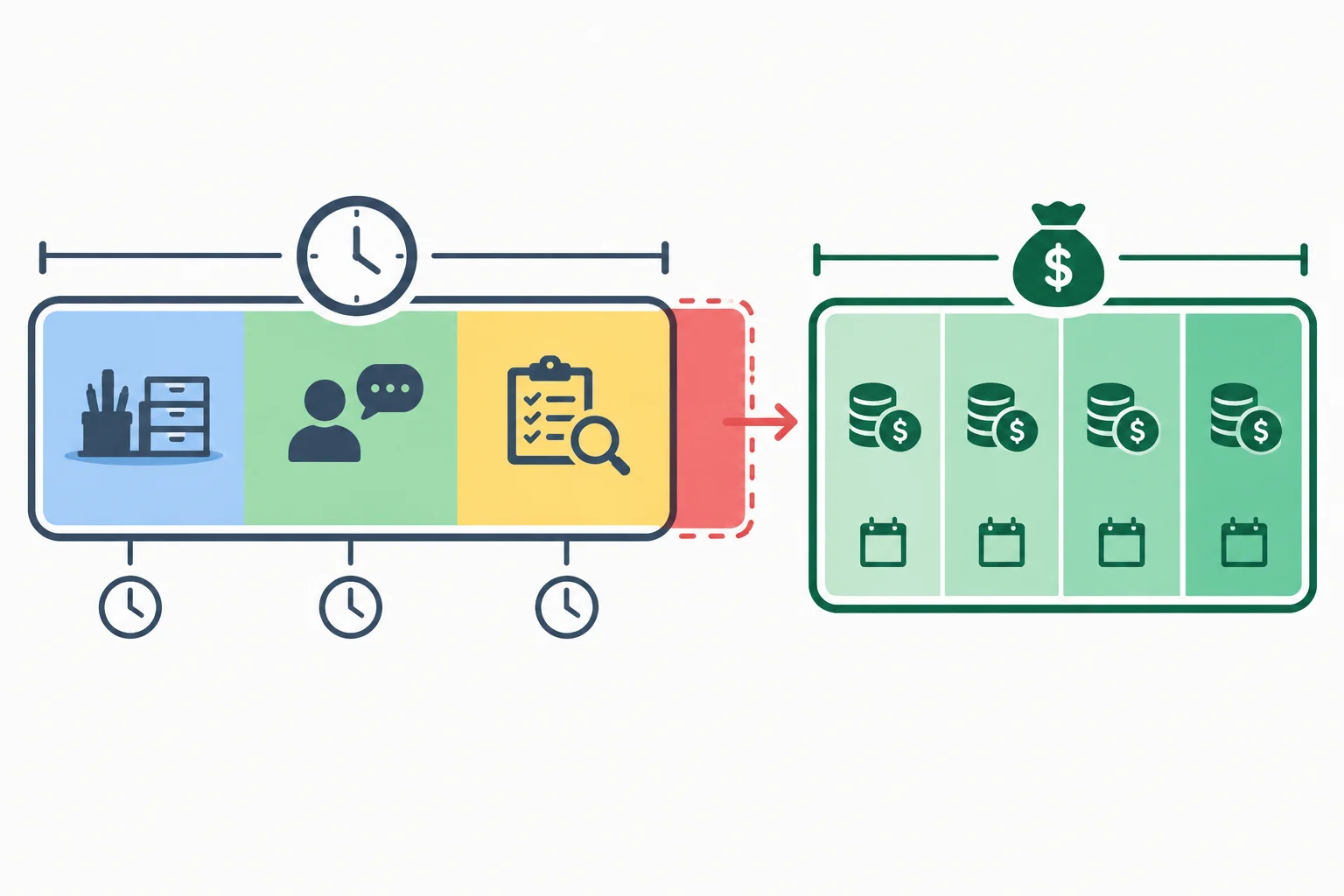
A feasible direction fits both the weekly time capacity and the total cash budget.
Tip
Do not solve a capacity gap by silently assuming that replies, maintenance, or review will happen “somehow.” If that work matters, name it and count it.
DeskNest has one owner, 4 hours per week, and $100 for 4 weeks. Which proposal should be rejected immediately because it exceeds a stated resource limit?
Draft the resource and uncertainty notes for DeskNest.
A proposed direction requires 2 hours of preparation, 1.5 hours of customer responses, and 1 hour of review every week.
In your response:
Write at least 250 characters (0/250).
Step 4 of 7
Select a small, feasible channel mix for DeskNest and document both channel priorities and non-priorities.
A channel priority is a decision about where limited effort will concentrate—not a list of every channel that exists. Compare each option against the same questions:
The five inquiries are useful directional evidence, not representative research. Record uncertainty instead of turning a small sample into a certainty.
Use this compact comparison before writing the Channel priorities and non-priorities section.
| Channel | Audience evidence | Role for fit barrier | Feasibility | Decision |
|---|---|---|---|---|
| Website | Existing website; fit questions appear in 3 inquiries | Answer fit questions near purchase | Uses existing asset and still photos | Primary |
| Organic Instagram | Supplied observation: 4 inquiries mention Instagram discovery | Guide interested people to fit details | Existing account; requires limited ongoing time | Supporting |
| Paid search | No supplied evidence of search demand | Could reach active searchers, but audience fit is unverified | $100 and monitoring time are limited | Deferred |
| YouTube | No supplied evidence of audience use | Could demonstrate size, but is not essential | Ongoing video production exceeds available skills and time | Deferred |
Choose one Primary channel: the main place where the priority barrier is resolved for a potential buyer. You may choose one Supporting channel with a different role, such as helping the right people reach that primary destination.
For DeskNest, make the Website Primary. It can present the verified 20 cm × 12 cm footprint when a person is deciding whether the organizer fits. Make Organic Instagram Supporting: the supplied observation suggests it may help people discover DeskNest and then reach the Website.
This is a planning direction intended to support the first-time orders target, not a forecast. The Instagram observation comes from only five inquiries, so the rationale must remain qualified.
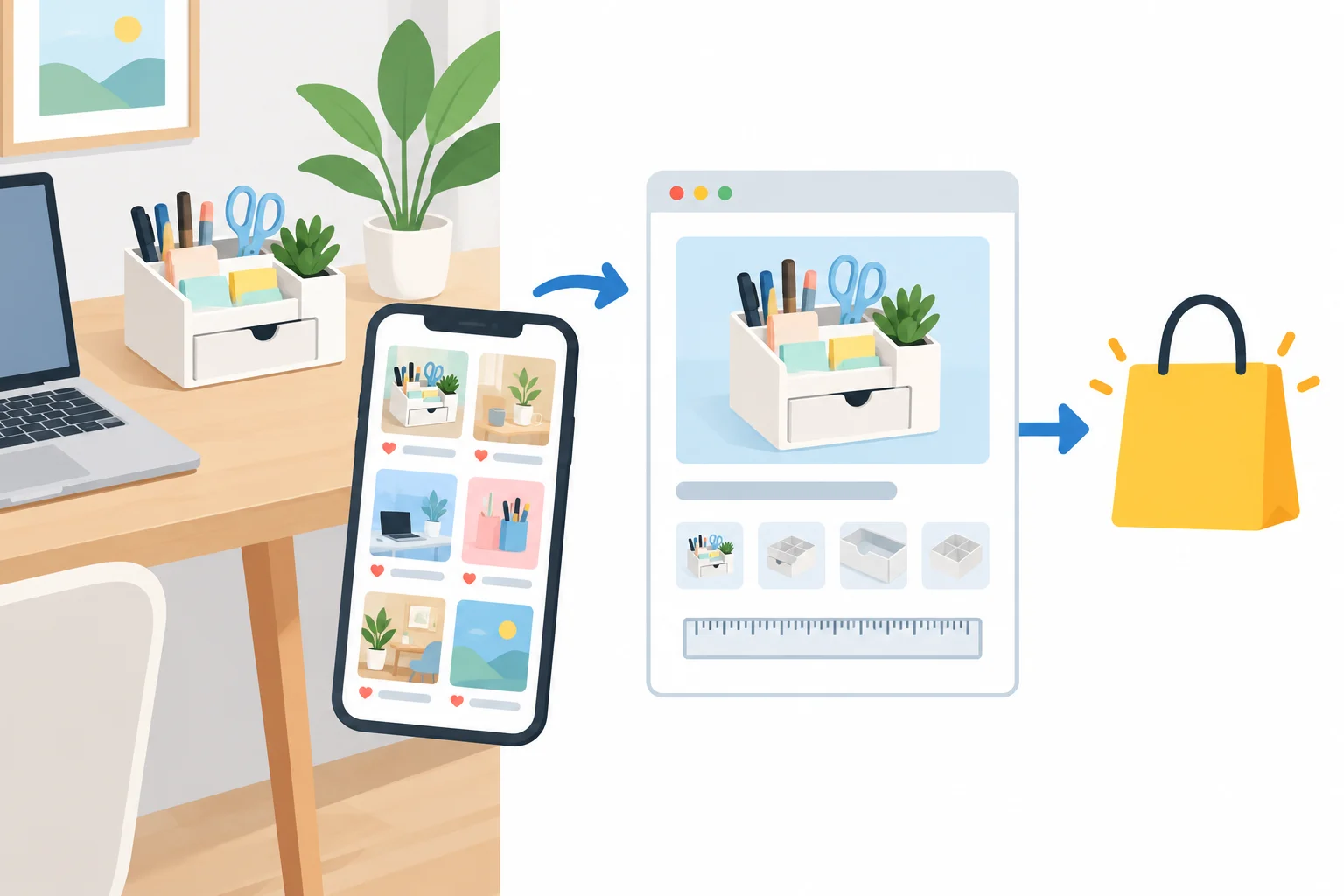
Organic Instagram can support discovery; the Website is the primary place to clarify fit and support an order.
Example
Channel priorities and non-priorities
Primary: present the verified 20 cm × 12 cm footprint to address fit uncertainty at the decision point.Supporting: guide interested people to the Website. Supplied observation: 4 of 5 inquiries mention Instagram discovery; this small sample is not representative.Deferred: search demand is an Assumption, while the $100 total budget and available owner time are limited.Deferred: ongoing video production does not fit 4 hours per week or basic still-photography skills.Which statement is the strongest case-specific reason to record a channel as Deferred in the DeskNest strategy brief?
Draft the Channel priorities and non-priorities bullets for DeskNest.
Compare all four supplied channels. Select exactly one Primary channel and no more than one Supporting channel; mark every remaining channel Deferred. For each decision, give a short reason using audience fit, the intended role in addressing fit uncertainty, or resource feasibility. Include an Assumption or a limitation of the supplied evidence where relevant.
Write at least 280 characters (0/280).

Step 5 of 7
Define concise, observable ethical boundaries for DeskNest claims and commercial disclosures.
An ethical boundary is a specific commitment that can guide a decision. It is stronger than “be ethical.”
For DeskNest, write commitments that say what marketing may claim, what support it needs, and what it must not imply. Put these short bullets under the Ethical boundaries heading of the strategy brief.
A product fact can be checked: DeskNest has a footprint of 20 cm × 12 cm. An outcome statement, such as saying it will organize every small desk, needs appropriate support. Do not turn a product fact into an unsupported guarantee.
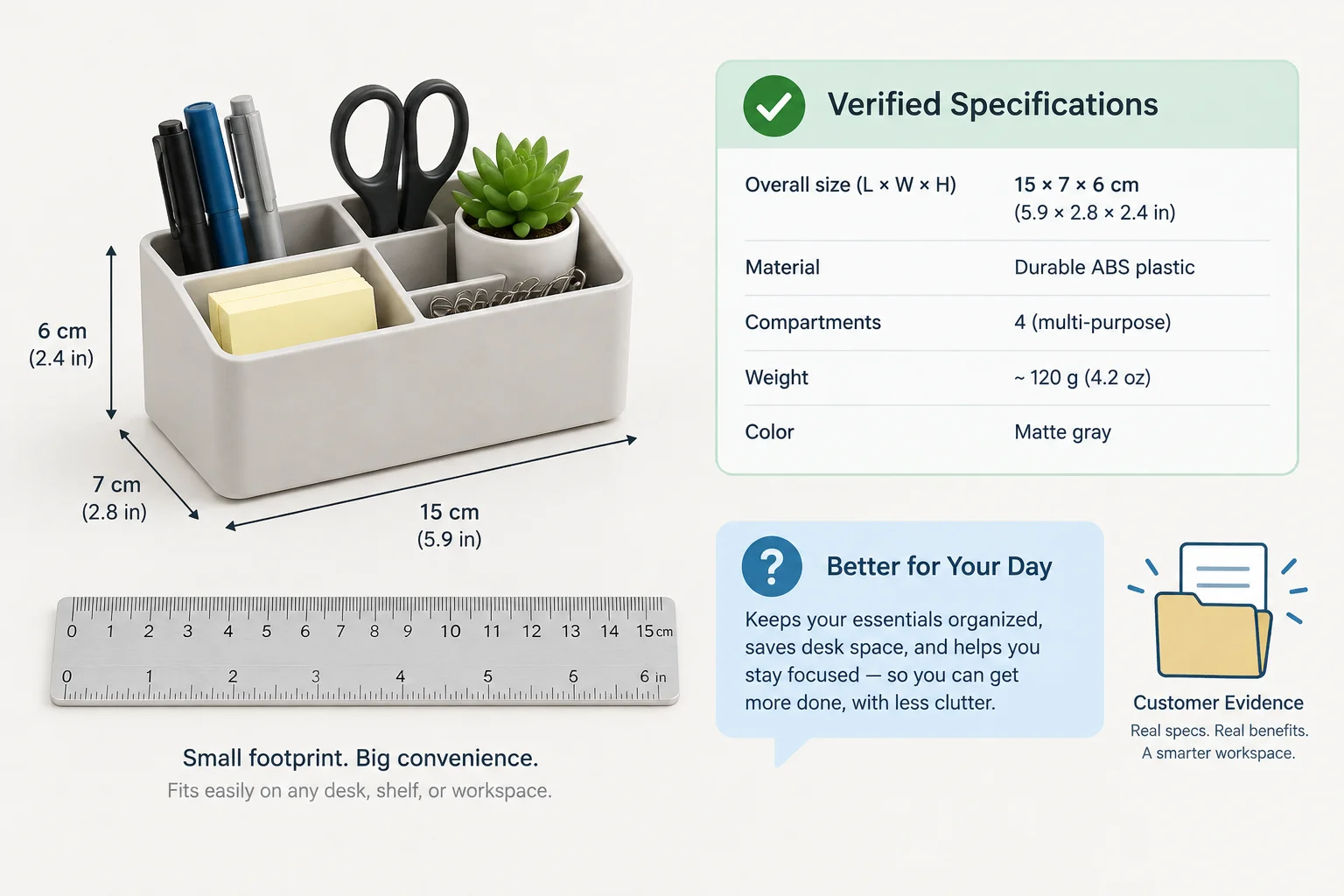
A checkable product fact and a customer outcome claim need different levels of support.
Example
Useful claim boundary:
20 cm × 12 cm footprint.This is a planning safeguard, not a statement that one wording fits every legal context.
Commercial relationships can affect how an audience interprets a recommendation. If a recommendation involves payment, a free product, an affiliate link, or another material benefit, the relationship should be clear to the audience.
A disclosure belongs where people see the recommendation—not hidden in an unrelated profile page, a distant comment, or a long list of tags. The exact requirements can vary by place and situation, so treat this brief commitment as a safeguard and check applicable requirements when acting on it.
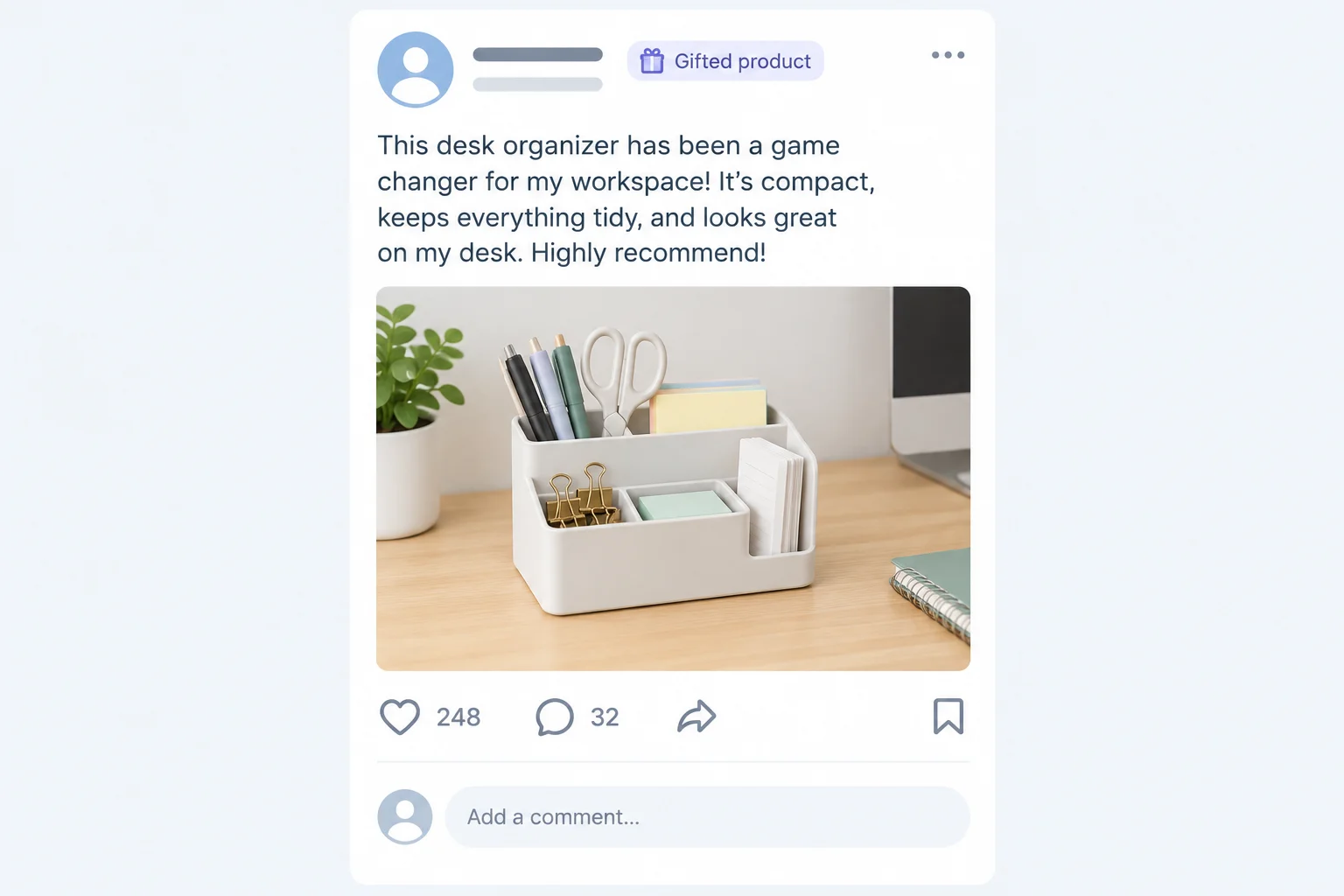
The disclosure is noticeable and connected to the recommendation it qualifies.
Example
Brief-level disclosure commitment:
“DeskNest will make any paid, gifted, affiliate, or other material relationship clear and noticeable alongside the related recommendation.”
This is a boundary, not a finished post or an influencer-management plan.
Match each short scenario to the safeguard that is missing.
Tap an item and then its matching pair.
Write two short bullets for the Ethical boundaries section.
A. A product post says DeskNest “will make every small desk organized.”
B. A reviewer received DeskNest free and recommends it, but the relationship is not shown.
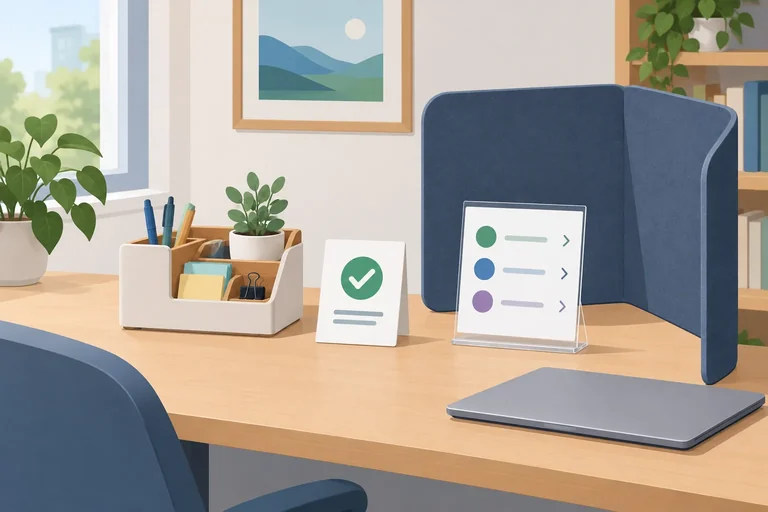
For each scenario, first identify the missing safeguard, then write a concise commitment that would prevent the issue. Keep the commitments at brief level rather than drafting a finished post.
Write at least 140 characters (0/140).
Step 6 of 7
Add concise ethical boundaries that protect customer information, informed choice, and respectful treatment of audiences.
A practical Ethical boundaries commitment names a legitimate purpose before information is collected or used. For DeskNest, appropriate purposes might include responding to an inquiry, processing an order, or sending communications a person has validly agreed to receive.
Keep collection and use necessary for that purpose. Where permission is required, obtain it; respect a person’s stated preferences; and limit access to people who need the information for the stated purpose.
A channel opportunity does not change these safeguards. For example, four customer inquiries mentioning Instagram are a Supplied observation, not permission to use someone’s information for unrelated marketing.
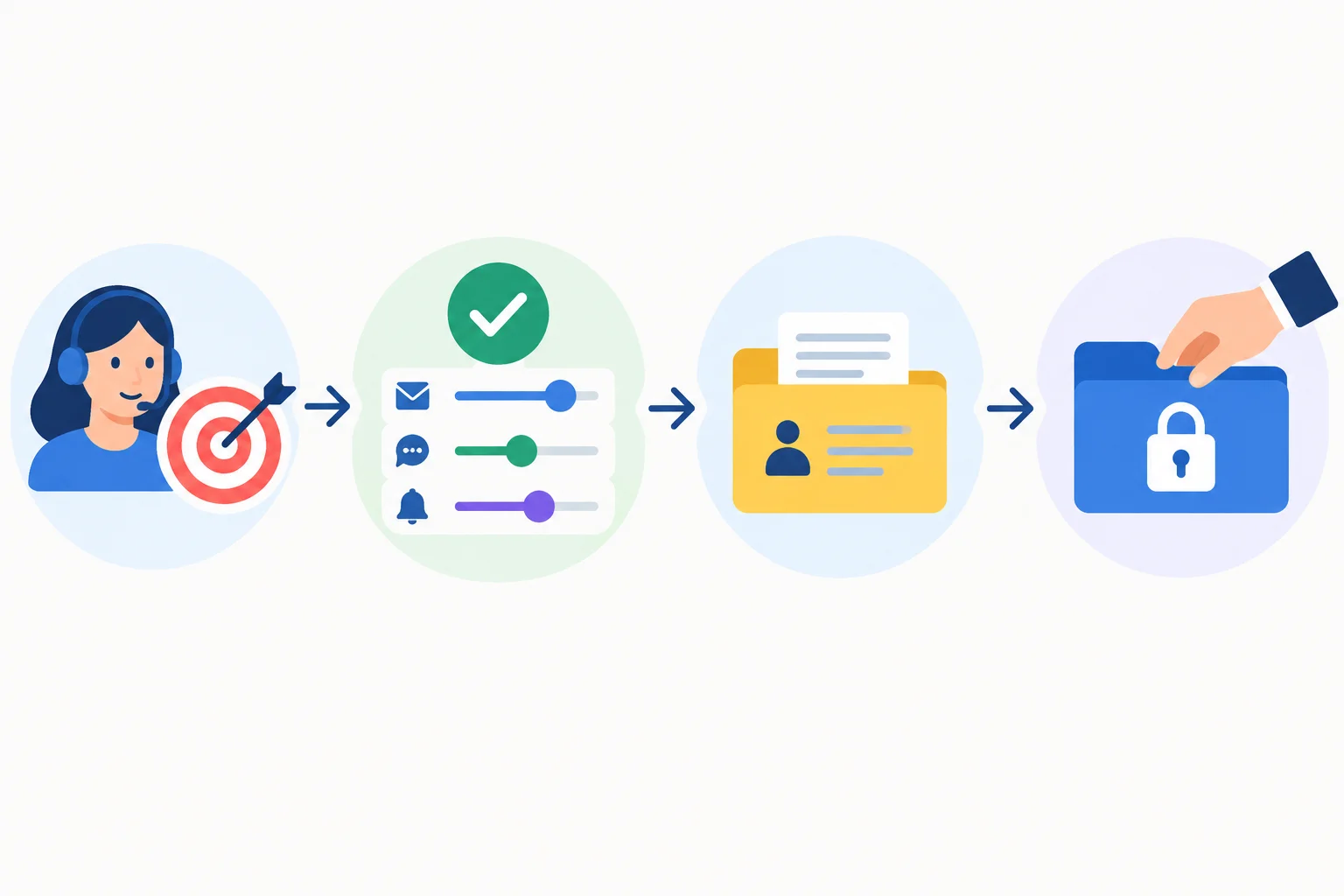
Start with a purpose. Permission and preferences guide what may be collected and used; access stays limited to that purpose.
Add boundaries that protect informed choice, not just business results:
These are brief-level commitments. They guide later marketing work without prescribing an email setup, a page layout, or a campaign.
Example
Respectful, factual wording: “DeskNest has a footprint of 20 cm × 12 cm. Check your available desk surface before ordering.”
Not acceptable: “Your desk is a disaster—buy now before this offer disappears!” when the offer will continue.
The first statement gives a relevant product fact and leaves room for a considered choice. The second uses insulting language and fabricated urgency. A possible increase in first-time orders does not justify either practice.
True or false: Because four inquiries mention Instagram, DeskNest may collect email addresses from every Instagram profile visitor and send order follow-ups, even with no stated purpose or applicable permission.
Draft additions for the Ethical boundaries section of DeskNest’s strategy brief.
Write at least 180 characters (0/180).

Step 7 of 7
Assemble and revise a concise DeskNest strategy brief that is aligned, feasible, explicit about uncertainty, and bounded by responsible marketing commitments.
Bring the earlier decisions together as one short direction-setting document. A strategy brief records what DeskNest will focus on, the limits it accepts, and the evidence it still needs. It does not include a posting calendar, finished creative, campaign settings, or detailed implementation steps.
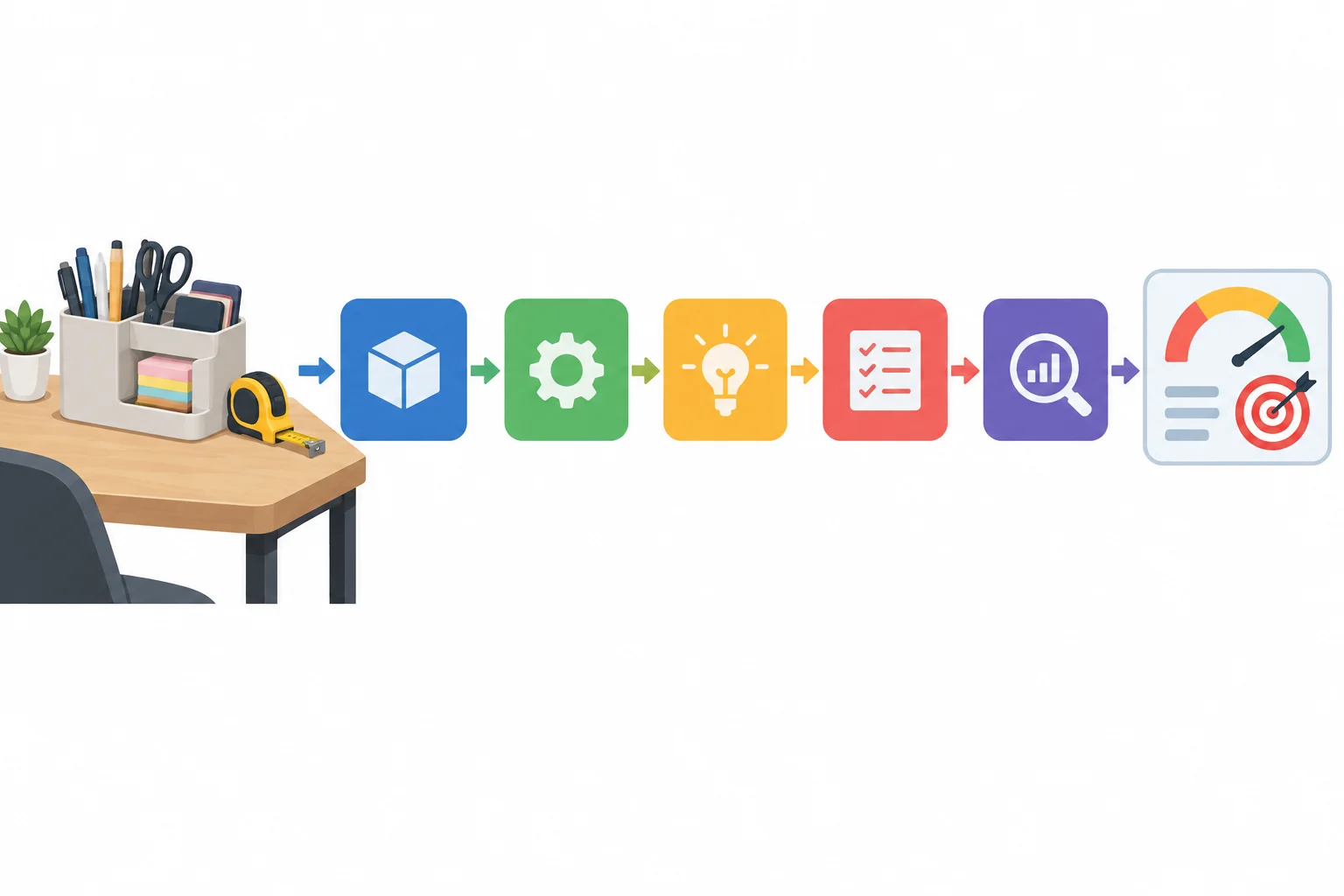
Check the chain: audience need → value → priority barrier → objective → KPIs. Every later choice should support this direction.
This editable DeskNest model shows the first four sections. Copy it into your own document and keep every bullet short.
## Audience and value
- Audience: people working from home at small desks.
- Proposed value: DeskNest keeps desk essentials organized within a compact footprint of 20 cm × 12 cm.
- Supplied observation: of five recent customer inquiries, three ask whether DeskNest will fit their desk and four mention discovering DeskNest on Instagram. This small sample is not representative research.

## Priority barrier
- Potential buyers are uncertain whether DeskNest will fit their available desk space.

## Objective and KPIs
- Planning target: Increase first-time orders from 20 in the previous 4 weeks to 30 in the next 4 weeks. This is a planning target, not a forecast or guarantee.
- Outcome KPI: first-time orders.
- Supporting KPI: product-page purchase conversion rate = sessions containing both a product-page view and a purchase ÷ sessions containing a product-page view. Baseline: Not yet measured.

## Channel priorities and non-priorities
- Website — Primary: present the verified 20 cm × 12 cm footprint to resolve fit uncertainty at the decision point.
- Organic Instagram — Supporting: guide interested people to the Website. Supplied observation: 4 of 5 inquiries mention Instagram discovery; this small sample is not representative.
- Paid search — Deferred: search demand is an Assumption, while the $100 total budget and owner time are limited.
- YouTube — Deferred: ongoing video production does not fit 4 hours per week or basic still-photography skills.Finish the model with explicit limits, uncertainty, and observable ethical boundaries. These boundaries apply even when a channel seems promising.
## Resources
- One owner has 4 hours per week for marketing, including maintenance, customer responses, and review.
- Total marketing cash budget: $100 for the next 4 weeks.
- Available skills: basic writing and still-photography skills.
- Existing assets: Website and Organic Instagram account.

## Assumptions
- Assumption: clearer fit information will help some small-desk visitors decide to purchase.
- Assumption: Instagram discovery in the five inquiries may be relevant beyond this small sample; it is not established research.
- Evidence check: during the next 4 weeks, record fit-related customer questions and review first-time orders and the supporting KPI once measurement is available.

## Ethical boundaries
- Claims: use supportable product facts, including the 20 cm × 12 cm footprint; do not promise an outcome for every customer or guarantee an outcome.
- Disclosures: make any paid, gifted, affiliate, or other material commercial relationship clear and noticeable alongside the recommendation.
- Customer information: use only what is necessary for a stated purpose; obtain valid permission where required, respect preferences, and limit access.
- Respectful treatment: use inclusive, accessible communication; avoid stereotypes, fabricated urgency, concealed conditions, or pressure that weakens informed choice.Use this quick audit before calling the brief ready. A “no” means revise the brief—not add a detailed campaign plan.
| Check | Ready when… |
|---|---|
| Strategic chain | The value addresses the audience need, and reducing the priority barrier could plausibly support the objective. |
| Objective and KPIs | The baseline, target, and 4 weeks are intact; 30 first-time orders is not described as a guarantee. |
| Channel priority | Website is Primary because it resolves fit uncertainty; Organic Instagram is Supporting because it guides interested people to the Website. |
| Non-priority | Paid search and YouTube are Deferred with case-specific reasons linked to evidence, resources, or skills. |
| Resource fit | Time includes maintenance, responses, and review; cash does not exceed $100. |
| Uncertainty | Supplied observation and Assumption are visibly different; limited evidence is not overstated. |
| Ethical boundary | Claims, disclosures, customer information, and respectful treatment each have a concrete commitment. |
Complete the seven-section strategy brief for DeskNest in a personal document, or write short section-by-section responses here. Use the self-check, revise one real weakness, and explain the revision.
Your brief must use all seven headings in order. Keep one Primary channel and no more than one Supporting channel, give justified Deferred decisions, label assumptions explicitly, and cover all four ethical areas. Then name the weakness you found and state exactly what you changed. Keep this a strategy brief, not a detailed campaign plan.
Write at least 180 characters (0/180).
Summary
Congratulations! You completed: Write a Focused Marketing Strategy Brief
30 XP
You completed this level!
Up next: Content Marketing and Copywriting
 Build an Editorial Plan from a Strategy BriefTurn a strategy brief into a focused editorial plan with useful content themes, consistent brand voice, clear briefs, and a realistic publishing calendar.
Thousands of online courses in video, ebooks and audiobooks.
To test your knowledge during online courses
Generated directly from your cell phone's photo gallery and sent to your email
Download our app via QR Code or the links below:.


Carry knowledge in your pocket.
Download the Cursa app.
There are hundreds of free courses available, with a free certificate of completion that is saved in your mobile image gallery.
Download the app to access the Course Completion Certificate for Free.

+ 10 million
students

Free and Valid
Certificate

60 thousand free
exercises

4.8/5 rating in
app stores

Free courses in
video and ebooks