Step 1 of 6
Start with Customer and Business Value
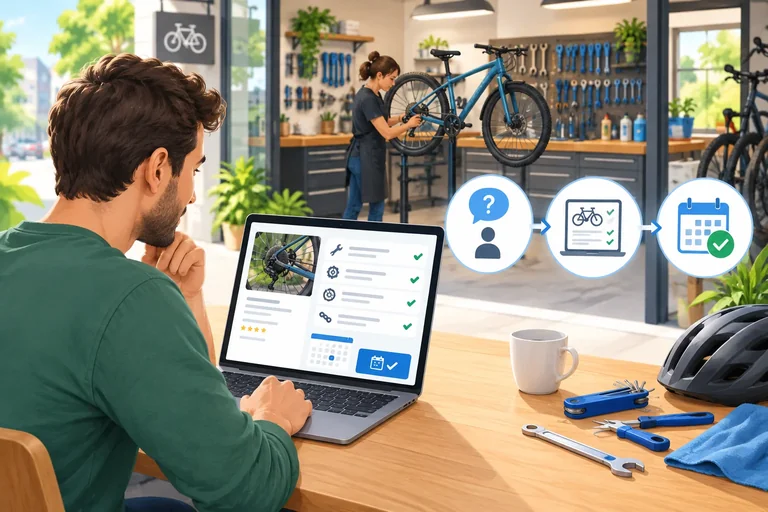
See how a digital marketing activity can provide practical help to a customer while supporting a business.

Learning path · Level 1 · Tutorial 1
Explain what digital marketing contributes to a business and how owned, earned, and paid channels work together to attract, convert, and retain customers.

 Start with Customer and Business Value
See how a digital marketing activity can provide practical help to a customer while supporting a business. 1 min
 Recognize Acquisition, Conversion, and Retention
2 min
 Classify Owned, Earned, and Paid Activities
Learn to classify marketing activities as owned, earned, or paid based on how communication or exposure is obtained. 2 min
 Compare the Main Channel Trade-offs
Compare owned, earned, and paid activities through realistic trade-offs in control, reach, credibility, and resources. 2 min
 Connect Channels Around a Useful Customer Experience
See how a small set of connected activities can provide different kinds of help to the same customer relationship. 2 min
 Explain a Simple Channel Combination
2 min
Step 1 of 6
See how a digital marketing activity can provide practical help to a customer while supporting a business.
Digital marketing uses digital communication and interactions to connect a customer need with a useful business offering.
The point is not simply to appear online. A useful activity gives the customer help—for example, relevant information or a clearer choice—while also supporting the business, such as by bringing a relevant inquiry, sale, or continuing relationship.
A channel is a route through which a business and its customers connect. A website, email, and social media are common channels.
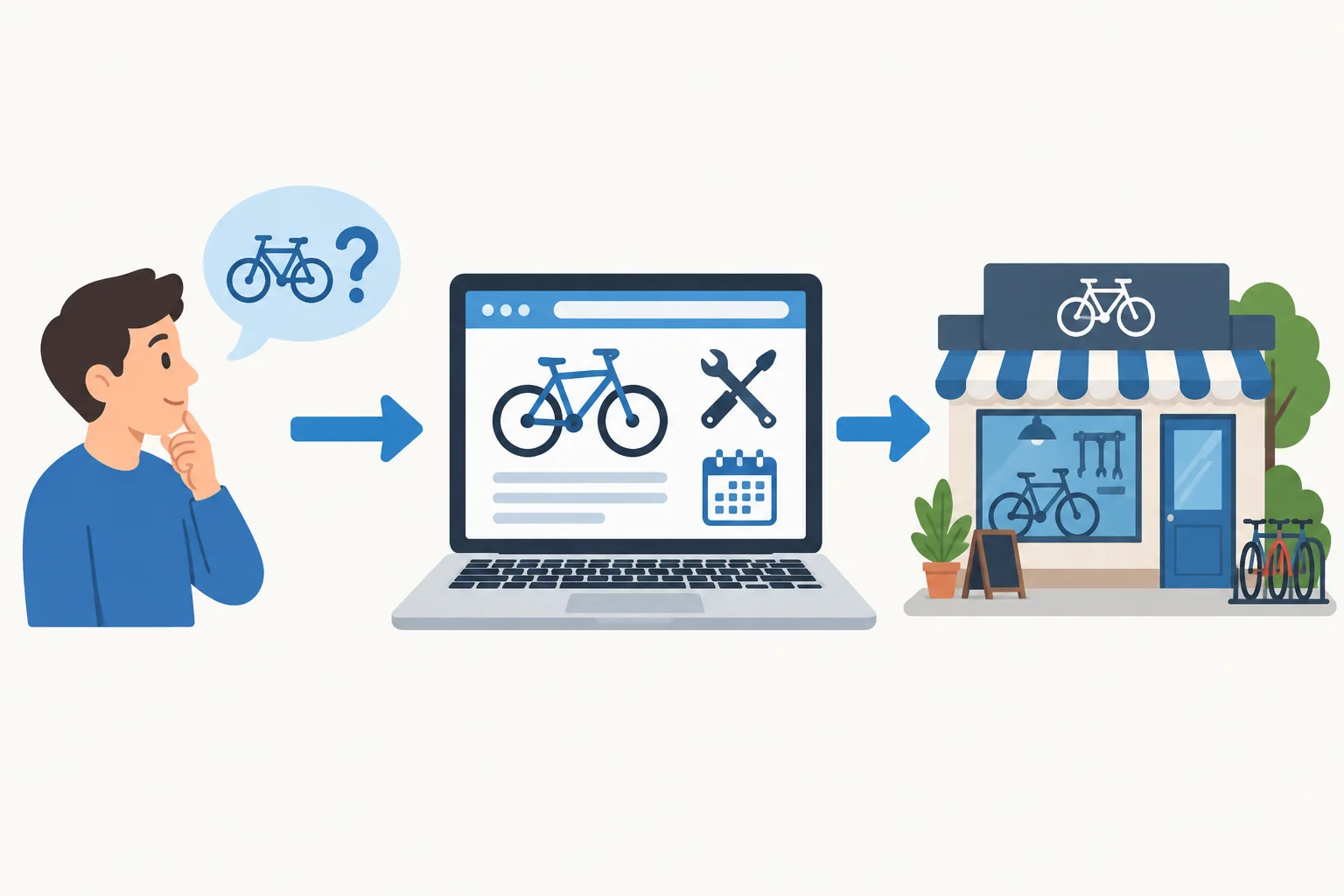
A channel can help a customer evaluate an offer while helping a business receive relevant contact.
Example
Illustrative example
Maple Bike Repair provides local bicycle repairs. Its website explains the available services and accepts repair bookings.
For a customer with a bicycle problem, clear service information can answer a practical question: “Can this business help with my repair?” It can help the customer decide whether a repair booking is appropriate.
For Maple Bike Repair, the same clarity can lead to repair bookings from customers whose needs fit its services. One activity can therefore create value on both sides.
Tip
Visibility alone is not the outcome. A website can be visible but still be unhelpful if its information is confusing, irrelevant, or incomplete.
Ask two questions about a marketing activity:
The answers should be connected. Clear information may help a customer make an informed choice and help the business receive a relevant booking.
Which explanation best shows how Maple Bike Repair’s website can help both a customer and the business?
Step 2 of 6
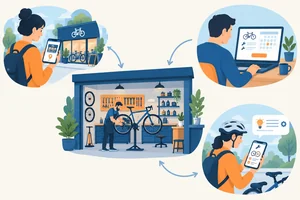
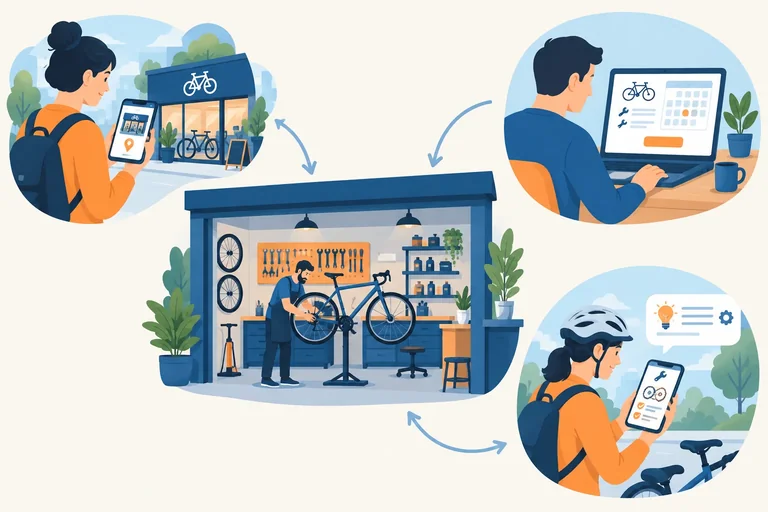
Digital marketing activities can serve different outcomes.
These labels describe the purpose or outcome of an interaction. They are not channel categories, and they do not require every customer to follow one fixed sequence.
The panels compare acquisition, conversion, and retention. They show possible roles, not a required path for every customer.
A conversion is the action that a business has clearly defined as useful. It is not automatically an online purchase. The appropriate action depends on the business and its offer.
Each business can define a different useful action as its conversion.
| Business | Defined conversion |
|---|---|
| Maple Bike Repair | Repair booking |
| Online shop | Purchase |
| Consultancy | Quote request |
Retention concerns customers who already have a relationship with the business. A helpful follow-up message can support retention, but sending a message is an activity—not proof that a customer stayed or returned.
Example
Illustrative example: Maple Bike Repair sends a previous customer useful bicycle-care information after a repair. That follow-up may support retention. If the customer later makes a repeat repair booking, the repeat repair booking is the retention outcome.
Match each situation to its primary outcome.
Tap an item and then its matching pair.
Step 3 of 6
Learn to classify marketing activities as owned, earned, or paid based on how communication or exposure is obtained.
Owned channels are business-managed assets or direct communication routes. A website and an opt-in email are owned channels because the business manages what it publishes or sends.
Earned exposure happens when other people voluntarily mention, review, share, or recommend a business without being paid or incentivized by it.
Paid exposure happens when a business pays for placement or distribution, such as a paid search ad or a sponsored creator mention.
“Owned” does not mean unlimited control: a business may still depend on a service provider or platform to deliver its message.
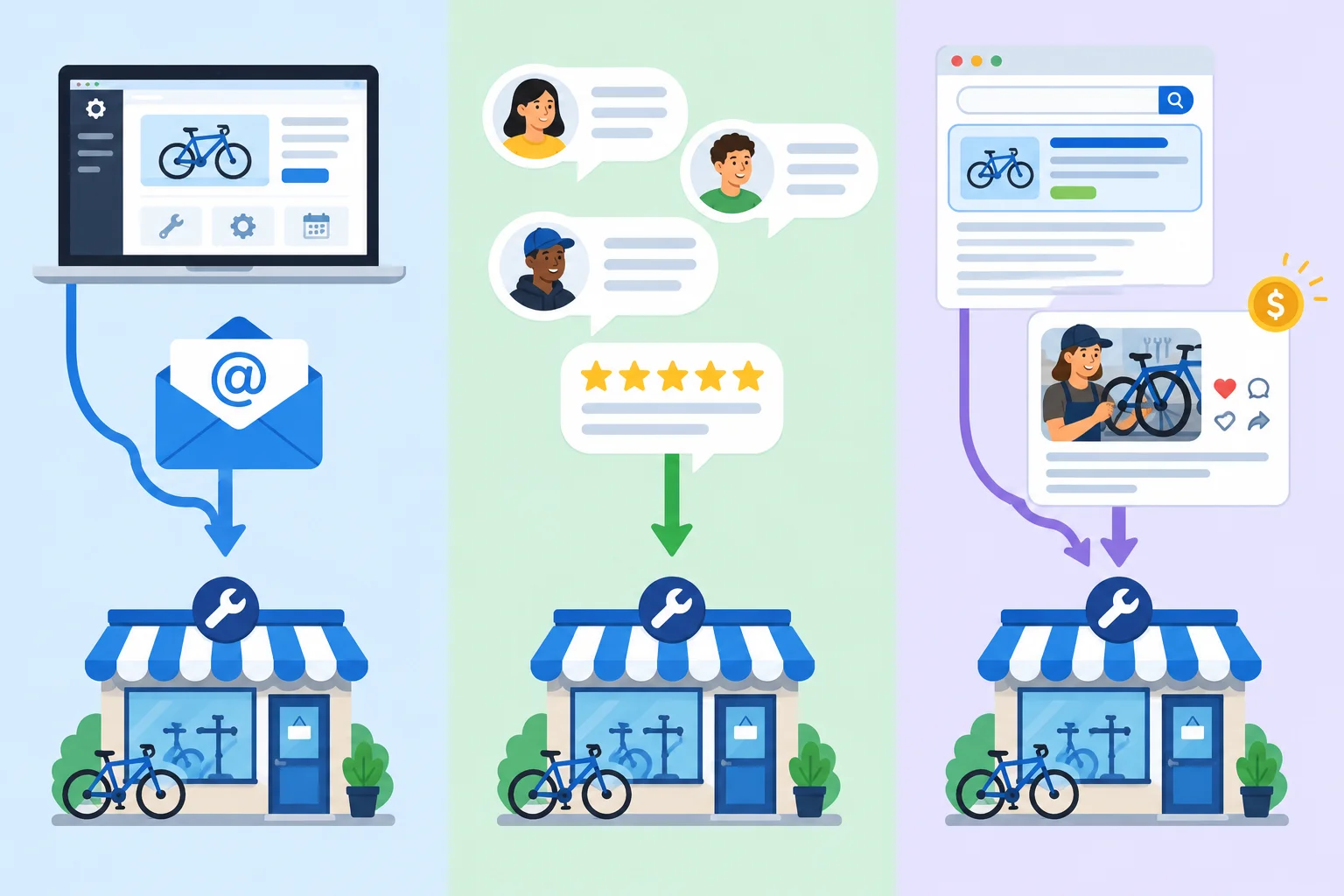
The route to exposure determines the category: business-managed communication is owned; voluntary customer communication is earned; purchased placement is paid.
Example
Illustrative example
For Maple Bike Repair:
These labels describe how the activity is obtained. They do not tell you whether an activity supports acquisition, conversion, or retention.
A platform is not one category by itself. Look at the specific activity and ask: Who created it, and was placement paid for?
On the same social platform, Maple Bike Repair might publish an organic business post. That is owned (platform-dependent): Maple manages the post, but does not own the platform or fully control reach and access.
A customer’s unpaid mention is earned. A sponsored creator mention or an advertisement is paid.
So the same platform can contain owned (platform-dependent), earned, and paid activities at once.
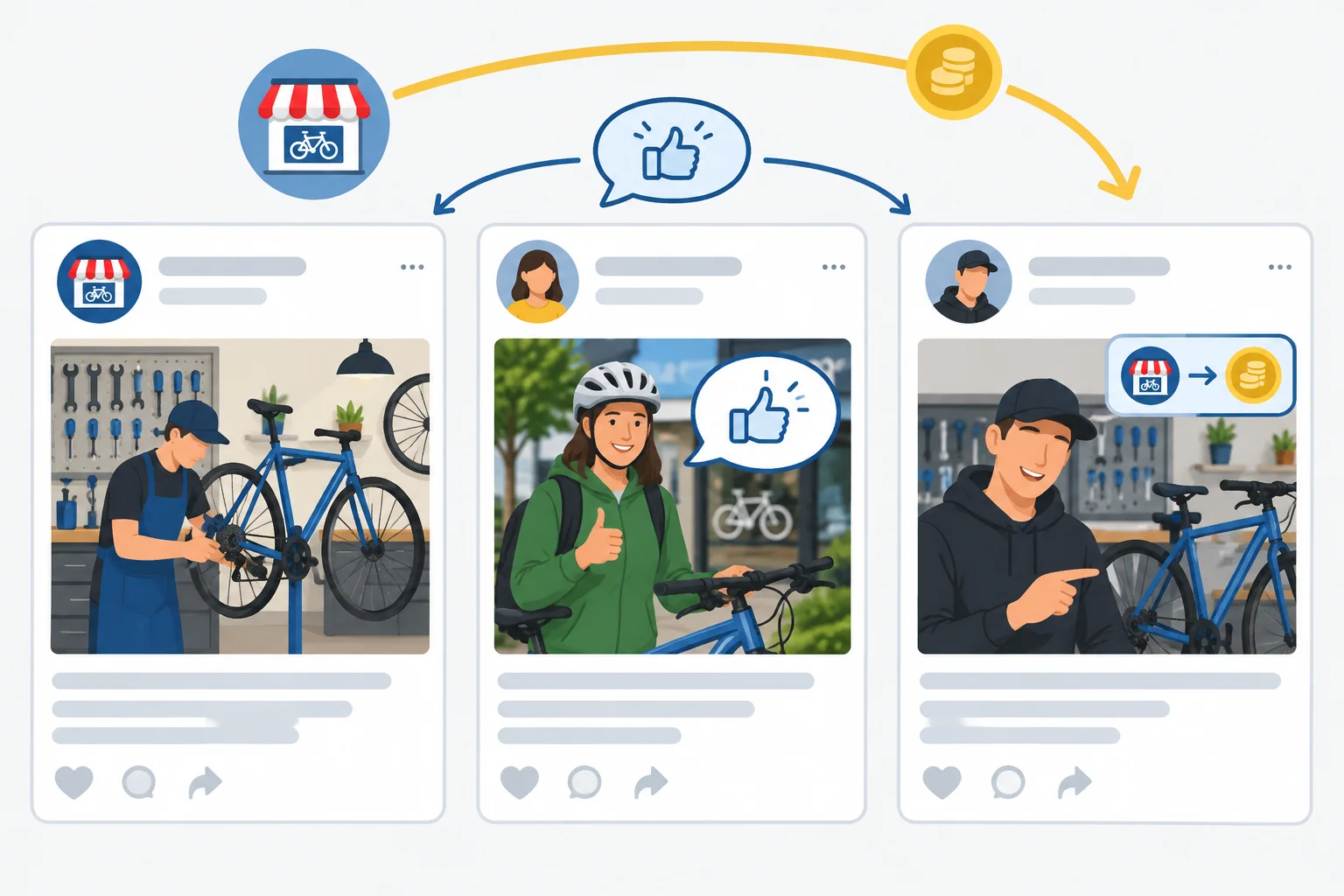
The business post is owned (platform-dependent); the unpaid customer mention is earned; the sponsored creator post is paid.
Tip
Do not assume that every business needs every category. These labels are simply a way to describe how a particular communication or exposure was obtained.
Match each activity to its channel category.
Tap an item and then its matching pair.
Step 4 of 6
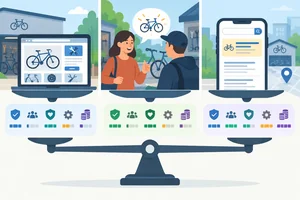
Compare owned, earned, and paid activities through realistic trade-offs in control, reach, credibility, and resources.
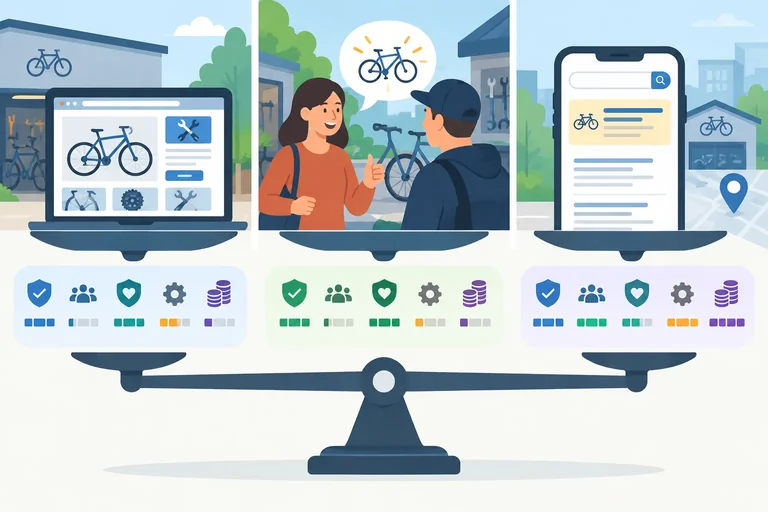
Every category has trade-offs: a useful advantage paired with a realistic limitation. Compare activities by asking four questions:
These questions help you describe possibilities, not guarantee outcomes.
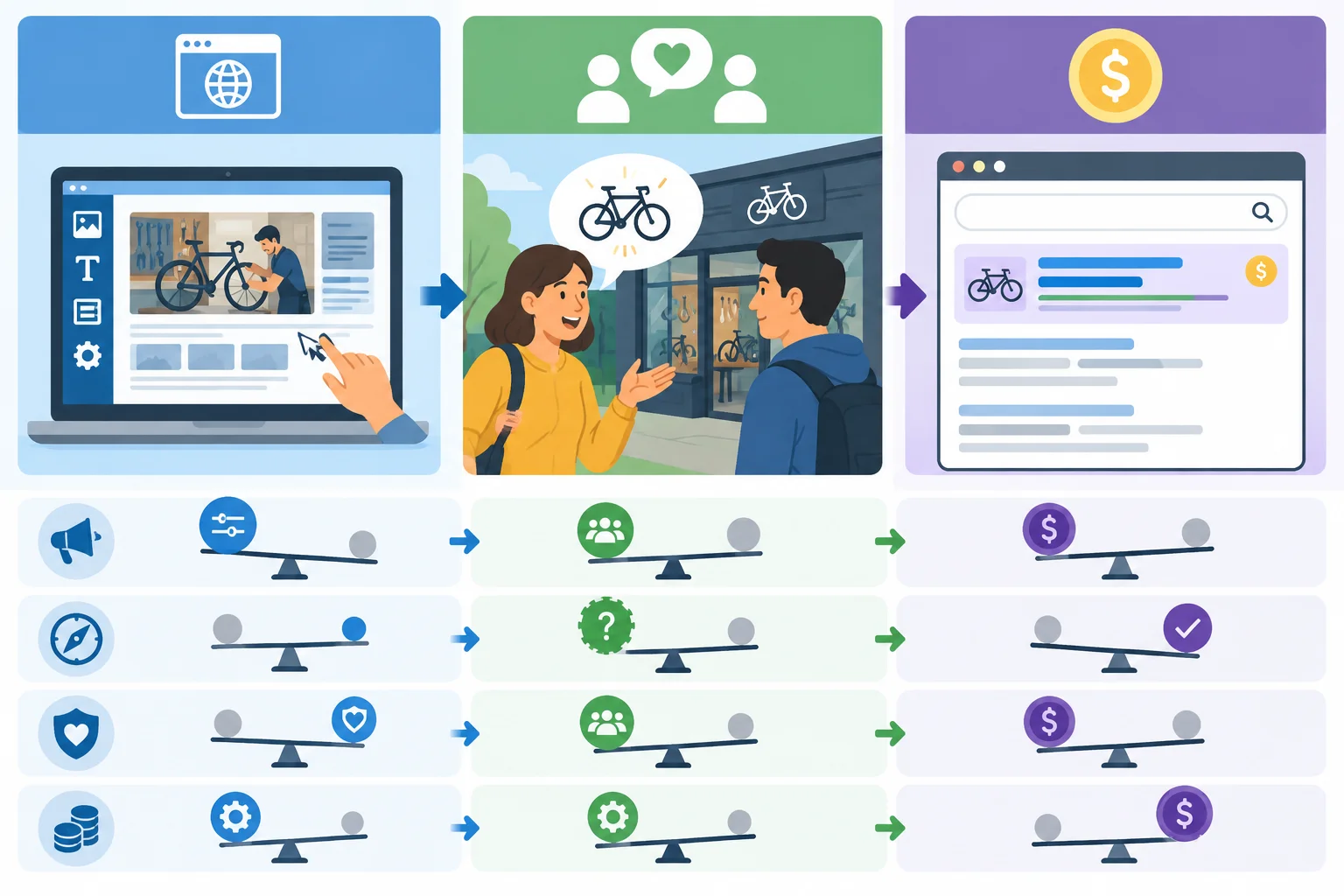
The same activity can offer one benefit while creating another constraint.
Use these as starting points, not fixed rules. The context, message, and customer all matter.
| Category and activity | Possible strength | Limitation or resource need |
|---|---|---|
| Owned: website | More control over service information and booking details | People still need a way to discover it; pages need creation and maintenance |
| Earned: customer recommendation | May feel credible because it is independent | The business cannot control whether, when, or how it is shared |
| Paid: paid search ad | Can extend exposure beyond existing visitors | Requires money and management; platform rules apply and attention is not guaranteed |
Tip
A customer recommendation has no placement fee, but it is not “free” in every sense. It depends on providing an experience worth recommending and on ongoing relationship effort.
Likewise, paid distribution can put an activity in front of more people, yet it does not promise attention, trust, or a repair booking. Independent recommendations may carry trust, but credibility depends on the source and situation. No category is automatically trustworthy or universally best.
A paid search ad guarantees that Maple Bike Repair will receive repair bookings.
Illustrative example: Maple Bike Repair has a website and is considering a paid search ad. Which assessment is most realistic?

Step 5 of 6
See how a small set of connected activities can provide different kinds of help to the same customer relationship.
Channels can complement one another when each provides a different kind of help. They do not need to repeat the same task or form a compulsory sequence.
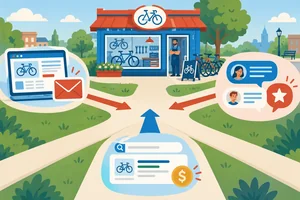
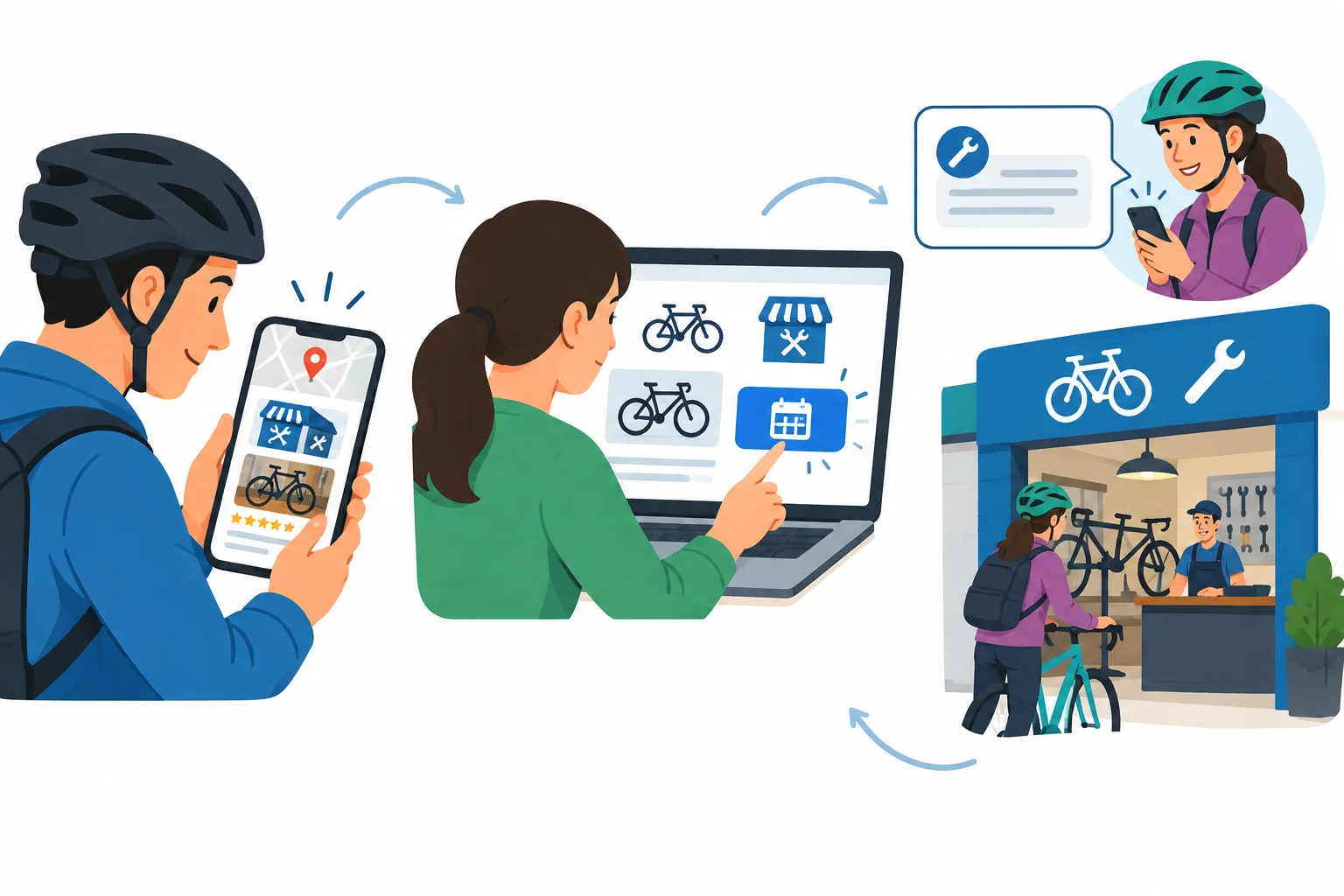
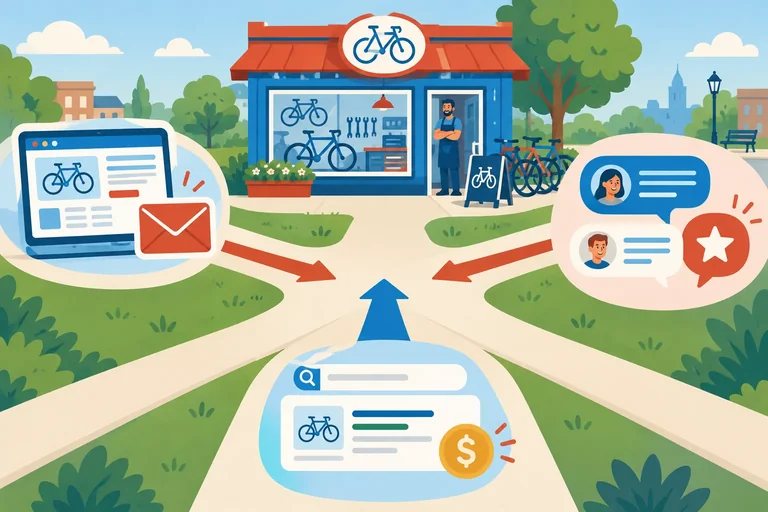
Illustrative example: For Maple Bike Repair, a customer recommendation can introduce the business, the website can help a customer understand services and make a repair booking, and opt-in email can provide useful care information that supports an ongoing relationship. The website can also help a returning customer make a repeat repair booking.
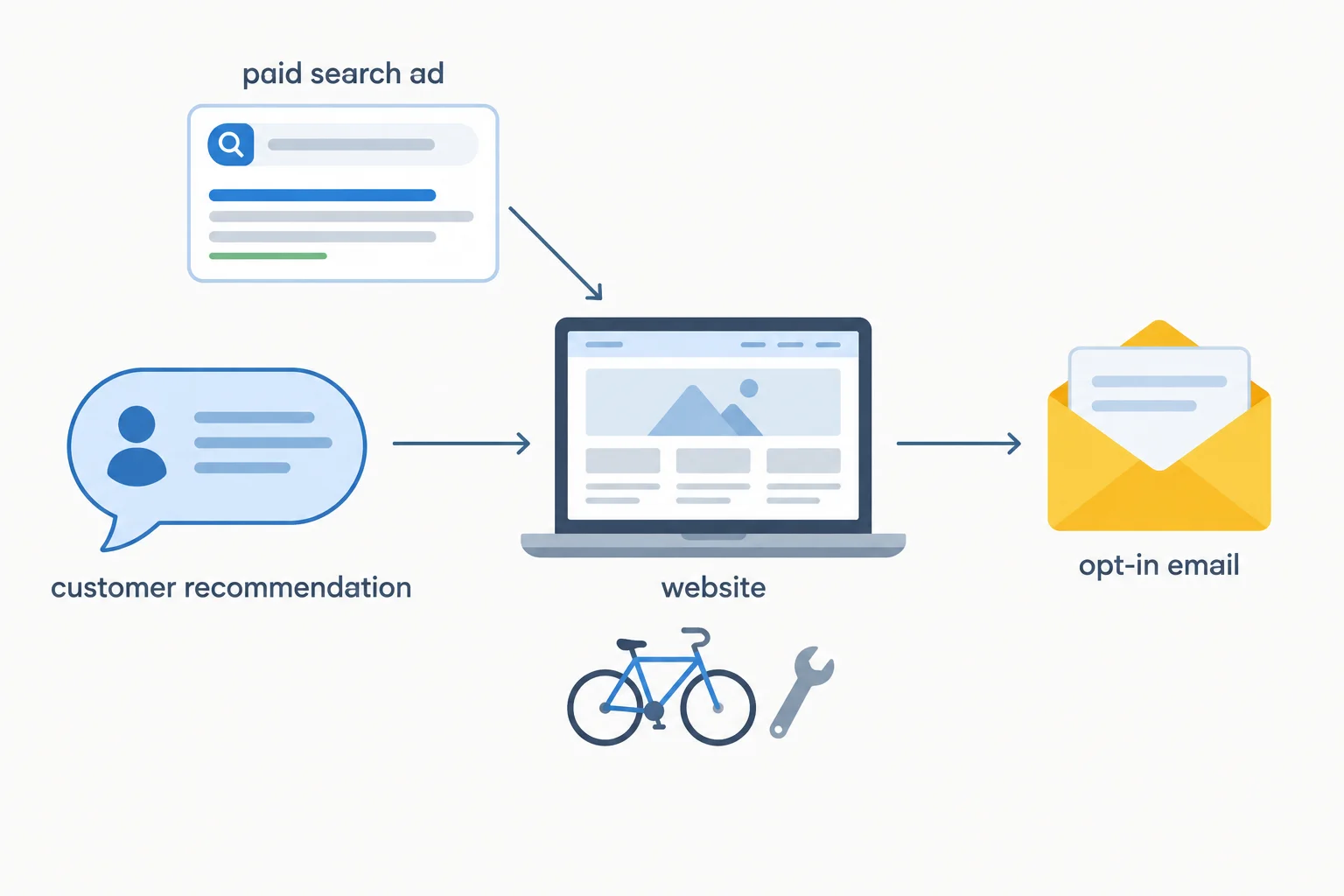
Illustrative example: arrows show possible connections between channel activities, not a route every customer must follow.
Example
Illustrative example
Maple Bike Repair can keep its business identity, service information, and essential booking details consistent on its website, opt-in email, and any paid search ad. This makes it easier for a customer to recognize the same offer when moving between business-managed activities.
A customer recommendation is different: it is voluntary and unpaid, so Maple Bike Repair cannot control its wording. It can still be a useful introduction to the business.
A paid search ad could provide another route to the website. It is optional, not a missing requirement. The recommendation, website, and opt-in email can already provide complementary help without it.
Warning
A connection is a possibility, not evidence of a result. Not every customer will encounter every activity, and no single interaction proves that it caused a repair booking.
Illustrative example: Maple Bike Repair uses a customer recommendation, a website, and opt-in email. It could also use a paid search ad that points to the website.
In 2–4 sentences, explain the distinct help provided by the connected activities and why the paid search ad could be optional rather than necessary.
Write at least 120 characters (0/120).
Step 6 of 6
A useful channel explanation is not a list of platforms. It connects five ideas in a few sentences:
Use careful language: channels can support an outcome, but they do not prove that a customer acted. A small combination is enough when each activity has a distinct, useful role.
Tip
Keep the explanation tied to what is actually supplied in the scenario. Do not invent results, assume every customer follows one route, or treat a paid activity as compulsory.
Illustrative example: Maple Bike Repair can use three complementary activities. A voluntary, unpaid customer recommendation can introduce a new potential customer. The website can explain services and accept a repair booking. Opt-in email can share useful bicycle-care information with an existing customer.
These activities have different roles, so they do not need to duplicate one another. A paid search ad could offer another route to the website, but it is an optional addition rather than a requirement.
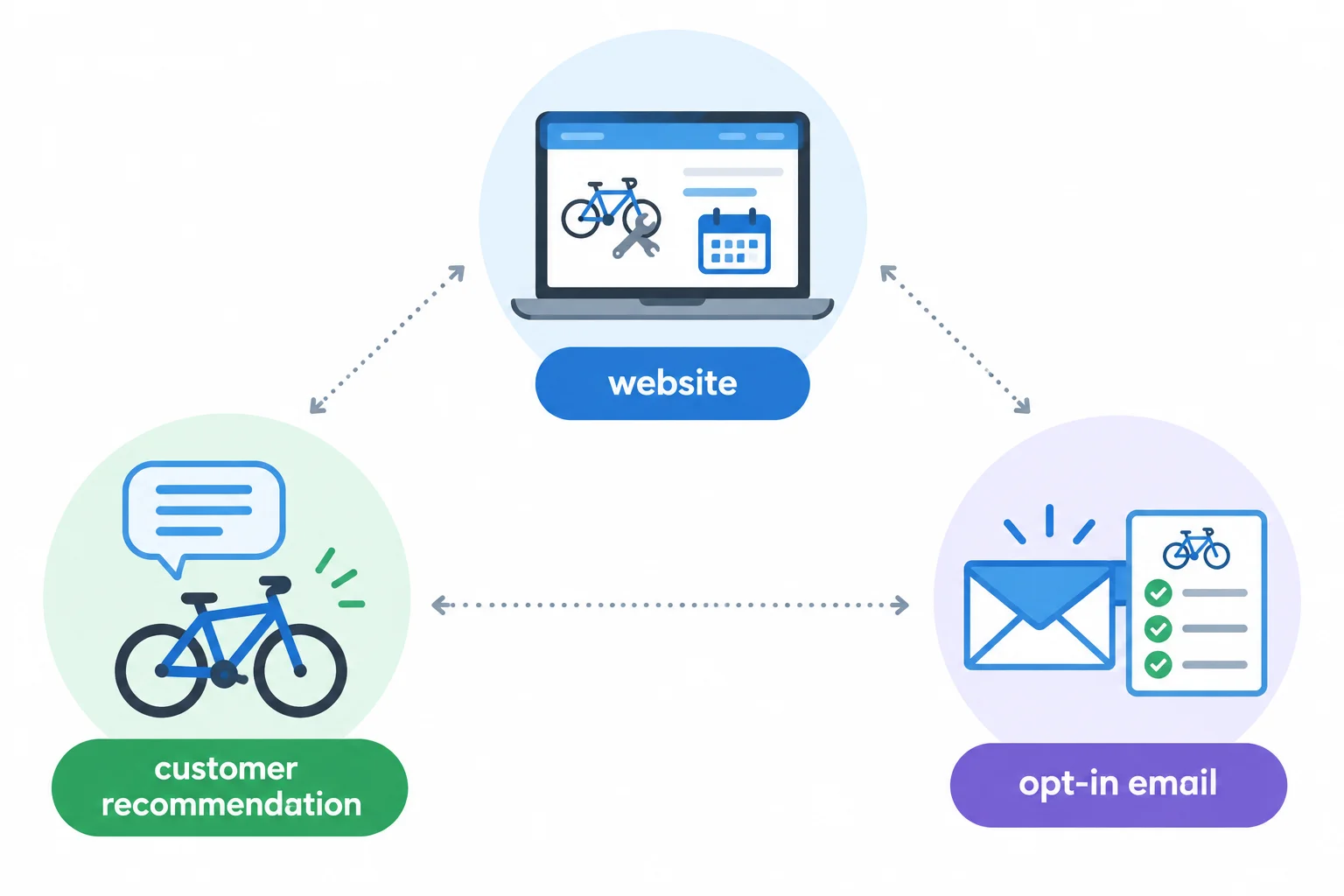
Possible connections between activities; the arrows do not show a compulsory customer path.
A recommendation is earned because it is voluntary and unpaid. The website and opt-in email are owned routes managed by the business. The recommendation may support acquisition; the website may support conversion through a repair booking; and the email may support retention, including a possible repeat repair booking.
One trade-off: earned recommendations may be credible in context, but Maple Bike Repair cannot control whether, when, or how customers share them.
Using the Maple Bike Repair scenario, write a concise explanation of 4–6 sentences. Explain the role of the website, customer recommendation, and opt-in email; classify each activity; connect them to acquisition, conversion, and retention; state one trade-off; and explain why a paid search ad is not automatically required.
Write at least 300 characters (0/300).
Summary
Congratulations! You completed: How Digital Marketing Channels Work Together
Thousands of online courses in video, ebooks and audiobooks.
To test your knowledge during online courses
Generated directly from your cell phone's photo gallery and sent to your email

Download our app via QR Code or the links below:.


Carry knowledge in your pocket.
Download the Cursa app.
There are hundreds of free courses available, with a free certificate of completion that is saved in your mobile image gallery.
Download the app to access the Course Completion Certificate for Free.


+ 10 million
students

Free and Valid
Certificate

60 thousand free
exercises

4.8/5 rating in
app stores

Free courses in
video and ebooks