Step 1 of 8
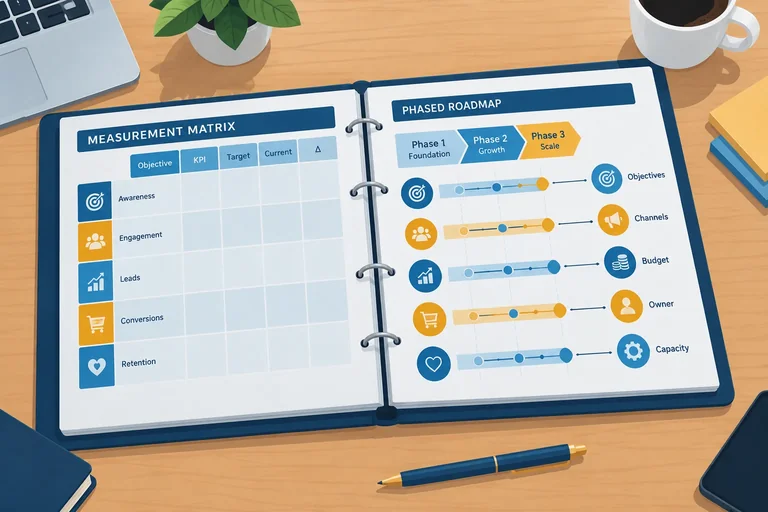
Anchor Measurement to Your Existing Plan
Turn your existing capstone plan into a traceable measurement baseline and a compact measurement matrix.

Learning path · Level 10 · Tutorial 3
Create a measurement and experimentation framework that turns the plan into an accountable decision process. Define review schedules, evidence requirements, consent safeguards, and practical rules for responding to results without overreacting to noisy or incomplete data.

 Anchor Measurement to Your Existing Plan
Turn your existing capstone plan into a traceable measurement baseline and a compact measurement matrix. 3 min
 Define Which Results Count
Define a reconciliation rule so business success is reported once, while channel-attributed results and supporting signals remain useful without overstating what they prove. 3 min
 Set Evidence and Consent Readiness Gates
Define evidence-readiness gates, permissible fallbacks, and conclusion limits for incomplete or compromised measurement in your existing capstone plan. 3 min
 Write Decision Rules Before Results Arrive
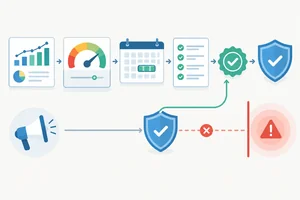
Precommit to evidence-based responses that distinguish a performance trigger from proof, protect non-negotiable guardrails, and assign authorization. 4 min
 Assign Review Cadences and Decision Authority
Set review timing, action authority, urgent escalation, and decision records for your existing capstone plan. 3 min
 Prioritize Experiments That Could Change the Plan
Build a small, decision-focused experiment backlog that respects the existing capstone plan, evidence readiness, approved budget, and available capacity. 3 min
 Sequence Experiments and Precommit to Evidence
Schedule capstone experiments without contaminating their evidence, and precommit to a response when results are inconclusive. 3 min
 Apply and Finalize Your Decision Framework
Integrate your existing capstone measurement matrix, decision rules, review authority, safeguards, and experiment sequence into a bounded response to uncertain evidence. 3 min
Step 1 of 8
Turn your existing capstone plan into a traceable measurement baseline and a compact measurement matrix.
Measurement must govern the plan you already built—not a replacement plan. Start by creating a Capstone baseline for your capstone business.
Capture the exact objective wording and targets, included and deferred channels, roadmap phase names, budget assumptions, named owners, and staff or fulfillment limits. Preserve the plan’s original currency and measurement units.
Mark every input as:
Do not silently fill a missing target, constraint, or owner with a plausible guess. A measurement rule cannot be fully accountable when a critical input is unknown.
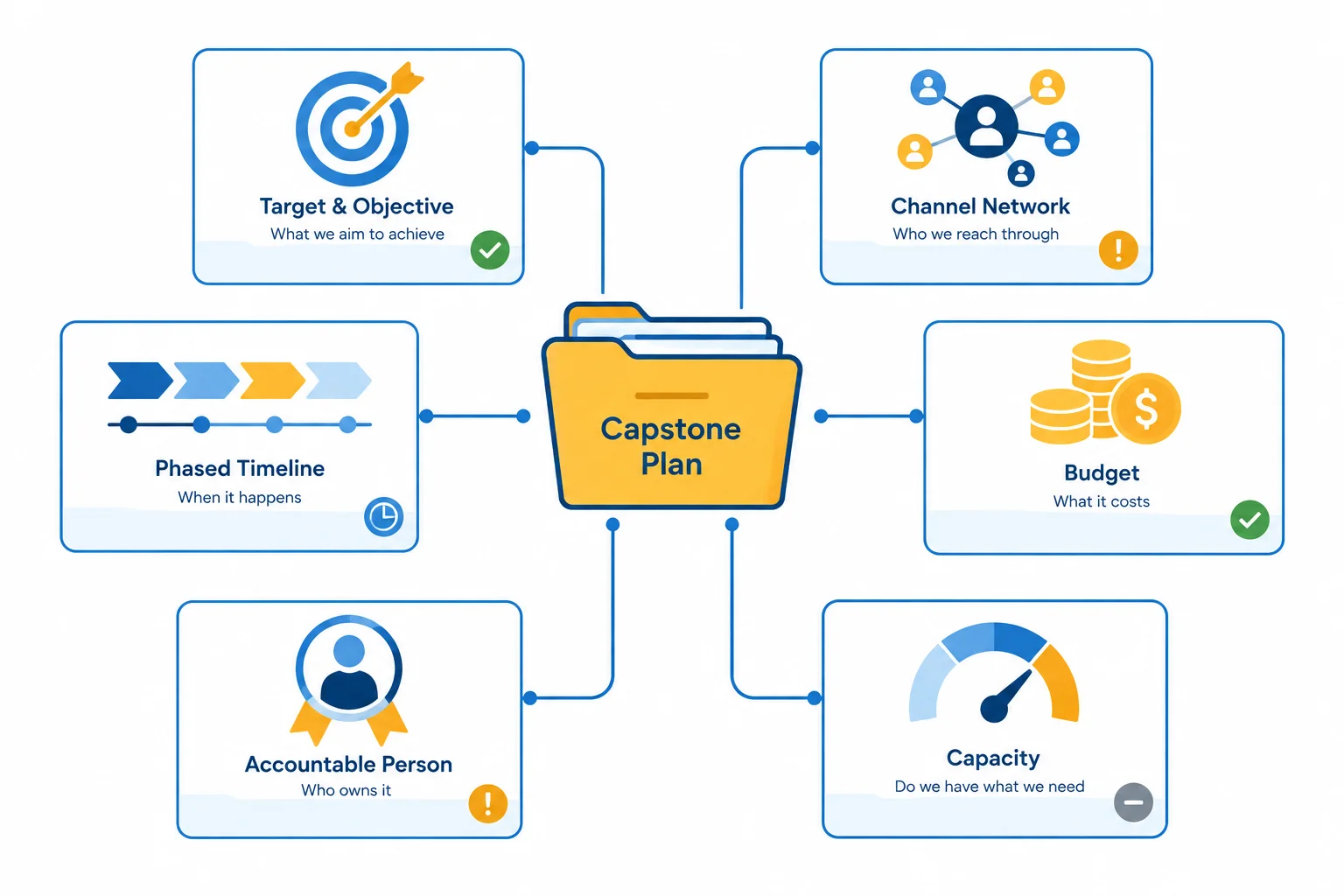
The Capstone baseline keeps the existing plan inputs connected to measurement; missing inputs remain visible rather than being replaced.
If your earlier notes are incomplete, make a compact recovery worksheet before building the matrix. For each field, record the value and its status:
Use your capstone business if its name is unavailable. A reconstructed working value is Provisional; an absent value is Not recovered. Keep both in the baseline as dependencies for later review.
Create one row for every selected objective. Keep the metric definitions and units already chosen in your capstone plan.
| Objective | Business outcome | Supporting signal | Source | Owner | Review cadence |
|---|---|---|---|---|---|
| [exact capstone objective] | [outcome measure and unit] | [channel signal tied to a decision] | [authorized source] | [named owner or role] | [review label and timing] |
| [next exact objective] | [outcome measure and unit] | [supporting signal] | [authorized source] | [named owner or role] | [review label and timing] |
Tip
Coverage check: every selected objective needs a business outcome, authorized source, accountable owner, and review cadence.
Traceability check: every supporting signal must inform a specific plan decision. A channel signal can help diagnose or monitor activity, but it is not automatically the business outcome.
Match each measurement-matrix field to its decision role.
Tap an item and then its matching pair.
Draft one row for your own measurement matrix using an existing Capstone baseline objective. Use the exact labels below and preserve your capstone’s metric definitions and units.
Objective:
Business outcome:
Supporting signal:
Source:
Owner:
Review cadence:
Then add:
Do not create a new objective or channel. If nothing is missing, write: “No unrecovered input; baseline confirmed.”
Write at least 180 characters (0/180).

Step 2 of 8
Define a reconciliation rule so business success is reported once, while channel-attributed results and supporting signals remain useful without overstating what they prove.
Use the measurement matrix from your Capstone baseline to report results in three separate layers:
Write one reconciliation rule for your plan: Report the business outcome once from its designated consolidated source. Report channel-attributed results and supporting signals separately; never add overlapping channel claims to create a business total.
Keep the Capstone baseline’s exact objectives, metric definitions, units, selected channels, and named sources. Do not replace them with newly invented measures.

The consolidated source reports the business outcome once. Overlapping channel-attributed results explain possible contribution; supporting signals diagnose what happened.
Choose source precedence from the metric definition and authorized coverage—not from which platform reports the largest number.
For the business outcome, use the authorized consolidated record that covers the defined outcome. For a channel-attributed result, use that channel’s defined report and label it as attributed. A supporting signal comes from the source that directly measures that signal.
Before reconciling a period, compare: the reporting period, the conversion definition, treatment of refunds or cancellations where applicable, and duplicate transactions. If these do not align, state the limitation instead of forcing a combined result.
Use the source selected in your Capstone baseline when it meets the metric definition and required coverage.
| Reporting layer | Report it as | Source precedence | Use it to answer |
|---|---|---|---|
| Business outcome | One consolidated result | Authorized consolidated business record matching the definition | Did the objective progress? |
| Channel-attributed result | Separate channel claim | That channel’s defined reporting source | What does this channel report? |
| Supporting signal | Diagnostic observation | Source that directly measures the signal | What may explain delivery or behavior? |
Example
Practice evidence
Your Capstone baseline names a consolidated business record for its business outcome. A search platform and an email platform both report credit for some of the same completed outcomes during the same period.
A defensible report can say: “The consolidated business outcome is reported from the designated record. Search- and email-attributed results are shown separately as explanatory evidence.”
It cannot say that the two platform claims are unique outcomes when their overlap is unknown. Nor can the consolidated outcome alone prove that either channel created incremental impact. It describes business performance, not causal lift.
Practice evidence — For the same reporting period, the authorized consolidated record shows your capstone’s exact business outcome at 96% of its Capstone baseline target. Its definition includes the required refund or cancellation treatment and duplicate transactions have been removed.
Three selected channels report attributed credit for that same outcome: Search 62% of target, Email 51% of target, and Paid Social 34% of target. Their attribution claims may overlap.
Which reporting conclusion is defensible?

Step 3 of 8
Define evidence-readiness gates, permissible fallbacks, and conclusion limits for incomplete or compromised measurement in your existing capstone plan.
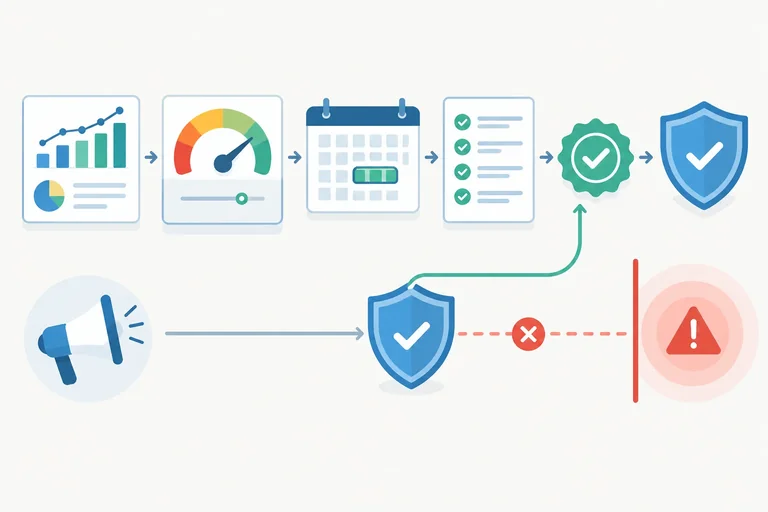
A readiness gate sits between your measurement matrix and any conclusion. For each planned measure in your Capstone baseline, record whether the evidence is usable before it is interpreted.
Check five conditions:
Keep an unmet condition visible as a dependency. Do not replace it with a convenient proxy or treat missing observations as zero outcomes.

A measure is decision-ready only when its access, consent, collection, coverage, and ownership checks are satisfied.
Tip
For each Objective in your existing matrix, keep the same Business outcome, Supporting signal, Source, Owner, and Review cadence already selected. Add a short readiness note beside the source—for example: confirmed, provisional, or an explicit gap.
A source can be technically available yet fail this gate. Access might not be authorized; consent coverage might have changed; or the source may omit part of the period. Availability is not permission, and permission is not sufficient coverage.
Choose a fallback based on the decision—not on the easiest metric to obtain.
If you need a consolidated total and an authorized aggregate business record has appropriate coverage, use it for the business outcome. It cannot recreate a missing channel-attributed result.
If you need a diagnostic clue, appropriately collected feedback may help explain what people report. It does not establish causal lift or prove that a channel caused the outcome.
If no permissible, decision-relevant evidence remains, record an evidence gap. The correct conclusion may be Inconclusive, not a substitute number.
Practice evidence: use this routing logic relative to your capstone’s own targets and limits.
| Decision need | Permissible evidence | Permitted conclusion |
|---|---|---|
| Business total | Authorized aggregate business record with adequate coverage | Business outcome for the covered period |
| Diagnostic question | Appropriately collected feedback | A clue worth investigating |
| Channel contribution | Missing or compromised attribution | Evidence gap; no channel-attributed result |
| Causal impact | Feedback or overlapping platform claims only | Inconclusive; no causal-lift claim |
Warning
A missing observation is a loss of visibility, not proof that the business outcome fell. Before comparing periods, check whether consent coverage, collection status, definitions, or source coverage changed. A changed collection basis can make an apparent change misleading.
Never bypass a consent or privacy safeguard with another identifier, tracking method, or seemingly anonymous dataset. Aggregate data is not automatically permissible; it still needs authorized access and applicable consent safeguards.
If you suspect a consent failure, promptly contain the affected collection and escalate through your organization’s process. Assess unaffected compliant activity separately; do not assume all evidence is invalid.
Write a compact note beside the affected measure:
Evidence: what remains authorized and covered.
Limitation: what is missing, changed, or compromised.
Action: contain affected collection when needed; otherwise preserve the evidence gap.
Authorization: the responsible organizational process or owner.
Next review: when readiness can be checked again.
This is not a performance decision rule yet. It is a record of what the available evidence can safely support.
Match each Practice evidence situation to the most defensible response. Base your choice on evidence permission and what the evidence can actually support.
Match each evidence gap or condition to its authorized fallback, restricted conclusion, or required response.
Tap an item and then its matching pair.
Step 4 of 8
Precommit to evidence-based responses that distinguish a performance trigger from proof, protect non-negotiable guardrails, and assign authorization.
Use your Capstone baseline as the source of truth: the same objective wording, business outcome definition, selected channels, roadmap phases, budget assumptions, and capacity limits govern the rule.
A decision rule is a precommitment: it states what will be checked, how long evidence must accumulate, what can override the normal wait, and who may authorize the response. It prevents a single dashboard movement from becoming an unreviewed plan change.
Use a business outcome as the primary performance measure whenever possible. A supporting signal or a channel-attributed result may help explain what happened, but overlapping channel claims are not unique business results and must not be added together.
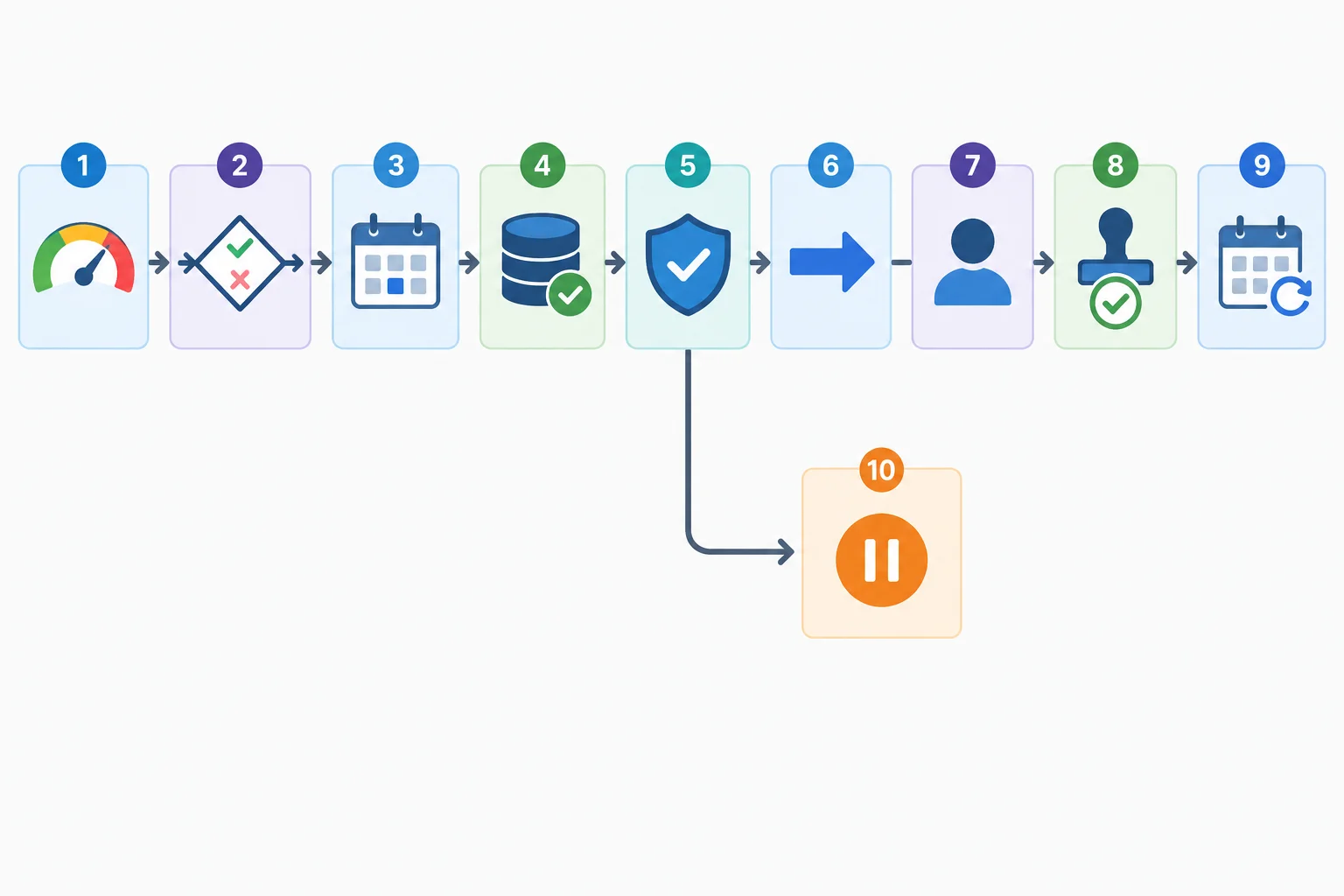
A threshold is only one part of the rule. Evidence checks and guardrails determine whether—and how—the plan responds.
Complete these fields before results arrive.
| Field | What you precommit |
|---|---|
| Metric | Defined business outcome or approved supporting signal |
| Trigger | Acceptable range or condition that warrants a response |
| Observation window | Enough comparable time for conversion lag and opportunity |
| Evidence checks | Freshness, coverage, collection, attribution, and context checks |
| Guardrails | Non-negotiable budget, fulfillment, customer-harm, or consent limits |
| Action | Maintain, Investigate, Pause, or Revise |
| Owner | Person or role that monitors and carries out the action |
| Approver | Person or role authorized to approve the action |
| Recheck | When the same evidence will be assessed again |
Derive a trigger from the exact target or operating limit in the Capstone baseline. A recovered limit is Confirmed. A temporary working limit is Provisional and needs explicit approval. If a target, constraint, or owner cannot be recovered, mark it Not recovered as a visible dependency; do not invent a number or name.
Write the core condition in this form:
If [trigger], after [window and checks], then [action], authorized by [approver].
Crossing a trigger does not prove a channel caused the result or that an experimental difference is statistically reliable. It tells the team which bounded response is justified after the promised evidence review.
Before interpreting a trigger, check the authorized source is sufficiently current; collection and consent coverage are comparable; channel-attributed claims are not being summed as business results; and a relevant operational or external explanation has been considered.
Choose an observation window that fits the capstone's conversion lag and decision timing. Reporting can be frequent, but a result becomes decision-ready only after the defined window and checks. When evidence is incomplete, the defensible conclusion is Inconclusive—not an invented cause.
Warning
A guardrail can override the normal observation window. A hard budget, fulfillment, customer-harm, or suspected consent problem may require Pause of the affected activity or collection and prompt escalation under your organization’s process. Assess unaffected compliant activity separately.
Do not bypass consent or access requirements with alternate identifiers, tracking methods, or supposedly aggregate data. If the trigger is met but checks are inadequate, use a bounded Investigate action or a protective Pause; do not claim success or failure as fact.
Build the core conditional sentence. Put the clauses in the order that prevents a metric threshold alone from dictating a response.
Your sentence
Available words
For one objective in your Capstone baseline, write a usable decision rule. Include these labels: Metric, Trigger, Observation window, Evidence checks, Guardrails, Action, Owner, Approver, and Recheck.
Then write its core condition exactly in this form: If [trigger], after [window and checks], then [action], authorized by [approver]. Use exactly one of these actions: Maintain, Investigate, Pause, or Revise.
Add a guardrail override that states what would require a protective Pause before the normal window closes. Base every value on the existing capstone objective and constraints. Mark unrecovered inputs as Confirmed, Provisional, or Not recovered rather than fabricating them.
Write at least 400 characters (0/400).
Step 5 of 8
Set review timing, action authority, urgent escalation, and decision records for your existing capstone plan.
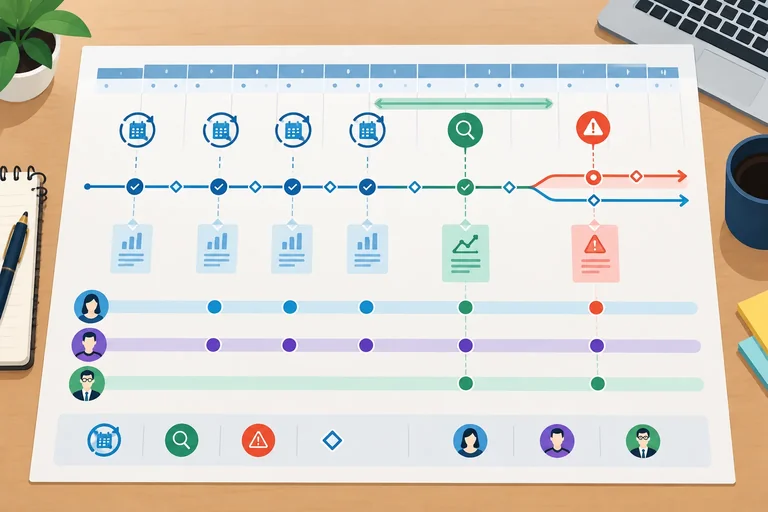
Use the Capstone baseline as the calendar anchor: its Confirmed roadmap phases, channel lead times, decision deadlines, budget assumptions, capacity constraints, and named owners determine when a review is useful. Keep Provisional inputs visible, and treat Not recovered inputs as dependencies rather than silently replacing them.
An Operational review checks whether delivery, data health, spending, and guardrails remain within agreed bounds. A Strategic review assesses objective progress and assumptions only after the relevant observation window, conversion lag, and evidence checks have been met. Immediate escalation bypasses the calendar for serious harm, a suspected consent failure, or a hard-limit breach.
A frequent report is not automatically decision-ready evidence. You may monitor a source daily while reserving a strategic decision until its planned evidence window closes.
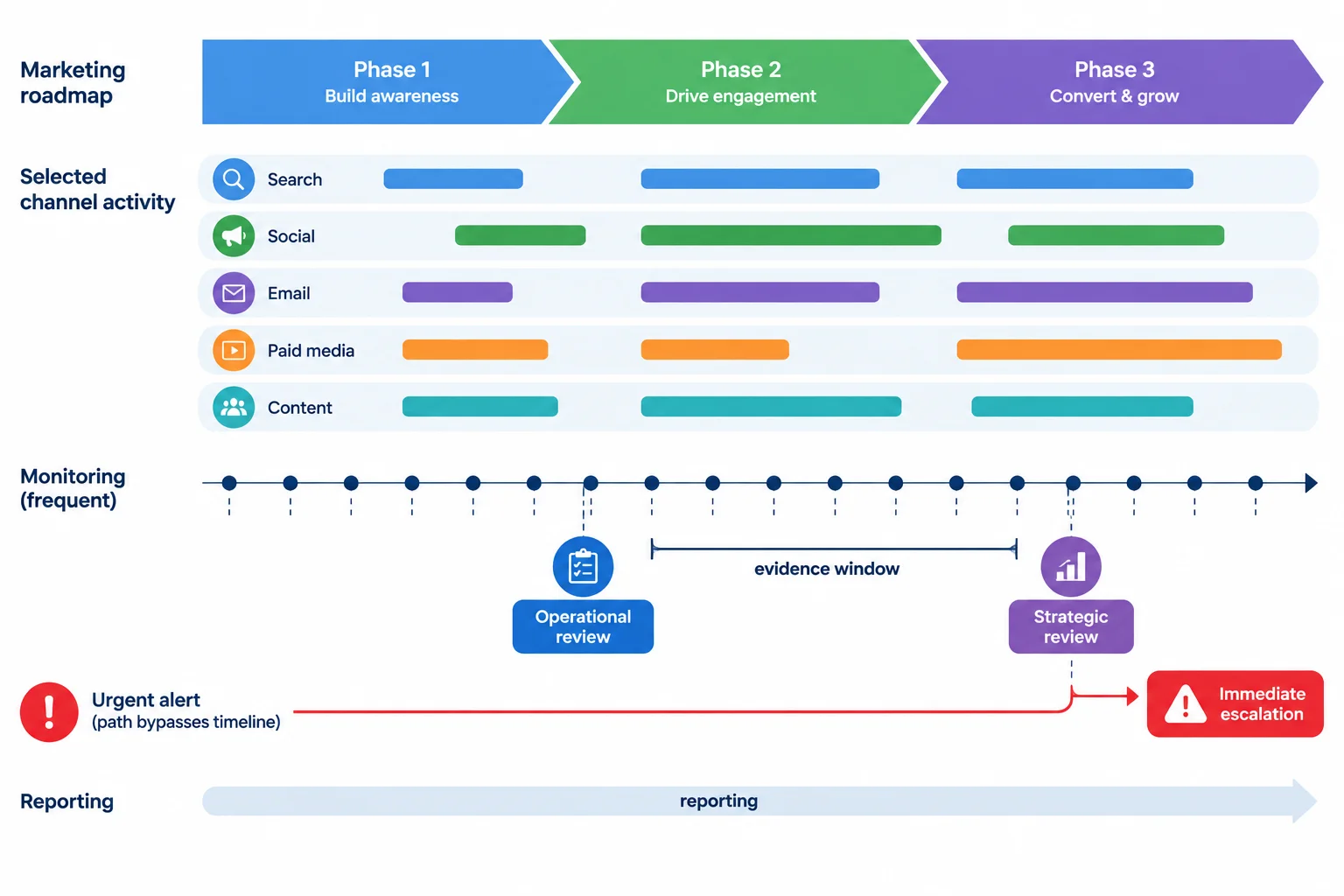
Match review timing to phase dependencies and evidence readiness, not merely to how often a dashboard refreshes.
Use the review label to define the purpose before interpreting a result.
| Review | Primary focus | When it occurs |
|---|---|---|
| Operational review | Delivery, source freshness, spending, guardrails | At the operating cadence that fits the active roadmap phase |
| Strategic review | Objective progress and assumptions | After the defined observation window and evidence checks |
| Immediate escalation | Serious harm, consent failure, hard-limit breach | Immediately; do not wait for a scheduled review |
Use only these four operational actions:
Separate roles even when one person holds more than one role. The Measurement owner monitors evidence and documents limits. The Activity owner investigates delivery and can take bounded protective action. The Plan approver authorizes material change. Retain the named roadmap owners where they exist; otherwise use these role labels.
Write each conditional rule in this form: “If [trigger], after [window and checks], then [action], authorized by [approver].” A trigger starts disciplined action; it does not prove causality.
This map clarifies accountability without changing the responsibilities already assigned in the Capstone baseline.
| Need | Accountable role | Permitted response | Authorization boundary |
|---|---|---|---|
| Monitor evidence and data health | Measurement owner | Maintain or open Investigate | Within agreed rules and review scope |
| Resolve a delivery or evidence question | Activity owner | Investigate | Within approved scope and guardrails |
| Protect people, consent, or a hard limit | Activity owner | Pause affected activity | Immediate containment; escalate promptly |
| Change tactic, scope, assumption, or allocation | Plan approver | Revise | Material change requires approval and feasibility check |
Immediate escalation is for a serious exception, not a faster version of routine reporting. If a consent failure is suspected, Pause the affected collection promptly and follow your organization’s escalation process. Assess unaffected, compliant activity separately; do not assume that all evidence is invalid.
For a proposed Revise action, check the current Capstone baseline before approval: Does it stay within the approved budget and capacity? Does it disrupt a phase dependency or named owner? If not, the Plan approver must grant renewed approval before the material change proceeds.
Every review leaves a short decision record. It makes the evidence boundary visible and gives the next owner a clear recheck point.
Example
Evidence: Practice evidence — the planned source was unavailable for part of the current observation window.
Limitation: The incomplete window cannot support a conclusion about objective progress.
Action: Investigate
Authorization: Measurement owner opens the investigation within the agreed review scope.
Next review: Operational review after source restoration and the required evidence checks.
Match each Practice evidence signal to its correct review, operational action, and accountable role.
Tap an item and then its matching pair.

Step 6 of 8
Build a small, decision-focused experiment backlog that respects the existing capstone plan, evidence readiness, approved budget, and available capacity.
Priority begins with a decision, not a test idea. Start with the Capstone baseline: retain its exact objective wording, selected channels, roadmap phase names, approved budget assumptions, and capacity constraints.
Choose an experiment only when it can resolve a consequential assumption and change a real plan decision—for example, whether an activity can be Maintained, needs to be Revised, or should remain deferred. A novel test that cannot change a decision does not earn scarce capacity.
Keep baseline inputs visibly labeled Confirmed, Provisional, or Not recovered. Do not invent a target, budget limit, owner, or channel simply to make an experiment look ready.
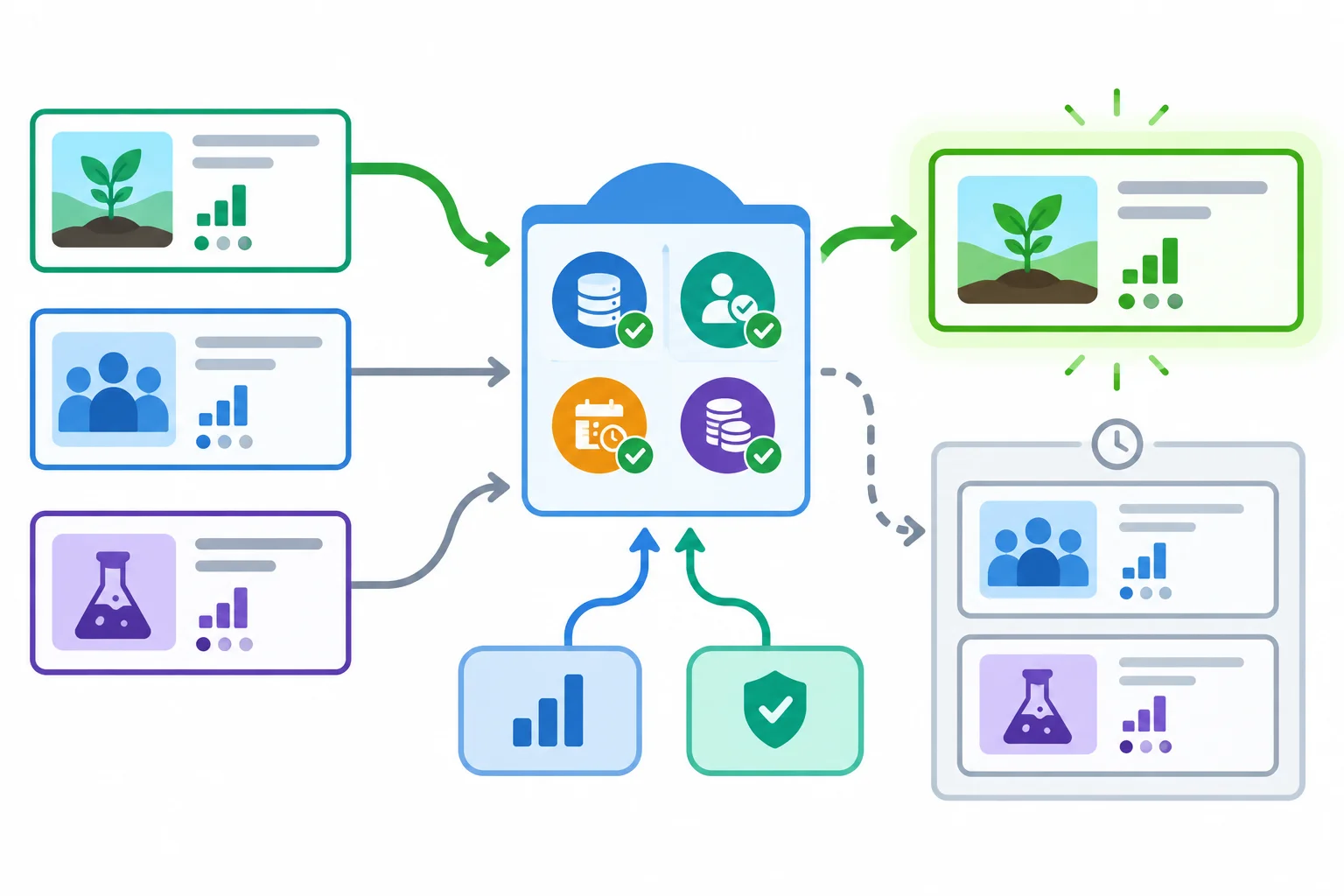
Use a readiness gate after identifying the decision an experiment could change. Importance alone does not make a candidate ready.
Tip
A useful experiment may still end with an Inconclusive evidence conclusion. Its value is that the question, measure, evidence requirement, and possible decision are explicit before capacity is committed.
Create one comparable record for every candidate. The primary measure must preserve the definition and unit already used in your capstone. The evidence requirement states what would be sufficient for the affected decision; it is not a promise that the experiment will prove causality.
Use the existing named roadmap owner. If no name is available, use the role label Activity owner. Record a missing prerequisite as a Dependency rather than silently treating it as available.
Assumption: [Provisional: exact assumption from Capstone baseline]
Decision affected: [decision that could change]
Experiment: [bounded test or diagnostic activity]
Primary measure: [existing metric definition and unit]
Evidence requirement: [precommitted decision-relevant evidence]
Guardrail: [existing budget, consent, fulfillment, or customer-harm limit]
Dependency: [access, consent, asset, traffic opportunity, or delivery capacity]
Conflict: [known interference or none known]
Capacity: [available staff time and approved budget]
Owner: [named roadmap owner or Activity owner]
Sequence: [priority position or Deferred]Compare candidates qualitatively. Do not convert these judgments into a formula that pretends to create certainty. A readiness dependency can override apparent importance: no authorized access, applicable consent, viable asset, traffic opportunity, or delivery capacity means the experiment must wait.
If a feasible activity cannot generate evidence relevant to its decision, narrow the question, use it only as a clearly limited diagnostic activity, or defer it. Do not claim that it can give a definitive answer.
Use these checks to make a reasoned priority judgment.
| Check | Question | Priority implication |
|---|---|---|
| Decision consequence | Would the result change an approved plan decision? | Higher when the decision is material |
| Current uncertainty | Is the assumption still unresolved? | Higher when uncertainty blocks action |
| Feasible evidence | Can the primary measure meet its evidence requirement? | Defer or narrow if not |
| Reversibility | Can the activity remain bounded by its guardrail? | Prefer safer, reversible learning |
| Capacity | Does it fit approved budget and available staff time? | Defer lower-value work when it does not |
Your current roadmap phase has capacity for one experiment. Which candidate should be ranked first?
Build a small ranked backlog from your Capstone baseline. Use up to three candidate experiments that fit the current roadmap phase.
For each candidate, record: Assumption, Decision affected, Experiment, Primary measure, Evidence requirement, Guardrail, Dependency, Conflict, Capacity, Owner, and Sequence.
Then identify your first-ranked candidate and justify it using both decision consequence and feasible evidence. Mark at least one lower-priority candidate as Deferred, and state which existing capacity limit means it must wait. Keep unrecovered inputs visible as Not recovered or as a dependency; do not replace them with invented details.
Write at least 300 characters (0/300).

Step 7 of 8
Schedule capstone experiments without contaminating their evidence, and precommit to a response when results are inconclusive.
Use the prioritized experiment backlog and roadmap from your Capstone baseline. Do not add a new channel, budget line, or team member to make a test fit.
Before scheduling, run a conflict check across every proposed experiment and nearby operational change. A conflict exists when changes share an audience, landing page, offer, budget, tracking configuration, or constrained staff capacity. Different channels can still conflict when they alter the same customer path or draw on the same limited resource.
For each Capstone baseline input, retain its status: Confirmed, Provisional, or Not recovered. A Not recovered dependency is a reason to defer or narrow a test—not a reason to invent a schedule or capacity allowance.
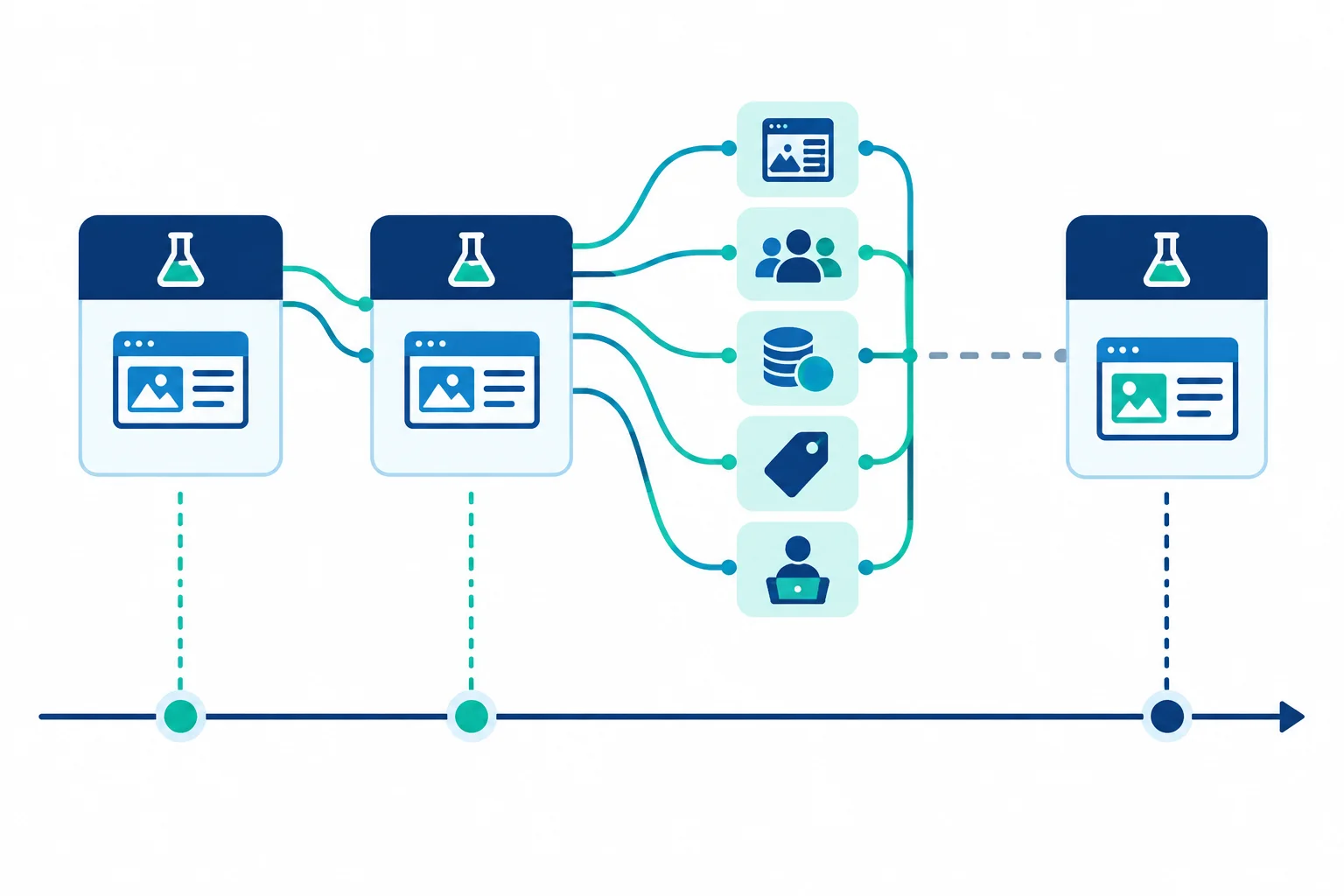
Treat shared audiences, pages, offers, budgets, tracking, and people as potential interference—not merely shared channel names.
Repair a conflict with one of three choices:
Parallel activity is not proof of a valid comparison. Preserve the conditions needed to answer one decision question at a time.
Write this commitment before launch for every scheduled experiment. It prevents a favorable early signal from being reinterpreted as a winner.
| Commitment field | What to specify |
|---|---|
| Decision question | Which plan decision could change? |
| Primary measure | One defined measure from the capstone |
| Comparison | What the result will be compared with |
| Observation window | Comparable period allowing for conversion lag |
| Evidence requirement | Predefined basis for adoption, rejection, or Inconclusive |
| Guardrail | Budget, fulfillment, customer-harm, consent, or data-quality limit |
| Owner and review point | Named owner and scheduled decision review |
| Inconclusive path | Authorized Maintain, Investigate, Pause, or Revise response; any extension or redesign needs approval and remaining capacity |
Practice evidence: Two proposed items in your capstone backlog affect the same selected audience. One changes the offer on a selected landing page; the other changes the offer in an email that sends that audience to the same page. Both also require the same Activity owner during the same roadmap phase.
Which schedule best protects a decision-relevant comparison within the existing plan?
Create one concise pre-launch record for your capstone.
Write at least 450 characters (0/450).

Step 8 of 8
Integrate your existing capstone measurement matrix, decision rules, review authority, safeguards, and experiment sequence into a bounded response to uncertain evidence.
Your framework is complete only when it governs the same plan you already approved. Open the Capstone baseline and assemble one working record for your capstone business:
Objective, Business outcome, Supporting signal, Source, Owner, and Review cadence.Confirmed, Provisional, or Not recovered. A Not recovered item stays visible as a dependency; it is not silently replaced.This is an integration check, not a new planning method. The final framework should let a reviewer trace every action back to the existing plan and its evidence limits.
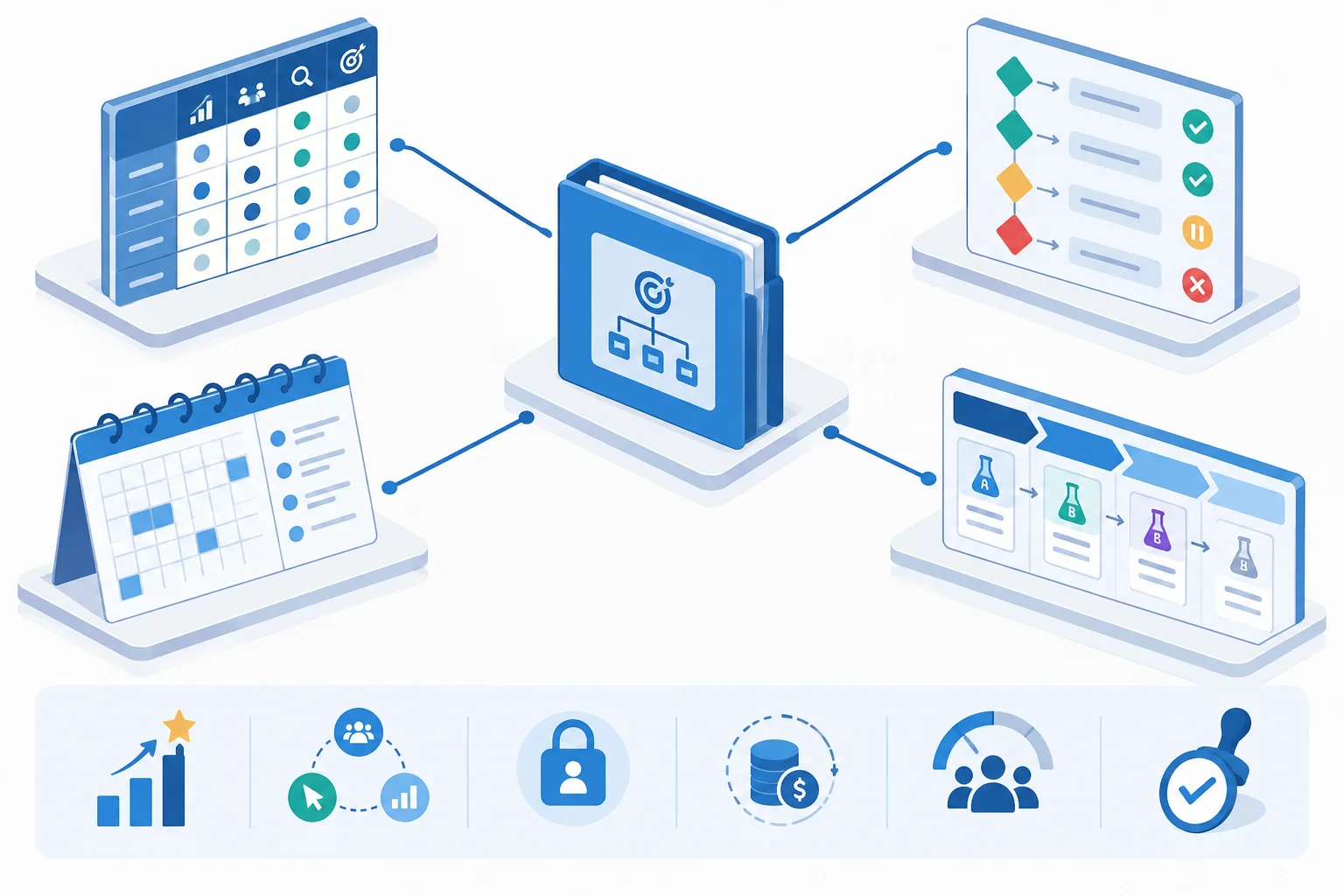
Each component must point back to the same Capstone baseline.
Use this final inspection before treating the framework as ready.
| Framework element | Check against Capstone baseline | Record result |
|---|---|---|
| Objectives and measures | Exact wording, definitions, units, and targets or limits match | Confirmed, Provisional, or Not recovered |
| Channels and phases | Only selected channels and existing roadmap phases appear | Confirmed, Provisional, or Not recovered |
| Rules and authority | Owners, approvers, review labels, and guardrails match the roadmap | Confirmed, Provisional, or Not recovered |
| Experiments | Sequence fits approved budget, capacity, dependencies, and conflicts | Confirmed, Provisional, or Not recovered |
| Evidence readiness | Source access and applicable consent status are documented | Confirmed, Provisional, or Not recovered |
Run this Practice evidence stress test against your own framework. It is relative to your capstone’s targets and limits; it is not a claim about your business.
At an Operational review, the consolidated business outcome is still inside its defined observation window. Two included channels each report a channel-attributed result for conversions that may overlap. An authorized source for one supporting signal has an access interruption, and the current consent coverage for that collection cannot be verified.
Meanwhile, an Activity owner proposes a change that would alter a shared audience, landing page, offer, budget, tracking configuration, or another dependency used by a scheduled experiment.
Do not turn early outcome data into a verdict. Do not add channel claims together as unique business results. Do not work around a consent or access problem with alternate identifiers or tracking. Check whether the proposed change conflicts with the experiment sequence before authorizing it.
Read the evidence by what it can support—not by what you want it to prove.
| Practice evidence | What is known | Limitation |
|---|---|---|
| Business outcome is still in its observation window | The outcome can be monitored against its defined measure | It is not decision-ready performance evidence yet |
| Two channel-attributed results overlap | Each claim can be diagnostic channel evidence | They cannot be summed as unique business results |
| Supporting-signal access or consent coverage is uncertain | The collection condition needs prompt verification | The affected comparison may be misleading; the conclusion is Inconclusive |
| Proposed shared change overlaps an experiment dependency | A sequencing conflict may exist | Do not assume parallel changes can answer the experiment question |
Create a concise decision record for the Practice evidence using your completed framework. Apply only the objectives, channels, phases, budget assumptions, capacity constraints, owners, and rules in your Capstone baseline.
Use these exact headings:
Evidence — distinguish the immature business outcome, channel-attributed claims, and affected supporting signal.
Limitation — state what is Inconclusive, including the observation-window, overlap, and access or consent limits.
Action — state the scoped operational action or actions: Maintain, Investigate, Pause, or Revise. Do not create another action label.
Authorization — identify who may contain an urgent consent risk, who investigates, and who authorizes a material change.
Next review — name the appropriate review label and the evidence needed before a conclusion or change.
Then add a short Framework self-check confirming that your response preserves: the exact metric and unit; selected channels and roadmap phase; approved budget and capacity; applicable consent and source-access dependency; and the experiment’s dependency, conflict, and sequence.
Write at least 600 characters (0/600).
Summary
A usable decision framework does not promise certainty. It makes uncertainty visible, protects people and operating limits, and specifies what evidence must arrive before the plan changes.
Congratulations! You completed: Set Decision Rules for Measurement and Experiments
Thousands of online courses in video, ebooks and audiobooks.
To test your knowledge during online courses
Generated directly from your cell phone's photo gallery and sent to your email

Download our app via QR Code or the links below:.



Carry knowledge in your pocket.
Download the Cursa app.
There are hundreds of free courses available, with a free certificate of completion that is saved in your mobile image gallery.
Download the app to access the Course Completion Certificate for Free.

+ 10 million
students

Free and Valid
Certificate

60 thousand free
exercises

4.8/5 rating in
app stores

Free courses in
video and ebooks