
Step 1 of 8

Learning path · Level 10 · Tutorial 4
Assemble the completed marketing plan and communicate it through a concise written or spoken pitch. Rehearse responses to text-based stakeholder challenges, then improve the plan with a structured self-review; no live audience, recording, or file submission is required.

 Consolidate Your Existing Plan
4 min
 Lead with an Executive Recommendation
Lead with a concise executive recommendation grounded in the learner’s consolidated Working plan. 3 min
 Structure a Three-Minute Pitch
Turn your executive recommendation into a concise, timed decision story while keeping detailed support in your Working plan. 4 min
 Defend the Reasoning, Not the Certainty
Respond to a stakeholder challenge with traceable reasoning, calibrated uncertainty, and a bounded decision request. 3 min
 Rehearse Three Stakeholder Challenges
Rehearse concise, evidence-grounded responses to three independent stakeholder challenges affecting your existing marketing plan. 4 min
 Score the Plan's Readiness
Use a six-criterion rubric to identify the most consequential weakness in your Working plan before making a material revision. 3 min
 Make and Trace a Material Revision
Correct one substantive weakness, propagate the change through your plan, and keep the revised decision request honest about remaining uncertainty. 3 min
 Present, Defend, and Close
Integrate your revised plan into one final delivery, defend a stakeholder challenge, and record a justified readiness verdict. 4 min
Step 1 of 8
Build one stakeholder-facing Working plan from the same business case you developed in the preceding tutorials. Do not begin a new case or replace your business, audience, offer, objectives, planning horizon, currency, units, or numeric baselines.
Use your saved plain-text artifacts first. Consolidation means that every section tells the same operational story: chosen channels support the objective, the roadmap fits capacity, spending matches the scenario, forecasts retain their conditions, and measurement rules use data that consent and access conditions permit.
Apply Evidence, Assumption, Forecast, and Unknown to individual claims—not to an entire section. A recorded channel choice or commitment is not automatically Evidence merely because it appears in the plan. Missing material remains Unknown; do not invent research sources, historical results, or precision.
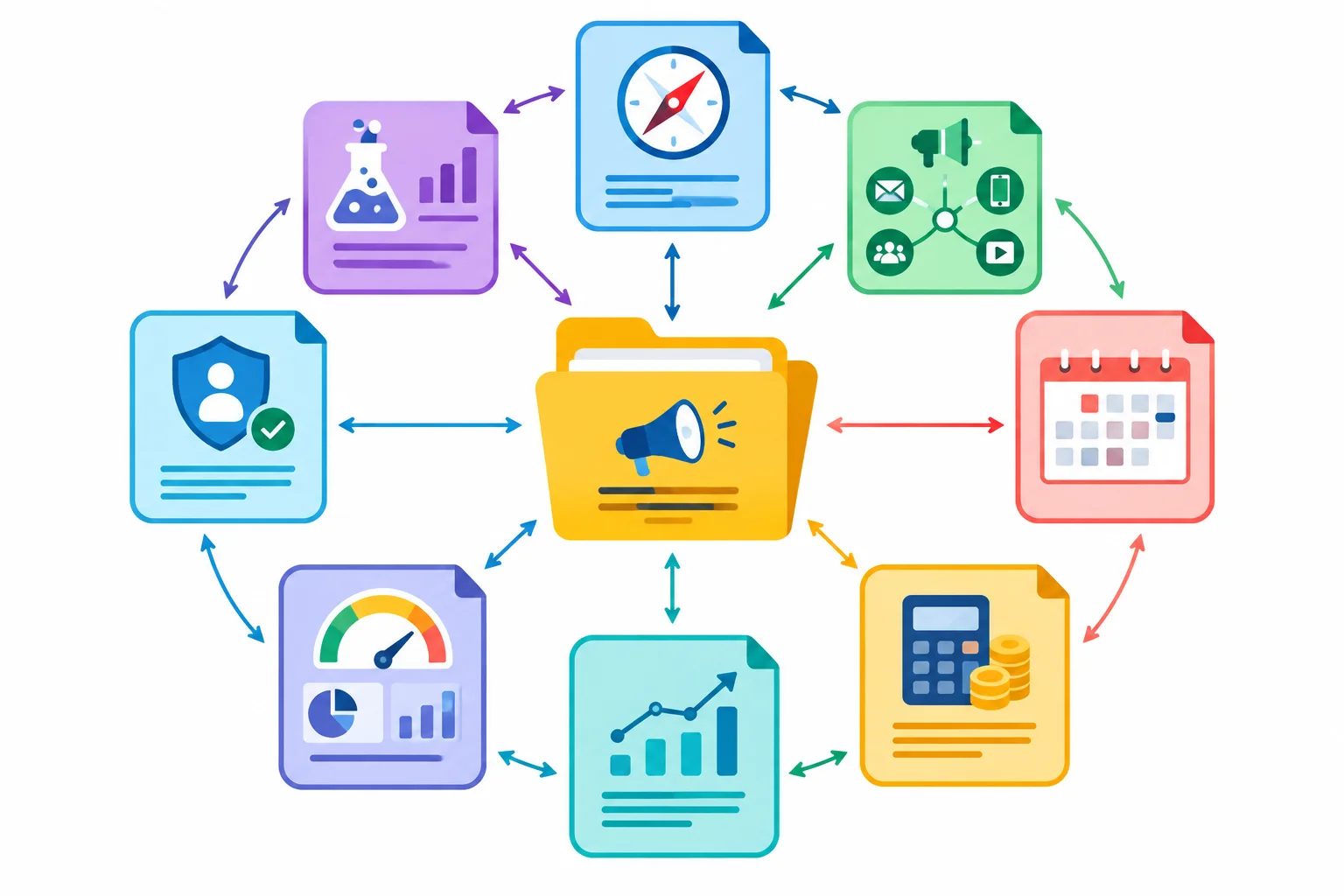
Treat the eight sections as connected commitments, not as separate documents. Trace each material claim to the section that supports it before presenting it.
If an artifact is missing, use this compact Same-case recovery packet. It preserves your original case identity; it does not create replacement facts. Reconstruct only what you can support from your own notes or prior work. Mark a provisional reconstruction Assumption, a projected result Forecast, and an unavailable fact Unknown.
Keep cash values in your plan’s original currency, such as USD 1,250.50, and keep percentages and baselines unchanged. Record the section reference beside claims that depend on another section.
Use these prompts only for sections that are missing or incomplete. Keep recovered entries short and traceable.
| Plan section | Recovery prompt |
|---|---|
| Strategic core | Business, audience, offer, objective, and planning horizon. Mark missing support Unknown. |
| Channel decisions | Included, deferred, or excluded channels; each role and handoff. |
| Execution roadmap | Phases, readiness gates, owners, approvals, and dependent work. |
| Resources and budget scenarios | Cash spending and staff capacity in original units; scenario limits. |
| Forecast assumptions | Inputs, conditions, conversion or timing assumptions, and review point. |
| Measurement and decision rules | Outcome, source, observation window, data checks, owner, and action rule. |
| Consent safeguards | Permitted data use, access conditions, restrictions, fallback, and decision limits. |
| Experiment priorities | Unresolved assumption, pending decision, dependencies, and priority order. |
Run a consistency check after packaging. First, check links: every channel and experiment should serve a stated objective, and every forecast or decision rule should point to its assumptions and permitted data. Then check feasibility: dates, staff hours, approvals, cash spending, and measurement access must coexist.
An inconsistency is a direct mismatch—for example, a roadmap commitment that exceeds available staff capacity. An unresolved dependency is a condition that prevents a commitment or decision from being reliable—for example, required measurement access not yet confirmed. Do not hide either one: correct it now or state the condition required before approval.
Use this cross-check before you call the package complete.
| Check | Compare | Question to resolve |
|---|---|---|
| Purpose and scope | Strategic core + Channel decisions | Does every selected channel have a role tied to an objective? |
| Delivery capacity | Execution roadmap + Resources and budget scenarios | Do timing, ownership, approvals, staff capacity, and cash fit together? |
| Conditional outcome | Resources and budget scenarios + Forecast assumptions | Do forecast inputs match the selected scenario and original baselines? |
| Permitted decisions | Measurement and decision rules + Consent safeguards | Can the stated data source legally and practically support this decision? |
| Learning sequence | Experiment priorities + Execution roadmap | Can each experiment run after dependencies are ready and inform a pending decision? |
Example
A concise issue record can use this pattern:
Unknown — [Plan: Consent safeguards] does not confirm whether the planned source is available. Therefore [Plan: Measurement and decision rules] cannot use that source for its stated decision. Condition before approval: confirm permitted access or limit the decision to the available measures.
Replace the bracketed sections and condition with your own plan details. This is not a new claim; it makes the dependency visible.
Create a compact audit of your Working plan.
Strategic core, Channel decisions, Execution roadmap, Resources and budget scenarios, Forecast assumptions, Measurement and decision rules, Consent safeguards, and Experiment priorities. Mark each section Complete or Incomplete. For each section, name one key claim and label that claim as Evidence, Assumption, Forecast, or Unknown, with an internal reference such as [Plan: Channel decisions]. You may add more labels when the section contains materially different claims.Keep the original case identity and numeric baselines intact. A section’s completeness does not make every claim inside it Evidence.
Write at least 450 characters (0/450).

Step 2 of 8
Lead with a concise executive recommendation grounded in the learner’s consolidated Working plan.
An executive summary is a decision brief, not a compressed list of tactics. A stakeholder should be able to identify the recommendation and the decision requested in the first sentence.
Draft from your Working plan in this order:
Use only decision-relevant detail. Keep an Evidence claim traceable, keep a Forecast conditional, and do not hide an Unknown that would materially affect approval.
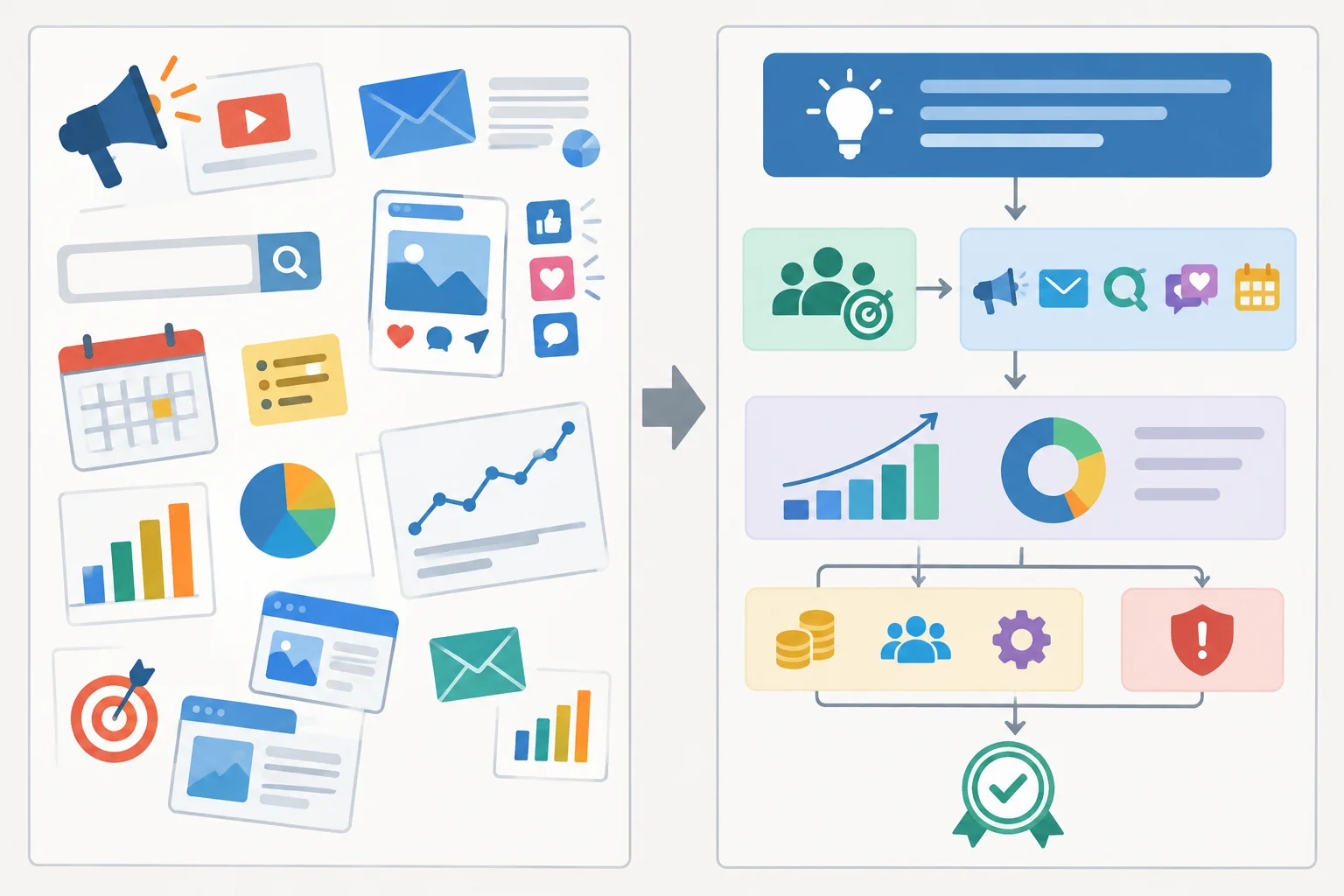
The decision-led version connects activities to an outcome, resources, a qualification, and an approval; it does not merely name channels.
A bounded approval request specifies all three boundaries:
Use this drafting pattern, replacing every bracket with information from your plan:
“Recommend approval of [scope] for [period] to address [customer opportunity]. The coordinated response is [response]. Forecast [expected outcome], subject to [material assumption or risk]. This requires [cash and/or staff commitment]. Decision requested: approve [scope] under [named condition].”
Do not convert a qualification into certainty. For example, attach an outcome to its Forecast assumptions rather than presenting it as a guaranteed result.
Example
Before drafting, make a short claim map:
| Summary element | What to verify in your Working plan |
|---|---|
| Opportunity | Evidence in Strategic core |
| Response | Included channels and handoffs in Channel decisions |
| Outcome | Forecast and conditions in Forecast assumptions |
| Resources | Cash and staff capacity in Resources and budget scenarios |
| Qualification | Assumption or Unknown in Measurement and decision rules or Consent safeguards |
| Approval | Scope, period, and condition in Execution roadmap |
This map is preparation, not extra prose. Your final executive summary must be 80–120 words.
Which opening is decision-ready for your plan?
Select the opening that best serves an executive summary.
Write an 80–120-word executive summary for your Working plan. Lead with your recommendation. Include: the customer opportunity; the coordinated response; one expected outcome labeled or clearly qualified as a Forecast; the cash and/or staff resource commitment; one material Assumption, Unknown, risk, or consent condition; and an explicit decision requested stating what is authorized, for which phase or period, and under what condition.
Use your existing business case and preserve its original currency, units, baselines, and planning horizon. Add plan references in the form [Plan: Forecast assumptions] where they help trace a central claim.
Write at least 400 characters (0/400).
Step 3 of 8
Turn your executive recommendation into a concise, timed decision story while keeping detailed support in your Working plan.
Your executive summary states the recommendation. Your pitch now carries one decision story: it gives stakeholders just enough to approve, conditionally approve, or defer that recommendation.
Use six connected parts:
Keep each part anchored in your Working plan. The pitch explains the decision; it does not recite every activity, channel metric, or planning note.
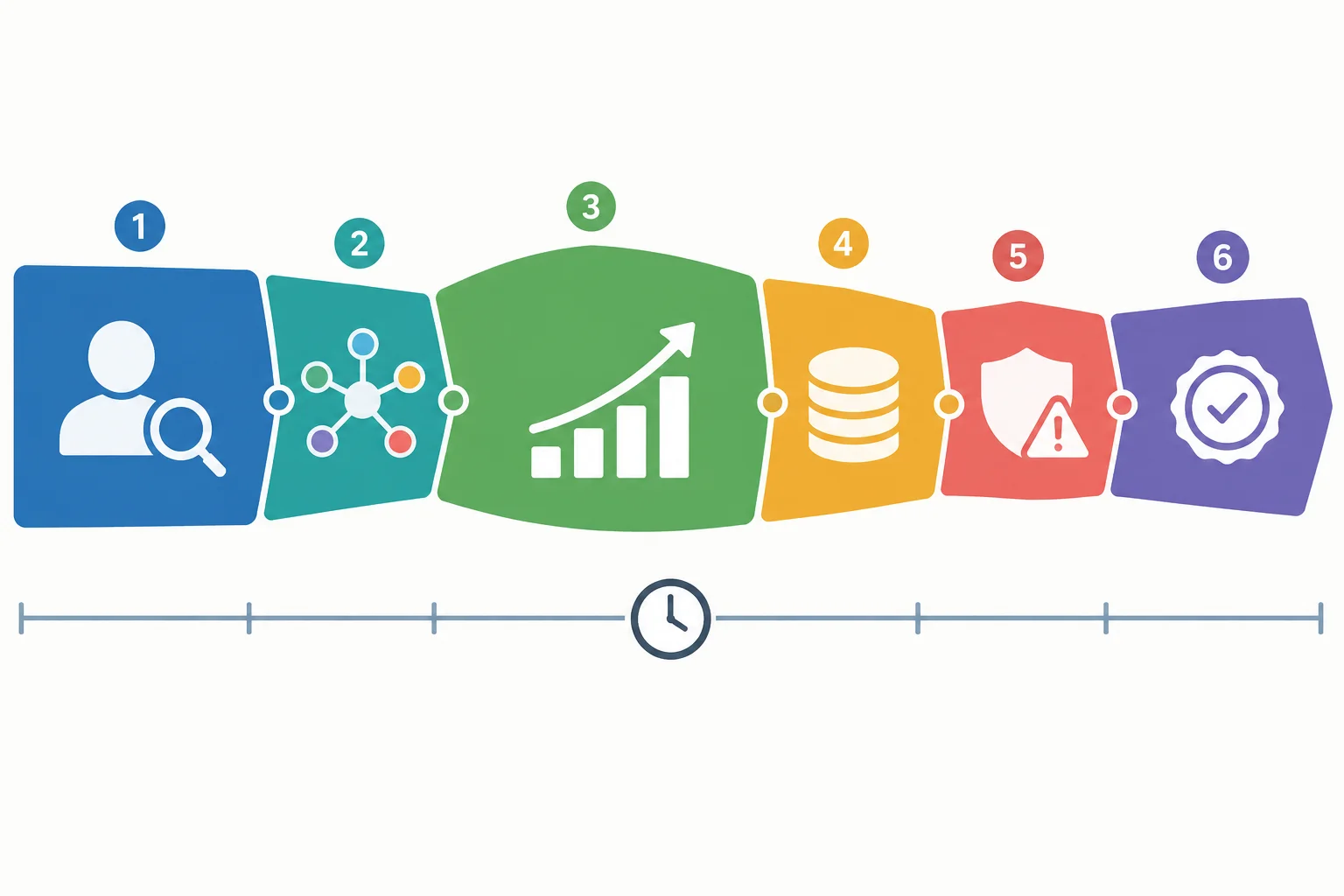
Use this order to move from why action matters to the specific decision requested.
Use these elapsed ranges as a disciplined outline:
The longer response segment explains how the chosen channels work together. The final 15 seconds must name the decision requested, rather than ending with a general invitation for questions.
Layer your communication. The pitch carries the recommendation and only the figures that change the decision. Your Working plan retains the detail that makes those claims traceable.
For each meaningful figure, attach its condition. For example, describe an expected outcome as a Forecast that depends on stated assumptions, timing, and measurement limits—not as a guaranteed result. Identify retained facts as Evidence, provisional inputs as Assumption, and unresolved information as Unknown.
Do not add together channel-attributed outcomes as though they were automatically unique business outcomes. Point stakeholders to the relevant plan section when they need the method, baseline, or decision rule.
Use the pitch to name the point; use the plan to support it.
| Pitch layer | Supporting detail | Plan section |
|---|---|---|
| Customer need and recommendation | Audience evidence and chosen offer | Strategic core |
| How channels work together | Handoffs, inclusions, and exclusions | Channel decisions |
| What will happen and when | Owners, gates, and dependencies | Execution roadmap |
| What is requested | Cash and staff-time scenarios | Resources and budget scenarios |
| What outcome is expected | Inputs, horizon, and conditions | Forecast assumptions |
| How adaptation will occur | Review cadence, thresholds, and limits | Measurement and decision rules |
| How data use is bounded | Permissions and fallback limits | Consent safeguards |
| What will be tested first | Decision value and dependencies | Experiment priorities |
Tip
Before drafting, choose a small number of decision-relevant figures from your plan. A figure belongs in the pitch only if it clarifies the expected outcome, resource request, material risk, or decision requested. Keep its currency, units, numeric baseline, and condition exactly as recorded in your plan.
Put the six pitch parts into the order that creates a decision-oriented three-minute story.
Draft your pitch using your current Working plan—not a new business case.
Choose one route:
In either route, state an explicit recommendation, a conditional expected outcome labeled Forecast, one material risk and its control, and a specific decision requested. Attach conditions to figures and direct supporting detail to named sections, for example [Plan: Forecast assumptions]. Keep Evidence, Assumption, Forecast, and Unknown distinct.

Step 4 of 8
Respond to a stakeholder challenge with traceable reasoning, calibrated uncertainty, and a bounded decision request.
A stakeholder challenge tests the reasoning behind your Working plan; it does not require certainty. Calibrate each claim before responding:
Use a specific section reference, such as [Plan: Forecast assumptions], rather than confidence or vague authority. A valid challenge may change a tactic, scope, or assumption without changing the strategic priority.
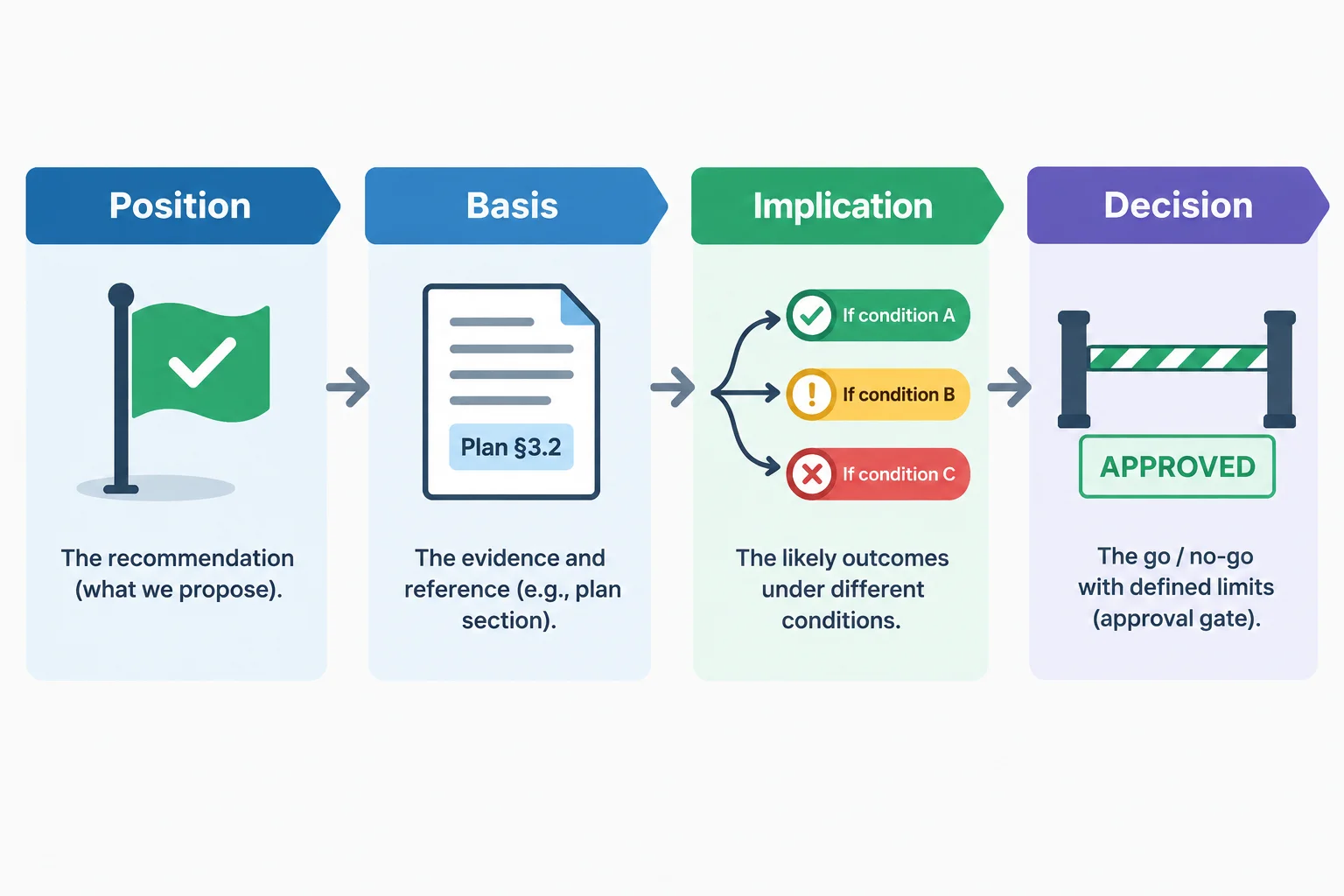
Use Position → Basis → Implication → Decision to make a concise response without turning a conditional plan into a guarantee.
Choose the label from what your Working plan can support—not from how confident the sentence sounds. A useful response names the limit and then states what should happen next.
Use these labels to keep a defense precise.
| Label | What it means | Useful defense language |
|---|---|---|
| Evidence | A documented plan fact | “The plan records … [Plan: Strategic core]” |
| Assumption | A condition used to make the plan feasible | “This depends on … [Plan: Resources and budget scenarios]” |
| Forecast | A conditional projected outcome | “This estimate holds if … [Plan: Forecast assumptions]” |
| Unknown | A question the plan cannot answer yet | “We do not yet know …; the limit is …” |
Example
A stakeholder challenge says: “Can you promise the planned outcome?”
Position: Proceed with the coordinated priority in the Working plan; do not promise the outcome.
Basis: The projected outcome is a Forecast with stated conditions [Plan: Forecast assumptions].
Implication: If those conditions are not observed during the defined review window, the outcome estimate is less reliable and the activity follows its decision rule [Plan: Measurement and decision rules].
Decision: Approve the planned phase subject to those conditions and review rules.
This acknowledges the challenge while protecting the strategy. The forecast can be qualified; it need not be defended as a fact.
Match each statement to its appropriate claim label.
Tap an item and then its matching pair.
A stakeholder challenge says: “Why should we believe this outcome?” A response currently says: “This plan will deliver its forecast because our channels are coordinated.”
First, label that claim as Evidence, Assumption, Forecast, or Unknown. Then rewrite the response using Position → Basis → Implication → Decision.
Use one exact reference from your Working plan. State one relevant limitation without weakening the strategic priority, and finish with a clear decision implication or decision requested.
Write at least 250 characters (0/250).

Step 5 of 8
Rehearse concise, evidence-grounded responses to three independent stakeholder challenges affecting your existing marketing plan.
Use your plan as it stands now. Do not combine the scenarios or silently replace a baseline. For every response, make a concise four-part case:
Evidence, Assumption, Forecast, or Unknown and cite the relevant plan section, for example [Plan: Forecast assumptions].A challenge can justify changing scope, sequence, or a decision limit. It does not prove proportional returns or causality.
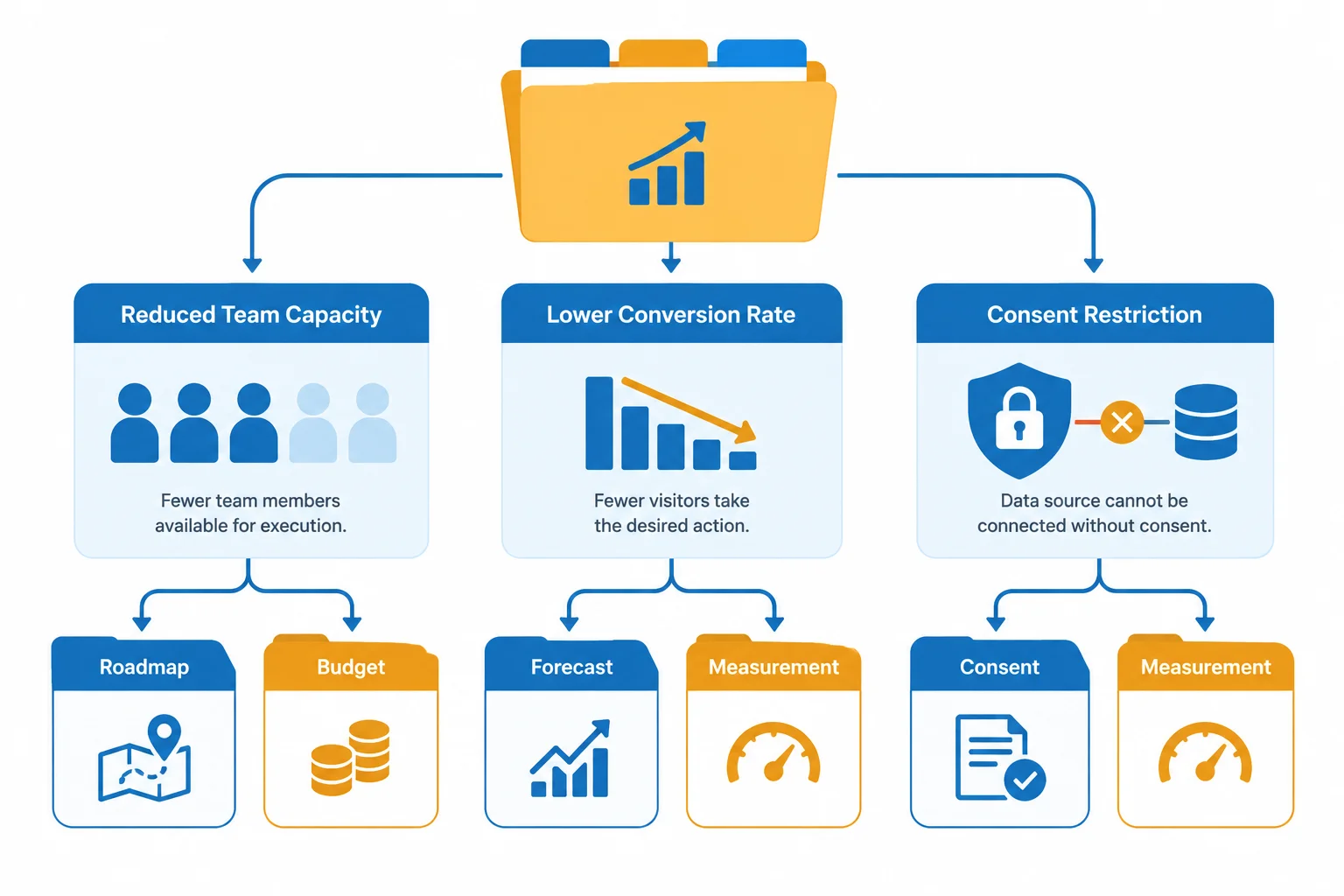
Keep the baseline plan fixed. Trace each scenario only through the sections it actually affects.
Example
Response frame
Position: [the adaptation or limit]
Basis: [Evidence, Assumption, Forecast, or Unknown + plan-section reference]
Implication: [what changes, what is protected, and which commitments depend on it]
Decision: [the decision requested]
Use only claims that your plan can support. If information is unavailable, name it as Unknown rather than filling the gap with invented results.
Tip
Keep the response short enough to say aloud. Specific plan references make a challenge response more defensible than confidence or extra detail.
A stakeholder challenge changes staff capacity only: your plan has 25% less staff capacity for the same planning horizon. Cash availability is unchanged.
Write a brief response for your plan using exactly these labels: Position → Basis → Implication → Decision.
Identify the affected claim with Evidence, Assumption, Forecast, or Unknown and a plan reference. State which priority remains protected, which commitments or dependent activities change, and the revised decision requested. Do not claim that reducing effort produces a proportional outcome.
Write at least 280 characters (0/280).
At the planned review, observed conversion is 30% below the rate assumed in your plan. Treat this as an independent change to the baseline.
Write a brief response for your plan using exactly these labels: Position → Basis → Implication → Decision.
Identify the affected claim and cite [Plan: Forecast assumptions] or [Plan: Measurement and decision rules] as appropriate. State what must be checked within the planned observation window and data-quality checks, what forecast or commitment may change, what remains protected, and the revised decision requested. Do not treat the result as proof of a cause.
Write at least 300 characters (0/300).
A planned tracking source becomes unavailable because consent or access conditions are not met. Treat this as an independent change to the baseline.
Write a brief response for your plan using exactly these labels: Position → Basis → Implication → Decision.
Identify the affected claim and cite [Plan: Consent safeguards] and/or [Plan: Measurement and decision rules]. State what can still be measured, which decision must be limited or deferred, what strategic priority remains protected, and the revised decision requested. Do not propose a workaround that bypasses consent or access conditions.
Write at least 300 characters (0/300).

Step 6 of 8
Use a six-criterion rubric to identify the most consequential weakness in your Working plan before making a material revision.
Your executive summary and pitch make a recommendation; the readiness review tests whether the underlying Working plan can support it. Review the whole plan, not just the strongest channel or the polish of the presentation.
For material claims, preserve the labels Evidence, Assumption, Forecast, and Unknown. A score is an honest judgment of readiness—not a reason to relabel an Unknown as Evidence.
The review has six criteria. Each score must point to the plan section that supports the judgment, using a reference such as [Plan: Forecast assumptions].
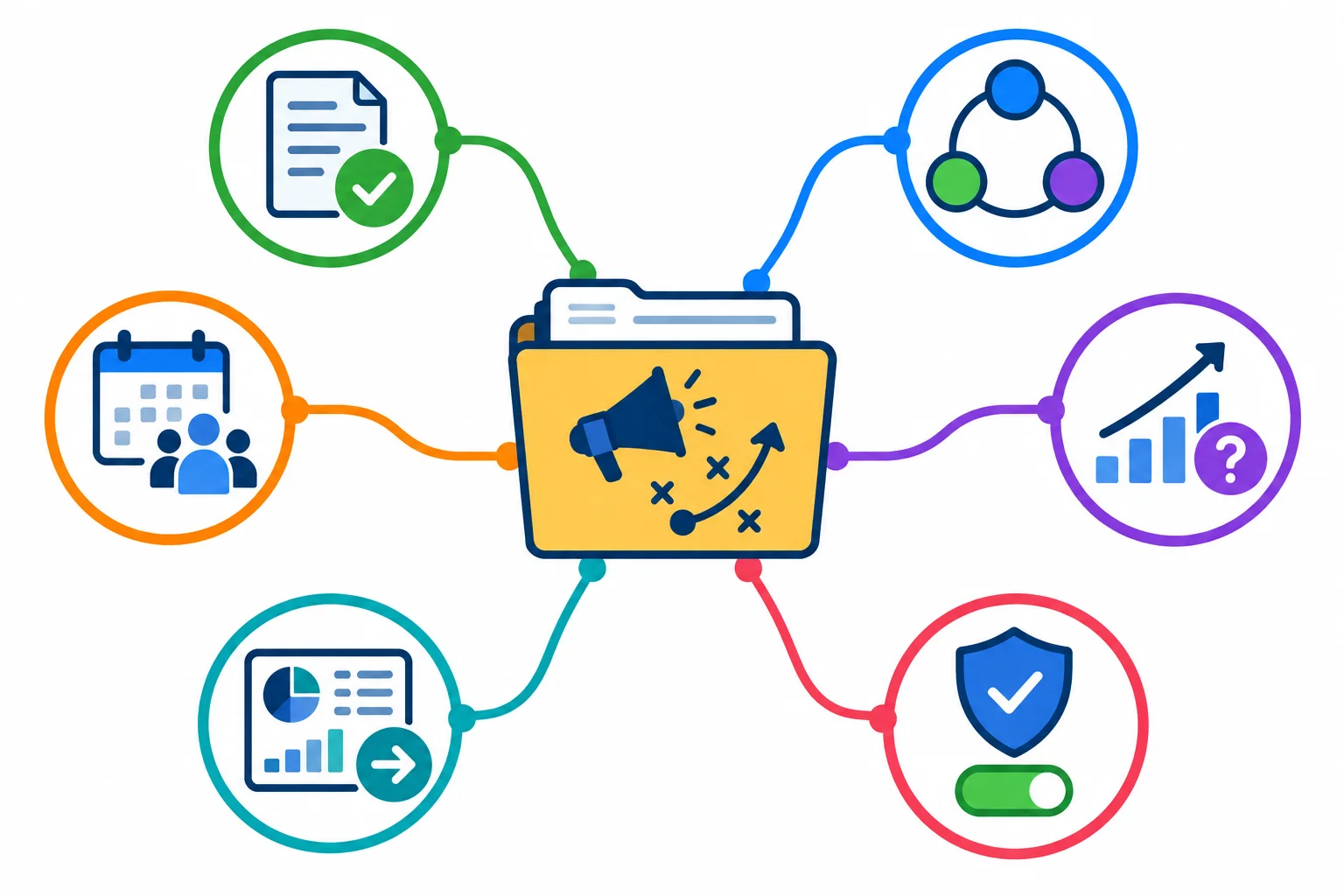
Score all six connected areas. A weakness in one area can limit the decision readiness of the entire Working plan.
Use the shared scale for every criterion: 0 = missing or contradictory, 1 = present but incomplete, and 2 = explicit, consistent, and traceable.
Read the descriptors as anchors, then cite the section that supports your score. Before considering any total, flag a central unsupported claim, an infeasible commitment, or an unresolved consent failure. These can outweigh a high score elsewhere.
For measurement readiness, also ask whether an experiment would inform a real pending decision—not merely produce an interesting result.
Use the descriptor that best matches the current Working plan. The final self-review will place a [Plan: ...] reference beside every score.
| Criterion | 0 — missing or contradictory | 1 — present but incomplete | 2 — explicit, consistent, traceable |
|---|---|---|---|
| Evidence and traceability | Central claims lack labels or conflict | Some claims have references; key gaps remain | Material claims are labeled and traceable to plan sections |
| Cross-channel coherence | Offers, handoffs, or objectives conflict | Main channels connect; gaps or duplication remain | Channel roles, handoffs, and promises align |
| Feasibility | Commitments exceed capacity or resources | Resources are outlined; dependencies remain unclear | Owners, time, cash, approvals, and dependencies are workable |
| Forecast assumptions | Forecast is unsupported or presented as fact | Some assumptions or conditions are missing | Baselines, units, conditions, and uncertainty are explicit |
| Measurement and decision rules | No usable measure, rule, or fallback | Measures exist; windows, checks, or decisions are incomplete | Measures, checks, fallbacks, and decisions align; experiments inform pending decisions |
| Consent and responsible execution | A required safeguard is absent or contradicted | Safeguards exist; access or limits remain unresolved | Consent conditions, access limits, and responsible actions are documented |
Which finding should receive priority as the material weakness?
Complete a readiness review of your current Working plan. Write six lines, one for each criterion:
0, 1, or 2 — [Plan: section heading]0, 1, or 2 — [Plan: section heading]0, 1, or 2 — [Plan: section heading]0, 1, or 2 — [Plan: section heading]0, 1, or 2 — [Plan: section heading]0, 1, or 2 — [Plan: section heading]Then name one material weakness to correct and explain why it matters more than a cosmetic improvement. Keep any reconstructed entry labeled as Assumption or Unknown; do not invent support for it.
Write at least 350 characters (0/350).

Step 7 of 8
Correct one substantive weakness, propagate the change through your plan, and keep the revised decision request honest about remaining uncertainty.
A revision is material when it changes a commitment, assumption, dependency, safeguard, or decision. It can change what a stakeholder should approve.
Start with the weakness identified in your self-review or stakeholder challenge. Then create a copy of your Working plan called Revised plan. Do not silently replace the original: the before-and-after trail is evidence of responsible planning.
Changing wording is not a material revision. Changing a channel’s scope because capacity fell, limiting a decision because consent-based tracking is unavailable, or revising a forecast assumption after weaker conversion is material.
Use claim labels precisely: retain Evidence that still supports the plan; identify changed Assumption or Forecast statements; mark anything still unresolved as Unknown.
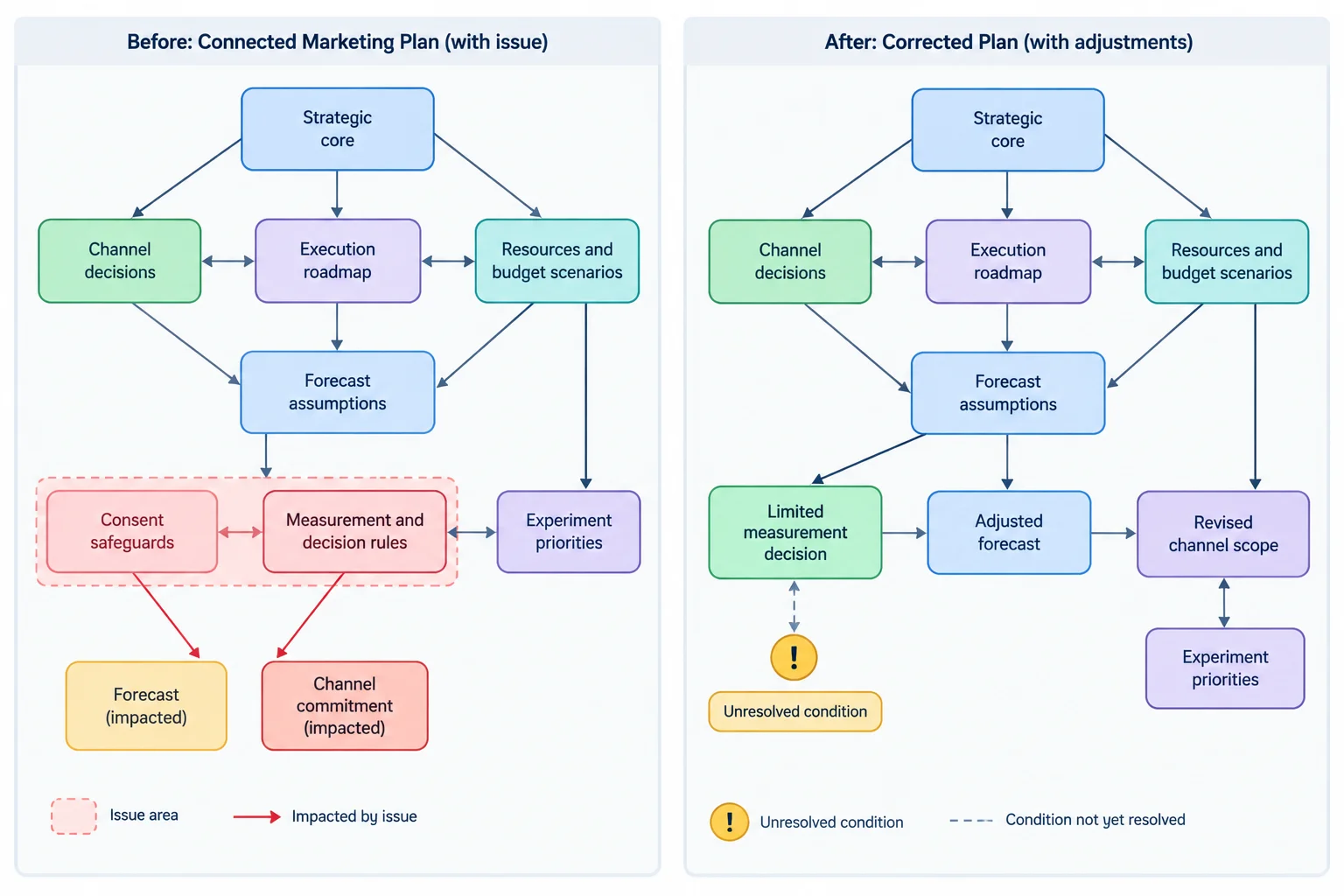
Trace every arrow affected by the correction; a plan is consistent only when connected commitments agree.
Tip
A useful test: if the correction could alter resources, timing, expected outcomes, a measurement-based action, or the decision requested, it needs dependency tracing. Cite the supporting location as, for example, [Plan: Measurement and decision rules] rather than claiming certainty without a plan reference.
Record the revision in this order. Keep the original business case, currency, units, and numeric baselines; do not fill gaps with invented results.
Use this structure for one consequential issue in your plan.
| Record field | What to write |
|---|---|
| Weakness | The contradictory, infeasible, unsupported, or unsafe commitment; cite its plan section and claim label. |
| Correction | The specific revised commitment, assumption, safeguard, or decision rule. |
| Dependencies | At least two affected plan sections and what changes in each: scope, owner, timing, staff hours, cash, forecast, measurement, or experiment. |
| Recheck | Affected rubric criteria, new 0–2 score, supporting section reference, and any remaining Unknown. |
Example
Weakness: A planned source cannot be used because its consent or access condition is not met. Unknown: whether an alternative source will become available in time. [Plan: Consent safeguards]
Correction: Limit the related performance decision to the measures that remain permitted and available; do not claim source-level certainty. [Plan: Measurement and decision rules]
Dependencies: Update the affected channel commitment and its review owner; qualify the related forecast rather than treating it as confirmed; reconsider any experiment that depends on the unavailable source.
Recheck: Re-score consent and responsible execution, measurement and decision rules, and any criterion affected by the forecast. The result may support conditional approval rather than full approval.
Propagation is complete only when the stakeholder-facing story matches the Revised plan.
0 = missing or contradictory, 1 = present but incomplete, 2 = explicit, consistent, and traceable. Write a supporting reference beside each score, such as [Plan: Forecast assumptions].A revision can legitimately end in conditional approval or deferral. State the remaining Unknown, why it matters, and what evidence or authorization would resolve it.
Use this quick cross-check before presenting the revised version.
| If you changed… | Also check… |
|---|---|
| Channel scope or commitment | Execution roadmap, resources and budget scenarios, and pitch response |
| Staff hours, owner, or timing | Execution roadmap and resources and budget scenarios |
| A forecast input or expected outcome | Forecast assumptions, executive summary, and pitch |
| A metric, source, threshold, or limitation | Measurement and decision rules and consent safeguards |
| An experiment’s decision value or feasibility | Experiment priorities and measurement and decision rules |
| Approval status or condition | Executive summary, pitch, and decision requested |
Tip
Do not erase uncertainty to make the pitch smoother. A defensible statement names the boundary: what the plan supports now, what remains an Assumption or Unknown, and the decision requested under that condition.
Create a revision record for the most consequential weakness in your own plan. Use the exact headings Weakness → Correction → Dependencies → Recheck.
Include: the original plan-section reference and claim label; one specific correction; effects in at least two connected plan sections; one revised sentence for your executive summary or pitch; affected rubric criterion scores with section references; and any remaining Unknown plus whether you now seek approval, conditional approval, or deferral.
Write at least 500 characters (0/500).

Step 8 of 8
Integrate your revised plan into one final delivery, defend a stakeholder challenge, and record a justified readiness verdict.
Your final package must describe one current business case: your plan. Put the revised commitments—not superseded assumptions—at the center.
Check that these eight sections agree with the executive summary, pitch, challenge response, rubric, and revision record:
Trace important statements with the appropriate label: Evidence, Assumption, Forecast, or Unknown. Use section references such as [Plan: Forecast assumptions]. If an earlier artifact is missing, reopen the Same-case recovery packet for the same business case. A reconstruction remains an Assumption or Unknown; consolidation does not turn it into Evidence.
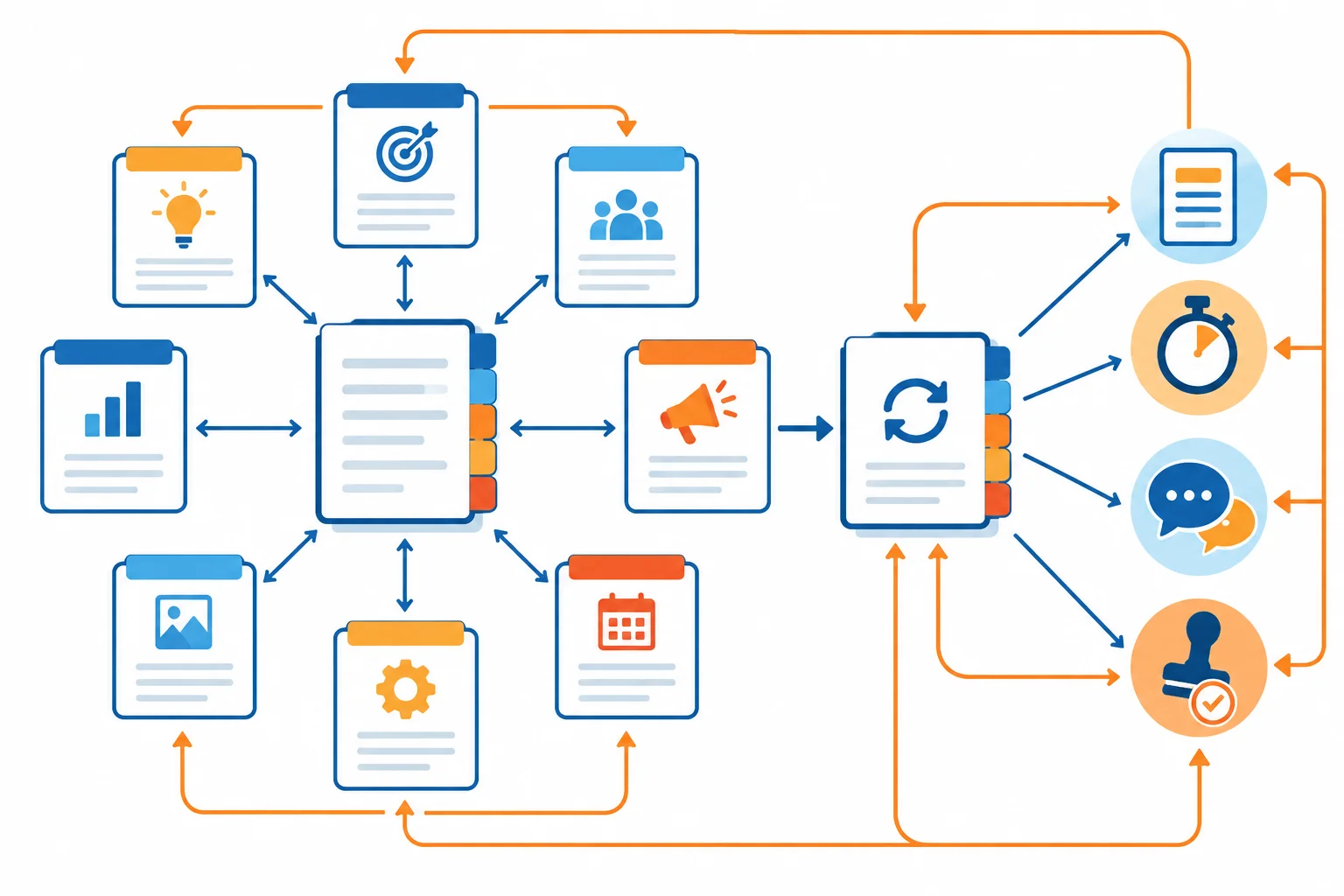
Treat the Revised plan as the source for every final communication. A change in one connected commitment must be reflected everywhere it is used.
Choose one route. Do not create a new case or add unsupported claims while presenting.
Spoken route: use your own timer and deliver the current pitch once in three minutes. Speak from your revised plan; no audience, recording, or upload is needed.
Written route: make a final 350–400-word review of your written equivalent. It should communicate the same recommendation, expected outcomes, resource request, risks and controls, and decision requested.
In either route, preserve qualifications that affect judgment. Name a conditional outcome as a Forecast, identify unresolved information as Unknown, and direct a stakeholder to supporting detail such as [Plan: Measurement and decision rules].
Use this timing map for the spoken route. The written route follows the same sequence without timestamps.
| Elapsed time | Pitch focus | Supporting section |
|---|---|---|
| 0:00–0:30 | Customer opportunity | Strategic core |
| 0:30–1:15 | Coordinated response | Channel decisions |
| 1:15–1:45 | Expected outcomes | Forecast assumptions |
| 1:45–2:15 | Resource request | Resources and budget scenarios |
| 2:15–2:45 | Risks and controls | Consent safeguards |
| 2:45–3:00 | Decision requested | Measurement and decision rules |
Tip
Before you close, compare the pitch with your 80–120-word executive summary. They may differ in detail, but they must request the same decision and use the same current commitments.
A useful final check: every figure or operational claim in the pitch should be traceable to a plan section; every material limitation should remain visible rather than being softened into certainty.
Now defend one stakeholder challenge using the Revised plan, not the baseline that existed before your material correction.
Select one previously rehearsed challenge: 25% less staff capacity with unchanged cash availability; conversion 30% below the assumed rate at the planned review; or a planned tracking source unavailable because consent or access conditions are not met.
Use the structure Position → Basis → Implication → Decision. Acknowledge what the challenge changes, protect only what your plan supports, and name a plan reference. Treat each scenario as an independent change to the baseline unless your plan explicitly connects it to another condition.
Write a concise response to one stakeholder challenge in no more than 110 words. Use these exact labels: Position → Basis → Implication → Decision. Ground the Basis in at least one reference such as [Plan: Execution roadmap]. State what is Evidence, Assumption, Forecast, or Unknown where relevant, and request the approval, conditional approval, or deferral your response now requires.
Write at least 180 characters (0/180).
Finish with a readiness verdict.
Approval means the plan can proceed as currently committed. Conditional approval means it can proceed only with explicit conditions, owners, and limits. Deferral means a material gap prevents the requested commitment now.
Choose the verdict your evidence supports—not the most optimistic label. A strong final close also identifies how the material revision improved defensibility and confirms that all linked outputs now use the current plan.
Record your final close in four compact parts:
Write only what is true of your plan.
Write at least 300 characters (0/300).
Summary
Your decision-ready package is complete when one Revised plan supports the summary, pitch, defense, readiness verdict, and revision record.
Congratulations! You completed: Present and Defend Your Marketing Plan
You completed the path
Congratulations! You went through every tutorial in this path.
Thousands of online courses in video, ebooks and audiobooks.
To test your knowledge during online courses
Generated directly from your cell phone's photo gallery and sent to your email

Download our app via QR Code or the links below:.


Carry knowledge in your pocket.
Download the Cursa app.
There are hundreds of free courses available, with a free certificate of completion that is saved in your mobile image gallery.
Download the app to access the Course Completion Certificate for Free.


+ 10 million
students

Free and Valid
Certificate

60 thousand free
exercises

4.8/5 rating in
app stores

Free courses in
video and ebooks