Step 1 of 6
Find the Meaning That Must Survive
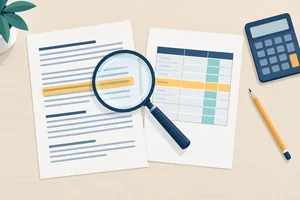
Identify the facts, qualifications, and attribution that a faithful transformation must preserve when retaining a claim.

Learning path · Level 3 · Tutorial 2
Draft, rewrite, and summarize short passages for a specified audience while keeping claims, qualifications, and attribution faithful to the source.
 Find the Meaning That Must Survive
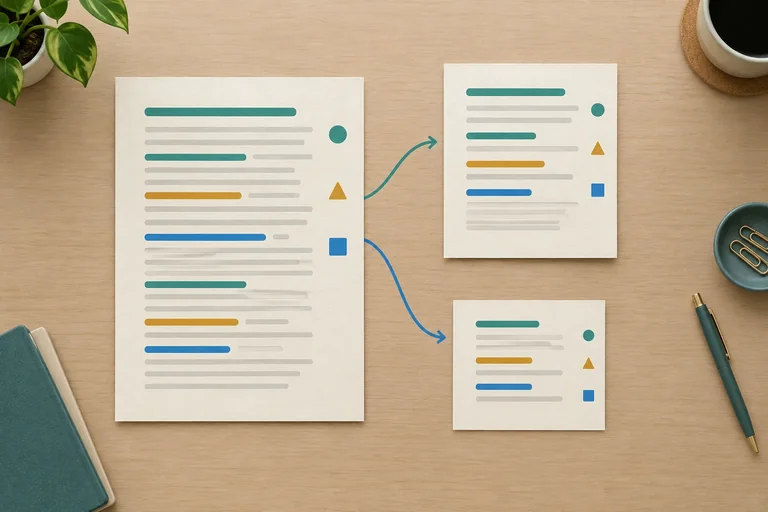
Identify the facts, qualifications, and attribution that a faithful transformation must preserve when retaining a claim. 3 min
 Draft for an Audience, Not Beyond the Source
Create a clear, audience-appropriate draft using only the information and boundaries in supplied source text. 3 min
 Summarize by Purpose
Select purpose-relevant essentials and write a concise summary without detaching conditions, uncertainty, or attribution from the claims they qualify. 3 min
 Compare the Output with the Source
Compare a plausible output with its Source, identify unsupported additions, essential omissions, and meaning shifts, and judge omissions against a clearly stated audience purpose. 3 min
 Request a Precise Revision
Improve tone, clarity, or length through a precise revision request while preserving the Source's meaning anchors. 2 min
 Complete a Faithful Writing Task
Complete a source-based notice, summary, meaning check, and revision request while protecting the source’s claims and limits. 5 min
Step 1 of 6
Identify the facts, qualifications, and attribution that a faithful transformation must preserve when retaining a claim.
Faithful writing may change the order of ideas or use different words. It must not change what the Source claims.
Details that carry the Source's meaning are called meaning anchors. They include the main claim, names, quantities, scope, attribution, uncertainty, and important conditions.
Words such as planned, may, likely, up to, and subject to are not decoration. They limit or qualify a claim, so they are meaning anchors when they apply.
Example
Source:
Maple Library is planning a four-week Saturday study pilot in June 2026 for library members. The pilot is subject to volunteer availability. Each session has up to 20 seats, and registration is required. Opening hours have not been confirmed.
In a survey of library members, 18 of 24 respondents said they would likely attend. Coordinator Maya Chen says the pilot may help members who cannot visit on weekdays.
Tip
Treat this as supplied text, not independent proof that the pilot will happen or that it will help anyone. Faithful writing reports what the Source says; it does not verify the Source.
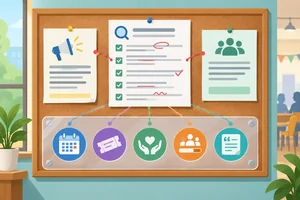
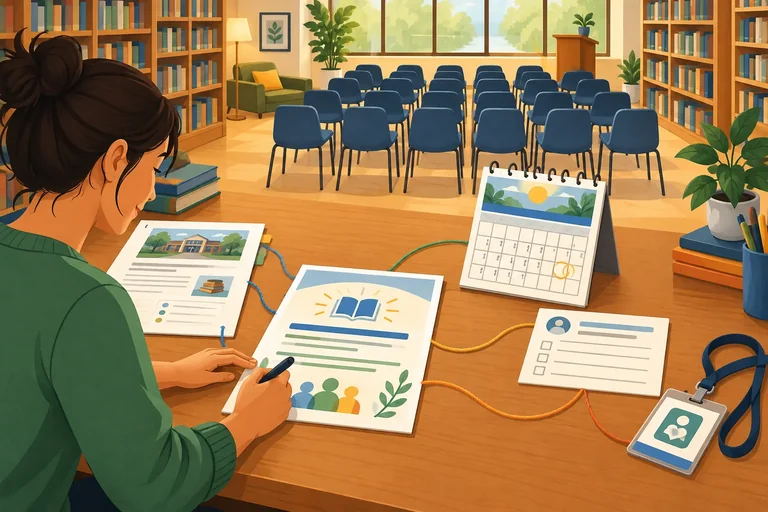
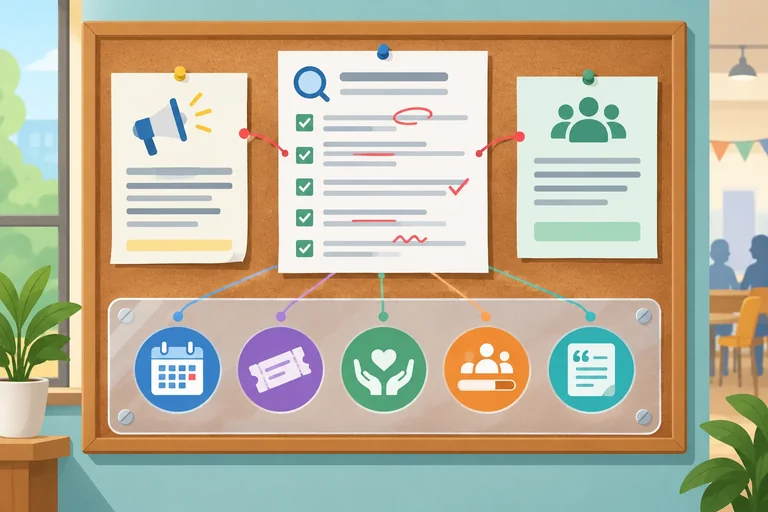
Imagine the Source as a document held in place by several anchors. If you retain a claim, keep the anchors connected to it.
For this Source, the calendar represents planned timing; the people icon represents library members; the seat icon represents capacity; the helping-hands icon represents the volunteer condition; the dotted survey chart represents uncertainty; and the speech bubble represents Maya Chen's attributed possibility.
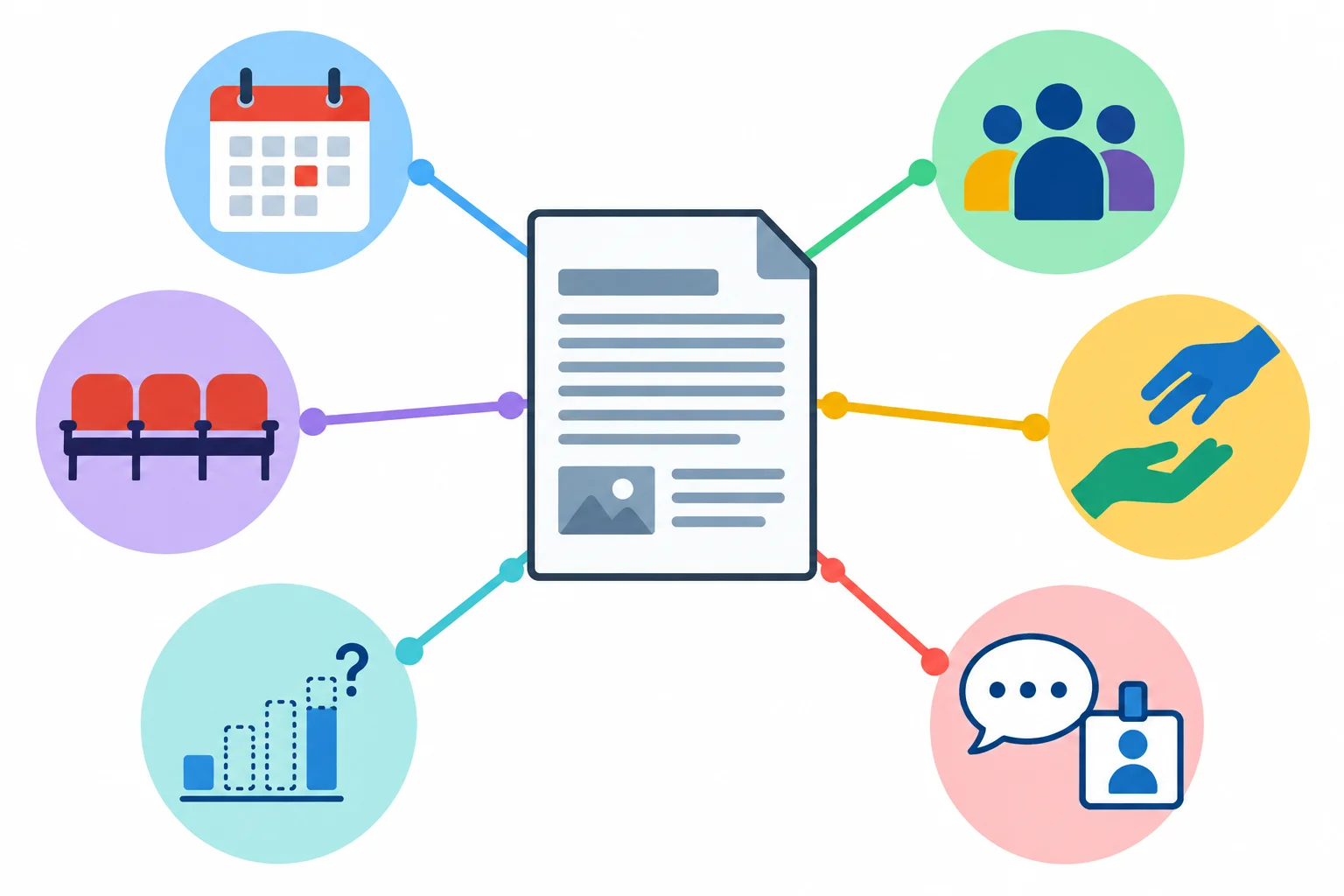
When a later passage keeps one of these claims, it must keep the attached limit, uncertainty, or attribution too.
Example
Some wording can safely change when its meaning anchors remain.
Source wording: “a four-week Saturday study pilot”
Safe rewording: “a 4-week study pilot held on Saturdays”
The word order changed, but the activity, duration, and Saturday schedule remain. By contrast, changing “up to 20 seats” to “20 seats” would remove the capacity limit. Changing “may help” to “will help” would make Maya Chen’s possibility sound certain.
Match each fragment from the Source to the meaning anchor it carries.
Tap an item and then its matching pair.
Step 2 of 6
Create a clear, audience-appropriate draft using only the information and boundaries in supplied source text.
A source-based Draft gives a named Audience useful information without making the Source more complete. You may use a warmer tone, put practical details first, or speak directly to readers. Keep the meaning anchors that matter: who the message is for, what is planned, when, conditions, capacity, required actions, and stated unknowns.
Do not turn a plan into a confirmed event, a limit into a guarantee, or a possible benefit into a proven result.

Change the route to the reader, but carry the relevant meaning anchors across.
Tip
Friendly connective wording can improve flow without adding facts: “Please plan ahead” does not promise an outcome. In contrast, “You will have a seat” guarantees something the Source does not.
If an operational detail is missing, keep it unknown. If the Source says it is unconfirmed, say that; otherwise, ask for clarification rather than guessing.
Source
Maple Library is planning a 4-week Saturday study pilot in June 2026 for library members. The pilot is subject to volunteer availability. Each session has up to 20 seats, and registration is required. Opening hours have not been confirmed. In a survey of library members, 18 of 24 respondents said they would likely attend. Coordinator Maya Chen says the pilot may help members who cannot visit on weekdays.
This Source describes a plan, not a confirmed service. Survey interest is not attendance, and Maya Chen’s statement is an attributed possibility.
Example
Audience: library members
Draft — Illustrative AI output
Maple Library is planning a 4-week Saturday study pilot in June 2026 for library members. Registration is required, with up to 20 seats per session. The pilot is subject to volunteer availability, and opening hours have not been confirmed.
This Draft puts visit-planning details first. It keeps the planned status, condition, capacity limit, registration requirement, and unknown hours. It does not invent a booking method, a time, or a guaranteed benefit.
When asking an assistant for a Draft, keep the prompt structure you already know and name the anchors to protect:
Task: Write a short Draft from the supplied Source.
Audience: library members
Constraints: Preserve planned status, volunteer availability, registration, capacity, and unconfirmed opening hours. Do not add facts.
Output format: One short paragraph labeled Draft.
Source: [paste the supplied Source]
You can change the task or audience, but do not need to rebuild the whole prompt framework each time.
Arrange the blocks into 1 faithful sentence for library members.
Your sentence
Available words
Create an approachable notice using only the Source below.
Task: Write a brief Draft for readers deciding whether to plan a visit.
Audience: library members
Constraints: Write 35–55 words. Include the planned 4-week Saturday pilot in June 2026, the volunteer-availability condition, registration, up to 20 seats per session, and unconfirmed opening hours. Do not confirm the pilot, guarantee a seat, invent hours or booking details, or present a possible benefit as an established result.
Output format: One paragraph labeled Draft.
Source: Maple Library is planning a 4-week Saturday study pilot in June 2026 for library members. The pilot is subject to volunteer availability. Each session has up to 20 seats, and registration is required. Opening hours have not been confirmed. In a survey of library members, 18 of 24 respondents said they would likely attend. Coordinator Maya Chen says the pilot may help members who cannot visit on weekdays.
Write at least 120 characters (0/120).

Step 3 of 6
Select purpose-relevant essentials and write a concise summary without detaching conditions, uncertainty, or attribution from the claims they qualify.
A Summary is not a shorter version of every sentence. It selects the main message and the details a particular reader needs to understand or make a decision.
First identify the Source and the reader’s purpose. Then keep the meaning anchors attached to claims: conditions, uncertainty, attribution, quantities, and limits.
Source
Maple Library is planning a 4-week Saturday study pilot in June 2026, subject to volunteer availability. It is for library members only, with up to 20 seats per session; registration is required. Opening hours are not confirmed. In a survey of 24 library members, 18 said they would likely attend. Coordinator Maya Chen says the pilot may help members who cannot visit on weekdays.
This source describes a plan and expressions of interest. It does not report attendance results or prove a benefit.
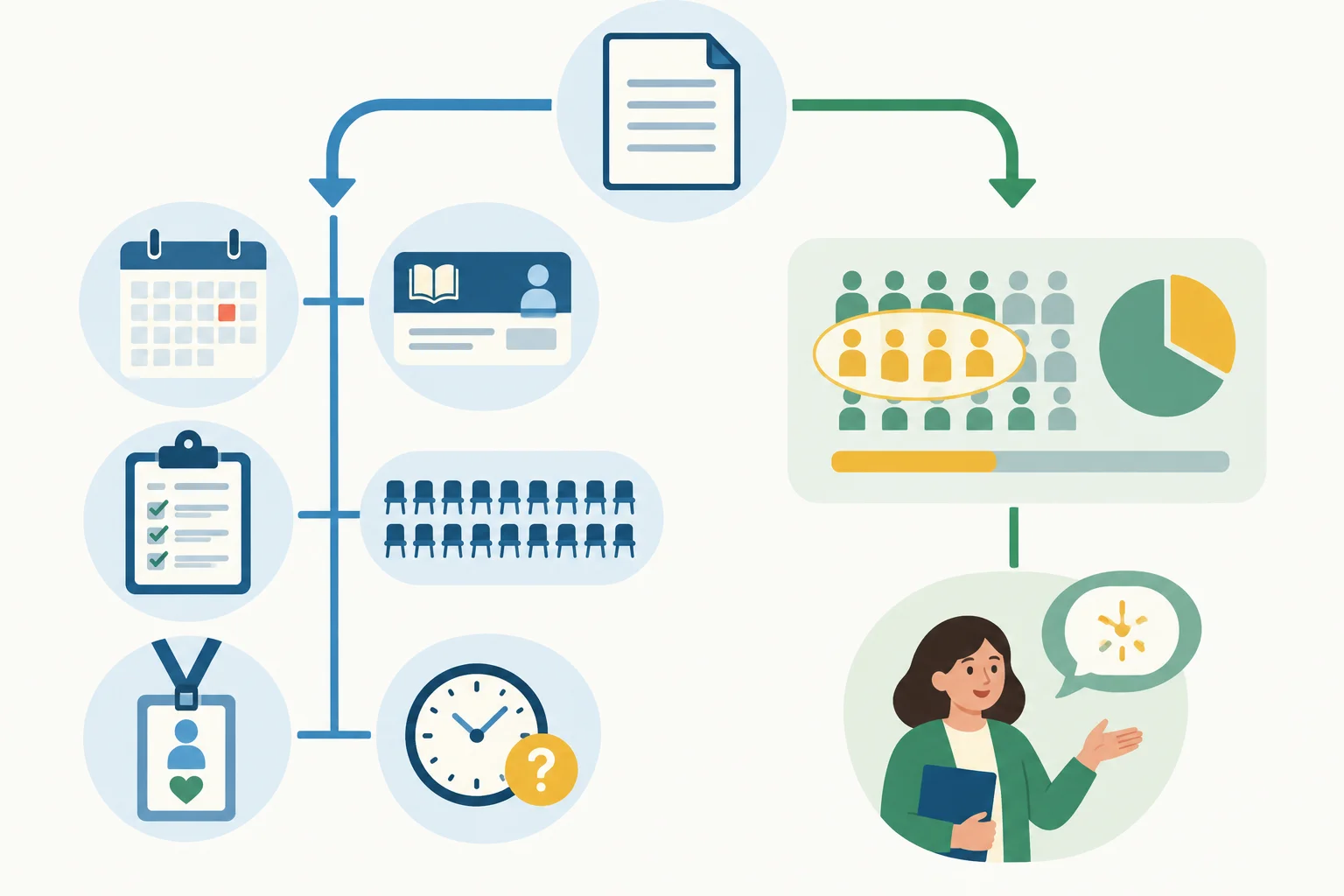
The same Source can lead to different summaries because library members and the library planning team need different essentials.
An essential detail is one the audience needs for the stated purpose. A supporting detail may be accurate but unnecessary in a short summary.
If you retain a claim, retain what limits it. For example, do not turn “may help” into “will help,” and do not report “18 of 24 said they would likely attend” as actual attendance.
What each audience needs most depends on its purpose.
| Audience | Purpose | Usually essential | Often supporting |
|---|---|---|---|
| library members | Plan a visit | June 2026 pilot; members only; registration; up to 20 seats; volunteer condition; hours unconfirmed | Survey interest; Maya Chen’s possible benefit |
| library planning team | Review interest and possible value | 18 of 24 likely-attend responses; Maya Chen’s attributed, possible benefit | Operational details, unless the team is deciding how to run the pilot |
Example
Illustrative AI output
Summary
Maple Library is planning a 4-week Saturday study pilot in June 2026 for library members. Registration is required, with up to 20 seats per session. The pilot is subject to volunteer availability, and opening hours are not confirmed.
This member-facing summary leaves out the survey and Maya Chen’s statement because they do not help a member decide how to plan a visit. Omitting that optional claim is safe. Retaining it without “Maya Chen says” and “may” would not be safe.
A useful request makes the purpose visible:
Task: Summarize the supplied Source for a visit-planning message.
Audience: library members
Constraints: About 40–60 words. Preserve participation limits, conditional status, and unknown opening hours. Do not add information.
Output format: One paragraph labeled Summary.
Source: [paste the supplied Source]
A library planning team wants to mention the pilot’s possible benefit. Which sentence is faithful to the Source?
Task: Choose purpose-relevant details, then write a member-facing Summary.
Audience: library members and library planning team
Constraints: First separate the details needed by each audience. Then write a 40–60-word Summary for library members. Preserve the planned and conditional status, participation limits, and unconfirmed opening hours. Do not add facts.
Output format:
Member essentials: …
Planning-team essentials: …
Summary: …
Source: Maple Library is planning a 4-week Saturday study pilot in June 2026, subject to volunteer availability. It is for library members only, with up to 20 seats per session; registration is required. Opening hours are not confirmed. In a survey of 24 library members, 18 said they would likely attend. Coordinator Maya Chen says the pilot may help members who cannot visit on weekdays.
Write at least 300 characters (0/300).

Step 4 of 6
Compare a plausible output with its Source, identify unsupported additions, essential omissions, and meaning shifts, and judge omissions against a clearly stated audience purpose.
A meaning check is a 2-way comparison.
Then compare the wording itself. A claim can be supported in general but still become inaccurate when certainty, attribution, scope, a name, or a quantity changes. That is a meaning shift.

Check Summary claims against the Source, then check that purpose-relevant Source details remain.
Tip
Fluent wording is not evidence that an output is faithful. Neither is an assistant's statement that it “preserved the meaning.” Compare the actual words with the Source.
Use these labels to describe a problem you find. A polished-looking output can still need correction.
| Finding | What to look for | Question to ask |
|---|---|---|
| unsupported addition | A new fact, promise, detail, or result | Where does the Source say this? |
| essential omission | A missing detail needed for the Audience or purpose | Can the reader understand or decide without it? |
| meaning shift | Changed certainty, attribution, scope, name, quantity, or fact | Do the words make the same claim? |
Example
Source: Maya Chen says the pilot may help members who cannot visit on weekdays.
Draft: The pilot will help members who cannot visit on weekdays.
The Draft has a meaning shift. It changes an attributed possibility into an unqualified certainty. The words “Maya Chen says” and “may” are meaning anchors when this benefit claim is retained.
Match each comparison finding to its error label.
Tap an item and then its matching pair.
Task: Compare the Summary with the Source for a library planning team assessing survey interest and operational feasibility of the proposed pilot. This purpose does not assess the pilot’s possible value or benefits.
Audience: library planning team
Constraints:
Output format: 5 short bullet points: planning-status shift; survey-certainty shift; unsupported addition; essential omission; acceptable omission.
Source: Maple Library is planning a 4-week Saturday study pilot in June 2026, subject to volunteer availability. It is for library members only, with up to 20 seats per session; registration is required. Opening hours are not confirmed. In a survey, 18 of 24 library-member respondents said they would likely attend. Coordinator Maya Chen says the pilot may help members who cannot visit on weekdays.
Illustrative AI output
Summary: Maple Library will hold a 4-week Saturday study pilot in June 2026 for library members only. Registration is required, with up to 20 seats per session. Sessions will run from 9 a.m. to noon. A survey found that 18 of 24 respondents will attend.
Write the 5 comparison bullets requested above.
Write at least 180 characters (0/180).

Step 5 of 6
Improve tone, clarity, or length through a precise revision request while preserving the Source's meaning anchors.
A Revision request tells an assistant what expression to improve and what meaning anchors must stay fixed.
First, name the specific problem and the desired change: “make the opening warmer,” “make the instruction clearer,” or “reduce this to 3 sentences.” Then name the facts and boundaries that cannot change: planned status, audience, quantities, conditions, attribution, and uncertainty.
A request for more confident wording is about style, not evidence. It must not turn planned into confirmed, may into will, or an attributed view into a proven result. If the Draft is inaccurate, ask for a meaning correction as well as a style improvement.
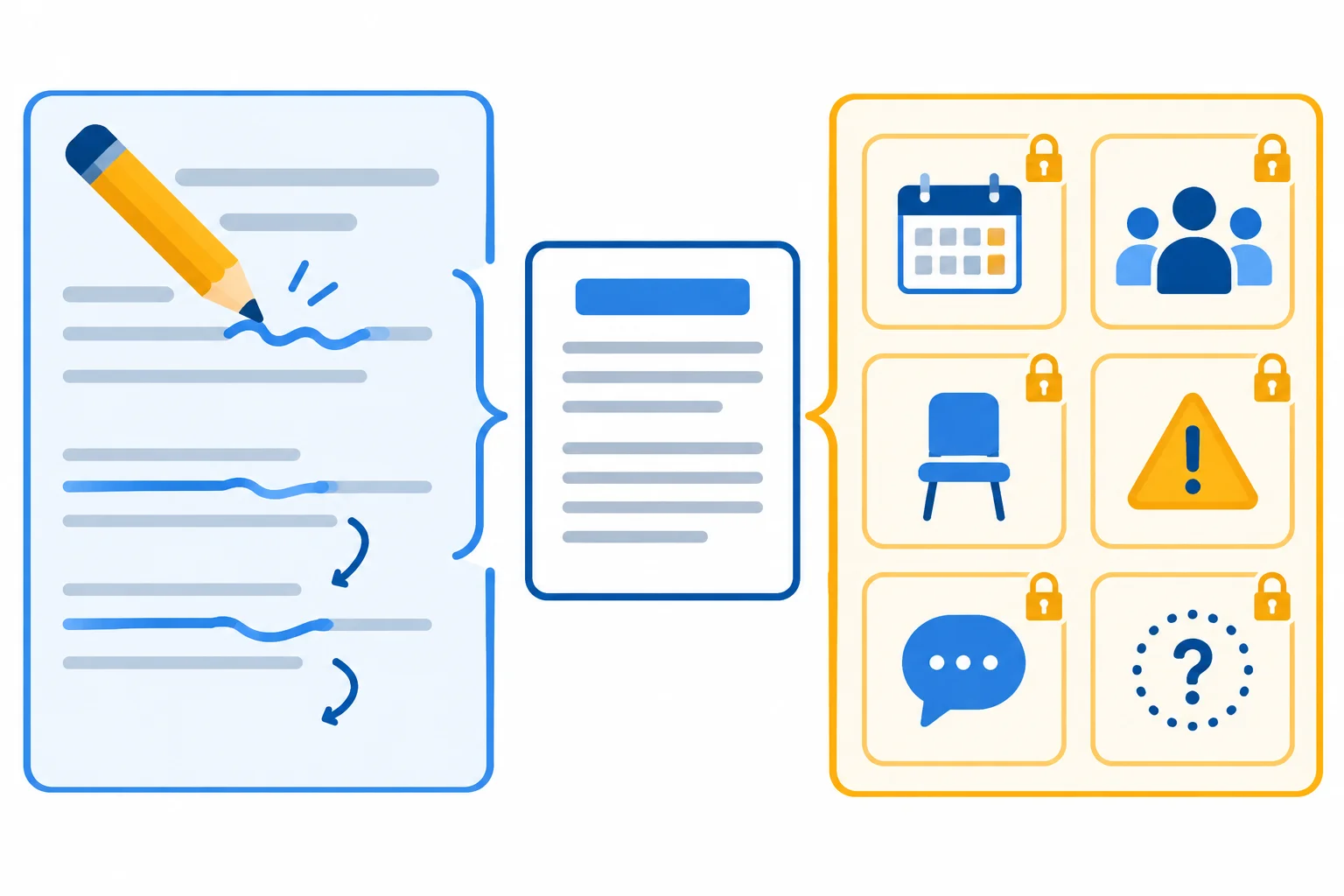
Revise the wording around the anchors; do not revise what the anchors mean.
Use the earlier comparison to make a vague instruction usable. A precise request names the wording that is wrong, says how the new version should read or feel, and lists the boundaries it must preserve.
For a message to the library planning team, survey interest can matter. If you retain it, keep the quantity, the survey respondents, and the uncertainty together. Do not make likely attendance sound like actual attendance.
Example
Source: Maple Library is planning a 4-week Saturday study pilot in June 2026 for library members. The pilot is subject to volunteer availability. Each session has up to 20 seats, and registration is required. Opening hours have not been confirmed. In a survey of library members, 18 of 24 respondents said they would likely attend. Coordinator Maya Chen says the pilot may help members who cannot visit on weekdays.
Draft — Illustrative AI output: “Maple Library will run the 4-week Saturday pilot in June 2026. Survey results show that 18 of 24 members will attend.”
Revision request
Task: Revise the Draft into a clear, concise planning update.
Audience: library planning team
Constraints: Correct the confirmed status and attendance claim. Preserve that the pilot is planned and subject to volunteer availability. If retaining survey interest, state that 18 of 24 library-member respondents said they would likely attend. Keep registration, up to 20 seats per session, and unconfirmed opening hours. Do not add outcomes or hours.
Output format: 2 short sentences labeled Draft.
Source: Use the supplied Source above.
Treat a revised passage as a new output, not as automatically correct. Check it against the Source in both directions: look for a new unsupported claim or meaning shift, then make sure the anchors needed for the retained claims survived.
A revision can fix one error while creating another. For example, shortening a capacity statement may accidentally remove the words that make it a limit.
Use this guide after an assistant revises a Maple Library passage.
| Meaning anchor | Faithful wording | What can fail | Finding |
|---|---|---|---|
| Pilot status | is planning; subject to volunteer availability | will run | meaning shift |
| Capacity | up to 20 seats per session | 20 seats per session | meaning shift |
| Opening hours | Not stated; hours are not confirmed | 9 a.m. to noon | unsupported addition |
| Volunteer condition | subject to volunteer availability | condition is absent | essential omission |
| Maya Chen’s view | Maya Chen says the pilot may help | The pilot will help | meaning shift |
Task: Write a Revision request for the Draft, then inspect the supplied revised version.
Audience: library members
Constraints: In Part 1, request a warm, clear notice and correct the factual problems in the Draft. Explicitly protect the meaning anchors needed for the notice. In Part 2, decide whether the supplied revised version satisfies the request without a new meaning shift. Name the exact wording responsible for any issue and give replacement wording.
Output format: Part 1: a Revision request using the headings Task:, Audience:, Constraints:, Output format:, and Source:. Part 2: a short comparison finding and replacement wording.
Source: Maple Library is planning a 4-week Saturday study pilot in June 2026 for library members. The pilot is subject to volunteer availability. Each session has up to 20 seats, and registration is required. Opening hours have not been confirmed. In a survey of library members, 18 of 24 respondents said they would likely attend. Coordinator Maya Chen says the pilot may help members who cannot visit on weekdays.
Draft — Illustrative AI output: “Great news! Maple Library will open every Saturday in June 2026. Library members can drop in, and everyone who registers will have a seat. Maya Chen says the pilot will help people who cannot visit on weekdays.”
Supplied revised version: “Maple Library is planning a 4-week Saturday study pilot in June 2026 for library members. Registration is required, and each session has 20 seats. The pilot is subject to volunteer availability, opening hours are not confirmed, and Maya Chen says it may help members who cannot visit on weekdays.”
Write at least 260 characters (0/260).
Step 6 of 6
Complete a source-based notice, summary, meaning check, and revision request while protecting the source’s claims and limits.
You will now complete one short, source-based writing task from start to finish. Your audience is adult residents deciding whether to plan attendance. Keep the message useful, but do not fill in missing details or turn a possibility into a promise.
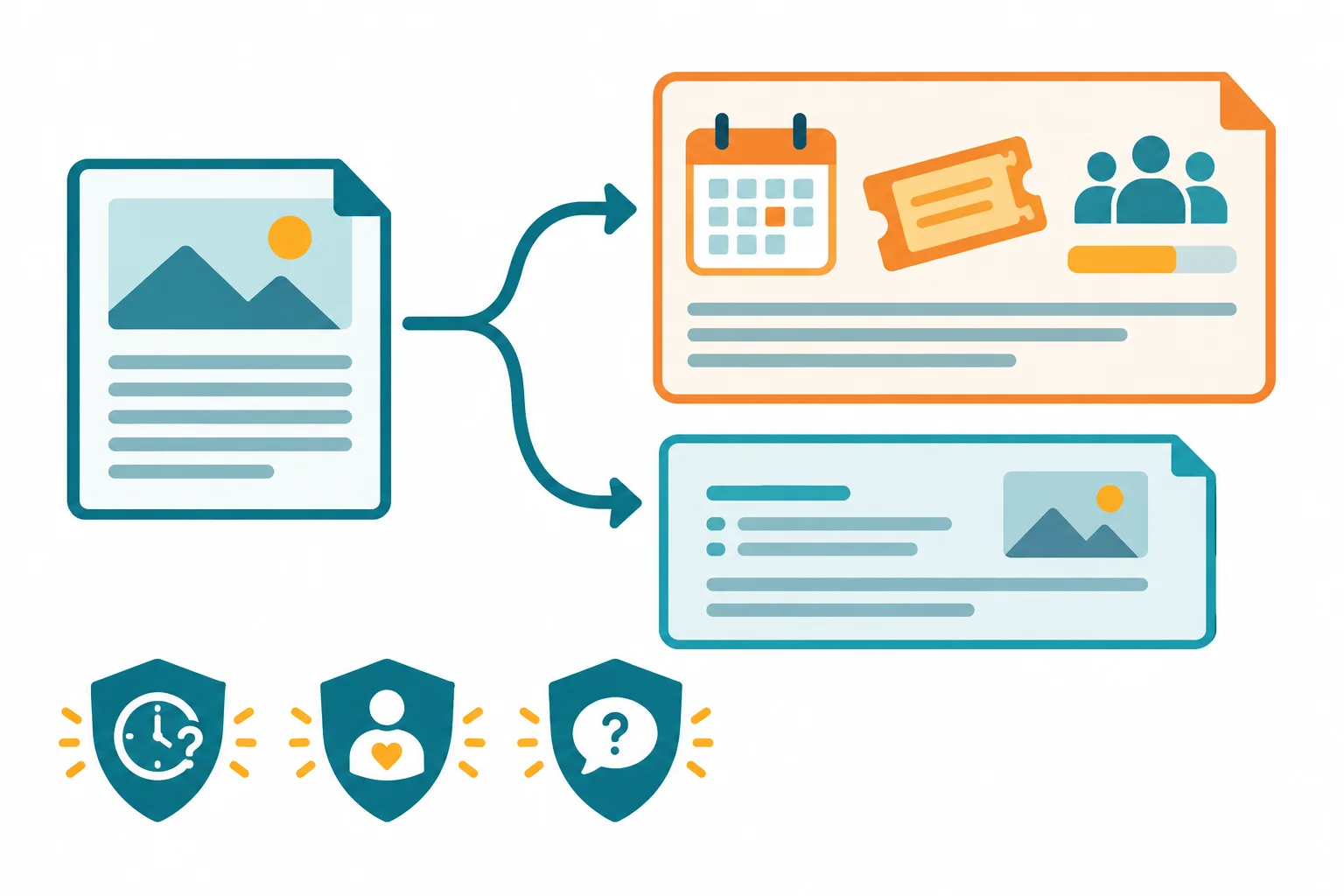
Adapt the form for the audience and purpose; preserve the meaning anchors that make a decision accurate.
Source: Cedar Community Center is planning a free clothing-repair workshop for adults in September 2026, subject to volunteer availability. It will have up to 12 places, and booking will be required. The start time has not been confirmed. Coordinator Aisha Patel says participants may learn basic clothing repairs.
Treat every detail above as supplied information. Do not assume a venue, a start time, a guaranteed benefit, or any other detail that is Not stated.
For the Draft, adult residents need practical planning information: who it is for, when it is planned, cost, booking, capacity, and the condition affecting the plan.
For the Summary, retain the decision-relevant essentials in fewer words. If you retain the possible learning benefit, keep both its uncertainty and Aisha Patel’s attribution.
Final acceptance requires both audience usefulness and fidelity to the Source.
Example
Illustrative AI output
“Cedar Community Center will hold a free clothing-repair workshop for adults at 10:00 in September 2026. Book one of 12 places to learn basic repairs from our volunteers.”
This sounds helpful, but fluent wording is not enough. Compare it directly with the Source before accepting it.
Using the Cedar Source and the Illustrative AI output from the previous screens, submit one labelled response.
Draft: Write a 50–70-word notice for adult residents deciding whether to plan attendance.
Summary: Write a 30–40-word summary for the same audience.
Meaning check: Identify 1 meaningful mismatch in the Illustrative AI output. Label it unsupported addition, essential omission, or meaning shift, and state why it conflicts with the Source.
Revision request: Write a targeted request that corrects that mismatch while protecting the relevant meaning anchors.
Reflection: Name 1 change you deliberately avoided because it would have changed the Source’s meaning.
Write at least 450 characters (0/450).
Summary
Congratulations! You completed: Writing and Summarizing Without Changing Meaning
Thousands of online courses in video, ebooks and audiobooks.
To test your knowledge during online courses
Generated directly from your cell phone's photo gallery and sent to your email

Download our app via QR Code or the links below:.


Carry knowledge in your pocket.
Download the Cursa app.
There are hundreds of free courses available, with a free certificate of completion that is saved in your mobile image gallery.
Download the app to access the Course Completion Certificate for Free.

+ 10 million
students

Free and Valid
Certificate

60 thousand free
exercises

4.8/5 rating in
app stores

Free courses in
video and ebooks