Step 1 of 8
Recognize What the Assistant Actually Accessed
Distinguish generated answers, retrieved source leads, and evidence checked against an opened source page.

Learning path · Level 3 · Tutorial 4
Research a focused question using an assistant and freely accessible sources, opening original pages in your own browser rather than accepting generated citations or search snippets as proof.
 Recognize What the Assistant Actually Accessed
Distinguish generated answers, retrieved source leads, and evidence checked against an opened source page. 2 min
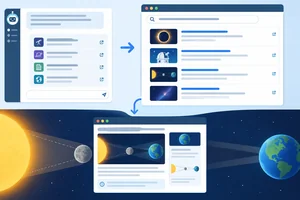 Find Sources Through Either Research Route
Use either assistant search or browser search to find and open an accessible original page relevant to the eclipse question, while keeping search results separate from verified evidence. 3 min
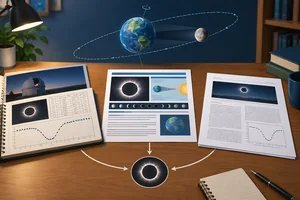 Choose Sources That Fit the Claim
Identify whether a source acts as primary or secondary evidence, and choose it for a claim based on its fit rather than its institutional branding. 2 min
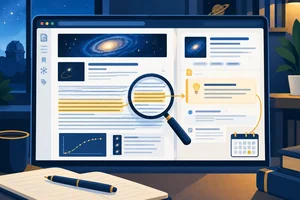 Check the Citation Against the Page
Verify an opened original page by checking its identity, relevant passage, scope, and date information before treating a citation as support. 3 min
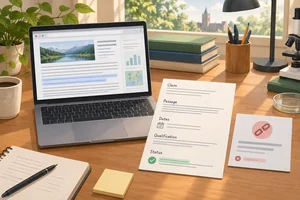 Record Evidence and Preserve Gaps
Create traceable claim-to-source notes, distinguish quotes from paraphrases, and preserve inaccessible citations as visible evidence gaps rather than inventing support. 3 min
 Look for Independent Corroboration
Check whether a second source provides an independent evidence or reasoning path rather than simply repeating the first source. 3 min
 Write an Answer Readers Can Verify
Turn checked notes into a concise answer with claim-level citations and honest evidence limits. 2 min
 Complete a Verifiable Research Answer
Create and audit a concise answer to the running research question using checked sources, claim-level citations, and transparent evidence limits. 3 min
Step 1 of 8
Distinguish generated answers, retrieved source leads, and evidence checked against an opened source page.
For this tutorial, keep the research question in view: Why don’t solar eclipses occur at every new moon?
There are three different evidence-access states:
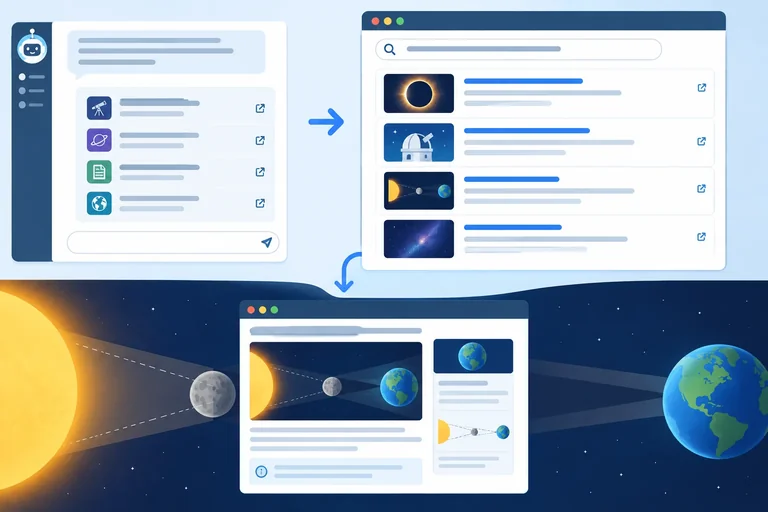
Confident wording, citation brackets, and “I searched” are not proof of retrieval. Opening the page is the transition from a lead to evidence you can inspect.
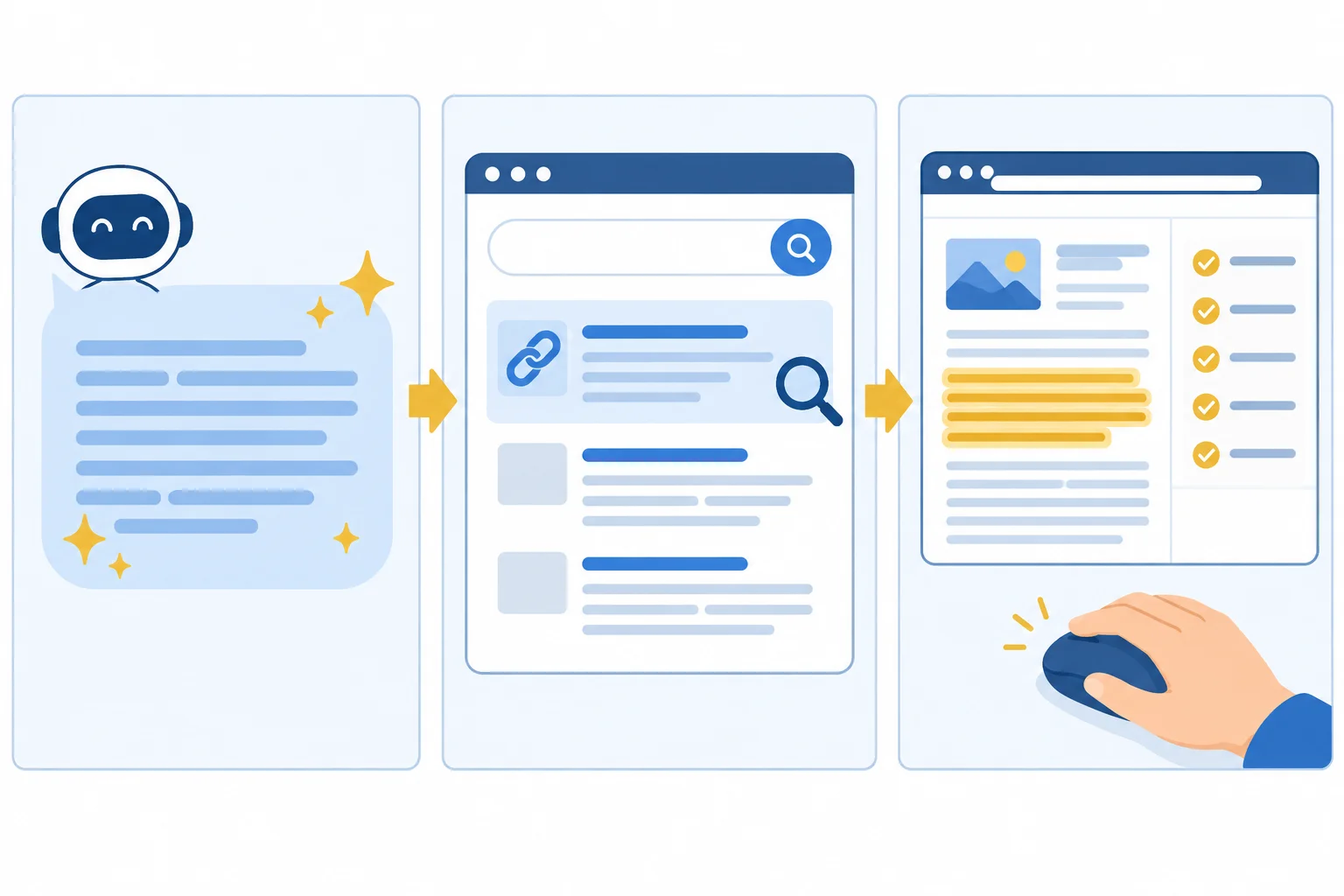
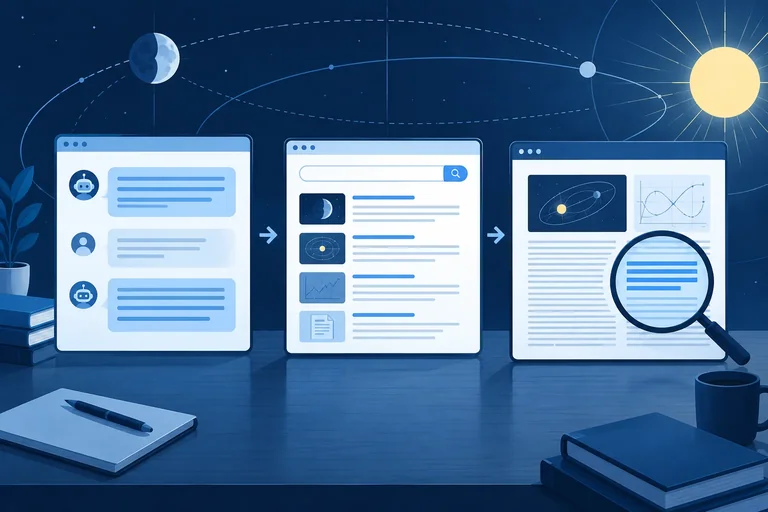
Illustration: retrieval supplies a lead; opening a source page lets you inspect evidence.
Example
Generated answer — no demonstrated retrieval
An assistant writes: “C1: A new moon alone does not guarantee a solar eclipse [S1].” It also gives a polished source entry:
S1 — Practice source (fictional): Lunar Geometry Guide. https://example.invalid/lunar-geometry
If the assistant has no demonstrated live access, neither the bracket nor the URL proves that it consulted—or even verified—the page. The statement may still be a useful lead, but it is generated text.
Retrieved source lead — not yet checked
An assistant displays a result title, link, and short excerpt that appears relevant to C2: The Moon’s orbital tilt helps explain why most new moons produce no eclipse. Retrieval makes this a candidate source. A short excerpt may omit context, scope, or exceptions.
Checked source-page evidence
You open the original page yourself, locate a relevant passage, and read its surrounding context against C1 or C2. You now have evidence you can inspect. Later steps will determine exactly how well it supports the claim.
Tip
Use this quick rule: treat an assistant’s text and any search snippet as leads until you open the source page. Retrieval is helpful, but it does not guarantee a correct interpretation or a correct answer.
Match each situation to its best evidence-access state.
Tap an item and then its matching pair.
Step 2 of 8
Use either assistant search or browser search to find and open an accessible original page relevant to the eclipse question, while keeping search results separate from verified evidence.
Use the focused question as your boundary: Why don’t solar eclipses occur at every new moon?
A useful page should address at least one running claim:
At this stage, your task is only to locate an accessible original page that appears relevant. Opening a page shows that you have found the publication; it does not yet show that the page fully supports a claim.
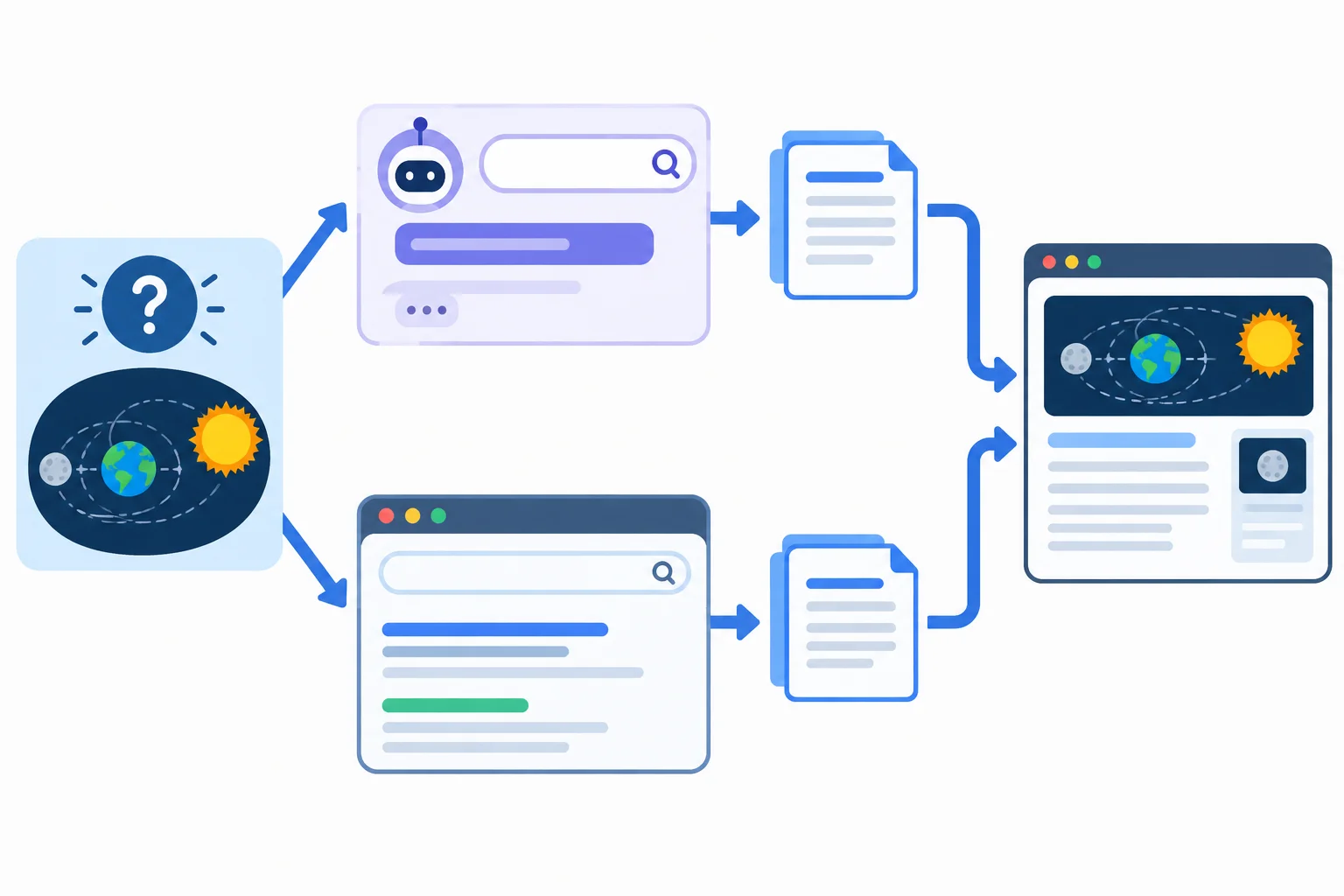
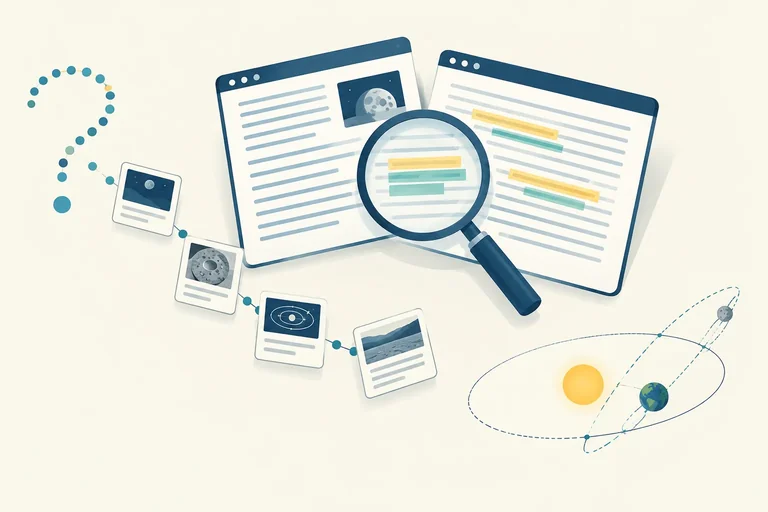
Illustration: both research routes lead to an original page you open yourself.
Choose the route that is available to you. Neither route requires a paid tool, an upload, or a shared research workspace. In both cases, a result is a lead until you open the source page in your own browser.
Use the first route when your assistant actually offers search. Use the second whenever it does not—or when you want to search independently.
| Route | What to do | What counts as the result |
|---|---|---|
| Assistant search | Ask for candidate pages relevant to C1 or C2, then open a provided link. | An original page opened in your browser |
| Browser search | Enter focused keywords in an ordinary browser search and open a result. | An original page opened in your browser |
Example
Assistant request example:
“Find freely accessible original pages relevant to the question ‘Why don’t solar eclipses occur at every new moon?’ List each page title, organization, and direct URL. Treat the results as candidate leads, not proof.”
A search snippet or an AI-generated search summary can help you decide what to open. It may be shortened, outdated, or attached to the wrong interpretation. Do not use it as a substitute for the source page.
If a suggested link is missing, blocked, or incorrect, search instead for the exact publication title, the named author, or the institution. Then open the page you find. If you cannot open it, keep it as an unverified lead rather than treating it as support.
Example
Practice source (fictional): An assistant suggests a page titled “Why Eclipse Seasons Matter” from the “Astronomy Learning Center,” but its link fails.
In browser search, try the quoted title together with the organization name. If you locate and open the publication, record the URL of that opened page—not the failed suggested link or a search-result snippet.
Tip
A page can be relevant even if it covers only C1 or only C2. Do not broaden your question just because a search result looks impressive.
In your own browser, locate and open one accessible original page relevant to the running question. Report its page title, its full URL, and how you discovered it: assistant search or browser search.
Add one short sentence stating that this is a located lead, not yet verified support for C1 or C2.
Write at least 80 characters (0/80).
Step 3 of 8
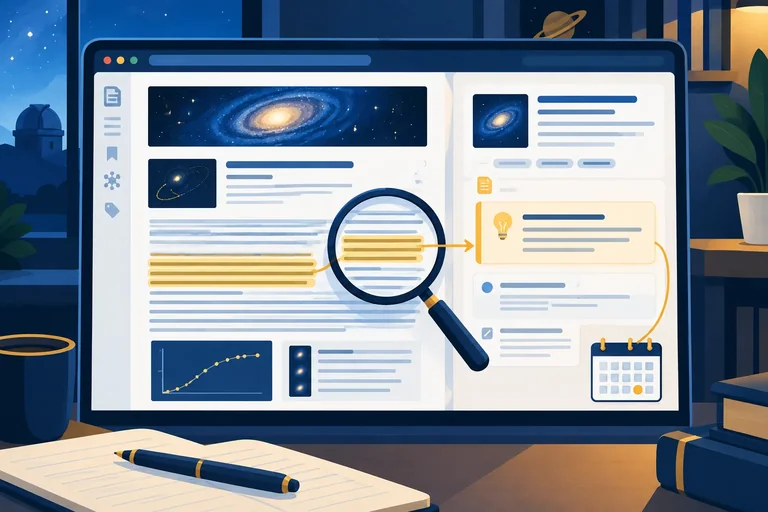
Identify whether a source acts as primary or secondary evidence, and choose it for a claim based on its fit rather than its institutional branding.
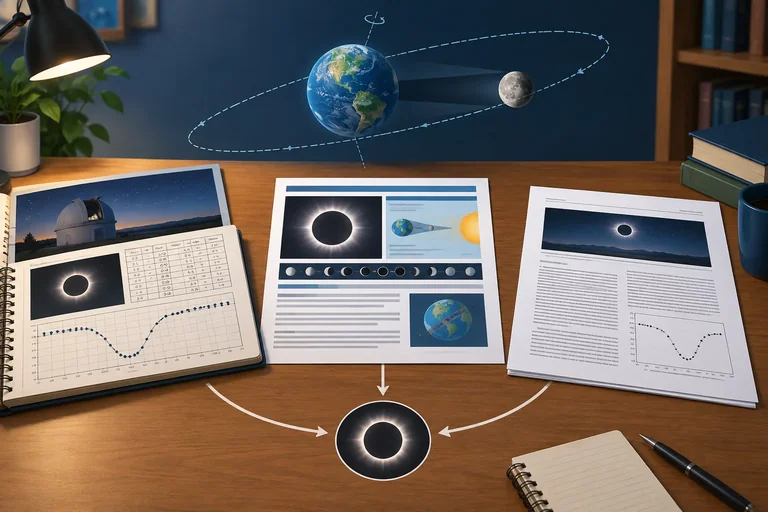
For the running question, separate a source’s evidence role from how impressive its website looks.
C1: A new moon alone does not guarantee a solar eclipse.
C2: The Moon’s orbital tilt helps explain why most new moons produce no eclipse.
A primary source provides an original record, observation, dataset, or decision. For example, an observatory’s measurement log is primary evidence about its own observations.
A secondary source interprets, explains, or synthesizes material. An astronomy explainer can be a strong secondary source for C1 or C2. Its role is explanation, not original observation.
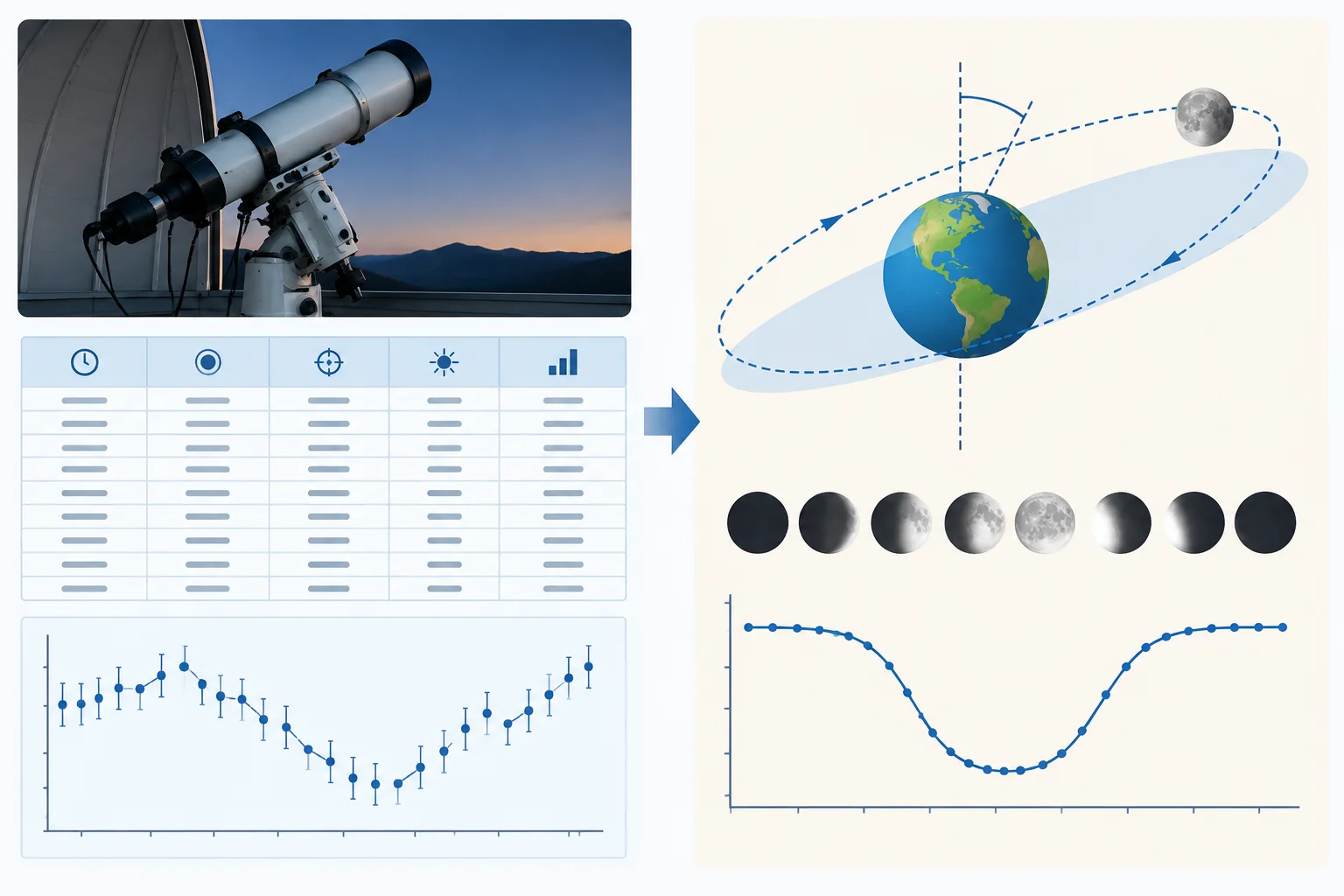
Primary sources provide original records or observations; secondary sources explain or interpret evidence.
An original page is the actual publication you open in your browser. It is not automatically a primary source. A space agency’s own explainer page is an original page of that agency’s publication, while still being a secondary explanation.
Choose a source by asking: What exact claim am I supporting? Does this source have relevant expertise, clear provenance, and a purpose that fits that claim? A primary source is not automatically better for every question. For C2, a careful scientific explanation can be more useful than an unexplained raw data file.
These are Practice source (fictional) examples. “Original page?” means the publication itself, not a copy or search snippet.
| Page description | Original page? | Evidence role | Best fit |
|---|---|---|---|
| Observatory’s published lunar-position observation log | Yes | Primary | A claim about its recorded observations |
| Space agency page explaining why eclipses are not monthly | Yes | Secondary | C1 or C2 explanatory claim |
| University astronomy article explaining orbital geometry | Yes | Secondary | C2 explanatory claim |
Match each Practice source (fictional) description to the best combined evidence-role and claim-fit statement.
Match each source description to its evidence role and the claim it is best suited to support.
Tap an item and then its matching pair.
Step 4 of 8
Verify an opened original page by checking its identity, relevant passage, scope, and date information before treating a citation as support.
Opening and checking the original page gives you inspectable source evidence. The citation is the pointer that links a claim to that evidence; it is not evidence by itself.
For a cited page, check:
An existing page establishes that the publication exists. It does not, by itself, show that the page supports the claim. A polished citation, search snippet, or statement that an assistant searched does not complete these checks.
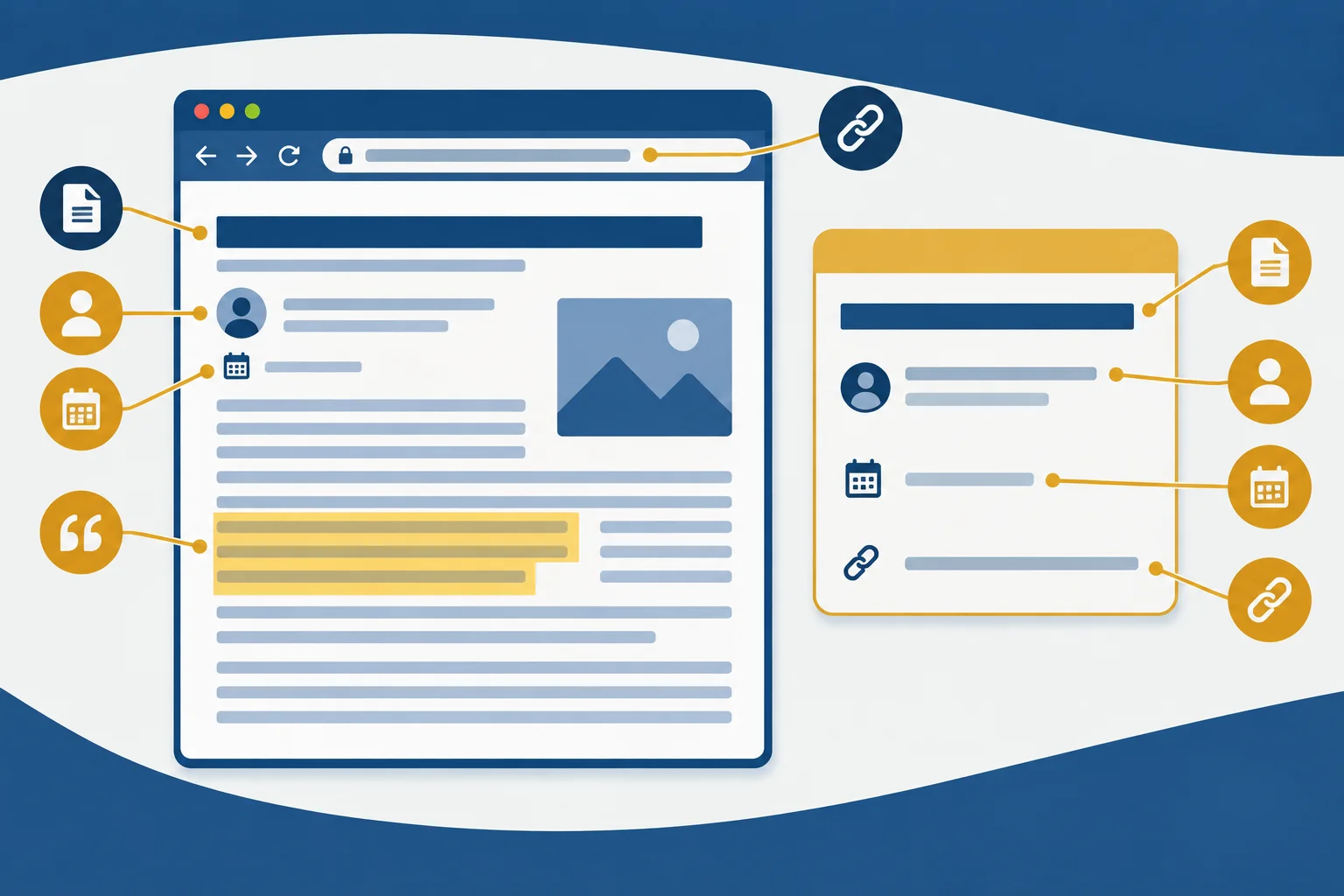
Check both the page’s identity and the passage that is supposed to support the claim.
Matching words are not enough. Find the passage that appears relevant, then read the sentence around it and the nearby context. Compare what the page actually says with the strength of the claim.
For the running question, check these claims separately:
A passage may support C1 but be too narrow for a claim about every eclipse, every location, or a precise schedule. Keep conditions and limits such as “most,” “possible,” “only when,” and “near.” These words can determine whether a citation fits the claim.
Example
Practice source (fictional)
Draft claim: C1: A new moon alone does not guarantee a solar eclipse. [S1]
S1 — Practice source (fictional): Why Eclipses Are Not Monthly. Practice Astronomy Institute. https://example.invalid/why-eclipses-are-not-monthly
Quote: “At most new moons, the Moon passes above or below the line between Earth and the Sun. A solar eclipse is possible when a new moon occurs near an orbital node.”
This passage supports C1 because it explains that most new moons do not create the required alignment. Its scope is a general geometric explanation. It does not provide a schedule for the next eclipse or establish visibility from a particular location.
Practice source (fictional): “A solar eclipse is possible only when a new moon occurs close to an orbital node.”
A draft states: “Every new moon creates a solar eclipse [S3].” What is the most accurate result of checking this citation?
Dates answer different questions. Keep them separate:
Do not treat an update date as the date of the underlying evidence. A page updated on 2025-03-08 may describe observations made years earlier.
Judge currency against the question. An older, careful explanation of eclipse geometry may still suit C1 or C2 because the geometry is stable. A page giving viewing times or an upcoming-event schedule needs more current checking. If Published or Updated is absent, record not stated; missing date information does not automatically make a source false.
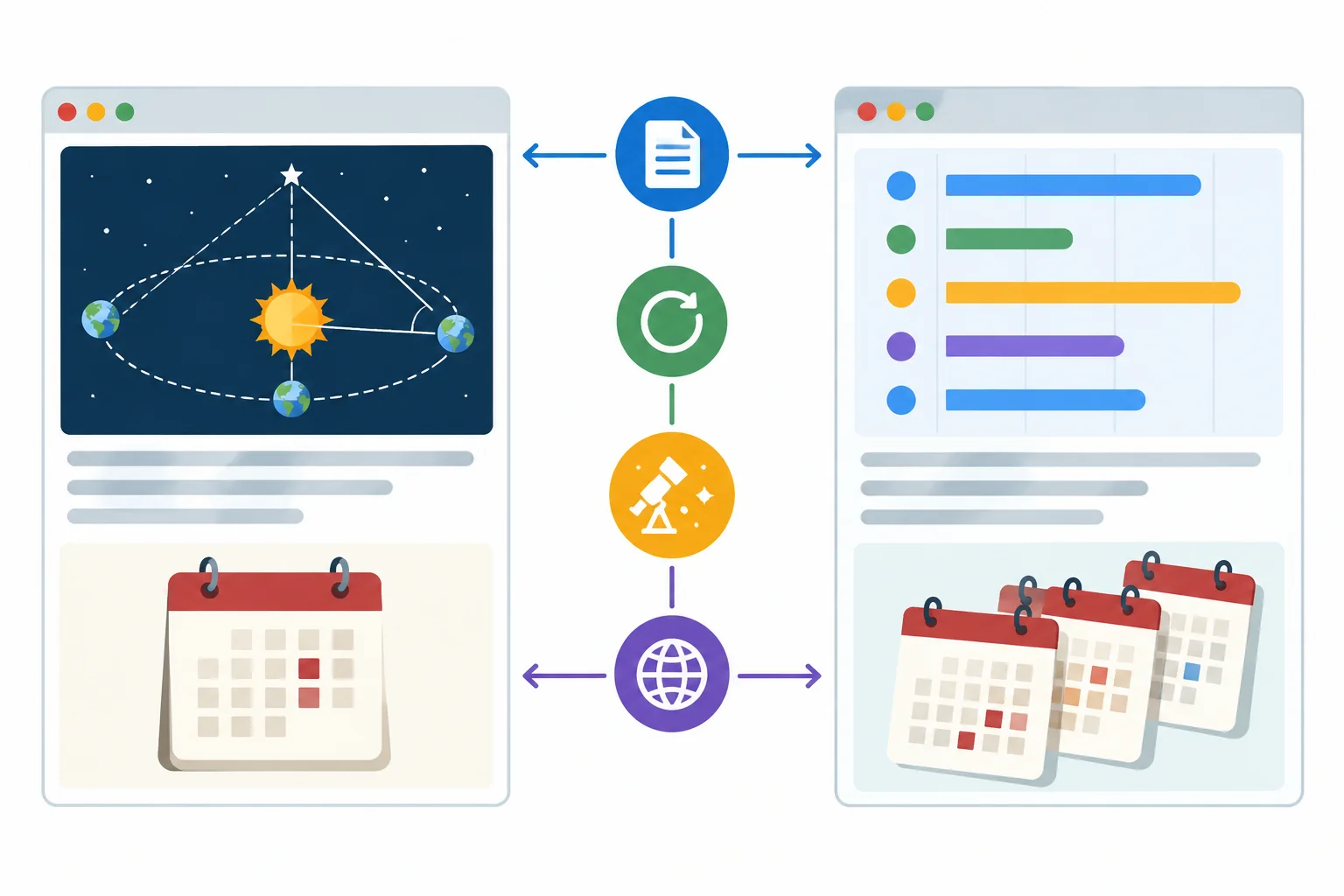
A page’s usefulness depends on the claim: stable explanations and changing schedules have different currency needs.
Use the original page you located and opened in Step 2. Choose either C1 or C2 and write a short verification report based only on that opened page.
Include:
not stated when the page does not provide either date.If the page does not address your chosen claim, report the closest on-topic passage and explain the mismatch. Do not use a search snippet or an assistant-generated summary as the passage.
Write at least 450 characters (0/450).
Step 5 of 8
Create traceable claim-to-source notes, distinguish quotes from paraphrases, and preserve inaccessible citations as visible evidence gaps rather than inventing support.
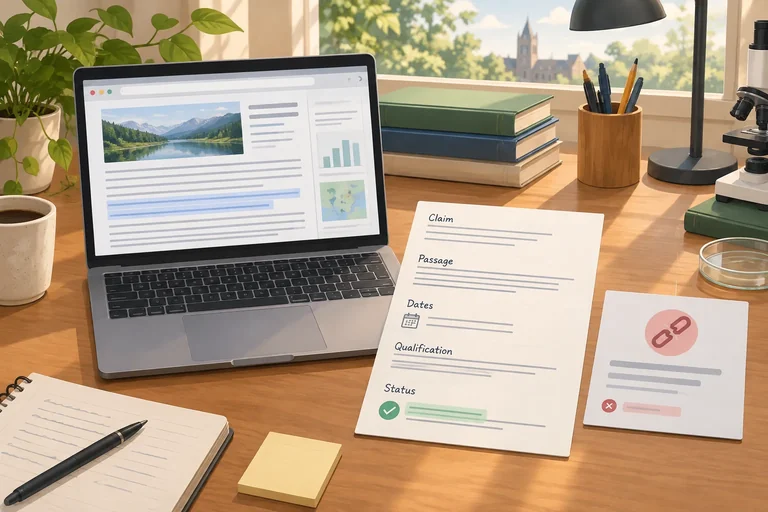
A claim-to-source note is a compact evidence trail. It lets a reader trace one exact claim back to an original page you opened and see what you actually checked.
For the running question, preserve the wording of the claim:
C1: A new moon alone does not guarantee a solar eclipse.
For each checked page, record these fields:
Use the full URL of the original page. Keep Published and Updated separate. If either is absent, write not stated. Your Accessed date is the date you opened the page, recorded separately in YYYY-MM-DD format.
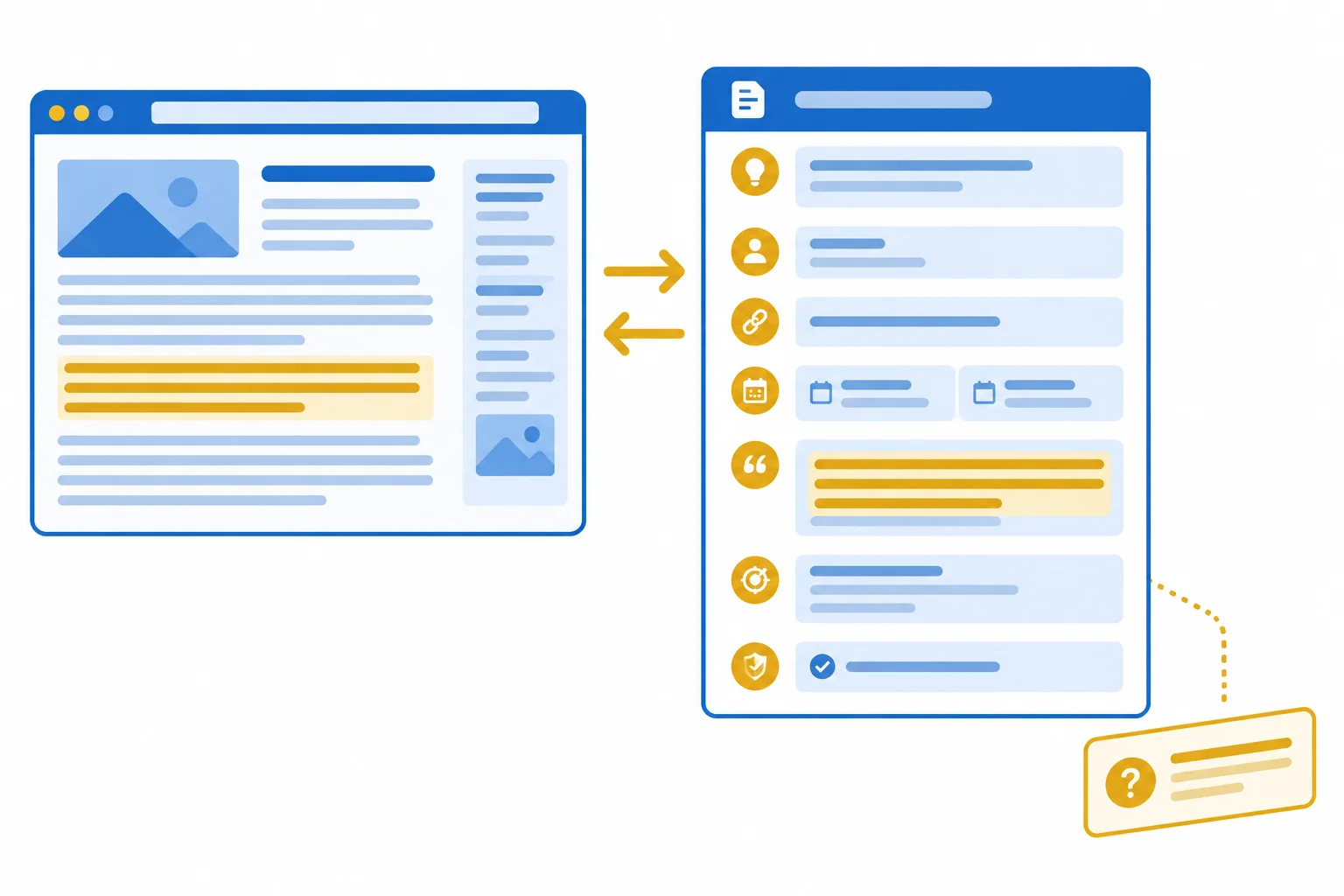
A source note preserves the path from a specific claim to checked material on an original page.
Tip
Keep notes in any plain-text file on your own computer. A note is useful only when its details come from the source page you opened—not from a search snippet, an assistant’s wording, or a citation you have not checked.
The Relevant passage field makes the connection between a page and a claim inspectable.
Use Quote for exact wording from the source. Copy it carefully and retain quotation marks.
Use Paraphrase when you restate the passage in your own words. Preserve the source’s meaning and important limits; do not use a paraphrase to make the claim stronger.
The Scope or qualification field records a boundary that matters, such as a condition, exception, audience, time period, or level of certainty.
Statuses describe the relationship between one checked source and one particular claim. They do not declare whether a claim is universally true or false.
| Status | Use when |
|---|---|
| Supported | The passage supports the full claim within its recorded qualification. |
| Partly supported | The passage supports only part of the claim or needs narrower wording. |
| Not supported | The checked page does not justify this claim. |
| Unverified | You could not open or locate material needed to check the claim. |
Example
Practice source (fictional)
Claim: C1: A new moon alone does not guarantee a solar eclipse [S5]
Source title: Eclipse Geometry Overview
Author or organization: Example Astronomy Center
URL: https://research-practice.example/eclipse-geometry
Published: 2024-06-01
Updated: not stated
Accessed: 2025-03-08
Relevant passage: Quote — “At most new moons, the Moon passes above or below the line between Earth and the Sun.”
Scope or qualification: General geometric explanation; it does not predict dates of individual eclipses.
Status: Supported
The claim has an immediate citation, the exact wording is labeled Quote, and the qualification prevents the record from claiming more than the passage establishes. This is an invented practice record, not live verification.
A citation can be unusable even when it looks polished. If a page is broken, blocked, missing, or cannot be found, you have no checked passage from that source.
That is an evidence gap. Do not fill it with guessed author names, dates, page titles, or a passage copied from an assistant response. A search snippet is not a replacement for the original page.
Record what you know, including the URL and the date you tried to access it. An unverified record means the source-to-claim relationship was not checked; it does not prove that the claim is false or that the source never existed.
Warning
After an inaccessible citation, choose a transparent next step:
Do not silently treat an unverified citation as Supported because its claim sounds plausible.
Example
Practice source (fictional)
A prior assistant supplied S6 with only this URL:
https://research-practice.example/missing-eclipse-note
The page did not open when checked. No title, author or organization, dates, or relevant passage were available from an original page.
This record remains separate from checked sources. It cannot establish support for C2: The Moon’s orbital tilt helps explain why most new moons produce no eclipse [S6]. Preserve the known URL and the attempted access date, but do not manufacture the missing source trail. S6 is a practice-only inaccessible record, not a source for later corroboration.
Create two separate plain-text source notes.
Record A — your checked page
Use an original page you opened in your browser for the running question. Choose C1 or C2 according to what that page actually addresses. Include every note field, the full URL, an Accessed date in YYYY-MM-DD format, and a Relevant passage labeled Quote or Paraphrase. Assign the status justified by the checked passage. If this page supports C2, identify it as S1 for the next step. If it addresses only C1, label it C1-only checked record rather than assigning it S1.
Record B — inaccessible practice citation
Create a separate note for Practice source (fictional) S6. Claim: C2: The Moon’s orbital tilt helps explain why most new moons produce no eclipse [S6]. URL: https://research-practice.example/missing-eclipse-note. Assume this page did not open and no other page metadata or relevant passage was available.
Include every note field in both records. Keep Record A and Record B distinct; do not invent unavailable metadata or support.
Write at least 500 characters (0/500).
Step 6 of 8
Check whether a second source provides an independent evidence or reasoning path rather than simply repeating the first source.
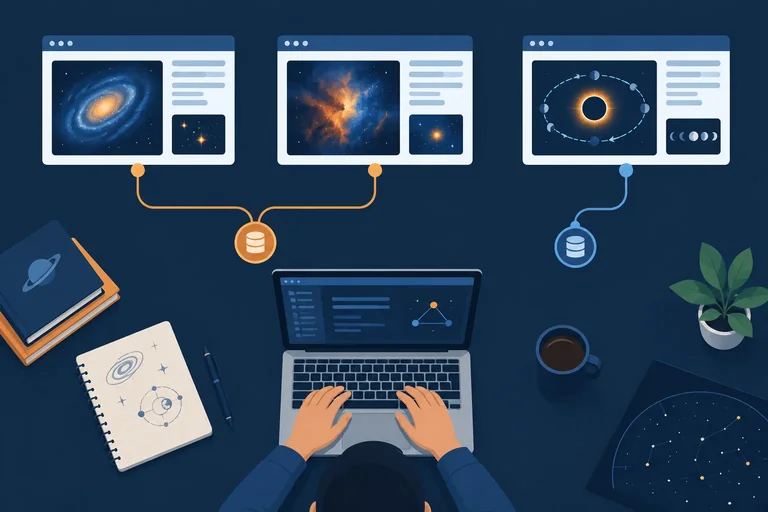
A second source page is not automatically independent corroboration. What matters is provenance: where its evidence or reasoning came from. Two different websites can repeat one observatory release, one press release, or one earlier article.
For C2: The Moon’s orbital tilt helps explain why most new moons produce no eclipse, a separately written scientific explanation can corroborate the reasoning. It does not need to be an independent observation to be useful. Agreement strengthens support only when the second page is relevant and has a genuinely separate evidence or reasoning path.
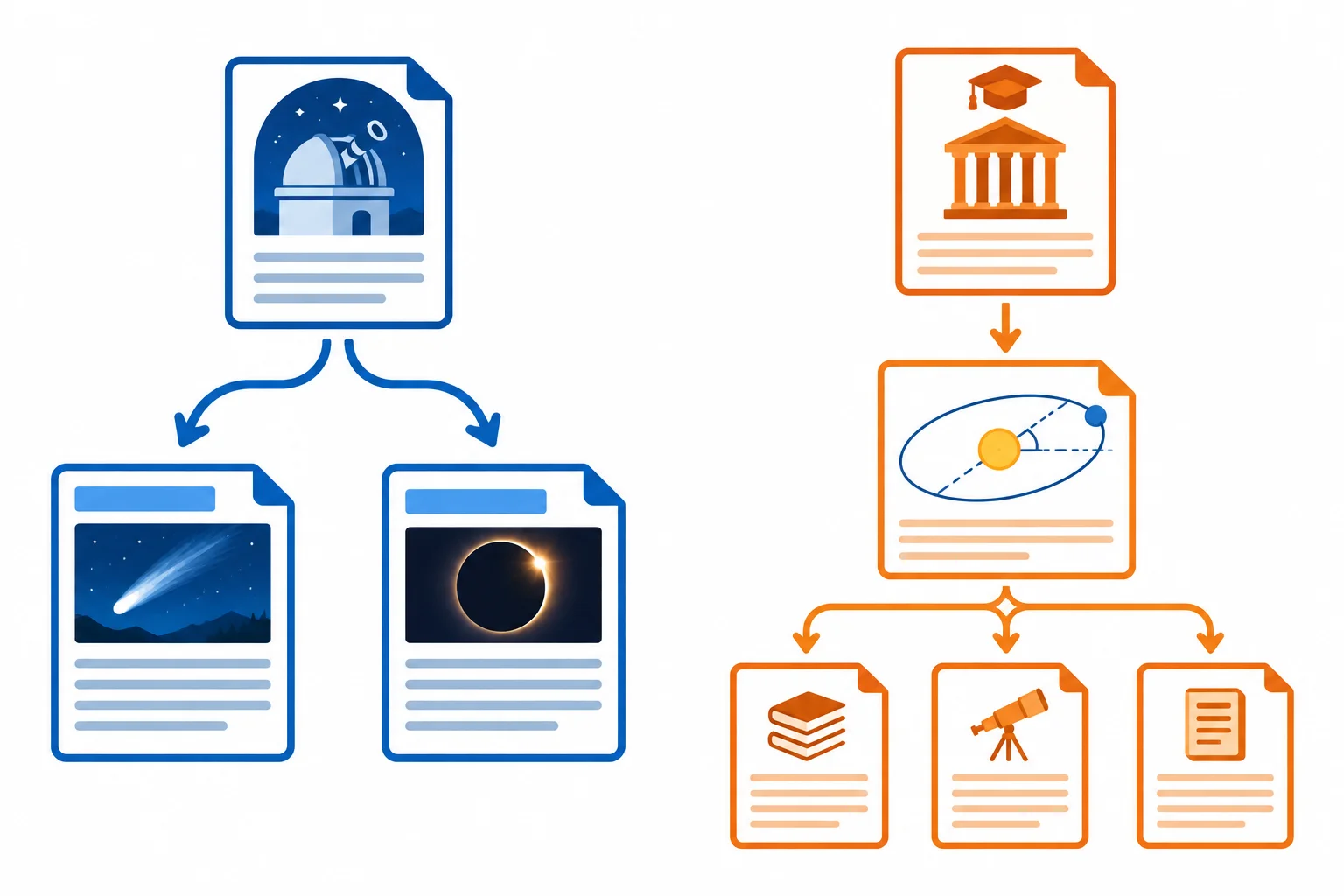
Illustration — Different page names do not create independent evidence paths. A separate trail may corroborate an explanation after its provenance is checked.
Open the source page and look beyond its domain name. Follow visible attribution, links, references, and phrases such as “according to,” “based on,” or “from a release.” If the trail remains unclear, record independence as uncertain rather than assuming it.
When pages appear to disagree, compare their wording, scope, dates, definitions, and underlying evidence. A qualification can explain an apparent conflict. For example, one page may describe what happens at most new moons, while another describes the conditions required for an eclipse. Counting which side has more pages cannot resolve that difference.
Use these clues to make a cautious provenance judgment.
| What you find | What it suggests |
|---|---|
| Nearly identical wording or one credited release | Likely a shared origin |
| S2 directly cites or reproduces S1 | Not independent of S1 |
| Different explanation; no references visible | Possible independence, but uncertain |
| Different reasoning and distinct cited material | Stronger case for independence |
| Different wording about eclipse conditions | Compare scope and qualifications first |
Example
Practice source (fictional)
An observatory page, Why Most New Moons Miss the Sun, explains eclipse geometry. A news page with the same title credits an observatory release and repeats the central paragraphs. The news page is an original page of that publication, but it is not independent corroboration of the observatory page.
A university page, Orbital Inclination and Eclipse Seasons, explains the geometry in its own structure and links to a textbook chapter rather than to the observatory release. It may provide independent reasoning for C2. Still, if you cannot trace far enough to rule out a shared origin, record that uncertainty rather than claiming independence.
Using the provenance idea shown earlier, match each situation to the most careful assessment.
Tap an item and then its matching pair.
Build a two-source comparison for the same claim: C2: The Moon’s orbital tilt helps explain why most new moons produce no eclipse.
Use S1 only for the permanent checked C2 record established from Step 5: it must be Supported or Partly supported for C2. If your earlier checked page addressed only C1, keep it as a C1-only checked record; do not rename it S1. First locate and check an accessible original page for C2, create its note, and assign that checked C2 page as S1.
Then use browser search or assistant search, if available, to locate and open S2, a second accessible original page that also addresses C2. Check S2 against the page itself. Do not use a search snippet or an assistant-generated summary as evidence.
Report:
If you cannot locate or check S2, state that clearly. Do not relabel S1, and do not claim corroboration from pages that address different claims.
Write at least 450 characters (0/450).
Step 7 of 8
Turn checked notes into a concise answer with claim-level citations and honest evidence limits.
A bibliography tells readers what you consulted. Claim-level citations tell them which source supports each statement.
Write the claim first, then place its citation immediately after it: C1: A new moon alone does not guarantee a solar eclipse [S1]. Do not place one citation at the end of a long paragraph and make readers guess what it covers.
A source can support one part of a sentence but not an added detail. Keep each cited claim no broader or more precise than the checked note allows.
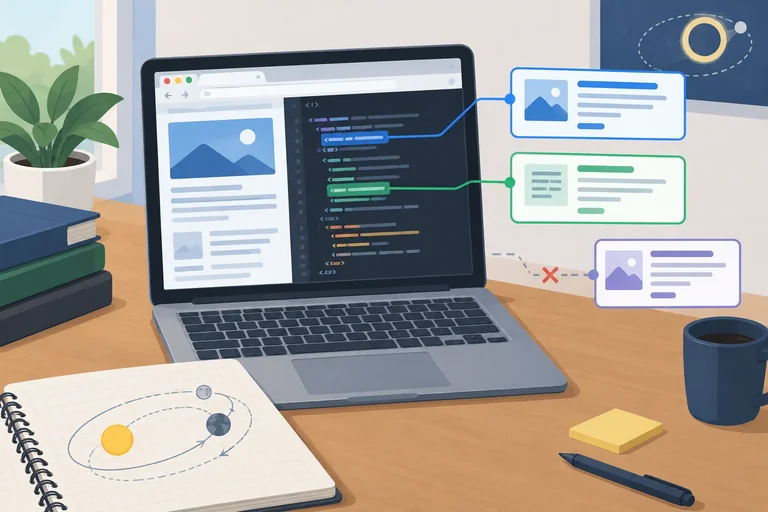
Use the connection between a claim and its checked source as the unit of writing.
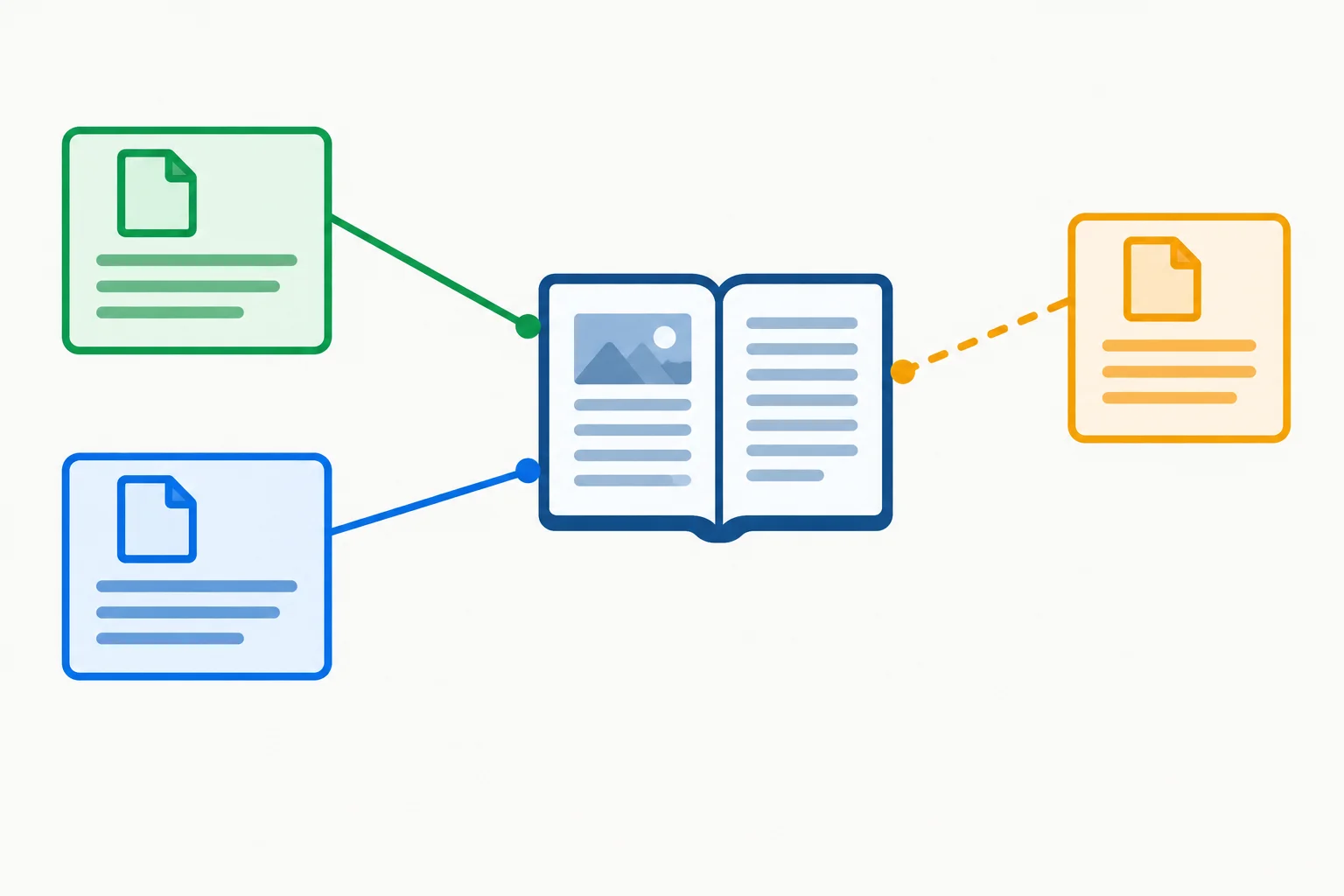
A citation should connect to the specific claim the checked source supports; a source list alone cannot show this relationship.
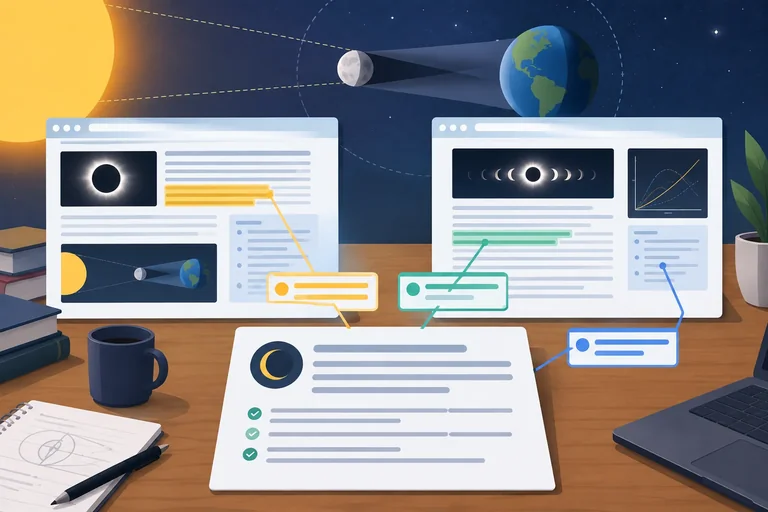
Write from the checked note, not from an earlier assistant response, a search snippet, or a remembered source. The note sets both the supported conclusion and its boundary.
Below is a record for practice only. It is not live verification.
Example
Practice source (fictional)
Claim: C1: A new moon alone does not guarantee a solar eclipse; C2: The Moon’s orbital tilt helps explain why most new moons produce no eclipse.
Source title: Observatory Explainer: Solar Eclipse Geometry
Author or organization: Meridian Observatory
URL: https://research-practice.example/meridian/solar-eclipse-geometry
Published: not stated
Updated: not stated
Accessed: 2025-03-08
Relevant passage: Paraphrase — A solar eclipse requires a new moon near a crossing of the Moon’s tilted orbital path; at most new moons, the Moon appears above or below the Sun.
Scope or qualification: General geometry explanation; it does not establish a precise tilt value or an exact annual eclipse count.
Status: Supported for C1 and for C2 in their stated general forms.
A short answer can report three different evidence situations:
If an assistant drafts from your notes, supply the notes and ask it to use only them. Then audit every substantive claim: Is it in a checked note? Is its citation next to it? Has the draft added precision, certainty, or a conclusion the note does not support?
Example
A useful drafting instruction:
“Using only the checked note for S1, write a concise answer to the research question. Keep C1 and C2 at the stated scope, place [S1] immediately after each supported claim, and state any unverified detail as an evidence gap. Include an S1 source entry with its title and full URL.”
Treat the resulting draft as a proposal. Recheck its claim-to-citation links against the note before sharing it.
Tip
Confident wording and a correctly formatted [S1] are not evidence. The opened source page and your checked note remain the basis for the answer.
Using the checked Practice source (fictional) note for S1 from the previous screen, repair this draft into a 3–4 sentence research answer.
Draft:
“C1: A new moon alone does not guarantee a solar eclipse. C2: The Moon’s orbital tilt helps explain why most new moons produce no eclipse. Solar eclipses occur exactly twice each year [S1].”
Place [S1] immediately after each claim that S1 supports. Preserve C1 and C2, but make the unsupported exact annual-count statement an explicit evidence gap rather than presenting it as established. End with an S1 source entry containing its title and full URL.
Write at least 280 characters (0/280).
Step 8 of 8
Create and audit a concise answer to the running research question using checked sources, claim-level citations, and transparent evidence limits.
Final audit means tracing every substantive sentence in your answer back to a checked note and then to an opened source page. Confidence, polished prose, and a long reference list do not replace that trail.
For this research question, audit the wording of both running claims:
For each claim, confirm that the cited source page opened, that the relevant passage supports your exact wording, and that any qualification has remained in the answer. Check the source metadata you recorded: publication and update dates are not the same as your access date.
Then ask one final question: does S2 offer genuinely independent reasoning or evidence, or does it appear to repeat S1’s source? If you cannot establish this, say so rather than claiming independent corroboration.
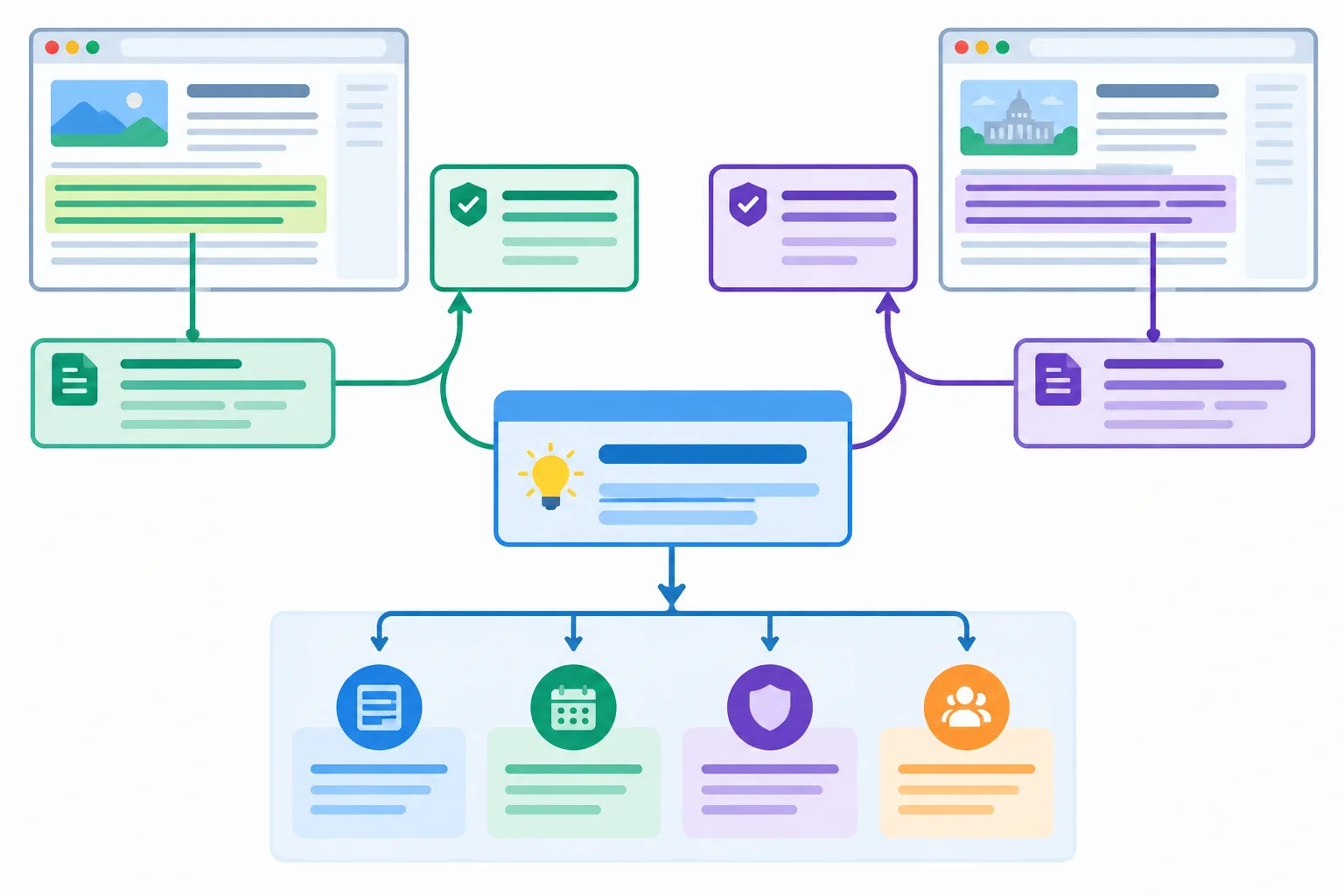
Audit backward: answer wording → checked note → opened source page → relevant passage.
Tip
Use a defensible stopping point. Your answer may be short when the checked evidence is narrow. Do not add an attractive explanation merely because it sounds likely.
Before submitting, make sure:
A verifiable answer is defined by this inspectable evidence trail—not by certainty, citation count, or an assistant’s confidence.
Prepare your final response using the notes you collected earlier. Keep the research answer itself to 80–120 words. After it, add two compact source entries and one independence judgment.
Use this structure:
Answer (80–120 words)
Write a direct answer to the running question. Use C1 and C2 where they fit, and place [S1] or [S1, S2] immediately after the supported claim.
S1
Source title: …
URL: …
Published: … | Updated: … | Accessed: …
Scope or qualification: …
S2
Source title: …
URL: …
Published: … | Updated: … | Accessed: …
Scope or qualification: …
Independence judgment: …
Use not stated for a missing publication or update date. If a page was inaccessible, a passage did not support the wording, or independence was not established, state that clearly. Do not replace your checked records with invented details.
Submit your completed response now. Your answer paragraph must be 80–120 words and address why solar eclipses do not occur at every new moon. Include immediate claim-level citations, two source entries based on pages you opened, and a brief independence judgment. Record dates and qualifications from your notes. Be transparent about any check that you could not complete.
Write at least 500 characters (0/500).
Summary
Congratulations! You completed: Researching with Verifiable Sources
Thousands of online courses in video, ebooks and audiobooks.
To test your knowledge during online courses
Generated directly from your cell phone's photo gallery and sent to your email
Download our app via QR Code or the links below:.


Carry knowledge in your pocket.
Download the Cursa app.
There are hundreds of free courses available, with a free certificate of completion that is saved in your mobile image gallery.
Download the app to access the Course Completion Certificate for Free.

+ 10 million
students

Free and Valid
Certificate

60 thousand free
exercises

4.8/5 rating in
app stores

Free courses in
video and ebooks