Step 1 of 8
Match the Intended Use to the Source License
Compare the planned actions for the Workshop photo with the permissions and conditions established by its supplied source license.

Learning path · Level 8 · Tutorial 3
Assess whether AI-assisted content can be used responsibly by checking license scope, likeness risks, and evidence of origin. Make a reasoned use-or-hold recommendation while recognizing legal uncertainty and the limits of detection tools.
 Match the Intended Use to the Source License
Compare the planned actions for the Workshop photo with the permissions and conditions established by its supplied source license. 3 min
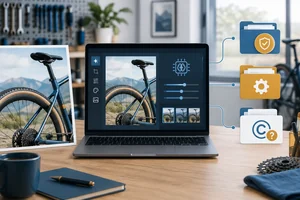 Separate Tool Permission from Copyright
Learn to distinguish a source license, tool terms, and unresolved copyright questions before relying on commercial-use language. 3 min
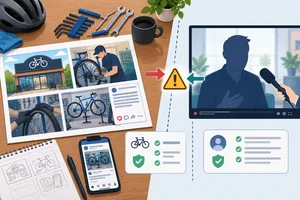 Check Likeness, Voice, and Endorsement
Assess when an interview recording may be repurposed in a way that creates separate likeness, voice, and implied-endorsement risks. 3 min
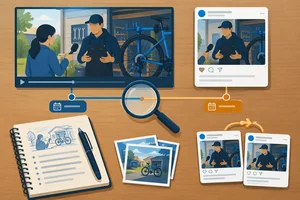 Trace the Source and Its Context
Build a provenance record for the Interview clip by tracing its publication path, checking context, and separating independent corroboration from repeated claims. 3 min
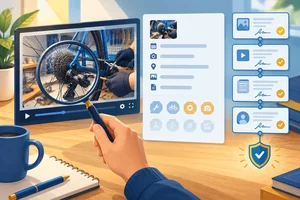 Read Metadata and Content Credentials Carefully
Interpret ordinary metadata and content credentials as bounded provenance evidence, without treating either presence or absence as proof of truth, permission, or fabrication. 3 min
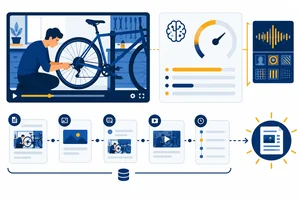 Treat AI Detection as an Uncertain Signal
Interpret AI detector results as uncertain signals, recognize false positives and false negatives, and choose source-based follow-up checks instead of treating a score as proof. 2 min
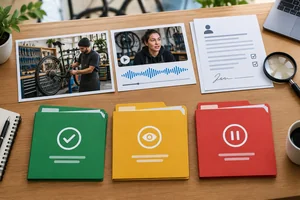 Choose a Defensible Use-or-Hold Recommendation
Choose an evidence-based publication recommendation and recognize when attribution or disclosure cannot cure missing authorization or misleading representation. 3 min
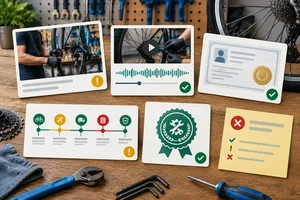 Review the Campaign and Record Your Decision
Integrate rights, representation, provenance, and uncertain technical signals into a documented recommendation for the Harbor Cycles advertisement. 4 min
Step 1 of 8
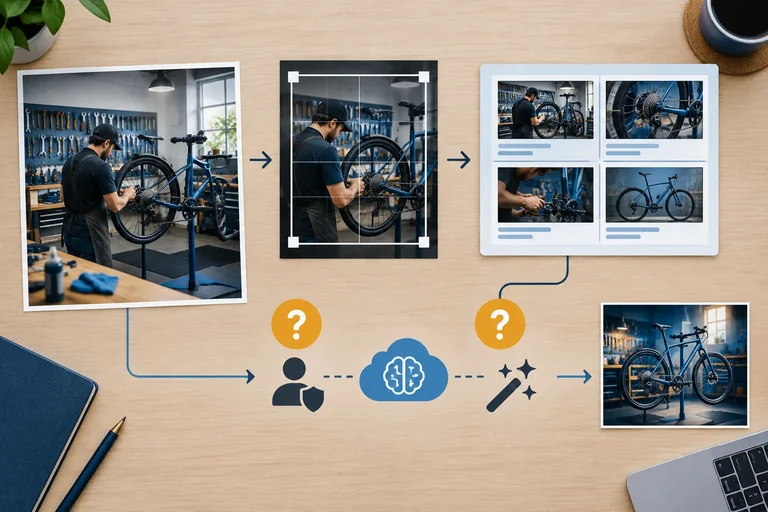
Compare the planned actions for the Workshop photo with the permissions and conditions established by its supplied source license.
Before checking a source license, write the intended use precisely. This prevents a broad phrase such as “use it in an ad” from hiding important actions.
For Harbor Cycles, record:
Possessing or being able to access a file does not establish permission for every later action. Check each action against the source license separately.
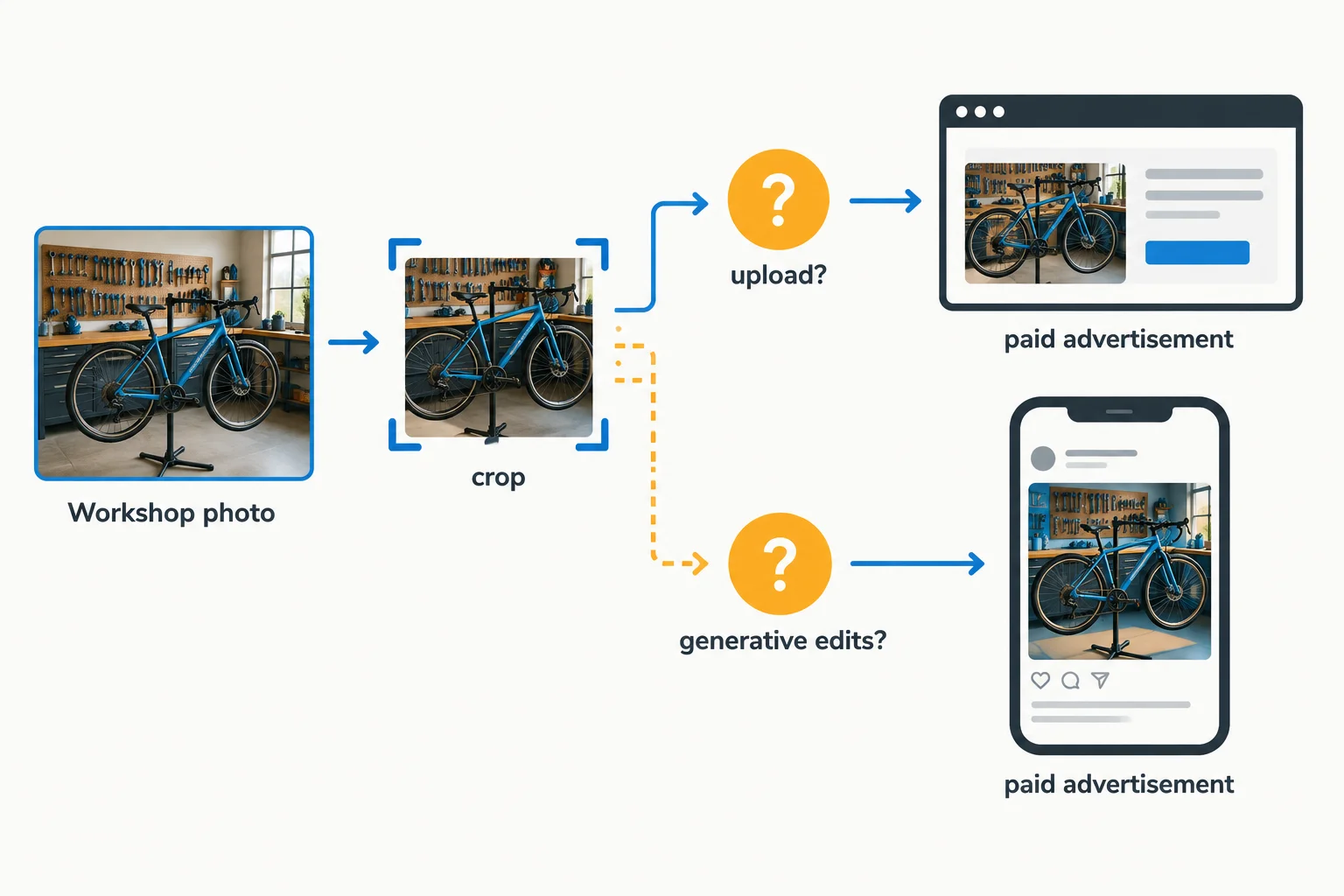
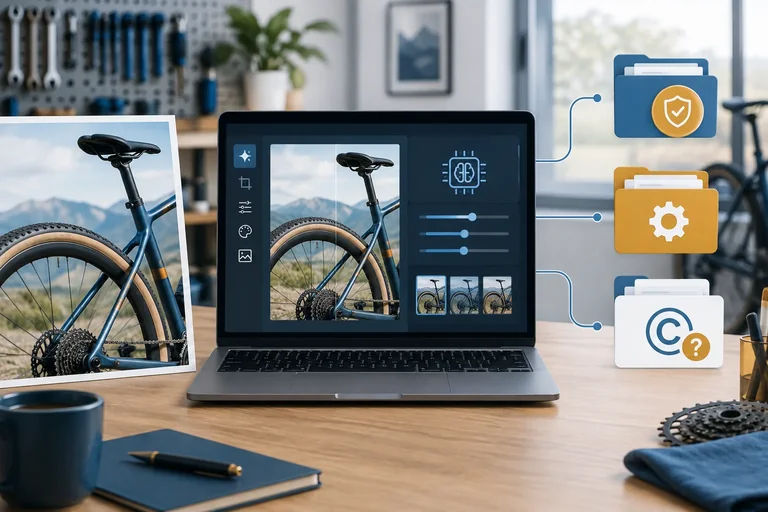
Fictional training example — representation of the proposed source-to-publication path.
The supplied source license for the Workshop photo says: “Use in paid advertisements and cropping permitted. Attribution required.”
This is a Fictional training example. It establishes only what its wording supports. It does not establish permission for uploading to an AI service or for making generative edits. This screen checks the source license only; tool terms are a separate layer examined later.
Use the same finding words for every check: Supported, Not established, or Contradicted. “Not established” means the supplied evidence does not answer the question. It is not automatic permission and not a universal prohibition.
| Check | Evidence and date | Supports | Limit | Next action |
|---|---|---|---|---|
| Crop the Workshop photo | Source license supplied; 2026-04-15 | Supported — cropping | Attribution required | Plan the required attribution |
| Use it in a paid advertisement | Source license supplied; 2026-04-15 | Supported — paid advertisements | Attribution required | Keep attribution with the use |
| Upload it to an AI service | Source license supplied; 2026-04-15 | Not established | No upload permission supplied | Ask for purpose-specific clarification |
| Make generative edits | Source license supplied; 2026-04-15 | Not established | No generative-edit permission supplied | Ask for purpose-specific clarification |
| Redistribute the original file separately | Source license supplied; 2026-04-15 | Not established | No standalone redistribution scope supplied | Do not assume this use is covered |
Example
A careful record does not add terms that are missing.
Incorrect shortcut: “We have the Workshop photo, so we can upload it and generate edits.”
Careful record: “The source license supports cropping and use in paid advertisements, with attribution. It does not establish permission to upload the Workshop photo to an AI service or to make generative edits. Jurisdiction: Not specified.”
Keep the supplied license wording and the review date with the record. If an unresolved permission is needed for the planned use, seek clarification from the rights holder or appropriate current, qualified advice.
Tip
Attribution may be a required condition, but it does not expand the source license. Do not invent an attribution format or placement rule when the supplied evidence gives none; record that detail as another question if it matters to publication.
Match each proposed action to its evidence finding.
Tap an item and then its matching pair.
Step 2 of 8
Learn to distinguish a source license, tool terms, and unresolved copyright questions before relying on commercial-use language.
A permission question has layers. Keep them separate:
A “yes” in one layer is not a “yes” in the others. For Harbor Cycles, the jurisdiction is Not specified, so do not assume a country-specific answer.
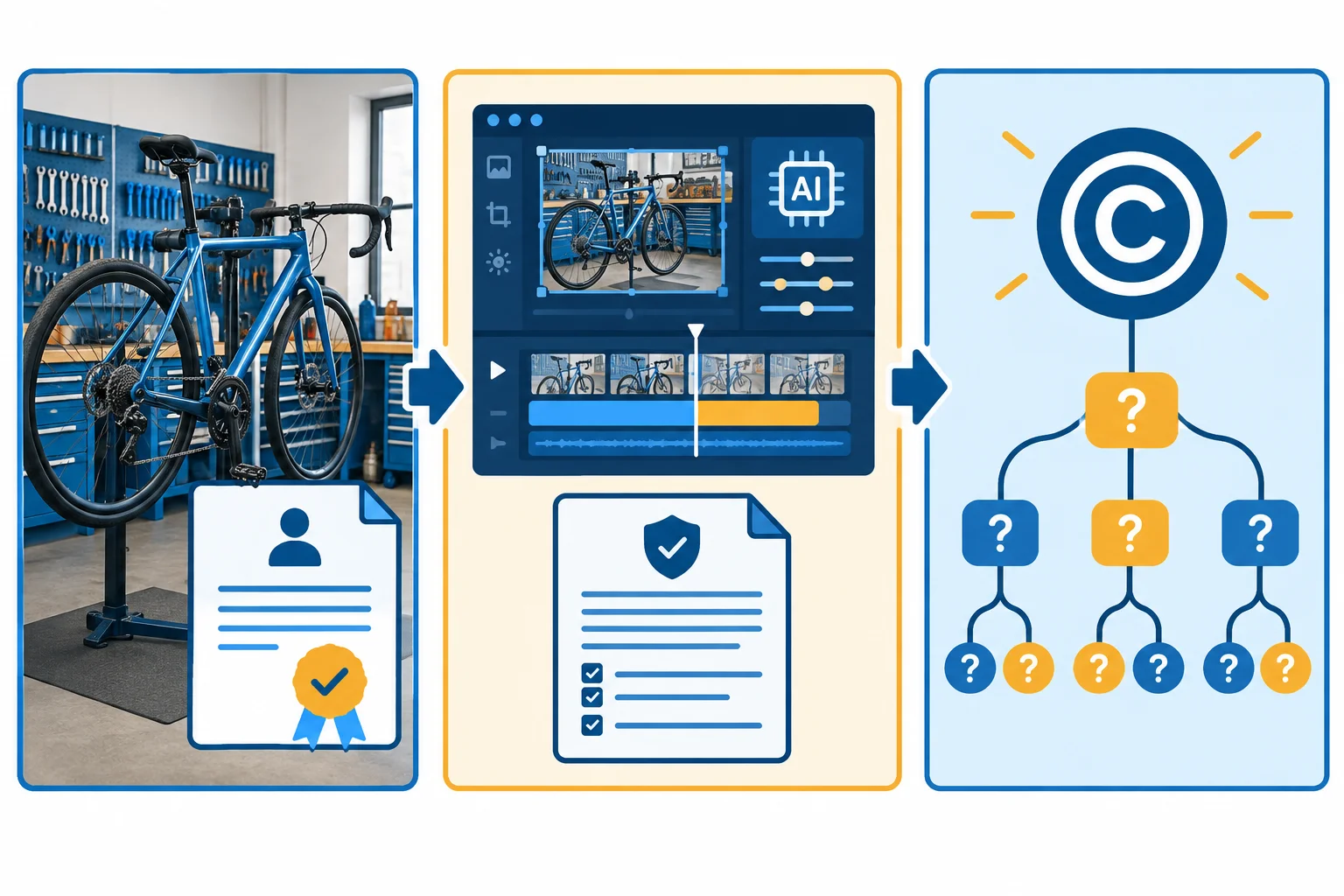
Check the source license, tool terms, and copyright questions independently; they overlap but do not replace one another.
Use each record for its own question.
| Layer | Main question | What it does not settle |
|---|---|---|
| source license | Which source actions and conditions are supported? | What StudioTool permits for outputs or copyright protection |
| tool terms | What does StudioTool permit or require between user and service? | Whether the user has sufficient input rights |
| Copyright question | What protection or third-party issues may remain? | Whether a source condition or service rule was satisfied |
StudioTool's sample tool terms permit commercial use of outputs subject to the user's having sufficient input rights. That is a conditional output-use permission from the service.
It does not promise that an output is exclusive, protected by copyright, or cleared of third-party rights. It also does not authorize an upload merely because the service accepts the file.
Example
Fictional training example — StudioTool terms excerpt
“Commercial use of outputs is permitted, subject to the user having sufficient rights in submitted inputs. StudioTool does not promise output exclusivity, copyright protection, or clearance of third-party rights.”
For the Workshop photo, the supplied source license supports paid advertisements and cropping with attribution. It does not establish permission to upload the photo to an AI service or make generative edits. The service's output clause cannot fill that gap.
Warning
Do not turn silence in a supplied record into a universal legal conclusion. Here, the missing upload and generative-edit permissions are Not established by the supplied source license. Preserve the applicable versions of the source license and tool terms, then seek clarification or appropriate review before relying on them.
Human creative work can matter to a copyright review. Keep a short record of meaningful human selection, arrangement, editing, and decisions—for example, choosing a crop, sequencing scenes, revising copy, or combining assets.
That record can support a later review. It does not guarantee that the AI-assisted result is protected, that one person owns every element, or that no third-party claim exists. Treatment of AI-generated material and human contributions varies by jurisdiction.
Warning
When a copyright question is material and unresolved, use current official guidance for the relevant jurisdiction, the applicable source-license and tool-terms versions, and qualified advice where appropriate.
This tutorial is educational triage, not legal clearance. A careful record should distinguish what is Supported, Not established, and Contradicted rather than presenting uncertainty as permission.
Harbor Cycles plans to use an AI-assisted version of the Workshop photo in its 20-second paid advertisement. Which recommendation is best?
Step 3 of 8
Assess when an interview recording may be repurposed in a way that creates separate likeness, voice, and implied-endorsement risks.
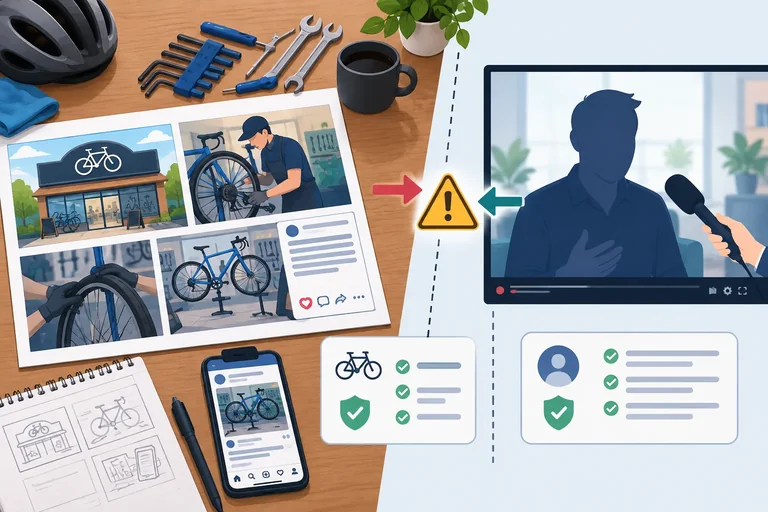
Harbor Cycles is considering a 20-second paid advertisement for its website and social media. Its jurisdiction is Not specified.
The Interview clip has permission for unchanged educational reposting. It does not cover advertising or voice cloning. That permission concerns the recording; it does not automatically establish what may be represented about the identifiable speaker.
Ask two separate questions:
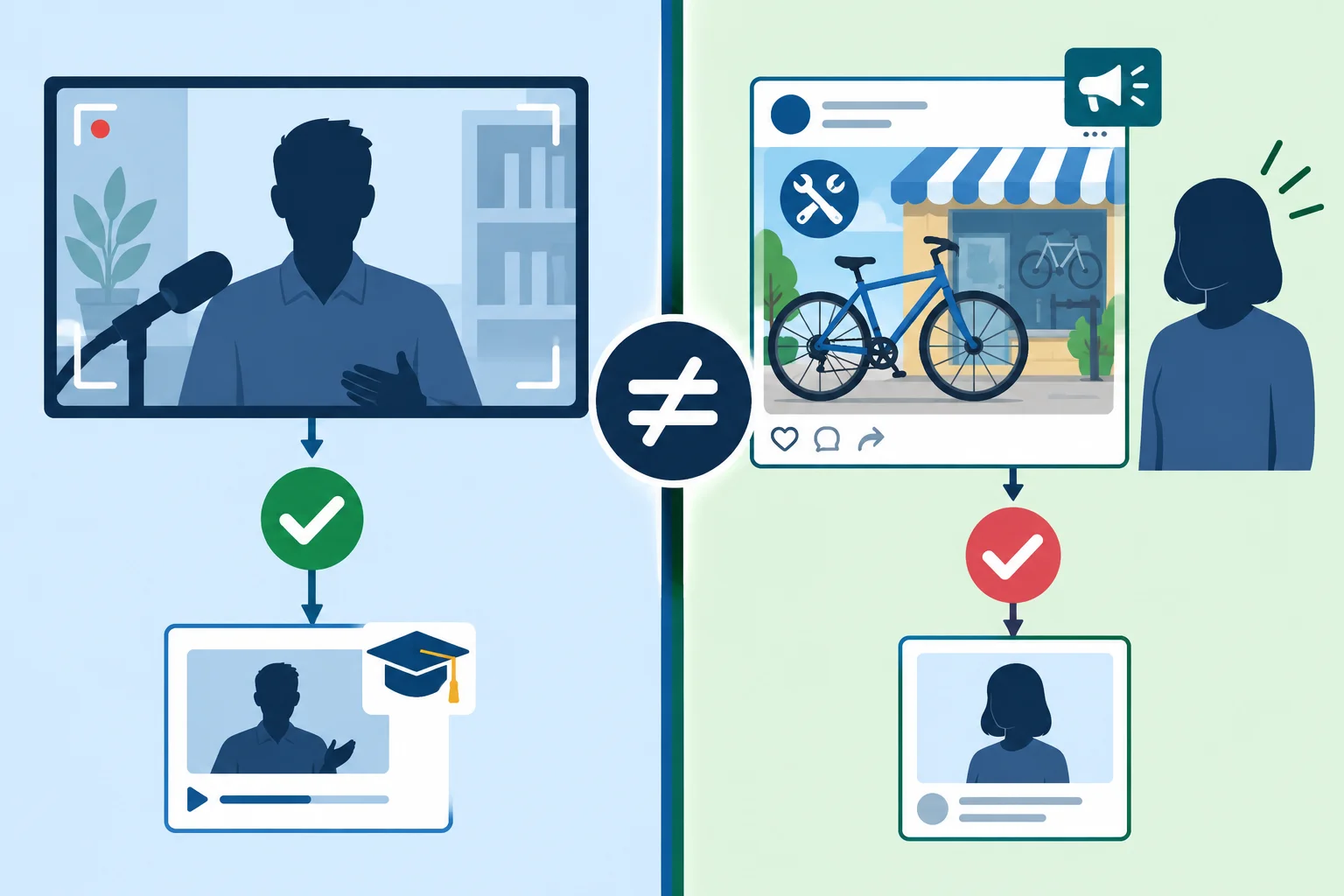
Permission for a source recording does not, by itself, establish permission for advertising, synthetic speech, or an apparent endorsement.
Fictional training example — Interview clip permission
The speaker discussed general bicycle maintenance in an original interview. The supplied permission supports unchanged educational reposting, but it does not support advertising or voice cloning.
A source-file right and a person-related authorization can overlap, but neither replaces the other. A paid ad can create a new representation of the speaker even when the original clip remains unchanged.
Compare each planned action with the supplied evidence. A finding of Not established is not permission; it means the planned representation should pause while the gap receives appropriate review.
| Check | Evidence and date | Finding |
|---|---|---|
| Unchanged educational repost | Supplied permission; date not provided | Supported |
| Use in a paid Harbor Cycles ad | Permission excludes advertising | Contradicted |
| Create synthetic speech in the speaker’s voice | Permission excludes voice cloning | Contradicted |
| Present the speaker as supporting Harbor Cycles | No purpose-specific authorization supplied | Not established |
Example
An implied endorsement can arise without voice cloning or face alteration. For example, placing an unchanged interview clip beside Harbor Cycles branding, a price offer, and a caption suggesting the speaker recommends the shop can make viewers infer support that the speaker never gave.
Changing general maintenance remarks into a synthetic testimonial adds another concern: it can falsely portray an identifiable person as saying or supporting something. Credit, a disclaimer, or an AI label may add context, but they do not create missing purpose-specific permission or remove a misleading representation.
Tip
For the proposed advertisement, pause the person-based representation when advertising authorization, voice authorization, or endorsement authorization is Not established or Contradicted. Seek purpose-specific permission and appropriate review for the relevant jurisdiction rather than assuming that possession of the clip settles the issue.
Harbor Cycles keeps the Interview clip unchanged but places it in a paid ad beside its logo and the caption “Recommended by local experts.” What is the clearest concern?
Harbor Cycles proposes turning the speaker’s general maintenance remarks from the Interview clip into a synthetic testimonial for its 20-second paid advertisement. The testimonial would use the speaker’s likeness and a synthetic version of their voice to say that they recommend Harbor Cycles.
In 2–4 sentences, identify:
Explain why permission for unchanged educational reposting is insufficient.
Write at least 180 characters (0/180).
Step 4 of 8
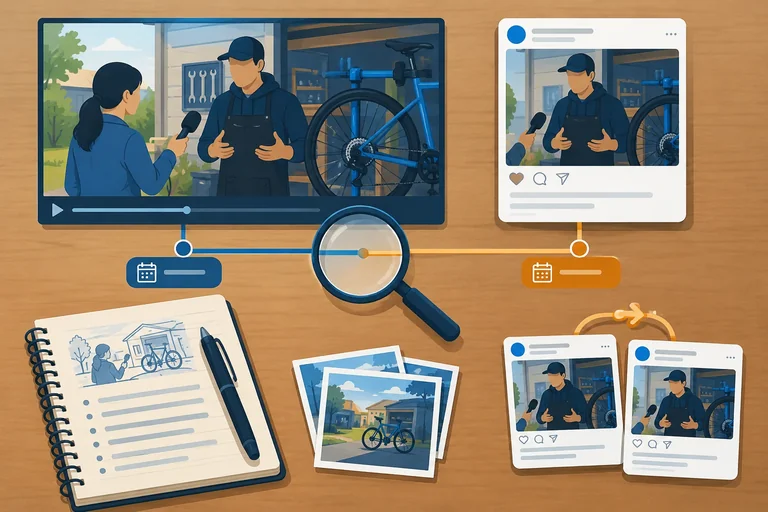
Build a provenance record for the Interview clip by tracing its publication path, checking context, and separating independent corroboration from repeated claims.
Provenance asks where content came from and how it reached its current form. It is different from permission to use a file, and it is different from whether a claim in or beside the file is true.
For the Interview clip, trace the publication path: identify the original publication and its context, then compare it with later copies, crops, captions, and claims. Record only what you can observe, with dates and source identities.
The earliest copy you find is a useful lead—not guaranteed proof that it is the original source.
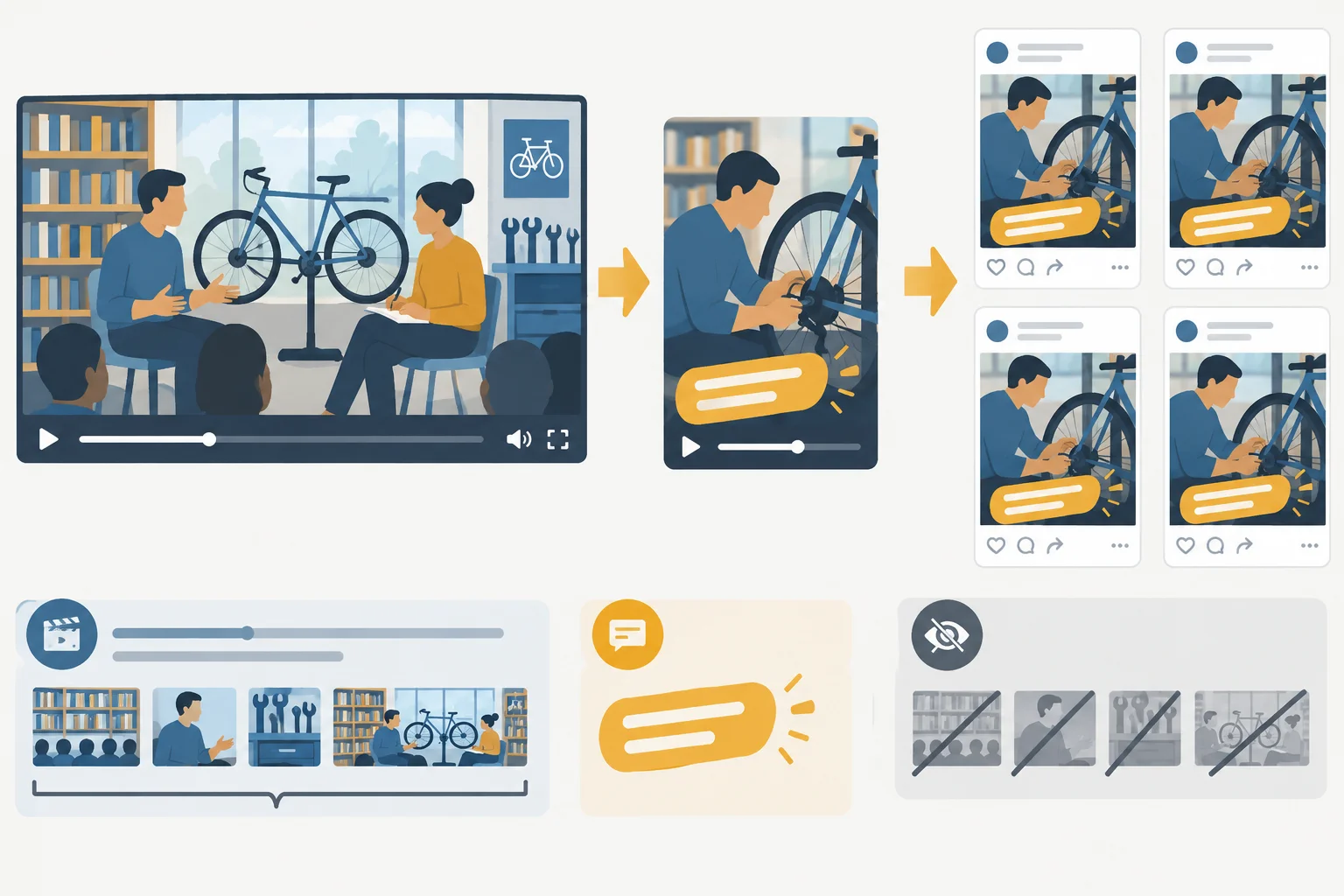
Fictional training example. This illustration represents evidence, not an independently verified source record. A crop or changed caption can alter meaning without any AI generation.
Tip
Independent corroboration comes from a separate source with its own information basis for the specific fact being checked. Several accounts repeating the same caption are copies of one claim, not separate confirmation.
A provenance record should note the original publication, source identity, publication context, dates, available edit history, available metadata, and corroborating sources. A missing record is a limitation to investigate—not a fact to invent.
Use the self-contained packet below to separate direct observations from assumptions. All source records are supplied for this exercise; no external search is needed.
Fictional training example. This evidence record states both what each record supports and what it cannot establish.
| Check | Evidence and date | Supports | Limit | Next action |
|---|---|---|---|---|
| Original publication | Fictional training example: City Cycling Library, 2026-04-02. Full 6-minute Interview clip from a public event. | Named publication, date, and full interview context. | Does not establish every earlier handling of the recording. | Preserve the page and relevant excerpt. |
| Original context | Fictional training example: full clip says, “Regular inspections and clear explanations help riders choose service options.” No Harbor Cycles mention. | General maintenance statement; no supplied endorsement of Harbor Cycles. | Does not establish permission or all later edits. | Compare later uses with this context. |
| Independent field report | Fictional training example: Riverport Gazette, a separate local outlet, 2026-04-03. Signed reporter note: “I attended the April 2 library event and observed the speaker discuss bicycle inspections and service options.” The packet states the report used the reporter’s attendance notes, not organizer or repost material. | Independent corroboration of event occurrence, speaker, date, and general topic. | Does not corroborate the full clip, every frame, or a Harbor Cycles endorsement. | Keep the report with the original publication. |
| Later repost | Fictional training example: BikeFansLocal, 2026-04-10. A 20-second crop is captioned as a Harbor Cycles recommendation. | A later crop and endorsement claim were observed. | No edit history or basis for the caption is supplied. | Ask for the repost’s source and context. |
| Repeated copies | Fictional training example: two accounts repost the same 20-second clip and caption, 2026-04-11. | The claim circulated to more accounts. | Copies do not independently corroborate the claim. | Do not count them as separate confirmation. |
| Available metadata | Fictional training example: no original file or metadata is supplied in this packet, 2026-04-15. | A provenance gap is recorded. | Absence does not prove origin or fabrication. | Request the original file or source confirmation. |
Example
The Riverport Gazette report is independent in this packet because it is from a separate outlet and its stated basis is the reporter’s own attendance notes—not the library publication, organizer material, or repost caption.
Its scope matters. It corroborates that the event occurred and that the speaker addressed general maintenance. It does not corroborate every word or frame of the Interview clip, the later Harbor Cycles endorsement claim, or the complete handling history. The repeated reposts document circulation, not truth.
Using the evidence packet on the previous screen, write a 4–6 sentence evidence note. Trace the Interview clip from the original publication to the later repost. Identify the source that is genuinely independent corroboration and state the information basis that makes it independent. Then provide one conclusion labeled Supported and one remaining Limit.
Write at least 300 characters (0/300).
Step 5 of 8
Interpret ordinary metadata and content credentials as bounded provenance evidence, without treating either presence or absence as proof of truth, permission, or fabrication.
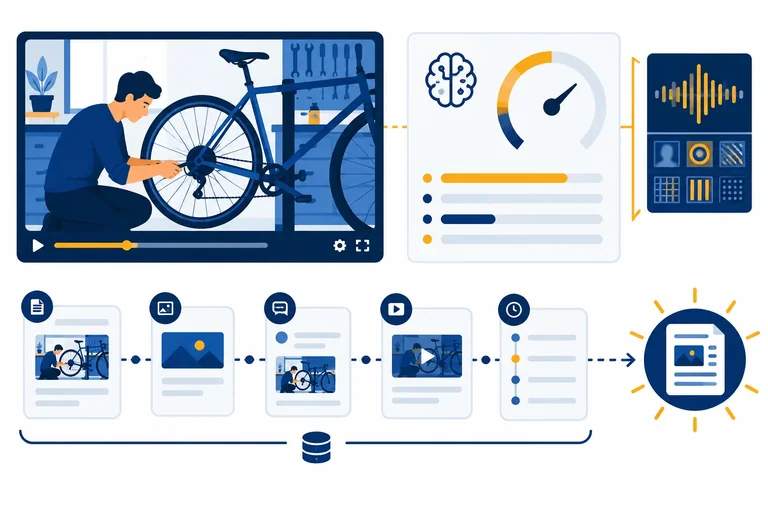
Ordinary metadata is attached information such as a creation date, device details, or editing-software details. It can provide useful clues for a provenance assessment, but it can be incomplete, altered, or removed during normal export, editing, and sharing.
Treat a metadata field as evidence to check alongside source context—not as a complete history or a verdict about authenticity.
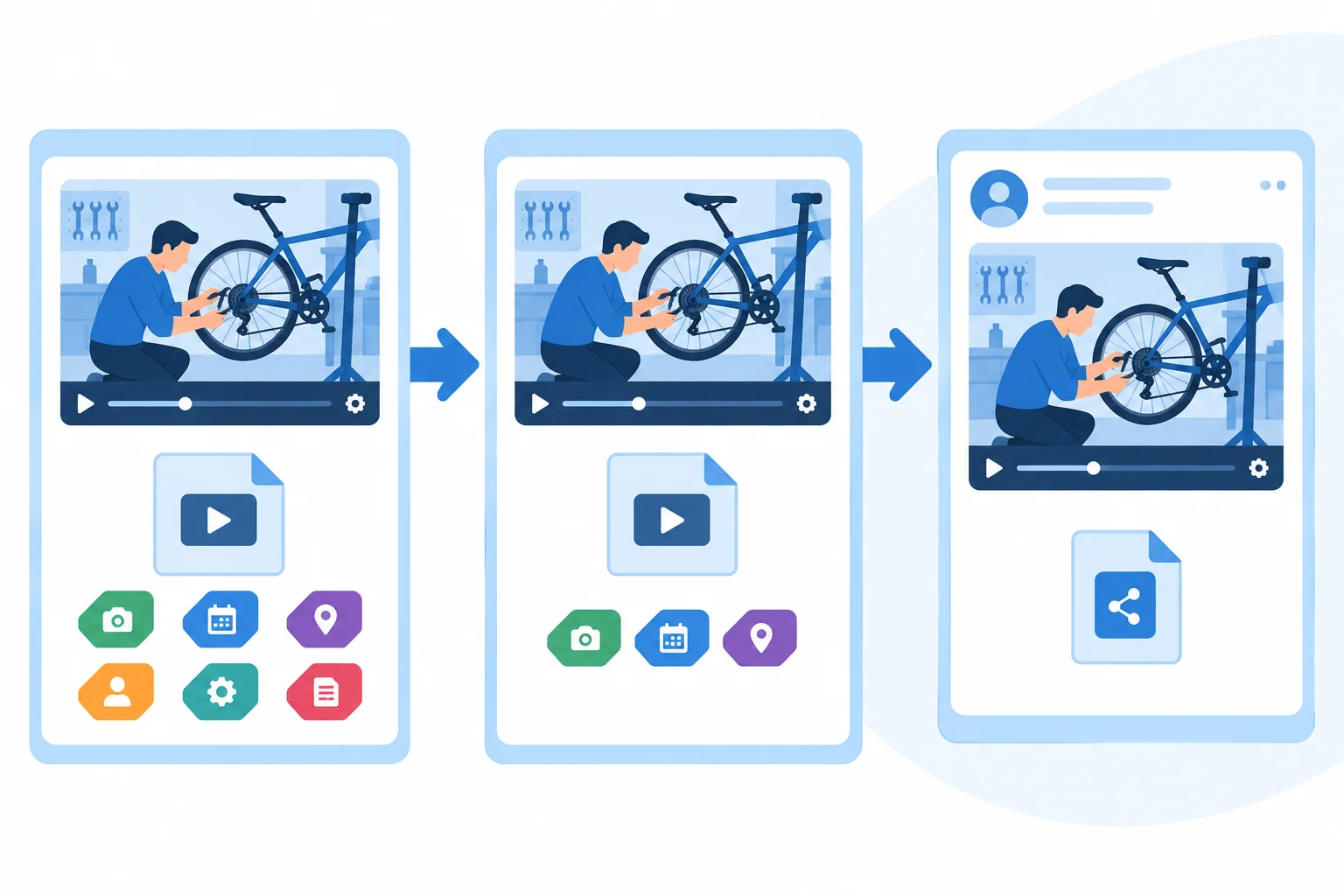
Illustration: ordinary editing and sharing can preserve, change, or remove metadata.
Content credentials are signed provenance records that can bind a particular asset to recorded assertions about its origin and editing history.
Before relying on them, ask four questions: Is this the exact asset being checked? Did validation succeed? Who signed the record, and is that signer trusted for this purpose? What portion of the asset’s history does the record actually cover?
A badge or a screenshot alone is not validation.
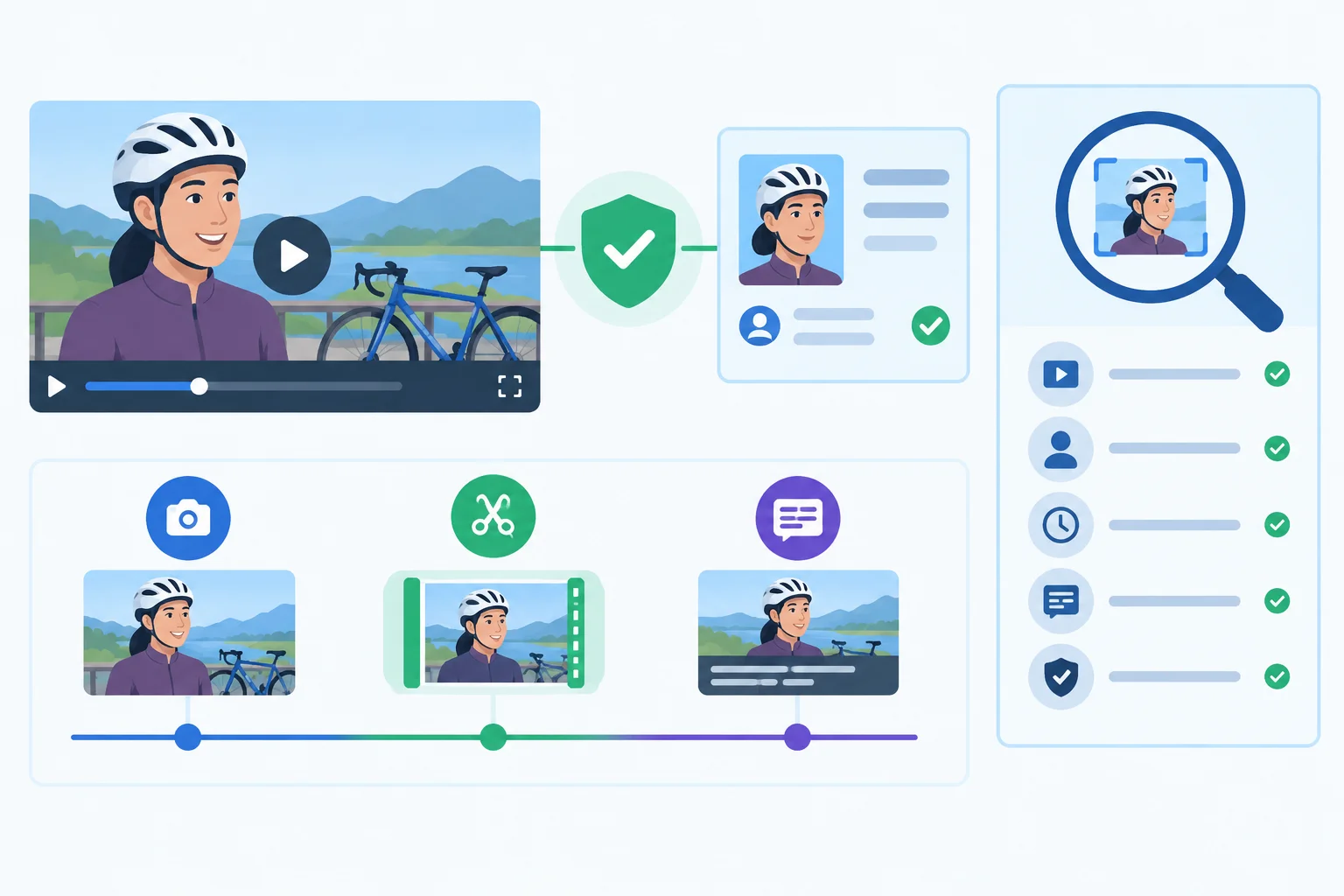
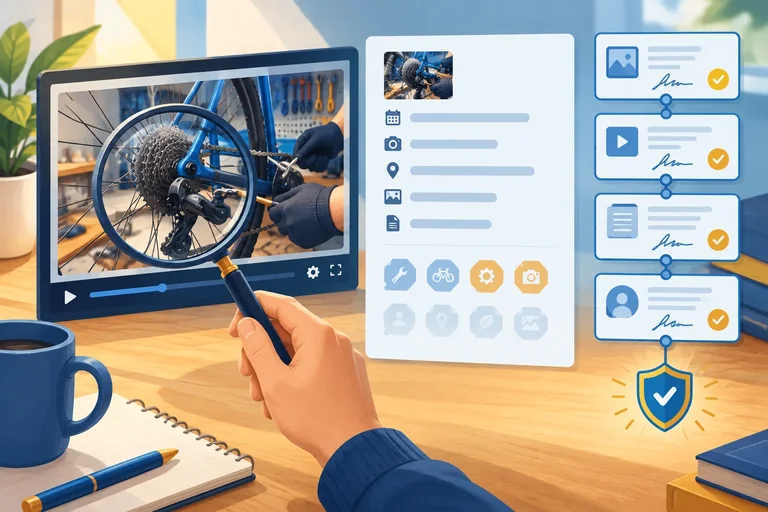
Illustration of a content credentials report. It is a representation of evidence, not an independently verified source record.
Fictional training example — credential report for the checked current file of the Interview clip. This table is a representation of evidence, not an independently verified source record.
| Field | Reported detail |
|---|---|
| Asset checked | Interview clip — current file |
| Validation status | Validated |
| Signer | Northshore Archive |
| Recorded history | Capture → trim → caption export |
| Scope | Only the history recorded in this report |
| Report date | 2026-04-15 |
Warning
Validated content credentials can support a recorded chain for the checked asset. They do not prove that a depicted event or claim is true, that every edit is recorded, or that all necessary rights are cleared.
They also do not replace checking a source license or tool terms. Conversely, missing credentials do not prove that content is fabricated. An invalid or incomplete record calls for investigation, not an automatic conclusion.
Fictional training example — evidence record for the Interview clip. These entries distinguish what the evidence supports from what remains unresolved.
| Check | Evidence and date | Supports | Limit | Next action |
|---|---|---|---|---|
| Credential record for current file | Fictional training example: validated report, 2026-04-15 | Supported: recorded chain for the checked file | Does not prove truth, rights clearance, or an exhaustive history | Check signer trust and recorded scope |
| Credentials absent on repost | Fictional training example: no credentials displayed, 2026-04-15 | Not established: signed provenance for this copy | Sharing may remove credentials | Seek an earlier source and corroborating evidence |
| Claim that absence proves fabrication | Fictional training example: repost lacks credentials, 2026-04-15 | Contradicted: absence alone is not proof of fabrication | The asset’s history is still unknown | Investigate context and available source records |
Match each sample finding to the most justified conclusion.
Tap an item and then its matching pair.
Step 6 of 8
Interpret AI detector results as uncertain signals, recognize false positives and false negatives, and choose source-based follow-up checks instead of treating a score as proof.
An AI detector estimates whether an asset contains patterns associated with particular kinds of generated content. Its result does not directly establish who authored the material, whether a person consented, whether the source license covers the use, or whether a claim is factually accurate.
Treat a detector result as one uncertain clue in a provenance review. It may justify checking the original source and its context; it is not a basis for accusing someone or publishing content without other checks.
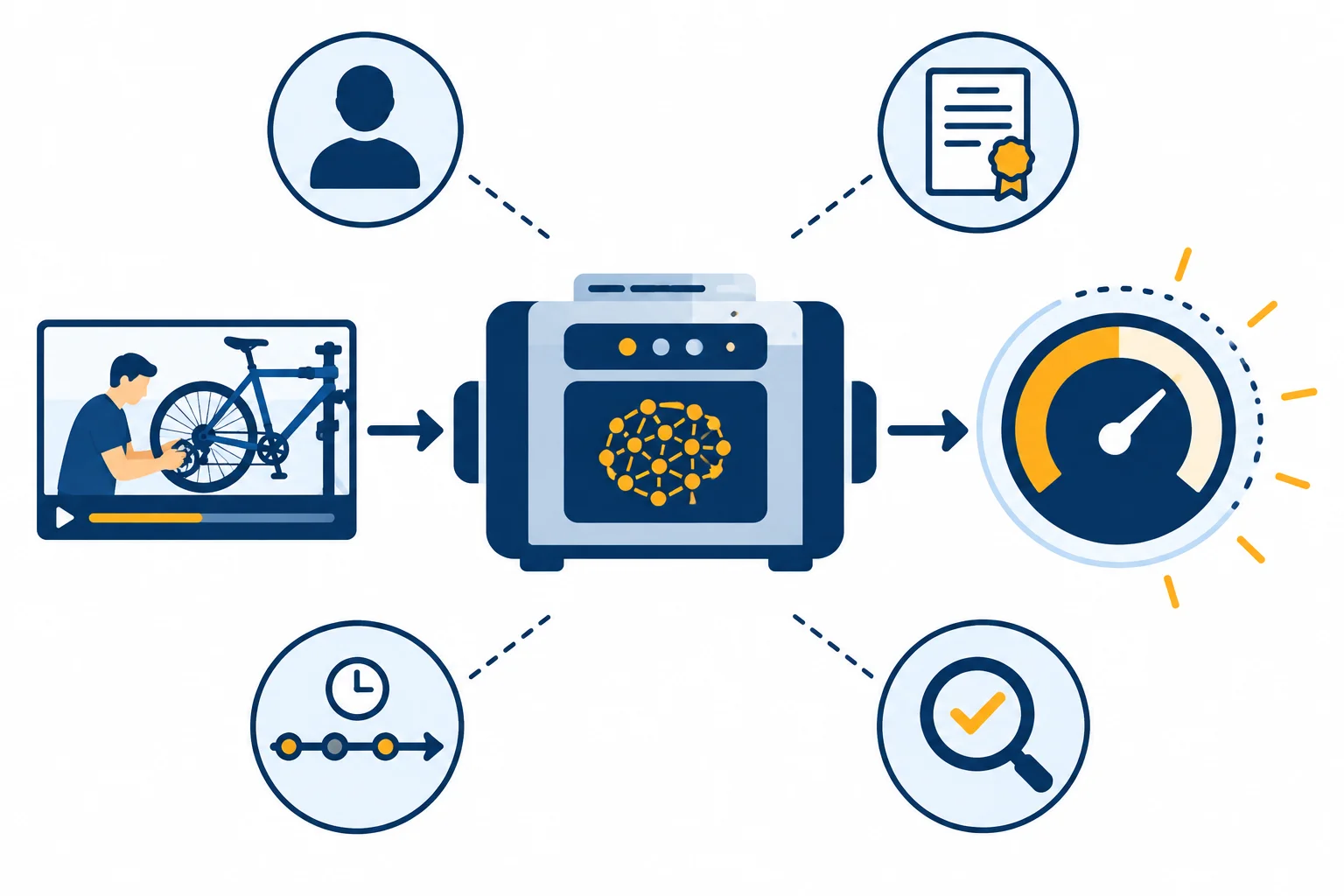
A detector examines patterns in the submitted asset. It does not replace checks of rights, consent, provenance, or factual support.
An error can occur in either direction. A detector may label human-created material as AI-generated, or it may fail to flag AI-generated material.
| Detector outcome | Meaning | What may affect it |
|---|---|---|
| False positive | Human-created material is labeled AI-generated | Media type, language, editing, or material unlike its test data |
| False negative | AI-generated material is not flagged | Compression, editing, media type, or material unlike its test data |
Example
Fictional training example — hypothetical detector results
A reposted excerpt of the Interview clip is considered for Harbor Cycles' 20-second paid advertisement. After social-media compression, Detector A reports 80% and Detector B reports 18%.
These are reported detector scores, not probabilities of authorship. Neither score proves that the clip is human-made or AI-generated, and averaging them or following a majority would not create proof. The useful next step is source-based: inspect the original publication and context, then seek independent corroboration where needed.
A reported detector score of 80% proves that a clip was made by AI.
Fictional training example
Match each detector situation or action to its best interpretation.
Tap an item and then its matching pair.
Step 7 of 8
Choose an evidence-based publication recommendation and recognize when attribution or disclosure cannot cure missing authorization or misleading representation.
Make the recommendation from the specific intended use and the evidence already checked—not from a credit line or an AI label.
Choose the next action that fits the evidence gap or conflict. Do not publish while a required check is still open.
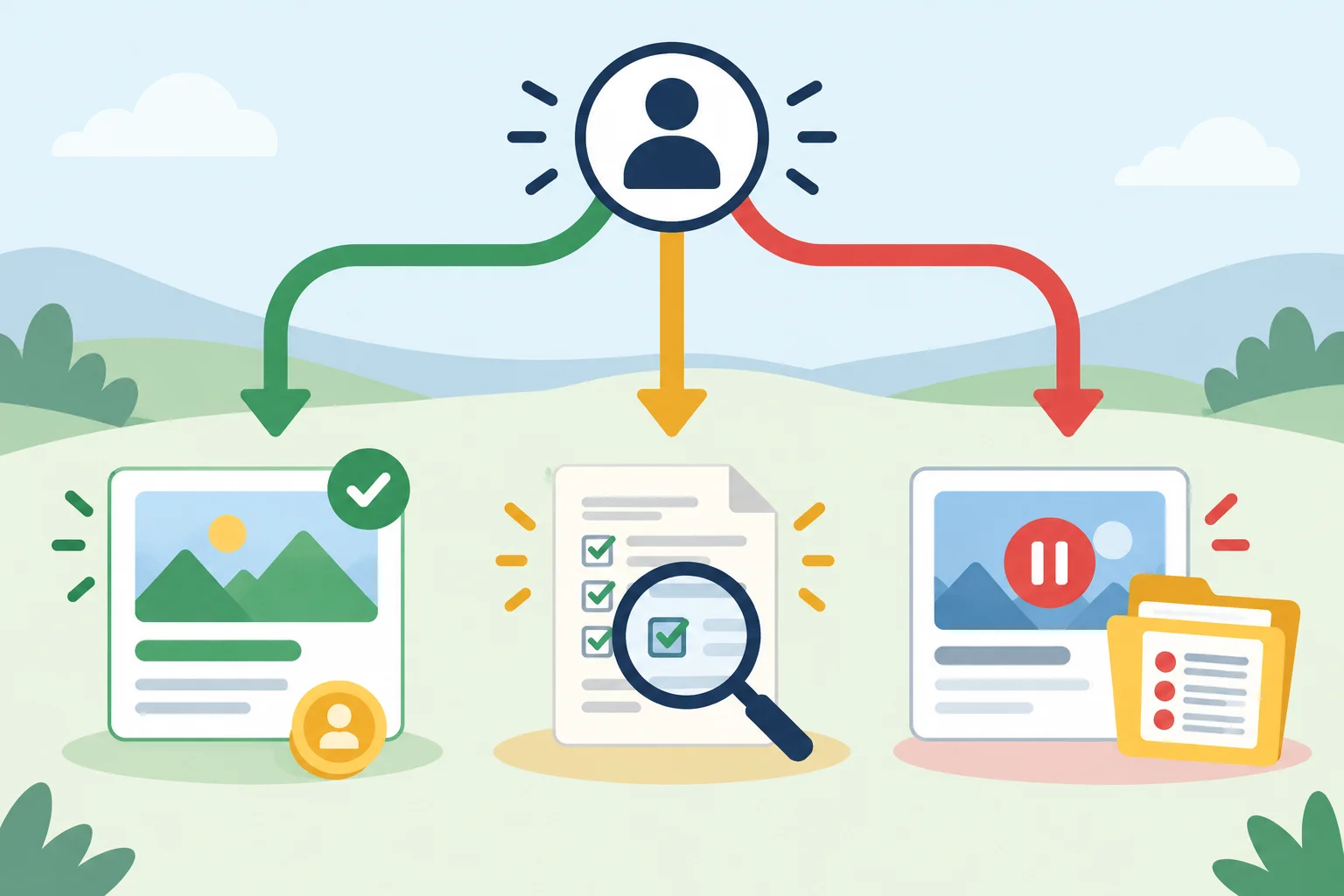
Match the recommendation to the strength and limits of the evidence; a credit line or disclosure badge is not a shortcut around a missing permission.
Tip
Use with conditions only when necessary permissions and material authenticity concerns are sufficiently resolved for the intended use. State the conditions explicitly, such as required attribution.
Verify before use means pause publication while investigating one defined, potentially resolvable evidence gap.
Withhold and escalate is appropriate when there is an unresolved substantive rights or deception risk—such as a scope conflict, disputed authority, or misleading endorsement—that routine checking cannot responsibly clear.
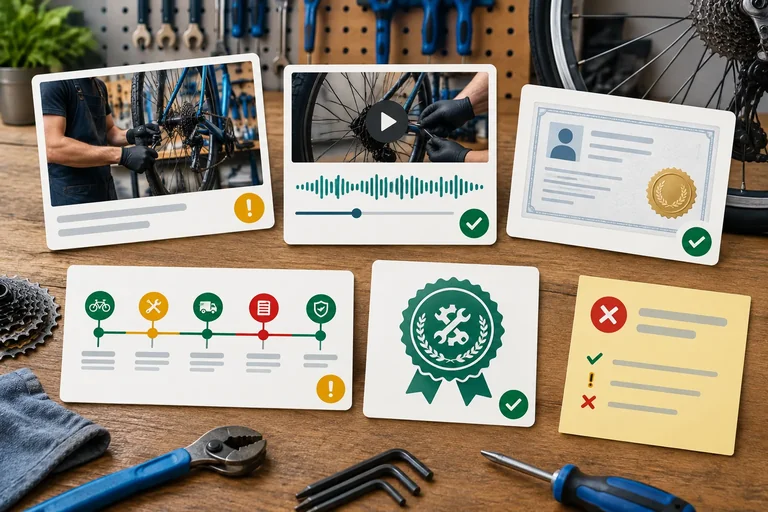
Apply the same scale to each asset. These are separate decisions; a favorable result for one asset does not clear another.
Fictional training example. The jurisdiction for Harbor Cycles is Not specified. The table distinguishes direct use of the Workshop photo from the proposed AI-assisted changes and the separate Interview clip risk.
| Proposed use | Evidence finding | Recommendation | Conditions or next checks |
|---|---|---|---|
| Crop Workshop photo; use it directly in the paid advertisement | Supported | Use with conditions | Give required attribution; do not upload it to an AI service or make generative edits under this finding. |
| Upload Workshop photo to StudioTool for generative edits | Not established | Verify before use | Confirm whether the source license permits upload and generative edits. StudioTool tool terms do not supply input rights. |
| Use or clone the Interview clip speaker in the advertisement, with an AI label | Contradicted | Withhold and escalate | Do not publish. The supplied permission is for unchanged educational reposting, not advertising or voice cloning; the repost also implies endorsement. |
A concise decision note makes the reason, the limit, and the next action reviewable.
Example
Fictional training example
Recommendation
Withhold and escalate.
Reason
The proposed 20-second paid advertisement would use the identifiable speaker from the Interview clip in a commercial context. The supplied permission covers unchanged educational reposting, not advertising or voice cloning. The later repost also misleadingly presents general bicycle-maintenance remarks as an endorsement of Harbor Cycles.
Conditions or next checks
Do not publish this asset or a synthetic version of the speaker. Preserve the relevant source context. Replace the asset, or obtain and verify purpose-specific authority before reconsidering. Seek qualified review where appropriate; jurisdiction is Not specified.
A credit to the interview source or a synthetic-media disclosure would not repair the missing authorization or misleading representation.
Warning
This is educational triage, not legal clearance. Where copyright or personal-rights questions remain material, check current applicable sources and obtain qualified advice where appropriate.
Match each Harbor Cycles case to the most defensible recommendation.
Tap an item and then its matching pair.
Step 8 of 8
Integrate rights, representation, provenance, and uncertain technical signals into a documented recommendation for the Harbor Cycles advertisement.
Harbor Cycles plans a 20-second paid advertisement for its website and social media. Jurisdiction: Not specified.
The draft crops the Workshop photo, uploads it to StudioTool for generative editing, and uses a synthetic version of the Interview clip speaker to say: “Harbor Cycles is the shop I trust.”
Review each issue separately. A favorable source license finding does not cancel a representation problem; content credentials do not clear rights; and an AI detector result does not establish authorship, consent, or truth. All records below are a Fictional training example.
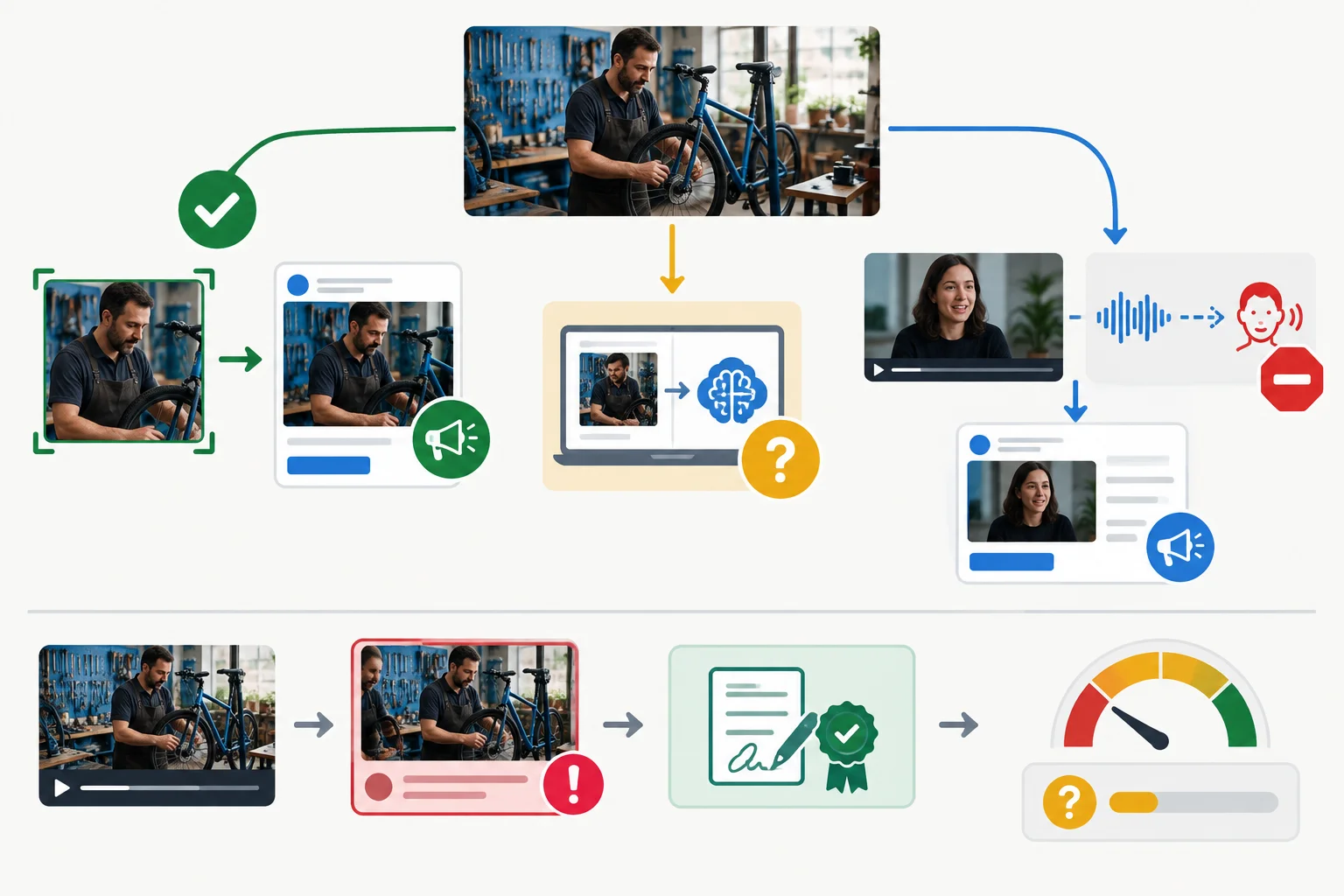
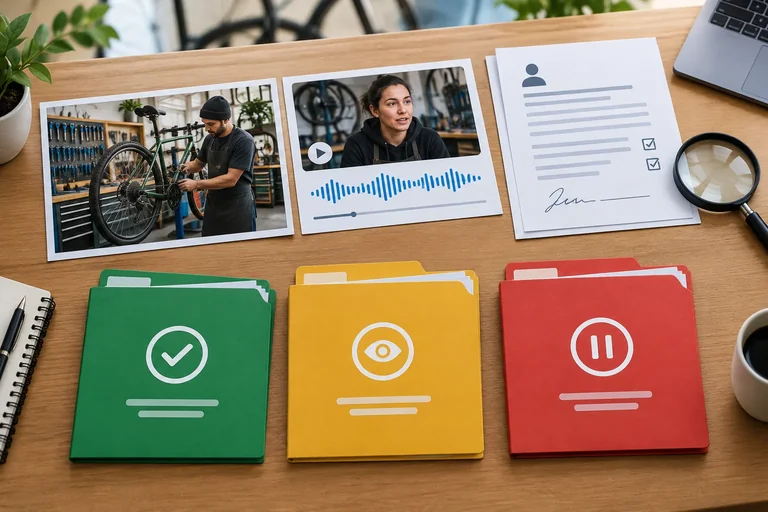
Integrated review diagram — Fictional training example. Permission, representation, provenance, and technical signals are separate checks.
Use this evidence record to decide what can proceed, what needs verification, and what must stop. A status of Not established is an evidence gap, not permission.
| Check | Evidence and date | Supports | Limit | Next action |
|---|---|---|---|---|
| Intended use | Campaign brief, 2026-04-15: 20-second paid web and social ad; jurisdiction Not specified | Supported: proposed actions are defined | Does not grant any rights | Assess each action separately |
| Workshop photo source license | Fictional training example, 2026-04-15: paid ads and cropping permitted; attribution required | Supported: paid advertising, crop, attribution | Not established: upload to AI service; generative edits | Obtain scope-specific permission or replace photo |
| StudioTool tool terms | Fictional training example, 2026-04-15: commercial outputs allowed if user has sufficient input rights | Supported: conditional commercial output use | Not established: sufficient input rights; no clearance, exclusivity, or copyright promise | Check input rights before using StudioTool output |
| Interview clip permission | Fictional training example, 2026-04-15: unchanged educational reposting only | Contradicted: advertising and voice cloning | Does not authorize endorsement representation | Do not use speaker or synthetic voice in the ad |
| Original and repost context | Fictional training example: original post 2026-04-02 discusses general maintenance; repost 2026-04-10 claims endorsement | Contradicted: claimed Harbor Cycles endorsement | Available context may still be incomplete | Preserve original context; seek purpose-specific authority if relevant |
| Content credentials | Fictional credential report, 2026-04-15: valid record for the repost and listed edits | Supported: recorded history for that asset | Does not prove endorsement, truth, complete history, or rights clearance | Check asset match, signer, and record scope |
| AI detector | Fictional detector result, 2026-04-15: reported detector score 80% | Not established: authorship or authenticity | A reported detector score is not a probability of authorship | Do not use it as a publication decision |
Write a concise decision note for the proposed Harbor Cycles advertisement. Use all three headings:
Recommendation
Reason
Conditions or next checks
Address the Workshop photo, the Interview clip speaker, the original and repost context, the reported detector score, and why credit or a synthetic-media label would not by itself resolve the identified problems.
Write at least 450 characters (0/450).
Recommendation
Withhold and escalate the current advertisement. A safer revision could remove the Interview clip speaker and synthetic endorsement, but it must still be checked before publication.
Reason
The Workshop photo source license supports paid advertising, cropping, and attribution. It does not establish permission to upload the photo to an AI service or make generative edits. StudioTool tool terms allow commercial outputs only when the user already has sufficient input rights; they do not supply those rights or clear third-party claims.
The Interview clip permission is contradicted by the planned advertising and voice cloning. The original context is general bicycle maintenance, not support for Harbor Cycles; the later repost’s endorsement claim is misleading. This provenance evidence matters more than the reported detector score 80%, which is only an uncertain AI detector signal. The fictional content credentials record may support a recorded history for the repost, but it does not prove truth, consent, endorsement, or rights clearance.
Conditions or next checks
Do not publish the current draft. Preserve the source records and obtain qualified, current advice appropriate to the unspecified jurisdiction. For a revised draft, remove the person’s likeness and voice unless purpose-specific advertising authorization is obtained. Confirm AI-upload and generative-edit permission for the Workshop photo, provide required attribution, and check any replacement asset and revised purpose independently. Attribution or disclosure may improve transparency, but neither creates missing permission nor cures a misleading endorsement.
Summary
Use this sequence whenever AI-assisted content is proposed for publication.
Congratulations! You completed: Checking AI Content Rights and Authenticity
Thousands of online courses in video, ebooks and audiobooks.
To test your knowledge during online courses
Generated directly from your cell phone's photo gallery and sent to your email
Download our app via QR Code or the links below:.


Carry knowledge in your pocket.
Download the Cursa app.
There are hundreds of free courses available, with a free certificate of completion that is saved in your mobile image gallery.
Download the app to access the Course Completion Certificate for Free.

+ 10 million
students

Free and Valid
Certificate

60 thousand free
exercises

4.8/5 rating in
app stores

Free courses in
video and ebooks