
Step 1 of 9
Make Adoption Conditional on Evidence
Use adoption gates to make expansion conditional on evidence rather than on tool availability or promising pilot results.

Learning path · Level 9 · Tutorial 4
Create an adoption plan, conditional on pilot evidence, that assigns operating responsibilities, prepares staff, establishes ongoing review, and defines when to change, pause, or retire the solution.

 Make Adoption Conditional on Evidence
Use adoption gates to make expansion conditional on evidence rather than on tool availability or promising pilot results. 2 min
 Assign Ownership and Backup Coverage
Assign clear operating ownership, decision authority, support routes, and backup coverage before expanding an AI-assisted workflow. 3 min
 Check Readiness for Each Role
Define role-specific training and observable readiness checks tied to operating duties. 2 min
 Create a Staff Feedback Loop
Create a usable staff feedback loop and distinguish active use from evidence of healthy adoption. 2 min
 Turn Monitoring into Owned Responses
3 min
 Reassess Changes Before Expanding Use
Identify changes that require reassessment and select evidence and authorization proportionate to their impact before continued or expanded use. 2 min
 Set Pause Rules and Keep Work Moving
Define a scoped Pause, a viable continuity process, and evidence-based restart authority for an AI-assisted workflow. 2 min
 Plan a Controlled Retirement and Exit
Define retirement conditions and a managed exit that preserves continuity while handling approved work, access, and records appropriately. 2 min
 Complete and Stress-Test the Adoption Plan
Assemble a compact Northstar Supplies adoption plan and stress-test it against a source change and unavailable owner. 3 min
Step 1 of 9
Use adoption gates to make expansion conditional on evidence rather than on tool availability or promising pilot results.
An adoption plan is conditional. A tool being available—and even a promising pilot—does not by itself show that wider use is ready.
At each adoption gate, decide whether the next increase in users, workload, or permitted scope is justified by evidence. The decision is not “roll out or fail”; it is Advance, Hold, or Revise.
For Northstar Supplies, every AI-drafted delivery or returns reply remains checked by an authorized staff member before it is manually sent.
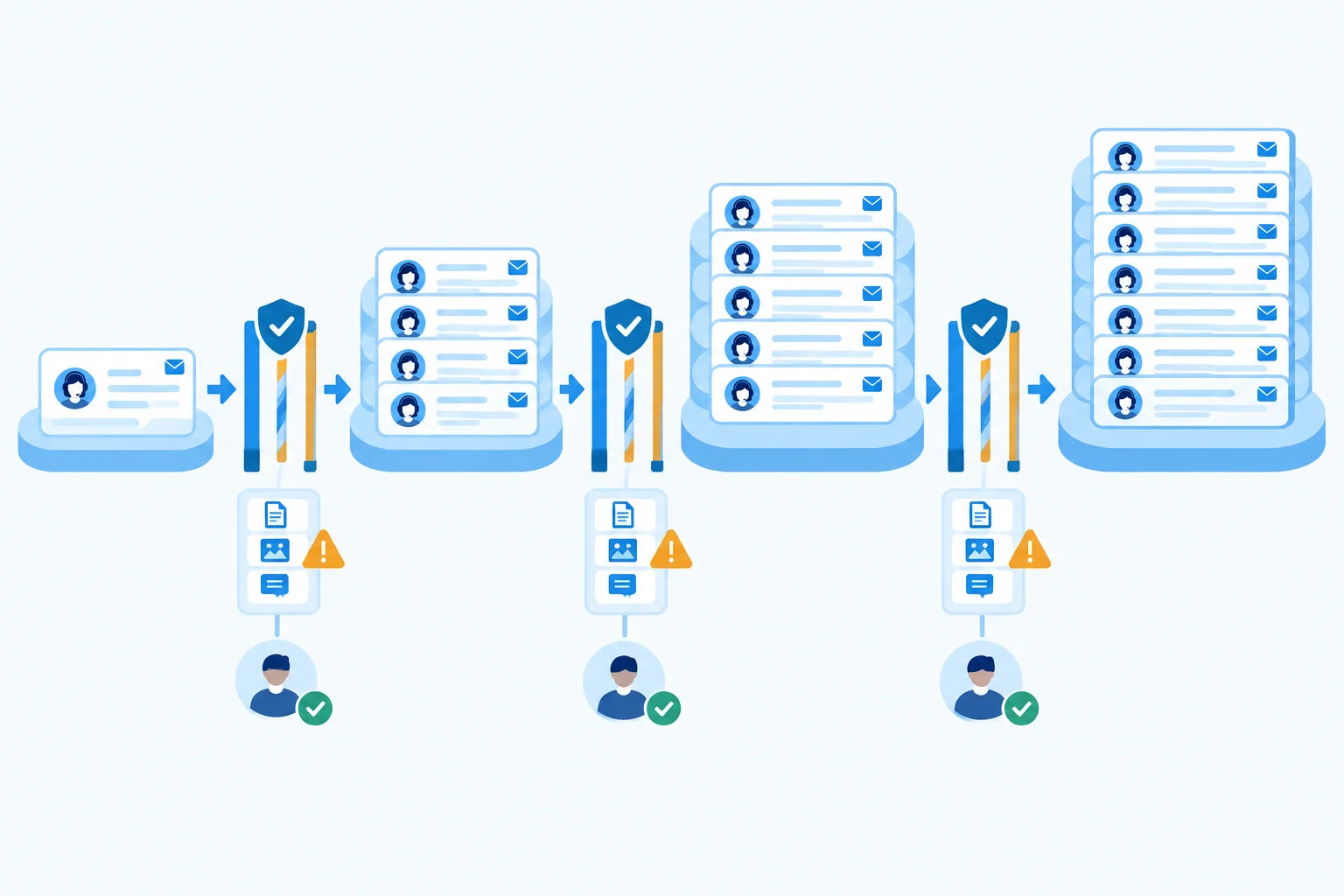
The sequence is Pilot review → Limited adoption → Team rollout → Routine operation. Each checkpoint is an adoption gate, not an automatic transition.
Illustrative scenario
Northstar Supplies tested AI drafts only for routine delivery and returns replies drawn from approved policy text. Customer identifiers were excluded, and every draft was reviewed before sending.
These results are useful evidence. They do not prove that future use will remain safe or workable under a larger workload.
Illustrative scenario: evidence from the bounded pilot.
| Measure | Observed result |
|---|---|
| Reviewed drafts | 40 |
| Meeting quality checklist before correction | 38/40 (95%) |
| Observed safety incidents | 0 |
| Median end-to-end handling time | 4 min |
| Manual comparison time | 6 min |
| Tool-and-usage budget ceiling | USD 120/month |
An adoption gate combines more than a favorable quality rate or faster handling time. Before an expansion, the authorized decision-maker needs evidence about:
If evidence is missing, Hold keeps use at its current approved scope while evidence is gathered. Revise changes the plan, scope, or conditions before reassessment. Advance is justified only when the gate requirements for the next bounded stage are met.
Each row asks what must be established before moving to the following stage. The exact evidence should fit the proposed increase, rather than treating one pilot result as evidence for every future use.
| Current stage | Possible next stage | Gate focus |
|---|---|---|
| Pilot review | Limited adoption | Pilot evidence plus remaining limitations, capacity, and readiness prerequisites |
| Limited adoption | Team rollout | Evidence that the bounded process still works with a modest increase |
| Team rollout | Routine operation | Evidence that sustained operation remains within approved conditions |
| Routine operation | Continued operation or revision | Evidence that the approved scope and conditions remain valid |
Based only on the Illustrative scenario pilot snapshot, which adoption-gate record is most defensible?

Step 2 of 9
Assign clear operating ownership, decision authority, support routes, and backup coverage before expanding an AI-assisted workflow.
An operating responsibility map makes each critical duty visible: who does it, who covers it, who can decide, and whether coverage is realistic.
At Northstar Supplies, AI drafts routine delivery and returns replies from approved policy text. Customer identifiers stay out of the tool, and an authorized staff member checks every reply before manually sending it. The map must distinguish checking one draft from deciding whether the operating process can expand or change.
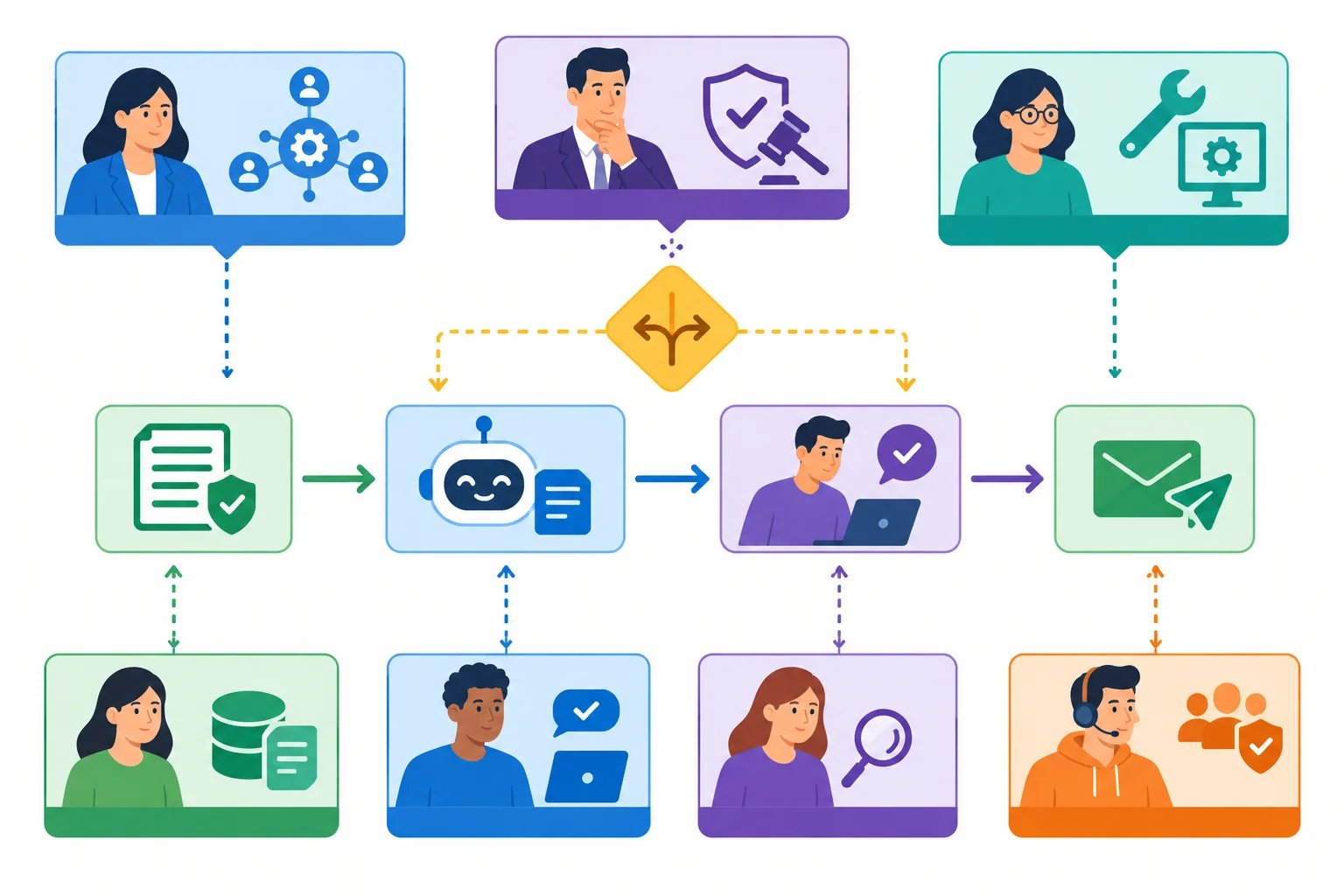
Individual reply review is part of each outgoing reply. Approval authority governs operating decisions such as expansion or significant change.
Tip
An output reviewer may reject or correct an individual draft. That does not make the reviewer the approver for an adoption gate or another operating decision. Record both authorities explicitly.
Illustrative scenario — This operating responsibility map assigns Northstar’s known primary roles. Each To be named entry must become a specific authorized, prepared backup in the learner’s plan.
Primary assignments and decision boundaries for the bounded workflow.
| Duty | Primary owner | Backup | Decision authority | Capacity or coverage |
|---|---|---|---|---|
| Process ownership | Maya Chen | To be named | Maya Chen | 2 h/week for coordination |
| Adoption-gate approval | Maya Chen | To be named | Maya Chen | Available before an adoption decision |
| Tool administration | Leon Ortiz | To be named | Leon Ortiz handles routine administration; Maya Chen decides operating changes | Coverage during absence |
| Staff support contact | Leon Ortiz | To be named | Leon Ortiz routes routine support; Maya Chen decides operating changes | Named route during working hours |
| Approved policy source maintenance | Priya Shah | To be named | Priya Shah handles routine approved-text updates; Maya Chen decides scope changes | Coverage when source updates are needed |
| Output review before manual sending | Sam Reed | To be named | Sam Reed may reject a draft; Maya Chen decides operating changes | Coverage whenever a draft is used |
| Training coordination | Maya Chen | To be named | Maya Chen | Scheduled coordination time |
| Monitoring coordination | Maya Chen | To be named | Maya Chen | 2 h/week review capacity |
| Incident coordination | Leon Ortiz | To be named | Leon Ortiz coordinates reports; Maya Chen decides operating action | Reachable escalation coverage |
Tip
Small teams can combine duties, but not invisibly. For every combination, check: 1) the person has time for both duties, 2) absence coverage is real, 3) required approval remains independent where existing rules require it, and 4) the backup has authorization and preparation—not merely access to a shared inbox.
For routine tool questions, staff know to contact Leon Ortiz rather than an unspecified team.
Match each duty to the most appropriate Northstar role.
Tap an item and then its matching pair.
The Staff support contact row has Leon Ortiz as primary owner but no backup. Complete the missing backup entry for your plan.
Name 1 specific person from your organization. Then state: 1) how that person is authorized and prepared to cover routine support, 2) when they can provide absence coverage, and 3) 1 check showing the assignment does not create an unrealistic workload or an approval conflict. Do not use “the team” as the backup.
Write at least 120 characters (0/120).

Step 3 of 9
Define role-specific training and observable readiness checks tied to operating duties.
A readiness check asks whether a person can perform a specific operating duty within its permitted boundaries—not whether they attended training, received tool access, or feel confident.
For Northstar Supplies, training must match the role. Output reviewers practise checking a draft against approved policy text before manually sending it. The source maintainer practises controlled updates. The tool administrator and support contact practises authorized access and support handling. The process owner and approver practises judging the recorded evidence.
Each check includes 2 observed situations: a normal case and an exception case. The exception tests whether the person recognizes a limit, keeps an unverified reply from being sent, and escalates correctly.
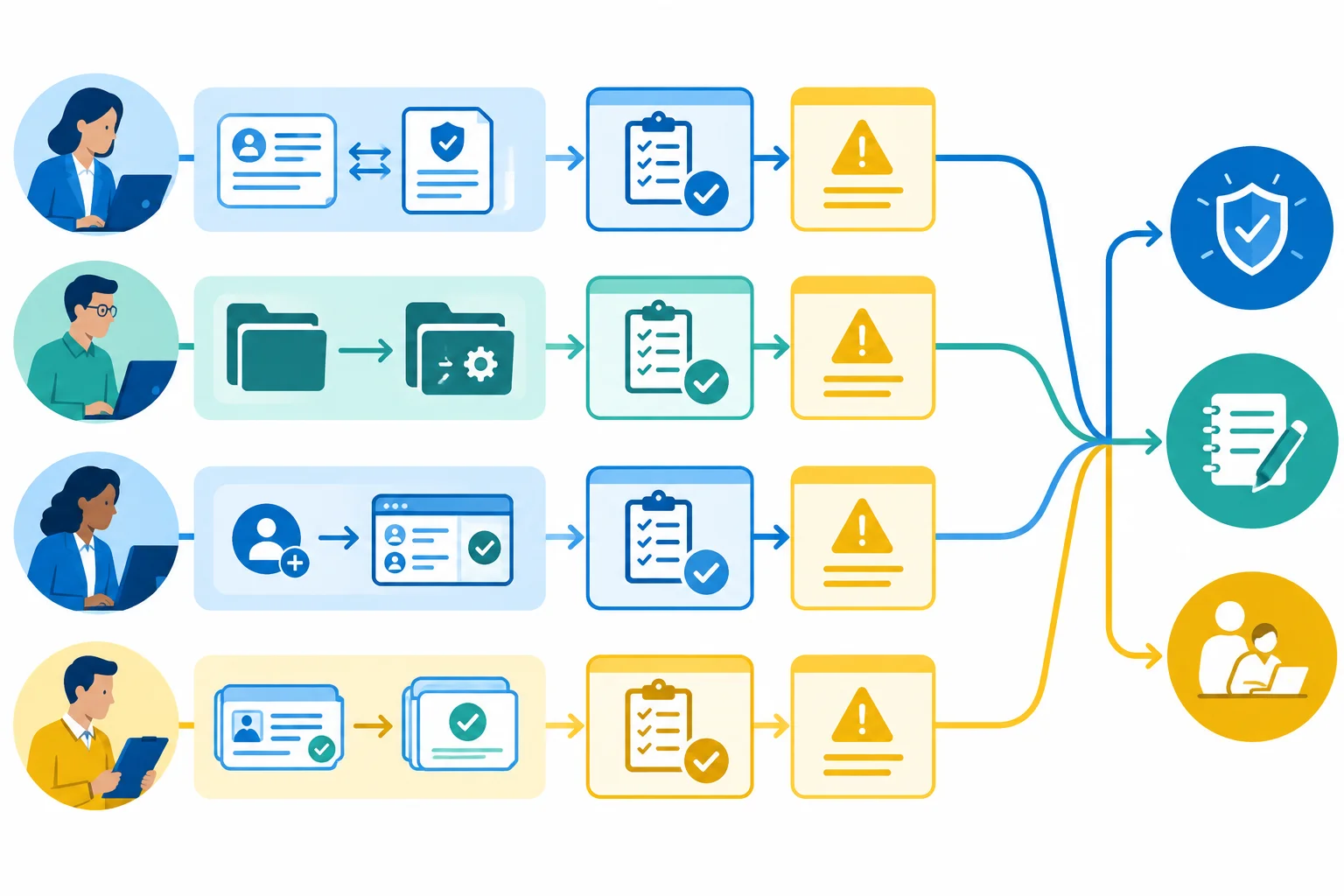
A readiness check observes both routine performance and safe handling of an exception before a person is authorized for that duty.
Illustrative scenario — Northstar Supplies uses AI only to draft routine delivery and returns replies from approved policy text. Customer identifiers are excluded, and every outgoing reply still requires human review and manual sending.
Use a realistic but safe practice case. An exception case should require the learner to stop at a boundary or use an escalation route; it should never require sending unverified content.
Each readiness check is observed and recorded for the particular duty; passing one check does not authorize every role.
| Role | Training focus | Observed normal case | Observed exception case |
|---|---|---|---|
| Sam Reed, output reviewer | Scope, checklist, required review | Checks a routine delivery draft against approved policy text before manual sending | Finds a request unsupported by approved text; does not send and escalates |
| Priya Shah, source maintainer | Controlled source updates | Applies a documented policy update using the approved update process | Finds conflicting or unclear source material; preserves the current source and escalates |
| Leon Ortiz, tool administrator and support contact | Authorized access and support handling | Resolves a routine authorized-access issue | Receives unexpected tool behavior; records and routes it without changing permitted use alone |
| Maya Chen, process owner and approver | Evidence-based authorization | Reviews a completed readiness-check record against the duty requirements | Finds an unmet check; withholds authorization and assigns practice or supervision |
Maya Chen records the readiness result as the process owner and approver. A passed check authorizes the relevant duty within the approved scope. If a check is not passed, the consequence is explicit: further practice, or supervised work until the person demonstrates the required performance.
This keeps authorization tied to observed capability rather than a blanket training-completion status.
Match each person to the readiness task most suited to that role.
Tap an item and then its matching pair.
Which plan both selects suitable readiness tasks for the 4 Northstar Supplies roles and establishes demonstrated readiness?

Step 4 of 9
Create a usable staff feedback loop and distinguish active use from evidence of healthy adoption.
A reporting route turns routine experience into adoption evidence. It should accept problems, near misses, unnecessary work, access barriers, and improvement suggestions—not only failures.
Ask for the minimum appropriate evidence: the task category, what happened, when it happened, the relevant policy or tool version if known, and whether a reply was held. Northstar Supplies excludes customer identifiers, so a report must not add them.
For ordinary reports, Leon Ortiz is the named recipient and support contact. He acknowledges receipt, triages the report, assigns an action owner, and ensures the reporter receives an outcome. A report is not complete merely because it was submitted.
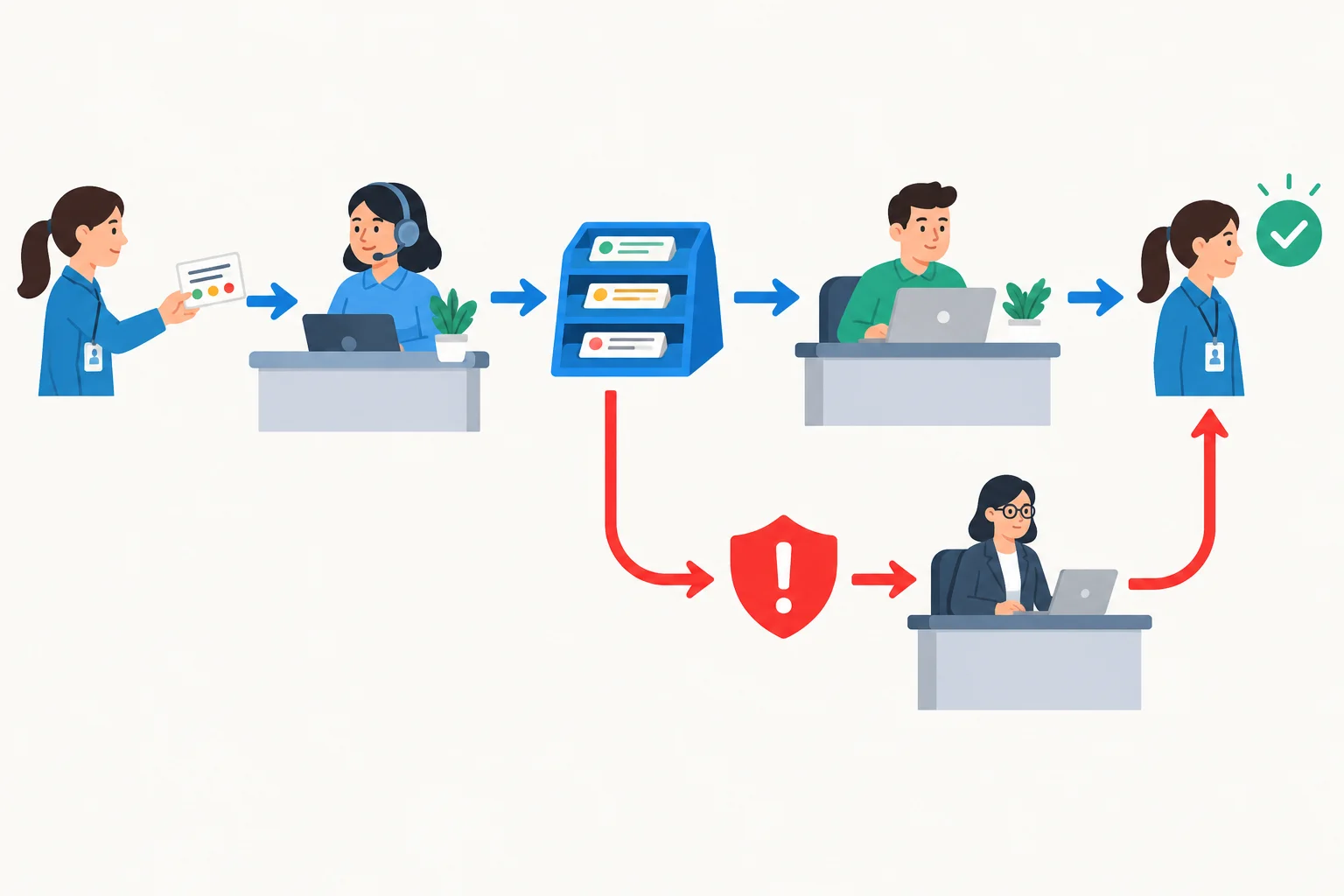
Ordinary route: staff report → Leon Ortiz receives and triages → a named action owner responds → the reporter receives an update. Urgent safety or privacy concerns bypass the ordinary queue.
Example
Illustrative scenario
Sam Reed finds that routine delivery drafts often need extra reformatting. Another staff member cannot access the approved source after a permission change. Their reports state the task type, what occurred, and relevant tool or source details, while omitting customer identifiers.
Leon Ortiz acknowledges each report and triages it. He resolves the access barrier; Priya Shah checks whether the approved source needs maintenance. If the issue could change permitted scope or operating decisions, Maya Chen decides the next action. Each reporter receives a short update: what was found, who owns the action, and what will happen next.
For an urgent safety or privacy concern, staff contact Maya Chen immediately rather than waiting in the improvement queue, and inform Leon Ortiz through the established escalation route.
Tip
The loop must close. Without acknowledgement and a response back, staff cannot tell whether reporting is worthwhile; they may create private workarounds instead. Record recurring reports as evidence about the process, not as a score of an individual employee.
Northstar has a high number of generated drafts, but staff describe repeated corrections, manual-template workarounds, and slow access fixes. What is the best interpretation?
Illustrative scenario: In 1 week, Northstar reports many generated drafts, yet staff report frequent corrections, copied manual templates, and delays getting access fixed.
In 80–130 words, explain why usage alone does not show good adoption. Then outline a reporting route using Northstar’s assigned names. Include a named recipient, acknowledgement, triage and action ownership, a response back to the reporter, and the urgent safety/privacy route.
Write at least 300 characters (0/300).

Step 5 of 9
Monitoring makes ongoing use observable and actionable. Each monitoring entry uses the same fields:
Measure and evidence | Owner | Cadence | Response threshold | Action and escalation
Keep evidence scoped and measurable. A quality rate needs its sample denominator and the point at which it was assessed. Cost includes tool-and-usage spending and recorded staff effort. Adoption evidence includes correction burden, workarounds, delays, and staff feedback—not only the number of drafts generated.
A threshold is an operating choice for the approved scope and its consequences. It is not a universal AI benchmark. Its purpose is to tell a named owner exactly when to act and escalate.
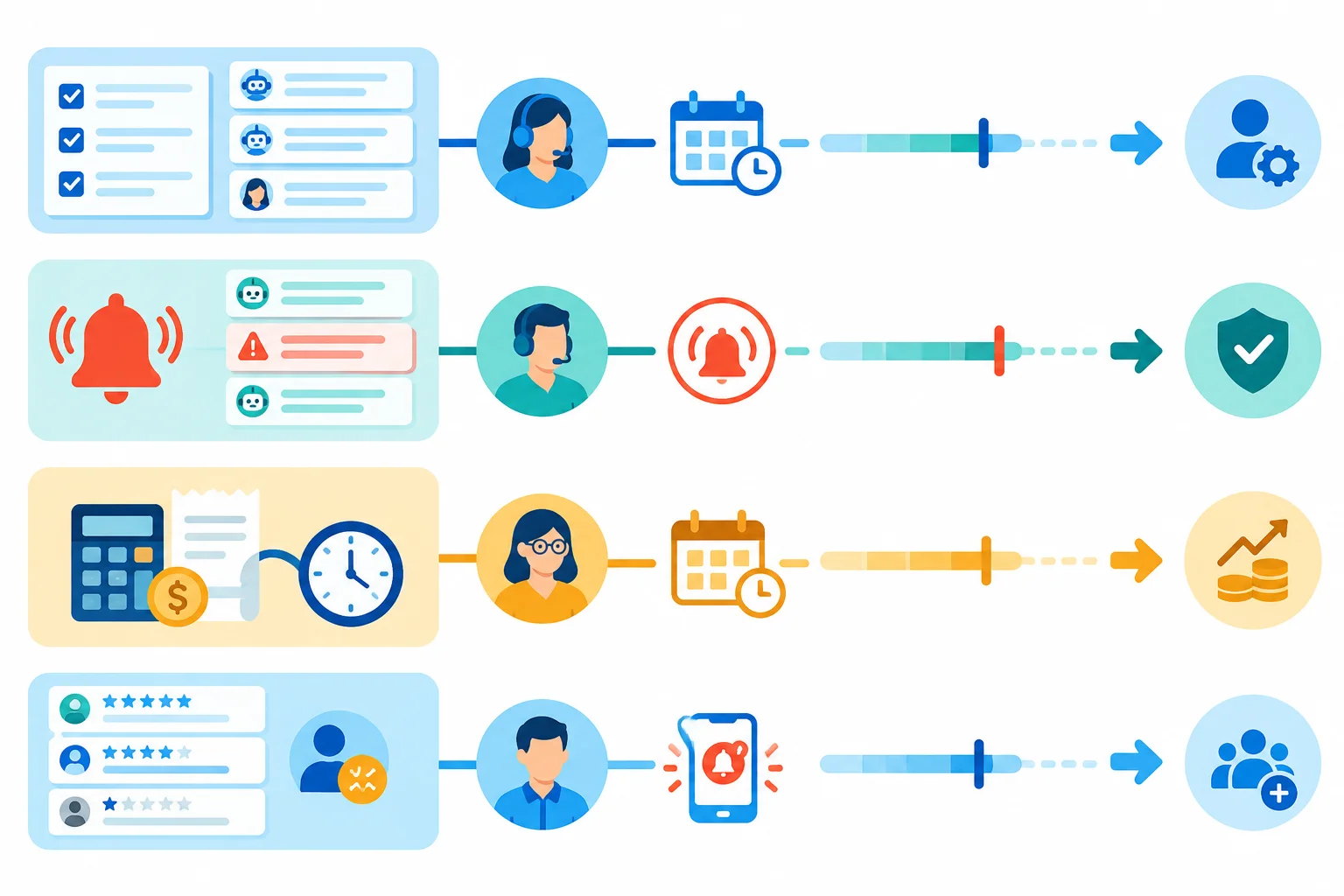
A useful monitoring entry connects a measure to an owned response, not merely to a dashboard number.
Scheduled reviews reveal patterns over time. Event-driven escalation handles a potentially serious concern when it occurs; it must not wait for the next weekly or monthly review.
At Northstar Supplies, Sam Reed’s output-review duty is to withhold an affected draft from manual sending. Any staff member who identifies an urgent safety or privacy concern contacts Maya Chen immediately and informs Leon Ortiz through the established escalation route. Leon Ortiz coordinates the incident report. Maya Chen retains authority for the immediate operating decision.
This separates 4 actions: immediate reporting, withholding an affected output, incident coordination, and operating authority. It does not make Leon the operating approver or Maya the incident coordinator.
Illustrative scenario — These entries are operating choices for Northstar Supplies. Periodic quality sampling checks whether the workflow is performing as expected. It does not replace the required review of every outgoing reply before manual sending.
| Measure and evidence | Owner | Cadence | Response threshold | Action and escalation |
|---|---|---|---|---|
| Checklist passes before correction / 20 sampled reviewed drafts | Maya Chen | Weekly | Below 95% (fewer than 19 of 20) | If the sample is below 95%, Maya Chen restricts the affected reply type to manual templates and informs Leon Ortiz within 1 business day. |
| Observed safety incidents and urgent safety or privacy reports | Leon Ortiz | Event-driven | Any reported potential incident | If any potential incident is reported, Leon Ortiz coordinates the incident record and confirms Maya Chen is informed within 15 min. Maya Chen decides immediate operating action. |
| Tool-and-usage forecast plus recorded staff effort | Leon Ortiz | Monthly | Tool forecast exceeds USD 120/month or staff effort exceeds 2 h/week | If either limit is exceeded, Leon Ortiz documents the cause and asks Maya Chen for a scope decision within 2 business days. |
| Correction notes and staff feedback reports | Maya Chen | Weekly | 3 reports of the same friction in 2 weeks | If the pattern occurs, Maya Chen assigns an investigation and reports the next action to reporters within 2 business days. |
Tip
Keep the evidence that explains a number. “95% quality” is incomplete without the number of reviewed drafts and the point at which quality was assessed. Likewise, high usage can coexist with excessive corrections, workarounds, or access delays.
A reviewer identifies a potential safety concern in an AI draft. Which response correctly uses Northstar Supplies’ monitoring route?
Repair the incomplete Northstar Supplies monitoring schedule below. Write 2 compact entries using exactly these fields:
Measure and evidence | Owner | Cadence | Response threshold | Action and escalation
For each entry, add a named owner, a cadence, a specific threshold, and an action in this form: “If [condition], [owner] takes [action] within [time].” In the urgent entry, distinguish the immediate report, withholding the affected draft, incident coordination, and Maya Chen’s operating authority.
Write at least 300 characters (0/300).

Step 6 of 9
Identify changes that require reassessment and select evidence and authorization proportionate to their impact before continued or expanded use.
Illustrative scenario: Northstar Supplies’ pilot evidence—40 reviewed drafts, 38/40 meeting the quality checklist before correction, 0 observed safety incidents, and a median handling time of 4 min rather than 6 min manually—supports only the tested workflow: routine delivery and returns replies from approved policy text, with identifiers excluded and every reply checked before manual sending.
It does not prove that a changed tool, policy source, user group, purpose, or cost will perform acceptably. A change is a reason to reassess the evidence boundary, not automatic proof of failure or success.
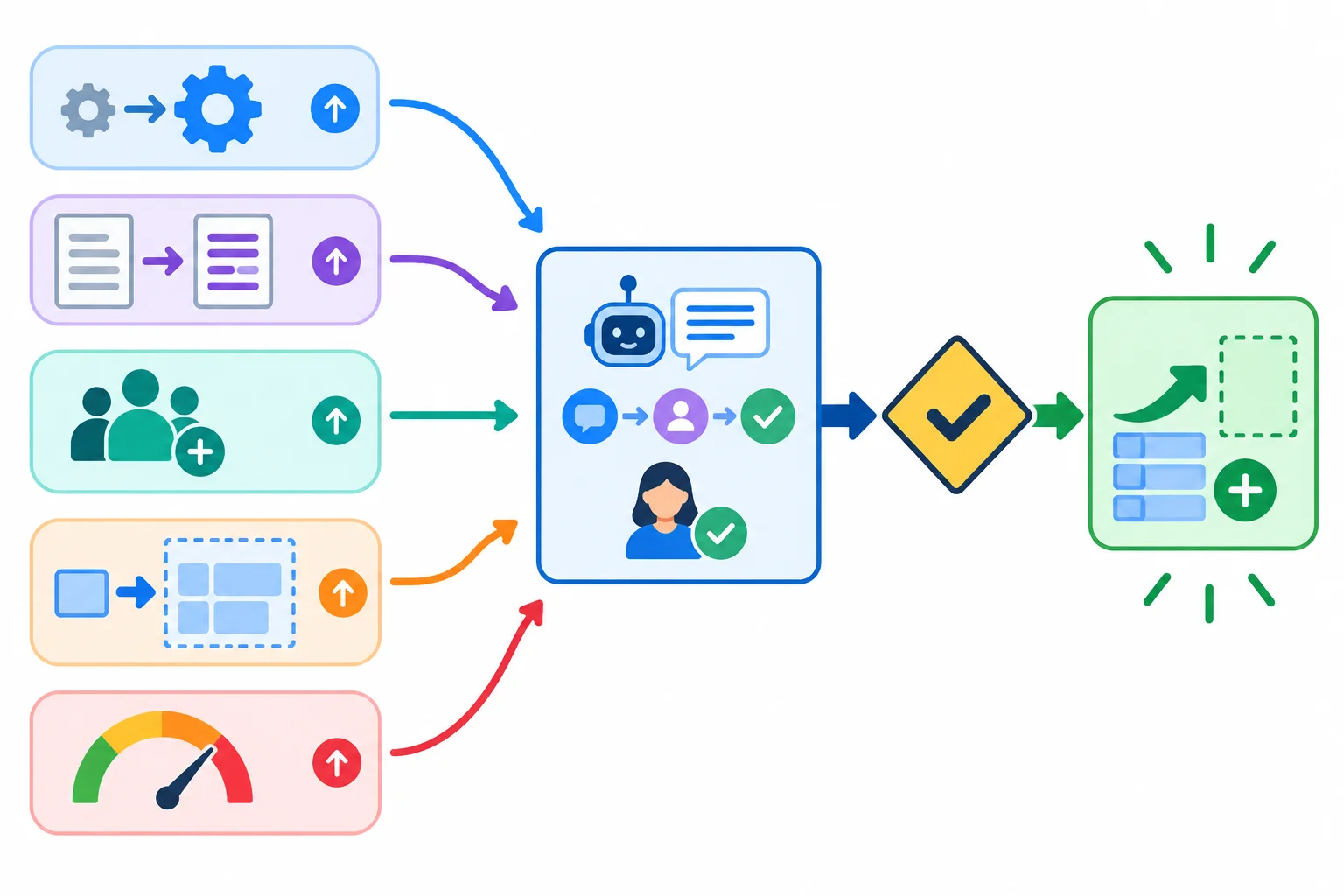
Provider updates, source changes, new user groups, expanded purposes, and rising costs can all require change review.
Tip
Watch for changes in the provider or configuration, approved source material, users, permitted purpose, and operating cost. The original pilot evidence remains useful, but only where its assumptions still hold. A changed purpose or consequential behavior can invalidate those assumptions.
Create a proportionate change record before continuing beyond the demonstrated scope. Record:
For any proposed expansion, Maya Chen makes the adoption-gate decision: Advance, Hold, or Revise. A material change needs the appropriate authorization before an Advance decision. Where existing organizational requirements call for specialist review, obtain it first.
Choose review effort according to the effect of the change—not according to a generic checklist.
| Change | Evidence to gather | Authority before expansion |
|---|---|---|
| Provider update | Assess affected behavior and run relevant draft checks | Maya Chen after impact review |
| Approved policy update | Verify controlled source; check affected answers | Maya Chen after review |
| New user group | Review access; complete readiness check | Maya Chen |
| Monthly price increase | Compare against USD 120/month; assess sustainability | Maya Chen |
| Expanded purpose | Reassess assumptions and required evidence; seek required specialist review | Appropriate authorization, then Maya Chen |
Example
What changed: Priya Shah revised the approved returns-policy text.
Affected assumptions: Drafts may now need different return instructions. Sam Reed’s required review remains in place.
Required evidence: Verify the controlled source and check drafts for the revised return scenarios.
Decision owner and outcome: Maya Chen keeps use within its current scope and chooses Hold on expansion until the checks support an adoption-gate decision.
Match each Northstar change to the review and approval it needs.
Tap an item and then its matching pair.

Step 7 of 9
Define a scoped Pause, a viable continuity process, and evidence-based restart authority for an AI-assisted workflow.
A Pause is an operating decision to stop affected AI-assisted work when continued use is not acceptable. A pause rule states:
At Northstar Supplies, Sam Reed may withhold an affected draft from manual sending and trigger escalation. Maya Chen, as process owner and approver, authorizes a scoped Pause and any restart. If Maya is unavailable, only a documented, authorized, and prepared backup in the operating responsibility map may act.
Choose the smallest scope that safely contains the problem. A pause may cover 1 task, 1 source collection, 1 user group, or the whole workflow. Do not wait for a routine review when immediate containment is needed.
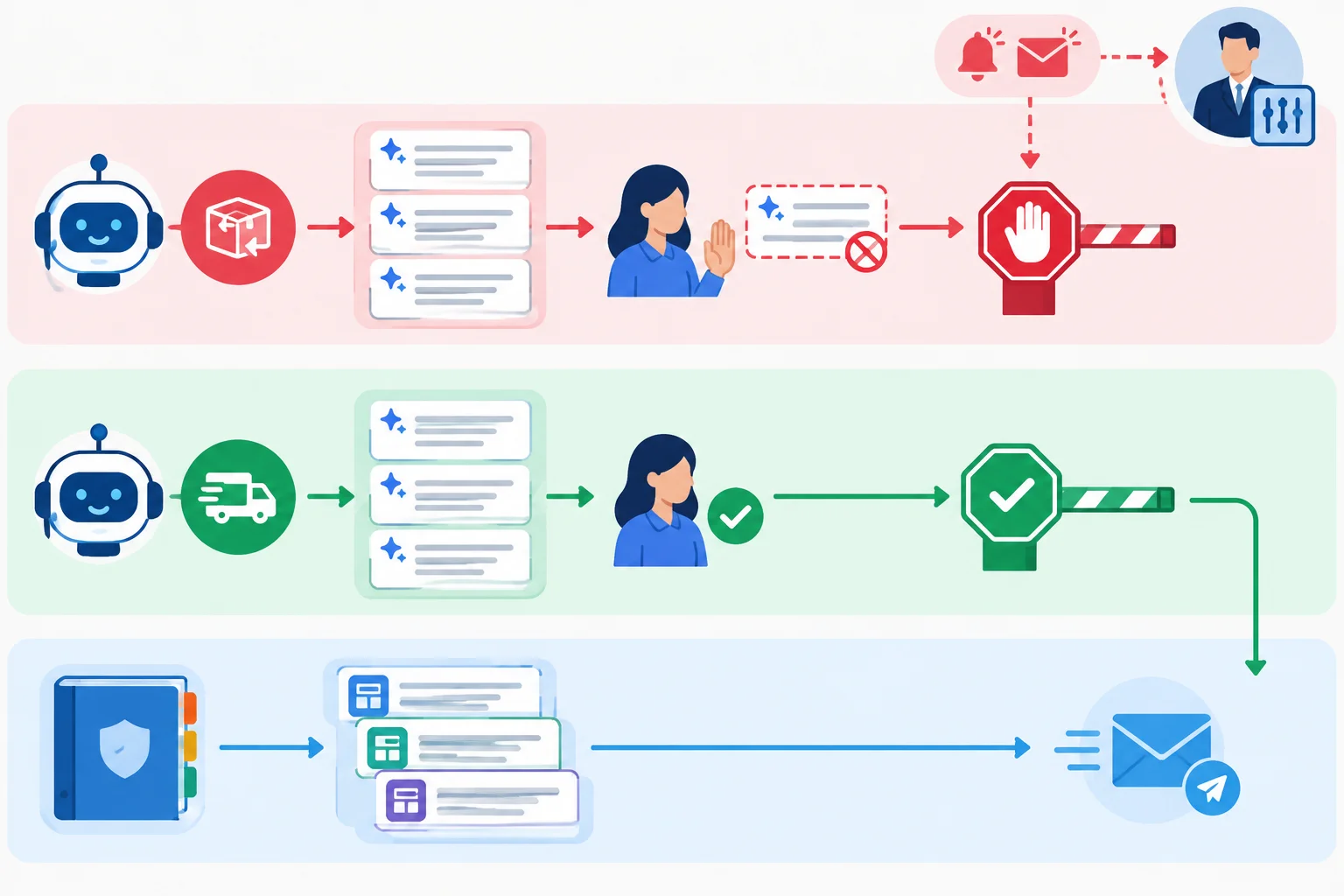
Sam Reed can withhold an affected draft. Maya Chen authorizes the smallest Pause scope that safely contains the issue.
Example
Illustrative scenario
Priya Shah discovers that the returns-policy source used for AI drafting is outdated. Sam Reed withholds affected AI-assisted returns drafts from manual sending and notifies Maya Chen, Leon Ortiz, and Priya Shah through the established route. Sam does not authorize a category-wide Pause.
Maya Chen authorizes a Pause of AI-assisted returns replies while the source is checked. Delivery replies may continue because their approved source collection is separate. Maya records whether evidence requires a wider scope.
The Pause is a bounded operating control, not a verdict on the entire tool. It contains the known issue while the team investigates and keeps required human review in place.
A continuity process keeps essential work moving without the AI service. It uses approved policy text and manual reply templates that remain accessible independently of the tool.
For each paused scope, define:
Continuity readiness needs a short rehearsal, such as a 15 min simulated outage. Confirm that current approved sources and templates are reachable, trained staff know the manual route, and the delay process works. Restored service availability alone is never a restart decision.
Example
Illustrative scenario
During the Pause of returns drafts, Maya Chen coordinates the continuity process. Priya Shah confirms that the current approved returns-policy text is available without the AI service. Authorized staff prepare replies from manual templates, and Sam Reed checks each reply before it is manually sent.
The planned manual capacity is 10 routine returns replies/day. If the queue exceeds that capacity, Maya Chen reallocates trained coverage and sends an expected-delay update through the normal customer-support process. Leon Ortiz confirms that staff can access the approved materials.
Maya Chen may authorize restart only after the approved source is corrected, relevant draft checks show that the problem is addressed, required staff updates are complete, and the constrained workflow is ready to operate again.
Tip
Keep these decisions separate: a reviewer can withhold a particular draft; Maya Chen can authorize a Pause or restart for the affected operating scope. A manual route is not an informal workaround—it is the tested continuity process for essential work.
Put the actions in the only safe operating order after a problem is found in an AI-assisted reply workflow.
Illustrative scenario: The AI source for returns replies contains outdated terms. Delivery replies use a separate approved source and are unaffected. The current approved returns-policy text and manual reply templates are accessible without the AI service. There are 9 routine returns replies waiting; the continuity process can handle 10 routine returns replies/day. Sam Reed has withheld an affected returns draft and informed Maya Chen, Leon Ortiz, and Priya Shah.
In 90–140 words, state: 1) the appropriate Pause scope and why; 2) how essential returns work continues manually, including review and delay handling; and 3) what evidence and actions are required before restart, including who has restart authority. Keep Sam Reed’s role limited to withholding the affected draft and triggering escalation.
Write at least 90 characters (0/90).

Step 8 of 9
Define retirement conditions and a managed exit that preserves continuity while handling approved work, access, and records appropriately.
A Retire decision ends the AI-assisted workflow because an enduring condition has removed the justification or ability to operate it. It is different from a temporary Pause, which has a credible path to correction and explicit restart conditions.
Retirement can be appropriate when failure persists after corrective action, necessary authorization is lost, costs remain unsustainable, or a critical duty has no available qualified owner. For Northstar Supplies, a short service outage can activate the continuity process. Repeated inability to meet the approved reply-quality requirement is not merely an outage.
Ask whether the condition is durable, material, and not credibly recoverable within the approved operating model. Do not treat restored tool availability alone as a reason to continue or restart use.
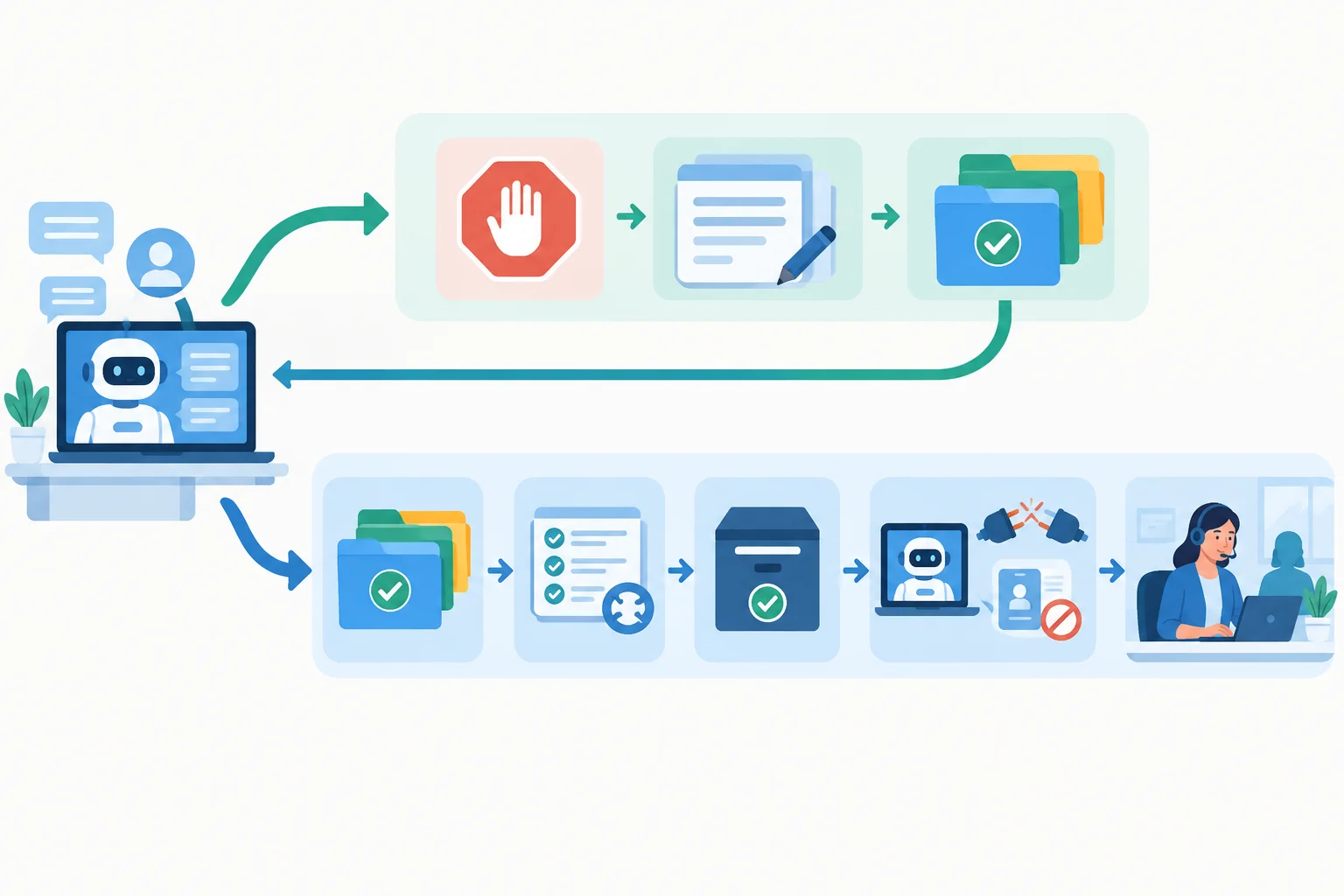
A Pause preserves a possible restart route. Retirement transitions work away from the AI workflow and closes its operating dependencies.
An exit plan turns a retirement decision into a controlled transition. It names the decision owner, transition responsibilities, communication recipients, timing, and the evidence needed to declare the exit complete.
Transfer only approved reusable work, reusable instructions, and necessary source references to an authorized accessible location. An unreviewed AI draft is not an approved deliverable simply because it exists. For a routine exit, check access, integrations, subscriptions, and residual permissions. If an urgent safety, privacy, or security concern appears, contain affected use first; routine transition tasks come later.
Records, logs, and any provider-held copies follow existing retention requirements and verified provider capabilities. Do not assume that every copy can, should, or will be deleted immediately.
Illustrative scenario — Northstar Supplies can use these fields in its exit plan. A listed backup remains a real coverage requirement: it must be specifically named, authorized, and prepared before it can take over a duty.
| Exit element | Primary owner | Plan details | Evidence before closure |
|---|---|---|---|
| Retirement decision and communication | Maya Chen | Record scope, effective date in YYYY-MM-DD format, and recipients of the decision | Authorized decision and communication sent |
| Transition and continuity coordination | Maya Chen | Sequence tasks and confirm the manual continuity process remains available | Assigned tasks tracked; manual route confirmed |
| Approved work and source references | Priya Shah; backup: To be named | Transfer approved reusable materials, instructions, and needed references to an authorized location | Authorized staff can access approved materials |
| Access and support transition | Leon Ortiz | Check appropriate access removal, integrations, subscriptions, and residual permissions | Access and permissions review recorded |
| Review-status check | Sam Reed | Separate approved reusable work from unreviewed drafts | Unreviewed drafts excluded from transferred approved work |
| Records and exit closure | Maya Chen | Apply retention requirements using verified provider capabilities; declare closure only after required evidence is present | Retention handling recorded; closure criteria confirmed |
Match each exit situation to the safeguard that should govern it.
Tap an item and then its matching pair.
Illustrative scenario — After 2 corrective changes and 2 reassessments, Northstar Supplies has repeatedly failed its approved reply-quality requirement for 3 months. Priya Shah has left the source-maintainer role. The listed backup has not passed the readiness check, so no authorized source maintainer is currently available. A draft note says only: “End AI use on 2026-09-30. Staff can use manual templates.”
Write a concise exit review. First classify the decision as Pause or Retire and justify it. Then identify what the note is missing for: decision ownership, communication, feasible transfer of approved work and source references, disconnection of access and integrations, records handling, and confirmation that the exit is complete. Keep the ownership gap visible rather than assigning work to Priya Shah or the unready backup.
Write at least 250 characters (0/250).

Step 9 of 9
Assemble a compact Northstar Supplies adoption plan and stress-test it against a source change and unavailable owner.
A decision-ready adoption plan is a compact operating document, not a promise to expand. It connects the decisions already made so that staff can see what is permitted now, what evidence is still required, who can act, and how essential work continues without AI.
Use these exact sections: Adoption gates, Responsibilities, Readiness and feedback, Monitoring, Change review, and Continuity and exit.
Keep the pathway visible: Pilot review → Limited adoption → Team rollout → Routine operation. At every adoption gate, record the evidence, unresolved conditions, decision authority, and the decision: Advance, Hold, or Revise. A favorable pilot result does not remove the need for coverage, readiness, monitoring, or a continuity process.
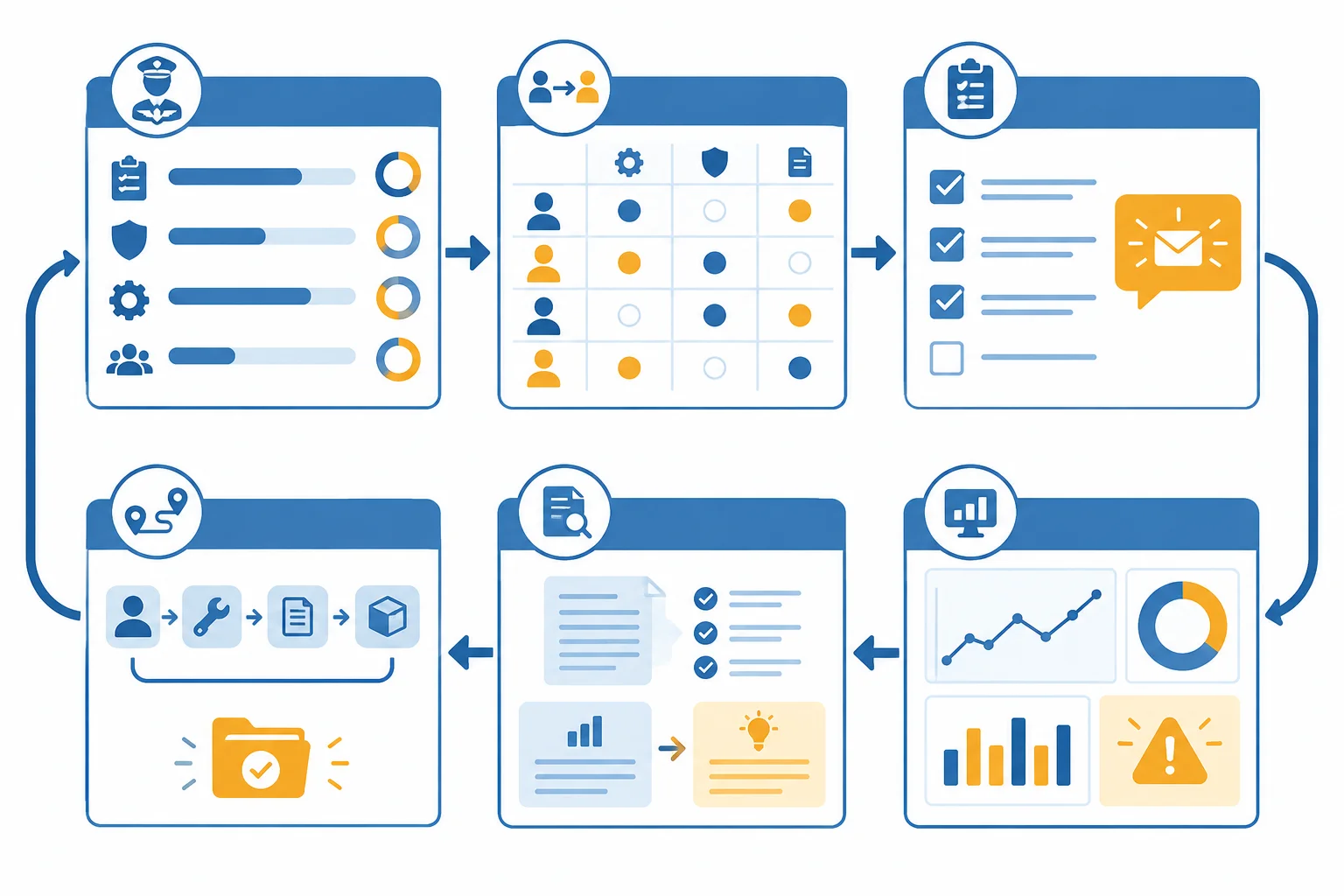
A plan is coherent when evidence, ownership, responses, and the non-AI route support one another.
This supplied outline preserves the Northstar Supplies decisions made earlier. Complete only genuine gaps; do not silently replace a named owner, threshold, or authority.
| Plan section | Pre-filled commitment | Field still to complete |
|---|---|---|
| Adoption gates | Pilot review → Limited adoption → Team rollout → Routine operation. Maya Chen is the approver for an adoption-gate decision. | Evidence, unresolved condition, and Advance, Hold, or Revise decision for the next gate |
| Responsibilities | Maya Chen: process owner and approver; Leon Ortiz: tool administrator and support contact; Priya Shah: source maintainer; Sam Reed: output reviewer. | Operating responsibility map using Duty | Primary owner | Backup | Decision authority | Capacity or coverage |
| Readiness and feedback | Readiness checks use a normal case and an exception case. Maya records authorization results. Leon receives ordinary reports; urgent safety or privacy concerns go to Maya immediately. | Named, authorized, prepared backup and any unmet readiness consequence |
| Monitoring | Use the canonical quality, safety, cost, and adoption schedule on this screen. | Any locally approved additions, without changing the recorded entries |
| Change review | Record what changed, affected assumptions, evidence needed, decision owner, and whether use continues, remains restricted, or pauses. | Change-specific evidence and decision outcome |
| Continuity and exit | Manual replies use approved policy text and templates independently of AI. Maya authorizes Pause, restart, and Retire decisions. | Coordinator, capacity, and conditions for the continuity process and exit plan |
These are the canonical monitoring entries for Northstar Supplies. Preserve their owners, cadence, thresholds, escalation routes, and response times unless an authorized change record explains a revision and Maya Chen approves it. Weekly sampling does not replace Sam Reed’s review of every outgoing reply before manual sending.
| Measure and evidence | Owner | Cadence | Response threshold | Action and escalation |
|---|---|---|---|---|
| Checklist passes before correction / 20 sampled reviewed drafts | Maya Chen | Weekly | Below 95% (fewer than 19 of 20) | If the sample is below 95%, Maya Chen restricts the affected reply type to manual templates and informs Leon Ortiz within 1 business day. |
| Observed safety incidents and urgent safety or privacy reports | Leon Ortiz | Event-driven | Any reported potential incident | If any potential incident is reported, Leon Ortiz coordinates the incident record and confirms Maya Chen is informed within 15 min. Maya Chen decides immediate operating action. |
| Tool-and-usage forecast plus recorded staff effort | Leon Ortiz | Monthly | Tool forecast exceeds USD 120/month or staff effort exceeds 2 h/week | If either limit is exceeded, Leon Ortiz documents the cause and asks Maya Chen for a scope decision within 2 business days. |
| Correction notes and staff feedback reports | Maya Chen | Weekly | 3 reports of the same friction in 2 weeks | If the pattern occurs, Maya Chen assigns an investigation and reports the next action to reporters within 2 business days. |
Complete only these 3 gaps in the supplied outline. Write 3 compact lines, about 60–100 words total.
To be named if nobody prepared is available, and state whether coverage is met.Write at least 250 characters (0/250).
Illustrative scenario
A revised approved returns policy takes effect on 2026-07-16. Priya Shah is unavailable for 2 weeks. The listed source-maintainer backup has not passed the readiness check. Delivery-policy text is unchanged and maintained separately.
In the weekly sample, 18 of 20 reviewed returns drafts meet the checklist before correction; 2 drafts refer to old terms. Sam Reed holds those drafts and an ordinary report reaches Leon Ortiz. There is no reported potential safety or privacy incident. The tool forecast is USD 118/month and staff effort is 1.5 h/week.
The revised policy text and approved manual reply templates are accessible without the AI service. The continuity process can handle 10 routine returns replies/day.
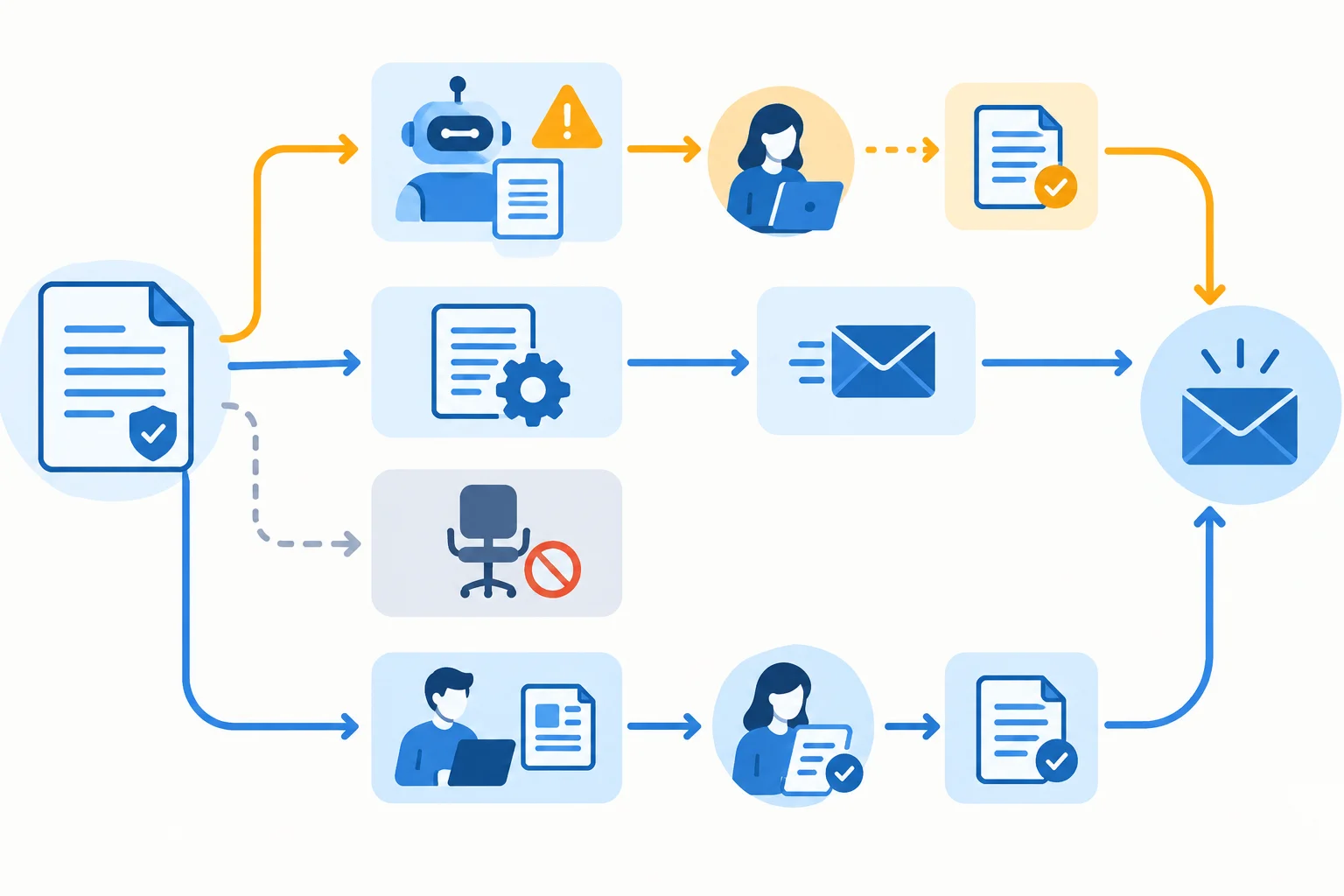
A changed source and unavailable coverage should be assessed at the affected scope rather than treated as automatic evidence about every task.
Summary
Using the supplied plan and scenario, write 6 compact labeled lines under the exact headings: Adoption gates; Responsibilities; Readiness and feedback; Monitoring; Change review; Continuity and exit.
Make a justified current operating decision for returns and delivery. Keep the source-maintainer coverage gap visible. State the relevant readiness consequence and ordinary feedback route; apply the applicable canonical monitoring response; name the change-review evidence and Maya Chen’s authority; and state the workable manual continuity route plus when Retire, rather than a temporary Pause, would need consideration. Do not claim an unsupported Team rollout or Routine operation.
Write at least 500 characters (0/500).
Congratulations! You completed: Planning AI Adoption and Ongoing Ownership
You completed this level!
Up next: Delivering an AI-Assisted Solution
 Specifying an End-to-End AI-Assisted SolutionTurn a real, low-risk user problem into a compact solution specification. Connect requirements, authorized sources, component responsibilities, human checkpoints, and acceptance criteria while making important design tradeoffs explicit.
Thousands of online courses in video, ebooks and audiobooks.
To test your knowledge during online courses
Generated directly from your cell phone's photo gallery and sent to your email

Download our app via QR Code or the links below:.



Carry knowledge in your pocket.
Download the Cursa app.
There are hundreds of free courses available, with a free certificate of completion that is saved in your mobile image gallery.
Download the app to access the Course Completion Certificate for Free.


+ 10 million
students

Free and Valid
Certificate

60 thousand free
exercises

4.8/5 rating in
app stores

Free courses in
video and ebooks