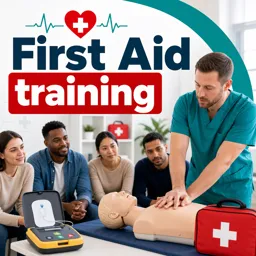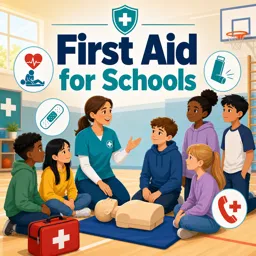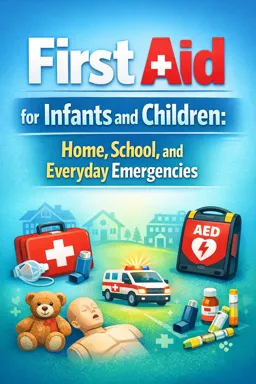


Free ebook on pediatric first aid for choking, CPR awareness, illness, injuries, emergency warning signs, and safety planning.
Free ebook + audiobook content
-

Pediatric First Aid Mindset, Limits, and Decision Pathways
+ Exercise: In pediatric first aid, which approach best reflects the idea of monitoring and escalation? 17 minutes
-
Age-Specific Assessment and Communication from Newborns to Early Teens
+ Exercise: When assessing a frightened toddler with a possible arm injury, which approach best helps you get accurate information while reducing fear? 16 minutes
-
Rapid Danger Check and When to Call Emergency Services
+ Exercise: During a rapid danger check, which situation best indicates you should call emergency services before trying to provide hands-on help? 14 minutes


-
Choking Prevention and Safe Feeding by Developmental Stage
+ Exercise: Which approach best describes safe feeding for choking prevention in young children? 17 minutes
-
Choking Response Techniques for Infants, Children, and Teens
+ Exercise: A child is coughing forcefully, can make sounds, and is breathing. What is the most appropriate first-aid response? 14 minutes
-
CPR Basics for Infants and Children and Use of an AED
+ Exercise: During CPR on a small child, you notice the AED pads may touch if placed on the chest. What is the best adjustment? 14 minutes
-
Fever, Hydration, and Dehydration: Home Care and Red Flags
+ Exercise: Which situation is most appropriate to manage at home with close monitoring rather than seeking same-day medical advice? 15 minutes
-
Allergic Reactions and Anaphylaxis Action Steps
+ Exercise: Which situation should be treated as an emergency with epinephrine right away? 16 minutes
-
Asthma Attacks: Recognition, Inhaler/Spacer Support, and Escalation
+ Exercise: Which situation best indicates an urgent need to escalate care during a child’s suspected asthma attack? 14 minutes
-
Seizures and Febrile Seizures: Safety, Timing, and Recovery Care
+ Exercise: During a child’s suspected convulsive seizure, which action best supports safety and breathing? 14 minutes
-
Head Injuries and Concussion Warning Signs in Home and School Settings
+ Exercise: After a child hits their head at school and seems mostly fine, which action best helps prevent a second injury if a concussion is suspected? 14 minutes
-
Burns and Scalds: Cooling, Covering, and When to Seek Urgent Care
+ Exercise: A child spills hot liquid on their arm. After moving them away from the heat source and removing wet clothing, what is the best next step? 14 minutes
-
Poisoning and Ingestion Hazards: Immediate Actions and Prevention
+ Exercise: A child may have swallowed a button battery but seems fine. What is the most appropriate next action? 15 minutes
-
Drowning and Near-Drowning: Rescue Priorities and Post-Event Monitoring
+ Exercise: After pulling an awake child from water who is coughing, which action best matches recommended priorities? 13 minutes
-
Nosebleeds and Dental Injuries: Bleeding Control and Tooth-Saving Steps
+ Exercise: A child has an active nosebleed at school. Which first-aid action best helps stop the bleeding while reducing swallowing blood? 14 minutes
-
Fractures, Sprains, and Suspected Spinal Injuries: Stabilize and Refer
+ Exercise: A child twists an ankle during sports, cannot bear weight, and swelling increases quickly. What is the best first-aid response? 15 minutes
-
Common School and Playground Incidents: Cuts, Bruises, and Soft-Tissue Injuries
+ Exercise: A child has a small cut that is bleeding steadily. Which action best helps stop the bleeding without disrupting clotting? 15 minutes
-
Scenario Walkthroughs and Quick-Reference Warning Sign Tables
+ Exercise: In the S-C-A-N scenario walkthrough template, what is the main purpose of the Next step? 15 minutes
-
Pediatric First Aid Kit Build, Maintenance, and Medication Safety
+ Exercise: Which approach best reduces the risk of accidental double-dosing when multiple caregivers give a child liquid medicine? 16 minutes
-
Safety-Proofing by Developmental Stage and Environmental Risk Checks
+ Exercise: What is the best action to take when you notice a child has gained a new ability like climbing or opening doors? 17 minutes
-
Caregiver Action Plans, Emergency Contact Sheets, and Allergy/Medication Logs
+ Exercise: Which document is intended to be easy to scan in under 10 seconds and lists who to call in what order, even when the situation is not specific? 17 minutes
About the free ebook with audio
First Aid for Infants and Children: Home, School, and Everyday Emergencies
This free online ebook provides practical pediatric first-aid guidance for caregivers, parents, teachers, and school staff. It focuses on calm, age-aware decision-making when an infant, child, or teenager is ill or injured.
Recognize danger and act safely
Learn how to perform a rapid safety check, assess responsiveness and breathing, and identify warning signs that require emergency services or urgent medical care. The ebook explains why first aid must be adapted to a child's developmental stage, symptoms, and the setting.
Respond to common childhood emergencies
Clear, safety-focused guidance addresses choking, CPR and AED awareness, fever and dehydration, allergic reactions, asthma symptoms, seizures, head injuries, burns, poisoning, drowning incidents, bleeding, dental injuries, and suspected fractures or spinal injuries.
Build readiness at home and school
Prepare for everyday incidents with safer feeding practices, supervised play, an organized first-aid kit, medication safeguards, emergency contacts, and allergy or medication records. Practical scenarios and warning-sign references help readers know when home care is reasonable and when professional help is essential.
Important safety note
This ebook supports, but does not replace, hands-on first-aid training or advice from qualified health professionals. Call local emergency services immediately for severe breathing problems, unconsciousness, uncontrolled bleeding, suspected poisoning, severe allergic reactions, or other life-threatening symptoms.
What should I do if an infant or child is choking?
Assess whether they can cough or breathe, use age-appropriate choking response steps, and call emergency services if breathing is blocked or they become unresponsive.
Which child head injury symptoms need urgent medical care?
Seek urgent help for loss of consciousness, repeated vomiting, worsening headache, seizure, confusion, unusual behavior, or difficulty waking the child.
When is a fever in a child an emergency?
Urgent assessment may be needed for a very young infant with fever, breathing trouble, seizure, stiff neck, dehydration, persistent worsening symptoms, or unusual lethargy.
This ebook/audiobook includes:

5 hours and 26 minutes of audio content

Digital certificate of course completion (Free)

Exercises to train your knowledge

100% free, from content to certificate
Ready to get started?

 recommended
In the app you will also find...

Over 5,000 free courses
Programming, English, Digital Marketing and much more! Learn whatever you want, for free.

Study plan with AI
Our app's Artificial Intelligence can create a study schedule for the course you choose.

From zero to professional success
Improve your resume with our free Certificate and then use our Artificial Intelligence to find your dream job.
You can also use the QR Code or the links below.