Why a Rapid Danger Check Matters
In child emergencies, the first seconds are about preventing a second victim. A rapid danger check is a quick scan of the scene and the child to identify immediate threats that could harm you, the child, or bystanders. It is not a full medical assessment and it is not a time to “figure out what happened.” Its purpose is to answer two questions fast: (1) Is it safe enough to approach and stay? (2) Do I need emergency services now, before I do anything else?
A danger check is especially important with infants and children because hazards can be small, hidden, or still active (a hot bath, an unsecured dog, a choking risk on the floor, a live electrical cord). Children may also move unpredictably, run back into danger, or resist help.
What “Danger” Includes: A Practical Checklist
Think in categories. You are looking for anything that can injure you or worsen the child’s condition while you help.
1) Environmental hazards
Traffic and moving vehicles: roads, driveways, parking lots, bicycles, scooters.
Fire, smoke, heat: kitchen fires, candles, heaters, grills, hot surfaces, steam.
Continue in our app.- Listen to the audio with the screen off.
- Earn a certificate upon completion.
- Over 5000 courses for you to explore!

Download the app
Water hazards: pools, bathtubs, buckets, ponds, fast-moving water, slippery tiles.
Electricity: downed power lines, exposed wires, appliances in water, outlets.
Structural hazards: falling objects, broken glass, unstable furniture, collapsed shelves.
Chemicals and fumes: cleaning products, pesticides, carbon monoxide risk (garage, faulty heater).
2) Human and animal hazards
Aggressive or frightened animals: dogs, cats, wildlife.
Violence or unsafe people: fights, intoxication, weapons, domestic conflict.
Crowds and panic: bystanders pressing in, interfering, filming, or giving unsafe advice.
3) Medical and exposure hazards to you
Blood and body fluids: vomiting, bleeding, saliva, nasal secretions.
Needles or sharp objects: broken glass, syringes, metal edges.
Allergens: if you have severe allergies (e.g., latex), avoid exposure.
4) Child-specific immediate threats
Ongoing choking risk: food, small toys, coins within reach; the child may still be chewing or have an object in the mouth.
Ongoing drowning risk: face near water, bathtub still filling, child in a pool without support.
Ongoing heat/cold exposure: child left in a hot car, hypothermia risk outdoors.
Ongoing poisoning exposure: open bottle, spilled liquid, fumes.
Rapid Danger Check: Step-by-Step (10–20 Seconds)
This is a practical sequence you can use at home, school, playgrounds, and public spaces. The goal is speed and safety, not perfection.
Step 1: Pause at a distance and scan (2–5 seconds)
Before you touch the child, stop for a brief moment. Look for the biggest threats first: traffic, fire/smoke, electricity, water, violence. If you see a hazard that could injure you immediately, do not rush in.
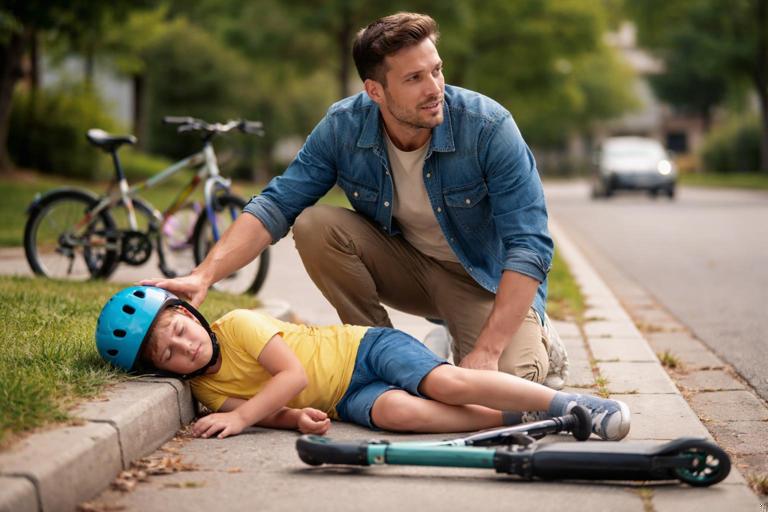
Example: A child is lying near a curb after a fall from a scooter. You first look for cars and moving bicycles. If traffic is close, you position yourself between traffic and the child, or you direct someone to stop traffic before you kneel down.
Step 2: Make the scene safer if you can do so quickly
Only do actions that are fast and low-risk. If making it safe would take time or expose you to danger, keep your distance and call emergency services.
Traffic: ask an adult to stop cars, use hazard lights, move bystanders to create space.
Water: remove the child from water if it is safe to do so; turn off taps; move buckets away.
Electricity: do not touch the child if they are in contact with a live source; switch off power at the breaker if accessible and safe; keep others away.
Smoke/fumes: move to fresh air if you can do so without entering a smoke-filled room; open doors/windows only if safe.
Aggressive animal: do not approach; call for help; use barriers; secure the animal if trained and safe.
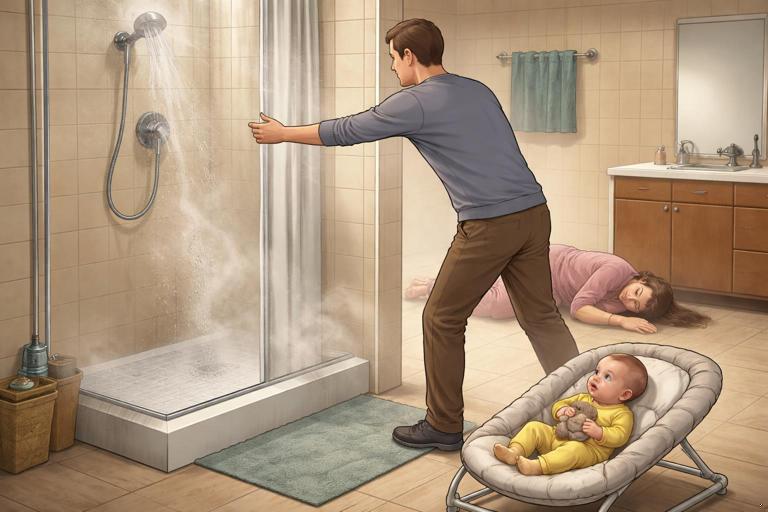
Example: You find an infant with a caregiver who has collapsed in a bathroom with a running hot shower. You turn off the water and open the door to reduce steam before focusing on the infant.
Step 3: Use basic protective measures
If available, put on gloves. If not, you can still help; just minimize contact with body fluids. Use a clean cloth as a barrier if needed. Afterward, wash hands thoroughly.
Step 4: Identify “call now” triggers while approaching
As you move closer, you are already deciding whether emergency services are needed immediately. You do not need a diagnosis; you need to recognize high-risk patterns (listed below).
When to Call Emergency Services: The “Call Now” List
Call emergency services immediately if any of the following are present or suspected. If you are alone with the child, calling first is often the safest choice when the situation is clearly life-threatening or rapidly worsening.
Breathing and airway emergencies
Not breathing, gasping, or struggling to breathe (visible effort, unable to speak/cry normally, severe chest retractions, blue/gray lips or face).
Choking with ineffective cough or inability to cough/cry/breathe.
Severe asthma symptoms not improving quickly with prescribed reliever medication, or the child is too breathless to talk/cry normally.
Possible anaphylaxis (rapid onset of breathing difficulty, swelling of lips/tongue, widespread hives, collapse, or severe vomiting after allergen exposure). Use prescribed epinephrine auto-injector if available and call emergency services.
Unconsciousness, seizures, and altered responsiveness
Unconscious or not responding normally (cannot be awakened, unusually confused, very drowsy after an injury, or “not acting right” in a concerning way).
Seizure lasting more than 5 minutes, repeated seizures without full recovery between, first-time seizure, seizure after head injury, or seizure with breathing problems.
Fainting with ongoing symptoms (chest pain, trouble breathing, severe headache, or persistent confusion).
Major trauma or high-risk injuries
Severe bleeding that does not stop with firm pressure, or blood spurting/pooling rapidly.
Suspected neck or spine injury (significant fall, diving injury, car crash, child complains of neck/back pain, weakness, tingling, or cannot move normally).
Serious head injury with loss of consciousness, repeated vomiting, worsening headache, seizure, unequal pupils, or increasing drowsiness.
Major burns (large area, deep/charred, burns to face/hands/genitals, electrical burns, chemical burns, or burns with breathing difficulty from smoke).
Possible broken bone with deformity, open fracture, or inability to use a limb after significant trauma.
Crush injuries or child trapped under heavy object.
Drowning and near-drowning
Any drowning event where the child was submerged or inhaled water and has coughing, breathing changes, unusual sleepiness, or vomiting. Call emergency services even if the child seems better, because breathing problems can develop.
Poisoning and toxic exposure
Suspected ingestion of a dangerous substance (unknown pills, strong cleaners, hydrocarbons like gasoline, pesticides) or any poisoning with symptoms such as drowsiness, seizures, breathing problems, or burns around the mouth.
Carbon monoxide exposure suspicion (multiple people with headache/nausea, exposure in garage or near heater). Get to fresh air and call emergency services.
Severe allergic reaction, severe infection, or shock-like signs
Signs of shock (very pale/clammy skin, weak or fast pulse, extreme weakness, confusion, fainting, or child looks severely unwell after injury or illness).
Possible meningitis/sepsis red flags with severe illness (very hard to wake, breathing difficulty, mottled skin, purple rash that does not fade with pressure, or rapid deterioration). Call emergency services.
Other “call now” situations
Child under 1 year with a serious concern (breathing trouble, significant injury, or sudden collapse) because infants can deteriorate quickly.
You are unsure and the child looks very unwell or is getting worse.
Unsafe scene where you cannot provide help without risk (fire, violence, live electricity, toxic fumes).
Call Emergency Services vs. Call a Poison Center vs. Seek Urgent Care
Not every emergency requires an ambulance, but some require immediate expert guidance. When in doubt, prioritize safety and professional help.
Poisoning: emergency services or poison center?
Call emergency services if the child has breathing trouble, seizures, severe drowsiness, collapse, severe burns, or you suspect a highly dangerous ingestion and symptoms are present.
Call a poison center (or local equivalent) for immediate instructions if the child is stable and you suspect ingestion/exposure. Have the container ready and do not induce vomiting unless instructed.
Urgent care or same-day doctor visit
Consider urgent evaluation (not necessarily emergency services) for injuries or illnesses that are concerning but not immediately life-threatening, such as a possible fracture without severe deformity, a deep cut that may need stitches but bleeding is controlled, or moderate breathing symptoms that respond to medication but recur. If symptoms escalate, switch to emergency services.
How to Call Emergency Services Effectively (What to Say)
Calling early is valuable, but the quality of information matters. Use a simple structure so you do not forget key details under stress.
The “Where–What–Who–Now” script
Where: exact address, landmarks, gate codes, school entrance, playground name, floor/room number.
What happened: brief mechanism (fell from height, choking on food, found in pool, possible poisoning).
Who: child’s approximate age and size; number of patients.
Now: current condition (breathing/not breathing, conscious/unconscious, severe bleeding, seizure ongoing, anaphylaxis suspected).
Example call: “We are at 18 Oak Street, second floor apartment 2B. A 3-year-old is choking on food and cannot cough or cry. He is conscious but struggling to breathe. We need an ambulance now.”
Follow dispatcher instructions
Stay on the line if possible. The dispatcher may coach you through immediate actions and will decide the fastest response. If you must hang up to help, tell them first and call back as soon as you can.
Send someone to meet responders
If others are present, assign a specific person: “You in the red jacket—go outside and wave them down.” This reduces delays in schools, apartment buildings, and large parks.
Practical Scenarios: Rapid Danger Check + Call Decision
Scenario 1: Playground fall from climbing frame
You see a child on the ground near a climbing structure.
Danger check: scan for other children running, unstable equipment, and hard surfaces. Ask bystanders to give space.
Call now triggers: child is unconscious even briefly, has repeated vomiting, seizure, worsening headache, or cannot move arms/legs normally after a significant fall.
If unsure: if the fall was from a significant height and the child is unusually sleepy or confused, call emergency services.
Scenario 2: Kitchen incident with smoke
A smoke alarm is sounding; you find a child coughing near the kitchen.
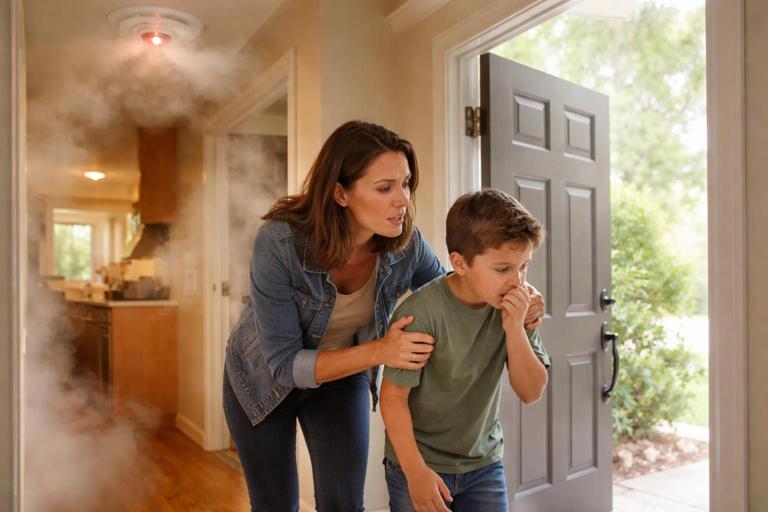
Danger check: fire/smoke is an active hazard. Do not stay in a smoke-filled room. Move everyone to fresh air.
Call now triggers: breathing difficulty, wheezing, soot around nose/mouth, hoarse voice, burns to face, or child seems drowsy/confused.
Key point: your first aid starts with evacuation to fresh air; do not delay calling if inhalation injury is possible.
Scenario 3: Possible poisoning in a bathroom
You find an open bottle of cleaner and a toddler with liquid on the chin.
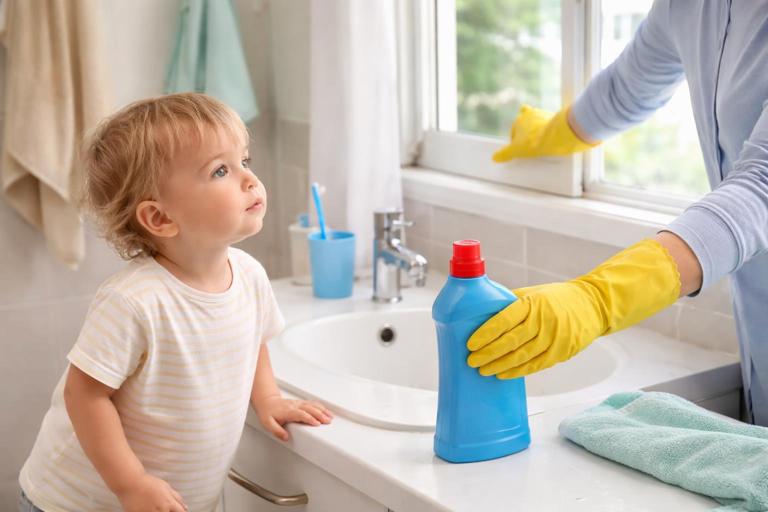
Danger check: chemical exposure to you and the child; ventilate if safe; keep the bottle away.
Call decision: if the child is coughing, drooling, has mouth burns, trouble breathing, or is drowsy, call emergency services. If stable, call a poison center immediately for instructions.
What to prepare: product name, amount possibly swallowed, time of exposure, child’s weight/age, symptoms.
Scenario 4: Child found in a pool
A child is pulled from water and is coughing.
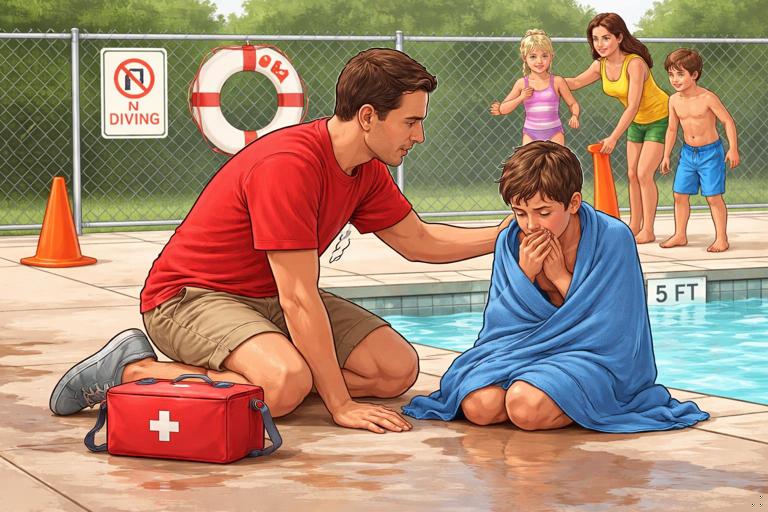
Danger check: ensure you are not at risk of falling in; clear the pool edge; remove other children.
Call decision: call emergency services for any submersion event with symptoms (coughing, breathing changes, unusual tiredness, vomiting) or if you are uncertain about the duration underwater.
Why: breathing problems can develop after the event even if the child initially seems okay.
Scenario 5: Electrical hazard at home
A child is near a frayed cord and appears unresponsive.
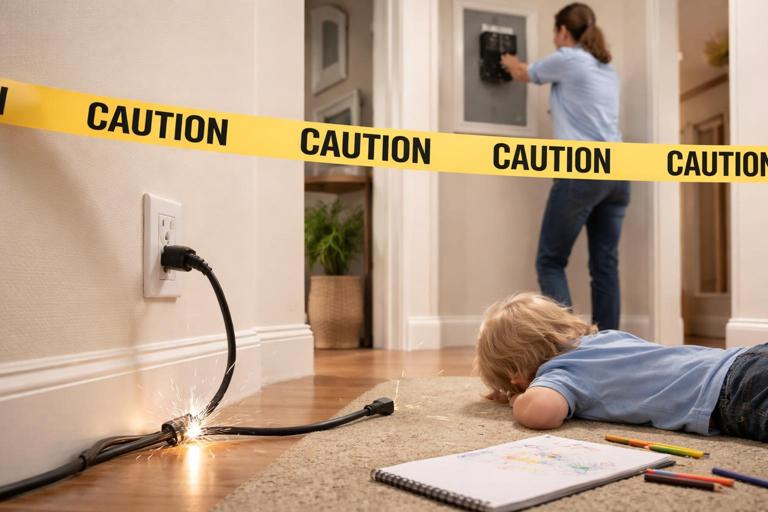
Danger check: electricity may still be live. Do not touch the child until power is off.
Action: shut off power at the breaker if safe; use a non-conductive object only if trained and necessary; keep others away.
Call decision: call emergency services immediately for suspected electrical injury, especially with unresponsiveness, burns, or abnormal breathing.
Common Mistakes to Avoid During the Danger Check
Rushing in without scanning: leads to rescuer injury (traffic, electricity, aggressive animals).
Trying to “fix the scene” instead of calling: if the hazard is active (fire, violence, fumes), call emergency services and keep a safe distance.
Delaying the call to gather perfect information: call with what you know; updates can be given later.
Assuming a child is fine because they are quiet: quiet can mean shock, head injury, breathing compromise, or fear.
Not controlling bystanders: crowds can block air, space, and access for responders; assign tasks clearly.
A Simple Decision Tool You Can Memorize
If you want one compact tool for real life, use this:
1) Is the scene safe enough to approach? If no: call emergency services and keep distance. 2) Is there a life threat right now (breathing problem, unconsciousness, seizure, severe bleeding, anaphylaxis, drowning, major trauma, dangerous poisoning)? If yes: call emergency services now. 3) If not sure: if the child looks very unwell or is getting worse, call.This tool is not about being dramatic; it is about recognizing that children can deteriorate quickly and that early activation of emergency services can shorten time to advanced care.