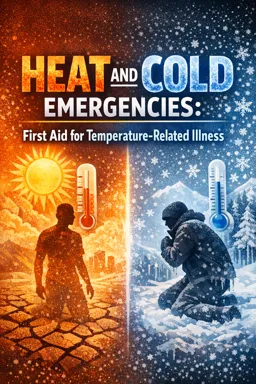

Free ebook on first aid for heat illness, hypothermia, frostbite, safe cooling and warming, hydration, and emergency warning signs.
Free ebook content
-

Heat and Cold Emergencies: How the Body Loses and Gains Heat
+ Exercise: On a humid, warm day, a person is drenched in sweat but still overheating. Which explanation best fits why they are not cooling effectively?
-
Risk Factors for Heat-Related Illness and Cold-Related Illness
+ Exercise: When multiple heat-illness risk factors are present and symptoms seem mild, what is the most appropriate first-aid decision approach?


-
Heat Cramps: Early Warning Signs and Immediate Care
+ Exercise: During hot-weather exertion, which response best supports immediate care for suspected heat cramps?
-
Heat Exhaustion: Recognition, Cooling, Hydration, and Monitoring
+ Exercise: During first aid for suspected heat exhaustion, when should you avoid giving the person oral fluids and instead focus on cooling and urgent medical evaluation?
-
Heat Stroke: Medical Emergency Response and Rapid Cooling
+ Exercise: When you suspect heat stroke with altered mental status, what is the correct immediate priority?
-
Cold Stress and Mild Hypothermia: Early Signs and Safe Rewarming
+ Exercise: Which situation should make you treat the person as moderate/severe hypothermia and seek urgent medical care rather than continuing basic mild rewarming steps?
-
Severe Hypothermia: When It’s Life-Threatening and What to Do Until Help Arrives
+ Exercise: When giving first aid for suspected severe hypothermia, which action best reduces the risk of triggering dangerous heart rhythms while helping the person warm up?
-
Frostbite and Frostnip: Identifying Tissue Freezing and Protecting Skin
+ Exercise: Which situation best indicates frostbite rather than frostnip?
-
Safe Cooling and Warming Methods: What Works and What Can Harm
+ Exercise: When warming someone after cold exposure, which approach best reduces the risk of burns and other complications?
-
Hydration and Electrolytes in Temperature-Related Illness
+ Exercise: After several hours of heavy sweating, a person has been drinking only plain water but still feels weak and crampy. Which hydration approach best matches first-aid guidance?
-
When to Seek Urgent Care: Red Flags and Decision Pathways
+ Exercise: During a heat or cold emergency, which situation best indicates you should call emergency services rather than continue self-care or contact a clinician?
-
Prevention in Everyday Life, Travel, and Outdoor Activities
+ Exercise: During a winter walk, what action best helps prevent getting chilled during breaks after you’ve been moving?
About the free ebook
Heat and Cold Emergencies: First Aid for Temperature-Related Illness
Extreme temperatures can become dangerous quickly. This free ebook explains how the body gains and loses heat, how to recognize temperature-related illness, and what first-aid actions can help while emergency care is arranged.
Recognize heat illness early
Heat cramps, heat exhaustion, and heat stroke exist on a spectrum. Learn to identify warning signs such as painful muscle cramps, heavy sweating, weakness, dizziness, nausea, confusion, fainting, and hot skin. Heat stroke is a medical emergency: altered mental status, collapse, or very hot skin requires immediate emergency help and rapid cooling.
Respond safely to cold exposure
Cold stress can progress from shivering and clumsiness to hypothermia, confusion, drowsiness, and unconsciousness. The ebook covers gentle, safe rewarming for mild hypothermia and the urgent steps to take when severe hypothermia is suspected. It also explains how to spot frostnip and frostbite and protect affected skin from further injury.
Use methods that help, not harm
- Move the person away from the heat or cold source.
- Use appropriate cooling or warming methods for the condition.
- Offer fluids only when the person is awake, alert, and able to swallow.
- Monitor for worsening symptoms and seek urgent care when red flags appear.
Prepare for changing conditions
Practical guidance on hydration, electrolytes, clothing, travel, outdoor activity, and individual risk factors supports prevention before an emergency occurs. This educational resource reinforces prompt first aid and appropriate medical evaluation; it does not replace professional medical care.
What are the warning signs of heat stroke?
Confusion, fainting, seizures, collapse, or very hot skin may indicate heat stroke. Call emergency services and begin rapid cooling.
How should mild hypothermia be warmed safely?
Move the person to shelter, remove wet clothing, add dry layers and blankets, and warm the trunk gradually. Avoid alcohol and direct intense heat.
Should frostbitten skin be rubbed or massaged?
No. Rubbing can worsen tissue damage. Protect the area, avoid refreezing, and seek medical assessment for suspected frostbite.
This ebook includes:

12 content chapters

Digital certificate of course completion (Free)

Exercises to train your knowledge

100% free, from content to certificate
Ready to get started?

 recommended
In the app you will also find...

Over 5,000 free courses
Programming, English, Digital Marketing and much more! Learn whatever you want, for free.

Study plan with AI
Our app's Artificial Intelligence can create a study schedule for the course you choose.

From zero to professional success
Improve your resume with our free Certificate and then use our Artificial Intelligence to find your dream job.
You can also use the QR Code or the links below.