Understanding Burns and Scalds in Children
Burns and scalds damage the skin (and sometimes deeper tissues) through heat, hot liquids or steam, chemicals, electricity, friction, or radiation (such as sun). In infants and children, burns can become serious quickly because their skin is thinner, they have less body surface area to “spare,” and fluid loss and temperature changes can affect them faster than adults.
A “scald” is a burn caused by hot liquid or steam. Common examples include spilled tea, soup, bathwater that is too hot, and steam from kettles or microwaves. Contact burns come from touching hot objects like irons, hair straighteners, oven doors, space heaters, or hot playground equipment. Chemical burns can happen from household cleaners, drain openers, dishwasher pods, or wet cement. Electrical burns can occur from chewing cords, inserting objects into outlets, or contact with exposed wiring.
Your goals in first aid for burns are simple and consistent: stop the burning process, cool the burn appropriately, protect the area, control pain, and recognize when urgent medical care is needed.
How Burns Are Described (Depth and Size)
Healthcare professionals describe burns by depth and by how much of the body is affected. You do not need to “grade” a burn perfectly at home, but understanding the patterns helps you decide what to do next.
- Superficial burn: Red, painful, dry skin without blisters (similar to mild sunburn). The skin blanches (turns lighter) when pressed.
- Partial-thickness burn: Blistering, wet or shiny appearance, significant pain, and swelling. This is common with scalds.
- Full-thickness burn: Skin may look white, brown, or charred; it can appear leathery. Pain may be less at the center because nerves are damaged. These always need urgent care.
Size matters because larger burns can affect fluid balance and temperature. A practical way to estimate size is the child’s palm (including fingers), which is roughly 1% of their body surface area. Multiple “palms” gives a quick estimate.
- Listen to the audio with the screen off.
- Earn a certificate upon completion.
- Over 5000 courses for you to explore!

Download the app
Immediate Priorities: Stop the Burn, Then Cool
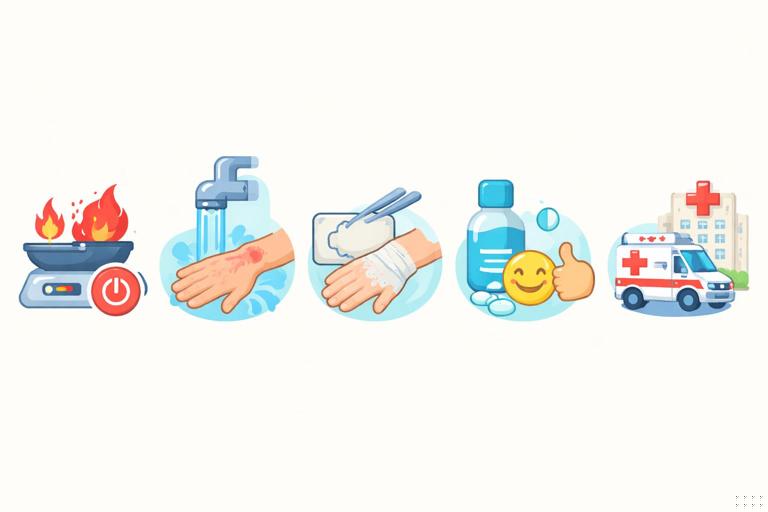
Step-by-Step: Thermal Burns and Scalds
Use these steps for hot liquids, steam, flames, or hot objects.
- 1) Make the area safe. Move the child away from the heat source. Turn off appliances if needed. If clothing is on fire, extinguish flames by smothering with a blanket or having the child drop and roll (if developmentally able), then remove from the heat source.
- 2) Remove hot or wet items. Take off rings, bracelets, watches, tight clothing, shoes, or diapers near the burn as soon as possible, because swelling can happen quickly. If fabric is stuck to the skin, do not pull it off; cool over it and seek medical care.
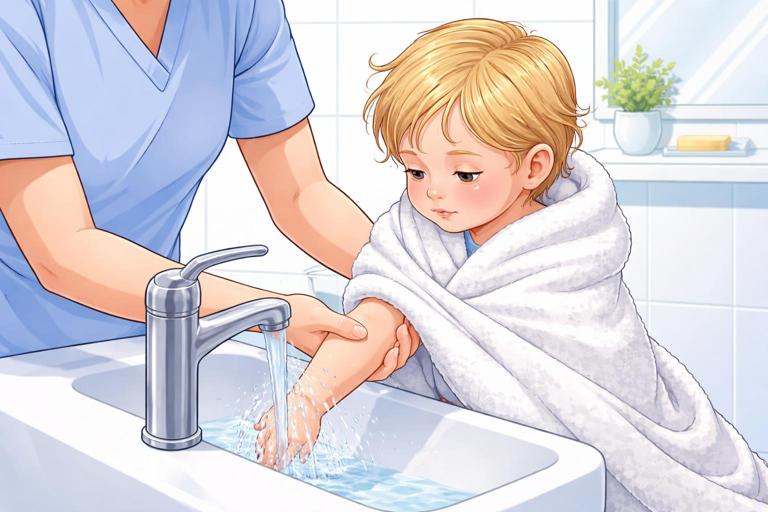
- 3) Cool the burn with cool running water. Hold the burned area under cool (not icy) running water for 20 minutes if you can. This reduces ongoing tissue damage and can significantly reduce pain and blistering. If running water is not available, use a clean cool wet cloth and re-wet it frequently.
- 4) Keep the child warm while cooling the burn. Cooling a large area can chill a child quickly. Cool only the burned area and cover the rest of the body with a dry blanket or clothing.
- 5) After cooling, cover the burn. Use a sterile non-stick dressing if available, or clean plastic wrap/cling film laid loosely over the area. This helps protect from infection and reduces pain from air exposure. Avoid wrapping tightly.
- 6) Manage pain and comfort. Encourage stillness of the burned limb, elevate if possible to reduce swelling, and use age-appropriate pain relief if your household plan allows. Pain that is out of proportion, worsening, or not improving after cooling is a reason to seek medical advice.
What Not to Do (Common Mistakes)
- Do not use ice or ice water. Extreme cold can worsen tissue injury and can cause hypothermia in infants and young children.
- Do not apply butter, oils, toothpaste, powders, or home remedies. These trap heat and increase infection risk.
- Do not pop blisters. Blisters protect the underlying skin. Opening them increases infection risk.
- Do not apply adhesive bandages directly on the burn. Removing them can tear fragile skin.
- Do not delay cooling while searching for creams. Cooling with water is the priority in the first minutes.
Covering and Dressing Burns Safely
After cooling, the right cover protects the burn, reduces pain, and keeps the area clean. The best choice depends on location and size.
Good Options at Home or School
- Sterile non-adherent dressing (often labeled “non-stick”): Place gently over the burn, then secure with gauze roll or a loose bandage around unburned skin.
- Clean plastic wrap/cling film: Lay it over the burn in a single layer. It is especially useful for larger areas because it does not stick and allows clinicians to see the burn later.
- Clean, lint-free cloth: Acceptable if nothing else is available, but replace with a proper dressing when possible.
Special Locations
- Hands and feet: Cover with a non-stick dressing and keep fingers/toes separated if possible (for example, a small piece of non-stick dressing between digits) to reduce sticking and stiffness. Remove rings immediately.
- Face: Cooling is crucial. Covering may be difficult; a clean, damp cloth briefly can soothe, but avoid anything that could obstruct breathing. Facial burns often need medical evaluation.
- Joints (elbow, knee, ankle, fingers): Dress loosely and encourage gentle positioning to avoid the joint stiffening in a bent position. Burns crossing joints often require medical review.
- Genitals or diaper area: These burns need medical assessment due to infection risk and sensitivity. After cooling, cover loosely with a non-stick dressing if possible.
Chemical Burns: Different Source, Same Urgency
Chemical burns can look mild at first but continue damaging tissue until the chemical is removed. Dishwasher pods, drain cleaners, oven cleaners, bleach, and wet cement are common culprits. Powders and liquids behave differently, so the first steps matter.
Step-by-Step: Chemical on Skin
- 1) Protect yourself. If possible, put on gloves. Avoid spreading the chemical to your own skin.
- 2) Remove contaminated clothing and jewelry. Cut clothing off if needed to avoid pulling chemical across the skin.
- 3) Brush off dry chemicals first. If the chemical is a powder (for example, dry cement), brush it off gently before rinsing. Adding water too soon can activate some powders and worsen the burn.
- 4) Rinse with cool running water for at least 20 minutes. Use a steady flow. Do not scrub. Ensure runoff does not spread to other body parts.
- 5) Cover loosely with a non-stick dressing. Seek medical advice, especially for any blistering, persistent pain, large areas, or sensitive locations.
Chemical in the Eye
Eye exposures are urgent because damage can occur quickly.
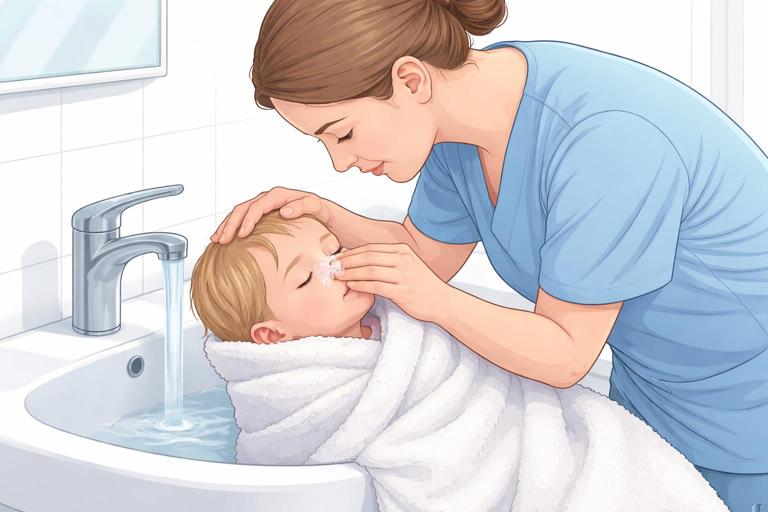
- Rinse immediately. Hold the eyelids open and flush with clean, lukewarm running water or saline for 15–20 minutes. If the child resists, wrap them in a towel to limit arm movement and continue rinsing.
- Remove contact lenses if present and easy to remove; do not delay rinsing to search for lenses.
- Seek urgent medical care after rinsing, even if the eye looks better.
Electrical Burns: Small Mark, Big Concern
Electrical injuries can cause hidden internal damage, heart rhythm problems, and deep burns. A child may have a small burn at the entry point (often the mouth or hand) and another at the exit point, or no obvious exit mark.
Step-by-Step: Electrical Injury
- 1) Do not touch the child until the power source is off. Unplug the device or switch off power at the breaker if safe. If you cannot turn it off, use a dry non-conductive object (like a wooden broom handle) to separate the source from the child.
- 2) Once safe, cool any visible burns with cool running water. Do not use water until the power is confirmed off.
- 3) Seek urgent medical evaluation. Electrical burns generally require medical assessment, especially if there was loss of consciousness, abnormal behavior, chest pain, breathing issues, or burns to the mouth.
Mouth burns from chewing cords can bleed later when the damaged tissue sloughs off (sometimes hours to days after). Any electrical mouth burn should be evaluated promptly.
Friction Burns and Sunburn
Friction Burns
Friction burns combine scraping and heat (for example, treadmill belt injuries, rope burns, or falls on rough surfaces). They can look like a large abrasion but may be deeper than they appear.
- Rinse gently with cool running water to remove debris.
- Cool the area (cool water) and cover with a non-stick dressing.
- Seek medical care for large areas, deep wounds, or if debris cannot be removed easily.
Sunburn
Sunburn is a radiation burn. Mild sunburn causes redness and tenderness; more severe sunburn can blister and cause systemic symptoms.
- Move out of the sun and cool the skin with cool showers or compresses.
- Encourage fluids and rest.
- Cover blistered areas with non-stick dressings and avoid popping blisters.
- Seek medical advice for blistering over large areas, sunburn in infants, or if the child seems unwell (for example, vomiting, dizziness, severe headache, or signs of heat illness).
When to Seek Urgent Care for Burns and Scalds
Some burns can be managed at home with cooling, covering, and observation. Others need same-day urgent care or emergency evaluation. Use the following as practical triggers.
Seek Emergency Care Now (or local emergency number) if:
- Breathing is affected, there is coughing, wheezing, hoarseness, soot around the nose/mouth, or the burn occurred in a closed-space fire (possible smoke inhalation).
- Burns involve the face, eyes, inside the mouth, or neck, especially if swelling could affect the airway.
- Large burns: any burn larger than the child’s palm on a young child, or multiple palm-sized areas; or any burn that wraps around a limb or the chest.
- Deep burns (white, brown, charred, leathery) or burns with numbness in the center.
- Electrical burns, especially with loss of consciousness, abnormal behavior, or mouth burns.
- Chemical burns that blister, involve the eyes/face/genitals, or continue to cause pain after thorough rinsing.
- Associated trauma (fall, explosion) or concern for non-accidental injury.
- The child is very young (infants and toddlers) and the burn is more than very small and superficial.
Seek Same-Day Medical Advice/Urgent Care if:
- Blistering burns larger than a coin, or multiple blisters.
- Burns on hands, feet, genitals, or over major joints even if small, because function and scarring risk are higher.
- Pain is severe or not improving after 20 minutes of cooling and appropriate covering.
- Signs of infection develop later: increasing redness spreading beyond the burn, warmth, swelling, pus, foul odor, fever, or increasing pain after initial improvement.
- The burn was caused by hot grease (often deeper) or by a pressure cooker/steam burst.
- The child has a condition that increases risk (immune compromise, significant chronic illness) or you are unsure about severity.
Practical Scenarios and What to Do
Scenario 1: Hot Tea Spill on a Toddler’s Chest
A toddler pulls a mug and hot tea spills over the chest and upper arm. The child cries immediately and the skin turns red.
- Move the mug away and remove the wet shirt quickly (cut it off if needed).
- Cool the area under cool running water for 20 minutes. Keep the child warm with a blanket around the shoulders or lower body.
- After cooling, cover with cling film laid loosely over the burn.
- Estimate size using the child’s palm. If the area is larger than the child’s palm, if blistering appears, or if it crosses the shoulder joint, seek urgent care.
Scenario 2: Touching a Hair Straightener (Small Contact Burn on Fingers)
A child grabs a hot straightener and has a small red area on two fingertips.
- Cool fingers under cool running water for 20 minutes.
- Remove any rings immediately.
- Cover with a small non-stick dressing. Keep fingers separated if blistering begins.
- Seek medical advice if blisters form over joints, if pain is significant, or if the child cannot comfortably move the fingers.
Scenario 3: Dishwasher Pod Burst on Skin and Eye Splash
A pod bursts and liquid splashes onto the child’s forearm and into one eye.
- Start flushing the eye immediately with lukewarm water for 15–20 minutes, holding eyelids open.
- After the eye is being flushed (or once another adult can continue), remove contaminated clothing and rinse the skin for at least 20 minutes.
- Seek urgent medical care after rinsing, especially for the eye exposure.
Scenario 4: Treadmill Belt Friction Burn on Hand
A child’s hand gets caught on a moving treadmill belt, causing a raw, painful area.
- Stop the treadmill and rinse gently with cool running water to remove debris.
- Cool the area and cover with a non-stick dressing.
- Because treadmill injuries can be deeper than they look and often involve the palm/fingers, seek same-day medical evaluation.
Ongoing Home Care for Minor Burns (After Cooling and Covering)
For small superficial burns that do not meet urgent-care criteria, home care focuses on cleanliness, comfort, and monitoring.
- Keep the dressing clean and dry. Change it if it becomes wet or dirty. Use non-adherent materials to avoid tearing skin.
- Protect blisters. If a blister breaks on its own, rinse gently with clean water, cover with a non-stick dressing, and watch closely for infection.
- Reduce swelling. Elevate the burned hand/foot when possible.
- Limit friction and sun exposure. Healing skin burns easily. Cover the area outdoors; once healed, protect from sun to reduce discoloration.
- Watch for worsening. Increasing redness, swelling, pus, fever, or pain after initial improvement should prompt medical review.
Quick Reference: Cooling and Covering Checklist
THERMAL BURN / SCALD 1) Remove from heat 2) Remove jewelry/tight items 3) Cool running water 20 min 4) Keep child warm 5) Cover with non-stick dressing or cling film 6) Seek care if red flags CHEMICAL BURN 1) Protect yourself 2) Remove contaminated clothing 3) Brush off dry powder 4) Rinse 20+ min 5) Cover loosely 6) Seek care for eyes/large/deep/persistent pain ELECTRICAL BURN 1) Power off first 2) Cool visible burns 3) Urgent medical evaluation (especially mouth burns)