What “Poisoning” Means in Children
Poisoning happens when a child is exposed to a substance that can harm the body. The exposure can occur by swallowing (ingestion), breathing in fumes (inhalation), getting it on the skin or in the eyes (contact), or rarely by injection (for example, a medication patch stuck to the mouth or skin). “Ingestion hazards” includes both true poisons (like some cleaners) and non-food items that can cause harm when swallowed (like button batteries or magnets). Children are at higher risk because they explore with their mouths, their bodies are smaller (so a small amount can be a big dose), and some products look or smell appealing.
Not every exposure causes immediate symptoms. Some substances cause rapid effects (sleepiness, vomiting, breathing problems), while others cause delayed injury (liver damage from acetaminophen overdose, severe burns in the esophagus from strong alkalis, or internal injury from batteries). Your goal is to stop further exposure, identify what was involved, and get the right guidance quickly.
Common poisoning sources in home and school settings
- Medications: pain relievers (acetaminophen, ibuprofen), vitamins/iron, sleep aids, antidepressants, heart/blood pressure medicines, ADHD medications, topical products, patches.
- Household chemicals: bleach, drain/oven cleaners, dishwasher pods, detergents, ammonia, descalers, toilet bowl cleaners.
- Alcohols and solvents: hand sanitizer, mouthwash, perfume, nail polish remover, antifreeze, windshield washer fluid.
- Nicotine products: cigarettes, nicotine gum/lozenges, liquid nicotine/vapes.
- Plants and mushrooms: houseplants, berries, wild mushrooms.
- Pesticides and rodenticides: ant/roach sprays, rat bait, garden chemicals.
- Carbon monoxide and fumes: faulty heaters, generators, car exhaust in garages, smoke from fires.
- High-risk ingestion hazards: button batteries, multiple magnets, sharp objects, concentrated essential oils.
Immediate Actions: A Practical First Minute Checklist
When you suspect a poisoning or ingestion hazard, act in a structured way. The steps below are designed to be fast and safe.
Step 1: Stop the exposure and make the area safe
- Remove the substance from the child’s reach.
- If there is residue in the mouth, gently wipe it out with a cloth or gauze. Do not scrape the throat.
- If the child is chewing a plant, berry, or unknown item, remove remaining pieces from the mouth.
- If fumes are involved (cleaner fumes, carbon monoxide), move the child to fresh air immediately and open windows/doors if safe to do so.
Step 2: Do a quick symptom scan
Look for signs that require urgent escalation: trouble breathing, repeated vomiting, severe sleepiness or confusion, seizures, blue/gray lips, severe belly pain, drooling with inability to swallow, burns around the mouth, or collapse. If any of these are present, treat it as an emergency and seek urgent medical help while continuing the steps below.
Step 3: Identify the substance and estimate the amount
Bring the container, blister pack, plant sample, or photo of the item. Note the child’s age and approximate weight if known, the time of exposure, and the maximum possible amount. If it’s a medication, record the name, strength (mg), and how many tablets were in the bottle before and after.
- Listen to the audio with the screen off.
- Earn a certificate upon completion.
- Over 5000 courses for you to explore!

Download the app
Step 4: Get expert guidance (poison control/medical advice)
Contact your local poison control center or urgent medical advice line as soon as possible. Follow their instructions exactly. If you are in a setting where you must call emergency services, do so and keep the container available for responders. Do not wait for symptoms if the substance is high-risk (examples below).
Step 5: Do not use “home antidotes”
Avoid common but unsafe actions unless specifically instructed by poison control or a clinician:
- Do not induce vomiting. Vomiting can worsen burns and increase aspiration risk.
- Do not give activated charcoal unless directed; it is not appropriate for many substances and can be dangerous if the child is drowsy.
- Do not give milk, lemon juice, or vinegar to “neutralize” chemicals. Neutralization reactions can generate heat and worsen injury.
- Do not give syrup of ipecac. It is not recommended.
What to Do Based on Exposure Type
Swallowed a medication or chemical
After stopping exposure and identifying the product, the next steps depend on the substance. While waiting for poison control guidance:
- If the child is alert and able to swallow normally, you may be instructed to give a small amount of water to rinse the mouth or dilute an irritant. Only do this if the child is fully awake and not vomiting.
- If the child is drooling, gagging, coughing, vomiting repeatedly, or seems unusually sleepy, do not give anything by mouth.
- Keep the child upright or in a comfortable position. If nausea occurs, have a container ready.
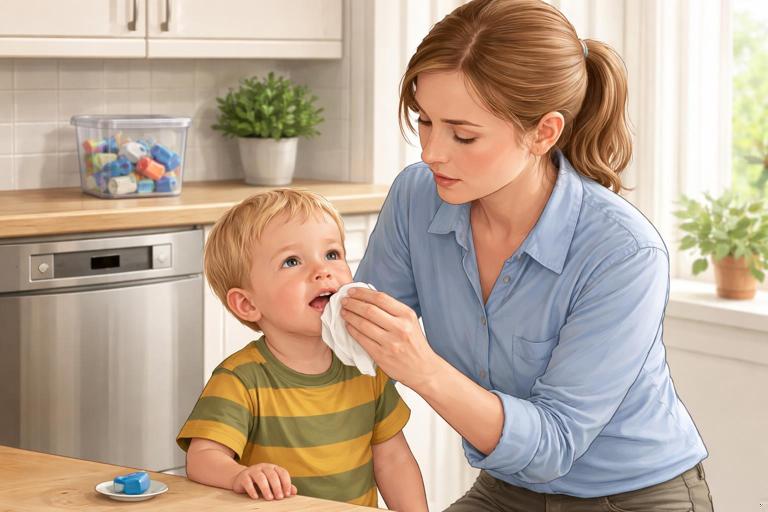
Practical example: A toddler bites into a dishwasher pod and coughs. You remove the pod, wipe the mouth, and rinse the lips. Because pods can cause airway irritation and vomiting, you contact poison control immediately and watch closely for coughing, wheezing, or persistent vomiting while following their instructions.
Inhaled fumes (cleaners, smoke, carbon monoxide)
- Move to fresh air immediately.
- Loosen tight clothing around the neck and chest.
- If multiple people have headache, nausea, dizziness, or sleepiness in the same space, suspect carbon monoxide and leave the building. Do not re-enter until cleared by professionals.
- Call for urgent medical evaluation if symptoms persist or if the child is very young, pregnant teen, or has heart/lung conditions.
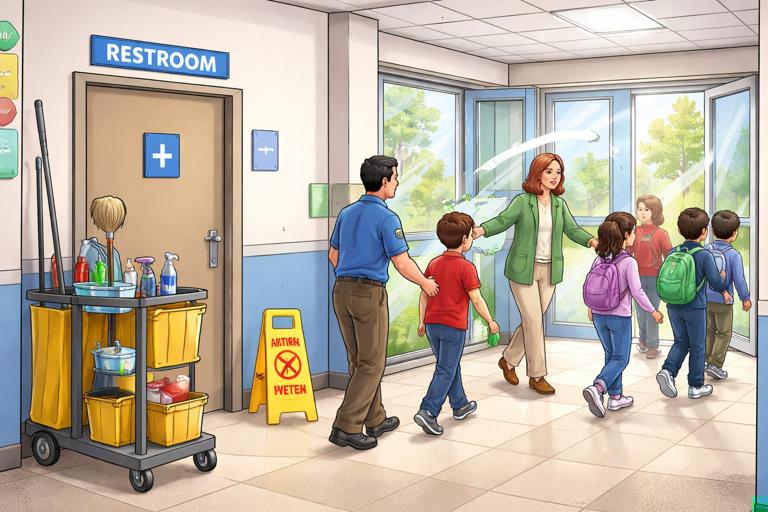
Practical example: A school custodian mixes bleach and ammonia in a bathroom and fumes spread. You evacuate students to fresh air, keep them calm, and arrange medical assessment for any child with coughing, chest tightness, or eye irritation.
Skin exposure (spills, pesticides, strong cleaners)
- Remove contaminated clothing carefully (avoid pulling it over the face if possible; cut it off if needed).
- Rinse skin with lukewarm running water for at least 15 minutes. Use mild soap if available, but prioritize thorough rinsing.
- Do not apply creams, ointments, or “neutralizers.”
- If a large area is involved, the child is very young, or the chemical is strong (drain cleaner, concentrated bleach), get urgent guidance.
Eye exposure
- Start rinsing immediately with clean, lukewarm running water. Continue for at least 15 minutes.
- Hold eyelids open gently; encourage blinking.
- Remove contact lenses if present and easy to remove.
- Seek urgent evaluation for pain, vision changes, persistent redness, or exposure to strong chemicals.
High-Risk Ingestion Hazards That Need Fast Action
Button batteries
Button batteries can cause severe burns in the esophagus quickly, sometimes with few early symptoms. Treat any suspected ingestion as urgent.
- If you suspect a child swallowed a button battery, seek emergency evaluation immediately.
- If the child is choking, drooling, has chest discomfort, vomiting, or refuses to eat, do not give food or drink unless instructed.
- Bring a matching battery or the device packaging if available.
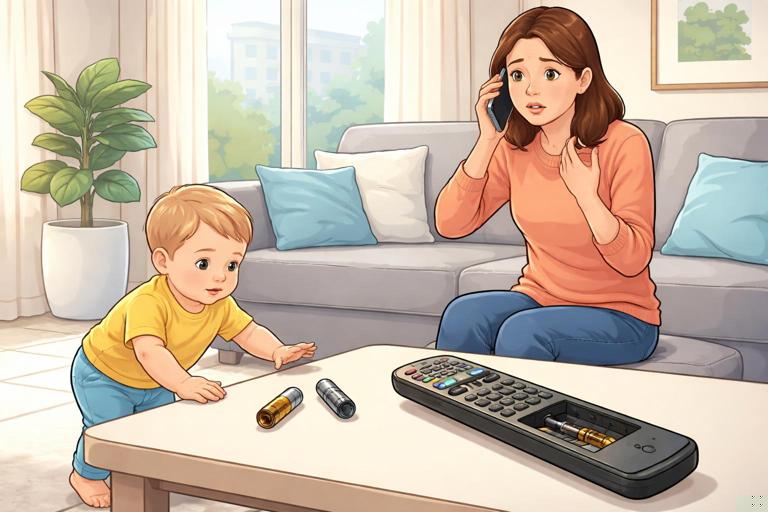
Practical example: A parent finds an open remote and a missing battery; the toddler is acting normal. Because symptoms can be delayed, you still arrange immediate emergency evaluation.
Multiple magnets (or a magnet plus metal)
More than one magnet can trap bowel tissue between them, causing pressure injury, perforation, and infection. This can become life-threatening.
- Assume urgency if more than one magnet could be missing.
- Do not wait for belly pain or vomiting to start.
- Do not give laxatives or try to “flush” them out.
Concentrated nicotine (vapes, liquid nicotine, nicotine pouches)
Nicotine can cause rapid symptoms: nausea, vomiting, sweating, fast heart rate, tremor, and in severe cases seizures or breathing problems.
- Remove the product and wipe the mouth.
- Call poison control immediately for dosing guidance.
- If the child is symptomatic (vomiting repeatedly, very sleepy, shaking), seek urgent care.
Iron tablets and some vitamins
Iron overdose can cause severe poisoning. “Candy-like” appearance makes it a common risk.
- Do not assume a multivitamin is harmless.
- Call poison control immediately with the exact product and strength.
Essential oils (especially eucalyptus, camphor, wintergreen)
Some essential oils can cause seizures or breathing problems even in small amounts.
- Do not give food or drink if the child is coughing or drowsy.
- Call poison control for immediate guidance.
Caustic cleaners (drain/oven/toilet bowl cleaners)
Strong acids and alkalis can burn the mouth, throat, and stomach. Damage can worsen if vomiting occurs.
- Do not induce vomiting.
- Do not attempt to neutralize with another substance.
- Wipe/rinse the mouth gently; follow poison control instructions about small sips of water only if the child can swallow comfortably.
- Urgent medical evaluation is often needed even if the child seems okay.
Information to Collect Before You Call for Guidance
Having clear details speeds up correct advice. Use this quick list:
- Child’s age and approximate weight.
- Substance name (take a photo of the label front/back).
- Ingredients and concentration (for cleaners, look for %; for meds, mg per tablet or mg/mL).
- Time of exposure and whether it was one-time or repeated.
- Maximum possible amount (how much could be missing).
- Current symptoms (even mild ones like drooling, cough, belly pain).
- Any medical conditions and regular medications.
Tip: If you are in a school or childcare setting, document who found the child, where the substance was located, and whether other children may have been exposed.
Monitoring While Waiting for Help
Some children will be observed at home after poison control guidance; others will be sent for evaluation. If you are instructed to monitor at home, focus on changes that suggest worsening toxicity or airway risk:
- Increasing sleepiness, confusion, unusual behavior, or difficulty waking.
- New or worsening vomiting, especially repeated episodes.
- Coughing, wheezing, noisy breathing, or persistent throat clearing.
- Drooling, refusal to swallow, or complaint of throat/chest pain.
- Severe belly pain, bloating, or blood in vomit/stool.
- New rash, swelling, or signs of dehydration from vomiting/diarrhea.
Keep the child away from food, drinks, and medications unless poison control or a clinician tells you otherwise. Save any vomit or chewed material only if asked (for example, for identification), and keep the product container for reference.
Prevention: Building Barriers That Actually Work
Safe storage systems (home)
Prevention is most effective when it does not rely on memory or “being careful.” Use layered barriers:
- High, locked, and separate: Store medications and chemicals in a locked cabinet, out of sight and reach. Avoid under-sink storage for cleaners in homes with young children.
- Original containers: Keep products in their original packaging with labels intact. Never store chemicals in drink bottles.
- Child-resistant is not child-proof: Assume a determined toddler can open many caps. Locking is the key barrier.
- Daily-use meds: If caregivers need quick access, use a lockbox on a high shelf rather than leaving bottles on counters or bedside tables.
- Visitor risk: Ask guests to keep purses, backpacks, and pill organizers out of reach. Many pediatric poisonings come from a grandparent’s medications.
School and childcare prevention
- Keep cleaning products in locked janitorial closets; never leave them unattended in classrooms or bathrooms.
- Use clearly labeled, closed containers for art supplies and science materials; store them in locked cabinets when not supervised.
- Implement a “sweep” routine after events: check floors for pills, nicotine pouches, gummies, or small batteries.
- Train staff to recognize high-risk items (button batteries, magnets, vape liquids) and to escalate immediately.
Medication safety habits
- Measure accurately: Use an oral syringe or dosing cup that came with the medication. Kitchen spoons are unreliable.
- One caregiver at a time: To prevent double-dosing, especially overnight, use a written log or a shared note on the fridge/phone.
- Read labels every time: Many cold/flu products contain overlapping ingredients (for example, acetaminophen). Avoid stacking products without guidance.
- Teach older children: Explain that medicine is not candy and should only be taken from a trusted adult. For teens, include risks of sharing pills and experimenting with substances.
Button battery and magnet prevention
- Choose devices with secured battery compartments (screw-closed).
- Store spare batteries locked away; tape over used batteries until they can be disposed of safely.
- Avoid high-powered magnet sets in homes with children; keep magnets used for crafts or whiteboards out of reach of young kids.
- Check toys for loose parts and follow age recommendations.
Plant, mushroom, and outdoor hazards
- Learn the names of houseplants and remove or place out of reach those known to be irritating or toxic to children and pets.
- Supervise outdoor play where berries or mushrooms grow; teach children “never eat from the yard or park.”
- In schools, inspect playground edges and garden areas for mushrooms after rain.
Carbon monoxide prevention
- Install carbon monoxide alarms on each level of the home and near sleeping areas; test monthly and replace batteries as recommended.
- Never run generators, grills, or vehicles in enclosed or partially enclosed spaces (garages, sheds, near open windows).
- Have fuel-burning appliances serviced regularly.
Scenario-Based Practice: Putting It Together
Scenario 1: Unknown pill found in a child’s mouth
A 3-year-old is found with a chalky tablet fragment on the tongue. No one knows what it is.
- Remove remaining pieces from the mouth and wipe gently.
- Look around for open containers, pill organizers, or bags; check under furniture.
- Do not give food or drink until you know more, especially if the child is coughing or sleepy.
- Call poison control with the best description you can (color, shape, imprint). Take photos.
- Monitor for sleepiness, vomiting, or behavior changes while following instructions.
Scenario 2: Cleaner splash on skin during a classroom activity
A child bumps a table and a bottle of concentrated cleaner spills on the forearm.
- Remove contaminated clothing/jewelry from the area.
- Rinse the skin under running water for 15 minutes.
- Identify the product and concentration from the label.
- Get guidance on whether further medical evaluation is needed, especially if redness, blistering, or pain persists.
Scenario 3: Teen found with alcohol and vomiting
A teen at a party is vomiting and seems confused, with alcohol nearby.
- Remove access to more alcohol and check for other substances or pills.
- Keep the teen in a safe position to reduce aspiration risk if vomiting continues.
- Seek urgent medical evaluation because alcohol poisoning can worsen quickly, especially if the teen is hard to wake or breathing is irregular.
- Provide responders with what was consumed if known (type/amount/time) and any co-ingestions.
Quick Reference: What Not to Do
- Do not induce vomiting.
- Do not “neutralize” acids/alkalis with household products.
- Do not give activated charcoal unless directed.
- Do not delay evaluation for button batteries or multiple magnets.
- Do not assume “natural” products (essential oils, herbal supplements) are safe.
- Do not transfer chemicals into food or drink containers.
Poisoning Preparedness Kit (Home/School)
Having a few items ready reduces panic and speeds correct action:
- Poison control number saved in phones and posted visibly.
- A working flashlight (for checking under furniture for pills or batteries).
- Disposable gloves and gauze/cloths for wiping residue.
- An oral syringe for accurate medication dosing (prevention of dosing errors).
- Carbon monoxide alarms installed and maintained.
- A small zip bag and tape for securing used batteries until disposal.