Free Course Image Wilderness First Aid

Free online courseWilderness First Aid

Duration of the online course: 5 hours and 32 minutes

4.6

StarStarStarStarHalf star

(5)

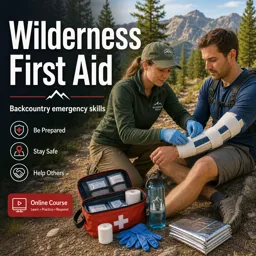
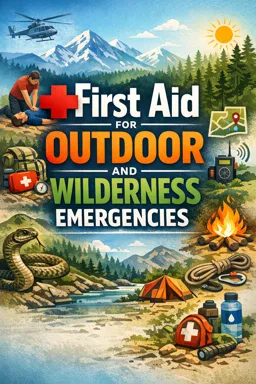
Learn essential Wilderness First Aid skills with American Outdoor School. This free course covers patient assessment, trauma management, injury treatment, and environmental risks.

In this free course, learn about

  • Course Overview and Foundations of Wilderness First Aid
  • Core Patient Assessment Skills
  • Trauma Management Principles in the Backcountry
  • Medical Emergencies in the Wilderness
  • Environmental Risks, Bites, and Envenomations
  • Course Review and Certification

Course Description

Welcome to the transformative course "Wilderness First Aid". With a total duration of 5 hours and 32 minutes, this comprehensive program is designed to equip you with essential skills to manage medical emergencies in the wild. Although it currently has no reviews, it stands as a hidden gem in the Health category, specifically under First Aid.

Imagine yourself hiking through enchanting forests, scaling majestic mountains, or even embarking on an exhilarating kayaking adventure. Now, envision having the confidence and expertise to handle any potential medical emergencies that might arise. This course offers you precisely that. You begin by understanding why Wilderness First Aid is crucial and why it should become a fundamental skill for anyone who loves the great outdoors.

The course swiftly moves into defining what Wilderness First Aid truly encompasses, setting the stage for the more detailed training modules ahead. We then delve into the critical aspect of patient assessments, starting with an introduction to essential patient assessment strategies. From there, you'll explore both primary and secondary patient assessments. These assessments lay the groundwork for accurate diagnosis and immediate care, making them indispensable when medical help is hours away.

Orthopedic injuries, being common in outdoor adventures, are given special attention. You'll learn how to assess these injuries and understand the intricate considerations involved with spinal injuries. The course also covers procedures like OPQRST and vital signs monitoring, essential for any rescuer's toolkit. Assessing a patient's mental status is another key aspect covered, enhancing your ability to provide holistic care.

Moving forward, the course offers step-by-step instructions on how to conduct primary assessments and head-to-toe physical exams. To solidify your learning, there's a review session focusing on patient assessment mastery. Next, the course introduces trauma management, particularly in backcountry scenarios. From treating fractured bones and dislocations to stabilizing various body parts, the practical how-to modules ensure you are well-prepared for any orthopedic emergencies.

Head injuries, chest trauma, and abdominal injuries are also deconstructed for a deeper understanding. These sessions not only provide treatment techniques but also debunk several myths. Soft tissue injuries, such as burns and blisters, are discussed comprehensively, followed by a review of traumatic injuries to ensure you're thoroughly prepared.

Medical issues are another critical focus. Modules on treating heart attacks, asthma, and acute abdomen showcase the course's depth in covering life-threatening conditions. These are followed by a module on recognizing symptoms and a segment on environmental risks, providing solutions for common wilderness hazards.

The course tackles bites, envenomations, heat-related illnesses, and hypothermia, offering practical advice for staying safe. To wrap up, a comprehensive review ensures that key points are reinforced, making you confident in your newly acquired skills. Finally, certification instructions guide you through the process of validating your expertise, making you a certified Wilderness First Aid provider.

Embark on the journey to master Wilderness First Aid and become the hero in outdoor emergencies. This course not only imparts knowledge but fosters a mindset of preparedness and self-reliance, crucial for anyone who ventures into the wild.

Course content

  • Video class: 1. Why You Should Take Wilderness First Aid. 01m
  • Exercise: What is the primary reason for taking a wilderness first aid class according to the text?
  • Video class: 2. What is Wilderness First Aid? 03m
  • Exercise: What is the essence of Wilderness medicine compared to urban-based medicine?
  • Video class: 3. Intro to Essential Patient Assessments in Wilderness Medicine 01m
  • Exercise: Which of the following is the primary focus of primary patient assessment in wilderness first aid?
  • Video class: 4. Primary Patient Assessment in Wilderness First Aid 20m
  • Exercise: What is the first step in primary patient assessment?
  • Video class: 5. Secondary Patient Assessment in Wilderness First Aid 15m
  • Exercise: What is the first step in assessing a trauma patient in a wilderness first aid context?
  • Video class: 6. Orthopedic Injury Assessment in Wilderness First Aid 12m
  • Exercise: What type of orthopedic injury is likely characterized by pinpoint pain between joints?
  • Video class: 7. Spinal Consideration 11m
  • Exercise: In wilderness medicine, what is the immediate concern when considering a potential spine injury?
  • Video class: 8. OPQRST 21m
  • Exercise: What does the letter 'O' in OPQRST stand for in medical assessment?
  • Video class: 9. Vital Signs 16m
  • Exercise: What is the primary purpose of monitoring a patient's vital signs over time in a wilderness or backcountry setting?
  • Video class: 10. Mental Status Assessment of Patients in Wilderness First Aid 12m
  • Exercise: What is considered the most basic and common scale for assessing mental status in prehospital-based medicine?
  • Video class: 11. How-To: Primary Assessment and Head-to-Toe Physical Exam for Wilderness First Aid 08m
  • Exercise: When assessing a trauma patient's pelvis during a physical exam, what is the recommended method to avoid causing further damage?
  • Video class: 12. A Review on Patient Assessment for Wilderness First Aid Mastery 02m
  • Exercise: What is the primary focus of wilderness medicine?
  • Video class: 13. Introduction to Trauma Management in the Backcountry 01m
  • Exercise: Which of the following types of traumatic injuries is first discussed in the Wilderness First Aid course by the American Outdoor School?
  • Video class: 14. Orthopedic Injury Treatment of Sprains, Strains, Fractures, and Dislocations in the Backcountry 12m
  • Exercise: Which factor is not a reliable diagnostic tool for identifying injuries such as sprains, strains, fractures, and dislocations?
  • Video class: 15. How-To: Lower Arm Splinting in the Backcountry 09m
  • Exercise: When securing a splint to a patient's forearm fracture, why is roller gauze generally preferred over Ace wraps?
  • Video class: 16. How-To: Upper Arm Splinting in the Backcountry with Wilderness First Aid 05m
  • Exercise: What is an important consideration when splinting a humerus fracture?
  • Video class: 17. How-To: Shoulder Splint in the Backcountry 03m
  • Exercise: When stabilizing a shoulder dislocation in wilderness first aid, what is the primary purpose of using a triangular bandage?
  • Video class: 18. How-To: Ankle Stabilization in the Backcountry 03m
  • Exercise: What is the primary goal when stabilizing an ankle?
  • Video class: 19. How-To: Lower Leg Splinting in the Backcountry 04m
  • Exercise: What is the primary consideration before applying a splint to a lower leg fracture in the backcountry?
  • Video class: 20. Head Injuries Demystified: Critical Care and Myths Busted in the Wild 10m
  • Exercise: What is the primary concern when dealing with head injuries in a backcountry setting?
  • Video class: 21. Chest Trauma Uncovered: Breathing, Injuries 13m
  • Exercise: What is the primary reason that we breathe, according to the chemical changes in our blood?
  • Video class: 22. Inside Traumatic Abdominal Injuries in the Backcountry 05m
  • Video class: 23. Mastering Soft Tissue Injury Care with Wilderness First Aid 17m
  • Exercise: Which action is recommended when treating a wound that continues to bleed despite direct pressure?
  • Video class: 24. Burns, Blisters 17m
  • Video class: 25. Review of Traumatic Injuries with Wilderness First Aid 03m
  • Exercise: What is the first step in determining if an injury is traumatic when assessing a patient in the backcountry?
  • Video class: 26. Intro to Medical Issues in the Backcountry 01m
  • Video class: 27. Treating Heart Attacks (Myocardial Infarctions) in the Wilderness 19m
  • Exercise: What is the recommended initial dose of aspirin that can be given to a patient suspected of having a myocardial infarction, provided they are not allergic?
  • Video class: 28. Asthma 14m
  • Video class: 29. Acute Abdomen 11m
  • Exercise: When treating an individual with nausea in a backcountry setting, what is one of the management strategies?
  • Video class: 30. Review of Recognizing 03m
  • Video class: 31. Intro to Environmental Risks and Solutions in Wilderness Medicine 00m
  • Exercise: Which of the following is NOT one of the environmental risks discussed in the Wilderness First Aid course that can pose problems for patients in the backcountry?
  • Video class: 32. Bites and Envenomations Unveiled: Your Ultimate Wilderness First Aid Guide 19m
  • Video class: 33. Heat and Hydration 16m
  • Exercise: What is the earliest stage of hyperthermia described in the passage?
  • Video class: 34. Mastering Hypothermia: Staying Warm in the Cold! 08m
  • Video class: 35. Review of Environmental Risks and How to Stay Safe in the Backcountry 02m
  • Exercise: Which of the following statements about environmental risk factors is TRUE based on the provided text?
  • Video class: 36. Wilderness First Aid Course Review and Call to Action 01m
  • Video class: 37. Certification Instructions 00m
  • Exercise: What is the final requirement to gain your Wilderness First Aid certification from the American Outdoor School?

This free course includes:

5 hours and 32 minutes of online video course

Digital certificate of course completion (Free)

Exercises to train your knowledge

100% free, from content to certificate

Ready to get started?Download the app and get started today.

Install the app now

to access the course
Icon representing technology and business courses

Over 5,000 free courses

Programming, English, Digital Marketing and much more! Learn whatever you want, for free.

Calendar icon with target representing study planning

Study plan with AI

Our app's Artificial Intelligence can create a study schedule for the course you choose.

Professional icon representing career and business

From zero to professional success

Improve your resume with our free Certificate and then use our Artificial Intelligence to find your dream job.

You can also use the QR Code or the links below.

QR Code - Download Cursa - Online Courses

More free courses at First aid

Download the App now to have access to + 3300 free courses, exercises, certificates and lots of content without paying anything!

  • 100% free online courses from start to finish

    Thousands of online courses in video, ebooks and audiobooks.

  • More than 48 thousand free exercises

    To test your knowledge during online courses

  • Valid free Digital Certificate with QR Code

    Generated directly from your cell phone's photo gallery and sent to your email

Cursa app on the ebook screen, the video course screen and the course exercises screen, plus the course completion certificate

+ 9 million
students

Free and Valid
Certificate

60 thousand free
exercises

4.8/5 rating in
app stores

Free courses in
video and ebooks