Why Age-Specific Assessment and Communication Matter
Infants and children are not “small adults.” Their bodies, behaviors, and ability to describe symptoms change quickly as they grow. Age-specific assessment means you adjust what you look for (signs), what you ask (symptoms), and how you interact so you can get accurate information and reduce fear. Age-specific communication means you choose words, tone, and techniques that match the child’s developmental stage, while also using caregivers as partners.
In real emergencies, a child’s distress can hide important clues. A toddler may scream from fear rather than pain. A school-age child may deny symptoms to avoid missing an activity. An early teen may minimize what happened due to embarrassment. Your job is to create enough calm and trust to observe and ask the right questions, while keeping the assessment efficient.
Core Principles That Apply at Every Age
Start with observation before touching
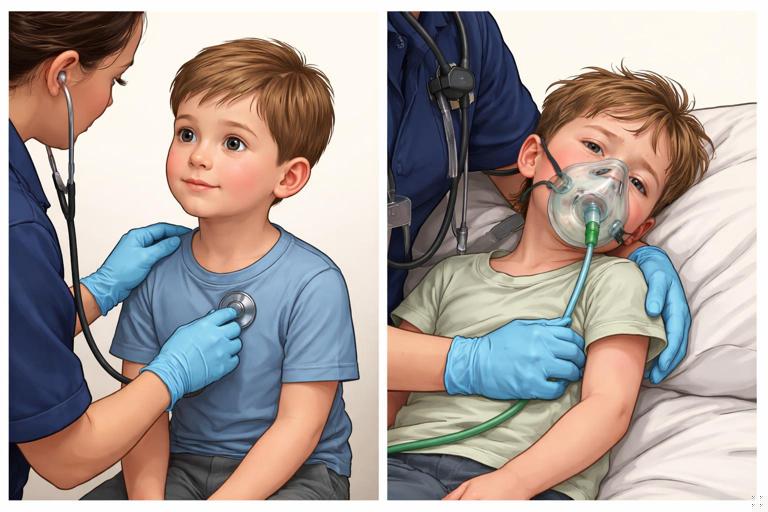
Children often show you the diagnosis before you ever ask a question. Watch for breathing effort, skin color, alertness, posture, and interaction with caregivers. A calm, curious child who makes eye contact and moves normally is different from a child who is limp, unusually quiet, or working hard to breathe.
Use the caregiver as a “translator” and stabilizer
Caregivers know what is normal for the child: baseline behavior, usual breathing pattern, typical skin tone, and common fears. They can also help you position the child, provide comfort, and answer questions about medical history, allergies, and recent events. When possible, keep the caregiver close, especially for infants and toddlers.
Explain what you will do before you do it
Even very young children respond to predictable routines. A simple preview reduces resistance: “I’m going to look at your chest like a doctor. It won’t hurt.” For older children: “I’ll check your breathing and then we’ll talk about what happened.”
- Listen to the audio with the screen off.
- Earn a certificate upon completion.
- Over 5000 courses for you to explore!

Download the app
One question at a time, concrete language
Children interpret language literally. Avoid vague questions like “Are you okay?” Use specific prompts: “Show me where it hurts,” “Does it hurt more when you breathe in?” “Did you throw up?” For younger children, offer choices: “Does it hurt a little or a lot?”
Respect privacy and dignity
As children approach puberty, privacy becomes essential for cooperation. Use a calm, matter-of-fact tone. If you need to inspect an area, explain why, ask permission when appropriate, and keep the child covered as much as possible.
A Practical, Age-Adapted Assessment Flow
This flow keeps you organized while allowing flexibility by age. Use it as a mental checklist.
Step 1: Scene and first impression (no touch)
- Is the child alert, responsive, and interacting normally for their age?
- Is breathing quiet and easy, or noisy/labored?
- Is skin color typical for the child, or pale/gray/blue?
- Is the child moving normally, guarding a body part, or unusually still?
- Is there obvious bleeding, swelling, rash, or deformity?
Step 2: Engage and calm (communication first)
- Introduce yourself to both caregiver and child.
- Get down to the child’s eye level when safe.
- Use the child’s name if you know it.
- Offer a simple role: “Can you help me by taking slow breaths?”
Step 3: Focused questions (tailored to age)
- What happened? (Ask caregiver and child, if able.)
- What is the main problem right now? (Pain, breathing, dizziness, nausea, fear.)
- When did it start? What changed?
- What has been tried already? Did it help?
- Any relevant conditions, medications, allergies? (Usually caregiver-supplied.)
Step 4: Focused check from head to toe (as tolerated)
Do the least upsetting checks first. For example, listen/observe breathing while the child sits with a caregiver, then check hands/arms, then move to more sensitive areas. For infants, you may assess while they are held.
Step 5: Reassess and monitor changes
Children can change quickly. Re-check breathing effort, alertness, and pain level after any intervention or movement. If you are waiting for help or deciding next steps, reassess at short intervals.
Newborns (0–28 days): Assessment Through Observation and Caregiver Report
What’s unique about newborns
Newborns cannot localize pain, cannot follow instructions, and have limited ways to show distress. Their “communication” is crying, feeding behavior, muscle tone, and responsiveness. Small changes matter: feeding less, fewer wet diapers, unusual sleepiness, or a weak cry can be significant.
How to communicate
- Speak mainly to the caregiver, but keep your voice soft and calm near the baby.
- Minimize handling; keep the baby warm and supported.
- Explain what you are observing: “I’m watching how the chest rises and how the color looks.”
What to assess (practical checklist)
- Breathing: Watch chest and belly movement. Note pauses, flaring nostrils, grunting, or retractions (skin pulling in around ribs/neck).
- Color: Look at lips and tongue for concerning color changes; hands/feet may look bluish when cold and can be less specific.
- Tone: Is the baby floppy, stiff, or moving normally?
- Responsiveness: Does the baby react to touch or sound? Is the cry strong?
- Feeding and diapers: Ask caregiver about last feed, vomiting, and wet/dirty diapers.
- Temperature concerns: Ask about fever, feeling hot/cold, and environment (overheating or underdressing).
Example: “Something is off” but no obvious injury
A caregiver says the newborn is “not acting right.” You observe a weak cry and poor tone. You keep the baby warm, limit stimulation, and gather specifics: last normal feed, number of wet diapers, any fever, any recent illness in household, and any birth-related issues. Your communication is caregiver-centered, because the caregiver’s timeline is the main data source.

Young Infants (1–12 months): Stranger Anxiety, Comfort Positioning, and Nonverbal Pain Cues
What’s unique about young infants
Infants may fear unfamiliar faces and resist being separated from caregivers. They communicate with crying patterns, facial expressions, and movement. They may not point to pain, but they may protect a limb, refuse to bear weight (older infants), or cry when moved.
How to communicate
- Let the infant stay in the caregiver’s arms when possible.
- Use a gentle voice and slow movements; avoid sudden touch.
- Use soothing strategies: pacifier (if used), familiar blanket, rocking.
Assessment tips
- Observe breathing while the infant is calm or sleeping; crying can mimic breathing difficulty.
- Check for dehydration clues through caregiver report (fewer wet diapers, dry mouth, no tears when crying).
- Look for rashes, swelling, or hives while the infant is undressed only as needed; keep them warm.
- Assess limb use: does the infant move both arms/legs equally?
Example: Fall from a couch
The infant is crying hard. You first watch breathing and color while the caregiver holds the infant. You ask: height of fall, surface landed on, whether there was a brief quiet period, vomiting, or unusual sleepiness. You then do a gentle head-to-toe check: scalp bumps, tenderness, limb movement symmetry. Communication stays soothing and caregiver-led: “Keep holding them like that; you’re doing great. I’m going to feel the head gently.”
Toddlers (1–3 years): Fear, Autonomy, and “Show Me” Communication
What’s unique about toddlers
Toddlers have big emotions, limited language, and a strong need for control. They may say “no” to everything, even when they want help. They can’t reliably describe internal symptoms, and they may not understand time (“yesterday” could mean any time in the past week).
How to communicate
- Approach slowly; let them watch you first.
- Offer simple choices that don’t change the needed care: “Do you want me to look at your arm or your leg first?”
- Use “show me” prompts: “Show me where it hurts.”
- Use play or demonstration: check a stuffed animal first, or let them touch the stethoscope (if available).
- Keep sentences short and concrete: “I will touch. It may feel cold.”
Assessment tips
- Expect crying; focus on what you can see: breathing effort, color, movement, and alertness.
- Assess pain by behavior: guarding, refusing to use a limb, inconsolable crying, or unusual quietness.
- Look for choking hazards or ingestion risks in the environment; toddlers explore with their mouths.
- Ask caregiver about baseline: “Are they usually this active? Is this cry normal for them?”
Step-by-step: Examining a toddler with a possible arm injury
- Position: have the toddler sit on caregiver’s lap facing the caregiver (a “comfort hold”).
- Explain: “I’m going to look at your arm. Then we’ll put a bandage/ice pack.”
- Observe first: compare both arms for swelling, deformity, and how they hold it.
- Touch last: start away from the painful area, then move closer while watching the face and body tension.
- Check function gently: “Can you wiggle your fingers?” If they won’t, ask them to “make a fist like a bear.”
- Reassure and praise cooperation immediately: “That helps me a lot.”

Preschoolers (3–5 years): Imagination, Literal Thinking, and Simple Explanations
What’s unique about preschoolers
Preschoolers can answer basic questions but may mix fantasy with reality, especially when scared. They interpret words literally and may fear bodily harm from medical tools (“You’re going to take my blood?”). They often want to please adults and may say what they think you want to hear.
How to communicate
- Use simple, honest explanations: “I’m checking how your lungs sound.”
- Avoid scary metaphors: say “a small pinch” rather than “a bee sting.”
- Use counting and predictable steps: “I will count to three and then I’ll lift your shirt for a moment.”
- Correct misunderstandings gently: “No, I’m not taking anything away. I’m just looking.”
Assessment tips
- Ask about symptoms using concrete choices: “Is your tummy hurting or your throat?”
- Use a faces pain scale if available (point to the face that matches how they feel).
- Watch for “silent” distress: a preschooler may freeze or become very compliant when frightened.
Example: Breathing complaint after running
The child says, “My chest is broken.” You respond literally and calmly: “Let’s check your breathing. I’m going to watch your chest go up and down.” Ask: “Is it hard to breathe in, or hard to breathe out?” Have them demonstrate: “Show me how you’re breathing.” Preschoolers can often copy slow breathing when coached, which also helps you see if they can speak in full sentences without stopping.
School-Age Children (6–10 years): Cooperation, Details, and Building Confidence
What’s unique about school-age children
School-age children can describe symptoms more accurately, follow multi-step instructions, and understand basic cause-and-effect. They may worry about getting in trouble or being blamed. They often want reassurance that they are “doing it right.”
How to communicate
- Speak directly to the child first, then confirm with the caregiver.
- Use respectful, straightforward language: “Tell me what happened from the beginning.”
- Give them a job: hold gauze, count breaths, or keep an ice pack in place.
- Normalize feelings: “A lot of kids feel shaky after a fall.”
Assessment tips
- Ask for a timeline: “What were you doing right before it started?”
- Clarify pain: location, intensity, what makes it better/worse.
- Check function: can they walk, grip, move fingers/toes, take deep breaths?
- Watch for minimization: they may say “I’m fine” while guarding an injury to avoid missing sports or recess.
Step-by-step: Interviewing a school-age child with abdominal pain
- Start with open question: “Tell me about your stomach pain.”
- Locate: “Point with one finger to where it hurts the most.”
- Character: “Is it sharp, crampy, or burning?” (Offer options.)
- Timing: “Did it start suddenly or slowly?”
- Associated symptoms: “Any nausea, vomiting, diarrhea, fever, or pain when peeing?”
- Function: “Can you jump once? If it hurts too much, don’t.” (Only if safe and appropriate; stop if pain increases.)
- Confirm with caregiver: recent illness, constipation pattern, food intake, injuries, medications.
Preteens and Early Teens (11–14 years): Privacy, Autonomy, and Sensitive Topics
What’s unique about early teens
Early teens can provide adult-like histories, but emotions, peer pressure, and embarrassment can distort what they share. They may worry about confidentiality, judgment, or consequences. They may also be more aware of body changes and feel exposed during assessment.
How to communicate
- Address them as the primary historian: “I’m going to ask you some questions directly.”
- Offer privacy when appropriate and safe: ask the caregiver to step back a little, or to the side, if the teen agrees and the situation allows.
- Be transparent about limits: “I’ll keep what you tell me private unless I’m worried about your safety.”
- Use neutral, nonjudgmental wording, especially for sensitive issues (substances, self-harm, sexual activity, bullying).
Assessment tips
- Ask about symptoms and triggers with specificity: exertion, stress, dehydration, skipped meals, vaping, energy drinks.
- Consider that teens may hide injuries from fights, sports, or risky behavior.
- Watch for anxiety-driven symptoms (hyperventilation, tingling, chest tightness) while still taking complaints seriously.
Example: Headache and dizziness at school
The teen says they “just feel weird.” You ask for details: onset, hydration, meals, sleep, recent illness, and any hit to the head. You also ask neutrally about substances: “Any vaping, alcohol, or anything else today?” If they hesitate, you keep your tone calm and factual. You can say: “I’m not here to get you in trouble. I need accurate information to help you.”

Reading Behavior as Communication: What to Look For by Age
Crying patterns
- Newborn/infant: high-pitched, weak, or inconsolable crying can signal significant distress; sudden quietness can also be concerning.
- Toddler/preschool: loud crying may be fear; watch for pauses, breath-holding, or inability to be consoled by caregiver.
- School-age/teen: may suppress crying; look for clenched jaw, shallow breathing, or withdrawn behavior.
Interaction and play
- Infants: tracking with eyes, reaching, and normal movement suggest better status.
- Toddlers/preschool: willingness to engage with a toy or caregiver is reassuring; refusal to move or unusual stillness is a red flag.
- School-age: can answer questions and follow directions; confusion or inability to focus is concerning.
- Teens: watch for disorientation, agitation, or unusual sleepiness; also consider emotional shutdown after stressful events.
Caregiver Communication: Getting Accurate Information Without Escalating Anxiety
Ask for “baseline” first
Instead of only asking what is wrong, ask what is normal: “How do they usually breathe when asleep?” “Are they normally chatty or quiet?” This helps you interpret what you see.
Use structured questions
- “What happened?”
- “When did you first notice it?”
- “What has changed since then?”
- “What have you tried?”
- “Any allergies, medications, or medical conditions?”
Manage caregiver stress
An anxious caregiver can increase a child’s distress. Give the caregiver a role: hold the child, fetch a medication list, time symptoms, or keep siblings occupied. Use calm, specific language: “I’m watching their breathing closely. Keep talking to them in your normal voice.”
Common Communication Pitfalls and Better Alternatives
Asking leading questions
Leading: “That hurts a lot, right?” Better: “Does it hurt a little, medium, or a lot?” or “Point to the face that matches your pain.”
Using abstract time
Abstract: “How long has this been going on?” Better for younger kids: “Did it start before breakfast or after?” “Was it before or after recess?”
Overpromising
Overpromise: “This won’t hurt.” Better: “This might feel uncomfortable, but I’ll be gentle and I’ll stop if you need a break.”
Talking over the child
Even if the caregiver is the main historian, include the child: “I’m going to ask your mom/dad a question, and then I’ll ask you too.” This builds cooperation and trust.
Quick Reference: Age-Specific Communication Scripts
Newborn
To caregiver: “Tell me what’s different from normal today: feeding, diapers, sleep, and crying. I’m going to watch breathing and color while you keep them warm and supported.”
Infant
To caregiver: “Keep them in your arms. I’ll look and listen while they’re comfortable. When did you first notice the change?”
Toddler
To child: “You can sit with your grown-up. Do you want me to look at your hand or your foot first?”
Preschool
To child: “I’m going to count to three and then I’ll check your tummy with my hand. You can tell me ‘stop’ if you need a break.”
School-age
To child: “Tell me what happened from the beginning. Show me exactly where it hurts. Your job is to take slow breaths while I check.”
Early teen
To teen: “I’m going to ask you some direct questions so I can help. If there’s something private you want to say, tell me and we’ll handle it respectfully.”