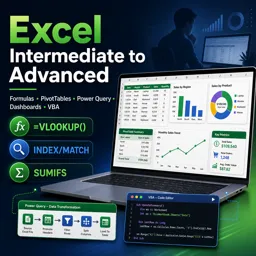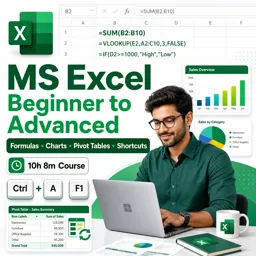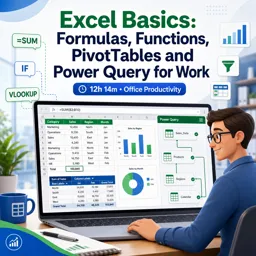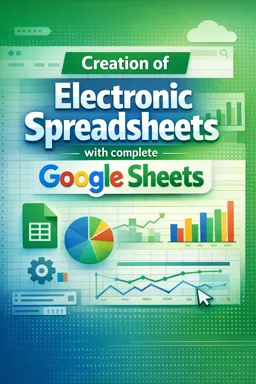


Free ebook on Google Sheets: create formulas, organize data, build charts, dashboards, automations, and collaborative spreadsheets.
Free ebook + audiobook content
-

Introduction to Google Sheets
+ Exercise: Which of the following statements is true about Google Sheets, according to the text provided? 4 minutes
-
Basic Concepts and User Interface
+ Exercise: Which of the following is NOT an element of the Google Sheets interface as described in the text? 4 minutes
-
Google Account Setup
+ Exercise: What is the initial step to start using Google Sheets? 4 minutes
-
Creating a New Spreadsheet
+ Exercise: What is the first step to create a new spreadsheet in Google Sheets, as described in the text? 4 minutes
-
Understanding Cells, Rows and Columns
+ Exercise: What is the function of a cell in Google Sheets? 4 minutes
-
Inserting and Formatting Text
+ Exercise: Which of the following statements about entering and formatting text in Google Sheets is true? 4 minutes
-
Entering and Manipulating Numbers
+ Exercise: Which of the following is a correct example of how to apply an absolute reference to a formula in Google Sheets, as described in the text? 5 minutes
-
Using and Customizing Cell Styles
+ Exercise: In the chapter on using and customizing cell styles in Google Sheets, which of the following statements is true regarding the formatting capabilities this tool offers? 4 minutes


-
Creating and Using Basic Formulas
+ Exercise: In Google Sheets, which of the following operators is used to perform the exponentiation operation in a formula? 5 minutes
-
Creating and Using Basic Formulas: Getting Started with Google Sheets
+ Exercise: Which of the following statements about using formulas in Google Sheets is true? 5 minutes
-
Creating and Using Basic Formulas: Entering and Formatting Data
+ Exercise: Which of the following statements about creating and using basic formulas in Google Sheets is true? 5 minutes
-
Creating and Using Basic Formulas: Basic Arithmetic Formulas
+ Exercise: Which of the following statements about using formulas in Google Sheets is correct? 4 minutes
-
Creating and Using Basic Formulas: Relative, Absolute and Mixed Cell References
+ Exercise: Which of the following statements about cell references in Google Sheets is correct? 5 minutes
-
Creating and Using Basic Formulas: Basic Functions
+ Exercise: Which of the following statements about using formulas in Google Sheets is true? 5 minutes
-
Creating and Using Basic Formulas: Conditional Formulas with IF
+ Exercise: What is the correct syntax for the IF function in Google Sheets? 5 minutes
-
Creating and Using Basic Formulas: Working with Dates and Times
+ Exercise: Which of the following statements about working with dates and times in Google Sheets is true? 4 minutes
-
Creating and Using Basic Formulas: Text Functions
+ Exercise: Which of the following statements about text functions in Google Sheets is correct? 5 minutes
-
Creating and Using Basic Formulas: Handling Formula Errors
+ Exercise: Which of the following statements about formula error handling in Google Sheets is true? 5 minutes
-
Creating and Using Basic Formulas: Naming Ranges
+ Exercise: Which of the following statements about naming ranges in Google Sheets is true? 4 minutes
-
Creating and Using Basic Formulas: Custom Formulas with Google Scripts
+ Exercise: Which of the following statements about using Google Scripts in Google Sheets is true? 5 minutes
-
Use of Common Functions
+ Exercise: Which of the following statements about using functions in Google Sheets is correct? 6 minutes
-
Introduction to Basic Functions
+ Exercise: Which of the following correctly describes the "IF" function in Google Sheets? 5 minutes
-
Using the SUM Function
+ Exercise: What is the correct syntax to use the SUM function in Google Sheets to sum the values in cells A1, B1, and C1? 4 minutes
-
Calculating Averages with the AVERAGE Function
+ Exercise: Which of the following statements about the AVERAGE function in Google Sheets is correct? 4 minutes
-
Counting Cells with the COUNT Function
+ Exercise: What is the purpose of the `COUNT` function in Google Sheets? 5 minutes
-
Applying MAX to Find the Largest Value
+ Exercise: Which of the following statements about the MAX function in Google Sheets is true? 5 minutes
-
Finding the Smallest Value with MIN
+ Exercise: What is the Google Sheets function described in the text that allows you to find the smallest value in a set of numbers? 5 minutes
-
Using the IF Function for Conditional Logic
+ Exercise: What is the correct syntax for the IF function in Google Sheets, as explained in the text? 5 minutes
-
Concatenating Strings with CONCATENATE
+ Exercise: Which of the following statements about functions in Google Sheets is correct? 5 minutes
-
Conditional Formatting Using Functions
+ Exercise: Which of the following statements about using functions and conditional formatting in Google Sheets is correct? 4 minutes
-
Working with Dates and Times Using Functions
+ Exercise: Which of the following Google Sheets functions is used to calculate the difference in days between two dates? 5 minutes
-
Rounding Functions: ROUND, ROUNDUP and ROUNDDOWN
+ Exercise: Which of the following statements about rounding functions in Google Sheets is correct? 6 minutes
-
Text Manipulation with LEFT, RIGHT and MID
+ Exercise: Which of the following statements about using text manipulation functions in Google Sheets is correct? 5 minutes
-
Search and Reference Functions: VLOOKUP, HLOOKUP and INDEX
+ Exercise: Which of the following statements about the functions of Google Sheets is correct? 5 minutes
-
Logical Functions: AND, OR and NOT
+ Exercise: Which of the following statements about using functions in Google Sheets is true? 5 minutes
-
Creating Nested and Combined Formulas
+ Exercise: Which of the following statements is correct about the use of functions in spreadsheets such as Google Sheets, as described in the text? 5 minutes
-
Common Function Errors and Solutions
+ Exercise: Which of the following is a recommended solution to avoid Mistake #1: "Incorrect Cell References" in Google Sheets? 6 minutes
-
Relative and Absolute References in Formulas
+ Exercise: Which of the following statements about references in Google Sheets formulas is correct? 4 minutes
-
Conditional Formatting
+ Exercise: Which of the following is a correct example of how conditional formatting can be used in Google Sheets? 4 minutes
-
Introduction to Conditional Formatting
+ Exercise: Which of the following statements about conditional formatting in Google Sheets is true? 4 minutes
-
Formatting Rules Based on Numeric Values
+ Exercise: Which of the following statements about conditional formatting in Google Sheets is true? 5 minutes
-
Conditional Formatting with Formulas
+ Exercise: Which of the following statements about using formulas in conditional formatting in Google Sheets is true? 4 minutes
-
Formatting Cells Based on Other Cells
4 minutes
-
Using Colors and Styles in Conditional Formatting
+ Exercise: Which of the following statements about conditional formatting in Google Sheets is true? 4 minutes
-
Conditional Formatting Based on Dates
+ Exercise: Which of the following is NOT a correct step for setting up a date-based conditional formatting rule in Google Sheets? 4 minutes
-
Conditional Formatting for Text and Strings
+ Exercise: Which of the following is NOT a way to apply conditional formatting to text and strings in Google Sheets? 4 minutes
-
Highlighting Duplicates
+ Exercise: What is the purpose of using conditional formatting in Google Sheets, as described in the text? 4 minutes
-
Creating Data Bars and Sparkline Charts
+ Exercise: Which of the following steps is NOT correct to add data bars using conditional formatting in Google Sheets? 4 minutes
-
Managing and Removing Conditional Formatting Rules
+ Exercise: What is the correct procedure for managing conditional formatting rules in Google Sheets? 4 minutes
-
Conditional Formatting Best Practices
+ Exercise: Which of the following is a recommendation for effectively using conditional formatting in Google Sheets, in accordance with the best practices mentioned in the text? 4 minutes
-
Sharing and Collaboration with Conditional Formatting
+ Exercise: Which of the following statements about conditional formatting in Google Sheets is true? 5 minutes
-
Data Organization and Filtering
+ Exercise: Which of the following correctly describes a step in the process of filtering data in Google Sheets? 4 minutes
-
Advanced Data Classification
+ Exercise: Which of the following is NOT a way to sort data in Google Sheets, as described in the text? 5 minutes
-
Importing Data from Other Sources
+ Exercise: What is the correct function to import data from a table or list within an HTML page into Google Sheets? 5 minutes
-
Text and Date Functions
+ Exercise: Which of the following statements about text functions in Google Sheets is correct? 6 minutes
-
Financial and Commercial Functions
+ Exercise: Which of the following Google Sheets functions is used to calculate the interest amount on a given loan or mortgage payment? 4 minutes
-
Using Range Names to Make Formulas Easier to Understand
+ Exercise: Which of the following steps is NOT part of the process of naming ranges in Google Sheets as described in the text? 4 minutes
-
Creating Pivot Tables
+ Exercise: What is the first step to creating an effective pivot table in Google Sheets, as described in the text? 4 minutes
-
Data Visualization with Charts and Tables
+ Exercise: Which of the following is a best practice when creating data visualizations in Google Sheets? 4 minutes
-
Types of Charts Available in Google Sheets
+ Exercise: Which of the following chart types available in Google Sheets is best suited for visualizing trends over time? 5 minutes
-
Inserting Charts into a Spreadsheet
+ Exercise: What is the correct sequence of steps to insert a chart into a Google Sheets spreadsheet? 4 minutes
-
Customizing Charts: Colors, Legends and Axes
+ Exercise: Which of the following statements about customizing charts in Google Sheets is true? 4 minutes
-
Using Pivot Tables for Data Analysis
+ Exercise: Which of the following Google Sheets features allows you to rearrange, sort, count, or average data for analysis? 4 minutes
-
Conditional Formatting to Highlight Data
+ Exercise: Which of the following statements about conditional formatting in Google Sheets is true? 4 minutes
-
Creating Interactive Dashboards
+ Exercise: Which of the following statements best describes the purpose of interactive dashboards in Google Sheets? 4 minutes
-
Trend Analysis with Line Charts
+ Exercise: What is the main purpose of line charts in Google Sheets as described in the text? 4 minutes
-
Comparing Datasets with Bar and Column Charts
+ Exercise: Which of the following statements about bar and column charts in Google Sheets is true? 4 minutes
-
Representing Proportions with Pie Charts
+ Exercise: Which of the following statements about pie charts is correct? 4 minutes
-
Using Histograms for Frequency Distribution
+ Exercise: Which of the following statements about creating a histogram in Google Sheets is true? 4 minutes
-
Creating Scatter Plots for Data Correlation
+ Exercise: What is the purpose of a scatterplot in Google Sheets, and how can you add a trendline to help interpret the data? 4 minutes
-
Adjusting Chart Axis Scales and Intervals
+ Exercise: How important is it to adjust the scales and axis ranges of charts in Google Sheets? 5 minutes
-
Including Mini Charts or Sparklines
+ Exercise: Which of the following statements about creating Sparklines in Google Sheets is correct? 4 minutes
-
Exporting Charts for Presentations or Reports
+ Exercise: What is the correct procedure to export a chart as an image in Google Sheets? 4 minutes
-
Sharing and Collaborating on Charts and Tables
+ Exercise: Which of the following statements about data visualization in Google Sheets is correct? 4 minutes
-
Fine-Tuning Charts
+ Exercise: Which of the following is NOT mentioned in the text as an option to customize when fine-tuning charts in Google Sheets? 4 minutes
-
Logical and Search Functions
+ Exercise: Which of the following statements about the logic and search functions in Google Sheets is true? 4 minutes
-
Connection to Google Forms
+ Exercise: Which of the following features can be achieved by integrating Google Forms with Google Sheets? 4 minutes
-
Spreadsheet Security and Sharing
+ Exercise: Which of the following is NOT a best practice for sharing spreadsheets in Google Sheets? 4 minutes
-
Version Management and Revision History
4 minutes
-
Creation of Interactive Dashboards
+ Exercise: Which of the following is NOT a recommended step in creating interactive dashboards with Google Sheets, as described in the text? 4 minutes
-
Use of Scripts and Google Apps Script
+ Exercise: Which of the following statements about Google Apps Script is true? 4 minutes
-
Keyboard Shortcut Tips
+ Exercise: What keyboard shortcut in Google Sheets moves the selection to the last cell with data in the worksheet? 4 minutes
-
Troubleshooting and Debugging Errors
+ Exercise: Which of the following error messages in Google Sheets indicates that a formula is trying to divide a number by zero? 4 minutes
-
Google Sheets Integration with Other Apps
+ Exercise: Which of the following is NOT an advantage of integrating Google Sheets with other applications, according to the text provided? 4 minutes
-
Automating Repetitive Tasks with Macros
+ Exercise: What is the purpose of using macros in Google Sheets as described in the text? 4 minutes
-
Advanced Use of Filters and Data Validation
+ Exercise: In Google Sheets, which of the following is NOT advanced filtering or data validation functionality? 4 minutes
-
Customizing Menus and Interfaces with UI Builder
+ Exercise: Which of the following statements about customizing menus and interfaces in Google Sheets using Google Apps Script is true? 5 minutes
-
Creating Custom Forms Within Google Sheets
+ Exercise: Which of the following statements about creating custom forms in Google Sheets is true? 4 minutes
-
Best Practices for Structuring Data
+ Exercise: Which of the following is NOT one of the best practices for structuring data in Google Sheets, according to the text provided? 4 minutes
-
Use of Extensions and Add-ons
+ Exercise: Which of the following statements about extensions and add-ons in Google Sheets is true? 3 minutes
-
Practical Applications for Business and Personal Finance
+ Exercise: Which of the following practical applications of Google Sheets is mentioned in the text for the business context? 7 minutes
-
Tips to Increase Productivity
+ Exercise: Which of the following tips was NOT mentioned in the text as a way to increase productivity in Google Sheets? 5 minutes
-
Creation of an Integrative Final Project
+ Exercise: What is the main objective of the final project in the Creation of Electronic Spreadsheets with Google Sheets course? 4 minutes
-
Conclusion and Next Steps for Further Development
+ Exercise: Which of the following actions is recommended to ensure retention of the knowledge acquired about Google Sheets, as suggested in the e-book course? 4 minutes
About the free ebook with audio
Creation of Electronic Spreadsheets with Complete Google Sheets
This free ebook provides a practical path to building, organizing, and analyzing electronic spreadsheets with Google Sheets. Start by setting up your Google account, navigating the interface, and creating well-structured worksheets with text, numbers, styles, and cell formatting.
Build reliable formulas and analyze data
Learn how to create formulas using relative, absolute, and mixed references, then apply essential functions such as SUM, AVERAGE, COUNT, MIN, MAX, IF, VLOOKUP, INDEX, AND, OR, and text and date functions. The ebook also explains error handling, named ranges, nested formulas, financial functions, filters, data validation, and importing information from other sources.
Make spreadsheets clear, visual, and collaborative
Use conditional formatting to highlight meaningful values, dates, duplicates, and text patterns. Create pivot tables, charts, sparklines, dashboards, and reports that make trends and comparisons easier to understand. You will also explore sharing permissions, version history, Google Forms connections, and integration with other apps.
Automate and improve your workflow
Advance beyond manual work with macros, Google Apps Script, custom formulas, forms, menus, extensions, and add-ons. Practical guidance on troubleshooting, debugging, data structure, keyboard shortcuts, and productivity helps you create dependable spreadsheets for business, personal finance, and everyday projects.
What you can apply
- Organize data in readable, reusable spreadsheets.
- Create formulas that calculate, search, classify, and validate information.
- Build charts and interactive dashboards for data-driven decisions.
- Automate repetitive tasks and collaborate securely in the cloud.
How do relative and absolute references work in Google Sheets?
Relative references change when copied, while absolute references use $ to keep a row, column, or both fixed.
Which Google Sheets functions are covered for looking up data?
The ebook covers VLOOKUP, HLOOKUP, INDEX, and search and reference techniques for retrieving data.
Can Google Sheets automate repetitive spreadsheet tasks?
Yes. It explains macros, Google Apps Script, custom formulas, and workflow automation options.
This ebook/audiobook includes:

7 hours and 40 minutes of audio content

Digital certificate of course completion (Free)

Exercises to train your knowledge

100% free, from content to certificate
Ready to get started?

 recommended
In the app you will also find...

Over 5,000 free courses
Programming, English, Digital Marketing and much more! Learn whatever you want, for free.

Study plan with AI
Our app's Artificial Intelligence can create a study schedule for the course you choose.

From zero to professional success
Improve your resume with our free Certificate and then use our Artificial Intelligence to find your dream job.
You can also use the QR Code or the links below.