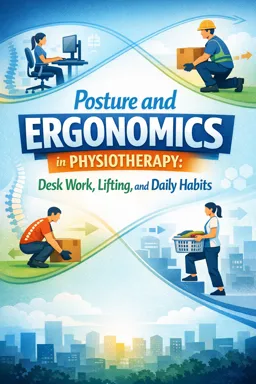

Free ebook on physiotherapy-informed posture and ergonomics for desk work, lifting, daily habits, pain management, and safer task adaptation.
Free ebook content
-

Posture and Ergonomics in Physiotherapy: What Matters for Desk Work, Lifting, and Daily Habits
+ Exercise: According to the decision framework, what is the best next step when discomfort reliably builds during a desk task but settles with breaks or position changes?
-
Symptom-Guided Ergonomic Assessment: Questions, Observation, and Baselines
+ Exercise: In a symptom-guided ergonomic assessment, which approach best matches the intended goal of making changes that measurably improve symptoms?


-
Workstation Setup for Desk Work: Chair, Desk, Monitor, Keyboard, and Mouse
+ Exercise: When using a laptop for desk work, which setup best reduces neck flexion and shoulder strain during longer sessions?
-
Movement Variability at the Desk: Microbreaks, Position Changes, and Work Pacing
+ Exercise: When setting up a microbreak schedule for desk work, what approach best reduces irritation over the day?
-
Ergonomics for Common Desk Tasks: Typing, Mousing, Phone Use, and Meetings
+ Exercise: When adjusting ergonomics for desk-related symptoms, which approach best helps you identify what actually improves your discomfort?
-
Manual Handling Fundamentals: Lifting and Carrying Without Overpromising a Single Technique
+ Exercise: Which approach best matches safe manual handling fundamentals when lifting and carrying?
-
Modifying Lifts for Real Life: From Laundry and Groceries to Worksite Tasks
+ Exercise: When lifting a laundry basket from the floor to carry it, which modification best reduces risk by changing the task rather than forcing perfect posture?
-
Daily Habits and Environmental Tweaks: Sleep, Driving, Chores, and Phone Use
+ Exercise: When managing discomfort from daily activities like phone use, driving, or chores, which option best reflects the reduce–redistribute–recover approach?
-
Pain and Red Flags: When Ergonomics Is Enough and When to Refer
+ Exercise: After making an ergonomic adjustment, which situation most strongly indicates you should seek prompt medical assessment rather than continue self-management?
-
Communicating Ergonomic Advice as a Physiotherapy Skill: Language, Expectations, and Follow-Up
+ Exercise: When giving ergonomic advice, which approach best supports realistic behavior change and reduces fear of “failing” at posture?
About the free ebook
Posture and Ergonomics in Physiotherapy: Desk Work, Lifting, and Daily Habits
This free ebook offers a practical physiotherapy-informed approach to improving comfort, function, and confidence during everyday activities. Rather than promoting one “perfect” posture, it explains how movement variety, task adaptation, and symptom-guided decisions can support people who work at desks, lift objects, drive, use phones, and manage household tasks.
Build an ergonomic setup that fits the person and the task
Learn how chair height, desk space, monitor position, keyboard and mouse placement, and phone habits can be adjusted to reduce unnecessary strain. The ebook focuses on realistic changes that can be tested, reviewed, and adapted instead of rigid rules that are difficult to maintain.
Use movement as part of desk ergonomics
Long periods in any single position can become uncomfortable. Explore practical ways to add microbreaks, posture changes, walking, and task pacing into a workday. These strategies can help make desk work more sustainable without requiring expensive equipment or constant attention to posture.
Approach lifting and carrying with flexibility
Manual handling is not about a single universally safe technique. This ebook explains how load, distance, frequency, environment, confidence, and current symptoms affect lifting choices. Apply adaptable principles to groceries, laundry, boxes, and work-related tasks.
- Assess what makes a task uncomfortable or demanding.
- Modify the environment, load, pace, or starting position where possible.
- Build tolerance gradually through regular movement and appropriate strengthening.
- Know when symptoms need assessment beyond ergonomic changes.
Recognise when to seek further help
Ergonomic adjustments may help common aches and activity-related discomfort, but they are not a substitute for clinical assessment when warning signs are present. The ebook outlines how physiotherapists can communicate advice clearly, set realistic expectations, monitor progress, and identify situations that require referral.
A practical resource for daily life
Use these principles to make small, meaningful changes and develop a more adaptable relationship with posture, work, movement, and pain.
What is the best desk posture for reducing neck and back discomfort?
There is no single best posture. Set up your workstation comfortably and change positions regularly throughout the day.
How often should I take movement breaks while working at a desk?
Use brief, regular breaks and posture changes that fit your workload, especially before discomfort becomes persistent.
When should pain during desk work or lifting be assessed by a clinician?
Seek assessment for severe, worsening, persistent, unexplained, or neurological symptoms, or when simple adjustments do not help.
This ebook includes:

10 content chapters

Digital certificate of course completion (Free)

Exercises to train your knowledge

100% free, from content to certificate
Ready to get started?

 recommended
In the app you will also find...

Over 5,000 free courses
Programming, English, Digital Marketing and much more! Learn whatever you want, for free.

Study plan with AI
Our app's Artificial Intelligence can create a study schedule for the course you choose.

From zero to professional success
Improve your resume with our free Certificate and then use our Artificial Intelligence to find your dream job.
You can also use the QR Code or the links below.