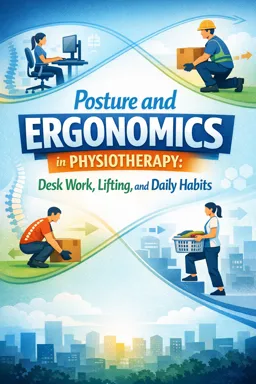
Why “One Perfect Lift” Is the Wrong Target
Manual handling is less about finding a single “correct” technique and more about managing load in a way you can repeat with control. Different bodies, tasks, and environments call for different strategies. A lift is usually “good enough” when it is: planned, controlled, tolerable for your symptoms, and repeatable over time. Your goal is to choose a method that fits the object, the space, and your current capacity—then adjust as fatigue or symptoms change.
(1) Pre-Lift Checklist: Plan Before You Touch the Load
Most lifting problems start before the object leaves the ground. Use a quick checklist to reduce surprises and unnecessary strain.
A. Object: weight, shape, and stability
- Estimate weight: If unsure, test with a small tilt or partial lift. If it feels heavier than expected, change the plan (get help, split the load, use equipment).
- Shape and size: Bulky objects force the load away from your body; awkward shapes may require a different grip or a two-person carry.
- Stability: Sloshing liquids, shifting contents, or loose parts increase control demands. Secure the contents or choose a slower pace.
B. Path: where the load needs to go
- Start and end points: Know exactly where you will place it. Clear a landing spot first.
- Height changes: Floor-to-waist is different from floor-to-shoulder. Higher placements often need staging (e.g., set on a mid-surface first).
- Distance: A “lift” that becomes a long carry is a different task—plan for rest points.
C. Grip: how your hands will control it
- Find handles or edges: Prefer grips that allow a neutral wrist and full hand contact.
- Friction and gloves: If the surface is slick, improve grip (gloves, towel, straps) rather than squeezing harder.
- Symmetry: If one hand must do more, expect more trunk rotation demand—adjust stance and pace.
D. Obstacles and environment
- Trip hazards: Cords, rugs, clutter, uneven ground.
- Doorways and tight turns: Plan how you will turn (feet, not spine) and whether you need to reposition hands.
- Visibility: If the load blocks your view, reduce speed, shorten steps, or ask for a spotter.
Quick decision rule
If you cannot answer “Where is it going, how will I grip it, and what will I do if it’s heavier than expected?”—pause and re-plan.
(2) Bracing and Breathing Basics: Create a Stable Base Without Over-Tensing
Bracing is not about holding your breath as hard as possible. It is about creating enough trunk stiffness to transfer force from legs/hips to the load while still allowing movement and breathing.
Step-by-step: a practical brace you can use immediately
- Set your ribs over your pelvis: Think “stack” rather than arching or slumping.
- Inhale low and wide: Breathe into your lower ribs and belly (360° expansion), not just the chest.
- Light brace: Tighten your trunk as if preparing for a gentle poke—firm, not maximal.
- Exhale through effort: As you lift, let air out slowly (like fogging a mirror) to avoid breath-holding spikes.
When breath-holding may appear
For very heavy, brief efforts, some people naturally use a short breath-hold to increase stiffness. In daily manual handling, prioritize control and repeatability: if breath-holding makes you rush, strain, or lose coordination, switch to a controlled exhale.
- Listen to the audio with the screen off.
- Earn a certificate upon completion.
- Over 5000 courses for you to explore!

Download the app
Symptom tolerance check
If bracing increases pain or creates a “locked” feeling, reduce intensity: use a lighter brace, slow down, and consider a different lifting style (e.g., more hip hinge, smaller range, staged lift).
(3) Hip Hinge and Squat Are Options—So Are Mixed Strategies
Two common patterns are the hip hinge and the squat. Neither is universally superior. The better choice depends on the object, your mobility, your strength, the space available, and what you can repeat comfortably.
Option A: Hip hinge (more hips, less knees)
Best when: the load is near you, you have room to push hips back, and you want to keep the lift efficient for repeated reps.
Step-by-step hinge setup
- Stand close to the object with feet about hip-width (adjust as needed).
- Soften knees slightly.
- Push hips back as your torso inclines forward, keeping the object between your feet when possible.
- Reach for the grip while keeping the load close to your shins.
- Brace and lift by driving the floor away with your feet and bringing hips forward.
Common helpful cues: “Hips back,” “keep it close,” “push the ground away.”
Option B: Squat (more knees, more upright torso)
Best when: the object is between your feet, you need a more upright torso (e.g., tight space behind you), or you prefer distributing work through knees/hips.
Step-by-step squat setup
- Bring feet slightly wider if needed to make space for the object.
- Lower by bending knees and hips together, keeping heels grounded if possible.
- Keep the load close to your center (between feet rather than out in front).
- Brace and stand by pushing through the floor, keeping the load close to your body.
Common helpful cues: “Sit between your feet,” “stay close,” “stand tall with control.”
Option C: Mixed strategies (often the most realistic)
Real-world lifts rarely match a textbook pattern. Mixed strategies are normal and can be safe, especially when they improve control.
- Hinge-to-squat transition: Start with a hinge to reach, then drop hips slightly to secure grip.
- Staged lift: Lift from floor to a mid-height surface (bench/cart), reset grip, then lift to final height.
- Asymmetric lift: One hand higher than the other (e.g., awkward box). Use a wider stance, slow down, and turn with feet.
Technique selection guide (simple and practical)
| Situation | Often helps |
|---|---|
| Object is bulky and must stay away from body | Staging, team lift, reduce distance, slower pace |
| Object is low and close, repeated lifts | Hip hinge or mixed hinge, keep load near shins |
| Tight space behind you | More squat-like pattern, feet repositioning |
| Need to place high (shelf) | Staged lift, step closer, avoid end-range reach |
(4) Keep the Load Close, Reduce Twist, Turn With Your Feet
Two consistent load-management principles across techniques are: keep the load close and avoid fast twisting under load. This reduces the lever arm on your trunk and improves control.
Keeping the load close: practical steps
- Start close: Walk your feet to the object before gripping.
- Bring it to your “carry zone”: Usually around lower chest to waist height, close to the body.
- Use forearms and elbows: If safe, lightly “hug” the load to reduce arm fatigue and keep it near your center.
- Shorten the reach: If you must reach forward, consider staging or moving your feet closer first.
Reducing twist: the “nose and toes” rule
Try to keep your chest and hips generally facing the same direction as the load. If you need to change direction, step and pivot rather than rotating your spine quickly.
Step-by-step: turning with the feet
- Pause briefly after the lift to stabilize.
- Take small steps to turn (like a three-point turn), keeping the load close.
- Re-check footing and obstacles before continuing.
When some rotation is unavoidable
Daily life sometimes requires a little twist. Make it safer by reducing speed, reducing load, keeping it close, and using a wider stance for balance. If symptoms flare with rotation, prioritize foot repositioning and staging.
(5) Pacing and Fatigue Management: Make the Task Sustainable
Many injuries and flare-ups occur late in a task when fatigue reduces coordination. Pacing is a skill: you manage effort so your technique stays consistent.
Recognize early fatigue signals
- Grip slipping or forearms burning
- Speeding up unintentionally
- Holding breath or excessive bracing
- More twisting, reaching, or “yanking” the load
- Symptoms increasing during or after sets of lifts
Practical pacing tools
- Chunk the work: Do 5–10 controlled lifts, then a brief reset (shake arms, re-check path, breathe).
- Use micro-rests: Even 10–20 seconds can restore grip and breathing.
- Alternate tasks: Switch between lifting, carrying, and lighter duties when possible.
- Lower peak effort: Smaller loads, more trips often beats fewer heavy trips for repeatability.
- Use equipment early: Carts, dollies, straps, or team lifts are performance tools, not “failure.”
Symptom tolerance and repeatability: a simple self-check
During a session, aim for a technique that stays within tolerable symptoms and does not progressively worsen your control. Use a quick rating approach:
- Green: symptoms stable, control good → continue.
- Yellow: symptoms rising or technique slipping → reduce load, slow down, stage the lift, or take a rest.
- Red: sharp increase in symptoms, loss of control, or unsafe environment → stop and change the task (help/equipment/plan).
Putting it together: a repeatable lift sequence
1) Plan: weight/shape, path, grip, obstacles, landing spot. 2) Set: feet close, choose hinge/squat/mixed, stack ribs over pelvis. 3) Brace + breathe: inhale low, light brace, exhale through effort. 4) Lift: smooth speed, keep load close. 5) Move/turn: small steps, pivot with feet, avoid fast twist. 6) Place: control the descent, release grip safely. 7) Pace: reset breathing, check fatigue, adjust next rep.